

Accra, Ghana
Launching at Saint Mary’s in 2026, a new field course will help students build career-ready skills in non-profit leadership, community-based research and intercultural communication. The Ghana Field Course: Religion and Social Innovation (RELS 3800) will take learning far beyond the classroom this summer, as students explore how culture and religion help drive social innovation in the West African nation.
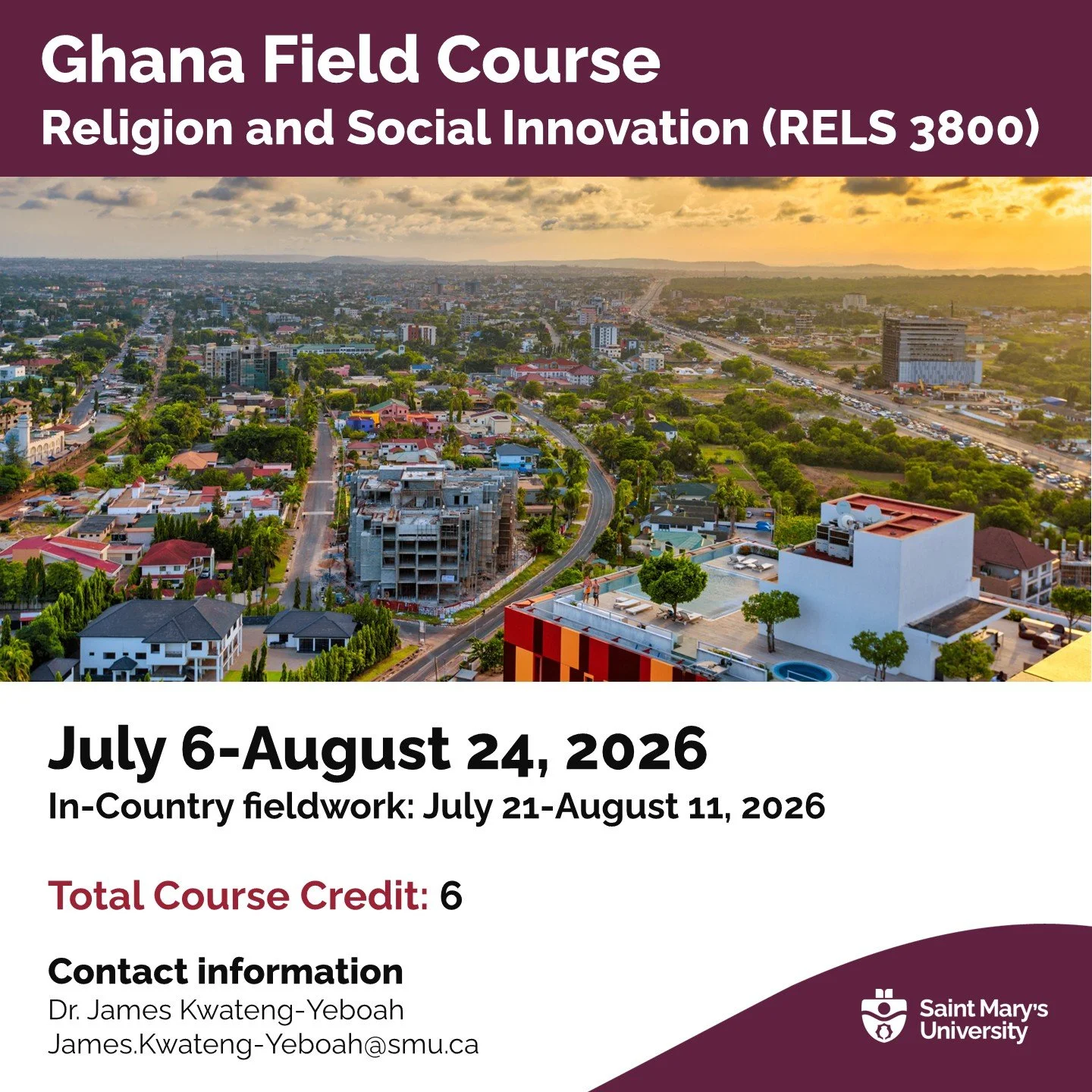
“This isn’t a typical study abroad experience,” says Dr. James Kwateng-Yeboah, who developed the new course. “Students will spend three weeks working alongside Ghanaian community leaders, NGO practitioners and religious organizations to understand how spiritual values drive real-world social change. They’ll visit Indigenous shrines, historic mission sites and contemporary social enterprises, while building practical competencies that employers and graduate programs value.”
The course will examine how African Indigenous and religious traditions are shaping social innovation in education, entrepreneurship and cultural heritage in Ghana—one of Africa’s most vibrant centers of creative enterprise. The course also invites reflection on how African communities transform histories of slavery and colonialism into new models of resilience and social impact.
Combining pre-departure preparation, three weeks of immersive fieldwork in Ghana and post-return synthesis sessions, the course will give students the contextual knowledge, field experience and reflective space to truly integrate their learning. In just seven weeks (July 6 to August 24), students will earn six credit hours.
Though the course is offered by the Department for the Study of Religion, it’s designed to be interdisciplinary in nature. It will appeal to students interested in Black and African studies, religious studies, history, intercultural studies, global development studies and sociology. The course is particularly valuable for students considering careers in global development, nonprofit management, community organizing and social entrepreneurship, or graduate work in African studies, religious studies or history, as the structured fieldwork is designed to build transferable professional skills.
“I designed this course because students need more than abstract theories; they need to see how communities actually create change,” says Dr. Kwateng-Yeboah. “Ghana offers a living laboratory where you can trace how communities have transformed centuries of colonial exploitation into new models of resilience, creativity and entrepreneurship.”
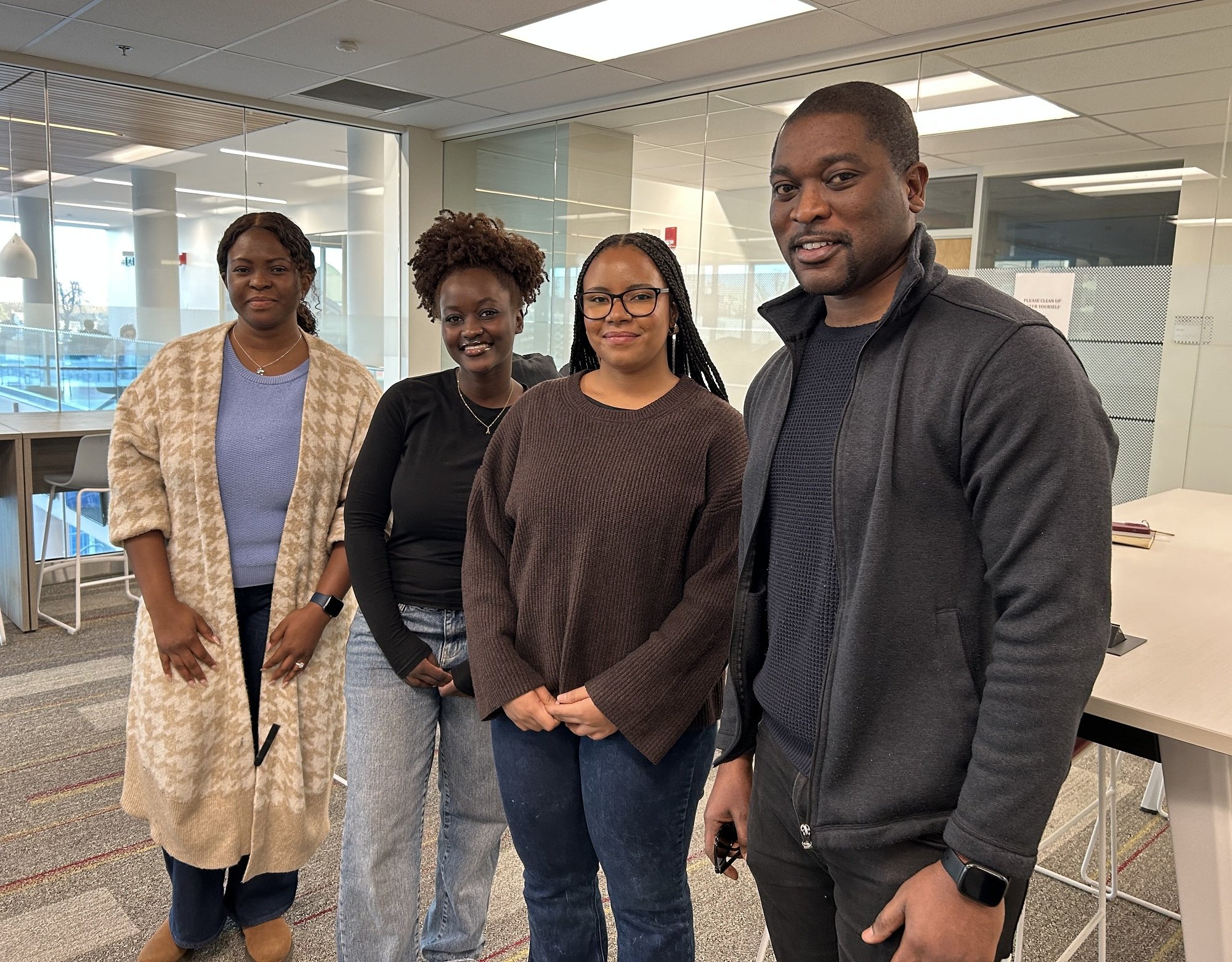
Dr. James Kwateng-Yeboah (far right) with Ebun Oladele, Black Student Advisor (far left) and two students at the Ghana Field Course information session during International Education Week
During International Education Week in November, Dr. Kwateng-Yeboah held an information session in the Black Student Commons. He has also produced a brief video to promote the new course.
Spots are limited to ensure meaningful engagement with community partners. Interested students should complete the expression of interest form as soon as possible. Dr. Kwateng-Yeboah will contact applicants for interviews before final registration. For more details, contact him at James.Kwateng-Yeboah@smu.ca.
Kwateng-Yeboah completed his own undergraduate studies at the University of Ghana before coming to Canada for his graduate studies. At Saint Mary’s, his primary areas of research and teaching are African Christianity, migration, and development.
The new course adds to SMU’s study abroad offerings in Africa that have also included several Geography field courses in The Gambia, most recently in Winter 2025. Saint Mary's also maintains an academic exchange partnership with Uganda Martyrs University in Africa, through the Global Learning & Intercultural Support office.
Related