Black AfricanNS community

Rooted in memory, built in community – Sankofa: Black Excellence Commons officially named

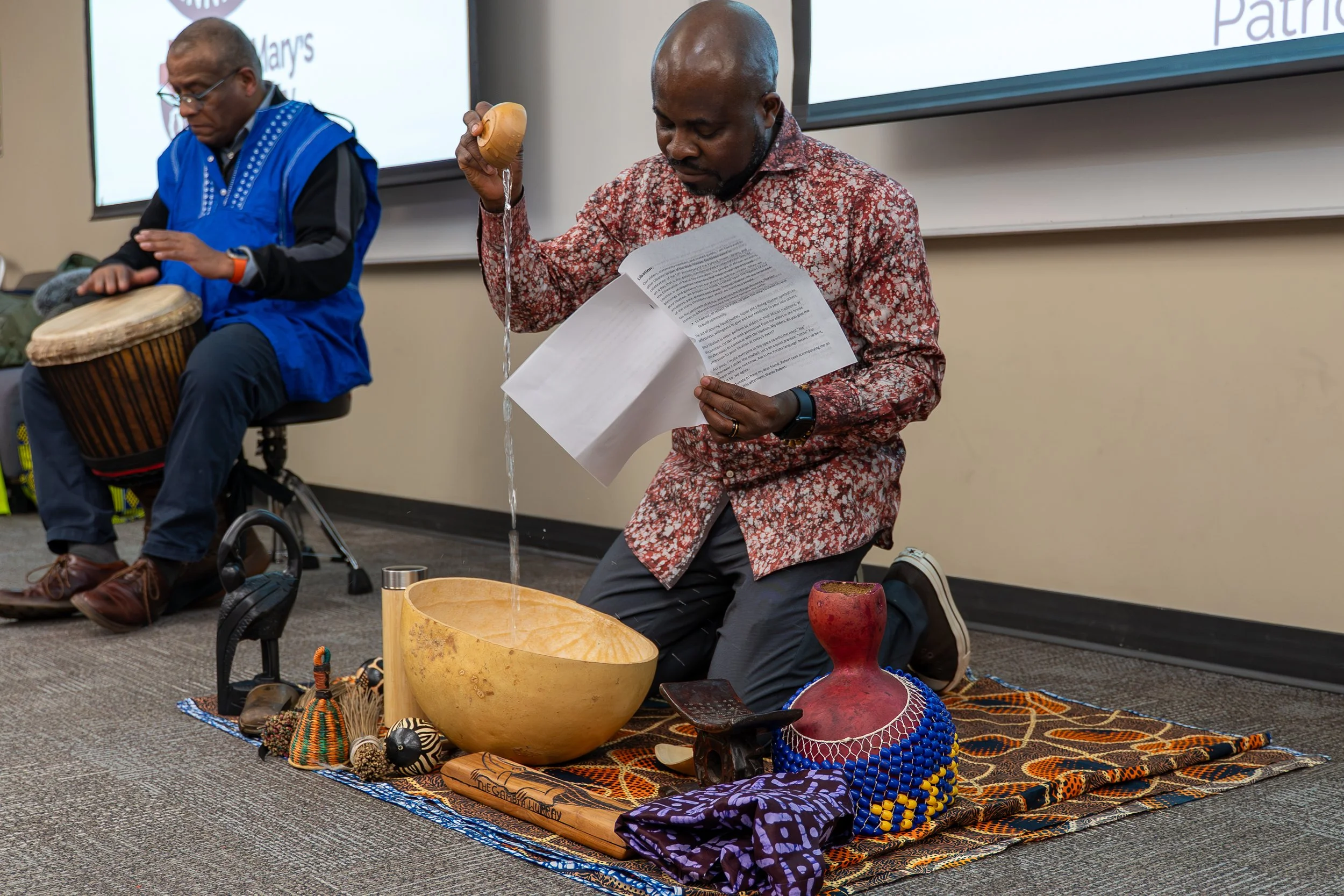
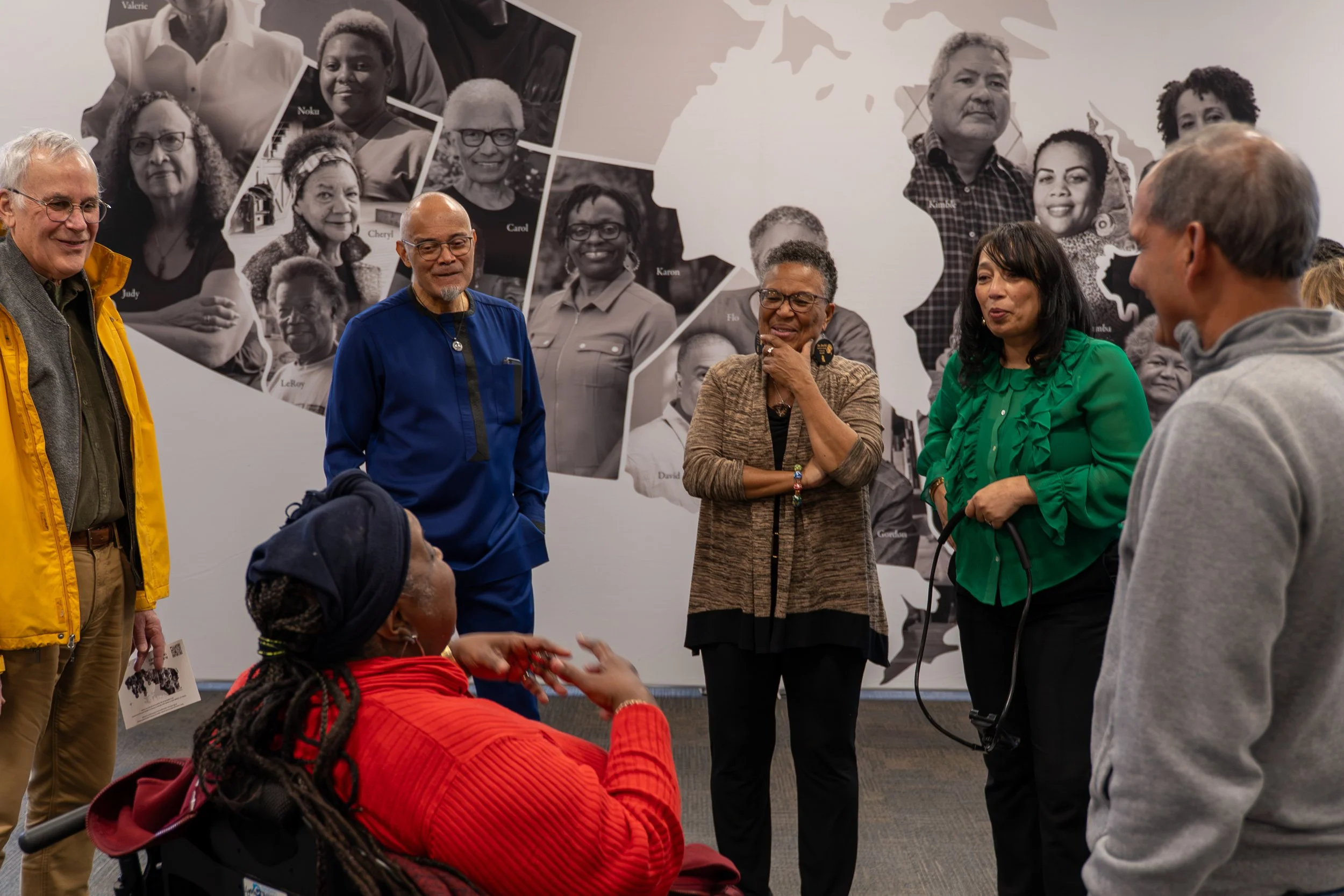
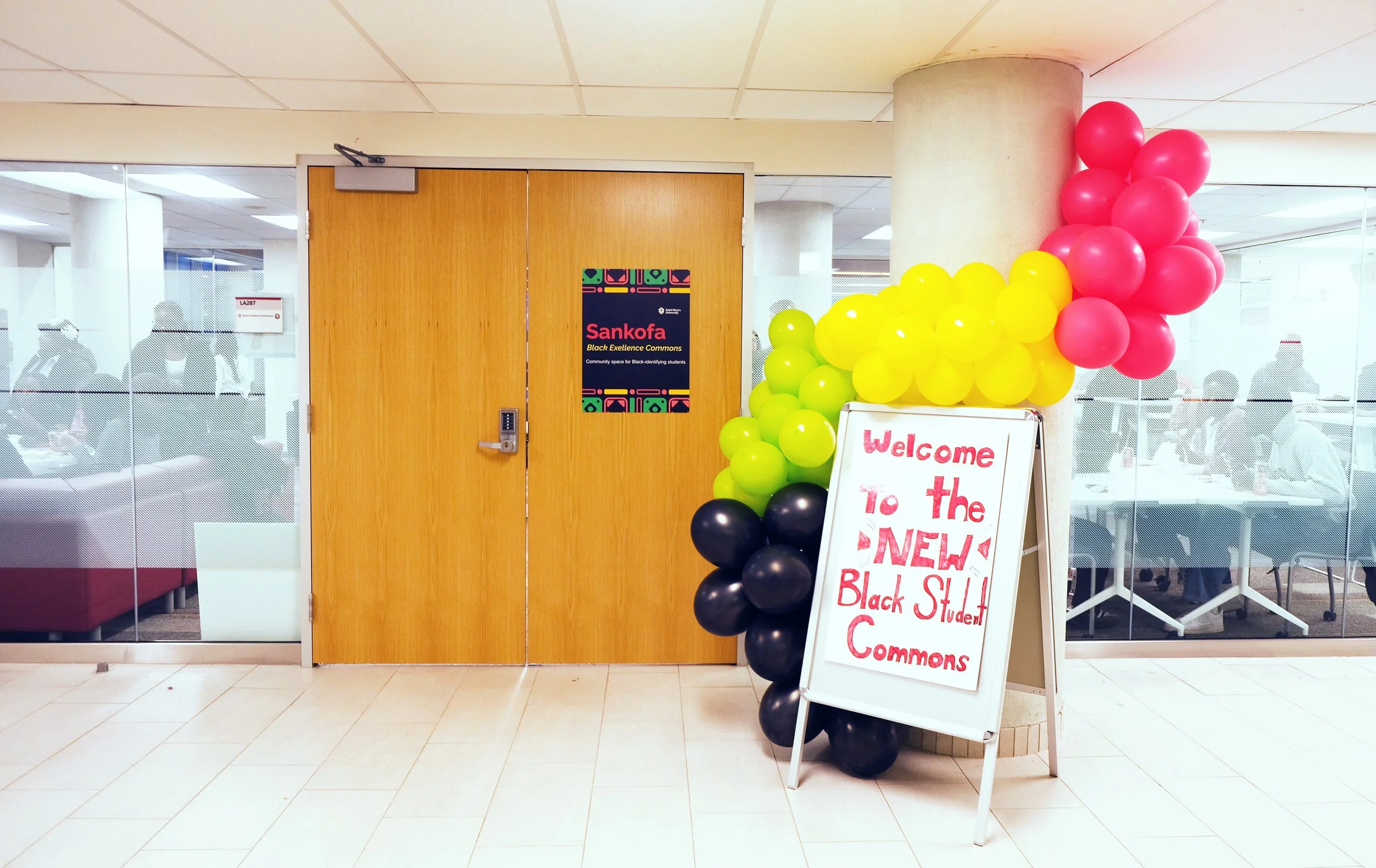
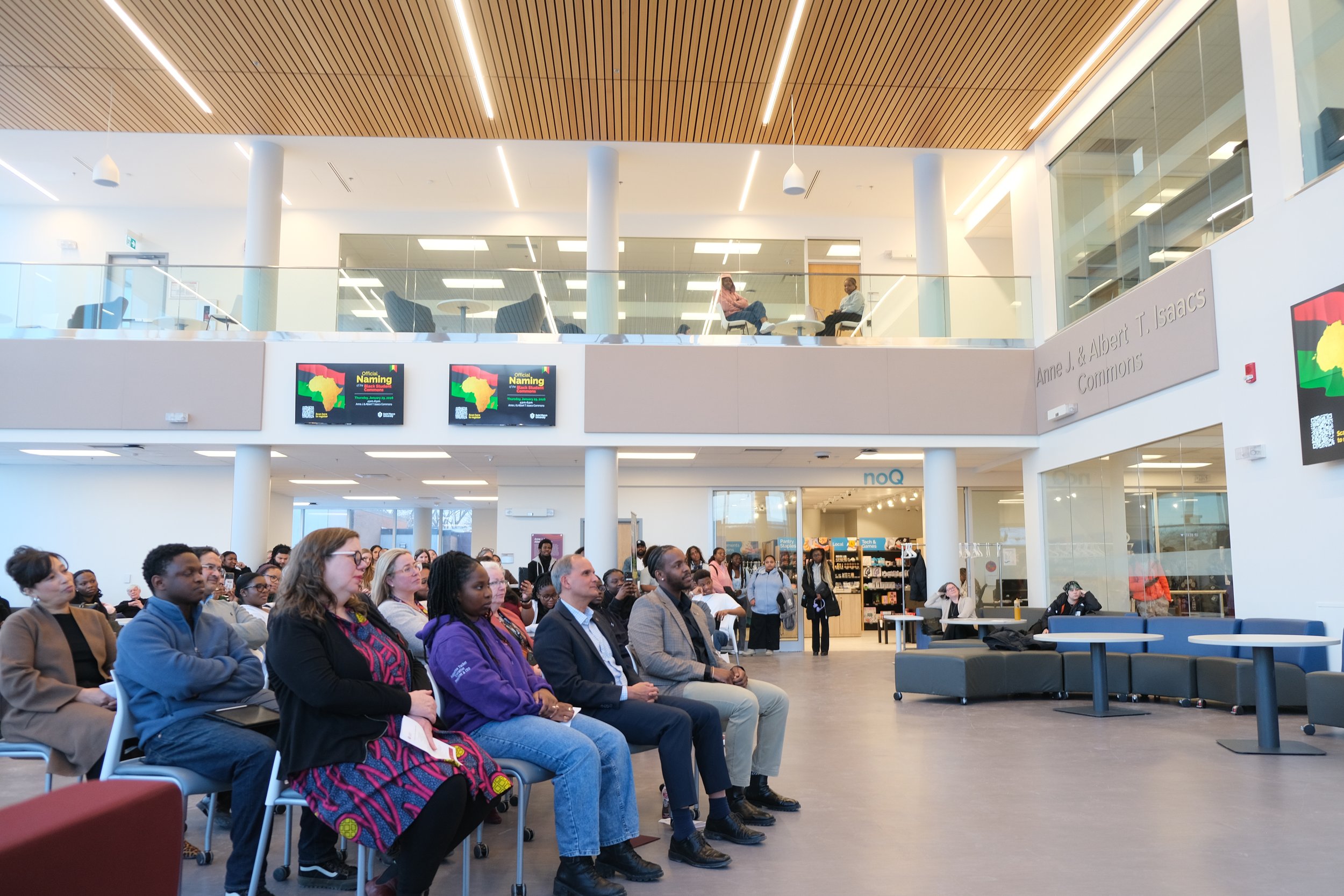
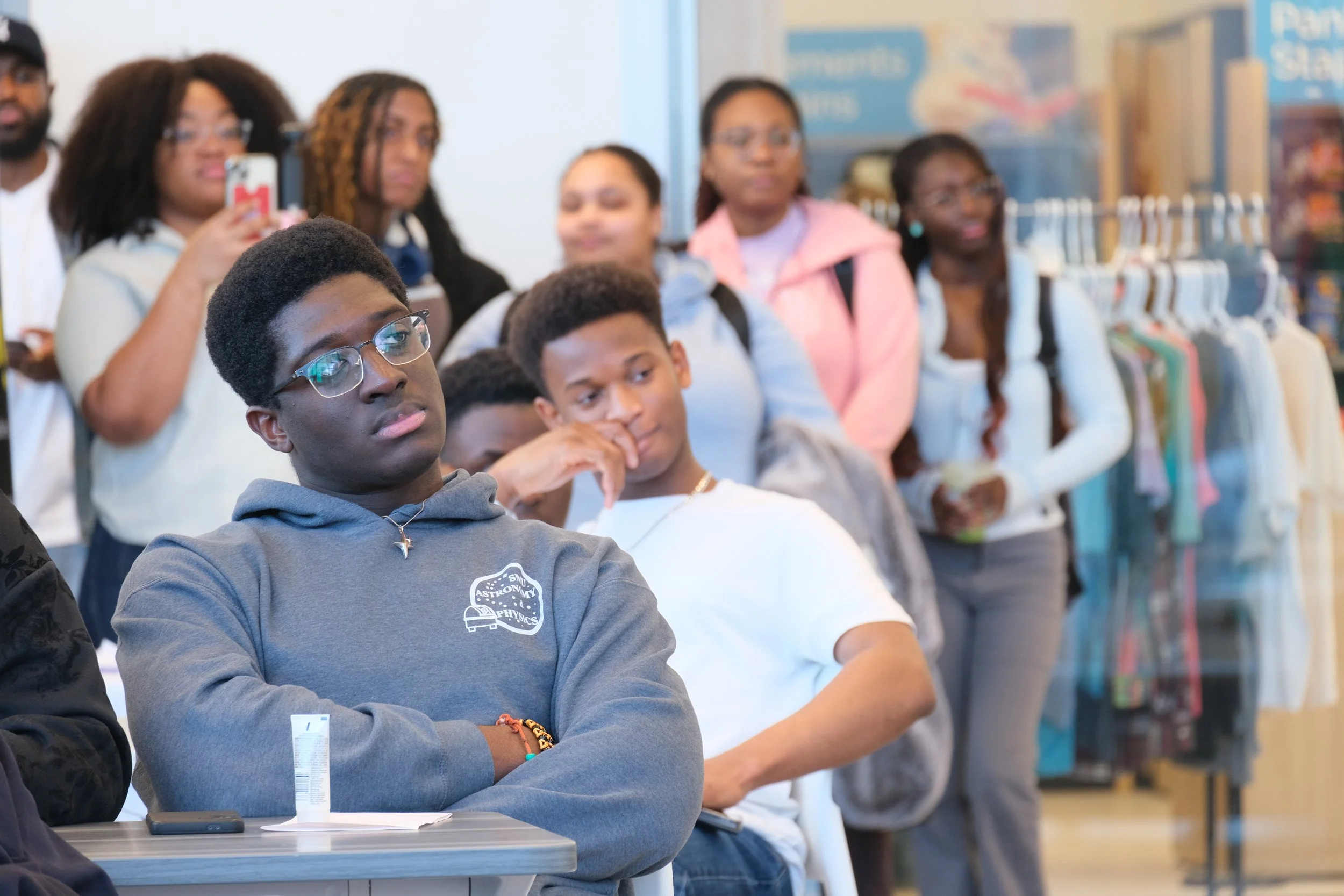
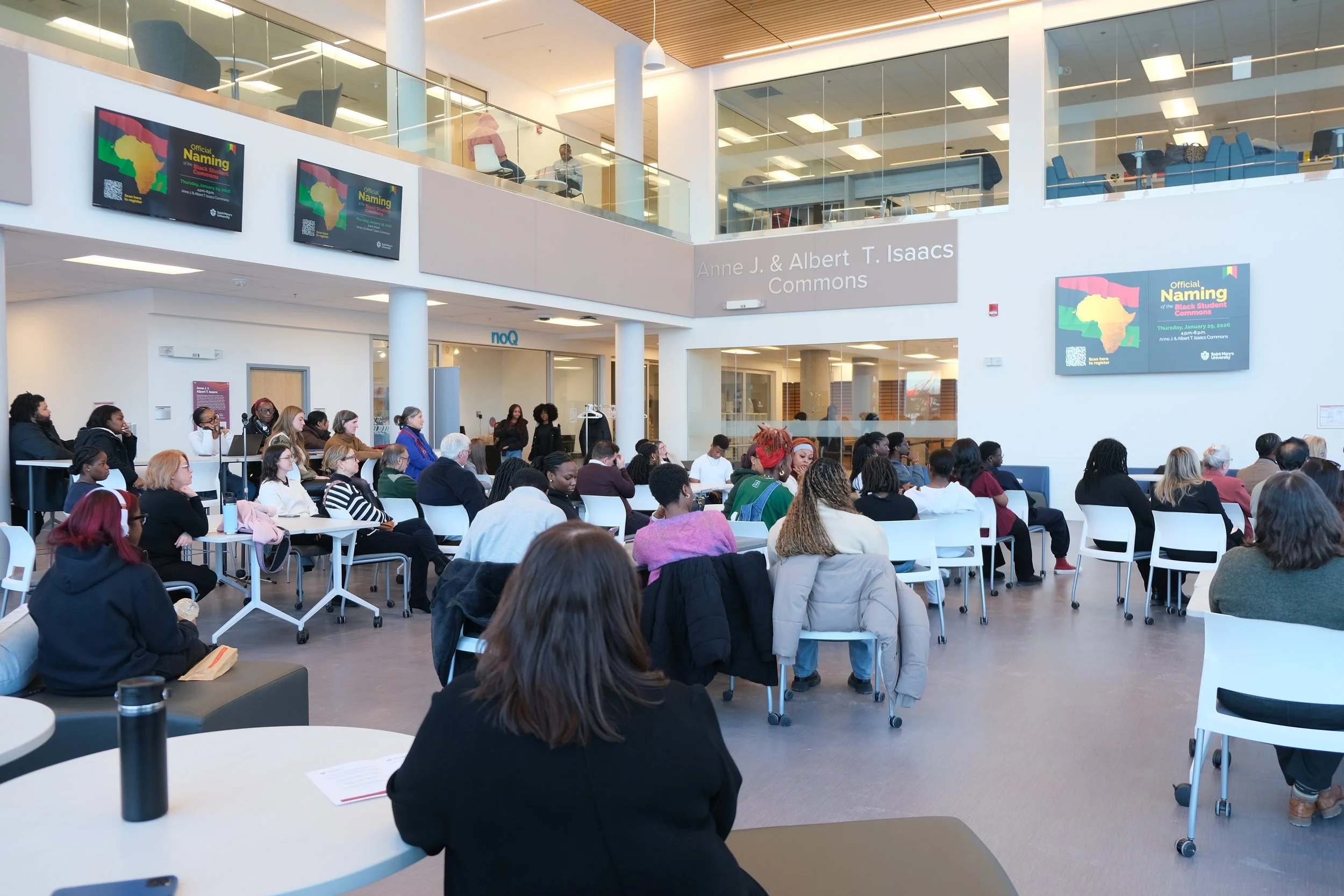
On January 29, the Saint Mary’s University community gathered to officially name a dedicated Black student space established in spring 2025. Students, staff, faculty and alumni marked the opening of African Heritage Month by honouring the advocacy, collective care and generations of leadership that shaped the space and brought the community to this moment.

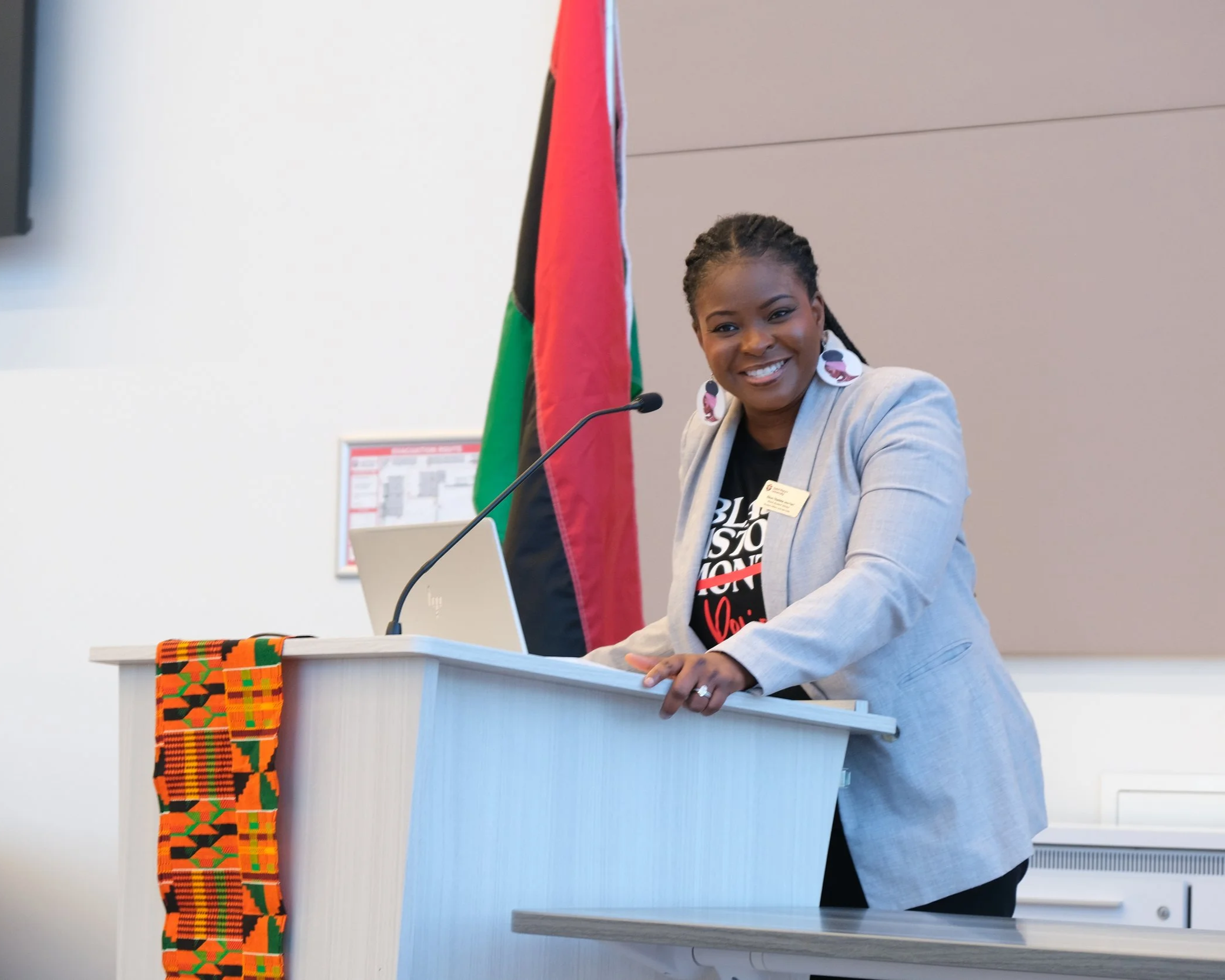
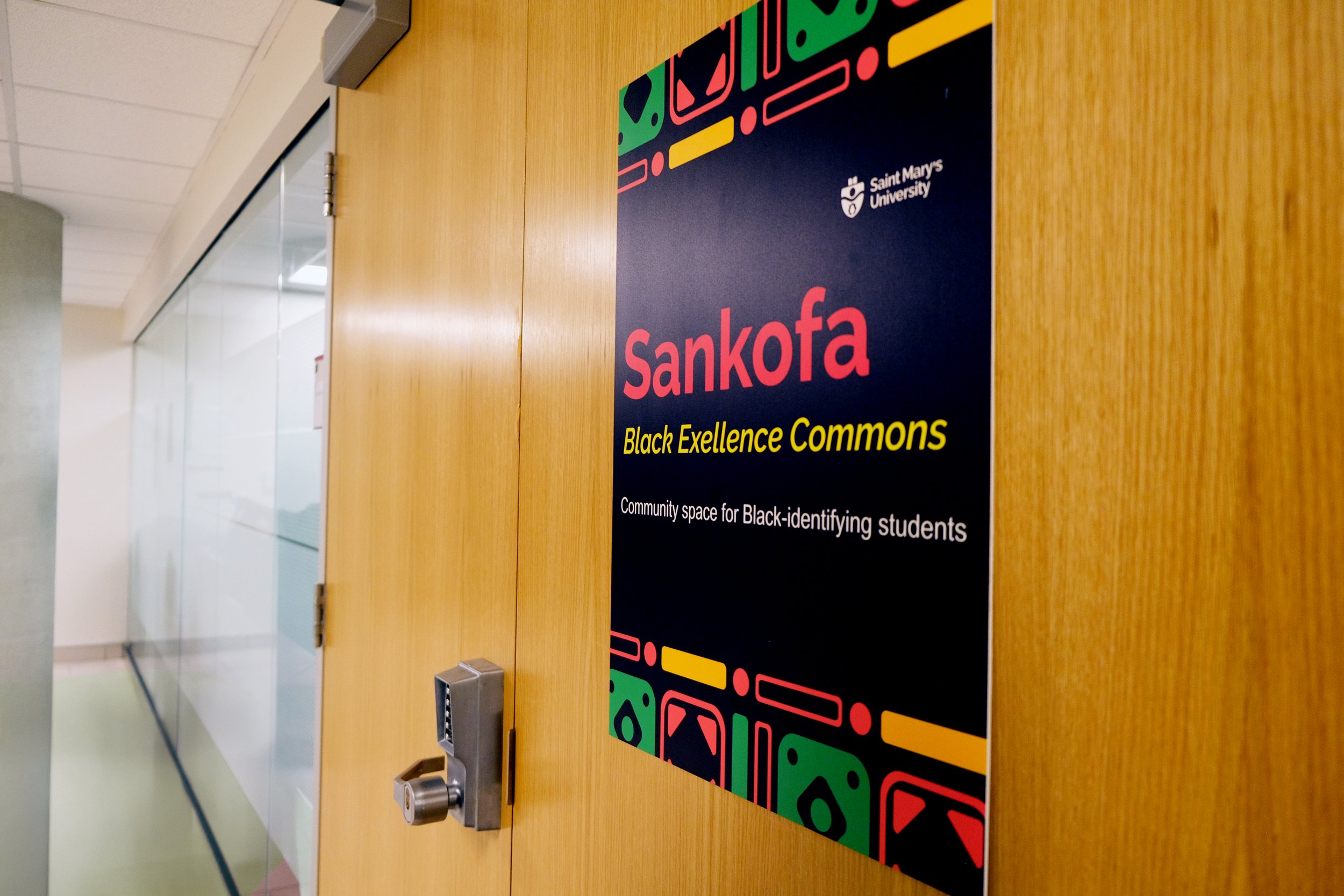
“Sankofa, an African word rooted in Adinkra principles, means ‘go back and get it,’” explained Ebun Oladele MA’21, Black Student Advisor. “It reminds us that we draw strength from our histories and our ancestral wisdom as we move forward. Sankofa: Black Excellence Commons (BEC) is a space rooted in memory, in community, and in possibility. Not just for today but for generations to come.”

The naming of the space was student-informed and guided by the Naming Committee, which included Black student leaders alongside representatives from Student Affairs and Services and the Diversity, Inclusion and Wellness team. More than a title, the name reflects both the journey that led to the creation of the space and the responsibility that continues beyond its opening.

The journey to Sankofa: Black Excellence Commons

The Black Excellence Commons did not emerge overnight. It was shaped through years of Black student leadership.

Throughout the ceremony, student leaders spoke candidly about the emotional labour and determination required to bring this vision to life, naming both the barriers they faced and the collective strength that sustained them.

This space is a result of advocacy, persistence and care. From students speaking up, to people who listened, and from community members who believed that Black students deserve spaces that reflect their identities and their experiences.
— Ebun Oladele, Black Student Advisor

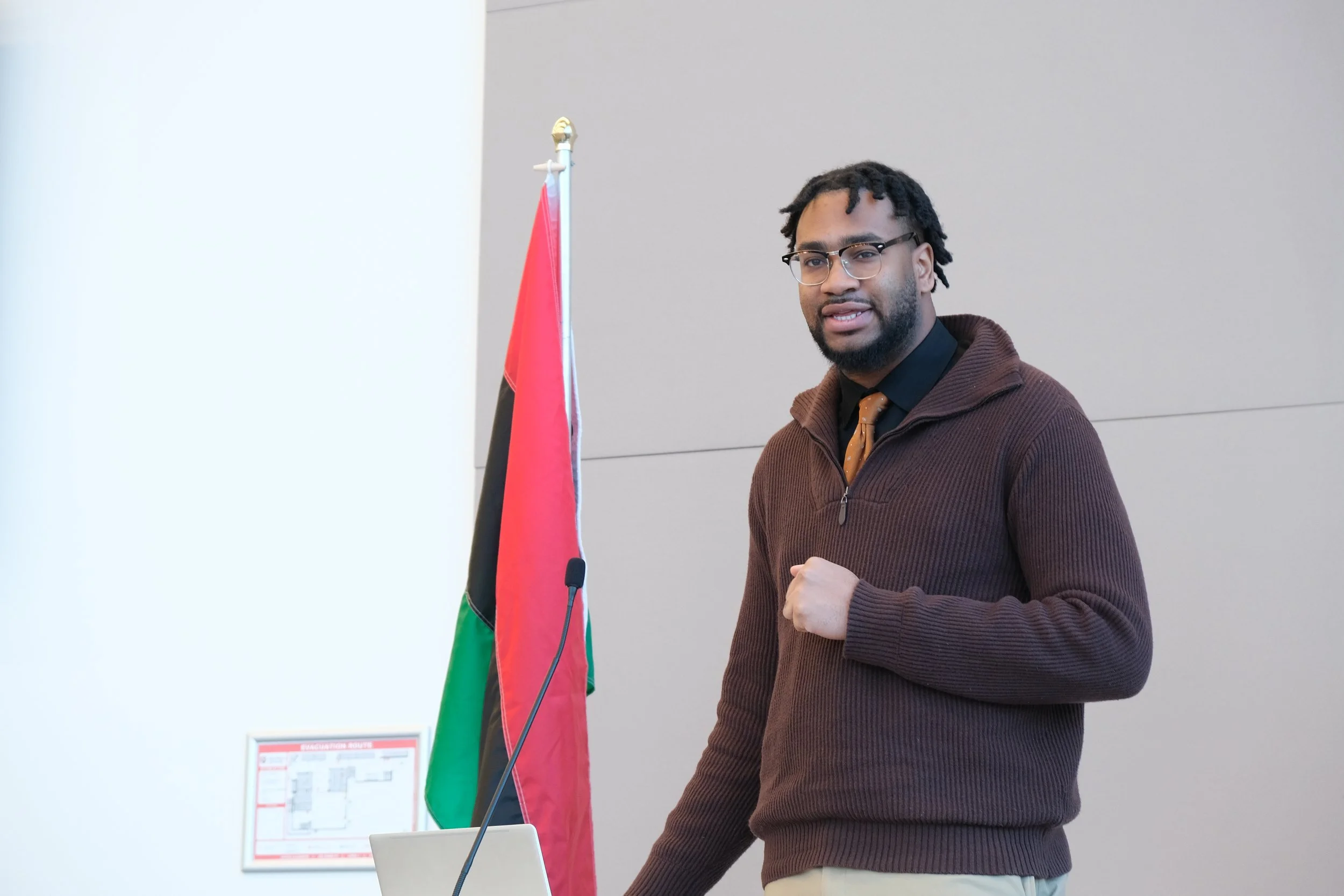
Ebun Oladele MA’21

SMUSA President Augustina Tucker framed the naming ceremony as a moment of recognition that honours those who drove this effort.

“This ceremony is more than just a naming,” Tucker said. “It is a recognition of the voices that refused to be quiet. That fight took courage, and it took an unshakeable belief that belonging should never have to be negotiated.”

As Saint Mary’s enters African Heritage Month, Tucker connected the moment to this year’s provincial theme, Strength and Unity: Moving Forward with Purpose, Prosperity, Power, and Progress, noting that Sankofa: Black Excellence Commons embodies these values through collective action.

“This space is a reminder that when students organize with purpose, real change follows,” she added. “But let us also be clear that this space is not the end of the work. It is a foundation.”

Former Black Student Society President Jaiden Kariuki-MacDonald was one of the early student leaders to formally represent the interests of Black students at the university, helping to shape not only the foundation of the Sankofa: Black Excellence Commons but also broader progress in Black student support through her advocacy for the Black Student Advisor role.

Kariuki-MacDonald reflected on the depth of her experience in Black student leadership, describing the role as one that demanded constant advocacy and persistence to ensure Black student needs remained visible and prioritized.

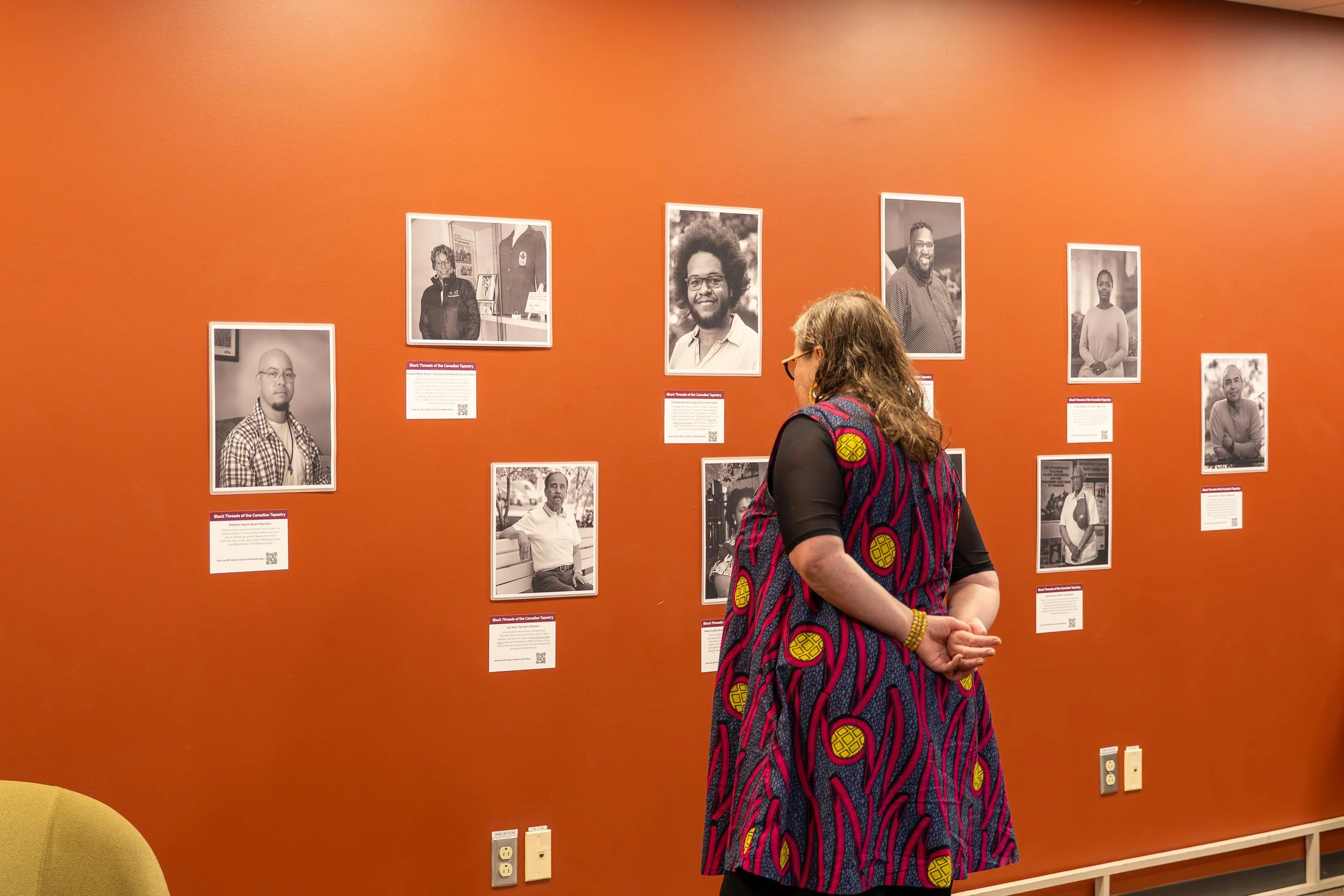
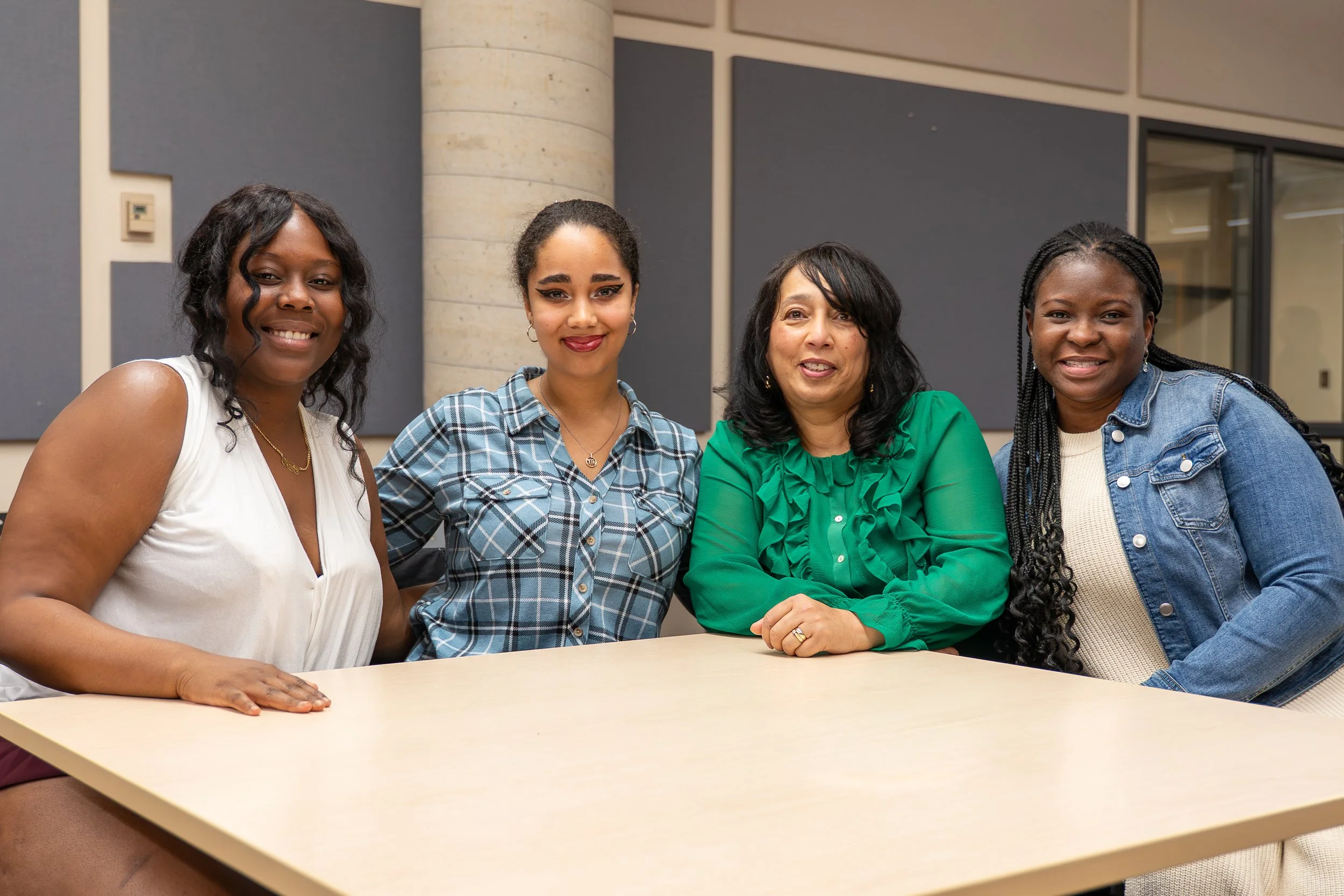
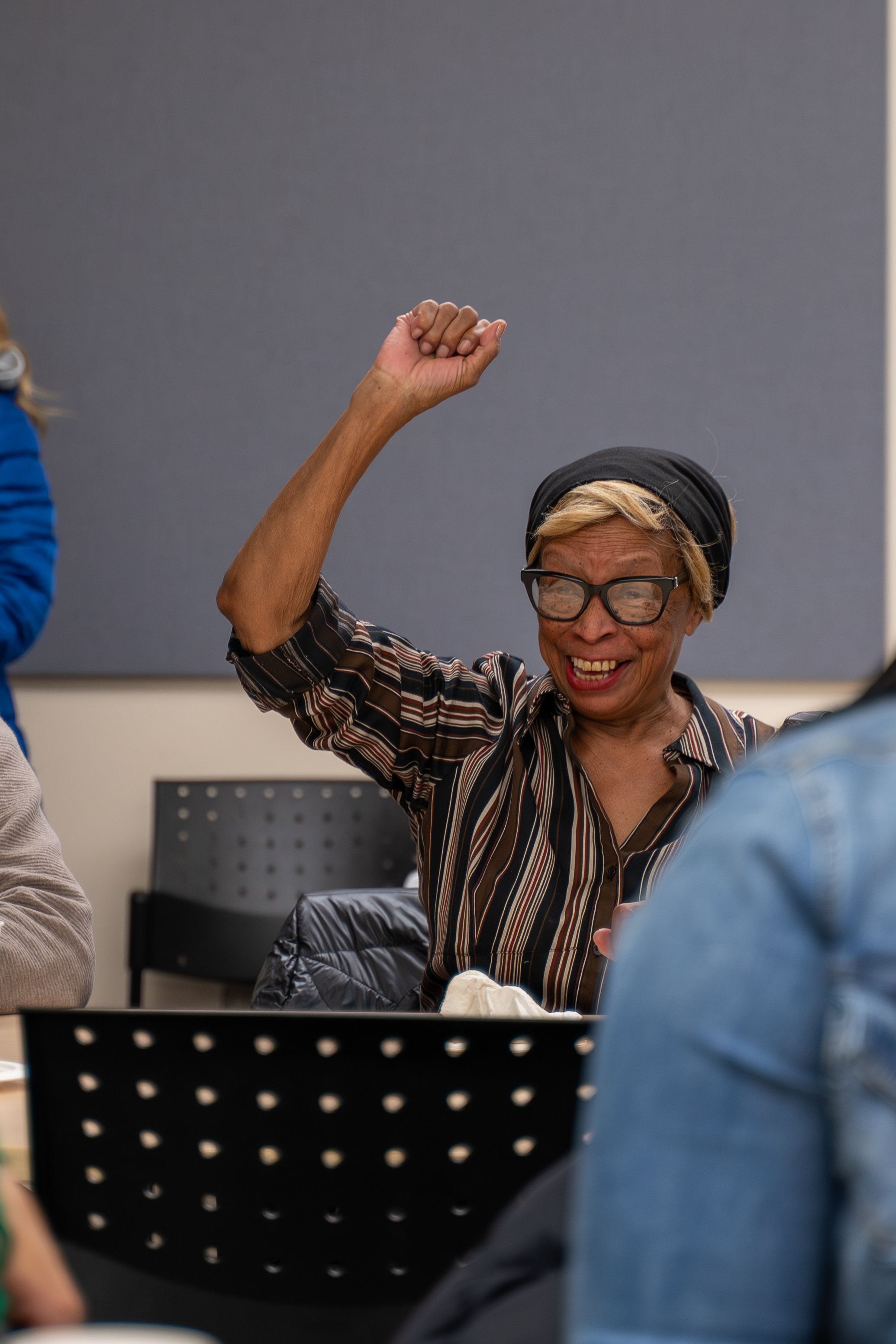
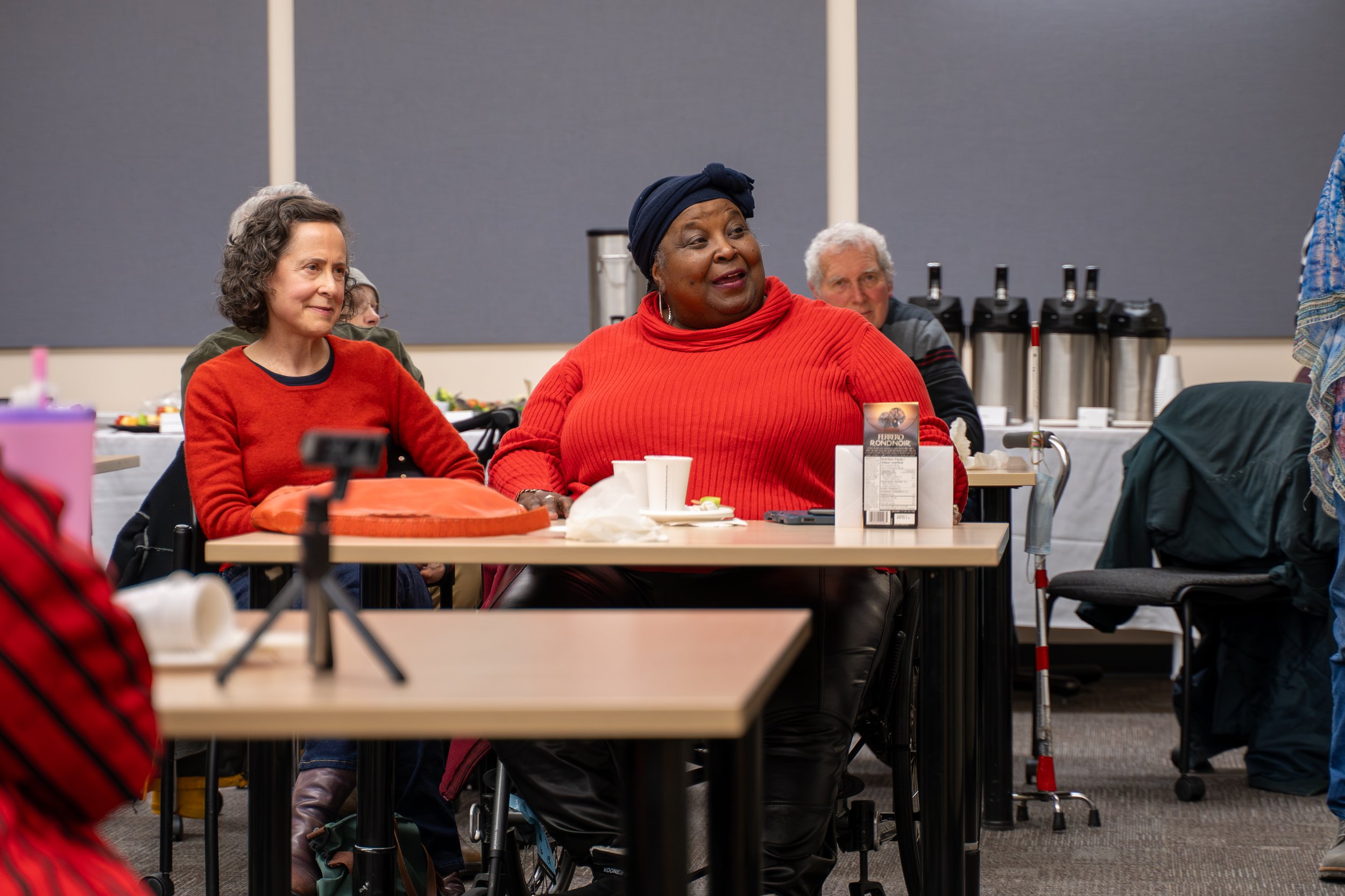
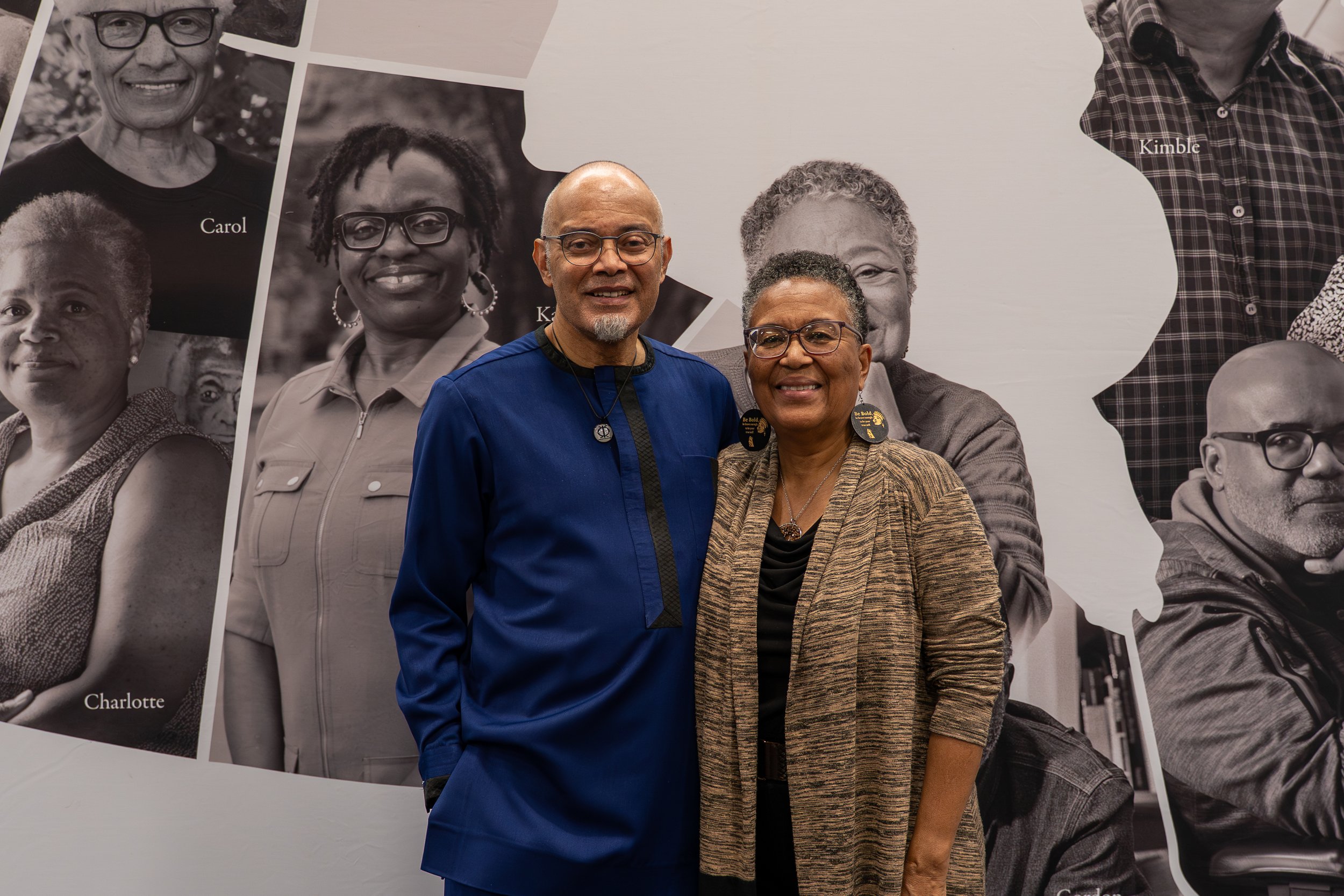
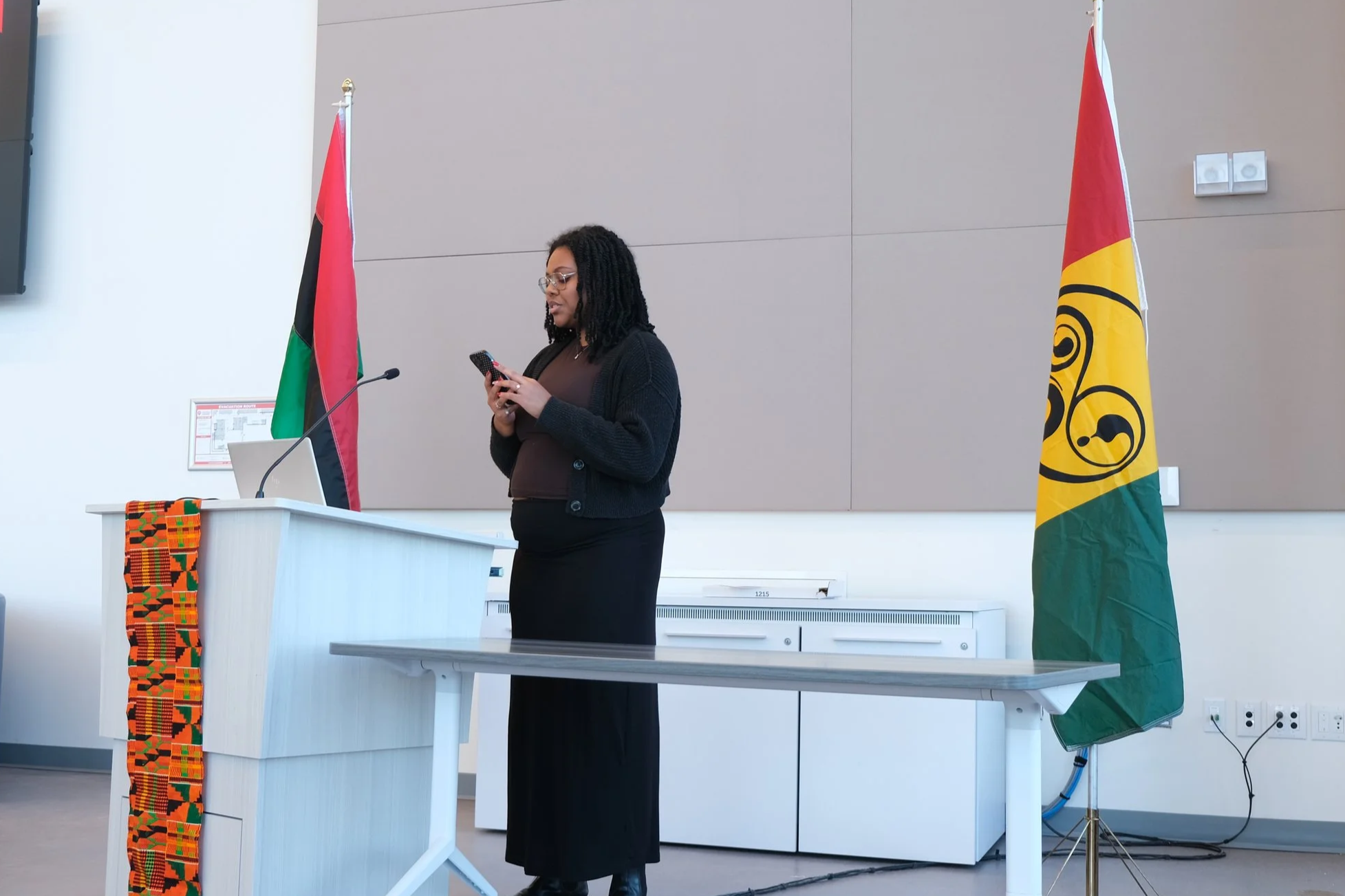
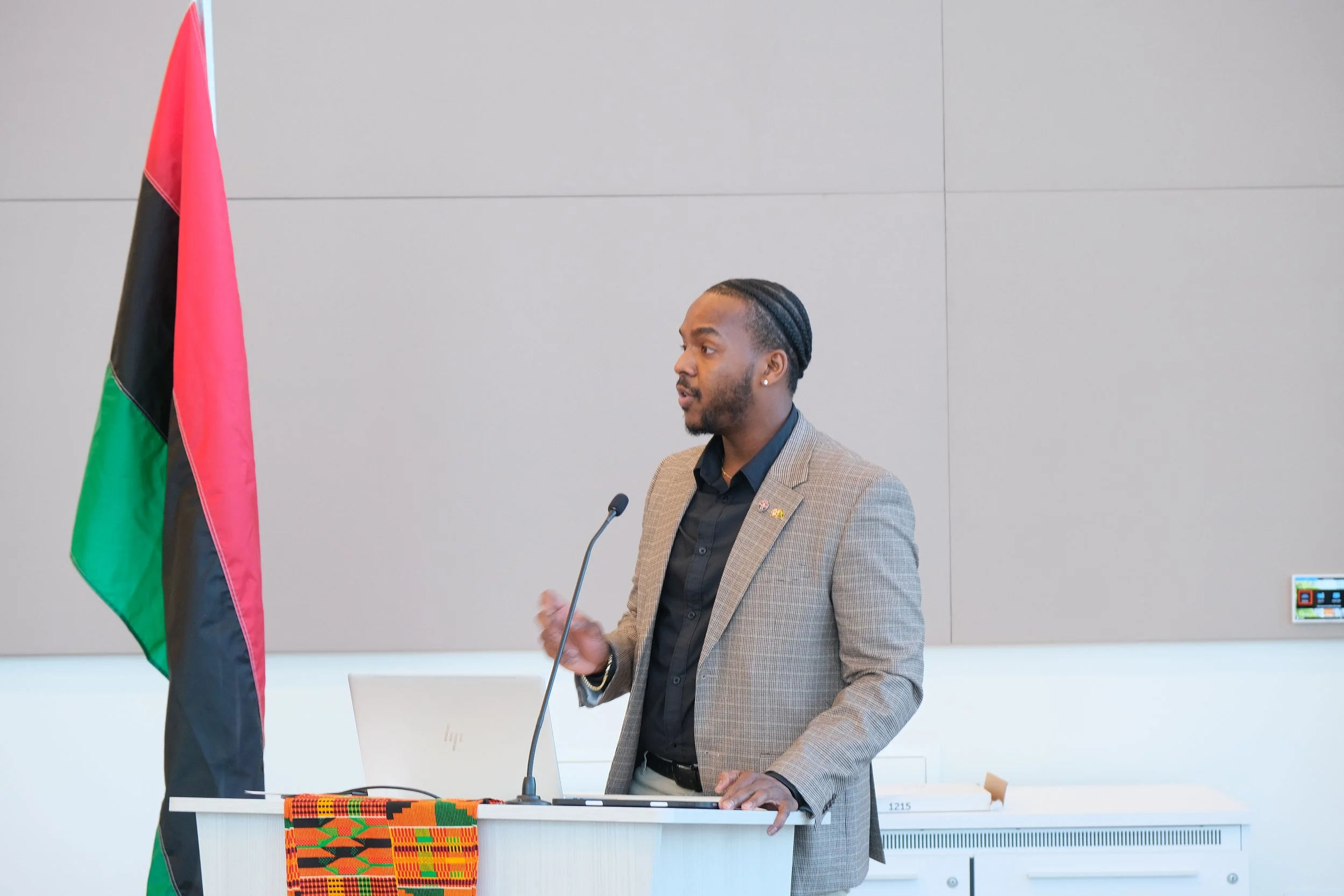
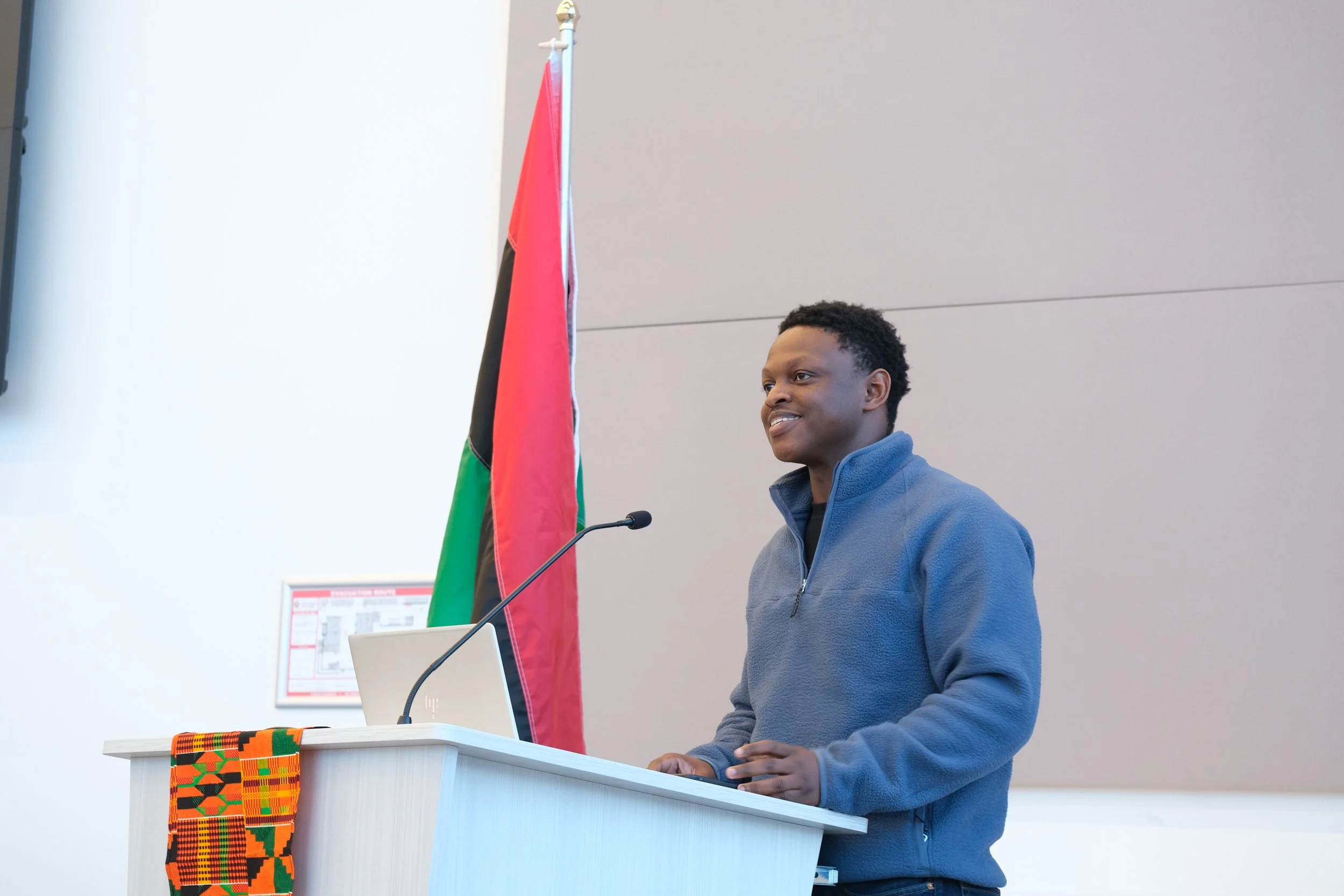
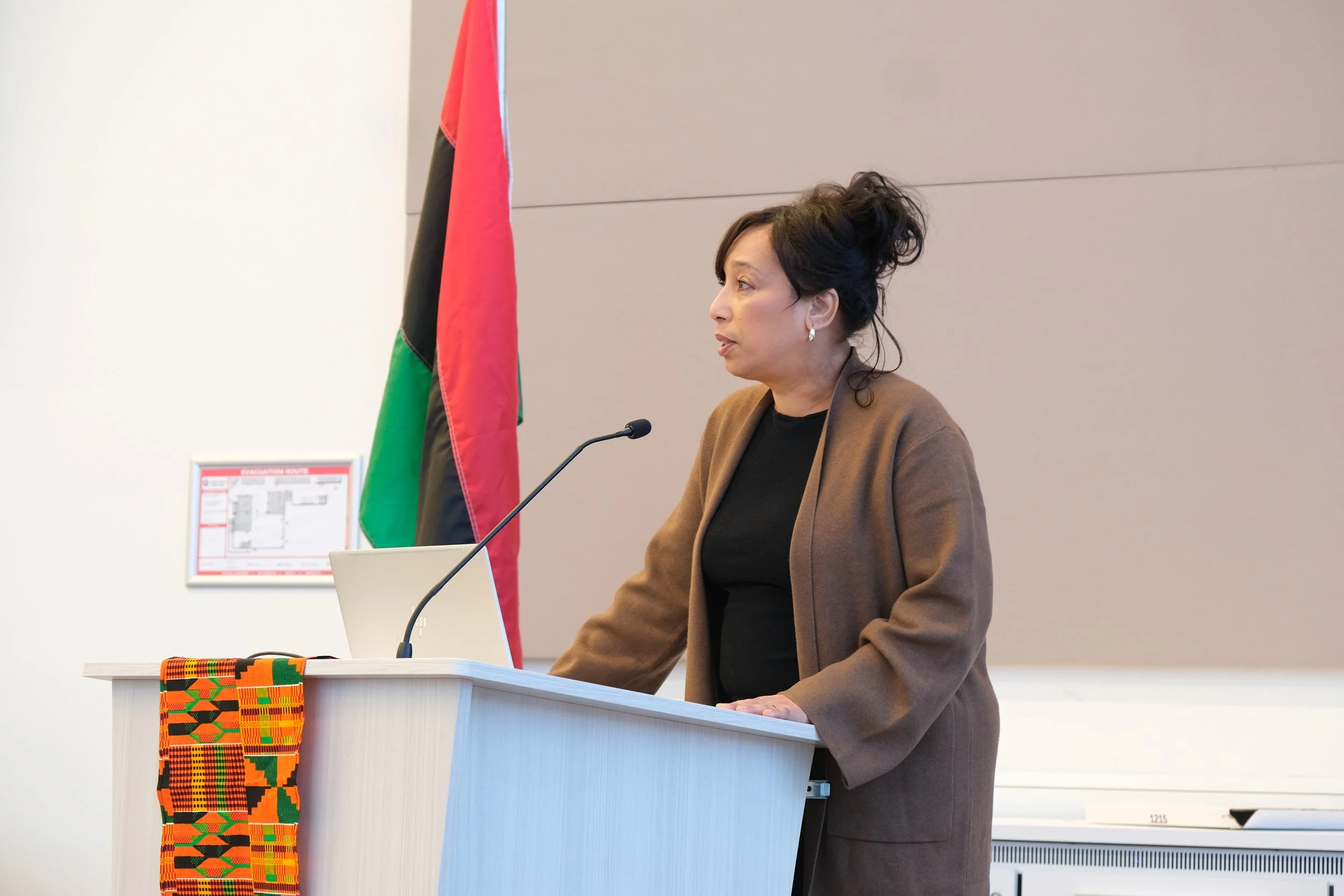
Photo gallery of speakers

“It was an incredibly difficult role, and it took a lot from me and my experience at SMU,” Kariuki-Macdonald shared. “It makes me want to talk about the institutional barriers that tried to tear me down, to tear our community down. It makes me want to talk about the times people said our goals were impossible, that they were too big or not worth it.”

Despite the weight of that experience, she emphasized it was “an honour to dedicate myself to advocating for Black students at SMU,” reflecting on the work to help ensure consistent Black student advising supports, strengthen Black student community, and contribute to the creation of the university’s first dedicated Black student space.

Former African Student Society President Topaz Nnani reflected on the deep cultural context that shaped his experience at Saint Mary’s, particularly the grounding influence of African Nova Scotian history and community.

In the absence of a Black Student Advisor at the time, Nnani acknowledged that he and other Black student leaders often carried significant emotional responsibility for their peers.

“This was a group effort – things like this always are,” Nnani shared. “We did what we could to support one another, but the emotional toll was real.”

Nnani credited the strength to persist to African Nova Scotian stories of resilience, culture and joy, as well as to moments of allyship and institutional listening. Instances, he noted, where administrators like Tom Brophy showed up, listened without defensiveness and took meaningful action.

Creating a legacy for SMU students

For Ramon Stultz, President of the Caribbean Society, establishing the BEC represents not a conclusion, but a continuation.

He emphasized that the BEC exists because students organized together, building community with intention, refusing to be pushed to the margins, and asserting not just the right to exist, but the right to thrive.

This room, these walls, the opening of this space… it is the continuation of a story Black students have been working toward for generations. It is a story of presence, persistence, and power.
— Ramon Stultz

“This is their legacy,” Stultz continued. “But a legacy is not a museum piece; it is a responsibility. Because the real work isn’t just in opening doors, it’s in changing the culture.”

Former SMUSA President Simbarashe Chiunda also spoke to the shaping of this legacy, acknowledging the efforts of those who came before and underscoring the role of the present generation to carry and lead the responsibility of those who come after.

“Let us open this space with new commitments to our history and our future,” Chiunda said. “Because Black history is not history, it is here, and it is us.”

Deborah Brothers-Scott, Director of Diversity, Inclusion and Wellness, reflected on the deeper meaning of the moment, as a member of both the Saint Mary’s and African Nova Scotian communities.

“Today, we didn’t just open a room,” Brothers-Scott said. “We affirmed a legacy. This space will be shaped by the laughter, the Black brilliance, the creativity, and the care of the Black students who occupy it daily.”

Commitment to Black Excellence at SMU

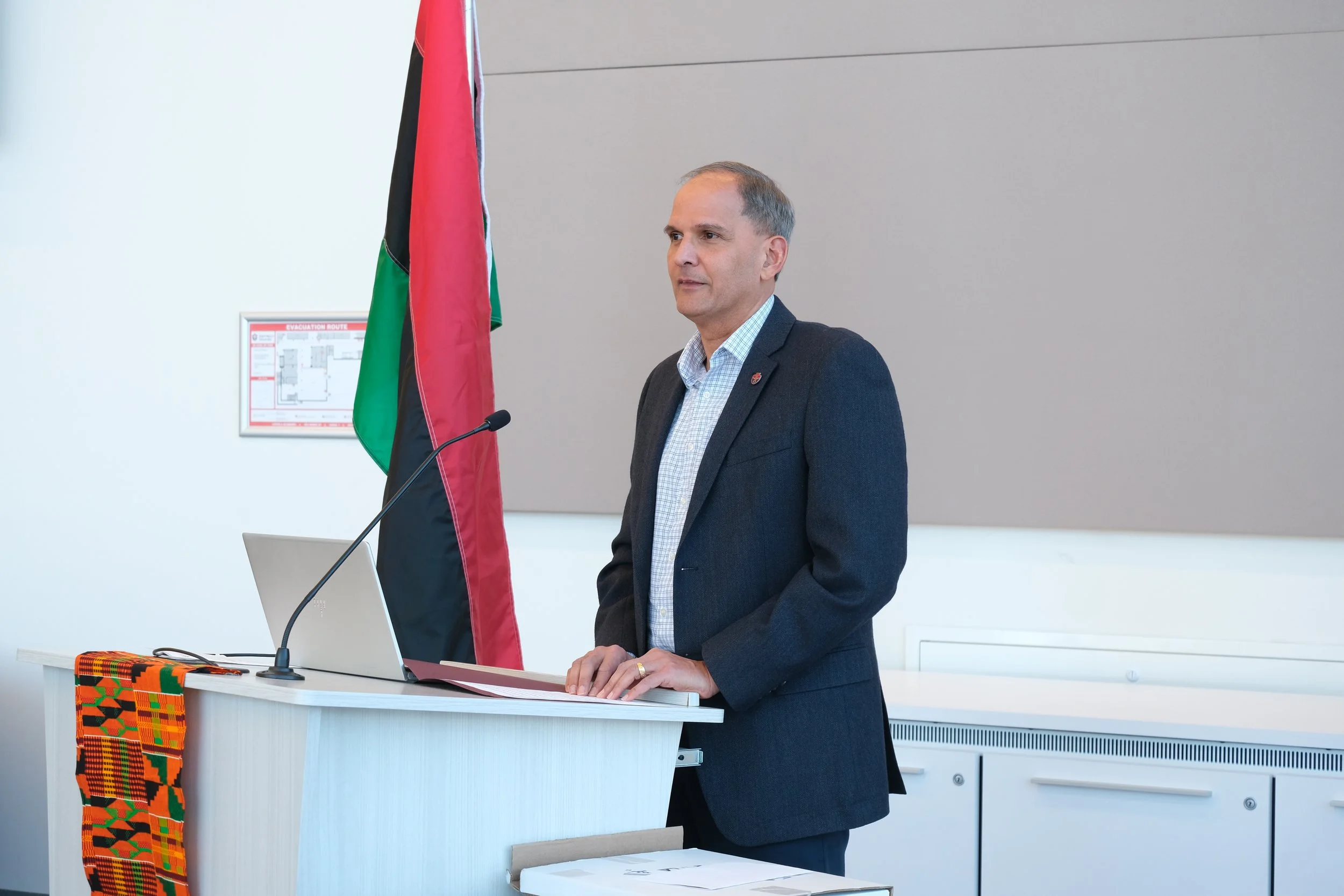
President Dr. Michael Khan emphasized that the creation of the Black Excellence Commons reflects both learning and responsibility.

“The creation of this space matters,” Dr. Khan said. “Students thrive when they can bring their whole selves to campus, and institutions grow stronger when we listen deeply to our students and respond with meaningful action.”

He also underscored that the BEC is not an endpoint. “Space is powerful, but it is only the beginning,” Dr. Khan asserted. “We must continue to support Black students through programs, resources, pathways and partnerships that enable you to thrive long after you leave this campus.”

That responsibility was echoed by Tom Brophy, Associate Vice-President, Student Affairs and Services, who reflected on the significance of the moment.

“To have my name included on this plaque alongside these Black student leaders is not something I take lightly,” Brophy shared. “This space exists because of their courage, persistence and refusal to accept less than belonging. My role was to listen, to learn, and to act, and I am deeply honoured to stand in support of the students who led this change.”

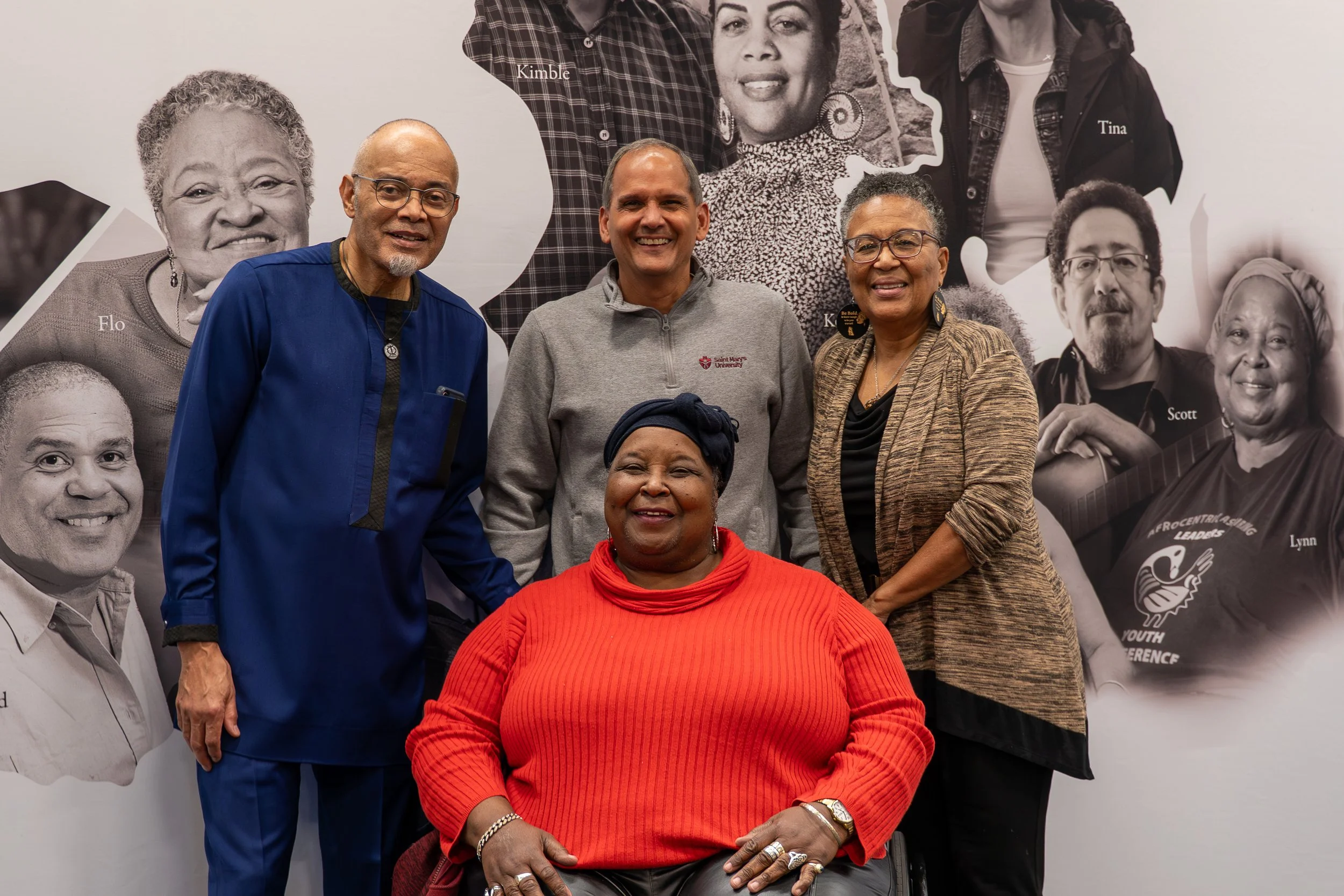
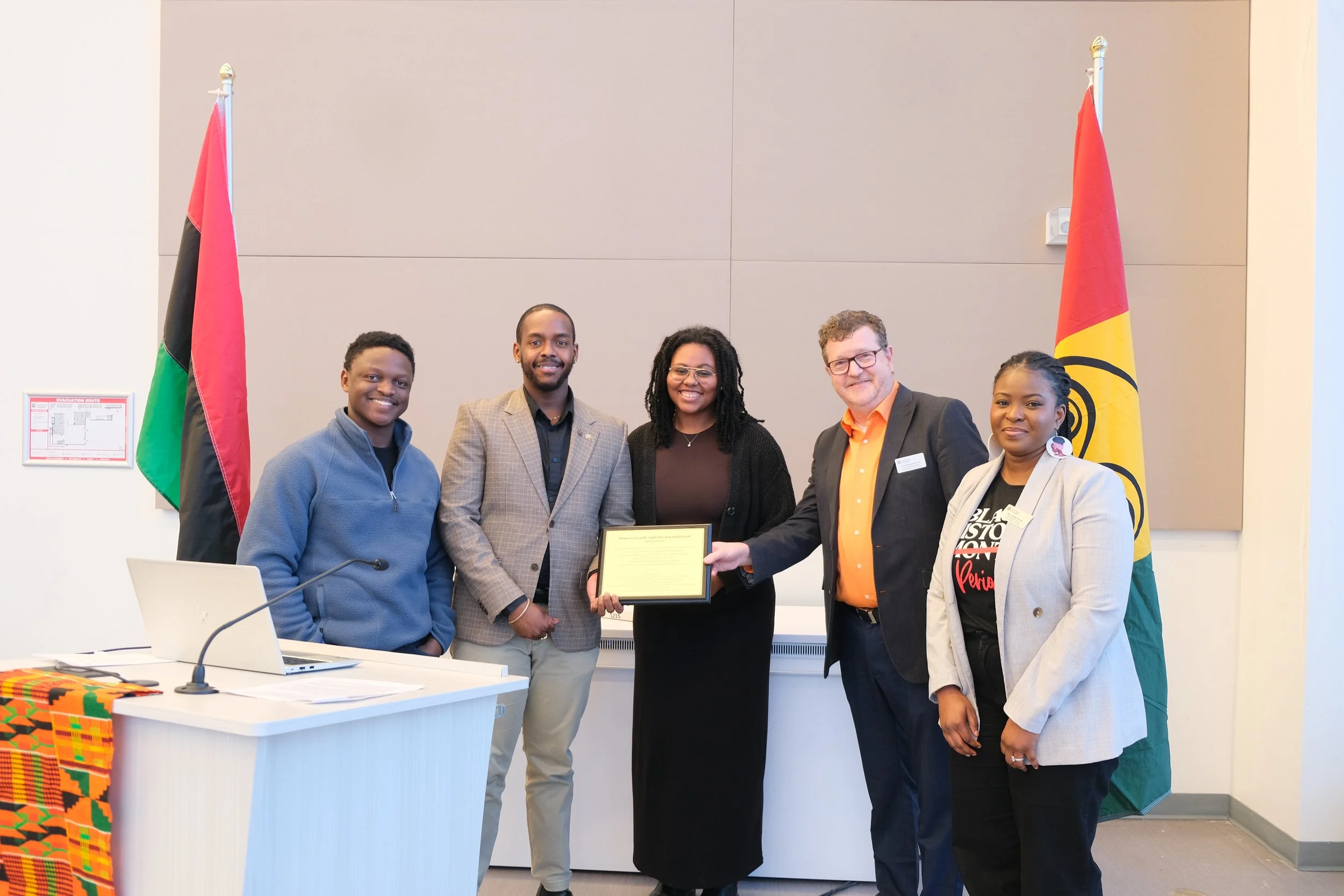
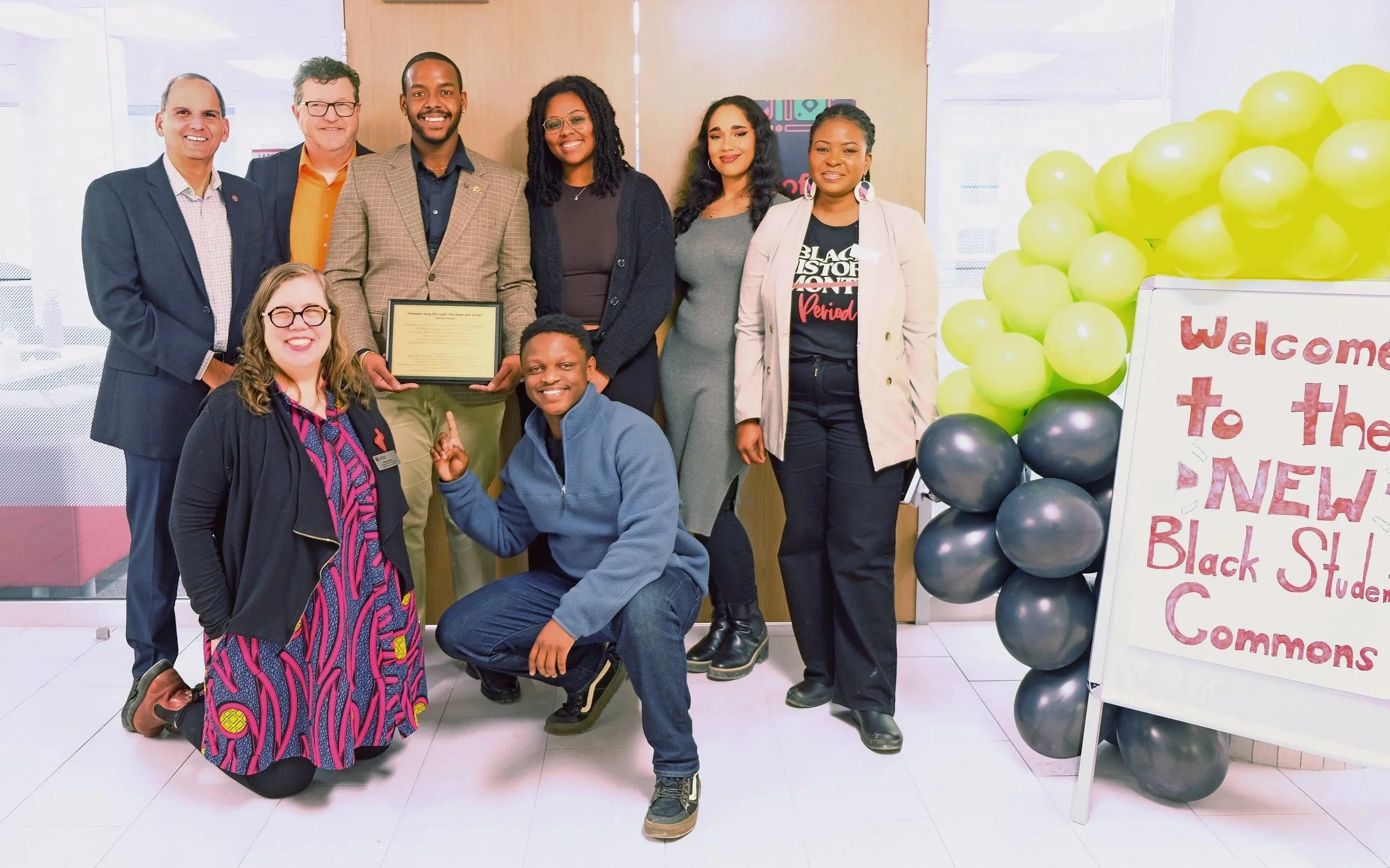
Dr. Michael Khan, Tom Brophy, Ramon Stultz, Jaiden Kariuki-MacDonald, Danae Conrad, Ebun Oladele, Dr. Shannon Dea and Simbarashe Chiunda at the BEC opening ceremony

A plaque unveiled during the ceremony bears an African proverb: “However long the night, the dawn will break.” Beneath it, the dedication reads:

Established to honour the voices, histories and lived experiences of the Black students of Saint Mary's University. This space affirms joy, culture, learning and community today and for generations to come.

We acknowledge and thank those whose commitment and collaboration brought this space to life.

With recognition to:

  • Jaiden Kariuki-MacDonald, President, Black Student Society (2023-2025);

  • Topaz Nnani, President, African Student Society (2023-2025);

  • Ramon Stultz, President, Caribbean Society (2024-2026);

  • Simbarashe Chiunda, President, Saint Mary's University Students’ Association (2024-2025);

  • Ebun Oladele, Black Student Advisor;

  • Tom Brophy, Associate Vice-President, Student Affairs and Services

As African Heritage Month events continue through February, Sankofa: Black Excellence Commons serves as both a reflection of how far the community has come and a call to move forward, inviting continued learning, accountability, celebration, and collective care. Learn more about accessing the space on campus.


Explore the African Heritage Month Splash Page to view the full schedule of events and ways to engage throughout the month.

New social innovation field course includes travel to Ghana

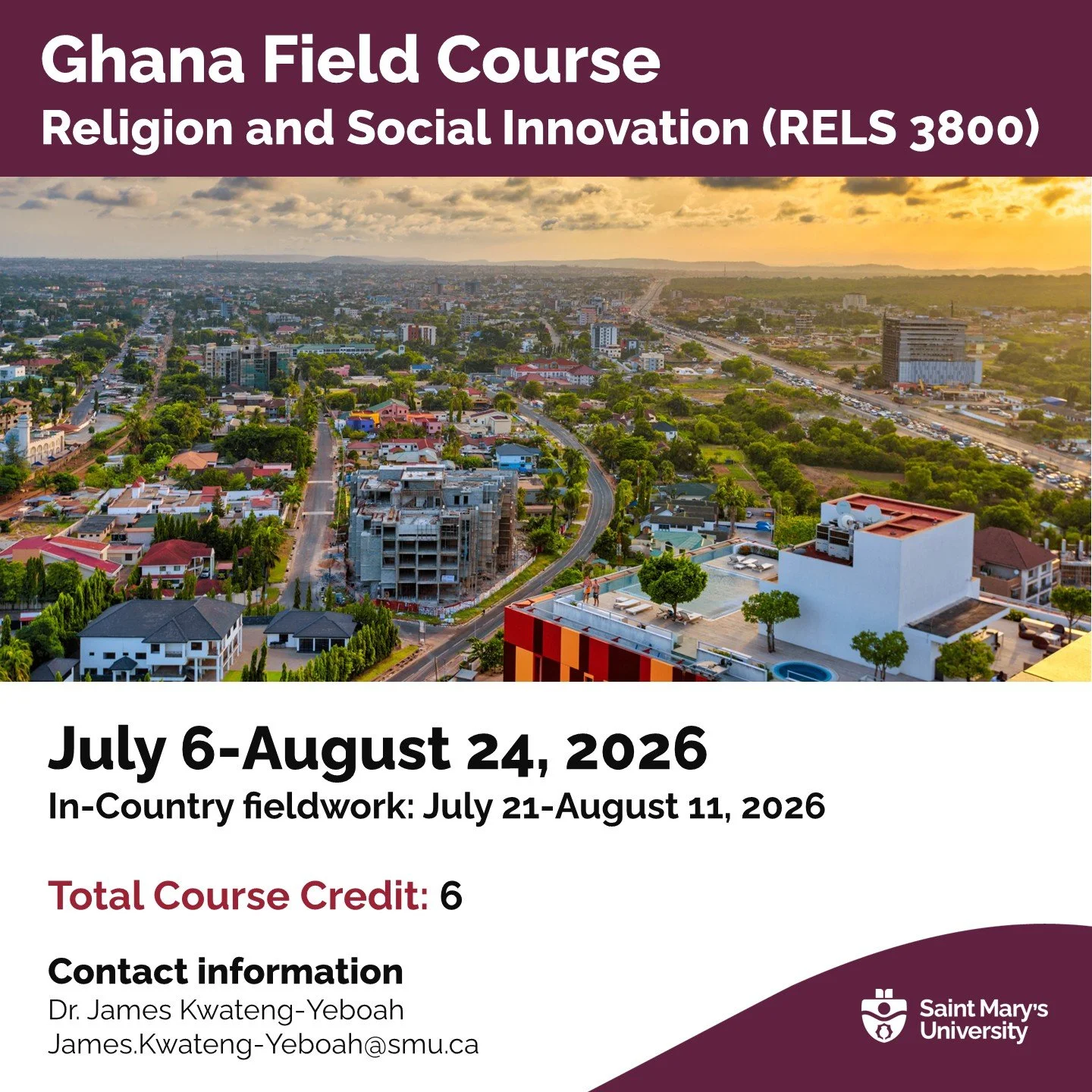
An aerial view in Accra, Ghana

Accra, Ghana

Launching at Saint Mary’s in 2026, a new field course will help students build career-ready skills in non-profit leadership, community-based research and intercultural communication. The Ghana Field Course: Religion and Social Innovation (RELS 3800) will take learning far beyond the classroom this summer, as students explore how culture and religion help drive social innovation in the West African nation.

Field course promotional poster

“This isn’t a typical study abroad experience,” says Dr. James Kwateng-Yeboah, who developed the new course. “Students will spend three weeks working alongside Ghanaian community leaders, NGO practitioners and religious organizations to understand how spiritual values drive real-world social change. They’ll visit Indigenous shrines, historic mission sites and contemporary social enterprises, while building practical competencies that employers and graduate programs value.”
The course will examine how African Indigenous and religious traditions are shaping social innovation in education, entrepreneurship and cultural heritage in Ghana—one of Africa’s most vibrant centers of creative enterprise. The course also invites reflection on how African communities transform histories of slavery and colonialism into new models of resilience and social impact.

Combining pre-departure preparation, three weeks of immersive fieldwork in Ghana and post-return synthesis sessions, the course will give students the contextual knowledge, field experience and reflective space to truly integrate their learning. In just seven weeks (July 6 to August 24), students will earn six credit hours.

Though the course is offered by the Department for the Study of Religion, it’s designed to be interdisciplinary in nature. It will appeal to students interested in Black and African studies, religious studies, history, intercultural studies, global development studies and sociology. The course is particularly valuable for students considering careers in global development, nonprofit management, community organizing and social entrepreneurship, or graduate work in African studies, religious studies or history, as the structured fieldwork is designed to build transferable professional skills.

“I designed this course because students need more than abstract theories; they need to see how communities actually create change,” says Dr. Kwateng-Yeboah. “Ghana offers a living laboratory where you can trace how communities have transformed centuries of colonial exploitation into new models of resilience, creativity and entrepreneurship.”

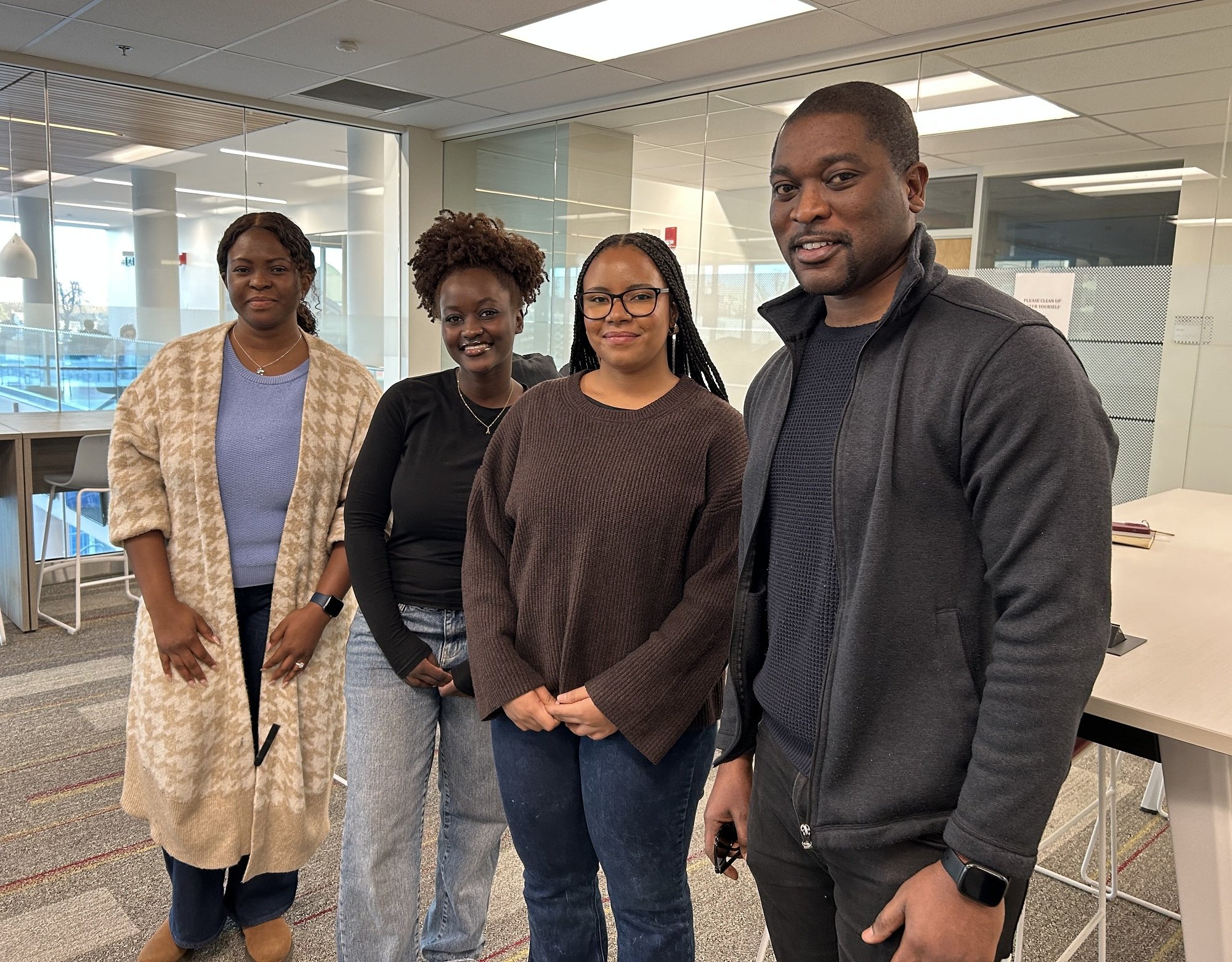
A man stands with three students in a SMU classroom

Dr. James Kwateng-Yeboah (far right) with Ebun Oladele, Black Student Advisor (far left) and two students at the Ghana Field Course information session during International Education Week

During International Education Week in November, Dr. Kwateng-Yeboah held an information session in the Black Student Commons. He has also produced a brief video to promote the new course.

Spots are limited to ensure meaningful engagement with community partners. Interested students should complete the expression of interest form as soon as possible. Dr. Kwateng-Yeboah will contact applicants for interviews before final registration. For more details, contact him at James.Kwateng-Yeboah@smu.ca.

Kwateng-Yeboah completed his own undergraduate studies at the University of Ghana before coming to Canada for his graduate studies. At Saint Mary’s, his primary areas of research and teaching are African Christianity, migration, and development.

The new course adds to SMU’s study abroad offerings in Africa that have also included several Geography field courses in The Gambia, most recently in Winter 2025. Saint Mary's also maintains an academic exchange partnership with Uganda Martyrs University in Africa, through the Global Learning & Intercultural Support office. 

Related

African Heritage Month 2026: Perspectives, community and events

African Heritage Month featuring a red, yellow and green ribbon

February marks African Heritage Month at Saint Mary’s University, a time to honour the histories, cultures, and contributions of people of African descent in Nova Scotia and across the African diaspora. Each year, this month invites our community to learn, reflect and engage meaningfully in ways that honour and support Black students, faculty, and staff across the university. 

Read below to find out about events happening on campus, highlights of Black Excellence at SMU and resources available to students.

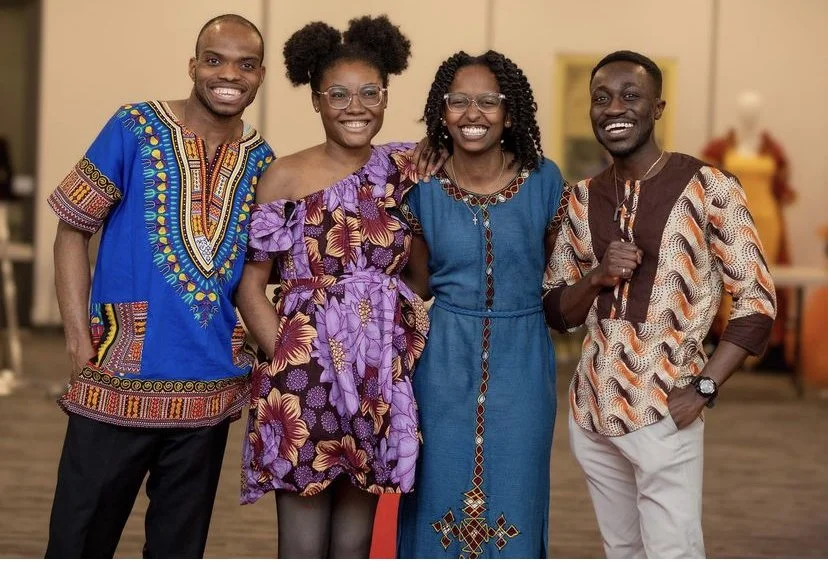
Students pose together wearing traditional African clothing

Students celebrate at SMU’s African Night


A personal reflection on African Heritage Month

To help ground this year’s celebrations, we spoke with Deborah Brothers-Scott, Director, Diversity Inclusion and Wellness, who shared her reflections on the month’s significance, the importance of centering Black and African Nova Scotian voices, and what meaningful inclusion looks like at SMU throughout the year.

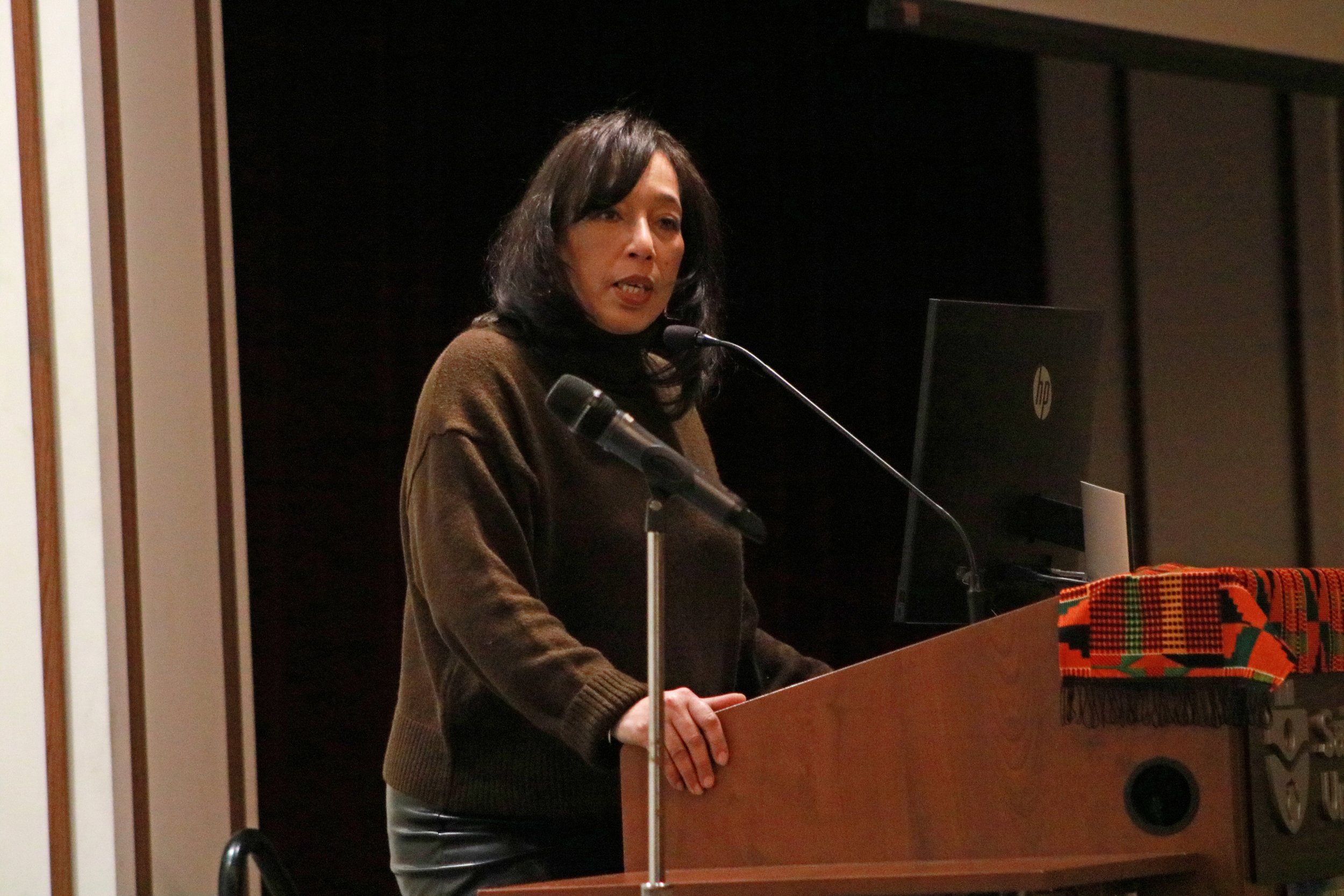
Deborah speaks at a podium

Deborah Brothers-Scott speaks at an African Heritage Month event on campus

What does this month mean to you personally, and what do you hope it offers to the SMU community? 

As an African Nova Scotian woman, it is deeply personal. It's a time when the contributions of Black people are spotlighted, acknowledged and celebrated. This acknowledgement of Black excellence should extend beyond February. 

For the university community, African Heritage Month offers an opportunity for learning, reflection and connection. It creates space for meaningful conversations, challenges stereotypes, and encourages appreciation of Black histories and contributions. It invites the community to engage with diverse perspectives, build understanding and foster a more inclusive and respectful environment for all. 

  • This year’s African Heritage Month theme is Strength in Unity: Moving Forward with Purpose, Prosperity, Power, and Progress. What feels most important for our community to reflect on or engage with this year? 

    This year's theme invites our university community to reflect on how collective action and shared responsibility shape meaningful change. The University’s commitment to the Scarborough Charter on Anti-Black Racism calls for sustained action, accountability and institutional transformation that supports Black flourishing across all areas of university life. Engaging with this year's theme means holding ourselves responsible for turning principles into practice, and that progress is measured by the lived experiences and success of Black faculty, staff and students.  

    From your perspective, how do moments like African Heritage Month contribute to a stronger sense of belonging for Black students, faculty and staff? 

    From my perspective, events during African Heritage Month can be powerful if they do more than celebrate culture. They affirm presence and history in spaces where Black voices have often been marginalized or overlooked. In an academic setting—a place where knowledge is created, validated and preserved—who and what is centered matters deeply.  

    African Heritage Month also creates intentional visibility. It signals to Black faculty, staff and students that their identities, contributions and lived experiences are not only welcomed but valued. It also opens the door for awareness and reflection across the broader community. When done thoughtfully and with intention it helps shift institutional culture. 

    For those in the SMU community who may be unsure how to engage meaningfully with African Heritage Month, what would you encourage them to be curious about or open to? 

    I'd encourage members of the SMU community to approach African Heritage Month with curiosity, humility, and a willingness to listen. That might mean learning about histories and contributions that aren't always centred, engaging with stories and experiences beyond your own, or reflecting on how systems and institutions shape people's lives differently. 

    Being open doesn't require having all the right words. It starts with showing up, asking thoughtful questions and not being afraid to say the wrong thing. It is about valuing voices that have too often been overlooked or silenced. 

    Beyond February, what does meaningful recognition and inclusion look like to you at SMU throughout the year? 

    Meaningful recognition and inclusion beyond February means embedding Black voices, histories, and experiences into everyday life at SMU. This includes integrating Black scholarship and perspectives into curricula across disciplines, the inclusion of Black voices at decision-making tables, and supporting the needs of Black faculty, staff and students. Also, a visual representation of Black achievement. 

    Ultimately, meaningful inclusion means Black excellence is recognized and celebrated. When this work is ongoing, SMU moves from symbolic recognition to real lasting change. xt goes here

Deborah Brothers-Scott, Director, Diversity Inclusion and Wellness at Saint Mary’s leads efforts to advance equity, inclusion, and wellbeing across campus. She also chairs the SMU Anti-Racism Committee and played a key role in the university’s engagement with the Scarborough Charter, helping guide institutional action on Black inclusion and antiracism. As an African Nova Scotian leader with deep community roots, she is committed to fostering belonging, supporting Black flourishing, and building a stronger, more equitable university environment


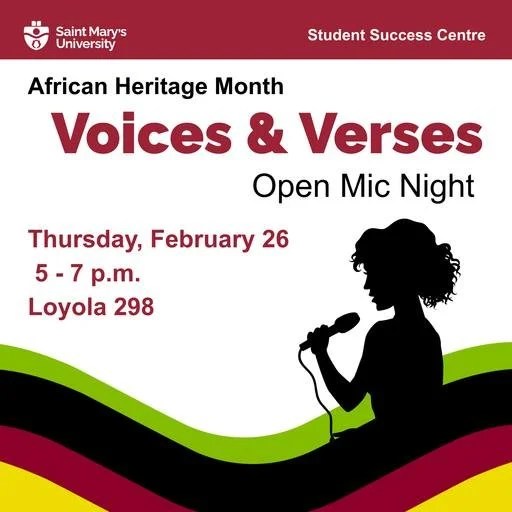
SMU Events

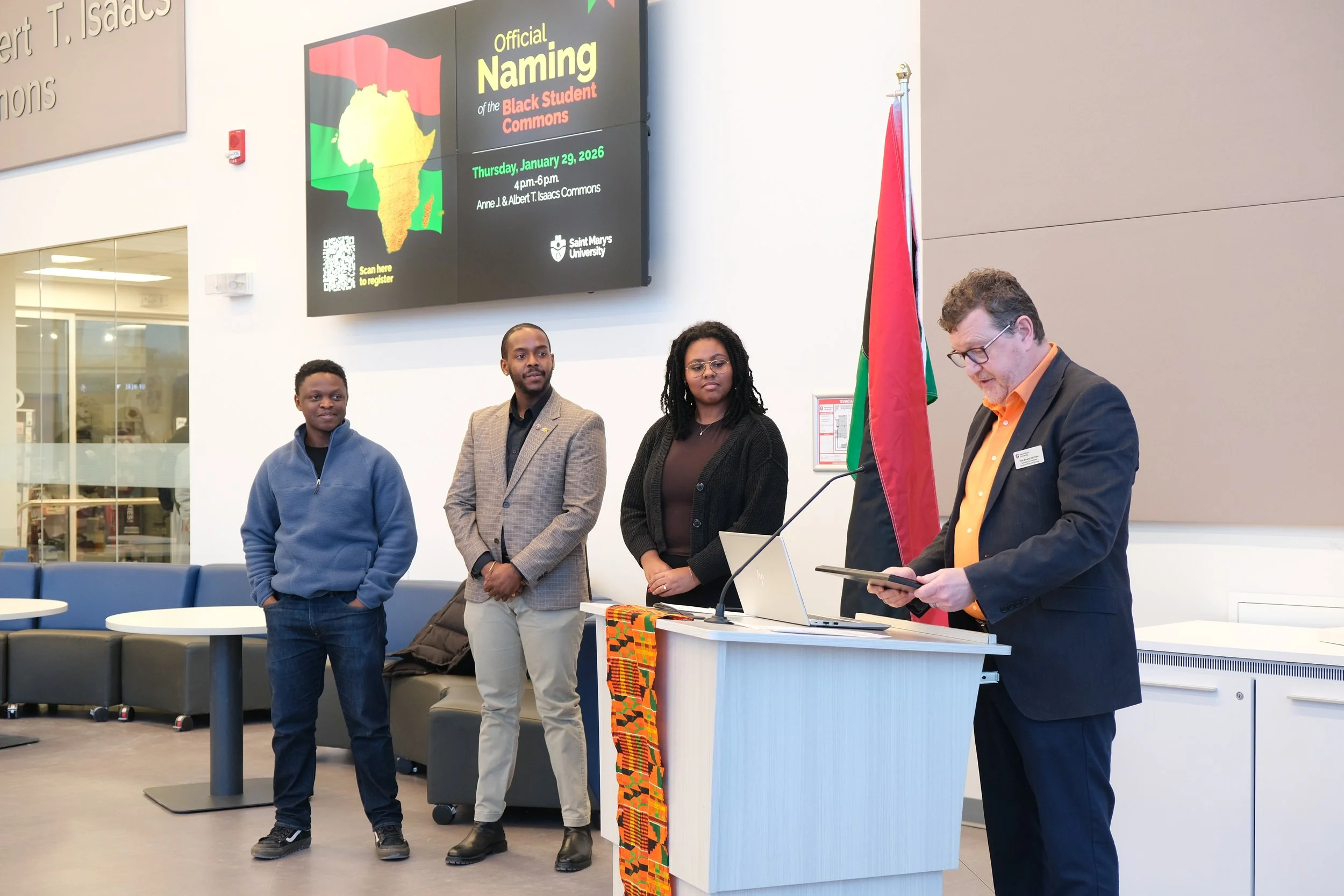
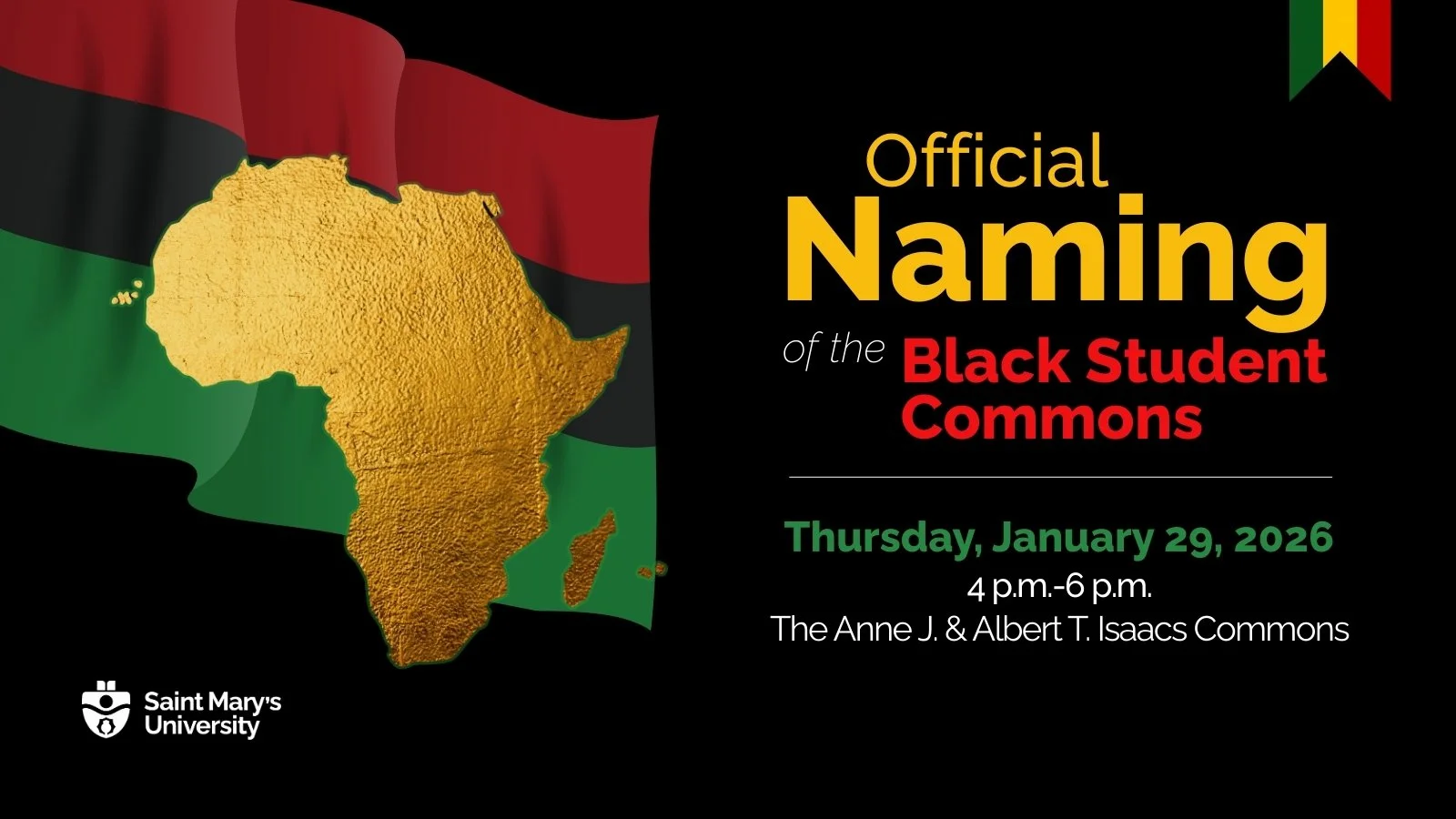
Naming Ceremony of the Black Student Commons

Event information in text shown on a black background with the Pan-African flag

Thursday, January 29
4-6 p.m.
Anne J. & Albert T. Isaacs Commons

Join us, the Black Student Advising Office, for the official naming ceremony of the Black Student Commons, a dedicated space that affirms community and connection for Black students. This ceremony acknowledges the collaborative efforts that brought this vision to life and honours the journey and advocacy that have shaped the space into a place of community, affirmation and excellence for Black students at Saint Mary's.

RSVP here


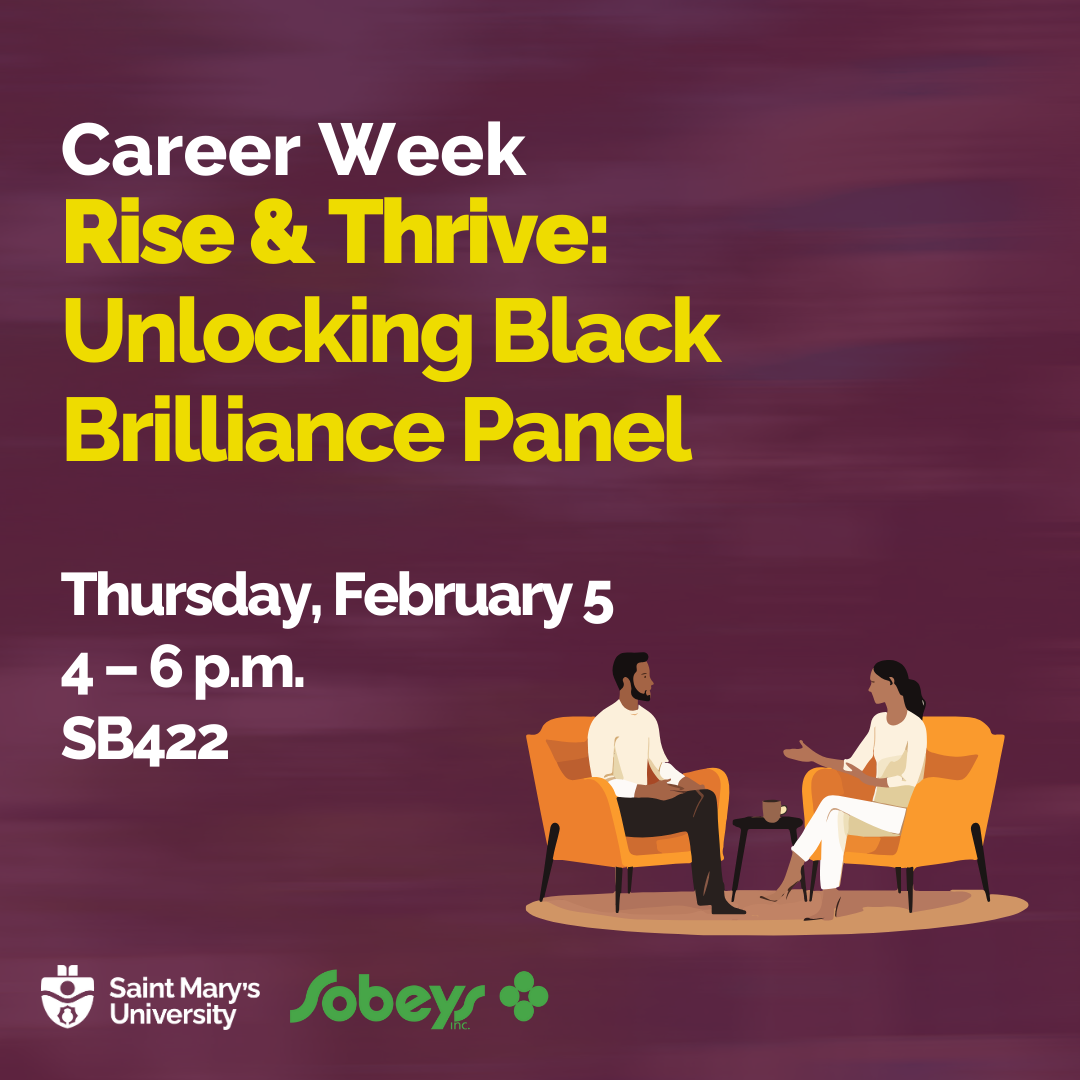
Event information on a maroon background with the SMU and Sobeys logo

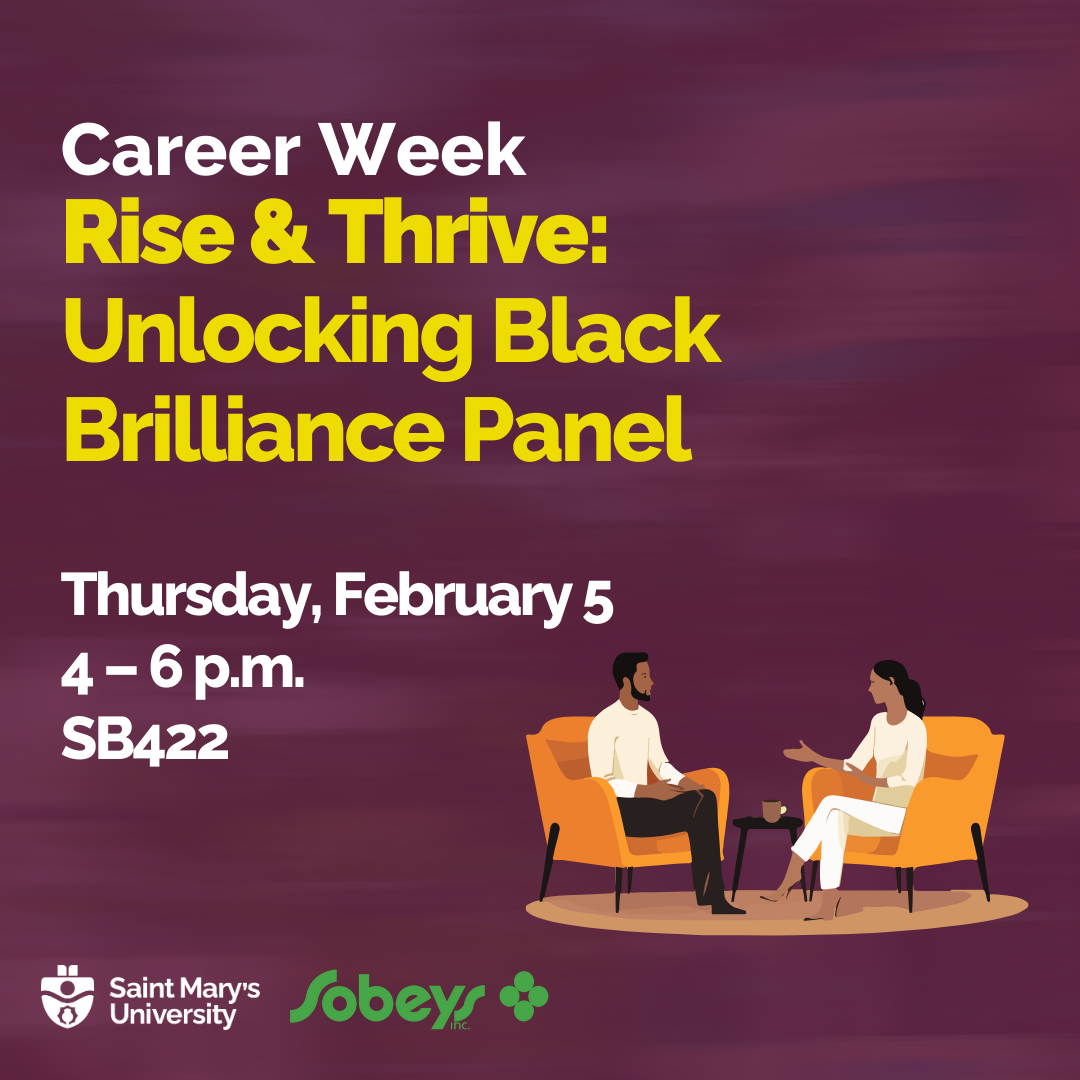
Rise & Thrive: Unlocking Black Brilliance Panel

Thursday, February 5
4-6 p.m.
Sobey Building 422

Part of Career Week 2026

Learn about empowerment, growth, and excellence in career development, overcoming barriers, and taking initiatives in your professional life. It is about moving beyond survival to success and flourishing in your career. This panel recognizes the unique creativity and innovation that Black alumni bring to their field. It is ultimately about creating spaces where Black excellence is seen, valued, and elevated.

Register here


A huskies basketball player on a graphic displaying event information

SMU Huskies Black Heritage Night

Friday, February 6

The SMU Huskies are celebrating African Heritage Month at the Homburg Centre. Half-time performances from Owen ‘O’Sound’ Lee, ECMA Award Winning 'king of the African Canadian songbook’.

Basketball doubleheader vs. UNB
Women's basketball: tip-off at 6 p.m
Men's basketball: tip-off at 8 p.m.

Women’s Hockey vs U de Moncton
7 p.m.
Dauphinee Centre

Get tickets


Budget Bites: African Heritage Month Edition

Tuesday, February 10
4-6 p.m.
Loyola Residence 18-7

Join the SMU Community Food Room and Residence Life for an African Heritage Month-themed interactive cooking demo and discover how to cook on a budget! Learn quick, tasty, and budget-friendly recipes you can mash, mix, and taste yourself.

Questions? Please reach out to food.room@smu.ca


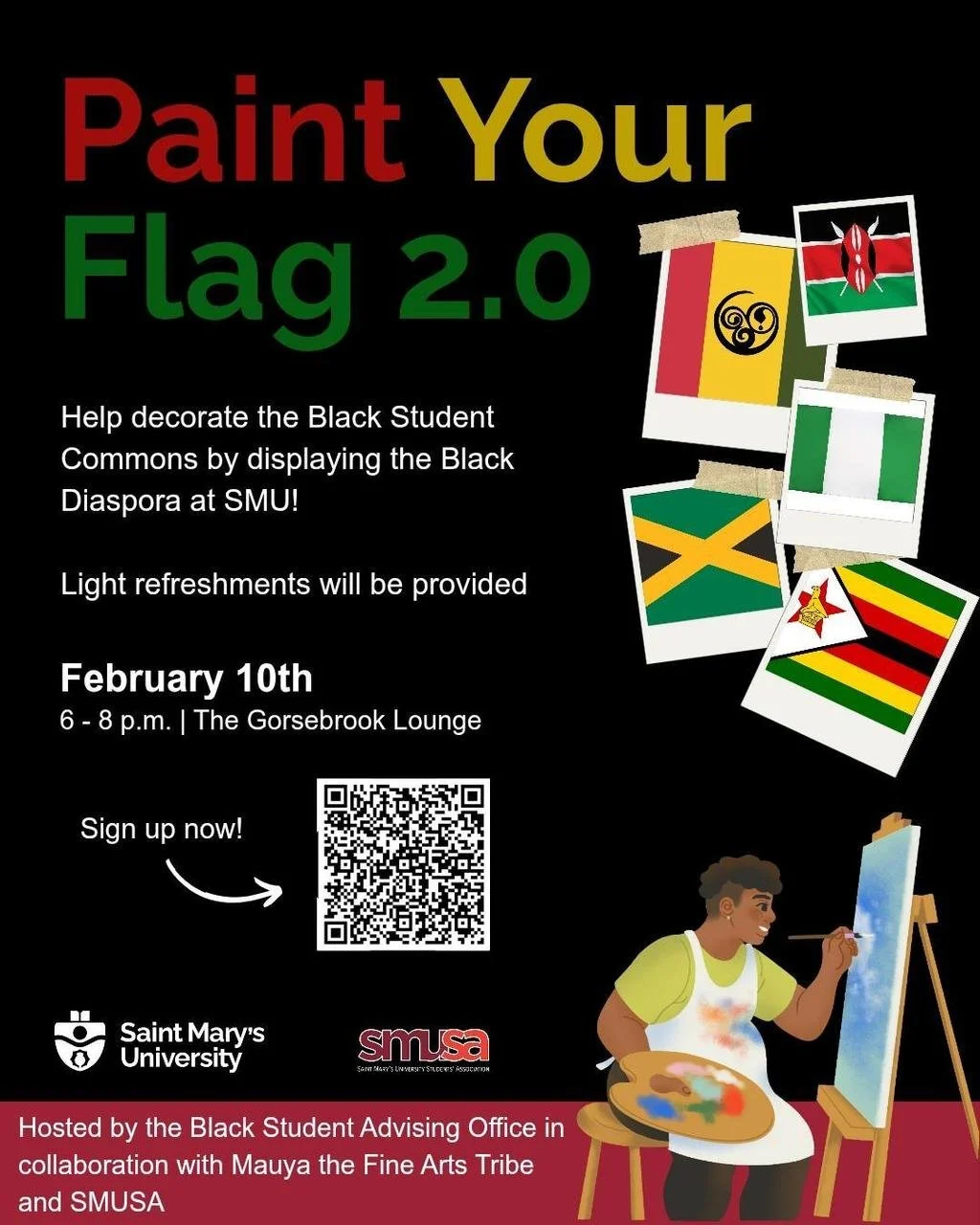
Paint Your Flag

Tuesday, February 10
6-8 p.m.
The Gorsebrook Lounge

In collaboration with Mauya The Fine Arts Tribe and Saint Mary's University Student Association, join us in decorating the Black Student Commons by displaying the Black Diaspora at SMU! Refreshments will be provided.

Register here.

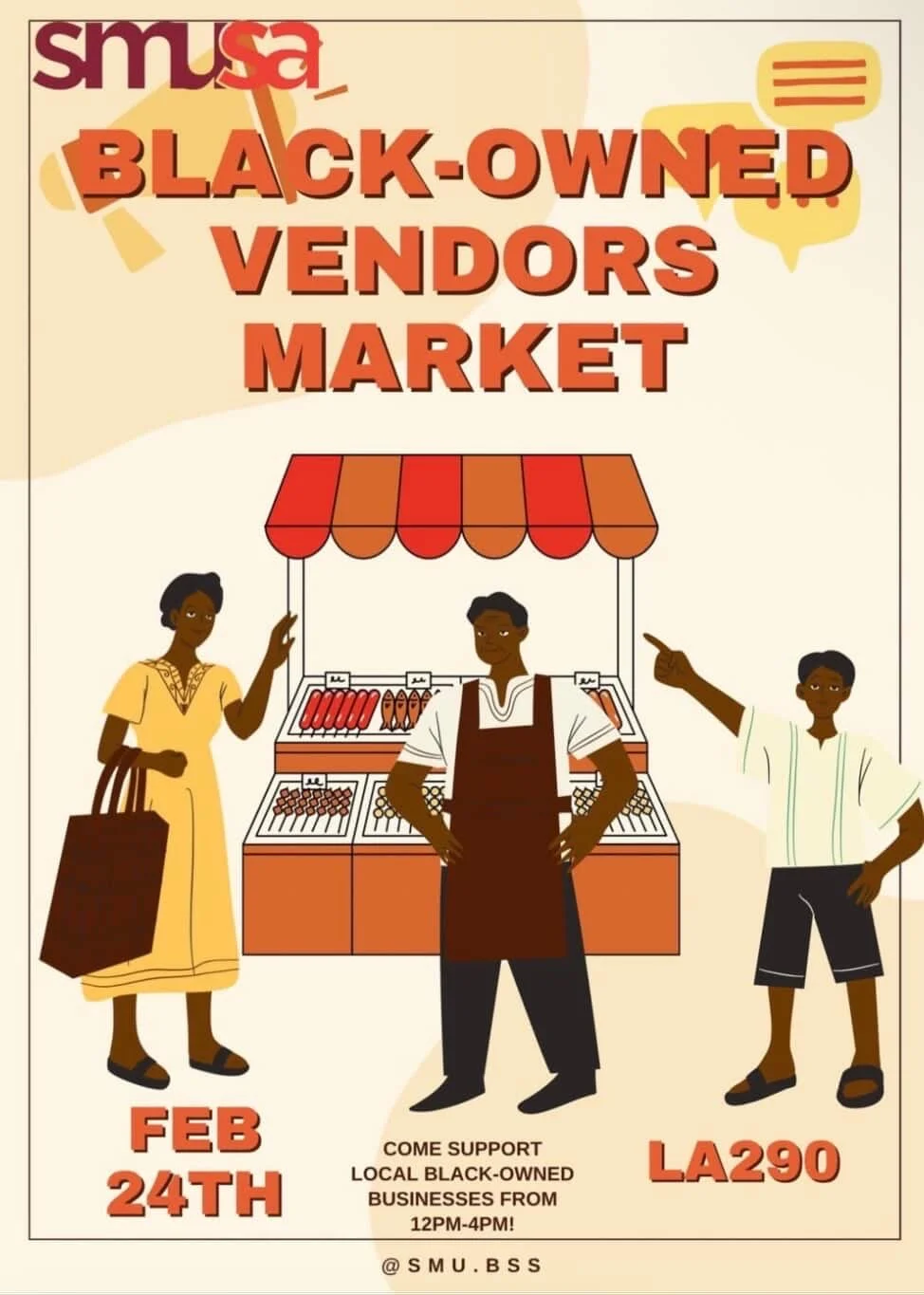
Black-Owned Vendors Market

Tuesday, February 24
12-4 p.m.
Loyola Conference Hall (LA 290)

The Black Student Society and SMUSA present the 2026 Black-Owned Vendors Market.

Visit Loyola Conference Hall (LA 290) to shop a variety of local and Black-owned businesses.

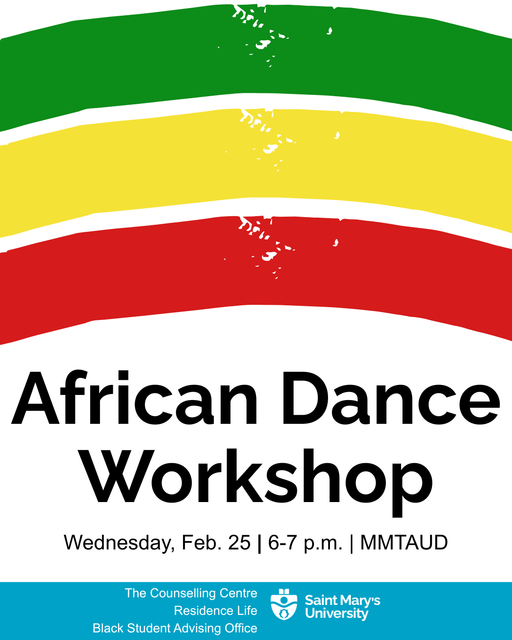
African Dance Workshop

Wednesday, February 25
6-7 p.m.
McNally Theatre Auditorium

Are you up for a challenge that will have you dancing and sweating while learning more about African culture? This workshop will be facilitated by the Maritime Centre for African Dance and will feature teachers from Africa and the Caribbean. All are welcome, whether you are a seasoned dancer or a nervous beginner!

Hosted by The Counselling Centre, Residence Life, and the Black Student Advising Office.


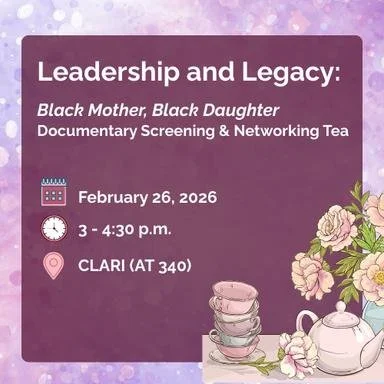
Leadership and Legacy: Black Mother, Black Daughter Documentary Screening and Networking Tea

Thursday, February 26
3-4:30 p.m.
CLARI (Atrium 340)

Join the Black Student Advisor and the Sexual Violence Advisor for Leadership and Legacy, a documentary screening of Black Mother, Black Daughter and networking tea honouring African Heritage Month and International Women’s Day. Celebrate Nova Scotia’s Black women leaders, connect with community, and build relationships with Black-identifying students. Pizza and refreshments provided. Everyone is welcome!


Community Events

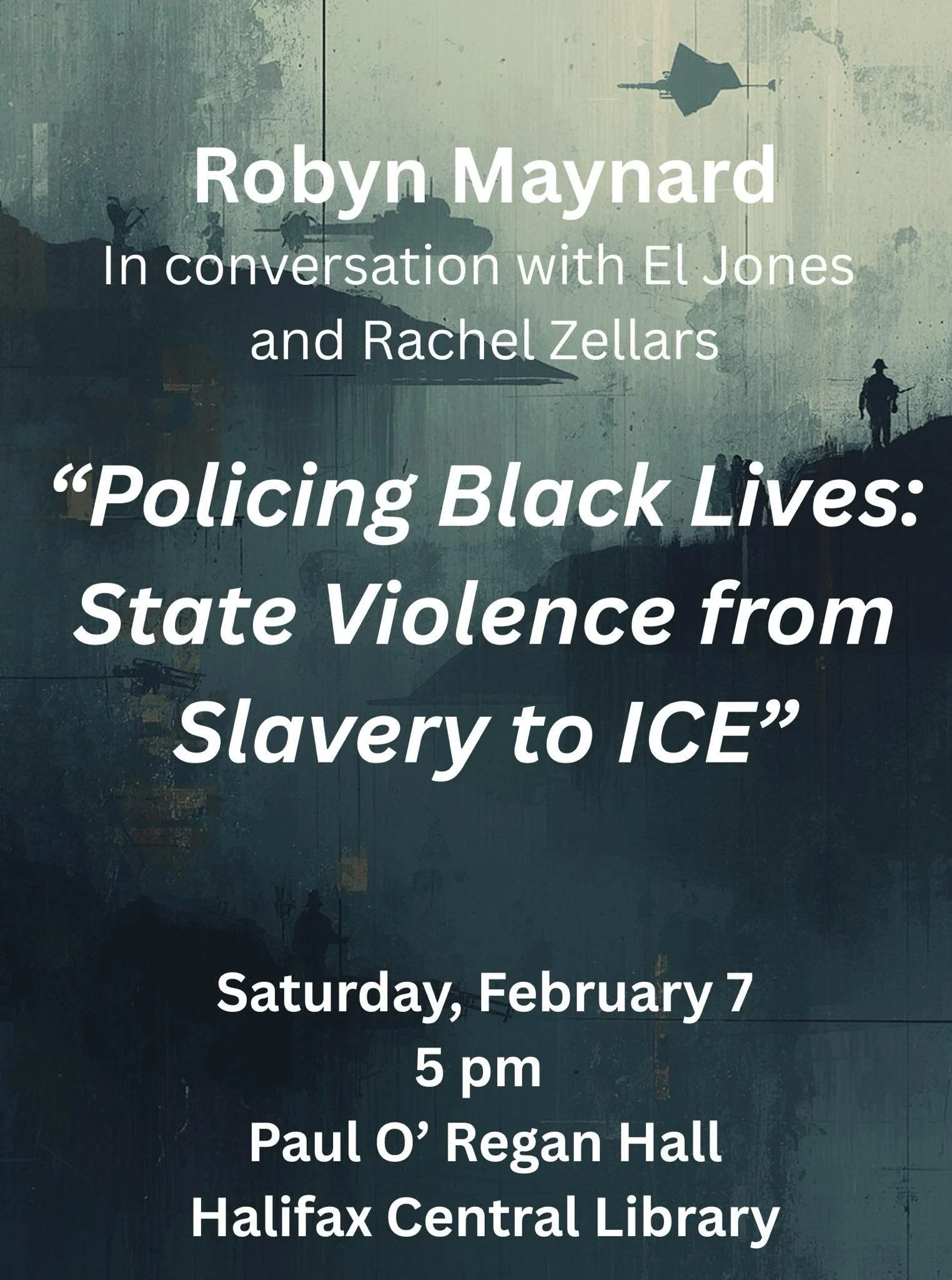
Policing Black Lives: State Violence from Slavery to ICE

Saturday, February 7
5 p.m.
Paul O’Regan Hall, Halifax Central Library

Presented by the East Coast Prison Justice Society (ECPJS).

Join Author Robyn Maynard in conversation with SMU professor Rachel Zellars, and ECPJS board members El Jones & Suzanne Patles for a timely conversation on policing and state violence.

All are welcome to attend in the spirit of community & solidarity.

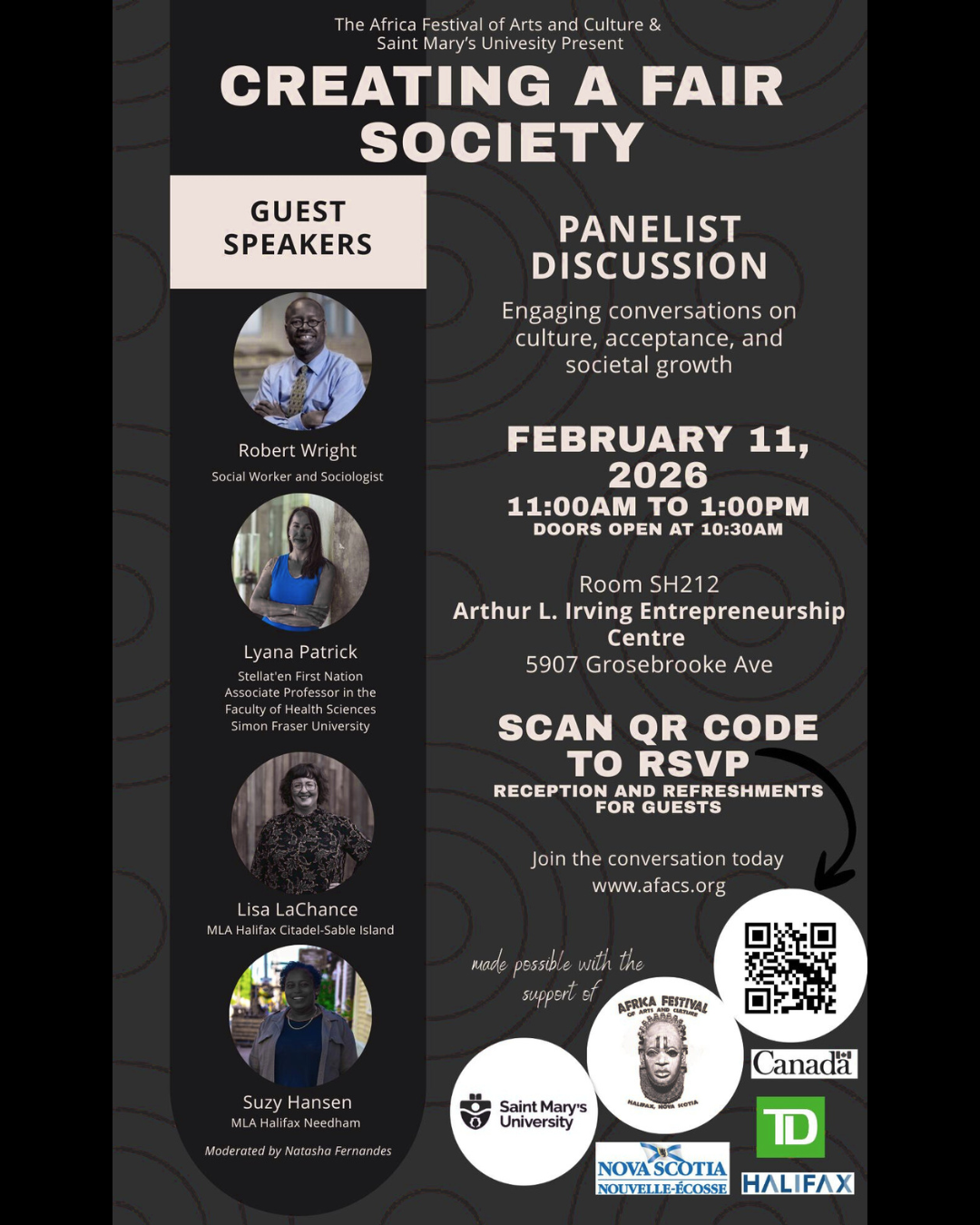
Creating A Fair Society

Wednesday, February 11
10:30 a.m.-1 p.m.
Arthur L. Irving Entrepreneurship Centre

Hosted at SMU by the Africa Festival of Arts and Culture Society

Get ready for an inspiring in-person event all about building a fairer Canada together. Connect with passionate folks, share your ideas, and discover new ways to make a difference and include others in your life.

With SMU professor Robert Wright, Lyana Patrick, Suzy Hansen and Lisa Lachance.


SMU Community Spotlight

Elisha jumps on an athletic track

Elisha Delphin sets school triple jump record as Huskies compete in Athletics NS Open

In January, first-year Engineering student Elisha Delphin set a new school record in the Women's Triple Jump with 10.96m. This ranks her 3rd in the AUS rankings so far this season. Read more.


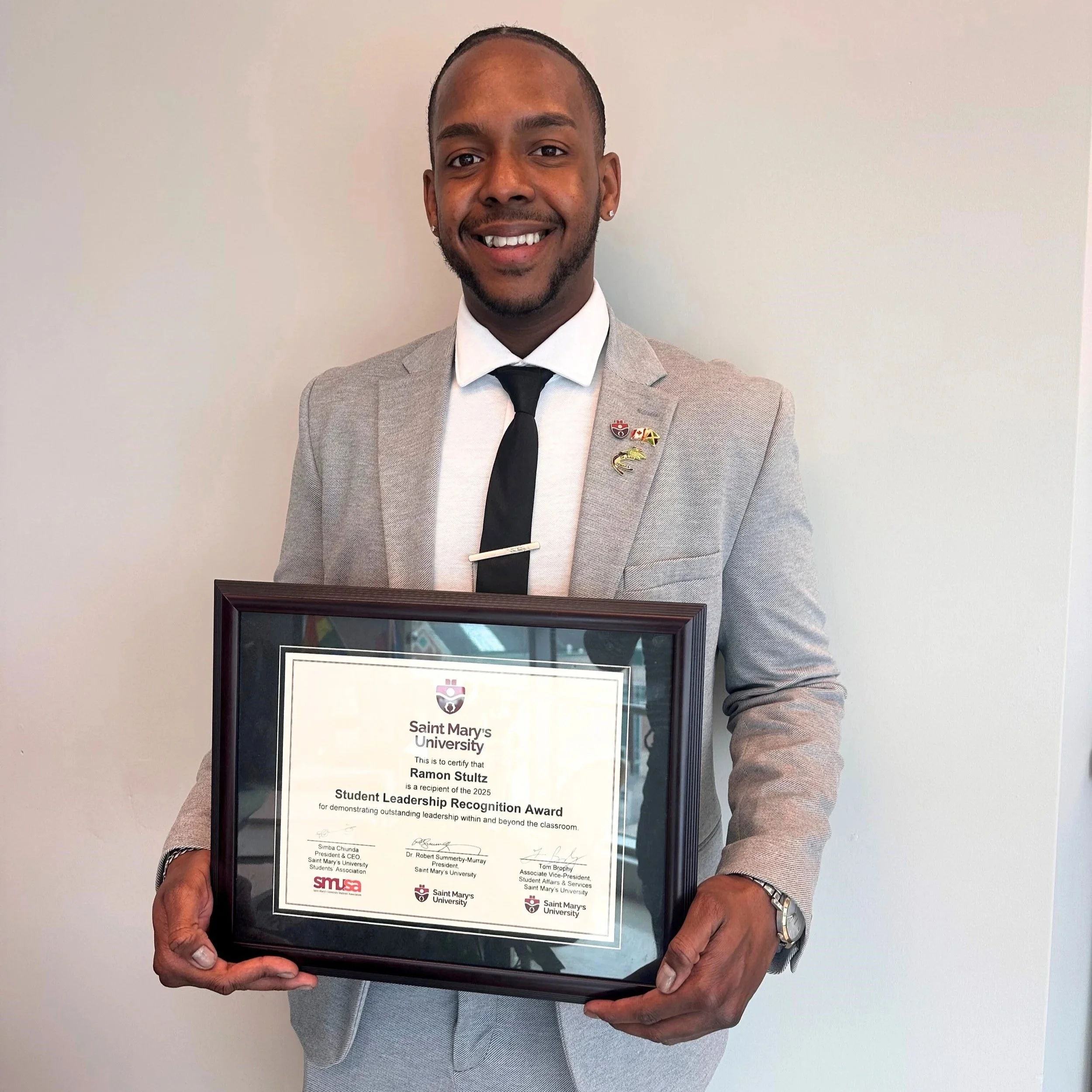
Ramon holds his leadership award certificate

BComm student Ramon Stultz recognized for his leadership

Ramon earned a Student Leadership Recognition Award for the 2024-25 academic year for his many roles on campus, including President of the Carribean Society and RA. The Premiere Emcee Team co-founder was also a Research Assistant at the Black Entrepreneurship Knowledge Hub, where he applied his finance expertise and passion for youth mentoring to support groundbreaking research initiatives for Black communities. Read more.

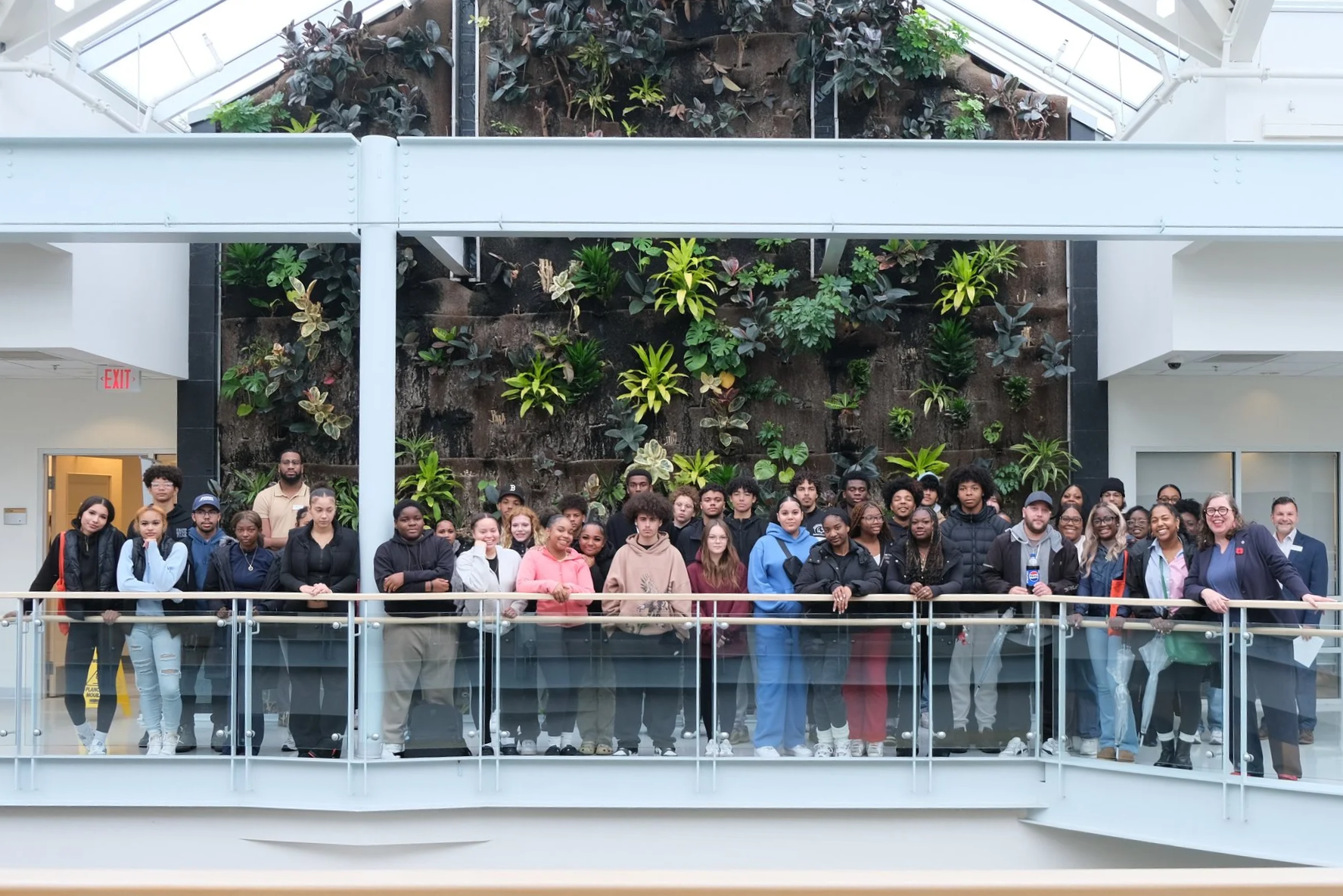
A group of African Nova Scotian high school students at SMU

A new pathway for African Nova Scotian students begins at Saint Mary’s

A recently signed Memorandum of Understanding between Saint Mary’s and The PREP Academy is aimed at strengthening connections and creating pathways for African Nova Scotian learners. Read more.


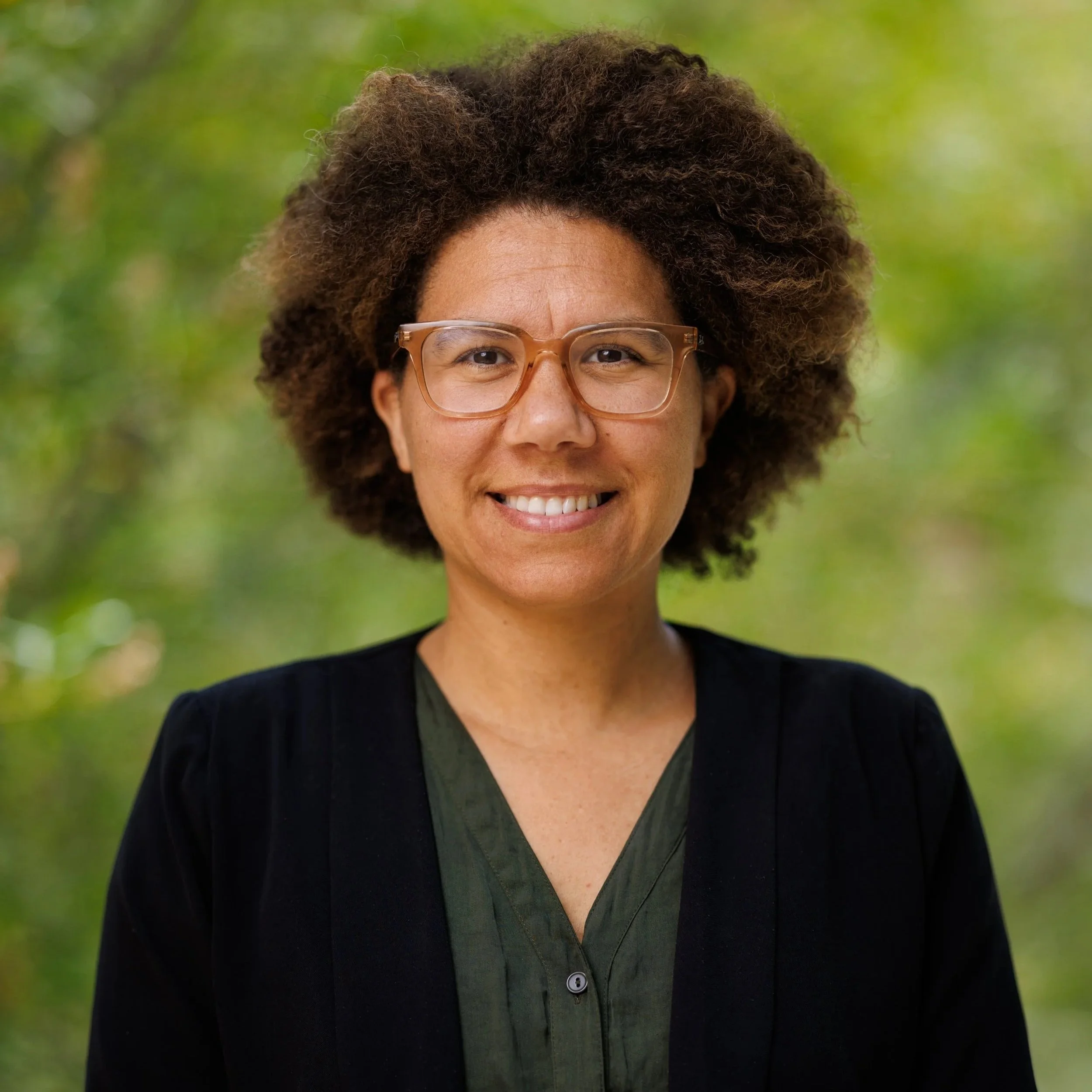
Louise with some trees behind her

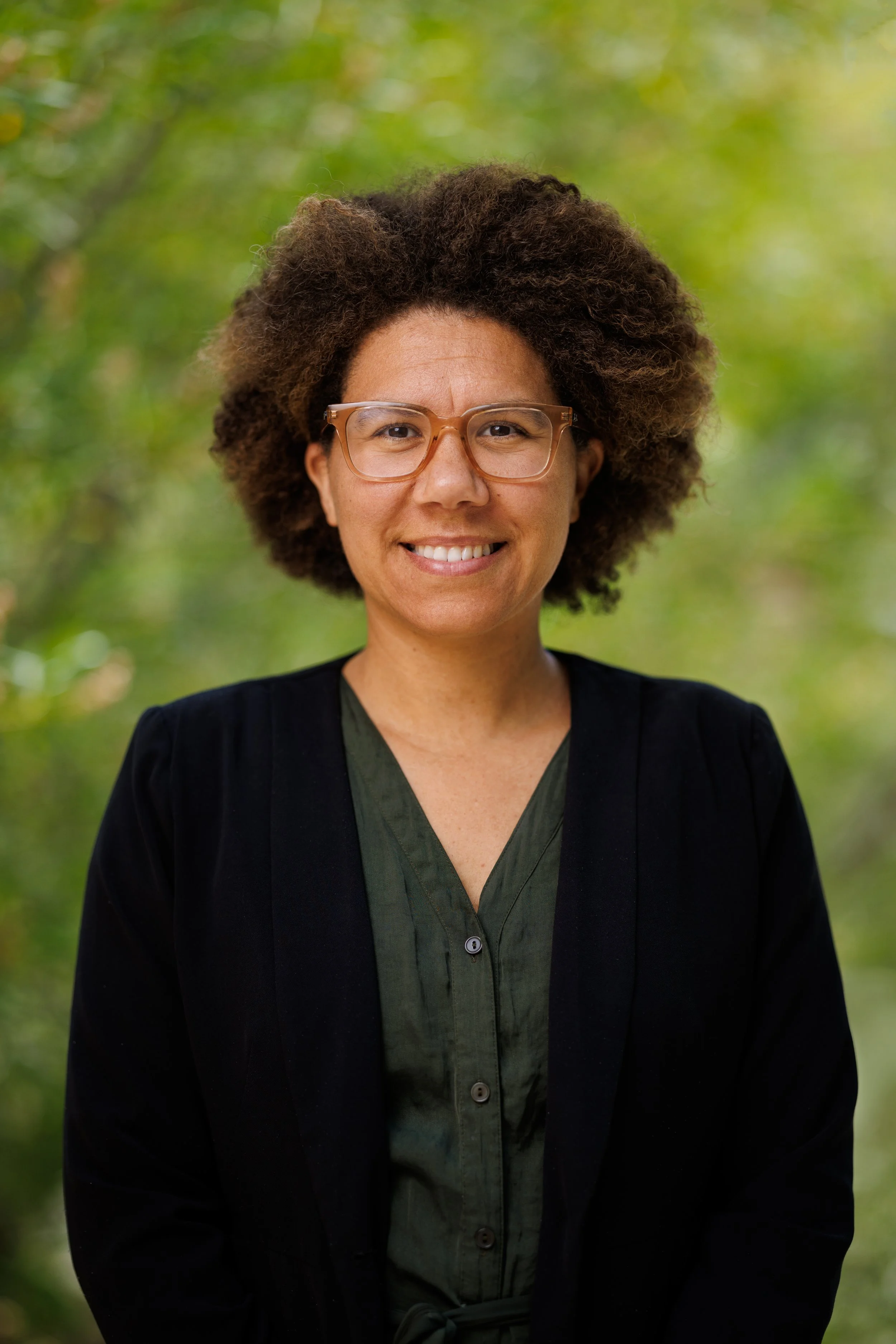
MSc grad Dr. Louise Edwards has built a career charting the universe

After graduating with a Master of Science from Saint Mary’s in 2003, Louise became one of the first Black Canadians to earn a PhD in Astronomy at Université Laval. Since then, she’s had an exciting career across North America, teaching and studying the brightest cluster galaxies and the cosmic web, and completing a rotation with the National Science Foundation. Read more.


SMU community celebrates the opening of the Black Excellence Commons

On January 29, the Saint Mary’s University community gathered to officially name a dedicated Black student space established in spring 2025. Students, staff, faculty and alumni marked the opening of African Heritage Month by honouring the advocacy, collective care and generations of leadership that shaped the space and brought the community to this moment.

“Sankofa, an African word rooted in Adinkra principles, means ‘go back and get it,’” explained Ebun Oladele MA’21, Black Student Advisor. “It reminds us that we draw strength from our histories and our ancestral wisdom as we move forward. Sankofa: Black Excellence Commons (BEC) is a space rooted in memory, in community, and in possibility. Not just for today but for generations to come.”

Read more


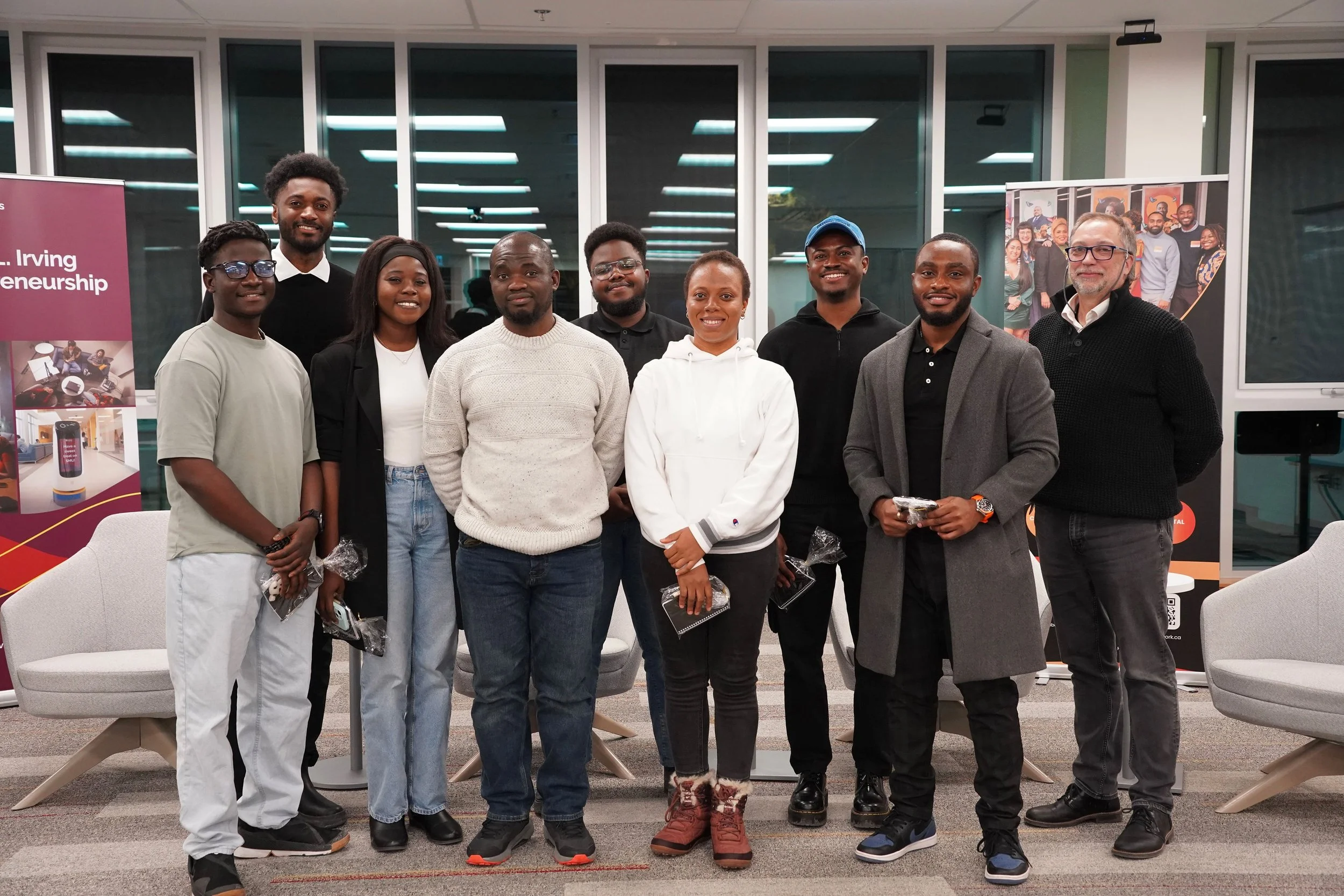
Past Tribe Network Scholarship Recipients Stephen Osunrinde, Alfred Burgesson, Maxinne Baddoo, Chidiebere Onwe, Nana Ekow Baah Korsah, Uzoamaka David, Papa Kwame Twumasi-Ntiamoah, Samuel Ebong, and Dr. Adam Sarty

Tribe Network Graduate Student Scholarship and Internship

Saint Mary's University, in partnership with the Tribe Network, is offering graduate students who self-identify as Black or Indigenous the opportunity to apply for a scholarship that will financially support the student through their graduate studies, as well as establish a connection with the Tribe Network to help identify an internship position if needed for their program. The deadline to apply is February 28, 2026

Visit our website for more information.


New summer field course explores culture and religion in Ghana

A new field course will help students build career-ready skills in non-profit leadership, community-based research and intercultural communication.

The Ghana Field Course: Religion and Social Innovation (RELS 3800) with Dr. James Kwateng-Yeboah will examine how African Indigenous and religious traditions are shaping social innovation in education, entrepreneurship and cultural heritage in Ghana—one of Africa’s most vibrant centers of creative enterprise.

The course takes place during the Summer Term. Students can learn more about the course and submit their expression of interest here.


Reading materials and resources in the Patrick Power Library

Ten book covers are shown in a website screenshot

A portion of the books and items featured in the Patrick Power Library African Heritage Month collection

Throughout February, the Patrick Power Library will display a collection of library resources for African Heritage Month on the ground floor. Along with our book display, we will be featuring artwork done in partnership with the Black Student Advisor and students.  

Featured resource recommendations will be shared on our social channels (@smuhfxlibrary). These resources include theses from the University Archives’ Institutional Repository, which highlights the work of Saint Mary’s graduate students whose research explores themes related to Black and African heritage, history, identity and social justice. All books can be borrowed with your SMU ID card. Browse the full African Heritage Month collection online. 

The Patrick Power Library’s activity table on the ground floor will feature African Heritage-themed puzzles and crafts throughout February for students to enjoy.  

Saint Mary’s University, in cooperation with Dr. Lynn Jones (C.M.), African Nova Scotian leader and activist, proudly houses The Lynn Jones African Canadian & Diaspora Heritage Collection in the University Archives. The Collection documents the lives of Lynn, her family, and over 50 years of African, African Diasporic and African Nova Scotian heritage and history.  Key parts of the collection include materials on: 

  • civil rights and social justice struggles in Halifax, Canada and beyond 

  • Lynn’s career as an athlete, politician, union activist, and work as an election observer for the 1994 South African Presidential election of Nelson Mandela 

  • the activism of Lynn’s brother, Burnley “Rocky” Jones and many others 

  • thousands of news clippings, programs, reports and other material documenting Black life (e.g. the histories of local Black communities and institutions, an obituary collection, news coverage of local and international racial segregation and apartheid, clippings on famous athletes and environmental racism). 

Researchers, community members, educators, students, community organizers and others are all welcome to visit the collection. It can be viewed in person at the Saint Mary's University Archives. Parts of the collection, including samples of archival material from Lynn's personal collection and a small example of the newspaper clipping collection, have been digitized and are available on the library's digital repository. A more detailed finding aid and collection inventory are also available. 


Four students seated together on campus, smiling

Charting the universe: From Saint Mary's to the cosmos

Dr. Lousie Edwards MSc’03 is one of the first Black Canadians to earn a PhD in astronomy

By Tara Thorne

Dr. Lousie Edwards MSc’03

A quarter-century ago, Dr. Louise Edwards MSc'03 took a chance on a city she’d never visited, switched coasts and began her Master of Science in Astronomy at Saint Mary’s.

“It was on the ocean, which was familiar,” said Edwards, who grew up in British Columbia and received her undergrad at the University of Victoria. “I was very excited to go to Halifax. As a Black Canadian, I knew there was a large community of Black folks there, which in Victoria didn’t exist then. I was really excited about that.”

She arrived to a small cohort of four students, two a year ahead of her, Glenn Kacprzak and Edwards.

“We all became very good friends. People were very friendly – not just in the reputation of east coasters, but also in the close-knit nature of the department,” said Edwards from Washington, DC, where she’s a Program Director at the National Science Foundation until she returns to her job as associate professor of physics at California Polytechnic State University next year. “David Clark was one of my professors. He knew we were coming across the country for school, and he invited us to his home for Thanksgiving that year.”

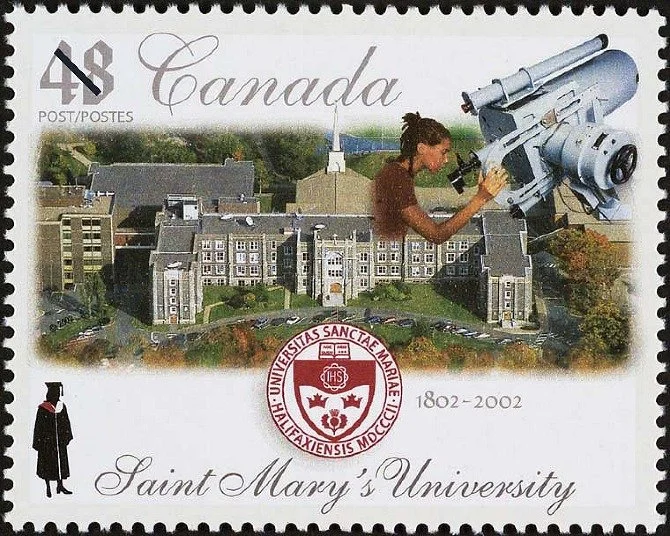
Edwards reached a very particular height that few other scientists can claim – while at Saint Mary’s, she was chosen to appear on a stamp as part of a Canada Post series celebrating universities.

Edwards was featured on the Saint Mary’s stamp, part of the Canadian Universities Collection (2002) by Steven Slipp Design

“Saint Mary’s has had astronomy for a very long time, and they told me they wanted to honour that tradition.” Edwards and Kacprzak were each photographed for the stamp, “and we had no idea who would get chosen until it came out.” (Spoiler: It was her.)

“I was wearing a silver chenille super-fluffy sweater. But they had Photoshopped it so I’m wearing a Saint Mary’s sweatshirt,” she laughed. “My mom bought up a whole lot of stamps.”

Since receiving her master’s in 2003, Edwards has been travelling around North America teaching and studying. Her area of focus is, humbly, the largest objects in the universe, including the brightest cluster galaxies and the cosmic web. She received her Ph.D. from Université Laval – one of the first Black Canadians to earn the degree in astronomy – and conducted her postdoctoral research at Caltech and Trent University. She taught at Mount Allison and Yale before landing at Cal Poly.

She has been based in California since 2016, but has been on leave since the summer of 2024 to serve on rotation for the National Science Foundation, where she administers funding for research in astrophysics.

Hot-button topics include instrumentation; Edwards points to a new telescope at the Vera Rubin Observatory in Chile as an example. “It’s going to give us more galaxies and stars than have ever been observed in all of history.” There’s also a significant amount of research surrounding Artificial Intelligence. “AI is so much bigger than ChatGPT. It encompasses a range of computational techniques and advancements, including machine learning. Astronomers have been very involved and even crucial to the development of computation.”

Edwards’ role is to guide the process to determine which scientists should receive funding from the Foundation, which has a nearly $10 billion annual budget and accounts for a quarter of the federal funding received by American academic institutions for research. “One of the reasons that the U.S. and Canada have such strong science and economies is because there’s this investment – strong and steady in science and engineering.”

It’s a big, exciting job, and she’s having a blast doing it.

“I get to read everybody’s top ideas in the moment,” said Edwards. “I’m seeing the science everybody wants to do right now, today.”

Disclaimer: This material was written while Dr. Edwards was serving at the National Science Foundation. Any opinions, findings, and conclusions or recommendations are solely those of the authors and do not necessarily reflect the views of the National Science Foundation or the Federal government.


This story was featured in the Fall edition of the Maroon + White alumni magazine. Visit the online magazine to read more alumni stories!

Career Week: February 3-11, 2026

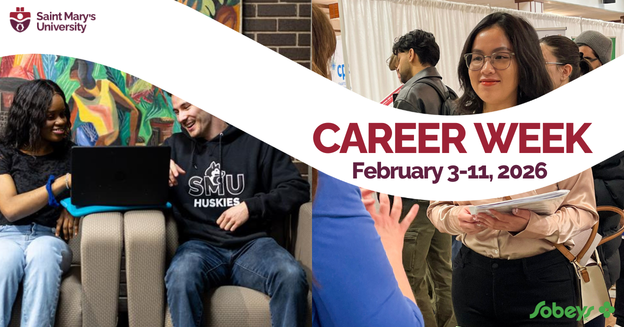
Career Week banner, February 3-11, 2026, SMU and Sobeys logo

Join us for SMU Career Week from February 3-11! This week-long series of activities is designed to support students and new alumni at all stages of their academic journey as they plan their professional futures.

Career Week includes both virtual and in-person events, offering insights, connections and unique perspectives from valued community partners, SMU subject matter experts, employer partners and alumni. You’ll be inspired to explore, plan and build a strong foundation for success. 

Thank you to Sobeys, our Career Week sponsor. Join the Sobeys event on February 3 to learn about a career in retail with Sobeys.

Accessibility Information: We aim to make our events inclusive for everyone. Please email cel@smu.ca with any accessibility requests or specific accommodations.  


Career Week 2026 Events

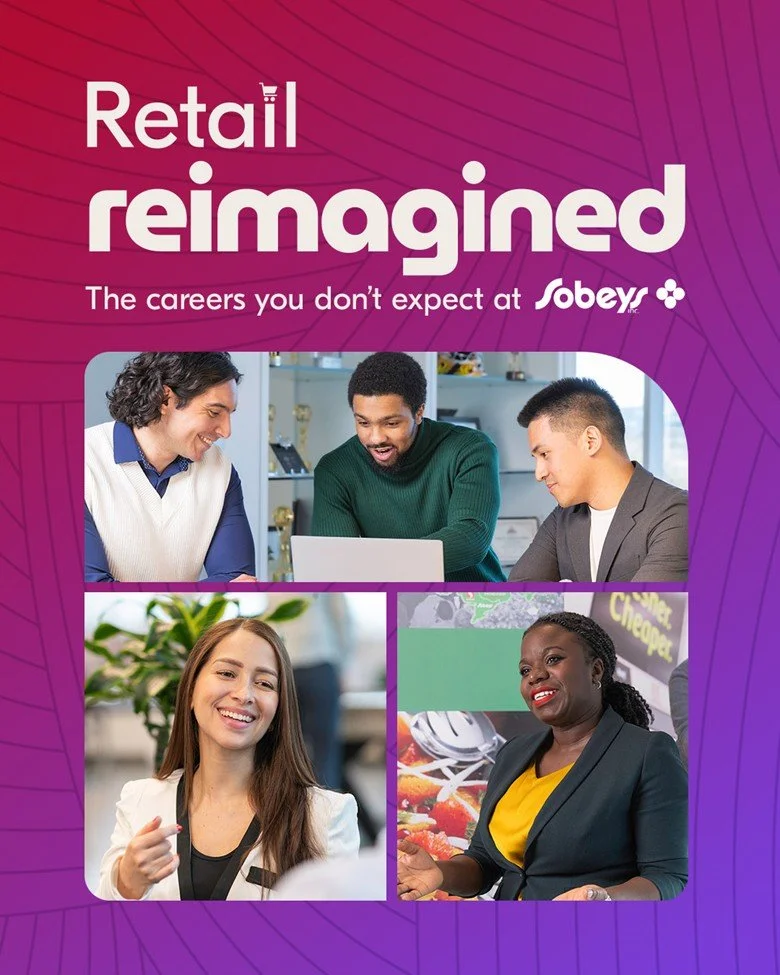
Sobeys – Retail Reimagined

The careers you don’t expect at Sobeys    

Tuesday, February 3
4-6 p.m.
Loyola 290

“It’s all about people!” You'll hear this echo through the halls of Sobeys—and now we're inviting you to experience it firsthand. 

Join us for an evening with leaders who've shaped one of Canada's most iconic retailers, born and raised right here in Nova Scotia. Hear directly from Sobeys executives and former students who've turned internships into thriving careers. Discover what it really takes to succeed in retail, from supply chain to store operations, and everything in between. 

This isn't just another corporate presentation. It's your chance to connect with people who have walked your path, ask the questions that matter, and explore opportunities with an organization that's deeply rooted in Nova Scotia.

Come ready to connect, learn and see why at Sobeys, it really is about the people. 

Open to all students, this free, reception-style event includes food, swag bags and the chance to network directly with Sobeys recruiters. Registration is required.  

Register here.


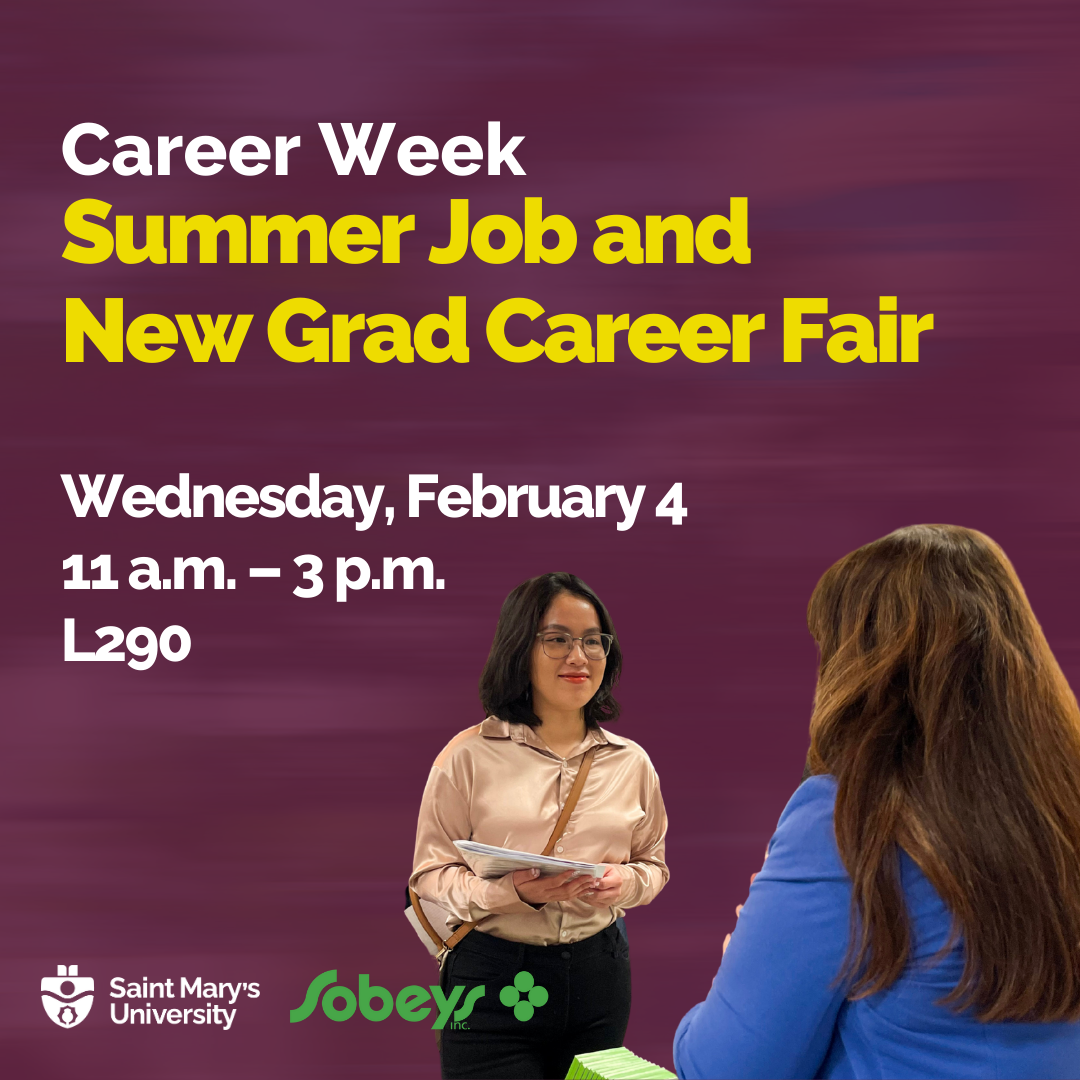
Summer Job & New Grad Career Fair

Wednesday, February 4
11 a.m.-3 p.m.
Loyola 290

Forty organizations in one room, ready to talk with students and recent graduates from Arts, Science, and Commerce. Whether you're seeking a co-op work term, internship, summer job or full-time work after graduation, this fair is for you!


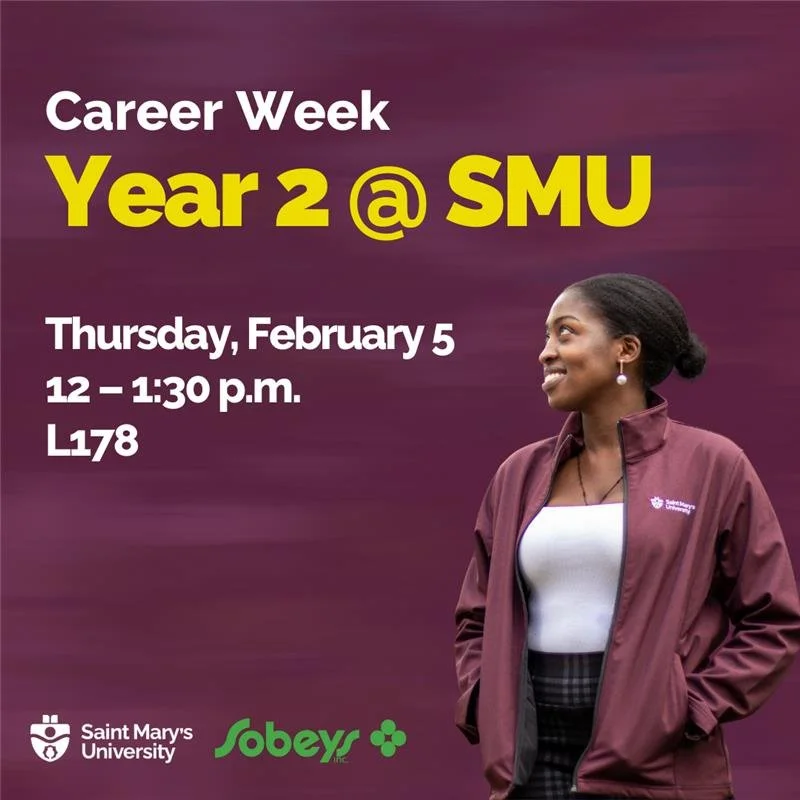
Year 2 at SMU Lunch & Learn

Thursday, February 5
Noon-1:30 p.m.
Loyola Academic 178

Second year students: this session is for YOU! Learn how to separate career myths from facts and find out how you can leverage your university experience for career success.

Register here.


Rise and Thrive: Unlocking Black Brilliance Panel

Thursday, February 5
4-6 p.m.
Sobey 422

At this panel event, you will learn about empowerment, growth and excellence in career development, as well as strategies for overcoming barriers and taking initiative in your professional life. It’s about moving beyond survival to success and flourishing in your career. Learn about the unique creativity and innovation that Black alumni bring to their respective fields as we create spaces where Black excellence is seen, valued, and elevated.

Register here.


Get a Job with the Government of Canada

Friday, February 6
12-1 p.m.
Online event 

Join the Public Service Commission of Canada to learn about the various job opportunities for students and graduates, including the Federal Student Work Experience Program, Co-op and the Research Affiliate Program.

Learn about support programs for Indigenous students and students with disabilities, and ask about the types of careers you can pursue with the Government of Canada. 

Register here.


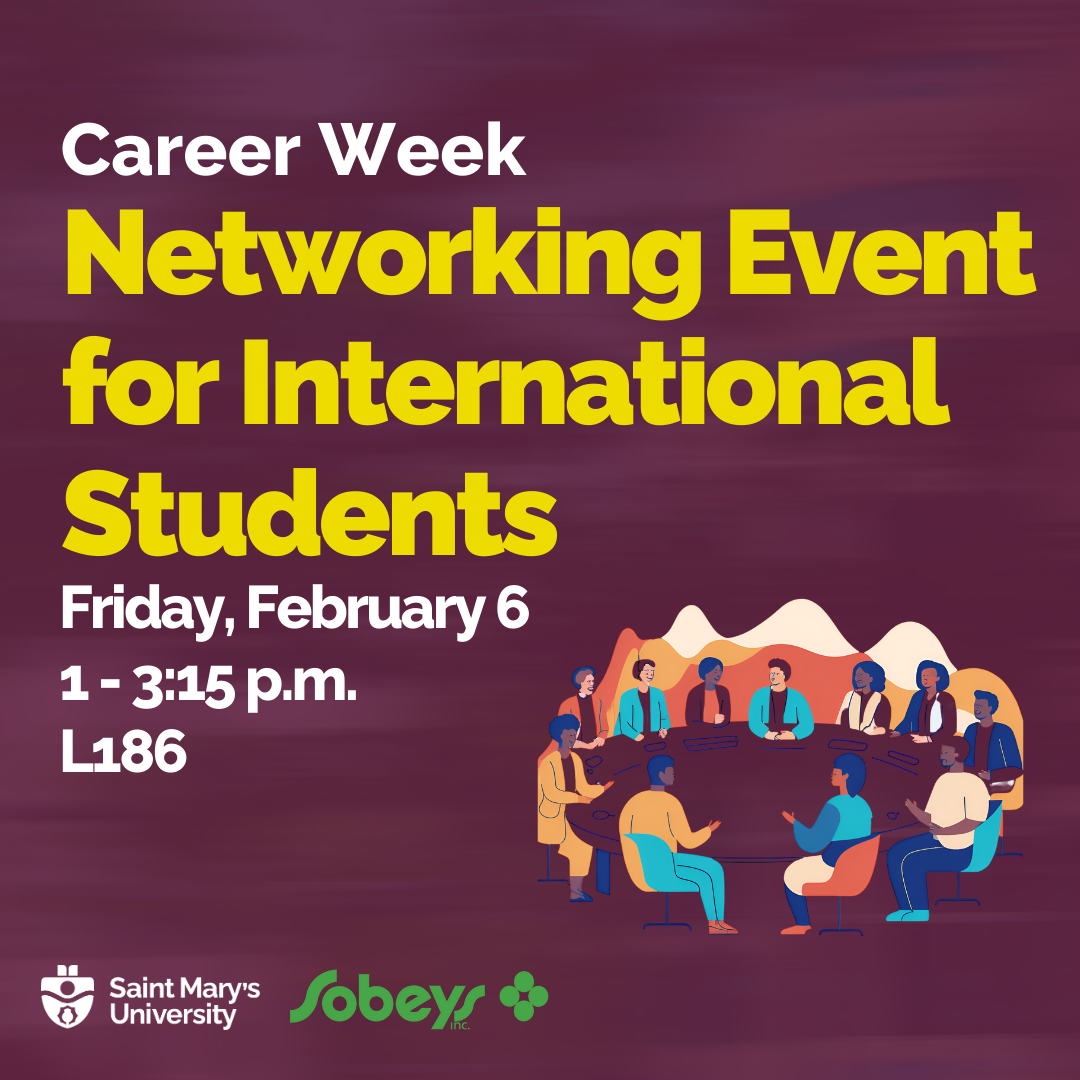
Networking Event for International Students

Friday, February 6
1-3:15 p.m.
Loyola 186

Recruiters from several industries will share tips and strategies for job search success in this interactive session featuring both a larger panel presentation and smaller breakout discussion groups. Listen, ask questions, network and get the inside scoop on what employers want!

Limited spaces available.

Register here.


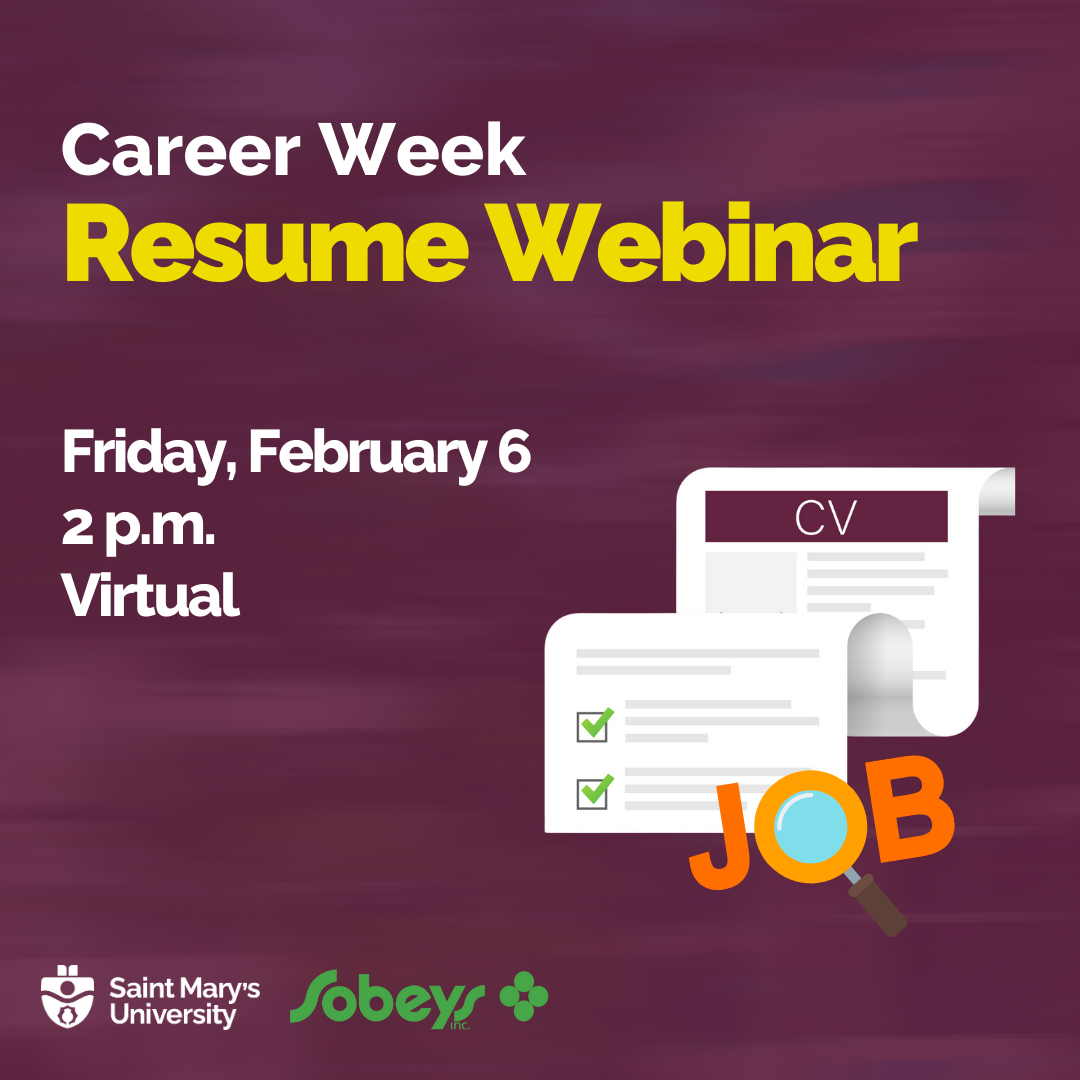
Resume Development: Beyond the Basics

Friday, February 6
2-3 p.m.
Online event

Explore, learn and build a resume that truly reflects your unique self and helps you stand out from the competition! This webinar will help you develop a professional resume that reflects a collection of your strengths, experiences and skills in a way that employers can easily understand.

Register here.


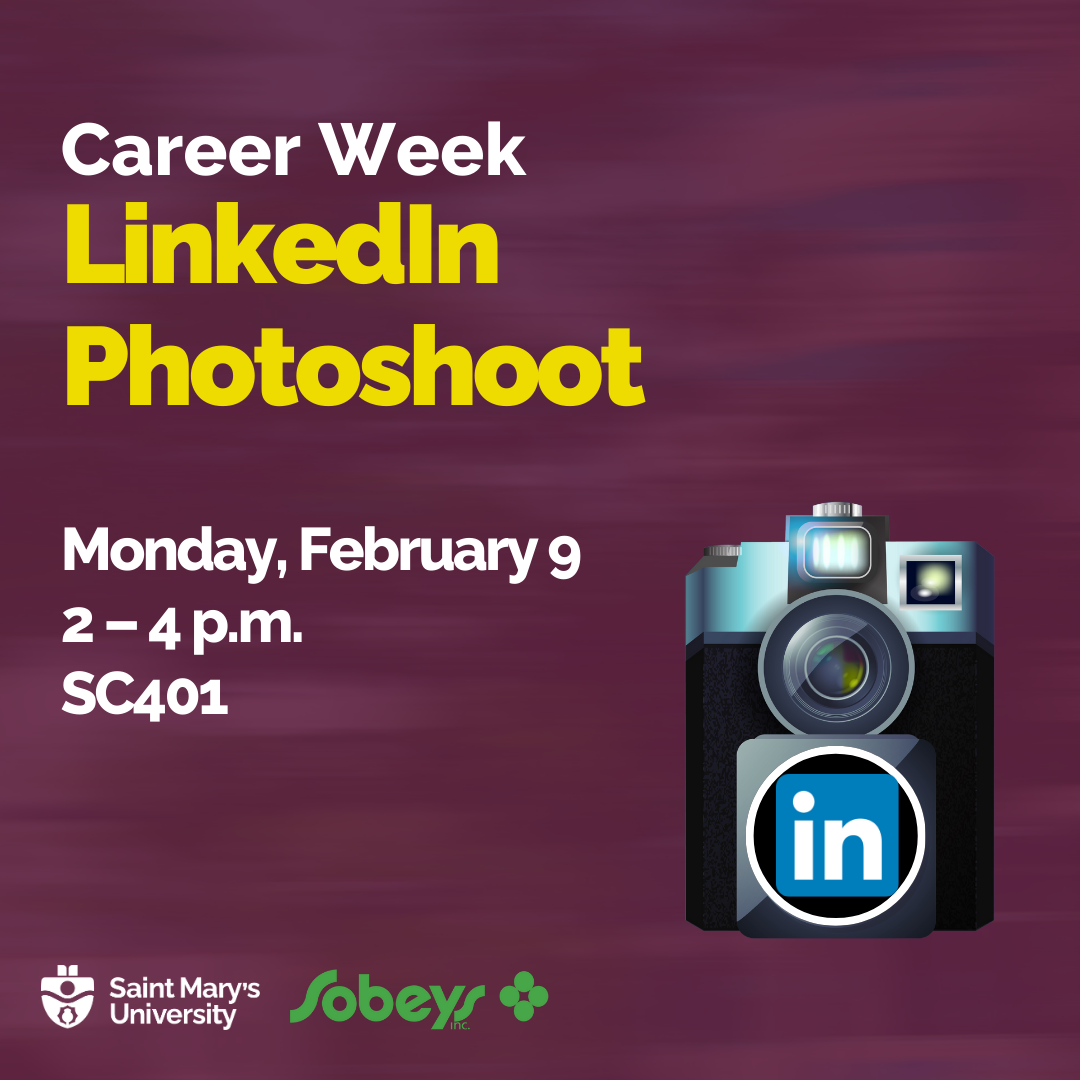
LinkedIn Photoshoot

Monday, February 9
2-4 p.m.
Student Centre 401

Elevate your LinkedIn profile with a new professional photo! Come by Career & Experiential Learning to have your headshot taken by a professional photographer, for free. Be sure to sign up for a slot in the Career360 calendar. Remember to dress in professional attire!

Register here.


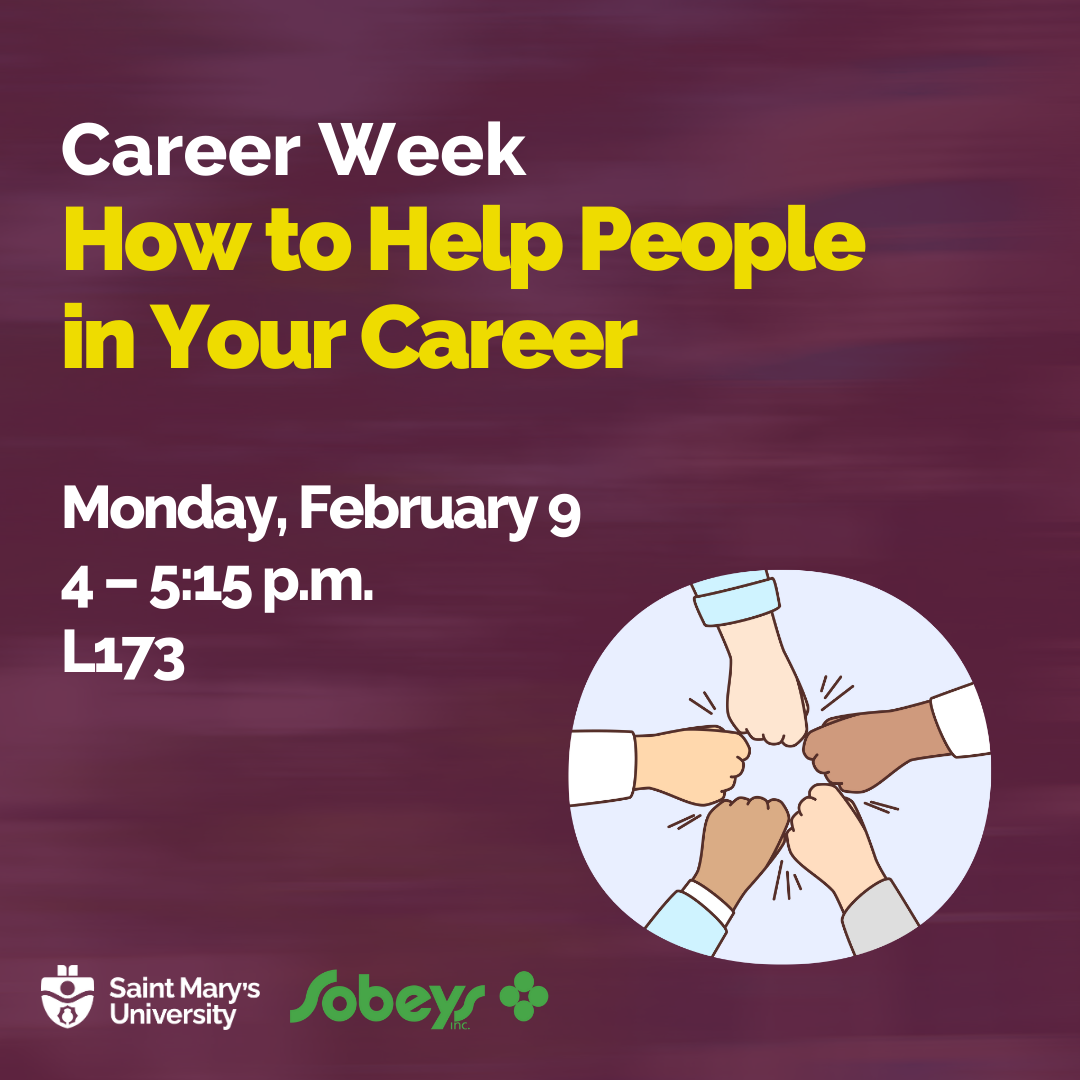
How To Help People in Your Career

You don't have to be a therapist (unless you want to!)

Monday, February 9
4-5:15 p.m.
Loyola Academic 173

Are you considering a career as a therapist because you want to help people? This session explores various options and possibilities for supporting individuals and communities, while also delving into the career pathways for different types of therapists.

Register here.


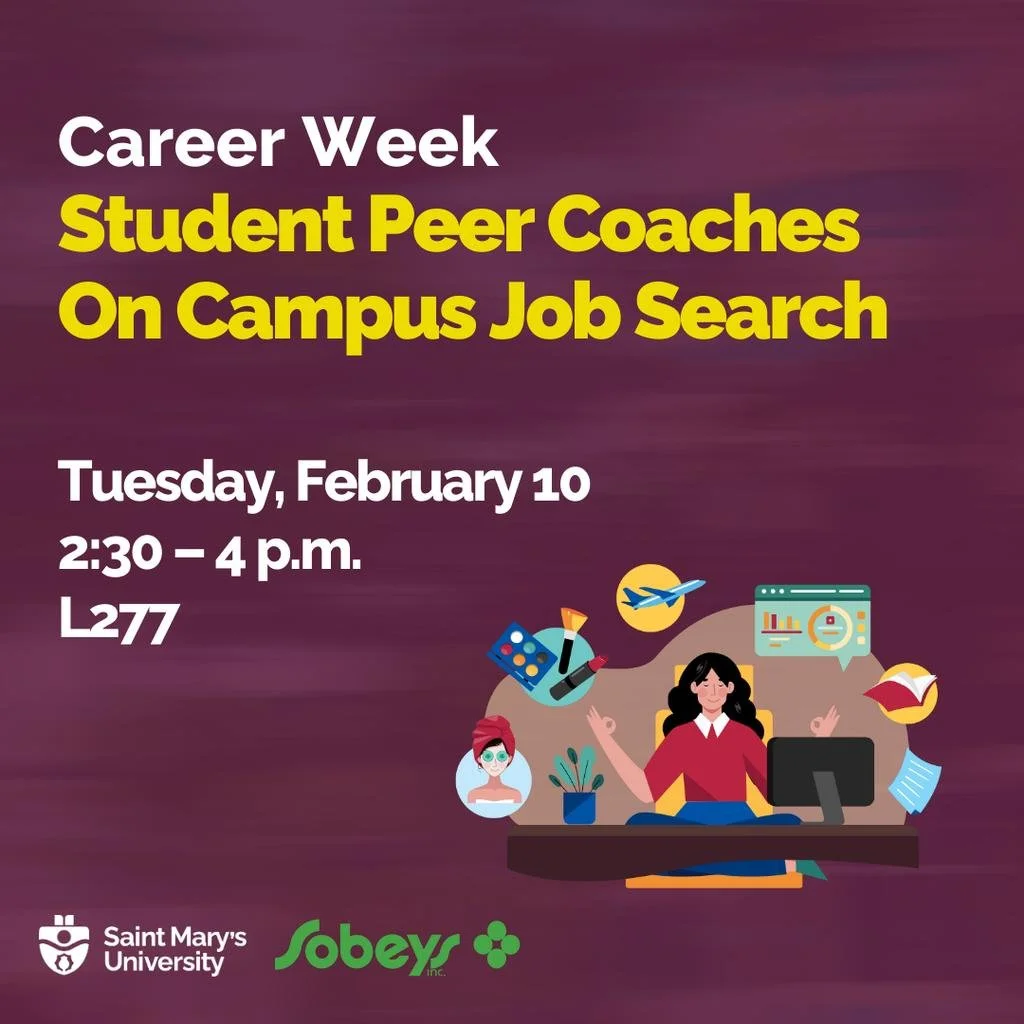
From Student to Leader: On-Campus Jobs Explained

Tuesday, February 10
2:30-4 p.m.
Loyola Academic 277

Interested in an on-campus job or leadership role for next year or this summer? Join Peer Success Coaches to learn what roles are posted in February, hear peer tips on applying, and explore the benefits of these positions. You'll gain insights from Career Services Professionals on how to identify the skills gained from these roles and make them transferable to a professional job.

Register here.


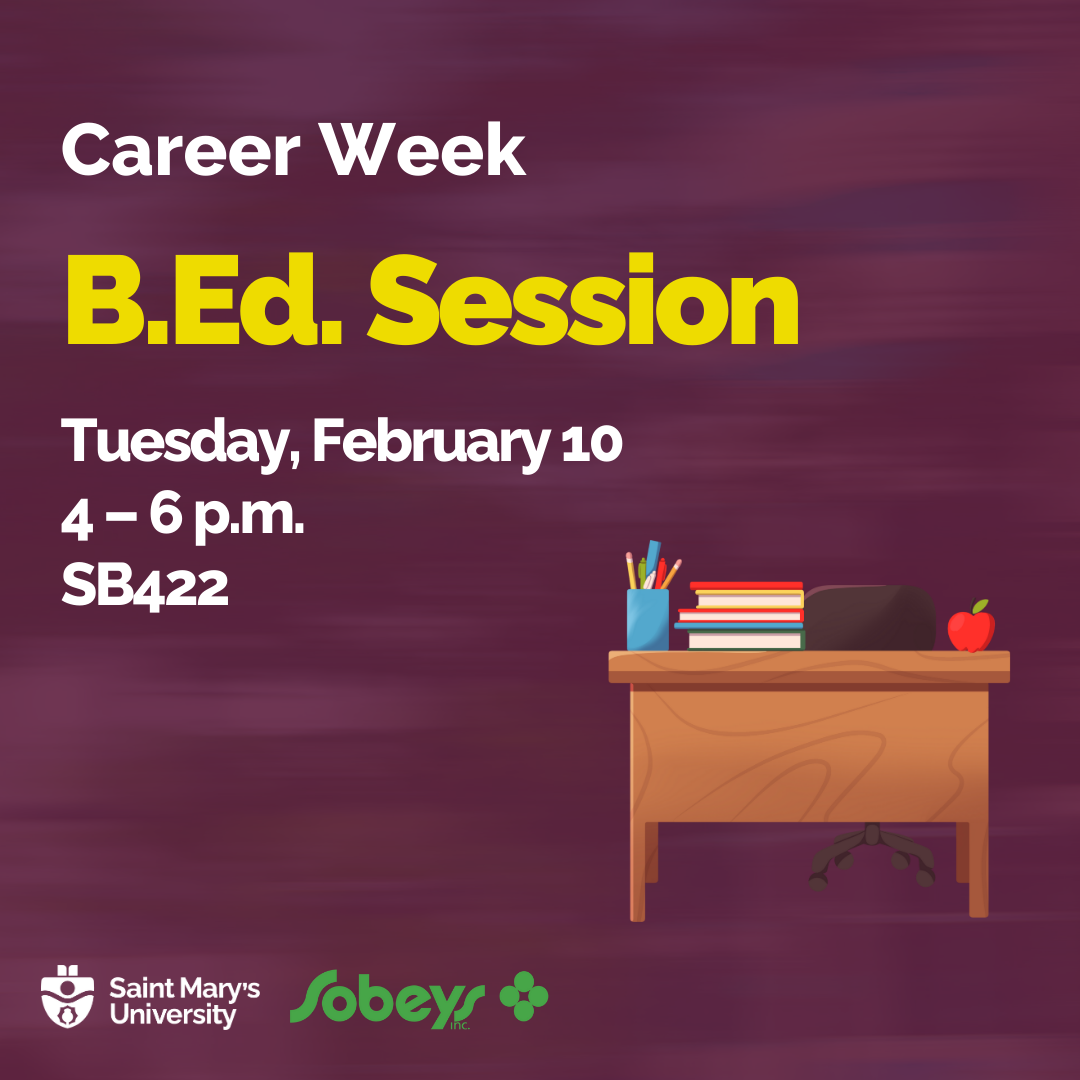
B.Ed. Network & Prep Fair

Tuesday, February 10
4-6 p.m.
Sobey 422

Considering applying to Bachelor of Education (B.Ed.) programs? Have questions about admission requirements and whether you're on track? Bring your questionsand transcriptsto the B.Ed. Network & Prep Fair. Connect with representatives from B.Ed. programs across Nova Scotia and New Brunswick, along with SMU Academic Advisors and Career Coaches. You'll receive personalized guidance, get confirmation that you're on track, and discover ways to strengthen your application.

Register here.


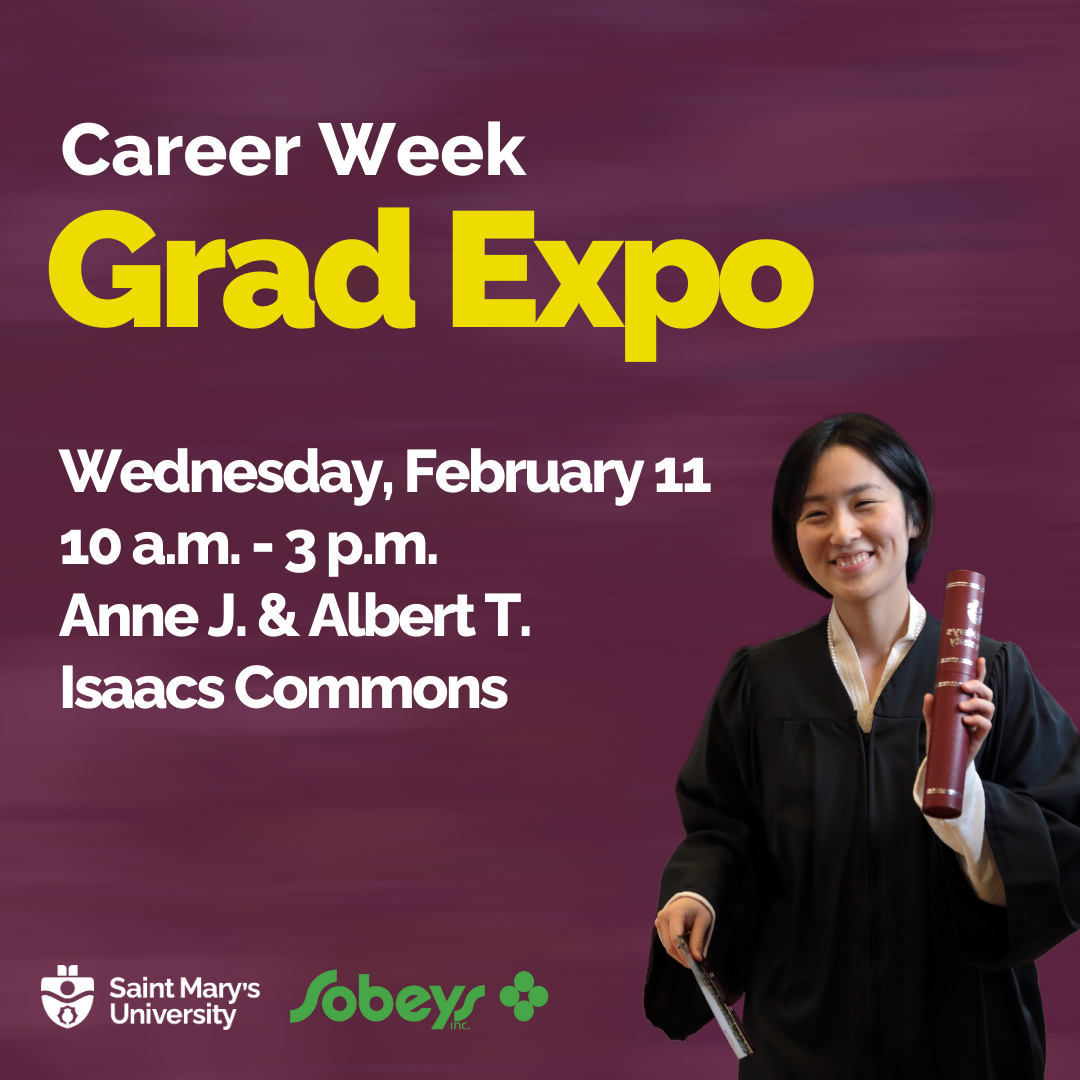
Grad Expo

Wednesday, February 11
10 a.m.-3 p.m.
Anne J. & Albert T. Isaacs Commons

Are you graduating in 2026? Attend the Grad Expo to learn about alumni benefits, student loan repayment, resources for new graduates, and more!  Calnen Photography will be on site for grad photos - book your session here.

Register here.


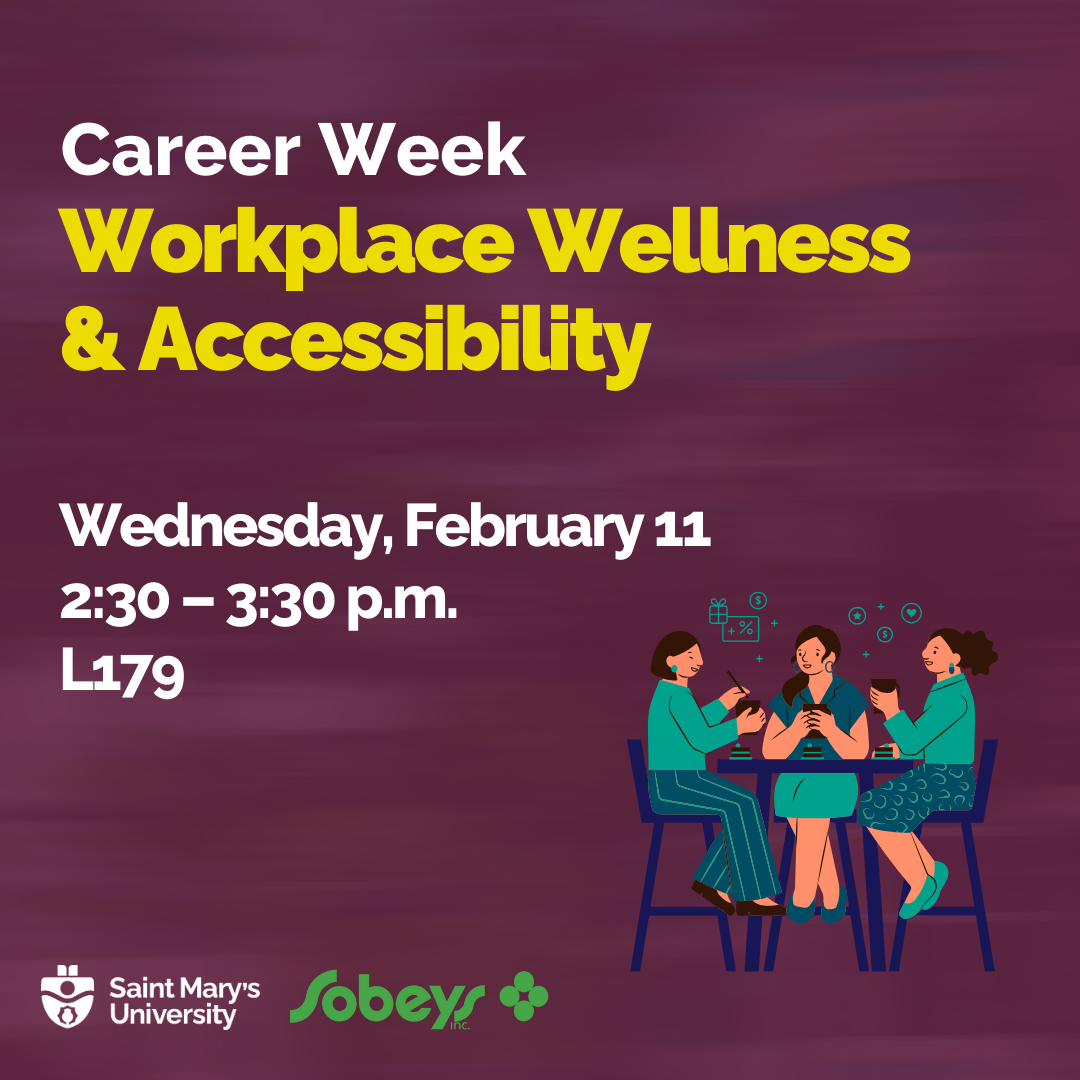
Workplace Wellness & Accessibility

Wednesday, February 11
2:30-3:30 p.m.
Online via Zoom

Learn how to self-advocate at work, tips on identifying inclusive job postings and employers, as well as how to navigate and request workplace accommodations.

Register here.

A new pathway for African Nova Scotian students begins at Saint Mary’s

A group of students pose for a photo at Saint Mary's

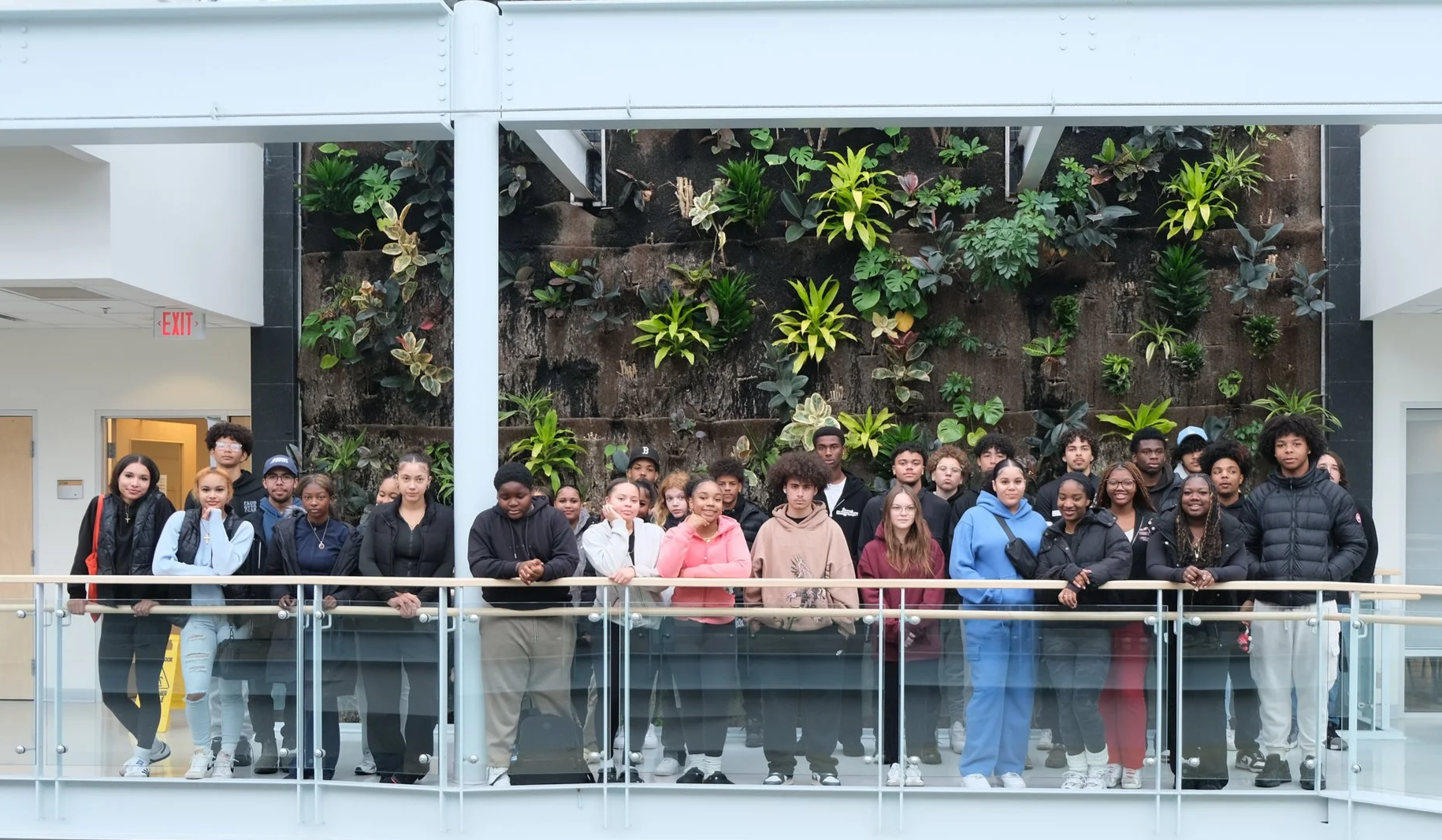
High school students visited Saint Mary’s University this fall as part of a new partnership with The PREP Academy, a community-based organization that provides mentoring, cohort programs, scholarship navigation and culturally-grounded supports for African Nova Scotian students.

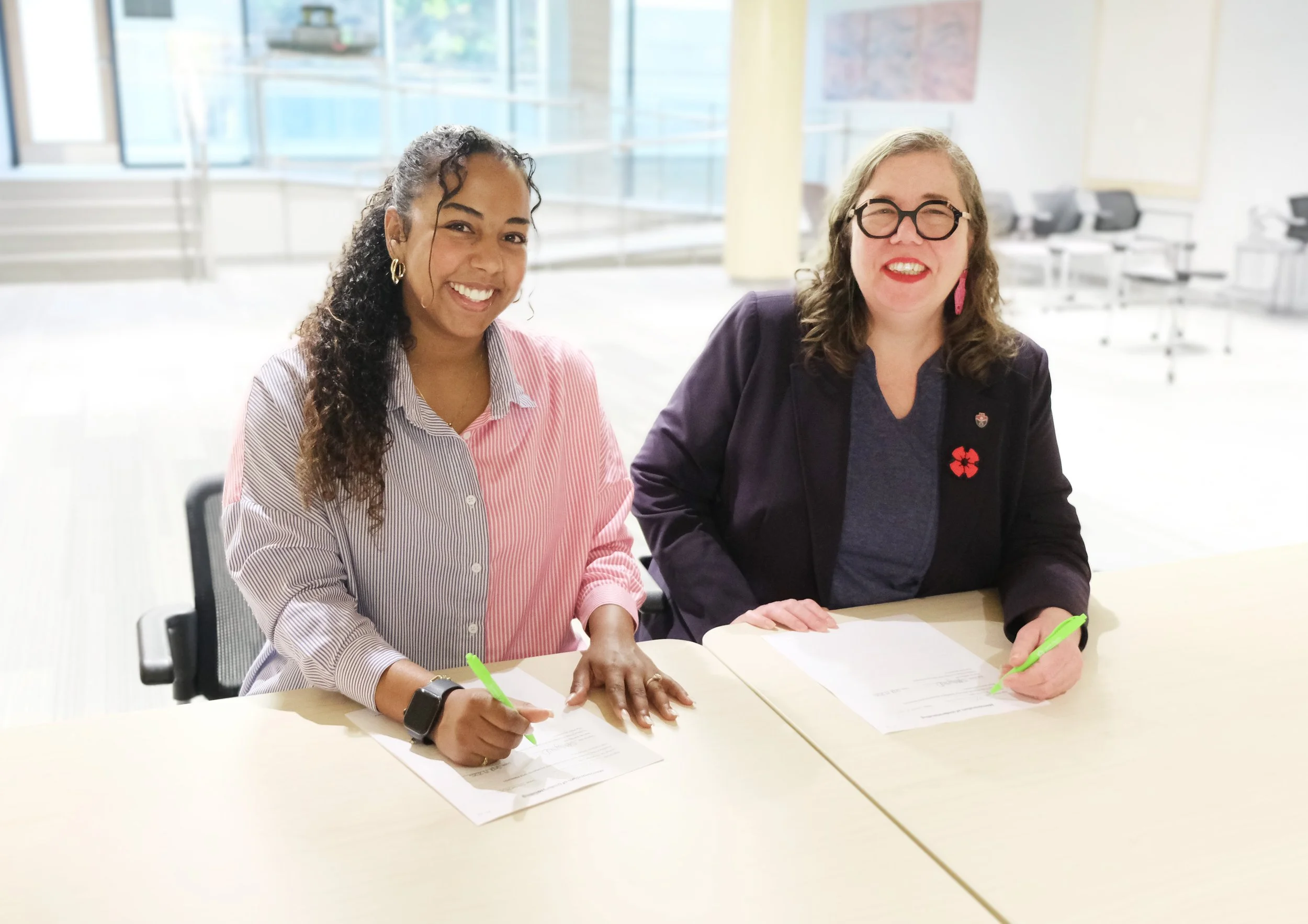
The visit marked the first action under a recently signed Memorandum of Understanding between Saint Mary’s and The PREP Academy, aimed at strengthening connections and creating pathways for African Nova Scotian learners.

Ashley Hill, Founder & Executive Director of The PREP Academy, signs the MOU with Dr. Shannon Dea, Provost & VPAR at Saint Mary’s University

“Partnerships like this reflect what we value at Saint Mary’s,” said Tom Brophy, Associate Vice-President, Student Affairs and Services. “It’s about opening doors, building connections with African Nova Scotian communities, and ensuring all students feel seen and supported on their journey.”

Students spent the day meeting faculty, exploring classrooms and labs, and participating in sessions offered by Student Services and academic departments. For many, it was an early view of university life and a chance to imagine themselves as future university students.

The PREP Academy supports students throughout high school and into university by pairing them with mentors, offering leadership workshops and connecting families with post-secondary resources. Its approach blends academic preparation with cultural identity and community pride—helping young people see higher education as both attainable and meaningful.

“When we open doors for students and support that access with real mentorship, we give them the foundation they need to succeed,” said Dan Seneker, Associate Vice-President, Enrolment Management and Registrar.  “Partnerships like this help students see what’s possible here at Saint Mary’s and strengthen that early sense of belonging.”

Through this collaboration, Saint Mary’s and The PREP Academy aim not only to increase access to post-secondary education but also to help ensure the long-term success of African Nova Scotian students.

Digging deeper: Unearthing Beechville's past through research and real-world learning

Students in the archeology field school survey grounds in Beechville

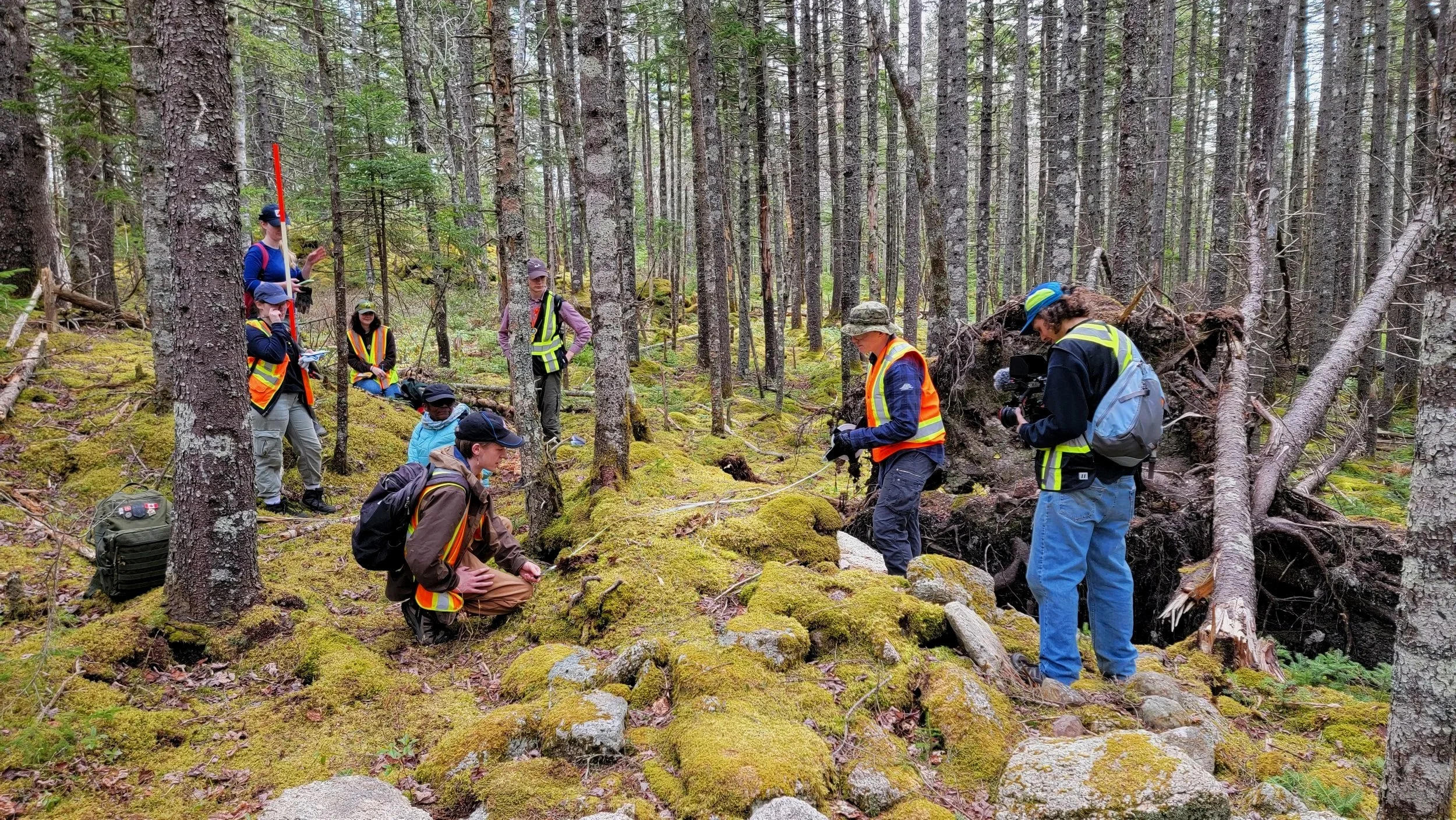
When Anthropology Professor Dr. Jonathan Fowler first walked into the community of Beechville over a decade ago, he thought he was taking on a small side project. "I began working at Beechville as an archaeologist in 2013," he says. "What began as just a little sidebar exercise grew over time."

The deeper he stepped into the woods with community members, students and new technology, the more he realized the work wasn't just about mapping the past – it was about reconnecting a community with its own history.

Beechville, founded just over 200 years ago by formerly enslaved people who self-emancipated during the War of 1812, carries a legacy that feels alive beneath the forest floor.

“Anytime we encounter the remnants of places that were formerly inhabited, we kind of encounter an echo of humanity. There’s this still resonant human story remaining in the things left behind.”
— Dr. Jonathan Fowler
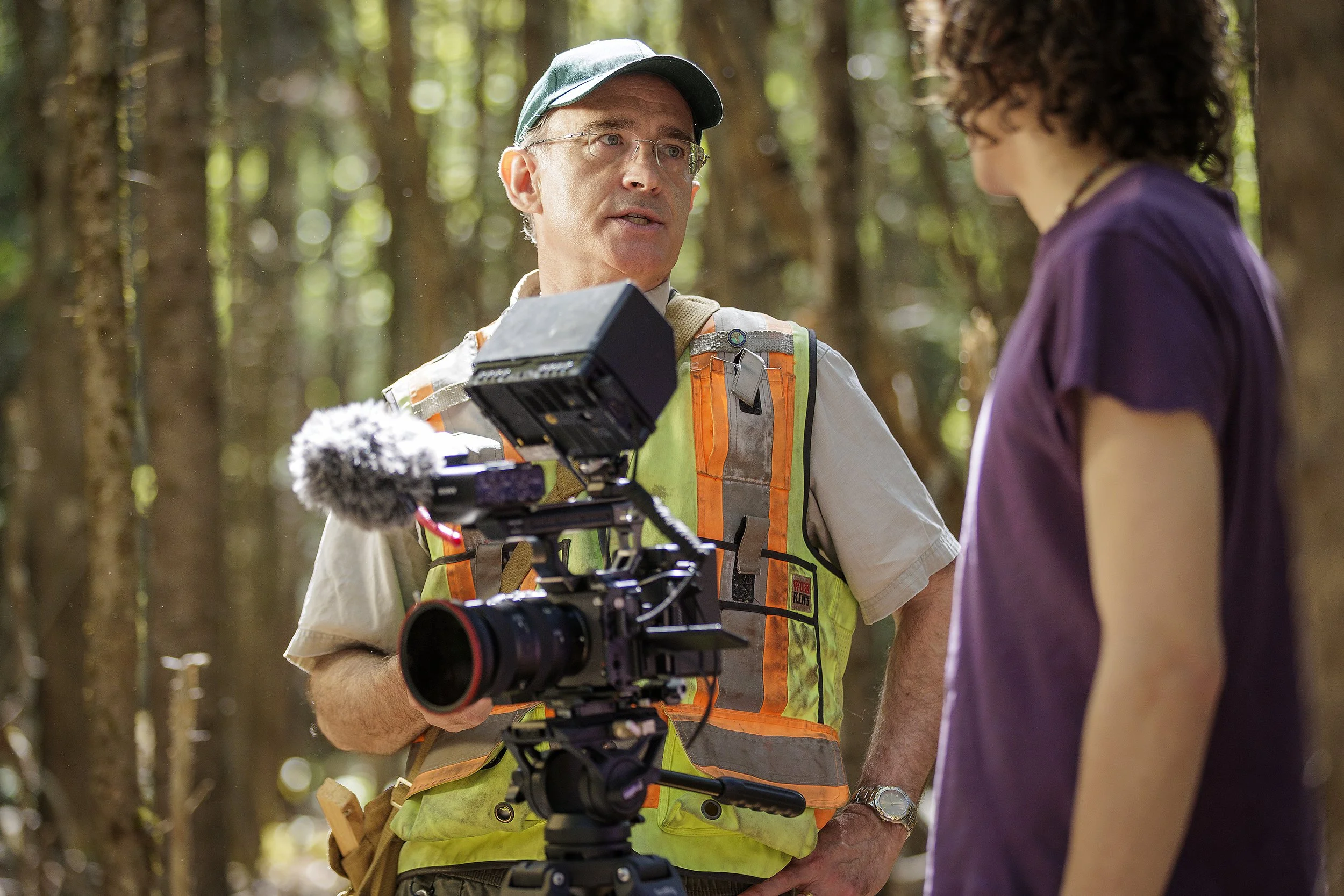
Jonathan and Ben seen in the woods with camera equipment

Dr. Jonathan Fowler with Ben Sheffar at Beechville

That story is especially powerful because many of today's Black Nova Scotians trace their connections back to these freedom fighters. "A lot of that story has been kind of lost through the process," Dr. Fowler says. That's why the Beechville community chose to work alongside Dr. Fowler and his students, as "collaborators and co-creators of knowledge," committed to uncovering and understanding the site together.

For Dr. Fowler, the project quickly became far more than research. "It's been really, really interesting and also very emotionally and personally satisfying," he says. "This is exciting work. It's academic work. It's community work… It's kind of soul craft."

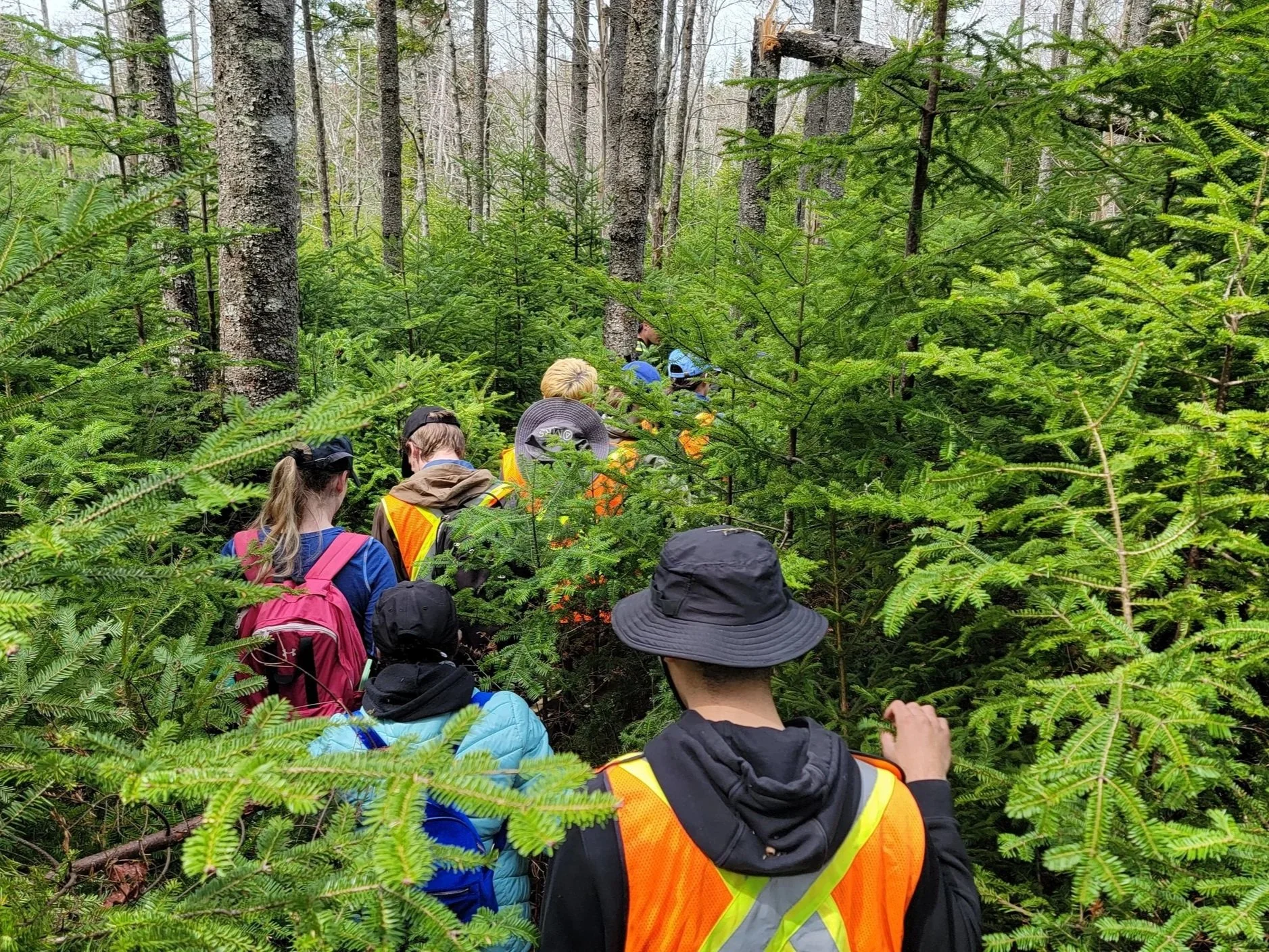
A classroom under the canopy

Ben in the woods with camera equipment

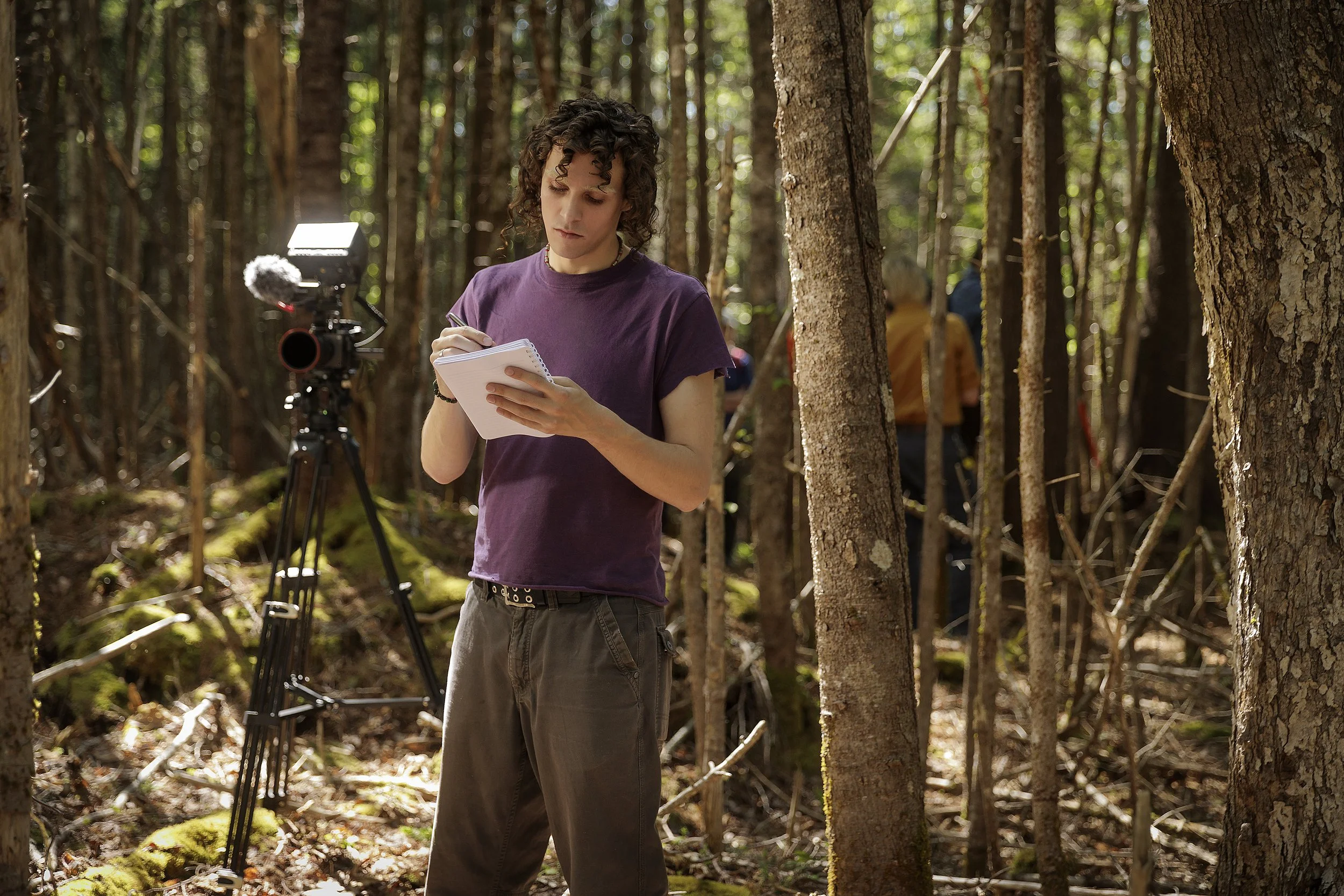
Recent graduate Ben Sheffar participated in Dr. Fowler’s Beechville field school

One of the first students to step into the thicket was anthropology student Ben Sheffar BA'25, whose academic path took a turn the moment they joined Dr. Fowler in the field.

Before working on the project, Ben admits their ideas of archaeology came from TV: a "dramatized version." But Beechville changed all that. "I did not fully grasp how systematic and organized everything truly is on archaeological sites," they say.

Even with museum experience under their belt, the reality of the work – deep brush, uneven terrain and the need for quick adaptation – came as a surprise.

Dr. Fowler remembers watching students like Ben transform. On day one, the forest was disorienting. Within days, something shifted.

“Seeing the students get out of the classroom, get into the brush...There’s a kind of experiential learning that takes place only in that environment. You can’t do it with PowerPoint on campus.”
— Dr. Jonathan Fowler
Students walk through the brush

In the field, learning becomes hands-on in a way the classroom can't replicate. Students begin to recognize signs of the old community just by looking closely at the forest floor, such as shallow cavities in the earth where cellars were located, and linear stone features that once formed walls or boundaries. They even learn how to spot old gardening areas by noticing unusual piles or patterns of rocks. "All of this is without digging yet," Dr. Fowler explains. "We start with remote sensing and then move on to our bushwhacking."

Ben recalls the on-the-ground learning vividly. Technology that worked in the classroom was suddenly challenging to use in a dense forest. "This required us to adjust our strategy and use a different method in the field," Ben says. "That adaptation is central to the work."

When community brings the past to life

Both point to community connections as the heart of the project.

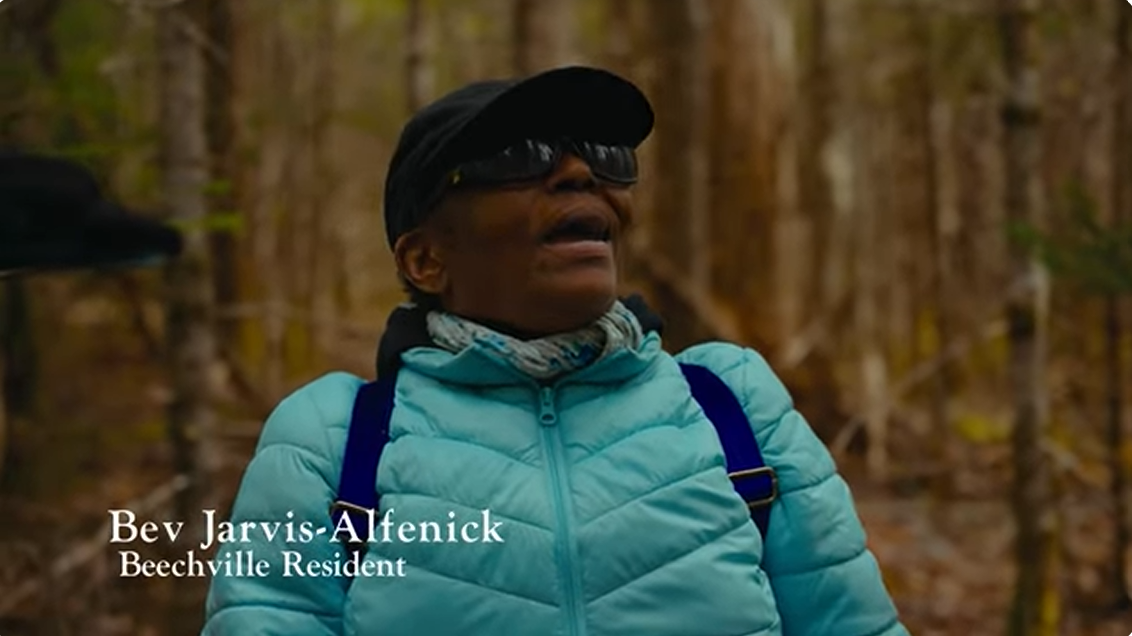
Bev speaks to the camera in the woods

Beechville resident Bev Jarvis-Alfenick, seen in Ben’s video: Uncovering Beechville: Surveying a 19th century settlement built by Black Refugees

For Ben, the most powerful moment came when Beechville residents joined them on site. "Working with community members, specifically having them in the survey space and sharing personal experiences about the area where their families might have been for at least a hundred years — it made the work 10 times more important to be trusted with those stories."

Dr. Fowler says research becomes most meaningful when academic perspectives and community knowledge come together.

"Community has their own perspective, informed by its traditions, memories and experience; a very intimate kind of experience on the land," he explains. When that insight meets the archeological and archival work he brings to the project, something more profound emerges. "When you put those two things together, you get a resulting picture that brings together these two incomplete experiences."

A new kind of storytelling

For Ben, the Beechville project was a chance to merge two passions. "I had started making videos for classes… it began on a smaller scale in high school, but significantly increased," they say. So, when the field school came up, they saw an opportunity and approached Dr. Fowler about creating a video that could serve both the research and the community.

Ben sits at a computer desk with two monitors

Ben used their passion for storytelling and video to highlight the Beechville project

Ben filmed almost every day in the forest, often carrying a large tripod and camera, and later sorted through over a terabyte of footage to shape the story. What mattered most was capturing lived experience: "I consciously included at least one person each day who could reflect on the topic, which makes the lessons highly valuable."

The process showed Ben what was possible. "It cemented my ability to perform this type of work if I commit to it," they share. For the community, the video became a bridge – a way to see and feel the research in a more accessible and human way.

Dr. Fowler believes this kind of storytelling is essential. "It's not enough to do good science in the field," he says. "You really have to put a lot of emphasis on knowledge mobilization and communication."

Lighting the spark

Dr. Fowler often says his job isn't simply to teach, but to ignite curiosity. "I'm just there trying to strike those sparks into the tinder. Job number one is: can I make a little flame? If the flame starts, everything else follows."

For Ben, that spark caught quickly. Their experience through the Beechville project – which combined fieldwork, community connection and filmmaking – clarified the kind of work they want to pursue. Today, the recent graduate works full-time as a media professional at Detect in Burnside, expanding their camera kit and even becoming a licensed drone operator. It's work that blends everything Ben loves, letting them keep growing as both a storyteller and a researcher at heart.

And in Beechville's forest, where history, community and curiosity meet, those sparks continue to shape students and the stories they help bring to life.

Watch Ben’s video: Uncovering Beechville: Surveying a 19th century settlement built by Black Refugees on YouTube.

Kane Writers Award: Apply by November 30

Floyd wears a headset on a TV set

Floyd Kane BA’92

The Edna and Velma Thomas Kane Writers Award supports aspiring writers of African Nova Scotian and Black/African descent. Valued at $30,000, the award will be presented to an undergraduate student in the Faculty of Arts upon graduation from Saint Mary’s.

2026 award criteria

To be eligible, undergraduate BA and BES students must:

  • be graduating from Saint Mary’s in 2026,

  • be Canadian citizens or permanent residents,

  • identify as Black/African descended (with priority going to African Nova Scotian students),

  • have good academic standing,

  • have demonstrable financial need, and

  • aspire to a career in writing, broadly defined. 

This award was established through the generosity of alumnus Floyd Kane BA’92, a writer, lawyer, filmmaker and creator of the acclaimed TV series, Diggstown.

It aims to reduce financial roadblocks for graduating students by supporting them in pursuing further studies, training or self-directed projects to advance their writing aspirations. Broadly defined, a career in writing can include (but is not limited to) creative writing, poetry, songwriting, spoken word performance, film/television writing, multimedia creation, or an academic career path in an arts and humanities discipline.

Application deadline: Sunday, November 30, 2025

Learn more and apply today at smu.ca/arts/arts-awards-andfunding

Related

Celebrating graduates at Spring Convocation

Hundreds of excited graduates, donning their graduation attire, stopped for photo ops across campus last week—posing with their classmates, families and hard-earned degree parchments. The Winter and Spring classes of 2025 celebrated convocation from May 27-30. Sunshine, smiles and cheers brought tremendous energy to campus, while hundreds of supporters watched online from around the world.

Awards, medals and prizes for outstanding graduates and faculty

The top annual university graduation awards, the Governor General’s Medals, were awarded to Lucienne Kaye Pothier-Bogoslowski (Silver Medal–Undergraduate) and Christopher Alan Robert Walker (Gold Medal–Graduate).

Lucienne Kaye Pothier-Bogoslowski

Christopher Alan Robert Walker

Undergraduate Gold Medals, given to the student with the top marks in each undergraduate faculty, were awarded to Callie Lloyd, Bachelor of Arts; Anubhav Gupta, Bachelor of Commerce; Samuel Denis Sequeira, Bachelor of Science; and Lila DanQi Gechtman, Diploma in Engineering.

More graduate awards and prize recipients can be found in the convocation program.

Dr. Rachel Zellars recognized with two faculty awards

Dr. Rachel Zellars with Dr. Jason Grek-Martin

Dr. Rachel Zellars, Associate Professor in the Department of Social Justice & Community Studies, received both the Dr. Geraldine Thomas Educational Leadership Award and the Father William A. Stewart, S.J., Medal for Excellence in Teaching.

Dr. Rachel Zellars with Alumni Director Mary Ann Daye

Dr. Rachel Zellars has distinguished herself as a transformative educator and leader in the field of social justice education. Since joining Saint Mary’s University, she has developed and taught a range of pioneering courses—including The African Nova Scotian Experience and Climate Disaster and Social Justice—that reflect a deep commitment to equity, community engagement, and student-centred learning. Her pedagogical approach weaves together critical theory, lived experience, and innovative classroom practice, often centring historically marginalized voices.

The Dr. Geraldine Thomas Educational Leadership Award recognizes a faculty member’s excellence in and long-term commitment to improving teaching, with an emphasis on institutional contributions that extend beyond their own discipline and professional role within Saint Mary’s University.

The Father William A. Stewart, S.J. Medal for Excellence in Teaching highlights full-time and part-time faculty members who have made significant contributions to the education of Saint Mary’s students through excellence in teaching and service. Read more in the convocation program (pg. 21).

Dr. Alexandra Dobrowolsky named Professor Emerita

Dr. Alexandra Dobrowolsky with Dr. Jason Grek-Martin

Dr. Alexandra Dobrowolsky has been a professor in the Political Science department for twenty-five years, having previously taught at York, Mount Saint Vincent and Dalhousie universities.

Her research encompasses Canadian, Comparative, and Women, Gender and Politics, and delves into issues that range from representation, citizenship, and social policy, to immigration, public engagement, and feminist governance.

Her book edited with Fiona MacDonald, Turbulent Times, Transformational Possibilities? Gender and Politics Today and Tomorrow was described as “Canadian political science at its innovative best.” In 2015, she was delighted to be the first woman in the Faculty of Arts to receive Saint Mary’s President’s Award for Research Excellence. She has been a passionate teacher of undergraduate students, has supervised a long list of Political Science Honours students, and has worked with graduate students in various disciplines, locally and nationally. Read more in the convocation program (pg. 20).


Inspiring words from Honorary Degree Recipients and Valedictorians

Four people were recognized with the university’s highest honour for their leadership in business, community, justice and education. Joyce Carter BComm’84, Dr. Rhonda Y. Britton, The Honourable Deborah Gass and Paul Davidson addressed graduates as they received their honorary doctorate degrees. Reflecting on their careers, the changing world (and even Star Trek!), they shared inspirational messages and lessons.

Learn more about the honorary degree recipients: Extraordinary leadership takes the stage at 2025 Spring Convocation and click the links in the photos below to watch their speeches.

Watch: Dr. Joyce Carter BComm’84 - Doctor of Commerce | Dr. Rhonda Britton - Doctor of Civil Law | Dr. Deborah Gass - Doctor of Civil Law | Dr. Paul Davidson - Doctor of Civil Law

Six graduates, representing Winter and Spring 2025 classes, gave their valedictory speeches to an eager group of peers. Read more about the valedictorians: Meet your Winter and Spring 2025 Valedictorians, and watch their speeches by clicking the links on the photos below.


Dr. Robert Summerby-Murray celebrates final convocation ceremonies as SMU President

Dr. Robert Summerby-Murray

Dr. Robert Summerby-Murray, whose term as President and Vice-Chancellor ends in June, addressed graduates and guests with a passionate message, encouraging them to stand up to limitations and step into the world as leaders.

“Your studies have equipped you supremely well to discover, identify and, most importantly, to overcome these limits. For you, in the hope and opportunity that lie ahead, a World without limits is not a statement of completion, as in completing your degree or diploma, but rather it is an aspiration.” 

He acknowledged his decade at the helm of the university with positivity: “What a decade it has been! Tremendous successes in research, teaching excellence, philanthropy, cultural and athletic performances, and our well-recognized engagement with our community, locally, nationally, and globally. I’m deeply grateful that you have been part of our university's mission and will now take it to the wider world. And I am honoured to have had the privilege of leading Saint Mary’s through exciting and challenging times.”


Recordings of all convocation ceremonies and the online convocation program are available at Video & Graduation Program Archive.

Alumni-led Canadian International Peace Conference held at Saint Mary's

On April 25–26, Saint Mary’s University hosted the 2025 Canadian International Peace Conference, organized by alumni Fatu Kaba MTEI’24 through her social enterprise, HEARTS Global Network. The event brought together over 30 speakers and 20 workshops, uniting activists, academics, policymakers and students to explore inclusive and community-driven approaches to sustainable peace.

Fatu Kaba MTEI’24

Kaba is an award-winning peace activist, TEDx speaker, and the first woman in her family to earn a master’s degree. She founded HEARTS Global Network to champion global peace and gender equity through education, entrepreneurship and storytelling. Her lived experience, born during the Liberian Civil War, continues to shape her powerful work today.

The conference emphasized peace-building through clean energy, food security, gender equity and community empowerment, aligning closely with the UN’s Sustainable Development Goals.

Saint Mary’s faculty, staff and students were featured speakers at the conference. Dr. Saja Al Zoubi from the Department of Political Science and Global Development Studies spoke on a panel titled ‘The Role of Women in Peacebuilding’. Dr. Margherita Cameranesi from the Department of Psychology co-led a seminar titled ‘Gender-Based Violence and Its Impact on Refugees and their Families’. Natasha Fernandes BA’23, Business Consultant at the Arthur L. Irving Entrepreneurship Centre, and SMU student Shaneika Carter, moderated panels.

With inspiring keynotes, performances, and hands-on workshops, the event was a bold step toward a more peaceful and just future.

Anecia Shepherd: celebrating Black culture and women’s history through art

Anecia is a Black woman. She stands at a mic on a stage adorned with African flags and holds a clipboard.

Arts student Anecia Shepherd performed at the African Heritage Month Opening Ceremony at SMU on January 31

First-year Arts student Anecia Shepherd has already made an impression at Saint Mary’s with her passion, powerful writing and commanding presence. So, when her Professor, Soji Cole, recommended her to perform at the African Heritage Month Opening Ceremony, she saw an opportunity not only to share her words but to honour the legacy of those who came before her. 

Originally from Antigua, in the Caribbean, Anecia says she immediately felt a sense of belonging at Saint Mary’s. “SMU has this community feel that fosters not only growth but health and wellness,” she explains. She credits her professors for making efforts to connect with and support students as individuals, as well as campus initiatives like African Heritage Month programming, which helped establish a deeper sense of connection and belonging. 

“We put everything into celebrating Black culture in February back home,” Anecia explains. “The fact that SMU acknowledges February as this sacred month for Black people and celebrates that is beyond words. I think it makes all the Black students feel extremely appreciated.” 

Anecia speaks into a mic. On stage behind her are drums and African flags.

Anecia moved the audience with her spoken word piece ‘Recalled: A Dream Had, A Dream Have’.

Anecia’s performance at the AHM Opening Ceremony took the audience on a journey through a dream, where a dove sent by her ancestors urged her to confront the past and acknowledge the towering legacy of Black culture. “What lies ahead of you is forged in the histories of those who have bled before you,” she recited from her spoken word piece, Recalled: A Dream Had, A Dream Have
 
Her performance reflected on the sacrifices and resilience of Black individuals, particularly Black women, and the burden of expectation placed upon them. “I can’t just be. Being is a measure of mediocrity. I gotta be strong...original...creative...revolutionary.” Her words lingered, acknowledging each stacked pressure before finally casting them off. “Forget I gotta be,” she declared, embracing both the struggles and triumphs of the legacy that shaped her. At that moment, she reclaimed her power. “I am!” 

As February’s Black History Month transitioned to March’s Women’s History Month, Anecia sees a natural connection between the two. "Black history and women’s history are deeply intertwined, woven together by stories of strength, struggle and resilience," she says. But with that legacy often comes immense pressure in the expectation to be everything to everyone and to do it all without faltering. 

Anecia’s piece also paid tribute to her grandmother, whose life was a testament to choosing fulfillment over expectation, embracing culture and living on her own terms. But beyond her personal inspiration, the poem served as a broader reflection on how Black individuals, and women in particular, face relentless pressure to fit into societal moulds, to excel without rest, and to endure without complaint. Her performance challenged that societal construct, rejecting the notion that success must come at the cost of self. 

Anecia sits on a bench and looks over her shoulder out a window behind her.

Anecia’s love for writing extends beyond the spoken word. She hopes to use her words to explore injustice, honour her identity and find ways to influence meaningful change. “Writing feels like something I’ll do in every lifetime,” she says. 

Reflecting on both African Heritage Month and Women’s History Month, she shares a powerful message: “I’m still here…I, for myself, for my ancestors, for every Black person and woman in the wider community. We are still here...make space. Let’s work together and flourish together by building a community built on equality, love, kindness, and justice.” 


Sustainability…period!

From classroom to Aruna Revolution: how Bridget's MBAN is helping make menstrual products eco-friendly

Bridget is a Black woman with shoulder length brown hair. She stands in a warehouse and holds handfuls of raw soybean material.

Bridget Osundiji MBAN’24 blends her passion for business, sustainability and women’s health at Aruna Revolution

Fresh off her master’s from the Sobey School of Business, Bridget Osundiji, a young powerhouse, has found her calling as a Growth Marketing Specialist at Aruna Revolution, a Halifax-based start-up reimagining menstrual care products.

Bridget’s story is not just about academic achievement. It’s about purpose, passion and the power of using business to spark meaningful change.

Originally from Nigeria, Bridget relocated to Canada to pursue her dreams of higher education and living abroad. She earned her Bachelor’s degree in Accounting from Landmark University in Nigeria before coming to Saint Mary's, looking for a place to not only further her education but also launch her career. The Sobey School of Business Master of Business Analytics (MBAN), with its emphasis on responsible leadership and global perspectives, proved to be the right environment for her growth.

“For me, the master's program was a reality check. I knew it would be challenging, but I wasn’t prepared for how intense it would be—it was very fast-paced. There was always something to do, like assignments, rotations and workshops. It was go go go. I realized I had to prioritize and cut out unnecessary distractions. The program was tough, but it taught me a lot.”

After graduation, Bridget joined Aruna Revolution, a company focused on creating sustainable, compostable menstrual pads made from plant-based materials.

The MBAN program was not just about education—it was about building relationships. SMU actually really helped with that. I got the internship at Aruna originally through a networking event. A lot of my classmates were able to secure job positions through those workshops.”

Bridget displays the plant-based materials used to create compostable menstrual pads at the Aruna Revolution warehouse in Dartmouth, NS

Michael Zhang, the director of the MBAN program, is someone who is very passionate about the department and very passionate about the students. He wants to make sure that everybody's fine, everybody gets their job, and everybody understands what's going on in class. He helped with everything I needed. I really appreciate his support.”

The MBAN provides critical knowledge but also helps students develop a deep sense of purpose—one that now fuels Bridget’s work at Aruna Revolution. She continues to thrive in her now more permanent role, helping to develop strategies that not only promote the company's products but also raise awareness about the importance of sustainable menstrual care.

Bridget was recently recognized as Tribe Scholar of the Year at the Tribe Leader Summit, an event hosted by Tribe Network. Tribe Network is a community that supports racialized individuals in entrepreneurship and innovation by providing resources, opportunities and networks to help them succeed.

Empowering women, protecting the planet

Aruna Revolution’s mission of reducing plastic waste and empowering menstruators aligns perfectly with Bridget’s values. As someone passionate about sustainability and women’s health, she feels like she’s found her calling.

“Aruna is not just offering an alternative to traditional menstrual pads—we are offering a solution that’s better for the planet and the people who use them. It’s exciting to be part of a company that’s working toward real change in an industry that has long relied on plastic.”

Two pads in packaging are shown on a table surrounded by small piles of raw cattail, soybean and corn material

Compostable menstrual pads are made from cattail, soybean raw material and extracted processed corn fibers

Bridget points to a pad as she stands in front of large metal cannisters

The bioreactors shown behind Bridget process the raw materials in a chemical solution to create the pad material

The company’s innovative approach to menstrual care is a direct response to the environmental harm caused by traditional products.

“It is about more than just creating and selling biodegradable menstrual products. I believe we are part of a larger movement toward a circular economy, where every product is designed with its full lifecycle in mind—from creation to composting.”

Aruna Revolution recently secured a deal on Dragons' Den with Michele Romanow and Manjit Minhas, who offered $300,000 for a 25% stake.

Bridget’s story exemplifies the transformative power of an education that blends business expertise with social responsibility. Her journey shows the profound impact responsible leadership, paired with a strong educational foundation, can have in today’s workplace and serves as a reminder that defining success in business can be found beyond just the numbers.

Bridget confidently stands on a pile of soybean material
“Saint Mary’s gave me the tools to pursue a career that not only drives business success but also aligns with my values. I am proud to be part of a company that’s doing important work for both people and the planet.”
— Bridget Osundiji MBAN'24