
What started as a conversation during Saint Mary’s University Welcome Weeks is quickly becoming a promising sustainability venture.
FLIK, an Enactus Saint Mary’s project founded by first-year commerce students, Cooper Roberts and Brady Flynn, aims to help homes and businesses reduce energy waste through smart technology that automatically manages electricity usage. The idea was sparked after team members attended a presentation about Earth Overshoot Day during Welcome Weeks, which highlights how humanity consumes natural resources faster than the planet can regenerate them.
“We wanted to create something that could actually make an impact,” said co-founder Cooper. “A lot of people were talking about using fewer resources, but we wanted to build a solution.”
That solution became FLIK, a system that combines smart outlets, light switches, bulbs and motion sensors to monitor and manage energy use throughout a building. The goal is simple: help people save money while reducing unnecessary electricity consumption.
For the team, the inspiration also came from everyday experiences. One founder recalled growing up around hockey arenas where motion-sensor lights would sometimes turn off while players sat quietly tying their skates. Another admitted to frequently forgetting to turn off lights and electronics at home.
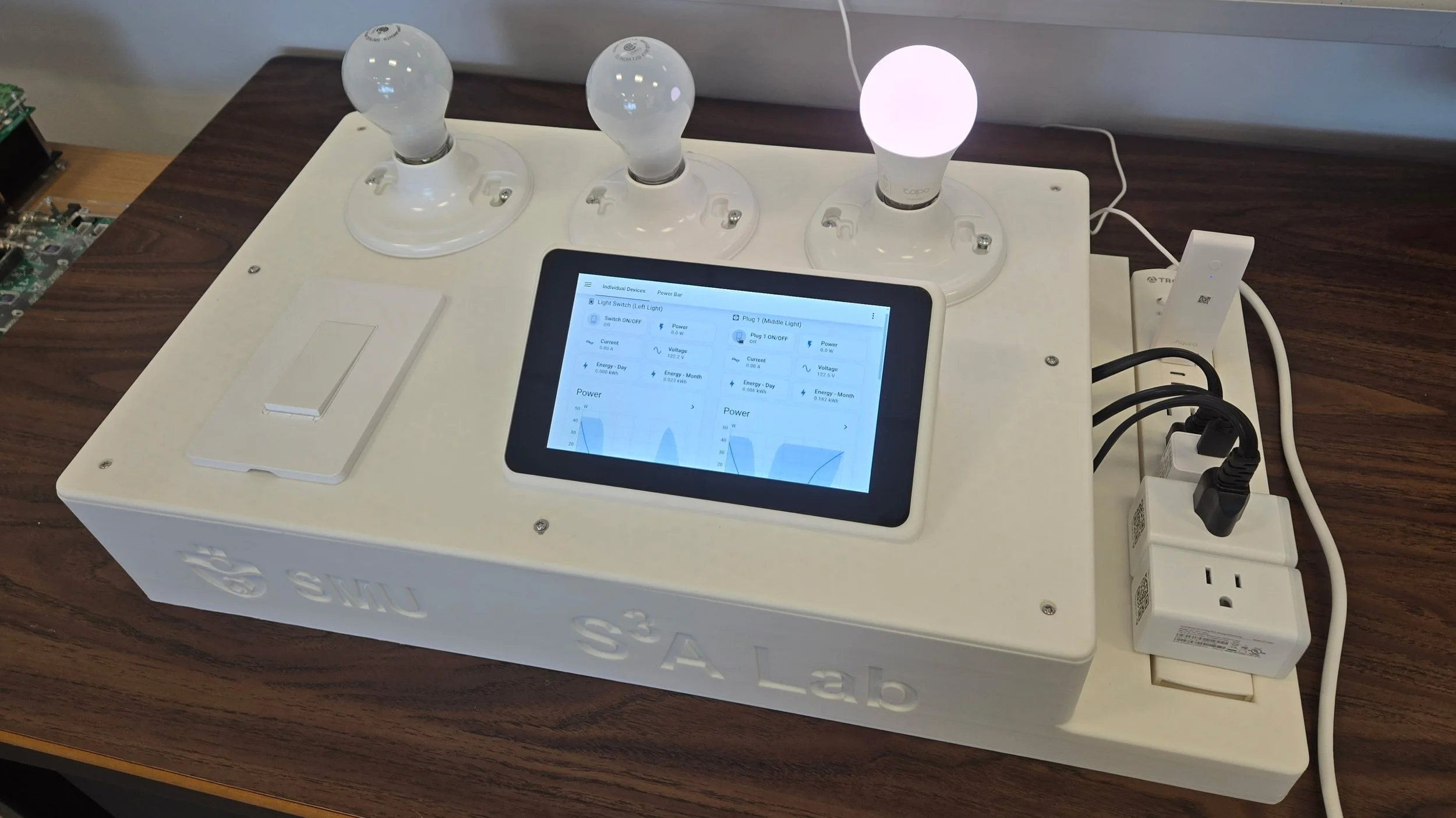
A FLIK unit
Unlike many existing smart-home products that focus on convenience, FLIK is designed with sustainability and affordability at its core. The system would allow users to customize how appliances and electronics respond when rooms are unoccupied. For example, lights and televisions could automatically turn off after a set period of inactivity, while essential appliances such as refrigerators or slow cookers continue running uninterrupted.
The platform would also provide detailed energy-tracking data, helping users understand exactly how much electricity individual devices consume, information that traditional utility bills rarely provide.
The idea has already attracted attention. The team has spoken with more than 11 businesses during its market research phase, many of which have expressed strong interest in the product. With support from Saint Mary’s professors, the students are currently refining their minimum viable product and working toward securing letters of intent from potential customers.
As FLIK continues to grow, the team is encouraging others to follow along on their Instagram and LinkedIn.
Interested in learning more about how entrepreneurship can blend with other areas of study? Explore programs and events at the Arthur L. Irving Entrepreneurship Centre.