
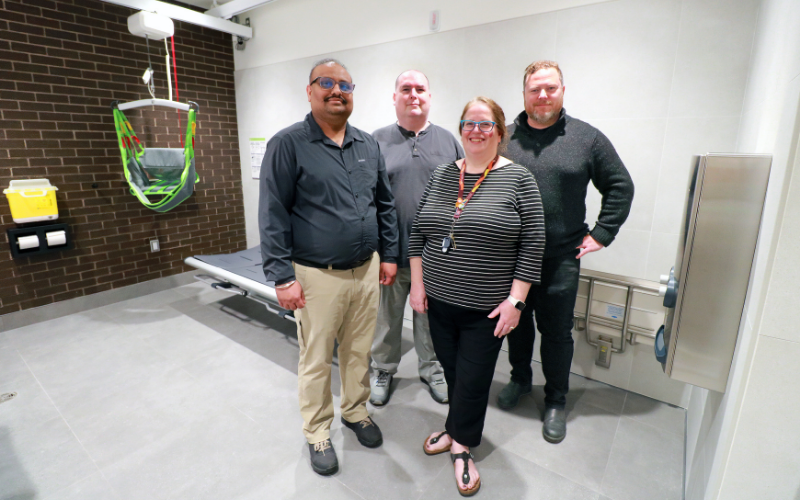
At first glance, a washroom may seem like an unexpected place to start a conversation about belonging. For some, access to the right washroom is the difference between participating fully in university life and planning around what a space can or cannot provide.
Saint Mary's University's new universal washroom in the Patrick Power Library was built with that reality front and centre. Designed to support a wide range of mobility and personal care needs, the space includes a ceiling lift, an adult-sized change table, accessible fixtures, room for power wheelchairs and mobility devices, and choices in lighting, materials, signage and acoustics intended to make the room genuinely welcoming.
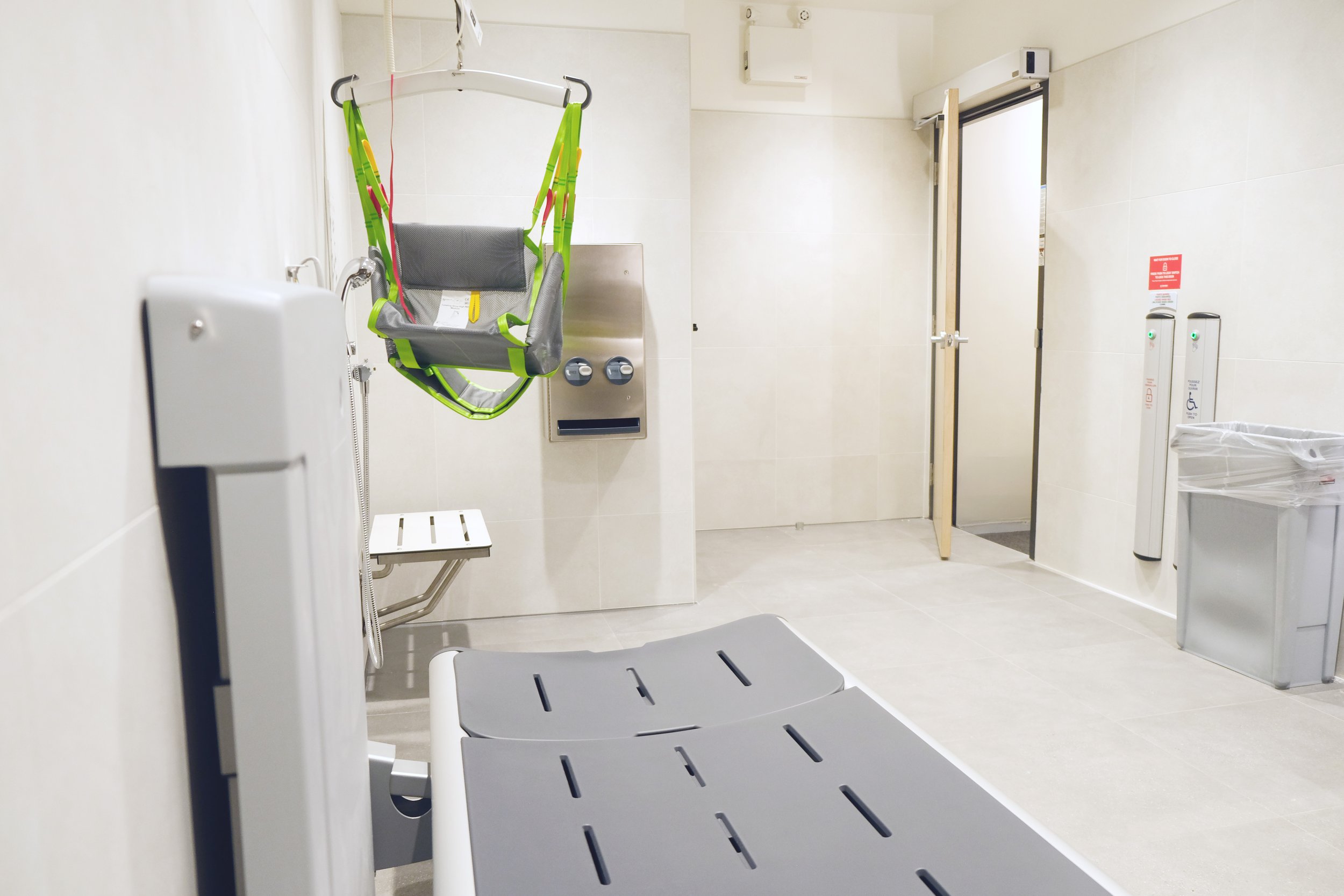
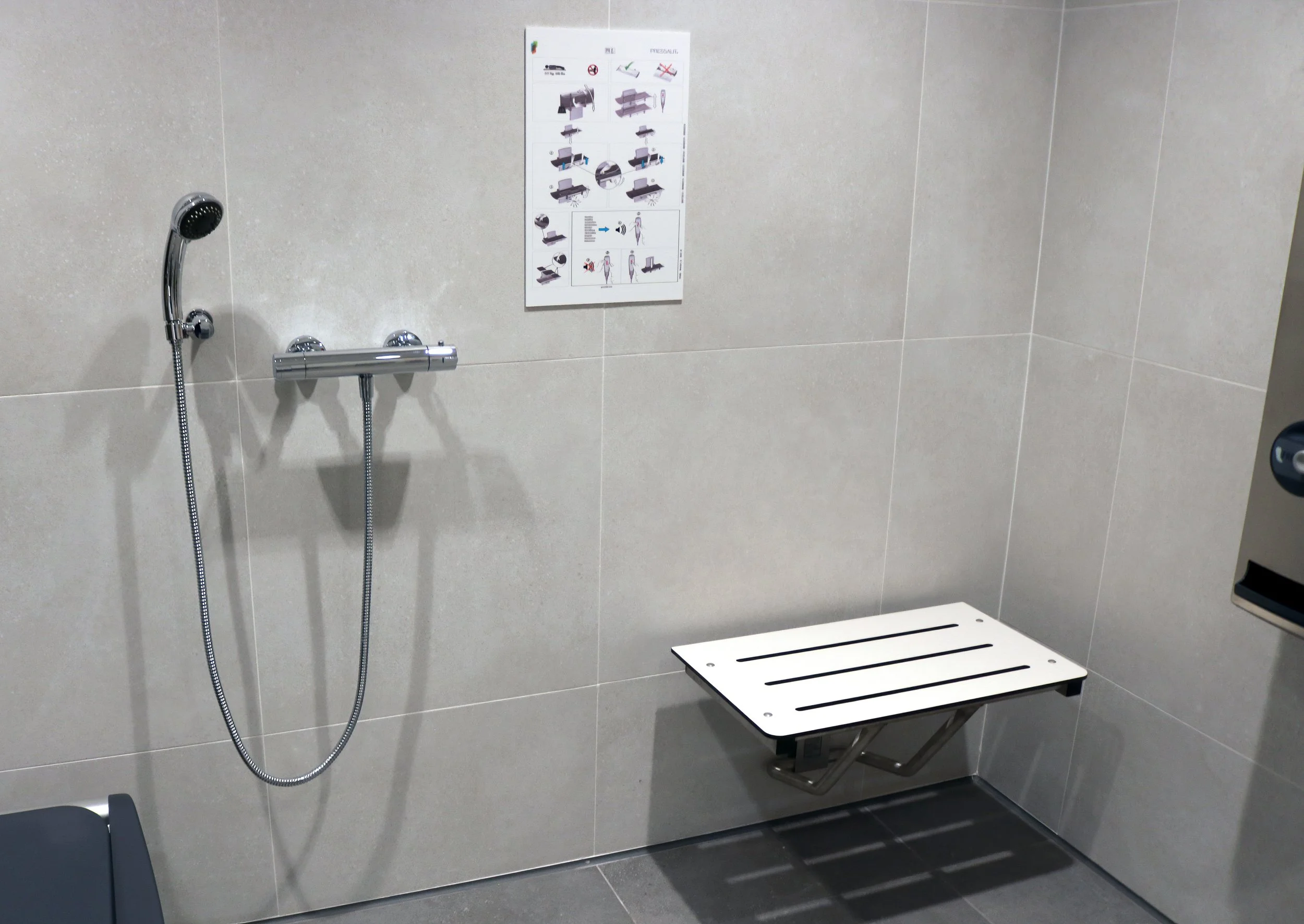
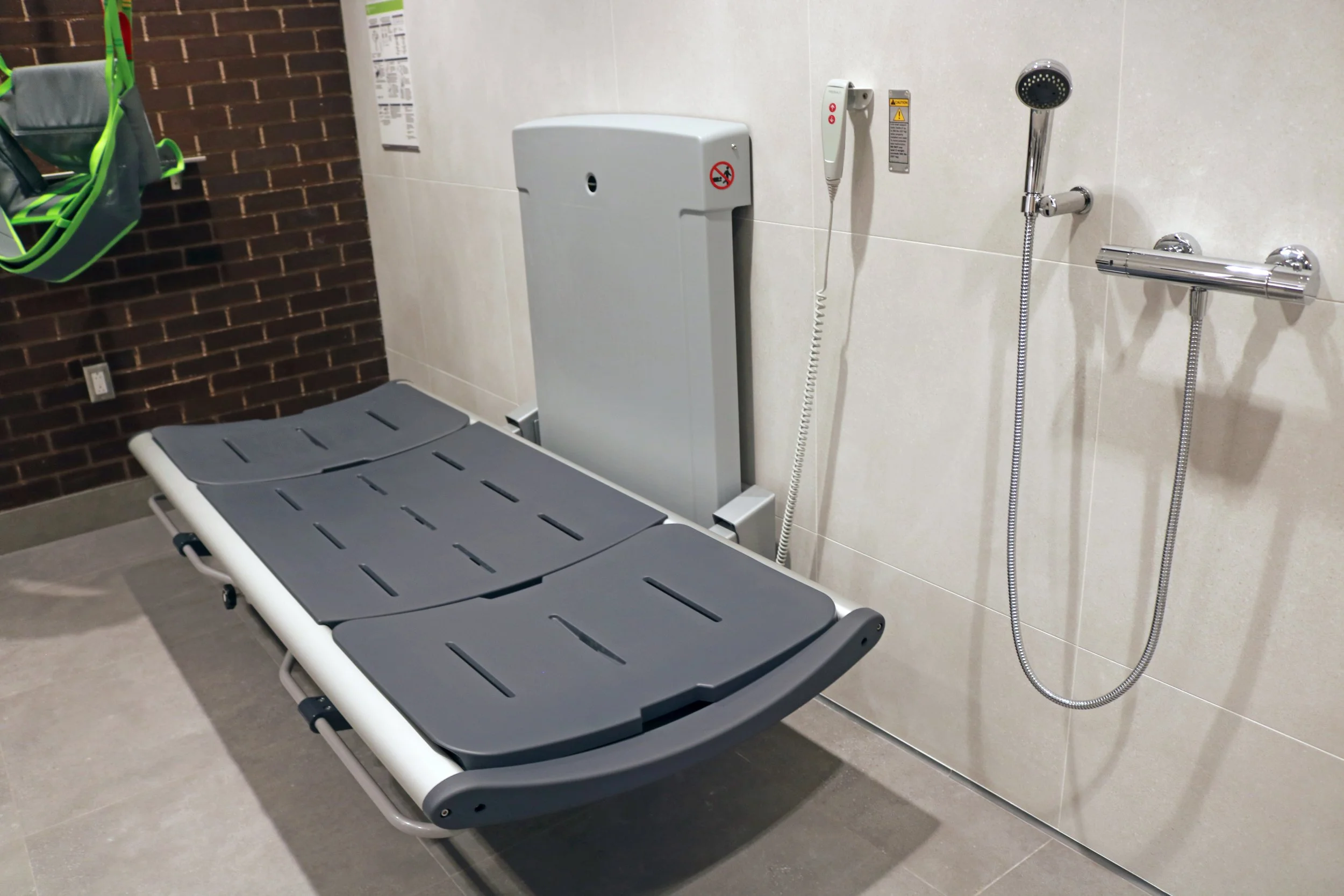
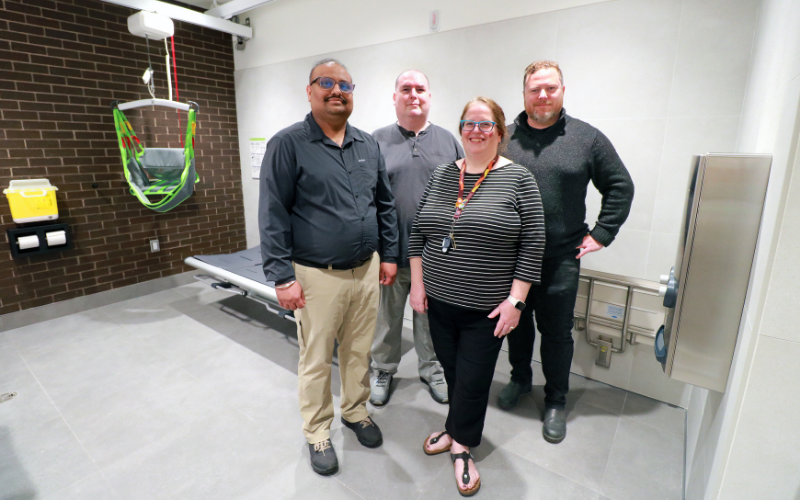
It started with a single question asked in 2018, when a parent reached out to ask whether the campus had a washroom equipped with both a ceiling lift and an adult-sized change table. Saint Mary's was able to add a lift to the accessible washroom on the third floor of the Student Centre, but the room could not accommodate a change table. That gap became a turning point. It showed that accessibility is not only about meeting a minimum standard. It is about understanding what people need to move through campus with independence and confidence.
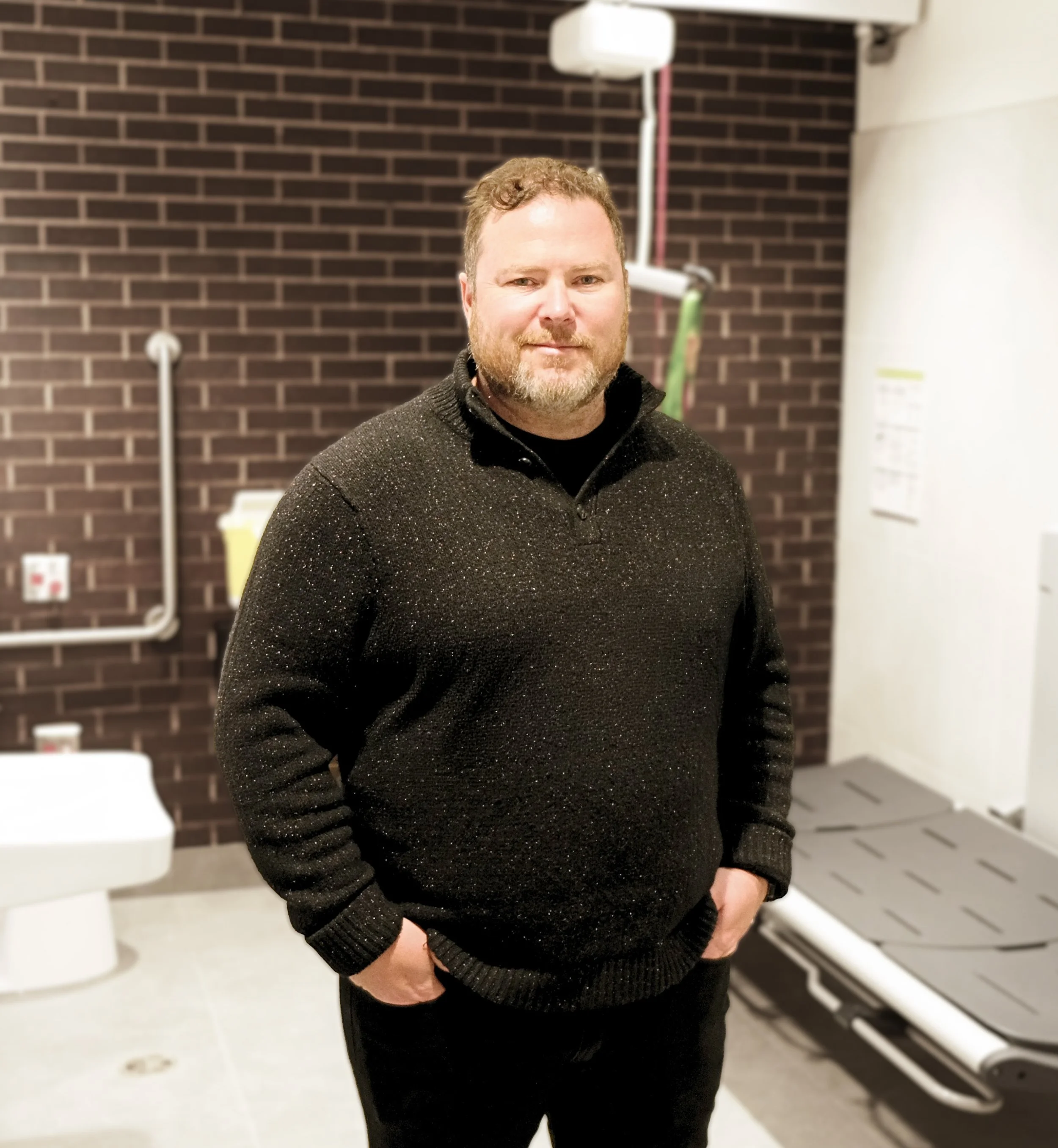
Project architect Glen Nicholson
"Universal design asks us to think beyond code compliance and consider the lived experience of the person using the space," says Glen Nicholson, project architect. "The best accessibility design should not feel exceptional to the user. It should simply feel like the building anticipated them."
The next step was finding the right location. Saint Mary's conducted a campus-wide review that examined at least 10 possible sites. The criteria were uncompromising: a large enough footprint, an accessible corridor, room for a lift and change table, space for mobility devices, and a location that would not reduce the number of available washroom stalls elsewhere on campus.
“We had to think carefully about how the space would function for the people using it, not just whether we could fit the required equipment into a room,” says Dennis Gillis, Senior Director of Facilities Management. “The Patrick Power Library emerged as the best option because it met the accessibility requirements while placing the washroom in one of the most central and frequently used spaces on campus.”
That last detail matters. A universal washroom tucked into a remote wing can technically satisfy a requirement. It does not offer the same welcome, visibility or message.
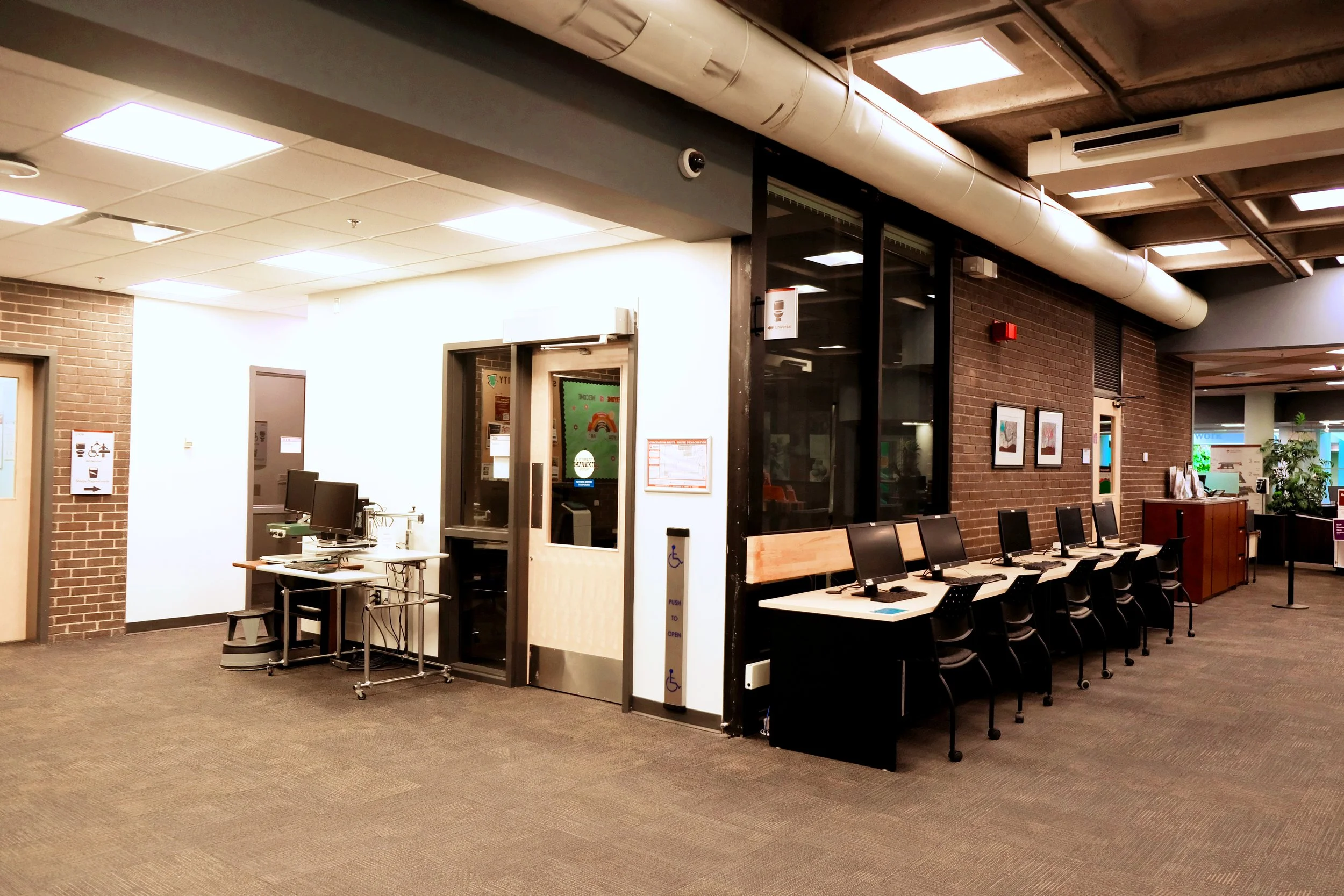
The new universal washroom is located on the first floor of the Patrick Power Library
“Libraries are spaces intended to serve everyone,” says Suzanne van den Hoogen, Dean, University Library and Archives. “Supporting this project was a natural extension of that commitment. By locating the universal washroom in the Library, we're helping to ensure that one of the most frequently used spaces on campus is also one of the most welcoming and inclusive.”
The project is supported by funding from the Nova Scotia Access-Ability Grant and the Government of Canada, supporting features that remain uncommon across regional post-secondary institutions.
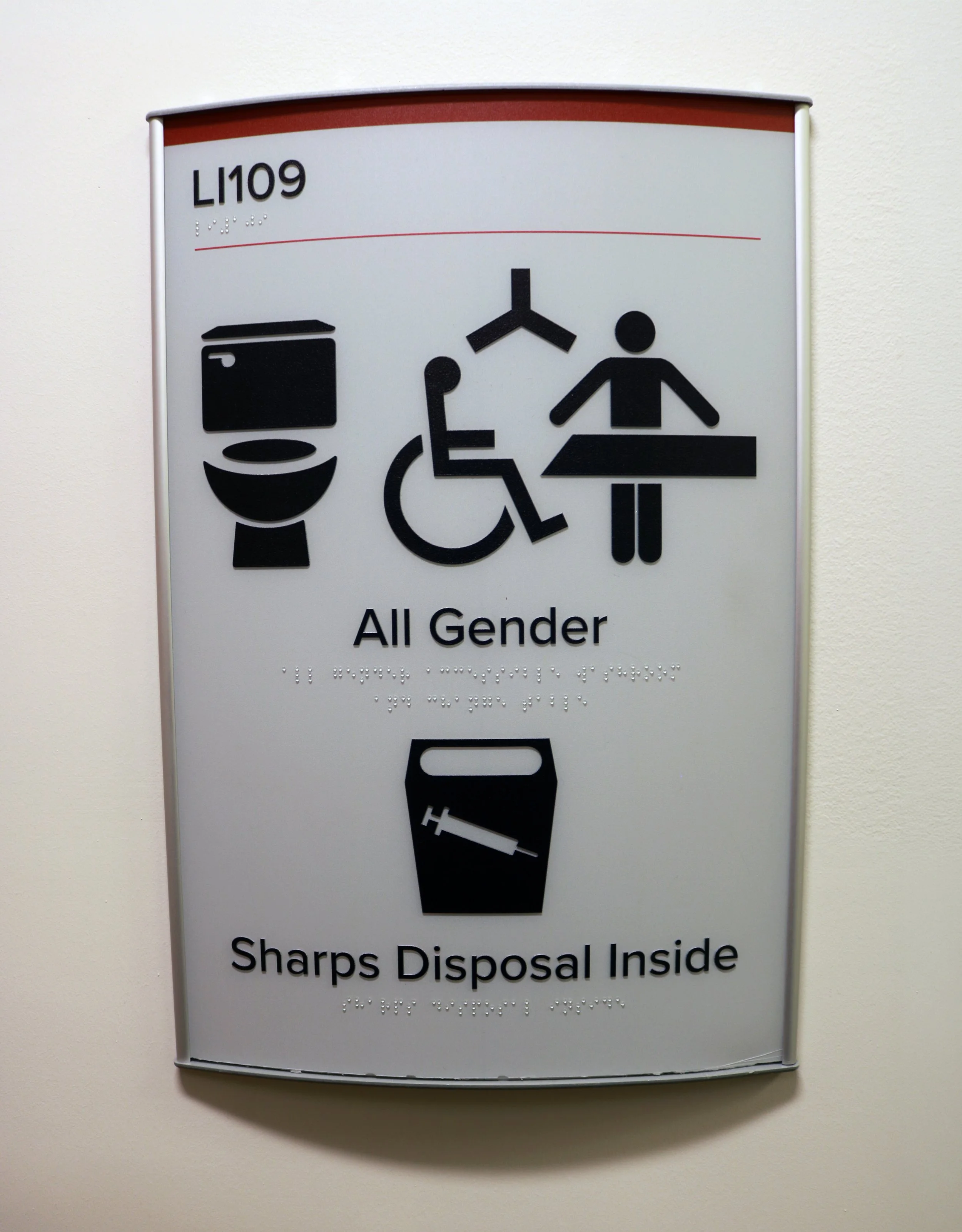
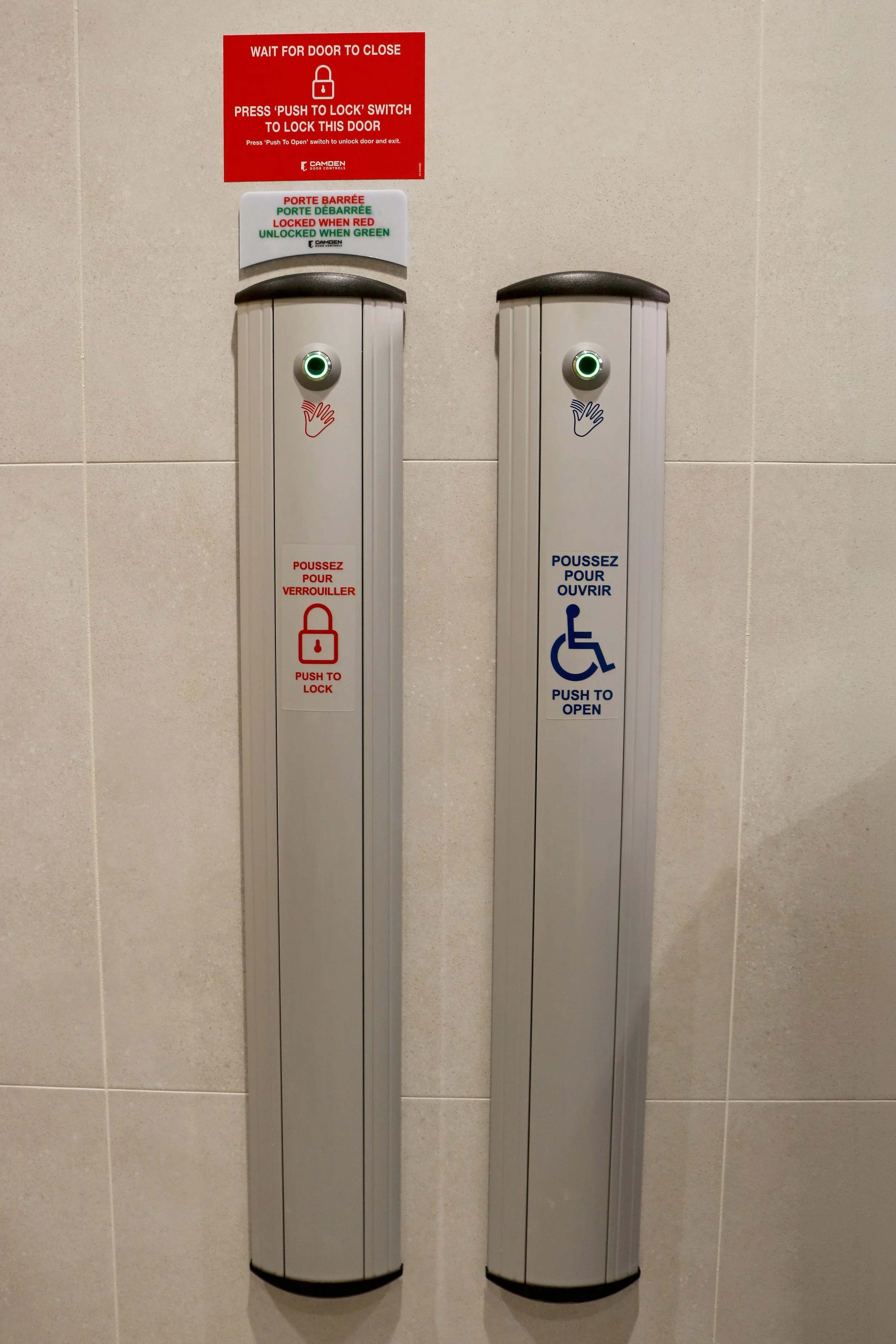
Inside the room, the details tell their own story. High-impact illuminated signage helps people identify the space. Contrasting finishes support visual navigation. Balanced task and ambient LED lighting reduces eye strain. Acoustic treatments provide privacy and discretion. A clear occupancy indicator removes the uncertainty of a locked door, while an emergency pull station connects to Campus Security and the Library service desk.
None of these features are flashy. Together, they communicate something important: that the people who will use this room were thought about, specifically and seriously, before the first wall went up.
For Kate McHugh, Manager of Student Accessibility and the Fred Smithers Centre, that kind of intentionality is invaluable. "Accessibility cannot live in one office or one service. The Fred Smithers Centre for Student Accessibility supports students directly, but the larger goal is a campus where accessibility is considered everywhere—in classrooms, common spaces, technology, events and washrooms. When the built environment removes barriers, people do not have to spend their energy negotiating access. They can spend it learning, working, connecting and belonging."
Saint Mary's is building this work within the broader context of the Nova Scotia Accessibility Act, which sets a goal of an accessible province by 2030. The university's Accessibility Framework will help guide continued efforts to identify, remove and prevent barriers across campus.
A single well-designed washroom is not the finish line. It is evidence that the work is moving in the right direction. The universal washroom supports students, employees, visitors and community members who come to campus for classes, events, research, meetings or simply to spend time in a public university space. It is one more example of architecture with intention at Saint Mary’s University.