
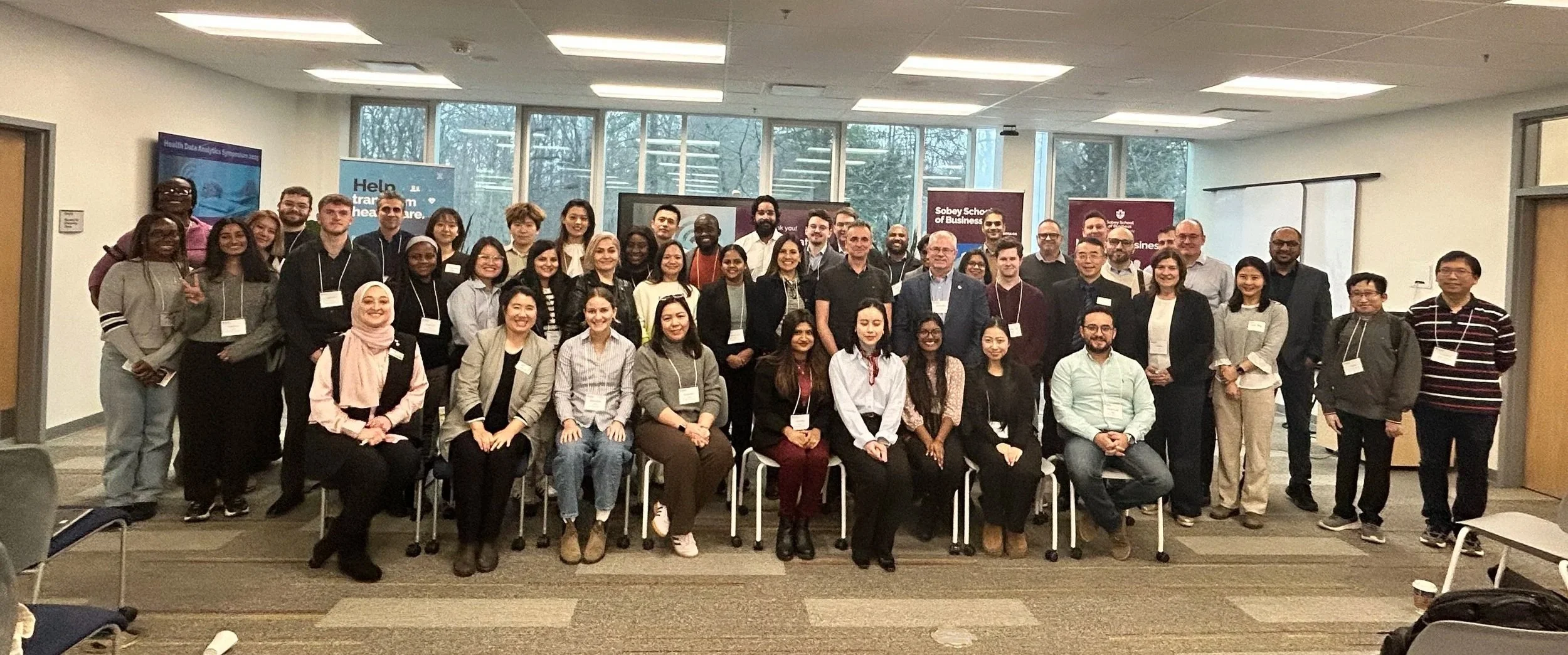
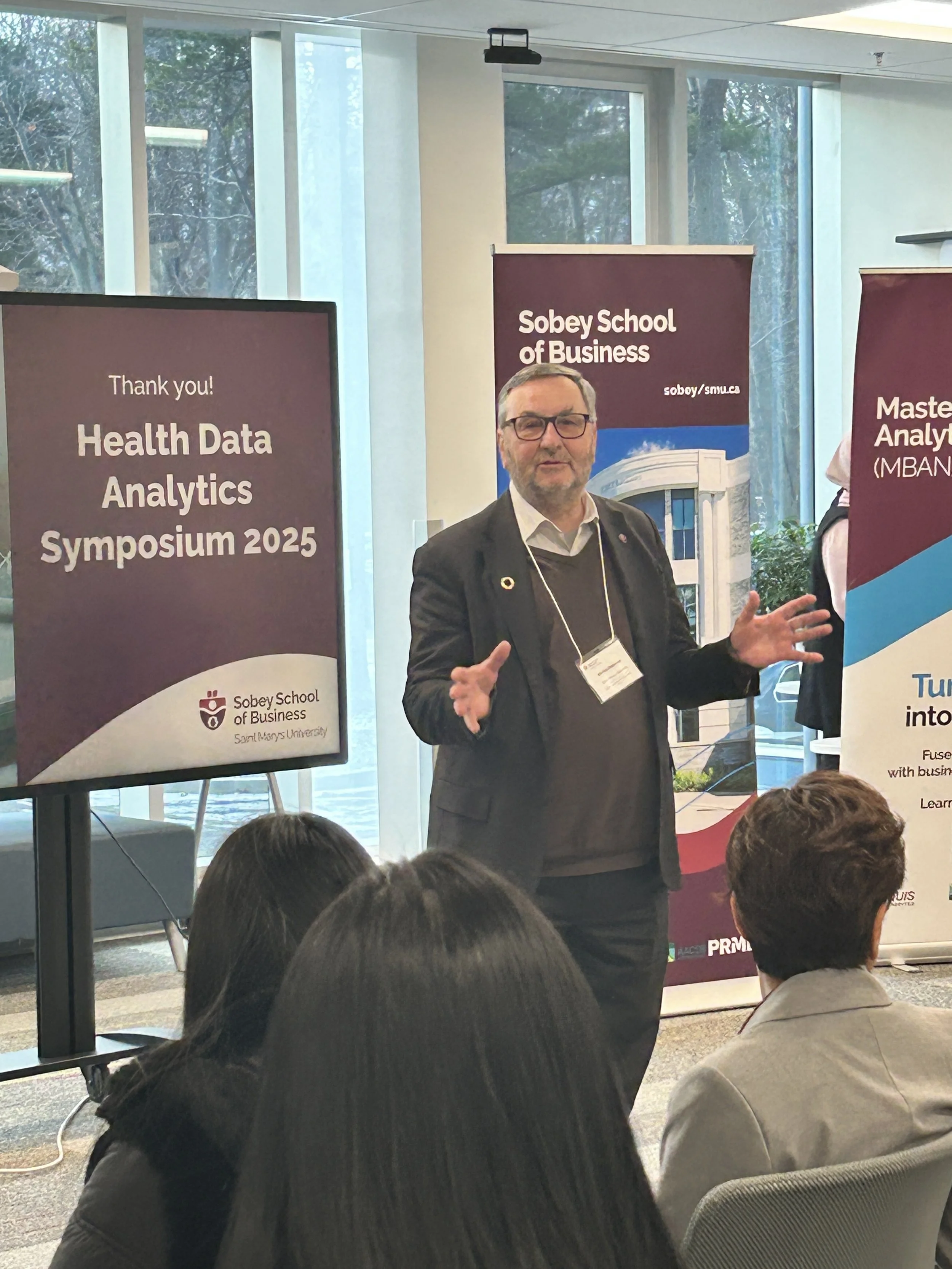
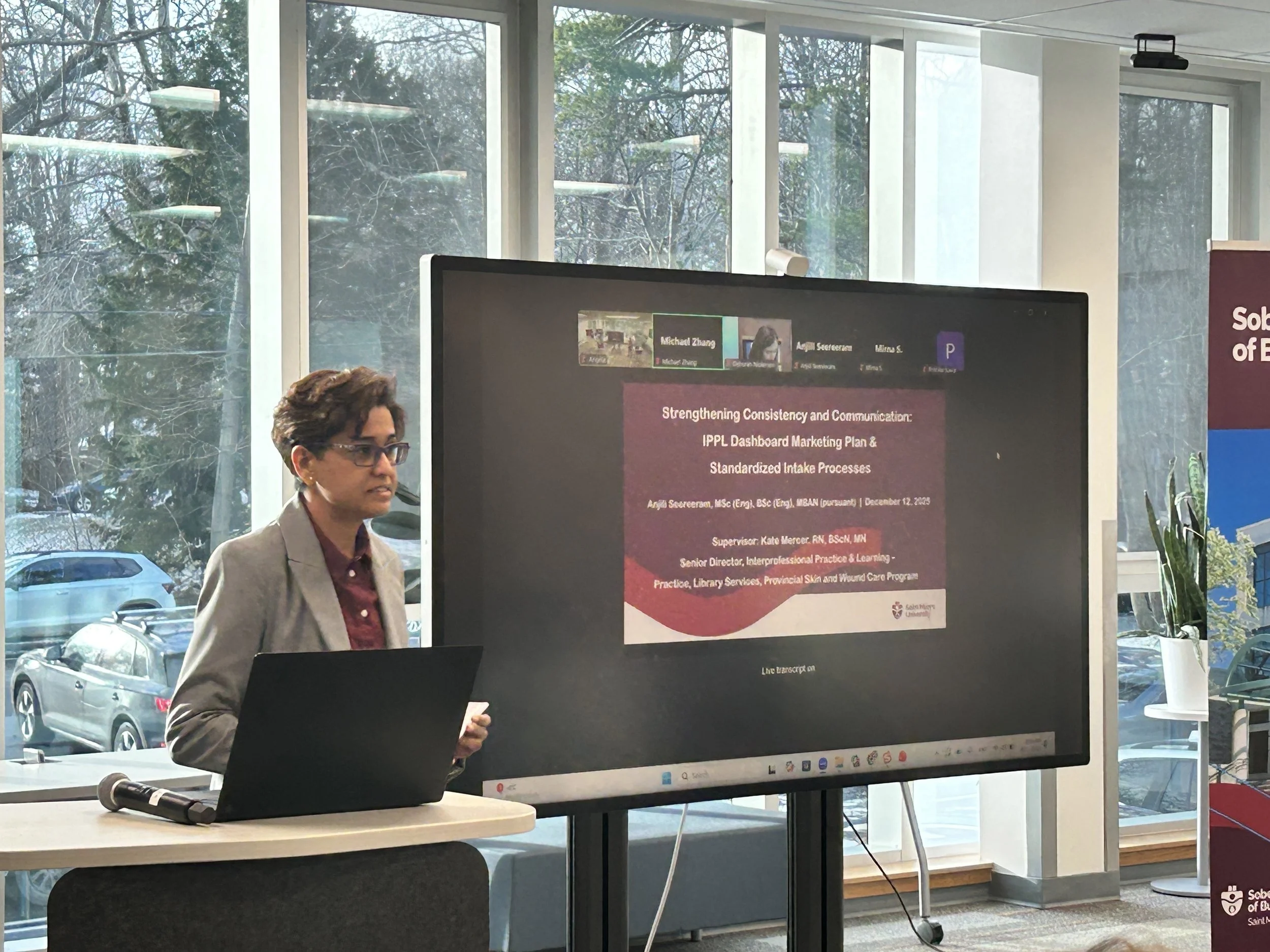
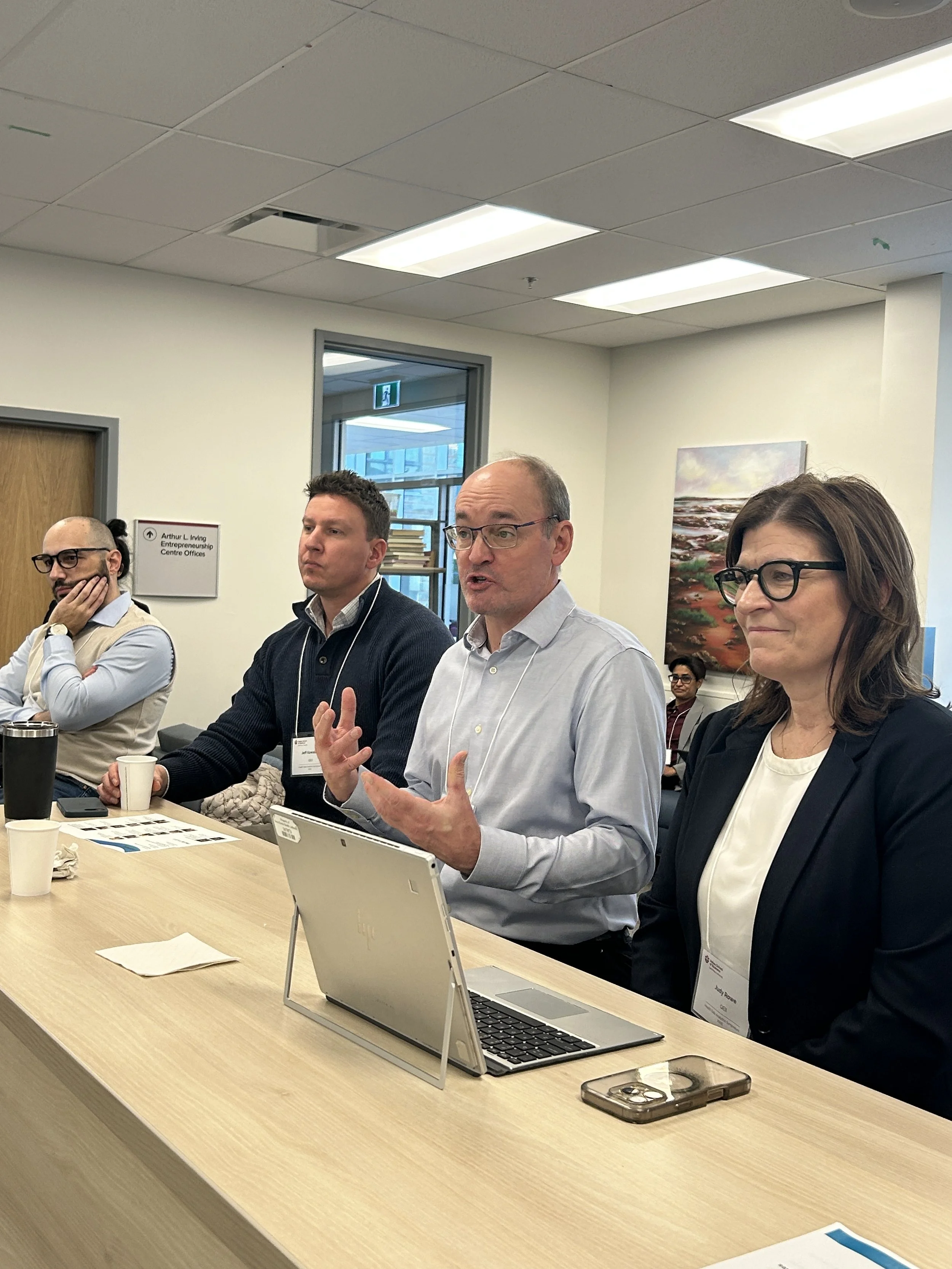
As healthcare systems face increasing operational complexity, the ability to translate data into clear, actionable insight has become essential. The second edition of Saint Mary’s University’s Health Data Analytics Symposium brought this challenge into focus through applied analytics projects developed inside Nova Scotia Health, offering a practical view of how data can support decision-making in real clinical and operational environments.
The Symposium showcased work completed by Master of Business Analytics (MBAN) students during their internships with Nova Scotia Health. Embedded within teams across the system, students worked with live data, real constraints and active problems to explore issues such as workforce planning, scheduling fairness, emergency department flow and patient experience. The projects were not theoretical exercises, but responses to questions the health system continues to actively grapple with.
Building on the momentum of its inaugural year, the Symposium demonstrated how applied analytics can bridge the gap between academic learning and system needs. The student presentations reflected not only technical capability but also an understanding of the healthcare context, collaboration and the human implications of data-informed decisions.
For healthcare leaders in attendance, the relevance of the work was evident.
“Watching a master’s student take a theoretical concept and move it into an applied project that speaks directly to workforce risk is incredibly powerful,” said Matthew Murphy, Vice President, Organizational Support and Readiness at Emergency Medical Care Inc. and former Chief Data Officer at Nova Scotia Health. “That kind of work is important not only for Nova Scotia Health, but for healthcare systems more broadly.”
Several projects focused on workforce sustainability and operational resilience, areas of growing concern across the healthcare sector. Others examined patient flow and experience in high-pressure environments such as emergency departments, highlighting how thoughtful use of data can support more timely decision-making and improved outcomes.
Scott McKenna of Nova Scotia Health noted that the partnership with Saint Mary’s continues to evolve, reinforcing its value for both organizations. He emphasized that the collaboration supports talent development while also helping the health system explore new analytical approaches to complex challenges.
For students, the opportunity to work inside the health system provided learning that could not be replicated in the classroom alone.
“ “Working within Nova Scotia Health helped me understand how analytics can reduce bias, support staff, and improve decision-making while keeping care human-centered.””
MBAN student Yilong Wu, who presented an intelligent scheduling system for MRI staff, described the experience as transformative. “Efficiency matters, but people matter more,” he said.
Another student presenter, Abhinethra Rajamoorthi Gangamani, focused on a predictive analytics system using data to identify risk factors associated with patients leaving without being seen. The project required in-depth engagement with operational workflows and a clear understanding of how healthcare data is processed from raw inputs to the dashboards used by clinicians and patients.
Industry partners in attendance emphasized that grounding analytics in real environments is critical. Kevin Fournier of Microsoft highlighted the importance of strong data foundations and clarity of purpose.
“In today’s world, data is the foundation of decision-making,” he said. “What stood out was how clearly students understood the problem, the data behind it and how their solutions could support better outcomes.”
From the Sobey School of Business perspective, the Symposium reflects a deliberate approach to applied learning and system engagement. Faculty leadership emphasized that embedding students within complex organizations strengthens both analytical capability and professional judgement, helping graduates contribute meaningfully from the outset of their careers.
Dr. Michael Zhang, MBAN Program Director, noted that working directly with Nova Scotia Health enables students to develop a deeper understanding of context, constraints and impact, leading to more relevant and responsible analytical work.
In her opening remarks, Susan MacDonald, Vice-President, Finance and Administration at Saint Mary’s University, underscored the broader institutional importance of partnerships like this one. She emphasized that universities play a critical role not only in educating students but also in contributing to provincial capacity by supporting workforce development and system improvement.
Together, the student work and partner perspectives demonstrated how applied analytics, developed through close collaboration between academia and the health system, can support better decisions, stronger operations and improved patient experience. As healthcare continues to evolve, the Health Data Analytics Symposium offers a growing platform for aligning education and practice in the service of complex, real-world challenges.
Saint Mary’s is offering a new Graduate Diploma in Health Data Analytics program starting in September 2026. Apply now!