
May 28-June 3 marks National Accessibility Week; an opportunity to celebrate the valuable contributions and leadership of Canadians with disabilities and highlight the work of people, organizations and communities that are removing barriers. At Saint Mary’s, the Fred Smithers Centre for Student Accessibility (formerly the Fred Smithers Centre for Students with Disabilities) is a leader in institutional student accessibility.
This year, the theme for National AccessAbility Week is “Disability Inclusion: From Possibilities to Practice”. As part of our Accessibility Week initiatives, we have developed a guide with five easy steps that faculty and staff can incorporate into their practice to help enhance learner accessibility at SMU.
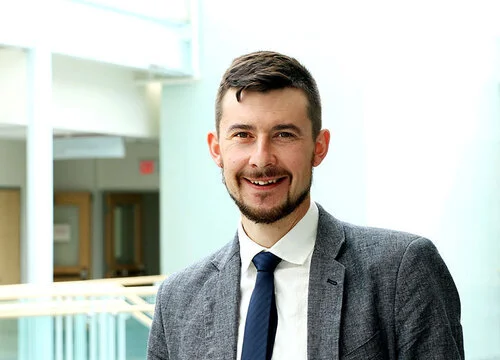
“With the evolving landscape of accessibility in learning, it is crucial that we take a user-centered approach to modernizing our offerings,” says Kate McHugh, Manager, Fred Smithers Centre for Student Accessibility (FSCSA). “It is also imperative that we equip those on the frontlines of student education and care with knowledge and resources to put our best foot forward in accessibility and accommodation.”
Below are five steps for faculty and staff that can help enhance accessibility across campus.
1. Familiarize yourself with the Fred Smithers Centre for Student Accessibility
We are a unique team comprised of two accessibility advisors, an education employment advisor, two exam accommodation administrators, several part-time exam and testing invigilators, an accessibility resource assistant and the FSCSA manager. Many on our team experience some form of disability so our varied experiences paired with our cumulative training and backgrounds provide a unique and well-rounded insight into supporting students who experience disability.
Within the scope of FSCSA, we work directly with students in supporting their academic journey, provide various assistive technologies, employment skills and future readiness, access to grants, educational materials and services, exam and testing accommodations and more.
We also work with stakeholders across Saint Mary’s to raise our level of accessibility pan-campus and enhance the experience for all within the SMU community who experience disability. Our efforts extend beyond the SMU walls and into the broader national institutional community. Members from the FSCSA team recently represented Saint Mary’s at the Atlantic Association of College and University Student Services (AACUSS) to present on supporting adaptive exam and testing accommodations in unprecedented circumstances.
2. Understand what is included in the scope of disability
While traditional or commercialized perceptions of disability fixate on mobility impairments, disability covers a wide range of reduced or impaired functions that can present in visible and/or invisible ways and be on a short or long-term basis. Some common disabilities that exist within the institutional landscape include but are not limited to mental illness, learning disability, ADD/ADHD, hearing impairment, visual impairment, mobility impairment, medical condition and autism spectrum disorder. Students registered with the Fred Smithers Centre for Student Accessibility have provided both a detailed application and supporting medical documentation.
The FSCSA provides personalized support for each student based on their individual needs. Since disability can present itself in unique ways for each student, it is of the utmost importance to offer flexibility, options, and customized plans of action for each student. The FSCSA team, and the students it supports, rely on the flexibility and consideration of staff and faculty to achieve an inclusive learning environment that is accessible to all.
3. Take time to evaluate inclusivity
Whether in the classroom, hosting an event, preparing content, developing visual supports, or conducting assessments, there are quick considerations that can help ensure an accessible and inclusive environment. Below are some considerations:
Work with university resources like the Fred Smithers Centre for Student Accessibility, the Learning Studio and department communications staff to develop accessible course materials, documents and presentations, visual and graphic components, and more.
When hosting an event or gathering, evaluate physical access of a space, including entrance and exit points of the building and room, accessible seating and accessible washrooms.
Consider offering a virtual alternative for those unable to attend in person.
Use inclusive, person-first language. Saint Mary’s provides guidance on inclusive language within the Saint Mary’s Style Guide.
Add information on disability and accommodation to your course syllabus. Here’s a boilerplate you can copy/paste:
“If you qualify for accommodations because of a disability, please ask The Fred Smithers Centre for Student Accessibility to submit your accommodations to your faculty member in a timely manner so that your needs can be addressed. The Fred Smithers Centre determines accommodations based on documented disabilities in the academic environment. Information on requesting accommodations is located on the Fred Smithers Centre’s website. Contact The Fred Smithers Centre for Student Accessibility (902)420-5452 or email fredsmithers.centre@smu.ca for further assistance.”
4. Refer students to the FSCSA as needed
In some instances, a student may not be registered with the Fred Smithers Centre for Student Accessibility for whatever reason but may confide in a staff or faculty member about experiencing a disability. It is important to maintain trust and confidentiality, so please do not seek out FSCSA accommodations on their behalf. Instead, help them feel validated in their experience and provide them with information about SMU accessibility and accommodation to help them make an informed decision on whether to register with the FSCSA.
5. Keep learning
Where capacity permits, take some time to check out additional learning resources. Below are some great options:
Saint Mary’s Learning Studio – Academic Accommodation resources (including accessible templates for slide decks, PDFs and more!).
Atlantic OER Pressbooks Network – Accessible Teaching & Learning FAQ
Atlantic OER Pressbooks Network - Accessible Strategies for Students With Disabilities
The Fred Smithers Centre for Student Accessibility team is happy to answer questions, offer guidance and provide resources for faculty and staff, in our shared effort to enhance accessibility for learners. Reach out by phone (902)420-5452 or email fredsmithers.centre@smu.ca, or stop by the offices in the Student Centre, 3rd floor, room 309.