

Healthcare

Students tackle health care, food security issues with Wicked Problem Lab awards  

Four Saint Mary’s students are gearing up to tackle some thorny issues in health care, food security and sustainability thanks to an award program from the Wicked Problems Lab.  

Now in its second year, the LeaderVision Atlantic Wicked Problems Lab Awards (sponsored by SMU alumnus Douglas Coll BComm’89), provide $2,500 to two undergraduate students who present a compelling idea to address a challenging problem. The Wicked Problems Lab grants two additional awards of the same value to one graduate and one undergraduate student.  

“Wicked problems, like poverty or climate change, are by definition almost impossible to solve because they are complex and always evolving, with no real end point,” says Dr. Mat Novak, a professor in the department of Geography and Environmental Studies and director of the Wicked Problems Lab. “But that doesn’t mean we shouldn’t work to address them. These awards inspire and encourage students to work towards solutions.” The Lab supports the students by providing data, analytical software and expertise. 

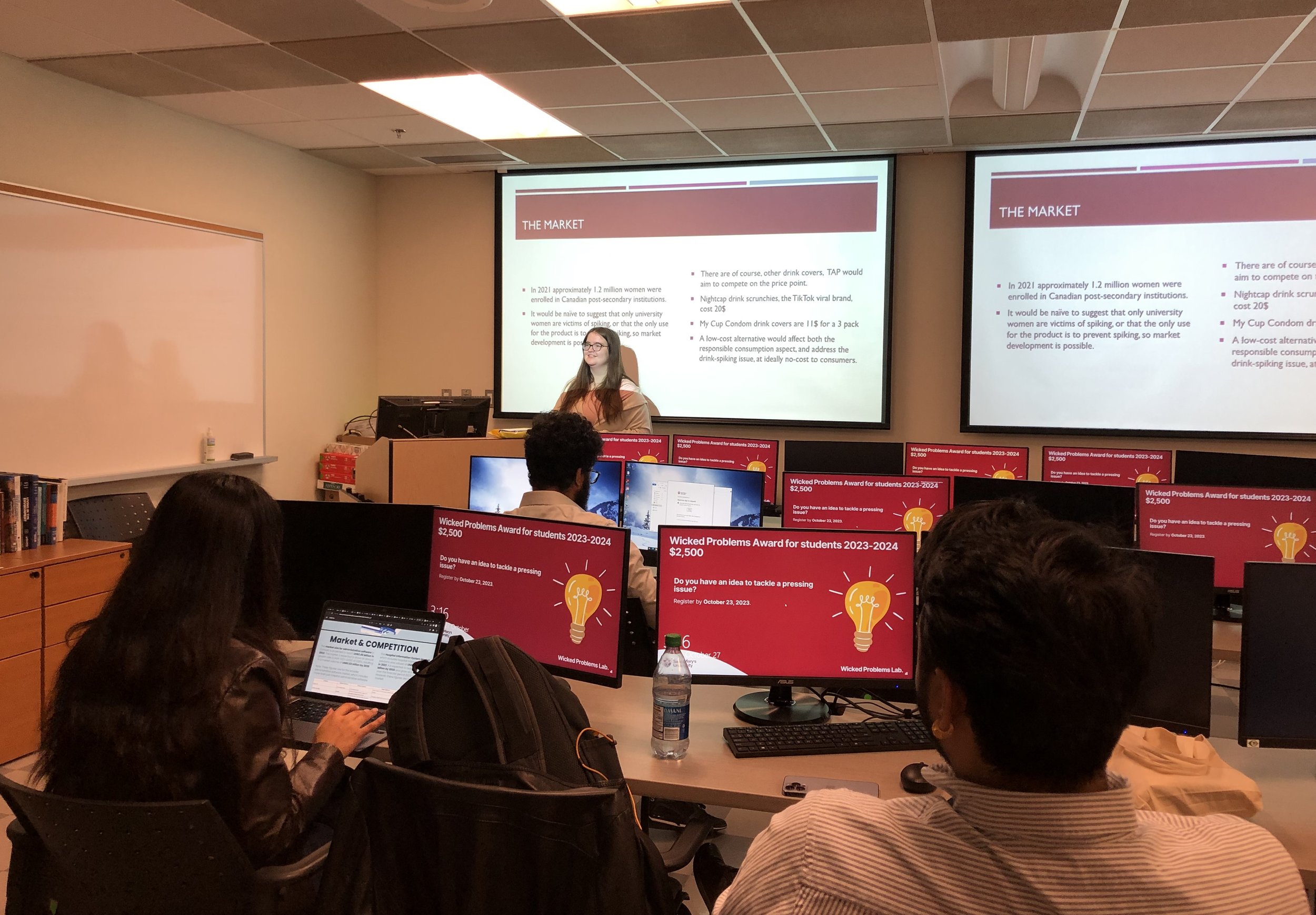
Twelve projects vied for the award this year. The successful candidates began working with Drs. Novak and Matsumoto–the WPL’s Research Analyst–shortly after they were notified of their prize and will continue to develop and implement their idea this winter. Surveys, spatial analysis and census data will help inform their projects along with meeting local partners to carry out their ideas. Students will showcase their projects at the end of the term. 

Congratulations to the winners:
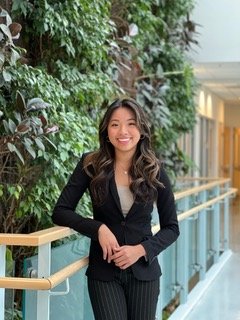
Lydia Lee 
Bachelor of Commerce, Sobey School of Business 
Project: Sustainable Seconds 

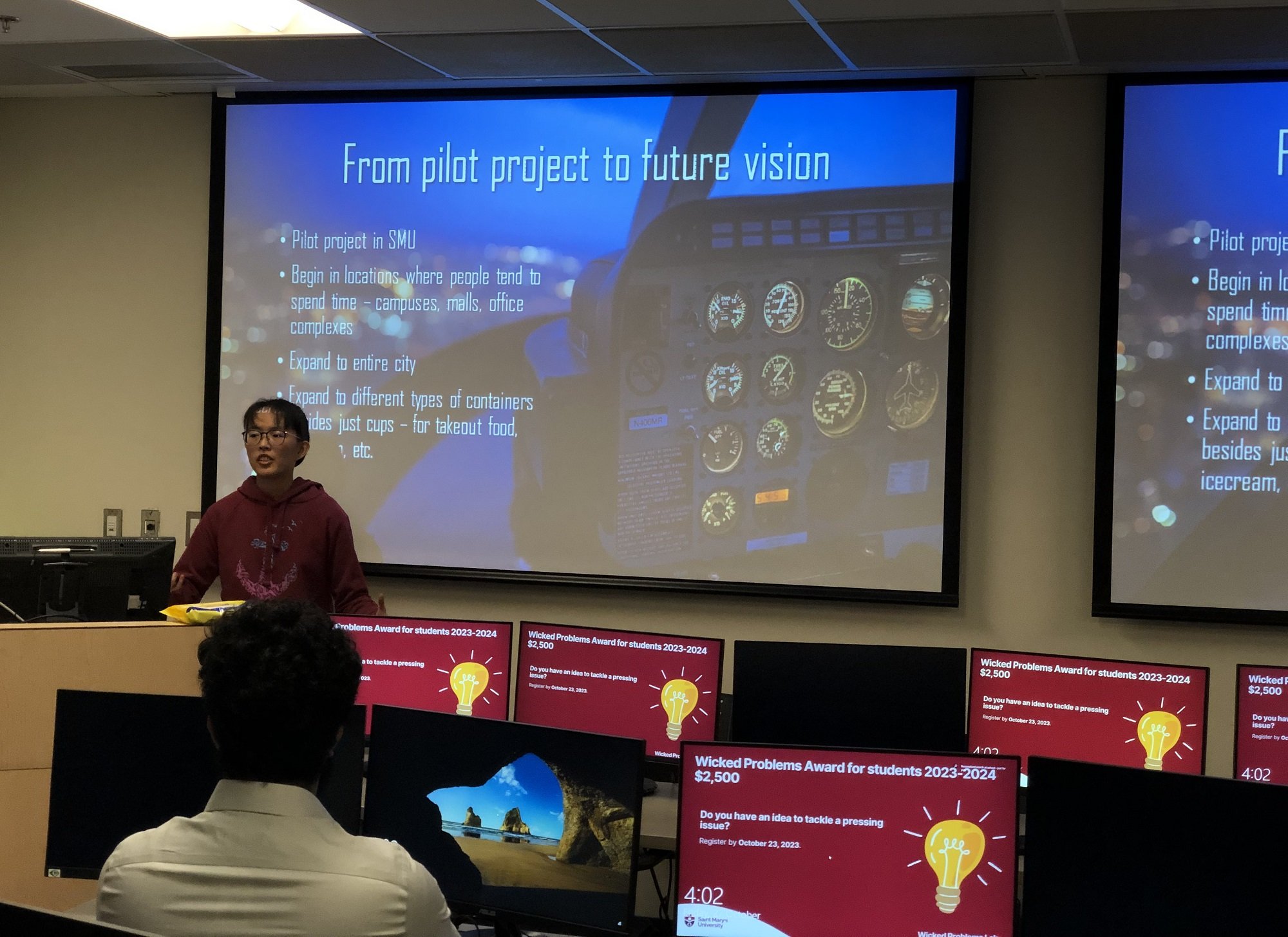
Sustainable Seconds aims to address food insecurity by delivering affordable and sustainable home meal kits. Using second products from local farmers and donated ingredients to create affordable and sustainable meal packages, it’s a cost-effective solution with pre-measured ingredients and easy-to-follow recipes.

Sorav Sogy 
Bachelor of Commerce, Sobey School of Business 
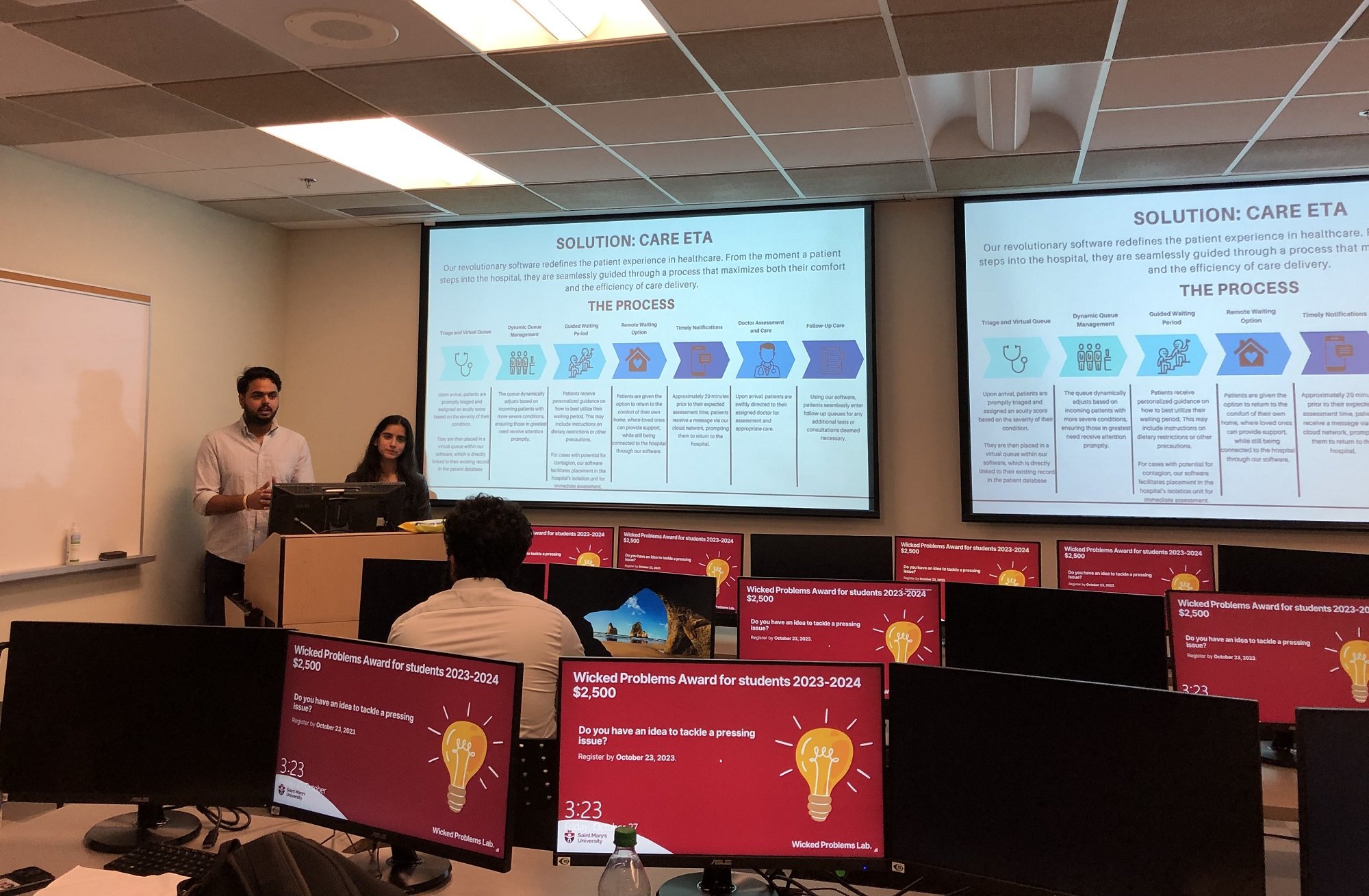
Project: CARE ETA 
 
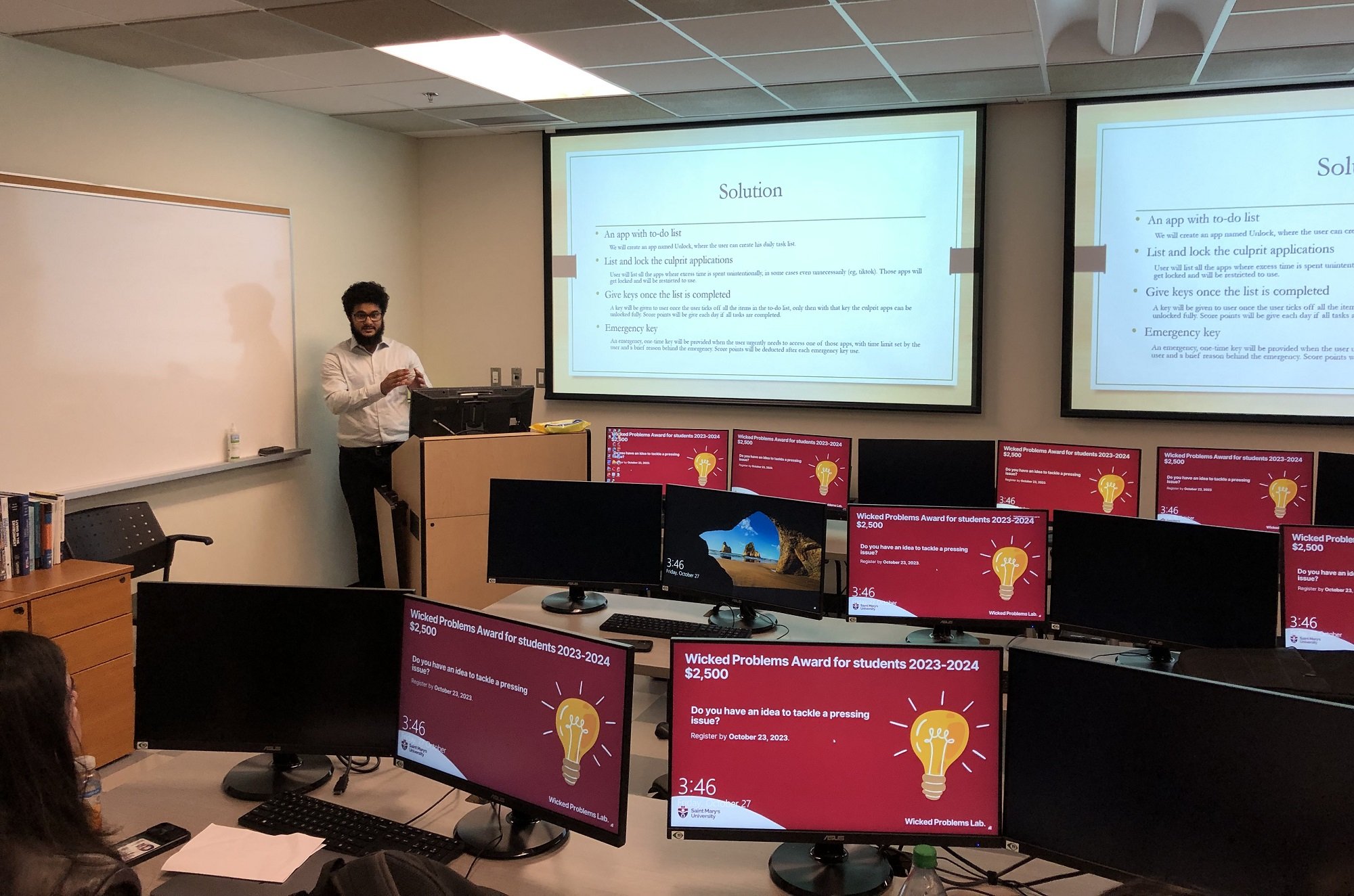
Sorav Sogy, along with fellow BComm students Vaishali Sachdeva, Ishaan Singh and Aarav Sen Mehta, want to tackle healthcare wait times through the development of an interactive app. CARE ETA aims to improve the experience of patients waiting in lengthy queues in emergency hospitals by implementing a real-time system that lets people stay informed about their status.


Melissa sits on a boardwalk on a sunny day

Melissa Alvarez Del Angel 
Bachelor of Science, Psychology major 
Project: Palm Oil Reduction and Healthier Food on Campus 

Melissa Alvarez Del Angel is promoting healthier food options to the SMU campus. In response to the environmental impact of widespread palm oil production, Melissa has proposed a comprehensive strategy for reducing the use of palm oil and advocating for healthier food alternatives at SMU.
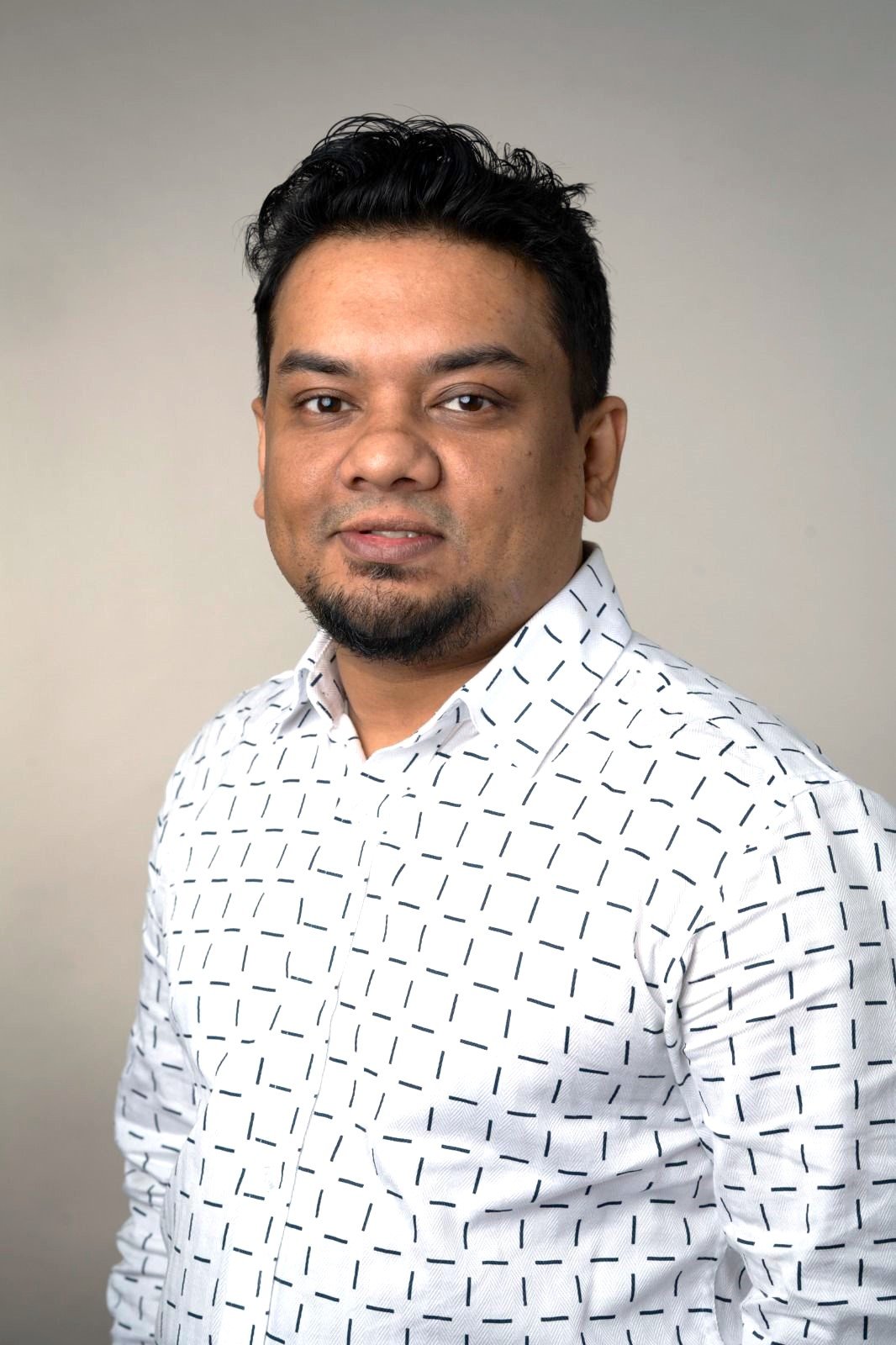
Hasib poses in a button up shirt


Hasib Ahmed 

Master of Technology, Entrepreneurship and Innovation 
Project: Wellnex 

Hasib Ahmed is developing a platform to make blood collection more accessible. This project seeks to enhance urban and rural mobility by introducing a doorstep blood sample collection service facilitated by a visiting nurse/phlebotomist, eliminating the need for individuals to commute to the hospital.


About the Wicked Problems Lab 

Established in 2020, the Wicked Problems Lab harnesses the power of data and advanced analysis to address the world’s wicked problems. 

The lab is equipped with the latest software and curated datasets and is staffed with a full-time analyst to help address your wicked problem.  

The lab offers: 

  • One-on-one research help 

  • Undergraduate and graduate-level problem-based learning activities 

  • Workshops, seminars and group training 

  • Self-directed tutorials for data and software, including GIS 

  • Community-research help assistance 


Psychology professor studies the silent epidemic of burnout in healthcare

Healthcare workers are stressed and overworked—the pandemic only made it worse. Dr. Debra Gilin and her team study the effects of burnout in healthcare.

Dr. Debra Gilin works with Dr. Dayna Lee-Baggley and a team of psychology graduate students to research burnout in healthcare workers.

Within the sanitized halls of hospitals and clinics, a silent epidemic is wreaking havoc among the very caregivers we depend on.

Burnout within the medical field has become an alarming concern across the globe, especially during the COVID-19 pandemic, where uncertainty and growing hospitalization numbers impacted the well-being of healthcare professionals who worked tirelessly to slow the spread of the virus.

According to Dr. Debra Gilin, professor of psychology and graduate program coordinator for the Department of Psychology at Saint Mary's University, burnout among healthcare workers has been going on long before the pandemic.

“Doctors and nurses were already burnt out from the normal structure of the healthcare system, and then you added COVID, where people were dying,” she explained. “So, the stakes were really high, and they experienced what they described as a ‘moral distress,’ because they couldn’t help the person the way they should be able to under medical oath.”

A close photo of Dayna, who has olive skin, long black hair and black rimmed glasses

Dr. Dayna Lee-Baggley

Together with her colleague, Dr. Dayna Lee-Baggley, and a team of graduate students specializing in Industrial/Organizational Psychology, Dr. Gilin and her team decided to study the effects of burnout in healthcare workers. The 2020 study—funded through a collaboration with the Nova Scotia Health Research Coalition/ Research Nova Scotia— focused specifically on burnout during COVID and how the pandemic compounded the existing crisis that healthcare workers are experiencing. 

“We wanted to use the knowledge we gained [through the study] to create some intervention courses that could actually help leaders and the people that they lead in healthcare, not get as burned out during the pandemic,” she said.

How do you measure burnout?

Burnout is more than just being tired. It’s a complex and multifaceted condition that includes emotional exhaustion, depersonalization, and a diminished sense of personal accomplishment.

But how does one measure these emotions?

Using homecare nurses, nursing leaders, and medical faculty leaders as participants, Dr. Gilin and her team embarked on a seemingly Sisyphean mission.

“We couldn't change that people were being re-deployed to other health units, we couldn't change that they weren't always getting good communication or didn't always have PPE,” she said. “But we could help leaders realize that sometimes what they need to do is just be honestly validating and supportive, and that's materially useful, not only to themselves but to the people that they lead.”

The study groups had to take a six-week course over Zoom, where they learned about supportive leadership skills, the science of a brain under stress, how to recover from burnout, and leadership skills around conflict and empathy. Funds from the Research Coalition/Research Nova Scotia, and partner organizations, helped further refine their study.

“With the funding, we were able to give them a Fitbit, and we tracked their self-reported burnout, their health behaviors and their stress response, as measured by their resting heart rate during sleep,” Dr. Gilin explained.

The participants were broken into two groups: those who started the course earlier and those who took it later and served as a control group. The team saw that those waiting for the course had escalated resting heart rates as they tried to navigate the stress of the pandemic and avoid catching the disease. Once they started the course, their resting heart rates would level off and then start to come down.

“This is being recorded during sleep, so there’s nothing you can do to fake that,” said Dr. Gilin. “And the self-report surveys they were answering gave the same story… we had biological data and survey data that corroborated one another, so we felt like we were onto something.”

Systemic challenges and the way forward

While burnout is a personal experience, its root causes are deeply intertwined with systemic challenges within the healthcare industry.

Excessive workload, long on-call shifts, inadequate staffing levels, unfair policies and unpredictability in the workplace, are a few of the factors that healthcare workers have to deal with daily.

“We’re not so naïve as to assume that we’re able to change the healthcare system,” Dr. Gilin explained. “There are things about how funding happens and how people are trained that can lead to an unhealthy culture and unhealthy workload, but I think there’s been a shift in recognizing that working people so hard is counter-productive.”

The team is also working with web developers to create apps and offer the six-week course to health practitioners outside of Nova Scotia who are looking to manage their burnout as well.

“We plan to cut up the course into little videos and activities that people can complete every day,” said Dr. Gilin. “We have a mock-up ready and have the funding to continue moving these courses to a more accessible format for workplaces across Canada.” The team is currently conducting a research study on the effectiveness of the app-based course. Leaders who are interested in participating in the research will get access to the app for free. For more information contact phs@smu.ca, debra.gilin@smu.ca, or DrDayna@impactme.app.

For those experiencing burnout— regardless of profession— Dr. Gilin advises to actively take the time to rest and find joy through hobbies, activities and other social interactions.

“Take some time to reflect on what are the more energizing and fulfilling aspects of the work that you do,” she said. “Try to find a creative way to shift the balance, so that what makes you show up every day becomes a reasonable part of your day.”

Research News at Saint Mary's