A look at the new virtual operations environment at Saint Mary’s

DSC00196.JPG

Universities across the country have rapidly mobilized to respond to the COVID-19 pandemic and protect the health and well-being of their campus and broader communities. According to Universities Canada, in the space of about ten days, universities:

  • shifted to online education for over 1.4 million students, about 18% of whom are international students;

  • de-populated residences while providing accommodation for those with no alternative; and

  • wound down research operations except for those projects that are in the vital national interest, such as combating the pandemic.

The Saint Mary's community continues to do an incredible amount of work to safeguard our students, faculty and staff while maintaining operations, completing the academic term and serving the needs of our community.

The transition to virtual operations was a major shift for faculty, staff and students, but has gone rather smoothly.

"Shout out to the folks in the Studio who provided guidance on the "Virtual Classroom" and ITSS," wrote Dr. Peter Twohig, Associate Dean, Faculty of Arts, on Twitter shortly after the transition. "My session this morning with the students worked seamlessly and the students gave it a good review."

The Studio for Teaching and Learning has provided a wealth of resources for faculty, students and staff to help make the switch to online/remote teaching. And more support is available. The Software & Application Support Centre (SAS) provides training and support for faculty, staff, and students using university-supported software and technology.

The Patrick Power Library has moved to virtual hours of operation. Students, staff and faculty, can access more than 350,000 e-book titles and over 30,000 online scholarly journals from home, anytime. These are available via the library catalogue at http://smu.ca/library. Students, faculty and staff can access Research Help via email (research@smu.ca) and text (902-702-3057) from Monday-Friday, 9 am-7 pm, and Saturday 1-5 pm as they continue to work on projects and assignments.

The librarians and staff are also working to fill document delivery requests for articles, book chapters, and other items that can be provided electronically when possible. They are unable to accept requests for books or other physical library items at this time. If you currently have any items borrowed through inter-library loan, please keep them until the library is open again to the public. Please email ill@smu.ca with any questions.

The university continues to support the well-being of the remaining students in residence. Special thanks to our residence, facilities and security staff who are working diligently to keep residences and campus clean and safe.

For future students, the Recruitment and Marketing team is working extended hours — now seven days a week — to make sure incoming students have access to information. There is also a new live chat service on smu.ca to assist prospective students, and an additional information phone line open after-hours.

To help us stay connected and positive as a community, we're collecting stories of kindness and compassion, as well as shout-outs to colleagues who are going above and beyond in a difficult time. Send your ideas to rachelle.boudreau@smu.ca or tag @smuhaliax, #smucommunity on social media.

Recognizing student leadership in the 2020 academic year

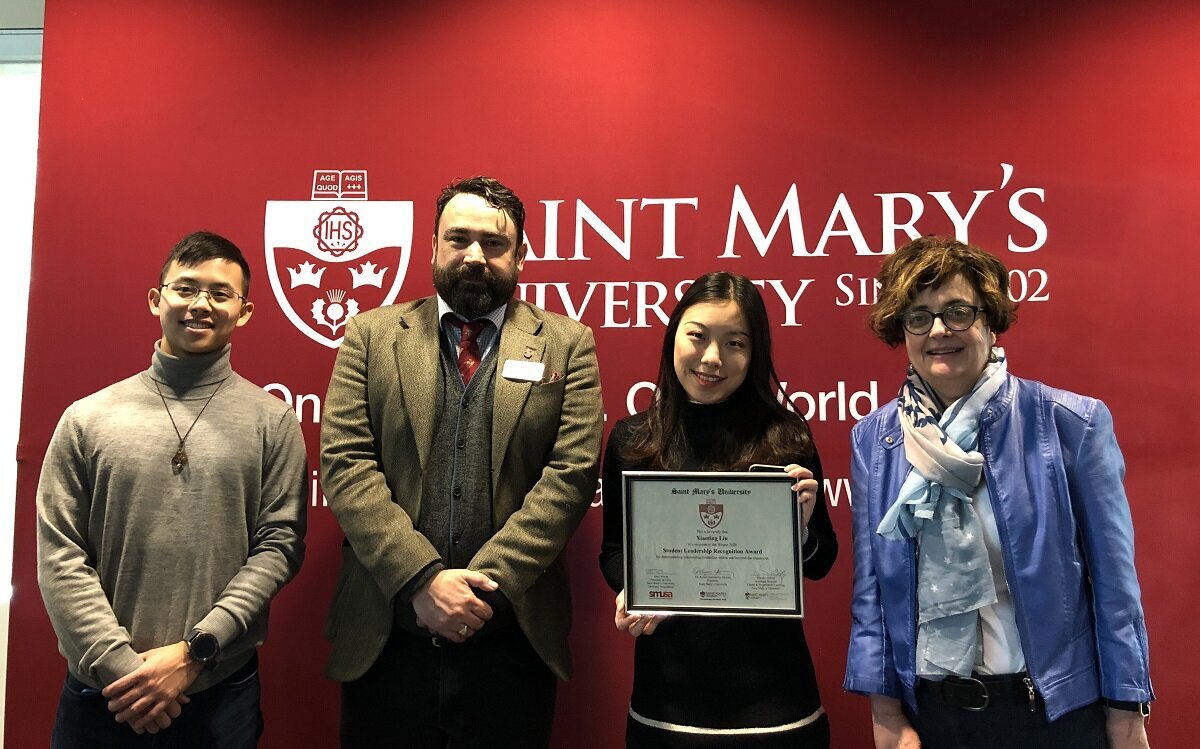
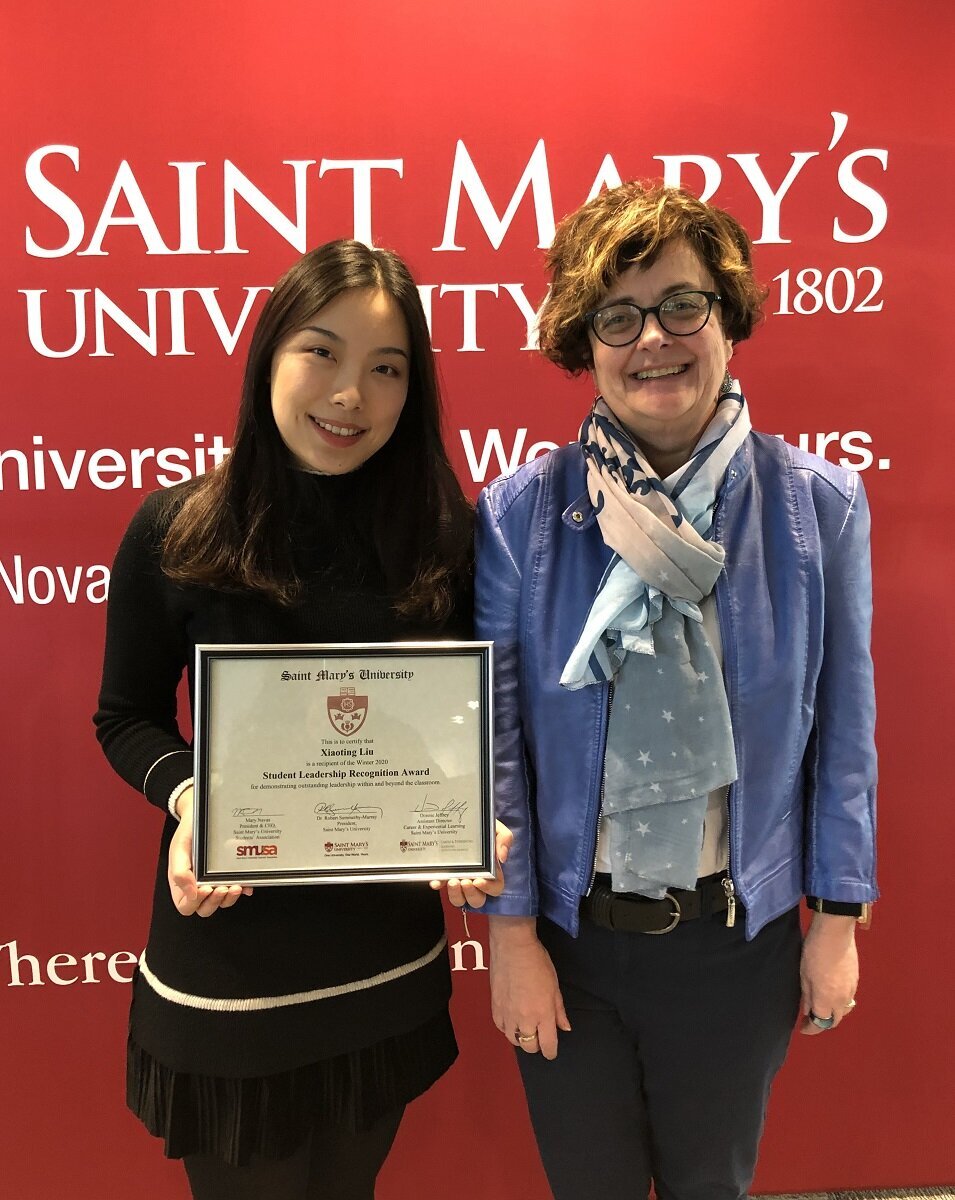
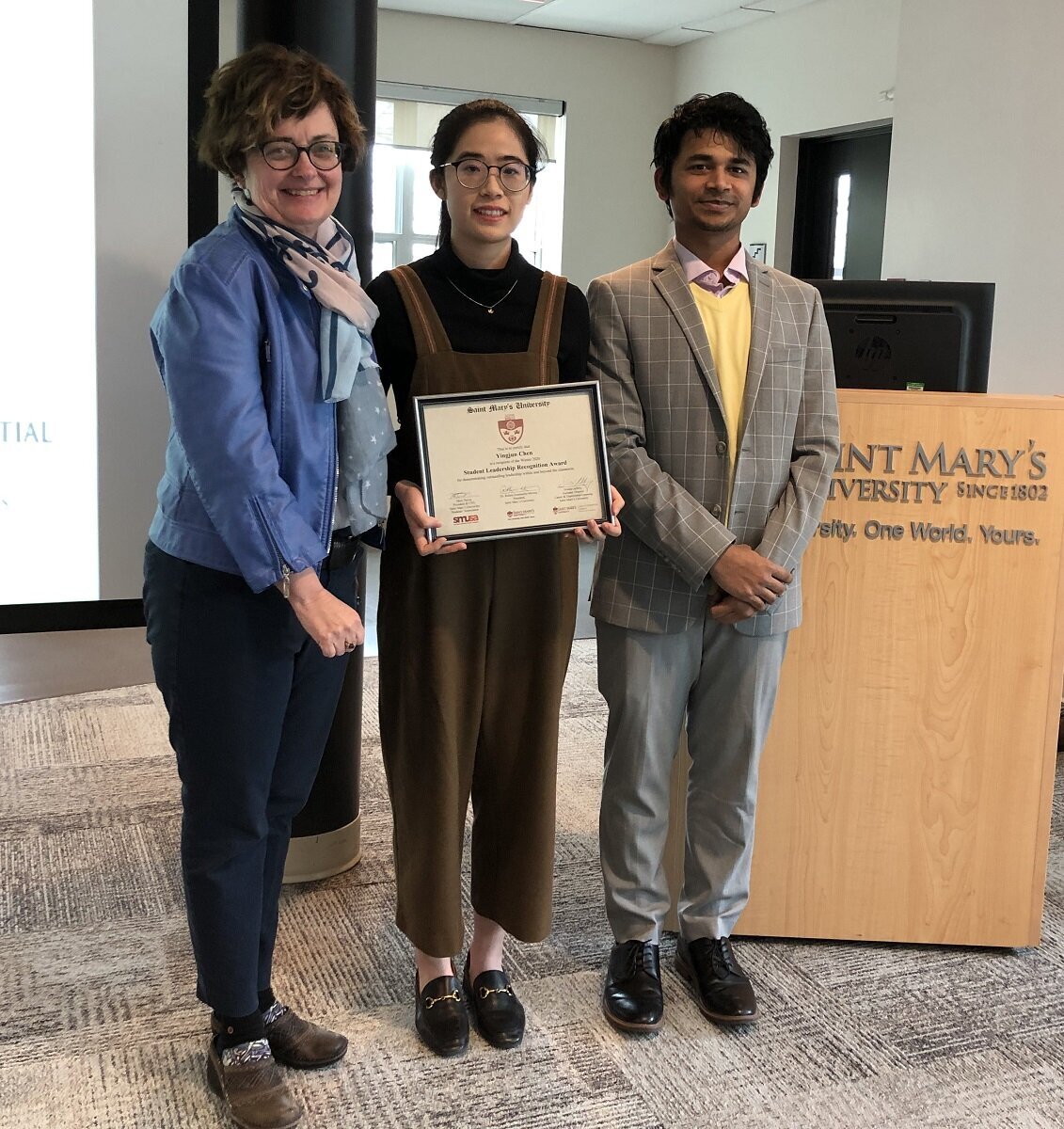
Congratulations to all 10 recipients of Student Leadership Recognition Awards for 2020! The SLRA awards were presented in a ceremony on March 11, hosted by SMUSA in partnership with Career & Experiential Learning.

The annual award recognizes students who possess, display and apply leadership qualities and skills within the Saint Mary’s University community and beyond. The awards were initiated in 2012 and are given annually to a maximum of three students from each Faculty.

SLRA 2020 RECIPIENTS

Faculty of Arts:
Yingjun Chen, third-year French and International Development Studies Xiaoting Liu, fourth-year International Development Studies

Faculty of Science: Amanda Lee, third-year Biology Makadunyiswe Ngulube, fourth-year Environmental Science (Honours) Sare Ozbek, fourth-year Biology & Sociology Alexa Tymkiw, fourth-year Biology (Honours) & Psychology

Sobey School of Business:
Leena Roy Chowdhury, fourth-year Finance Salman Islam Sadib, fourth-year Accounting Rami Zokari, third-year Finance & Marketing

Faculty of Graduate Studies and Research:
Ahrthyh Arumugam, second-year MA Women and Gender Studies

Saint Mary’s researcher to study organizational response to disease outbreak with major new funding announcement

A closer look at how employers respond during disease outbreaks is part of a new research study underway at Saint Mary’s University.

A research team led by Saint Mary’s Professor of Psychology Dr. Kevin Kelloway has received a grant for $333,000 over two years from the Canadian Institutes of Health Research (CIHR) to study COVID-19.

Dr. Kevin Kelloway

Dr. Kevin Kelloway

“Dealing with a pandemic on this scale is a massive social challenge that has dramatically changed the nature of workplaces,” said Dr. Kelloway. “Our project examines the workplace changes and the effect that they have on individual employees.  How, for example, do organizational policies influence individual decisions such as decisions around hygiene or self-isolation? How is the mental health of employees affected by the disruptions and re-organizations, and what can organizations do to help employees cope at this time?”

This research funding is for a project titled “Organizational Response to Disease Outbreak,” which will look at how both public and private organizations are challenged with the need to protect and promote the health and health practices of their employees while maintaining operations during disease outbreaks.

The study will look at employee perceptions of their employers’ management of these two goals, with a focus on examining how the organizational response to disease outbreaks influences employees' own health and health-promoting behaviours.

Along with a large national survey representative of Canadian workers, which Dr. Kelloway says will be longitudinal, following employees as they go through this experience, the team is also planning more focused studies on the role of leaders (managers and supervisors) in managing this crisis as well as more in-depth studies of employees who have transitioned to working at home.

The research group will start the two-year study very quickly in order to get good data on how people are adjusting and reacting to the crisis as it unfolds.

“It’s a quickly changing environment, said Dr. Kelloway. “For example, when we wrote the grant, no one was thinking of social isolation on the scale that we are now experiencing.”

The team has launched a website (ohpdata.com) that will be continually updated with information for employers and employees on how to adapt to changing circumstances. As the results from the research start to emerge, they will be posted to that site as well.

This funding for this project is part of an investment of $25.8M from the Government of Canada to contribute to the global efforts to address the COVID-19 outbreak. This is a portion of the $275M in funding for research on medical countermeasures against COVID-19 announced by the Prime Minister on March 11, 2020.

Dr. Kelloway’s team also includes Dr. Jane Mullen (Mount Allison University), Dr. Stephanie Gilbert (Cape Breton University) and Dr. Jennifer Dimoff (University of Ottawa) as well as PhD students Tabatha Thibault, Rachael Jones Chick and Vanessa Myers – all PhD students in the Industrial/Organizational Psychology program at Saint Mary’s.

Speak to the people behind the research at the Saint Mary’s University Research Expo

reseach expo.jpg

What do black holes, spelling, the search for the size and shape of the universe’s smallest thing, and responses to climate change have in common? They are all research areas being discussed this Friday, March 6, at the 2020 Saint Mary’s University Research Expo.

“The Research Expo is a unique event at Saint Mary’s. Talk with our professors and graduate students, and listen to three-minute research pitches as they explain their work,” said Dr. Adam Sarty, Associate Vice-President Research and Dean of the Faculty of Graduate Studies and Research. “It’s an opportunity to learn about the exciting research happening across our campus, from our Science and Arts faculties, and the Sobey School of Business.”

The research being presented at the expo covers a wide range of disciplines in business, the arts and humanities, and science, including:  

  • Toxic metals and invasive species;

  • community adaptations in the face of climate change; and

  • a qualitative approach to nursing staff shortages in emergency rooms.

These are only a handful of examples of the topics being investigated by researchers at Saint Mary’s, and many more topics will be discussed at the expo.

The expo is taking place at the Loyola Conference Hall and begins at 1 p.m. From 3 p.m. to 4 p.m.; researchers will be centre stage for a series of short three-minute pitches on their work.

To learn more about the expo visit http://www.smu.ca/research/research-expo.html

Communities looking for expert advice receive a boost through latest CLARI investment

clari_header-min.jpg

Communities looking to connect with experts to address issues and solve problems received a boost today, March 5, after a new investment for research projects through the Change Lab Action Research Initiative (CLARI) at Saint Mary’s University.

“We are working more with business, academia and communities to create the conditions for opportunity, growth and social well-being in our province,” said Labour and Advanced Education Minister Labi Kousoulis. “This initiative lays the groundwork for Nova Scotians to bring forward their ideas and work with post-secondary experts to help our communities grow and prosper.” 

Recent projects have covered a wide breadth of topics from exploring and documenting the life and history of Mi’kmaw Elder Sister Dorothy Moore to improving food security for seniors in Cape Breton.

 “CLARI has gone from an idea for greater connection between post-secondary institutions and community groups to a shining example of the strength of that collaboration,” said Adam Sarty, Associate Vice-President Research and Dean of the Faculty of Graduate Studies and Research. “This latest investment is an affirmation of the importance of connecting researchers with our local communities to find solutions and opportunities in challenges.”

The funding for the projects comes from the Province of Nova Scotia’s Department of Labour and Advanced Education. The $150,000 investment will support 20 campus-community projects, connecting post-secondary experts with communities in need of their expertise. The Province also helps to support CLARI’s operations.

The CLARI network spans across Nova Scotia, combining the talents and resources of its seven founding partners. Those partners include Acadia University, Cape Breton University, Mount Saint Vincent University, St. Francis Xavier University, Saint Mary’s University, Université Sainte-Anne and the Nova Scotia Community College’s 13 campuses. CLARI partners assist communities in all parts of the province to develop social and economic change projects while providing enhanced learning opportunities for students.

For more information about CLARI, visit https://actionresearch.ca/

Q&A with 2020 Writer in Residence: Rob Taylor

2020 Writer in Residence, Rob Taylor

2020 Writer in Residence, Rob Taylor

The reclusive poet stereotype doesn’t work so well for Vancouver-based writer Rob Taylor. Connecting with other humans can even be a key aspect of his writing process at times.

“We tend to think of poets as solitaries,” says Dr. Amanda Jernigan, Professor of Creative Writing at Saint Mary’s, “but Taylor is a community builder and also a public intellectual. His work reaches out, rather than turning inwards … The word exists for him in community, not in isolation.”

For example, to research the 33 poems in his book “Oh Not So Great”: Poems from the Depression Project (leaf press, 2017), Taylor collaborated with doctors and held focus groups with people who were living with depression, to find out more about their daily lives. He wanted the book to serve as a bridge between patients, family members and physicians on a subject that is so often stigmatized.

Also an editor and creative writing teacher, Taylor plans to meet a lot of students and local poets during his week at Saint Mary’s. He’ll be on campus from March 2 to 6, as the university’s 2020 Writer in Residence. In an advance email interview, he confessed that he wouldn’t fully abandon the solitary poet stereotype, as he’s still “very much an introvert who makes community through books and literary readings.”

He hopes many people will come to the SMU Reading Series event happening March 4 at 7 pm, at the Saint Mary’s University Art Gallery. Special guests include celebrated local poets Sue Goyette and Annick MacAskill. Robin Metcalfe, the gallery’s director / curator, will share some words about the gallery's current exhibition, which is inspired by the e.e. cummings poem one winter afternoon.

Taylor says most of the readings at the event will be from the recent anthologies he edited, Best Canadian Poetry 2019 and What the Poets Are Doing: Canadian Poets in Conversation. Here’s a Q&A with a few more thoughts as Taylor was packing to head across the country:

Q: Have you been to Halifax before?

A: This is my first time travelling to the Maritimes. So many writers I love and admire are based on the East Coast, along with some of my favourite small presses and magazines, so I'm definitely trying to make the most of my limited time in the region.

Q: You’ve already got a strong Nova Scotia connection. Your book The News – with poems about the birth of your son – was published by Kentville’s Gaspereau Press in 2016. What was it like to work with a publisher on the opposite end of the country?

A: The funny part is that Gaspereau's acceptance of The News, and the bulk of my final edits for the book, came while I was living in Ameliasburgh, Ontario as the Writer-in-Residence at the Al Purdy A-frame. The book was already written at that point, and my son was just starting to crawl (which multiplied his capacity for distraction). Al's wife, Eurithe, would come over to play with him sometimes, and others in the community would take him for walks when my wife and I needed breaks. Everyone's collective effort to give me space to work proved essential to the book's coming together as quickly as it did.

Working with Gaspereau was a long-held dream of mine, and they didn't disappoint in their vision and execution of the book. The News was written, edited, and published in three different parts of country, but the rich details of the book's design are 100% Nova Scotia magic.

Q: What will be the focus of your weeklong residency at Saint Mary’s?

A: I'm most excited to meet students who are as enthusiastic about the written word as I am. I know what a difference it made for me to meet visiting authors when I was in university. It made the fantastical notion of being a writer seem a little more possible. 

Q: Anything else you’d like to mention?

A: I want to send out a big thank you, in advance, to everyone at Saint Mary’s for allowing me to be a part of your ever-growing ecosystem of writers and readers, even if for only a week!

While in the Maritimes, Taylor is also hosting poetry events in Petitcodiac on March 7 (with Dr. Jernigan), and in Fredericton on March 8 (with Dr. Jernigan, Rebecca Salazar, Sue Sinclair, Nick Thran and Douglas Walbourne-Gough). Learn more about Rob on his website at roblucastaylor.com and follow him on Twitter and Facebook.

Commerce and engineering students shine at international competition in Montreal

(l-r) Clifford Isenor, Andrew Herold, Kaitlyn Anderson and Kevin Schwarzer

(l-r) Clifford Isenor, Andrew Herold, Kaitlyn Anderson and Kevin Schwarzer

During February break, Clifford Isenor and Andrew Herold represented Sobey on a cross-faculty elite team that travelled to Montreal to take part in the ENGCOMM Case Competition, billed as "the cross-disciplinary case competition combining both engineering and commerce." The competition was hosted by the John Molson School of Business at Concordia University and aims to collaboratively find solutions to real-world challenges faced by modern industries.

Representing the engineering side of the equation were Kaitlyn Anderson and Kevin Schwarzer, a student who had worked with the David Sobey Centre on their recent retail robot initiative. Team coaches were Sobey's Case Competition Coordinator Breagh Matheson, MBA, and professor Luke MacDonald of the Division of Engineering.

Fourteen schools competed including the Amsterdam University of Applied Sciences, University of Vermont, Ben-Gurion University of the Negev in Israel, Western, York, Ryerson, McMaster, the Technological University in Dublin, Ireland, and the American University in Cairo.

Over four days, students completed and prepared case analyses on sponsor companies Global Medic, the Electricity Supply Board (ESB) and L3 Harris.

Overall: Saint Mary’s University was extremely competitive, with judges applauding their creativity and seamless flow of presentations. The team improved with every presentation, scoring higher with each consecutive day. After the 12-hour final case prep presentations, they were scored only three points behind the leader in their respective pool, making it a very close competition. The students refined their analysis and presentation skills and overall, had an incredible time.

During the opening dinner the team was seated with several executives of L3 Harris, providing our students with incredible networking opportunities.

The team would like to thank the following sponsors: Sobey School of Business, Dr. Malcolm Butler, Vice-President Academic and Research, the BComm Advising Centre, the Dean of Science Office/Science Advising, Engineers NS and SMUSA.

Competition to solve freshwater issues through technology and entrepreneurship begins in Atlantic Canada

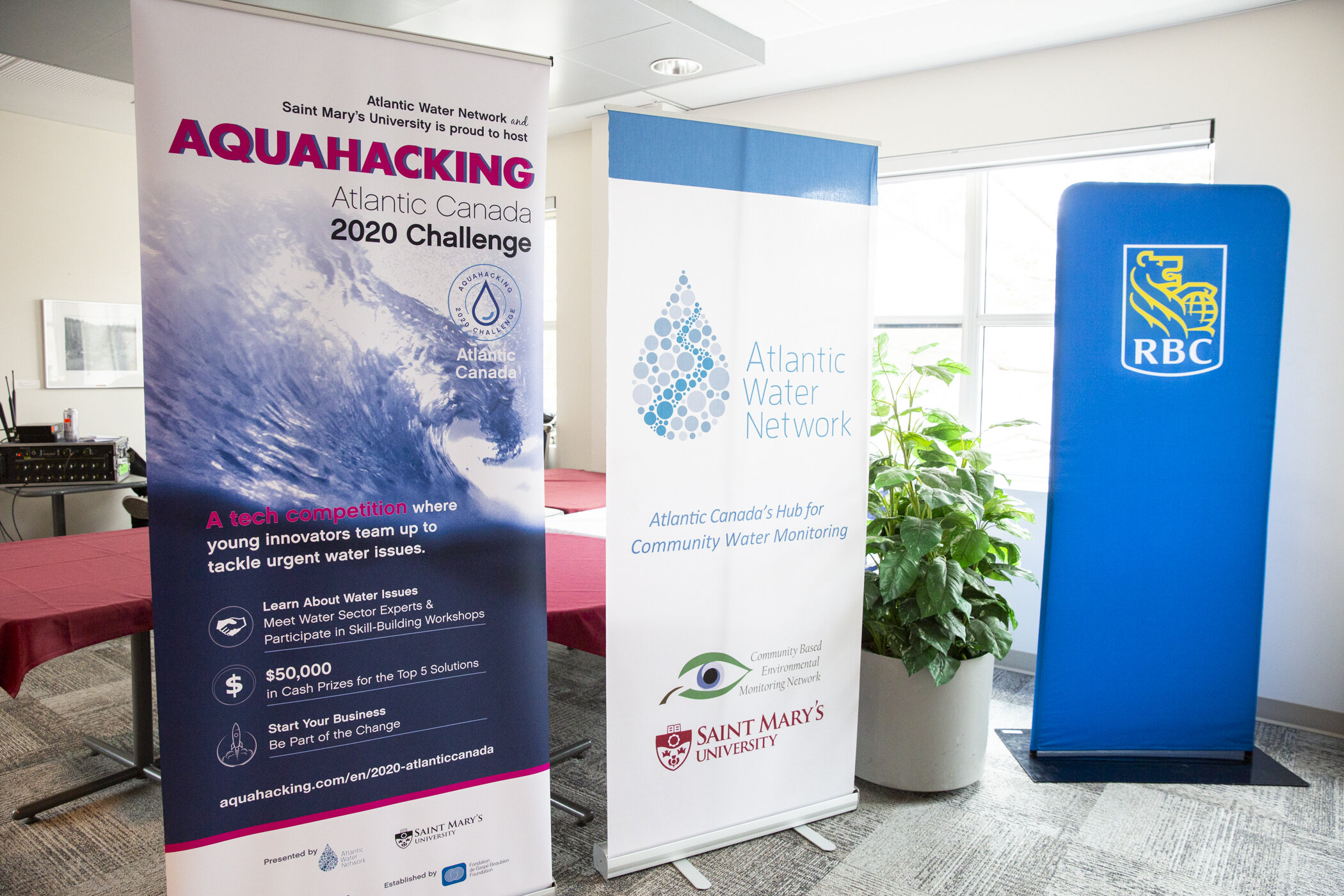
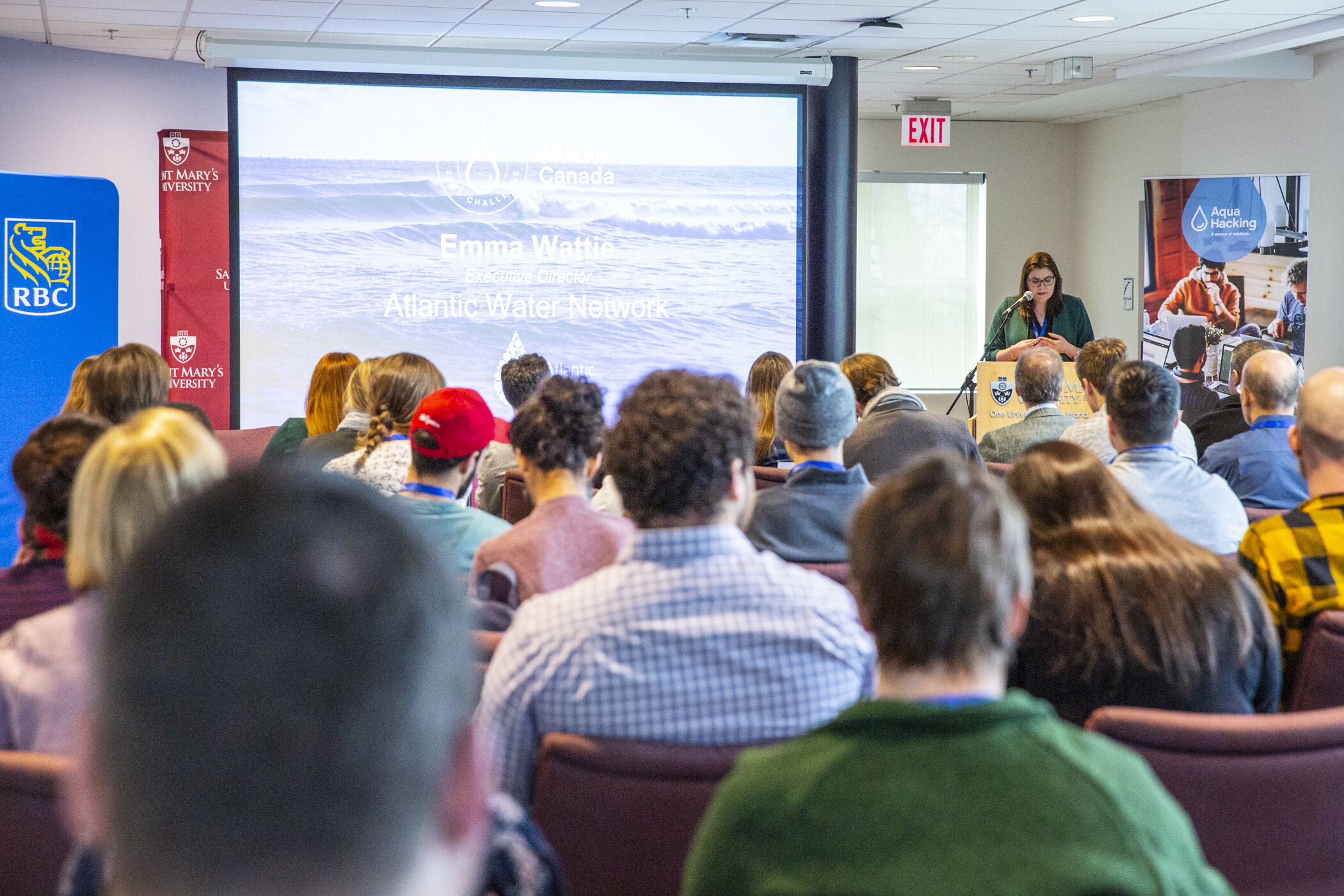
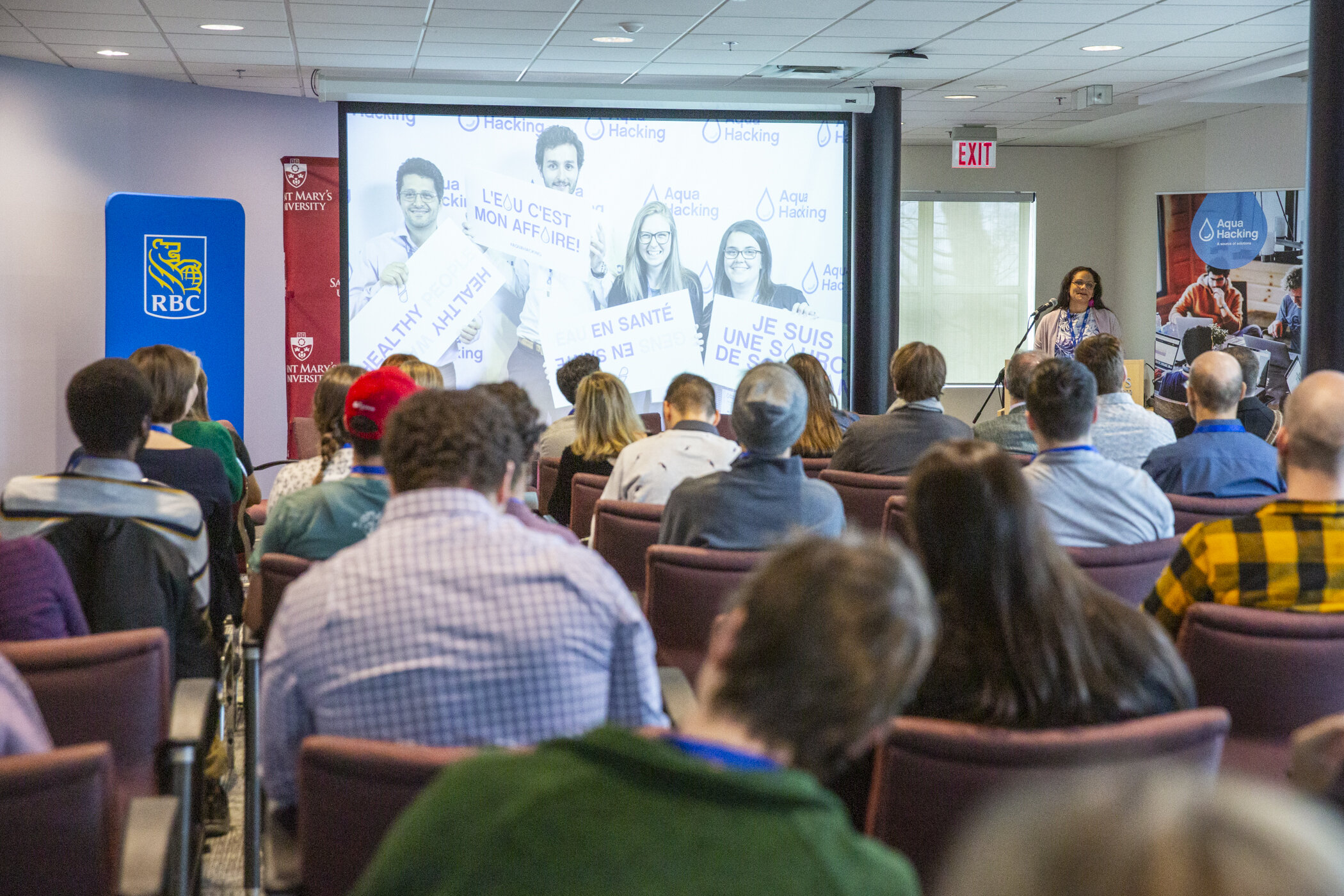
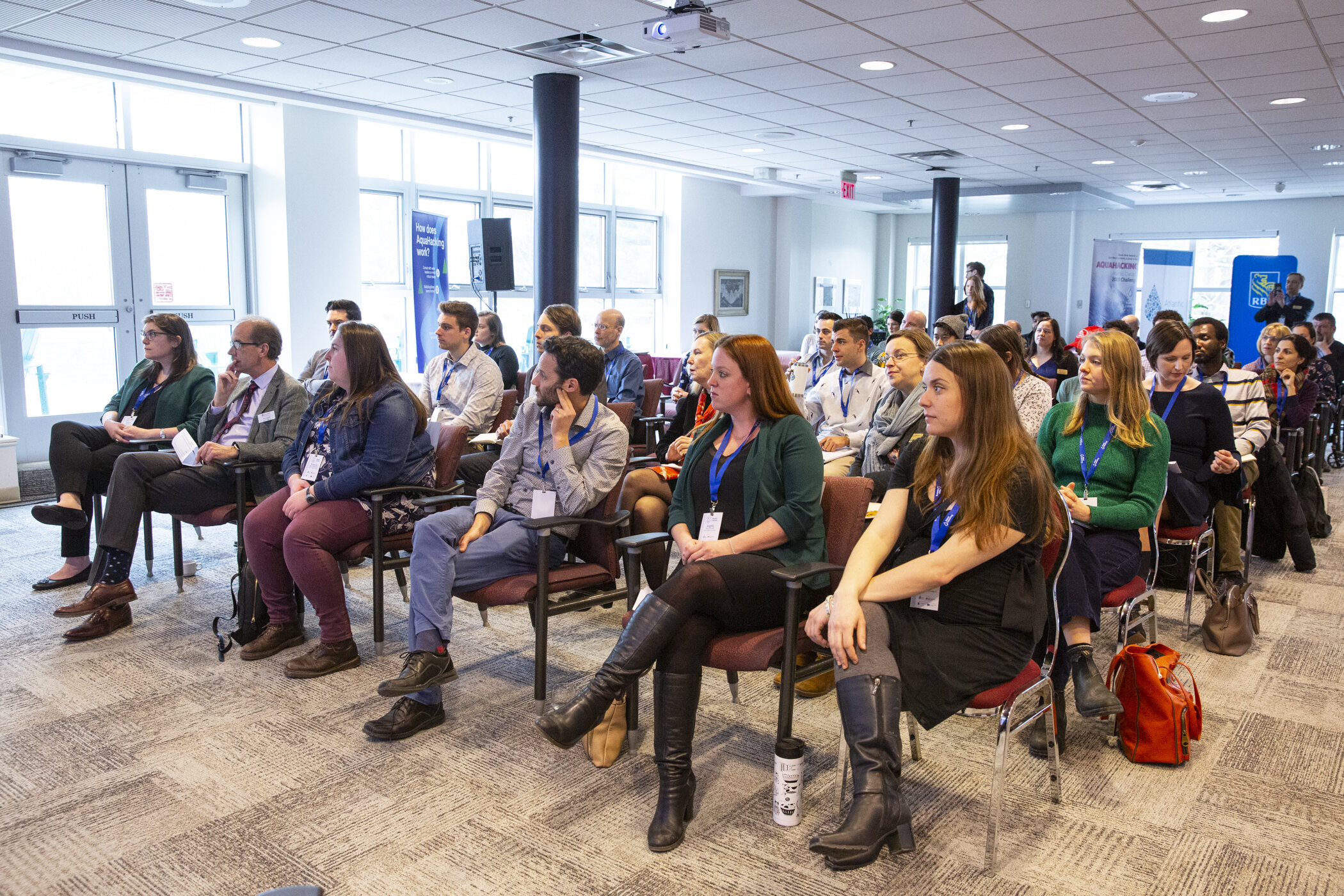
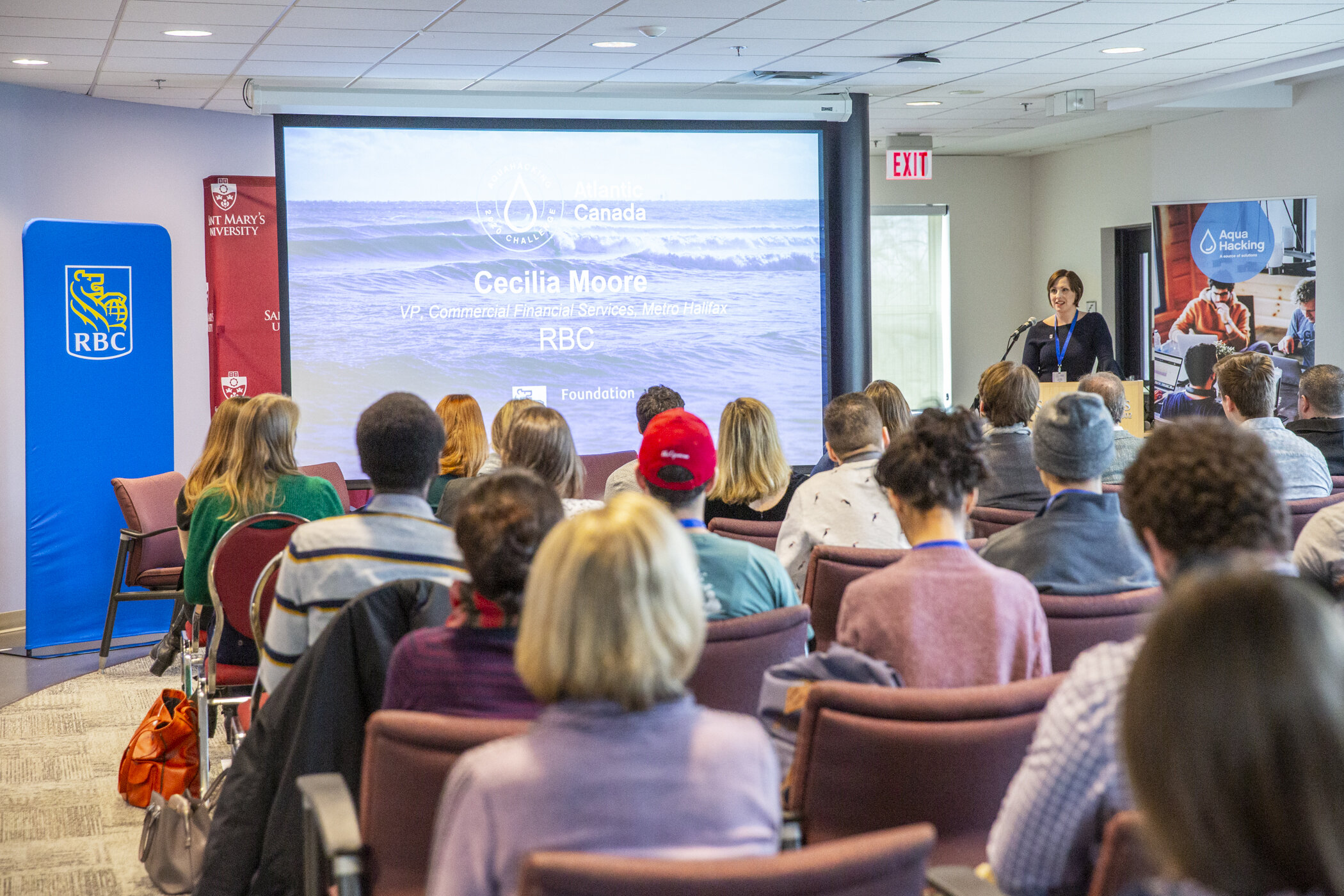
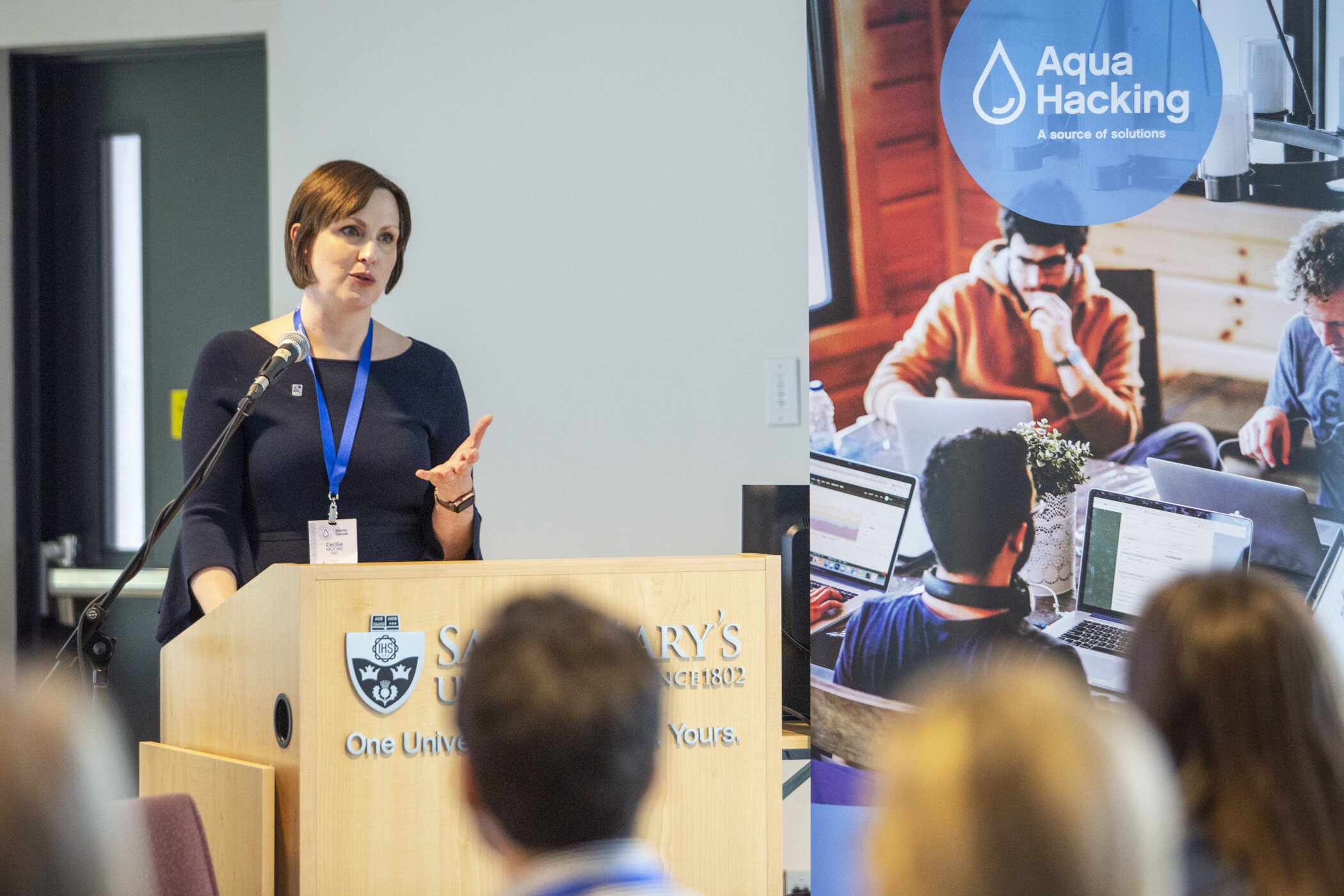
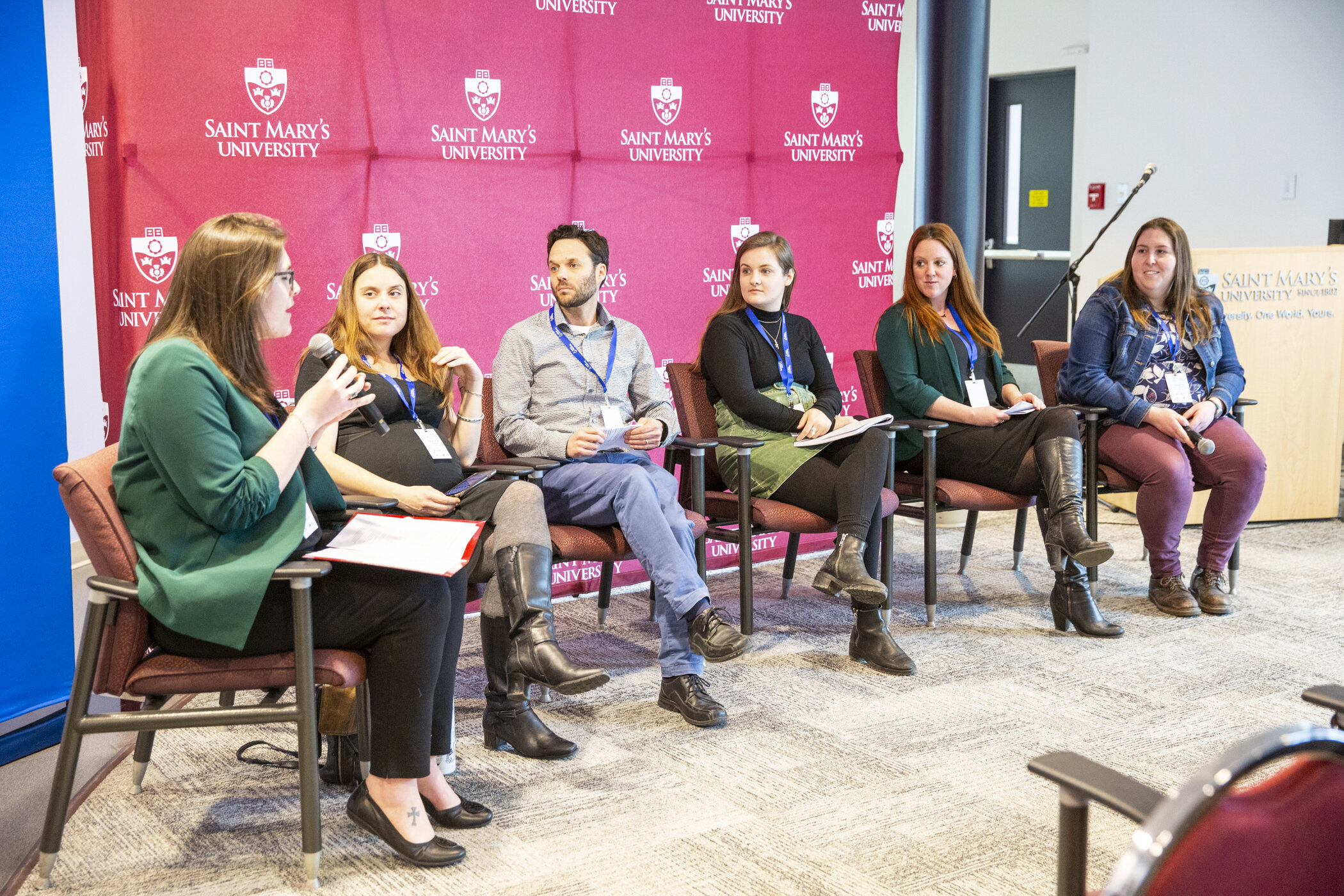
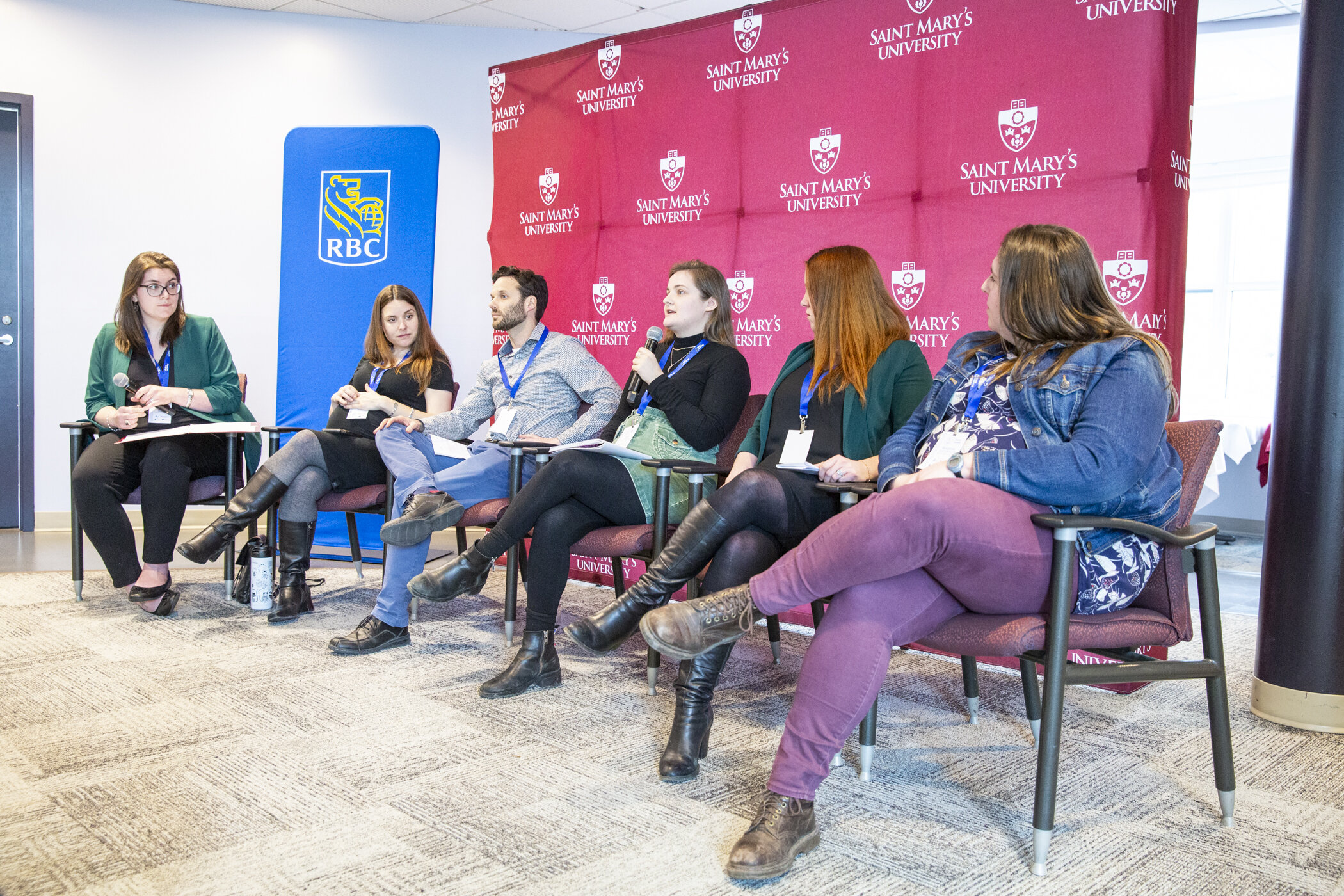
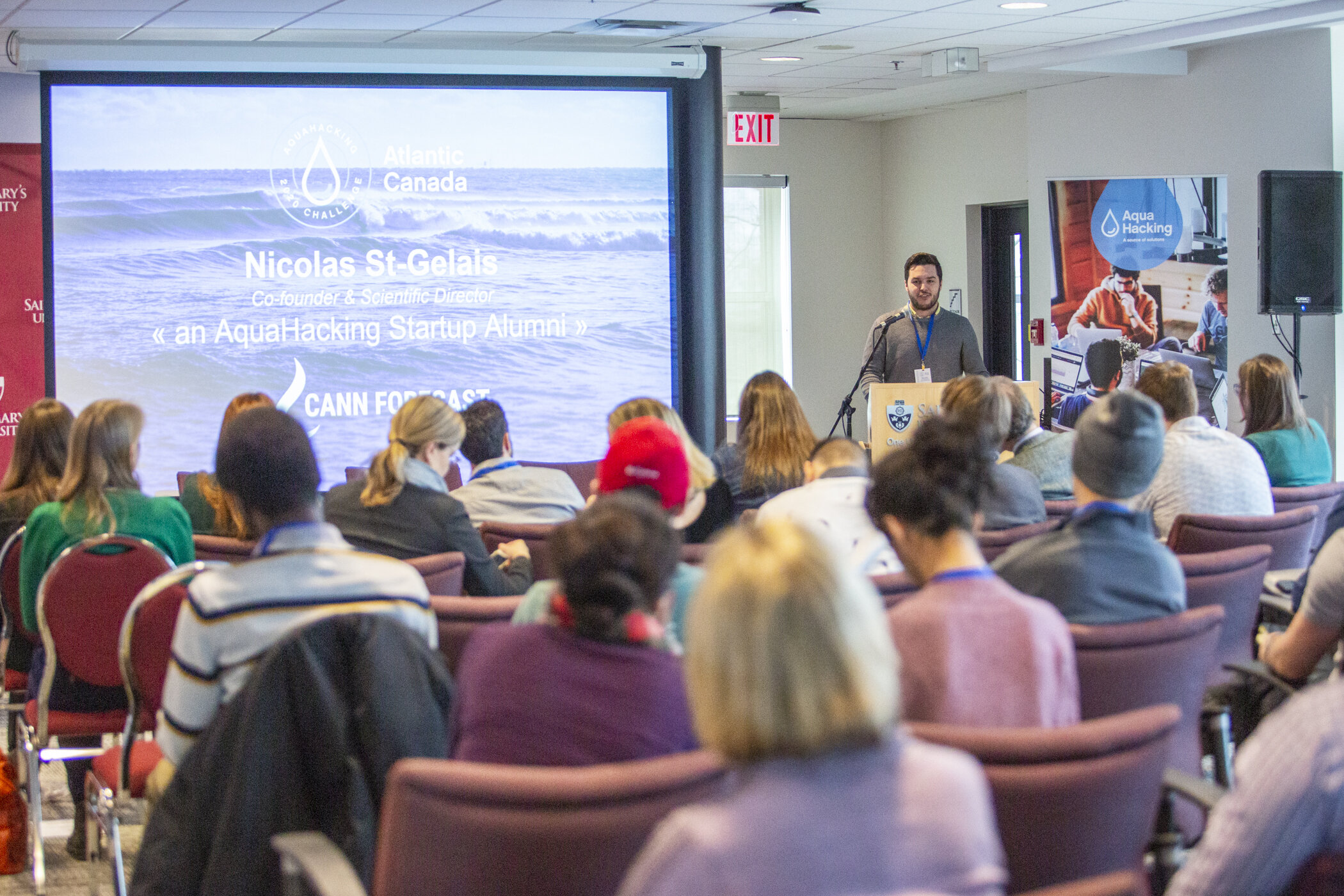
Solving freshwater issues across Atlantic Canada through technology and entrepreneurship is the theme of a new competition that began this week at Saint Mary’s University.

“We are extremely proud to establish AquaHacking in Atlantic Canada,” said Dominique Monchamp, interim CEO of AquaHacking. “We hope that our partnership with Saint Mary's University Atlantic Water Network will open the doors to new technological solutions. We are calling on the creative and committed minds of young Atlantic innovators to take up this challenge and develop sustainable water tech solutions.”

The AquaHacking Challenge brings students, developers, designers, scientists, programmers, engineers, technology enthusiasts and entrepreneurs together to form interdisciplinary teams to tackle five different water challenges.

The five issues they’ll be focusing on are:

•              algal blooms;

•              agricultural runoff;

•              drinking water treatment;

•              well water testing; and

•              microplastics.

“At RBC, we believe in the power of innovative technologies to address and scale solutions to some of the most pressing environmental issues of our time,” said Valerie Chort, vice-president, Corporate Citizenship, RBC. “We’re proud to be working alongside AquaHacking to develop real-world, scalable solutions to tackle the challenges that continue to plague our environment.”

Throughout the challenge, teams will have access to a variety of workshops and resources, as well as a dedicated group of mentors to help them develop their solutions and refine their pitches. The top teams will be determined at the AquaHacking semi-final in May 2020, after which successful teams will continue working on their solutions to present for a Dragon’s Den-style final in September 2020.

“We are thrilled to see AquaHacking come to the Atlantic Provinces,” said Emma Wattie, director of Saint Mary’s University’s Atlantic Water Network. “Our work with community-based monitoring organizations throughout the region has helped identify some of the water issues for this year's challenge. AquaHacking is a clear next step to help find solutions to some of the most pressing water issues facing Atlantic Canadians.”

The AquaHacking Challenge is an initiative of Aqua Forum that was founded by the de Gaspe Beaubien Foundation in 2015 to support technology and business development addressing environmental problems related to freshwater. After five successful years in the Great Lakes and St. Lawrence Basin, AquaHacking went national for 2020 with regional competitions across Canada.

The AquaHacking Challenge 2020 in Atlantic Canada is powered by the RBC Foundation, with support from the de Gaspé Beaubien Foundation along with other national and local sponsors.

Charisma Grace Walker joins Saint Mary’s as full-time African Nova Scotian and Black student liaison

Charisma Grace Walker, African Nova Scotian/Black Student and Community Liaison at Saint Mary’s University (Photo credit: Mary Ellen Beazley).

Charisma Grace Walker, African Nova Scotian/Black Student and Community Liaison at Saint Mary’s University (Photo credit: Mary Ellen Beazley).

Saint Mary’s University is pleased to announce the hiring of Charisma Grace Walker who will serve as the university’s first African Nova Scotian/Black Student and Community Liaison.

“Building on Saint Mary’s commitment to inclusion, diversity, and intercultural learning, this role will support and empower students of African descent while engaging with the local African Nova Scotian and Black communities,” said President Robert Summerby-Murray.

Overall, Walker will play a meaningful role drawing from her past experiences and expertise.

“It is amazing that Saint Mary’s has chosen to be part of the change that is happening across Canada and the world at large. I am happy to be part of this,” said Walker.  “Being able to support students in their unique needs and to be their advocate will make a difference in the lives of Black students on campus. The creation of this position is timely given this is the United Nations International Decade for People of African descent. I am excited to meet and connect with our African Nova Scotian community and form collaborative networks with faculty and staff.”

Key priorities in her role will be:

·         providing support to current African Nova Scotian and Black students through campus programming, cultural advising, and student-advocacy;

·         building relationships with local Black communities to develop pathways and opportunities for Black students to access and pursue post-secondary education; and

·         working collaboratively with the university’s Diversity & Inclusion Advisor and the university community to participate in university policy reviews and development.

“A lot of thought and development went into designing this role to ensure it is impactful for our students and community,” said Tom Brophy, Senior Director of Student Affairs and Services. “With Charisma’s experience, I am confident she will be a leader in supporting African Nova Scotian and Black students during their studies, while also engaging with local communities to help students see themselves reflected at Saint Mary’s.”

After receiving a Bachelor of Science in Nursing in Jamaica, Walker obtained a Bachelor of Arts from Dalhousie University. She graduated with combined honours in Social Anthropology and Psychology.

Aside from her academic experience, Walker’s background involves working with youth of African descent. In 2018, she attended a pan-African youth conference in Ghana, sparking her interest in studying the diaspora of African peoples. Walker’s honours thesis explored the disconnection between identity and nationality of displaced African people.

Moreover, Walker has worked as a health coach with Diabetes Canada to help improve the health and wellness of African Nova Scotians. Recently, she completed work with Alzheimer’s Canada where she created awareness material and education within the African Nova Scotian community.

Walker joined Saint Mary’s University this week.

Rahaman appointed as new Associate Dean

Dr. Mohammad Rahaman has been appointed as the Associate Dean, Strategic Partnership & Community Engagement for a 5-year term from January 1, 2020 – December 31, 2024.

"I am pleased to announce that Dr. Mohammad Rahaman has been appointed as the Associate Dean, Strategic Partnership & Community Engagement for a 5-year term from January 1, 2020 – December 31, 2024,” said Dr. Harjeet Bhabra in an email announcement.

“In this new role Dr. Rahaman will assist in providing strategic direction and operational oversight of the external facing priorities of the Sobey School of Business,” he said. “These include the expansion and strategic repositioning of the Executive Professional Development Programs, governance and oversight of externally donor sponsored initiatives, and greater integration of the activities of the Entrepreneurship Centre with the Sobey School.”

Dr. Rahaman holds the Canada Research Chair (Tier II) in International Finance and Competitiveness.  He currently also serves as the Co-ordinator of the Global Business Management major.

Congratulations to Dr. Rahaman on his new role!

Archival resources on campus for reparations research

(l-r) Dr. Rachel Zellars, Marcus Marsman, Sylvia Parris-Drummond, and Dr. Lynn Jones at public discussion held last week about reparations for historic and systemic wrongs against African Nova Scotian communities.

(l-r) Dr. Rachel Zellars, Marcus Marsman, Sylvia Parris-Drummond, and Dr. Lynn Jones at public discussion held last week about reparations for historic and systemic wrongs against African Nova Scotian communities.

A public discussion on reparations for historic and systemic wrongs against African Nova Scotian communities drew a full house to the Halifax North Memorial Public Library on February 5. Saint Mary’s Department of Social Justice & Community Studies hosted the African Heritage Month event, Reparations: Exploring a Basis for a Claim, in partnership with Halifax Public Libraries and the Global African Congress-NS Chapter.

Thanks to “radical community archivist Lynn Jones,” the university has an excellent resource for anyone doing reparations-related research in Nova Scotia, noted Dr. Val Marie Johnson, Chair of the department. The Lynn Jones African-Canadian & Diaspora Heritage Collection is housed in the Saint Mary’s University Archives. It documents the lives of Dr. Jones, her family including brother Dr. Burnley “Rocky” Jones, and more than 50 years of African, African Diasporic and African-Nova Scotian history. Nearly 20 “remarkable boxes” offer archival materials such as news clippings, programs, reports and more.

“As a young girl, I noticed that our stories weren’t being told,” said Jones, explaining why she started snipping articles and collecting artifacts as a child. A passionate champion for reparations, she hopes people will make use of the Collection in developing the case, not just here but across Canada.  

The evening began with a presentation by Dr. Rachel Zellars, an assistant professor with Social Justice & Community Studies, who used items from the Collection to illustrate her talk. She asked the panellists to imagine what the case for reparations in Nova Scotia could look like, considering such harms as environmental racism, denial of land ownership, and the historical representation and treatment of Black children.

“At its simplest, reparation means to make amends, offering atonement, giving satisfaction for a wrong or an injury,” she said. “Reparation is about repairing or restoring. It is a formal acknowledgement and apology, and a recognition that the injury continues in the present.” 

Joining the conversation were special guests Sylvia Parris-Drummond, CEO of the Delmore Buddy Daye Learning Centre; Carolann Wright-Parks, the Halifax Partnership’s Director of Capacity Building and Strategic Initiatives for African Nova Scotian Communities; and law student Marcus Marsman.

Marsman, whose great grandfather owned property in Africville, said he struggles with the idea of looking to courts and government as the only direct path to reparations, since neither adequately reflects the community. The issues are challenging to resolve legally, since the concept of reparations doesn’t come up much in Canadian case law. He also spoke about multigenerational trauma, and how one might repair that kind of harm.

Delvina Bernard, who is working toward a PhD in International Development Studies at Saint Mary’s, said the discussion needs to go beyond compensation.

“What I think we ought to be adding to this debate is a guiding theoretical framework that looks at reparations as a model for social change. A lot of us see it as a model for compensation. I see it as a model for moving the needle in terms of how we live our lives as humans,” said Bernard. “Otherwise, we might just be looking to be compensated. And part of that is that we are really asking just to be included in the same capitalist economy that put us in the situation that we’re in in the first place.”

The community conversation continues on Saturday, February 29 with a full-day forum at the Halifax North library, From Enslavement to Reparations: Community Engagement. Follow updates on the Facebook event page. The upcoming forum aims to boost public awareness of the historical contributions of African ancestry in building North American and European societies, and to show the context and history of calls for reparations for African people throughout the world. It will also consider ways to strengthen and support the participation of young African Canadians in the educational, social, economic, and political fabric of society.

Further reading:

Community meeting explores the case for reparations to African Nova Scotians; Nova Scotia Advocate, Feb. 6, 2020

-        Marla Cranston, Faculty of Arts

Chemistry student wins national award

Fourth year chemistry student Maddison Eisnor

Fourth year chemistry student Maddison Eisnor

Fourth year chemistry student Maddison Eisnor has won the Chemical Institute of Canada’s CIC Analytical Chemistry Division Undergraduate Travel Award in Honor of Dr. Nick Toltl. This award will allow Maddison the opportunity to talk about her 2D-LC (Two-Dimensional Liquid Chromatography) research on polyphenols at the 103rd Canadian Chemistry Conference and Exhibition in Winnipeg, Manitoba.

Maddison also won her trip to attend the Leaders Overcoming Gender Inequality in Chemistry (LOGIC) retreat, a Canadian Women in Chemistry event, that takes place just before the CIC weekend:  https://cwicnetwork.com/logic-retreat/

Congratulations Maddison!