Communities looking for expert advice receive a boost through latest CLARI investment

clari_header-min.jpg

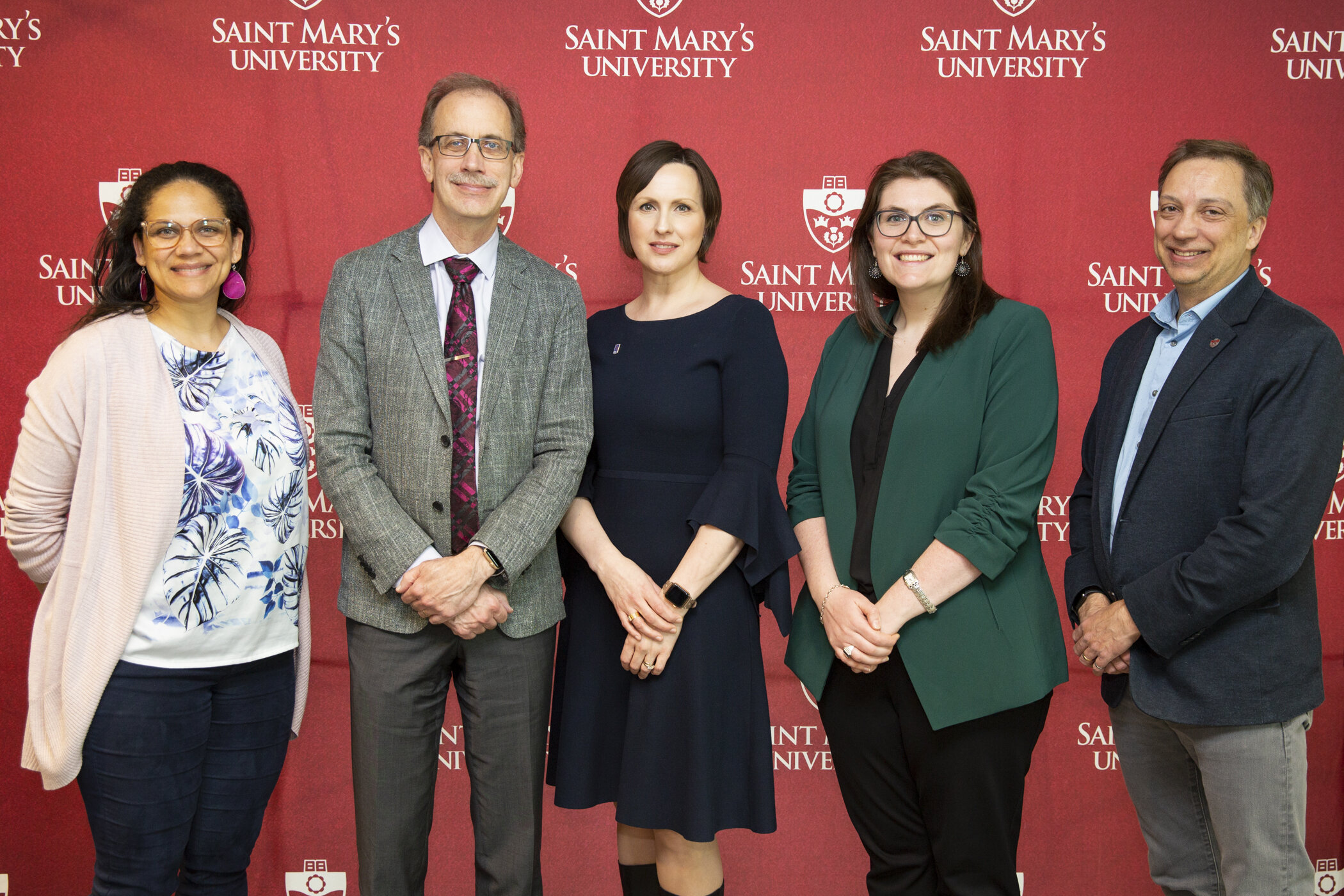
Communities looking to connect with experts to address issues and solve problems received a boost today, March 5, after a new investment for research projects through the Change Lab Action Research Initiative (CLARI) at Saint Mary’s University.

“We are working more with business, academia and communities to create the conditions for opportunity, growth and social well-being in our province,” said Labour and Advanced Education Minister Labi Kousoulis. “This initiative lays the groundwork for Nova Scotians to bring forward their ideas and work with post-secondary experts to help our communities grow and prosper.” 

Recent projects have covered a wide breadth of topics from exploring and documenting the life and history of Mi’kmaw Elder Sister Dorothy Moore to improving food security for seniors in Cape Breton.

 “CLARI has gone from an idea for greater connection between post-secondary institutions and community groups to a shining example of the strength of that collaboration,” said Adam Sarty, Associate Vice-President Research and Dean of the Faculty of Graduate Studies and Research. “This latest investment is an affirmation of the importance of connecting researchers with our local communities to find solutions and opportunities in challenges.”

The funding for the projects comes from the Province of Nova Scotia’s Department of Labour and Advanced Education. The $150,000 investment will support 20 campus-community projects, connecting post-secondary experts with communities in need of their expertise. The Province also helps to support CLARI’s operations.

The CLARI network spans across Nova Scotia, combining the talents and resources of its seven founding partners. Those partners include Acadia University, Cape Breton University, Mount Saint Vincent University, St. Francis Xavier University, Saint Mary’s University, Université Sainte-Anne and the Nova Scotia Community College’s 13 campuses. CLARI partners assist communities in all parts of the province to develop social and economic change projects while providing enhanced learning opportunities for students.

For more information about CLARI, visit https://actionresearch.ca/

Q&A with 2020 Writer in Residence: Rob Taylor

2020 Writer in Residence, Rob Taylor

2020 Writer in Residence, Rob Taylor

The reclusive poet stereotype doesn’t work so well for Vancouver-based writer Rob Taylor. Connecting with other humans can even be a key aspect of his writing process at times.

“We tend to think of poets as solitaries,” says Dr. Amanda Jernigan, Professor of Creative Writing at Saint Mary’s, “but Taylor is a community builder and also a public intellectual. His work reaches out, rather than turning inwards … The word exists for him in community, not in isolation.”

For example, to research the 33 poems in his book “Oh Not So Great”: Poems from the Depression Project (leaf press, 2017), Taylor collaborated with doctors and held focus groups with people who were living with depression, to find out more about their daily lives. He wanted the book to serve as a bridge between patients, family members and physicians on a subject that is so often stigmatized.

Also an editor and creative writing teacher, Taylor plans to meet a lot of students and local poets during his week at Saint Mary’s. He’ll be on campus from March 2 to 6, as the university’s 2020 Writer in Residence. In an advance email interview, he confessed that he wouldn’t fully abandon the solitary poet stereotype, as he’s still “very much an introvert who makes community through books and literary readings.”

He hopes many people will come to the SMU Reading Series event happening March 4 at 7 pm, at the Saint Mary’s University Art Gallery. Special guests include celebrated local poets Sue Goyette and Annick MacAskill. Robin Metcalfe, the gallery’s director / curator, will share some words about the gallery's current exhibition, which is inspired by the e.e. cummings poem one winter afternoon.

Taylor says most of the readings at the event will be from the recent anthologies he edited, Best Canadian Poetry 2019 and What the Poets Are Doing: Canadian Poets in Conversation. Here’s a Q&A with a few more thoughts as Taylor was packing to head across the country:

Q: Have you been to Halifax before?

A: This is my first time travelling to the Maritimes. So many writers I love and admire are based on the East Coast, along with some of my favourite small presses and magazines, so I'm definitely trying to make the most of my limited time in the region.

Q: You’ve already got a strong Nova Scotia connection. Your book The News – with poems about the birth of your son – was published by Kentville’s Gaspereau Press in 2016. What was it like to work with a publisher on the opposite end of the country?

A: The funny part is that Gaspereau's acceptance of The News, and the bulk of my final edits for the book, came while I was living in Ameliasburgh, Ontario as the Writer-in-Residence at the Al Purdy A-frame. The book was already written at that point, and my son was just starting to crawl (which multiplied his capacity for distraction). Al's wife, Eurithe, would come over to play with him sometimes, and others in the community would take him for walks when my wife and I needed breaks. Everyone's collective effort to give me space to work proved essential to the book's coming together as quickly as it did.

Working with Gaspereau was a long-held dream of mine, and they didn't disappoint in their vision and execution of the book. The News was written, edited, and published in three different parts of country, but the rich details of the book's design are 100% Nova Scotia magic.

Q: What will be the focus of your weeklong residency at Saint Mary’s?

A: I'm most excited to meet students who are as enthusiastic about the written word as I am. I know what a difference it made for me to meet visiting authors when I was in university. It made the fantastical notion of being a writer seem a little more possible. 

Q: Anything else you’d like to mention?

A: I want to send out a big thank you, in advance, to everyone at Saint Mary’s for allowing me to be a part of your ever-growing ecosystem of writers and readers, even if for only a week!

While in the Maritimes, Taylor is also hosting poetry events in Petitcodiac on March 7 (with Dr. Jernigan), and in Fredericton on March 8 (with Dr. Jernigan, Rebecca Salazar, Sue Sinclair, Nick Thran and Douglas Walbourne-Gough). Learn more about Rob on his website at roblucastaylor.com and follow him on Twitter and Facebook.

Commerce and engineering students shine at international competition in Montreal

(l-r) Clifford Isenor, Andrew Herold, Kaitlyn Anderson and Kevin Schwarzer

(l-r) Clifford Isenor, Andrew Herold, Kaitlyn Anderson and Kevin Schwarzer

During February break, Clifford Isenor and Andrew Herold represented Sobey on a cross-faculty elite team that travelled to Montreal to take part in the ENGCOMM Case Competition, billed as "the cross-disciplinary case competition combining both engineering and commerce." The competition was hosted by the John Molson School of Business at Concordia University and aims to collaboratively find solutions to real-world challenges faced by modern industries.

Representing the engineering side of the equation were Kaitlyn Anderson and Kevin Schwarzer, a student who had worked with the David Sobey Centre on their recent retail robot initiative. Team coaches were Sobey's Case Competition Coordinator Breagh Matheson, MBA, and professor Luke MacDonald of the Division of Engineering.

Fourteen schools competed including the Amsterdam University of Applied Sciences, University of Vermont, Ben-Gurion University of the Negev in Israel, Western, York, Ryerson, McMaster, the Technological University in Dublin, Ireland, and the American University in Cairo.

Over four days, students completed and prepared case analyses on sponsor companies Global Medic, the Electricity Supply Board (ESB) and L3 Harris.

Overall: Saint Mary’s University was extremely competitive, with judges applauding their creativity and seamless flow of presentations. The team improved with every presentation, scoring higher with each consecutive day. After the 12-hour final case prep presentations, they were scored only three points behind the leader in their respective pool, making it a very close competition. The students refined their analysis and presentation skills and overall, had an incredible time.

During the opening dinner the team was seated with several executives of L3 Harris, providing our students with incredible networking opportunities.

The team would like to thank the following sponsors: Sobey School of Business, Dr. Malcolm Butler, Vice-President Academic and Research, the BComm Advising Centre, the Dean of Science Office/Science Advising, Engineers NS and SMUSA.

Competition to solve freshwater issues through technology and entrepreneurship begins in Atlantic Canada

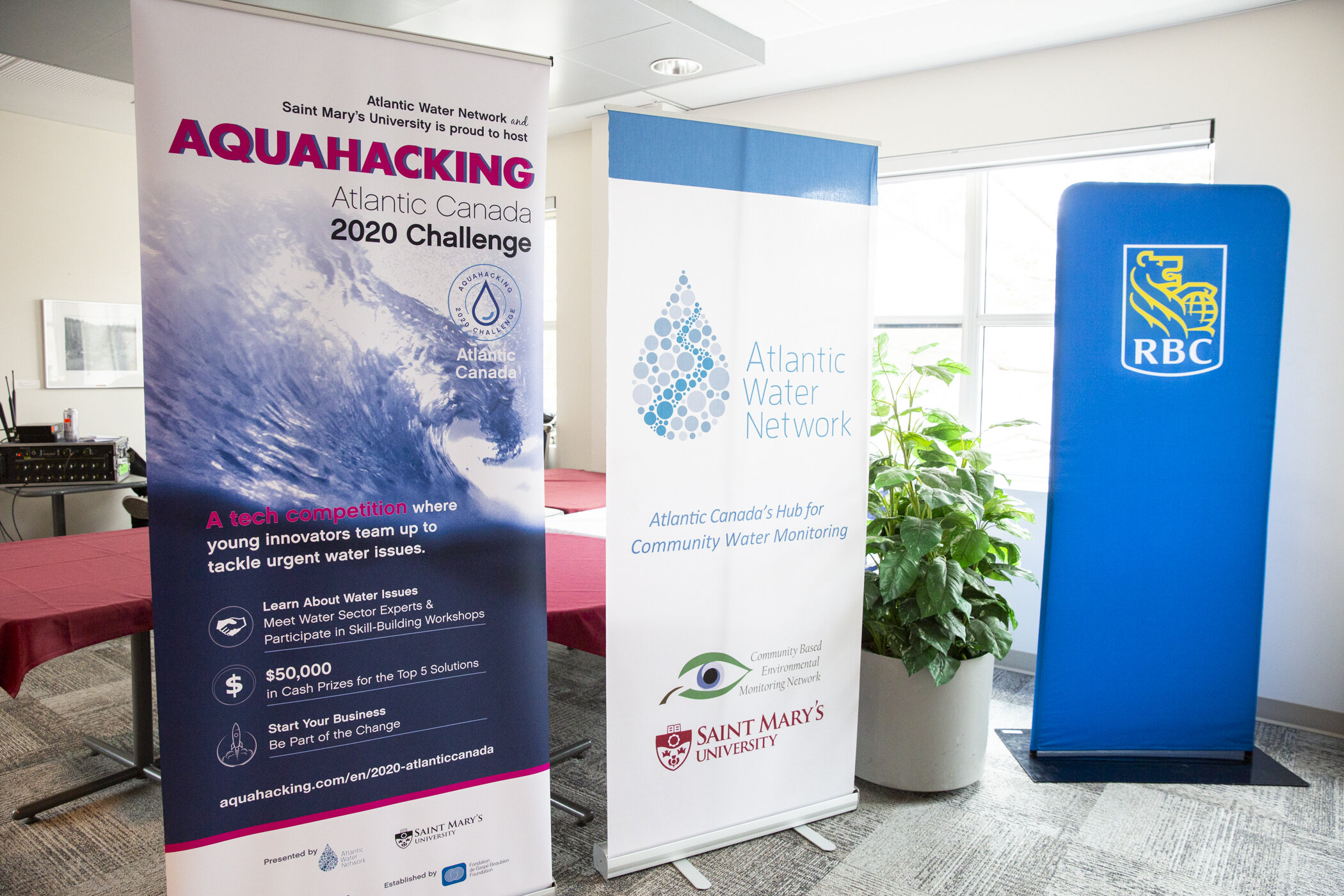
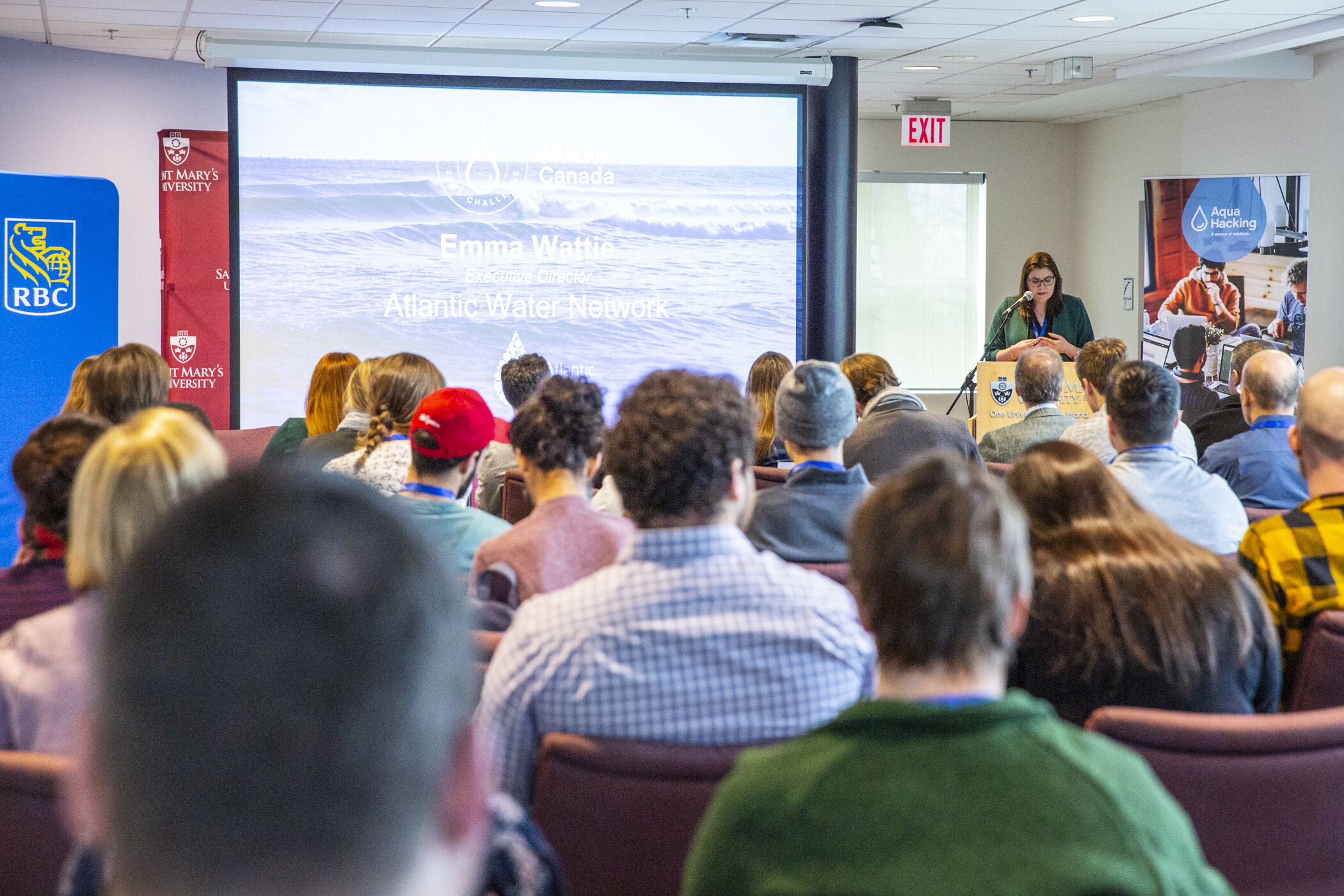
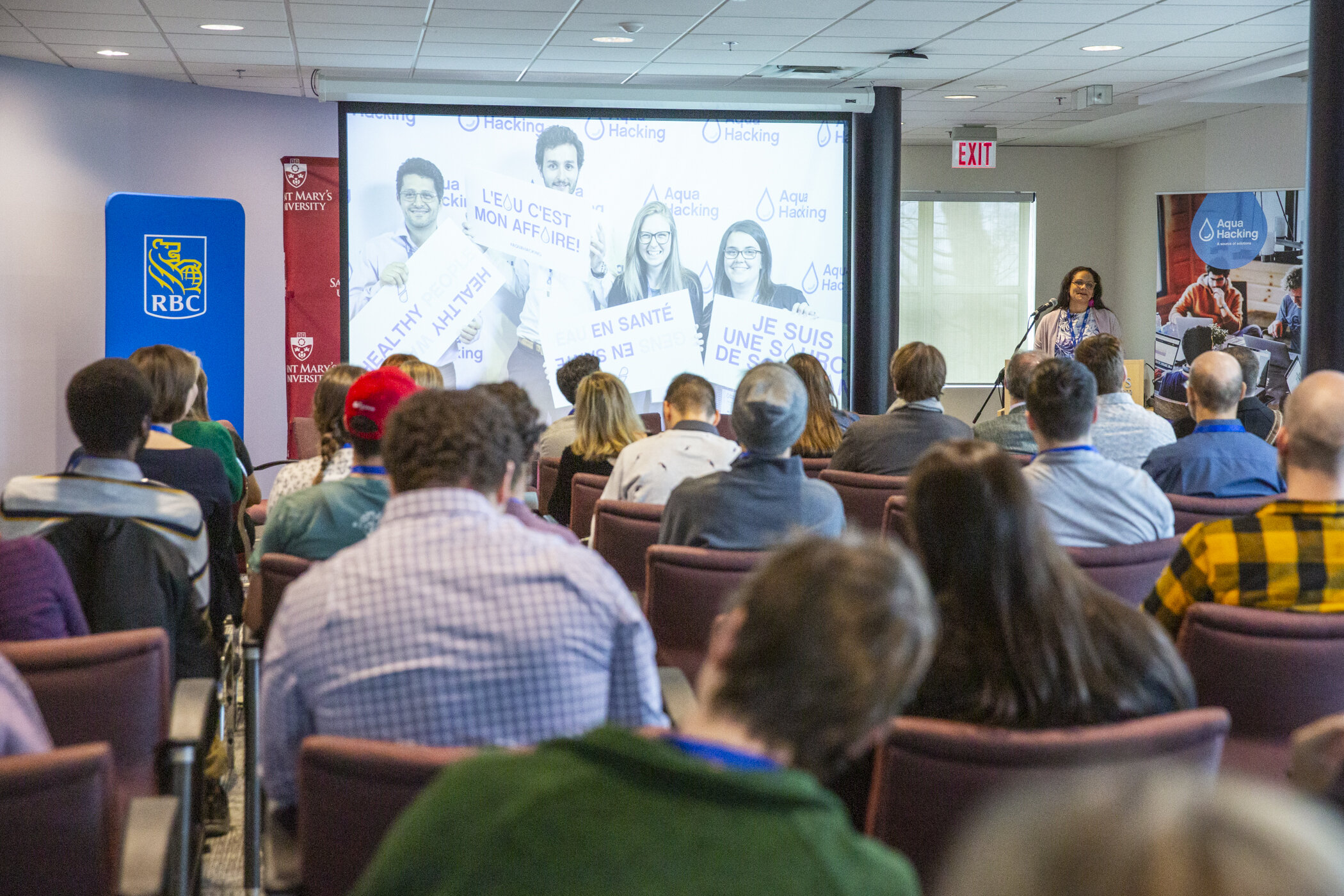
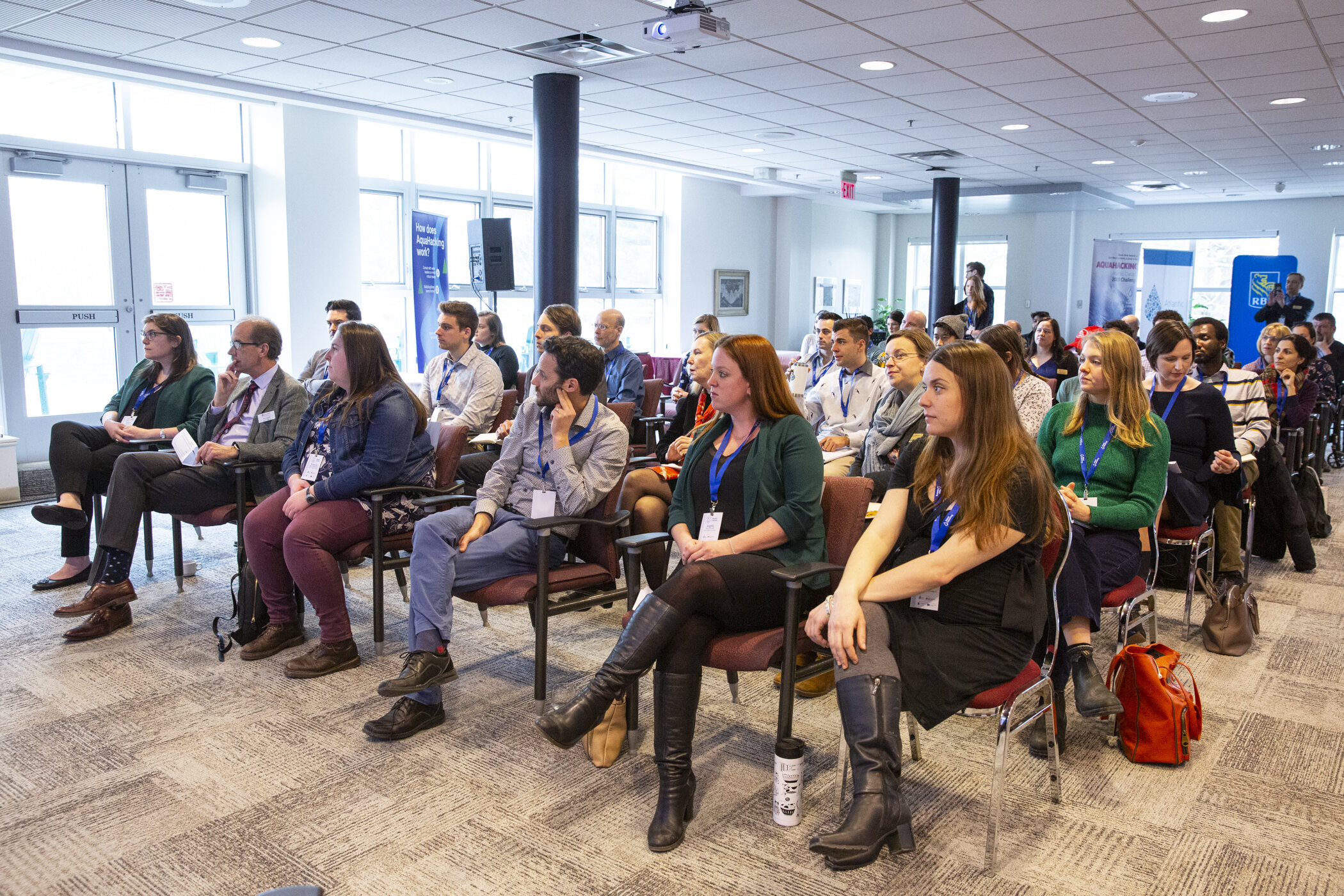
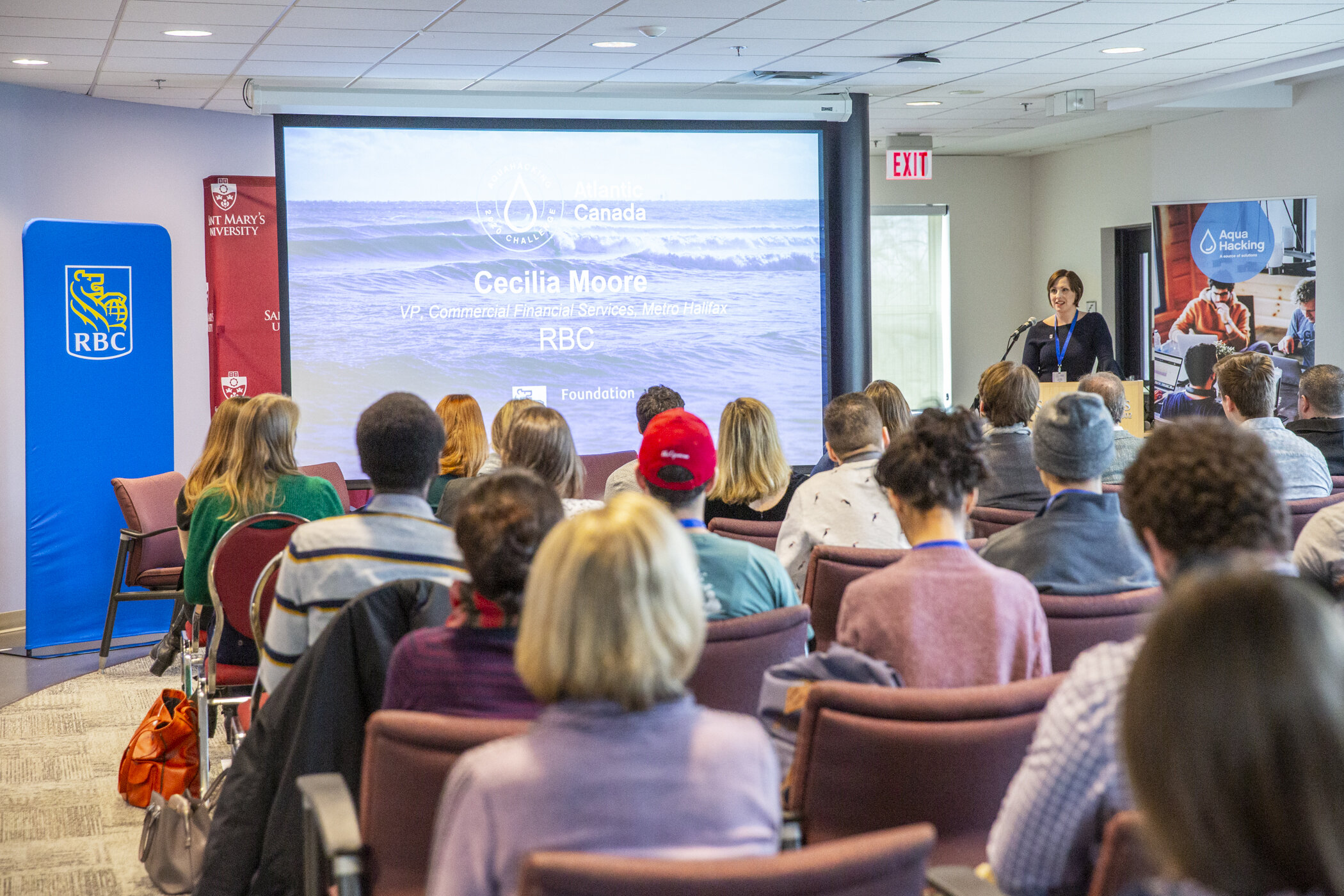
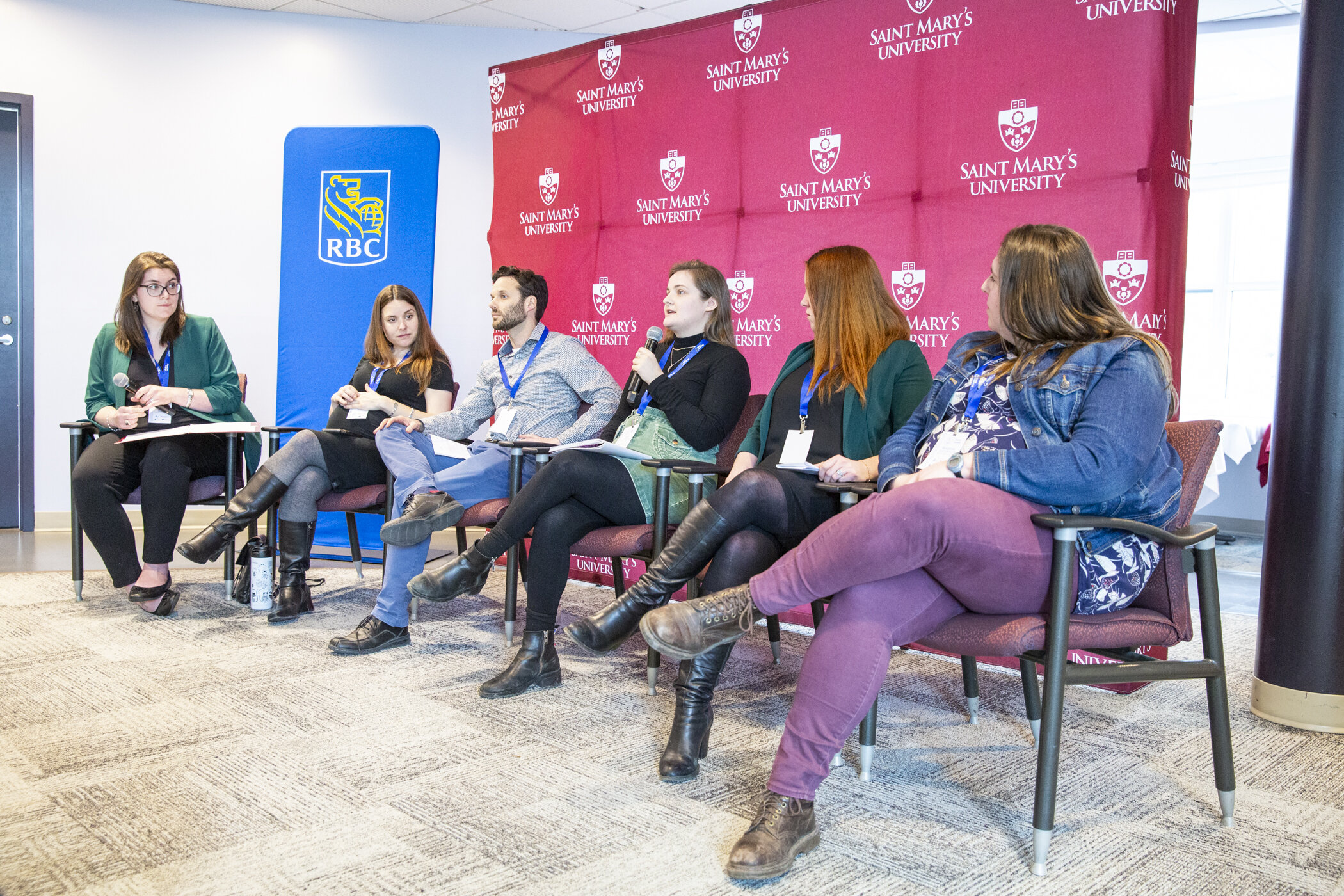
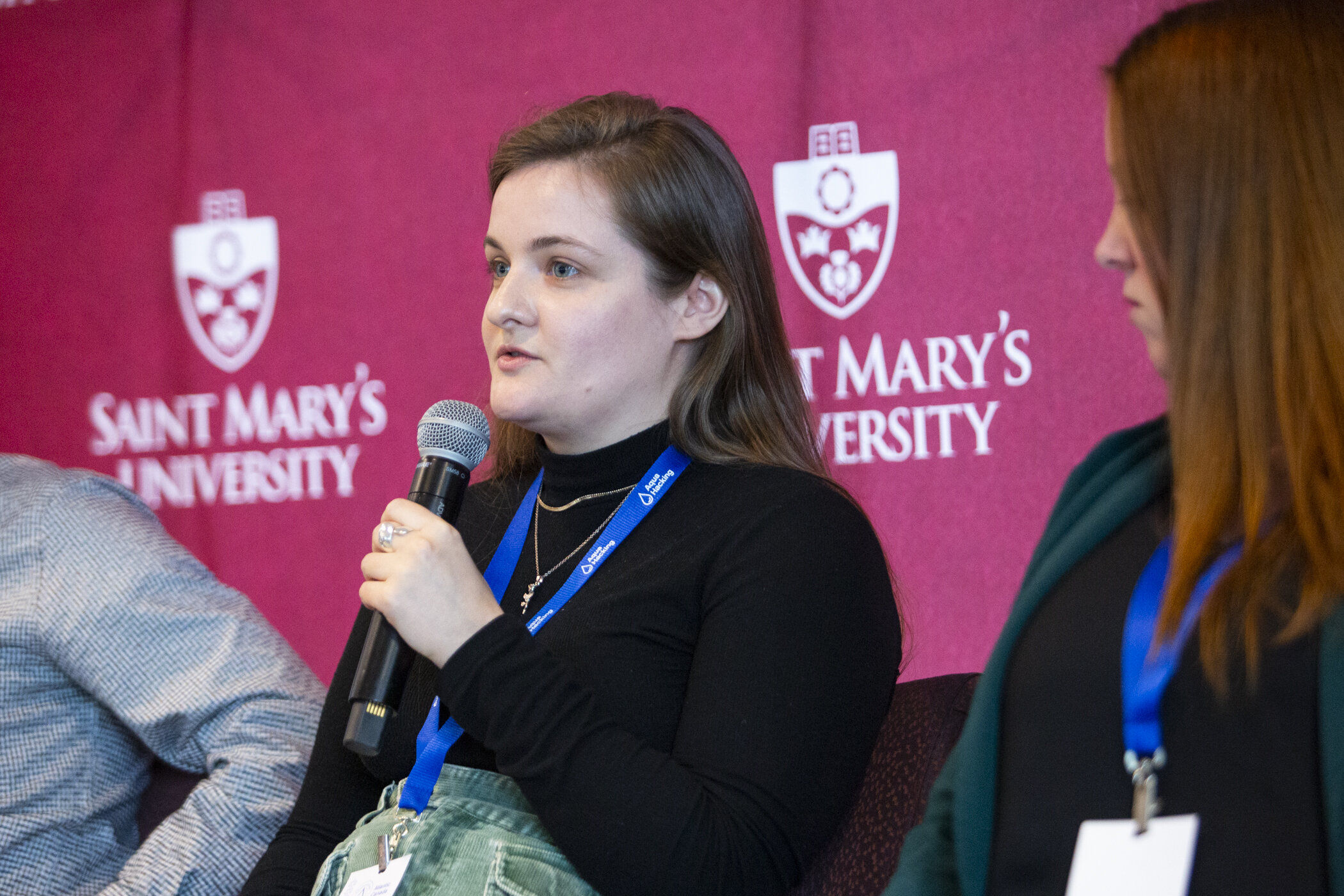
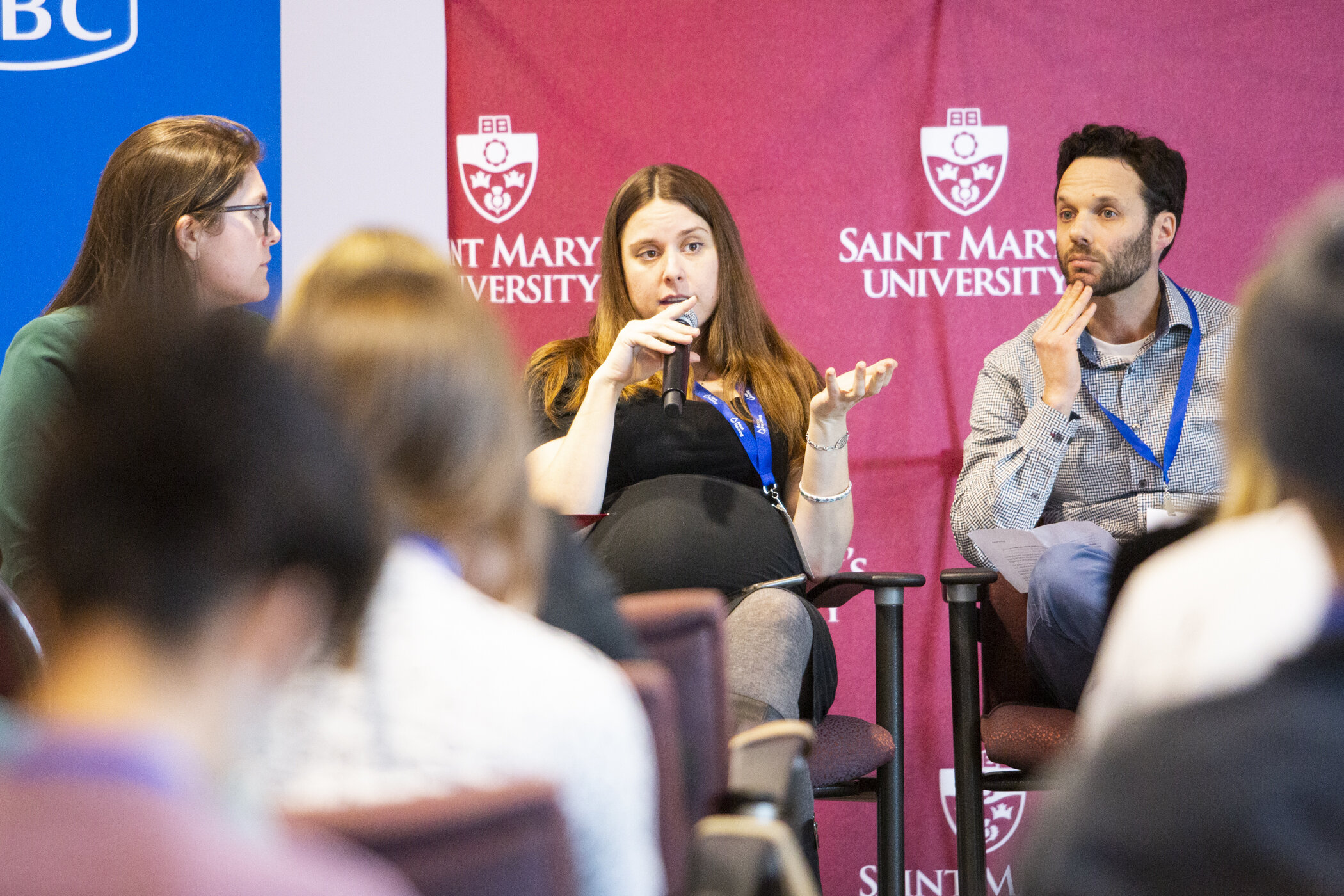
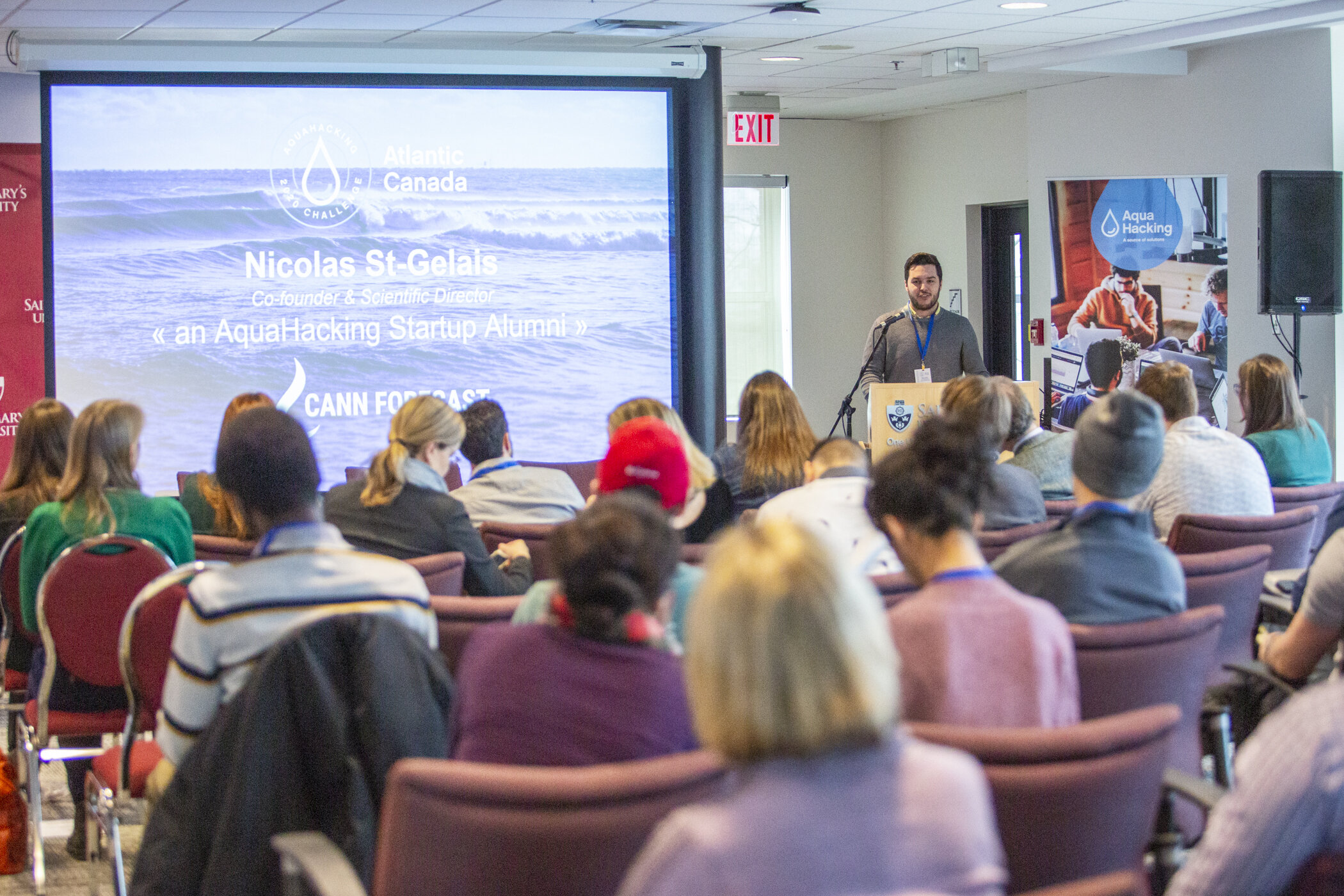
Solving freshwater issues across Atlantic Canada through technology and entrepreneurship is the theme of a new competition that began this week at Saint Mary’s University.

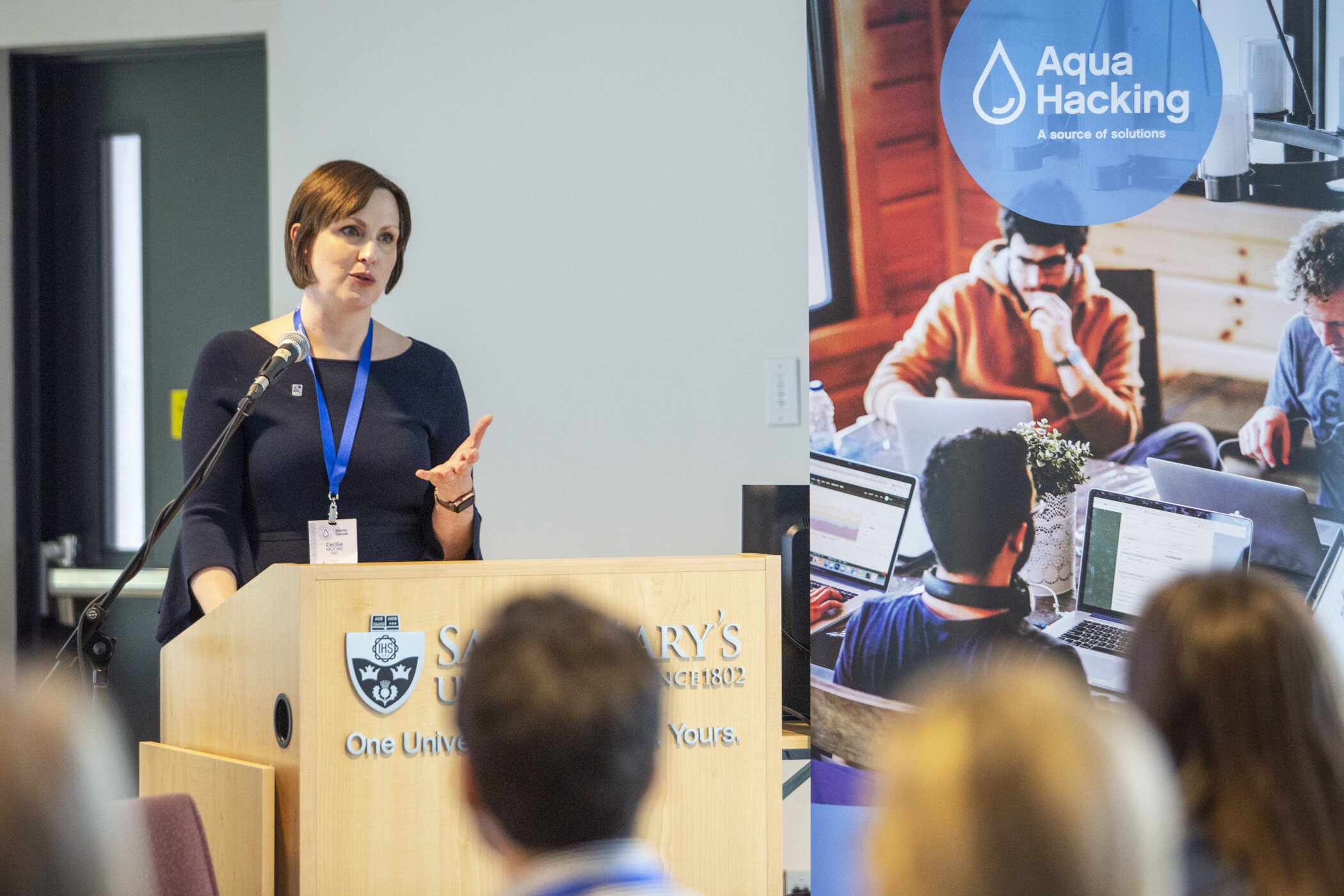
“We are extremely proud to establish AquaHacking in Atlantic Canada,” said Dominique Monchamp, interim CEO of AquaHacking. “We hope that our partnership with Saint Mary's University Atlantic Water Network will open the doors to new technological solutions. We are calling on the creative and committed minds of young Atlantic innovators to take up this challenge and develop sustainable water tech solutions.”

The AquaHacking Challenge brings students, developers, designers, scientists, programmers, engineers, technology enthusiasts and entrepreneurs together to form interdisciplinary teams to tackle five different water challenges.

The five issues they’ll be focusing on are:

•              algal blooms;

•              agricultural runoff;

•              drinking water treatment;

•              well water testing; and

•              microplastics.

“At RBC, we believe in the power of innovative technologies to address and scale solutions to some of the most pressing environmental issues of our time,” said Valerie Chort, vice-president, Corporate Citizenship, RBC. “We’re proud to be working alongside AquaHacking to develop real-world, scalable solutions to tackle the challenges that continue to plague our environment.”

Throughout the challenge, teams will have access to a variety of workshops and resources, as well as a dedicated group of mentors to help them develop their solutions and refine their pitches. The top teams will be determined at the AquaHacking semi-final in May 2020, after which successful teams will continue working on their solutions to present for a Dragon’s Den-style final in September 2020.

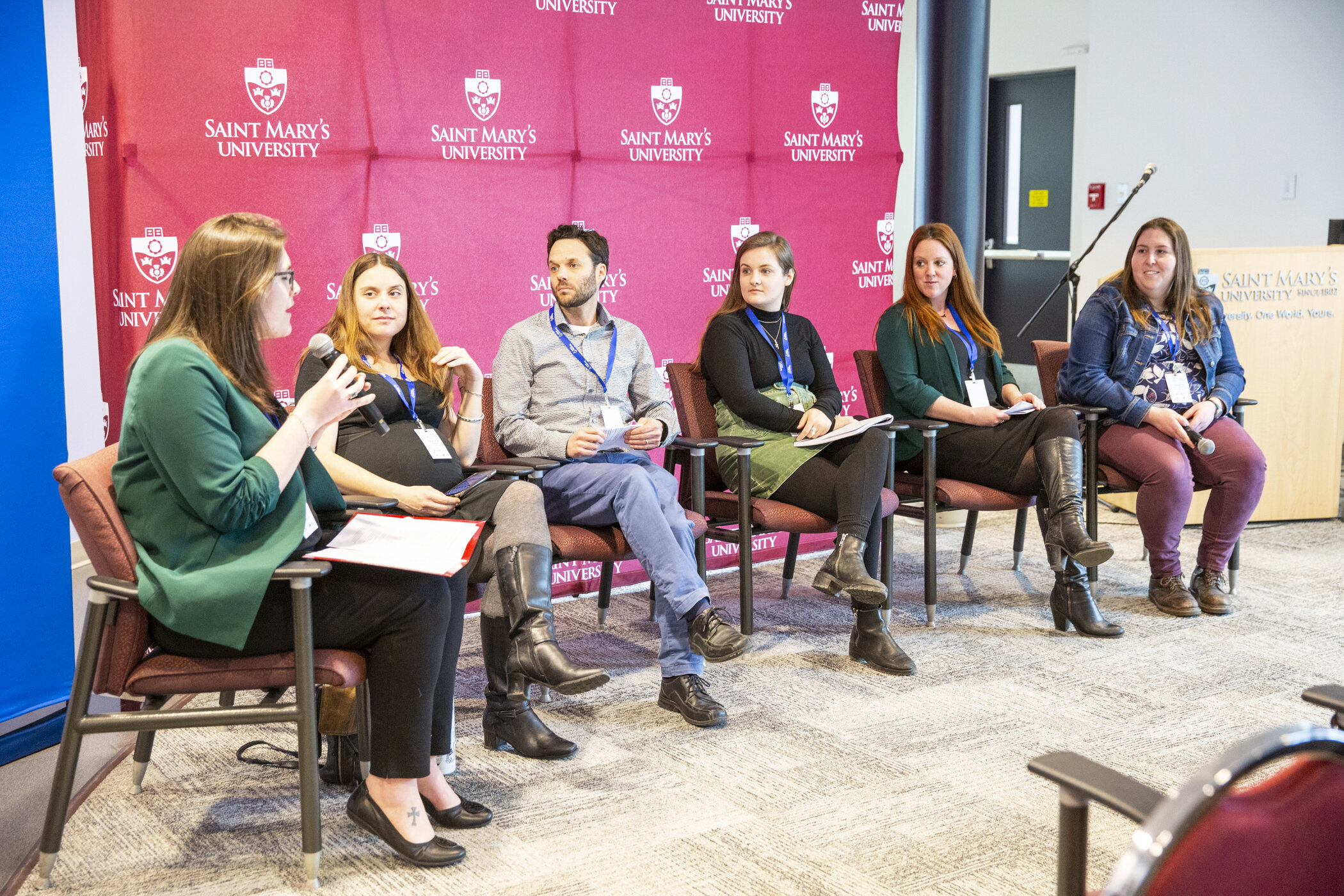
“We are thrilled to see AquaHacking come to the Atlantic Provinces,” said Emma Wattie, director of Saint Mary’s University’s Atlantic Water Network. “Our work with community-based monitoring organizations throughout the region has helped identify some of the water issues for this year's challenge. AquaHacking is a clear next step to help find solutions to some of the most pressing water issues facing Atlantic Canadians.”

The AquaHacking Challenge is an initiative of Aqua Forum that was founded by the de Gaspe Beaubien Foundation in 2015 to support technology and business development addressing environmental problems related to freshwater. After five successful years in the Great Lakes and St. Lawrence Basin, AquaHacking went national for 2020 with regional competitions across Canada.

The AquaHacking Challenge 2020 in Atlantic Canada is powered by the RBC Foundation, with support from the de Gaspé Beaubien Foundation along with other national and local sponsors.

Charisma Grace Walker joins Saint Mary’s as full-time African Nova Scotian and Black student liaison

Charisma Grace Walker, African Nova Scotian/Black Student and Community Liaison at Saint Mary’s University (Photo credit: Mary Ellen Beazley).

Charisma Grace Walker, African Nova Scotian/Black Student and Community Liaison at Saint Mary’s University (Photo credit: Mary Ellen Beazley).

Saint Mary’s University is pleased to announce the hiring of Charisma Grace Walker who will serve as the university’s first African Nova Scotian/Black Student and Community Liaison.

“Building on Saint Mary’s commitment to inclusion, diversity, and intercultural learning, this role will support and empower students of African descent while engaging with the local African Nova Scotian and Black communities,” said President Robert Summerby-Murray.

Overall, Walker will play a meaningful role drawing from her past experiences and expertise.

“It is amazing that Saint Mary’s has chosen to be part of the change that is happening across Canada and the world at large. I am happy to be part of this,” said Walker.  “Being able to support students in their unique needs and to be their advocate will make a difference in the lives of Black students on campus. The creation of this position is timely given this is the United Nations International Decade for People of African descent. I am excited to meet and connect with our African Nova Scotian community and form collaborative networks with faculty and staff.”

Key priorities in her role will be:

·         providing support to current African Nova Scotian and Black students through campus programming, cultural advising, and student-advocacy;

·         building relationships with local Black communities to develop pathways and opportunities for Black students to access and pursue post-secondary education; and

·         working collaboratively with the university’s Diversity & Inclusion Advisor and the university community to participate in university policy reviews and development.

“A lot of thought and development went into designing this role to ensure it is impactful for our students and community,” said Tom Brophy, Senior Director of Student Affairs and Services. “With Charisma’s experience, I am confident she will be a leader in supporting African Nova Scotian and Black students during their studies, while also engaging with local communities to help students see themselves reflected at Saint Mary’s.”

After receiving a Bachelor of Science in Nursing in Jamaica, Walker obtained a Bachelor of Arts from Dalhousie University. She graduated with combined honours in Social Anthropology and Psychology.

Aside from her academic experience, Walker’s background involves working with youth of African descent. In 2018, she attended a pan-African youth conference in Ghana, sparking her interest in studying the diaspora of African peoples. Walker’s honours thesis explored the disconnection between identity and nationality of displaced African people.

Moreover, Walker has worked as a health coach with Diabetes Canada to help improve the health and wellness of African Nova Scotians. Recently, she completed work with Alzheimer’s Canada where she created awareness material and education within the African Nova Scotian community.

Walker joined Saint Mary’s University this week.

Rahaman appointed as new Associate Dean

Dr. Mohammad Rahaman has been appointed as the Associate Dean, Strategic Partnership & Community Engagement for a 5-year term from January 1, 2020 – December 31, 2024.

"I am pleased to announce that Dr. Mohammad Rahaman has been appointed as the Associate Dean, Strategic Partnership & Community Engagement for a 5-year term from January 1, 2020 – December 31, 2024,” said Dr. Harjeet Bhabra in an email announcement.

“In this new role Dr. Rahaman will assist in providing strategic direction and operational oversight of the external facing priorities of the Sobey School of Business,” he said. “These include the expansion and strategic repositioning of the Executive Professional Development Programs, governance and oversight of externally donor sponsored initiatives, and greater integration of the activities of the Entrepreneurship Centre with the Sobey School.”

Dr. Rahaman holds the Canada Research Chair (Tier II) in International Finance and Competitiveness.  He currently also serves as the Co-ordinator of the Global Business Management major.

Congratulations to Dr. Rahaman on his new role!

Archival resources on campus for reparations research

(l-r) Dr. Rachel Zellars, Marcus Marsman, Sylvia Parris-Drummond, and Dr. Lynn Jones at public discussion held last week about reparations for historic and systemic wrongs against African Nova Scotian communities.

(l-r) Dr. Rachel Zellars, Marcus Marsman, Sylvia Parris-Drummond, and Dr. Lynn Jones at public discussion held last week about reparations for historic and systemic wrongs against African Nova Scotian communities.

A public discussion on reparations for historic and systemic wrongs against African Nova Scotian communities drew a full house to the Halifax North Memorial Public Library on February 5. Saint Mary’s Department of Social Justice & Community Studies hosted the African Heritage Month event, Reparations: Exploring a Basis for a Claim, in partnership with Halifax Public Libraries and the Global African Congress-NS Chapter.

Thanks to “radical community archivist Lynn Jones,” the university has an excellent resource for anyone doing reparations-related research in Nova Scotia, noted Dr. Val Marie Johnson, Chair of the department. The Lynn Jones African-Canadian & Diaspora Heritage Collection is housed in the Saint Mary’s University Archives. It documents the lives of Dr. Jones, her family including brother Dr. Burnley “Rocky” Jones, and more than 50 years of African, African Diasporic and African-Nova Scotian history. Nearly 20 “remarkable boxes” offer archival materials such as news clippings, programs, reports and more.

“As a young girl, I noticed that our stories weren’t being told,” said Jones, explaining why she started snipping articles and collecting artifacts as a child. A passionate champion for reparations, she hopes people will make use of the Collection in developing the case, not just here but across Canada.  

The evening began with a presentation by Dr. Rachel Zellars, an assistant professor with Social Justice & Community Studies, who used items from the Collection to illustrate her talk. She asked the panellists to imagine what the case for reparations in Nova Scotia could look like, considering such harms as environmental racism, denial of land ownership, and the historical representation and treatment of Black children.

“At its simplest, reparation means to make amends, offering atonement, giving satisfaction for a wrong or an injury,” she said. “Reparation is about repairing or restoring. It is a formal acknowledgement and apology, and a recognition that the injury continues in the present.” 

Joining the conversation were special guests Sylvia Parris-Drummond, CEO of the Delmore Buddy Daye Learning Centre; Carolann Wright-Parks, the Halifax Partnership’s Director of Capacity Building and Strategic Initiatives for African Nova Scotian Communities; and law student Marcus Marsman.

Marsman, whose great grandfather owned property in Africville, said he struggles with the idea of looking to courts and government as the only direct path to reparations, since neither adequately reflects the community. The issues are challenging to resolve legally, since the concept of reparations doesn’t come up much in Canadian case law. He also spoke about multigenerational trauma, and how one might repair that kind of harm.

Delvina Bernard, who is working toward a PhD in International Development Studies at Saint Mary’s, said the discussion needs to go beyond compensation.

“What I think we ought to be adding to this debate is a guiding theoretical framework that looks at reparations as a model for social change. A lot of us see it as a model for compensation. I see it as a model for moving the needle in terms of how we live our lives as humans,” said Bernard. “Otherwise, we might just be looking to be compensated. And part of that is that we are really asking just to be included in the same capitalist economy that put us in the situation that we’re in in the first place.”

The community conversation continues on Saturday, February 29 with a full-day forum at the Halifax North library, From Enslavement to Reparations: Community Engagement. Follow updates on the Facebook event page. The upcoming forum aims to boost public awareness of the historical contributions of African ancestry in building North American and European societies, and to show the context and history of calls for reparations for African people throughout the world. It will also consider ways to strengthen and support the participation of young African Canadians in the educational, social, economic, and political fabric of society.

Further reading:

Community meeting explores the case for reparations to African Nova Scotians; Nova Scotia Advocate, Feb. 6, 2020

-        Marla Cranston, Faculty of Arts

Chemistry student wins national award

Fourth year chemistry student Maddison Eisnor

Fourth year chemistry student Maddison Eisnor

Fourth year chemistry student Maddison Eisnor has won the Chemical Institute of Canada’s CIC Analytical Chemistry Division Undergraduate Travel Award in Honor of Dr. Nick Toltl. This award will allow Maddison the opportunity to talk about her 2D-LC (Two-Dimensional Liquid Chromatography) research on polyphenols at the 103rd Canadian Chemistry Conference and Exhibition in Winnipeg, Manitoba.

Maddison also won her trip to attend the Leaders Overcoming Gender Inequality in Chemistry (LOGIC) retreat, a Canadian Women in Chemistry event, that takes place just before the CIC weekend:  https://cwicnetwork.com/logic-retreat/

Congratulations Maddison!

Dr. Jean-Blaise Samou launches new filmfest to celebrate African history

Dr. Jean-Blaise Samou with Shawna Murphy, SMU Outreach and Engagement Librarian, at his book launch on February 4.

Dr. Jean-Blaise Samou with Shawna Murphy, SMU Outreach and Engagement Librarian, at his book launch on February 4.

When celebrating African Heritage Month here in North America, it’s vital to remember that African history goes back much farther than the diaspora. Dr. Jean-Blaise Samou aims to highlight this in Kemet Udjat, a new film festival he’s launching February 24 to 26 at Saint Mary’s.

“The history of Black people started in Africa,” says Dr. Samou, Assistant Professor of Francophone & Intercultural Studies in the Modern Languages & Classics department.

“So it’s good to celebrate African Heritage, but if we cannot trace it to its African roots, then it would only be a partial history. It’s important for us to see what Black people are doing in the diaspora but also what they are doing in other places in the world, and especially how they have contributed (or are contributing) to the history of the world.”

Loosely translated, the name Kemet Udjat indicates “the eye of Africa”, and refers to a different perspective on African heritage, says Dr. Samou, who hopes to make it an annual event.

Here’s the lineup:

Thomas Sankara: The Upright Man (52 mins, 2006) – A documentary about “the African Che” Thomas Sankara, former president of Burkina Faso; directed by Robin Shuffield
Monday, February 24, 5:00-7:30 pm, Loyola L188

Lumumba (115 mins, 2000) – A film about Congolese leader Patrice Émery Lumumba, at the time Congo-Kinshasa achieved independence from Belgium in 1960; directed by Raoul Peck
Tuesday, February 25, 5:00-7:30 pm, Loyola L188

“The history of urbanism and racism in Halifax, 1880–2010” – Presented in French via livestream, this talk by Dr. Ted Rutland of Concordia University is taking place at the Alliance Française conference in Toronto.
Wednesday, February 26, 8:00-10:30 pm, Atrium AT101

Both films put the spotlight on revolutionary African leaders from the recent past who are not very well known here on this continent, says Dr. Samou. Dr. Rutland’s lecture will examine how 20th century planning and modern urbanism have affected racialized communities here, drawing from his 2018 book, Displacing Blackness: Planning, Power, and Race in Twentieth Century Halifax.

“‘Africa’ as a concept refers not only to the African continent, but more broadly to the African diaspora, and to African cultures,” says Dr. Samou. He has been in touch with the Halifax Black Film Festival to discuss ways the two events can complement and support each other going forward.

Born in Cameroon, and a graduate of the University of Calgary, Dr. Samou arrived at Saint Mary’s last summer, after working as a faculty member at the University of Alberta and Director of the Global Studies program at Ripon College in Wisconsin, USA. On February 4, the Patrick Power Library hosted a launch for his new book, African Cultural Production and the Rhetoric of Humanism (Lexington Books, 2019), which he co-edited with the late Dr. Lifongo J. Vetinde of Lawrence University, in Appleton, WI.

In the book, scholars from different disciplines focus on representations of humanistic ideals and communal solidarity in African art and culture. In their examinations, the contributors call for a return to the traditional African vision of humanism also known as “Ubuntu”, which was more prevalent in precolonial times.  

Dr. Robert Summerby-Murray appointed to second term as President of Saint Mary’s University

Dr. Robert Summerby-Murray, President and Vice Chancellor, Saint Mary’s University

Dr. Robert Summerby-Murray, President and Vice Chancellor, Saint Mary’s University

Board Chair Lawrence (Larry) Freeman, Q.C., announced today the appointment of Dr. Robert Summerby-Murray to a second five-year term as President of Saint Mary’s University, effective July 1, 2020.

Freeman noted that the Board’s decision was based on a comprehensive review, including community and stakeholder consultation, leading to a unanimous recommendation of a Presidential Review Committee struck in 2018. He noted: “During Rob’s first mandate he established a bold Strategic Plan, and under his leadership we have made significant progress in implementing the Plan.  We have set new benchmarks for research funding and innovative student programs, increased investments in student financial support and services, and advanced our commitment to intercultural learning and global connectedness. We are particularly impressed with Rob’s ability to forge and strengthen important external relationships, locally, nationally and internationally.”

Born in Christchurch, New Zealand, President Summerby-Murray received his PhD in Geography from the University of Toronto in 1992. A respected educator, he has received the Tucker Teaching Award, the AAU Distinguished Teacher Award and a 3M Fellowship.

President Summerby-Murray is an Elected Fellow of the Royal Canadian Geographical Society. In May 2018, he was named one of Atlantic Canada Business Magazine’s Top 50 CEOs.

Developing comprehensive mental health services for those attracted to minors

As a researcher and psychologist, I’ve always had a strong interest in violence prevention, particularly the prevention of sexual violence against children. Although it is a difficult subject that impacts many, we must conduct research on the causes of childhood sexual abuse if we want to reduce its occurrence.

Risk for sexual abuse can never be explained by one single factor, and we need a multi-pronged approach to prevent it. An example of one risk factor is a sexual interest in children; however, research shows that this is not the same as child sexual abuse. Not everyone with a sexual interest in children offends against children or is destined to do so.

The area my team and I have focused on is individuals with a sexual interest in children who reside in the community and are not involved in the criminal justice system. While it’s not common knowledge, there are people with a sexual interest in children who desire mental health services. It bears stating that there are others who are not struggling, are coping with this reality, and live offence free lives.

Of those interested in treatment, some seek support to help them avoid offending. Others would like treatment to address various mental health concerns.  Both treatment needs are important. Helping people to develop healthy coping strategies is vital so that people can live meaningful and offence free lives. Unfortunately, outside of the criminal justice system, there are significant barriers to accessing mental health services for this group.

My research has more recently focused on understanding treatment needs and barriers to treatment. The aim is to develop mental health programs for people with a sexual interest in children who are not involved in the criminal justice system. One of the areas that have been identified as a significant barrier for people who may desire these services is concern about negative attitudes that influence their desire to seek treatment and how these attitudes might impact their care.

We are currently conducting a survey to determine how to accurately measure the attitude of the general public on this topic. This survey is part of an unfunded study conducted by myself and two students. We hope that this will advance research in the area.

We can create an environment where people who are dealing with a sexual interest in children and want mental health services can access those services. I believe we have a moral and ethical responsibility to help anyone who wants these services, regardless of their identity.

I recognize that this topic evokes strong emotions in others, which is understandable given the nature of this matter. Sadly, strong emotions can prevent the tough conversations we must have if we hope to develop effective responses that can prevent sexual abuse.

Written by Skye Stephens, Ph.D. R.Psych, a psychologist and Assistant Professor at Saint Mary's University.


SMU welcomes The Honourable Bernadette Jordan to campus on International Day of Women and Girls in Science

women_in_science_day.jpg

As we proudly acknowledge International Day of Women and Girls in Science, we were honoured to welcome The Honourable Bernadette Jordan, Minister of Fisheries, Oceans and the Canadian Coast Guard to campus to learn about the some of the innovative research taking place.

While here, Minister Jordan met with Dr. Danika Van Proosdij about her work on restoring coastal areas through nature-based climate change adaptation strategies. To learn more about this important work, visit https://communityreport.smu.ca/protecting-our-coasts, or watch the video below.