
Preventing burnout among front-line care workers during COVID-19 focus of new Saint Mary's research project

Dr. Debra Gilin

Dr. Debra Gilin

Dr. Debra Gilin, a professor in Saint Mary’s University’s Faculty of Psychology, is leading a study that will rapidly develop tailored screening and intervention tools to support mental health and prevent elevated job burnout or safety risks in COVID-19-responding health care staff in Nova Scotia.

“For Nova Scotia to successfully fight COVID-19, front-line health care workers must be physically and mentally well, and feel safe at work over the long haul,” says Dr. Gilin.

Dr. Gilin’s research team is comprised of leading Canadian experts in occupational health psychology, patient and occupational safety, and job burnout (Dr. Lori Francis, Dr. Mark Fleming, and Dr. Dayna Lee-Baggley). A recent grant from the Nova Scotia COVID-19 Health Research Coalition will now help propel their work forward.

The team is poised to rapidly deliver research that will screen and intervene for job burnout among front-line health care workers and deliver a “COVID Pulse” staff screening tool to identify those at high risk of burnout. Currently, the team is actively collecting job burnout data from health care and trauma exposed front-line workers during the peak of the COVID-19 escalation in Canada and the US. From there, they will mine the data, finding the most diagnostic factors of workload, stress, personality, and life demands that predict elevated burnout. Partner groups can use “COVID Pulse” to triage the most at-risk employees for earlier and greater support and mitigation. The hope is that this tool will be available by summer.

“We know that the protection of our health care workers’ emotional well-being and safety is a critical priority to succeed in the fight against COVID-19 long-term,” says Dr. Gilin. “By leveraging in-progress research resources, we will deliver these important outcomes with minimal research burden on the front-line workers who are already shouldering a heavy toll for the good of all Nova Scotians.”

Dr. Gilin’s study will use physically-distant, confidential interview and survey methods to listen to emerging sources of stress, trauma, safety risks, and needs among key staff groups on the front lines. The team will then tailor a set of resources, supports, and direct brief interventions, to leaders and their staff.

“The healthcare system response to COVID-19 in Nova Scotia will be a marathon, rather than a sprint,” she says, “And our front-line health care workers’ physical and mental well-being is perhaps the most critical resource we must preserve to be successful in the fight.”

This research project was funded by the Nova Scotia COVID-19 Health Research Coalition. Partners include the Nova Scotia Health Authority, Dalhousie University, Dalhousie Medical Research Foundation, IWK Health Centre, IWK Foundation, QEII Health Sciences Foundation, Dartmouth General Hospital Foundation, and Research Nova Scotia. The Coalition is dedicated to leading and fostering a research environment that engages our academic partnerships and responds to the current needs of Nova Scotians and our health care system, in addition to maintaining the expertise in innovative research, discovery science, population/social sciences, and health system improvement. This funding partnership provides the opportunity to catalyze COVID-19 related research initiatives and achieve collective social impact.

Take the survey now

Researchers at Saint Mary’s are conducting this survey on empathy, burnout, and trauma among front-line workers during the COVID-19 response now, and they welcome your voice! Please consider responding, or sharing: https://traumaworksurvey.wordpress.com

For more information visit https://researchns.ca/covid19-health-research-coalition/

Note: This story originally appeared in the May Edition of the Research Nova Scotia Newsletter and has been republished with their permission.

Dr. Mohammad Rahaman: The calm before the economic storm

Dr. Mohammad Rohaman

Dr. Mohammad Rohaman

The following is an excerpt from an article Dr. Mohammad Rohaman wrote for The Chronicle Herald.

The effect of COVID-19 on the Canadian economy has been swift and dramatic. Before COVID-19, the economy was expected to grow at a 1.6 per cent to 1.7 per cent rate in 2020. The Bank of Canada now expects economic activity to slow by as much as 30 per cent from the end of 2019; one estimate by Bloomberg projects a slump as high as 40 per cent. Just by looking at the number of unique applicants for the $2,000 Canada Emergency Response Benefit (CERB), it appears that the pandemic has effectively wiped out all job gains made in the Canadian economy over the last 30 years.

How prepared are Canadians to weather such an unprecedented and virulent economic storm? To begin with, Canadian household and business insolvencies spiked dramatically even before COVID-19. Every single day in 2019, a whopping 375 people filed for insolvency proposals, a number that hasn’t been seen since the recession of 2008-2009. To add insult to the injury, the collapse in oil and gas prices led to a sky-high number of business insolvencies in 2019, the first such increase since 2001. On top of that, Canadian households owe $1.76 for every dollar in disposable income, one of the highest rates in the developed world. In places like Vancouver and Toronto, that spikes to about $2.40, at a level only seen in Iceland before the global financial crisis. The insolvency accounting firm MNP Consumer Debt Index, released recently, found that about half of Canadians (49 per cent) surveyed are now on the brink of insolvency, saying they are $200 or less away from not being able to meet their monthly debt obligations. It is therefore fair to say that Canadians entered the COVID-19 episode quite ill-prepared.

Why aren’t we seeing bankruptcies piling up? Because we are now witnessing the calm before the storm. Right now, every Canadian consumer and business are essentially creditor-proof due to the federal and provincial income, wage and rent support system and, of course, courts are closed. The trouble is the government does not know whose credit is good and whose is bad, but the bank knows. When the economy starts to reopen, the fault line will emerge, and some businesses will likely fall through the crack. Being accountable to their shareholders, banks are unlikely to pick up the slack when the government safety net ends…

Click here to view the entire article Dr. Rahaman wrote for the Chronicle Herald.

Saint Mary’s researchers receive funding as part of Nova Scotia COVID-19 Health Research Coalition

SMU+Crest.jpg

In this unprecedented time of local and global uncertainty, there has never been a greater need to conduct medical and health-related research to collect real-time evidence to inform practice, policy and decision making. The Nova Scotia research community has come together to respond to the COVID-19 global pandemic with a collective investment of just over $1.5 million in COVID-19 focused research. 

Today, the Nova Scotia COVID-19 Health Research Coalition announced the lead researchers who are receiving funding. Among the recipients are two Saint Mary’s University researchers: Dr. Yigit Aydede, and Dr. Debra Gilin.

“The researchers receiving funding as part of this announcement are tackling the impacts and spread of the COVID-19 virus, turning their expertise to this global problem,” says Dr. Adam Sarty, Associate Vice-President Research and Dean of the Faculty of Graduate Studies and Research. “Our researchers are tackling this problem with the tools of machine learning and data analytics to track the virus spread in one case, and the expertise of workplace training and interventions to prevent front-line burnout in the other case.  These projects provide a window into the breadth of the research we do at Saint Mary’s. We work collaboratively and engage in research that matters to our communities.”

This funding supports COVID-19 research that will inform health system decisions, facilitate vaccine development, identify novel treatments, develop devices, and influence social response to the pandemic. Funding will also leverage existing research capabilities to help rapidly respond to the urgent need to support further COVID-19 focused research right here in Nova Scotia.

The COVID-19 Health Research Coalition is dedicated to fostering a research environment that engages our academic partnerships and responds to the current needs of Nova Scotians and our health system, in addition to maintaining the expertise in innovative research, discovery science, population/social sciences, and health system improvement.

Dr. Yigit Aydede

Dr. Yigit Aydede


Funding recipient:
Dr. Yigit Aydede

Project: The Role of Environmental Determinants and Social Mobility in Viral Infection Transmission in Halifax

Description: This study will analyze the relationships between COVID-19 transmission rates, meteorological and air quality, and the fluctuations in social mobility in Nova Scotia to allow for better calibration of spatial spread in simulation models that are used to inform policy making.

Funding amount: $36,900

Dr. Debra Gilin

Dr. Debra Gilin

Funding recipient: Dr. Debra Gilin

Project: Preventing Burnout Among Front-Line Care Workers to Fight Covid-19: Screen and Intervene

Description: This study will rapidly develop tailored screening and intervention tools to support mental health and prevent elevated job burnout or safety risks in COVID-19-responding health care staff in Nova Scotia.

Funding amount: $47,640

Additional information:

Saint Mary's University ready to support business, help rebuild economy

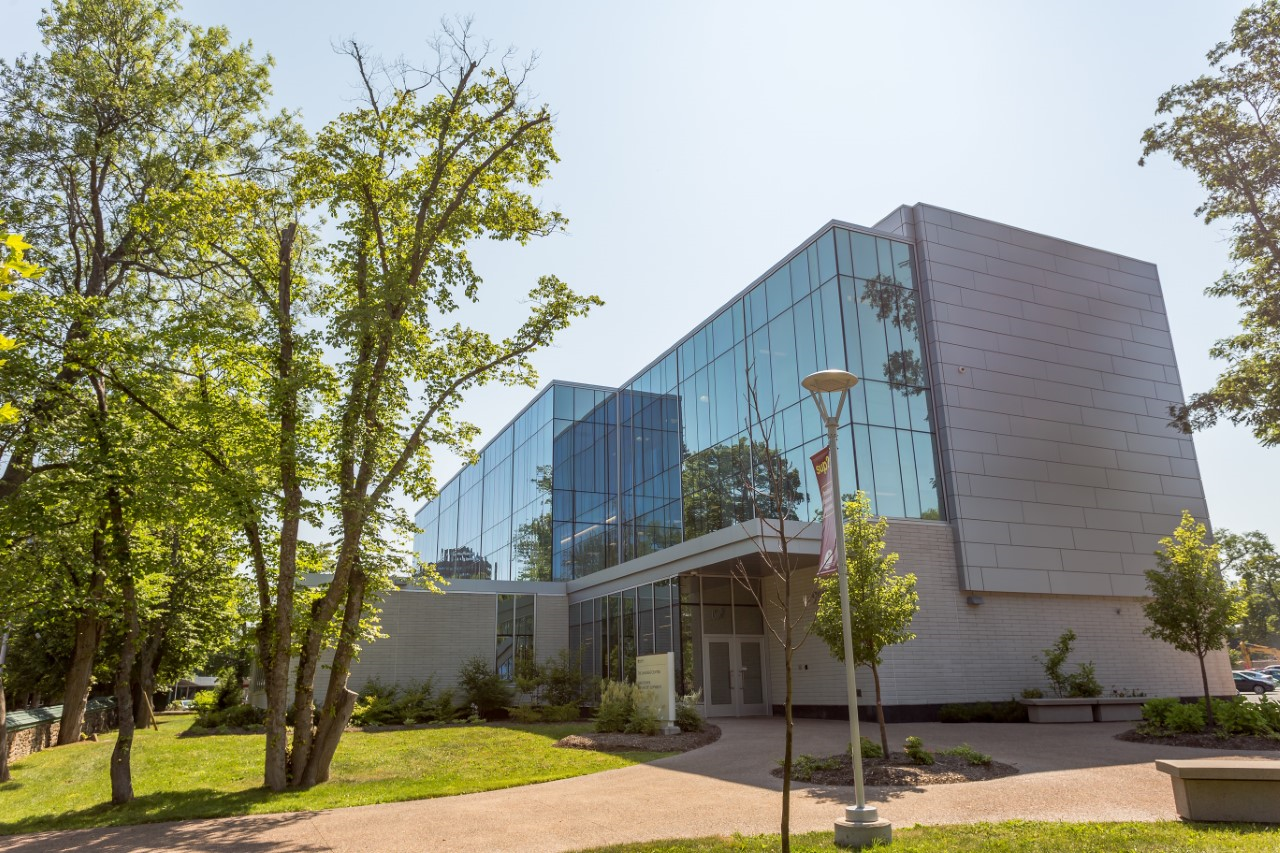
960 Tower Road, home to the Saint Mary’s University Entrepreneurship Centre and the Saint Mary’s University Language Centre.

960 Tower Road, home to the Saint Mary’s University Entrepreneurship Centre and the Saint Mary’s University Language Centre.

Following last week’s provincial announcement, Saint Mary’s University president Robert Summerby-Murray says the university is ready to continue and scale its business coaching and mentoring services. 

“Our entrepreneurship centre started offering free coaching and mentoring services to businesses throughout Atlantic Canada early in March - we are ready to expand our capacity to help more businesses and entrepreneurs,” said Dr. Summerby-Murray. “The centre’s free programming is designed to help businesses manage through the pandemic and also provides advice on what businesses can do to be more resilient to future shocks.” 

“We have been doing our part to help the economy and the business community – we are ready to do more.” 

Summerby-Murray said that business owners and entrepreneurs get access to world-class experts thanks to the Saint Mary’s University Entrepreneurship Centre’s partnership with Metronome United. Metronome United was founded by SMU alumna and entrepreneur Shannon Byrne Susko BComm’89 BSc’92.  

"We are tremendously grateful to Ms. Byrne Susko for her help and support,” said Summerby-Murray. “Having access to the expertise provided by her and her team will be invaluable to entrepreneurs and business leaders here in Nova Scotia.” 

SMU alumni are also reaching out and showing their willingness to help. 

“Our graduates are ready to serve the province and its business at this time of need,” said Summerby-Murray. “The resourcefulness of our alumni is a source of pride for me and for the Saint Mary’s community.” 

Summerby-Murray said he is pleased the province is taking measures to help small businesses in the province and that combining capital with knowledge will ensure more businesses are ready to re-open when the time is right. 

“Money alone won’t ensure business resilience or innovation,” said Summerby-Murray. “It’s part of what’s needed but having access to the knowledge and skills is a necessary part of the equation.” 

“World class coaching and mentoring services, like those provided by the Saint Mary’s University Entrepreneurship Centre, will ensure the province maximizes its investments in the business community.” 


Psychology researcher recruiting volunteers for online study on responses to the coronavirus pandemic

Covid.png

Survey: Canadian Responses to the Coronavirus Pandemic

A study designed by Dr. Jim Cameron, Department of Psychology professor and researcher at Saint Mary's University, will increase understanding of Canadians’ perceptions of the coronavirus pandemic and their actions in response to it.

Nations and communities are using social and physical distancing to slow the spread of the virus so that healthcare systems aren’t overwhelmed. The success of the physical distancing approach largely rests on individuals’ voluntary compliance with public health recommendations and legal regulations.

As the situation evolves in Canada, there have been concerns that physical distancing recommendations have been disregarded or not taken seriously enough by some individuals. National and provincial leaders have using various techniques to encourage public support for these initiatives.

“We hope that the study will contribute to social psychological science, and inform practices related to public health messaging,” said Dr. Cameron.

Canadian adults (18 years or over) are invited to participate in the survey, which takes approximately 10 minutes to complete. Click here to start the survey: 

https://smuniversity.qualtrics.com/jfe/form/SV_dhGoFhUpLBUtCS1

(SMU REB file #20-095)

Dr. Maryanne Fisher named guest editor of prestigious Psychology journal

Dr. Maryanne Fisher

Dr. Maryanne Fisher

Congratulations to Dr. Maryanne Fisher, who was chosen to be the guest editor of the January edition of the American Psychological Association’s journal Evolutionary Behavioral Sciences, a special edition which addresses women’s representation in evolutionary-based research and theory.

Dr. Fisher, a professor of Psychology at Saint Mary’s and an affiliate faculty member at the Kinsey Institute, is an evolutionary psychologist whose work explores human relationships through an evolutionary lens.

A well-known expert in her field, her primary research topic is the evolutionary foundations of human interpersonal relationships, female intrasexual competition, and women’s mating strategies. She is also interested in the intersection between feminist studies and evolutionary psychology.  

She was thrilled to take on the task of editing the special edition of the journal, a task she has some experience with; she was also the guest editor of the Oxford Handbook of Women and Competition in 2017 and Evolution’s Empress: Darwinian Perspectives on the Nature of Women in 2013.

When speaking about the selection process, Dr. Fisher said it was extremely difficult to narrow down the entries, even removing her own work from the contention.

“We had so many excellent papers submitted, we could have filled two journals,” said Dr. Fisher. “They were very good, very high quality.”

This special issue examines how women have been studied from an evolutionary perspective, and how the discipline both questions assumptions about women and has limited explorations of women and.

“Evolutionary perspectives have often been openly criticized in fields such as women’s, gender, and sexuality studies, to the point of being dismissed outright in favor of sociocultural explanations for behavior, motivation, emotions, and cognitions,” said Dr. Fisher.

“Collectively the articles show that women are not simply passive entities, but instead play significant and active parts in human evolution and theories about evolutionary bases of behavior.”

Evolutionary Behavioral Sciences publishes manuscripts that advance the study of human behavior from an evolutionary perspective, with an emphasis on work that integrates evolutionary theory with other approaches and perspectives from across the behavioral sciences, including the range of subdisciplines within psychology as well as the social sciences (e.g., sociology, political science, criminology) and humanities (e.g., history, literature studies).

Saint Mary’s applauds and welcomes support for students

SMU Crest.jpg

Saint Mary’s University President Dr. Robert Summerby-Murray said the announcement today, April 22, by Prime Minister Justin Trudeau, will help students throughout the country.  

“We know students were worried about their personal finances and their family's finances,” said Dr. Summerby-Murray. “Today, Prime Minister Trudeau provided those worried families support and hope.” 

The federal government’s new programs will provide support for students over the summer months and will increase support for students as they return to study this fall. 

“The best way to have a stronger economy in the future is to invest in students today,” said Dr. Summerby-Murray. “This is an unprecedented investment in students and our sector. This investment will help students this fall, and it will help our economy grow and be more resilient to future shocks.” 

Dr. Summerby-Murray said all levels of government have worked hard to create new supports at record speed while being responsive to the sector and other stakeholders. 

“This crisis is testing our institutions, and they are proving they are up to the challenge,” said Dr. Summerby-Murray.  

He noted Saint Mary’s University has worked with alumni, staff and faculty donors to provide short-term emergency support to its students who need it most, provided PPE to frontline health workers, engaged in rapid response research funded by the federal government, and is providing free mentoring to businesses throughout the region.  

“All sectors of our society are standing together as we combat the pandemic, and we remain committed to being active partners in the fight.”  

Message from the President: Condolences to our community

FlagsHalfStaff.jpg

Dear Saint Mary's community, 

The unthinkable tragedy of this past weekend has left all of us shocked, saddened, and grieving. Our closely-knit, peaceful province is feeling this loss deeply.
 
In a place that celebrates close connections in our everyday lives, these senseless acts are particularly painful. Our community is connected; our students, staff, faculty and alumni are part of Nova Scotia and many have lost loved ones, family, friends and acquaintances.

On behalf of the entire Saint Mary’s community, I extend deepest sympathies to those who have lost someone. I also want to express gratitude to the many first responders and front-line workers who risk their own safety to protect their fellow Nova Scotians.

In a continuing expression of remembrance, flags at Saint Mary’s University were lowered to half-staff yesterday morning and will remain so for the rest of this week, including through the virtual vigil being hosted on Facebook on Friday evening

While we cannot gather in-person to support one another in this difficult time, there is help available. I encourage you to reach out to these university supports if you need assistance. I also want to convey to you the many expressions of support we are receiving from across Canada and around the world.
 
As the sun set over Nova Scotia yesterday evening, many of us took comfort in its uncommon beauty. Still others across the province and the country lit candles as a sign of remembrance and solidarity. I am consoled by these simple but significant reminders of our connectedness, care, and resilience – I hope you are as well.
 
Take care of yourselves, and take care of each other.
 
Dr. Robert Summerby-Murray
President and Vice-Chancellor
Saint Mary’s University

Community Food Room receives boost and helps students in need

Though the physical location may be closed, the Community Food Room at Saint Mary’s is still finding ways to help students in need.

Run by jointly by Student Affairs & Services and SMUSA, the Food Room aims to offer access to safe, nutritious, and personally acceptable foods in a way that maintains human dignity.

Last week, the Community Food Room offered a one-time program for students to apply for an electronic gift card to purchase food at Atlantic Superstore or online at PC Express. 

“The idea was to help bridge the gap for students who are waiting for funds from the government or other programs,” said Lyndsay Anderson, Assistant Director, Student Culture and Experience at Saint Mary’s.

The initiative drew great response and proved to be timely, with a total of 101 students applying for assistance. Each student received a $30 gift card to get much-needed food and supplies.

The Community Food Room also received a welcome boost from Enterprise Atlantic Canada, a long-term contributor to the program through their partnership with the Athletics & Recreation department. Enterprise recently made a generous gift of $4500 - an increase of $1000 from their gift last year.

“We are extremely grateful for this gift,” said Adam Daniels, Student Transitions Specialist with SMU Student Affairs & Services. “These funds will help the Food Room to continue to provide assistance to students in need, and allow the Food Room to be immediately restocked once the physical location on campus can open again.”

Though the Community Food Room remains closed, other help is available:

Alumna raises $20,000 in medical supplies for China, now helping Canada

Jennifer Lynch and Angela Jing Yang with supplies ready to be sent to China.

Jennifer Lynch and Angela Jing Yang with supplies ready to be sent to China.

Since late January, Saint Mary’s University alumna Angela Jing Yang BComm’05 has been fundraising to help combat the coronavirus pandemic in Wuhan, China. 

“Helping others at difficult times has always been important to me,” says Jing Yang, who works as a real estate agen. “My friend Jennifer Lynch and I saw reports of people becoming ill and dying because of the coronavirus. Seeing the sacrifices of medical professionals, we were compelled to contribute.” 

Jing Yang and Lynch have raised more than $20,000 worth of medical supplies including N95 masks, goggles and protective clothes for hospitals in Wuhan and Si Chuan. Lynch, a professional accountant who attended the Schulich School of Business at York University, and Jing Yang, purchased all of the supplies upfront to kick start the initiative. Then, they organized an online WeChat group to see if others wanted to help. All of the supplies were delivered to China and used by front line doctors and medical staff. 

Now that the virus spread has subsided in China, Jing Yang and Lynch are helping with the crisis in Canada. “We made five donations to China; however, given the spread of the coronavirus in Canada, we are now focusing our efforts here,” explains Jing Yang. “WeChat group members are currently working on coordinating donations to Toronto area hospitals.” 

The WeChat group has close to 200 members including Saint Mary’s alumni Dan Ding MFin'15, Yiana Zeng BComm’14, and Qi Wang BComm’06 as well as York University's Schulich School of Business alumni. Some members reside in Canada and others in China, all of which are united by their desire to lend a helping hand at this challenging time. 

During the pandemic, one of the issues has been the logistical challenges of delivering supplies to China. From the 12-hour time difference to international flight cancellations and confusing government processes, the group faced adversity but did not give up. 

However, the groups’ first delivery was finally a success. It was made by member Johnny Wang who travelled to South China with four suitcases full of supplies. Once he arrived, he forwarded the supplies to Wuhan. Within five days, doctors at Wuhan Xie He Hospital were using them on the front line. 

Jing Yang credits the success of the initiative to WeChat group members and others who supported the project including Dr. Chao Yang, the Chief Resident from WuHan Xie He Hospital, a Chinese Real Estate Investment Group, and Da Meng Ontario Inc. These supporters worked very hard to ensure that all of the supplies made it successfully to China.  

“I hope this is just one small example of how humanity can come together. It shows that what unites us is stronger than what divides.”  

SMU Chemistry students, faculty help with hand sanitizer project

Honours Chemistry students Prashansa Kooshna and Julie Dayrit.

Honours Chemistry students Prashansa Kooshna and Julie Dayrit.

With the scope of the global COVID-19 pandemic expanding quickly, Honours Chemistry students Julie Dayrit and Prashansa Kooshna wanted to help, hoping that they might be able to produce hand sanitizer in now-vacant chemistry labs after the closure of the Saint Mary’s University campus.

“It all started before the SMU campus lockdown as Prashansa and I were discussing the cases of COVID-19 in Canada and the shortage of protective equipment against COVID-19 situation,” said Julie.

“We then started drafting plans to work with what we can find in the drug stores to make hand sanitizers to be available for the public. We realized that we would need help to execute this.”

“We research potential gelling agents and set up little labs to test each recipe at our own apartments,” said Julie.

The students worked with Drs. Jason Masuda and Clarissa Sit, who offered advice on the recipe, explaining the chemical ingredients of other hand sanitizers and how to make a good product with the appropriate consistency.

Once it became clear how much bigger this project could be, the students contacted the Halifax Distilling Company, whose owners were already looking at creating this valuable commodity.

In hindsight it’s a good thing we teamed up with the Halifax Distilling Company,” said Dr. Masuda. “They are able to produce much more hand sanitizer than the 50 litres or so we could have produced in a lab on campus.”

Nova Scotia Power provided funding for the project, on the condition that they will purchase the sanitizer at cost, and that a portion would be donated to community organizations like Souls Harbour Mission.

“We are working with the Halifax Distillery with the bulk production, troubleshooting, and packaging,” said Julie.

“Once all of the shipments arrive, we will start our production. I am also communicating with Caremongering Halifax to target deliveries of these hand sanitizers for front line workers for free.”

Enactus Saint Mary's wins big at regional competition

Enactus Saint Mary’s and SMU EC together online.

Enactus Saint Mary’s and SMU EC together online.

Each year Enactus teams from across the country compete in regional competitions to showcase the impact they've made over the past year, with top teams moving forward to compete at the national level of competition. With the cancellation of in-person competitions as a result of COVID-19, the Enactus regional competition moved forward online. The results were announced live on April 8, 2020.

Enactus Saint Mary's proved that their online pitches are just as strong as their in-person pitches, winning all four Enactus regional challenges—the most of any university in the country. They will now compete in all four topics, along with the overall Enactus presentation, at the virtual National Competition in May.

In late March, teams were asked to submit 5-minute videos showcasing the impact of their projects. Enactus Saint Mary's participated in all four regional topic challenges by submitting a separate video for each. Competitions included the CWB Financial Education Challenge, Scotiabank Climate Change Challenge, Scotiabank Youth Empowerment Challenge and the TD Entrepreneurship Challenge.

Enactus Saint Mary’s share the great news on their Instagram page, @enactus_smu.

Enactus Saint Mary’s share the great news on their Instagram page, @enactus_smu.

Additionally, two of Saint Mary's student entrepreneurs have made it to the Enactus Student Entrepreneur National Competition — Nevell Provo (Smooth Meal Prep) and Mubdu Alali (Bloxo).

"I am extremely proud of the team and our two student entrepreneur winners. Not just for this showing but for how they have approached the current pandemic," said Michael Sanderson, the Director of the Saint Mary's University Entrepreneurship Centre. "In addition to this big win, they have pivoted Square Roots to a donation model to help our most vulnerable communities and have delivered over 10,000lbs of fruits and vegetables in the last two weeks!"

Enactus Saint Mary's is a student-led organization that uses entrepreneurial action to make positive change in the community. With over 100 students, Enactus Saint Mary's currently operates seven projects ranging from reducing plastic waste in the ocean to forming food-based social enterprises with refugees, to operating an employability training program for at-risk youth. Enactus Saint Mary's is proud to partner with the Saint Mary's University Entrepreneurship Centre to offer its programs.