International

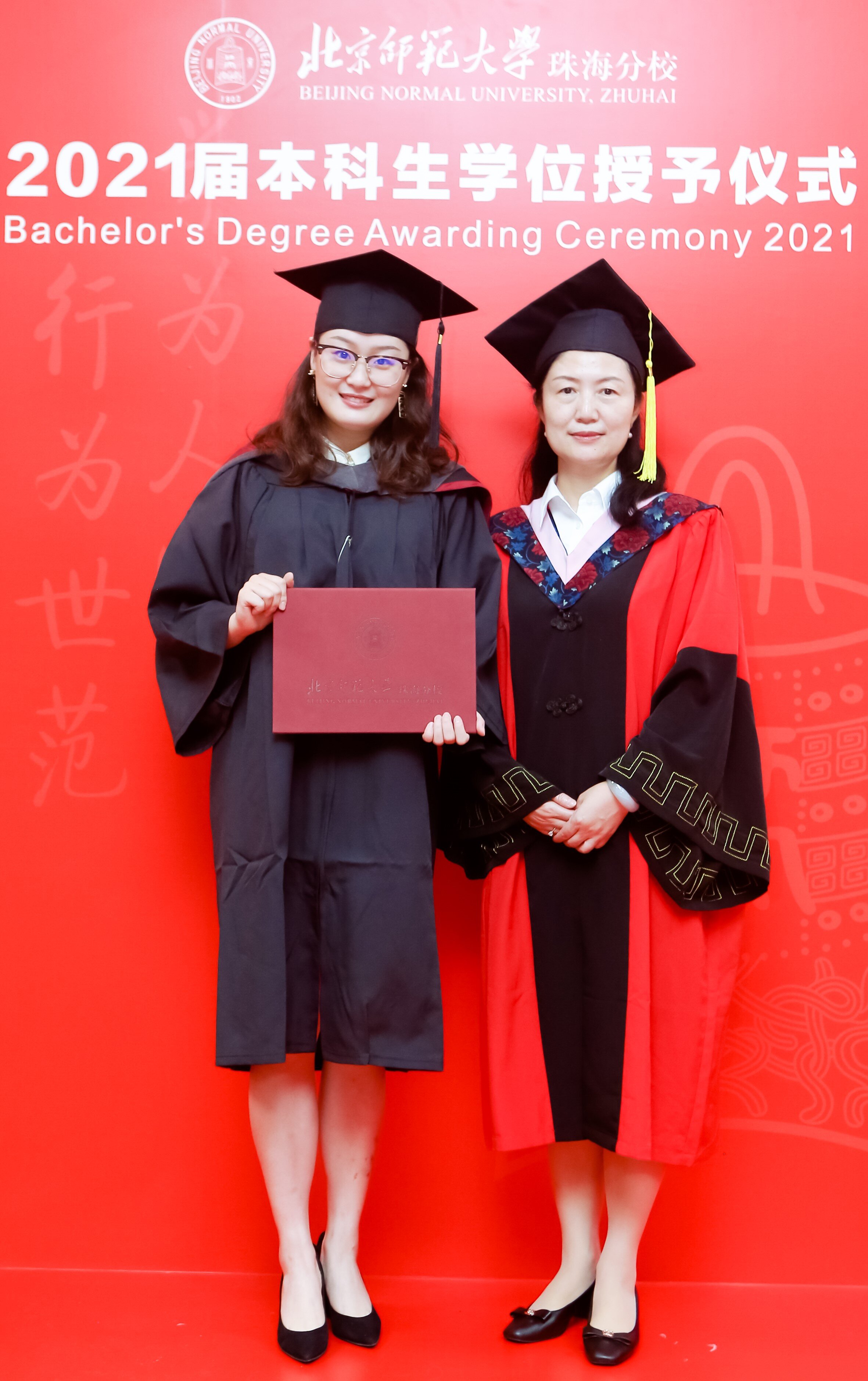
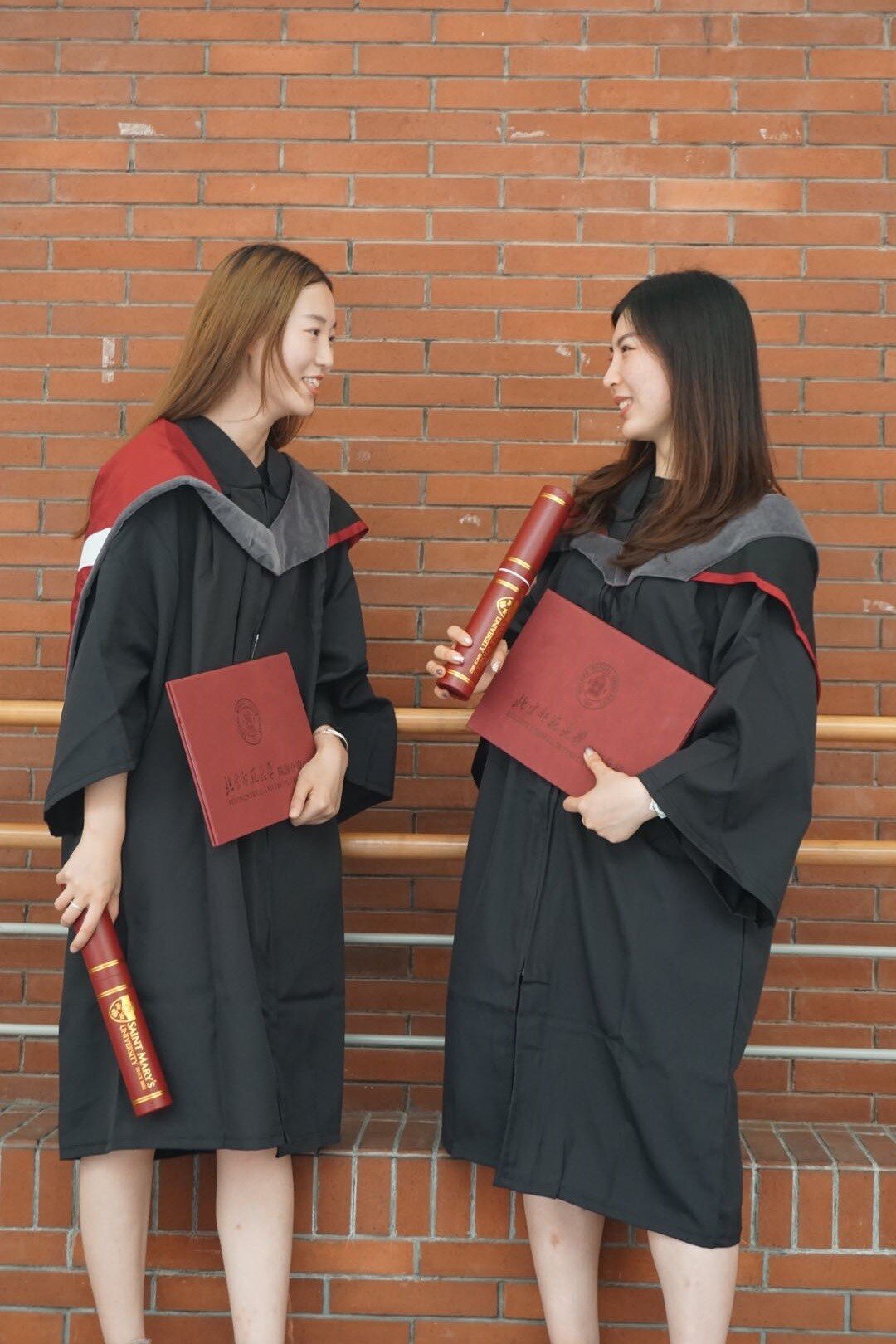
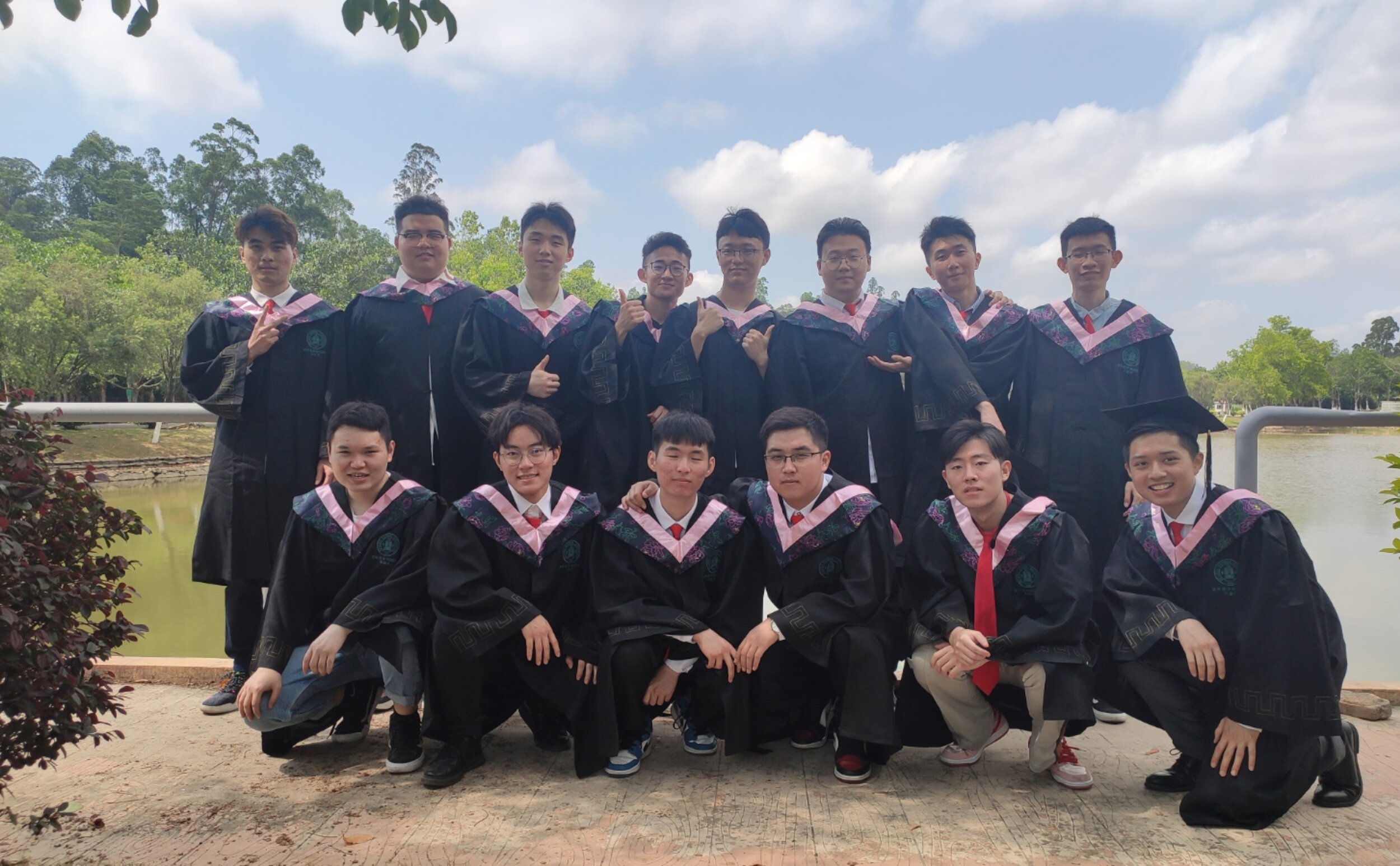
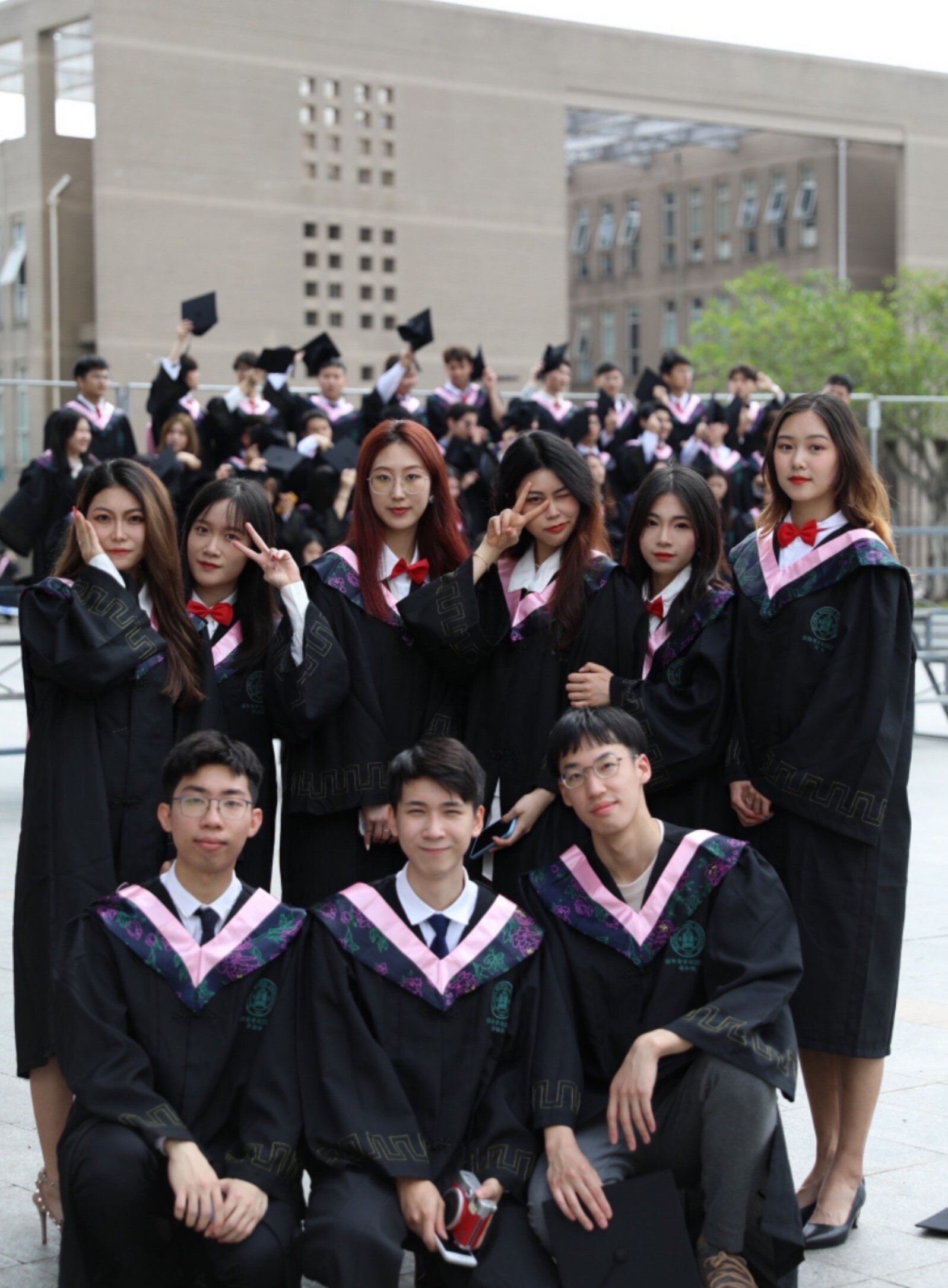
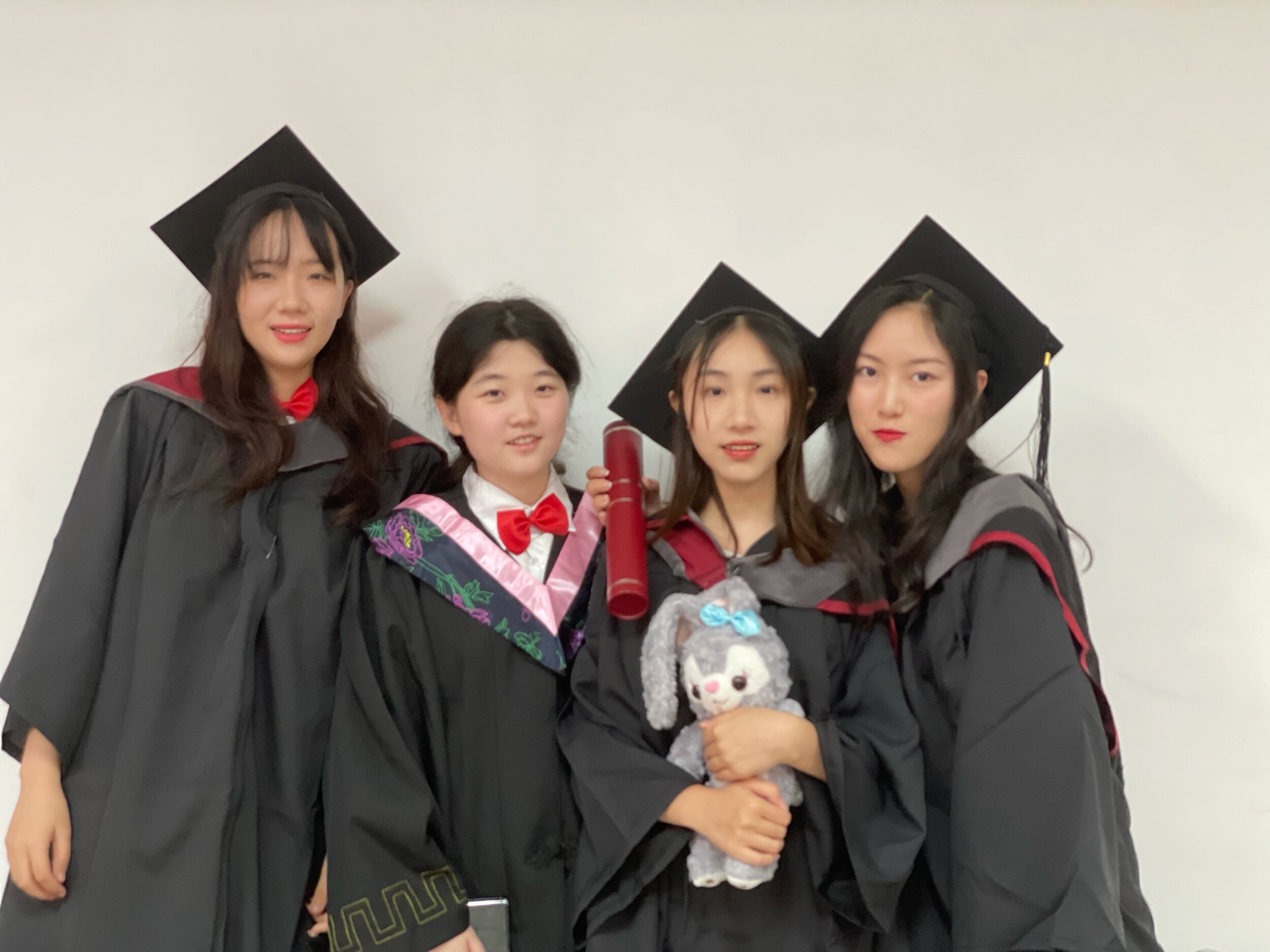
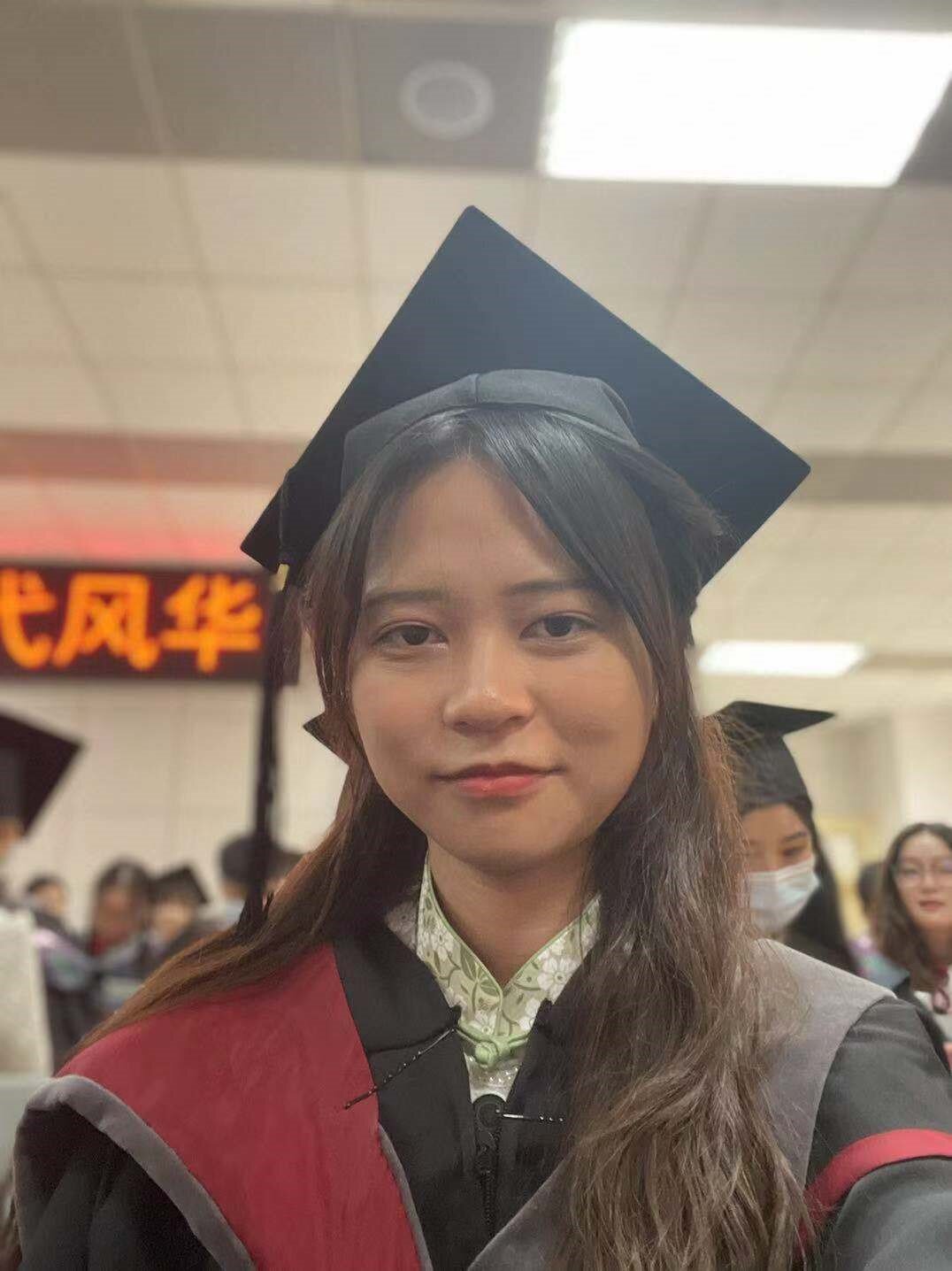
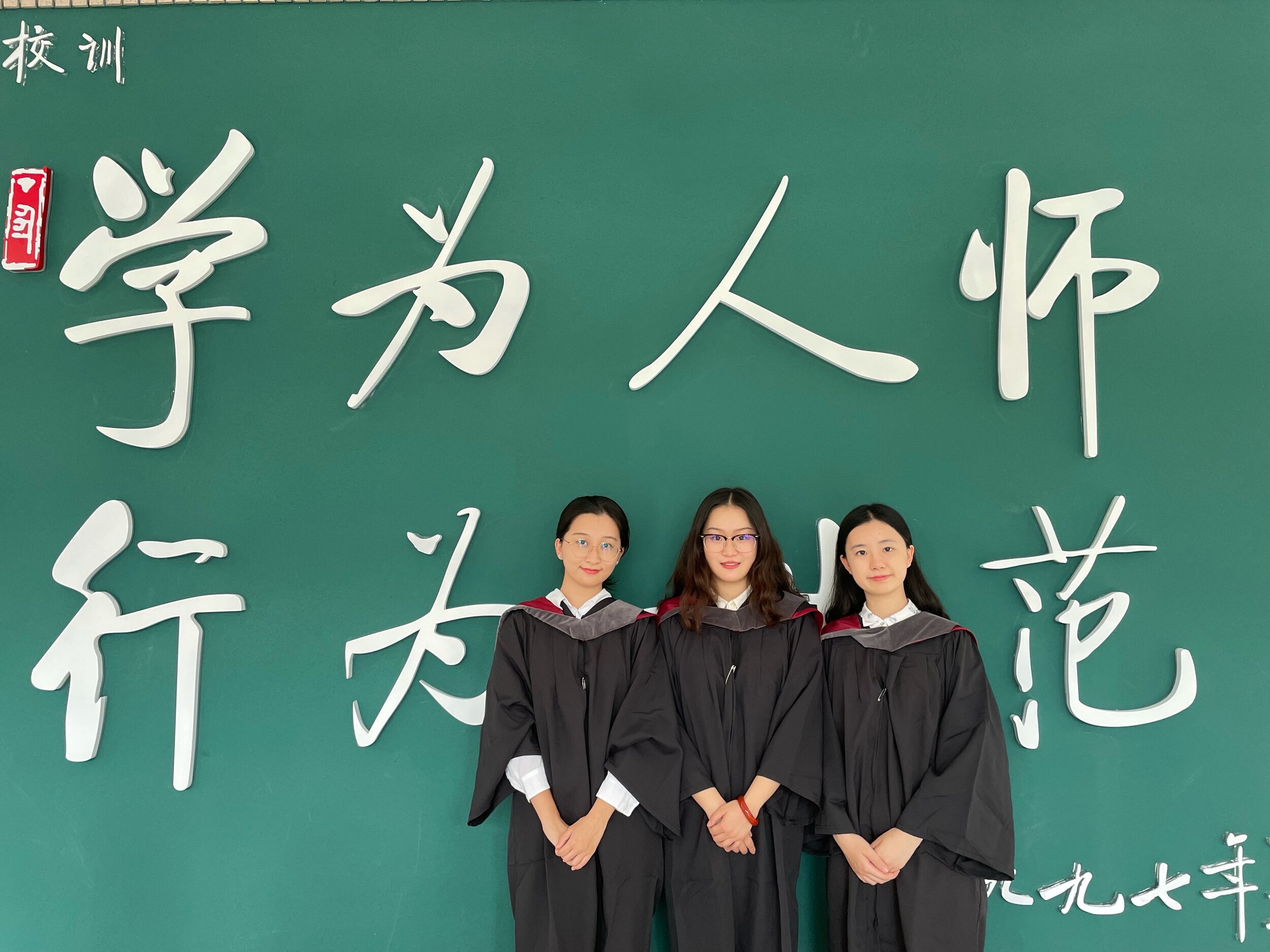
Congratulations to the fourth cohort of graduates from the BNUZ-SMU Joint Bachelor of Commerce Program

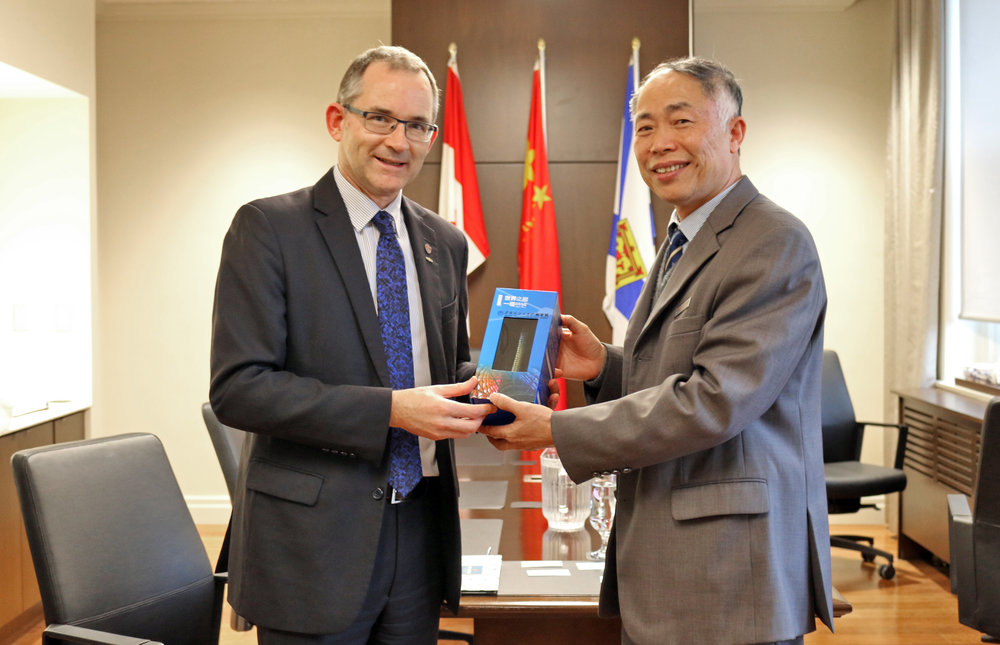
Since launching in 2014, the partnership between Saint Mary’s University and Beijing Normal University Zhuhai (BNUZ) has graduated nearly 300 outstanding students through the BNUZ-SMU Joint Bachelor of Commerce Program.

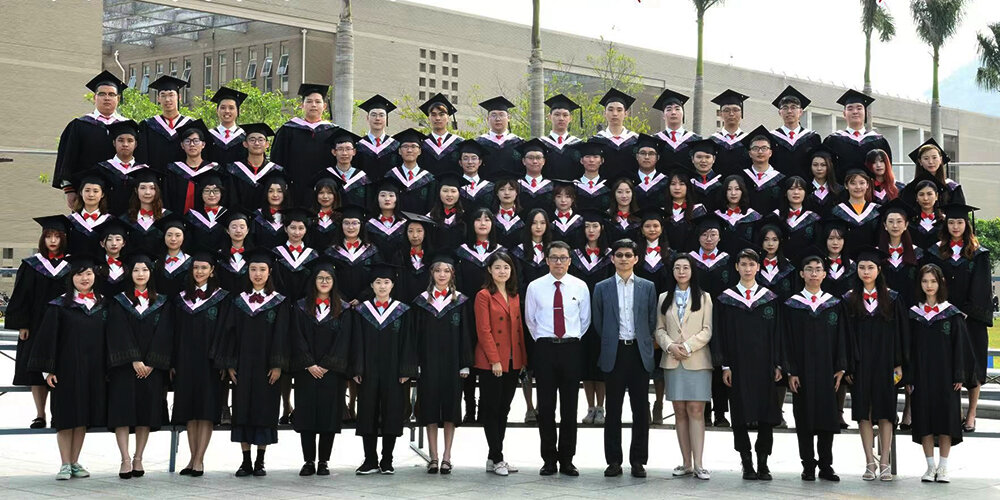
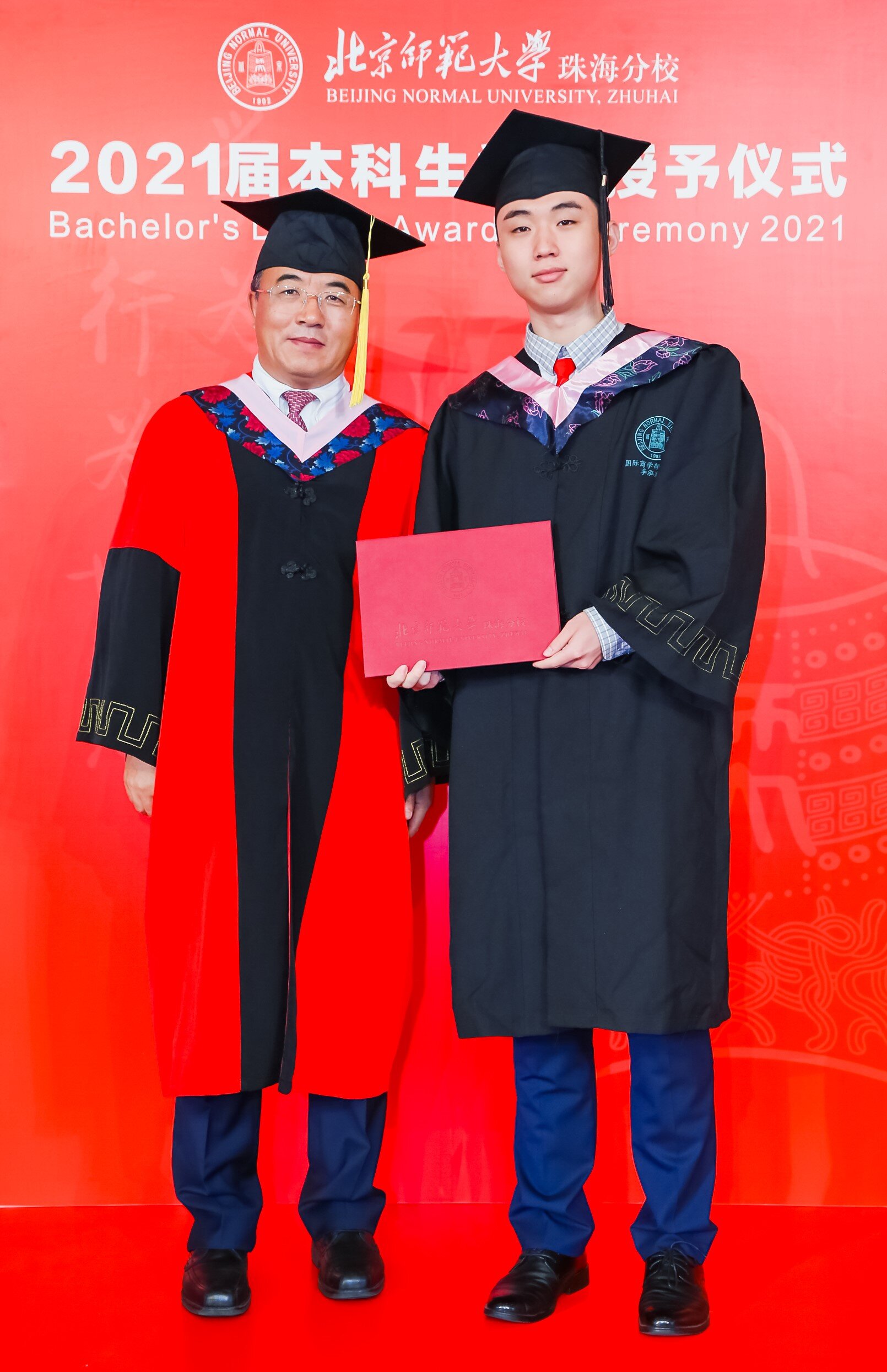
This past weekend, 63 students graduated from the program with a Bachelor of Commerce degree from the Sobey School of Business and a Bachelor of Economics degree from BNUZ. Of the graduates, 58 were awarded a major in Finance. This is the fourth cohort to graduate from the Joint BComm Program, which is based entirely in Zhuhai, China. Students in this program receive a truly international education, with half of their courses delivered by visiting SMU faculty and the other half taught by faculty members of BNUZ.

Dr. Harjeet Bhabra, Dean of the Sobey School of Business, highlighted the impact of this international learning experience in his congratulatory message to this year’s graduating cohort: “Your educational experience has provided you with a uniquely international perspective that will allow you to become business leaders as you embark on your careers. While we wish we could celebrate your achievements with you in Zhuhai, we are proud to welcome you to the global alumni community and we send our best wishes for your continued success.”

Special congratulations go to the 16 students who graduated with distinction (5 cum laude, 8 magna cum laude and 3 summa cum laude) and to the 17 students who have earned a place on the Dean’s List for their final academic year. Of the 63 graduates, 47 will go on to pursue postgraduate studies. Forty students have already accepted offers from respected universities in the US, UK, Australia, Canada and China. Some well-known schools include the University of Glasgow, Johns Hopkins University, the University of Sydney and University College London.

Prof. Zhong Xin, Dean of the International Business Faculty at BNUZ, says the graduates have all benefitted from the program’s international focus and congratulates them on their outstanding work: “You have demonstrated your growth with actions, studied hard, overcome difficulties and forged ahead together. I wish you a happy graduation. Ride the wind and the waves – the future is bright and promising.”

The BNUZ-SMU Joint Bachelor of Commerce Program was born out of a longstanding partnership between Saint Mary’s University and Beijing Normal University, Zhuhai. This partnership dates back to 2002 and has included a range of 2+2 programs in Arts, Business and Science, as well as a number of other exchange programs and summer institutes for students, faculty and members of the community. 

Since 2016, over 40 faculty members from the Sobey School of Business and SMU Faculty of Arts have travelled to Zhuhai to teach in the Joint BComm Program, further strengthening the friendships and academic initiatives between members of both institutions. Sonya Rice, Part-Time Lecturer in the Department of Finance, Information Systems and Management Science (FISMS), who first visited BNUZ in 2012 as a student in the International Chinese Studies program, says “I am so proud of each student graduating this year – they have not only succeeded in an intensive and rigorous program but also overcame the additional challenges of online learning.” Dr. Rahman Khokhar, Associate Professor of Finance in the Department of Finance, Information Systems and Management Science, says he was “honoured to be part of the learning journey of the dedicated and hardworking 2017 Cohort,” and is “positive that this group is ready to make a meaningful difference to the world.”  

Unfortunately, due to the ongoing global pandemic, faculty and administrators from Saint Mary’s University were unable to celebrate this year’s graduates in person in Zhuhai. We honour the achievements of the graduates and extend our warmest welcome to the newest members of our alumni community.



SMU Film Professor’s Research Associated with Venice ‘Impostor Cities’ Exhibition

The Screening Room. Credit: Imposter Cities

The Screening Room. Credit: Imposter Cities

Canadian cities seldom play themselves in movies and television, more often doubling for other places in the world. A new exhibition in Venice celebrates this duality while raising questions about identity, authenticity, and how we experience architecture and urban geography in the digital age.  

Impostor Cities is Canada’s official entry in the 17th International Architecture Exhibition of La Biennale di Venezia. It opened to the public on May 22 online and at the Canada Pavilion, which was built in 1958 in the Giardini di Castello where the Venice Biennale is based.

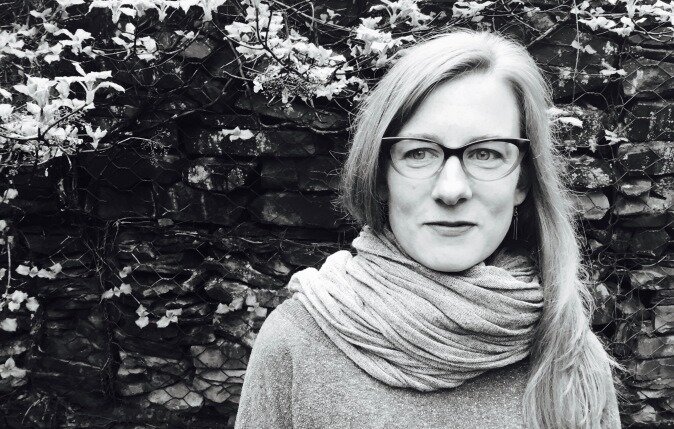
“There is something about Canadian architecture that allows it to stand in,” says Dr. Jennifer VanderBurgh, associate professor of film and media studies at Saint Mary’s. “The exhibition is not saying that’s good or bad, just something to think about.”

Dr. VanderBurgh’s work is associated with the prestigious international exhibition through her essay, “Screens Stop Here! Tax Credit Thinking and the Contemporary Meaning of 'Local' Filmmaking”. In it, she examines the role of tax incentive programs in how Canada appears onscreen, and the economic and cultural impacts of this over time. Originally published in the Canadian Journal of Film Studies, the 15-page essay was invited to be included in the exhibition’s academic resources. It’s also available online to SMU students and faculty via the Patrick Power Library. 

Dr. Jennifer VanderBurgh, associate professor of film and media studies

Dr. Jennifer VanderBurgh, associate professor of film and media studies

VanderBurgh describes ‘tax credit thinking’ in the essay as “a way of thinking that tends to focus on economic benefits when justifying why films and film industries are important to places and people,” with job creation prioritized over cultural content or artistic integrity. Fear of cultural encroachment “has been replaced with a legacy of federal and provincial incentives that have been designed with the express purpose of enticing American, international and out-of-province projects."

Impostor Cities considers many factors in Canada’s success as a film stand-in, from tax credits and lower production costs to skilled crews, high-quality facilities, and diverse landscapes. Our cities and buildings also tend to look more generic than those in many countries, argues the exhibition’s designer, Montreal architect Thomas Balaban.

Due to the pandemic, the Canadian team couldn’t travel to Italy to install the exhibition, including Balaban and curator David Theodore, Canada Research Chair in Architecture, Health, and Computation at McGill University. They instructed local workers via Zoom and FaceTime, and the Canadian Pavilion is now wrapped almost entirely in green fabric. Visitors can scan a QR code on their phones, taking them to an app that uses green screen technology to turn the Pavilion into iconic Canadian cityscapes on Instagram.

“It’s a really cool idea,” says VanderBurgh. “Inside the pavilion, one of the central pieces is a video that’s a compilation of 3,000 clips of films and TV shows where Canadian cities have stood in for other places.”

The website shares views of the exhibition, interspersed with film and TV clips and interviews with Canadian architects, film directors, set designers, and scholars. VanderBurgh attended the digital launch, where participants used avatars to mingle virtually and explore the Pavilion from afar. She also plans to take part in conferences and other scholarly events ahead for Impostor Cities. It’s a fascinating exercise in “the democratization of arts access through the digital world,” she says. “A way to make these things and gather in ways that we couldn’t before.” 

VanderBurgh teaches in the Department of English Language and Literature. She is nearing the finish line on her forthcoming book, What Television Remembers: Artefacts and Footprints of TV in Toronto. She’s also working on a book about Nova Scotia filmmaker Margaret Perry, and working with other researchers and the Nova Scotia Archives to digitize Perry’s films through an Archive / Counterarchive case study project.

Students in all three faculties at Saint Mary’s can take a Minor in Film Studies as part of their undergraduate degrees. VanderBurgh is the undergraduate coordinator for the minor, and will also soon be undergraduate coordinator for the Atlantic Canada Studies program. 

Impostor Cities is on view until November 21 at the Canadian Pavilion and www.impostorcities.com, in the Venice Biennale Architettura 2021. Read more from the Canada Council and follow @impostorcities on Twitter, Facebook, Instagram and YouTube, and via the hashtag #ImpostorCities2021.

Peace and the pandemic

Peaceful Schools at Currie Primary School, Belfast, Northern Ireland/ North of Ireland

Peaceful Schools at Currie Primary School, Belfast, Northern Ireland/ North of Ireland

Can there be peace in the midst of conflict? Can peace flourish during a pandemic? And do we have an ethical obligation to teach peace education? Those were some of the questions posed at this year’s annual United Nations International Day of Peace conference. Dozens of participants came together under the auspices of Peaceful Schools International, Saint Mary’s University and Yale University, along with students from public and private schools in Halifax, Northern Ireland / North of Ireland as well as the United States.

The Faculty of Education at Saint Mary’s University has been particularly engaged and supportive of a wide range of peace education initiatives, projects and the provision of relevant academic courses over the past 15 years, including this most recent virtual conference. Saint Mary’s University Professor and President of Peaceful Schools International, Bridget Brownlow, noted that the pandemic posed issues for the conference itself, “Like so many organizations, we were tested by not being able to meet in person this year.  However our students and the partner schools rose to the challenge using videos and online technology to connect in a virtual setting.”

Bryn de Chastelain, President of the Saint Mary’s University Students Association (SMUSA) said, “The pandemic gives us a common issue and demands that we work together to develop common solutions. The pandemic has exacerbated problems and inequalities in our local community and around the world. Never before have we been so interconnected. It’s crucial that we focus on how we can work together as we priorize ongoing education and reflection.”

Peaceful Schools International is a not-for-profit network of educators and students which is housed within Saint Mary’s University and has over 380 member schools worldwide. Among many other projects and initiatives, the organization also provides university students with conflict resolution skills and enables them to travel internationally to the North of Ireland / Northern Ireland to teach these valuable skills in peace education to younger students in elementary schools. “Conflict resolution requires daily practice. We start learning at a young age, said SMU student, Salman Sadib, an Accounting major who has travelled to Belfast, Northern Ireland and credits the program with changing his life. “We want the world to be a better place for everyone; we learn to negotiate with peace in every situation.”

Dr. Bonnie Weir, representing the Department of Political Science at Yale University, also participated in the virtual conference. In February, 2020, she had the privilege of observing students from Saint Mary’s University facilitating peace education workshops in primary classrooms in Belfast and learned firsthand that we all have an ethical obligation to teach peace education to both children and adults, including the ability to understand others, respect for difference and the value of uniqueness. Dr. Weir is also a member of the Board of Directors for Peaceful Schools International.

Crystal Witter, a SMU Psychology major, said peace education should be taught at all levels of university, and included in business strategies and programs. “I now see how diversity and inclusion is so important for peace and harmony.”

For more information on Peaceful Schools International and the virtual conference please visit the website: http://peacefulschoolsinternational.org/

SMU advisor’s work to support Wuhan helps efforts to assist Nova Scotians

Bill Bu MEd’94, Senior Advisor to China, Saint Mary’s University

Bill Bu MEd’94, Senior Advisor to China, Saint Mary’s University

What goes around, comes around, is a saying that many of us have heard throughout the years. In the case of Saint Mary’s University’s Senior Advisor to China, Bill Bu MEd’94, it’s brought a pleasant surprise to Nova Scotia in uncertain times.

In early February, Bu was a vital part of the efforts to connect hospitals and medical staff in Wuhan, China, with the medical supplies that were sorely needed. Now that COVID-19 has come to Canada, the experience and connections he gained working to help those in Wuhan, is being used to support the QEII hospital in Halifax.

For Bu, COVID-19 has been something he has followed closely after it came to the region he used to call home. 

“The outbreak of COVID-19 in Wuhan greatly impacted my family,” says Bu. “My wife’s parents live there, and I have many connections there from my time studying and teaching at Wuhan University. When I heard about the outbreak, I knew that I couldn’t sit idly by while my family and friends were suffering.”

Bu’s close connection to the situation in Wuhan drove him forward. He began thinking of ways he could help and the number one need that he kept hearing was a call for more medical supplies.

“I decided to reach out to the Halifax community to see if other people felt the same, and I was shocked by their generosity,” says Bu. “We raised thousands of dollars for medical supplies, and we were able to help provide them to those who needed them in China.”

Now those skills developed only months ago are being used to help closer to home. Bu, who is also the President of the Atlantic section of the Hong Kong Canada Business, is working with a variety of leaders in Nova Scotia’s Chinese community to fundraise for the QEII Foundation and the medical equipment they need during this pandemic.

In only three days, the campaign to raise money for the QEII launched and received over $15,000 in donations. Now the funds raised has surpassed $60,000. Bu says that at least half the donations come from Chinese Canadians and from people in China, who previously lived in Nova Scotia. Donations have even been received from people in Wuhan, paying forward the work of Bu and many others to support those in one of the areas hardest hit by the early stages of the pandemic.

The funds raised for the QEII Foundation will purchase items like electronic stethoscopes, Bluetooth O2 probes, ultrasounds and bedside diagnostics. The funds will also support home self-care and recovery, in addition to virtual care solutions.

While the generosity of the donations may come as a surprise, Bu isn’t shocked by the support. 

“We live in a global community,” adds Bu. “When one member of our community is in trouble, the rest of us work together to support them.”

New Nova Scotians cook a community meal to celebrate International Development Week

Enactus-logo-paint.png

A celebration of newcomers,  diversity, and tradition through food will take place this Friday, February 7, from 12:30 p.m. to 2:00 p.m.  At the event, ten refugees from around the world who are now living in Halifax will prepare dishes from their home countries as part of a community meal.

‘Taste of the World’ aims to break down barriers and build understanding through something that is universally shared: food. For the cooks, it is an opportunity to showcase their traditions and cultures to a broader audience. For the public, it’s a chance to connect with newcomers and sample delicious dishes. The event is free and takes place at the Halifax North Memorial Public Library, 2285 Gottingen St. in Halifax.

“As an immigrant, I have firsthand experience of how difficult it can be to start a new life in a different country,” said Leena Roy Chowdhury, co-president of Enactus Saint Mary’s and this event’s co-organizer.  “We are working with newcomers to Canada, and helping to inspire them as entrepreneurs so that they can build a career using their incredible cooking skills. This event is the perfect occasion to celebrate diversity and entrepreneurship with food that will captivate your taste buds!”

 ‘Taste of the World’ is being held as part of International Development Week (IDW). IDW celebrates Canadian community and international development efforts by showcasing work being done across the country. 2020 marks the 30th anniversary of IDW, which will run from February 2nd-8th. As the signature event for the Atlantic, ‘Taste of the World’ will be live-streamed to a national audience.

This year’s theme for IDW is ‘Go for the Goals’, referencing the Sustainable Development Goals (SDGs). The SDGs are 17 universal, aspirational, and interconnected goals introduced by the United Nations in 2015. The ‘Taste of the World’ event seeks to address goal no.2: Zero Hunger, no. 8: Decent Work and Economic Growth, no. 10: Reduced Inequalities, and no.17: Partnerships for the Goals.

To learn more about the SDGs, click here: https://sustainabledevelopment.un.org/?menu=1300

Funding for this event is provided by the Atlantic Council for International Cooperation (ACIC), on behalf of Global Affairs Canada (GAC). The event is being hosted by the Global Shapers – Halifax Hub, Enactus Saint Mary’s, and Hope Blooms.

Saint Mary’s researcher contributes to UN fishery and climate meetings

The work of a Saint Mary’s professor is reaching the global stage via two international United Nations symposiums.

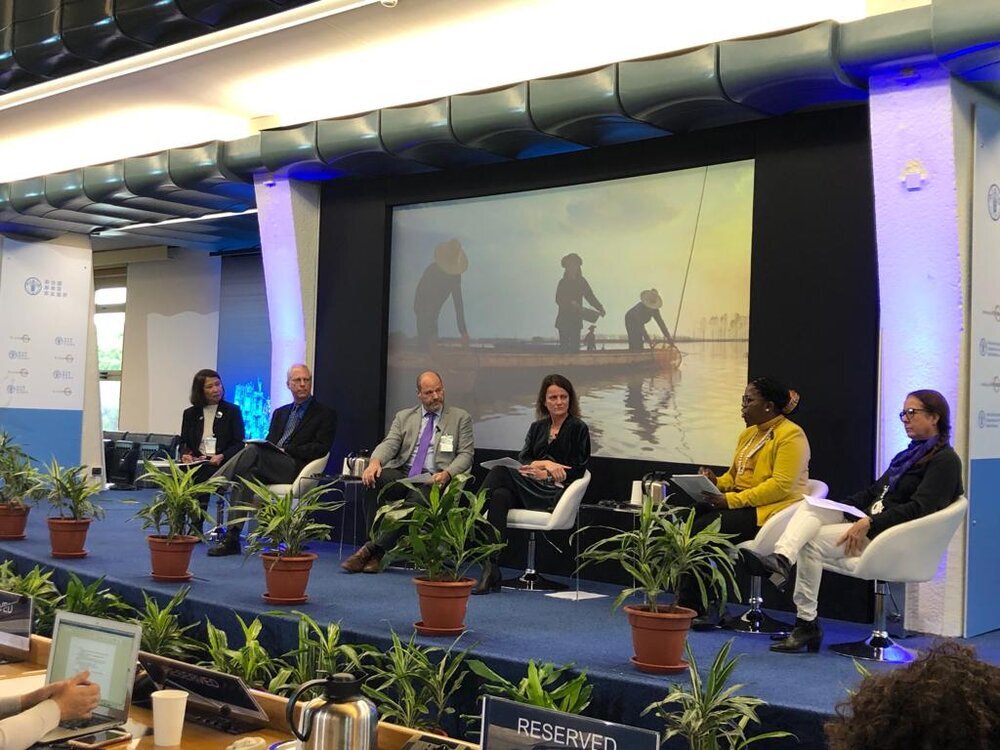
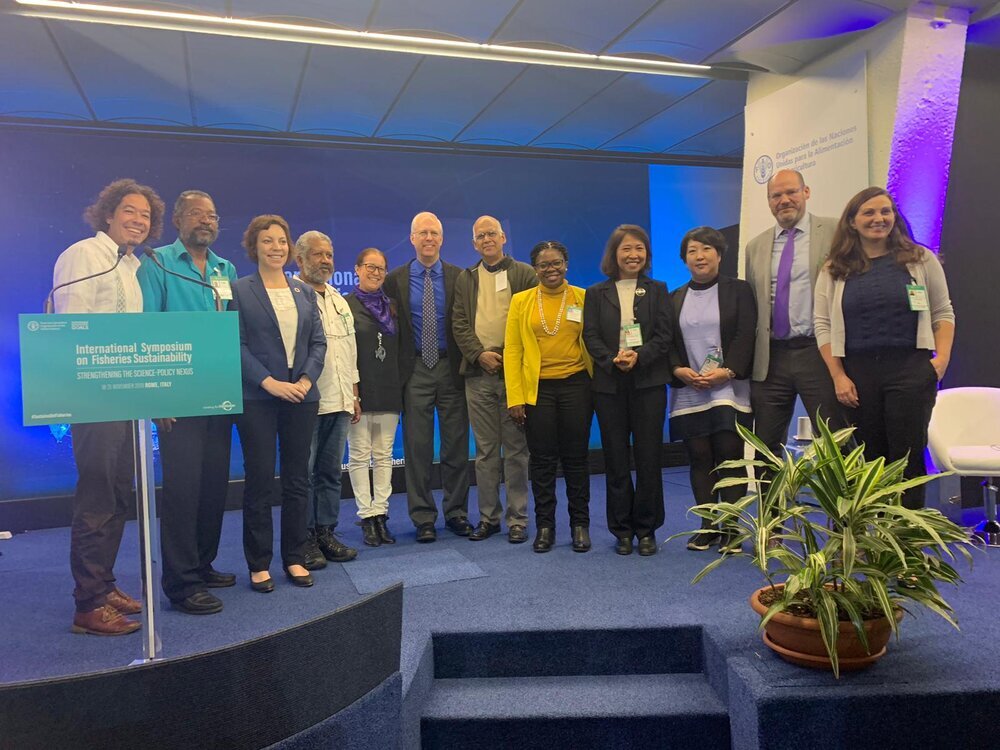
Dr. Tony Charles, who teaches in both the School of the Environment and the Sobey School of Business, was recently invited to speak on the future of global and regional fisheries at the International Symposium on Fisheries Sustainability. The event was held in Rome at the United Nations Food and Agriculture Organization.

The conference examined how decisions are made around all aspects of the fishery, with the aim to develop high-level policy on the role, value and sustainability of fisheries in the 21st century.

“My focus is on how fishing communities can do better in the future, how they can have healthier, better lives through conserving their local resources and environment,” says Dr. Charles.

“That’s been my interest for all my career here at Saint Mary’s, is how to make natural resources sustainable while providing livelihoods for people,” said Charles.

The topic is a timely one. Fisheries are linked with many of the UN's 17 Sustainable Development Goals not just the health of the ocean, but ending poverty, food security, gender equality, climate change.

“There’s been a philosophy that government has to control fishing people or they will go crazy and catch too much fish. But what I and many others have been documenting over the years is that if you let the fishers operate as local communities, all around the world, what you see is that they actually conserve the fish.”

‘It turns out if you just let local communities take action themselves, and give them support for doing that, it’s very impressive what they can accomplish.”

Another project led by Charles is also being taken to the international stage. His publication Addressing the Climate Change and Poverty Nexus looks at the links between poverty reduction efforts and climate change action and will be presented by the UN Food and Agriculture Organization at COP 25 this week in Madrid. “It’s kind of a tool kit to the countries of the world on how to make poverty reduction come together with climate action, and vice versa,” says Charles.

Learn more:

International Symposium on Fisheries Sustainability

Community Conservation Research Network

Introducing Saint Mary's new International Masters in Teaching English (IMTE) program

Students taking the new International Master of Teaching English (IMTE) program participated in a recent orientation led by Dr. Michael Legutke (back), visiting scholar and several instructors from the Faculty of Education.

Students taking the new International Master of Teaching English (IMTE) program participated in a recent orientation led by Dr. Michael Legutke (back), visiting scholar and several instructors from the Faculty of Education.

With English continuing to expand as the world’s lingua franca, the demand for teachers of English continues to grow.  The British Council forecasts that by the year 2020, over two billion people will be speaking or learning English.  Global research in English language teaching has shown that the majority of future English language teachers in non-English-speaking countries will be non-native speakers of English. 

In response to this global challenge, especially with respect to preparing non-native English speakers as teachers of English as an additional language, Saint Mary’s Faculty of Education created its new International Masters in Teaching English program (IMTE).  Launched in September 2019, the Faculty welcomed its first cohort at a recent program orientation event, which included a workshop by internationally renowned professor of English language education, Dr. Michael Legutke, from one of our partner institutions in Germany, the University of Giessen.

The new IMTE program prepares graduates for international careers in teaching English as an additional language.  Saint Mary’s University enjoys a partnership with Cambridge University, having been selected as a Cambridge English Language Assessment Authorized Centre.  This partnership enables the Faculty of Education to offer IMTE students opportunities to progress along the Cambridge Teacher Framework, leading to internationally recognized certificates from Cambridge Assessment English as part of the IMTE program.

The Faculty of Education was delighted to receive a large number of applications from outstanding applicants for its first year.  There are currently 14 international students enrolled in the four-semester 16-month program coming from many countries, including Iran, Japan, China, Mexico and India.  Course professors include both Saint Mary’s faculty and visiting professors from partner universities abroad.

Introduction of the new IMTE program is another step forward in the Faculty of Education’s long history of international education and intercultural engagement at the graduate level.  During the past twenty-five years, the Faculty of Education has been offering graduate courses with an international focus in three thematic areas:  teaching English as a second/other language (TESOL), peace education, and education and development.  The IMTE program builds on these strengths and takes the English language education focus to a new level.

Unlocking overlooked history from a 2,200-year-old Roman villa

When modern technology meets buried remnants from the early Roman Empire, collaborative research has the potential to unearth new chapters of human history never previously analyzed.

That’s the thinking behind The Villa di Tito Project: Reexamining Roman Villas, helmed by Dr. Myles McCallum of Saint Mary’s University. The project received nearly two thirds of SMU’s most recent round of federal research funding, announced July 17 by the Social Sciences and Humanities Research Council (SSHRC).

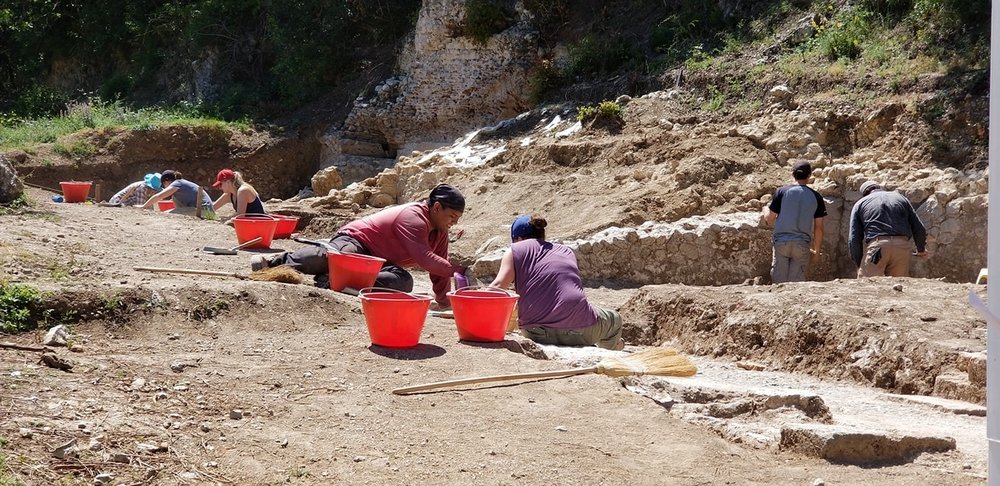
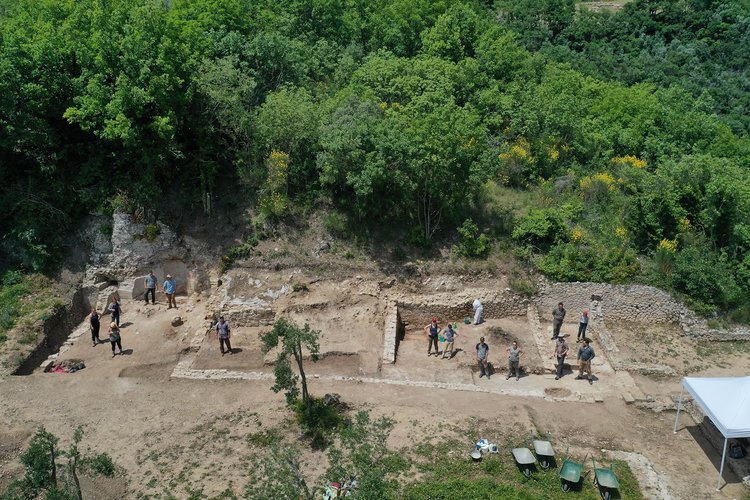
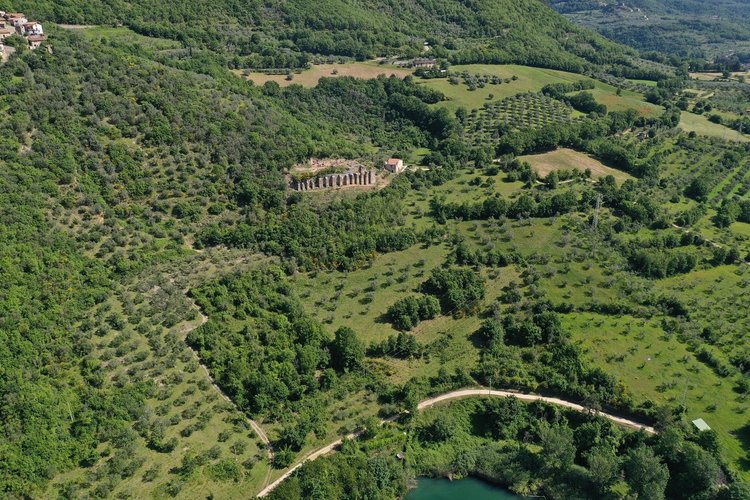
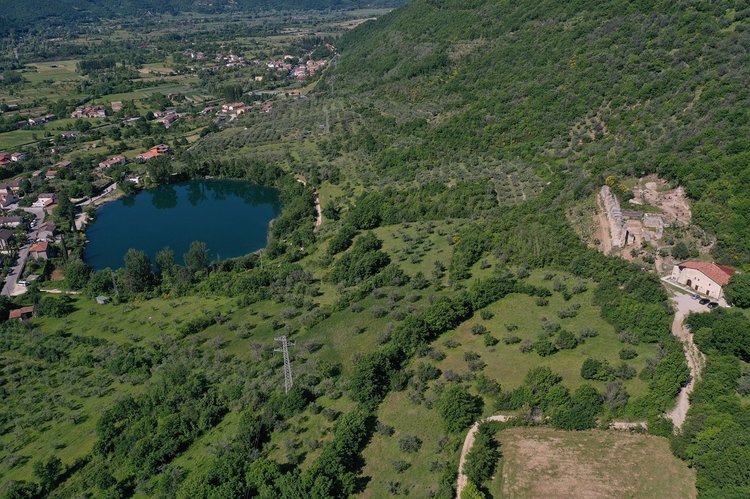
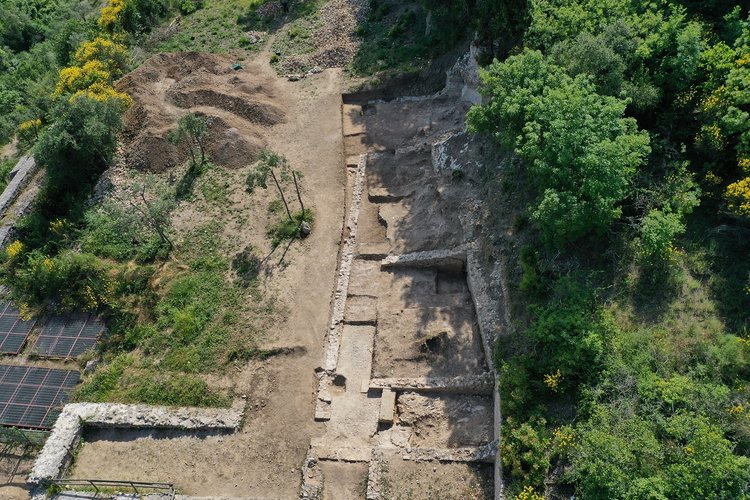
Home to an annual archaeology field school for Saint Mary’s and McMaster University students, the rural Villa site is located amid olive groves on the north slopes of the Velino river valley in central Italy, in the province of Reiti. It’s along the Via Salaria, an ancient road used to transport salt into the interior of Italy, which ran from Rome to the Adriatic. The Villa sits high above a freshwater lake that is also ripe for archaeological study – the Lago di Paterno, once considered the geographical centre of Italy and a sacred site connected to the goddess Vacuna.  

Over its five-year lifespan, the SSHRC Insight grant will – among other things – reduce costs for students participating in the field school, and allow McCallum to hire and train several undergrads each year to work as research assistants on the project. Including three this summer, plus a fourth hired with funds from SMU’s Faculty of Graduate Studies and Research.

“The research results were pretty spectacular this summer and will just get better over the next few years,” says McCallum, Chair of the Department of Modern Languages and Classics. The students “did an amazing job, they worked incredibly hard, and learned a bunch of new things like using our database system, flying a drone, doing some detailed photography and photogrammetry, and more.”  

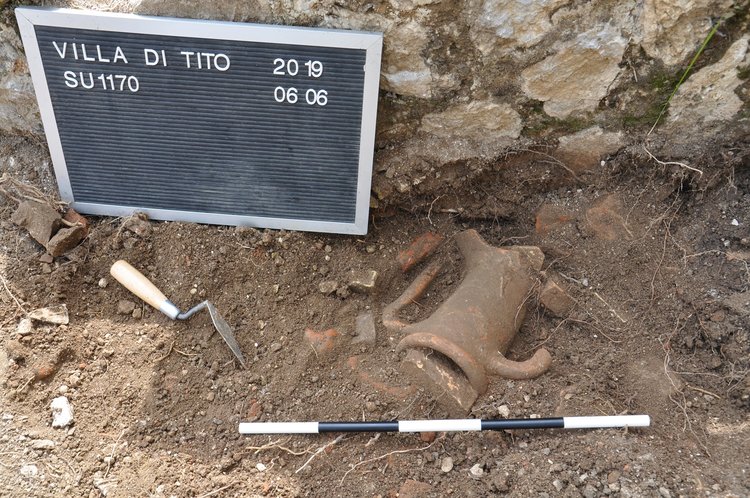
The field school also teaches the fundamentals of archaeological excavation, field surveying, drawing, and artifacts analysis. The drone footage will help to create detailed views, maps and 3D models of the area.  

“This particular structure is monumental in size. Whoever built it in the 1st century B.C. invested a lot of time and money into it. It was a showpiece in the countryside for them, and probably the local centre of the social and economic network,” says McCallum.

One of the project’s goals is to find evidence to prove the theory that the Villa was originally built by Titus (Tito), a member of the Flavian family and the Second Dynasty of the Roman Empire. More importantly, it aims to reconstruct the lives of the workers – the people who made bricks and wine, grew crops, pressed olives for oil, or engaged in mining, woodworking and metalworking.

“The historical record is highly biased toward the social elites and the aristocracy,” says McCallum. “They wrote the history for themselves and they didn’t tend to write about slaves or poor people. We want to understand the Villa as a community, as opposed to just a monument to one person or family’s wealth and prestige.”

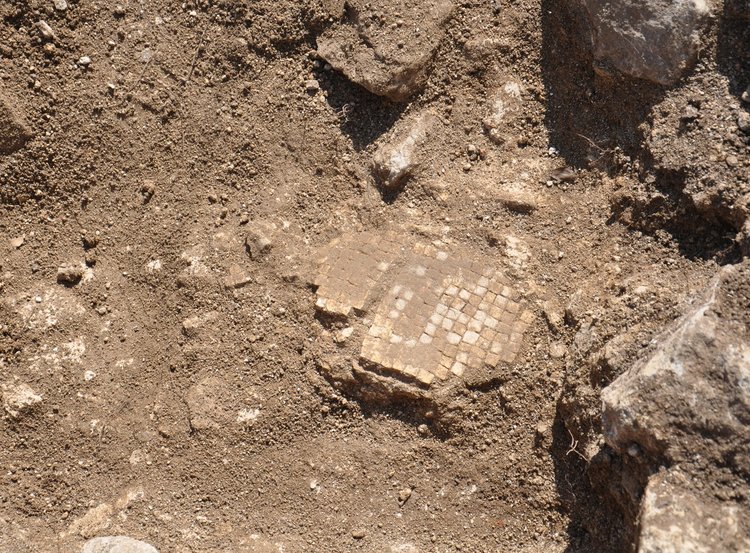
A good portion of the two-storey structure was revealed over the summer. Other notable finds were coins, stamped tiles, ceramic pots and transport amphorae, chunks of mosaic flooring, and incredibly intact brick walls. The Villa went through a series of renovations over the centuries, and was briefly repurposed after apparently being abandoned for a few hundred years. Environmental archaeology will yield more clues about the people: collecting and analyzing soil samples for pollen, seeds, charcoal, food remains and animal bones can indicate whether diets changed over time, pre-Roman conquest to post-conquest.

“We’re beginning to understand this transition, and the role played by these villas and estates in the process of creating a homogeneous imperial culture in Italy,” says McCallum. 

The SSHRC Insight grants are designed to promote research collaboration and partnerships. The Villa di Tito project team includes researchers from McMaster, Oxford, the University of Rome, the University of Nevada and Texas A&M. McCallum has invited Saint Mary’s colleagues in Geography and Chemistry to get involved, for everything from carbon 14 dating and chemical analysis to geomorphology and ground-penetrating radar.

Recruitment is underway for next summer’s field course, and students in all disciplines are welcome. McCallum admits it’s not the most glamourous work: “You’re outside all day for eight to 10 hours. It can get hot, it can rain, and there are bugs.” Even so, most students agree it’s an unforgettable learning experience.

Follow the project on Facebook via the Villa of Titus Archaeological Research Project and the Saint Mary’s Department of Modern Languages and Classics.     


Saint Mary’s expands cross-border education ties with China

Students in business programs at Guangzhou College, South China University of Technology (GCU) will have added opportunities to transfer to Saint Mary’s after two years and complete their degree at the Sobey School of Business.

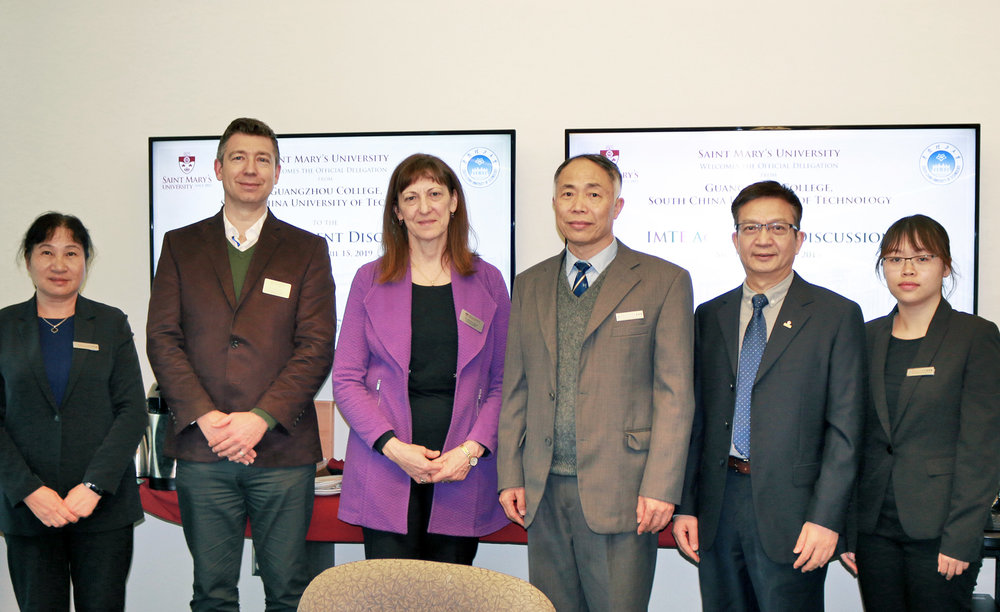
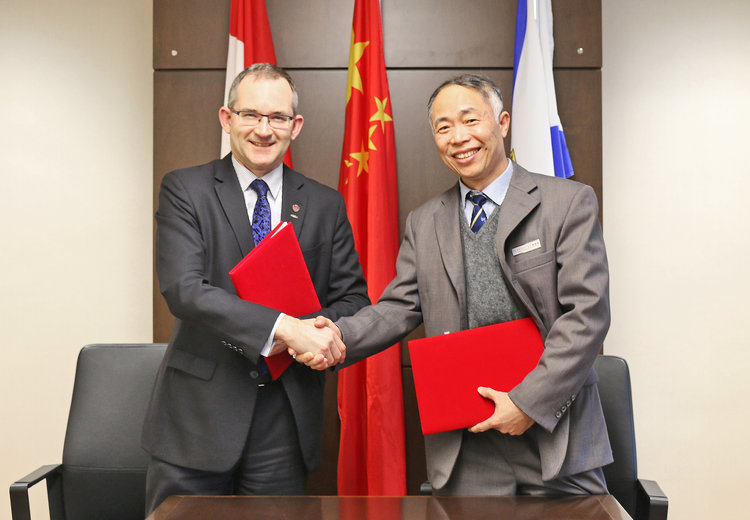
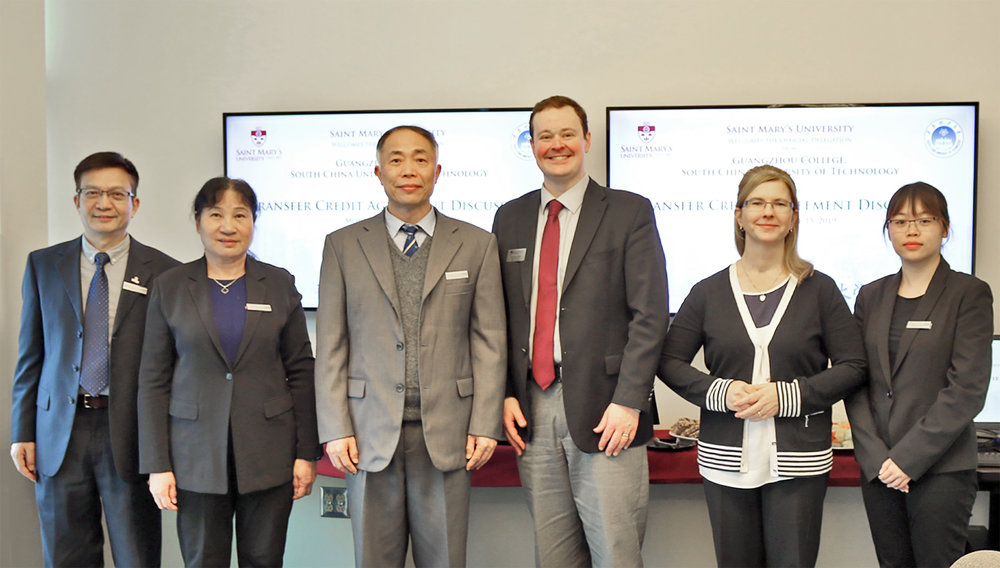
A senior delegation from GCU was on campus this week to sign an enhanced Transfer Credit Agreement, paving the way for closer ties with one of China’s most renowned independent colleges. Executive Vice-President Zhixin Zeng, Vice-President Ying Lin, Dean of the International Business School and Director of the International Office Liguang Wu and International Office Program Coordinator Huijing Huang held a series of meetings with their counterparts at Saint Mary’s on Monday, April 15.

Mr. Zeng suggested that GCU’s visit to campus reflected the growing ties between the two universities, while Mr. Lin commented that the new Transfer Credit Agreement opened the door to exciting new possibilities for international cooperation between the two institutions.

Celebrating a Longstanding Partnership

In the years since the signing of an initial MOU in 2011, designed to foster academic and educational cooperation between Guangzhou College and Saint Mary’s, around 60 students have come to campus – some to complete their third and fourth years of their degree as part of the 2+2 agreement with the Sobey School of Business, others to take the Master of Finance Program. Many of the 25 students currently enrolled at Saint Mary’s enjoyed a dinner on Sunday hosted by their alma mater in China to celebrate the arrival of the delegation to Halifax.

Meeting with the delegation on Monday, Dr Summerby-Murray, President and Vice-Chancellor of Saint Mary’s, said that the University was committed to building on the strong foundation of academic partnership between the two universities. This week’s visit, he said, was also an important affirmation of people-to-people connections between Canada and China. As “Canada’s International University”, Saint Mary’s is proud to be recognized as a national leader in building bridges between the two countries, he said.

Guangzhou College of South China University of Technology is a large primarily undergraduate institution with more than 21,000 full-time students who can choose from 35 programs offered through 14 schools. Its 283-acre campus is located just outside Guangzhou city in China’s Pearl River Delta, home to more than 120 million people a major centre of technology and innovation.

Saint Mary's and Yale partner for experiential learning in Northern Ireland

2019International2 (2) copy.jpg

A group of Saint Mary’s students and professors departs Halifax on Tuesday, heading overseas to share peace education workshops with children in 16 schools in Northern Ireland.

It’s the 14th annual trip to Belfast through the Northern Ireland Conflict Resolution Program, which provides unique experiential learning for students in SMU’s Faculties of Arts, Science and Commerce.

This year for the first time, an undergraduate Yale class studying political science with Dr. Bonnie Weir is collaborating with the SMU students, thanks to technology.

“They’ll have a chance to Skype into what we’re doing in real time,” says Bridget Brownlow, SMU’s Conflict Resolution Advisor and President of Peaceful Schools International.

“Our colleagues at Yale recognize Saint Mary’s as a leader in this type of experiential programming linked to civil conflict in Northern Ireland. Yale is interested in the model we use to engage with schools and communities, and has an interest in replicating our efforts in the promotion of peace education and exploring the various connections we’ve developed with schools, ex-combatants, community leaders and academics over the past 14 years. We anticipate developing a long-term, meaningful partnership.”  

The Yale students will have the chance to share questions beyond the school programming as they join in the SMU team’s discussions with ex-combatants who are now working toward peace.

Brownlow and Weir have been exploring ways to collaborate for some time. Their efforts were enhanced in November, when Brownlow and SMU President Dr. Robert Summerby-Murray took part in a symposium at Yale, co-hosted by Queen’s University Belfast. Titled “Twenty Years of Peace: Progress and Possibilities in Northern Ireland,” the conference brought together academics, community leaders, politicians and architects of the Belfast/Good Friday Agreement, which in 1998 marked a formal end to the conflict in Northern Ireland.

Another twist for this year’s trip to Belfast is the new series of storybooks launched in October by Peaceful Schools International, with support from SMU and SMUSA. Already shared locally with more than 1,000 elementary schoolchildren, the books were written and illustrated by three Halifax junior high students.

The Saint Mary’s students have created interactive workshops based on these books. To date, their efforts have been very well received by local children. One of the books, Animal School, has just been translated into Irish (by Prof. Neil Ó Briain of the Department of Irish Studies at Saint Mary’s) and will be presented to a Bunscoil An Tsleibhe Dhuibh, a long-term Irish medium school. Plans are underway to translate the other two books.

The Saint Mary’s team, including 25 students and four faculty members, will return to Canada on February 25. It’s the most diverse group of students to date, says Brownlow, adding it includes international students from as far away as Bangladesh, Yemen, Nigeria, Brazil, India and Jamaica.

The faculty members involved are conducting research while in Northern Ireland:

  • Dr. David Bourgeois, a Psychology professor, is studying the impact of the Peaceful Schools International program on our own student participants at SMU, as well as initiating research on the motivational profiles of Loyalist Youth involved in the ongoing activities associated with bonfires in Belfast and surrounding areas;

  • Criminology professor Dr. Ashley Carver is conducting research on Republican and Loyalist internees; and

  • Dr. Catherine Loughlin, Associate Dean of Research and Knowledge Mobilization for the Sobey School of Business, is collaborating with Dr. Carver on the role of women internees in Northern Ireland.  

For updates on the initiative, please follow Peaceful Schools International on Twitter at @PeaceatSchool and Facebook at @peacefulschoolsinternational.     

Celebrating African Heritage Month 2019

Join Saint Mary’s University in celebrating African Heritage Month by exploring the multitude of events taking place across campus, including a one-of-a-kind exhibit and panel discussion in the Patrick Power Library.

African Heritage Month events at Saint Mary’s. Click here to go to the Saint Mary’s events calendar.

African Heritage Month events at Saint Mary’s. Click here to go to the Saint Mary’s events calendar.

The theme of the panel discussion is “Racial Apartheid & Black Freedom Struggles in Nova Scotia & South Africa”. The exhibit features Nova Scotian and South African materials from the Lynn Jones African-Canadian Heritage and Diaspora Heritage Collection, housed in the Saint Mary’s University Archives. The exhibit will be on display on the first floor of the Patrick Power Library, Saint Mary’s University from February 4-28, 2019.

The panel discussion will feature South African writer and SMU scholar Gugu Hlongwane, Dr. Lynn Jones (Global African Congress, NS Chapter), researcher and filmmaker Francesca Ekwuyasi, and social justice strategist, songwriter and educator Delvina Bernard. The panel will speak to similarities and differences between Black history and freedom struggles in Nova Scotia and South Africa. This event takes place on Tuesday February 12th, 6:30-8pm, Patrick Power Library Classroom (LI135).

The Saint Mary’s University Archives is the proud home of the Lynn Jones African-Canadian Heritage & Diaspora Heritage Collection, which “documents the lives of Lynn, her family, and over 50 years of African, African Diasporic, and African-Nova Scotian heritage and history”.

Dr. Lynn Jones

Dr. Lynn Jones

Learn more about the Collection and how to access it at https://smu.ca/academics/archives/lynn-jones-african-canadian-collection.html

For more information about African Heritage Month and the events taking place throughout the province, visit https://ansa.novascotia.ca/, Facebook, @AfricanNSAffairs or Twitter, @OfficeofANSA.