Dr. James Morrison appointed professor emeritus after long career at Saint Mary’s

When James Morrison was growing up in Economy, Nova Scotia, in the 1950s, his father was often known to entice local characters and storytellers into the family home. “He wasn’t a storyteller,” says Dr. Morrison, “but he loved to hear stories. Eventually of course, I went off to university, and decided that those stories and that kind of knowledge weren’t very important—but I came back around.”

And then some. Dr. Morrison, who this past year became Professor Emeritus of History after nearly 40 years at Saint Mary’s, has spent much of his career developing the field of oral history in Canada, and becoming one of its most prominent and important advocates.

“Growing up where I did,” he says, “I’m sure it put me even subconsciously in the mindset that this kind of folklore, when accepted for what it is, absolutely constitutes a record of history.”

Dr. Jim Morrison at a gathering in the International Education Centre with students Maria and Juan Canales (wearing traditional Chilean dress) of Halifax. 1980. University Archives

Dr. Jim Morrison at a gathering in the International Education Centre with students Maria and Juan Canales (wearing traditional Chilean dress) of Halifax. 1980. University Archives

First, however, Dr. Morrison turned to the world. He first studied History and English at Acadia University, where he developed an interest in social-political issues within Nova Scotia, especially those affecting marginalized populations and the African-Nova Scotian community. He then earned a Commonwealth Scholarship to study at Nigeria’s University of Ibadan, graduating in 1976 after working on oral traditions in the Nigerian highlands as part of his thesis work. From there, he returned to Canada and began working with Parks Canada as an oral historian, compiling an oral history of Kejimkujik Park.

Finally, in 1979, Dr. Morrison began his career at Saint Mary’s, coming on board as Executive Director of the International Education Centre (IEC)—an early example of what would become Saint Mary’s hallmark dedication to international education and outreach.

“It’s wonderful how Saint Mary’s has continued down this path,” says Dr. Morrison. “When I began the IEC was the only game on campus in terms of international studies. We had speakers’ programs in schools, with graduate students from around the world making presentations and raising the interest level of people locally in what was happening globally.”

Dr. Morrison later became Dean of Arts in 1983 until 1989, and in 1988-89 (and again in 2001) served as Program Coordinator of the International Development Studies program, and was Coordinator of the Asian Studies program at various points between 1992 and 2012. From 1990 onwards, he served as a Professor of History and taught courses on South East Asia, India, African, Atlantic History as well as oral history and ethnic/cultural  history of Nova Scotia.

Dr. Morrison has balanced these on-campus commitments with a similarly impressive record of community service. He has been President and Vice-President of the Royal Nova Scotia Historical Society, a historian and archivist with Frontier College since 2000, and an advisor for the Black Cultural Centre for Nova Scotia and the Black Loyalist Museum. Since 2007 he has been a member of the Advisory Committee on the Interpretive Master Plan for Heritage in Nova Scotia.

Dr. Jim Morrison discusses education in developing countries with Dr. John Orkar on the weekly Halifax cable TV show 'Your World'. 1980. University Archives.

Dr. Jim Morrison discusses education in developing countries with Dr. John Orkar on the weekly Halifax cable TV show 'Your World'. 1980. University Archives.

One of his most significant achievements was his work, between 1997 and 2011, as an advisor and historian with the Canadian Museum of Immigration at Pier 21, which would later become the first national museum outside of Ottawa. “Museums are one of the institutions that the public trusts the most,” says Dr. Morrison. “Developing this infrastructure is tremendously important.”

In the 1990s, Dr. Morrison conducted some of the first interviews with individuals sent to Canada as children during World War 2, as well as medical personnel and customs officials, helping to put together the nascent museum’s first exhibits, based significantly on oral history, an achievement of which Dr. Morrison is justly proud.

“When I was in Africa, we were coming out of a long period in which the history of the elites was regarded as the only real history—military and political history, the history of the powerful. And that’s important and crucial, but the history of others, women, labour leaders, farmers, and ordinary people, were always missing from these accounts. Oral history is not a matter of putting a microphone in front of someone and simply taking what they say at face value, but when done properly, it is of critical importance. And, there is a broader acceptance of it now than ever.”

Dr. Morrison was recognized in 2009 with the Order of Canada for “lasting contributions to his province and to the field of historical research.” In 2013, he was awarded a Queen Elizabeth II Diamond Jubilee medal in recognition of his research and advocacy on immigration and oral history.

He has also been the recipient of many fellowships and accolades, including Senior Visiting Fellow at Singapore’s Institute of Southeast Asian Studies (1989-90), Visiting Scholar at Hokkaido University of Education (1996, 2004), and a Visiting Fellow at Jawaharlal Nehru University (1999).

Finally, his impressive publication history includes authorship and editorship of 13 books and monographs, as well as many papers, editorials, reviews, and other vital contributions to the study of history in Nova Scotia and beyond.

Dr. Morrison’s career has mirrored so many of Saint Mary’s strengths—community and international outreach especially. And it is still not finished. He continues to juggle multiple projects, including annotating the logbook kept by a Minas Basin schooner captain from 1894 to 1901, a biography of the founder of Frontier College, Alfred Fitzpatrick and editing the diary of a Queens County farmer dating from the 1870s to the 1930s.

“ I have always felt that history  may never end all our differences but it may help us make the world safe for the diversity that is all around us.”

Sobey School of Business MBA program recognized for quality

QS, a global career and education network, has released its worldwide ranking of the top MBA programs. Saint Mary’s University’s Sobey School of Business MBA program ranked #10 in Canada and in the top 200 internationally.

QS rankings are based on three surveys: a global academic survey, a global employer survey and a survey completed by universities. Institutions are rated on performance in categories of Employability, ROI, Entrepreneurship and Alumni Outcomes, Thought Leadership and Diversity. Learn more about their methodology here

Sobey scored 3rd in diversity, 6th in ROI and 9th in entrepreneurship and alumni success in the Canadian list. The school ranked 44th in the world for diversity. Other universities on the list include Toronto, Western, McGill, York, Queen’s, HEC Montreal, UBC, University of Alberta and Simon Fraser.

Dean Patricia Bradshaw

Dean Patricia Bradshaw

“We are proud that the Sobey School of Business offers world-class education, and we remain committed to making an impact with purpose,” said Dean Patricia Bradshaw. “We are particularly proud of this recognition of our diversity.”

“One of our key strengths is our faculty members’ diversity and the way they set the tone for international and domestic students working together, collaboratively and inclusively.”

The Sobey MBA program, redesigned in 2015, incorporates immersive experiences such as local service and an international trip that offers students cross-cultural opportunities to experience and learn global business up close. The well-respected program has been graduating students for more than 40 years.

QS is a global organization that links students with higher education institutions. They host well-attended and known MBA recruitment events, and have staff offices throughout the world.

Honorary degrees to be conferred on local humanitarian and accomplished curator

Saint Mary’s University is celebrating the accomplishments of a prominent Halifax humanitarian and a prolific art curator and historian in the new year with honorary degrees to be conferred at the university’s Winter 2018 convocation ceremony.

Saint Mary’s is pleased to recognize the achievements of:

Melvin Boutilier

Melvin Boutilier

  • Melvin Boutilier, incredible entrepreneur and trailblazer of social enterprise, whose commitment to community has helped two generations of those in need in the greater Halifax Regional Municipality
     
  • Judith Dietz, curator, historian, and Saint Mary’s University alumna, BA’84, MA’07, whose discovery of the Salzinnes Antiphonal at Saint Mary’s Patrick Power Library made national and international headlines and brought a lost relic from over 450 years ago into the public eye.
Judith Dietz

Judith Dietz

“We are proud to honour Melvin Boutilier and Judith Dietz, two outstanding individuals who serve as exemplars to our students of how discovery, innovation and community engagement can lead to great accomplishments,” said Saint Mary’s University President and Vice-Chancellor Dr. Robert Summerby-Murray.

Melvin Boutilier was born in a rural community in Nova Scotia on January 29, 1928.  He was one of ten children and felt early in life the pain of poverty. After a successful career in government and the construction industry, he took his retirement as an opportunity to fulfill his dream as a volunteer and focus on addressing challenges in the Halifax community. Mr. Boutilier would go on to found a series of successful projects such as the Community Care Network (commonly known as Parker Street Food Bank), the Metro Care and Share Society, a skills development centre, an emergency fund for families in need and the Halifax Scholars Program.

The daughter of the late Robert Dietz, the first director and curator of the Saint Mary’s University Art Gallery, Ms. Dietz was born into the arts. Her passion for art and history brought her to the Nova Scotia Museum of Fine Arts in 1973, the predecessor of the Art Gallery of Nova Scotia. She would go on to become the Art Gallery of Nova Scotia’s first Registrar and the Manager of Collections and Gallery Services. In 1999, Ms. Dietz discovered a book in Saint Mary’s Patrick Power Library’s rare book collection, catalogued as a “Roman Catholic Antiphonary.” In 2002, Ms. Dietz identified the book as the Salzinnes Antiphonal, a hand-scribed illuminated choir book dated 1554 and 1555, originating from the Cistercian Abbey of Salzinnes on the outskirts of Namur, Belgium. After its discovery, extensive conservation, and scholarly interpretation, the Antiphonal has become the subject of a major exhibition at the Art Gallery of Nova Scotia, attracting international audiences.


Dr. Margaret MacDonald, Dean of Arts, named McCarthy Chair in Biblical Studies at the Pontifical Biblical Institute

Dr. Margaret MacDonald, Dean of Arts

Dr. Margaret MacDonald, Dean of Arts

Beginning in February 2018, Dean of Arts,  Dr. Margaret MacDonald will be a visiting professor for three months at the Pontifical Biblical Institute (PBI) in Rome. She will serve as the PBI’s fourth McCarthy Chair in Biblical Studies, where she will conduct research on the New Testament and early Christianity, and work closely with graduate students.

"This is a tremendous recognition of Dr. MacDonald’s scholarship and will help create links between Saint Mary’s and many leading international scholars who will also be situated at PBI," said Dr. Malcolm Butler, Vice-President, Academic and Research, Saint Mary's University. "Congratulations Dr. MacDonald, and best of luck in this exciting endeavor." 

PBI was established in 1909 as a centre for academic studies pertaining to biblical literature, and today welcomes students from more than 60 nations. The McCarthy Chair has been designated for a senior woman scholar on a rotating basis since 2015. Recent Chair holders include Adela Yarbro Collins of Yale Divinity School (2015-2016), and Carol Meyers of Duke University (2016-2017). Dr. MacDonald will hold the position from mid-February to mid-May of 2018.
 
In his letter of invitation, Michael Kolarcik, S.J. Rector of  the Pontifical Biblical Institute stressed “the outstanding work” Dr. MacDonald has been doing in New Testament Studies. He expressed the hope that she would extend her influence on licentiate and doctoral students and indicated that the faculty at PBI would really appreciate interacting with her in her areas of research.


Saint Mary’s Anthropology department expands its technological toolkit

Dr. Jonathan Fowler (l); Greg Baker (behind), Instrument Technician with the Maritime Provinces Spatial Analysis Research Centre, part of the Saint Mary's Geography department; Sara Beanlands (senior archaeologist at Boreas Heritage Consulting and a…

Dr. Jonathan Fowler (l); Greg Baker (behind), Instrument Technician with the Maritime Provinces Spatial Analysis Research Centre, part of the Saint Mary's Geography department; Sara Beanlands (senior archaeologist at Boreas Heritage Consulting and an adjunct professor in the Anthropology department).

This past semester, the Department of Anthropology at Saint Mary’s added a new device to its archaeological arsenal: the Noggin 500, a ground-penetrating radar (GPR) that will help students and faculty literally see beneath the soil as they explore some of Nova Scotia’s most important historic sites. The instrument is designed and built by Sensors & Software of Mississauga, Ontario.

“GPRs are used commonly in research and archaeological consulting internationally,” says Anthropology Professor Dr. Jonathan Fowler, “but less often in our region. We hope to change that.”

The purchase was a joint partnership between Boreas Heritage Consulting and Northeast Archaeological Research, two Halifax-based archaeological consulting companies. Sara Beanlands is an archaeologist with Boreas, a graduate of Saint Mary’s History program, and an adjunct professor in the Anthropology Department. She says it’s critical for students to have access to this kind of technology: “It’s already a standard part of archaeological practice in many parts of the world, and will become so here as well.”

Saint Mary’s students already have access to the Geonics EM38B, a device which measures soil magnetism and can put together a limited picture of what lies underneath. It’s especially good at seeing places where buildings have been burned and no visible traces remain—after burning, the soil’s magnetism is enhanced. This is especially helpful at sites such as the burned Acadian village at Grand-Pré.

The addition of the Noggin—with a different set of strengths—complements the EM38’s abilities and puts a whole other underground world within reach. Whereas the EM38 sees best in the top 50 centimetres of soil, the Noggin can see as much as two metres down, and can map the subterranean environment in three dimensions. The Noggin GPR is especially good at spotting “discontinuities” in soil texture and type, such as those caused by unmarked graves.

backfilled cellar GPR.jpg

The result of this expanding technological toolkit is a more accurate sense of what lies where, especially valuable when making the most of time in the field.

“It’s important for students to learn the traditional approaches to mapping and examining sites,” says Beanlands, “but these absolutely help us focus where to dig and figure out where there’s better potential to find a site of interest.”

So far, Dr. Fowler has run a series of test surveys at archaeological sites in Nova Scotia. In collaboration with Parks Canada, the GPR is also being used at national historic sites, including Grand-Pré in the Annapolis Valley and Citadel Hill in Halifax. To call the early results promising would be an understatement.

“We’re seeing archaeological features we’ve never seen before,” says Dr. Fowler, “and it’s honestly totally changing my interpretation of certain things. The complementary principle is really playing out…and it’s giving students access to skills and training that are very rare, maybe unique, in Canada right now. This will be extremely important to their future careers.”

Saint Mary's President named Chair Designate of Canadian Bureau for International Education

Saint Mary's University President and Vice-Chancellor Dr. Robert Summerby-Murray

Saint Mary's University President and Vice-Chancellor Dr. Robert Summerby-Murray

Saint Mary’s University President and Vice-Chancellor Dr. Robert Summerby-Murray has been named the Chair Designate of the Canadian Bureau for International Education’s board of directors.

“I am extremely pleased to have accepted the nomination as Chair Designate of the Canadian Bureau for International Education (CBIE).  CBIE, much like Saint Mary’s University, embraces internationalization and global learning, as key tenants of its strategic direction,” said President Summerby-Murray. “I look forward to working with their executive team and leading their board, furthering efforts to put Canada’s global engagement challenge on the agendas of government and the private sector, and to advancing the role of young people in meeting that challenge.”

Established in 1966, the Canadian Bureau for International Education (CBIE) is a national, not-for-profit, non-governmental membership organization dedicated exclusively to international education. CBIE is the national voice advancing Canadian international education by creating and mobilizing expertise, knowledge, opportunity, and leadership. The CBIE is a global leader in international education, dedicated to equity, quality, inclusiveness, and partnership.

To learn more about the Canadian Bureau for International Education visit www.cbie.ca.

Saint Mary’s researcher receives Human Rights Award for contributions to Accessibility Act

Dr. Linda Campbell

Dr. Linda Campbell

Environmental Science professor Dr. Linda Campbell and fellow members of the Bill 59 Community Alliance recently received a 2017 Nova Scotia Human Rights Award in recognition of their contributions to Bill 59, otherwise known as the Accessibility Act.

“I was and still am honoured to be a part of this process, working with a truly impressive group of advocates and lawyers,” said Dr. Campbell. “I am really glad that the Alliance's work is getting recognized publicly.  I also want to thank Saint Mary’s Faculty of Science for their support as I worked on this important legislation.”

Presented annually by the Nova Scotia Human Rights Commission, Human Rights Awards acknowledge the work of Nova Scotians who advance human rights at the community level. The Bill 49 Community Alliance helped ensure Bill 59 adequately addressed the needs of Nova Scotians with disabilities through collaboration with the Province.

Earlier this year, their work was recognized with a Mel Hebb Hourglass Action Award from the Partnership for Access Awareness.

Saint Mary's honours the National Day of Remembrance & Action on Violence Against Women

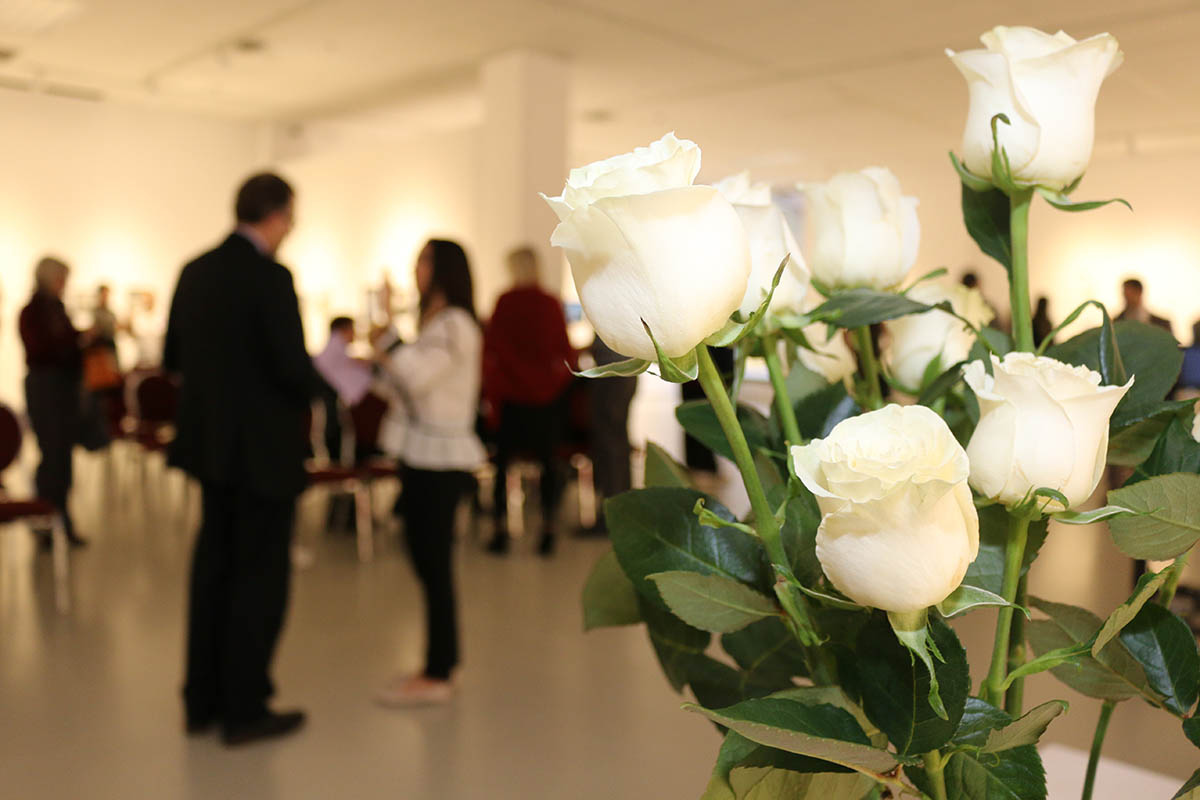
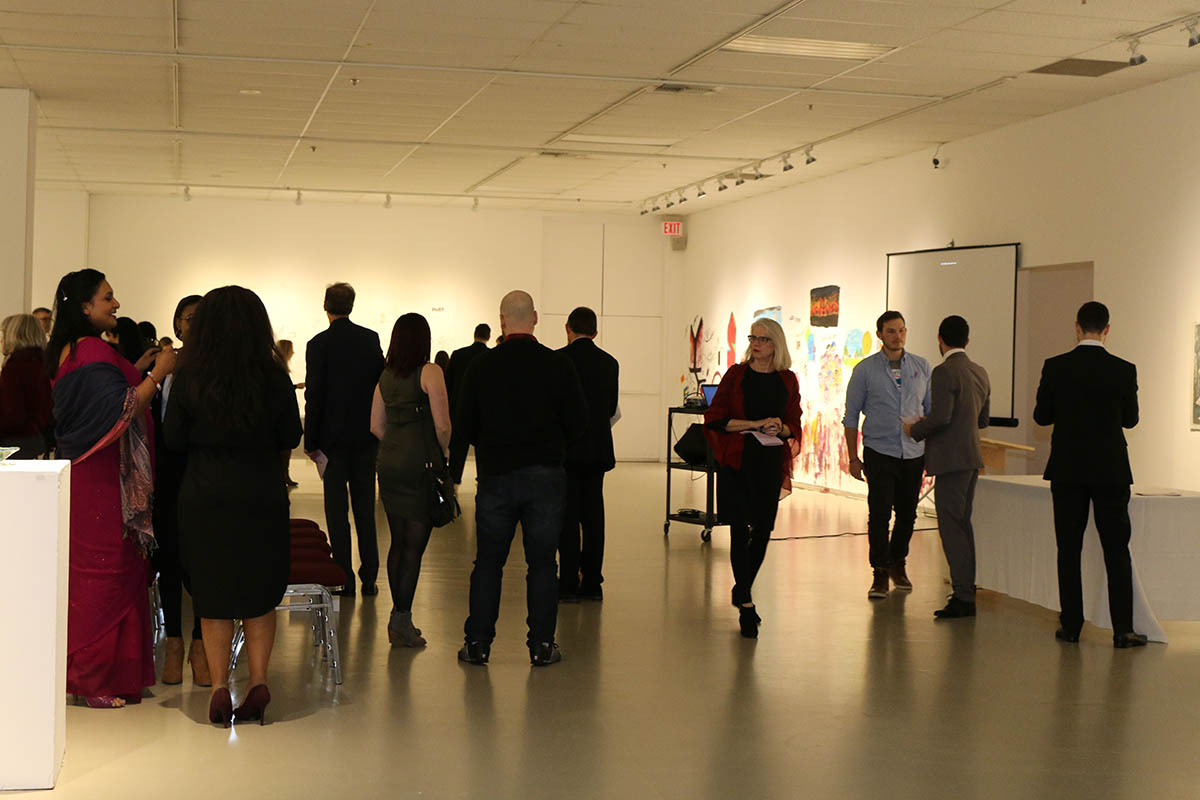
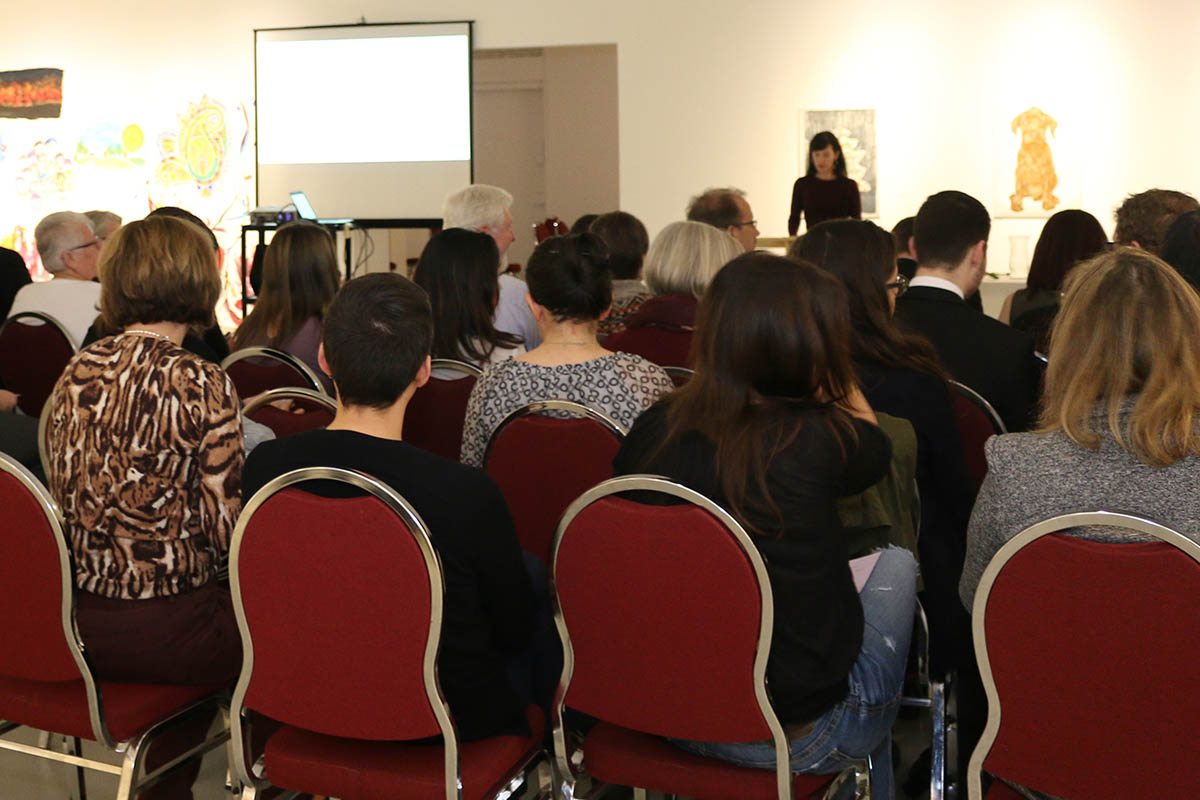
Students, faculty, and staff came together in remembrance, and to take action, on December 6, 2017, at the National Day of Remembrance and Action on Violence Against Women ceremony held at the Saint Mary’s University Art Gallery.

Established in 1991 by the Parliament of Canada, December 6 is the National Day of Remembrance and Action on Violence against Women in Canada. This day marks the anniversary of the murders in 1989 of 14 young women at l'École Polytechnique de Montréal.

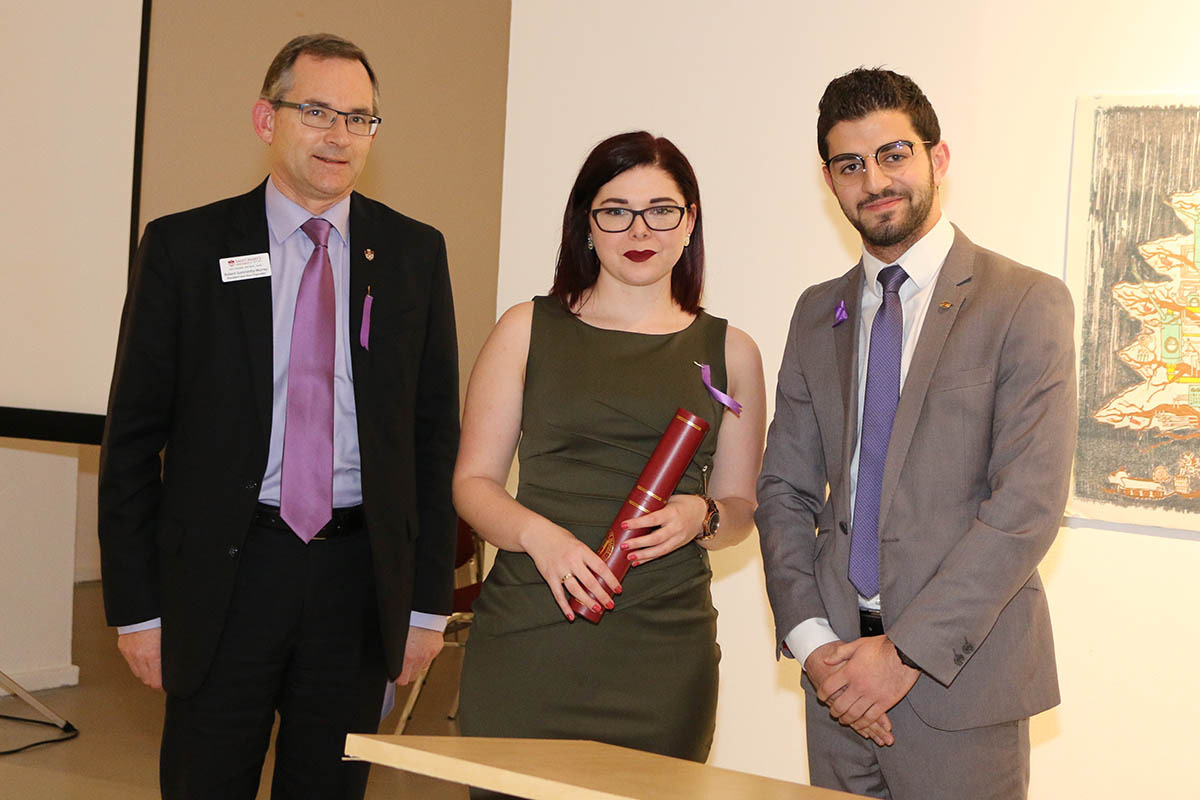
Jessica Giles, recipient of the Montreal Memorial Scholarship

Jessica Giles, recipient of the Montreal Memorial Scholarship

As well as commemorating the 14 young women whose lives ended in an act of gender-based violence that shocked the nation, December 6 represents an opportunity for Canadians to reflect on the phenomenon of violence against women in our society. It is also an opportunity to consider the women and girls for whom violence is a daily reality, and to remember those who have died as a result of gender-based violence. And finally, it is a day on which communities can consider concrete actions to eliminate all forms of violence against women and girls.

“Saint Mary’s University stands with the millions of women taking action,” said Saint Mary’s University President and Vice-Chancellor Dr. Robert Summerby-Murray. “We do it through our values as an institution. We do it through the programs we offer and the training, such as the consent training and bystander training – now better described as ‘upstander’ training because of the need to empower everyone to stand up. We do this through a clear a code of conduct and a policy for the prevention of sexualized violence. Most importantly, we do this by coming together as a community, focused in purpose, to end violence against women.”

November and December are important months for raising awareness of gender-based violence in Canada and around the world. In addition to the National Day of Remembrance and Action on Violence Against Women on December 6, the International Day for the Elimination of Violence Against Women takes place on November 25 and marks the first day of the 16 Days of Activism Against Gender-Based Violence, which ends on December 10, with International Human Rights Day.

Related

About respect at Saint Mary’s

Honorary Degree: Judith Dietz

Judith Dietz

Judith Dietz

Judith Dietz is a curator, historian and Saint Mary’s University alumna, BA'84, MA'07, whose discovery at Saint Mary’s Patrick Power Library made national and international headlines and brought a lost relic from over 450 years ago into the public eye.

The daughter of the late Robert Dietz, the first Director and Curator of Saint Mary’s University Art Gallery, Ms. Dietz was born into the arts. Her passion for art and history brought her to the Nova Scotia Museum of Fine Arts in 1973, the predecessor of the Art Gallery of Nova Scotia.

She would go on to become the Art Gallery of Nova Scotia’s first Registrar in 1984 and the Manager of Collections and Gallery Services in 1994. In this capacity, she was responsible for the Permanent Collection and temporary loans, overseeing the growth of the collection from 300 to 12,000 artworks.In addition to curating numerous exhibitions from historical to contemporary, as well as folk art, she has also written a number of related collection and exhibition articles.Over the course of her time at the gallery, she has mentored numerous art and history students.

Her 1998 exhibition and publication, An Expression of Faith: Sacred Art of Centuries Past, brought focus and attention to a small but significant historical collection of religious art. In 1999 Ms. Dietz was looking through the rare book collection at the Patrick Power Library when she came across a large leather-bound book. Catalogued initially as a “Roman Catholic Antiphonary,” Ms. Dietz quickly realized that there was potentially much more to this illuminated manuscript containing full-page illuminations, numerous portraits of nuns with associated inscriptions, as well as patron’s coats of arms. Subsequent study led to research visits to England, Belgium, the Vatican Secret Archives, and Rome.  Ms. Dietz was able to identify the manuscript as the Salzinnes Antiphonal, a hand-scribed illuminated choir book dated 1554 and 1555, commissioned by Dame Julienne de Glymes, Prioress and former Cantrix of the Cistercian Abbey of Salzinnes, near Namur, in present-day Belgium. 

Ms. Dietz was invited to present her research at the International Medieval Congress in Leeds, England in 2003 and the International Medieval Studies Congress in Kalamazoo, Michigan, USA in 2009, 2010, and 2013; International Workshop on Cultural Dialogues, Religion and Communication, in Ottawa, 2009; the Care and Conservation of Manuscript Conference in Copenhagen, Denmark in 2011, among others. She would go on to write her thesis on the Salzinnes Antiphonal as a graduate student at Saint Mary’s University. Her research was a key element in the justification for the conservation of the Salzinnes Antiphonal by the Canadian Conservation Institute, Ottawa, in partnership with Library and Archives Canada.

The detailed study of the antiphonal led to several significant national and international partnerships and related multidisciplinary projects that have culminated in a publication and the acclaimed exhibition, Centuries of Silence: The Discovery of the Salzinnes Antiphonal on display at the Art Gallery of Nova Scotia, May 5, 2017 to January 28, 2018. The exhibition is scheduled to travel to Namur, Belgium in 2020.

Ms. Dietz has been a member of numerous advisory committees including the Canadian Heritage Information Network, Canadian Museums Association, and the Museum’s Assistance Program. She received recognition for her contributions from the Canadian Museums Association in 2000 and in 2005 the Honourable Myra A. Freeman, former Lieutenant Governor of Nova Scotia, presented her with a certificate recognizing her years of dedicated service to the Art Gallery of Nova Scotia and to Government House. In 2007, she was awarded a Lifetime Achievement Award from the Atlantic Provinces Art Galleries Association.

In 2005, Ms. Dietz opted to retire to pursue her research interests, but continues her affiliation with the Art Gallery of Nova Scotia as Associate Curator of Historical European Art.

Saint Mary’s University is honored to bestow a Doctor of Letters, Honoris Causa to Judith Dietz.

Honorary Degree: Melvin (Mel) Boutilier C.M. O.N.S.

_K0C9660.JPG

Melvin Boutilier is an incredible entrepreneur and trailblazer of social enterprise, whose commitment to community has helped two generations of those in need in the greater Halifax Regional Municipality.

Melvin Boutilier was born in a rural community in Nova Scotia on January 29, 1928.  He was one of ten children and felt early in life the pain of poverty. It was here in this humble setting that he developed his sensitivities to the needs of the poor and underprivileged. At eight years old he set up a podium (a wooden orange crate) and spoke to an imaginary audience. He told them that he intended that “when he grew up, to make a positive difference in the lives of others, relieving want and hardships wherever he could do so.”

After a successful career in government and the construction industry, some people may look to quietly take an early retirement but not Melvin Boutilier; he took the opportunity to fulfill his dream as a volunteer and focus on addressing challenges in the Halifax community. His wife was also shared his dream and was happy to assist him by remaining in her career for 65 years.

Melvin Boutilier

Melvin Boutilier

In 1983, with no funds and a limited food source, he and five friends established Community Care Network (commonly known as Parker Street Food Bank) in a single car garage. This venture grew more rapidly than expected and exposed many other needed services such as providing clothing, shoes, household items including furniture. A furniture bank was started in a rent-free building and was a great help to many families. An emergency fund was created to care for crisis situations in low-income families such as being unable to pay for heating fuel, power or fill medical prescriptions. Two thrift stores were set up to help support these programs. Later, it was possible to buy a warehouse in which all the services could be housed with greater efficiency.

The necessity of another step to help eliminate poverty was clear, people wanted and needed self-sufficiency. Training began with computer skills for students supported by the provincial government. Nova Scotia Community College (NSCC) assessed the program and determined that the program could be used as credit for students who wished to continue at NSCC. Every student was given a donated computer refurbished by the program’s refurbishing department, staffed by two full-time technologists. Later an adjacent building was purchased and used as The Skills Development Centre. Working with the provincial government, Nova Scotia Community College and Millwright College, over 100 students in various trades graduated and 80% found employment.

After being Executive Director of the Community Care Network for 31 years, Mr. Boutilier left the network and organized another charity named the Metro Care and Share Society. This charity is centered on education and using knowledge to help eradicate poverty. The Halifax Scholars Program (HSP) provides guidance to students currently in high school and awards scholarships to those facing financial and other barriers, hindering their access to post-secondary institutions. HSP wants to cultivate in youth the presence of hope, determination, and a realization of the importance of education.

After decades of service to his community, it is fitting that Mr. Boutilier’s work has been recognized by the municipal, provincial and federal governments and 15 community organizations. Among his recognitions are: the Order of Canada, Order of Nova Scotia, Red Cross Humanitarian of the Year, and the Theresa Casgrain Award for Outstanding Volunteerism, awarded yearly to one man and one woman in Canada.

Mr. Boutilier is a role model for the graduates of Saint Mary’s University and demonstrates the values that help to build stronger and healthier communities.

Saint Mary’s University is honoured to bestow a Doctor of Civil Law, Honoris Causa to Melvin Boutilier.

Dr. Val Marie Johnson helps repatriate Inuit cultural materials in the Northwest Territories

Dr. Val Marie Johnson

Dr. Val Marie Johnson

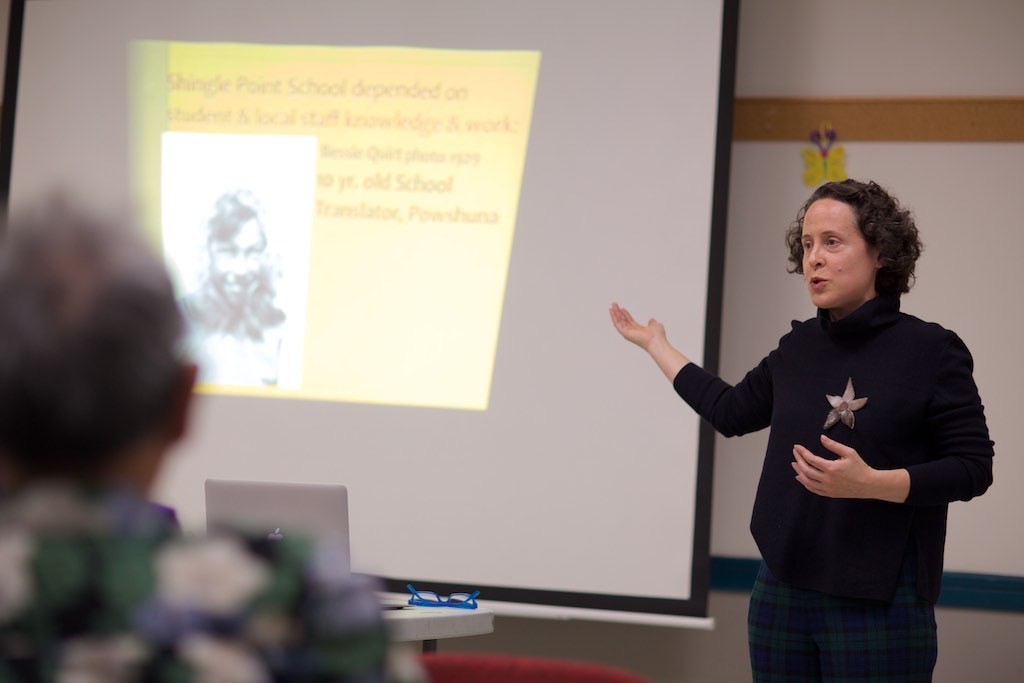
Earlier this month, with funding from the Saint Mary's University Dean of Research and Dean of Arts, Dr. Val Marie Johnson—of the newly created Department of Social Justice & Community Studies—undertook a Community Research Outreach trip to Inuvik and Aklavik, in the homelands of the Inuvialuit and Gwich’in peoples in the Northwest Territories.

The principal purpose of Dr. Johnson’s trip was to share with community members her historical research on Shingle Point Eskimo Residential School, which operated in the region from 1929 to 1936, and to negotiate the return of copies of archival material documenting the School’s students and staff.

The materials shared with community members included many photos of the School’s students and staff, students’ colouring and drawings, staff and student letters, and School records on students. Dr. Johnson discovered the material in her research on relations between white women staff and Inuvialuit, Inuinnait, Iñupiat, and Gwich’in students and staff at the School.

"It's the living history of this region," Dr. Johnson told CBC North Radio while she was in Inuvik. "My desire is to have this material accessible to people whose living history this involves, as much as possible."

This cultural repatriation of the material is being arranged by collaboration between Dr. Johnson, the Anglican Church of Canada General Synod Archives in Toronto, where the material is now housed, and the Inuvialuit Cultural Resource Centre in Inuvik. The Anglican Church operated the School.

Dr. Johnson also visited with community Elders and descendants of former Shingle Point students, and hosted community events in Inuvik and Aklavik about her research, the materials, and the plans for their new accessibility to community members in the region.

SMU Chemist Wins 2017 Professional of Distinction Award

 Dr. Jason Clyburne

 Dr. Jason Clyburne

Dr. Jason Clyburne, Professor in the Departments of Chemistry and Environmental Science at Saint Mary’s University, was named the winner of the 2017 Professional of Distinction Award at the Discovery Centre’s 15th Annual Discovery Awards for Science and Technology on November 23.

The Professional of Distinction Award honours world-class scientists who demonstrate ingenious thinking in the creation of unique ideas, concepts, and perspectives within their field. Previous recipients of this award have gone on to receive the highest science recognitions in both Canada and the world, including the Nobel Prize.

Dr. Clyburne is the first recipient in this category from Saint Mary’s University.

“Dr. Clyburne is internationally recognized as a leader in the study of green chemistry,” says Dr. Steven Smith, Dean of the Faculty of Science. “He has established a tremendous reputation for creative, elegant chemistry in pursuit of environmental solutions.”

A second Saint Mary’s faculty member was honoured at this year’s Discovery Awards Gala. Dr. Sam Veres, Associate Professor in Engineering, was one of three finalists in the Emerging Professional category. Less than five years into his professorship, Dr. Veres’ research has shown great promise to help reduce chronic pain related to soft-tissue damage.

Dr. Jason Clyburne – 2016 Professional of Distinction Winner

Dr. Jason Clyburne is widely recognized as a leader in the study of green chemistry, particularly in the field of ionic liquids and nucleophilic carbenes. His pioneering research, which involves the application of designer chemicals and materials to the removal of environmentally hazardous substances from industrial processes, is widely recognized for its potential to mitigate a wide range of environmental issues. In his young but robust career, Dr. Clyburne has built a reputation for excellence and creative innovation, and his colleagues repeatedly describe his work as “novel,” “creative,” and “original.” Most recently, Dr. Clyburne’s discovery of the elusive CO2 compound cyanoformate (published in Science) received significant scientific and media attention, particularly due to its promising implications for the future and direction of carbon capture technology.

Watch Dr. Jason Clyburne’s Discovery Award Finalist video

Read more about Dr. Jason Clyburne’s cyanoformate discovery


Dr. Samuel Veres – Emerging Professional Award Finalist

Dr. Samuel Veres

Dr. Samuel Veres

In fewer than ten years, biomedical engineer Dr. Sam Veres has made rapid progress through the scientific/engineering education cycle, and his work has provided fundamental insights into the structural changes that occur in mechanically overloaded soft tissues. By exploring mechanical damage to connective tissues in a novel way—with focus on the basic biomechanics of failure rather than the inflammation/healing responses that have occupied clinical medicine—Dr. Veres is working to develop new therapies for the treatment of tendons, ligaments, and the intervertebral discs of the lower back.