Saint Mary’s expands cross-border education ties with China

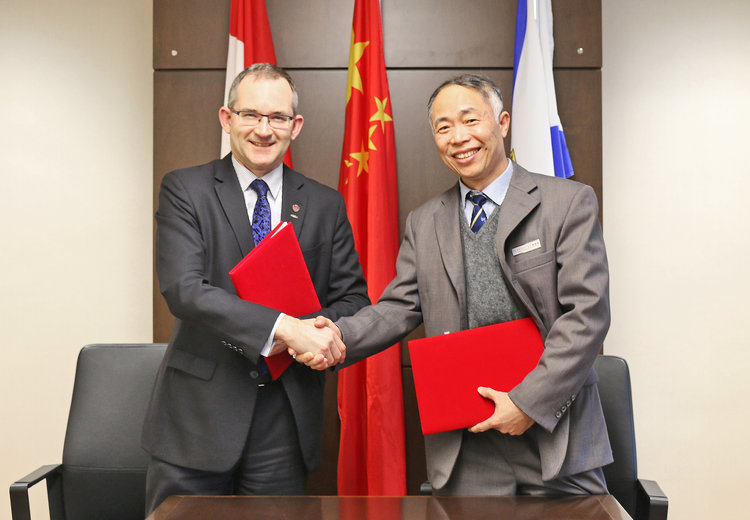
Students in business programs at Guangzhou College, South China University of Technology (GCU) will have added opportunities to transfer to Saint Mary’s after two years and complete their degree at the Sobey School of Business.

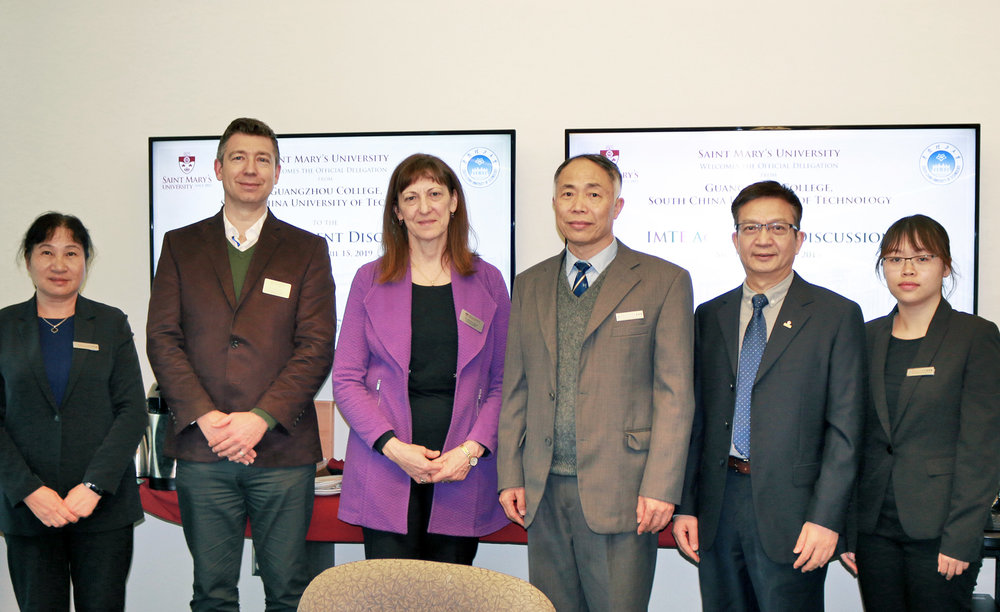
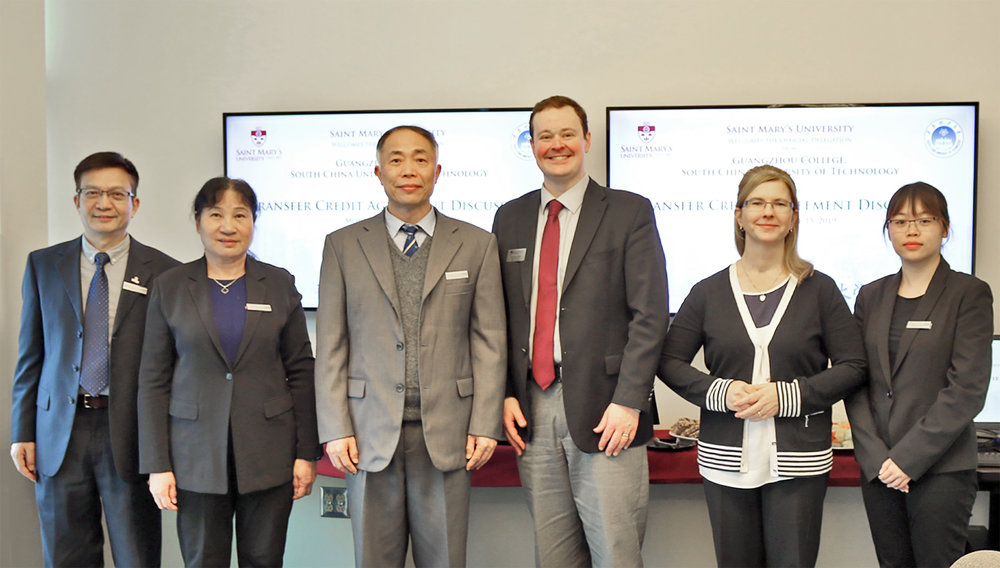
A senior delegation from GCU was on campus this week to sign an enhanced Transfer Credit Agreement, paving the way for closer ties with one of China’s most renowned independent colleges. Executive Vice-President Zhixin Zeng, Vice-President Ying Lin, Dean of the International Business School and Director of the International Office Liguang Wu and International Office Program Coordinator Huijing Huang held a series of meetings with their counterparts at Saint Mary’s on Monday, April 15.

Mr. Zeng suggested that GCU’s visit to campus reflected the growing ties between the two universities, while Mr. Lin commented that the new Transfer Credit Agreement opened the door to exciting new possibilities for international cooperation between the two institutions.

Celebrating a Longstanding Partnership

In the years since the signing of an initial MOU in 2011, designed to foster academic and educational cooperation between Guangzhou College and Saint Mary’s, around 60 students have come to campus – some to complete their third and fourth years of their degree as part of the 2+2 agreement with the Sobey School of Business, others to take the Master of Finance Program. Many of the 25 students currently enrolled at Saint Mary’s enjoyed a dinner on Sunday hosted by their alma mater in China to celebrate the arrival of the delegation to Halifax.

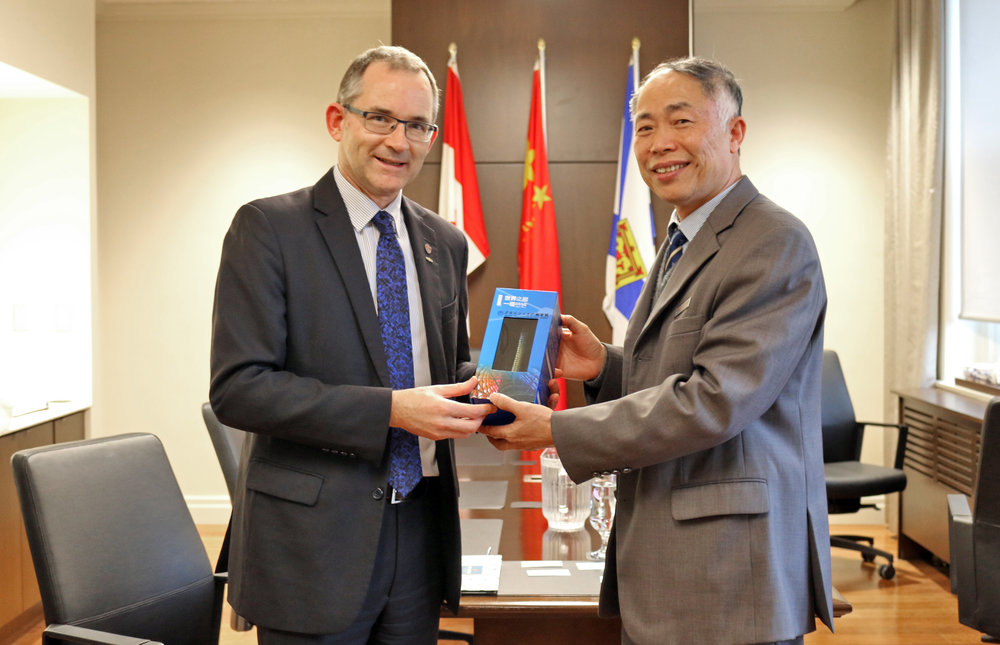
Meeting with the delegation on Monday, Dr Summerby-Murray, President and Vice-Chancellor of Saint Mary’s, said that the University was committed to building on the strong foundation of academic partnership between the two universities. This week’s visit, he said, was also an important affirmation of people-to-people connections between Canada and China. As “Canada’s International University”, Saint Mary’s is proud to be recognized as a national leader in building bridges between the two countries, he said.

Guangzhou College of South China University of Technology is a large primarily undergraduate institution with more than 21,000 full-time students who can choose from 35 programs offered through 14 schools. Its 283-acre campus is located just outside Guangzhou city in China’s Pearl River Delta, home to more than 120 million people a major centre of technology and innovation.
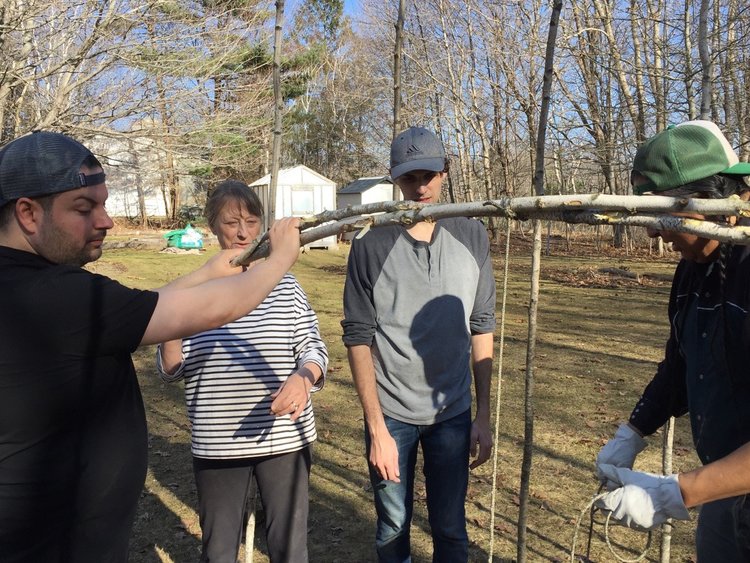
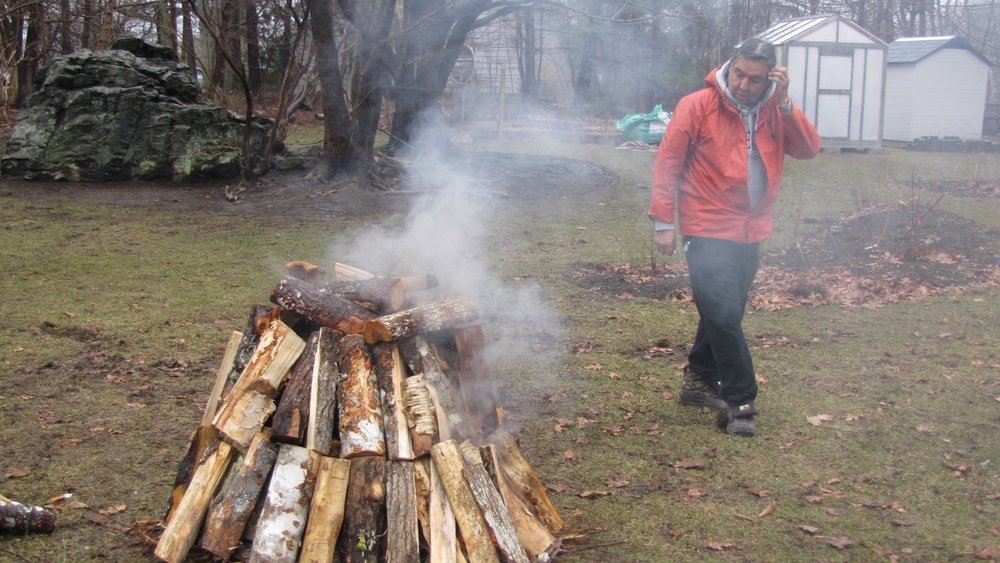
Sharing the sacred fire: Ceremonial sweat lodge on campus

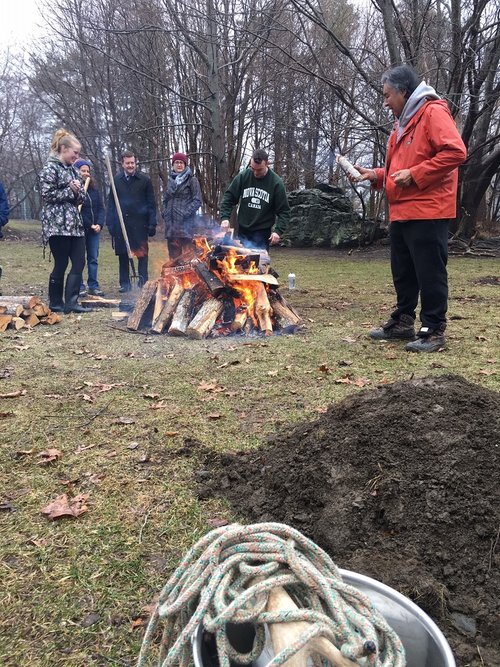
Participating in the first sweat lodge ceremony on campus at Saint Mary’s was an unforgettable way to wrap up the school year for a small group of students.

“It’s a really special experience, that’s for sure,” said John Morrison, an Anthropology major, shortly after emerging from the two-hour ceremony on Monday, April 15.

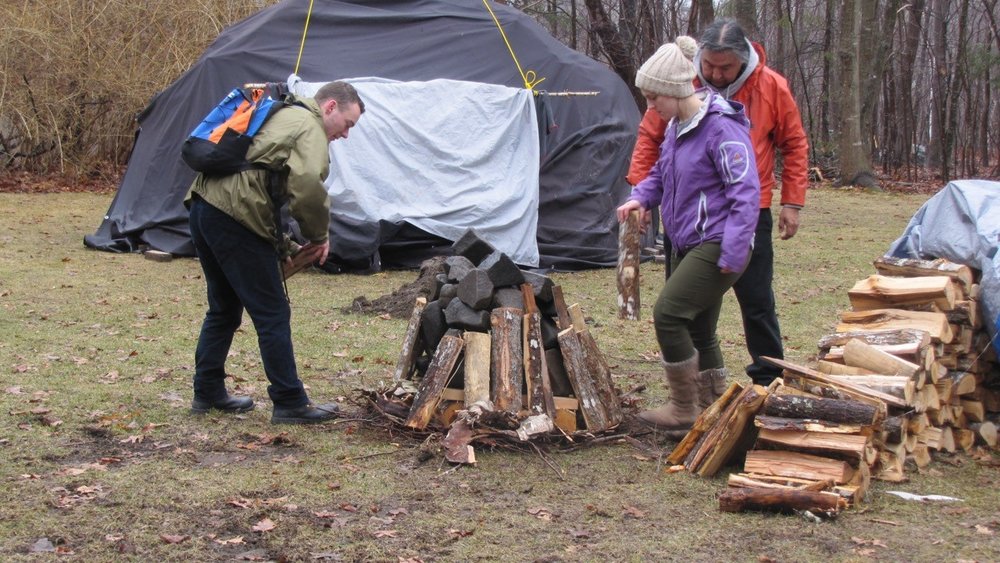
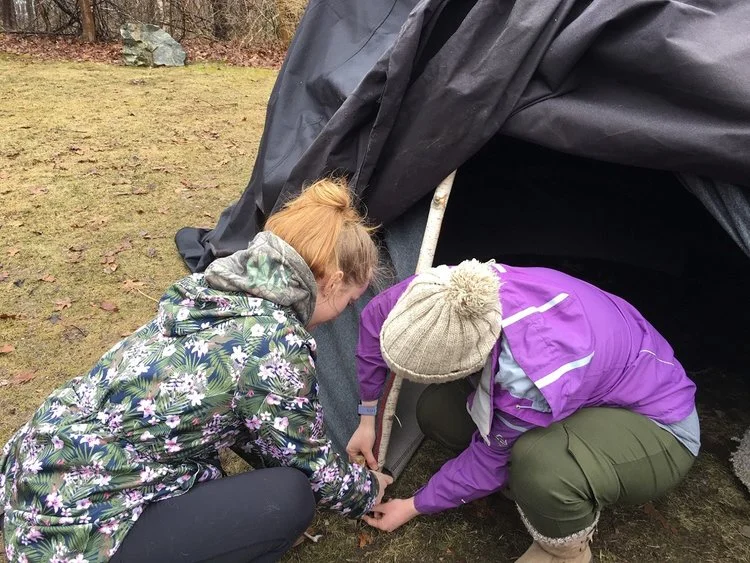
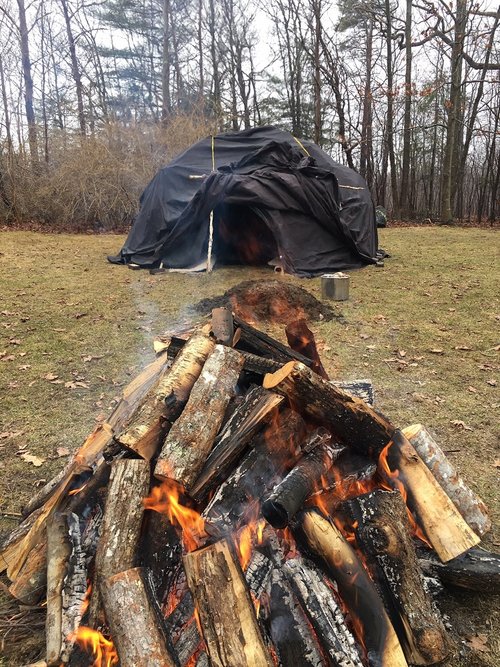
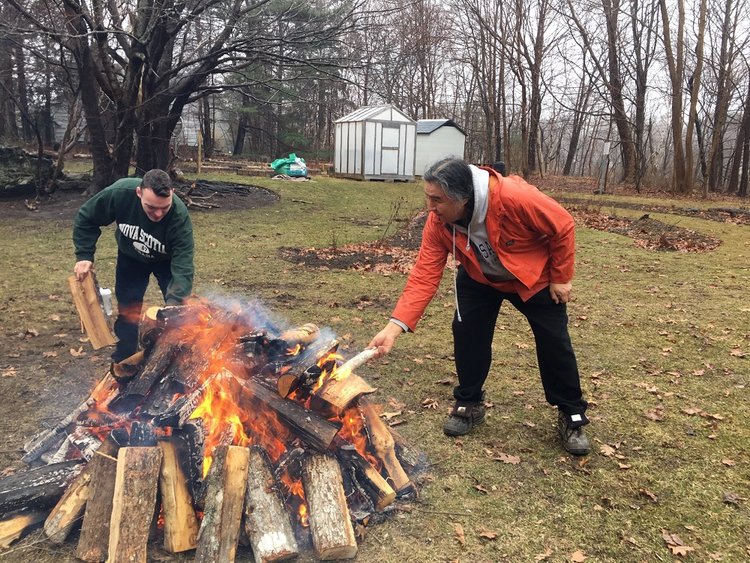
The sweat lodge structure was built the day before on the lawn behind The Oaks, using wood and rocks gathered in the area. For several hours prior to the ceremony, rocks were heated in the sacred fire pit, then moved into the lodge, where water was poured onto them to create steam. 

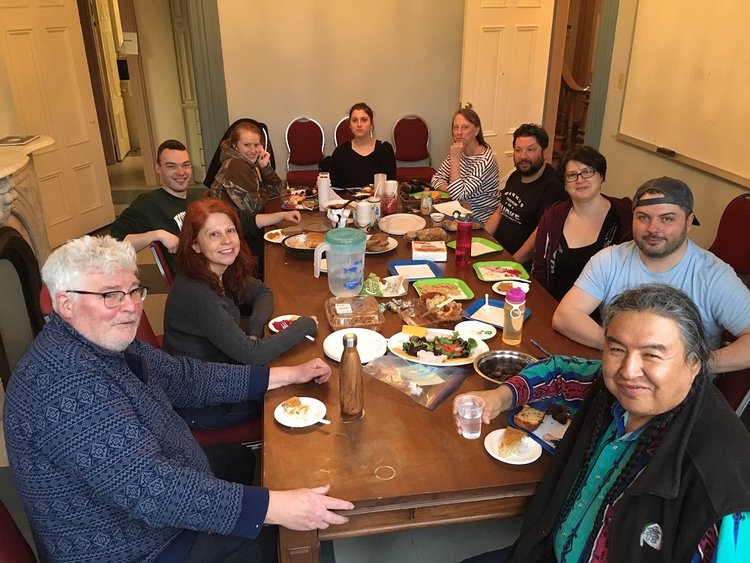
“It was a very calming experience being in there,” Criminology major Mary Rice said during a group lunch afterwards. “It was really hot but I was just focusing on putting my energy into the praying and healing. What helped me get through the heat was the people I was praying for; they’re going through a hard time so I can go through the heat for a little while to send them healing thoughts.”  

Raymond Sewell, SMU’s Indigenous Student Advisor, said students have long been inquiring about having a sweat lodge on campus so it was nice to see it become a reality this week.

Over the past term in the Indigenous Peoples of Canada course, students had been learning about cultural and historical challenges for Indigenous Peoples The course is taught by Professors Trudy Sable and Roger Lewis and one of their guest speakers was NSCC’s Indigenous Student Advisor Gary Joseph, a Cree Elder married to a Mi’kmaw woman from Shubenacadie. During his class presentation, Joseph guided students through a mock sweat lodge experience.

“The students really liked it and felt it showed the resilience of Indigenous cultures healing and moving forward given the painful and often unrecognized history they had been learning and discussing in class,” said Dr. Sable. Students expressed an interest in trying the real thing, which took some advance coordination but it came together with help from Sewell and his father, as well as Joseph, plus funding from the Office of the Vice-President Academic & Research.

“This just seemed like an opportune time and an experiential continuation of our class. There is a lot of interest to do more of them,” said Dr. Sable. The sweat lodge will remain on campus for a year and Sewell looks forward to coordinating future events.

Joseph provided some context around the elements of Monday’s ceremony: “Some of our ancestors a long time ago who signed agreements with other nations, one of the comments that often came of that treaty process was ‘we’re doing this for as long as the sun shines, the grass grows and the rivers flow’. When we make the sacred fire, we’re making a connection with the fire of your spirit and the fire of the sun. When you make these ceremony lodges, the grass is also part of the ribs of Mother Earth, so we’re acknowledging Mother Earth. And the water of course, we’re born from water, we’re breathing water, and water is 80 per cent of our body, so we share the water.”

Stephanie Dionne, an Anthropology major, strongly encouraged other students to try out the sweat lodge when the opportunity arises again. It’s an important addition to the campus as a welcoming space for Indigenous students, but also as a helpful gateway to intercultural study for other students, she said.

“It’s a starting point to broader understanding. I feel like it’s giving us a window into the life of other people,” said Dionne. 


Ancient vapours are helping researchers identify gold deposits in Nova Scotia

Kevin Neyedley, left, and Dr. Jacob Hanley of Saint Mary’s University in Halifax are doing research supported by Nova Scotia’s Mineral Resources Development Fund. (Photo: Kelly Clark/Communications Nova Scotia)

Kevin Neyedley, left, and Dr. Jacob Hanley of Saint Mary’s University in Halifax are doing research supported by Nova Scotia’s Mineral Resources Development Fund. (Photo: Kelly Clark/Communications Nova Scotia)

Vapour trails from an ancient volcano may point the way to an economic opportunity in modern-day Nova Scotia.

Researchers at Saint Mary’s University in Halifax are using the composition of ancient volcanic vapours, trapped in tiny fragments in rocks, and other geological features, to learn more about a type of precious metal deposit called epithermal gold. Their work over the past year was supported by the province’s Mineral Resources Development Fund.

Geology professor Dr. Jacob Hanley said the project’s goal is to gather information on how and when the gold deposits formed, and to generate exploration criteria that may predict where the highest concentrations of gold may be found in the province. Giving companies a better idea where to explore has financial and environmental benefits.

“The more information we gain about where the deposits are sitting in this vast array of rocks which we have in the province, the better off the environment will be. The overall footprint is smaller in terms of that activity.”

Hanley and PhD student Kevin Neyedley received a $47,500 grant from the development fund in 2018 for their project, which focuses on deposits in the Eastern Cobequid Highlands. The area is about 50 kilometres north of Truro, Nova Scotia.

Continue reading the full article from the Department of Energy and Mines.

Saint Mary’s Viola Desmond Bursary celebrated at the Nova Scotia Legislature

From left to right: Tom Brophy, Dr. Malcolm Butler, The Honorable Tony Ince, The Honourable Wilfred P. Moore, Q.C., LL.D., Ms. Jane Adams Ritcey, Sylvia Parris-Drummond, Deborah Brothers-Scott, Erin Sargeant Greenwood, and Tony Colaiacovo.

From left to right: Tom Brophy, Dr. Malcolm Butler, The Honorable Tony Ince, The Honourable Wilfred P. Moore, Q.C., LL.D., Ms. Jane Adams Ritcey, Sylvia Parris-Drummond, Deborah Brothers-Scott, Erin Sargeant Greenwood, and Tony Colaiacovo.

On April 9th, 2019, the Honorable Tony Ince, Minister of the Public Service Commission and Minister of African Nova Scotian Affairs, recognized the generosity of the donors behind the creation of the new Viola Desmond Bursary.

The Honourable Wilfred P. Moore, Q.C., LL.D., and Ms. Jane Adams Ritcey were recognized with a Notice of Motion read by Minister Ince before the legislature, receiving a round of applause from its members.

“The most important part of today is the recognition of Viola Desmond and the bursary available to African-Nova Scotian students at Saint Mary’s,” said the Honourable Wilfred P. Moore, Q.C., LL.D. “This recognition was a very nice gesture that my wife and I appreciate very much.”

The Viola Desmond Bursary was announced on November 8, the date of Viola’s heroic anti-discrimination action in 1946. The bursary is fully-endowed and will be given out every year to full-time African-Nova Scotian students at Saint Mary’s. The bursary was established with the permission of the Desmond Family.

The initial award amount will mark the year of Viola Desmond’s anti-segregation action, 1946, with students receiving $1,946. While this award is not renewable, it may be awarded to the same student more than once.

While preference for the bursary will be given to students in the Sobey School of Business, the bursary may also be awarded to students in programs featuring entrepreneurship. Preference will also be given to female students from Halifax County. Students must also have a financial need.

 More about the Viola Desmond Bursary at Saint Mary’s

Mineral Resources Development Fund expansion announced at Saint Mary’s University

Dr. Jacob Hanley and Kevin Neyedley chat with Sean Kirby, left, executive director of the Mining Association of Nova Scotia, and Energy and Mines Minister Derek Mombourquette. (Photo: Kelly Clark/CNS)

Dr. Jacob Hanley and Kevin Neyedley chat with Sean Kirby, left, executive director of the Mining Association of Nova Scotia, and Energy and Mines Minister Derek Mombourquette. (Photo: Kelly Clark/CNS)

Businesses, prospectors and researchers now have more support for innovative projects in the mining sector as the result of a provincial government announcement at Saint Mary’s University.

As part of Budget 2019-20, the province is increasing the Mineral Resources Development Fund by $800,000 to a total of $1.5 million. Energy and Mines Minister Derek Mombourquette opened the fund to applications in an event at Saint Mary’s on April 9.

“Mining is a globally competitive sector that creates career opportunities for our young people, while generating revenue for programs and services that benefit all Nova Scotians,” said Minister Mombourquette. “These investments make connections and develop new ideas that help our companies stay at the forefront of technology and environmental protection.”

Saint Mary’s University Professor Dr. Jacob Hanley and PhD student Kevin Neyedley received $47,500 from the fund in 2018. They are working on research and gathering geological information about how strategic minerals formed. This will help identify where deposits may be located and then extracted with minimal environmental impact.

“It is vitally important for Nova Scotians to have access to the most current scientific knowledge, gathered using cutting edge research tools,” said Dr. Hanley.

“Our research can help attract companies by reducing exploration costs for industry and reduce the impact that grass-roots exploration has on the environment through narrowing the size of mineral deposit targets,” said Mr. Neyedley.

Last year, the province supported 28 projects including mineral exploration programs, professional development, innovation, university research and training opportunities for young people.

Three Minute Thesis winners heading to Eastern finals at McGill

3MT.jpg

It’s not easy to condense months or even years of work and condense it into a brief 180-second presentation, but that’s what a group of Saint Mary’s students managed to do at the recent Three-Minute Thesis (3MT) competition.

Hosted by the Faculty of Graduate Studies, the annual event saw 13 Saint Mary’s Masters students and PhD candidates explain their research in just three minutes with just one static Powerpoint slide, no other props or aids.

 “Competitors in the 3MT Thesis competition learn how to communicate their ideas succinctly, how to own the stage and perform under intense pressure. These are all good learning outcomes for graduate students,” said organizer Dr. Colleen Barber, Associate Dean, Student Affairs, Faculty of Graduate Studies and Research.

“It challenges students to condense their thesis topic into something that can be explained within three minutes. And to do so while they are nervous...and to a non-expert audience,” said Dr. Barber.

Topics at the Saint Mary’s competition were varied, ranging from Christian social entrepreneurship, to polyamory in pop culture, to the informal financial sector and food security of farmers in Uganda, and traffic management in Bangladesh. 

PhD candidate Blair John won the top prize and advances to the Eastern Region finals at McGill. Winners from Quebec and Atlantic Canada will compete there to earn a spot at the national 3MT competition.

Program Description

Founded in 2008 by the University of Queensland in Australia, The Three Minute Thesis (3MT) is a global competition that cultivates graduate students' academic, presentation and research communication skills. Presenting in a 3MT competition increases their capacity to effectively explain their research in three minutes, in a language appropriate to a non-specialist audience. 3MT competitions are now held in over 600 universities in 65 countries around the world.

Three Faculty of Science students took home the top awards:

  • Blair John, PhD in Industrial/Organizational Psychology (Advisor: Nicolas Roulin) won the first prize of $750 and the opportunity to compete at the 3-minute thesis challenge (Easterns) in Montreal at McGill University. His presentation was “Catching the fakers: Exploring New Methods to Identify Applicant Faking in Interviews.”

  • Kristina Pope, MSc Applied Psychology (I/O Psychology), (Supervisor: Dr. Debra Gilin) placed second, winning $500 for her presentation “Conflict Impact: Addressing Conceptual Challenges of Using a Typology to Define Conflict Incidents.”

  • Amy Heim, PhD Applied Science, Biology (Supervisor: Dr. Jeremy Lundholm) won the People’s Choice Award for her presentation “Functional Plant Traits and Community Assembly: Stress, Heterogeneity and Phenology.”

Saint Mary's research projects with big industry impact

The Office of Innovation and Community Engagement at Saint Mary’s is a small office that delivers a big impact.

A recently-released progress report highlights a few projects that Saint Mary’s faculty members have been working on in collaboration with industry partners, including:

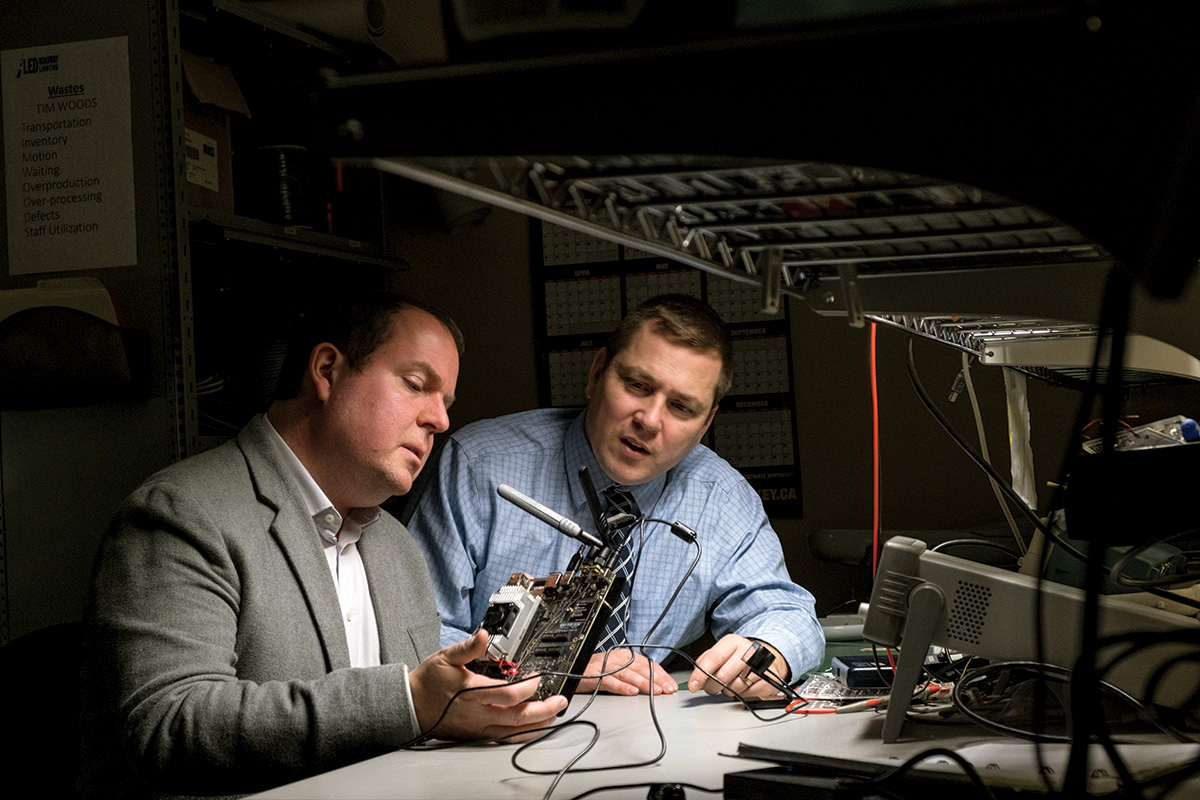
  • Dr. Jason Rhinelander’s partnership with LED Roadway Lighting has allowed him to lend his expertise in artificial intelligence and object recognition to evaluate the accuracy of an adaptive radar-based sensor platform for pedestrian and vehicle recognition at streetlight intersections.

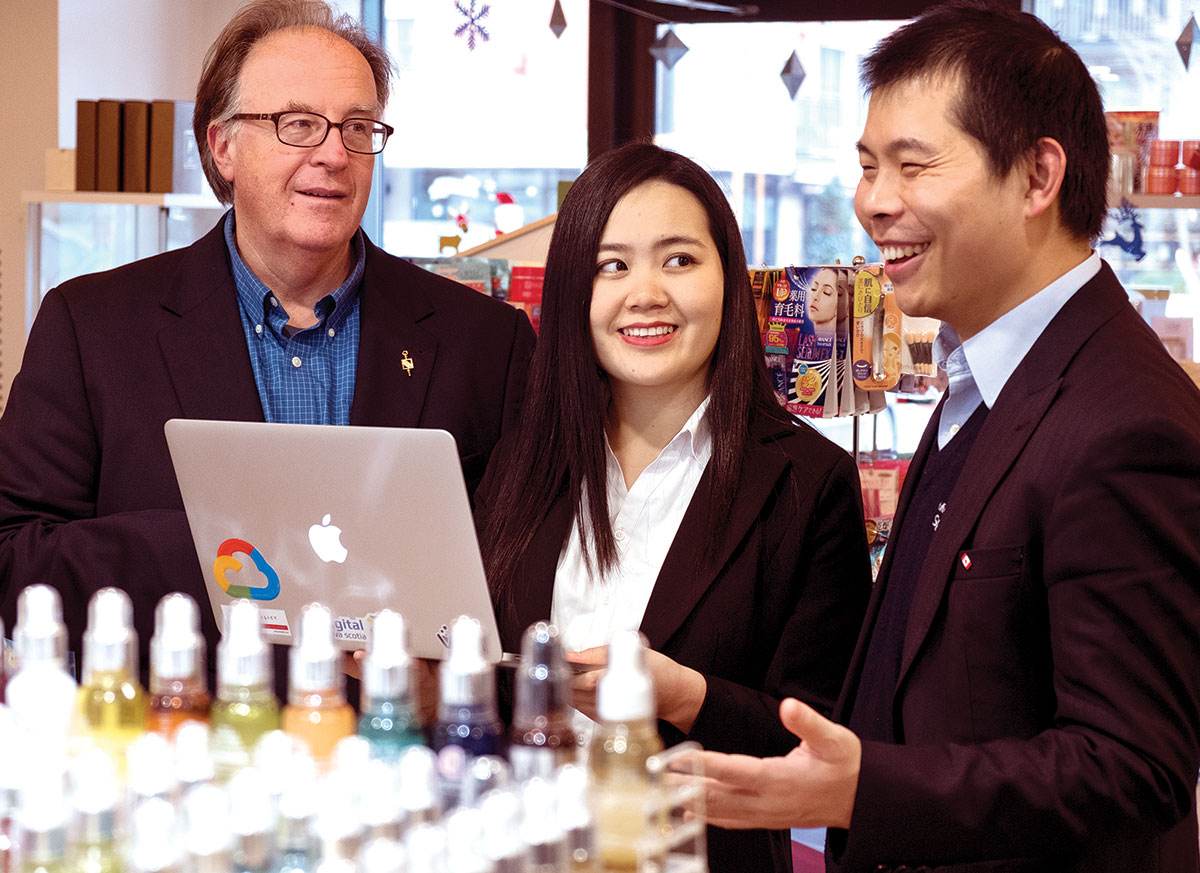
  • RetailDeep uses innovative facial recognition software to enhance the shopping experience in stores, collect data from clients, and pinpoint opportunities to innovate within the retail space.

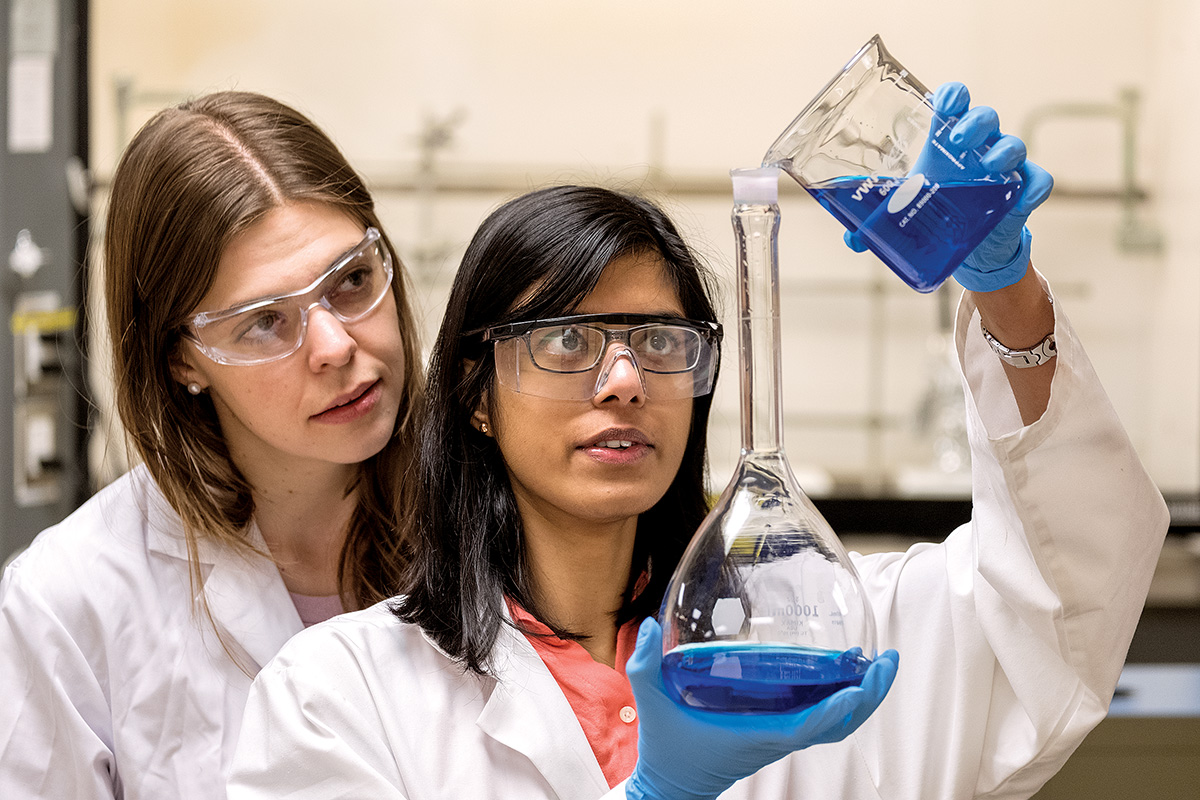
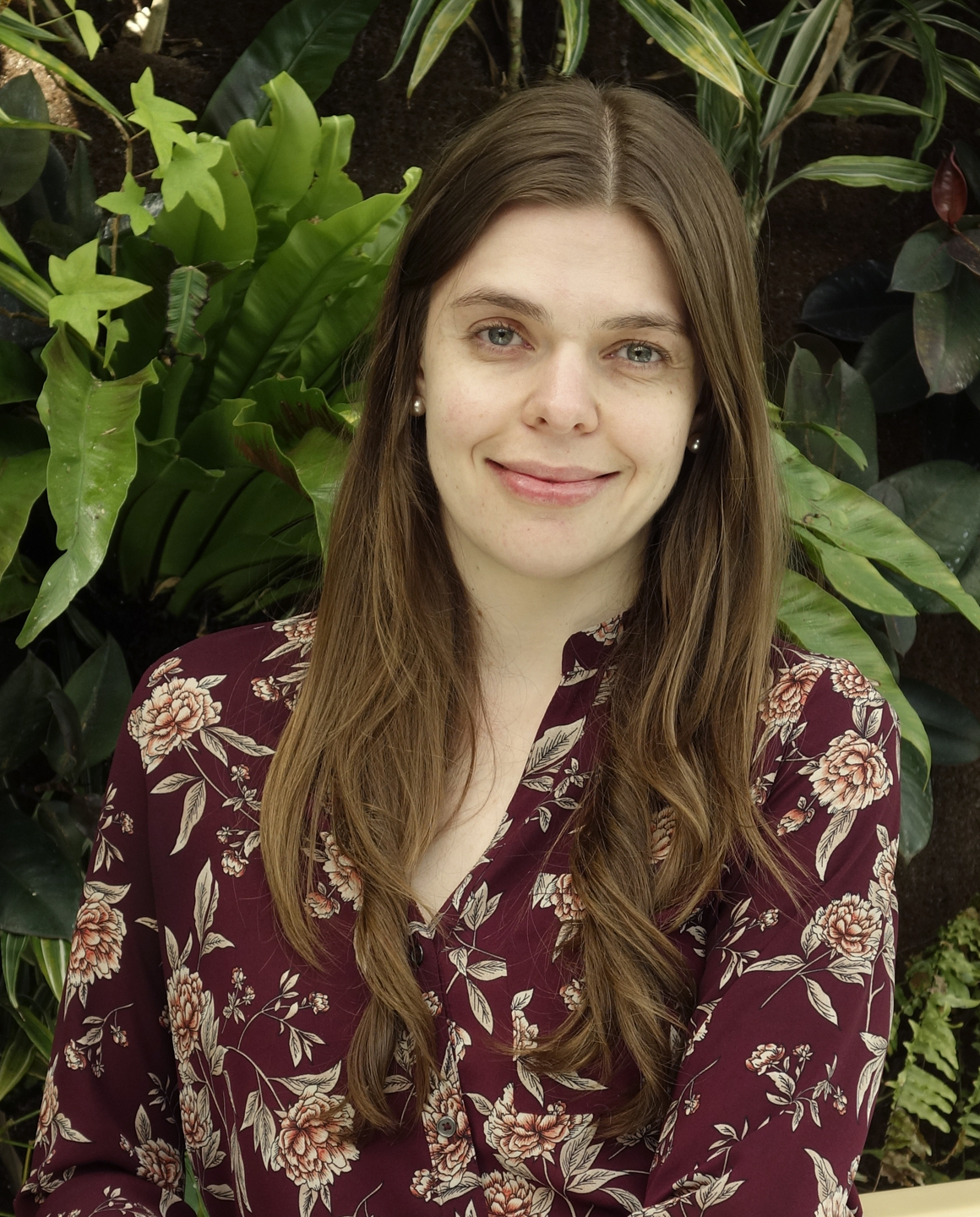
  • A partnership between Coloursmith Labs and Saint Mary’s researcher Dr. Danielle Tokarz has led to a breakthrough in treatment for colour blindness. Along with her team, Dr. Tokarz helped the startup company refine the focus of their research efforts and identify the appropriate nanoparticles and gels for the lenses. 

“Our office also takes pride in pairing faculty members with industry, helping to facilitate solutions to local companies’ problems using academic expertise, said Kevin Buchan, Director of the Office of Innovation and Community Engagement. “It’s also a great opportunity for students, the next generation of researchers, to work on applied projects in their fields.”

“We’re encouraged by the success we’ve had so far, and we look forward to doing more of these innovative projects,” said Buchan.  

 Click here to read the progress report, featuring researchers from all faculties at Saint Mary’s, and their partners, click here.

 ABOUT OICE:

The Office of Innovation and Community Engagement (OICE) facilitates research relationships between Saint Mary’s University and companies, government departments, and community organizations. OICE is the initial point of contact for faculty members and external partners wishing to collaborate. The office assists with finding suitable expertise, contract development, and advises on funding opportunities.

SMU Model UN group returns from New York with two awards

modelun.jpg

They came home with a gold and a silver! If the National Model United Nations conference was a sporting event, that would be the equivalent.

The Saint Mary’s delegation left Halifax on March 23 and returned from New York earlier this week with two new awards for the university’s collection:

  • Overall, the group of 20 students won a Distinguished Delegation Award (silver) for its excellent week-long performance representing Kuwait across 10 Model UN committees; and

  • Students Yankun Li and Hannah Shuttleworth won an Outstanding Position Paper award for their pre-conference preparations for the UNFCCC COP (Conference of the Parties to the United Nations Framework Convention on Climate Change).

Dr. Marc Doucet, Chair of Political Science and professor of SMU’s Model United Nations course, said it was a terrific outcome, especially considering that many other delegations get to practice at other Model UN simulations prior to the international conference. The event typically attracts more than 5,500 students from some 200 universities around the world.

“In our case, we had four students who participated last year but for the majority of our students, this was all new to them. So the fact that they’re earning awards in their first go at this is quite impressive. They were very dedicated and worked really hard,” he said. 

Alyssa Frampton, president of SMU’s Model UN Society, had the opportunity to give a 30-second speech from the podium at the UN General Assembly. View the video online – Alyssa’s speech is at the 37:58-minute mark. Each delegation had selected one of its members to briefly address the UN’s Sustainable Development Goals (SDGs).

“Alyssa did phenomenally well, and the speeches are now in the UN’s official archives,” said Dr. Doucet.

Another highlight of the week was visiting the UN Permanent Mission for the State of Kuwait and meeting with diplomatic attaché Ali Abdullatif Ali Al-Yahya, who graciously answered all of the team’s questions. After the briefing, the young diplomat posted kudos on his Twitter feed: “It was an absolute pleasure hosting a group of bright and inspiring students from @smuhalifax, very impressed by the research they did on Kuwait. I hope I answered all your questions. Thanks for such a nice gift. All the best at your MUN conference! Do Kuwait proud!” 

The Saint Mary’s students represented Kuwait on 10 different model UN committees this year, including the Security Council. Our team itself was quite an international group this year, with students from the Bahamas, Bangladesh, Britain, Canada, China, India, Mauritius and Turkey.  

Yankun Li said that representing Kuwait was an opportunity and a challenge at the same time, and admits she didn’t know much about the country prior to this experience. 

“During the research and class discussion, I gradually got a clearer overall image about Kuwait,” she said. “Also, since my committee was about climate change, it was fascinating to see how Kuwait struggles between gaining profit from oil production and combating climate change and how they made their policies due to this struggle. Representing Kuwait in such a big MUN conference gave me the chance of closely studying a country that I almost knew nothing about. It provided me another perspective of viewing global issues.”

Submitted by Marla Cranston, Faculty of Arts.

Together again: CODCO is back, for one night only at SMU

CODCO++photo+by+White.jpg

Thirty years ago, the legendary cast of CODCO paved the way for a renaissance in Canadian comedy writing and performance. Often controversial, occasionally furious, but always hilarious, CODCO took gleeful pleasure in lampooning the hypocrisies of the powerful.

Saint Mary’s University will host an unforgettable evening on Friday, March 15th as Andy Jones, Cathy Jones, Greg Malone and Mary Walsh come together again to revisit their best work in a panel discussion on the art and politics of satire. They are the featured guest speakers for the 2019 Cyril J. Byrne Memorial Lecture, in the McNally Theatre Auditorium.

The public event begins at 6:30 pm with a live performance by the Evan Mahaney Jazz Trio. Starting at 7:00 pm, the four comedians will review their favourite sketches from CODCO’s television run, and reflect on the lasting significance of their work. The panel discussion is followed by an audience Q&A and a reception.

CODCO’s writing and many of its audacious performances continue to be studied today. Originally founded in St. John’s as a theatre company, CODCO aired nationally on CBC from 1988-1993 as a weekly sketch comedy television program. Far ahead of their time, Walsh, Jones, Jones and Malone – along with their beloved co-performer Tommy Sexton – were masters of social satire. With The Kids in the Hall, they pushed Canadian comedy, and Canadian culture as a whole, into new territory by tackling many previously taboo subjects relating to gender, sexuality, religion, economic development, colonialism and corporate / political power.

The annual Cyril J. Byrne Memorial Lecture celebrates the life and the fun-loving spirit of literature professor Cyril Byrne, who passed away in 2006. Throughout his 35-year career at Saint Mary’s, Dr. Byrne played a major role in establishing our Atlantic Canada Studies Program and the D’Arcy McGee Chair in Irish Studies. The lecture has welcomed many of the world’s best writers to Halifax, such as Yann Martel, Anne Enright, Richard Ford, Alistair MacLeod, Anne Carson, Colm Tóibín, Dionne Brand, David Adams Richards and Wayne Johnston.

As always, the lecture is free and all are welcome, but seating is limited. Online registrations are now closed and early arrival is recommended for all who submitted RSVPs online. An overflow seating area with a video link has been arranged in Scotiabank Auditorium.

Dr. Danielle Tokarz's research receives boost from the federal government

The research of Saint Mary’s new chemistry faculty member, Dr. Danielle Tokarz, into the microscopic structure of large molecules in living animals and plants received a big boost, as a result of an investment of $153,026 from the federal government.

Dr. Danielle Tokarz

Dr. Danielle Tokarz

The research of Dr. Tokarz focuses on the structure of large molecules inside animals and plants which are relevant to the wellbeing of Canadians including collagen in humans and other animals, as well as cellulose and photosynthetic membranes in plants. The funding will allow Dr. Tokarz and her interdisciplinary team of chemists, physicists and biologists to build a new type of laser microscope, one that can measure the structure of microscopic regions of plant and animal tissues at record high speeds. The technology will allow the first live measurements of tiny structural changes in living creatures, allowing a fresh look at functioning biological phenomena. The research will address questions in biology such as, how does collagen degrade in organ tissues during ageing, and how woody cellulose, the leftover plant material after tree removal, can be efficiently degraded for conversion into biofuels.

In addition to the short term benefits of this research in increased knowledge of fundamental biological processes, long term benefits for Canadians are expected in healthcare and industry. Studies of collagen in the extracellular matrix during ageing will offer advances to the healthcare of Canadians. Studies of cellulose structure will have an impact on local industries including biofuels, pulp and paper, and biodegradable materials. Finally, studies of photosynthetic tissues will have applications in increasing plant growth efficiency, growing plants in colder climates and increasing global food supply. The proposed nonlinear laser microscope will be the first in Atlantic Canada, giving students and faculty the opportunity to use cutting-edge technology.