Saint Mary’s PhD graduate wins international award

Dr. Samantha A. Penney

Dr. Samantha A. Penney

Saint Mary’s University is proud to announce that Dr. Samantha A. Penney, a recent PhD graduate in Industrial/Organizational Psychology, has received the prestigious 2019 Kenneth E. Clark Student Research Award from the Center for Creative Leadership and the International Leadership Association.

“It is an absolute honour to have my dissertation research recognized internationally,” said Dr. Penney.

In her award-winning paper on leadership titled Fostering a Psychologically Healthy Workplace through Leadership, Dr. Penney created and validated a scale to assess leadership behaviours that contribute to a healthy workplace, and then designed a workshop and phone-based coaching program which she delivered to leaders in eight organizations across seven provinces.

The training includes knowledge of what a healthy workplace is, leaders’ roles in creating that healthy workplace, and goal setting and skill development to act on that knowledge. “For example, infrequent feedback, such as only having annual performance reviews are a concern in organizations. Research has suggested that employees are more likely to change their behaviour and attitudes when they receive frequent positive and constructive feedback,” she explained.

 “The results demonstrate that leadership behaviours can be trained,” said Dr. Penney, adding that while many of the leadership behaviours identified aren’t new information, giving leaders the tools and training to apply the knowledge is key. “Employees often move up within an organization into a leadership role because they’re good at their jobs, but they don’t always have leadership skills.”

 “Working with leaders and organizations to provide practical recommendations is something that I am very passionate about, and my research ties into my new role of conducting leadership assessments for the purposes of selection and development,” she said.  

“Dr. Penney, and her research, are very deserving of this international recognition,” said Dr. Arla Day, her dissertation supervisor. “Not only does this award demonstrate her expertise and innovation in the area, but it also reinforces the reputation of Saint Mary’s as a high-caliber training institution with a strong level of research expertise in occupational health psychology.”


Background

Dr. Penney recently completed her PhD in Industrial and Organizational Psychology at Saint Mary’s. She completed her Master of Science in Applied Psychology at Saint Mary’s and has an Honours Bachelor of Arts from Lakehead University.

She has authored several journal articles and book chapters on leadership and employee well-being, and has presented her work at national and international conferences.

Her experience as an independent consultant and leadership coach, developing both leader-level and employee-level training programs, and as a facilitator, delivering workshops and seminars to corporate clients aligns with her background in Industrial/Organizational Psychology.

She recently accepted a role as a Talent & Leadership Development Assessment Analyst at Lee Hecht Harrison Knightsbridge in Toronto.

About the Kenneth E. Clark Award

The Kenneth E. Clark Student Research Award recognizes one outstanding unpublished paper by undergraduate and graduate students each year. It is sponsored by the Center for Creative Leadership (CCL) and the International Leadership Association (ILA).

Papers are evaluated by 13 CCL research faculty members through a multi-rater, blind review process. Winners of the international award receive a cash prize, and a trip to ILA’s Annual Conference to present the winning paper there and in various multimedia ILA publications.

Dr. Penney follows in the footsteps on another Saint Mary’s alumna in winning this award. Aleka MacLellan, who was then a recent PhD graduate in Industrial/Organizational Psychology, and won the same award in 2017.


Spelling success: Dr. Nicole Conrad wins $92,000 funding for literacy research

Dr. Nicole Conrad has won an Insight Grant worth $92,000 from the Social Sciences and Humanities Research Council (SSHRC).

Dr. Conrad’s grant will be used to pursue research on the role of spelling on the development of reading skills in elementary school children.

Titled Spelling matters too! The role of spelling practice on the development of reading skill, the project will focus on three complementary areas on study:

  • An examination of how spelling practice facilitates efficient and automatic word reading, which is necessary for comprehension;

  • Addressing theoretical predictions about how spelling practice benefits reading comprehension by comparing longitudinal theoretical models predicting whether spelling contributes to reading comprehension;

  • Comparing the effects of reading and spelling practice on comprehension of texts containing practiced words.

Dr. Conrad and her undergraduate students will perform their next study in Nova Scotia schools. The project involves administering reading and spelling tests to establish a benchmark, and then teaching words with certain orthographic patterns to early readers.

The researchers will then retest the children to study what effect learning about the patterns of letters used to represent words in print has on the children’s spelling and comprehension. 

“With increased knowledge of how spelling processes benefit reading outcomes, we can develop cohesive theories of literacy acquisition,” said Dr. Conrad, a cognitive psychologist. “More importantly, this research will provide insight into the best instructional practices for spelling, information clearly identified as needed by Canadian teachers.”

 “Professor Conrad is an established national leader in research devoted to understanding reading development,” said Dr. Adam Sarty, Dean of Graduate Studies and Associate V-P of Research at Saint Mary’s. “This SSHRC Insight Grant award is another recognition of her leadership and will provide needed support to advance her work focusing on the role of spelling.” 

Insight Grants

The goal of the Insight Grant program is to build knowledge and understanding about people, societies and the world by supporting research. Recently announced by the Honourable Kirsty Duncan, Minister of Science and Sport, Dr. Conrad’s funding is part of more than $285 million for over 6,900 researchers and graduate students across Canada. 

“Researchers in the social sciences and humanities generate ideas and innovations that improve the lives of Canadians,” said Ted Hewitt, President, Social Sciences and Humanities Research Council. “This investment will strengthen research training for students, connect Canadian and international researchers across disciplines and sectors, and equip Canada with the talent, knowledge and insights that are essential to meeting the challenges of today and tomorrow.”

“Having been a past recipient of the highest teaching awards at Saint Mary’s University, Professor Conrad exemplifies the best of balancing excellent teaching and impactful research that Saint Mary’s encourages – we are very proud of her and her ongoing work,” said Dr. Sarty.

Dr. Nicole Conrad is a cognitive psychologist, has taught at Saint Mary’s since 2005. She received her Ph.D. degree in Experimental Psychology from McMaster University in Hamilton, Ontario. Her research focuses primarily on how memory is involved in reading acquisition and skilled reading, how children acquire the linguistic and cognitive information necessary to become skilled readers, and the nature of the beneficial relation between reading and spelling.

About SSHRC

The Social Sciences and Humanities Research Council of Canada (SSHRC) is the federal research funding agency that promotes and supports postsecondary-based research and research training in the humanities and social sciences. By focusing on developing talent, generating insights and forging connections across campuses and communities, SSHRC strategically supports world-leading initiatives that reflect a commitment to ensuring a better future for Canada and the world.

The work SSHRC supports encourages the deepest levels of inquiry. It spurs innovative researchers to learn from one another’s disciplines, delve into multiparty collaborations and achieve common goals for the betterment of Canadian society. Research outcomes are shared with communities, businesses and governments, who use this new knowledge to innovate and improve people’s lives.

Created by an act of Canada’s Parliament in 1977, SSHRC reports to Parliament through the Minister of Science.

Saint Mary’s launches new Athletics ticketing system

As part of the launch of The Dauphinee Centre – Saint Mary’s University’s new on-campus arena – the Department of Athletics & Recreation is pleased to announce a new ticketing system for varsity sports.

Partnering with Vendini, we will provide our fans with an online ticketing system to purchase in advance or at the Homburg Centre.

Opening to the public on Thursday, September 5, The Dauphinee Centre is expected to be a highlight for the fall term. With this in mind, the university is revisiting our ticketing options, providing both assigned seating and advanced purchasing options.

Huskies fans can access the online ticketing options by visiting the Fan Zone section found at smuhuskies.ca. This link will give users the option to purchase single game tickets, season passes for football, hockey or basketball. The Huskies are also introducing an All-Sport pass, which allows entrance into ALL varsity games for football, soccer, rugby, basketball, hockey and volleyball. Early pricing on these passes is available from August 26 until September 2 when single game tickets for all sports (with the exception of regular season hockey) will go on sale.

When purchasing online, fans will have the ability to print their tickets at home or send to their mobile device. To enter a game, fans will use their printed ticket or mobile ticket at the venue scan station.

The Dauphinee Centre is an assigned seating venue. Fans who purchase the All-Sport or hockey season pass will have the ability to pick their own seat. On game day, hockey fans who have purchased their tickets/passes in advance can enter through the main doors of The Dauphinee Centre and have their ticket scanned. All game day purchases will take place at the Homburg Centre Box office and fans will enter The Dauphinee Centre via the pedway between the two buildings.

We encourage all fans and supporters to take advantage of the new online ticketing system by purchasing passes and tickets in advance. Complete ticket prices for individual games and season passes are available at smuhuskies.ca.

Research to explore Catholic role in British colonization across the Atlantic

A new research project at Saint Mary’s aims to fill a major gap in knowledge relating to transatlantic migration, Catholic history and British imperialism going back 250 years.

KarlyKehoe.jpg

“The period we’re looking at was a period of intense anti-Catholicism,” says Dr. S. Karly Kehoe, who holds the Canada Research Chair (CRC) in Atlantic Canada Communities. “It’s not dissimilar to what’s happening in different countries in the West now, with anxiety and animosity towards specific groups.”

Titled ‘A Catholic Atlantic? Minority Agency in the British World, 1763-1860’, the project received a significant Insight Development Grant from the federal government, announced July 17 by the Social Sciences and Humanities Research Council (SSHRC).

“It’s going to help build research capacity with the CRC, and make it more international by bringing in Irish, Scottish and Caribbean dimensions,” says Kehoe, whose project partner is Dr. Ciaran O’Neill, Ussher Assistant Professor in Nineteenth-Century History at Trinity College Dublin.

Broad literature exists on Catholic missions to Asia and Africa in the modern period, but not much research has been done on Catholic migration in the British Atlantic context. Kehoe hopes to shed new light on the transnational character of Catholic agency in the British world, and show that links beyond just trade and migration existed between northeastern British North America and the Caribbean.

Trinidad will be a major area of focus, as it was a predominantly Catholic island with large free people of colour and slave populations that identified as Catholics. There is an Italian component as well – two collaborators in Rome will assist in working with the Vatican’s archives and other Catholic Church history sources.

The project will be a great learning opportunity for several student research assistants at SMU, who will work directly with students in Dublin.

“We’re really committed to sharing the research, so we’ll be creating blogs and podcasts,” says Kehoe. “That’s where students will really take a lead on preparing little research vignettes, interesting snippets we find that people might want to know about.”

The two-year project will include public lectures next fall at a Halifax symposium and a Dublin workshop. Kehoe will also connect this work with high school students in Mabou, Cape Breton, through the SMU Emerging Researchers Program she leads with Dr. Alexander MacLeod.

Paying more attention to minority groups in the past British Empire can help in better addressing migrant integration in today’s world, she says.

“Migration is constant. I think all academics who engage with it have a responsibility to connect what they’re doing with what’s going on now, to broaden the conversation and get people thinking about things in different ways.”

Kehoe is a strong advocate for displaced, refugee and at-risk academics, through her work with the Global Young Academy. She recently co-edited a new book, Responsibility for Refugee and Migrant Integration, which launched in April in Munich. Also in April, she was the 2019 Spring Strickland Visiting Scholar at Middle Tennessee State University.

The Canada Research Chair in Atlantic Canada Communities program at Saint Mary’s aims to raise awareness about the complex historical experience of Atlantic Canada as a way of inspiring new ideas about global networking, settler colonialism, economic assertiveness and the agency of its people and communities.

New SMU space at Volta open for business

volat+space.jpg

Saint Mary’s students, faculty and researchers now have access to a new office space at Volta in downtown Halifax.

Dubbed the Entrepreneurship Connector, the bright new space can accommodate up to 6 people and puts Saint Mary’s in the heart of the Halifax innovation district, providing access to resources and allowing faculty, researchers and programs to better reach and engage with the community and local businesses.

The space and the partnership “creates a direct pathway for students, faculty and staff from across all disciplines within the university to engage in entrepreneurship and help grow and support the start-up ecosystem,” says Michael Sanderson, Director of the Saint Mary’s University Entrepreneurship Centre.

Volta, now in its sixth year of operation, tripled in size last year to 60,000 square feet. Spanning across three floors of the Maritime Centre, the innovation hub is creating a place for entrepreneurs and innovators to work, learn and connect with each other.

Saint Mary’s is the first post-secondary institution to provide its students and faculty direct access to Volta’s community of innovators with a dedicated work space onsite.

Faculty and students can book the space via an online: https://www.smuec.ca/volta/

Unlocking overlooked history from a 2,200-year-old Roman villa

When modern technology meets buried remnants from the early Roman Empire, collaborative research has the potential to unearth new chapters of human history never previously analyzed.

That’s the thinking behind The Villa di Tito Project: Reexamining Roman Villas, helmed by Dr. Myles McCallum of Saint Mary’s University. The project received nearly two thirds of SMU’s most recent round of federal research funding, announced July 17 by the Social Sciences and Humanities Research Council (SSHRC).

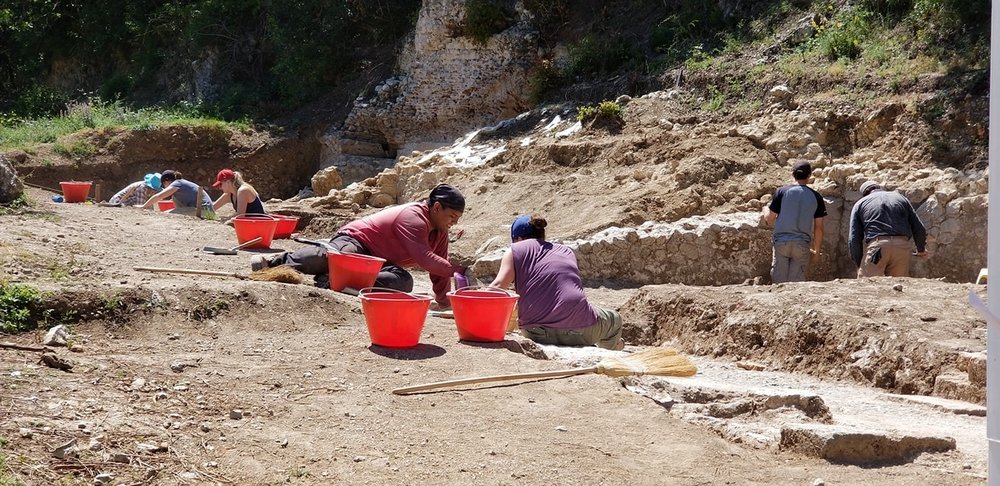
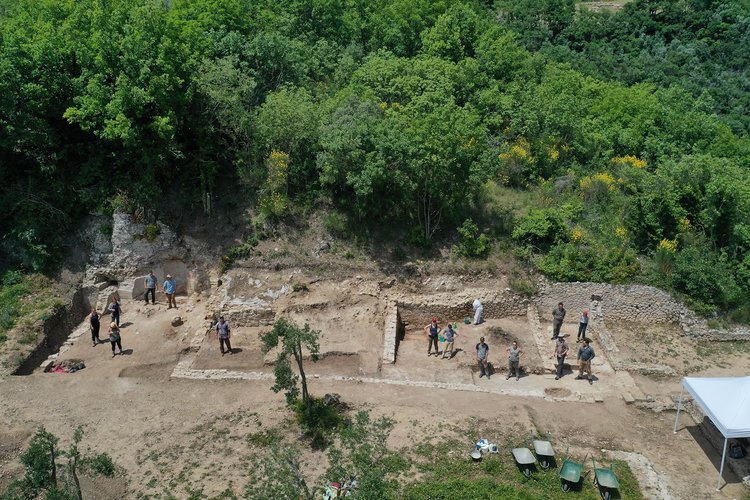
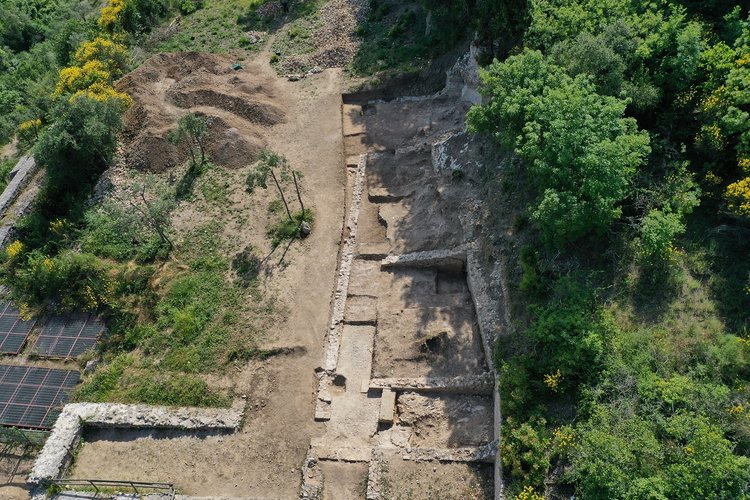
Home to an annual archaeology field school for Saint Mary’s and McMaster University students, the rural Villa site is located amid olive groves on the north slopes of the Velino river valley in central Italy, in the province of Reiti. It’s along the Via Salaria, an ancient road used to transport salt into the interior of Italy, which ran from Rome to the Adriatic. The Villa sits high above a freshwater lake that is also ripe for archaeological study – the Lago di Paterno, once considered the geographical centre of Italy and a sacred site connected to the goddess Vacuna.  

Over its five-year lifespan, the SSHRC Insight grant will – among other things – reduce costs for students participating in the field school, and allow McCallum to hire and train several undergrads each year to work as research assistants on the project. Including three this summer, plus a fourth hired with funds from SMU’s Faculty of Graduate Studies and Research.

“The research results were pretty spectacular this summer and will just get better over the next few years,” says McCallum, Chair of the Department of Modern Languages and Classics. The students “did an amazing job, they worked incredibly hard, and learned a bunch of new things like using our database system, flying a drone, doing some detailed photography and photogrammetry, and more.”  

The field school also teaches the fundamentals of archaeological excavation, field surveying, drawing, and artifacts analysis. The drone footage will help to create detailed views, maps and 3D models of the area.  

“This particular structure is monumental in size. Whoever built it in the 1st century B.C. invested a lot of time and money into it. It was a showpiece in the countryside for them, and probably the local centre of the social and economic network,” says McCallum.

One of the project’s goals is to find evidence to prove the theory that the Villa was originally built by Titus (Tito), a member of the Flavian family and the Second Dynasty of the Roman Empire. More importantly, it aims to reconstruct the lives of the workers – the people who made bricks and wine, grew crops, pressed olives for oil, or engaged in mining, woodworking and metalworking.

“The historical record is highly biased toward the social elites and the aristocracy,” says McCallum. “They wrote the history for themselves and they didn’t tend to write about slaves or poor people. We want to understand the Villa as a community, as opposed to just a monument to one person or family’s wealth and prestige.”

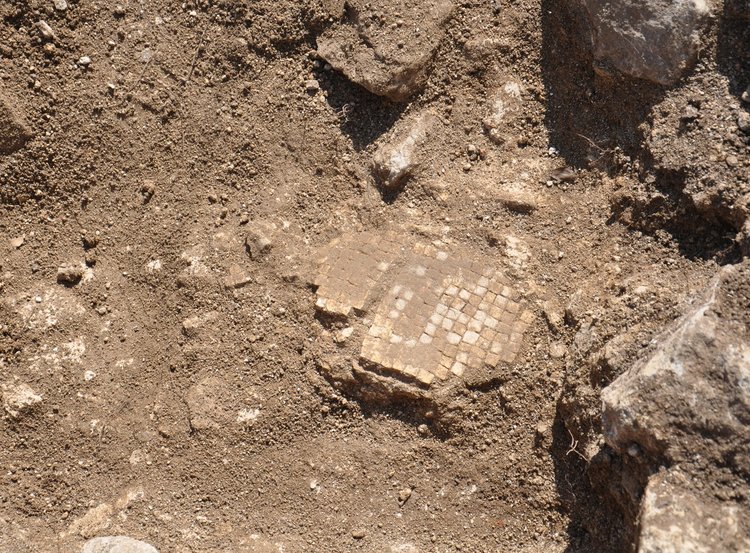
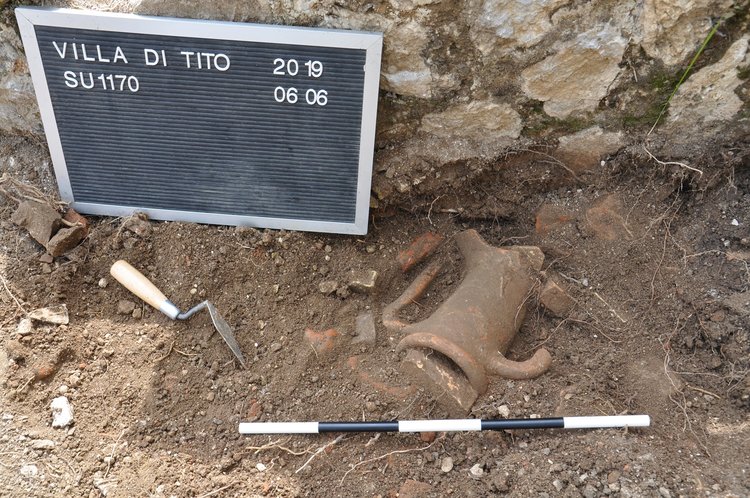
A good portion of the two-storey structure was revealed over the summer. Other notable finds were coins, stamped tiles, ceramic pots and transport amphorae, chunks of mosaic flooring, and incredibly intact brick walls. The Villa went through a series of renovations over the centuries, and was briefly repurposed after apparently being abandoned for a few hundred years. Environmental archaeology will yield more clues about the people: collecting and analyzing soil samples for pollen, seeds, charcoal, food remains and animal bones can indicate whether diets changed over time, pre-Roman conquest to post-conquest.

“We’re beginning to understand this transition, and the role played by these villas and estates in the process of creating a homogeneous imperial culture in Italy,” says McCallum. 

The SSHRC Insight grants are designed to promote research collaboration and partnerships. The Villa di Tito project team includes researchers from McMaster, Oxford, the University of Rome, the University of Nevada and Texas A&M. McCallum has invited Saint Mary’s colleagues in Geography and Chemistry to get involved, for everything from carbon 14 dating and chemical analysis to geomorphology and ground-penetrating radar.

Recruitment is underway for next summer’s field course, and students in all disciplines are welcome. McCallum admits it’s not the most glamourous work: “You’re outside all day for eight to 10 hours. It can get hot, it can rain, and there are bugs.” Even so, most students agree it’s an unforgettable learning experience.

Follow the project on Facebook via the Villa of Titus Archaeological Research Project and the Saint Mary’s Department of Modern Languages and Classics.     


New partnership breaks down job barriers for students with disabilities

Jobs and careers are top of mind for most young people and that includes youth with disabilities.

Now, a new partnership at Saint Mary’s is making it easier for Saint Mary’s students with disabilities to overcome employment barriers.

Launched this past May, the Student Employment Initiative is a joint program from the Saint Mary’s Career Services and The Fred Smithers Centre that helps students with disabilities find part-time and summer employment that matches their career aspirations. By subsidizing a portion of their wages, the initiative removes one of the common barriers facing new job seekers.

Participating students receive resume help, interview workshops, workplace accommodations and other supports, such as regular check-ins with Job Developer Ashley Burke who assesses the student’s progress and work conditions.

“The goal is to take students out of their comfort zone, challenge them in a worthwhile way, and provide meaningful work experience,” says Donnie Jeffrey, Manager, Career Services.

The initiative recently received a grant of $200,000 from the Nova Scotia Department of Labour and Advanced Education, something that Donnie Jeffrey, Manager, Career Services says validates “the success of this collaboration and shows the government’s commitment to Saint Mary’s and our students.”

Open to all faculties, the program concentrates on students in upper years, but there are no strict guidelines to stop students in any year from participating. Students are required to have a documented disability with The Fred Smithers Centre and be a recipient of a Nova Scotia issued student loan.

 Student success

Though the joint initiative is new, students are finding the service immensely helpful. Fourth year psychology student Jessie Rector, who found a job as a recruiter with event and personal security firm Shadow Security, said, “The direct job experience gives me the ability to be independent while working with a team. I am developing work-related skills and building a resume.” 

Building job confidence: Shadow Security Operations Manager Nate Martin hired psychology student Jessie Rector this summer through the Student Employment Initiative.

Building job confidence: Shadow Security Operations Manager Nate Martin hired psychology student Jessie Rector this summer through the Student Employment Initiative.

Jessie lived with anxiety as a teen, and in her first year of university noticed she was struggling writing tests and remembering information. She was later diagnosed with ADHD.

“The Fred Smithers Centre has helped me in so many ways: extra time on exams, extended paper deadlines and private examination rooms,” said Rector.

 Nate Martin, operations manager of Shadow Security also sees the value of the program.

“The program is great and Ashley has brought me a number of candidates. We screen them and they are good candidates. We do up to thirty events a week and we are expanding so we need both full-time and part-time workers,” he said. “I am so impressed with one young man that I am working on creating a position for him. I remember being 20 and I want to help young people get their start.”

Saint Mary’s has been providing support for students with disabilities for over forty years. In the early years, the Atlantic Centre, as it was known, existed to help students with hearing impairments. The Fred Smithers Centre now helps students with a range of disabilities both physical and mental health related including visual or hearing impairments, mental health issues and learning disabilities such as ADHD.

The Centre is named in honour of Dr. Fred Smithers, an entrepreneur and philanthropist whose generous support is the reason for The Centre’s recent growth and reach into the wider community. Today, The Centre helps hundreds of Saint Mary’s registered students every year and is considered the leading facility of its kind in Atlantic Canada.

This latest grant from the provincial government will support the program through fiscal year  2019/2020. Students who may qualify and who are not currently involved with this program, or with The Fred Smithers Centre are encouraged to reach out and see if this is a service that could benefit them.

For more information call 902.420.5452, email the centre at Fredsmithers.Centre@smu.ca or visit their website https://smu.ca/campus-life/fred-smithers-centre.html.


Mapping out the story of Halifax with BNUZ students

Sixteen students visiting from BNUZ recently got glimpse of the history of Halifax and into the lives of the many people and cultures that have contributed to city’s past, present, and future.

The students are on campus for the 8th annual BNUZ Summer Institute which provides a series of academic lectures and cultural workshops.

Will Flanagan, a cartographer and map librarian with the Geography and Environmental Studies Department, and Albert Lee, a noted photographer and historian of the Chinese experience in Nova Scotia led students an illustrated tour of the influences that have shaped Halifax.

Beginning with Mi'kmaq settlements thousands of years ago up to the present day, their tour outlined events such as early colonization by British and French settlers, the Halifax Explosion, World Wars I and II, the arrival of immigrant communities from around the world, and the razing of Africville. Each of these were examined as events that not only changed the shape and character of Halifax, but as episodes that shaped the cultural memory of its residents.

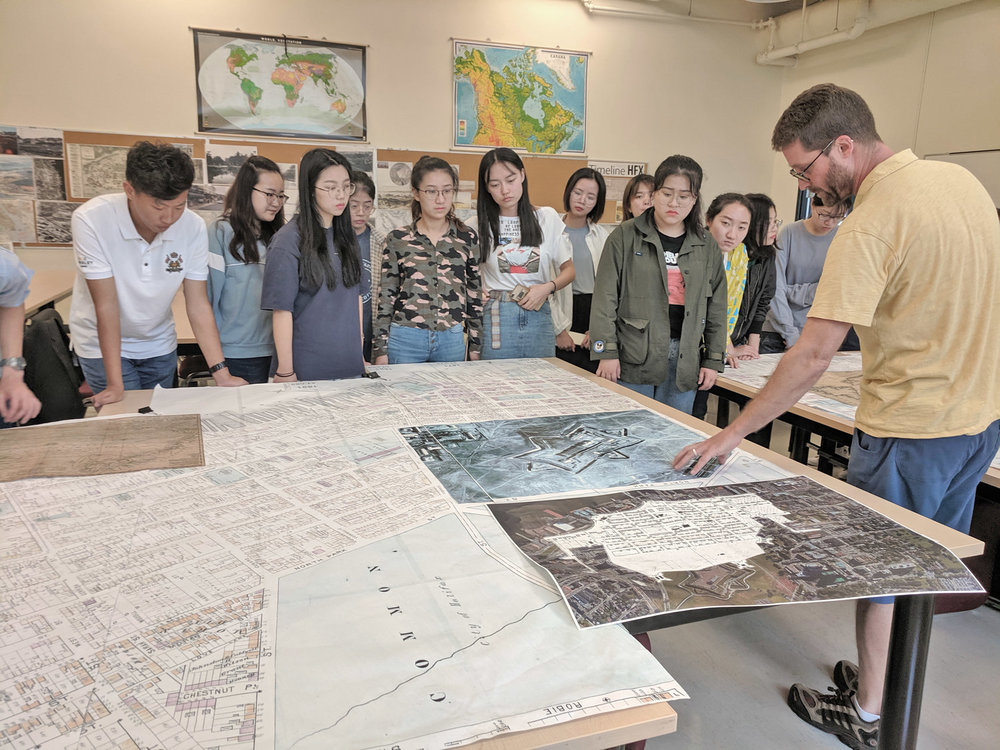
Setting the stage for the hands-on and interactive session was an enormous map of mid-19th century Halifax, overlaid in places with some of the earliest aerial photographs of the city. With the students gathered around the table, Prof. Flanagan used photographs, engravings, sketches, and even personal letters from early residents to illustrate the how the city has been shaped by social, economic, cultural, and political forces over the centuries.

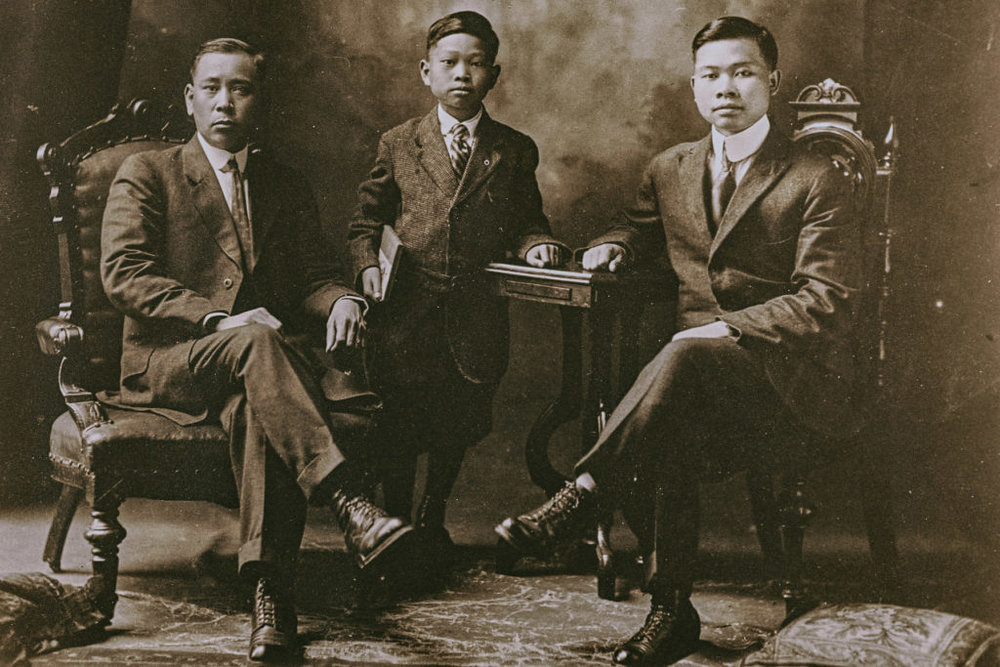
The second part of today’s class was led by Albert Lee, whose grandfather Ngoon Lee was among the earliest Chinese immigrants to call Halifax home. Mr. Lee explained that his grandfather, who hailed from the small village of Hoi Ping in Guangdong Province, endured a six-week voyage to Canada, finally arriving in Halifax by box car in 1906. One of fewer than 20 Chinese immigrants living in Halifax at the turn of the century, he set up the Sam Wah Laundry on Bliss Street in a renovated boat shed. Having established a going concern (one of the few enterprises early Chinese immigrants were permitted to operate), he sent for his son in China to join him. Ngoon Lee was then forced to pay the $500 Head Tax when his son (later known as Chuck) arrived in Vancouver, which at the time represented well over a year’s salary. Soon after, Canada passed the Chinese Exclusion Act (1923-1947), which further kept families apart by preventing Chinese women from emigrating to Canada.

Despite the hardships and discrimination faced by early Chinese immigrants, Mr. Lee explained that early Chinese settlers thrived in part because of the strong connections they built with other marginalized peoples, including the Mi’kmaq, Acadian, and African Nova Scotian communities around what is now Halifax Regional Municipality. After decades of discrimination and exclusion, Chinese Nova Scotians have gone on to become some of the city’s most successful and well-respected residents.

Albert Lee is included in the Canadian Museum of Immigration at Pier 21 Oral Histories Project. A clip can be found here: https://pier21.ca/content/oral-history-151021al-with-albert-lee

Saint Mary’s part of new $6.5 million offshore de-risking project

Adam MacDonald, NS Department of Energy & Mines, examines a core sample taken during an offshore coring cruise. (Source: Genome Atlantic)

Adam MacDonald, NS Department of Energy & Mines, examines a core sample taken during an offshore coring cruise. (Source: Genome Atlantic)

Saint Mary’s University is part of a major new initiative that adds genomics technologies to traditional geoscience with the aim to reduce the risk for oil exploration in Nova Scotia’s offshore. 

The $6.5 million project, Validation and Integration of Genomics Solutions for Offshore Oil Exploration in Nova Scotia and Beyond, was announced by the Honourable Kirsty Duncan, Minister of Science and Sport, as one of 20 projects across Canada awarded through Genome Canada’s Genomic Applications Partnership Program (GAPP). 

The initiative builds on the work of a previous GAPP project in which genomics data and results were compared with petroleum geochemistry data to paint the clearest picture yet of petroleum deposits in areas of Nova Scotia’s offshore. This new project, involving the same team, will take that work to the next level by delivering high-resolution tools and maps developed with the help of autonomous underwater vehicles (AUVs), advanced ‘omics technologies and machine learning.

 “The idea of using genomic (DNA-based) tools to help de-risk offshore oil and gas exploration efforts has transitioned from a ‘what if’ idea not that long ago into a compelling opportunity that has earned the support of this project’s many partners,” said Steve Armstrong, President and CEO of Genome Atlantic. “We are extremely pleased to have the opportunity to work with such a dedicated and talented group committed to establishing Nova Scotia as a leader within this globally competitive sector.”

Project co-lead Dr. Todd Ventura

Project co-lead Dr. Todd Ventura

The project is co-led by Dr. Todd Ventura (Saint Mary’s University), Dr. Casey Hubert (University of Calgary), and Adam MacDonald (Nova Scotia Department of Energy and Mines) and is managed by Genome Atlantic in partnership with Genome Alberta.

“This GAPP is expanding on the microbiological toolkit with the addition of lipidomics,” said Dr. Todd Ventura, Saint Mary’s University.  “This may allow us the ability to detect more ancient seepage events that can lead to the discovery of new active petroleum systems in the offshore.”

Project partners include the Nova Scotia Department of Energy and Mines; the Geological Survey of Canada, Natural Resources Canada; Research Nova Scotia; Nova Scotia Offshore Energy Research Association (OERA); Mitacs Canada; Applied Petroleum Technology (APT); the University of Calgary; and Saint Mary’s University.

“De-risking our offshore for exploration is critical for Nova Scotia to remain competitive in a global market,” said Adam MacDonald, NS Department of Energy and Mines. “Adding new tools and building innovative and integrated projects such as this collaboration with the University of Calgary and Saint Mary’s University gains recognition and attention to our quality and capacity to compete. Not only do we de-risk exploration but this project provides environmental baseline information on the benthic life and communities that may be dependent on natural occurrences of hydrocarbon on the seafloor.”

The Province of Nova Scotia’s commitment to the project is part of its $12 million investment in offshore R&D over the next four years.

“For generations, the offshore has paid off for Nova Scotians and it still holds tremendous potential to grow our economy and create jobs across the province, especially in rural areas,” said Nova Scotia Energy and Mines Minister Derek Mombourquette. “By continuing to invest in leading-edge research we will find cleaner and safer ways to look for resources and attract international investment to our shores.”