
SMU welcomes Ryan Francis as first Indigenous Visiting Fellow

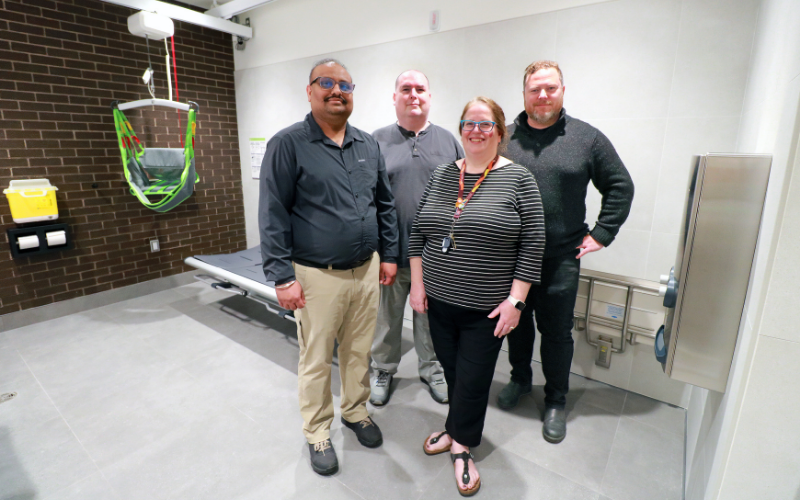
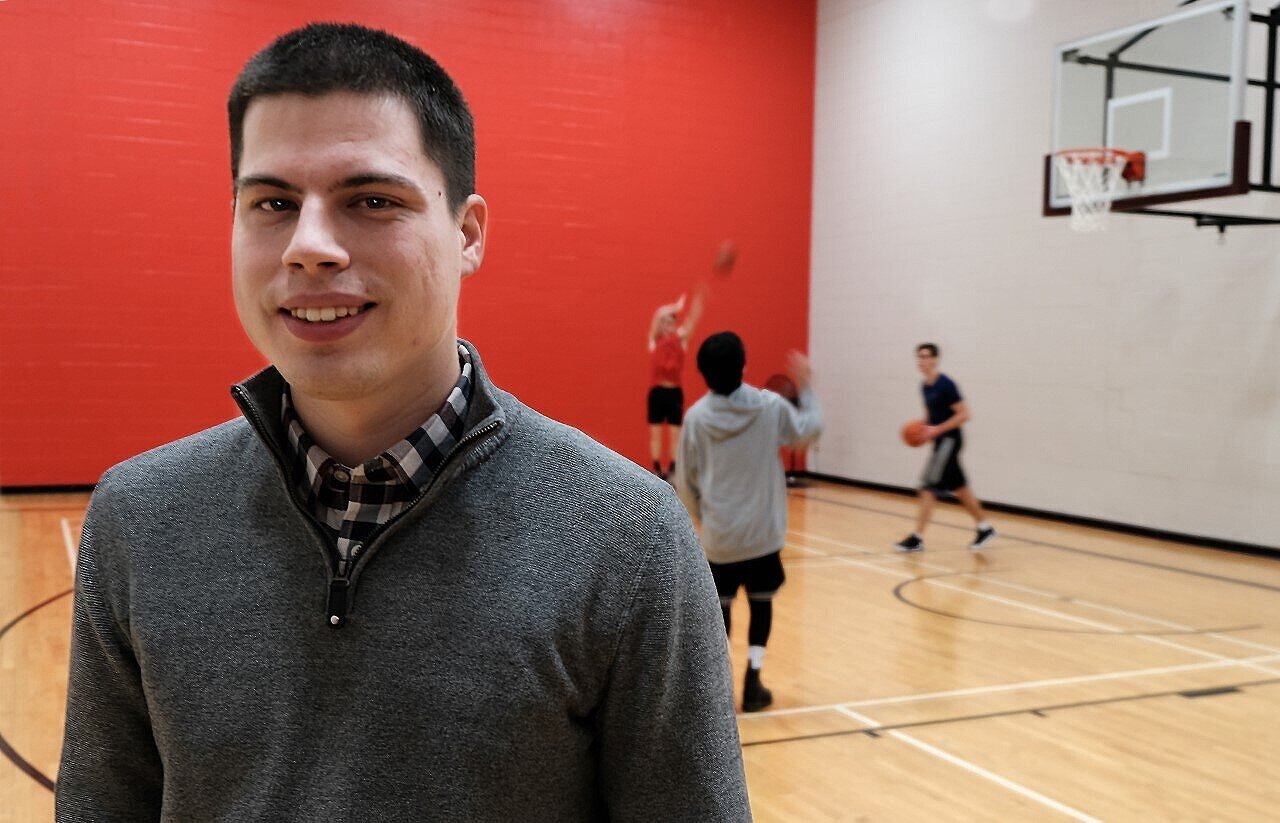
Ryan Francis in the Homburg Centre

Ryan Francis in the Homburg Centre

Ryan Francis has only been on campus for a couple of weeks and already he’s bringing new ways of thinking to Saint Mary’s, as the university’s first Indigenous Visiting Fellow. Starting with the Red Tape Game on January 22 in the Dauphinee Centre, between the men’s Huskies hockey team and the Acadia Axemen. The game aims to promote inclusion in ice hockey, with a ceremonial puck drop, Mi’kmaw flag raising and a special focus on Indigenous athletes and reconciliation themes.

Sport can be a unifying force and a meaningful way to connect with culture, says Francis, who grew up in Cole Harbour and is a member of the Acadia First Nation. 

“For me, getting involved with the National Aboriginal Hockey Championships really connected me with my culture. I was always aware of my culture but growing up off reserve, I had that experience of sport really helping to connect me to my culture,” he says.

He played on Team Atlantic in the national championships in 2012 and has remained involved in various volunteer coaching capacities – currently as Head Coach for the women’s Team Atlantic program.

Even before his four-month fellowship began with the Faculty of Arts on January 1, Francis was working with Athletics & Recreation and the Centre for the Study of Sport and Health to organize the Red Tape Game. He’s also a key player as Saint Mary’s gears up to be one of the venues for the 2020 North American Indigenous Games, to be held in Kjipuktuk (Halifax) and Millbrook First Nation for the first time. The event is expected to bring more than 5,000 participants to Mi’kmaki this summer, with many staying and competing on campus.

Francis was an organizer for the 2019 Atlantic Indigenous Games, which took place at Saint Mary’s and included educational sessions along with the sport competitions. “It was really cool to see the opportunity that campus life gave to the participants,” he recalls. “We hosted some sessions in the McNally Auditorium and a few times as the kids walked into the space, they said ‘Oh, it’s just like the movies!’ They were able to experience what university was like and they got to imagine themselves in that setting. Not a lot of them had that opportunity before, so it was pretty special.”

He holds a Master of Physical Education degree from Memorial University, and a Bachelor of Science from Liberty University in Lynchburg, Virginia, with a major in sport management and minor in sport outreach. Now working as a Sport Consultant within the Communities, Sport, and Recreation Division of the Nova Scotia Department of Communities, Culture & Heritage, Francis coordinates education sessions with sport and recreation organizations across the province. He also leads the division’s Sport Hosting Program and initiatives on sport concussions, while supporting the government’s gender equity and Indigenous sport files. Previously, he worked with Mi’kmaw Kina’matnewey, the Aboriginal Sport Circle, and in several roles with Sport Nova Scotia.

His fellowship runs through April 30. The new position builds on Saint Mary’s ongoing initiatives to engage with Indigenous communities, strengthen intercultural research and curriculum, and respond to the Calls to Action of the Truth and Reconciliation Commission and our own university task force. Francis applied because he felt he could assist in making the academic environment a more welcoming place for Indigenous students, and he’s also intrigued by the research dynamic between athletics and academics. 

“The Faculty of Arts was open to that and encouraged that. Recognizing the potential of sport and recreation in bringing people together and providing those intercultural lessons,” he says.

For his research, Francis is focusing on Indigenous youth and sport, with links to the Certificate in Health, Wellness, and Sport in Society. He is also coordinating the delivery of Indigenous coaching modules for on and off campus. These courses will cover such topics as dealing with racism in sport, and holistic approaches to coaching. Stay tuned for news about more upcoming events, projects and opportunities for discussion, and follow him on Twitter at @RyanFrancis58.    
Saint Mary's community celebrates the Dauphinee Centre

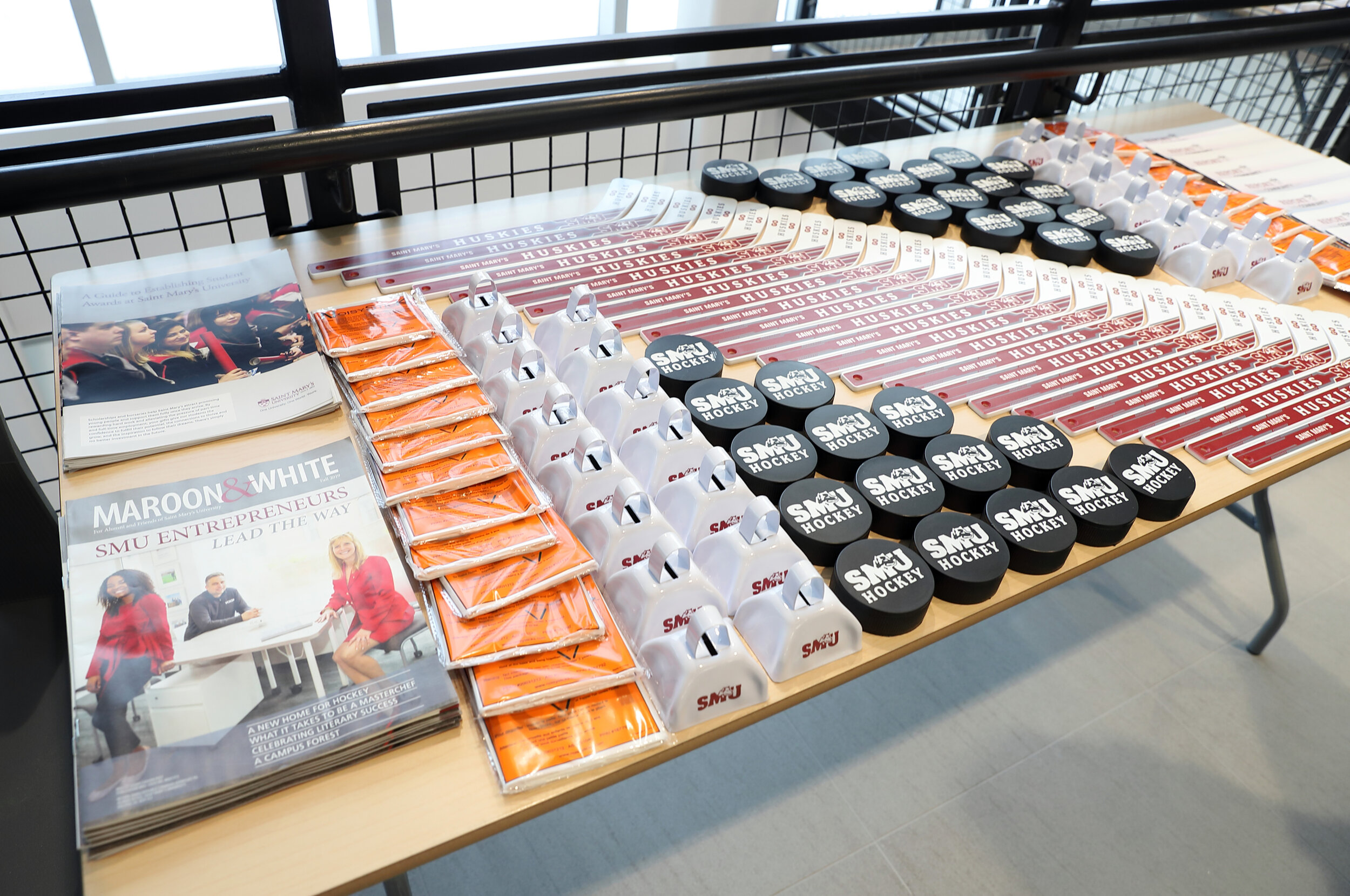
Saint Mary’s University celebrates the Dauphinee Centre.

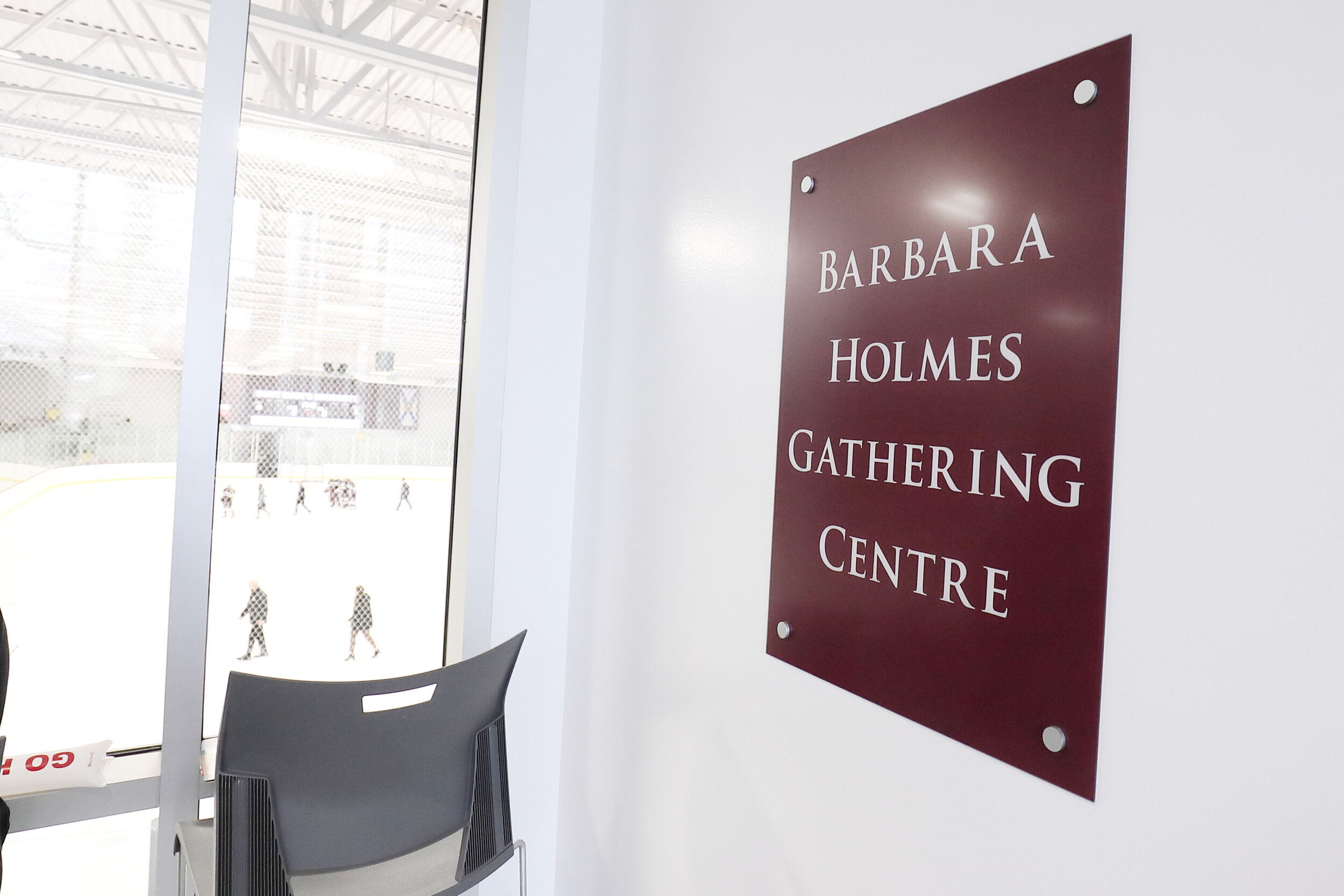
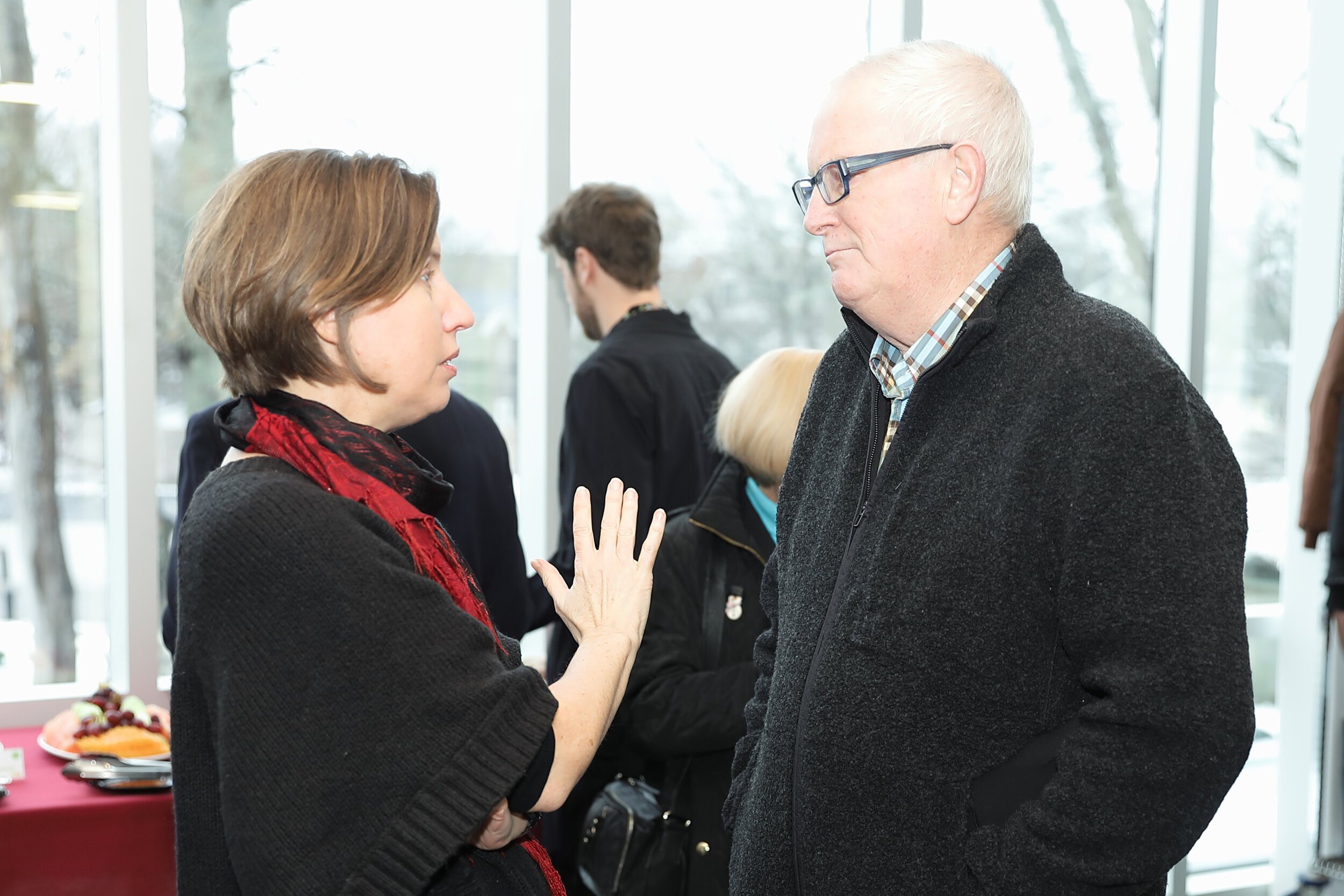
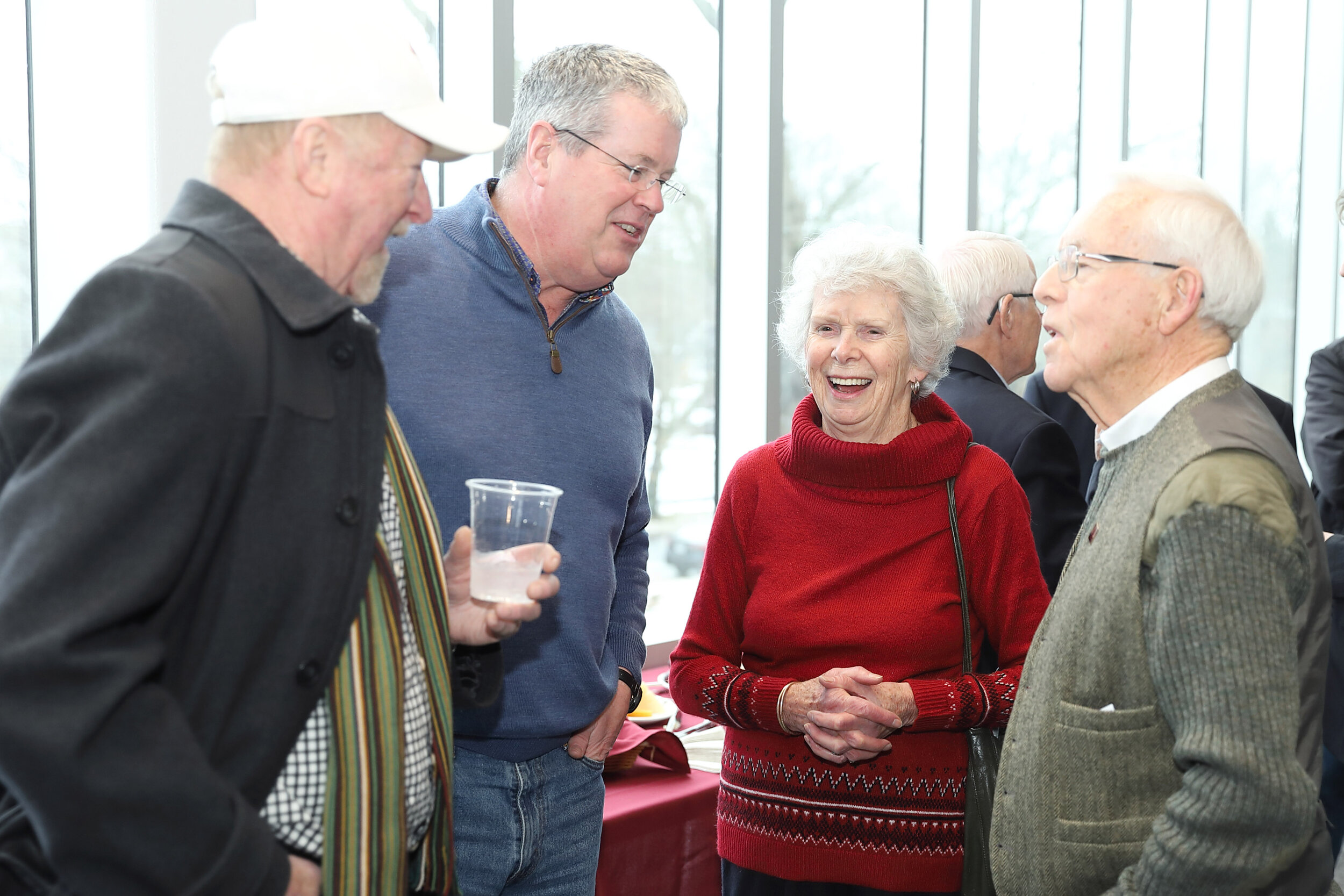
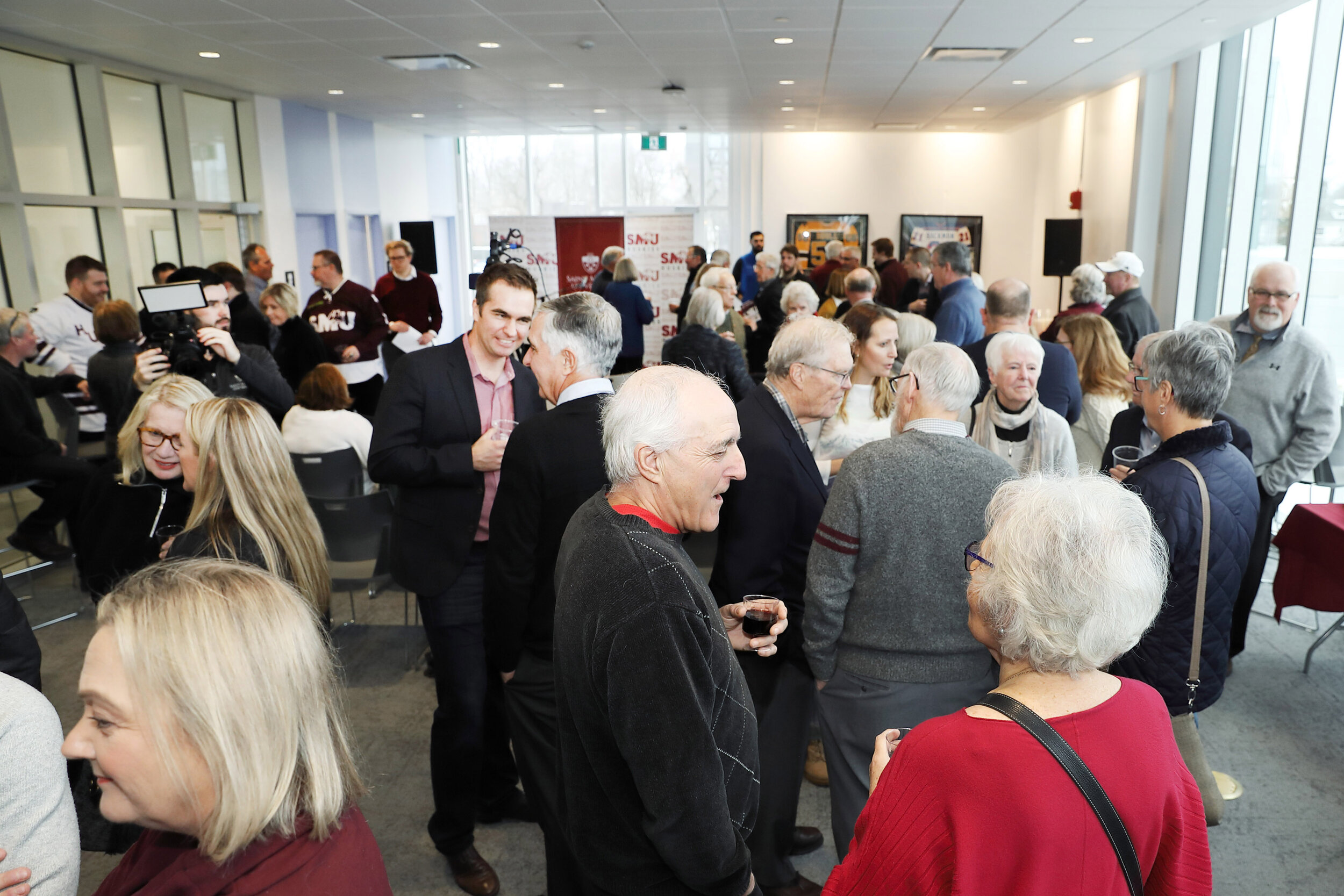
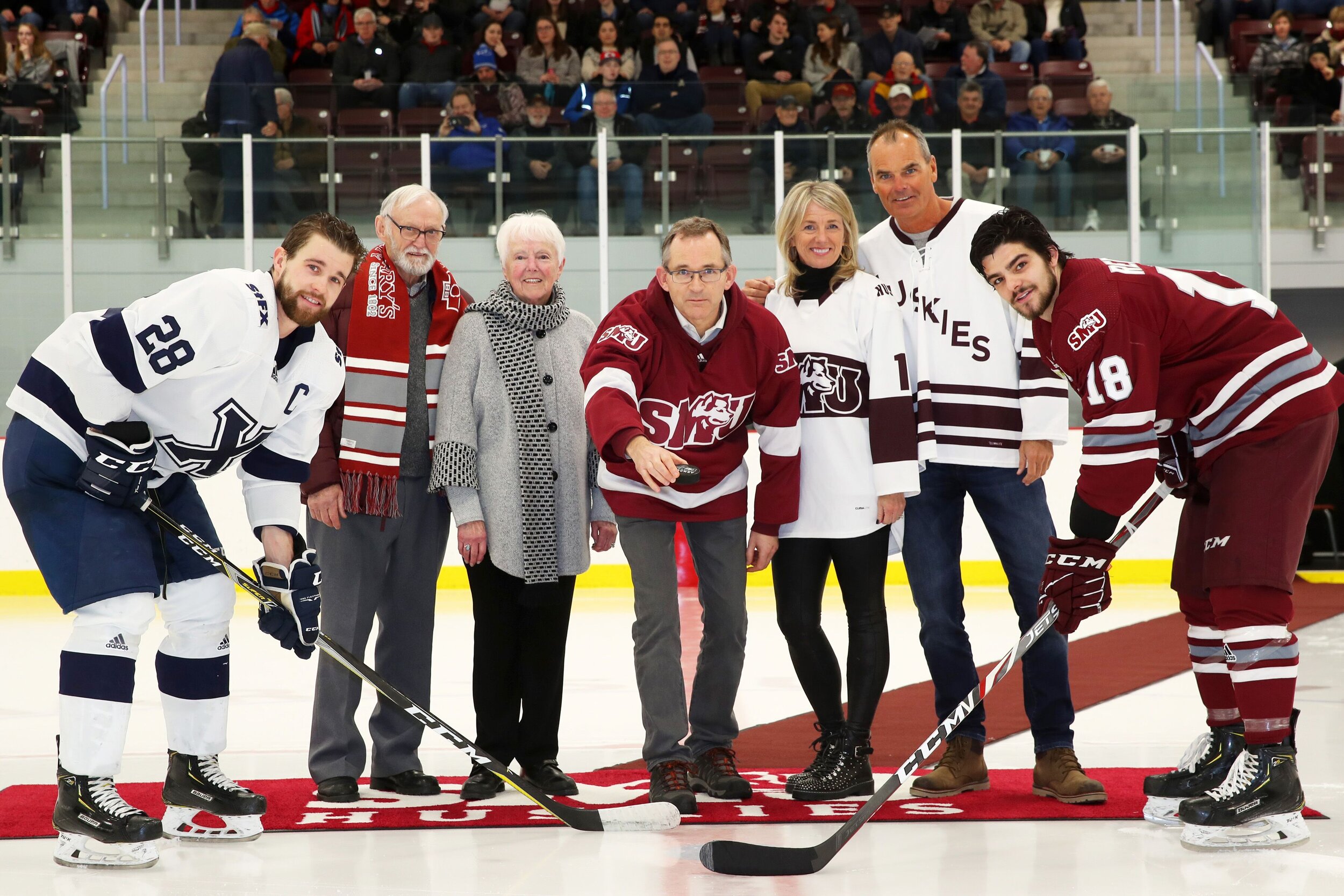
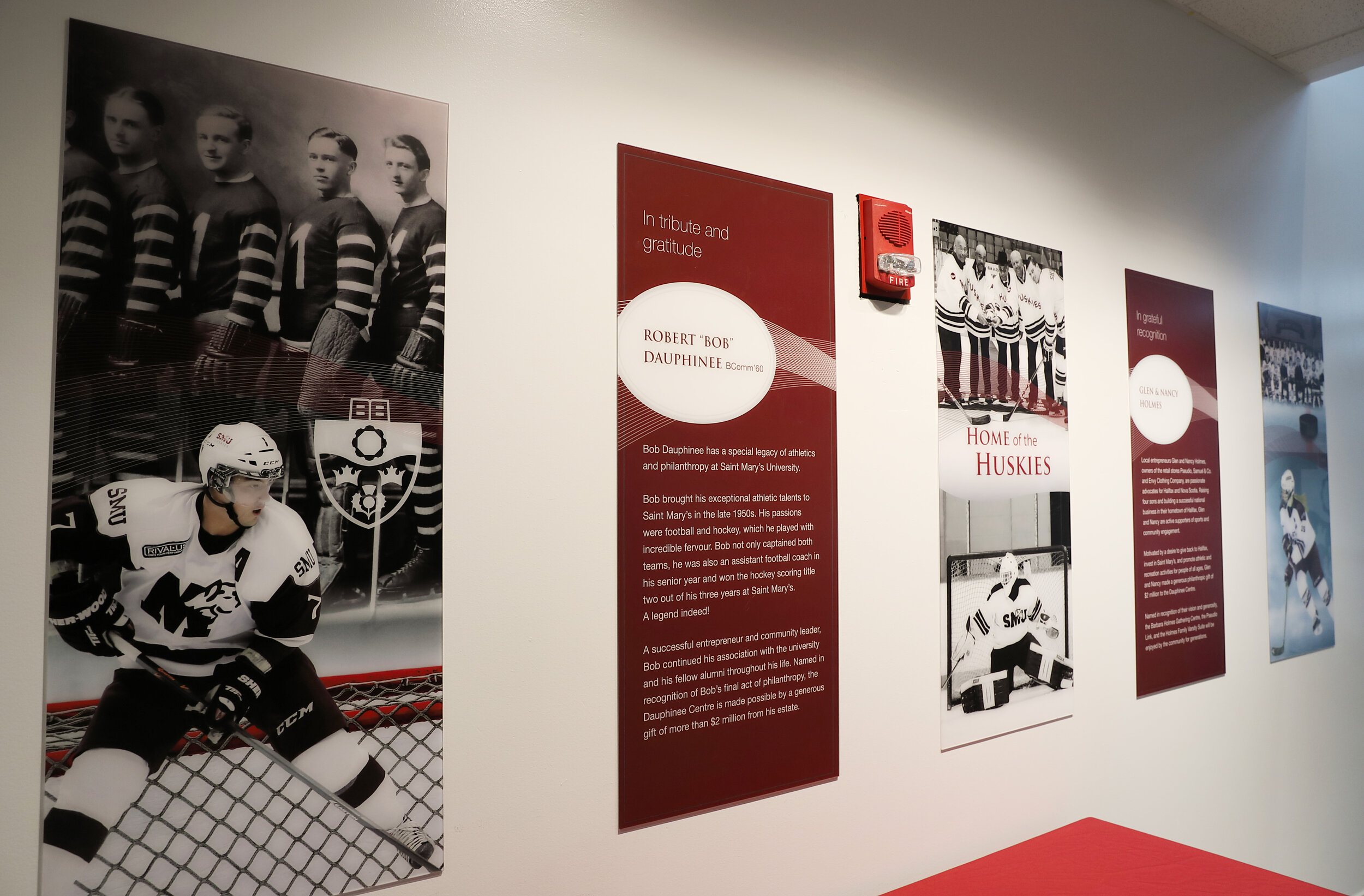
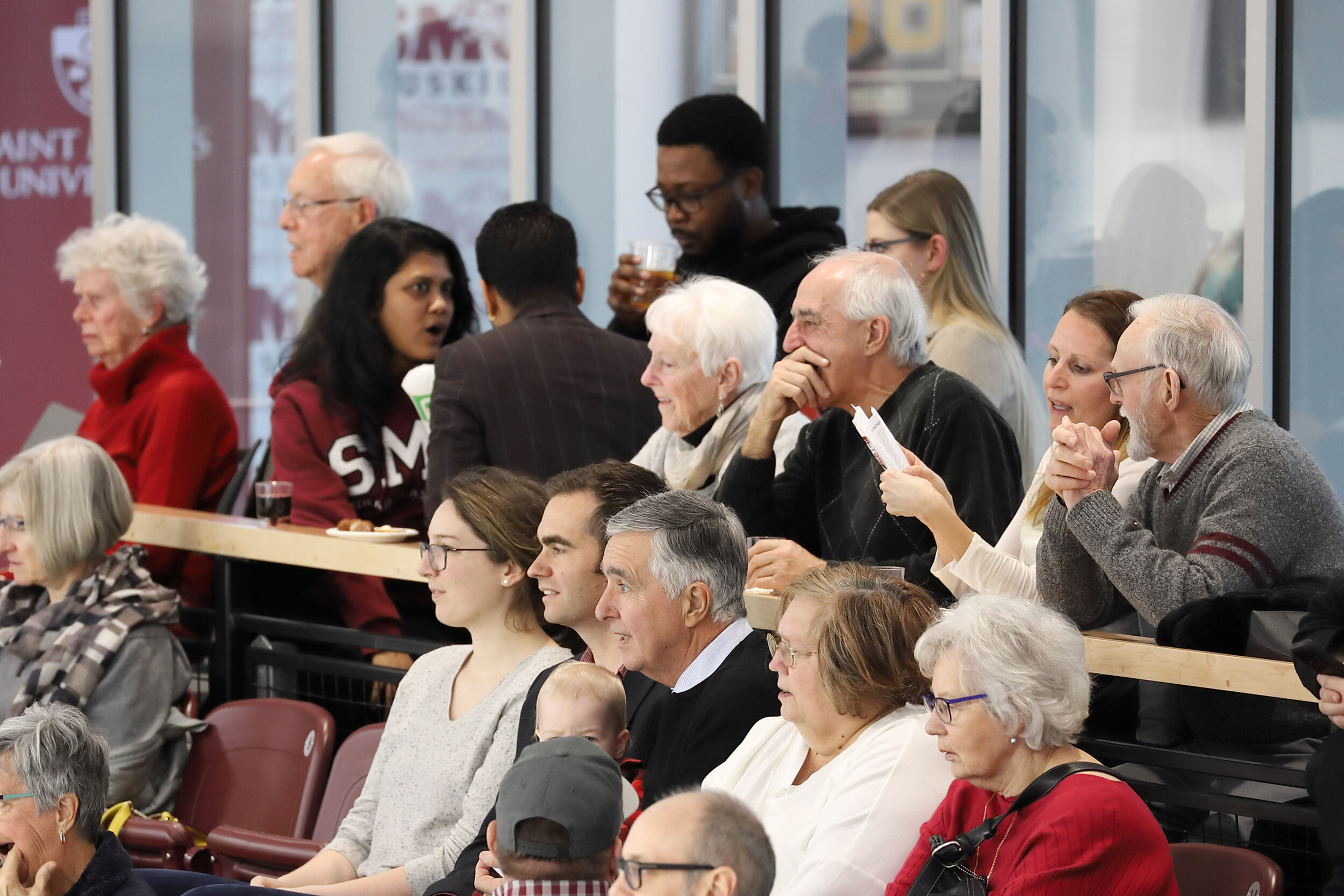
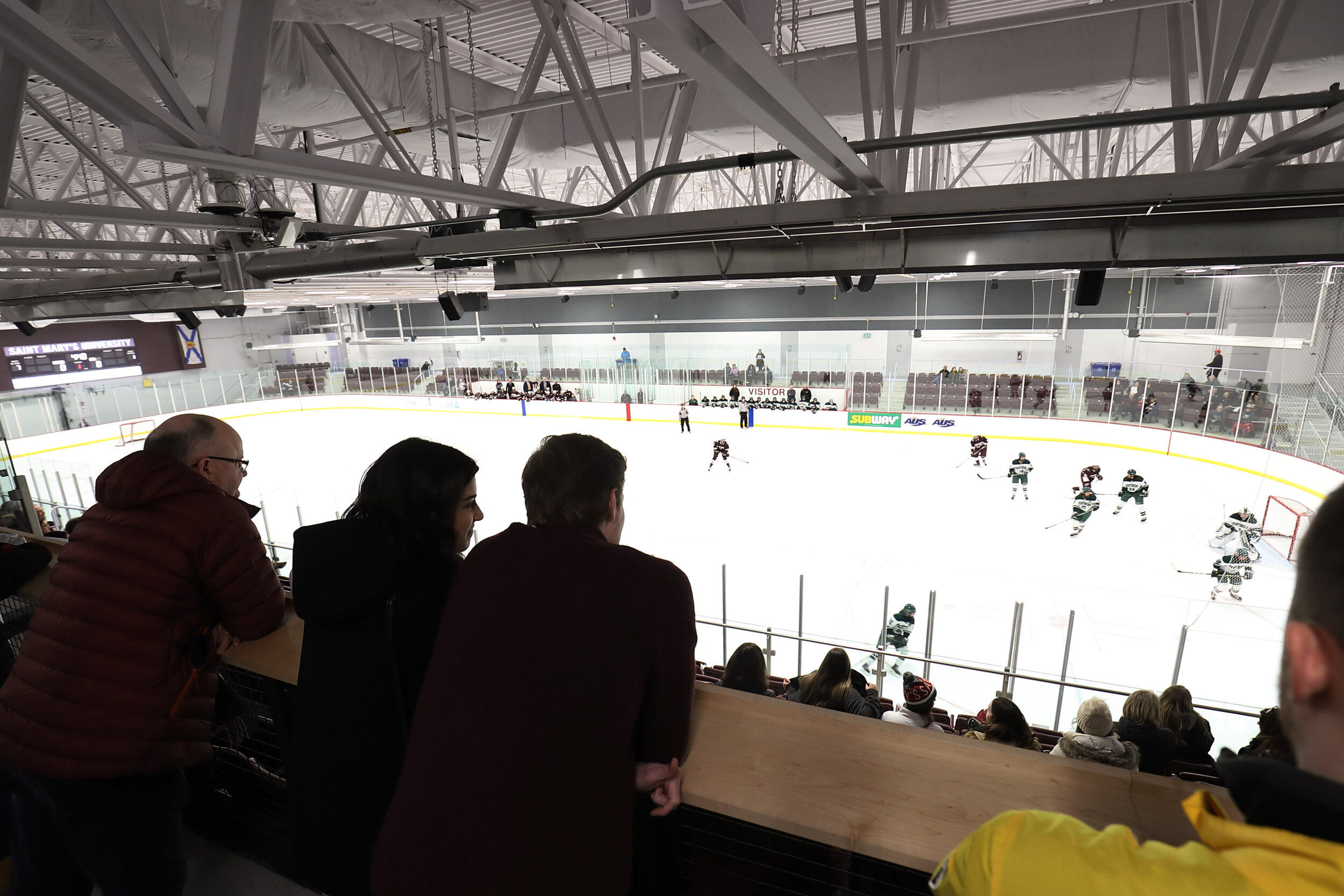
A new chapter in Huskies hockey lore was recognized and lauded on Saturday, Jan 11. On Hockey Day at SMU, the Santamarian community came together in the Barbara Holmes Gathering Centre to celebrate the Dauphinee Centre and the donors who supported the project: Glen and Nancy Holmes, and the late Bob Dauphinee BComm’60.

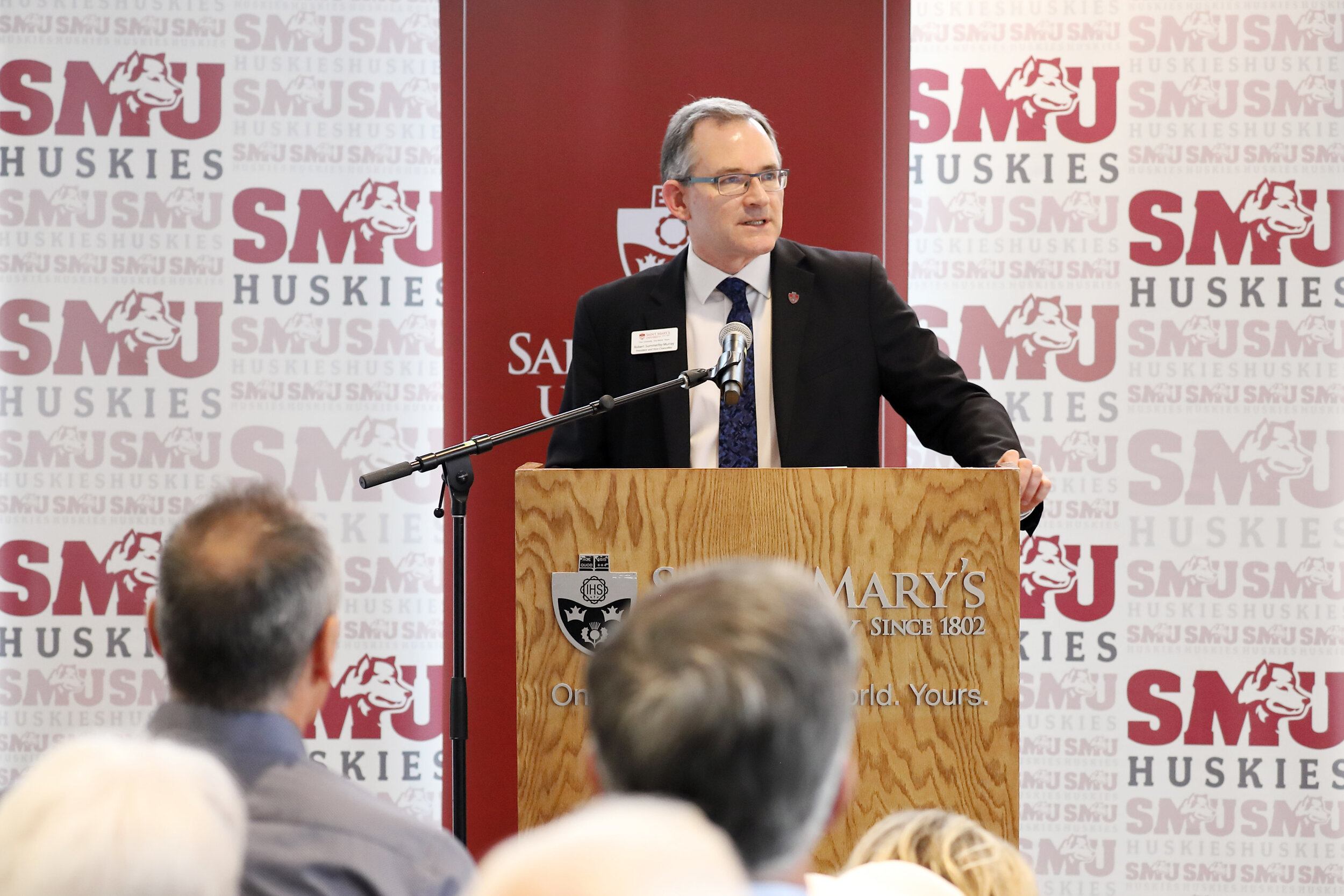
"Saint Mary's University has a proud and successful hockey tradition that will continue for generations to come in the Dauphinee Centre," said Saint Mary's President Dr. Robert Summerby-Murray. "This new arena will contribute to the continued success of our varsity men's and women's hockey teams, and provides our athletes and coaches with a new home to continue their tradition of excellence."

The Dauphinee Centre is named in honour of the late Bob Dauphinee, a Saint Mary's alumnus and community champion, who donated $2 million for an arena through his estate.

The Dauphinee Centre is the home of both the women's and men's hockey teams. The centre features an NHL-sized ice surface with seating for 850 fans and ample standing room that brings the capacity to more than 1200 people. The building is fully accessible with an elevator between floors and six accessible changing rooms for visiting teams, community-based recreational sports groups and summer camps.

On the upper level is a heated gathering centre with an attached room for spectators overlooking the ice surface. This community-oriented space is named the Barbara Holmes Gathering Centre.

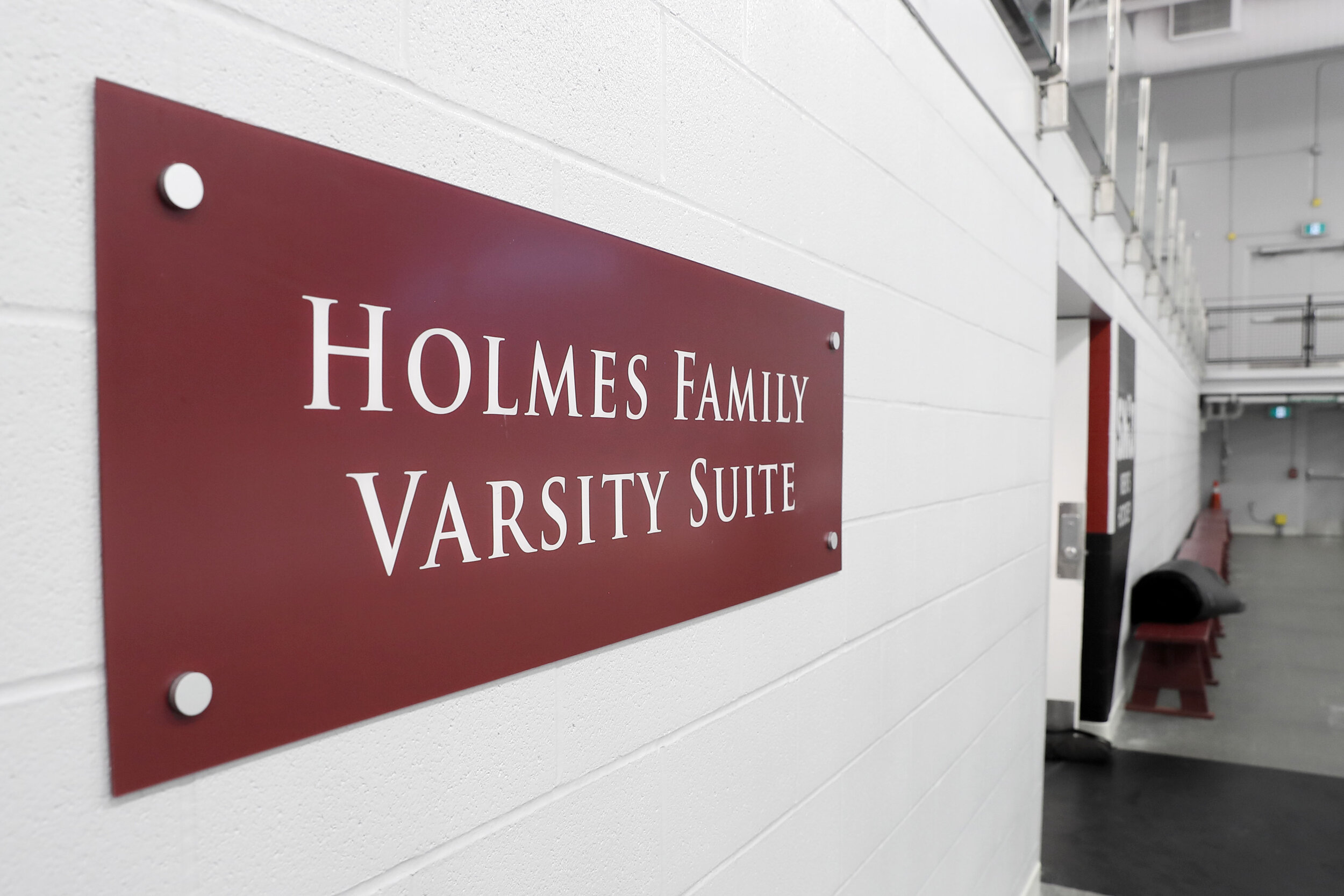
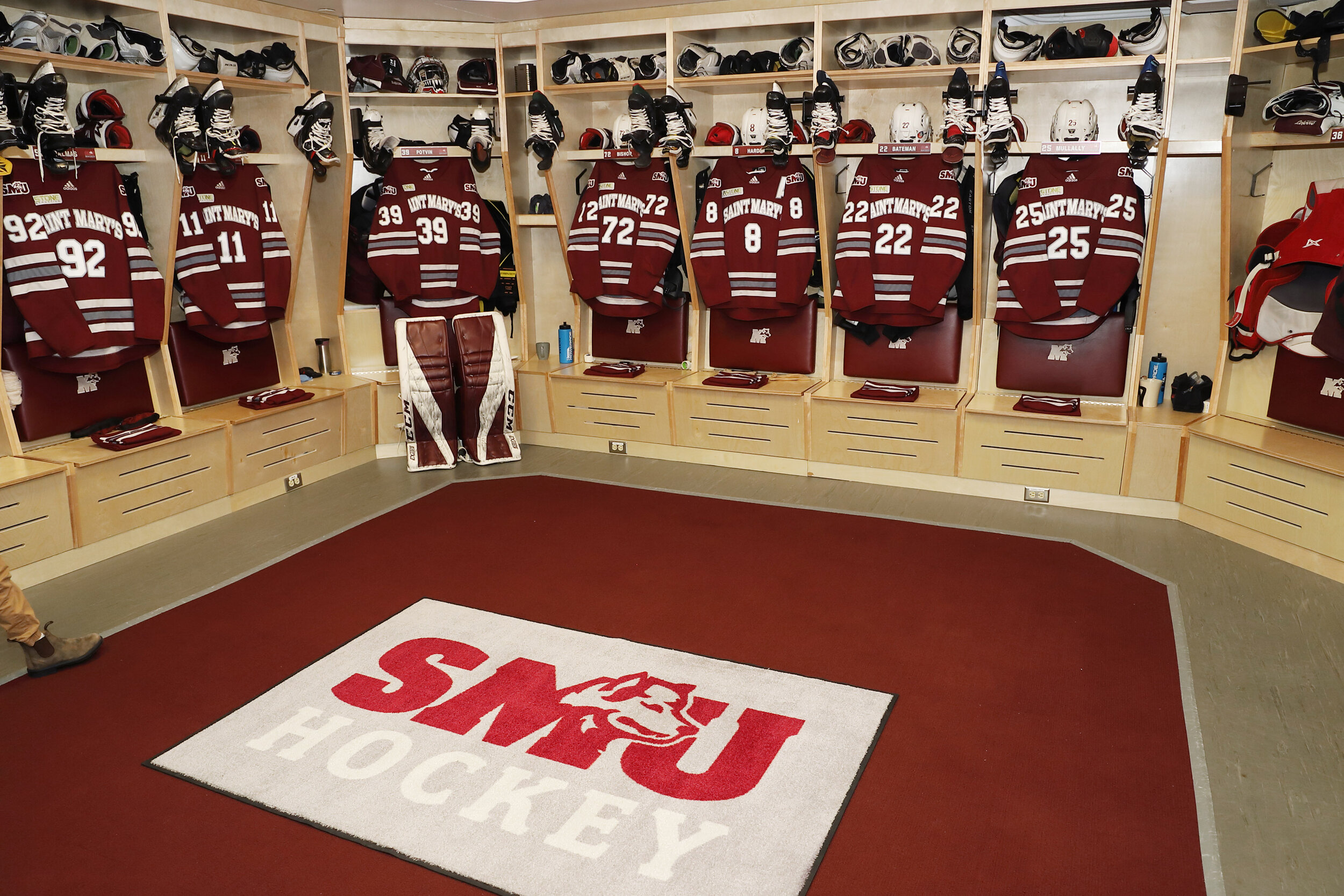
The Pseudio Link, a pedway connecting the Homburg Centre for Health & Wellness to the new arena, is another new addition. The Huskies also have a great new area to prepare for games in the Holmes Family Varsity Suite.

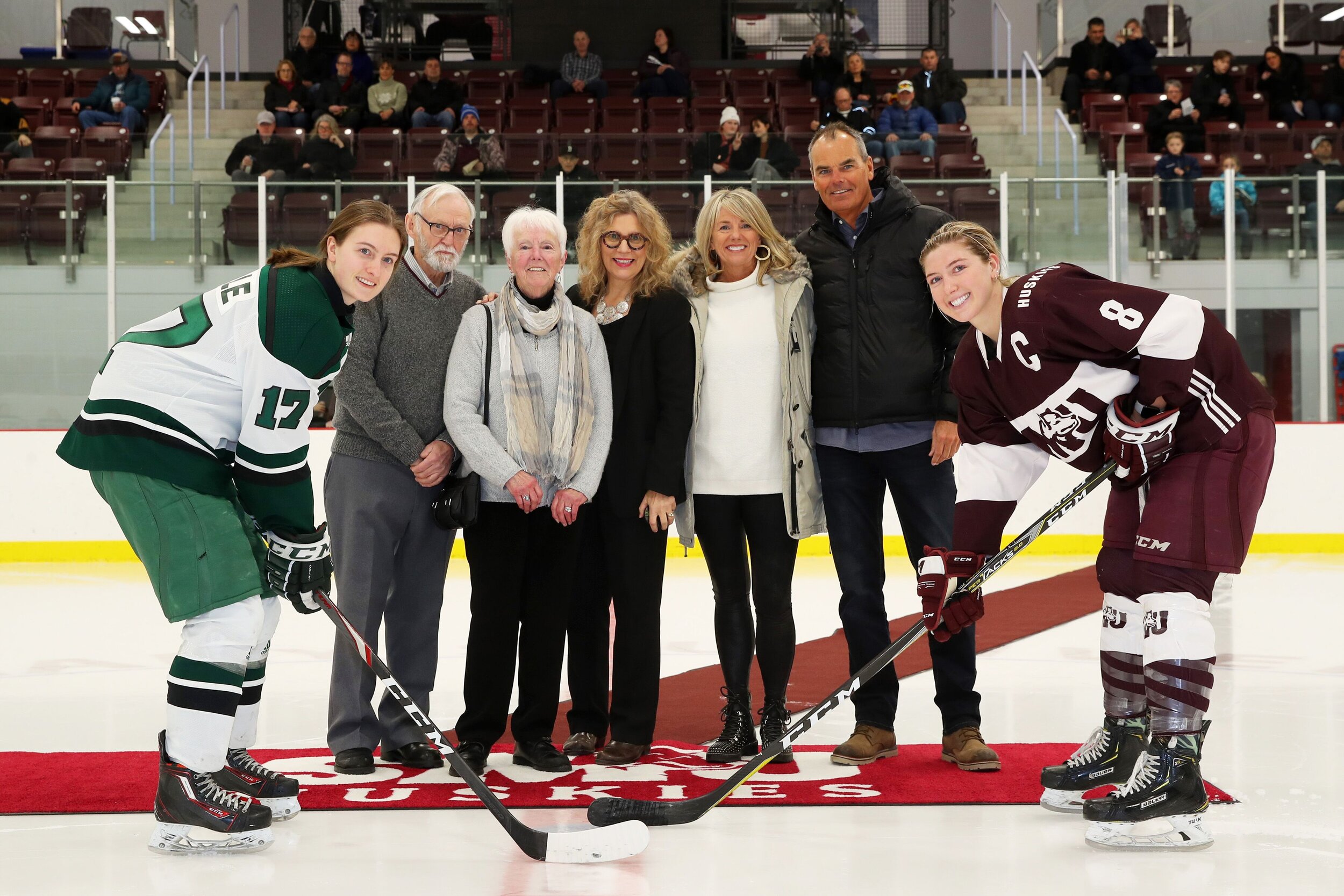
These enhancements and the varsity suite were made possible by a generous gift of $2 million from local entrepreneurs Glen and Nancy Holmes, parents of Saint Mary's students. Glen and Nancy Holmes are the owners of Pseudio, Samuel & Co and Envy.

“The main reason I did this was that I love Halifax – I love everything about Halifax. There was a need for a rink, and we were in a position that we were able to pull it together,” said Glen Holmes. “I got a lot more out of this than I put into it. Everything I do in life, normally at this size, there’s a return that’s expected. This was more than any financial return I could have asked for. ”

Saint Mary’s University mourns the death of students in Tehran crash

Flags flying at half-mast.

Flags flying at half-mast.

I am deeply saddened to share with the university community that Maryam Malek and Fatemeh Mahmoodi, both students in the Master of Finance program at Saint Mary’s, lost their lives in the tragic Ukraine International Airlines plane crash in Tehran Wednesday morning.

It has also been reported that another young woman, Mahdieh Ghavi, was on the flight travelling to Halifax, with plans to study in the city.

Maryam and Fatemeh were intelligent and passionate Santamarians and Mahdieh was about to start her post-secondary journey. Their loss will be felt keenly by many in our university, in Halifax and across the global community.

Flags at Saint Mary’s University are being flown at half-staff in mourning and solidarity. Classes for Master of Finance students have been cancelled today (Thursday, January 9th) as they mourn the loss of their fellow students.

All are invited to join a gathering being held tomorrow, Friday, January 10th, at 3 pm in Loyola Conference Hall, to remember Maryam and Fatemeh.

On behalf of the entire Saint Mary’s community, I extend deepest sympathies to the many families and friends who are grieving in the wake of this terrible tragedy, not only those here in Halifax, but to the many others across Canada, in Iran, and around the world. I recognize also the grief of members of many other universities and colleges across Canada who have been touched by this tragedy.

Dr. Robert Summerby-Murray
President and Vice-Chancellor
Saint Mary’s University


The supports below are available to all within the Saint Mary’s community:

  • The Counselling Centre
    4th Floor, Student Centre
    902.420.5615  / counselling@smu.ca 
    Drop-ins welcome 
     

  • Employee and Family Assistance Program (EFAP)
    https://smu.ca/about/efap.html
     

  • Mental Health Mobile Crisis Team (24/7, telephone response)
    Crisis support across Nova Scotia
    902.429.8167 or 1.888.429.8167
     

  • Student Health Centre
    4th Floor, Student Centre
    902.420.5611
     

  • Good2Talk
    24/7 free and confidential phone counselling
    1.833.292.3698 
     

  • SMUSA Health Plan is providing services through I.M. WELL. Please contact the SMUSA Health Plan Office for assistance:
    SMUSA Health Plan Office
    5th Floor Student Centre
    902-496-8754; or, if you wish to speak directly with a counsellor:
     

  • I.M. Well (24/7, 365 days per year) 
    Download (I.M. Well) Counselling App, and/or resources and live chat available for ALL students: 
    1.877.234.5327
     

  • Grief consultation will be available on campus. For further information please  email: healthplan.smusa@smu.ca

Saint Mary’s University statement on plane crash in Iran

We are aware of reports that Maryam Malek and Fatemeh Mahmoodi, both current students in our Master of Finance program, were listed on the passenger manifest of Ukraine International Airline flight PS752 which crashed in Tehran.

This is an evolving situation and the university continues to work with the relevant authorities for more information.

We extend our thoughts to family, friends and loved ones of anyone impacted by this tragedy.
 
Supports are available to all within the Saint Mary’s community:

  • The Counselling Centre
    4th Floor, Student Centre
    902.420.5615  / counselling@smu.ca 
    Drop-ins welcome 

  • Employee and Family Assistance Program (EFAP)

    https://smu.ca/about/efap.html

  • Mental Health Mobile Crisis Team (24/7, telephone response)
    Crisis support across Nova Scotia
    902.429.8167 or 1.888.429.8167

  • Student Health Centre
    4th Floor, Student Centre
    902.420.5611

  • Good2Talk
    24/7 free and confidential phone counselling
    1.833.292.3698 

  • SMUSA Health Plan is providing services through I.M. WELL.
    Please contact the SMUSA Health Plan Office for assistance: SMUSA Health Plan Office, 5th Floor Student Centre, 902-496-8754; or, if you wish to speak directly with a counsellor:

  • I.M. Well (24/7, 365 days per year) 
    Download (I.M. Well) Counselling App, and/or resources and live chat available for ALL students: 
    1.877.234.5327

  • Grief Consultation will be available on campus. For further information please email: healthplan.smusa@smu.ca

Venture capital students celebrate another successful year

A04I5036.jpg

For start-up businesses, finding capital can seem like a never-ending battle. Competitions, elevator pitches and networking are all done in the hopes of finding those with the power to bring an idea to reality. The Venture Grade at the Sobey School of Business puts that power in the hands of students.

Dr. Ellen Farrell is part of the Venture Grade governance team from Saint Mary’s University.

“Venture Grade is Canada’s most comprehensive venture capital university program. It involves theoretical courses, practical courses, and a $250,000 fund that the students raise themselves,” she says. “It also includes extensive engagement in the community and competing in the Canadian Venture Capital Investment Competition, as well as others. Our students have competed in New England against the best universities in the world.”

Dec. 12, 2019 saw Venture Grade host its fourth annual meeting in the Scotiabank Theater at Saint Mary’s University. The team outlined their achievements from 2019, including raising $35,000 for the fund. They also invested in two new companies this year: Ashored and Aurea Technologies. Both are local businesses that provide sustainable solutions to their respective industries of oceans technology and wind-power technology. Venture Grade invested $30,000 in Ashored, and $20,000 in Aurea.

Cat Adalay is the CEO of Aurea. “The money is going to be used for launching our first product, which is the Shine turbine, into the consumer market and to fulfill not only pre-orders, but orders made by retailers that we’re already in the process of onboarding,” she says. Adalay also says that the investment will help Aurea to explore new technologies and potential new markets.

The annual meeting also featured a discussion with Jevon MacDonald, serial entrepreneur and CEO of Manifold. MacDonald spoke about his own experiences with entrepreneurship, venture capital and the lessons he learned through starting and running numerous businesses.

The common thread through the discussion was that there is no one correct way to run or fund a new business. “Anyone who tells you there is one single way to do something is full of it. They just haven’t done it enough times” he chuckles.

As Venture Grade puts a successful 2019 behind them, the team is already looking towards next year. “My hope is that Venture Grade will become a prime initiative of the university and be promoted outside of the school,” says Dr. Farrell. “In that way, we will draw students to Saint Mary’s who are interested in entrepreneurship and its financing.”

She says that the number of students involved that are entrepreneurs themselves speaks to the value of the program in “teaching entrepreneurship from the inside out.”

For more information on Venture Grade, visit https://venturegrade.ca/

Award-winning local authors at Saint Mary’s Reading Series

A pair of very different authors from Inverness kept a full house spellbound at the most recent Saint Mary’s Reading Series event, Dec. 4 in the Patrick Power Library Classroom.

Frank Macdonald shared passages from his hilarious novel, The Smeltdog Man, published in October 2018 by Pottersfield Press. The book tells the tale of a Cape Bretoner who learns to survive in the corporate world after his accidental invention – a marijuana-induced, munchie-inspired ‘Smeltdog’ – evolves into Canada’s most successful fast food franchise, the Good Karma Corporation. 

Macdonald is the award-winning author of A Forest for Calum and other novels, short stories, plays, poetry and songs. He has twice been nominated for the International IMPAC Dublin Literary Awards, and is also well known for his long-running column in The Inverness Oran

Joining him was Tom Ryan with readings from his gripping new novel for young adults, Keep This to Yourself, published in May by Albert Whitman & Company. Just a few days before the event on campus, the thriller was selected by The Globe and Mail for ‘The Globe 100: Books that shaped 2019’. The story revolves around a gay teenage sleuth in a small coastal town that has been terrorized by a string of murders, including the death of his best friend. Among many great reviews, Quill & Quire calls the novel “both a powerful coming-of-age story and a frequently surprising mystery”.

A 2017 Lambda Literary Fellow in Young Adult Fiction, Ryan has also been nominated for the White Pine Award, the Stellar Award and the Hackmatack Award. His books have been Junior Library Guild selections and chosen for the ALA Rainbow List. He currently resides in Ottawa. Follow his adventures at www.tomryanauthor.com or via his Twitter and Instagram feeds.

The Saint Mary’s Reading Series is open to the public and explores a wide variety of literary genres, from novels to poetry, graphic novels, creative non-fiction and more. Other highlights through the fall season were Anne Compton, Ryan Turner, alumnus Danny Jacobs, and Sylvia Nickerson.  

For updates on events coming up in 2020, follow the Series on its Instagram and Facebook channels, or through the Department of English Language & Literature on Twitter.

Immigration reformer and advocate to receive honorary degree from Saint Mary’s University

An immigration reformer and advocate will receive the highest honour Saint Mary's University can bestow, an honorary degree, on Friday, Jan. 24, 2020.

The university is recognizing the achievement, dedication and life's work of Gerry Mills, the former Executive Director of Immigrant Services Association of Nova Scotia (ISANS).

Gerry Mills

Gerry Mills

"Saint Mary's University understands the importance of intercultural learning, and the advantages global perspectives bring to our university, province and country," said Saint Mary's University President Robert Summerby-Murray. "We are proud to honour Gerry Mills for her decades of commitment to supporting newcomers to Canada and for her work in shaping immigration to Nova Scotia. It is with great pleasure that we welcome her to the Santamarian family."

Born in Gravesend, England, Gerry Mills’s lifelong dedication to supporting newcomers and immigrants comes from her own experience moving to Canada in 1986. Despite knowing the language, it was a startling culture shock. Initially drawn to a career in teaching after earning a degree in German and English from Hull University in England, her own immigration story changed her plans. Mills would begin volunteering in literacy training and teaching part-time in English as a Second Language, but this quickly became a career. Within six months, Mills was the Executive Director of the Halifax Immigrant Learning Centre.

We are proud to honour Gerry Mills for her decades of commitment to supporting newcomers to Canada and for her work in shaping immigration to Nova Scotia. It is with great pleasure that we welcome her to the Santamarian family.
— Dr. Robert Summerby-Murray, President of Saint Mary's University

Recognizing the benefits that a merger between the Halifax Immigrant Learning Centre and the Metropolitan Immigrant Settlement Association (MISA) could bring for immigrants, Mills led this process with MISA Executive Director Claudette Legault to create the Immigrant Services Association of Nova Scotia. Mills regards this merger, bringing two of the city's most critical immigrant program associations together, as one of her most significant accomplishments. Mills was also crucial to the settling of thousands of Syrian refugees to Nova Scotia; another moment she considers one of the most important of her career.

"In receiving this honour, I want to stress the importance of and express thanks to all of my colleagues for their support, dedication and commitment to helping newcomers to Nova Scotia," said honorary degree recipient Gerry Mills. "None of this would have been possible without you."

Honorary Degree: Gerry Mills

Gerry Mills

Gerry Mills

Gerry Mills
Immigration reformer and advocate  

Born in Gravesend, England, Gerry Mills's lifelong dedication to supporting newcomers and immigrants comes from her own experience moving to Canada in 1986. Despite knowing the language, it was a startling culture shock. This experience would shape her passion and inform her understanding as she would go on to guide thousands of immigrants to their new home in Nova Scotia as the Executive Director of Immigrant Services Associations of Nova Scotia (ISANS) for 30 years. 

Initially drawn to a career in teaching after earning a degree in German and English from Hull University in England, her own immigration story changed her plans. Gerry would begin volunteering in literacy training and teaching part-time in English as a Second Language, but this quickly became a career. Within six months, Gerry was the Executive Director of the Halifax Immigrant Learning Centre – the start of a long and inspirational career in supporting immigrants to Nova Scotia.

Always stretching beyond her comfort zone, throughout her career, Gerry has been willing to face new challenges, initiating partnerships and working collaboratively to support the immigration and settlement of newcomers to the province. Recognizing the benefits that a merger between the Halifax Immigrant Learning Centre and the Metropolitan Immigrant Settlement Association (MISA) could bring, Gerry led this process with MISA Executive Director Claudette Legault to create Immigrant Services Association of Nova Scotia - ISANS. They not only made it work; they made it thrive. With their client-focused approach, they created an organization with lasting impacts on our province and beyond. ISANS now employs 300+ employees and is regarded both nationally and internationally as a leader for innovative and effective immigrant settlement services. The impact of ISANS is evident as immigrant retention has tripled since the year 2000, and Nova Scotia is now ready and able to effectively and appropriately support immigrants and refugees.

Gerry regards this merger, bringing two of the city's most critical immigrant program associations together, as one of her most significant accomplishments. Gerry was also incredibly vital to the settling of thousands of Syrian refugees to Nova Scotia; another moment she considers one of the most important of her career. 

In addition to her career at ISANS, Gerry was also active in the field of adult education, including five years teaching at Saint Mary's University. Well respected within her field, Gerry's opinions and insight have often been sought by others. Gerry has participated extensively in provincial, regional and national boards, committees and working groups on immigration, language and settlement, chairing many of them and addressing politicians and policymakers on various issues.  

An outspoken advocate for change, Gerry has been a champion for immigrants, refugees and accessibility to services for decades. Her impact as a leader in Nova Scotia will be felt for decades to come. Nova Scotia is a better and more diverse community due to the work of Gerry Mills.

SMU researcher’s groundbreaking earthworm study on recent cover of Science Magazine

Discovery_Erin C.jpg

Dr. Erin Cameron, a researcher in the department of Environmental Science, has published a paper in the prestigious Science Magazine on her work studying the global diversity and biogeography of earthworms.

The study had two main findings: that local species richness (the number of earthworm species at a site) was higher in temperate regions of the world compared to tropical areas, and that climate is the strongest driver of earthworm diversity. This suggests that future climate change could significantly alter earthworm communities worldwide, threatening the many functions they provide.

“Having her research recognized by such a prestigious scientific publication is a testament to Dr. Cameron’s innovative work in the field of environmental science,” said Dr. Lori Francis, acting Dean of Science at Saint Mary’s University. “The huge scope of her collaboration with such a large international group of scientists is impressive, and this work will allow further collaborations with other leaders in this field and answer important questions about effects of global climate change on earthworm communities.”

Having her research recognized by such a prestigious scientific publication is a testament to Dr. Cameron’s innovative work in the field of environmental science.
— Dr. Lori Francis, acting Dean of Science at Saint Mary’s University

Dr. Cameron and her German collaborator Prof. Nico Eisenhauer were the senior authors on the paper, with their postdoc Dr. Helen Phillips as the lead author. The research, based at the German Centre for Integrative Biodiversity Research (iDiv) and Leipzig University in Germany, used research compiled from 140 researchers from across the globe to create the largest earthworm dataset worldwide, encompassing 6928 sites in 57 countries.

First conceived in 2014 at a global earthworm conference after a workshop discussing questions concerning diversity patterns of earthworms, this report has been years in the making. The researchers looked at questions about what factors drive global patterns of earthworm diversity: soil properties such as pH and the organic carbon content of soil, or habitat cover, or climate: i.e. temperature and precipitation. Dr. Cameron had previously looked at earthworm distributions in the boreal forest of northern Alberta, and was intrigued by earthworms found further north than expected.

Earthworms substantially shape the way ecosystems function: their burrowing creates holes, mixes soil components and they eat organic debris. By doing so, they drive a wide range of ecosystem services, including nutrient provision, water infiltration and run-off, carbon storage, climate mitigation and seed dispersal.

“Earthworms are ecosystem engineers; they are species with a large impact on the structure of ecosystems,” said Dr. Cameron. “While the impact of earthworms on their local ecosystems is fairly well known, until now there has been no research or data on the distribution of earthworms at a global scale.”

“A surprising result of this study was that the biodiversity patterns in above-ground organisms do not match those of soil organisms, with a greater local diversity found in more temperate climates compared with tropical locations,” Dr. Cameron explained. “As typically the highest number of species in a local area is found in the tropics, this result was not expected, however we suspect that the total number of earthworms across the tropics is still higher than other regions due to dissimilarity among sites.”

“This is a seminal accomplishment in climate change research which Dr. Cameron has achieved so early in her professional career, with this being the first time Saint Mary’s research has been featured on the cover of Science Magazine,” said Dr. Adam Sarty, Saint Mary’s University’s Associate Vice-President Research.  “Her ability to lead this large international collaborative project, and provide a truly global perspective, makes us excited to see where her next projects will lead as she joins the growing team of Saint Mary’s University researchers focusing attention on the impacts of, and responses to, the effects of climate change.”

The research also found that the biggest driver of diversity in earthworm communities was climate, namely precipitation and temperature. “These organisms are an important part of our ecosystem, and below-ground biodiversity must be considered when considering the effects of climate change on our ecosystems,” said Dr. Cameron.

The study and its resulting comprehensive global map used as much data on earthworm diversity, abundance and biomass as possible. Future stages of this work will project earthworm diversity levels in the future.


Dr. Erin Cameron is an assistant professor in the Environmental Science department at Saint Mary’s University. Her research examines effects of global change on species distributions, community composition, and ecosystem functioning. She uses a combination of field observations, experiments, citizen science, molecular approaches, data synthesis, and modelling to assess global change impacts across spatial and temporal scales. Dr. Cameron was recently awarded an NSERC Discovery Grant with a Northern Research Supplement.

Students engage panel on need for peace education

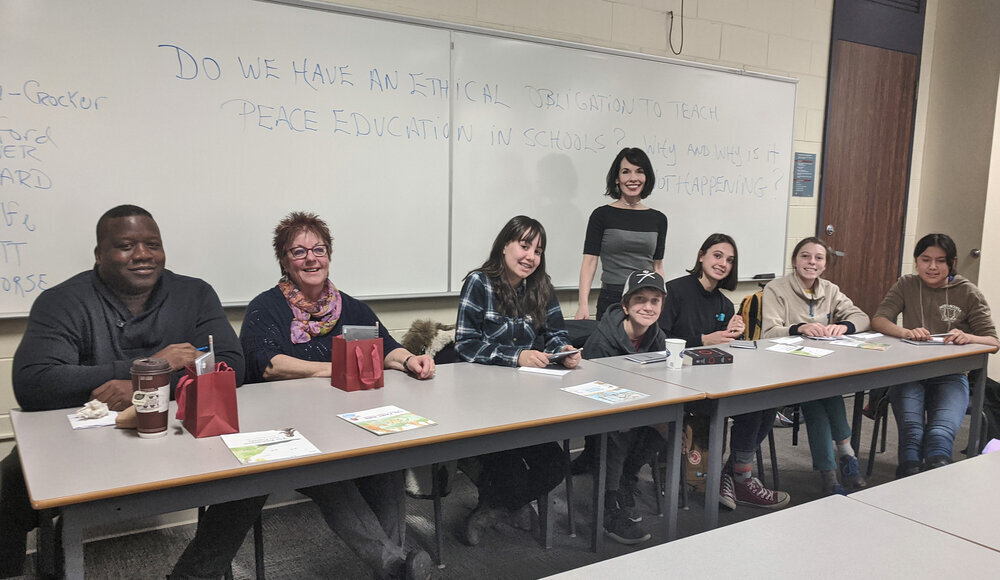
Do we have an ethical obligation to engage schools in peace education? This was the guiding question for a panel discussion at Saint Mary’s when educators from Nova Scotia public schools met with Peaceful Schools International’s Youth Consultant Committee to discuss the need for conflict resolution and peace education programs for Nova Scotian youth.

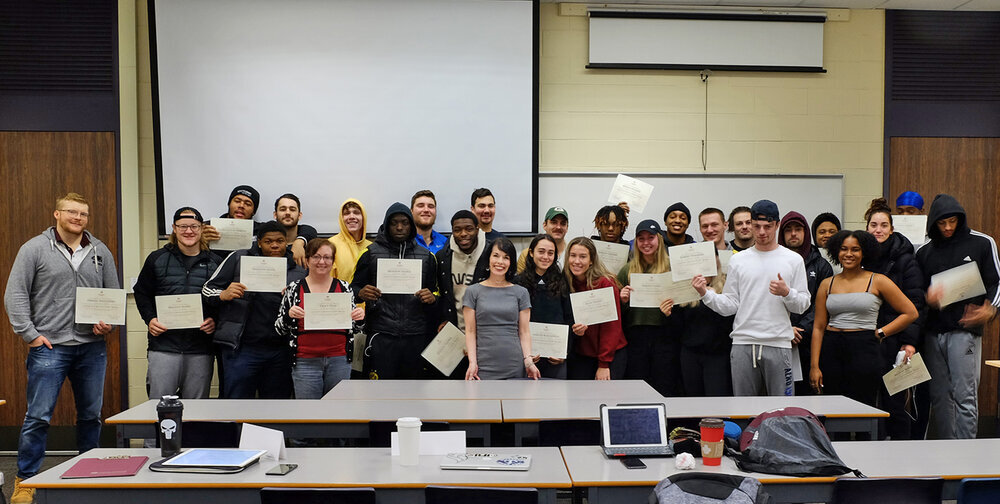
The panel was organized as part of a Faculty of Education course taught by Prof. Bridget Brownlow entitled Peace Education: International Perspectives and Practice, where the 38 students enrolled in this year’s class examine the themes of peace education and conflict resolution in a global context. In addition to their academic studies, students work towards a Certificate in Conflict Resolution, designed to help them develop the perspectives and skills required to navigate and manage interpersonal conflict.

Having spent this semester investigating peace education initiatives around the globe, reflecting on personal experiences of conflict, and building the skills to resolve disputes, students in Prof. Brownlow’s class had the opportunity to exchange ideas with students and educators from local schools. Five members from the Youth Consultant Committee, all of whom attend Oxford School, were joined by Calvin Scott, the African Nova Scotian Student Support worker for Halifax West High School and Heather Morse, a retired principal with the Annapolis Valley Regional School Board to reflect on the need for conflict resolution and peace education.

Calvin Scott suggested peace education could be a powerful tool to support African Nova Scotian students facing discrimination in the public school system. Helping them navigate the daily realities of racism was, he said, “not only an ethical, but a moral obligation.”

Heather Morse, who reflected on her experiences developing elementary school curricula that incorporated many of the principles of peace education, described the challenges of having to compete with the requirements of the core curriculum. Despite the lack of time and resources for peace education, she said the ideas shared by the Youth Consultant Committee were reason for hope. “I am so impressed by the insight and awareness around conflict resolution we heard today, both from the youth committee and from Prof. Brownlow’s class,” she said.

Brendan Kohls, a student in the class, suggested that conflict resolution skills are often dismissed as being “something kids intuitively pick up along the way. But most don’t. These are real skills, and we all need to learn them.” His classmate, Elaine Brickell Sands, reflected that “it’s hard for most people to take that first step. But in this class, we explore ways to build connections among people from different backgrounds, such as race, religion, gender and so on. I’ve learned that active listening and asking open questions are a great way to draw out our commonalities and overcome our differences.”

This panel discussion builds on Saint Mary’s long history of developing expertise in peace education, established chiefly under the leadership of Dr. Hetty van Gurp, the founding director of Peaceful Schools International and an Adjunct Professor in the Faculty of Education. The Halifax-based organization, which supports schools that have made a commitment to “creating and maintaining a culture of peace,” now has more than 200 partner institutions around the world.

Prof. Brownlow, the Conflict Resolution Advisor for Saint Mary’s and an Adjunct Professor in the Faculty of Education, is also the president of Peaceful Schools International. Each year, members of the organization — in partnership with the SMU Conflict Resolution Society — travel to elementary schools around Northern Ireland to facilitate conflict resolution workshops for children affected by sectarian division.

“Working with my students this semester has been such an honour,” said Prof. Brownlow at the end of class. ”A good number of them are varsity athletes with very busy practice and game schedules. Yet they come each week with insightful reflections on how the things we learn in class have an impact on their lives outside the classroom. What more could I ask for?”

Brandon Ihanza, a member of the football team, had the final word. After commenting on how many of his teammates have benefited from developing perspectives on conflict resolution this semester, he said “…so, on behalf of the football team, I’d like to thank you for bringing us all into your class, and for providing us such a positive learning environment.”

Saint Mary's student wins YMCA Peace Medal

SMU student Trayvone Clayton - here with the Hon. Mayann Francis, BA'72, LLD'12 — won one of three 2019 YMCA of Greater Halifax/Dartmouth Peace Medals. (Photo credit: YMCA Greater Halifax/Dartmouth)

SMU student Trayvone Clayton - here with the Hon. Mayann Francis, BA'72, LLD'12 — won one of three 2019 YMCA of Greater Halifax/Dartmouth Peace Medals. (Photo credit: YMCA Greater Halifax/Dartmouth)

This article by Amy Brierley, journalism student at the University of King’s College, was originally written for and published on The Signal. Re-published with permission. Follow Amy on Twitter: @amybrierley

With his community beside him, Trayvone Clayton pushes for peace

Trayvone Clayton is being recognized for his work to create a thriving, more vibrant community — but he says he isn’t doing it alone.

On Tuesday morning, Clayton stepped onto the stage at Halifax’s Pier 21 to accept one of three 2019 YMCA of Greater Halifax/Dartmouth Peace Medals.

“I had to go to school in a suit and everyone was putting me on their Snapchat and social media,” Clayton says, laughing, recounting his friends’ enthusiastic reactions to his win in an interview this week.

When Clayton, 21, first found out he won the award, he was in shock. “I was thankful, but I didn’t really know what to say,” he says. “But I can’t take full credit.”

He says friends Kate Macdonald, DeRico Symonds, Shevy Price, dad Marcus James, and many others in his community have been there with him all the way.

“I have a lot of support behind my back and it’s a great feeling to have that.”

For 31 years, the YMCA has honoured people who have made exceptional contributions to peace building in their communities with the YMCA Peace Medal.

Clayton joined other award winners across the country on Monday in being recognized for their work in, “building and rebuilding conditions of fairness, inclusion, empathy, security, and respect for diversity,” according to the YMCA’s website.

Clayton — a third-year criminology student at Saint Mary’s University, athlete, youth mentor and community organizer — says he’s been there for his community for as long as he can remember.

It was earlier this year, while attending the National Black Canadians Summit in Ottawa, though, that he began to see and speak out about how his experience of discrimination in Halifax reflects larger, systemic racism in Canada.

Through supporting youth in his community to follow their dreams and changing the systems that take those dreams from them, Clayton is making waves in Halifax and beyond.

“My community, Uniacke Square, has always been discriminated against, judged, there’s always been barriers in front of us,” says Clayton.

“I want the kids coming up to be able to do what they feel they can do and have faith in their vision and be able to see that they can be a lawyer, they can be a doctor, they can be a judge, they can be whatever they want to be.”

Amanda Rose, development co-ordinator at YMCA of Greater Halifax/Dartmouth and Clayton’s nominator, says she has seen first-hand the impact Clayton’s advocacy has had on Halifax.

“He is a very strong advocate and role model for African Nova Scotian youth in Halifax, and youth in general,” she says. “He’s very passionate about supporting young leaders in our communities and he does that by being a young leader himself.”

THE POWER OF MENTORSHIP

Last year, one of Clayton’s beloved mentors, the late Wade Smith, received the YMCA Peace Medal. Clayton says this made winning the award that much more special.

“He was a mentor, he was a leader, a true community leader,” says Clayton.

He texted Smith’s wife soon after his win. “I just said thank you for everything, this is clearly all happening for a reason and she said, ‘trust me Tray, he’s up there smiling with all teeth right now.’”

This support is what gives Clayton hope — hope that’s sometimes hard to muster with the loss he has experienced through anti-black violence committed against his friends, family and black communities. And it’s the kind of support he wants to offer other young people.

“It’s definitely a long road ahead, change doesn’t come with a blink of an eye or in one day,” says Clayton.

At a recent community conversation about street checks, Clayton says he stood up to share what was heavy on his chest.

He says he asked the panelists to recognize that black communities have been calling attention to racism in policing for years. Now, he says, government and police must be the ones to reach out to remedy the injustice and mistrust caused by anti-black racism.

Clayton says speaking up in moments that can seem incredibly difficult is crucial to building peaceful communities.

“When kids see me doing the things I’m doing, they’re like ‘oh OK, well I can do it,’” he said. “We have to break down these barriers and break down these walls.”

AMY BRIERLEY

Amy is a journalism student at the University of King's College. She calls Antigonish N.S.--and more recently, Halifax-- home. She cares a lot about communities and the things that make them fair, just and thriving for everyone.

Two SMU honourees for Royal Society of Canada

Two Saint Mary’s faculty members were honoured in Ottawa recently, during the Royal Society of Canada’s annual Celebration of Excellence and Engagement..

Dr. S. Karly Kehoe

Dr. S. Karly Kehoe

Dr. S. Karly Kehoe, Canada Research Chair in Atlantic Canada Communities at Saint Mary’s, has served on the Royal Society’s national executive and Atlantic region steering committee for several years.

At the event, she became Vice-President of its College of New Scholars, Artists and Scientists, and will advance next year to become President.

The Royal Society of Canada also recognized Dr. R. Blake Brown for outstanding scholarship, naming him a member of its College of New Scholars, Artists and Scientists. His membership was announced in September but he was officially inducted into the College on Nov. 22.

Dr. Blake Brown

Dr. Blake Brown

A history professor and Graduate Coordinator for Atlantic Canada Studies, Dr. Brown is one of Canada’s leading legal historians whose research tackles vital questions in the history of law and public policy.

The Faculty of Arts at Saint Mary’s now has five scholars associated with the Royal Society of Canada. Dr. Peter Twohig, Associate Dean of Arts, and Dr. Gavin Fridell, Canada Research Chair in International Development Studies, became members of the College of New Scholars in 2014 and 2015, respectively. Dr. John Reid, Professor Emeritus of History and Atlantic Canada Studies, was elected in 2004 as a Fellow of the Society’s Academy of the Arts and Humanities.