

2026 Huskies Sport Hall of Fame Inductee: Dr. James "Skip" Oliver BA'67 LLD'02
2026 Huskies Sport Hall of Fame Inductee: Megan Kinsman BComm'07, Rugby
Making Waves: SMU alumni building careers with Halifax Tides FC
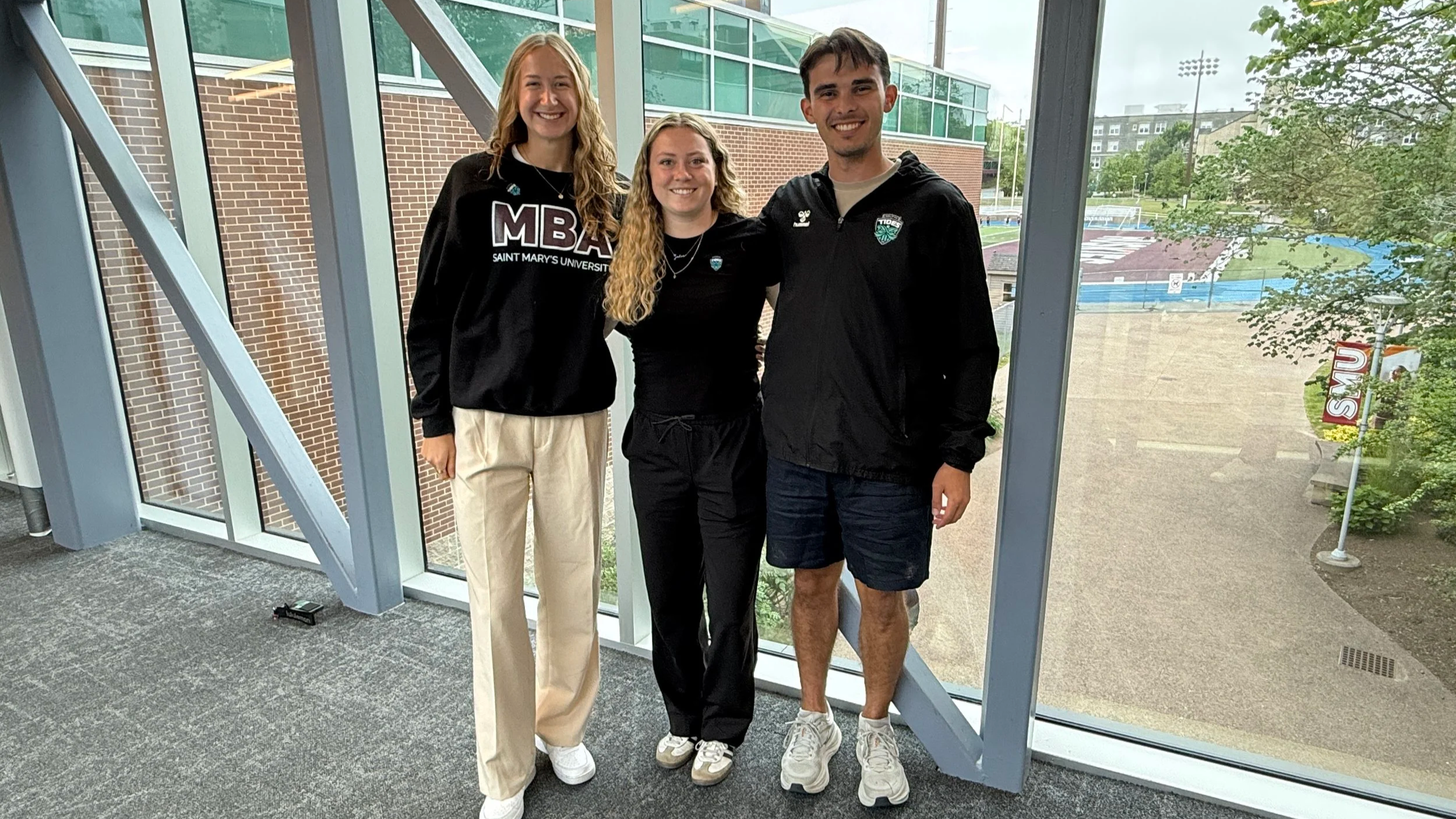
Katelyn Power BComm’23 MBA’25, Julie Naugler BA’20 MBA’23 and MBA student Ben Broadbent are working with the Halifax Tides FC, Halifax’s professional women’s soccer team
Walking through the office of the Halifax Tides FC on any given day, you might be surprised at just how many familiar faces you see. Saint Mary’s graduates are everywhere, from the field to the office, helping to drive the growth of professional women's soccer and the sport business ecosystem in Atlantic Canada. What seems like a coincidence at first glance is much more than that: it’s a testament to the sport and business education programs connecting SMU grads to the growing world of professional sports.
Since launching in 2024 as a founding club of the Northern Super League, Halifax Tides FC has created new opportunities for athletes, business professionals and students looking to build careers in sport.
Julie Naugler BA’20 MBA’23, Katelyn Power BComm’23 MBA’25, and current MBA student Ben Broadbent tell us all about their journey from SMU to the Tides—and how their time on campus prepared them for the working world of sport.
Julie Naugler
Senior Sales Lead
When Julie Naugler decided to add a Certificate in Health, Wellness and Sport in Society (HWSS) onto her BA in Anthropology, she didn’t anticipate how useful it would be in her day-to-day life post-graduation. As a varsity athlete and flyhalf with the SMU Women’s Rugby team, Julie was drawn to the HWSS certificate because it piqued her interest, and as a student-athlete, that passion for sports was just as prevalent in the classroom as it was on the field.
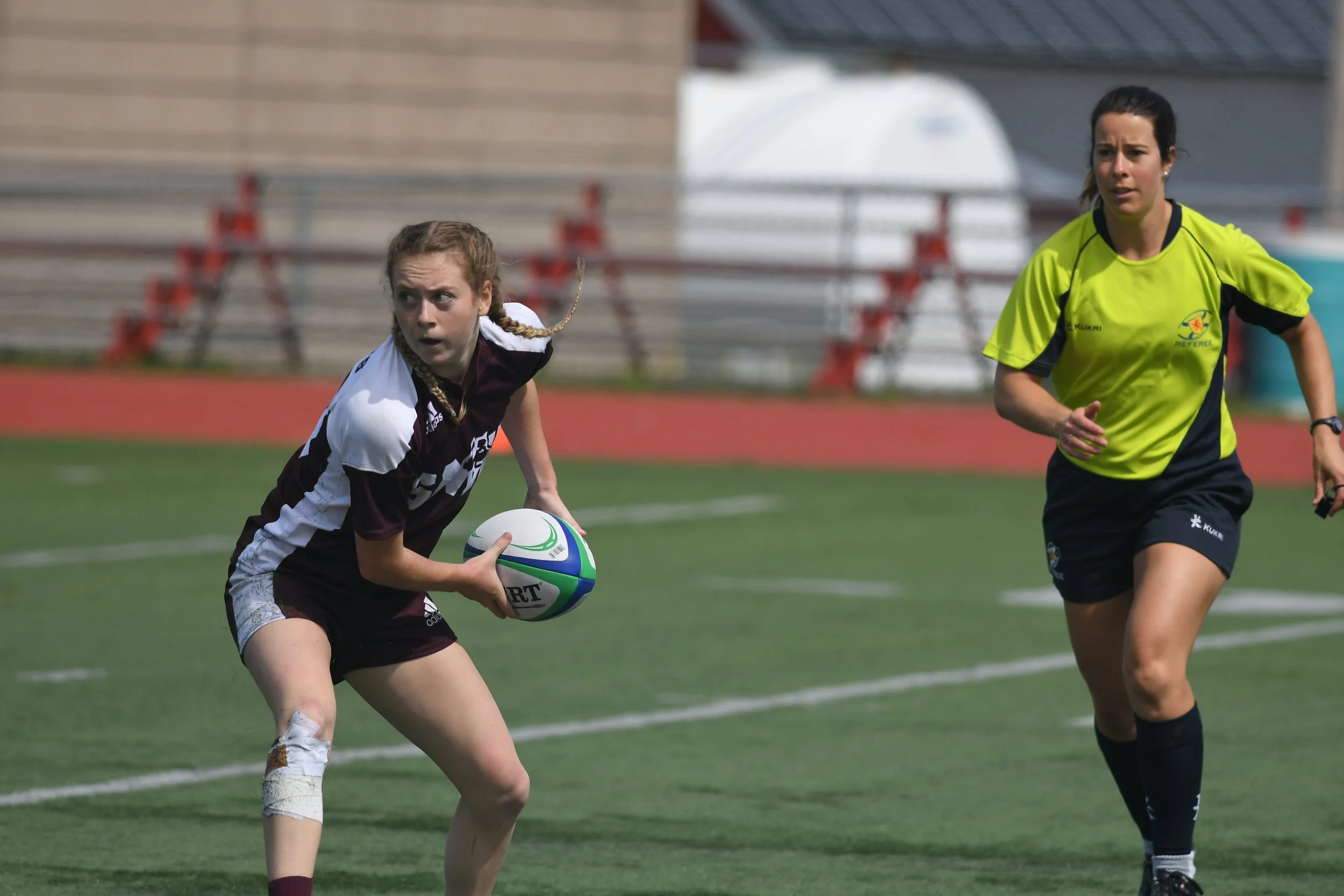
“I think sport is a really unique industry. You can do marketing, but marketing in sport is different. The same goes for sales and partnership management. There are all kinds of sales roles, but applying those skills in the sport industry is unique. There aren't many courses that directly prepare you for that environment, so having the opportunity to study it while in school is a huge asset.” - Julie Naugler
“I got more directly involved in sport coursework in my undergrad days. The relevance to my future career wasn’t clear at the time, but I took a course on the football family of sports—so soccer, rugby, American football, all those sports, because it interested me and it was relevant to the HWSS program. Now, I use elements of that course more in my day-to-day than I ever would have thought.”
Getting even more involved with sports academic opportunities at SMU, Julie took a position as a Marketing and Promotions specialist with the Scott McCain & Leslie McLean Centre for Sport Business and Health in 2023—while completing her MBA at the Sobey School of Business—and started working in the professional sports industry right after graduation.
“When the sales opportunity at the Tides opened up, I immediately gave it a shot and was so glad I did. The opportunity to work within a women-led organization helping launch professional women's soccer in Atlantic Canada was incredibly exciting. I joined the club during the lead-up to our inaugural season in 2025, which gave me the opportunity to help build something completely new from the ground up.”
With her HWSS certificate and MBA, Julie’s creativity, sales and sport-specific knowledge has prepped her well for her role with the Tides—and the sports industry’s eagerness for this combination of skills helped spark SMU’s creation of the Bachelor of Commerce in Sports Business last year.
Katelyn Power
Stadium Operations Lead
Like Julie, Katelyn Power is “SMU through-and-through,” beginning her journey with a BComm in Management and a minor in Sociology while playing basketball with the SMU Huskies. “I’m jealous that the BComm in Sports Business started after I graduated,” she says, noting the opportunities available in the new program. A Sobey MBA Scholarship recipient, Katelyn’s interest in sport extended beyond her time on the court, and she made her athletics experience a key focus in her graduate work at the Sobey School of Business.
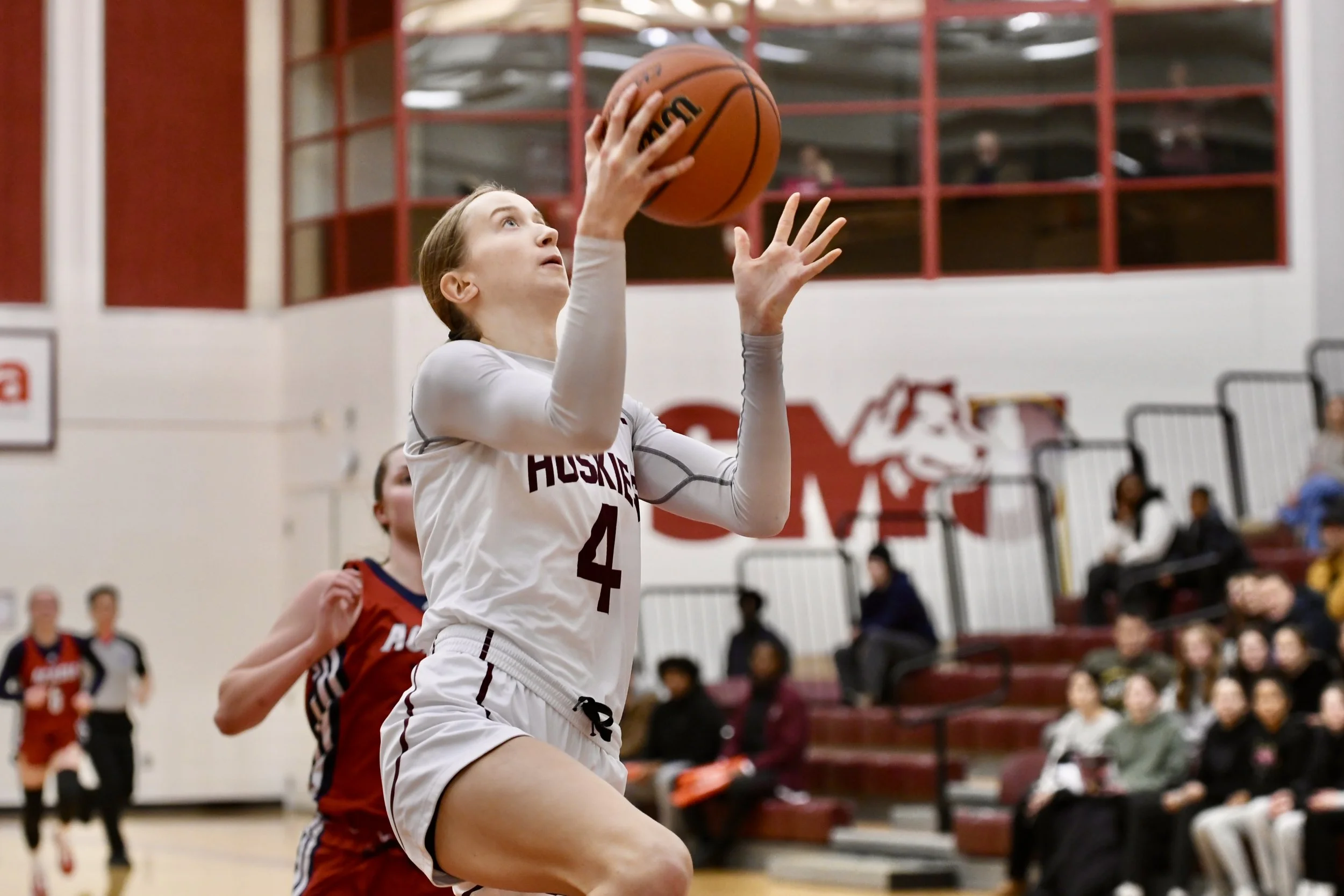
“I think that if you’re an athlete, using the skills you’ve learned during your time in athletics is so important. The leadership, teamwork, resilience, and ability to remain calm under pressure that you develop as an athlete are all highly transferable skills in the sports business world.” - Katelyn Power
“I did a presentation during my MBA on the parallels between business and sports. It’s striking how many there are. The skills that you use on the court are the same skills you use in communicating in the office. The time management, the dedication, the working towards a common goal – my experience as an athlete translated to the office almost exactly.”
During her six years with the Huskies basketball program, Katelyn was part of the three-time AUS championship-winning team, an experience she credits with preparing her for the fast-paced world of professional sport operations.
At the Tides, she “oversees match-day staffing, including ushers, ticket scanners, and event operations crews”, coordinating match-day operations, venue branding, sponsor activations and stadium readiness in the weeks leading up to a game. It’s not exactly slow between games, though, with time between matches dedicated to planning, evaluating, and continuously improving future experiences, a pattern she established with her team during her athletic career with SMU.
Ben Broadbent
Business Development Coordinator
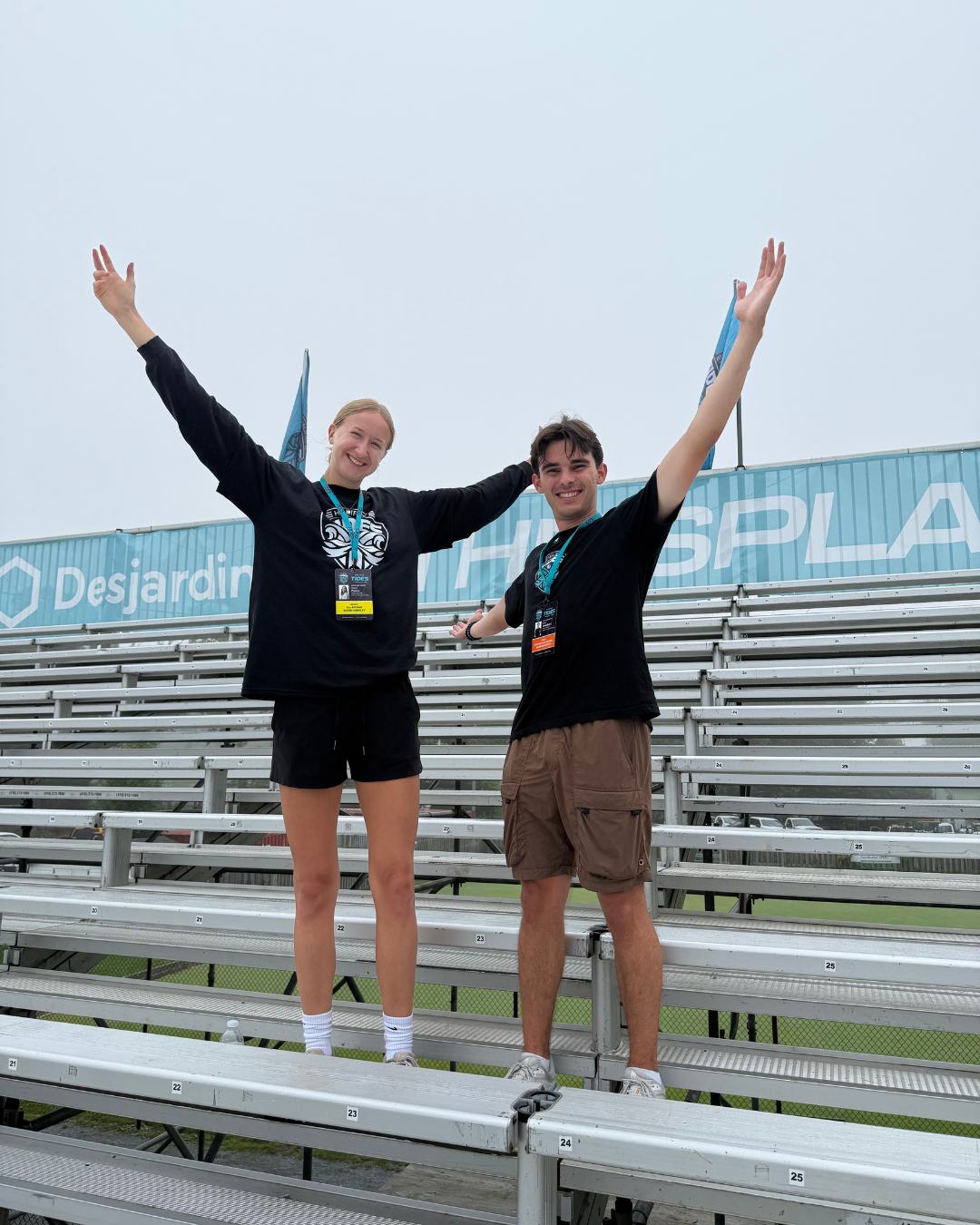
“There aren't many undergraduate sport business programs in Canada. Having more sport-specific education options, especially on the East Coast, is a great opportunity for students to get their foot in the door, especially students from New Brunswick, PEI, Newfoundland and Nova Scotia.”
Ben Broadbent was a varsity athlete at his undergraduate institution, and after graduating with a BA Honours in French Studies and a minor in History, he knew he wanted to pursue a career in sport. He chose the MBA program at SMU to get him there.
The flexibility of the MBA builds on classroom learning to give students a real feel for the workforce, and for a sports business career, there’s nothing that compares to learning on the job. His business education, along with his arts background, gives him a practical toolkit for the sports business world, providing a curriculum that “has been a huge asset” for Ben as the mix of coursework and experiential learning has set him up for success with the Tides.
“This career path is incredibly dynamic. In the lead-up to a match, it's logistics, planning and negotiation. On game day, it's problem-solving, agile management and sometimes crisis management. You're as proactive as you can be and then the reaction starts.”
Having student work experience with a professional sports organization like Halifax Tides FC gives students like Ben a competitive edge once they hit the workforce full time, helping them stand out in the race for the next generation of sports professionals.
Sports Programs at SMU
For incoming students who are looking to launch a sports career right here from the Maritimes, Halifax is proving to be a hub for up-and-coming sports professionals of all sorts. With organizations like Halifax Tides FC helping establish and grow professional women's soccer in Atlantic Canada, and demand for a workforce capable of evolving that presence, the era of sport business success in the city is just beginning.
Behind every match day experience are dedicated professionals helping grow the game both on and off the pitch—and many of them got their start right here at Saint Mary's.
Saint Mary’s athletes make a splash at Halifax U23 World Paddle Championships
Students highlight support from professors during their demanding training schedule
If you noticed a busier-than-usual Canada Day celebration week this year, you weren’t imagining it.
642 athletes from 54 nations flocked to Lake Banook in Dartmouth for the 2026 ICF Junior and U23 Canoe Sprint World Championships, which took place July 1-5 in the HRM, bringing their A-game to a series of canoe and kayak events that brought the best of the best against each other to fight for gold on Canadian waters.
With singles, doubles and relays across multiple distances for both canoe and kayak athletes, there was no shortage of action at the championships – and Saint Mary’s athletes demanded attention throughout.
Alex Erith Ellwood, Brianna Smith, Duncan Giles and Ian Gaudet represented the university on the world stage—each one a talented athlete chasing their goals on the water while pursuing their education right here on the East Coast.
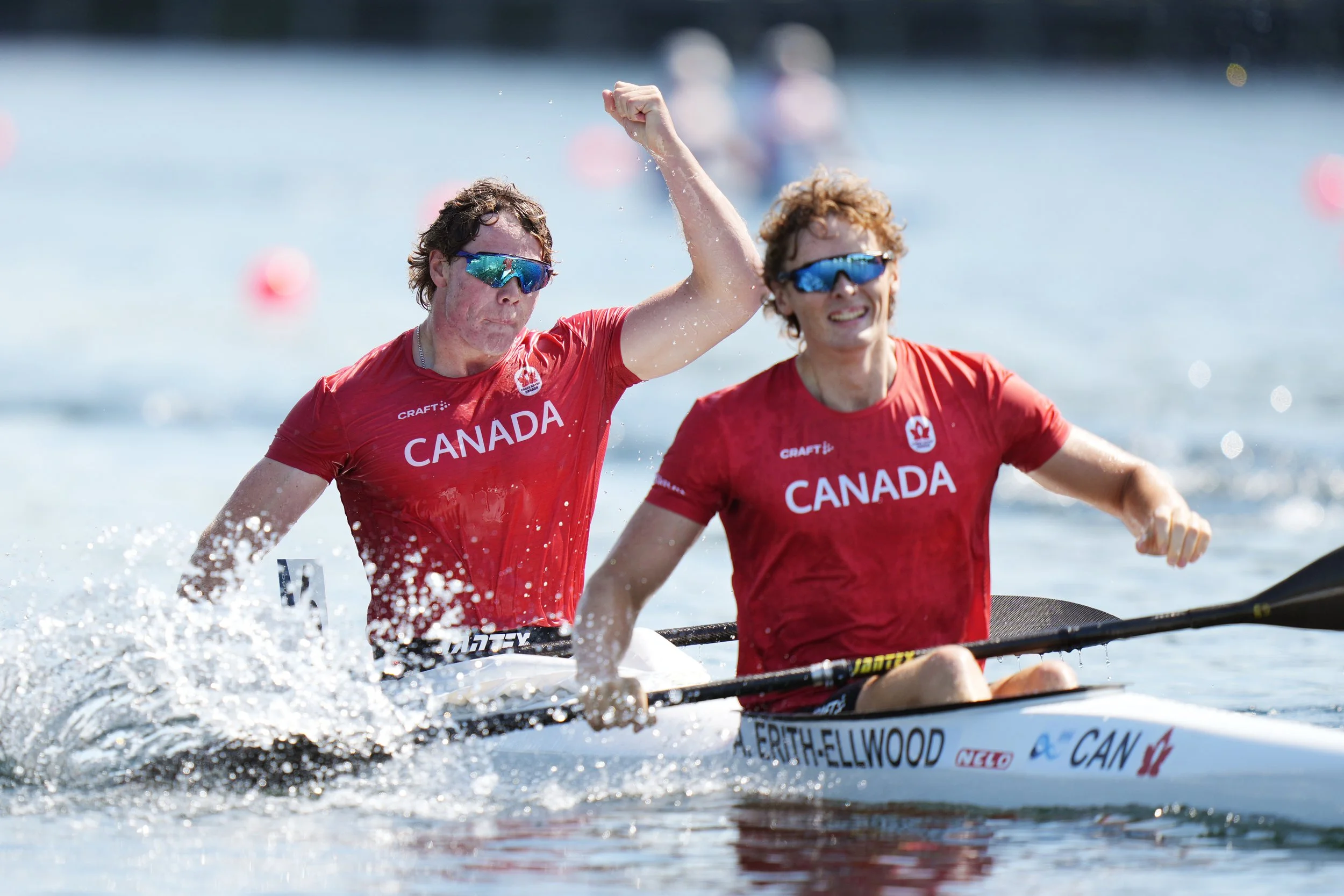
Alex Erith Ellwood
Photo: ICF - Canada
Alex Erith Ellwood
Diploma in Engineering
The championship event marked the fourth international competition for SMU Engineering’s Alex Erith Ellwood, where he competed in the K2 500 meter, the K4 500 meter, and the mixed relay with fellow SMU engineering student Brianna Smith.
Alex qualified for worlds by placing Top 5 in Canada for the men’s 500 meter at national tryouts earlier this year. No stranger to competition travel, it was a real treat to compete here at home.
“It’s always cool to be able to go away and see other countries, but there’s always a time difference and new surroundings to get used to. It was great to be at home and comfortable on our own lake.”
Balancing his education with his travel schedule is no easy feat, but SMU profs have gone above and beyond every step of the way to make sure his goals are met on the water and in the classroom.
“I remember discussing my schedule with a prof in first year, and there was one calculus course that he recommended taking in the spring to accommodate my winter training camp. Little things like that make it easier to help balance everything.”
Alex isn’t slowing down anytime soon, as he immediately went on to the Canoe Sprint World Cup in Montreal on July 9-12, where he was able to get on the water with the Canadian senior men’s team to launch the next chapter of his athletic career.
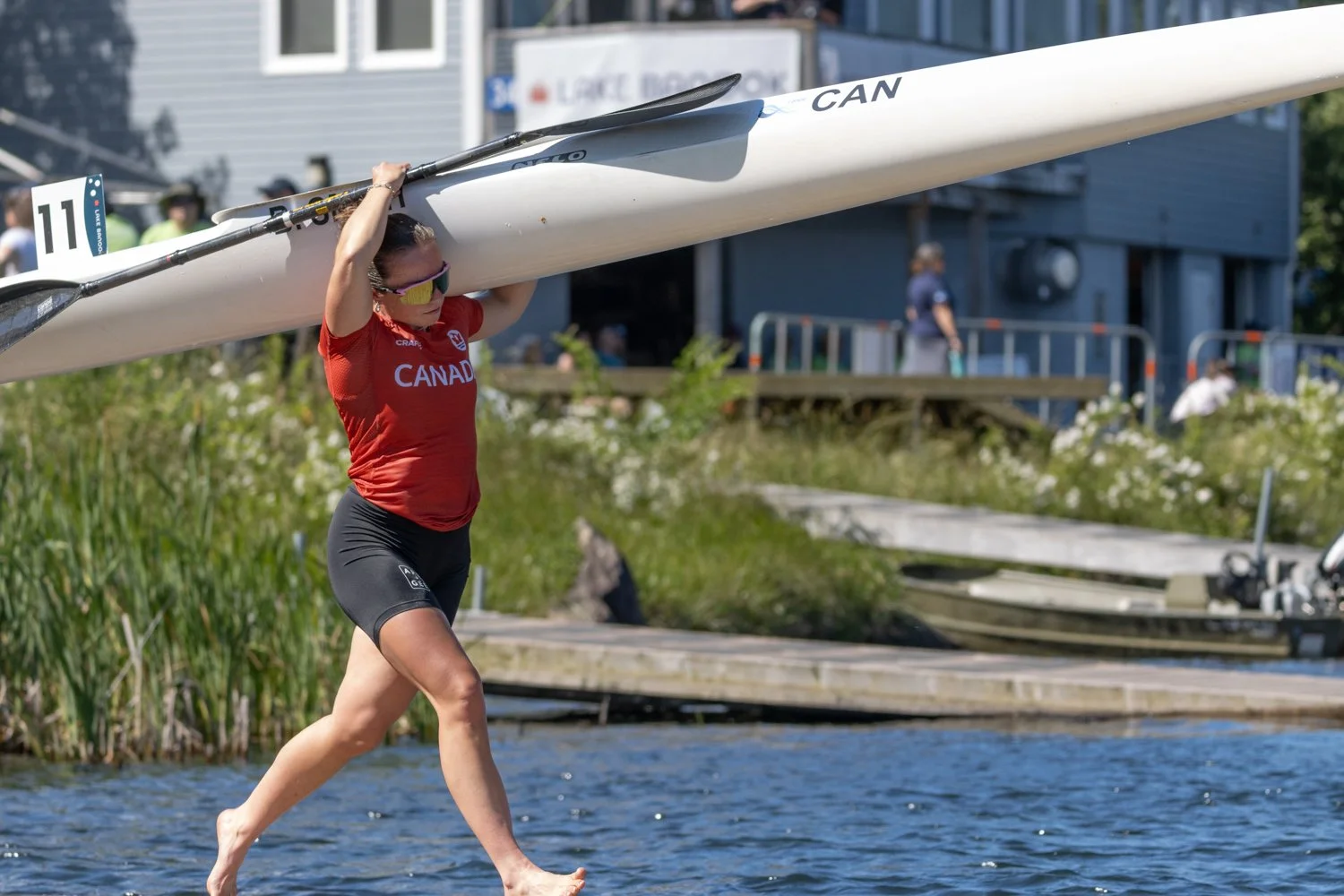
Brianna Smith
Photo: ICF - Canada
Brianna Smith
Diploma in Engineering
Brianna Smith has been competing on the world stage since her late teens, competing at the ICF Olympic Hopes when she was 17 years old. In addition to pursuing her Diploma in Engineering at Saint Mary’s and travelling internationally to compete, she spends her summers coaching younger athletes to get them ready for the U16 category, when athletes start competing nationally to make international teams.
With two previous world championships under her belt, competing in a third here at home was a chance to show her community exactly what she’s made of:
“A bunch of the kids I coach were volunteering at the event or came to watch the races. That was a great experience for them, because they don’t usually get to see their coaches race. It’s cool for them to see what I do.”
During the school year, Brianna pursues her engineering diploma and is a member of the Engineering Society, while coaching the masters group at her club—all while prioritizing her own competition training.
“I went to SMU because of the smaller class sizes, so I could make deeper connections with my professors. When I had to miss classes to accommodate my training and competition schedule, it was easier to communicate with them.”
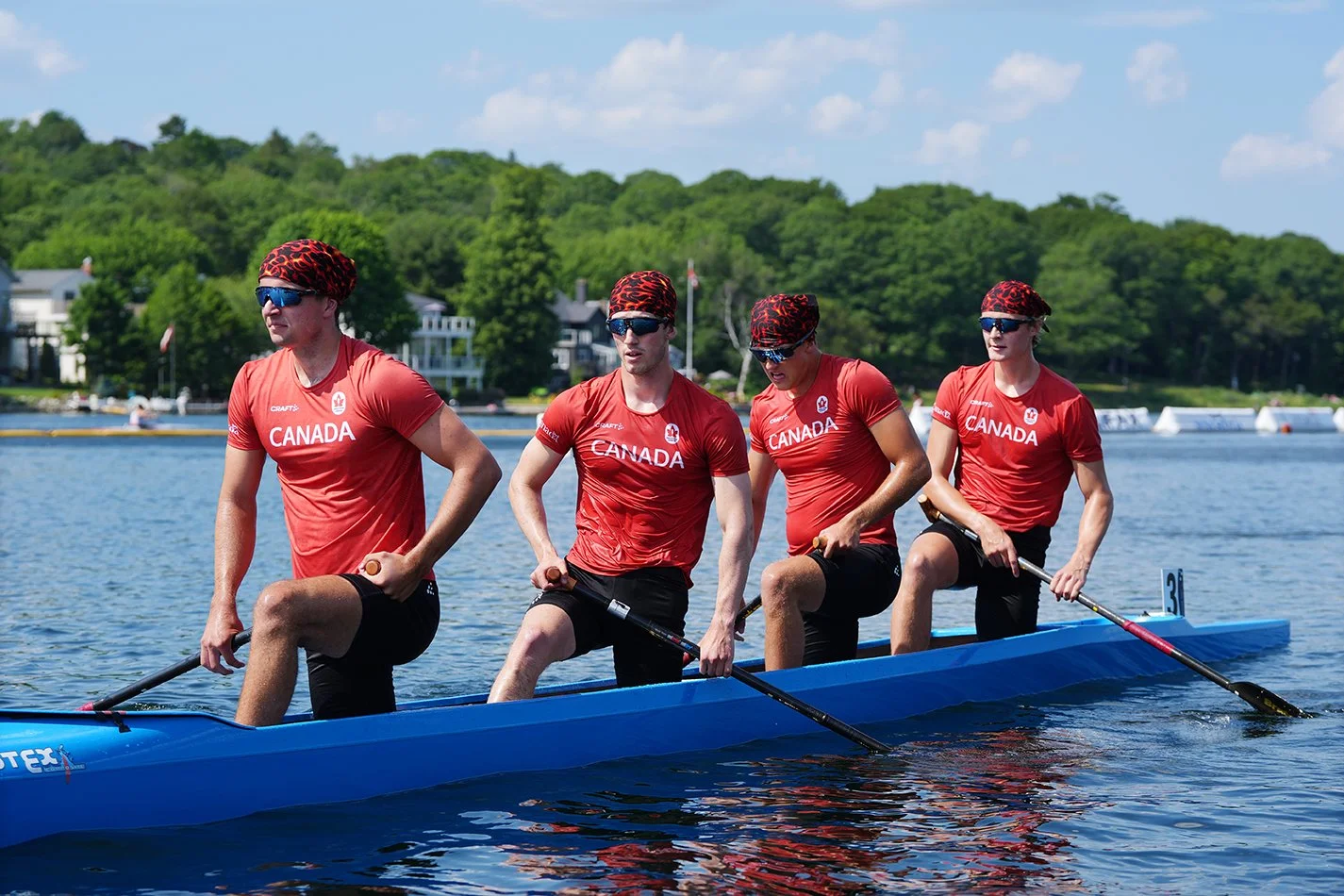
Duncan Giles and team
Photo: ICF - Canada
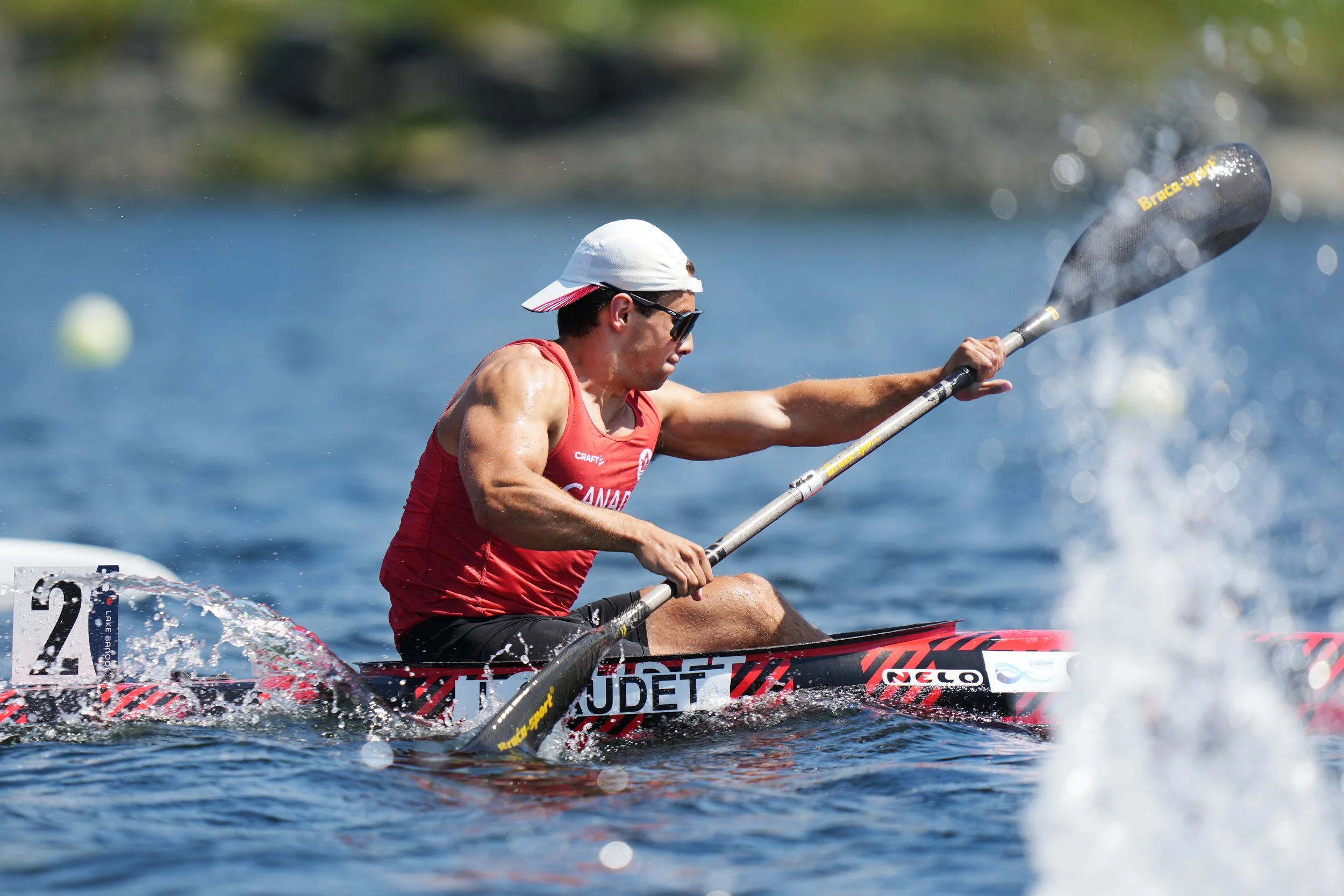
Ian Gaudet
Photo: ICF - Canada
Duncan Giles
BComm in Finance
Entering his third year at Saint Mary’s, Duncan is a recipient of the Sobey National Innovator Scholarship. When choosing a university, Duncan’s goal was to pursue his business education while continuing to train at the national and international level, and SMU offered the flexibility he needed to thrive as a student-athlete.
That academic flexibility has been a game-changer for him, as during the winter months, he completes online courses while travelling for three-month training blocks away from home, supported by professors who understand the demands of high-performance sport.
“I really like the community here at Saint Mary's,” says Giles. “Everybody feels important, and the professors are really flexible and understanding with my training schedule, which helps me balance all my responsibilities.”
At the world championships on Lake Banook, Giles competed in the four-person 500-meter event, helping guide his boat to a strong fifth-place finish. He’s looking forward to focusing on finance when he returns in the fall.
Duncan isn’t the only international competitor in his family. His dad, Stephen Giles, has multiple world championships under his belt in the same sport and received a Bronze Medal in the C-1 1000m event at the Sydney Olympics in 2000.
Ian Gaudet
BSc in Earth Science
“This was the first international competition I’ve gotten to do in Canada,” says Earth Science student Ian Gaudet. “Usually we have to deal with rental boats that aren’t our own. We have to deal with checking into hotels and long flights and dealing with the strain of jet lag and all that comes with international travel. So, to actually have the advantage of being at home and competing on our home lake was a big advantage for us.”
Gaudet delivered impressive performances on the water, placing sixth in the world in K4 500-meter kayak event. Following the world championships here in Dartmouth, he competed at the historic Olympic Basin in Montreal—the venue’s first international event since the 1976 Summer Olympics.
“I've been training and racing at the Olympic Basin since I was quite young, so it was really cool to be able to race with the Maple Leaf on my chest on home waters.”
Training for national kayak teams is a year-round commitment; when local lakes freeze over in the winter, he travels south to San Diego with the Canadian National Team to keep paddling, and the supports available in the Faculty of Science allow Ian to continue pursuing his academic goals while maintaining his competitive edge on the water.
A World without limits, for athletes and beyond
Halifax is home to nationally acclaimed aquatics clubs, providing a rich environment for former and future Olympians to get the experience they need to make waves in the world. Saint Mary’s provides a space for these athletes to do what they do best—on the water and in the classroom.
SMU Huskies staff scores once-in-a-lifetime FIFA opportunity
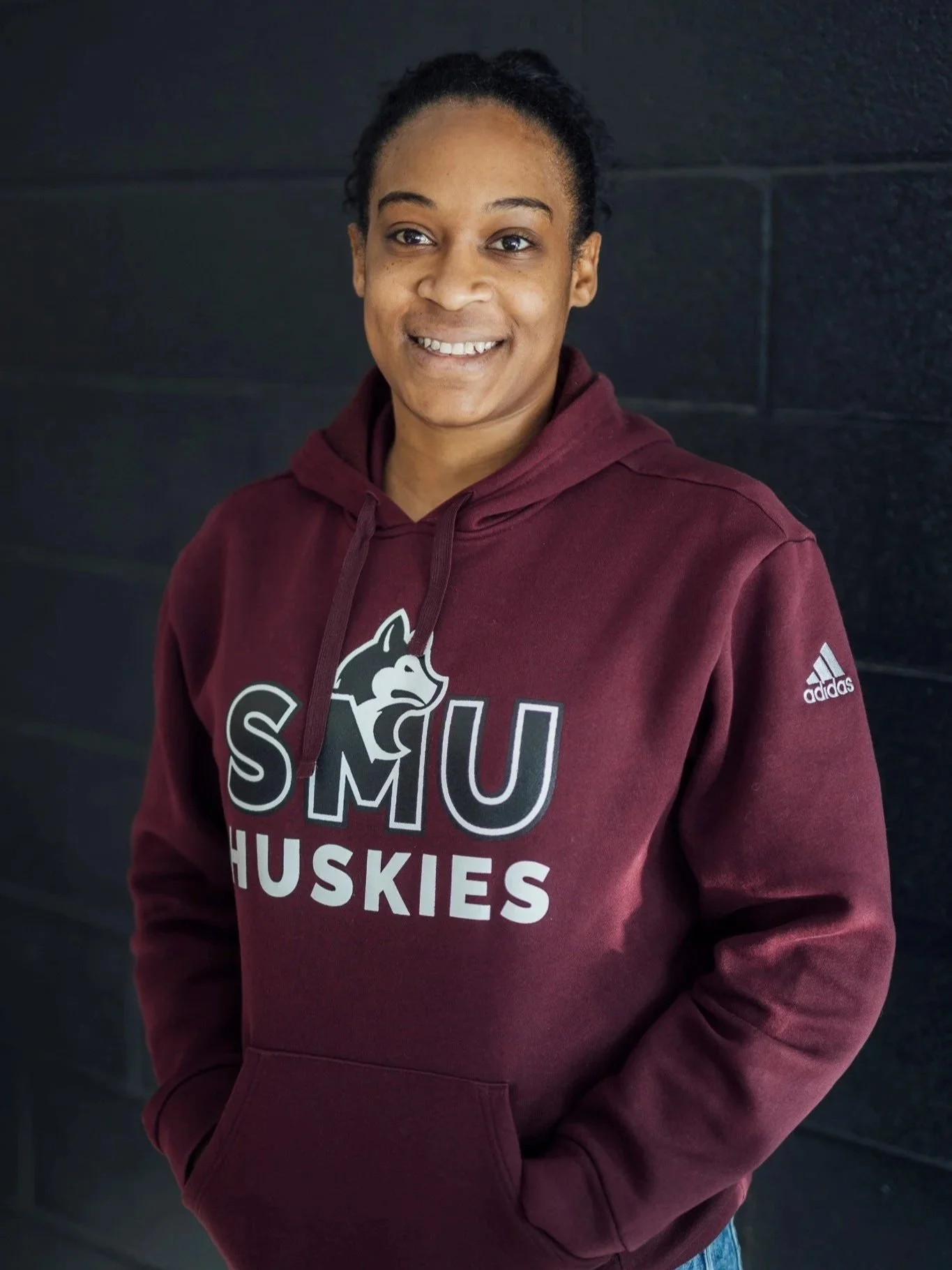
Mikayla Nassy-Wong
Attending a live World Cup soccer match is a dream come true for soccer fans everywhere. For Saint Mary University’s Mikayla Nassy-Wong, that dream didn’t just become a reality—it became a once-in-a-lifetime opportunity to be a part of the magic.
After a year-long process and a lot of hard work, Nassy-Wong, Marketing & Revenue Generation Coordinator with the SMU Huskies, was chosen to volunteer at the Toronto FIFA World Cup 26 this June, representing Saint Mary’s at one of the largest sporting events in the world.
The connection
Nassy-Wong applied through the Inclusion in Canadian Sports Network (ICSN), which highlights professional development opportunities in the Canadian sports ecosystem for BIPOC athletes and sports professionals through its Emerging BIPOC Leaders Program.
“I got involved with the ICSN about two years ago when I attended one of their events,” she says. “I got to know quite a few of the members, and when an opportunity with FIFA emerged, they reached out to me and said, ‘Hey, we remember you, and we know you have an interest in soccer, would you be interested in applying to volunteer with FIFA on our behalf?’”
Being a FIFA volunteer is a huge undertaking, and one that the organization takes very seriously. Nassy-Wong spent a year in the application and training process, learning a strict set of guidelines for the event. She was selected from a large pool of applicants to represent Canada and FIFA at the Toronto FIFA World Cup 26 volunteer centre.

A red wall of home supporters got behind Canada as they came back to draw with Bosnia and Herzegovina.Source: fifa.com
The experience
With 300,000 expected visitors to the city over the six matches taking place in Toronto Stadium, volunteers need to be prepared for anything—supporting travellers, athletes and other volunteers through all the demands of high-stakes live events. Nassy-Wong was given a logistics role helping to organize and distribute the “vibrant and unifying” official volunteer uniforms to other volunteers throughout the city.
Uniforms are a big deal at FIFA, and Nassy-Wong helped manage a multi-station setup for the city’s 3,000 volunteers and workers to pick up their uniforms and accreditation. With kits including t-shirts, pants, shoes, and special FIFA patches (unique to each host city), it was all hands on deck to make sure everyone was fully equipped and ready to go. Each shift meant a change in the station she handled, from fitting rooms to packing kits to handling checkout.
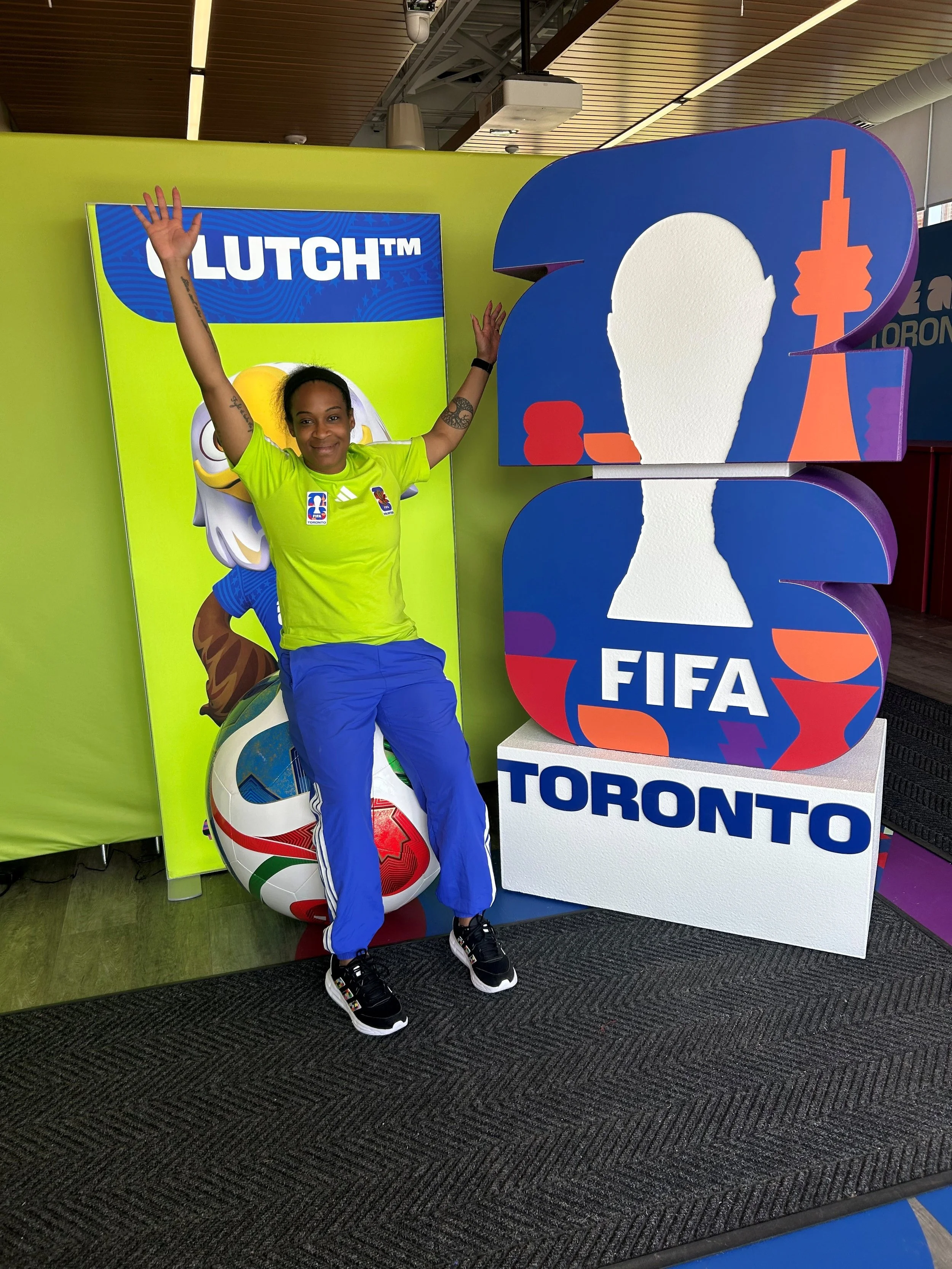
“This was the experience of a lifetime. If I ever get the opportunity to do it again, I will take that opportunity 100 percent.” - Mikayla Nassy-Wong
But the experience wasn’t all work and no play. Volunteers were given unique opportunities, from exclusive stadium access to attending the Toronto Fan Fest—FIFA's official, free public viewing and entertainment event for World Cup host cities. Fan Fest serves as the ultimate gathering spot for soccer fans to watch matches on massive screens and celebrate together as a global community.
“There are many memories I’ll take away from this experience, but a highlight for sure was getting to go to the Fan Fest. We got to see the Portugal game. That big victory for them in the group stage and being able to be there and celebrate with all the local and international Portugal fans was unbelievable.”
The impact
The sports world relies on volunteers—a reality that SMU’s Scott McCain & Leslie McLean Centre for Sport, Business and Health is researching with experts across Atlantic Canada. The FIFA World Cup is no exception, with volunteers chosen from around the world to help with all the events that make up World Cup season.
With energy rising as we hurtle towards the final rounds, the impact of the World Cup extends beyond the stadium to all the lives it touches, and for Nassy-Wong, that ability to bring people together is a key element of the game.
“Sport crosses political lines. It connects people from various cultures; it’s a place where everyone comes together to become a community.”
Armed with fresh international event experience and new connections from around the world, Nassy-Wong returns to Saint Mary’s University ready to channel that World Cup energy back into her work with the SMU Huskies.
Her journey stands as a powerful reminder of how passion, paired with the right advocacy networks, can bring talented professionals from local stadiums straight to the global stage.
"Volunteers Needed": Saint Mary's sports research centre shines a light on recreational sports infrastructure
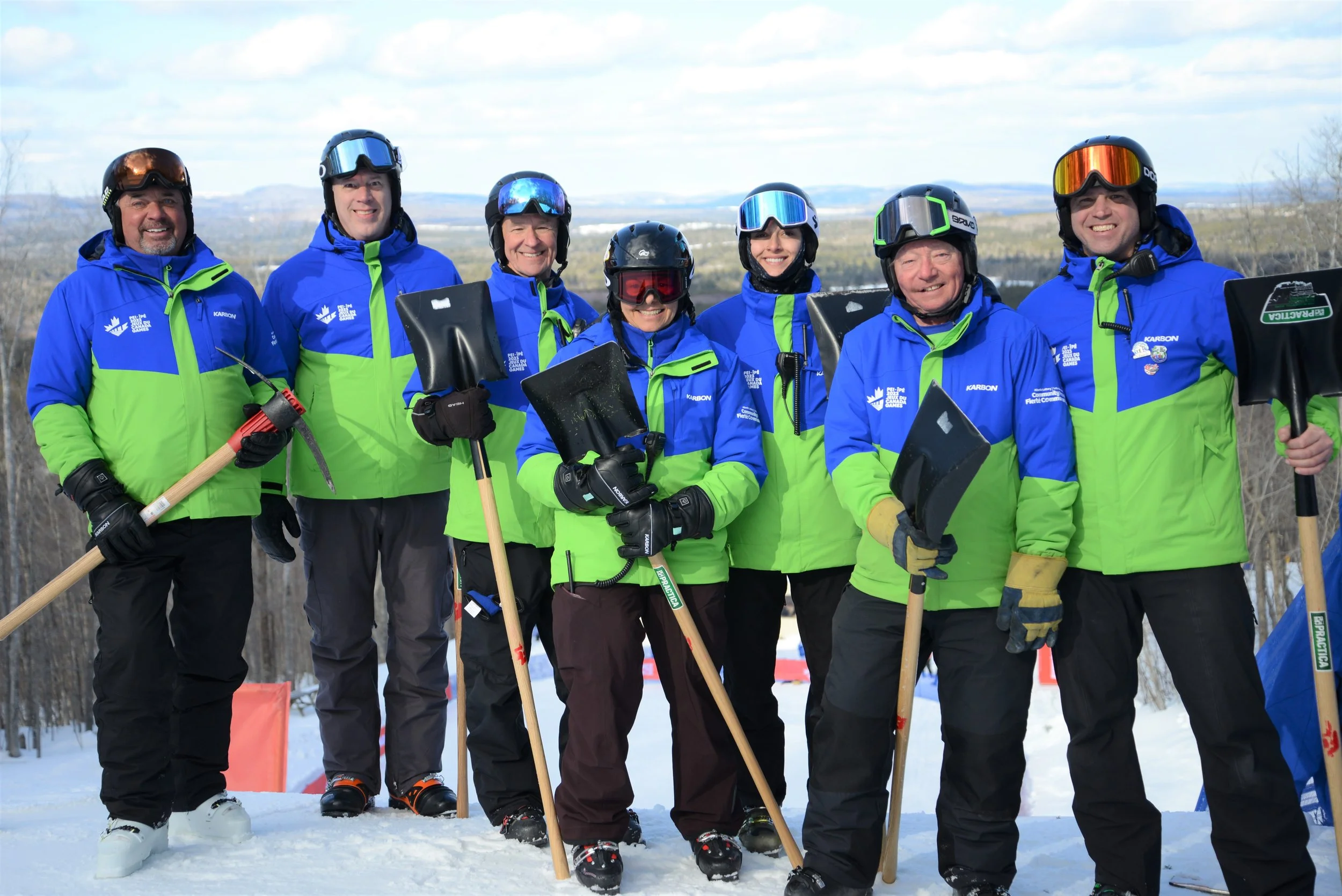
2023 Canada Winter Games volunteers
From a kid’s first T-ball season to a company’s Sunday night hockey league, sport and recreation programs across the country depend on regular people setting up, taking down, taking on administrative tasks, handling transportation and coaching players on their own time to keep activities running.
It’s not a system of favours—it’s an expectation that parents, friends and neighbours will do what it takes to make sure the game goes on, and that expectation can put a lot of pressure on those who step up and take the lead.
The Scott McCain & Leslie McLean Centre for Sport, Business and Health at SMU has partnered with Dr. Jackie Oncescu (Associate Professor of Kinesiology at UNB), and a team of researchers at All In Research & Innovation Inc. (All In) to shine a light on an often under-represented and under-researched demographic: volunteers.
Good Idea, Better Timing
The origins of this project started in New Brunswick, with Dr. Jackie Oncescu and research designer Dr. Jules Maitland (Founder of All In) co-leading the “Reimagining Access to Sport, Recreation and Leisure” project—a wide-ranging inquiry into equitable access and inclusion to sport, recreation and leisure in New Brunswick.
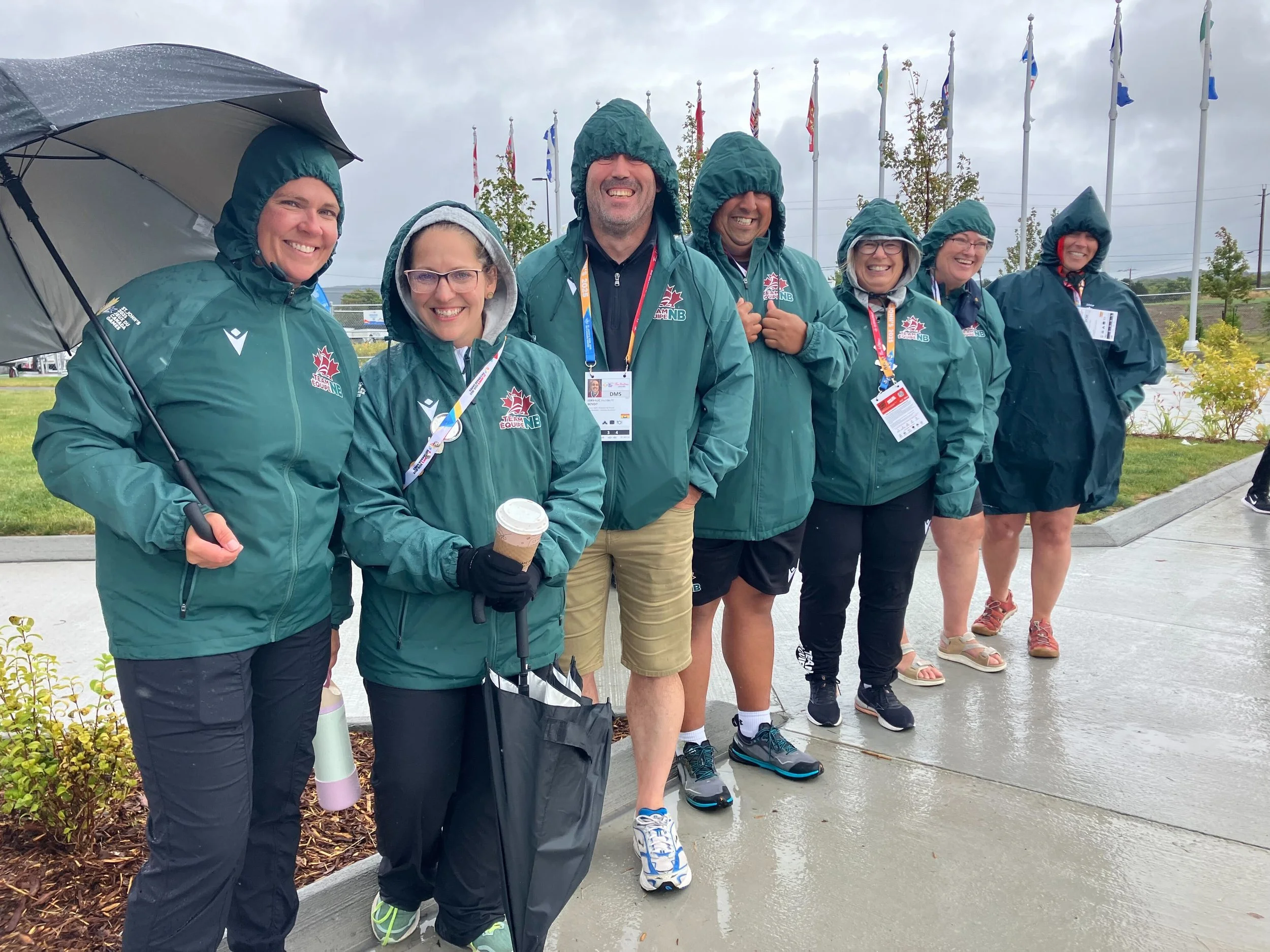
2025 Canada Summer Games Volunteers with Team New Brunswick
As the original project came to a close, a growing curiosity emerged around the circumstances that contribute to access and inclusion in sport, and how that access (or lack thereof) can shape communities. This curiosity sparked ongoing conversations with Recreation New Brunswick and Sport New Brunswick—organizations that have a shared interest in examining volunteers and their role in the recreation space—and those conversations turned to the role of volunteers in community systems and how their experiences impact sport systems in New Brunswick.
Meanwhile at Saint Mary’s, the team at the Scott McCain & Leslie McLean Centre for Sport, Business and Health was studying the mental health and wellbeing of sports volunteers. Once the connection was made between these groups, the rest was history, and the “SERVE project” (Supporting and Enhancing Rewarding Volunteer Experiences in Sport and Recreation) began.
“It was just one of those lovely moments of stars aligning,” says research designer Dr. Jules Maitland. “It just made sense to build on the momentum that had already been started in New Brunswick by working with the team at the Scott McCain & Leslie McLean Centre for Sport, Business and Health.”
Understanding Volunteerism in Sport
If you’ve ever participated in a recreational sport, you’ve likely witnessed the volunteer work that makes it happen—or you’ve been the volunteer yourself.
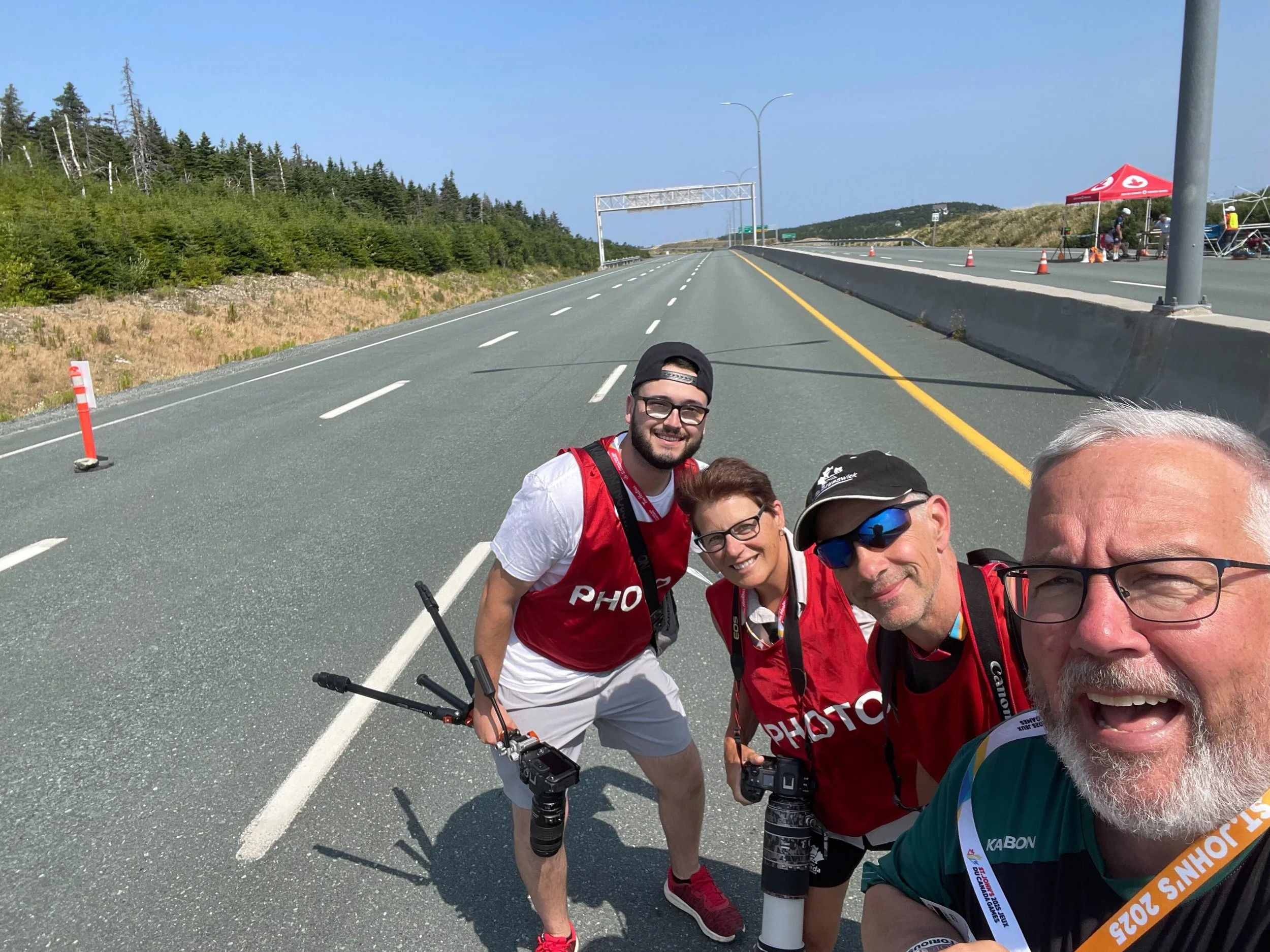
Volunteers on the photography team at the 2025 Canada Summer Games
“This entire sector—especially when you're talking about community sports organizations and recreation organizations—really wouldn't exist without volunteers,” says Madeleine Whalen, Co-Lead on the SERVE project. “They're heavily volunteer-based all the way to the governance level. From coaches to board members, it's very rare that these positions are offered with a large salary.”
There is a lot of work to keep an athletics program running, and most of it happens before and after the game. Oftentimes, both former and current athletes use their off time to support these programs. Parents and guardians of children who are involved in sports regularly take on extra work, adding more responsibility to their everyday lives.
When the entire system depends on participants going above and beyond to keep programs running, the longevity of those programs—and the well-being of those who run them—starts to become precarious.
Supporting the Supporters
This collaboration involves a 2025 literature review completed by former research assistant Ashley Penney for the Scott McCain & Leslie McLean Centre for Sport, Business and Health
Dr. Oncescu and the All In team is now working with the centre to dig deeper into the state of volunteerism in sport and develop scalable, innovative solutions to ensure that these programs, and the volunteers that make them possible, are able to thrive.
Using human-centred design to map patterns from interviews with current and former sports volunteers, this collaborative team is gearing up to answer some key questions on how we can make sport better.
“One of our priorities is making sure the needs of both volunteers and the organizations are met, ensuring that those experiences are satisfying and sustainable. So, we’re drawing from literature on workplace burnout as a framework,” says Strategic Designer Molly Balcom Raleigh.
“When you have a lack of benefits or an extreme work overload, a lack of a sense of autonomy or are missing some key capacity and skills, things start to go out of balance, and it leads to poor outcomes for the well-being of those participating in that work.”
Frameworks for discussing burnout are a helpful way to map patterns in the sports world, as volunteers take on more without adequate resources and, on occasion, find themselves in situations they lack the training to address or the resources to support.
"Critically, it's in this gap where the demands of funders and regulators are high and volunteer skill, resources, and time are low that the greatest risk and damage emerge,” said Dr. Augie Westhaver, Academic Director at the Scott McCain & Leslie McLean Centre for Sport, Business and Health. “The sport system is effectively a para-health sector—where mental and physical health are key resources for all involved—and without adequate support, volunteers suffer burnout or worse, undermining the safety of the sport system."
The Impact to Come
The SERVE project is in its early stages, having just launched in April 2026, but the future impact of this work is profound, as understanding the volunteer infrastructure of Canadian sport will pave the way to healthier volunteers, increasing recruitment and retention for the organizations that rely on them.
This work also lays the foundation for an actionable toolkit for sporting organizations, ensuring volunteers have the resources, training and support they need to do their best work. A healthy sports and recreation infrastructure leads to stronger, healthier, and more connected communities; and Saint Mary’s is primed to be involved in the initial stages of a very necessary exploration.
Stay tuned to the centre’s social media for live updates as the project unfolds.
Meet the Saint Mary’s athletes crossing the stage in 2026
Convocation is a special time of year as students of all backgrounds prepare to celebrate the incredible milestone of completing their degree. Student-athletes carry a unique set of responsibilities throughout their university careers, balancing their studies with training and performance goals season after season. Some student-athletes go above and beyond even that great achievement.
From starting businesses while still in school to pouring their time into their communities and being recognized with scholarships and awards—these are the student-athletes walking the stage this season who are leaving legacies here at Saint Mary’s.

Abigail MacKenzie
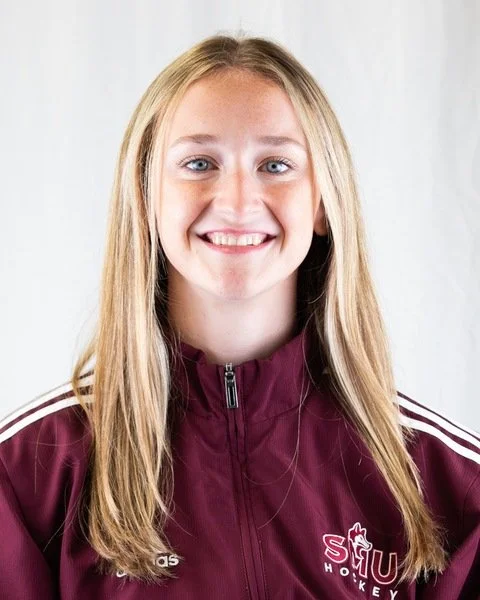
Hailing from Stellarton, Nova Scotia, Abigail came to Saint Mary’s to pursue an education in the Faculty of Science. Bringing experience from her time with the Northern Subway Selects of the Maritime Major Under-18 (18U) Female Hockey League, Abigail joined the SMU Huskies Women’s Hockey team and is finishing her career with the Huskies as an “offensive defender” who made her mark on the ice.
Boasting an impressive record, MacKenzie was recognized as a 2025-26 U SPORTS First Team All-Canadian, is a four-time Academic All-Canadian, and has been recognized as a three-time Atlantic University Sports (AUS) All-Star. Abigail also represented Team Canada at the 2023 FISU University Games, helping lead the team to a silver medal.
She walks the stage with a BSc in Psychology.
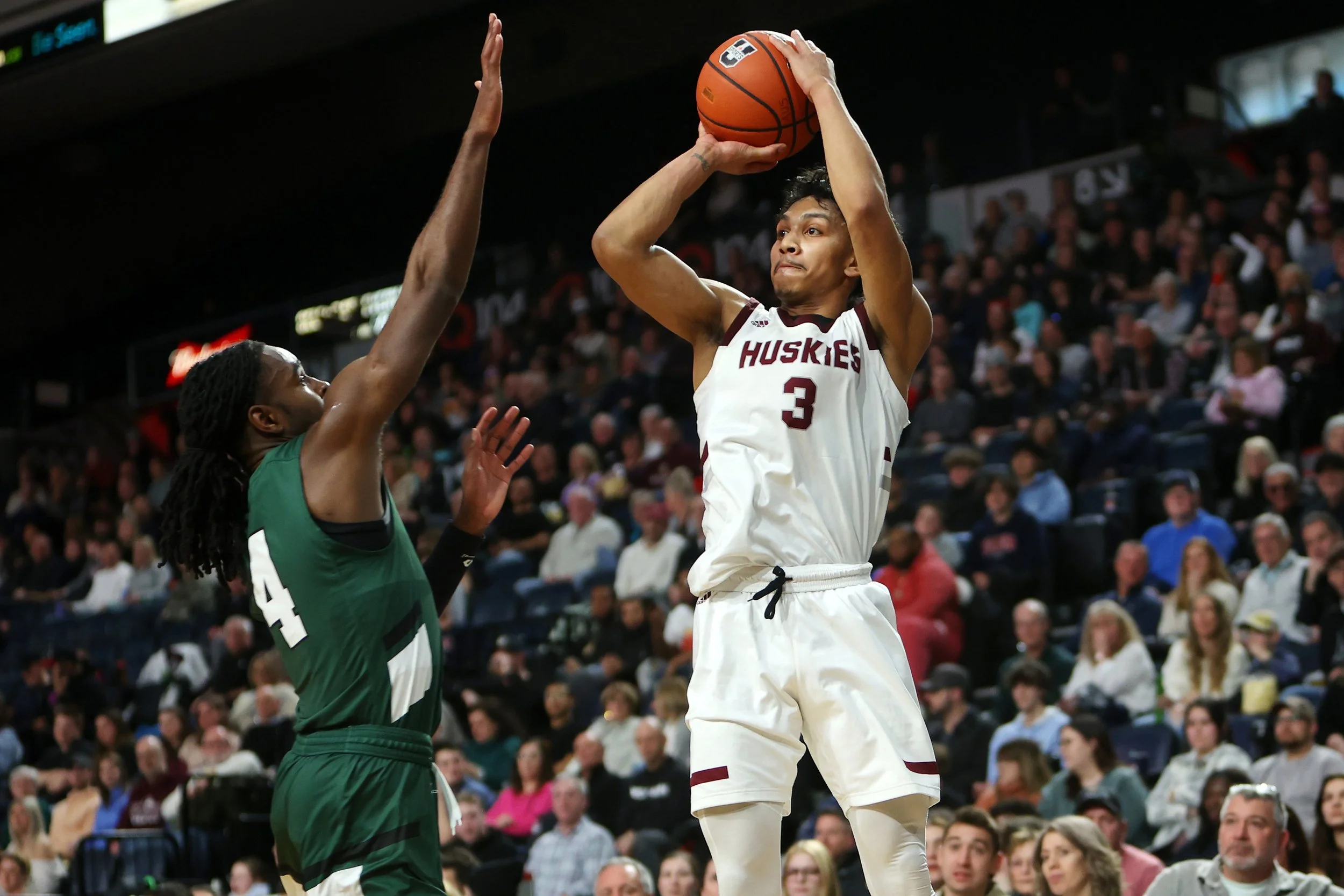
Jayrell Diggs
The student-athlete entrepreneur from East Preston, Nova Scotia made waves on and off the court during his Huskies Basketball Career, making history as the All-Time leader in AUS men’s basketball three-pointers made.
A two-time AUS All-Star and Academic All-Canadian, Jayrell was named 2023-24 Saint Mary’s Male Athlete of the Year, as well as a 2021-22 U SPORTS All-Rookie Team member during his time with the Huskies.
He’s also the founder of laundry service company SudDrop, and has received numerous entrepreneurship awards and scholarships in addition to working with the Arthur L. Irving Entrepreneurship Centre to make his idea a lucrative reality.
Jayrell is graduating with a BComm in General Business Studies.
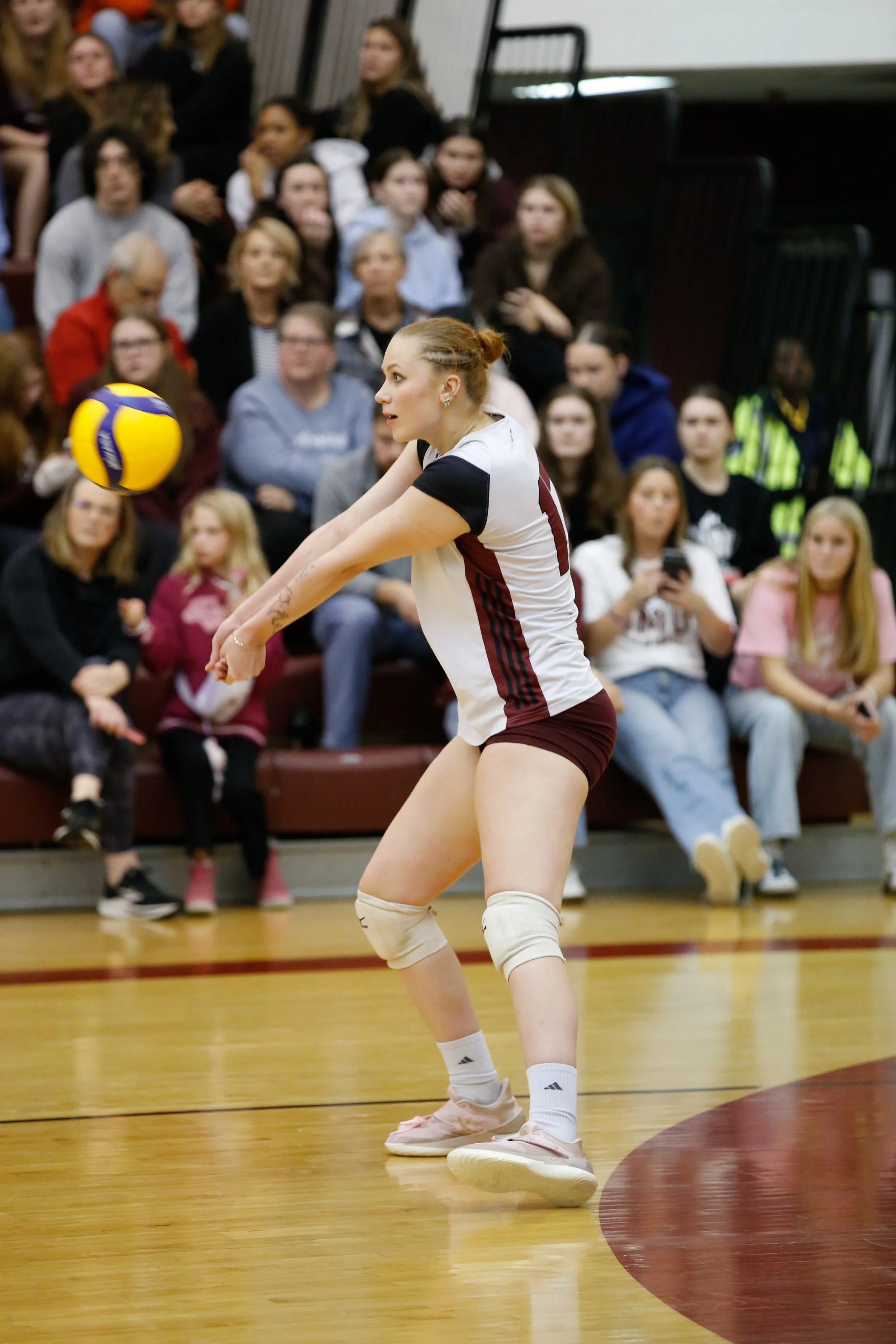
Emilia Mikanovich
Hailing from an extremely athletic family in Belarus, Emilia’s journey to Saint Mary’s was anything but ordinary. With a father that coaches for teams like the Belarus Men's National Volleyball Team and a mother who, most recently, worked as an Assistant Chief Judge at the 2026 IWWF European Waterski Championships, it's no wonder that Emilia was a top player for her age group by the time she was 14 years old.
She played three seasons of professional volleyball in Europe before deciding to pursue her education, and after a series of delays, she and fellow teammate Alena Piatukhova travelled together to begin their journey at SMU.
Emilia ends her time with the Huskies as a two-time U SPORTS First Team All-Canadian, AUS Most Valuable Player, AUS Championship Most Valuable Player, and a four-time Academic All-Canadian.
Emilia is also the 2025-2026 Saint Mary's Female Athlete of the Year and the 2025-26 AUS Female Athlete of the Year and is nominated for the 2026 Lois and Doug Mitchell Award as U SPORTS Athlete of the Year.
She’s leaving SMU with a profound athletic legacy and a BSc in Biology.
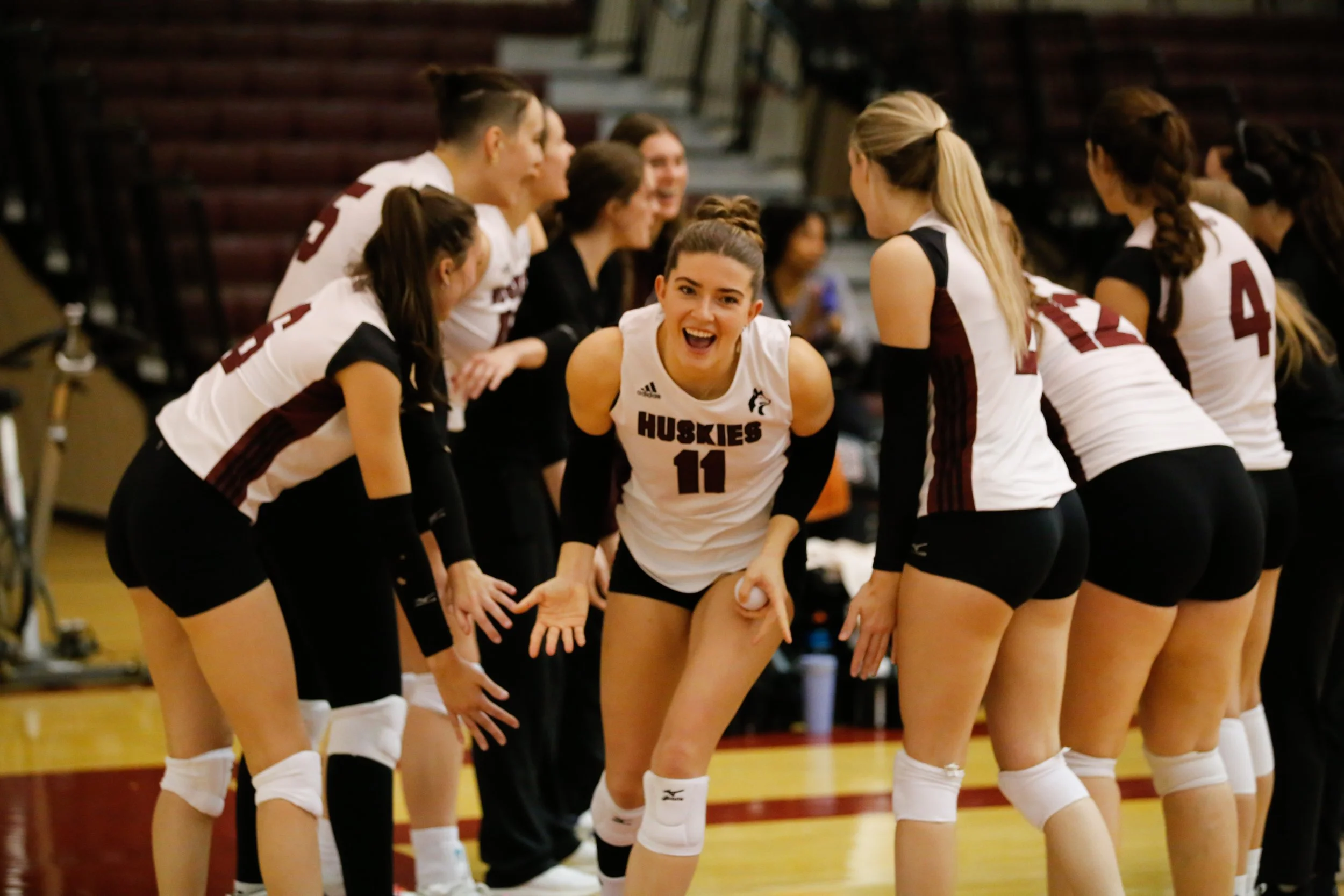
Taylor Lougheed
Calgary, Alberta-born Taylor came to the Huskies Women’s Volleyball team in 2022 after being named to the 2021 17U Provincial Team and a competition streak with the 18U Lions High Performance Volleyball Club.
Serving as a setter on the Huskies team, Taylor is wrapping up her time at Saint Mary’s with a very full trophy shelf, having captained the Huskies to back-to-back AUS Championships in 2025-26 and 2024-25. A four-time Academic All-Canadian, Taylor was also named to the 2022-23 U SPORTS All-Rookie Team and was recognized as a 2022-23 AUS All-Star. She was also a 2022 Sobey National Innovator Award recipient.
In the 2025-26 season, she was a Saint Mary’s Female President’s Award Nominee and received the AUS Student-Athlete Community Service Award. She was also a featured Athletics Ambassador with the Scott McCain & Leslie McLean Centre for Sport, Business and Health, and received the prestigious 2025 Frank H. Sobey Award for Excellence in Business Studies.
Taylor crosses the stage this year with a BComm in Accounting.
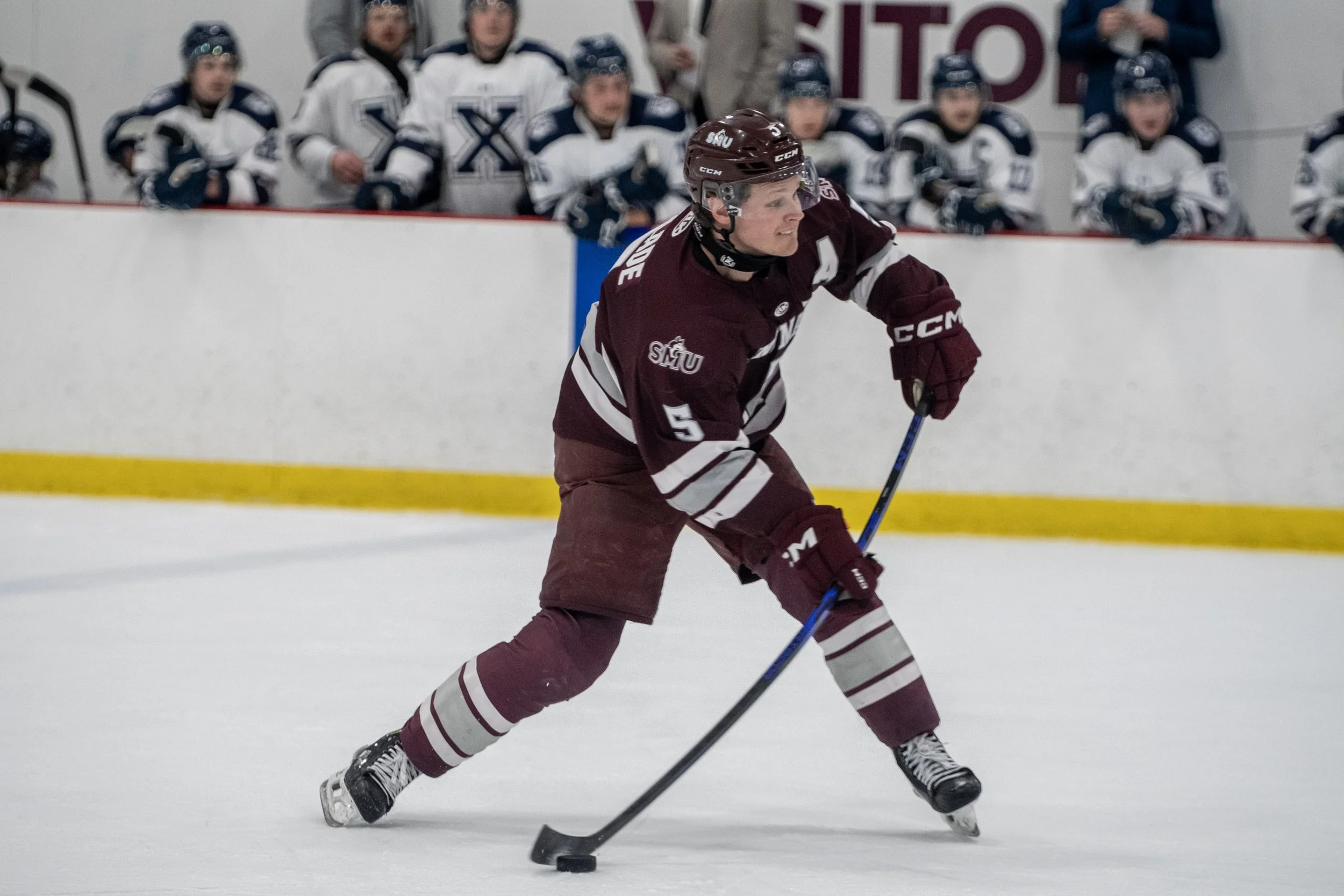
Reid Valade
Born in Caledon, Ontario, Reid joined the Huskies after a “after a very productive junior career in Kitchener,” where he scored 163 points in 240 regular season games with the Kitchener Rangers. Serving as Assistant Captain for his last two years with that team, he came to Saint Mary’s with a record of success and demonstrated leadership experience on the ice.
Thriving as a forward and assistant captain with the Huskies Men’s Hockey Team, Reid was named a 2025-26 U SPORTS Second Team All-Canadian after leading the country in scoring and helping the Huskies to a U SPORTS Silver Medal. He is also a two-time Academic All-Canadian and AUS All-Star.
Reid is graduating this year with a BComm in Finance.
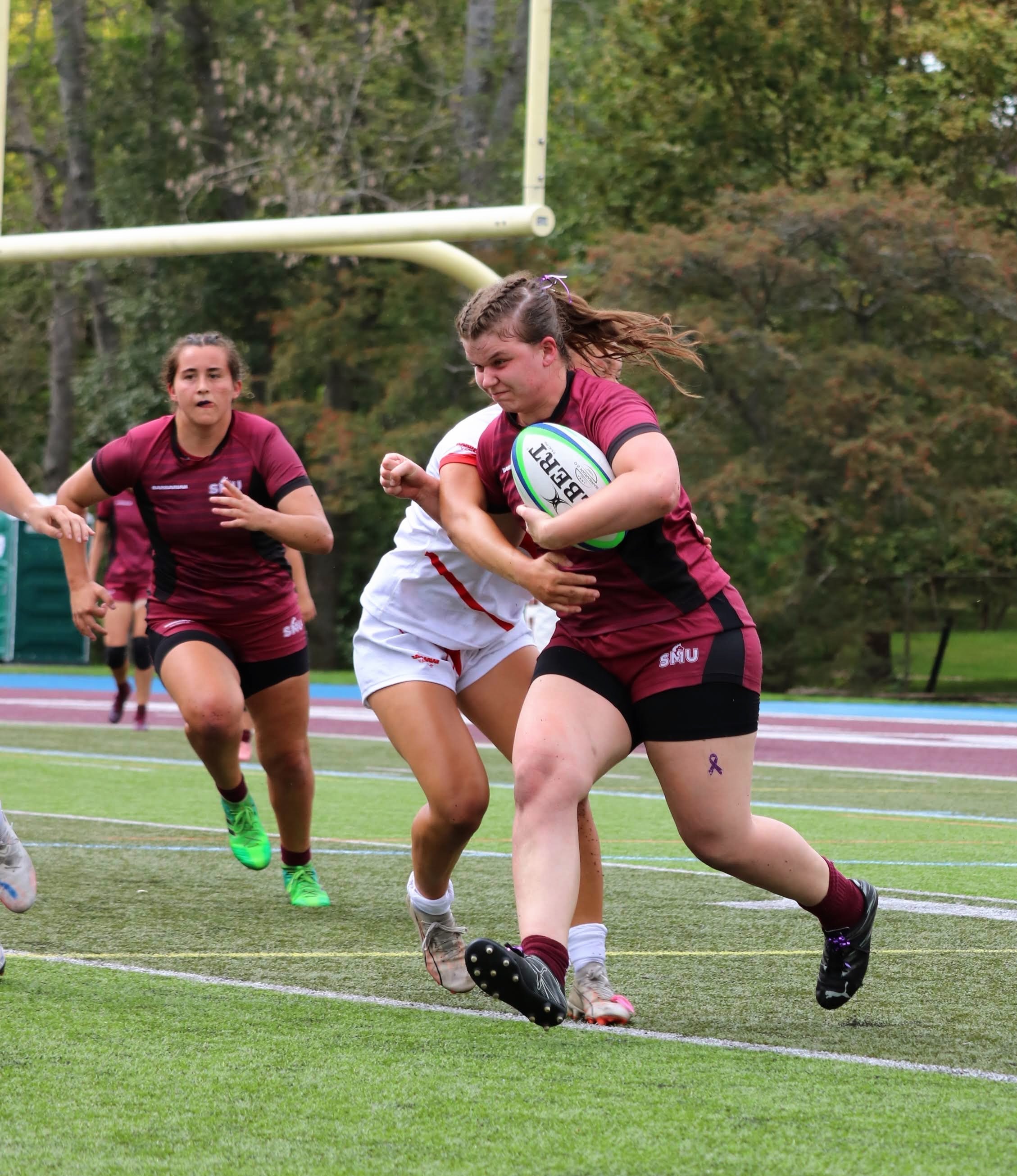
Deana Symes
Born and raised in Sackville, Nova Scotia, Deana Symes BSc’24 is wrapping up her Huskies career as a centre on the Women’s Rugby Team.
A five-time Academic All-Canadian, Deana is the 2026 recipient of the Student Leadership Recognition Award at Saint Mary’s in addition to receiving the 2025-26 Saint Mary’s Female President’s Award for Academic and Athletic Achievement and boasts a long career of community volunteerism at SMU.
Working as a Community Food Room volunteer, a Medical Campus Response Team volunteer and a Research Ethics Board member in addition to her varsity commitments, her goals of pursuing a career in the medical field are supported by years of hard work and dedication to her team and to the university at large.
Deana is graduating with a Masters of Applied Science in Inorganic Chemistry.
Leading with connection: student-athlete champions mental health at SMU
May 4-10 marks Mental Health Week in Canada and this year the Canadian Mental Health Association is inviting people across the country to “Come Together.” The message is simple but powerful: stronger connections lead to better mental health.
For Saint Mary’s student Marisa McClocklin, that sense of connection is at the heart of everything she does. From witnessing the impact of mental health challenges among friends and family growing up to recognizing how those challenges often go unspoken in varsity athletics, McClocklin has been driven to create greater access to mental health support for those around her.
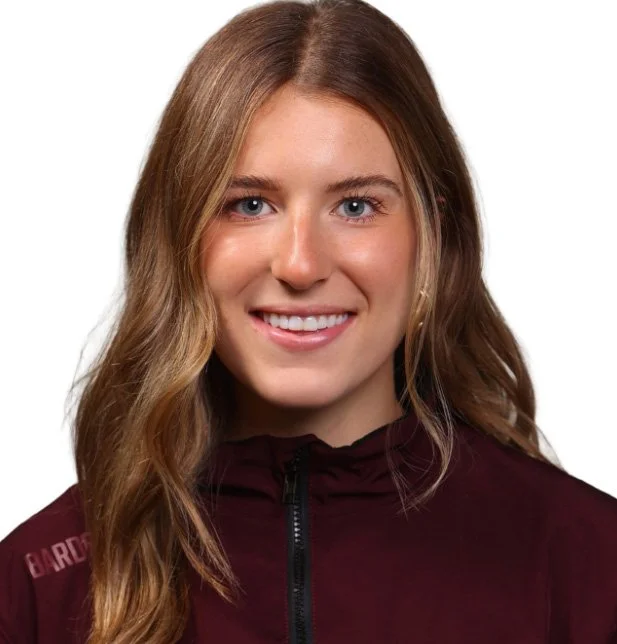
Marisa McClocklin
“Creating spaces where people feel safe, included and understood can shift mental health from something people struggle with privately to something communities address together,” she explains.
A leader, advocate and varsity athlete, McClocklin has been named this year’s recipient of the David G. Smith Memorial Award. Named in memory of David G. Smith, the award recognizes students whose experiences and endeavours help reduce the stigma associated with mental illness through advocacy, support, lived experience or by uplifting others.
One of McClocklin’s most significant contributions has been founding the Cam’s Kids Society at Saint Mary’s – a campus chapter connected to Kids Help Phone. What began as a two-person initiative has grown into a network of nearly 30 student ambassadors working to make mental health conversations more visible and approachable.
“Connection has been one of the most powerful tools I’ve seen in reducing stigma and supporting mental well-being,” she says. “When people feel connected to others, they are more likely to open up, seek support and realize they are not alone.”
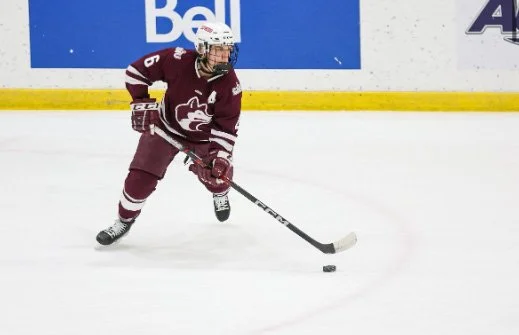
Marisa-McClocklin playing for the SMU Varsity Women’s Hockey Team
Through outreach events, awareness campaigns and peer-led initiatives, the society has created low-pressure, welcoming spaces for students to engage in conversations about mental health. That sense of connection has also extended into the varsity community. As a member of the Saint Mary’s women’s hockey team, McClocklin has seen firsthand how team environments can both challenge and support mental well-being.
“Having that support system has been a huge factor in helping me expand my advocacy roles,” she says. “It’s also provided a unique space to support my teammates and create a culture where people feel comfortable opening up.”
Her involvement doesn’t stop there. As a member of the Varsity Athletic Council and an Athletics Ambassador with the Sexual Violence Prevention Initiative (SVPI) and the Scott McCain & Leslie McLean Centre for Sport, Business and Health, McClocklin works alongside fellow student-athletes to promote education, bystander intervention and overall well-being across the athletics community.
McClocklin credits her experience at Saint Mary’s with helping her turn passion into action.
“SMU is a place where students are genuinely supported when they want to lead or start something new,” she says. “There is a culture of openness where student ideas are taken seriously, which creates space for students to turn their interests into real initiatives.”
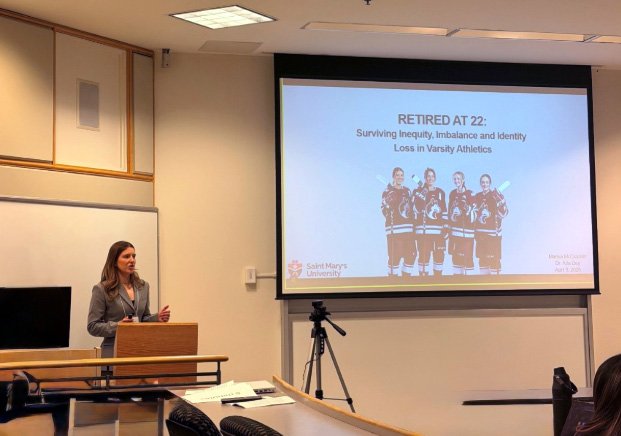
Marisa McClocklin presenting her honours thesis
Preparing to enter her final year, McClocklin will step into the role of Captain of the Saint Mary’s women’s hockey team in the 2026–27 season. She notes how her experiences across athletics, leadership and advocacy have also shaped her academic and career path. Her Honours thesis in Psychology, “Retired at 22: Surviving Inequity, Imbalance, and Identity Loss in Varsity Athletics,” explores how student-athletes navigate the transition out of sport and the impacts on identity and well-being.
“This work has strongly influenced my future goals,” McClocklin says, reflecting on the opportunities that set her on this path. “I want to continue supporting individuals, especially athletes, in navigating mental health challenges, performance pressures, and identity, while also working at a systems level to improve access to support.”
At Saint Mary’s, there are a wide range of health and wellness resources available, along with opportunities for students to get involved in peer support, advocacy and leadership, from The Counselling Centre to the Sexual Violence Support Centre to student-led societies and individual initiatives.
“You don’t need a formal role or a perfect plan to make a difference,” McClocklin says. “Mental health advocacy can start in really small, everyday ways through conversations, listening and showing up for others.”
2025-26 Huskies Athletic Awards Night: Mikanovich, Zinck-Marier named Athletes of the Year
Huskies student-athletes raise record $28,489 for Special Olympics in annual MotionballU event
Huskies host top teams for Men’s Hockey University Cup
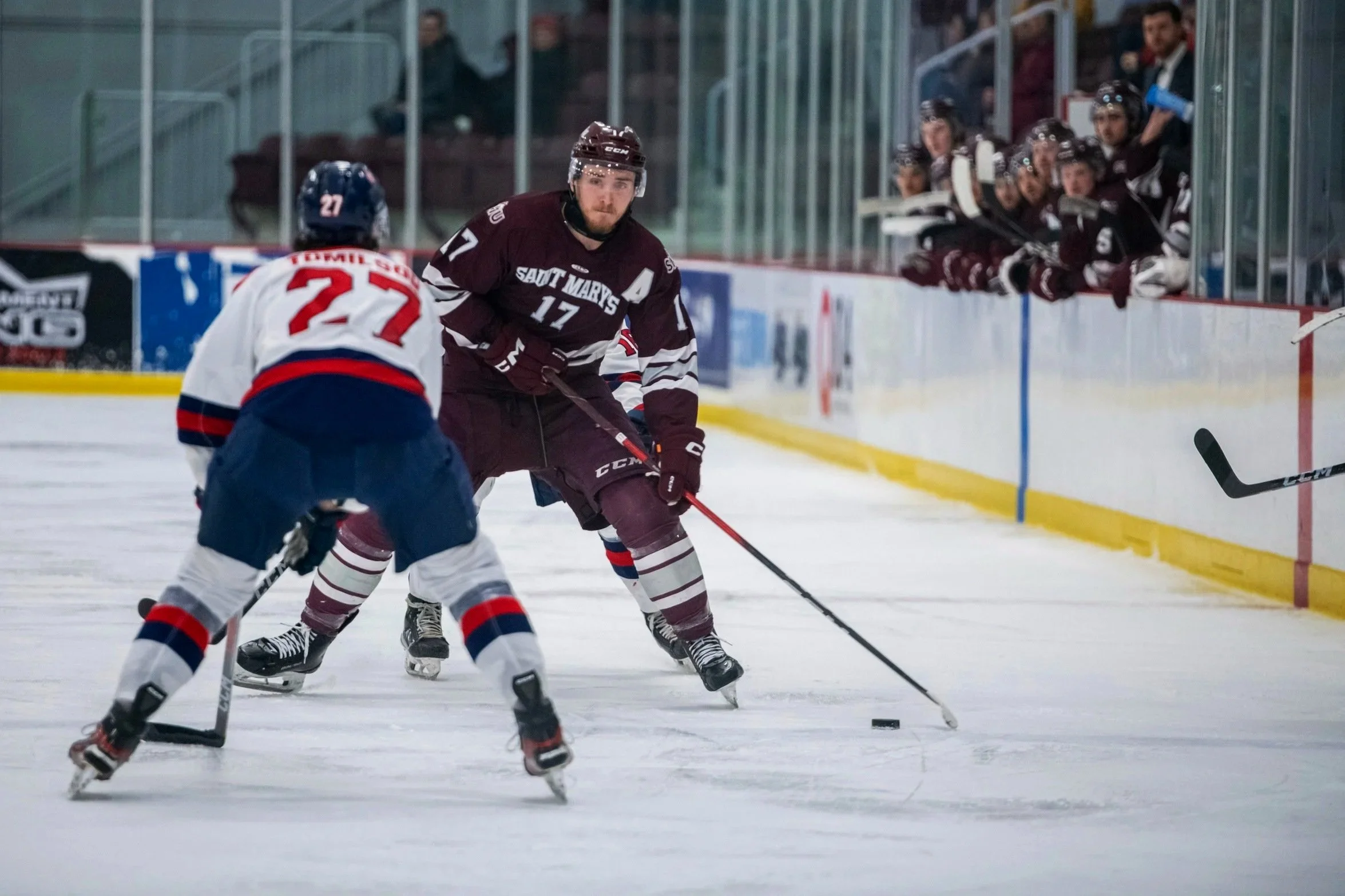
Photo by Mona Ghiz
SMU Huskies kick off Team Halifax U SPORTS bid
Maritimers have a reputation for hospitality. Hosting visitors is a point of pride for us—from shows, to competitions, to expos and more, we like to create unforgettable experiences for audiences, performers, and teams alike.
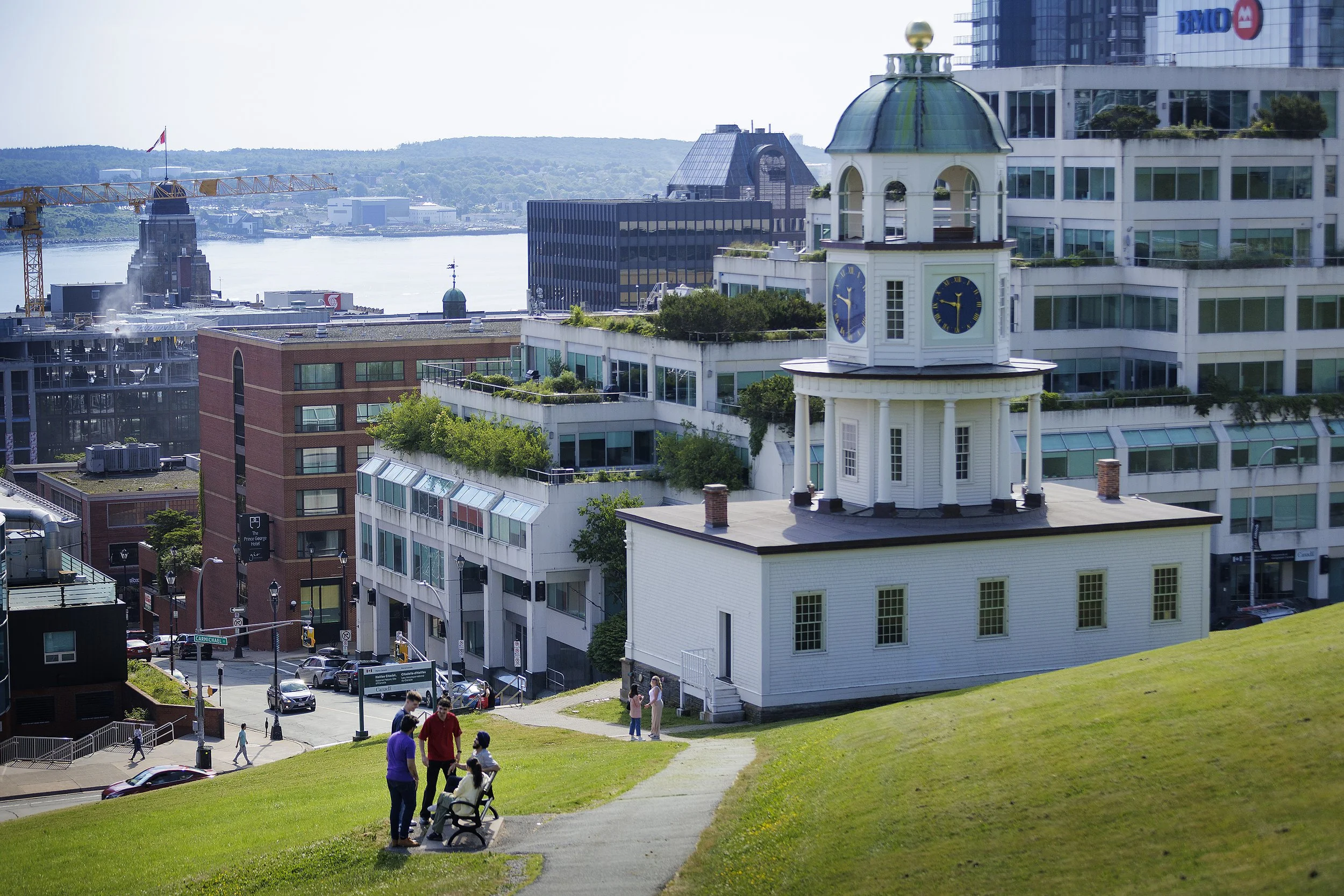
Halifax has hosted major national and international events, including city-wide efforts like the 2024 Junos, the 2018 Pan American Canoe Sprint Championships and the 2015 Canadian Country Music Week & Awards, just to name a few. Every year, we welcome people from around the globe for once-in-a-lifetime experiences made uniquely possible by our vibrant city.
University sports are no exception to this legacy of excellence, with Halifax being a major player in the university sports world, hosting various varsity championships over the last 50 years.
With the U SPORTS Men’s Hockey Championships set to take place at Scotiabank Centre March 19-22, Saint Mary’s leads Team Halifax in the first of a multi-year lineup of U SPORTS championships that are set to make waves.
So, what makes this year unique?
A brief history of hosting
In university sports, schools bid to host championships, taking on the task of hosting competing teams and spectators at their facilities while working with local hotels and restaurants to ensure visitors get a taste of the host city.
Bidding on regional or national championships not only gives student-athletes a professional competition experience, but also involves all areas of athletics in planning, organizing and executing a major sports event—a fantastic opportunity for those looking to make a career in sports business.
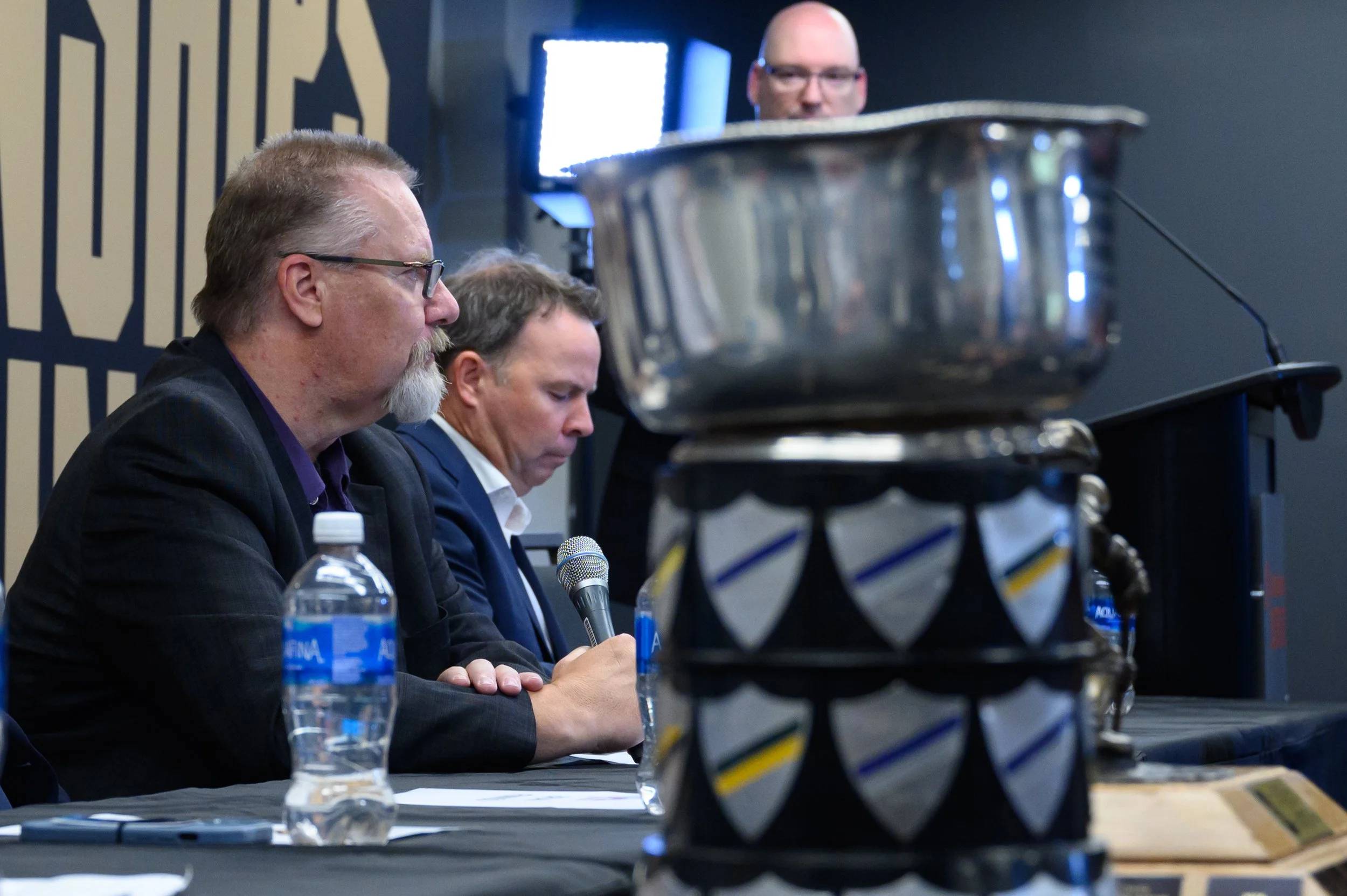
Scott Gray at the U SPORTS press conference in 2024
“For a 20-year span, Halifax played host to the men’s Final 8 basketball tournament here at the Scotiabank Centre, when it was called the Metro Centre. And before that, tournaments were hosted at the Halifax Forum,” says Scott Gray, Director of Athletics & Recreation at Saint Mary’s.
“Halifax has set attendance records in university men’s hockey over the course of the tournament, with upwards of 40,000 attendees across all games. Men’s basketball tournaments have seen similar numbers—in part due to our access to a professional sporting venue like the Scotiabank Centre.”
This time, instead of a single school taking on the host duties, the Maritimes are doing things a little differently.
A new era in university sports
Saint Mary’s University is partnering with Acadia University, Dalhousie University and St. Francis Xavier University to host U SPORTS championships in Halifax for the next three years. SMU is kicking off this Team Halifax approach with this year’s Men’s Hockey University Cup, with each university stepping up as the host team in subsequent years in a collaborative effort to leverage all that the city has to offer.
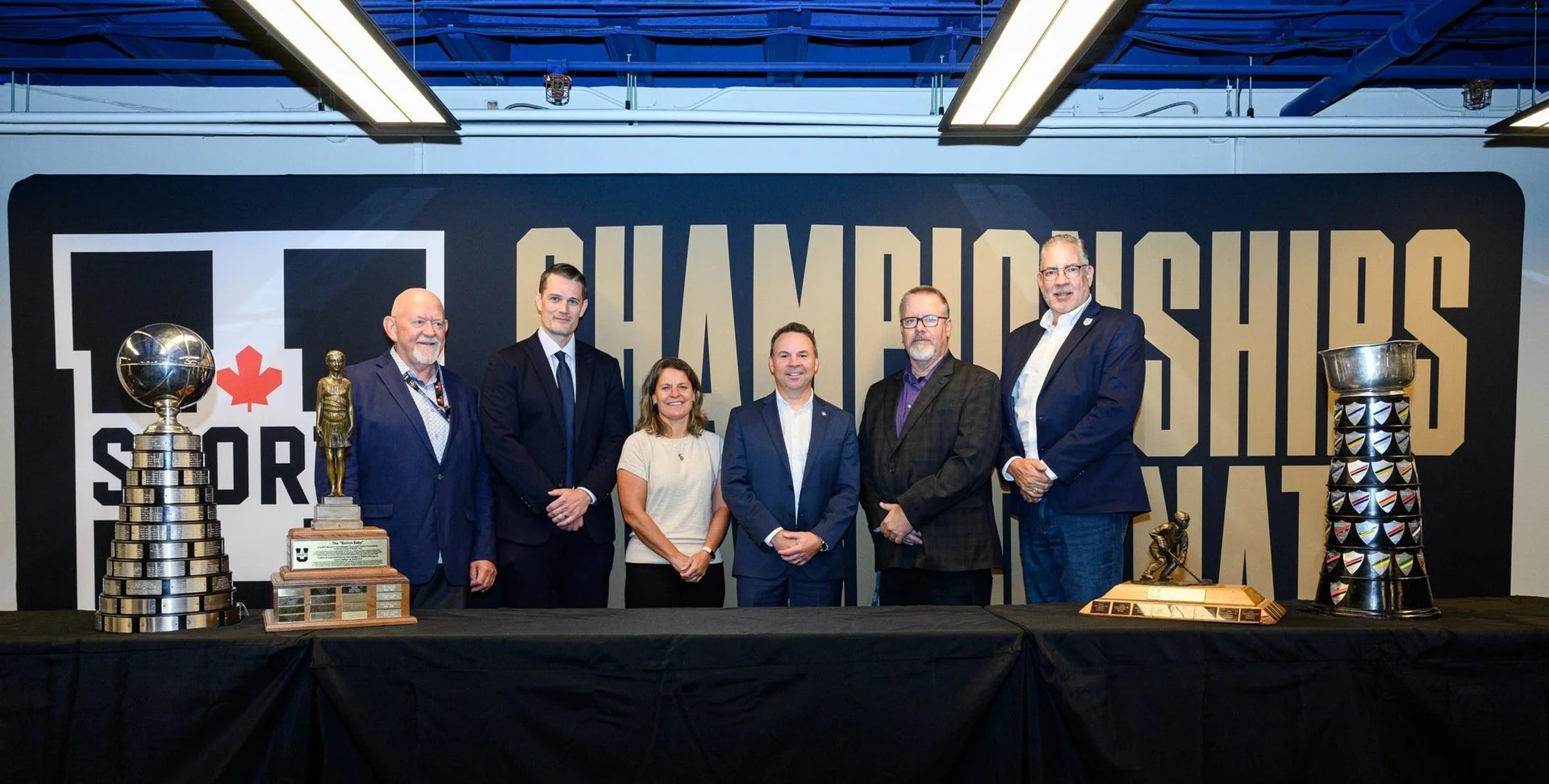
Partners at the Team Halifax U SPORTS partnership announcement in 2024: Chris Larsen, President, Sports & Entertainment Atlantic ; Brian Finnis, Acadia, Director of Athletics & Recreation; Cindy Tye, Dalhousie, Athletic Director; Pierre Arseneault, U SPORTS CEO; Scott Gray, Saint Mary's Director of Athletics & Recreation; Leo MacPherson, STFX, Director of Athletics & Recreation. usports.ca
Working together allows Maritime universities to make use of professional venues like the Scotiabank Centre and brings big business to local hotels, restaurants and tourist destinations as participating student-athletes come from across the country to go toe-to-toe in downtown Halifax.
“This is a professional arena,” says Gray. “It's hosted everything from The Brier and The Scotties to the World Junior Hockey Championships and Professional Women’s Hockey League games this year. This is elevating the university game in a professional setting, for both student-athletes and spectators.”
Beyond our university partners, SMU will work with the Halifax Regional Municipality, Events Nova Scotia, Events East Group, Discover Halifax and Sports & Entertainment Atlantic for a full-scale sporting experience that offers something for everyone across the city.
“This joint effort with municipal government, provincial government, professional organizations and our fellow universities is a true example of collaboration. Working with each other to provide a potentially once-in-a-lifetime opportunity for our athletes is a point of pride, and although we our teams may compete with each other on the court, on the field, or on the ice—we work together in the true spirit of sport to make these experiences great. ”
What this means for SMU
SMU isn’t the only university set to host under this model, but it is the first one up to the plate. Bringing multiple sectors together isn’t for the faint of heart, and whether you’re a diehard fan or haven’t attended a game, there’s no better time to bring your Husky pride to the arena.
“It's an opportunity to be part of something unique,” says Gray. “A National Championship happens once a year, and it’s not always going to be here in Halifax. It’s an experience—seeing a high-level event that you may get to see once in your university career.”
With the championship rapidly approaching, weekend passes and single-game tickets are on sale now. Saint Mary’s will play their quarterfinal game on Thursday, March 19 at 7 p.m.
““It’s not about the hockey. It’s about Saint Mary’s.””
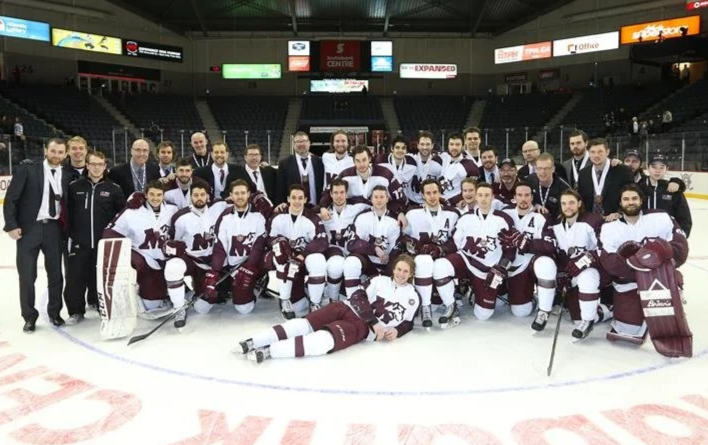
SMU earned bronze at the 2016 University Cup
Pre-Game event hosted by SMU Alumni
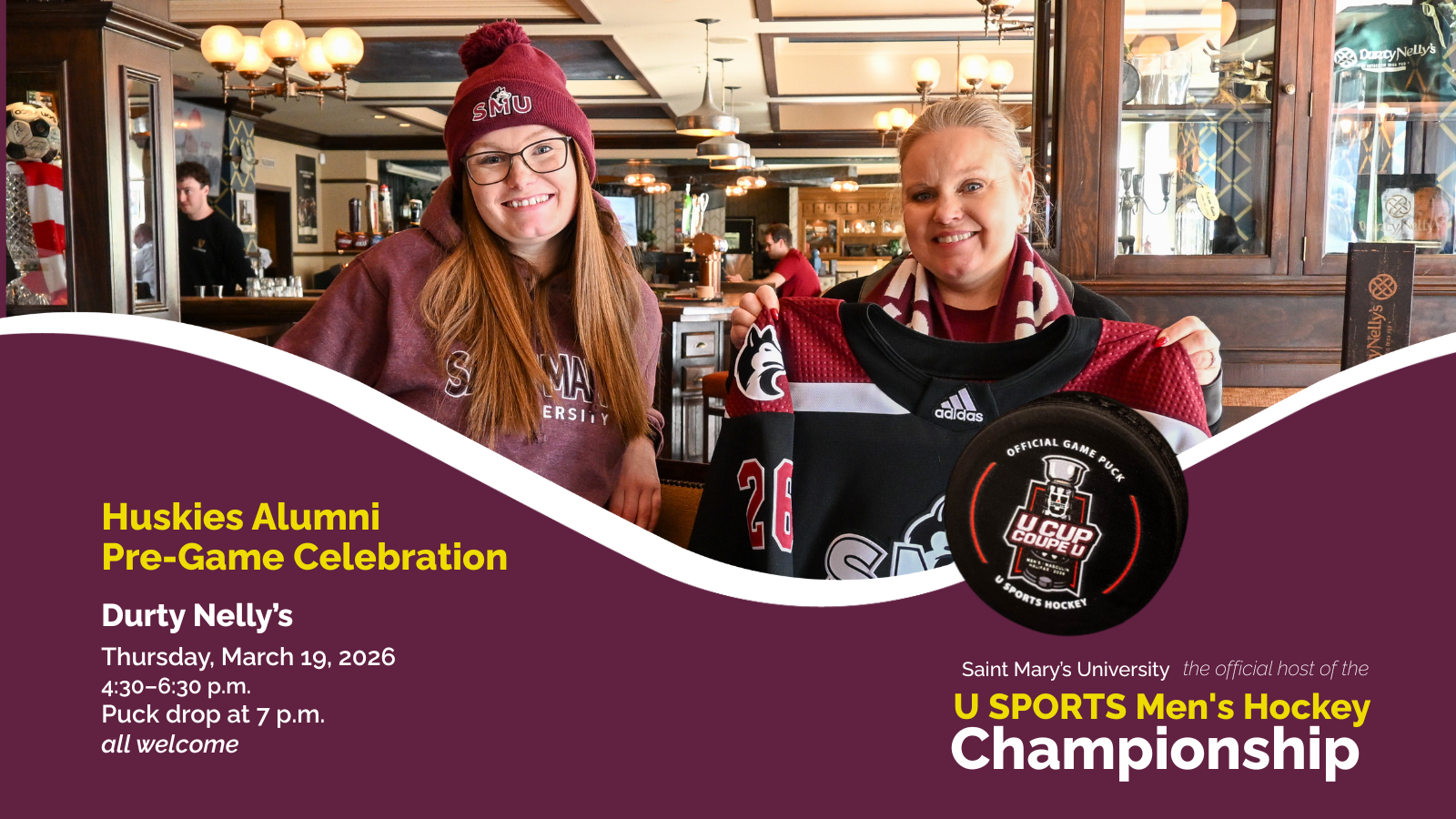
Thursday, March 19
4:30-6:30 p.m.
Durty Nelly’s, 1645 Argyle St., Halifax
To kick off the U SPORTS Championships, Saint Mary's is taking over Durty Nelly’s ahead of the 7 p.m. puck drop at the Scotiabank Centre. Expect good vibes, giveaways, exclusive prizes, and pub specials before the big game.
Whether you're an alum, a student, a faculty member, a staff member, a family member, or a friend of the SMU community, everyone's welcome to come celebrate. Let's pack the pub and show our Husky spirit.
Single Game Tickets are on sale NOW! Faculty, staff and students receive 20% off all SMU games here. Be sure to click "unlock" and enter code: STDNT20.
Alumni receive 20% off with Promo Code ALUMNI here.
Register for the Alumni Huskies Pre-Game.