Saint Mary’s installs new bike repair station

Image of orange bike repair station

You may have recently noticed a bright orange post outside the Language Centre – it’s a convenient and easy-to-use self-service bike repair station! As part of his work term as a Facilities Assistant with the university, engineering student (and bike enthusiast) Oluwatomiwa Dotun-Olutola spent months researching and building the perfect tool for SMU campus.  

Designed as an on-the-spot tool that lets the average cyclist do simple repairs, the bike repair station features a place to suspend a bike, a pump with multiple valves, and a collection of tools for other adjustments. The station also provides educational videos and step-by-step guides to fix basic issues via a QR code. 

“I think the station is a wonderful addition to campus,” says Dotun-Olutola. “It is great for sustainability and accessibility. I am eager to see people take advantage of it.”  

This project aligns with Saint Mary’s green initiatives and sustainability commitment. Learn about our sustainability initiatives here.  

Check out the new station outside the Language Centre!  

Nancy Foran Appointed Chair of Sobey School of Business Advisory Council

Nancy Foran

Nancy Foran BComm’92

The Sobey School of Business is pleased to appoint Nancy Foran BComm’92 as Chair of the Sobey School of Business Advisory Council. With over 25 years of experience spanning numerous industry sectors, Foran brings a focus on sustainability and environmental, social and governance (ESG) to the school’s council of business experts.

“I welcome this opportunity to work with the council to leverage our collective expertise and networks,” says Foran. “My goal is to amplify the voice of the Sobey School of Business, and to support its focus on sustainability in business.”

Foran, a Chartered Professional Accountant (CPA), a Fellow of the profession (FCPA), and a Chartered Director (C. Dir.), is educated in the leading global sustainability standards and frameworks including GRI and TCFD. She is also an FSA Credential Level 2 candidate in ESG with the Sustainability Accounting Standards Board (SASB). In 2021, Foran founded ESG Partners, where she provides guidance to companies and investors, boards of directors and senior leadership teams as they incorporate ESG factors into their organizational strategies and define their purpose to create long-term, sustainable value.

In addition to Foran’s appointment as Chair, Bruce Bowser BA’17 has been appointed as Vice-Chair. Bowser is a highly respected Canadian business leader and CEO of AMJ Campbell Van Lines. A well-known business authority, Bowser is frequently sought out by the media to provide his innovative and entrepreneurial point-of-view. He has also been featured in notable publications such as the National Post, The Globe and Mail, and Business Edge.

The Advisory Council of the Sobey School of Business is a group of notable business experts who lend real-world experience and knowledge to the school, with the goal of providing insight and support to the school. The Advisory Council provides advice that will ensure graduates from the school succeed in the current business world. In addition to the Chair and the Vice-Chair, Martha Casey BA’01, Cynthia Dorrington, Saeed El-Darahali BSc02 MBA’04 and Joanne Hames serve as the other external members of the Advisory Council.

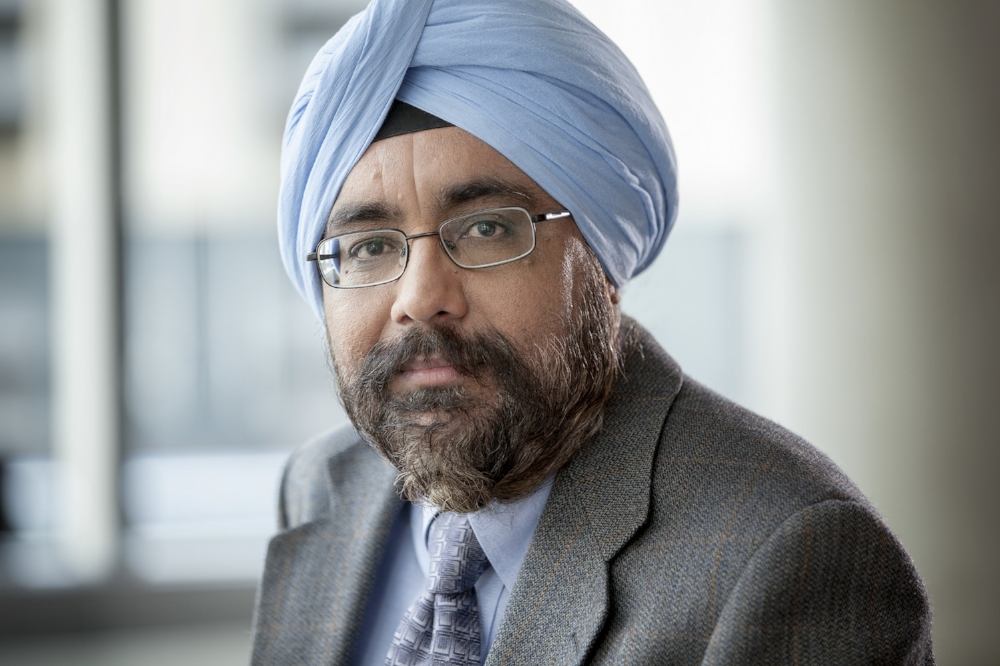
“We are excited to have Nancy Foran appointed as Chair of the Advisory Council,” said Dr. Harjeet S. Bhabra, Dean of the Sobey School of Business. “Her experience in sustainability and ESG is closely aligned with key elements of our strategic plan. Her leadership will help us further our goal of integrating sustainability in our curriculum and other school initiatives.”

Foran is also a speaker at this year’s 4th Annual Responsible Leadership Day event on November 18. This year’s theme is Digital Future: Ethics, Integrity & Values, and Foran will be providing context and sharing her perspective on the Sobey School of Business and ESG. The event will also include a keynote speech by Juliette Powell, a panel on how artificial intelligence (AI) and data analytics can support an organization’s climate action initiatives and goals, and a circular economy student challenge.

Read the 2022 Advancement & External Affairs Report

The Office of Advancement and External Affairs is proud to share the 2022 Advancement & External Affairs Report.

This report highlights the programs and projects behind our alumni engagement, fundraising, government relations and external affairs results and successes and their impact on the university.

The Office of Advancement and External Affairs facilitates engagement from our local and global community in philanthropic action to invest, share and celebrate the success of Saint Mary’s University.

We are truly grateful for the commitment, dedication and support of everyone on campus and this work would not be possible without your involvement in a multitude of ways throughout the year.

Thanks to the active engagement of our community and the incredible generosity of our donors, we celebrate another successful year at Saint Mary’s University.

Researching microbial-terroir and its impacts on wine flavour 

A collaboration between Dr. Clarissa Sit’s chemistry lab and L’Acadie Vineyards is marrying Nova Scotia’s history of winemaking with modern chemistry. The research is exploring the effects micro-organisms have on the flavours of grapes in Nova Scotia’s vineyards. L’Acadie Vineyards owner Bruce Ewert was excited to partner with Dr. Sit to determine what unique fungi and bacteria contribute to the flavour profiles of wines produced at his award-winning, Annapolis Valley vineyard.  

Bottles of natural wine from L'Acadie Vineyard

“This project came about because of one of the students in my research lab,” says Sit. “After attending a research seminar, we started looking at the micro-organisms in the soil and on the surface of grapes in Nova Scotia vineyards.”   

Sit’s research presented an opportunity for L’Acadie Vineyards. The first certified organic vineyard in the province and the first biocyclic vegan winery in North America, the family-owned business specializes in an array of organic natural wines. 

While conventional wines are frequently treated with sulfites to kill microbes, natural wines rely on native yeast from the fermentation process to do so. Microbes in the soil are splashed onto the grapes during irrigation and rain events. 

“The mixture of micro-organisms on the surface of the grapes adds flavour to the wine,” says Sit. “That’s what we’re curious about, and vineyard owners are equally curious. We want to see if there are differences in the year-to-year vintages depending on how microbes affect their flavour profiles.”  

Three people tasting and analyzing wine

"Dr. Sit has been so supportive and encouraging. I never thought I would study wine yeasts and the complexities of natural winemaking. I love telling people I am getting a PhD in wine," says graduate student Lauren Grant, pictured above (far right).

In her research, Sit has compared soil samples from L’Acadie Vineyards with those from conventional vineyards to determine the difference between micro-organisms in the soil. These samples were brought back to the lab to isolate some of the strains for in-lab fermentation. 

“We’re adding some of those strains into sterile grape juice to see what chemical profiles they’re producing. We can analyze the strains we’ve been able to isolate to see what flavours each of the microbes are producing and create interesting new combinations.” 

While research is expected to continue for another three years, the project has the potential to grow depending on its findings, says Sit. 

“The focus will now be on the profiling and figuring out what aromatic compounds these microbes are producing and how vineyards can use them to create flavour while benefitting the environment.”

Related stories:

Helping the North Atlantic Right Whale rebound

Dr. Frasier speaking to students

At nearly 70 tonnes, the subjects of Dr. Timothy Frasier's research are massive examples of how quickly a species can progress to the brink of extinction. North Atlantic right whales are one of the most endangered large whales globally, with fewer than 400 in existence. While protection initiatives are in place, Dr. Frasier is concerned with the whale's low reproduction rate.   

Using genomic data, Dr. Frasier works to better understand what genetic factors limit the species' recovery. Early hypotheses suggest that low genetic variation and inbreeding could be possible factors. By determining the factors that limit reproductive success, conservation efforts can be more effective and efficient in saving the species from extinction.

Picture of a right whale

Photo credit: New England Aquarium IUCN/PA

"By working with colleagues and governments in Canada and the United States, we can move fairly quickly from research results to impacts on policy and procedures," says Dr. Timothy Frasier of the Faculty of Science. "Right whales are in a very precarious situation, and we need to identify how conservation actions can be changed to improve the chances for the species to recover." 

With $6 million in new funding, Dr. Frasier and his colleagues from Genome Atlantic and the New England Aquarium can continue their research into what factors limit the reproductive success of right whales. This work will help focus conservation efforts to save these beautiful mammals.

Did you know? Each year, our Faculty of Science and the Canadian Whale Institute host a 10-day Marine Mammal Summer Camp, where teens conduct hands-on marine research in the laboratory and off the coast of New Brunswick (pictured above). 

Related stories:

Creating opportunities for Indigenous girls in sport

Creating safe and welcoming places on campus and through sport is at the forefront of everything Ryan Francis stands for. In 2019, he co-founded the Indigenous Girls Hockey Program, which operates in Eskasoni, Membertou and Truro, NS (close to Millbrook First Nation and Sipkne’katik First Nation), and has seen nearly 200 school-age girls participate. He believes that representation and connection are vital for a positive experience in hockey and that helping Indigenous girls to experience the game with their peers is important.

Huskies hockey player Erin Denny (of Eskasoni First Nation) has been involved since the beginning, providing the girls with insight into her lived experience and encouraging them to feel seen, heard and understood in an environment that is comfortable and familiar.

“As a SMU hockey player, it’s great to be able to connect with the broader community,” says Denny. “Through this program, I can contribute to the development of young athletes and show these girls there is a place for Indigenous youth in sport at every level.”   

Did you know? Ryan Francis, the university’s first Indigenous Visiting Fellow, works closely with our Centre for the Study of Sport and Health on initiatives that increase the knowledge and awareness of Indigenous participation in sport, such as the Red Tape Game and Indigenous Sport Week.

Related links:

Saint Mary’s contribution to the James Webb Telescope

“The Sparkler” galaxy—seen here in JWST’s first deep image—was found by Saint Mary’s astronomers and colleagues and hosts some of the universe’s first stars. Credit: NASA

The James Webb Space Telescope (JWST), the most powerful space telescope ever built, has a Saint Mary’s connection. Dr. Marcin Sawicki, Canada Research Chair in Astronomy, is part of the team that developed a key part of the telescope, namely the Near Infrared Imager and Slitless Spectrograph (NIRISS), which records data at near-infrared wavelengths invisible to the human eye. 

“Stars, galaxies and objects all have an infrared pattern, similar to a barcode” says Dr. Sawicki. “With the NIRISS, we can read the object’s bar code and figure out all sorts of properties like how old it is, how far away it is and whether it’s a galaxy or other space object.” 

Dr. Sawicki and his students have unprecedented access to the Webb telescope. “Our postdocs and students will be using JWST to observe the birth of the first galaxies soon after the Big Bang.” he says. “The potential for extremely impactful science is enormous. We’re eager to use Webb for world-leading research here in Nova Scotia.”

Did you know? “The Sparkler” galaxy—seen in JWST’s first deep image—was found by Saint Mary’s astronomers and colleagues and hosts some of the universe’s first stars. 

Related stories:

Recent grad making a splash in the world of entrepreneurship

Combining passion and problem solving is the key to successful entrepreneurship, a mentality that Marlee Armour MTEI’22 embodies daily through her work. Having spent the last decade as a swim instructor, Marlee founded Summer Swim Academy in 2015, providing private backyard swim lessons and on-demand lifeguarding services across Southern Ontario. Through this endeavour, she and her team of instructors noticed a glaring issue with children’s personal flotation devices (PFDs).

“We swim with our arms, but PFDs don’t allow for this horizontal movement,” says Armour. “Typical PFDs train kids to swim vertically in what we call the drowning position. Three years ago, I started cutting the PFDs and turning them around, making it easier for the kids to learn to swim safely and properly from the beginning.” 

Armour entered Saint Mary’s Master of Technology Entrepreneurship & Innovation (MTEI) program as a passionate entrepreneur. Her instructors gave her the knowledge and confidence to solve this problem and make the SwimTrainer a reality. Armour also benefited from the entrepreneurial expertise of the Saint Mary’s University Entrepreneurship Centre (SMUEC), which she says played an integral role in helping her learn to pitch her product, supported her with networking opportunities and broadened her horizons through events.

With over five years of entrepreneurial experience under her belt, Armour has now developed a prototype for SwimTrainer and looks forward to applying her knowledge from Saint Mary's to her business.

Did you know? Each year, the Saint Mary’s University Entrepreneurship Centre organizes a national entrepreneurship competition for post-secondary students across Canada. Modelled after the NCAA basketball competition, March Madness sees 64 participants compete to win $10,000 toward their business. With SwimTrainer, Marlee Armour MTEI’22 tied for third place in the 2022 competition.

Related stories:

Telling unheard stories: unlocking museum collections

The soul of a community is embodied by culture and the telling of stories, but what happens when the stories told are not aligned with lived experiences? Partnering with the Association of Nova Scotia Museums and communities across Nova Scotia, Dr. Kirrily Freeman is working to help museums unlock their collections and ensure that history is told accurately. Her students gain experience ensuring that the history and heritage of African Nova Scotian, Acadian, Gaelic and Mi’kmaq communities are better represented in Nova Scotian museums.  

“Community engagement is integral to the whole process,” says Dr. Freeman. “Communities are telling us what is needed, what is missing and what needs to be done to move forward. This knowledge will influence not just how we proceed but hopefully will shape the future of museum work in the province.” 

Maggie MacIntyre, Executive Director of the Association of Nova Scotia Museums, is excited about the short and long-term benefits of this partnership with Saint Mary's.

“Working with students is giving us the capacity to move community-centered work forward,” she says. “In the long run, we see it playing a big role in creating the next generation of museum professionals.”   

Dr. Freeman says their priority is to ensure marginalized groups have access to their communities’ histories and material culture. “We all benefit from having a more inclusive, more nuanced, more comprehensive representation of the past.”

Did you know? Dr. Kirrily Freeman is piloting two new courses, ‘Museum Fundamentals: Unlocking Community Collections’ and ‘Heritage Field Placement’, as part of a newly proposed Public Humanities and Heritage major in the Faculty of Arts.  

Related stories:


50 years of research, education and outreach

A quick 22-storey elevator ride is all it takes to be transported from the heart of a bustling campus into another galaxy at the Burke-Gaffney Observatory. Currently celebrating 50 years in operation, the observatory recently welcomed a new management team in Dr. Vincent Hénault-Brunet and Tiffany Fields BSc’17 MSc’19. Operating one of two professional-grade telescopes in Atlantic Canada, this duo is steadfast in fulfilling their mission to provide astronomy and astrophysics education, research and outreach to communities locally and worldwide. 

“We are incredibly lucky to have the Burke-Gaffney Observatory here on campus,” says Fields. “It allows students to participate in science outreach and it also allows our community to experience the universe here at Saint Mary’s.”  

Fields has always felt the gravitational pull of the observatory. During her time as a student at Saint Mary’s, she worked at the observatory before becoming its technician. Similar to her own experience, she wants to give students the opportunity to learn how to use the state-of-the-art observational astronomy equipment with the hopes of preparing them for careers in astronomy and data science. Dr. Hénault-Brunet agrees.

"For generations, Nova Scotians have been enlightened by the universe after a visit to the Burke-Gaffney Observatory," he says. "We also know students come to study astronomy and astrophysics at Saint Mary's because of our observatory." 

Sitting atop the Loyola building for half a century, the Burke-Gaffney Observatory has celebrated many milestones and continues to look to the future. The observatory is the location where the first supernova was discovered and continues to sit high in the sky as a beacon of generosity and the pursuit of a better understanding of our universe. 

Did you know? The Burke-Gaffney Observatory has allowed many to explore the universe thanks to the generosity of our supporters, including Dr. Ralph Medjuck LLD’13, whose philanthropic gift in 2014 helped upgrade the telescope.

Related stories:

Building more inclusive workspaces

To see the change, you need to be the change. This is the mentality that Dr. Vurain Tabvuma, Sobey Professor in Management, and his PhD student Katelynn Carter-Rogers BA’11 CertHON’12 MSc’15 bring to their teaching and research practices. Their research, focused on understanding how inclusion within organizations can increase well-being and performance, has been built into the Sobey School of Business Management 1281 curriculum —a foundational course for all Bachelor of Commerce students.  

“My research with Dr. Tabvuma has taught me a lot about current practices in organizations and the changes that need to be made to make them inclusive," says Carter-Rogers. "It’s one thing to be included, it’s another thing to feel like you truly belong.”

This addition to the course curriculum reinforces the importance of equity, diversity and inclusion in the minds of tomorrow’s business leaders. This is a big step forward in fostering more inclusive workplaces.  

“It’s important that organizations are able and ready to support people who come from very different perspectives, and include people who understand the world in very different ways,” says Dr. Tabvuma.

Did you know? The Sobey School of Business is a proud signatory of the United Nations Principles of Responsible Management Education (PRME) initiative. The school is also one of just two in Canada to be selected as a PRME Champion (2020-23), a leadership group committed to advancing corporate social responsibility in education and research.

Related stories:

Sobey School of Business takes its place among top business schools in the world with EQUIS accreditation  

The Sobey School of Business at Saint Mary’s University joins the top business schools in the world with EQUIS accreditation by the European Foundation for Management Development (EFMD) Global. Less than two percent of business schools worldwide hold this prestigious accreditation. The Sobey School of Business is also AACSB accredited, and only one percent of business schools worldwide are both AACSB and EQUIS accredited. 

The EQUIS accreditation benchmarks the Sobey School against international standards in terms of governance, programs, students, faculty, research, internationalization, ethics, responsibility, and sustainability, as well as its engagement with the world of practice. 

Dr. Harjeet Bhabra

“We are very excited and extremely proud to be a part of the EQUIS community. Achieving EQUIS accreditation endorses our school’s vision which is to lead in discovery and learning for global impact,” says Dr. Harjeet Bhabra, Dean of the Sobey School of Business. “EQUIS will provide us with the mechanism for international benchmarking with the best, grow our international partnerships, and keep us focused on achieving the highest quality in everything we do.” 

The EQUIS peer review team, consisting of representatives from universities in Spain, Belgium and Canada plus a corporate reviewer from IBM, highlighted the Sobey School’s action on ethics, responsibility, and sustainability initiatives as a reference that can serve others concerned with educating responsible leaders. The business school was commended for its innovation in program development and its responsiveness to the region’s business, societal and economic development needs. 

The Sobey School of Business is named after Frank H. Sobey, founder of Empire Company Limited and Sobeys Inc. The Sobey School of Business offers a well-respected Bachelor of Commerce program, with a wide range of specialties, including accounting, computing and information systems, entrepreneurship, finance and human resource management and industrial relations. The most comprehensive business school in Atlantic Canada it also provides a range of graduate-level programs including a Master of Business Administration, an Executive Master of Business Administration, a Master of Finance, a Master of Applied Economics, a Master of Technology Entrepreneurship and Innovation, a Master of Management in Cooperatives and Credit Unions and a well-respected Ph.D. program.  

In Fall of 2022, the Sobey School introduced two new graduate programs, the Master of Business Analytics (MBAN) and the Executive Doctorate of Business Administration (EDBA), both designed to give students the skills to succeed in the modern business world. The school is also home to the internationally renowned David Sobey Centre for Innovation in Retailing and Services and four other research centres of excellence.  

The EQUIS accreditation is valid for a three-year period. EQUIS is the leading international system of quality assessment, improvement, and accreditation of higher education institutions in management and business administration. EQUIS is managed and run by the European Foundation for Management Development (EFMD) Global and its fundamental objective, linked to the mission of the EFMD Global, is to raise the standard of management education worldwide.