2023 poetry and fiction prizes announced

The Department of English Language and Literature is delighted to announce the winners of this year’s Joyce Marshall Hsia Memorial Poetry Prize and Margó Takacs Marshall Prize for Excellence in Short Story Writing.

First place in the short fiction category goes to Jaya Joshi, an English major, for a wistfully lyrical story about the afterlife. Melissa Dalley, an Anthropology major, took first prize in the poetry category for a sequence of connected poems on the themes of loss and grief, and fourth prize in the short story contest.

The Awards Committee reviewed a strong pool of entries this year, in both the poetry and fiction categories, says Dr. Luke Hathaway. Submissions included spoken/sung and written pieces, and work in a dizzying array of genres: “contemplative lyrics, mythopoeic epyllia, speculative fictions, small-town dramas...we had it al!”.

Here is the full list of winners:  

Joyce Marshall Hsia Memorial Poetry Prize

  • First prize ‘Die Young’ and others, by Melissa Dalley; majoring in Anthropology; minors in Biology and Ancient Studies

  • Second prize – ‘Oviparous’, by Capitu Petersen; Anthropology major; minor in Women, Gender and Sexuality Studies; Forensic Sciences certificate

  • Third prize ‘My Biggest Fears’, by Connor Hattie; English major; Psychology minor  

  • Honourable mention – ‘Salamander’ by Ryan Sanderson; English major; Creative Writing minor

Margó Takacs Marshall Prize for Excellence in Short Story Writing

  • First prize ‘The Exit Interview’, by Jaya Joshi; English major; French minor  

  • Second prize ‘Don’t Stay Too Long’, by Andrew Stilwell; English major  

  • Third prize ‘The Place We Can Never Get Back To’, by Melanie Hattie; Anthropology major  

  • Fourth prize – ‘The Delay’, by Melissa Dalley; Anthropology major; minors in Biology and Ancient Studies  

The judges would like to extend their gratitude to all students who submitted their work, and to the sponsors of these awards. The annual creative writing contests are open to any student currently enrolled at Saint Mary’s University. Next year’s deadline for submissions will be in March 2024. Some of the previous winners have gone on to become nationally celebrated writers, such as Sue Goyette, Jenny Haysom, Jill MacLean and Danny Jacobs.

President Dr. Robert Summerby-Murray has been appointed Chair, Association of Atlantic Universities (AAU)

President, Dr. Robert Summerby-Murray

Halifax, N.S. – Dr. Robert (Rob) Summerby-Murray, President and Vice-chancellor Saint Mary’s University, Halifax, N.S., has been appointed Chair, Association of Atlantic Universities (AAU).

Dr. Summerby-Murray will serve a two-year term as Chair, effective immediately.

In addition to Dr. Summerby-Murray, AAU Council (Presidents) appointed the following to the AAU Executive Committee:

  • Dr. Denis Prud’homme, Recteur, Université de Moncton, Vice-chair 

  • Dr. Paul Mazerolle, President, University of New Brunswick

  • Dr. Greg Keefe, Interim President, University of Prince Edward Island

  • Dr. Neil Bose, President Pro Tempore, Memorial University of Newfoundland and Labrador

  • Dr. Andy Hakin, President, St. Francis Xavier University

  • Dr. Peggy Shannon, President, NSCAD University

Upon his appointment, Dr. Summerby-Murray, noted that the core values of the region’s universities are centred upon research and innovation, student success, social mobility, community engagement, leadership, and accountability.

“These core values are central to the contribution of strong public universities to regional prosperity and social and cultural development,” said Dr. Summerby-Murray.

“Ensuring our campuses are innovative, accessible, safe, secure and welcoming to all students is fundamental to making Atlantic Canada an education destination, locally, nationally and internationally,” he said. An important continuing agenda item for the AAU will be the fostering of its positive working relationship with Immigration, Refugees and Citizenship Canada (IRCC) to facilitate the efficient processing of international student visa applicants accepted by our universities and to ensure alignment between immigration policies and the social and economic growth aspirations of Atlantic Canada.

“Universities play a significant role in regional population growth by attracting, educating, and helping retain international students in communities across Atlantic Canada. We will continue to work collaboratively and cooperatively with our provincial and municipal governments to create affordable student housing on and off campus as well as reliable and efficient public transit systems,” said Dr. Summerby-Murray.

He also noted that, “our university leaders know that improving access to healthcare is a top priority for Atlantic Canadians. In addition to graduating thousands of students annually who have been educated and trained to work in all aspects of healthcare delivery, our institutions are also focused on promoting healthy and active lifestyles among our students, values that will remain with them, their families, and communities in which they reside into the future.” 

The Association of Atlantic Universities (AAU) represents the interests of universities across the region, ensuring public visibility for the important role they play in preparing future leaders of our communities, in path-breaking research and innovation, and in contributing to the economic, cultural and social prosperity of life in Atlantic Canada.

Meet your Valedictorian: Natania Blair BSc'23

Natania Blair BSc’23

As an international student, Natania Blair expected her environment to change when she arrived in Halifax from rural Jamaica, but she couldn’t have known then exactly how much it would change. Natania and her cohort worked towards their degrees through the COVID-19 pandemic, transitioning to online learning with many unable to return home. Natania was also a residence assistant, dedicated to helping students through this difficult time.  

An impressive list of extracurricular activities and volunteer work never stopped her from excelling at her studies, she worked hard until the last term—taking six classes in her final two terms during the 2022-23 academic year, an impressive feat.

Natania is proud to have family attending convocation, including her younger sister, a Saint Mary’s student taking biology in her big sister’s footsteps. She is currently working in Halifax and is planning to pursue permanent residency and medical school.

Q&A with Natania Blair

Where is your hometown?: My hometown is in rural Jamaica. A vibrant community, rich in culture, called May Pen, in the parish of Clarendon.

What’s your major?: I’m graduating with a Bachelor of Science with a major in Biology.

What was your favourite class?: Global Change with Professor John Calder. It was a very eye-opening course. I also enjoyed GEOL 1203  Earth History: Atlantic Canada Perspective with Professor Randolph Corney.

Is there an instructor who had a big impact on you?: So many professors had positive impacts on me. Some are Dr. Andrew Hare, Professor Caitlin Cunningham and Dr. Anne Dalziel. They were excellent motivators and role models.

Why did you choose Saint Mary’s University? An international recruiter named Lauren Cullen met with me in Jamaica and told me all about SMU. She got me so excited to be a Husky SMUdent!

What activities were you involved with at Saint Mary’s?: My most impactful activity would be my role as a Residence Assistant. Thanks to Kati Kilfoil and her team, I garnered important life skills and valuable experiences throughout my three years of being an RA. I was also part of the Executive Team as the Public Relations Officer of the Caribbean Society in my fourth year.

What was your favourite space on campus?: My favourite space on campus is the SMU Gym. I was on the Cheerleading team in my first year, and we would practice in the SMU gym. Since then, I’ve made going to the gym a priority.

Do you currently volunteer with any organizations?: I was previously a SAGA Volunteer (Students Acting for Global Awareness). I took on the role of mentor and welcomed students who were new to the SMU family.

Did you receive any awards or recognition from the university or other organizations during your time as a student here?: I received an award for showing resilience as a Residence Assistant during the COVID-19 pandemic, as well as an award for Outstanding Programming as an RA. I made the Dean’s List, which I am very proud of. Being Valedictorian for the Faculty of Science at this 2023 convocation is such an honour in itself. 

What advice would you give your younger self who was just starting university?: You are smarter than you think. Keep being that happy, positive, and optimistic girl despite any challenges you may face along the way. Don’t let anyone dim your light—if you are too bright for them, offer them some shades. And remember you can do all things through Christ who strengthens you.

What are your goals for the future?: I hope to continue my studies of the Sciences in pursuing my dream of becoming a Medical Doctor.

Spring Convocation takes place May 17-19, 2023. Watch the ceremonies live at smu.ca/graduation or on our Facebook page.

Meet your Valedictorian: Oratile Mogae BComm'23

Oratile Mogae BComm’23
photo: Ashley Brown

As Oratile Mogae prepares to walk across the stage on convocation day to receive her Bachelor of Commerce degree and deliver her valedictorian address, she’s humbled by the honour of representing her graduating class. 

“It’s a surreal feeling,” she says with a smile. “We’ve all had our own journeys to get here, and I recognize graduating will mean something different to everyone—it’s going to be a special day.”     

Looking back at her own journey, growing up in Bedford, Nova Scotia, the decision to attend Saint Mary’s was easy.  

“The Sobey School of Business is one of the top business schools in Canada,” she says. “The university also has a reputation for smaller class sizes and having a close sense of community on campus—much like a family.”

Family is important to Mogae, and she’s quick to share that her parents have always been her biggest cheerleaders every step of the way. As an African Nova Scotian woman, creating an inclusive family-like atmosphere for Black students is something she is passionate about.

A journey of inclusion

Saint Mary’s strives to create an academic environment that is inclusive, equitable and dedicated to embracing global perspectives, something she values deeply about the university. Her passion for inclusion sparked her to create the university’s first Black Student Society.

Previously, there had been African and Caribbean Student Societies, but Mogae wanted to create a hub where all Black students on campus could come together and have a safe space to connect. “Some Black people don’t identify with a specific background,” she says. “For example, they don’t only identify as African or Caribbean—they identify as Black.”

To get the ball rolling, Mogae and her friend Aba Owusu-Biney applied to create the society with the Saint Mary’s University Students’ Association (SMUSA). Once approved, she became the society’s president and they set up a governance structure. The Black Student Society officially began in the fall of 2022 and the team hit the ground running, planning activities and events.  

“We hosted a paint and sip, open mic, a skate night and a workshop for Black professionals in the workplace,” she says. “Black History Month/African Heritage Month was our biggest month, and that went really well.” 

Members of the Black Student Society at an event

She’s proud of the inclusive environment she helped create for current and future Black students, and she’s honoured by the lasting impact the society will have for the university. 

“For Black students, especially international students, to have a source of family on campus is so important,” says Mogae. “To be able to create a home environment is quite special.” 

She encourages everyone to continue to ask questions, learn about and support Black culture. She says the struggles Black students face are different, and not everyone might understand, but allowing people to feel heard and supported goes a long way.

As she writes the next chapter of her own post-university journey, Mogae hopes to start her own business, continue to learn in a World without limits and keep creating safe spaces for Black students to thrive.

Spring Convocation takes place May 17-19, 2023. Watch the ceremonies live at smu.ca/graduation or on our Facebook page.

Construction to affect access to Loyola Building, May 8-12

Contractors working with the university on the E&I Hub construction project will soon be laying new floor tile in the northeast lobby of Loyola Academic, which will temporarily impact how the space is accessed.

Please note the following:

  • From May 8 – May 12, access from the Tim Hortons area to the northeast lobby (near the ATM) will be re-routed through side corridors. This area will be reopened as soon as the floor tile has been laid.

  • Access through the northeast lobby doors will be maintained, but interior routing is impacted. There will be ample directional signage posted by the construction team to re-route foot traffic.

Thank you for your patience and understanding with these disruptions as Saint Mary’s moves forward with this exciting project.

Meet your Valedictorian: Emperor Ben Robertson MTEI'23

Emperor Ben Roberston MTEI’23

When Emperor Ben Robertson was selecting a school to obtain his Master of Technology Entrepreneurship & Innovation degree, he knew Saint Mary’s University was the right choice.

The university's commitment to providing high-quality education, unique experiential learning opportunities, a vibrant location and extensive student support services contributed to his decision.

His education has provided him with a strong foundation in the principles and practices of technology entrepreneurship and equipped him with the knowledge to help businesses thrive in the digital age.

Q&A with Emperor Ben Robertson

Where is your hometown?: Accra, Ghana.

What was your favourite class?: Out of all the classes I took in my MTEI program, my favourite courses were Technology Entrepreneurship and Tech Strategy and Productivity.

What was the best piece of advice you received?: The most profound piece of advice that has had a significant impact on my life did not come from anybody I know personally. It was a quote that I stumbled upon while walking down Barrington Street that read, "Think and act like failure is impossible for you." This simple yet powerful quote has transformed my perspective on how I approach my goals.

Which instructor had the biggest impact on you?: Throughout my academic journey, I was fortunate to have had many exceptional professors who delivered transformative lectures. However, one professor in particular, Dr. Ramesh Venkat, had an enormous impact on me. Thanks to Dr. Venkat's exceptional teaching, I gained a deeper understanding of marketing and developed valuable skills that have been essential to my career. His influence on me has been invaluable, and I am grateful for the impact he has had on my personal and professional growth.

What was your thesis research?: I collected data on the challenges that businesses faced and explored ways to create opportunities for them to succeed in their respective locations. One of the most intriguing aspects of this research was its timing, as it was conducted during the post-COVID period when businesses were transitioning to new ways of operating. By talking to business owners, I gained valuable insights into their challenges and how they were adapting to the changing business environment.

Overall, this experience gave me a unique opportunity to explore the challenges and opportunities facing small businesses in the Halifax-Dartmouth area. It also allowed me to develop key skills that are essential in any business environment, including communication, research and problem-solving skills.

What advice would you give to your younger self?: If I could go back and speak to my younger self, I would tell them to try new things and challenge themselves as much as possible. I would encourage them to embrace failure as a natural part of the learning process and to adopt a mindset of "failing fast and failing often."

The reason is simple: by trying new things and taking risks, we are more likely to stumble and fail along the way. However, each failure provides an opportunity to learn and grow; the more we fail the faster we can learn and adapt. This can lead to faster progress and success in the long run.

Do you volunteer in the community?: As a passionate individual interested in promoting economic growth and prosperity, I volunteer as a member of the African Nova Scotian Road to Economic Prosperity Youth Council (REPYC). This council is an initiative aimed at promoting economic growth and prosperity among African Nova Scotian communities in Nova Scotia.

What are your future goals?: I am excited about the future and the opportunities that lie ahead. I am confident that with my skills, knowledge and experience, I will be able to make a meaningful contribution to a multinational company while also pursuing my passion for entrepreneurship and innovation.

Spring Convocation takes place May 17-19, 2023. Watch the ceremonies live at smu.ca/graduation or on our Facebook page.

Meet your Valedictorian: Laura Eamon BComm'23

Laura Eamon BComm’23

At 17, Laura Eamon jumped at the chance to attend university halfway across the country from where her family lived. After experiencing personal challenges with alcoholism, she struggled to complete the first year of her studies. 

In 2012, she returned to Nova Scotia. After getting sober, completing a diploma at NSCC and working at Nova Scotia Health, she decided to attend university while staying close to her incredible and supportive family.

After hearing about a close friend’s experiences at Saint Mary’s University, she decided to apply, and the rest is history.

During her Bachelor of Commerce journey at the Sobey School of Business, Laura received many awards and recognitions, including the Elaine Leventhal Bursary, the SSHRC Explore Undergraduate Summer Research Award, the Daughters of the Vote Delegate, the Handyside Ethical and Social Responsibility Award, the Canadian Conservation Corps Participant and the Frank H. Sobey Award for Excellence in Business Studies. Laura is also a member of the Sobey Scholars Network, a network that includes all current and past scholarship recipients, alumni, chair holders, named professors and post-doctoral fellows who have been the recipients of philanthropic financial support from the Sobey family, The Sobey Foundation, Sobeys Inc. and Empire Company Limited.

Q&A with Laura Eamon

Where is your hometown?: Hammonds Plains, Nova Scotia.

What’s your major?: I’m graduating with a major in Economics with a Co-op Distinction.

What activities were you involved with at Saint Mary’s?: I was Treasurer with Saint Mary’s University Environmental Society for one year.

What was your favourite class?: I enjoyed all the math classes I took because working through long problems with multiple steps and a correct answer at the end is very satisfying. I found it interesting learning about Atlantic Canada’s recent history, and I loved learning how economics can be used in any industry and in any country to explore why things happen the way they do.

What’s your favourite space on campus?: Probably everyone’s favourite space on campus is the Atrium with the living wall and the library with the incredible floor-to-ceiling windows. That’s where it feels most like the traditional university experience.

Which instructor had the biggest impact on you?: Professor Tiffany Vu was always an incredibly thoughtful, engaging teacher throughout my time at Saint Mary’s. She is kind, strong, and making waves in her field. She believed in me, let me explore my thoughts in class, asked me to come on as a teaching assistant and worked with me to get the SSHRC Explore Undergraduate Summer Research award and Frank H. Sobey Excellence in Business Studies award.

What advice would you give to your younger self?: You’re never too old or too invested to start over, be a beginner, and change your mind. Stay organized, and always ask for help.

Who inspires you?: The main reason I’m walking across the stage to get my degree is my family: my husband, my two stepdaughters, and my mum. I couldn’t have done any of this without their support and sacrifices. I wish my dad was here to see me as the first in our family to graduate from university. I speak publicly about my experiences and alcohol use because of him.

Do you volunteer in the community?: I volunteer with the Sackville Rivers Association as the social media coordinator.

What are your future goals?: I hope for a bright future filled with local adventures and happy experiences with my family. I hope for slow days of joy and quick days of pain. I want to work with a team of open-minded, caring individuals for an organization making a positive impact on the planet and its people. I hope I respect my values of variety, well-being, and sustainability.

Spring Convocation takes place May 17-19, 2023. Watch the ceremonies live at smu.ca/graduation or on our Facebook page.

Food Service hours: Spring Term 2023

Wondering what’s open for food options on campus this spring?

Until the Spring semester starts on May 8, food service options are limited to Tim Hortons and C-Store. Both are accessible, despite the construction in the building. Locations and hour details are available here.

Once the Spring semester starts, Tim Hortons, Starbucks, C-Store and the Gorsebrook Lounge will be open. Click here for their hours.

Questions? You can always check out the SMU Dining website to see what's open.

Sustainability at Saint Mary’s University

Sustainability is a priority for Saint Mary’s University. Students, faculty and staff have committed to operating the campus in an environmentally responsible way. The university has made big strides in implementing sustainable practices and has developed a reputation for environmental responsibility.


Green energy upgrades

Saint Mary’s has been working towards a greener campus by making several upgrades to buildings and campus operations. The university has already reached its 2025 target for greenhouse gas reduction, thanks to actions like replacing the steam heating plant with a high-efficiency hot water plant, using compact fluorescent and LED lights, switching from oil to natural gas and more.

Saint Mary’s will soon be home to the tallest solar-integrated building in North America with the renovation of Loyola Residence. And, thanks to a joint investment from the Government of Canada and Saint Mary’s announced in the spring of 2023, the university will bring in a swath of improvements including new solar panels, a green roof and other energy-efficiency features that together could more than double the university’s renewable energy production.


Leading environmental education and research

Saint Mary’s is known for the School of the Environment, which has become a hub for environmental education, research and outreach. Students learn to apply knowledge from various academic disciplines to solve problems related to the sustainability of the global environment in the face of human development. The curriculum is far-reaching, with courses in areas such as energy, pollution, environmental ethics, green chemistry, physical and human geography, and more.

The university also hosts leading research centres, including the Community Conservation Research Network, which focuses on community conservation and sustainable livelihoods, and TransCoastal Adaptations which helps build climate-resilient coastal communities and ecosystems through nature-based solutions and strategies.


More steps toward sustainability

Saint Mary’s continues to take action to reduce its carbon footprint and create a sustainable future. Whether it’s promoting active transportation by providing secure bike storage facilities and repair stations, offering discounted bus passes to students, faculty and staff to reduce pollution, or maintaining its Fair Trade Campus certification, Saint Mary’s is committed to environmental responsibility on and off campus.

Saint Mary’s University historian unveils discoveries on Catholic migration in Atlantic Canada

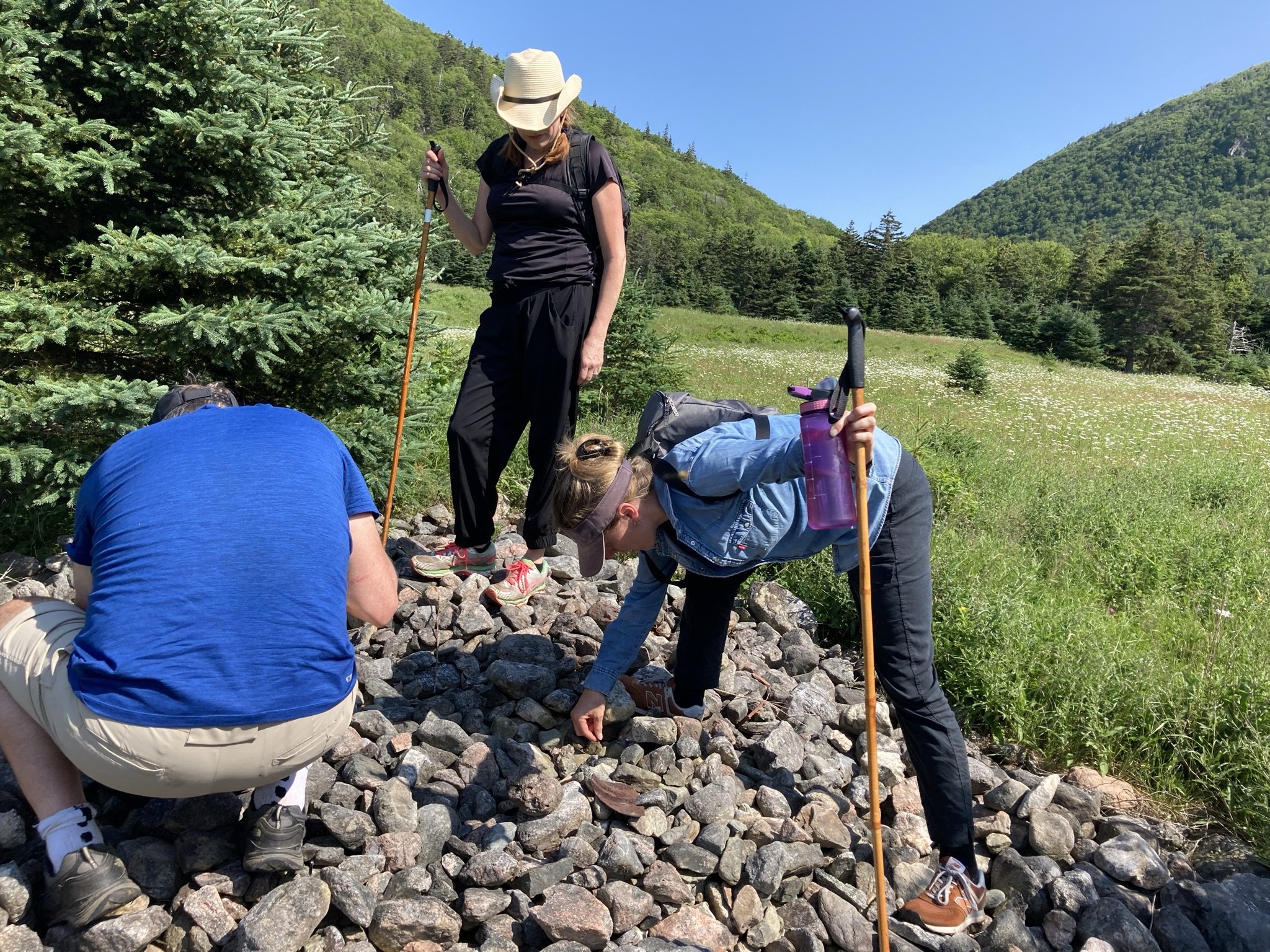
Dr. Karly Kehoe and team researching at Pollett’s Cove in Cape Breton, NS

For historian Karly Kehoe, it took leaving Nova Scotia to see its importance in her research. 

Kehoe is from Margaree Forks, Cape Breton, and studied history and anthropology as an undergraduate at Saint Mary’s University. In 2000, she left Canada to pursue her PhD at the University of Glasgow in Scotland. 

“For me, being a historian is very much understanding the legacy of the past and how we can talk about and deal with where we are right now.” - Dr. Karly Kehoe

Besides research fellowships at institutions like Trinity College Dublin, Yale University and Durham University, Kehoe worked in Scotland as a university professor until 2016. There, she began exploring the migration of Scottish and Irish Catholics to British territories in the Atlantic during the 18th and 19th centuries. 

“When I worked at the University of the Highlands and Island, it was clear there were a lot of people in the area whose ancestors had gone to Cape Breton in the 19th century. I found it easy to connect with them and learned a lot about Cape Breton and how its communities had evolved in the process,” she says.

Now, Kehoe is back at Saint Mary’s University and sharing her findings with her students and local communities beyond the university. 

As the Canada Research Chair in Atlantic Canada Communities, she is also building on the work she has been doing for more than a decade on religious minority migration to the Caribbean and what would become Atlantic Canada.

“I never thought I would end up here doing this work, but research is about following the evidence. The source material, the landscape and the conversations were showing me important things,” says Kehoe. 

“The research chair I hold is allowing me to look at settlement patterns here in the Maritimes and investigate why Catholics—a persecuted religious minority in the United Kingdom—migrated in such large numbers to places like Cape Breton, mainland Nova Scotia, Prince Edward Island and various islands in the Caribbean.”

Last year, Kehoe published her second book, Empire and Emancipation: Scottish and Irish Catholics at the Atlantic Fringe, with the University of Toronto Press. 

Through her research, Kehoe has shed light on how the arrival of Catholic migrants—displaced because of their religion—led to new communities in Nova Scotia and nearby provinces.

It has also revealed a darker history of how these newcomers knowingly displaced the Indigenous Mi’kmaq and extended Britain’s imperial reach. 

“When you start putting the pieces together about how communities here formed and how they were informed by an imperial program that was very powerful and very thorough, you start to uncover more of what the legacy is,” says Kehoe. “For me, being a historian is very much understanding the legacy of the past and how we can talk about and deal with where we are right now.”

This approach to history and her work on migration has also led Kehoe to the world of science diplomacy and advocacy. She has founded programs in Canada and Scotland to help researchers and artists displaced by war, conflict and threats of violence continue their work in their host countries. 

“It's about recognizing that it doesn't matter where you come from—as an academic researcher, you should have the freedom to continue with your work,” Kehoe says, noting the rise in displaced researchers in places like Ukraine, Syria and Turkey. 

“These researchers may come up with an invention that changes the world. But we need to make space for their integration and collaboration. I would rather be the person who opens doors than the one who guards them.”

Both through her research and advocacy work, Kehoe says it’s vital to take steps to preserve historical perspectives at risk of being overlooked or forgotten.

“The humanities matter,” she says. “They are so important in helping us to understand where we come from and where we need to go.” 

Bob Dawson, leader in the fight against racism, to receive an honorary doctorate

Saint Mary’s University will recognize Bob Dawson BA’71 with an honorary doctorate in Civil Law at the 2023 Spring Convocation, celebrating his leadership in fighting racism both on and off the ice. While attending Saint Mary’s University in 1967, Dawson became the first Black athlete to play in the former Atlantic Intercollegiate Hockey League where he was often the target of verbal and physical abuse.

In 1970, he became a member of the first all-Black line in Canadian university hockey, which included Darrell Maxwell and Percy Paris. His commitment to fighting racism did not end when he left university but continues to the present day.

Bob Dawson and teammates recognized as the first all-Black line at SMU Homecoming in 2017

After completing his Masters in Social Work in 1973 at Dalhousie University, Dawson joined the Public Service of Canada in Halifax and later moved to Ottawa in 1980 where he worked for 37-years in human resources management and received several awards for contributions to employment equity and diversity. 

“We are very pleased to honour Bob Dawson,” says Saint Mary’s University President Dr. Robert Summerby-Murray. “He has carried his commitment to fight racism beyond the hockey arena and into the wider Canadian society. He shows us what it means to be a leader and live by values that will inspire others, especially future generations.”

As a member of the Ottawa-Carleton Area Police Community Council, Dawson helped develop a community action strategy to prevent, manage and resolve critical incidents involving the police and communities of colour. While with the National Capital Alliance on Race Relations, he established and implemented the “Police-Minority Youth Program”, a community-based initiative to improve relations between the police and youth and was recognized with a Civilian Citation in 1992 and Community Service Award in 1993 from the Police Services Boards for the cities of Gloucester and Ottawa. 

Over the years, Dawson has worked with numerous community organizations and universities to organize events and conferences to address racism in hockey. One of his proudest moments came when his request to Canada Post for a stamp to commemorate the “125th anniversary of the Colored Hockey League of the Maritimes (CHLM)” was approved and issued on January 24, 2020. He is currently working with the Canadian Museum of History in Ottawa to create an archival collection on the CHLM. Since February 2021, Dawson has been working with students and staff at the R.I.S.E. Academy on hockey-related initiatives, which included an anti-racism campaign entitled “Blow The Whistle on Racism”.

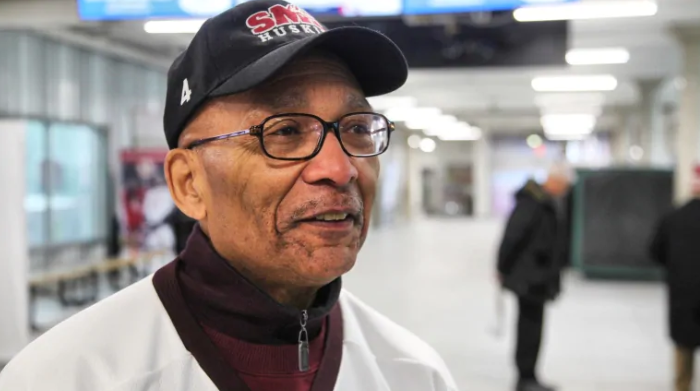
Dawson played for the SMU Huskies from 1967-1971

An accomplished sportswriter and historian, Dawson writes extensively on Blacks in various sports, especially hockey. On January 25, 2015, he received from Black History Ottawa the John G. Dennison Award for excellence in the study, preservation, and promotion of Canadian Black history and culture. In 2022, The Hockey News recognized him as one of the Social Change Advocates Making An Impact for his work in the areas of anti-racism, diversity, equity and inclusion.

On February 22, 2022, the NHL’s Ottawa Senators presented Dawson with a Senators’ jersey in appreciation for his contributions to growing the game of hockey in Ottawa. At the Carnegie Initiative Summit in January 2023 in Toronto, he was presented with the Carnegie Initiative Lifetime Achievement Award for his commitment to challenging the status quo to make hockey more inclusive.

In recent years, Dawson has returned to his alma mater to reunite with teammates and to host conferences devoted to ending racism and promoting equity and inclusion for Black athletes.

“Bob has been a lifelong ambassador of Saint Mary’s University as an athlete, a scholar, and a professional and he has dedicated his life to Black inclusion in Nova Scotia and beyond,” says Dr. Cheryl MacDonald, Associate Director of Outreach and Instructor, Centre for the Study of Sport & Health. “His intellectual and practical contributions to diversity, equity, and inclusion in hockey specifically have informed my own work as a sport scholar. I consider it a privilege to have been asked to deliver the citation for his honorary degree at the graduation ceremony in May.”