Science and Jr. Huskies 2022 Athletics Summer Camps Registration Now Open

Saint Mary’s University is excited to announce that Summer Camps are back!

There are so many exciting options for Science and Jr. Huskies Athletics Camps.

Science

2022 Marine Mammal Camp 
July 30-August 8, 2022

Teens 14-17: Thinking about marine research, conservation, and fieldwork? Our unique 10-day overnight camp offers a hands-on introduction to Marine Biology. 

Marine Mammal Summer Camp is presented by Saint Mary’s University and the Canadian Whale Institute.

THIS CAMP IS FULL

Forensic Science Camp
Two Camps: July 4-8 and July 11-15, 2022

For teens 14-17: Using hands-on labs & research-based field work, learn how sciences like Biology & Chemistry are used in Forensic Science. Two five-day camps will run in July.

THIS CAMP IS FULL


Jr. Huskies Athletics

Basketball


Co-Ed
Five-Day Camp
July 4-8, 2022 9 a.m.-4 p.m. (Supervised from 8 a.m.-5 p.m.)
Ages 6-12

Five days of basic skill development, modified games and lots of fun-filled basketball activity. Quality coaching by Varsity Head Coaches for Men's and Women's Basketball, assistant coaches and some of the best student-athletes in Canada. Cost is $125.00 which includes a camp t-shirt.

Boys

Five-Day Camps
July 18-22, 2022 9 a.m.-4 p.m. (Supervised from 8 a.m.-5 p.m.)
July 25-29, 2022 9 a.m.-4 p.m. (Supervised from 8 a.m.-5 p.m.)
August 1-5, 2022 9 a.m.-4 p.m. (Supervised from 8 a.m.-5 p.m.)
Ages 6-14

Emphasis on individual skill development and team concepts of offense and defense. Also, skills contests, game situation drills and full court games. Quality coaching by Varsity Head Coach Jonah Taussig and members of the Men's Basketball Huskies. There is limited registration for each camp and cost is $225 which includes a camp t-shirt.

Girls

5 Day Camps
July 11-15, 2022 9 a.m.-4 p.m. (Supervised from 8 a.m.-5 p.m.)
August 8-12, 2022 9 a.m.-4 p.m. (Supervised from 8 a.m.-5 p.m.)
Ages 6-14

These camps emphasize on individual skill development and team concepts of offense and defense. Also, skills contests, game situation drills and full court games. Quality coaching for girl's basketball camp by Head Coach Scott Munro and members of the Women's Varsity Huskies. There is limited registration for each camp and cost is $225 which includes a camp t-shirt.

Football

Boys Contact Camp (Full Gear Required)
August 1-5, 2022 9 a.m.-4 p.m. (Supervised from 8:30 a.m.-4:30 p.m.)
Ages 8-15

The contact summer camp will focus on the fundamental skills associated with football and progress to position-specific techniques. Each camper will be exposed to all positions in football on the first morning, then move into an offense/defense position specifically to their choice after the first morning.

Participants will be organized according to their age group as well as skill level and ability. Each player will undergo a complete teaching progression in all facets of the game. By attending the camp participants have the opportunity to work with the players and coaches from one of the top programs in the country. The skills learned from this camp will provide a better understanding of the game of football and prepare campers for the upcoming season.

Cost is $285 which includes a camp jersey.

Non-Contact Camp
August 1-5, 2022 9 a.m.-4 p.m. (Supervised from 8:30 a.m.-4:30 p.m.)
Ages 6-10

The non-contact camp offers young co-ed campers aged 6-10 the opportunity to learn football skills and techniques in a positive, fun, non-contact learning environment. Each day is structured to teach the campers all positions and rules of football. On the final afternoon a showcase of flag football by the campers will occur.

Cost is $245 which includes a camp t-shirt.

Hockey

SMU Prospects Training Camp
August 29-September 1, 2022 8 a.m-5 p.m.
Players born 2010-2011, 2012-2013, 2014-2015, Female born only 2010-2011

This is a competitive and high level program for players preparing to play and/or tryout for the High Performance Travel teams and for the upcoming season. Focus will be given in the areas of conditioning and advanced development in skating, shooting, puck control, angling, puck protection, passing and receiving and small area competing skills.

Registration is limited Cost is $395 which includes hockey jersey.

Competitive High Performance Program
August 8-12, 2022 8 a.m-5 p.m.
August 22-26, 2022 8 a.m-5 p.m.

This is a competitive and high level program for players preparing to play and/or tryout for competitive minor hockey teams for the upcoming season. Focus will be given in the areas of conditioning and developing skills such as skating, shooting, passing and receiving, puck control, angling and small area competing skills.

Registration is limited. Cost is $495 which includes a hockey jersey.

Girls:

Five-Day Development Camp
August 15-19, 2022 9 a.m-4 p.m.
Players born 2008-2010, 2011-2012 and 2013-2015

All sessions run by SMU coaching staff and players. A great opportunity to get ready for the upcoming season! This is a week-long camp designed for players wanting to improve all aspects of their game. The daily schedule includes two on-ice sessions, off-ice fitness, off-ice puck skills session and an instructional classroom session. Players will be challenged in a fun learning environment, playing in small area games and other compete-type stations.
Registration is limited. Cost is $405

Elite Showcase Sessions
Friday August 19 7 p.m.-9:30 p.m. and Saturday August 20 9 a.m.-3 p.m.
Players born 2004-2007

This Camp includes five hours of ice, one off-ice workout, one classroom session, one campus tour and practice jersey. These sessions are designed to work on player's skating, puck skills and hockey awareness, all the while challenging them in competitive settings such as battle drills and other small area games. These sessions are for players who want to be pushed and are planned to take players out of their comfort zones, allowing them to reach new heights!
Registration is limited to 30 spots. Cost is $150.

Soccer

Micro Huskies (Girls and Boys)
July 4-8, 2022
July 11-15, 2022
July 18-22, 2022
Half Day 9 a.m.-noon, Full Day 9 a.m.-4 p.m.
Ages 5-7

Micro Huskies gives young players the opportunity to develop physical literacy and basic movement skills like running, jumping. landing, passing and dribbling in a fun setting built around play and positive reinforcement.

Cost is $125 for half day and $200 for full day.

Mini Huskies (Girls and Boys)
July 4-8, 2022
July 11-15, 2022
July 18-22, 2022
Half Day 9 a.m.-noon, Full Day 9 a.m.-4 p.m.
Ages 8-10

Mini Huskies allows players to develop their movement ABCs - agility, balance, coordination and speed - and learn the fundamentals of the game while emphasizing fun, cooperation and maximum time on the ball within a challenging environment.
Cost is $125.00 for half day and $200.00 for full day.

Jr. Huskies (Girls and Boys)
July 4-8, 2022
July 11-15, 2022
July 18-22, 2022
Half Day 9 a.m.-noon, Full Day 9 a.m.-4 p.m.
Ages 11-13

Junior Huskies is geared towards players looking to improve their skills and soccer IQ. The sessions will focus on advanced soccer skills and introducing position-specific techniques and concepts.

Cost is $125 for half day and $200 for full day.

Volleyball

Girls
August 15-19, 2022
August 22-26, 2022
9 a.m.-4 p.m.
Ages 12-18

The overall goal of this camp is to provide an environment where volleyball players can develop their skills and have fun playing the game. Campers will be grouped by age and/or experience level (preference can be accommodated to provide social experience within the context of the camp goals - campers can choose to change groups if they prefer). Classroom sessions will be included (example: strength training, sports taping, nutrition, etc.).

Registration is capped to 80 campers. Cost is $230 which includes a camp t-shirt and water bottle.
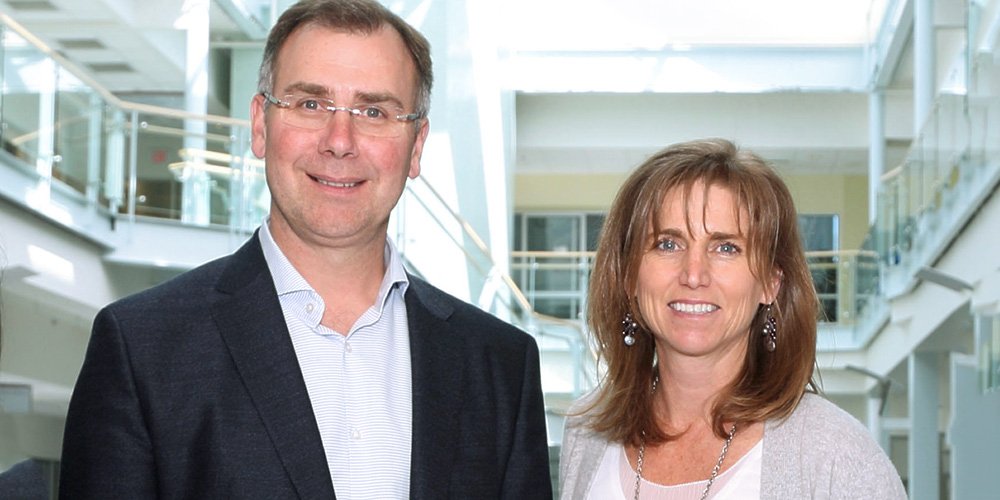
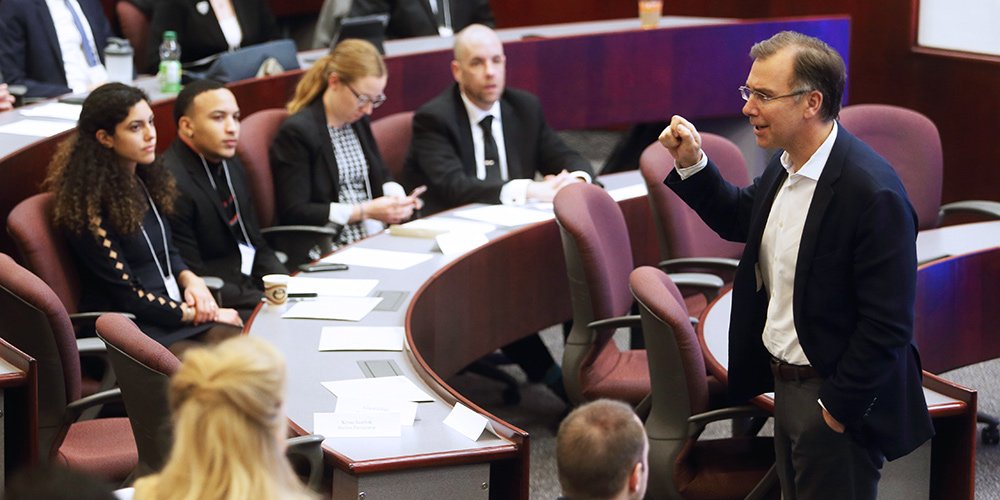
Research Matters: Saint Mary’s Announces Historic $3-million Gift to Graduate Student Research

Imagine the difference one person can make when there’s a community of talented, supportive and driven people—world-leading experts—to lean on, learn from and work with to innovate, disrupt and create change. Thanks to a historic gift in support of graduate student research at Saint Mary’s University, future generations of research pioneers and innovators will take another step on the path toward A World Without Limits.

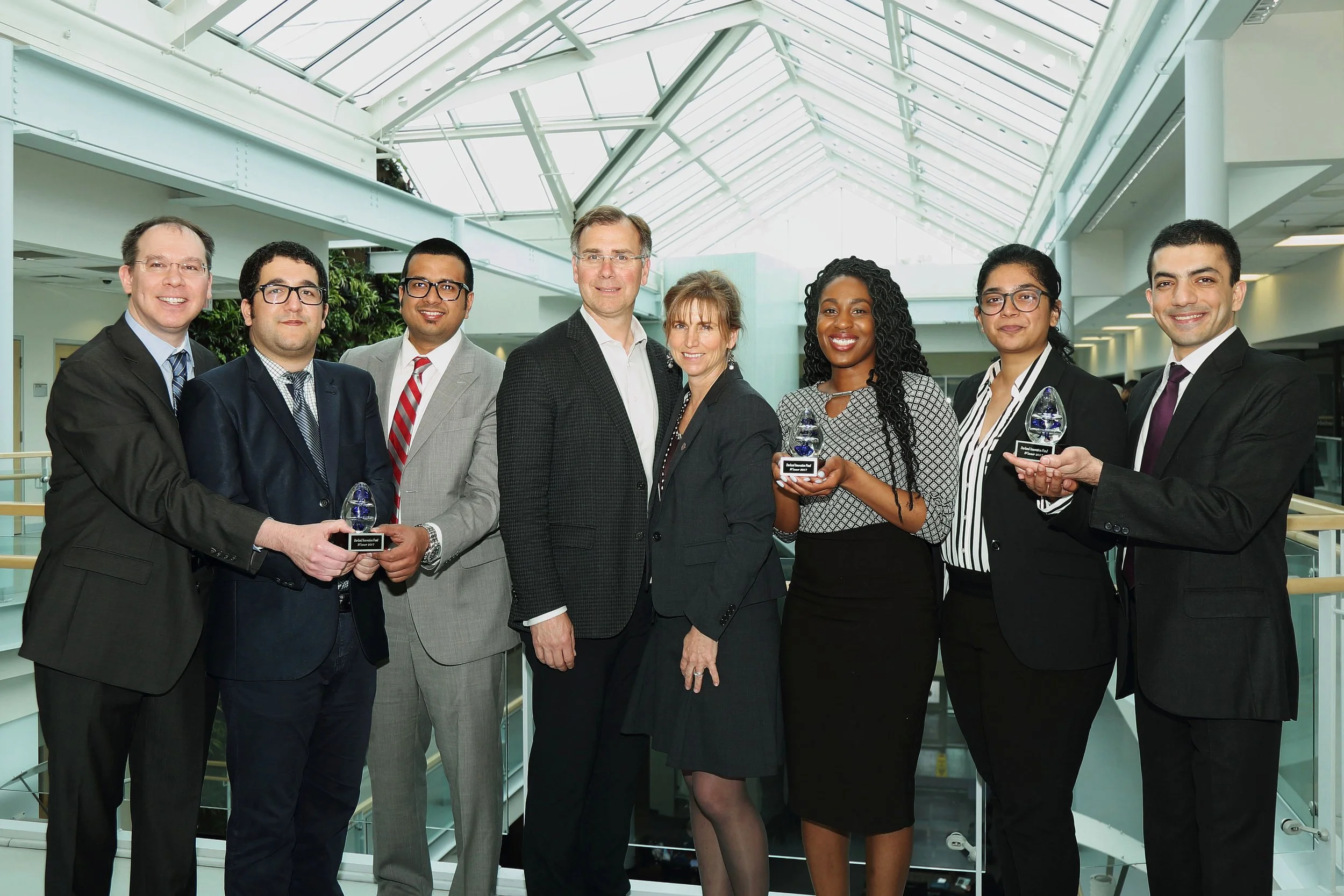
Saint Mary’s is pleased to announce the establishment of the Durland Scholarships in Graduate Research. The graduate entrance scholarships are supported by a $3-million gift from the Durland Learning Foundation and the Durland Family to A World Without Limits: The Campaign for Saint Mary’s University, marking the single most significant investment in graduate student research in the university’s history.

“We want this gift to reflect the past, the present and the future. It’s our way of saying ‘thank you’ to all the many special faculty members at Saint Mary’s who have so greatly inspired me and so many others throughout the years. Words cannot express our collective gratitude for all you do,” says Saint Mary’s University Chancellor Dr. Michael Durland BComm'87 DComm'10.

“We also wanted to make a gift that will have immediate impact by supporting our current faculty members, students and their extraordinary research. And we wanted to invest in the future of research at Saint Mary’s—to help recruit great graduate students, to help support the future work of our wonderful faculty members, and to encourage researchers from around the world to make Saint Mary’s their home.”

We want this gift to reflect the past, the present and the future.
— Dr. Michael Durland

Thanks to the visionary generosity of Chancellor Durland, his wife, Catherine BComm’87, and their family, the Durland Scholarships will strengthen the university’s ability to recruit and retain top graduate students to its research-based programs. The scholarship program will grant supplemental awards of $10,000 per year for graduate students and $15,000 per year for PhD students, as an addition to other awards and funding from the university. The awards are university-wide, renewable and available to students beginning in fall 2022.

“This transformative gift will support us in attracting the best and brightest graduate students to our university, strengthening our research capacity and positioning Saint Mary’s for the incredible growth and success that is outlined in our strategic research plan,” says Saint Mary’s University President and Vice-Chancellor Dr. Robert Summerby-Murray. “On behalf of the entire Santamarian community, I want to thank the Durland Family—Dr. Michael Durland, our chancellor, his wife, Catherine Durland, both proud Saint Mary’s alumni, and their family, for their incredible generosity and their vision in supporting graduate research.”

Graduate students at Saint Mary’s work closely with award-winning faculty in an environment that encourages curiosity and creativity among students and faculty alike. Within the university’s 29 diverse graduate degree programs, students benefit from the best of both worlds—close interaction and a sense of community, yet access to state-of-the-art resources and facilities.

This transformative gift will support us in attracting the best and brightest graduate students to our university
— Dr. Robert Summerby-Murray

Saint Mary's University is known for research that addresses pressing world issues such as climate change and the environment, where leading researchers restore salt marshes. The university's researchers engage in scholarship at the intersection of climate and communities, including work with

Indigenous and international communities on challenges facing their livelihoods and conservation efforts. The university fosters innovative scientific research, from combating balance disorders to understanding black holes and building the newest great space telescope. The Sobey School of Business challenges our understanding of global migration, immigration and what it means to be a modern, global citizen. The school is also engaged in research around innovation in business and workplace studies, including the pandemic's impact on employers and employees and what the big virtual shift means for companies and their employees moving forward.

The examples above in climate change and the environment, community connection and innovative science, modern global citizenship, and innovation in business and workplace studies represent the five strategic research priorities and areas that will be supported through today’s graduate scholarship announcement.

“The Durland Scholarships in Graduate Research are closely aligned with the university’s new strategic research plan and will promote and support a broad spectrum of graduate research activity in Arts, Science and Business, bringing forth new collaborations, knowledge and innovations,” says Dr. Malcolm Butler, Vice-President of Academic and Research. “These new scholarships will bolster our research by enabling us to recruit the best and brightest students to work and train in our labs, where we will foster and nurture their passion and potential in a rich and thriving collaborative research environment, leading to new discoveries, new innovations and new pathways toward A World Without Limits.”

A Month of Madness: Saint Mary's Wraps Up Another Successful National Student Entrepreneurship Competition

After 31 days of competition featuring top student entrepreneurship talent from across Canada, one person has climbed to the top of the bracket as the winner of this year's 2022 Saint Mary's University March Madness Competition.  

Senior chemical engineering student, Quinn Cavanagh of Dalhousie University, won for his pitch RFINE Biomass Municipal Biomass Solutions. RFINE produces materials from spent coffee grounds that can be used for products such as high-strength building materials to flexible plastic alternatives—a wide array of customizable applications. 

According to Cavanagh, 82 million kilograms of waste coffee grounds are disposed of daily, waste that produces vast amounts of greenhouse gases. Consumers are demanding that coffee companies take more responsibility. His pitch illustrated how RFINE collects coffee waste to create high-value compounds that would allow companies like Starbucks to have every table and countertop in their stores to be made from their coffee waste. The abundance of applications for RFINE's coffee ground materials idea showed abundant potential to the judges, who awarded Cavanagh the win. With the win comes a $10,000 top prize sponsored by Metronome United and one-year membership of legal guidance and support for his start-up provided by Goodlawyer. 

Goodlawyer is offering a year of their pro membership to the top four finalists. At the same time, the second-place finisher received $5000, and the two third place finishers left with $1000 to support their ideas courtesy of Shannon Byrne Susko BComm'89 BSc'92 and Metronome United. 

"I want to congratulate Quinn on his win and Danielle, our second-place finisher, for an amazing finale to our best March Madness competition to date," says Michael Sanderson, Director, Saint Mary's University Entrepreneurship Centre (SMUEC). "Thank you to everyone who participated and brought their great ideas to the forefront. And a special thanks to our sponsors and judges who play a critical role in making this pitch tournament a success." 

This national competition, a destination for Canada's top student entrepreneurs, featured twenty-four universities from coast to coast. From as far west as the University of Victoria and the University of Alberta to participants from central Canada such as the University of Waterloo, Carleton University, and Western University. Eastern Canada was also well represented with many participants, including HEC Montreal, Mount Allison University, Saint Mary's University and the Memorial University of Newfoundland. 

Saint Mary's University's own Marlee Armour, a graduate student in the Master of Technology Entrepreneurship & Innovation program at the Sobey School of Business, finished in a tie for third place. Her pitch was for a product called the SwimTrainer, a flotation device that supports both a better position for children to learn to swim and a safer position for them to float in the water.  

For more information about the tournament, visit https://smuec.ca/march_madness/ or visit www.facebook.com/smuec.ca to watch the videos from each round.


Government of France honours SMU French professor

The French Republic has bestowed one of its most historic civilian honours upon Dr. Sophie Beaulé of Saint Mary’s University. Dr. Beaulé is now a Chevalier (Knight) in the Ordre des Palmes académiques, for her work promoting French culture and the French language here in Canada.

Johan Schitterer, Consul General of France for Halifax and Moncton, presented Dr. Beaulé with the order’s prestigious badge during an investiture ceremony March 28 on campus. With its enamelled palm branches suspended on a violet ribbon, the badge’s design has remained unchanged since its creation in 1808, when Emperor Napoleon first established the order.

Professor of French in the Department of Modern Languages and Classics, Beaulé admits she was surprised when she first found out about the honour. She had plenty of time to get used to the idea – originally planned for March 2020, the ceremony was postponed at the outset of the pandemic.

The order recognizes distinguished academics and teachers for valuable service to universities, education and science. Other dignitaries in attendance at the event included the Honourable Colton LeBlanc, Nova Scotia’s Minister of Acadian Affairs and Francophonie; and Alliance Française Halifax President Diane Doucet-Kenny and Executive Director Isabelle Pédot.

“I’m very grateful for Alliance Française to have considered my work with them important enough for me to receive this award,” says Beaulé. “I think I get more than I am giving as a volunteer!”

Involved with the non-profit association for the past 15 years, she says it provides an important connection with the francophone community. A current project of interest is a book club, featuring francophone books from around the world.

The here and elsewhere interval

Beaulé grew up in Montreal and taught in Manitoba before her career brought her east to Saint Mary’s in 2000. In her poignant remarks at the ceremony, she spoke of adapting to long-term displacement in what she described as the “here and elsewhere interval,” as an “audible minority” in a primarily anglophone environment.

“I am grateful for being able to use French in my work, and especially to work with colleagues who themselves are various expressions of the here-elsewhere, of the interval – a rich interval,” she said. “Work and personal life made me a passeur culturel, a transmission link of French language and francophone cultures – at least the Quebec and the Franco-Canadian ones – from my ‘interval’ to the students and my environment. I reply to the twilight vision with my love of words, the cultural and community involvement, even if lassitude always hides in the background. This is how I ‘inhabit the distance’.”

It’s fitting that her area of expertise is Science Fiction, a “life-long friend” that provides yet another foot in the elsewhere.

“Science Fiction might be considered as a trash literature, an encounter with bugged-eyed monsters or galactical wars,” she said, but added that Quebec writer Elisabeth Vonarburg’s take on it as the genre of the ‘what if’ really resonates.

“What if we would think differently? What if our social environment were different … what if there was a natural or human provoked cataclysm, or what if the society was ruled by women? SF embraces both twilight visions and emancipating worlds; it reflects on colonialism, language, woman, religion ….”

Next up for Beaulé after a stack of marking students’ final papers is a trip back to Manitoba later this month, to attend a conference in Winnipeg about franco-manitobaine writer Simone Chaput.

Student awards

The ceremony also celebrated eight post-secondary students across the region, who received the Prix des Alliances Françaises dans les Provinces atlantiques. This year’s winner from Saint Mary’s was Sarah Marlin, a third-year languages student.

The students were also in the running for the 2022 Prix du Consulat français à Moncton-Halifax. This year, the prize went to Pablo Serra Costa of St. Thomas University.

What’s in a name? For the Ta’n Weji-sqalia’tiek Mi’kmaw Place Names Project, a Lot

Student researchers Matt Meuse-Dallien, Kachina Sack, and Peter Christmas holding Mi’kmaw place names project poster.

For many people, names give a sense of belonging and community. Beginning fourteen years ago, the Ta'n Weji-sqalia'tiek Mi'kmaw Place Names Digital Atlas and Website Project has expanded into a unique resource with over 800 place names and has featured 30 research positions for Mi'kmaw youth and student researchers over that time.  The project marks another way of bringing to life the profound relationship Mi’kmaq have with the ancient landscape of Mi’kma’ki.  

“The naming of places in Mi'kma'ki was always very logical and descriptive, so our people would know where they were at all times,” recounts the late Elder Gregory Johnson in the short film ‘The Nature of Place Names’ which is featured on the homepage of the Ta’n Weji-sqalia’tiek website.

The project now has a new look and feel, making it easier for users to engage with this unique history and ancient landscape. With help from Membertou Geomatics, the web-based map includes new enhanced sound bites and video clips of Elders sharing their lived experiences on the land. Users can explore numerous Mi’kmaw place names, learn place-name etymology and engage with the rich language of the Mi’kmaq. The new logo design and colour scheme reflect the importance of history and the land, and artworks by Mi’kmaw artists Alan Sylliboy and Gerald Gloade, are featured throughout the site and Elder's videos.

“Our instructions were to build a high-end website that would deliver the data through audio, video and a mapping infrastructure, which was completed in 2015,” states the committees Mi’kmaw Co-chair and Project Director, Tim Bernard of Mi’kmawey Debert Cultural Centre. With this new refresh, the project has expanded and covers more areas than ever before.  

Project Lead, Dr. Trudy Sable of Saint Mary’s University, began to supervise the project when she was approached by Mr. Bernard and Rob Ferguson of Parks Canada. Through community-based focus groups, interviews, surveys, and discussions with numerous experts, the project has been driven by the vision of the Mi’kmaw communities, and the expressed needs of numerous institutional representatives for an inclusive and scholarly resource. 

Student researchers join archaeologist and project mentor Roger Lewis, archaeologist Rob Ferguson, and Project Lead, Trudy Sable on canoe trip to explore the Sɨkɨpne'katik (Shubenacadie) River, a pre-contact, Mi’kmaw traditional travel route.

“I have been deeply privileged to work with the many Elders, Mi’kmaw scholars, leaders, and community members who have contributed their time and knowledge to making the Ta’n Weji-sqalia’tiek website and digital atlas happen,” says Dr. Sable. “Hearing the voices of Mi’kmaq who lived throughout Mi’kma’ki wakes me up to the deeply rooted and powerful reality of their relationship to this landscape.”

“I am grateful for their generosity in sharing their personal histories and knowledge, much of which has been invisible in the rendering of history,” recounts Dr. Sable. “The student researchers inspired me as they learned to research the place names and hear the Elders' stories and then carry this knowledge forward in the new roles they take on in their lives. I feel confident that the website will continue to expand and educate many people in new perspectives and ways of knowing the landscapes we all inhabit.”

A core component of the project has been to ensure the capacity building of Mi'kmaw youth. Since 2010, the project has offered numerous research positions for Mi'kmaw youth and student researchers to learn from Elders, and Mi’kmaw scholars and leaders. In these positions, the students have been trained in map interviewing and protocol, video editing, database set-up and entry, language training, and conducting archival research.  

“During my Atlantic Canadian Studies MA degree at Saint Mary’s University, I was hired to work as a research assistant for the Ta’n Weji-sqalia’tiek: Mi’kmaw Place Names Project. It was an experience I thoroughly enjoyed,” says Raymond Sewell, previously a student researcher for the project, now an assistant professor at Saint Mary’s.  

“Dr. Trudy Sable, Dr. Bernie Francis, and Roger Lewis taught me valuable research skills. I worked with other students on this project that I now count as friends, each of us working in different fields. We all shared a fulfilling work experience. We were able to meet and interview L’nu Elders, travel to various sites, have canoe excursions, and work with various organizations like the Nova Scotia Museum,” recounts Mr. Sewell. “I had a great time learning place-name etymology. I was responsible for entering different orthographies into the database, and that engagement with my language was an excellent experience. I am now an English professor, and I use the website in my class to teach students the importance of land and language.” 

Both the website and digital atlas have become integral to developing educational programming, enhancing Mi'kmaw tourism, and promoting cultural awareness about the Mi'kmaq.

“The Ta’n Weji-sqalia’tiek digital atlas and website is an essential resource for our work in archaeological and cultural landscape studies,” says Dr. Jonathon Fowler, archaeologist and professor in the Anthropology department at Saint Mary’s. “I use it regularly in my research and teaching, and, truth be told, it is so interesting I often explore it just for fun. It contains incredible insights and not a few surprises.” 

Since 2015, the Mi’kmawey Debert Cultural Centre has taken on the responsibility of stewarding and caring for the data, which is safely stored at the Membertou Datacentre, and overseeing the transfer of the project from SMU to the Nation. With help from Membertou Geomatics, the web-based map has undergone a functionality refresh making it easier for users to explore the significant history of the Mi’kmaq and the unique landscape of Mi’kma’ki.  

“Our engagement within our Mi’kmaw communities in 2007-08 was extensive and at that time we were told, very clearly, to go deep and dig down and collect this vast but quickly disappearing knowledge from this generation of Elders that still carry the language and still hold the knowledge,” says Mr. Bernard. “We’re very fortunate to have built this relationship with SMU and Dr. Sable. They understood that the information and data needed to be protected and retained by the Nation, for the Nation.”  

Initiated in 2008 by the Mi'kmaq - Nova Scotia - Canada Tripartite Forum, Culture and Heritage Committee, the project grew to include numerous other partners and funders. There has been close to $1M invested to protect and share this data through the creation of the Ta’n Weji-sqalia’tiek website and digital atlas.  

To learn more about this ongoing project and explore the new look and feel of the map and site, visit Ta’n Weji-sqalia’tiek Mi’kmaw Place Names Digital Atlas.


Saint Mary’s Art Gallery opens its doors to “Phase Variations”

Lou Sheppard stands near a piano in front of dark panels.

Lou Sheppard

After two years of limited operations due to the pandemic, the Saint Mary’s University Art Gallery is thrilled to announce “Phase Variations,” a new, in-person installation by interdisciplinary contemporary artist Lou Sheppard.

Sheppard is a transmasculine Nova Scotian artist and rising star in the art world, with works that have been shortlisted for the prestigious Sobey Art Award.

With its keen focus on contemporary art and interest in supporting Canadian and local artists, the Art Gallery offers an opportunity for visitors to step outside of their daily lives to learn and discover something new—something the community has undoubtedly missed during COVID-19 restrictions.

“It is an honour to be the first show back in the gallery space, and I hope that students, staff, faculty and the community feel welcomed back into the space,” says Sheppard. “It is a place to shift perspectives, feel uncertain, be challenged, learn and feel differently.”

It is a place to shift perspectives, feel uncertain, be challenged, learn and feel differently.
— Lou Sheppard

“Phase Variations” aims to rediscover and celebrate queer history in Atlantic Canada, a history often overlooked, excluded and erased. Created by Sheppard and curated by Robin Metcalfe, former director and curator of the Saint Mary’s University Art Gallery, the project pulls from Metcalfe’s archive of queer history in Atlantic Canada. The archive of materials includes photographs, newspapers and other communications associated with the queer experience from the 1970s to the present.

“I visited Robin Metcalfe’s archives to draw out fragments, which I used as poetic points of entry into the works in the exhibition,” says Sheppard. “For example, the video piece, ‘Send Them All to Sable Island,’ is based on an offhand remark by a Halifax area mayor in the 80s in reference to people with AIDS. In the video work, I imagined Sable Island as a queer commune or hospice by overlaying fragments of queer conversations that I drew from Metcalfe’s archives. In front of the video work are ten sets of sheets, each of which have been slept on by queer friends.”

Lou Sheppard sits on a bench in front of a wall of posters.

The show’s title is borrowed from the biological process whereby bacteria adapt to rapidly changing environments. It is also a nod to a musical term that refers to developing out-of-sync sounds waves resulting in a strumming effect – repeated musical passages in a slightly altered form. These terms inspired Sheppard’s interpretation of the selection of archived materials to represent the forgotten history of the queer community in a positive way.

“When you walk into the space, you don’t feel the darkness surrounding being queer in the ’70s,” says Pam Corell, Assistant Curator at the Saint Mary’s University Art Gallery. “Lou does an excellent job bringing his positive outlook on life to create a celebratory aspect to such a dark period for the queer community.”

In addition to the exhibit, visitors can view some of the inspiration materials from the archive in the Reading Room. Created by Sheppard, these materials were curated by Undine Foulds, the Halifax Young Curator for the Saint Mary’s University Art Gallery.

This is the second year the gallery has hosted a Halifax Young Curator, an internship for emerging or young curators who live or explore barriers to the contemporary art sector.

“I hope people can experience a sense of queer history in the space,” says Sheppard. “We’re living in a time where queer identity is very visible and can be publicly celebrated, but that hasn’t always been the case. It is important to know who worked for the freedoms we have today.”

“Phase Variations” runs until April 17. The gallery is currently operating from noon to 5 p.m., Tuesday through Sunday.

The Saint Mary’s University Art Gallery was established in 1971 and was the first purpose-built university art gallery in Halifax. Built to National Gallery of Canada Standards, it focuses on contemporary art.


International Student Satisfaction and Well-Being: New Research by the ARGEIAD

Immigration image. Decorative.

The Atlantic Research Group on Economics of Immigration, Aging and Diversity (ARGEIAD) has received funding from the Atlantic Canada Opportunities Agency (ACOA) to conduct new research on the well-being and overall satisfaction of international students who come to Atlantic Canada for schooling.

“Understanding the well-being of these students is imperative to retaining them in the region after their studies,” says ARGEIAD Chair Dr. Ather H. Akbari. A decline in natural population growth in Atlantic Canada means that immigrants to the region are an important demographic to prevent labour shortages. International students who stay after graduation are invaluable for avoiding these skill shortages, and for increasing the population of Atlantic Canada.

Although the attraction and retention of international students has become a focal point for immigration strategies adopted by provincial governments in Canada, there has been little research done to track whether they stay in the area after graduation. ARGEIAD’s new project plans to delve into the various factors that affect the well-being of international students, which should provide an insight as to whether students will want to stay in Atlantic Canada. Additionally, this research may also provide valuable insights for university and college administrators on how to improve their supports and services for international students.

Although in its beginning stages, this new project has the potential to highlight areas where international students do not feel satisfied or supported. By identifying these gaps, this research could help international student initiatives to improve their programs, and increase retention of these students.

The goal of ARGEIAD is to promote research and mobilize knowledge focusing on the economic significance of immigration, diversity and aging. Learn more about the centre and their research or sign up for their newsletter.

Frank H. Sobey Award for Excellence in Business Studies Win for Sobey School Student

Laura Eamon

Laura Eamon
Photo: Steve Smith - VisionFire Studios

Laura Eamon, a fifth-year student at the Sobey School of Business who is completing a Bachelor of Commerce, majoring in Economics, was awarded the Frank H. Sobey Awards for Excellence in Business Studies.

"We continue to be inspired by the talent, leadership and entrepreneurialism shining through students at Atlantic Canadian business schools," says Paul D. Sobey, Chair of the Board of Trustees.

Laura is one of only nine recipients of the $35,000 award given to undergraduate students of Business Studies in universities across the Atlantic Provinces.

“We are thrilled that Laura has earned this award,” says Dean Harjeet Bhabra of the Sobey School of Business, who selected Laura for consideration by the awards committee. “Our school is committed to providing the highest quality of business education and preparing our graduates to lead entrepreneurial and sustainable businesses and communities. Laura’s win shows that our students’ achievements in their academic studies are matched by their engagement with and contributions to the broader communities.”

All full-time business students attending Atlantic universities are eligible for consideration. Deans of Business at each university nominate candidates based on entrepreneurship, supporting the communities in which they live and work, and their employment experience.

Laura, a part-time project coordinator with the Sackville Business Association and a member of the Saint Mary’s University Environmental Society, credits her sobriety – she has been in recovery for eight years – as the reason for her success. In addition to wanting to bridge the gap between the environmental and business sectors in Nova Scotia, Laura views her win as confirmation that people in recovery can have a positive impact.

“It’s an immense honour to receive the Frank H. Sobey Excellence in Business Studies and to celebrate the Sobey legacy,” says Laura. “All of my hard work has been validated, and my sobriety is the reason I’m here. The support from the university and Sobey family is immeasurable, and I look forward to continuing those relationships for a long time.”

The award recipients are selected by the Frank H. Sobey Awards Board of Trustees comprised of Atlantic Canadian business and academic leaders. Established in 1989, the Frank H. Sobey Awards for Excellence in Business Studies have awarded more than $2.5 Million to business students in the four Atlantic Provinces.

The Scarborough Charter in the UN Decade for People of African Descent: Transforming Relationships

Please join Saint Mary’s University, the Office of Diversity Excellence and the Office of People and Culture in marking the United Nations International Day for the Elimination of Racial Discrimination with a presentation by Dr. Adelle Blackett.

Dr. Blackett is a Professor of Law and the Canada Research Chair (Tier 1) in Transnational Labour Law and Development at the Faculty of Law, McGill University. She holds a B.A. in History from Queen’s University, civil law and common law degrees from McGill, and an LL.M. and a doctorate in law from Columbia University. 

Monday, March 21 
6:30 p.m. AST
Virtual event: Zoom 

Saint Mary's Sweeps to Victory at Enactus Canada Atlantic Regional Exposition

Innovation and a love for social entrepreneurship were well rewarded for Enactus Saint Mary's students this past Saturday. Enactus Saint Mary's students won first place in all three categories (financial education, climate action and entrepreneurship) at the Enactus Canada Atlantic Regional Exposition. Next up, students will move on to pitch at the Enactus Canada National Exposition, held virtually this May.    

"Having the ability to apply the theories we learn in class to support our community is truly the best way to learn," says Maddie Bristol, Co-President of Enactus Saint Mary's. "We are so excited that our programming was recognized at the Enactus Regional Exposition and look forward to Nationals this May!"  

Options Online, the team’s unique virtual education program, took home the gold in the CWB Financial Literacy competition. Options Online is a digital pivot from the previous in-person Options Youth program created to support Nova Scotia-based youth facing multiple barriers to employment. The global award-winning programming shifted to online learning amidst the pandemic, removing the barrier of location-based accessibility.  

Square Roots, a food-security program created in 2016, was presented in the TD Entrepreneurship and Scotiabank Climate Change challenges, winning first place titles. Since 2016, the program has expanded from its original bundle service model to partnering with local entrepreneurs, encouraging the creation of sustainable products using food waste. Little Branches, a zero-waste matcha bar company, along with a new business that's partnered with a local coffee shop to include coffee grains in their soaps, were among the businesses highlighted in the pitches.  

"I am so proud of the work our students have done this year," says Michael Sanderson, Director of Saint Mary's University Entrepreneurship Centre. "Their continued perseverance and dedication to community wellness and education, especially during such a tough time, are what make their social enterprises as successful as they have been."  

Enactus Saint Mary's is a student-led organization that uses entrepreneurial action to change the community in a positive way. With over 50 students involved, they are currently operating projects involving food-based social enterprises, entrepreneurship coaching and employability training programs for at-risk youth. Enactus Saint Mary's is proud to partner with the Saint Mary's University Entrepreneurship Centre to offer its programs.  

Accessibility Week at Saint Mary's

Join the Fred Smithers Centre as we celebrate Accessibility Week at Saint Mary's from March 21 to 25, 2022. The Fred Smithers Centre will offer virtual events exploring how to create accessible environments, accessibility in higher education and the post-COVID-19 world, and more. For a full list of events please see below.

Learn more about the Centre and the services we offer.

The Fred Smithers Centre strives to host inclusive, accessible events that enable all individuals, including individuals with disabilities, to engage fully. All events will have sign language interpreting and real-time transcription. Please email fredsmithers.centre@smu.ca for other accessibility requests and specific accommodation

Schedule of Events

Keynote Speaker, Cynthia Bruce

Monday, March 21 
noon-1:00 p.m. 
Virtual Event: Zoom

Join us as we welcome keynote speaker Cynthia Bruce as she details her experience supporting accessibility legislation and exploring the future of accessibility in a post-COVID world.

Accessing Mental Health & Accessibility Services as an International Student

Tuesday, March 22
1:00-2:00 p.m. 
Virtual Event: Zoom

Discussion and workshop to material to focus on barriers to access, methods of support, philosophical differences and beliefs. This event is open to student, staff and faculty.

The Fred Smithers Centre strives to host inclusive, accessible events that enable all individuals, including individuals with disabilities, to engage fully. All events will have sign language interpreting and real-time transcription.

Welcome to the Student Success Centre

Wednesday, March 23
10:00-11:00 a.m. 
Virtual Event: Zoom

Welcome to the Student Success Centre – the new hub for support for student learning! Please join us with guest speakers Amy McEvoy, Manager of the Student Success Centre and Emma Sylvester, Learning Strategist as they discuss their new positions within the Student Success Centre.

The Fred Smithers Centre strives to host inclusive, accessible events that enable all individuals, including individuals with disabilities, to engage fully. All events will have sign language interpreting and real-time transcription.

Pathways to Accessible Employment: The SEI Program

Wednesday, March 23
1:00-2:00 p.m.
Virtual Event: Zoom

Are you a student looking for employment but not sure where to start? Look no further! Join this interactive session to learn more about the Student Employment Initiative Program and Wage Subsidy (SEI). SEI is a program that supports students with disabilities in securing employment with on and off-campus employers, gaining volunteer experience, and developing their professional skills and competencies.

The Fred Smithers Centre strives to host inclusive, accessible events that enable all individuals, including individuals with disabilities, to engage fully. All events will have sign language interpreting and real-time transcription.

Accessibility & The Physical Environment

Thursday, March 24
12:00-1:00 p.m.
Virtual Event: Zoom

Join guest speaker Matthew Glynn, an engineer in Halifax NS and a former student of the Fred Smithers Centre as he discusses his experience of engineering, accessibility and the physical environment. A session for faculty, staff and students.

Enable the Environment

Friday, March 25
1:00-2:00 p.m.
Virtual Event: Zoom

Facilitators Jennifer Green, Manager of the Fred Smithers Centre and Jennifer Webb, Educational Developer, Learning Experience will define what an enabling environment is and provide practical guidance and instruction on how to make your classroom or space an enabling environment. A session for faculty and staff.