
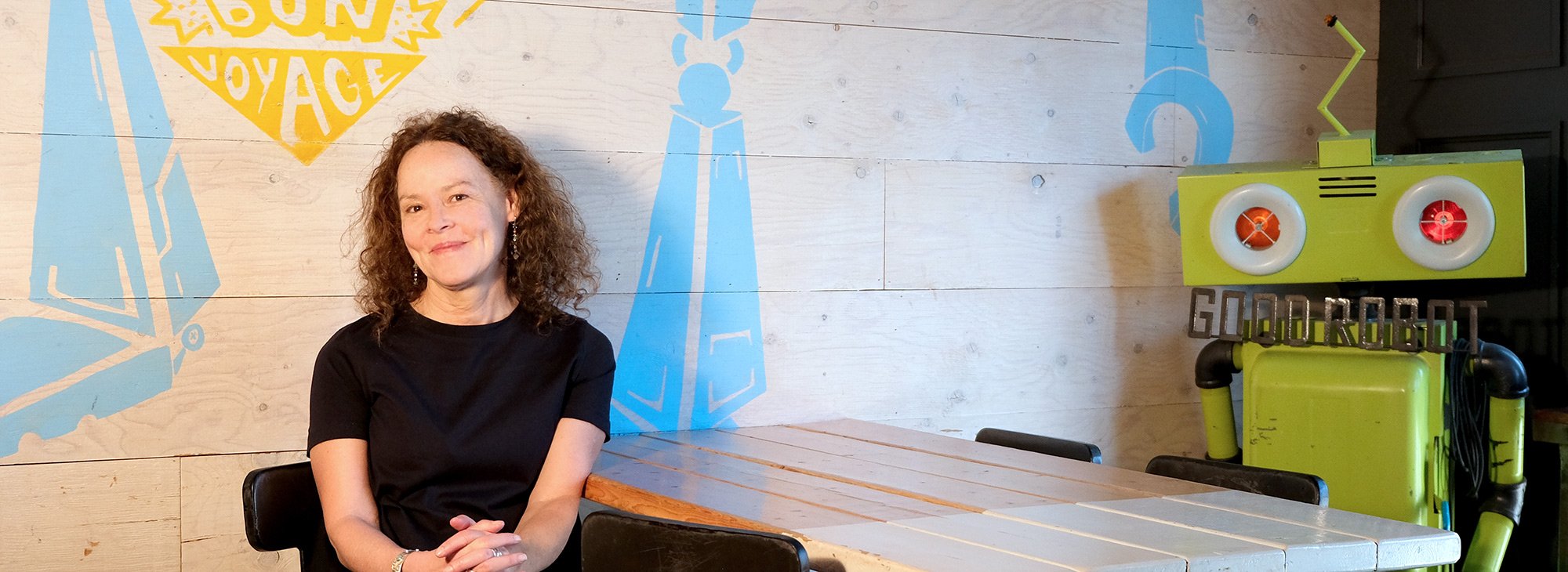
Researcher sparks new conversations about machine learning and robotics

Teresa Heffernan

Saint Mary’s University professor Teresa Heffernan is shining a new light on robotics and artificial intelligence (AI) by exploring how the field looks to – and is shaped by – fiction.

As part of her recent work through the Social Sciences and Humanities Research Council, Heffernan’s research investigates popular ideas about the future of AI and the relationship between machine learning and language-based humanities. Although interested in the world of science from an early age, Heffernan became intrigued with AI in 2010 when she began reading about the promises of AI and noticed a common theme.

“I was looking around at different scientific journals and articles, and people kept referencing fiction like it was prophetic – as if the fiction was going to come true,” says Heffernan, a professor in the department of English Language and Literature at SMU. “And if you know anything about fiction, that’s the whole point: it doesn’t come true; fiction has lots to say about the world, but it needs to be interpreted.”

Her curiosity led her to visit some of the top robotics labs in Japan and the United States. Through her discussions with leaders and specialists in the field, she began to question some of the assumptions about AI and to consider its impact on culture and humanity.

“When you’re working in the field, you hear people talk about technology becoming more ‘human’ or more intelligent,” she says. “What they’re talking about are increases in storage, data, computing speed, and more sophisticated algorithms. It actually has little to do with human intelligence.’’

Teressa Heffernan sit against a wall decorated with circuit imagery.

Despite the increasing hype about machine learning, Heffernan is trying to reframe the conversation about AI and robotics, looking instead at its social and environmental impacts.

For instance, she points to research from the Water Resources Center at Texas Tech University that asserts a typical data centre uses about 3 to 5 million gallons of water a day – the same amount of water as a city of around 50,000 people. Heffernan says this industry also produces e-waste and carbon emissions.

“Data often is called the new oil because it’s so lucrative, but it really mimics the resource-intensive and climate-altering infrastructure of older technology like automobiles,” she says. “These complications are easily glossed over in the hype about human-like machines.”

This fall, Heffernan will travel to Germany where she’ll be furthering her research at the Käte Hamburger Centre for Apocalyptic and Post-Apocalyptic Studies at Heidelberg University.

While there, she says she will continue her work sparking new conversations about the future of AI – and how it can be used responsibly and sustainably.


Breaking down barriers for women

By Anna Carsley-Jones

Natasha Fernandes  leans against a railing.

Natasha Fernandes

Participants of all ages, experiences and environments came together at Saint Mary’s University with a common purpose—breaking down barriers in the workplace for women. 

The Women’s Empowerment Conference, designed and led by the Saint Mary’s University Entrepreneurship Centre (SMUEC) was held virtually from May 24 to May 27, 2022. In addition to the tools, resources and advice, the key according to Saint Mary’s student and organizer Natasha Fernandes was “seeing strong women being vulnerable and learning from their inspirational stories.” 

Kritika Gurung speaking at a podium

Kritika Gurung, Co-President Enactus Saint Mary's, speaking on campus

Kritika Gurung, Co-President of Enactus Saint Mary’s, says that “as an Arts student, I sometimes feel networking events and conferences are out of my reach, so when I heard about this event, I wanted to grab a seat as quickly as possible.” She also notes that this was a first for her—she had never attended a conference that is women-focused, with only women speakers. 

Entrepreneurs, professors, engineers and financial educators alike were involved as panellists and educators in the conference. Panellists such as SMU professors Dr. Rohini Bannerjee and Dr. Patricia Bradshaw, athlete and entrepreneur Keisha Turner BA’12, and Diversity, Equity and Inclusion educator Crystal Witter BA’20 shared personal anecdotes of conquering adversity in the workplace. 

Financial educator Mrugakshee Palwe and Sobey School of Business Professor Dr. Ellen Farrell MBA’88 led the roundtable on Women in Finance. Mechanic and entrepreneur Stefanie Bruinsma and Keisha Turner led the discussions around entrepreneurship. A Women in STEM workshop featured engineer Mel Holmes, followed by a roundtable led by geologist Wren Bruce. 

Speakers shared their feelings of displacement in the workplace, but also their journeys of pushing past internalized misogyny and racism to reach own their potential. Panellists encouraged participants to overcome barriers and to understand that women and femmes (people who present as female) are as deserving of the same titles, jobs and awards as men.  

The importance of allyship from men and masculine peoples was also noted by many speakers. Jonathan MacNeil chose to attend the conference because “it is a great way to understand the perspective of women who are rarely given a chance to speak their truth, living in a ‘man’s world’.”  

For participants and organizers, the Women’s Empowerment Conference 2022 was a success, leaving those who attended feeling powerful, capable and a little bit wiser. Participant Tashauna Reid says, “Women’s empowerment means being courageous enough to question and break the social and gender norms. It creates a space for women to uplift and support each other.”  

About SMUEC 

The Saint Mary’s University Entrepreneurship Centre (SMUEC)  is a leading provider of university-based business support services in Atlantic Canada. In the last five years, the SMUEC has engaged more than 4,000 students and 3,000 businesses in entrepreneurial support and promotion activities. Recognized regionally, nationally and globally for their programs, the SMUEC supports leaders through consulting, training, promoting entrepreneurship and cultivating community connections. 

SMU creative writing contest winners announced

The English Language and Literature department is pleased to announce the winners of this year’s creative writing contests. The Writing Contest Committee shares a few thoughts on each of the winning entries.

The Joyce Marshall Hsia Memorial Poetry Prize:

First prize
Julien Sheppard BA’21, current MA History student, Patrick Power Fellow in Applied History 

We were moved by the narrative energy and particularity in these poems, and by the exactness of the perceptions of natural detail (the shimmer of gaspereau). One believes in the human voices, the characters one encounters: “When did you stop asking / about Margaret?” Some of the poems drew us in with their chilling images, their calculated ambiguities; others by immersing us in a conjured matrix of human and creaturely relationship. 

Second prize
Patrick Inkpen, BA student, English major

We liked the range of themes, forms and tones in this submission, and the way this poet marries poetic convention to original perception. There’s a compelling oddness about many of these poems, despite their traditional formal structures. 

Third prize

Melisa Kaya, BA student, English major, Creative Writing minor

We admire this poet’s attention to detail, to the metapoeic resonances that are possible on the page. The locutions are unexpected and vivid: "I crawled from my mother’s hollow like a squirrel of a willow ...." The concrete poem which begins the submission felt fresh and true: a new perception wrested from language, given linguistic form. 

The Margó Takacs Marshall Memorial Prize For Excellence In Short Story Writing

First prize – “Gone for Good”
By Melisa Kaya, English major 

A metanarrative characterized by an uncompromising wildness, an unwillingness to resolve; it seemed to us the most interesting of the submissions, though we sometimes struggled to follow the narrative thread. Still, we have decided to honour it with the first prize, to recognize its ambition and its distinctness, vis-à-vis the other submissions.

Second prize – "Where Do We Go?"
By Alex Baker, MA Philosophy student

A grisly existential tale, which surprised us with a new take on a familiar genre-fiction scenario. The sentences are compellingly constructed and the characters and settings are deftly evoked.

Third prize – "Soliloquy of Something"
By Theodore Moss III, BSc student 

A story that gradually brings us into sympathy with what initially seems a one-note narrator: the story moves from simplicity to complexity in a way that is compelling. What begins as a simple story about teenaged love and rejection becomes a complex story about friendship and meaning.

The annual poetry and short fiction contests are open to any student currently enrolled at Saint Mary’s University. Next year’s deadline for submissions will be in March 2023. Some of the previous winners have gone on to become nationally celebrated writers, such as Sue Goyette, Jenny Haysom, Jill MacLean and Danny Jacobs.

Studying the ‘Right’ Genes

Research project examines the genes of endangered North Atlantic right whales to understand low reproductive rates.

By Jessica Long

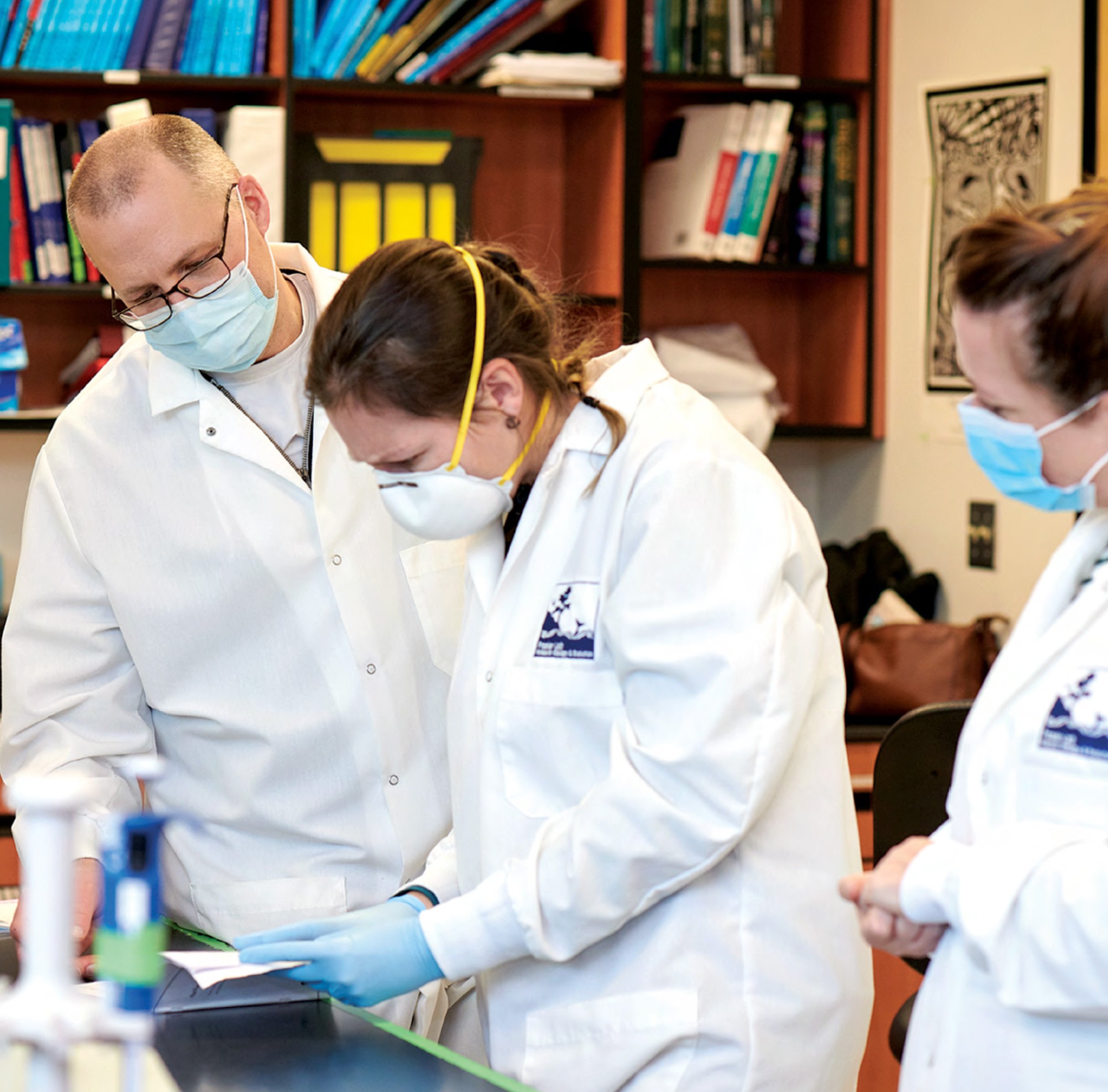
Three people in masks in a lab.

Dr. Tim Frasier, Carla Crossman, and Kate Chadwick

North Atlantic right whales have been listed as an endangered species in Canada and the United States since 2005. There are an estimated 350 North Atlantic right whales left in the world, and fewer than 100 of those are breeding females. In addition to having a high mortality rate from entanglement in fishing gear and vessel strikes, the low reproductive rate of right whales has perplexed scientists. The right whale’s reproductive rate is three times lower than their known potential. Additionally, a relatively high percentage of females have either never given birth or have had only one calf. The females with multiple calves reproduce on average every six to ten years, as opposed to the expected three-year cycle.

In collaboration with the New England Aquarium and Genome Atlantic, Saint Mary‘s University Biology professor Dr. Timothy Frasier, a specialist in genetic analyses and marine mammal behaviour, is studying the genetic makeup of right whales to understand what factors might be impacting their ability to breed.

“I am excited to continue and deepen our long-standing collaboration with Dr. Frasier,” says Phillip Hamilton, Senior Scientist at the New England Aquarium. “We have been working together for over two decades to better understand the genetic aspects of this beleaguered species. This new work opens the ability to answer long-standing questions and we are curious to see what we will discover.“

Frasier’s research aims to make right whale conservation more effective and efficient while influencing policy change and development to better manage right whale conservation in North America.

The Office of Innovation and Community Engagement facilitates research relationships between Saint Mary’s University and companies, government departments and community organizations.

Read about more innovative partnerships between Saint Mary’s University faculty and industry partners in their 2022 report.

Ropeless Fishing Reduces Harm to Whales

Two people in masks working in a lab.

Dr. Jason Rhinelander and Ross Arsenault

By Jessica Long

As an Engineering professor and an expert in Artificial Intelligence, Dr. Jason Rhinelander’s research focuses on applying machine learning and optimization to embedded, real-time systems. Dr. Rhinelander was Ashored Inc.‘s academic supervisor for a project entitled, “Environmental testing of existing and proposed ropeless fishing system line management methods,” which was funded in part by Mitacs through the Accelerate Entrepreneurship program. Ashored Inc. has been developing a “rope-on-command” fishing system which reduces lost gear, automates the collection and dissemination of gear data, and allows fishing to continue sustainably in zones closed for animal protection.

Under Dr. Rhinelander’s supervision, Ross Arsenault, Co-Founder and Chief Operations Officer of Ashored Innovations, and Saint Mary’s Alumni (BComm’18 MTEI’20), explored respooling and resetting buoy lines from trap fishing applications into caged ropeless fishing systems. The results of this research allowed Ashored to design a modular rope and release cage that can be used seamlessly in real world commercial trap fishing. This lidded cage design streamlines the time required to reload the system with the buoy line for deployment to merely a few seconds.

“When we started Ashored, there were a number of unknowns and variables that we needed to solve before we could develop a rope containment unit for our rope-on-command fishing systems,” says Arsenault. “By engaging with the Office of Innovation and Community Engagement and Mitacs, we were able to put together a project that allowed us to learn essential information and test our hypotheses in a scientifically vetted process and in a resource-rich environment. We received both the freedom and framework to succeed in our project and had expert mentorship to fall back on if issues or surprises arose in our research.”

Photo (L-R): Dr. Jason Rhinelander and Ross Arsenault

The Office of Innovation and Community Engagement facilitates research relationships between Saint Mary’s University and companies, government departments and community organizations.

Read about more innovative partnerships between Saint Mary’s University faculty and industry partners in their 2022 report.

Dr. Benita Bunjun honoured for teaching excellence and educational leadership

Dr. Benita Bunjun

Dr. Benita Bunjun

Dr. Benita Bunjun’s innovative teaching methods resonate deeply with her students and colleagues at Saint Mary’s University, inside the classroom and out in the community.

Her teaching philosophy, in a nutshell: “I am invested in envisioning programs, curricula and resources that promote alternative and diverse perspectives and knowledge systems which have predominantly been omitted, silenced and excluded from academic spaces of learning.”

Dr. Bunjun’s important efforts were honoured May 20 during Spring Convocation week, as she received two of the university’s top awards for faculty members: 

“It means a lot to me to be recognized for the way that I teach, and also the ways that I’m trying to shift the culture of teaching. Delivering information and knowledge while also transforming spaces of learning with a kind of care built within pedagogy. That’s really important for me,” says Bunjun, whose teaching practice is rooted in intersectionality, interdisciplinarity and social justice.

During my time as Dr. Bunjun’s student, she acted as not only a professor, but as a true mentor. It is largely due to her encouragement, support and engagement that I was able to finish my degree with honours and continue with my education. I have continuously witnessed Dr. Bunjun show similar care and engagement with other students, all while remaining respectful of individual differences and learning styles.”
— - Tia DeGiobbi BA’17

She is an associate professor in the Department of Social Justice and Community Studies (SJCS), and in the Women and Gender Studies program. Since joining Saint Mary’s in 2016, she has prioritized collaborative teaching and curriculum development with community educators and SMU colleagues, particularly in the realm of anti-colonial feminist knowledges.

Recent examples of this are two new courses offered this past year: Indigenous Settler Relations, which she co-taught and developed with Michelle Paul, a Mi’kmaw Water Protector and educator; and Indigenous Relations and Knowledges, also coordinated with Paul and co-taught with Prof. Raymond Sewell and Indigenous community educators Diane Obed, Aaron Prosper and Toni Goree. Her Community Organizing course is another pivotal undergraduate experience. Students learn to work together on advocacy for causes they care about, in real-world settings with community relationships Bunjun has built over time.

Beverlee MacLellan BA’20 was one of the first students to graduate with the Social Justice and Community Studies major. In nominating Bunjun for the Father Stewart Award, MacLellan recalled being profoundly inspired from the very first class. Ten others, including former students, teaching assistants, mentees and faculty members, supported the nomination, praising Bunjun for creating an inclusive environment where students build critical thinking skills and self-confidence.

“Her office has become a safe space for anyone who finds themselves marginalized for race, nationality, sexuality, gender, class and/or disability, where she offers attentive listening and an abundance of snacks,” said MacLellan. “Her self-awareness makes her humble enough to listen to and accept experiences beyond her own, which is an important trait in the humanities, as it can improve perspective and scholarship.”  

Soon after arriving at Saint Mary’s, Bunjun created the Racialized Students Academic Network (RSAN), a crucial point of ongoing connection for both students and alumni. She and RSAN organize the annual Critical Indigenous, Race and Feminist Studies Student Conference (CIRFS). Now in its fifth year, the event has culminated in the book Academic Well-Being of Racialized Students (Fernwood Publishing, 2021), edited by Bunjun and featuring essays and poems by students, faculty and alumni. Plans are in the works for a second edition.    

“Everything I’m trying to be and do at Saint Mary’s is a building block,” Bunjun says. “This is the only conference like this in the Maritimes. The amount of labour to support that journey for students is tremendous, but not only is it an engagement with professional development but also of building strong transnational kinship relations amongst the students.”

Her office has become a safe space for anyone who finds themselves marginalized for race, nationality, sexuality, gender, class and/or disability, where she offers attentive listening and an abundance of snacks. Her self-awareness makes her humble enough to listen to and accept experiences beyond her own, which is an important trait in the humanities, as it can improve perspective and scholarship.
— Beverlee MacLellan BA’20

For many students who attend CIRFS, it’s their first time presenting academic research, so Bunjun offers advance workshops on how to write an abstract, and how to present at a conference. This year, she supported the Tenancy Rights of International Students (TRIS) Project coordinators to present at the conference. Bunjun also coordinates TRIS with SJCS students Lena MacKay and Nadian Looby, by working with international students at a number of local universities to promote their scholarship, rights, well-being and self-advocacy.

“During my time as Dr. Bunjun’s student, she acted as not only a professor, but as a true mentor,” Tia DeGiobbi BA’17 said in supporting the teaching award nomination. “It is largely due to her encouragement, support and engagement that I was able to finish my degree with honours and continue with my education. I have continuously witnessed Dr. Bunjun show similar care and engagement with other students, all while remaining respectful of individual differences and learning styles.”

In 2020, Bunjun also received the Saint Mary’s University Student Association Award for Overall Excellence in the Field of Education.  

For her Dr. Geraldine Thomas Educational Leadership Award, her nominators included RSAN and faculty members from four different academic departments. They recognized her tireless work as a mentor to students, teaching assistants and fellow faculty members, and for educating colleagues throughout the university in relation to her critical thinking on Equity, Diversity, Inclusion, and Accessibility (EDIA) by advocating for the decentralization and implementation of EDIA in all aspects of the university.

As an innovative educator, Bunjun co-created the SJCS department and much of its curriculum. Her leadership “has been crucial to building our impressive student major and minor numbers only a few years into our department’s existence,” noted her colleague Dr. Val Marie Johnson.

Bunjun’s own research examines organizational and institutional power relations, with a focus on colonial encounters within academic spaces. She starts a sabbatical leave in September, and has a typically busy summer lined up working with students on directed study projects.

In expressing gratitude for the awards, Bunjun thanks her nominators, her own mentors, and her colleagues “who stand by my vision as a teacher, and who have demonstrated so much solidarity and care as faculty on our campus.” As a faculty member who has worked in five post-secondary institutions, she continues “to urge universities to be brave and make informed, relevant decisions to promote well-being in our institutions.”


Learn more about the Social Justice and Community Studies program.

Identifying immigration trends is integral to the growth of Atlantic Canada

Dr. Ather Akbari

Understanding and identifying trends in immigration is something that Dr. Ather Akbari, Professor of Economics and Researcher at Saint Mary’s University (SMU), is passionate about. Particularly, his research identifies the importance of regionalization of immigration in Canada to help increase populations in rural regions and smaller provinces.

“Each province has its own demographic challenges which arise because of the declining population growth,” says Dr. Akbari.

He explains that uneven distribution of population growth by region, and the concentration of immigration in urban areas, have called for regionalization in Canada. Immigrants tend to settle in larger provinces and larger urban centres, where there is more economic opportunity, an established immigrant community, access to ethnic goods, and places of worship.

The Atlantic provinces have the lowest population growth, their natural population growth has become negative, meaning that the number of births has fallen below the number of deaths.

“A declining demographic trend can create longer-term economic challenges for the country,” says Dr. Akbari. “In order to reverse that trend, Canada opened up its immigration policy. People are not chosen on the basis of their country of origin, as was the case before 1970s, but on how they can contribute to the economic and social mosaic of Canada.”

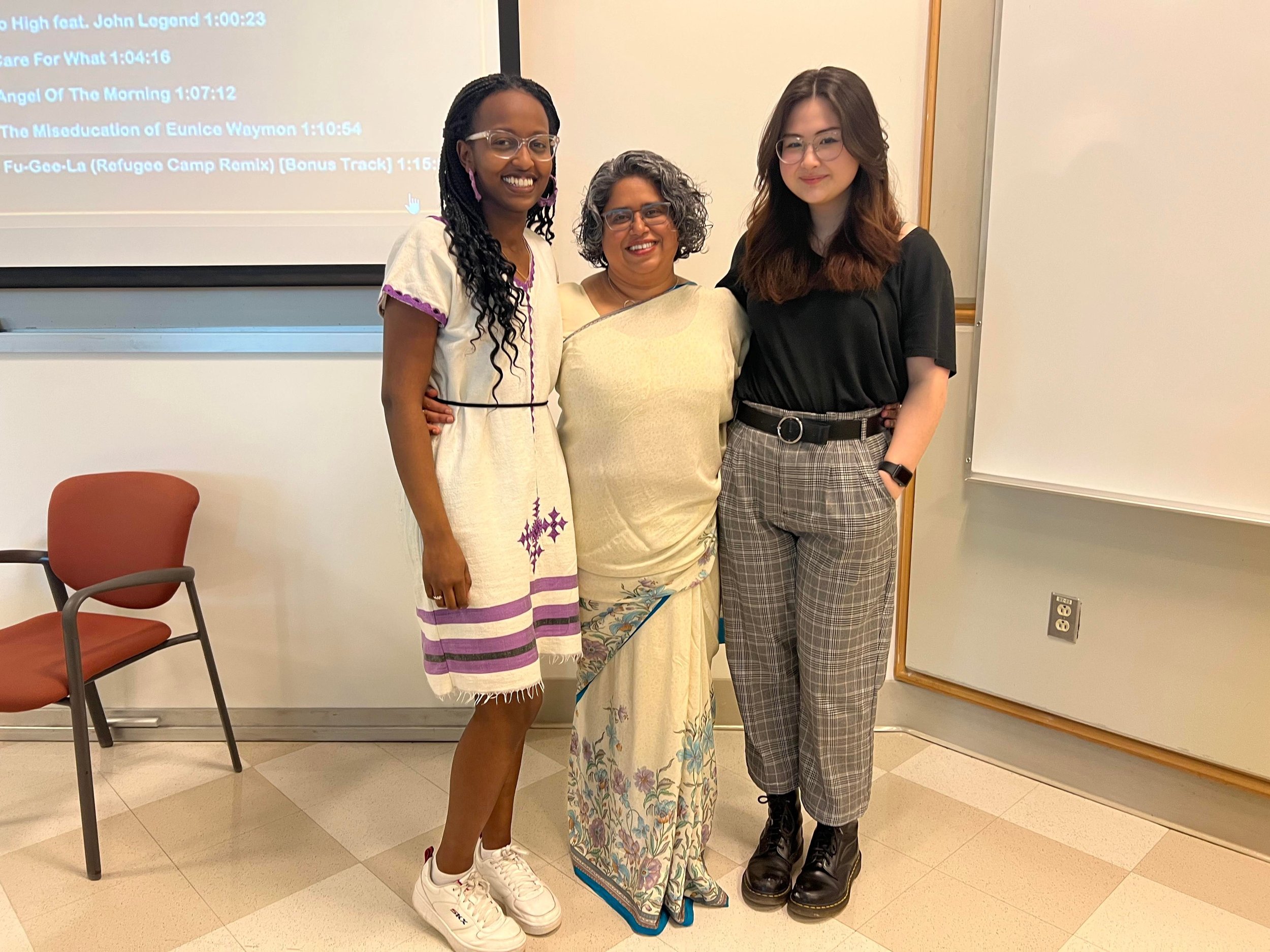
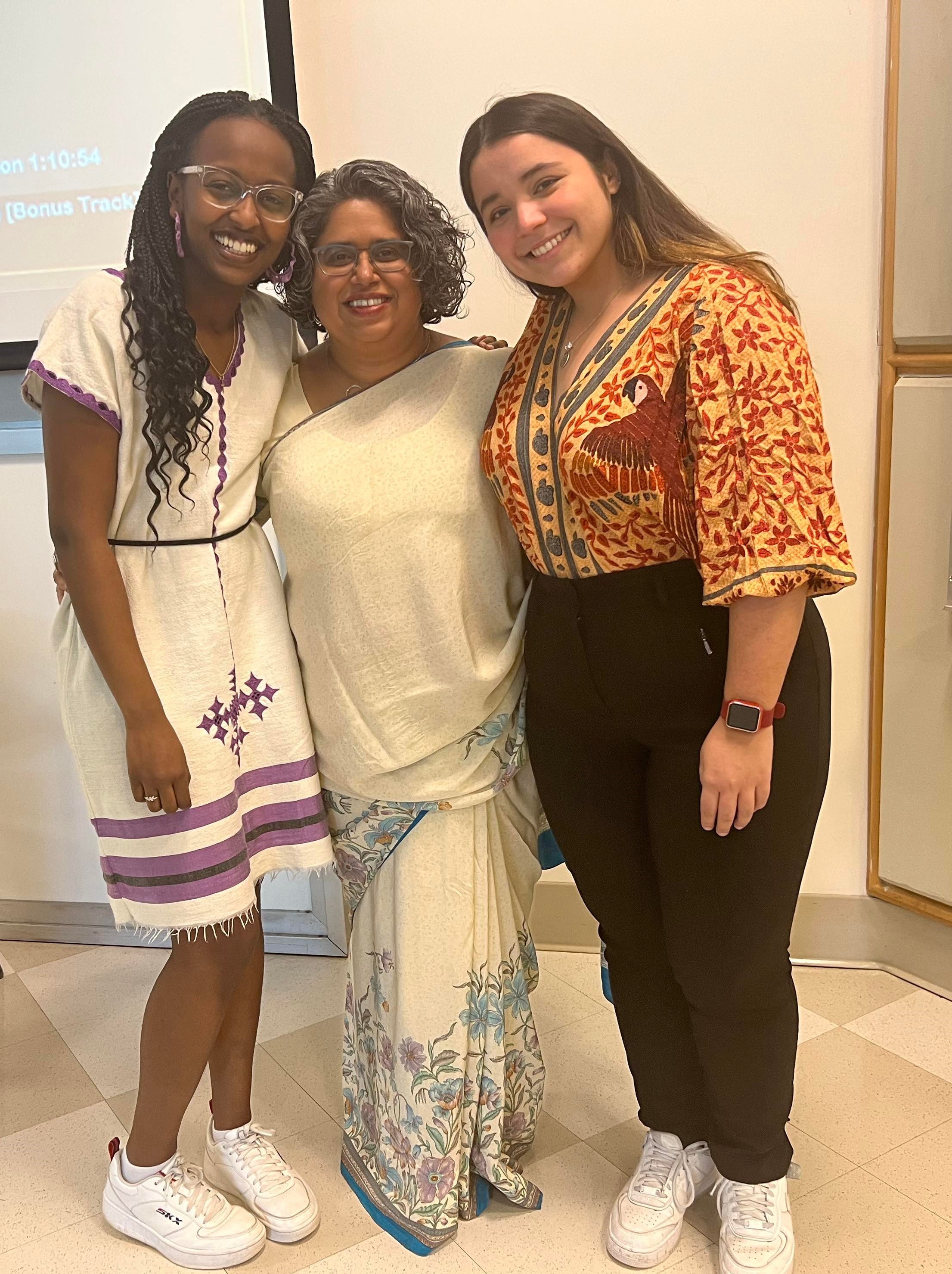
Three people stand together talking at the Halifax Waterfront.

Saint Mary’s University researcher Dr. Ather Akbari (middle) with students from the Sobey School of Business on the Halifax waterfront, near the Canadian Museum of Immigration at Pier 21.

Immigration is not just important for population growth but also for the economy. The economy is impacted by a declining population in at least two different ways: a shortage of skilled labour in the work force, and fewer consumers of goods and services. The aging population further adds to skill shortages, with people retiring as they get older.

“All population growth that has taken place between the recent census years has been due to immigration,” says Dr. Akbari.

Dr. Akbari chairs the Atlantic Research Group on Economics of Immigration, Aging and Diversity (ARGEIAD). The group is comprised of university faculty from across Atlantic Canada with the mandate of researching the economic importance of immigration, diversity, and aging. The research findings have been useful to help guide decisions in a regional, national, and international context.

Low retention of immigrants has been a problem in Atlantic Provinces and has concerned policy makers. This places great importance on Dr. Akbari’s and ARGEIAD’s recently finished research study, commissioned by the Province of Nova Scotia, titled: ‘Immigration In Nova Scotia: Who Comes, Who Stays, Who Leaves And Why?’ Through an online survey of close to 3,000 immigrants, the study helped understand the factors that determine why immigrants choose Nova Scotia as their destination in Canada, why some decide to stay, and why others leave.

ARGEIAD recently finished another research project, in collaboration with Group ATN Consulting Inc., for the government of New Brunswick which currently hosts the Forum of Ministers Responsible for Immigration in Canada. Through that project, they analyzed the impacts of provincially and territorially-administered immigration programs.

The project’s main finding is that immigrants have a positive effect on the economic growth and government revenues of smaller provinces, more so than in larger provinces, and that the Provincial Nominee Program has been successful in attracting immigrants to smaller provinces of Canada.

Currently, ARGEIAD is doing a research project that assesses the satisfaction and well-being of international students in Atlantic Canada. This research will provide valuable information that will assist with encouraging future immigrants to stay in the Atlantic provinces.

For more information on ARGEIAD’s work and Dr. Akbari’s research at Saint Mary’s University, visit https://www.smu.ca/centres-and-institutes/atlantic-research-group.html and https://www.worldwithoutlimits.ca/index/establishing-nova-scotia-as-the-world-of-possibility-for-newcomers.

Saint Mary’s University researcher Dr. Ather Akbari (middle) with students from the Sobey School of Business on the Halifax waterfront, near the Canadian Museum of Immigration at Pier 21.

Togetherness, Pride, and Knowing it’s Never Too Late: Sobey School Valedictorians

Chelsea Hammersley

Adam Wagner

Chelsea Hammersley and Adam Wagner, the spring Valedictorians for the Sobey School of Business, may have led very different lives but their messages to students on convocation day had similar themes: the togetherness of convocation, pride in graduation, and the recognition that it’s never too late to achieve your dreams.

We’ve had to endure battles and hardships, we’ve had to beat down walls that went up with changing environments that we had no control over.
— Chelsea Hammersley

Chelsea Hammersley was born in Cambridge, Ontario, and moved to Halifax when she was 10 years old. She began studying at Saint Mary’s University in 2017, and graduated this spring with a double major in Human Resource Management, Industrial Relations and Marketing. She reminisced in her speech about the struggles that not only she, but all of the students she was speaking to, faced getting to graduation.

“We’ve had to endure battles and hardships, we’ve had to beat down walls that went up with changing environments that we had no control over,” she said to the audience, reflecting their shared experience of completing their degrees during the COVID-19 pandemic. However, Chelsea’s speech was not focussed on the hardships. Rather, her focus was on her pride in making it to the end with her graduating cohort.

“Being able to gain an education is not something everyone is lucky enough or able to complete,” Chelsea shared, reflecting the fact that she is the first person in her family to gain a university education. Her pride was not only in her own accomplishments, thought. Chelsea made it very clear that everybody should be feeling the same. “You are all all-stars, and have worked for this moment in the most unimaginable times.”

You are all all-stars

It is unsurprising that Chelsea’s message was one of support for her cohort. While in school Chelsea was Vice-President of Project Development in Enactus, the University’s chapter of an international non-profit organization that encourages students to use entrepreneurial action to effect social change. Additionally, she has numerous academic achievements, and was the Enactus Member of the Month twice. Evidently, supporting her peers is where Chelsea thrives.

“Congratulations once again to my fellow graduates, know that I hope you find happiness and success, and that I will forever be your cheerleader.”


Adam Wagner’s story is quite different from Chelsea’s. Born in Hague, Saskatchewan, Adam first attended university right out of highschool, but found that it wasn’t the right time for him.

“I was just not ready,” Adam shared with the crowd. “Two years later, I was asked not to return to university due to my poor output. Not much was going for me other than the support of my family and friends.”

I took my bumps and bruises like many of you and found a way to make it happen.
— Adam Wagner

Despite the way that he felt, Adam did not define himself by a perceived failure, and instead worked and found support in a mentor, Terry Loraas, who Adam cited as one of his main sources of inspiration for returning to school. Adam enrolled in night classes to bump up his high school marks, and after two years he was recruited to the SMU Huskies football team as an offensive lineman, giving him the opportunity to return to university for a second shot.

This time around, Adam was ready. “I took my bumps and bruises like many of you and found a way to make it happen. Five years later, here I stand with you on one of the best days of our lives. We learned from our mistakes, and used that knowledge to push forward and upward to get here today.”

As a member of Saint Mary’s University Student’s Association (SMUSA) throughout his time at Saint Mary’s and a player on the SMU Huskies football team, Adam was incredibly active in the university community. Adam’s encouraging spirit shone through in the closing remarks of his speech. “Don’t view the mistakes of the past as a drawback, but simply view them as a lesson towards the success that lies ahead of you. …This really isn’t the end, it’s simply the beginning of your next adventure.”

What’s next?

Chelsea and Adam both have big plans for the future, as well as advice for future students.

“My biggest piece of advice for new students is to not close yourself off to opportunities,” Shares Chelsea, who currently works with the Federal Government with Public Services and Procurement Canada in Labour Relations. “The co-op program at SMU is amazing and I would highly recommend all students, not just ones pursuing a BComm. Without it, I most likely would not have secured a job before graduation. Gaining valuable work experience while in school is a huge asset and will diversify yourself from other post-graduates. I also would say to join a society or an extra-curricular group. This allows you to make new friends and network with other students and professionals.”

Adam, meanwhile, is planning to move back west to his home of Saskatchewan to pursue some exciting new business opportunities. His advice for students? “Don’t blink! It all flies by way too fast. Also, don’t be afraid to put yourself out there. These are some of the best times of your life and you will come out surrounded by amazing people, if you just take a chance and put yourself out there.”

We wish Chelsea and Adam the best of luck with their future endeavours, and congratulate them once more on their graduations!


Young researchers to benefit from new partnership with German accelerator facility

Participants in a Zoom meeting

Saint Mary’s University and GSI recently signed a new mobility program agreement to promote research collaborations.

Promoting exchanges and training opportunities for students and early-stage researchers is at the heart of a new mobility program agreement recently signed by the university. The agreement promotes academic and research collaborations between the two signees, Saint Mary's University (SMU) and GSI/FAIR, an accelerator facility in Darmstadt, Germany.

Researchers working at FAIR/GSI use radioactive ion beams for exploring fundamentals of nuclei to understand nature's strong force, creation of elements and conditions in exotic cosmic environments such as neutron stars and supernovae. Some of the methods also give information for nuclear medicine applications.

Their work is on experiments using the accelerator facility, which involves working on a variety of state-of-the-art radiation detectors and electronics. They also will be developing and working on software for data analysis and simulations. The GET_INvolved Programme at GSI provides international students and early stage researchers with opportunities to perform internships, traineeships and early-stage research experience in order to get involved in the international FAIR accelerator project while receiving scientific and technical training.

This agreement between the Canadian university and the German accelerator facility is exciting news to researchers and undergraduate and graduate students who will have the opportunity to further their education and research by collaborating at this world-class facility.

“This new partnership between Saint Mary’s University and our colleagues at GSI/FAIR represents our shared commitment to international research and collaboration,” says Saint Mary’s University President and Vice-Chancellor Dr. Robert Summerby-Murray. “As scholars, we are linked by our desire to create knowledge, to explore frontiers and to demonstrate the significance of discovery and innovation to civil society.”

“Our partnership is built around these shared values and our acknowledgement of the importance of providing opportunities for early-career researchers,” adds President Summerby-Murray. “Together, we are investing not only in advancing scientific inquiry but in the success of future scholars. I offer my congratulations to everyone involved in the launch of this important collaboration.”

About GSI/FAIR

The Facility for Antiproton and Ion Research in Europe (FAIR) project is under development. (Image copyright ion42/FAIR)

The GSI Helmholtz Centre in Darmstadt, Germany is a research centre operating a world-leading accelerator facility for research purposes. About 1,600 employees work at GSI and in addition approximately 1,000 researchers from universities and other research institutes around the world come to GSI every year to use the facility for experiments. The centre provides unique opportunities in the fields of hadronic and nuclear physics, nuclear astrophysics, atomic, laser and plasma physics, as well as material science, biophysics and nuclear medicine.

At GSI, FAIR (Facility for Antiproton and Ion Research in Europe) is currently being built. An international accelerator research facility with antiprotons and ions, it is being developed and constructed in cooperation with international partners. It is one of the world’s largest construction projects for international cutting-edge research. The FAIR project was initiated by the scientific community and researchers of GSI. The GSI accelerators will become part of the future FAIR facility and serve as the first acceleration stage.

For more information on the the GET_INvolved-Programme, contact:

Professor Rituparna Kanungo, Saint Mary’s Astronomy and Physics Department:
Rituparna.Kanungo@smu.ca

Dr. Pradeep Ghosh, GSI/FAIR:
Pradeep.Ghosh@fair-center.eu


Saint Mary’s University Moves Ellucian Banner to the Cloud

In a world where change is constant and expected, Saint Mary’s University is positioned for growth and innovation by going to the cloud.  Cloud computing or “the move to the cloud” with the Ellucian Banner ERP system was successfully and seamlessly completed in March 2022, and paves the way for modern, secure, and adaptable services for SMU students, researchers, academics, administrators, and community, from any location on the globe.          

Saint Mary’s University is only the second institution in the country to move all Ellucian Banner-related data and products to the cloud.   

“Building on its strong tradition of accessibility and community engagement, Saint Mary’s is a leading example for institutions on the path to digital transformation. Now live in the cloud with Banner, Saint Mary’s has added flexibility and agility to meet the evolving needs of its community, with a modern experience that today’s users expect and deserve,” said Laura Ipsen, President and CEO, Ellucian. “We are proud to partner with Saint Mary’s and honoured to support its students and staff through this significant development in their journey.”  

“Moving our data and supports to the cloud is the smart decision” says Michelle Benoit, Vice-President, Finance and Administration. “This move gives us significantly enhanced security, better integration, and facilitates our ability to better meet the needs of those we serve in our global community.”    

This bold move is part of the strategic investments in information technology first announced in 2021 when the university signaled a multi-year digital transformation.

“The future requires that we continue to innovate,” says Dr. Malcolm Butler, Vice-President Academic and Research. “Befitting a university with global reach, we will be able offer global access to university services and supports anywhere in the world with access to the internet.”  

In upcoming phases, as additional software and tools are added, the online experience will evolve and resemble the App Store where students, faculty and staff can access any university services they need on any device.  A single point of entry or sign-on will make it easier for users to find courses, marks, registration documents, online academic advising, and even health and wellness services.  

Cyber security has been greatly enhanced as the new hosting environment is SAS 70 compliant, achieving the highest standards, and all data is now fully encrypted.

“With global cybersecurity threats on the rise, it was imperative we make this move to the cloud as it provides a greatly enhanced secure environment,” says Todd Williams, Chief Information Officer, Saint Mary’s University.     

While there are obvious gains for students, the entire university community benefits from cloud-hosted systems and tools, as IT staff can leave the safe storage of data and the upkeep of servers to others and concentrate on higher-value services for faculty, staff, students and administrators alike.   

Will electric bills ever go down? It’s likely, if this SMU researcher has it his way using renewable energy

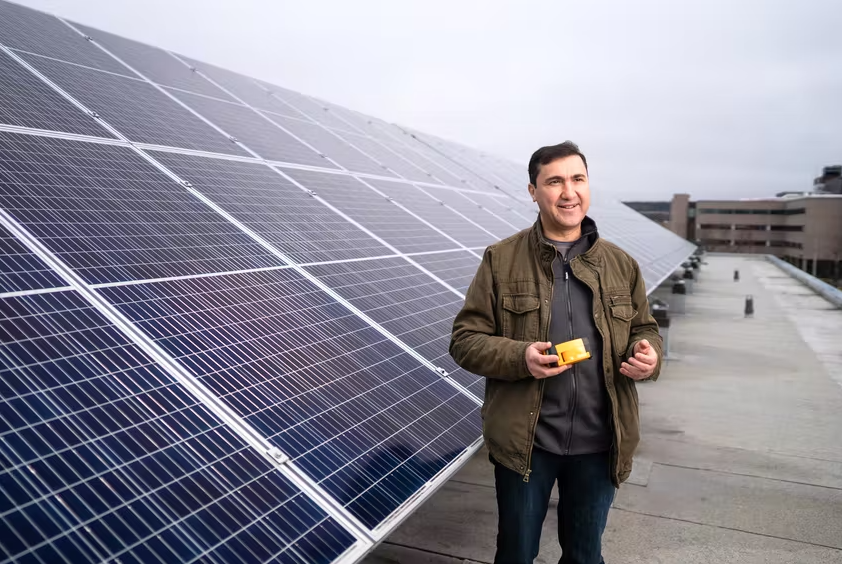
Dr. Merabet standing beside an array of solar panels.

Dr. Adel Merabet

Lowering electricity costs and decreasing CO2 emissions is something Dr. Adel Merabet aims to achieve through his work in renewable energy integration at Saint Mary’s University.

Merabet leads the Laboratory of Control Systems and Mechatronics, a research laboratory centred on engineering and technology.

“My lab works on developing control and management systems for renewable energy integration and efficient usage of battery storage to increase their operational capacity and productivity,” says Merabet.

For an industry project in Yarmouth, Merabet has developed machinery software and hardware to increase efficiency; he has also worked on automated machinery that regulates temperature systems in large-scale manufacturing equipment for Halifax-based Reused Plastic.

“These projects provide technology transfer to local industries and provides hands-on experience to my students, something that will be helpful for their future careers,” says Merabet.

In February 2021, the province of Nova Scotia set a goal of using 80% clean energy by 2030 as part of its Environmental Goals and Climate Change Reduction Act. Merabet’s research focuses on finding alternatives to traditional energy sources, including renewable sources and battery storage tech.

As Nova Scotia’s population grows, so too does its electricity demand. This is why he says building a big, pricey power plant is not the solution. “We need to look at small microgrids and develop technology to exchange between them, to generate power in city centres like Halifax.”

Microgrids are self-sufficient, harnessing solar and wind energy to produce electricity to create and localize energy that can be used by nearby buildings. Many use batteries for energy storage, allowing electricity to be used during power outages.

And while renewable sources like solar and wind depend on variable amounts of sunlight or wind, the way they are stored, and how that battery storage works, is vital. Part of Merabet’s research includes finding more efficient battery solutions for the transfer of renewable energy.

Merabet says that by using more efficient methods of battery storage in combination with renewable energy, diesel fuel consumption can be reduced, electricity costs will be lower, and CO2 emissions will decrease, benefiting our pocketbooks and the environment.

“With better battery storage combined with microgrids, we can use that source of energy over a long period of time,” says Merabet. “This will especially benefit remote and rural communities, so they don’t have to rely on diesel generators.”

For more information on the great research taking place at Saint Mary’s University, visit news.smu.ca/research.