Alumni

Going for gold: Shining the spotlight on Saint Mary’s Olympians

Saint Mary’s has a history of excellence in athletics, and the accomplishments of our athletes extend far beyond Huskies stadium.  

Along with winning championships and producing Academic All-Canadians in spades, SMU students—past and present—have contributed heavily to Team Canada’s Olympic effort in a wide range of sports.  

As elite athletes gather for the 2026 Winter Games in Milan, we compiled a list of our own impressive Huskies with Olympic ties. From athletes to coaches, broadcasters and more, we are proud to celebrate our alumni and students’ athletic achievements.

Photo: CBC

Steve Armitage BA’68 DCL’09

Armitage is a fundamental part of Canada’s sporting history. During his time at Saint Mary’s, he served as a quarterback for the Huskies Football team while commentating for the CBC Halifax late-night sports slot. His career included a 38-year stint with CBC Sports, where he covered 13 Olympic Games, and, among other accolades, was nominated for a Gemini Award in 1998 for his work covering speed skating at the Olympic Games in Nagano, Japan. Armitage's last Olympic appearance was at the 2022 Beijing Games.  

He received an Honorary Doctorate from Saint Mary’s in 2009 to honour his longtime commitment to professional excellence.  


Photo: CBC

Signa Butler BA’96 

An athlete-turned-sports-broadcaster, Signa Butler knew from an early age that she’d pursue a career in sports. Growing up as a multi-sport athlete in soccer, basketball, gymnastics and field hockey, she ended up playing for the Huskies Women’s Soccer team during her incredible five years at SMU. Butler joined the CBC in 2000 and has covered 12 Olympic Games as a play-by-play commentator. She is one of the only women broadcasters to cover nearly every sport on the network.  We’ll hear her again during the upcoming 2026 Winter Games in Milan, Italy.  


Photo: Olympics.ca

Andrew RussellMBA’14 

Now Chief Growth Officer (CGO) at Made with Local, the Dartmouth, NS-born Russell was a member of the Canadian Team at the 2008 Summer Games in Beijing, where he competed in Canoe/Kayak racing. He achieved Canada's best-ever combined results in the C-2 1000m and 500m events, placing fifth and sixth , respectively.  


Dylan Di Perna BComm’20 

After a stunning career with the SMU Men’s Hockey team, Ontario-born Di Perna is making his Olympic debut representing Team Italy in the upcoming 2026 Winter Games in Milan. This will be Italy's first return to Olympic hockey since 2006.

Photo: Nova Scotia Sport Hall of Fame

Jamie Bone BComm’89 

A legendary wheelchair sprinter and Paralympian, Bone dominated the 1988 Seoul Paralympics, where he was the only Nova Scotian on the Canadian team. Winning three gold medals (100m, 200m, and 400m) and setting multiple world and Paralympic records, Bone’s Olympic record eventually led him to being inducted into the Nova Scotia Sport Hall of Fame in 1997.  


Photo: Nova Scotia Sport Hall of Fame

Jackie BarrettBComm’98 

A prolific powerlifter known as the "Mississippi Moose," Barrett finished his career with 20 gold medals and 13 first-place finishes at the World Special Olympics. In his last year of competition, he set three Special Olympics records, lifting a combined 1,272.5 kg across the squat, deadlift, and triple combination events. He made history in 2021 as the first Special Olympics athlete inducted into the Canadian Sports Hall of Fame


Photo: Graham Hughes/The Canadian Press

Kori CheverieBA’12  

An alumna of the SMU Huskies Women’s Hockey team, Kori Cheverie served as an assistant coach for Team Canada during its gold-medal run at the 2022 Beijing Winter Olympics. She returns with fellow alum Troy Ryan to coach Team Canada again in 2026, an achievement highlighted by SMU’s Scott McCain & Leslie McLean Centre for Sport, Business and Health, which aims to support women in high-level coaching positions.


Photo: CBC

Katie Pegg (Current student) 

Current biology major and Paralympian Katie Pegg stunned in her first Paralympic games, bringing home Bronze in shotput for Team Canada in Paris in 2024. Finishing seventh in the world, Pegg—who was born with a missing radial bone in her right arm—had an eight-year football career as a defensive lineman before getting back into shotput here at Saint Mary’s.  

SMU Huskies basketball alumna receives prestigious award in Ottawa

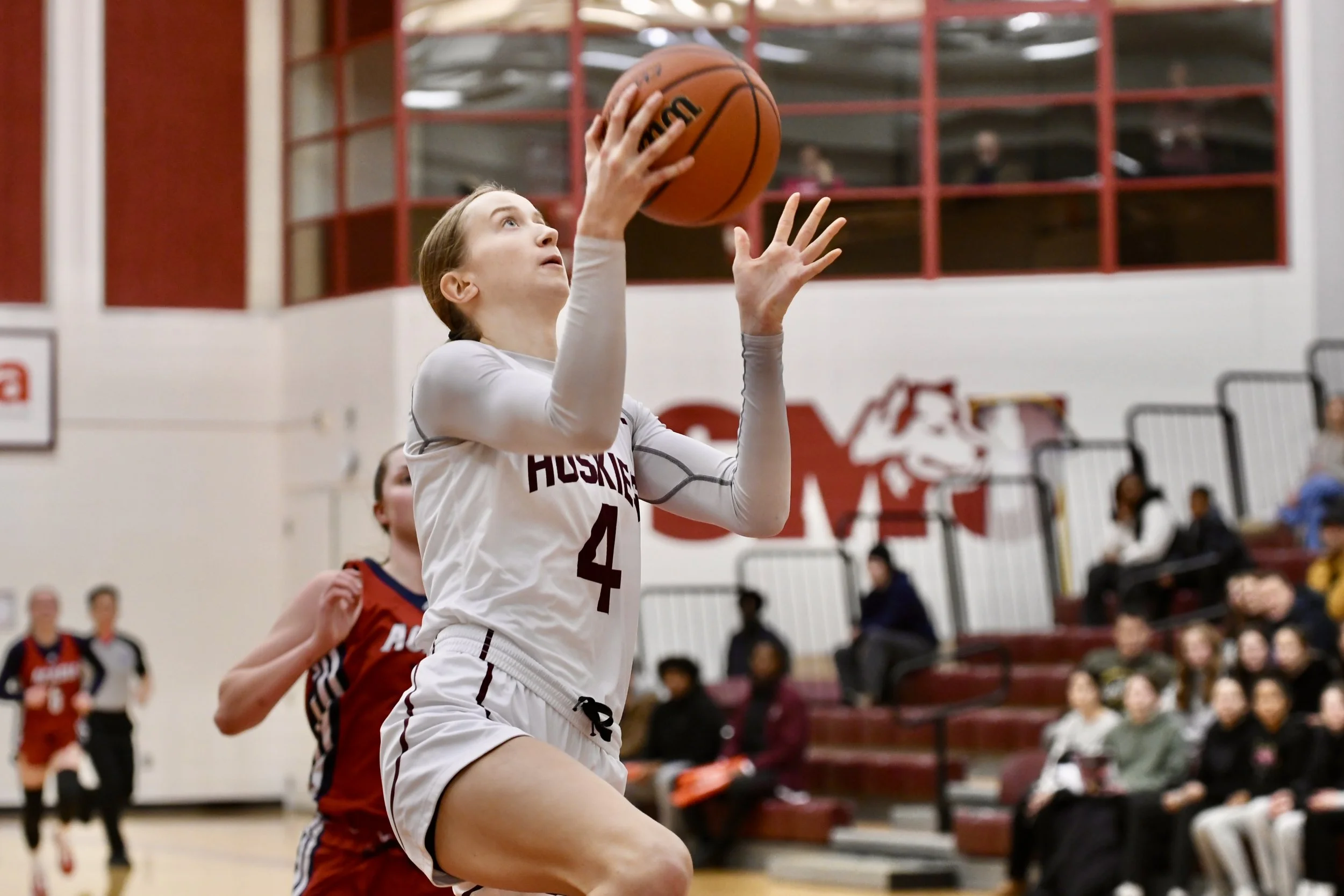
Clara plays basketball on court wearing a white Huskies jersey

Clara Gascoigne BComm’23 MBA’25 leading the Huskies to greatness during her time on the court

Clara Gascoigne’s time at Saint Mary’s was anything but ordinary.

Breaking records in the classroom and on the court, the Sobey School of Business graduate made a name for herself as one of the most decorated players in U SPORTS women’s basketball, earning accolades like U SPORTS Defensive Player of the Year and AUS Most Valuable Player, while leading the Huskies to three straight AUS Championships.

Academically, she’s just as talented, earning five U SPORTS Academic All-Canadian selections and several scholarships.

Her road to success was carved through years of hard work, exemplary leadership and grit, culminating in her being recognized as a Top 8 Academic All-Canadian last week in Ottawa, Ontario.

Putting the “student” in “student-athlete”

Student-athletes have a unique blend of responsibilities as they balance study schedules and exams with training and competition. Reaching the top in both categories is difficult, and U SPORTS Top 8 recognition is a mark of that incredible achievement.

The Top 8 distinction represents the highest individual academic honour bestowed by U SPORTS, as student-athletes must maintain an academic average of 80 per cent or higher while continuing to compete in their chosen sport. From that group of high-achieving, high-performing athletes, only eight are selected annually to represent this dual achievement. See the 2024-2025 cohort of Top 8 Academic All-Canadians here.

Gascoigne represented Atlantic Canada over two days of recognition and celebration, earning private tours of the Senate and the House of Commons, as well as a Parliament Reception and a meeting with the Right Honourable Mary Simon, Governor General of Canada. She also met with Shannon Miedema, Member of Parliament for Halifax.

I got the call that I had won just before Christmas. I feel very honoured and humbled to have been chosen.
— Clara Gascoigne on being chosen as a Top 8 Academic All-Canadian

This experience isn’t just another feather in Gascoigne’s cap: it represents a journey of growth and evolution unique to the student-athlete experience she had at SMU.  

Journey to the top

Gascoigne’s road to academic success started during the first year of her Bachelor of Commerce – but not how you’d expect.

“The first couple of weeks can be slow, and you’re really enjoying the university experience – so it kind of lulls you into a more relaxed rhythm that changes very, very quickly once you get to midterm season,” she says. Between adapting to the increased time-management needs of university, adjusting to life outside of high school, and juggling training and game schedules on top of that, she was in for a shock when that first mid-term season came around.

“I remember I didn’t get the grades I wanted in that first set of mid-terms, and I immediately recognized that was completely self-inflicted.”

Gascoigne leaned on the resources available to her at SMU and took great advice from her coaches, classmates and teammates to get back on track academically.

“I feel like this is an experience a lot of people can relate to in their first year, and as a student-athlete, that experience was amplified by my training schedule and game commitments.”

Clara practices basketball on court wearing a maroon Huskies jersey
Time management was a very necessary skill to balance my academics with my athletics, and I felt very strongly about leading by example. I wanted to set a standard for our team and put an emphasis on the ‘student’ in ‘student-athlete’ – which is something I think SMU does really well.

Learning to manage her time and energy was essential to her success. As she grew into her role as Team Captain, she made a point of modelling those systems for her teammates – a trait that has stayed with her after completing her Master of Business Administration in May 2025.  

Life after sport

Clara speaks with team members on court

Although Gascoigne hasn’t touched a basketball since graduation, she continues to draw on her student-athlete experience in her work with Doane Grant Thornton Halifax, a job she secured in part through her robust education with the Sobey School of Business.

“Being a team player and understanding how to work collaboratively towards a common goal is a great skill to bring to the job market – and it’s a skill you build in spades as a student-athlete.”

With her BComm and MBA behind her, her eye is already on her next prize as she works towards her official designation as a Chartered Professional Accountant.

Once she’s made a name for herself in the workforce, she intends to return to sports as a coach — leading the next generation of athletes to follow in her footsteps.


50 years of the Patrick Power Library

Story by Hansel Cook

When the Burke Building was completed in 1965, it was designed to serve as the long-term home of the University Library. But just ten years later, the space was already considered obsolete – too small to accommodate the library’s growing collection and increasing student population.

The 1960s and early 1970s were a period of unprecedented growth and transformation for the university. Saint Mary’s tripled in size, growing from 834 full-time students in 1965 to 2,444 in 1975. In that same decade, the university became co-educational (1968), with women soon making up more than a third of the student body, and the Catholic Church transferred governance to a secular board (1970).

New academic programs and departments were being launched almost yearly, and the campus itself was evolving quickly. The Student Centre was constructed in 1967, the Science Building in 1968, Huskies Stadium rose to host the Canada Summer Games in 1969 and the Loyola Building opened in 1971. Amid this expansion, the need for a larger, modern library was clear.

Construction on a new facility began in 1974 and was completed in August 1975. The growing collection was transferred from the Burke Building just in time for the start of the 1975-76 academic year. The new library introduced several innovations for its time: a state-of-the-art multimedia centre, expanded shelving for its 300,000-book collection and an early computerized information retrieval system touted as “able to provide instant answers to almost any question.”

Completed construction of the library in 1975

Inside the library when it opened

Opening reception for the Patrick Power Library

For its first year, the building was known simply as the New Library. Then, in June 1976, it was officially named the Patrick Power Library in honour of one of Saint Mary’s most significant benefactors. Patrick Power (1815-1881) was a Halifax merchant and philanthropist born in Kilmacthomas, Ireland. After immigrating to Canada as a young man, he found success in business and served as a Member of Parliament in 1867 and again in 1874. Upon his death, he left a generous bequest to support the establishment of a boys’ college. In 1913, the funds from this endowment were transferred to Saint Mary’s University – helping to shape the institution that would later bear his name.

“With a long-standing reputation for service excellence, this 50th anniversary provides an opportunity to celebrate the Library’s legacy as well as our contributions and commitment to teaching, learning and research,” said Suzanne van den Hoogen BA’91, Dean of the University Library and Archives.

Library staff planted a tree in memory of Marie DeYoung in 2025

To mark the Patrick Power Library’s 50th anniversary, a series of celebrations will continue through June 2026. The first event, a tree planting in memory of former University Librarian Marie DeYoung, took place this past summer. During Homecoming in October, alumni gathered for a special faculty author reading honouring both the Library and the 50th anniversary of the Geography Department. In November, the Library hosted an after-hours “Murder in the Library” mystery game, inviting student teams to solve clues inspired by the Library’s history while sharpening their research skills.

Fifty years later, the Patrick Power Library remains a vibrant hub for research, study and community engagement. Its collections now include more than 150 research databases, over one million books (both print and electronic) and online access to thousands of journals and periodicals. Together with instructional programs and research services, these resources continue to support the teaching and learning needs of today’s students and faculty.

The building itself has also evolved, with modernized study areas, service desks and accessibility-focused upgrades to study rooms and washrooms – all designed to make the space more welcoming and efficient for users.

“For many of our students, the Library represents more than bricks and mortar,” said van den Hoogen. “It has been and continues to be a safe space where students learn from one another, collaborate with their peers and develop the skills to become lifelong learners. To all our students, faculty and alumni, thank you for being a part of our past, present and future.”

Where will the Patrick Power Library be fifty years from now? With the pace of technological change, no one can say for sure. What remains certain is that the Library, along with its dedicated team of librarians and professional staff, will continue to adapt, evolve and uphold its mission to support the pursuit of knowledge for generations to come.

By Hansel Cook

Find more information and events on the Patrick Power Library 50th Anniversary webpage.


This story was featured in the Fall edition of the Maroon + White alumni magazine. Visit the online magazine to read more alumni stories!

Read Maroon + White


Upcoming event as part of the Library’s 50th celebrations:

Causal Inference and Machine Learning: Faculty Author Series talk with Dr. Yigit Aydede and Professor Mutlu Yuksel

Thursday, March 5
12-1 p.m.
Classroom LI135, Patrick Power Library, Saint Mary's University 

Join us to celebrate Dr. Yigit Aydede and Professor Mutlu Yuksel’s new book! It bridges the gap between machine learning and causal inference, offering an accessible roadmap for real-world policy questions. Perfect for researchers, students, and anyone using data to inform policy and decision making. Coffee and tea provided. RSVP today!

Charting the universe: From Saint Mary's to the cosmos

Dr. Lousie Edwards MSc’03 is one of the first Black Canadians to earn a PhD in astronomy

By Tara Thorne

Dr. Lousie Edwards MSc’03

A quarter-century ago, Dr. Louise Edwards MSc'03 took a chance on a city she’d never visited, switched coasts and began her Master of Science in Astronomy at Saint Mary’s.

“It was on the ocean, which was familiar,” said Edwards, who grew up in British Columbia and received her undergrad at the University of Victoria. “I was very excited to go to Halifax. As a Black Canadian, I knew there was a large community of Black folks there, which in Victoria didn’t exist then. I was really excited about that.”

She arrived to a small cohort of four students, two a year ahead of her, Glenn Kacprzak and Edwards.

“We all became very good friends. People were very friendly – not just in the reputation of east coasters, but also in the close-knit nature of the department,” said Edwards from Washington, DC, where she’s a Program Director at the National Science Foundation until she returns to her job as associate professor of physics at California Polytechnic State University next year. “David Clark was one of my professors. He knew we were coming across the country for school, and he invited us to his home for Thanksgiving that year.”

Edwards reached a very particular height that few other scientists can claim – while at Saint Mary’s, she was chosen to appear on a stamp as part of a Canada Post series celebrating universities.

Edwards was featured on the Saint Mary’s stamp, part of the Canadian Universities Collection (2002) by Steven Slipp Design

“Saint Mary’s has had astronomy for a very long time, and they told me they wanted to honour that tradition.” Edwards and Kacprzak were each photographed for the stamp, “and we had no idea who would get chosen until it came out.” (Spoiler: It was her.)

“I was wearing a silver chenille super-fluffy sweater. But they had Photoshopped it so I’m wearing a Saint Mary’s sweatshirt,” she laughed. “My mom bought up a whole lot of stamps.”

Since receiving her master’s in 2003, Edwards has been travelling around North America teaching and studying. Her area of focus is, humbly, the largest objects in the universe, including the brightest cluster galaxies and the cosmic web. She received her Ph.D. from Université Laval – one of the first Black Canadians to earn the degree in astronomy – and conducted her postdoctoral research at Caltech and Trent University. She taught at Mount Allison and Yale before landing at Cal Poly.

She has been based in California since 2016, but has been on leave since the summer of 2024 to serve on rotation for the National Science Foundation, where she administers funding for research in astrophysics.

Hot-button topics include instrumentation; Edwards points to a new telescope at the Vera Rubin Observatory in Chile as an example. “It’s going to give us more galaxies and stars than have ever been observed in all of history.” There’s also a significant amount of research surrounding Artificial Intelligence. “AI is so much bigger than ChatGPT. It encompasses a range of computational techniques and advancements, including machine learning. Astronomers have been very involved and even crucial to the development of computation.”

Edwards’ role is to guide the process to determine which scientists should receive funding from the Foundation, which has a nearly $10 billion annual budget and accounts for a quarter of the federal funding received by American academic institutions for research. “One of the reasons that the U.S. and Canada have such strong science and economies is because there’s this investment – strong and steady in science and engineering.”

It’s a big, exciting job, and she’s having a blast doing it.

“I get to read everybody’s top ideas in the moment,” said Edwards. “I’m seeing the science everybody wants to do right now, today.”

Disclaimer: This material was written while Dr. Edwards was serving at the National Science Foundation. Any opinions, findings, and conclusions or recommendations are solely those of the authors and do not necessarily reflect the views of the National Science Foundation or the Federal government.


This story was featured in the Fall edition of the Maroon + White alumni magazine. Visit the online magazine to read more alumni stories!

Read Maroon + White

Celebrating 50 years of Geography and Environmental Studies

With 2025 in the rearview mirror, it’s timely to look back at the year’s highlights marking the 50th anniversary of the Department of Geography and Environmental Studies.

Amber is a white woman with brown hair and glasses

Dr. Amber Silver BSc’10

Dr. Amber Silver BSc’10 was the alumni guest speaker for the department’s special anniversary event on November 20, delivering an Arts With Impact lecture on “Hazardous Weather in Atlantic Canada: Public Perceptions and Responses.”

During her talk, she recalled how studying geography got her back on track as a student and put her firmly on the path toward her dream job. Her first year at another Halifax university hadn’t worked out, so she ended up leaving school. During a break one day on her shift at a Halifax call centre, she flipped through a coworker’s Saint Mary’s University academic calendar.

A course on natural hazards jumped out, “and everything just clicked into place,” she said in a recent interview for Maroon + White. “In that moment, I decided to return to university, but this time to geography.”

Silver had loved geography in high school, but didn’t realize it was available as a university program. She was also fascinated with natural disasters and severe weather such as hurricanes. From the very first class at SMU, she knew she was in the right place. With the program’s focus on experiential learning, she has fond memories of field studies on saltwater marshes and Minas Basin mudflats with Dr. Danika van Proosdij, as well as transformative field trips to Boston and Washington.  

Amber shown on a projector screen in a lecture hall

Dr. Amber Silver presented ‘Hazardous Weather in Atlantic Canada: Public Perceptions and Responses’ at SMU

Now Silver works in the U.S., teaching students about the human dimensions of natural disasters as an Associate Professor in the College of Emergency Preparedness, Homeland Security and Cybersecurity at the University at Albany in New York. Her current research focuses on the role of misinformation and disinformation in the public’s understanding of natural hazards and disasters.

Stephanie is a white woman with brown hair and glasses

Dr. Stephanie Rogers BA’07

Dr. Stephanie Rogers BA’07 also shares fond memories of how she stumbled into the geography program and found her passion. She had been exploring various academic interests when a schoolmate recommended a course taught by a “rockstar instructor,” Rogers recalled in a recent article, Mapping the future from the ground – and the sky. “Once I took that class, I was hooked.”

The rockstar instructor was Dr. Cathy Conrad, and Rogers remembers working with her on a river-related Nova Scotia Youth Conservation Corps project. She encourages students to get involved in research early. “Don’t be afraid to reach out and ask if a professor has openings in their lab. Without that hands-on experience I obtained in university, I wouldn’t be where I am today,” she said. 

For Rogers, what began as a curiosity about maps evolved into a career exploring how technology can deepen our understanding of the environment. She is now an Associate Professor and runs the GeoIDEALab in the Department of Geosciences at Auburn University in Alabama. Some of her research uses geospatial data from drones and satellites to study water quality, which offers faster and more flexible methods than traditional field sampling.

Dr. Cathy Conrad is a Saint Mary’s alumna (BA’93) and the mother of a current SMU student and a SMU alumnus. She was in the spotlight during Homecoming Week in October, at a Faculty Author Reading event celebrating 50 years of both Geography and the Patrick Power Library. Conrad’s talk offered a personal autoethnography of her own lived experiences as the mother of a migrant, wife of a migrant and daughter of a migrant, and how that has influenced her own migration research.

Cathy stands at a podium with a projector showing a family photo

Dr. Cathy Conrad presented a Faculty Author talk during Homecoming

Through geography field courses, students can explore physical and human geography in other parts of the world. In March, Conrad brought a class to The Gambia to learn about the West African nation's history, culture and geography. In 2027, the Geography and Environmental Studies department teams up with the History department to offer the “Difficult Heritage – Europe” field course, featuring a 10-day trip to Berlin and Paris to explore heritage sites associated with the Second World War.

Coming up this winter, a new international field course is heading to South Korea, with Dr. Min-Jung Kwak at the helm. The learning starts in seminars here on campus and the field trip will enrich students’ understanding of South Korea's physical and cultural landscapes. The course is a collaboration between the geography and Asian studies programs.

On November 7, Kwak marked Geography’s 50th anniversary by hosting Nova Scotia’s first Korean Diaspora Studies Conference, on the theme of Borders, Boundaries and Displacement. Open to the public, the event included panels and keynotes, plus a film screening and special talk on “The Predicament of (Korean) Diasporic Cinema: An Exploration of Past Lives“. The conference highlighted the growing importance of South Korea and Asia as key economic and political partners for Canada, as well as the rapidly changing demographic landscape in Nova Scotia.   

A man presents in a lecture hall

A speaker at the Korean Diaspora Studies Conference at SMU

Over the past five decades, one of the geography program’s greatest features has been the diversity it offers. Students can study geography as a major or honours in both the BA and BSc programs, and as a minor in a BA, BSc or BES degree. Geography also offers electives and concentrations to students in any program across the university. The program is closely connected to specialized research labs and institutes, such as the Wicked Problems Lab, the Maritime Provinces Spatial Analysis Research Centre, and TransCoastal Adaptations: Centre for Nature-Based Solutions.

It also offers co-op options with government agencies, consulting firms and environmental or planning organizations, such as the Canadian Space Agency (CSA), as students learned at a GIS Day event planned by student Miranda Frison, who is doing a Master of Arts in Geography.

GIS (Geographic Information Systems) is digital mapping with both human and environmental applications across disciplines. Two guest speakers from CSA shared their perspectives on career possibilities for students with GIS experience: Jean Bergeron, Mission Scientist for Sun-Earth System Science, and Dirk Werle, Senior Expert in Earth Observation, Utilization, and Services. 

A man presents in a classroom with students

GIS Day at SMU

“GIS Day can introduce people to the subject and how it is used in every industry in some shape and form,” said Frison. Her own thesis research focuses on threatened lichen species in Atlantic Canada; learn more in this Esri Geographical Thinking podcast. As a teaching assistant at SMU and current president of the Geomatics Association of Nova Scotia (GANS), Frison encourages students to learn how to use GIS software to expand their research horizons.

“It has been very rewarding seeing when it clicks for students and as they get excited about possible future projects,” she says.

In her lecture, Dr. Silver emphasized how geography opens up versatile career paths in public health, transportation, urban planning, education, research, policy development and so much more. She said she was honoured to acknowledge the geography program’s many accomplishments in her lecture.

“To say [the program] does a phenomenal job of preparing students for the interesting, dynamic and unique discipline of geography is an understatement. It expects a lot of its students—but it gives students so much in return,” said Silver.

Related

Celebrating 25 years of excellence: The PhD in Business Administration at Saint Mary’s University

The first group of PhD candidates in Business Administration at Saint Mary's University in 2000

This year, Saint Mary’s University’s Sobey School of Business proudly marks the 25th anniversary of its Doctor of Philosophy (PhD) in Business Administration program – a milestone celebrating a quarter-century of cultivating exceptional business researchers, educators and leaders.

Since its launch in 2000 under the guidance of then-Director K. Kelloway, the PhD program has been dedicated to developing highly skilled researchers equipped to make meaningful contributions to academia, industry and the public sector. Designed to build both deep disciplinary expertise and a nuanced understanding of research contexts, the program has attracted students from diverse academic and professional backgrounds, all united by a commitment to advancing knowledge in business administration.

The original program emphasized human resource management and organizational behavior, while also preparing students to pursue research in specialized areas such as accounting, finance, marketing, international business and information management. Students engage in a rigorous curriculum that includes foundational courses in management thought and research paradigms, advanced functional courses tailored to individual research interests, comprehensive examinations, graduate seminars, teaching workshops and the completion of an original doctoral thesis.

Over the past 25 years, the PhD in Business Administration program has evolved to meet the changing needs of the global business landscape. Today, graduates of the program are recognized internationally for their research, holding faculty positions at universities around the world and driving innovation across sectors. The program continues to emphasize rigorous methodological training, interdisciplinary inquiry and impactful scholarship that shapes both theory and practice.

As the program celebrates this milestone, it reflects on a rich history of academic achievement and looks forward to continuing its tradition of excellence. With each cohort of PhD candidates, Saint Mary’s strengthens its commitment to developing leaders who will drive research, education and ethical decision-making in business for decades to come.

For more information about the PhD in Business Administration program at Saint Mary’s University, visit smu.ca/sobey/phd.

From executive to evidence-based leader: EDBA graduate champions the unique program

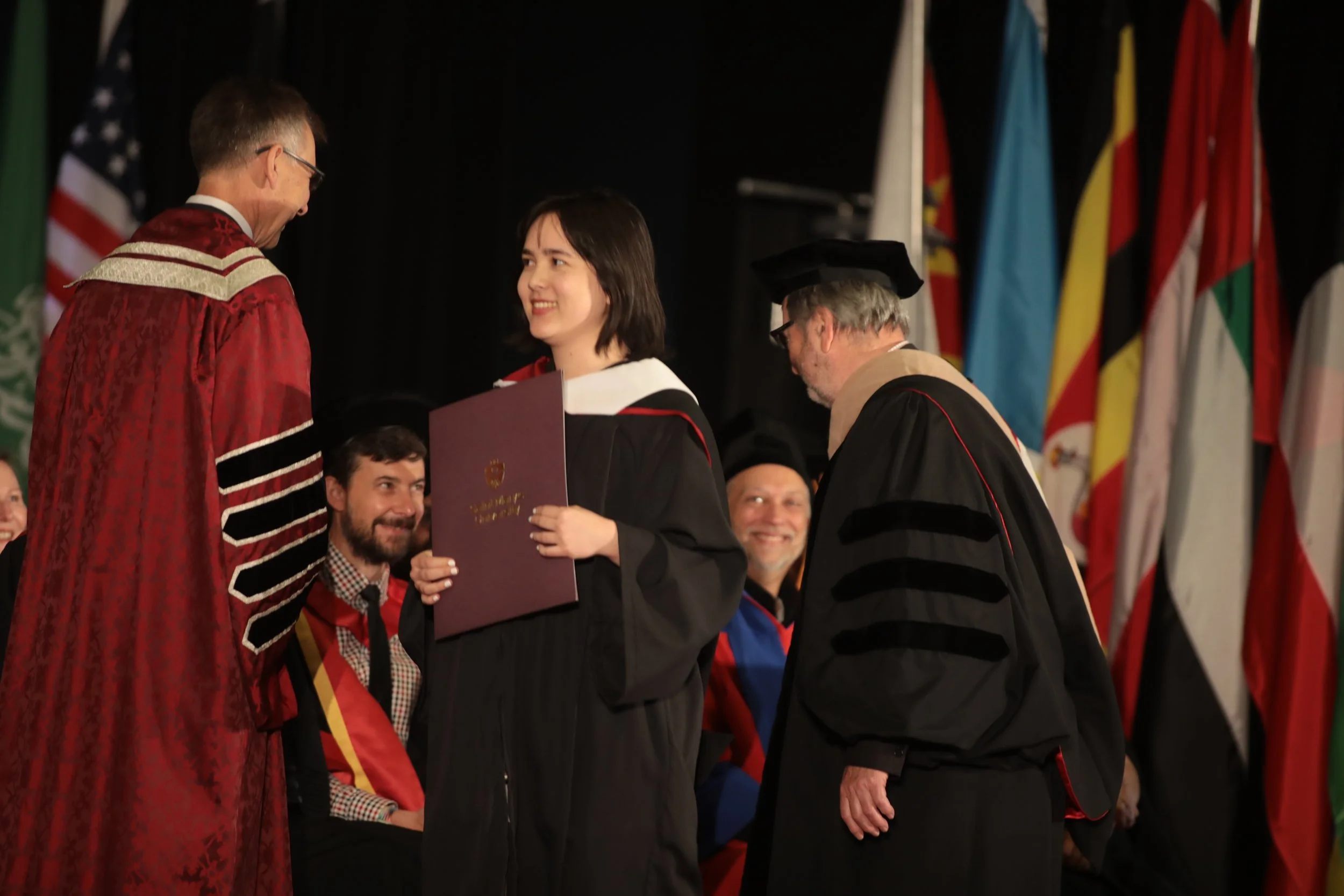
Jonny Stevens graduated with one of SMU’s first EDBA degrees at the Fall 2025 convocation. Shown here with President Michael Khan, Chancellor Michael Durland, and supervisor Dr. Ramesh Venkat

When Jonny Stevens BComm'02 MBA'07 EDBA’25 decided to pursue his Executive Doctorate in Business Administration (EDBA) at the Sobey School of Business, it wasn’t because he needed another credential. With a successful executive career already behind him, Stevens was driven by something deeper: curiosity.

Jonny wears a suit jacket and poses for a head shot photo

“I didn’t want to just think I knew something—I wanted to know it,” he says. “I wanted to deepen my knowledge, challenge myself, and show my kids that you’re never too old to learn something new.”

As one of the first graduates of the Sobey EDBA program, Stevens helped shape the program’s early development while balancing full-time work and family life. He describes being part of the inaugural cohort as both an honour and a rare opportunity to help define a new academic path. “The core academics were solid from day one, but we got to influence some of the process details. That was exciting.”

The EDBA program, designed for experienced professionals who want to apply research to real-world business challenges, turned out to be exactly what Stevens had been searching for. For years, he had explored doctoral study options but found that traditional PhD programs required leaving full-time work behind. The EDBA provided a rigorous, research-focused alternative that was built around industry relevance.

“It's the same level of academic rigour as a PhD,” he explains, “But it’s designed for people who want to bring evidence-based thinking directly into business practice.”

Putting knowledge into practice

That mindset led Stevens to make a career pivot during the program. Formerly the Chief Revenue Officer of a billion-dollar professional services company, he founded his own consulting practice to help organizations apply research-based approaches to leadership and growth.

Jonny takes a selfie with a Saint Mary's sign

“I tell people my superpower is my library card. I help businesses move from thinking to knowing—to make decisions backed by data and evidence.”

His own research explored inclusion climates in B2B sales environments, developing an original 11-item scale to measure the impact of gender inclusion on team performance. The results showed that positive inclusion climate leads to greater job satisfaction and job performance. “It’s not just the right thing to do; it’s the profitable thing to do,” he says.

For Stevens, who graduated in fall 2025, the EDBA experience was transformational. “You can’t start this program and finish it as the same person,” he says. “It stretches your thinking, your skills, and your view of what’s possible.”

His advice for future students? “Know why you’re doing it, be clear about your goals, and be ready to work hard. If you want to be surrounded by the best professors, peers, and research opportunities—this is the program for you.”

Learn more about the EDBA program and how it’s transforming business leadership: smu.ca/sobey/edba

Building Her Future: Women Shaping the Landscape of Tomorrow

When alumni return to Saint Mary’s University, they bring more than experience—they bring stories of growth, leadership and impact. That spirit was at the heart of the 7th Annual Women in Business Conference, held on October 2, 2025. More than 230 attendees, an all-time record, gathered to celebrate women shaping the future of construction and real estate. 

This year’s event, titled "Building Her Future: Shaping the Landscape of Tomorrow," highlighted women who are driving change in fields that have traditionally been led by men. Alumni, faculty, students, and professionals gathered for a day of conversation, inspiration and connection, all centered on opportunity, equity and what it really means to build your own future. 

Leading with empathy and conviction 

Victoria Stanhope BA’07 MBA’13 presented the keynote speech

One of the returning alumni was Victoria Stanhope BA’07 MBA’13, CEO of Stanhope Simpson Insurance Ltd. She gave a powerful keynote speech that set the tone for the day. As a nationally recognized leader in construction and insurance, Stanhope discussed leveraging the strengths of being a woman in a male-dominated, competitive business environment. 

“The table is set for you to succeed,” she said. “The inherent traits that make us women are the same traits that make us exceptionally powerful, successful business leaders.” 

Stanhope emphasized that empathy and conviction are essential leadership qualities that help women build trust, attract strong teams and create lasting client relationships. 

“Genuine empathy helps attract new team members and clients, while conviction keeps you true to your values and your goals.” 

Her message encouraged attendees to “leave your mark… and inspire other women to do so, too.” 

Constructing change: women leading in construction and real estate 

The event continued with a lively panel discussion titled "Constructing Change: Women Leading in Construction and Real Estate." Dr. Arla Day, Professor of Occupational Health Psychology at Saint Mary’s, served as the moderator. 

The panel included four accomplished women leaders: alumni Jacqueline Hamilton BSc’89, Executive Director of Planning and Development at HRM; Nabila Sufyani BComm’10 PMP, Project Manager at Shoreham Development Ltd.; Siba Saoud, a top agent with RE/MAX Nova; and Eva Parade, MSc Eng, P.Eng., National Senior Director for Preconstruction at Crombie REIT. 

Constructing Change: Women Leading in Construction and Real Estate panel

They shared personal stories about perseverance, mentorship and leadership. From breaking barriers in male-dominated workplaces to supporting other women, their insights showed how far the industry has come and how much opportunity remains. 

Hamilton and Sufyani discussed the importance of mentorship. They noted that when mentors are hard to find, women can step up and become mentors themselves. “Sometimes you need to be your own cheerleader,” one panellist shared, “but when you rise, bring others with you.” 

The panel also discussed the unique strengths women bring to real estate and construction, such as empathy, patience and a strong understanding of people. “Buying a home isn’t just purchasing an asset—it’s building a life,” said one speaker. “That perspective builds trust and lasting relationships.” 

Research, insight and inspiration 

The day started with a presentation by Dr. Bahareh Mansouri, Associate Professor of Management Science at the Sobey School of Business. Using her research on supply chain ethics, analytics, and sustainability, Dr. Mansouri provided a data-driven look at gender equity in construction and real estate, laying the academic foundation for the rest of the day’s discussions. 

Throughout the conference, one message stood out: women are not just taking part in these industries—they are leading them. From insurance to infrastructure, entrepreneurship to urban planning, they are changing what leadership looks like. 

Sobey School of Business News

Student researcher digs into berry research in northern Canada

A group of researchers outdoors with berries and buckets

Claire Singer (far right, back) and Dr. Erin Cameron (far left, front) from Saint Mary’s University with members of the research project in September 2025 (“The Berry Happy Pickers”).

From back left: Elaine Lamalice (Hay River), Celine Proctor (Fort Good Hope), Lila Fraser Erasmus (Yellowknife), Beatrice Lepine (Hay River), Margaret Leishman (Ka'a'gee), Anne Thrasher (Paulatuk), Claire Singer. From front left: Dr. Erin Cameron, Megan Francisco (University of Victoria), Annie Buckle (Aklavik). Other project members missing from photo.

Curiosity about bears’ food sources led to years of research and collaboration with many people across the Northwest Territories in northern Canada

Claire Singer had been working at the Northwest Territories Species at Risk Secretariat for years when grizzly bears were assessed under the Species at Risk (NWT) Act in 2017.  

This review indicated a decline in berry crops—a key food source for the bears—but at the time, there was no definitive knowledge on the extent of the issue in the Northwest Territories. The Northwest Territories Species at Risk Committee recommended that this research be completed, focusing on the extensive knowledge held by Indigenous peoples in the region. 

“Berries are important ecologically, economically and culturally in the northern territories,” explained Claire. “There seemed to be a decline in this food source, and it was clear that more research was needed to gather information about the changes to the land and the habitat.”     

Around the same time, intrigued by a Facebook post to a page focused on the identification of Northwest Territories species by biology professor Dr. Erin Cameron, who was looking for graduate student researchers in her lab, Claire left her job with the government of the Northwest Territories after 13 years to start a PhD in 2020 at Saint Mary’s University. Her PhD examines changes in plant communities in the territory, with a focus on the status of berries. She lived in Halifax for her initial coursework during the COVID-19 pandemic, returning home to the Northwest Territories in 2022 to continue her research and PhD thesis, which she hopes to defend in the near future.

A small group sits on the ground outside

A few members of the team in Fort McPherson for the validation sessions: Claire Singer, Giannina Karki, Karl Hare, and Alestine Andre.

Conducting research in the Northwest Territories involved travelling and facilitating 118 interviews with elders across the region, as well as coordinating with various agencies, government groups and other stakeholders.  

Thanks in part to her work, cranberries will be assessed under the Species at Risk (NWT) Act in 2028. In her research, she learned about regional variations in berries across the territory. Changes in the landscape, from drought in the south to less predictable growing seasons in the north, and fires that saw two-thirds of the territory evacuated in 2023, all indicate that changes are occurring in this vital crop.  

Working with supervisor Dr. Cameron, master’s students and numerous collaborators helped make the sheer scale of the work possible. Project management, finding people to interview, arranging travel and translators, map making and transcribing and coding interviews to analyze data were all possible thanks to the team.  

“Summer students were a big part of the project; it never would have happened without their work,” explains Dr. Erin Cameron. “One student made maps to pinpoint areas where the berries were located. They also transcribed and coded interviews to analyze.” In particular, Giannina Karki, who graduated in 2024 with a BSc in Environmental Science from Saint Mary’s, worked with the team for one of her undergraduate summer co-op terms and continued to work with the project until this fall as a project manager, providing key logistical support. 

A report cover with illustrations of berries and leaves

A published book that arose from the project, called Guide to the Berries of the Northwest Territories”, has 14 author credits on the cover, including nine authors who act as the Indigenous knowledge advisory board for the project. One credit indicates a family connection for Claire—her mother, Lesley, created most of the beautiful illustrations throughout the book.   

The book documents Indigenous knowledge of berries throughout the NWT, outlines respectful harvesting principles, and identifies all known Northwest Territories berries and their habitat and uses. Other publications currently under development will summarize broader results from the interviews, including abundance, trends, interactions with animals, and threats, providing a picture of the status of berries across the territory. 

“It is a very collaborative process, and working with Elders who understand the scope of the history of the land is fascinating,” says Claire. “Elders see the changes to the land, and the effects of climate change vary from region to region, but they are generally more pronounced in northern latitudes.”  

A yellow labrador

As Claire continues her work on her PhD in a part-time capacity, she also operates an ecological consulting firm, Rubus Consulting, in Yellowknife, Northwest Territories. Her dog Rubus, after the Latin genus name for raspberries and cloudberries, is the namesake for the business. He loves eating berries.  

Kane Writers Award: Apply by November 30

Floyd wears a headset on a TV set

Floyd Kane BA’92

The Edna and Velma Thomas Kane Writers Award supports aspiring writers of African Nova Scotian and Black/African descent. Valued at $30,000, the award will be presented to an undergraduate student in the Faculty of Arts upon graduation from Saint Mary’s.

2026 award criteria

To be eligible, undergraduate BA and BES students must:

  • be graduating from Saint Mary’s in 2026,

  • be Canadian citizens or permanent residents,

  • identify as Black/African descended (with priority going to African Nova Scotian students),

  • have good academic standing,

  • have demonstrable financial need, and

  • aspire to a career in writing, broadly defined. 

This award was established through the generosity of alumnus Floyd Kane BA’92, a writer, lawyer, filmmaker and creator of the acclaimed TV series, Diggstown.

It aims to reduce financial roadblocks for graduating students by supporting them in pursuing further studies, training or self-directed projects to advance their writing aspirations. Broadly defined, a career in writing can include (but is not limited to) creative writing, poetry, songwriting, spoken word performance, film/television writing, multimedia creation, or an academic career path in an arts and humanities discipline.

Application deadline: Sunday, November 30, 2025

Learn more and apply today at smu.ca/arts/arts-awards-andfunding

Related

Homecoming 2025: A weekend of Husky pride and milestones

Saint Mary’s Homecoming 2025 brought nearly 4,000 alumni, students, staff, faculty and fans back to campus for a dynamic weekend full of energy, connection and Husky spirit. The excitement was amplified with the first Homecoming under our new President and Vice-Chancellor, Dr. Michael Khan, who personally welcomed attendees and dove into the celebrations.

From October 2-5, more than 20 events offered something for everyone: class reunions, social gatherings, thought-provoking panels and thrilling Huskies games. The weekend celebrated major milestones, including the 50th anniversaries of the Class of 1975 Golden Grads, the Patrick Power Library and the Geography Department. Special recognition was also given to the Classes of 2020 and 2021, our COVID grads, with a dedicated celebration honouring their perseverance and achievements.

One of the standout moments was the Sport Hall of Fame induction ceremony, honouring the 2009-2010 Huskies men’s hockey national champions, including star player Marc Rancourt and head coach Trevor Steinburg. Fans cheered, memories were shared and the legacy of Saint Mary’s athletics was on full display.

From reconnecting with classmates to celebrating achievements, the weekend was a true showcase of Husky pride. Thanks to everyone who attended, volunteered and helped make Homecoming 2025 an unforgettable celebration.

Save the Date for Homecoming 2026: October 1-4, 2026!

Cooking up a positive impact on Easy Platter’s operations

Two men look at data together

Mandhir Singh and Vishnu Priyan Mahendran

Harnessing data to reduce food waste

As Canada’s first on-demand personal chef service, Easy Platter offers a unique approach to meal preparation by enabling customers to hire personal chefs to plan menus and prepare high-quality, personalized meals.

To address operational challenges, Easy Platter collaborated with Dr. Yasushi Akiyama, a professor of Mathematics and Computing Science. Together, they designed a framework to calculate both ingredient costs and potential food waste for selected meal plans. With support from Vishnu Priyan Mahendran, a 2022 graduate student in the Master of Computing and Data Analytics program, they developed formulas and integrated them into the company’s system, improving efficiency.

“Dr. Akiyama was extremely helpful in not just identifying great talent at Saint Mary’s University but also collaborating with us throughout the project,” said Mandhir Singh, Founder of Easy Platter and 2012 MBA Graduate from Saint Mary’s University. “Vishnu has been a huge asset for Easy Platter and has contributed to multiple complex projects.” Vishnu has been employed with Easy Platter since he graduated.

The second phase of the project linked ingredient data with its supply chain. This integration offers automated insights into food waste, which helps the team track sustainability. With nearly 4,000 recipes, the system can now predict how much food waste a menu will generate.

The team also explored machine learning algorithms to identify ingredients that could cause nutrient deficiencies and provided recommendations to enhance meals’ nutritional value. This feature supports personalized nutrition plans, which are incorporated into Easy Platter’s final database and user interface.

With these insights, Easy Platter reduces food waste while helping customers enjoy healthier, personalized meals—combining sustainability and wellness in every dish.


The Office of Innovation and Community Engagement (OICE) at Saint Mary’s University facilitates research partnerships between the University and companies, government departments and community organizations. OICE is the initial point of contact for faculty members and external partners wishing to collaborate. The office assists with finding suitable expertise, contract development and advising on funding opportunities.

This project highlight is from the 2025 OICE Report, which features researchers from Saint Mary's University and their external partners.

Read the 2025 OICE Report