Alumni

Celebrating 25 years of excellence: The PhD in Business Administration at Saint Mary’s University

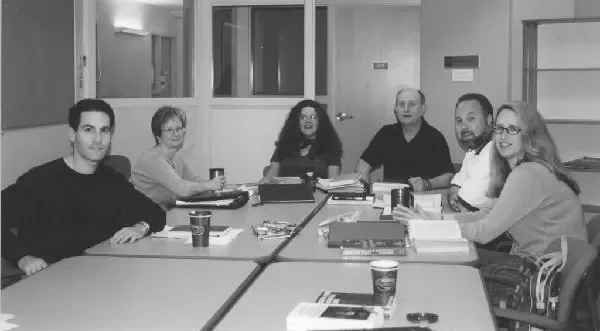
The first group of PhD candidates in Business Administration at Saint Mary's University in 2000

This year, Saint Mary’s University’s Sobey School of Business proudly marks the 25th anniversary of its Doctor of Philosophy (PhD) in Business Administration program – a milestone celebrating a quarter-century of cultivating exceptional business researchers, educators and leaders.

Since its launch in 2000 under the guidance of then-Director K. Kelloway, the PhD program has been dedicated to developing highly skilled researchers equipped to make meaningful contributions to academia, industry and the public sector. Designed to build both deep disciplinary expertise and a nuanced understanding of research contexts, the program has attracted students from diverse academic and professional backgrounds, all united by a commitment to advancing knowledge in business administration.

The original program emphasized human resource management and organizational behavior, while also preparing students to pursue research in specialized areas such as accounting, finance, marketing, international business and information management. Students engage in a rigorous curriculum that includes foundational courses in management thought and research paradigms, advanced functional courses tailored to individual research interests, comprehensive examinations, graduate seminars, teaching workshops and the completion of an original doctoral thesis.

Over the past 25 years, the PhD in Business Administration program has evolved to meet the changing needs of the global business landscape. Today, graduates of the program are recognized internationally for their research, holding faculty positions at universities around the world and driving innovation across sectors. The program continues to emphasize rigorous methodological training, interdisciplinary inquiry and impactful scholarship that shapes both theory and practice.

As the program celebrates this milestone, it reflects on a rich history of academic achievement and looks forward to continuing its tradition of excellence. With each cohort of PhD candidates, Saint Mary’s strengthens its commitment to developing leaders who will drive research, education and ethical decision-making in business for decades to come.

For more information about the PhD in Business Administration program at Saint Mary’s University, visit smu.ca/sobey/phd.
From executive to evidence-based leader: EDBA graduate champions the unique program

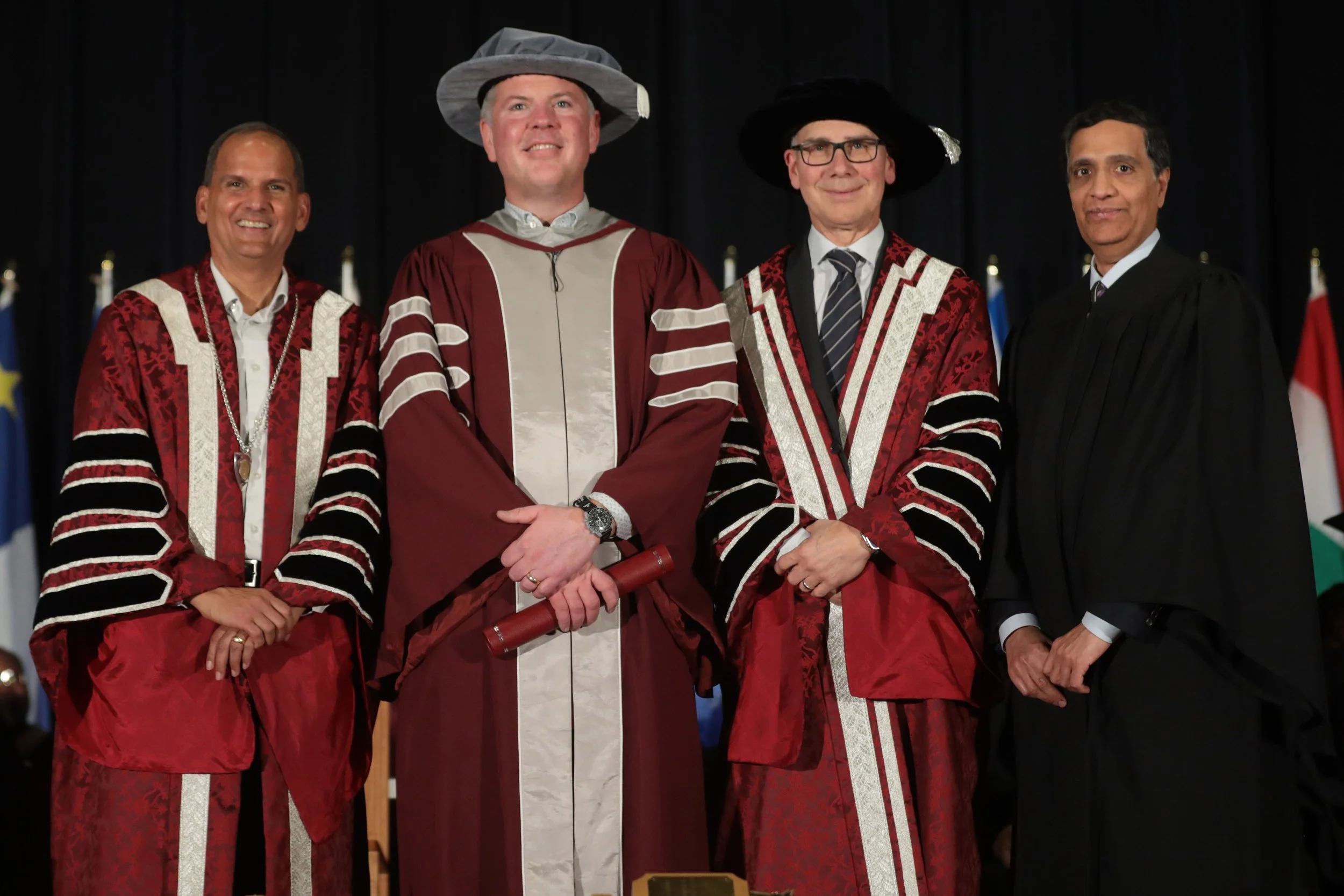
Jonny Stevens graduated with one of SMU’s first EDBA degrees at the Fall 2025 convocation. Shown here with President Michael Khan, Chancellor Michael Durland, and supervisor Dr. Ramesh Venkat

When Jonny Stevens BComm'02 MBA'07 EDBA’25 decided to pursue his Executive Doctorate in Business Administration (EDBA) at the Sobey School of Business, it wasn’t because he needed another credential. With a successful executive career already behind him, Stevens was driven by something deeper: curiosity.

Jonny wears a suit jacket and poses for a head shot photo

“I didn’t want to just think I knew something—I wanted to know it,” he says. “I wanted to deepen my knowledge, challenge myself, and show my kids that you’re never too old to learn something new.”

As one of the first graduates of the Sobey EDBA program, Stevens helped shape the program’s early development while balancing full-time work and family life. He describes being part of the inaugural cohort as both an honour and a rare opportunity to help define a new academic path. “The core academics were solid from day one, but we got to influence some of the process details. That was exciting.”

The EDBA program, designed for experienced professionals who want to apply research to real-world business challenges, turned out to be exactly what Stevens had been searching for. For years, he had explored doctoral study options but found that traditional PhD programs required leaving full-time work behind. The EDBA provided a rigorous, research-focused alternative that was built around industry relevance.

“It's the same level of academic rigour as a PhD,” he explains, “But it’s designed for people who want to bring evidence-based thinking directly into business practice.”

Putting knowledge into practice

That mindset led Stevens to make a career pivot during the program. Formerly the Chief Revenue Officer of a billion-dollar professional services company, he founded his own consulting practice to help organizations apply research-based approaches to leadership and growth.

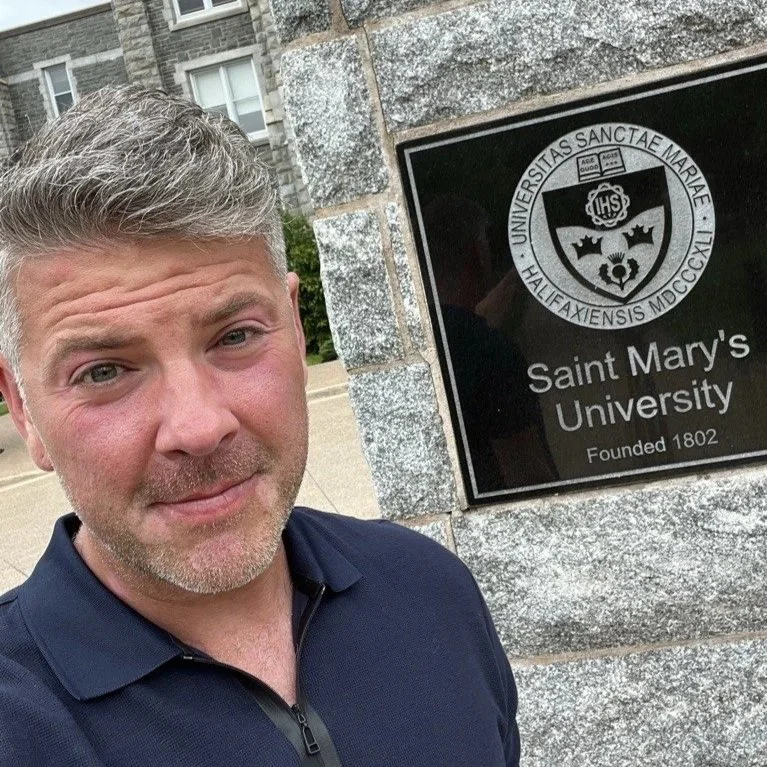
Jonny takes a selfie with a Saint Mary's sign

“I tell people my superpower is my library card. I help businesses move from thinking to knowing—to make decisions backed by data and evidence.”

His own research explored inclusion climates in B2B sales environments, developing an original 11-item scale to measure the impact of gender inclusion on team performance. The results showed that positive inclusion climate leads to greater job satisfaction and job performance. “It’s not just the right thing to do; it’s the profitable thing to do,” he says.

For Stevens, who graduated in fall 2025, the EDBA experience was transformational. “You can’t start this program and finish it as the same person,” he says. “It stretches your thinking, your skills, and your view of what’s possible.”

His advice for future students? “Know why you’re doing it, be clear about your goals, and be ready to work hard. If you want to be surrounded by the best professors, peers, and research opportunities—this is the program for you.”

Learn more about the EDBA program and how it’s transforming business leadership: smu.ca/sobey/edba

Building Her Future: Women Shaping the Landscape of Tomorrow

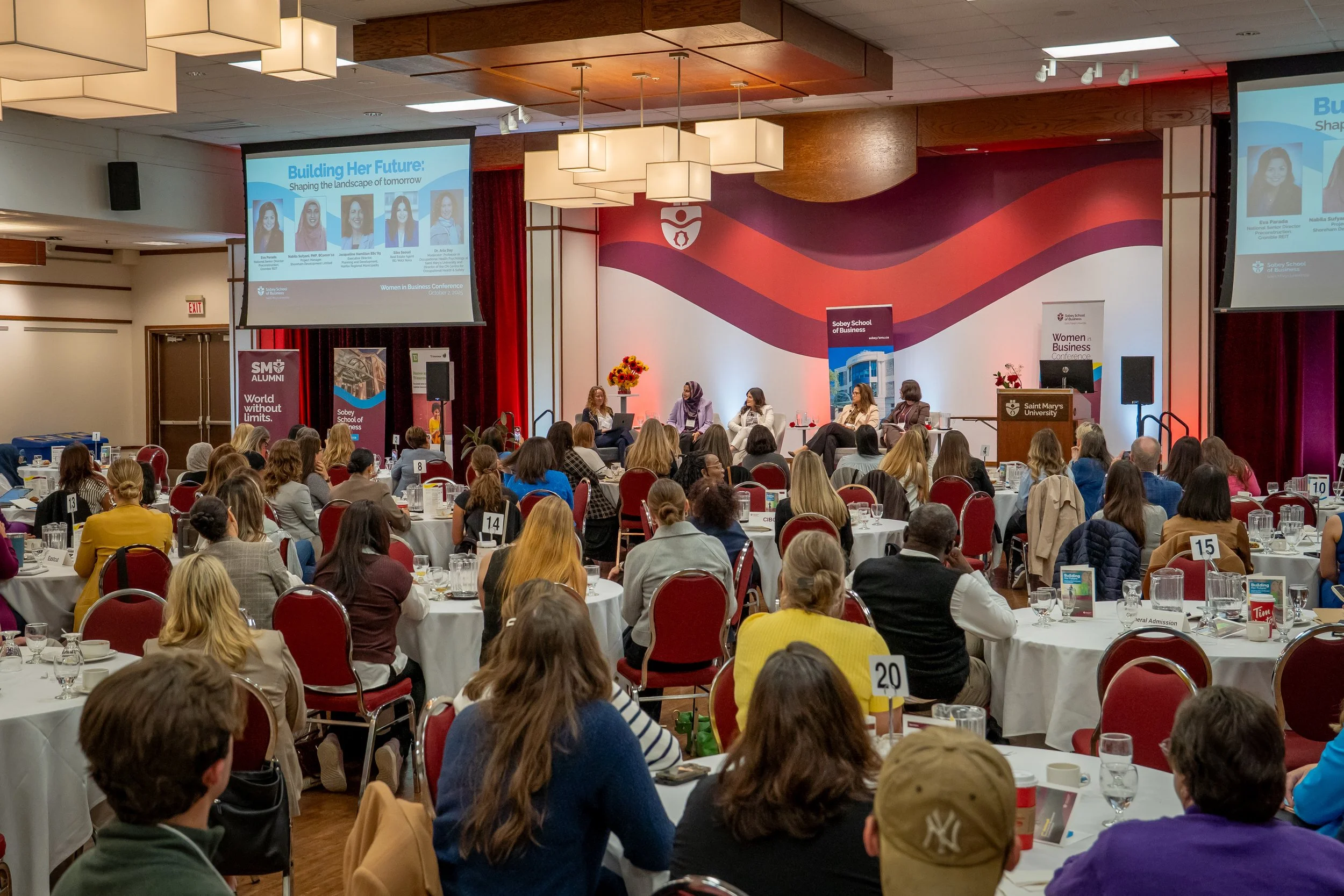
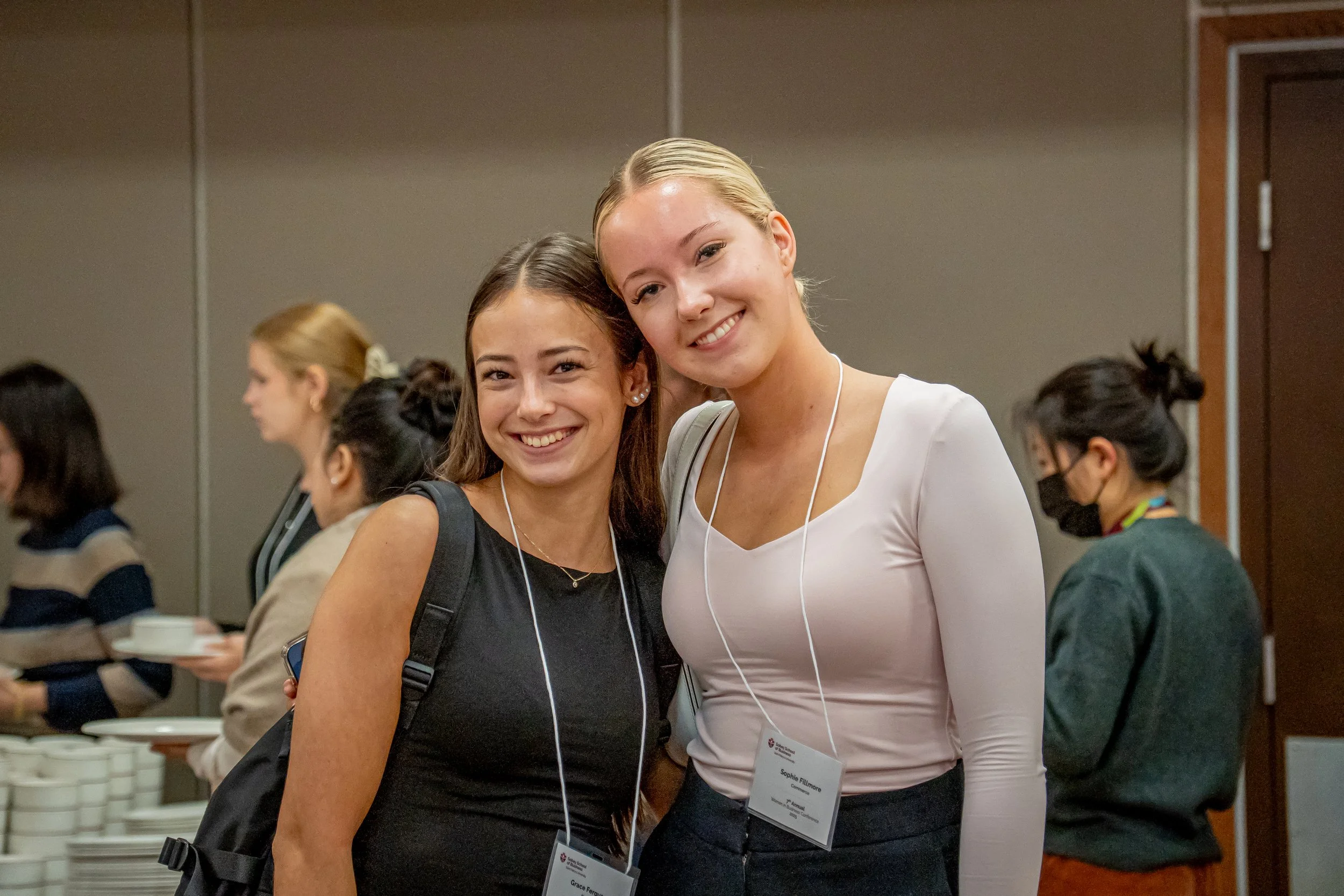
When alumni return to Saint Mary’s University, they bring more than experience—they bring stories of growth, leadership and impact. That spirit was at the heart of the 7th Annual Women in Business Conference, held on October 2, 2025. More than 230 attendees, an all-time record, gathered to celebrate women shaping the future of construction and real estate. 

This year’s event, titled "Building Her Future: Shaping the Landscape of Tomorrow," highlighted women who are driving change in fields that have traditionally been led by men. Alumni, faculty, students, and professionals gathered for a day of conversation, inspiration and connection, all centered on opportunity, equity and what it really means to build your own future. 

Leading with empathy and conviction 

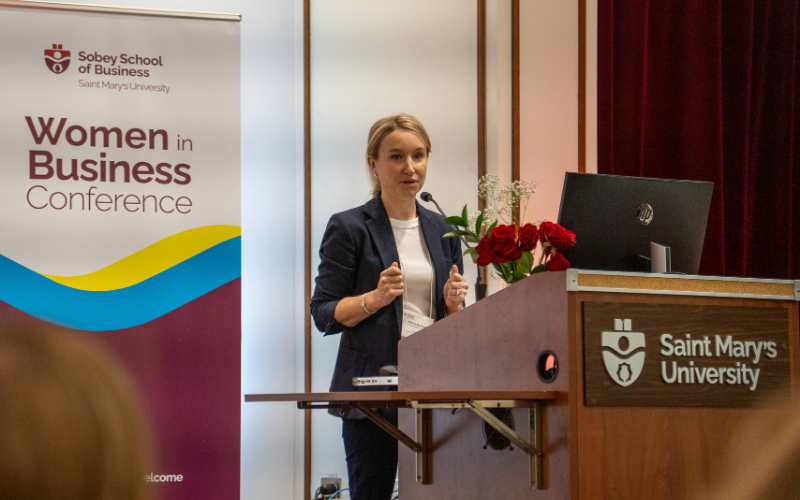
Victoria Stanhope BA’07 MBA’13 presented the keynote speech

One of the returning alumni was Victoria Stanhope BA’07 MBA’13, CEO of Stanhope Simpson Insurance Ltd. She gave a powerful keynote speech that set the tone for the day. As a nationally recognized leader in construction and insurance, Stanhope discussed leveraging the strengths of being a woman in a male-dominated, competitive business environment. 

“The table is set for you to succeed,” she said. “The inherent traits that make us women are the same traits that make us exceptionally powerful, successful business leaders.” 

Stanhope emphasized that empathy and conviction are essential leadership qualities that help women build trust, attract strong teams and create lasting client relationships. 

“Genuine empathy helps attract new team members and clients, while conviction keeps you true to your values and your goals.” 

Her message encouraged attendees to “leave your mark… and inspire other women to do so, too.” 

Constructing change: women leading in construction and real estate 

The event continued with a lively panel discussion titled "Constructing Change: Women Leading in Construction and Real Estate." Dr. Arla Day, Professor of Occupational Health Psychology at Saint Mary’s, served as the moderator. 

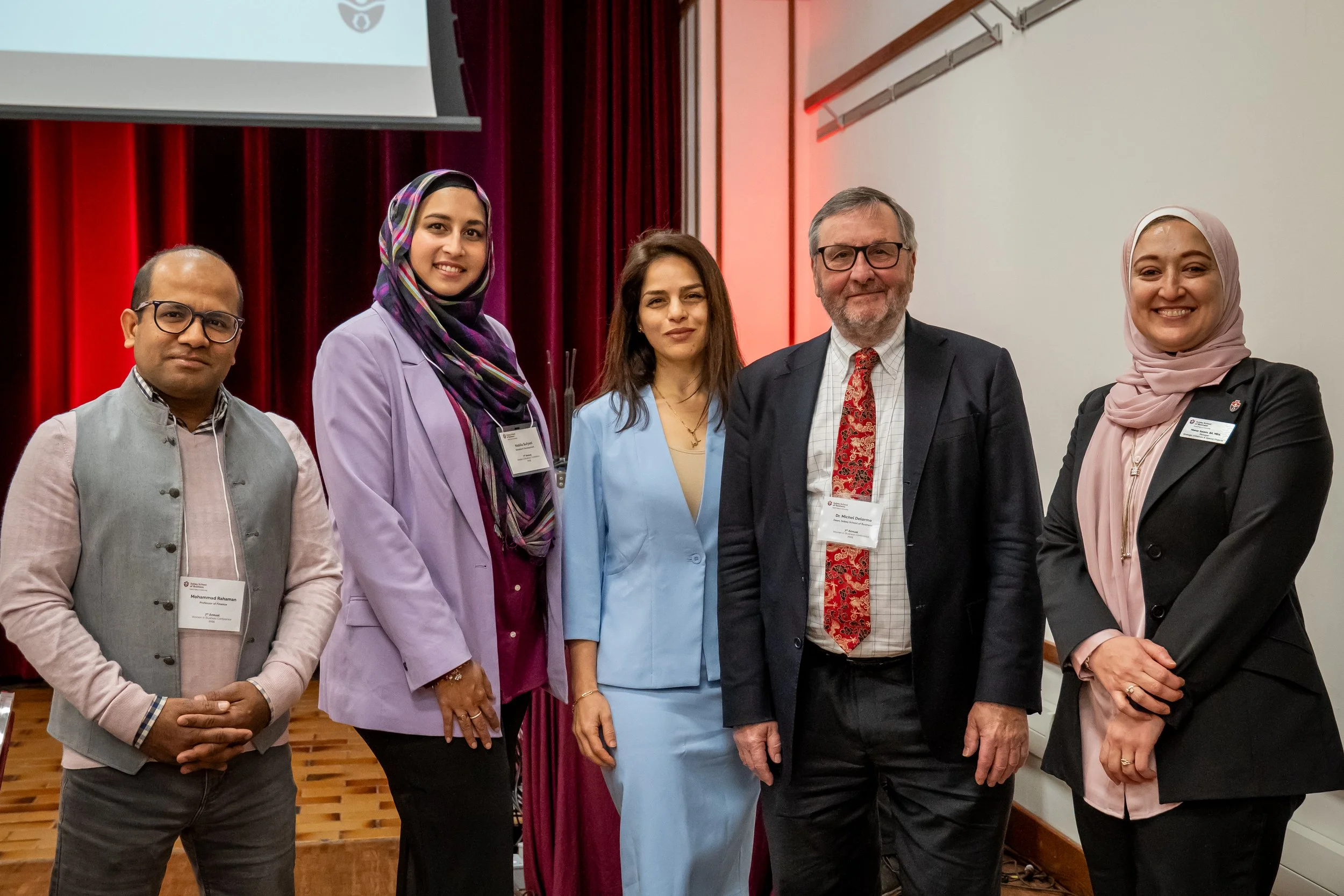
The panel included four accomplished women leaders: alumni Jacqueline Hamilton BSc’89, Executive Director of Planning and Development at HRM; Nabila Sufyani BComm’10 PMP, Project Manager at Shoreham Development Ltd.; Siba Saoud, a top agent with RE/MAX Nova; and Eva Parade, MSc Eng, P.Eng., National Senior Director for Preconstruction at Crombie REIT. 

Constructing Change: Women Leading in Construction and Real Estate panel

They shared personal stories about perseverance, mentorship and leadership. From breaking barriers in male-dominated workplaces to supporting other women, their insights showed how far the industry has come and how much opportunity remains. 

Hamilton and Sufyani discussed the importance of mentorship. They noted that when mentors are hard to find, women can step up and become mentors themselves. “Sometimes you need to be your own cheerleader,” one panellist shared, “but when you rise, bring others with you.” 

The panel also discussed the unique strengths women bring to real estate and construction, such as empathy, patience and a strong understanding of people. “Buying a home isn’t just purchasing an asset—it’s building a life,” said one speaker. “That perspective builds trust and lasting relationships.” 

Research, insight and inspiration 

The day started with a presentation by Dr. Bahareh Mansouri, Associate Professor of Management Science at the Sobey School of Business. Using her research on supply chain ethics, analytics, and sustainability, Dr. Mansouri provided a data-driven look at gender equity in construction and real estate, laying the academic foundation for the rest of the day’s discussions. 

Throughout the conference, one message stood out: women are not just taking part in these industries—they are leading them. From insurance to infrastructure, entrepreneurship to urban planning, they are changing what leadership looks like. 

Student researcher digs into berry research in northern Canada

A group of researchers outdoors with berries and buckets

Claire Singer (far right, back) and Dr. Erin Cameron (far left, front) from Saint Mary’s University with members of the research project in September 2025 (“The Berry Happy Pickers”).

From back left: Elaine Lamalice (Hay River), Celine Proctor (Fort Good Hope), Lila Fraser Erasmus (Yellowknife), Beatrice Lepine (Hay River), Margaret Leishman (Ka'a'gee), Anne Thrasher (Paulatuk), Claire Singer. From front left: Dr. Erin Cameron, Megan Francisco (University of Victoria), Annie Buckle (Aklavik). Other project members missing from photo.

Curiosity about bears’ food sources led to years of research and collaboration with many people across the Northwest Territories in northern Canada

Claire Singer had been working at the Northwest Territories Species at Risk Secretariat for years when grizzly bears were assessed under the Species at Risk (NWT) Act in 2017.  

This review indicated a decline in berry crops—a key food source for the bears—but at the time, there was no definitive knowledge on the extent of the issue in the Northwest Territories. The Northwest Territories Species at Risk Committee recommended that this research be completed, focusing on the extensive knowledge held by Indigenous peoples in the region. 

“Berries are important ecologically, economically and culturally in the northern territories,” explained Claire. “There seemed to be a decline in this food source, and it was clear that more research was needed to gather information about the changes to the land and the habitat.”     

Around the same time, intrigued by a Facebook post to a page focused on the identification of Northwest Territories species by biology professor Dr. Erin Cameron, who was looking for graduate student researchers in her lab, Claire left her job with the government of the Northwest Territories after 13 years to start a PhD in 2020 at Saint Mary’s University. Her PhD examines changes in plant communities in the territory, with a focus on the status of berries. She lived in Halifax for her initial coursework during the COVID-19 pandemic, returning home to the Northwest Territories in 2022 to continue her research and PhD thesis, which she hopes to defend in the near future.

A small group sits on the ground outside

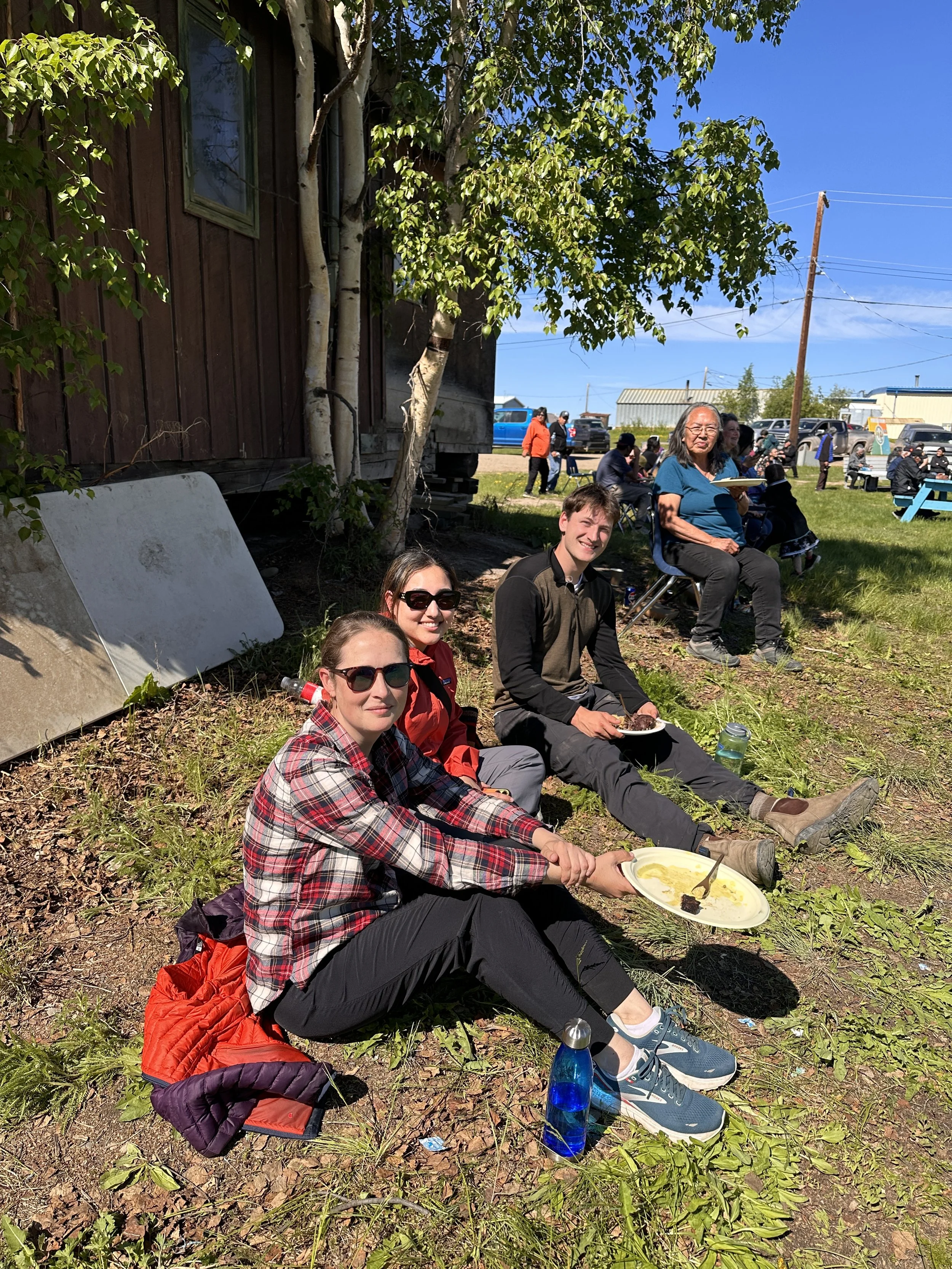
A few members of the team in Fort McPherson for the validation sessions: Claire Singer, Giannina Karki, Karl Hare, and Alestine Andre.

Conducting research in the Northwest Territories involved travelling and facilitating 118 interviews with elders across the region, as well as coordinating with various agencies, government groups and other stakeholders.  

Thanks in part to her work, cranberries will be assessed under the Species at Risk (NWT) Act in 2028. In her research, she learned about regional variations in berries across the territory. Changes in the landscape, from drought in the south to less predictable growing seasons in the north, and fires that saw two-thirds of the territory evacuated in 2023, all indicate that changes are occurring in this vital crop.  

Working with supervisor Dr. Cameron, master’s students and numerous collaborators helped make the sheer scale of the work possible. Project management, finding people to interview, arranging travel and translators, map making and transcribing and coding interviews to analyze data were all possible thanks to the team.  

“Summer students were a big part of the project; it never would have happened without their work,” explains Dr. Erin Cameron. “One student made maps to pinpoint areas where the berries were located. They also transcribed and coded interviews to analyze.” In particular, Giannina Karki, who graduated in 2024 with a BSc in Environmental Science from Saint Mary’s, worked with the team for one of her undergraduate summer co-op terms and continued to work with the project until this fall as a project manager, providing key logistical support. 

A report cover with illustrations of berries and leaves

A published book that arose from the project, called Guide to the Berries of the Northwest Territories”, has 14 author credits on the cover, including nine authors who act as the Indigenous knowledge advisory board for the project. One credit indicates a family connection for Claire—her mother, Lesley, created most of the beautiful illustrations throughout the book.   

The book documents Indigenous knowledge of berries throughout the NWT, outlines respectful harvesting principles, and identifies all known Northwest Territories berries and their habitat and uses. Other publications currently under development will summarize broader results from the interviews, including abundance, trends, interactions with animals, and threats, providing a picture of the status of berries across the territory. 

“It is a very collaborative process, and working with Elders who understand the scope of the history of the land is fascinating,” says Claire. “Elders see the changes to the land, and the effects of climate change vary from region to region, but they are generally more pronounced in northern latitudes.”  

A yellow labrador

As Claire continues her work on her PhD in a part-time capacity, she also operates an ecological consulting firm, Rubus Consulting, in Yellowknife, Northwest Territories. Her dog Rubus, after the Latin genus name for raspberries and cloudberries, is the namesake for the business. He loves eating berries.  

Kane Writers Award: Apply by November 30

Floyd wears a headset on a TV set

Floyd Kane BA’92

The Edna and Velma Thomas Kane Writers Award supports aspiring writers of African Nova Scotian and Black/African descent. Valued at $30,000, the award will be presented to an undergraduate student in the Faculty of Arts upon graduation from Saint Mary’s.

2026 award criteria

To be eligible, undergraduate BA and BES students must:

  • be graduating from Saint Mary’s in 2026,

  • be Canadian citizens or permanent residents,

  • identify as Black/African descended (with priority going to African Nova Scotian students),

  • have good academic standing,

  • have demonstrable financial need, and

  • aspire to a career in writing, broadly defined. 

This award was established through the generosity of alumnus Floyd Kane BA’92, a writer, lawyer, filmmaker and creator of the acclaimed TV series, Diggstown.

It aims to reduce financial roadblocks for graduating students by supporting them in pursuing further studies, training or self-directed projects to advance their writing aspirations. Broadly defined, a career in writing can include (but is not limited to) creative writing, poetry, songwriting, spoken word performance, film/television writing, multimedia creation, or an academic career path in an arts and humanities discipline.

Application deadline: Sunday, November 30, 2025

Learn more and apply today at smu.ca/arts/arts-awards-andfunding

Related

Homecoming 2025: A weekend of Husky pride and milestones

Saint Mary’s Homecoming 2025 brought nearly 4,000 alumni, students, staff, faculty and fans back to campus for a dynamic weekend full of energy, connection and Husky spirit. The excitement was amplified with the first Homecoming under our new President and Vice-Chancellor, Dr. Michael Khan, who personally welcomed attendees and dove into the celebrations.

From October 2-5, more than 20 events offered something for everyone: class reunions, social gatherings, thought-provoking panels and thrilling Huskies games. The weekend celebrated major milestones, including the 50th anniversaries of the Class of 1975 Golden Grads, the Patrick Power Library and the Geography Department. Special recognition was also given to the Classes of 2020 and 2021, our COVID grads, with a dedicated celebration honouring their perseverance and achievements.

One of the standout moments was the Sport Hall of Fame induction ceremony, honouring the 2009-2010 Huskies men’s hockey national champions, including star player Marc Rancourt and head coach Trevor Steinburg. Fans cheered, memories were shared and the legacy of Saint Mary’s athletics was on full display.

From reconnecting with classmates to celebrating achievements, the weekend was a true showcase of Husky pride. Thanks to everyone who attended, volunteered and helped make Homecoming 2025 an unforgettable celebration.

Save the Date for Homecoming 2026: October 1-4, 2026!

Cooking up a positive impact on Easy Platter’s operations

Two men look at data together

Mandhir Singh and Vishnu Priyan Mahendran

Harnessing data to reduce food waste

As Canada’s first on-demand personal chef service, Easy Platter offers a unique approach to meal preparation by enabling customers to hire personal chefs to plan menus and prepare high-quality, personalized meals.

To address operational challenges, Easy Platter collaborated with Dr. Yasushi Akiyama, a professor of Mathematics and Computing Science. Together, they designed a framework to calculate both ingredient costs and potential food waste for selected meal plans. With support from Vishnu Priyan Mahendran, a 2022 graduate student in the Master of Computing and Data Analytics program, they developed formulas and integrated them into the company’s system, improving efficiency.

“Dr. Akiyama was extremely helpful in not just identifying great talent at Saint Mary’s University but also collaborating with us throughout the project,” said Mandhir Singh, Founder of Easy Platter and 2012 MBA Graduate from Saint Mary’s University. “Vishnu has been a huge asset for Easy Platter and has contributed to multiple complex projects.” Vishnu has been employed with Easy Platter since he graduated.

The second phase of the project linked ingredient data with its supply chain. This integration offers automated insights into food waste, which helps the team track sustainability. With nearly 4,000 recipes, the system can now predict how much food waste a menu will generate.

The team also explored machine learning algorithms to identify ingredients that could cause nutrient deficiencies and provided recommendations to enhance meals’ nutritional value. This feature supports personalized nutrition plans, which are incorporated into Easy Platter’s final database and user interface.

With these insights, Easy Platter reduces food waste while helping customers enjoy healthier, personalized meals—combining sustainability and wellness in every dish.


The Office of Innovation and Community Engagement (OICE) at Saint Mary’s University facilitates research partnerships between the University and companies, government departments and community organizations. OICE is the initial point of contact for faculty members and external partners wishing to collaborate. The office assists with finding suitable expertise, contract development and advising on funding opportunities.

This project highlight is from the 2025 OICE Report, which features researchers from Saint Mary's University and their external partners.

Huskies celebrate excellence in sport at the 2025 Hall of Fame Induction Ceremony

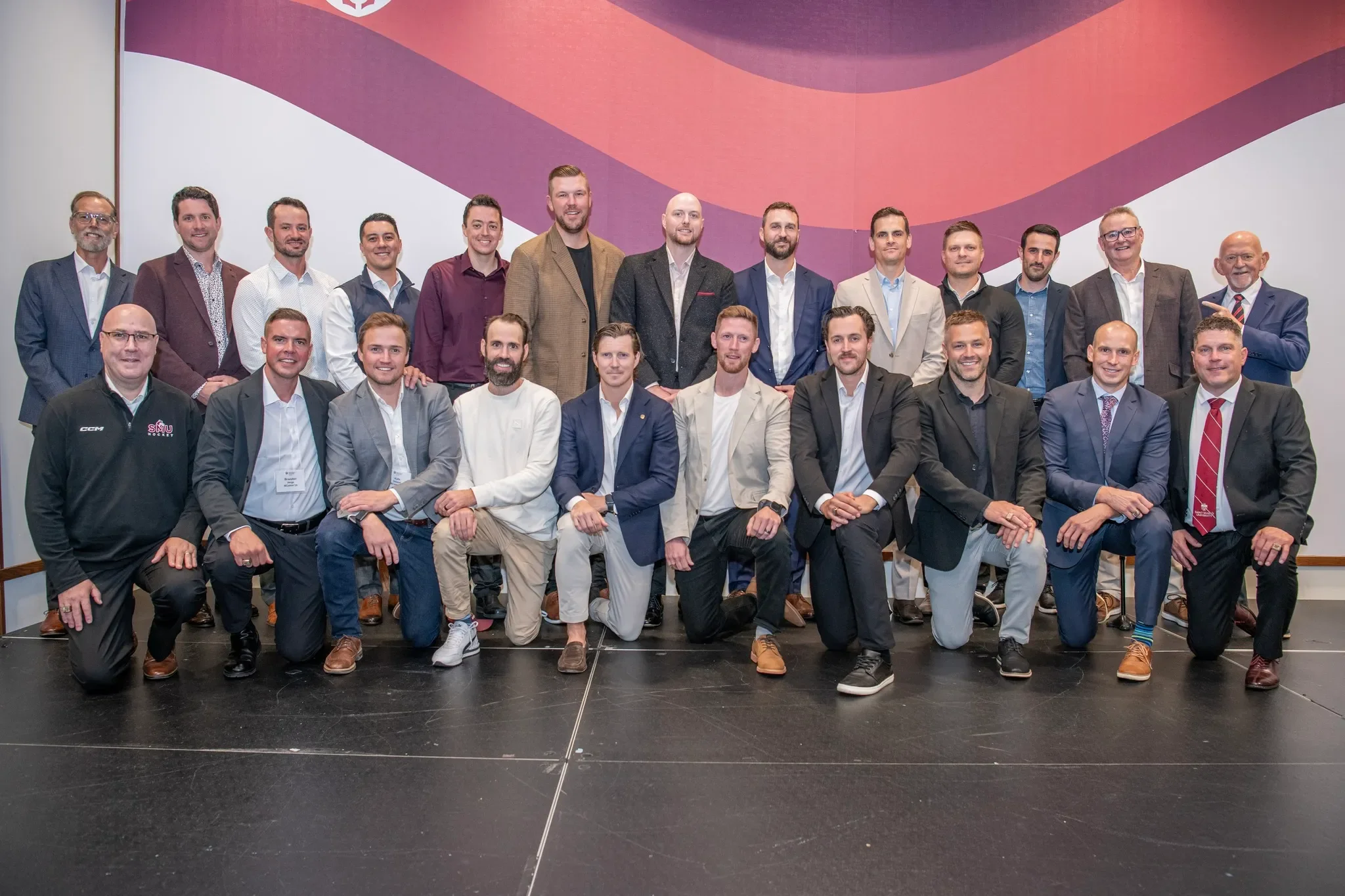
2025 Huskies Sport Hall of Fame Inductees during Homecoming ceremony

This year marks an extraordinary moment for Saint Mary’s athletics, with four major inductions recognizing the achievements, history and impact of standout Huskies teams, athletes and builders. From the ice to the hardwood, Saint Mary’s champions have been honoured at both the Huskies Sports Hall of Fame and the Nova Scotia Sport Hall of Fame, highlighting a legacy of excellence that continues to shape the university’s athletic culture.

Three new inductees enter the Huskies Sports Hall of Fame

As part of Homecoming Weekend, Saint Mary’s welcomed three exceptional additions to the Huskies Sports Hall of Fame: Marc Rancourt (Athlete), longtime head coach Trevor Stienburg (Builder) and the 2009-10 men’s hockey team – the first Huskies squad to capture a national title.

More than 200 alumni, friends and family gathered on October 4 for the celebration, which also included a Homecoming brunch and ceremonial puck drop before the men’s hockey home opener. With Saint Mary’s preparing to host the 2026 University Cup, the event offered a fitting tribute to the program’s storied history.

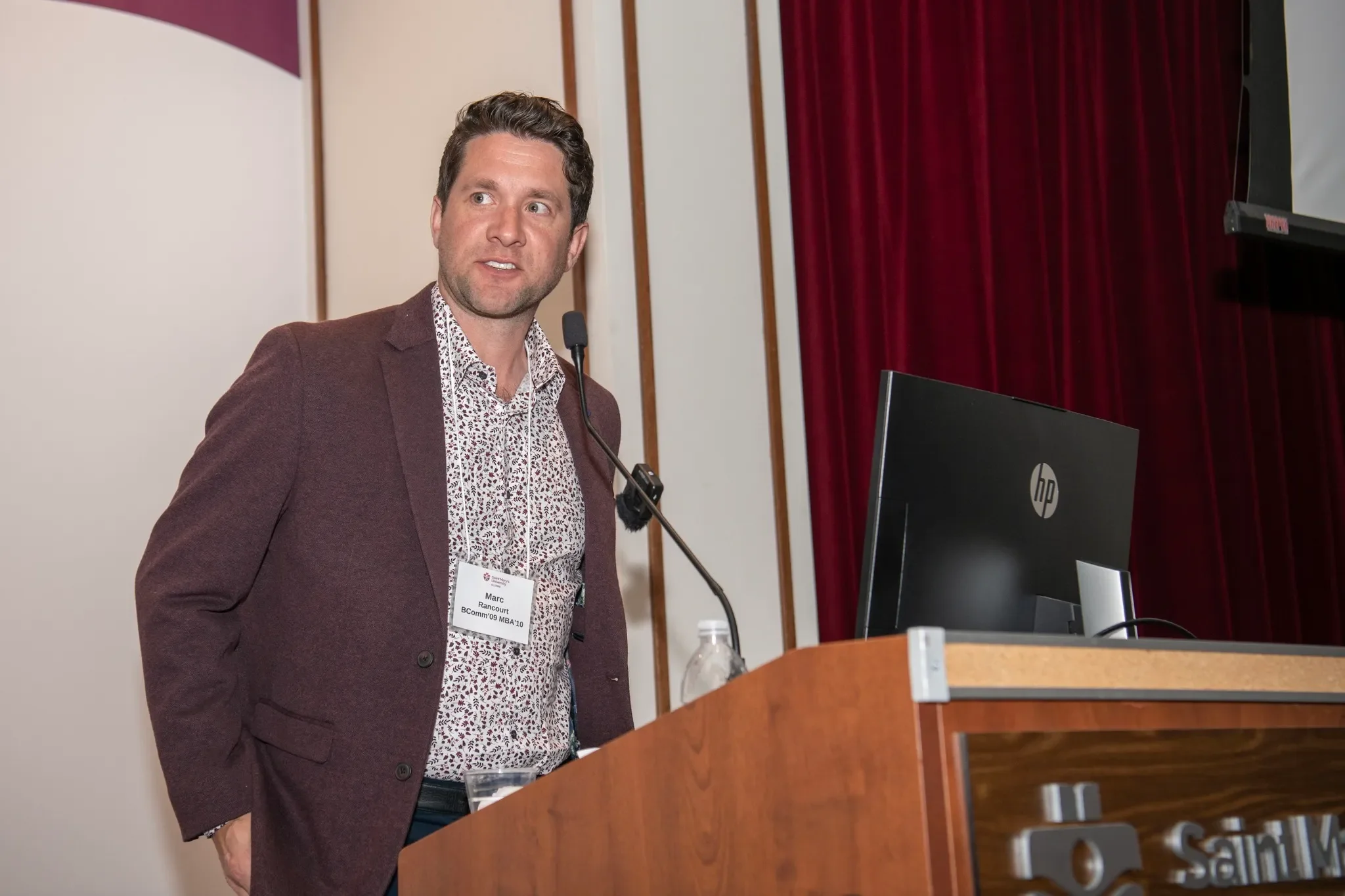
Marc Rancourt BComm’09 MBA’10

Marc Rancourt BComm'09 and MBA'10 (Athlete)

One of the most decorated players in program history, Rancourt captained the Huskies to their first national championship in 2010 and remains the university’s all-time assists leader. A former CIS Player of the Year and two-time All-Canadian, he amassed 216 points over his university career before moving on to professional hockey in North America and Europe. Today, he resides in Calgary with his family and works as Senior Director of Diversified Industries at ATB.

2009-10 Men’s Hockey Team (Team)

The 2009-10 Huskies delivered one of the most memorable playoff runs in SMU hockey history. Entering the AUS postseason as the third seed, the team swept Moncton, surged past Acadia and defeated STFX to claim a second consecutive conference title. At the University Cup in Thunder Bay, the Huskies recorded wins over McGill and Manitoba before securing the national championship in overtime against Alberta, clinching the program's first national title. Tournament MVP Andrew Hotham and three other Huskies earned national all-star honours.

Trevor Stienburg (Builder)

Across 23 seasons, head coach Trevor “Stieny” Stienburg transformed Huskies hockey into a national contender. He guided the team to three AUS championships, oversaw the program’s landmark 2010 national title and produced more than 140 Academic All-Canadians. A three-time CIS Coach of the Year, Stienburg retired from SMU in 2020 and now serves as an amateur scout for the Seattle Kraken.

1979 Men’s Basketball team honoured by Nova Scotia Sport Hall of Fame

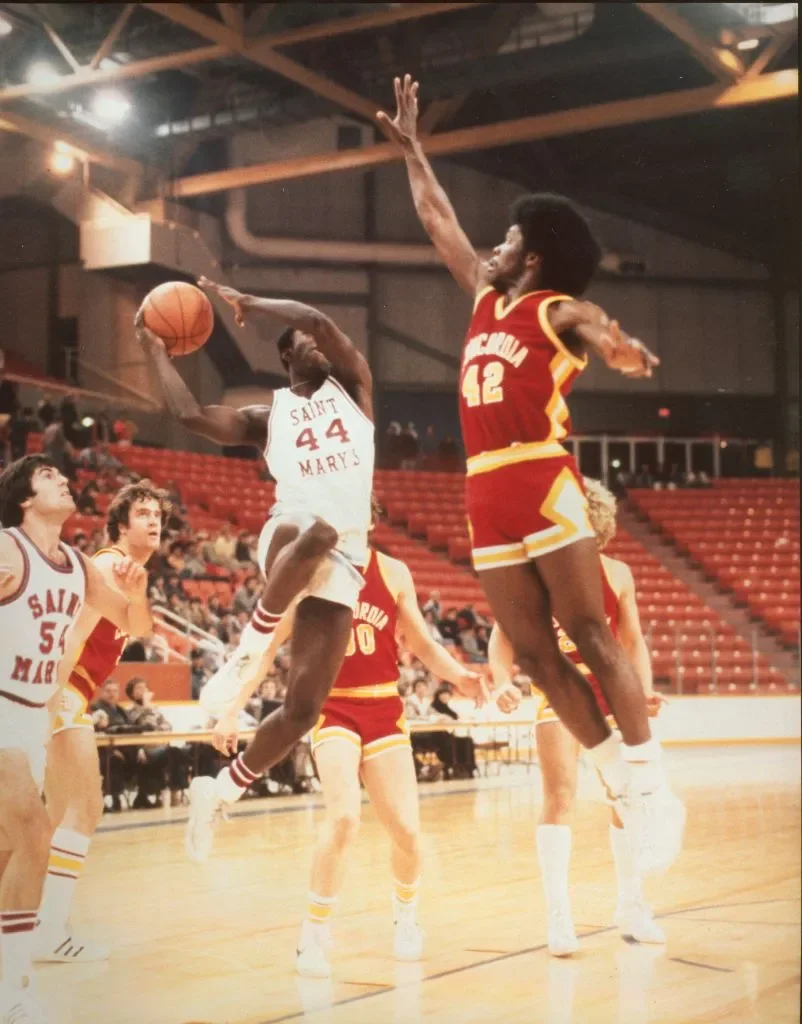
Archive photo: 1979 SMU Men’s Basketball team during a game

Adding to this landmark year, the 1979 Saint Mary’s Huskies men’s basketball team was inducted into the Nova Scotia Sport Hall of Fame. Widely regarded as one of the greatest university teams in Canadian history, the Huskies dominated the 1978-79 season en route to a second consecutive national championship, and their third in seven years.

Led by standout guard Mickey Fox and strengthened by key newcomers Kevin Wood, Percy Davis and first-year talent Jeff Gourlay, the team combined explosive scoring with exceptional depth. Veterans Ross Quackenbush, Tom Kappos, Rick Plato, Ron Blommers and Derrick Lewis anchored a roster that averaged more than 100 points per game and finished with an impressive 17-1 conference record.

At the national championship in Calgary, the Huskies defeated Windsor and York before securing the title with a decisive win over Victoria. Their induction honours a team whose talent, cohesion and championship legacy helped define an era of SMU basketball excellence.

Team members included: Mickey Fox, Kevin Wood, Percy Davis, Ross Quackenbush, Tom Kappos, Rick Plato, Derrick Lewis, Jeff Gourlay, Head Coach Brian Heaney, Assistant Coaches Jim Collins and Willie Follette and Manager John Landry.

Woven stories - dream catchers honour Mi'kmaq culture at Saint Mary's

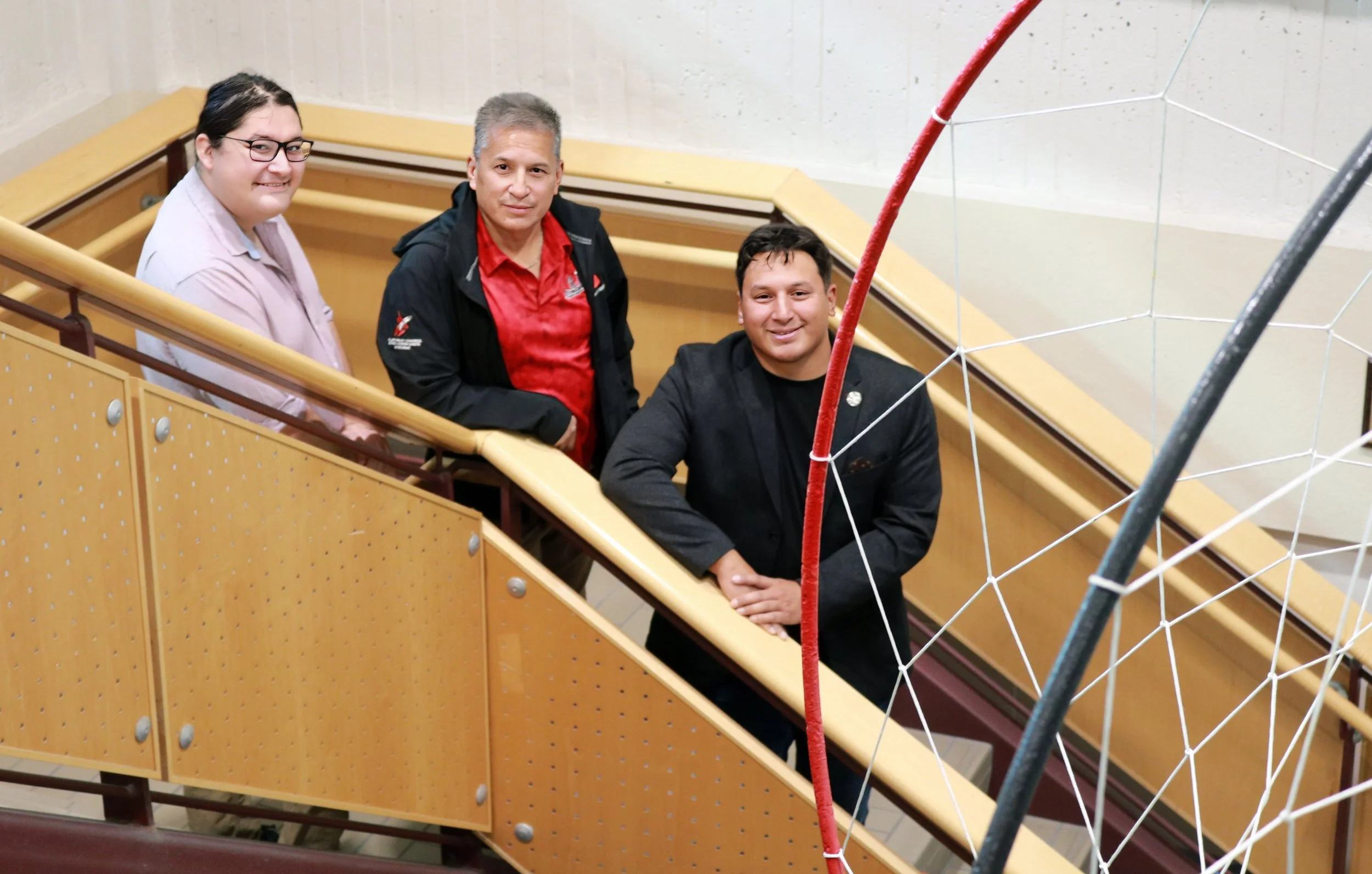
Three men stand on a stair case, a dream catcher hangs to the right above them

Indigenous Student Advisor Kylar Johnson, Chief Wilbert Marshall and Isaiah Bernard stand under a dream catcher on SMU campus

The Mi’kmaq tradition of storytelling has long been a way of carrying culture, history and teachings across generations. At Saint Mary’s University, that same tradition is carried forward in two large dream catchers installed by son and father duo, Isaiah Bernard and Chief Wilbert Marshall of Potlotek First Nation.

More than art, the dream catchers are symbols of presence and visibility; threads of Mi’kmaq culture woven into the heart of campus.

“When I was a student here, I would see all these cultures represented, but I didn’t see my own,” describes former SMU student and former Indigenous Student Society president, Isaiah Bernard. “The university is on Mi’kmaq land, so we should be showcased within the campus. I brought the idea to the university President and to SMUSA (Saint Mary’s University Students’ Association), and they all agreed.”

Bernard’s father, Chief Marshall, taught him how to make dream catchers as a child, and they seemed like the perfect art form to display in prominent campus buildings.

“When the Europeans came, our people were annihilated and we lost everything, so we had to adopt a lot of our traditions from different tribes like out west in British Columbia,” explains Chief Marshall. “Everyone has their own spin on the story of the dream catcher.” The story is that a woman protects a spider spinning its web, and in thanks, that spider spins a web between her and the moon to ensnare bad thoughts and keep them from her.

“There are many different ways you can make a dream catcher; you can put three rings, or four, or even single rings. There are usually tassels on it, and on the weave, you can make different designs in the web itself,” shares Chief Marshall.

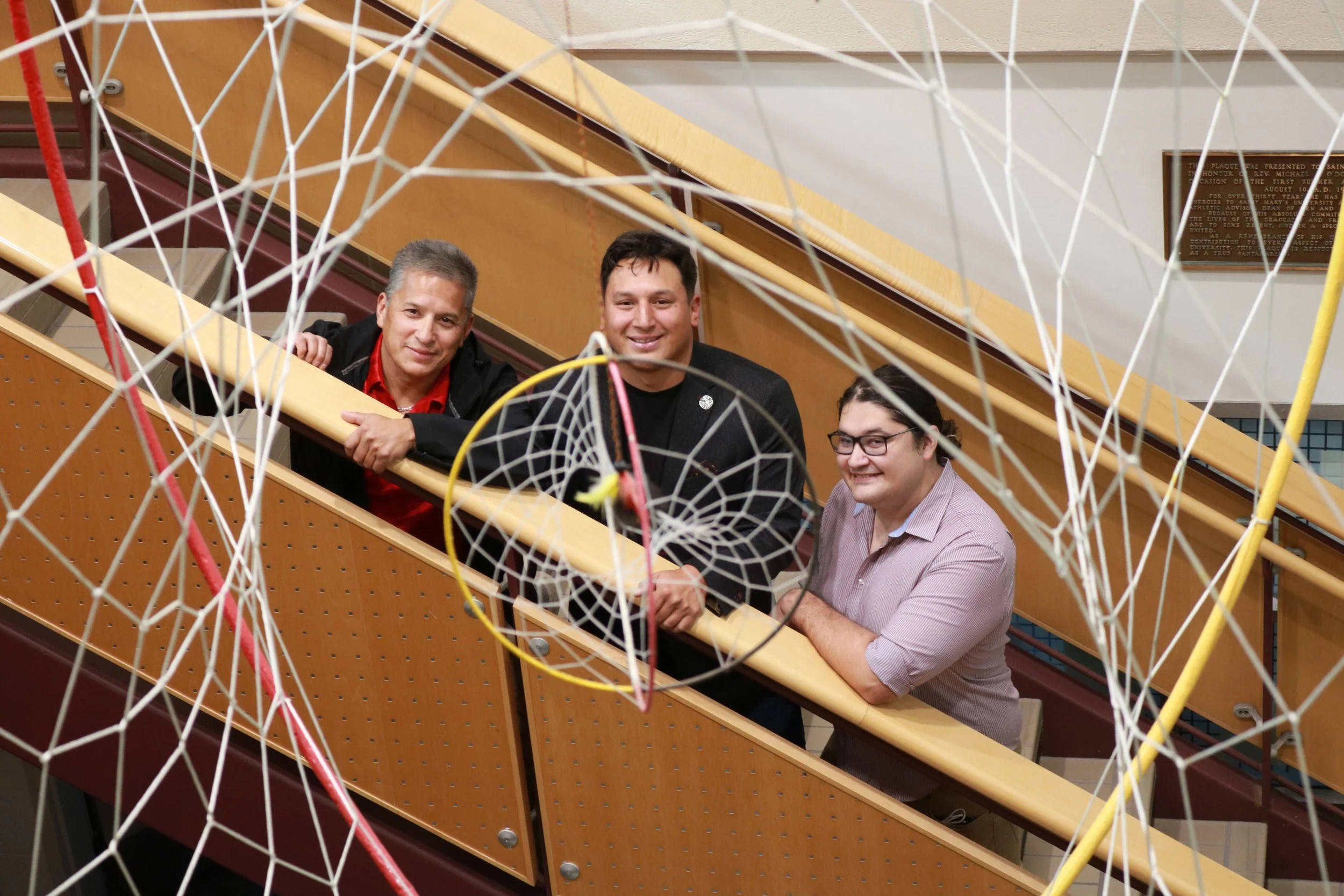
Marshall, Bernard and Johnson stand behind the dream catcher

Chief Marshall and Bernard built and installed the dream catchers in 2020

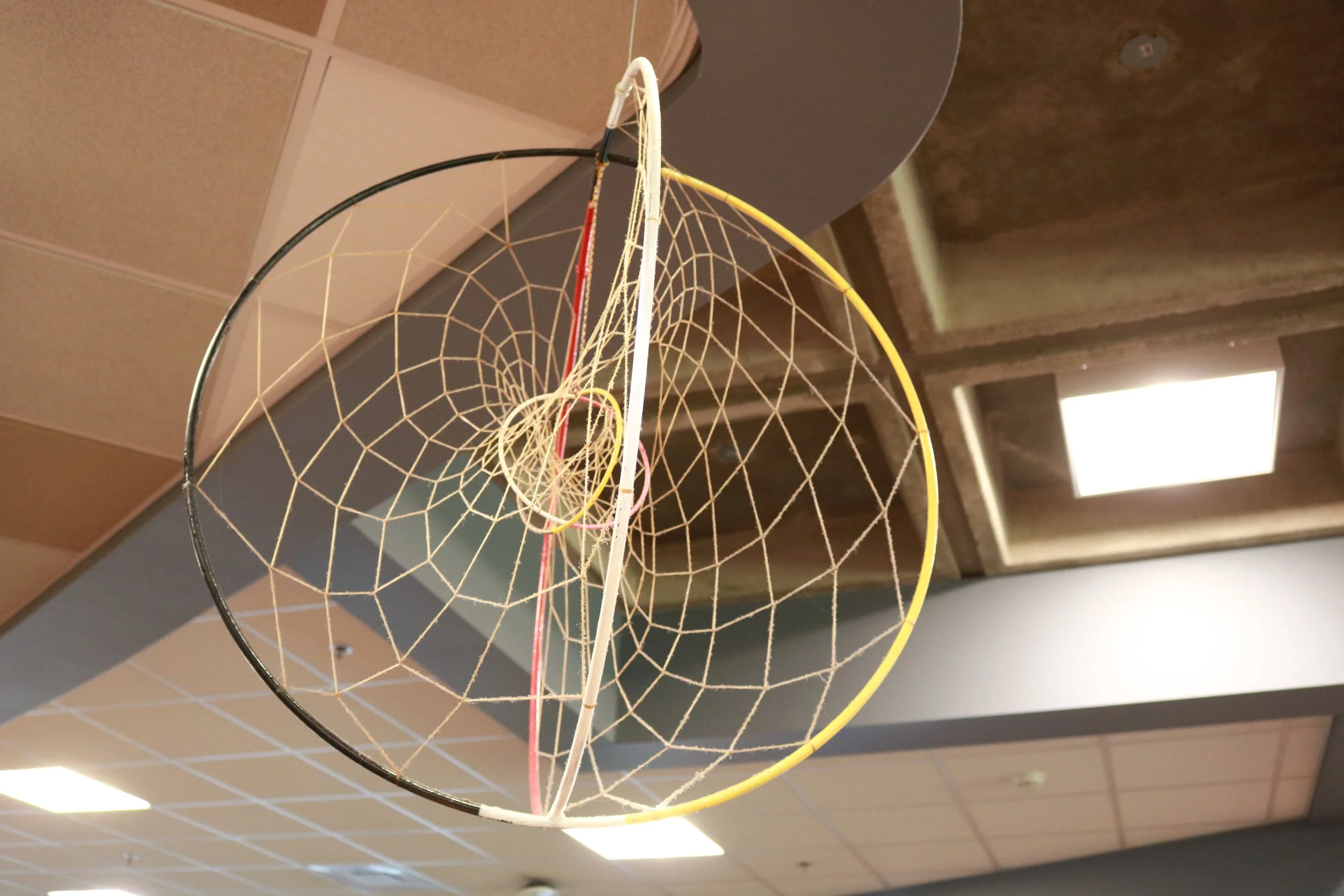
Looking up at the dream catcher from below

One of the dream catchers hangs in the lobby of the O’Donnell-Hennessey Student Centre, the other is in the Patrick Power Library

Working with repurposed crab trap pipes and biodegradable rope, the pair created large dream catchers with two rings. “We put a little dream catcher in the middle—you’ll see the braided string that’s on there. It’s got the four directional colours on there also. Everything was done completely by hand.”

On October 1 – Treaty Day – Isaiah Bernard and Chief Marshall returned to Saint Mary’s campus, alongside Indigenous Student Advisor Kylar Johnson, to unveil newly installed plaques commemorating the dream catchers.

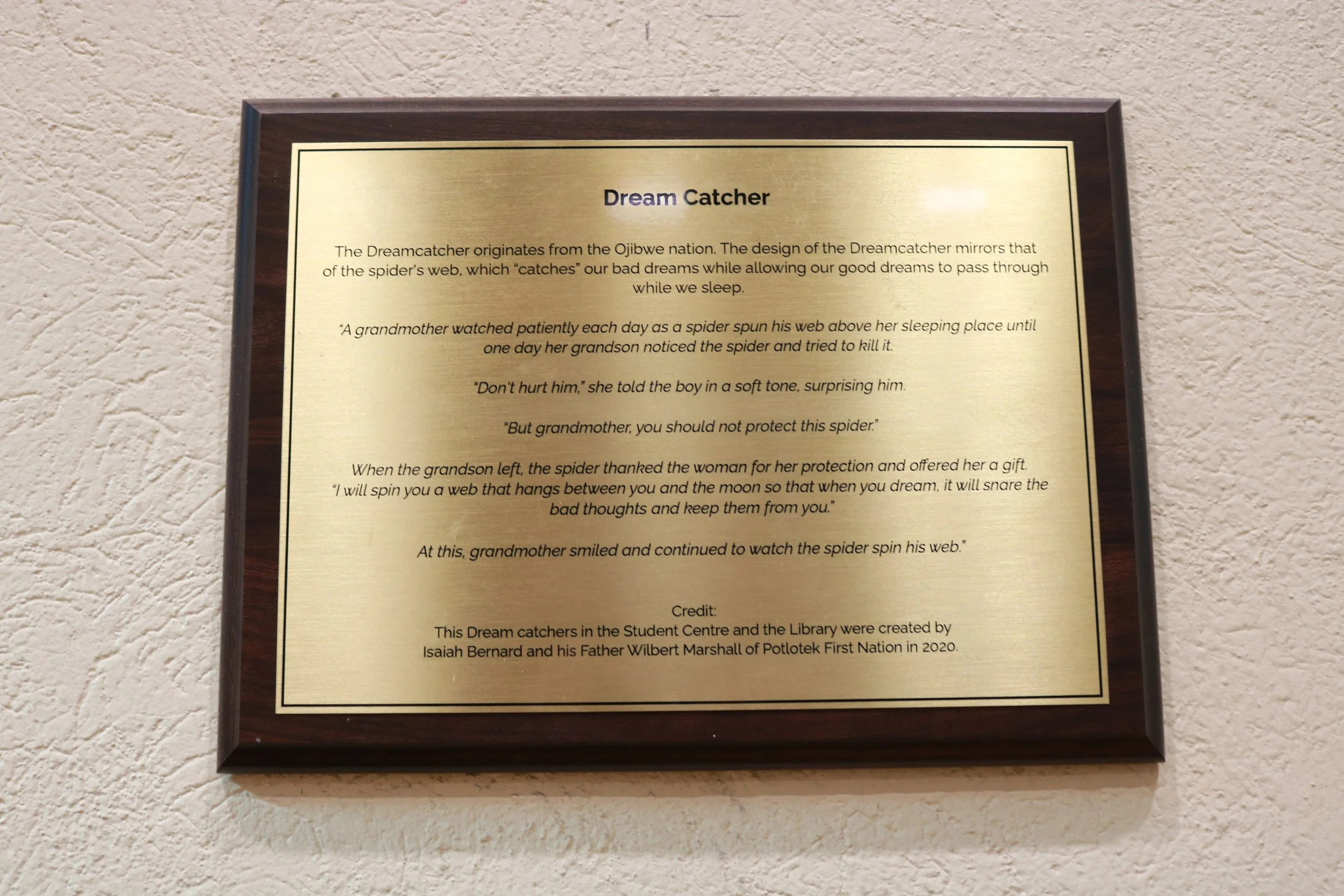
A plaque tells the story of the dream catcher

A plaque commemorating the dream catcher installation

“When we brought the dream catchers to campus, the welding broke. We had to get that fixed, repaint it and let it dry, so we asked the university if we could leave it on campus and then web it on site,” recalls Bernard. “It was cool to make it on campus in front of a live crowd. It took us about four hours [to web and install] because people kept coming by to watch us and ask questions – it was really something!”

The dream catchers have been more than a pastime for Bernard and his father; they are a way to connect with family, community and culture. Their dream catchers are installed across Mi’kma’ki, including Glooscap and Membertou, and Chief Marshall has put on seminars to teach younger generations how to make them. Through sharing the craft, they are bringing visibility to Mi’kmaq traditions and reclaiming practices that were once at risk of being lost.

“People often forget that Mi’kmaq were the first people here. This is Mi’kmaq nation, from dusk ‘til dawn, before others got here and after they leave, this is our territory, our culture. We were the first ones,” exclaims Bernard. “It’s time they start honouring the first people here and showcasing Mi’kmaq culture. We have a rocky history, and not enough of that is taught,” he adds.

Chief Marshall reflects, “Now, we have Treaty education in schools, but people also need to learn about the hard truths of our history. You can’t mask that, it has to be talked about.”

“I hope [the dream catchers] inspire the community here to learn about the First Nations, learn about the community, about our history, most importantly, and about our Mi’kmaq people,” Bernard emphasizes.

Hear from Isaiah and Chief Marshall about their dream catcher project at Saint Mary’s.


October is Mi’kmaq History Month. Learn more here: Mi'kmaq History Month: Events and resources for the SMU Community

Alaagi joins Nestlé & UNESCO Top 100 Global Start-Ups

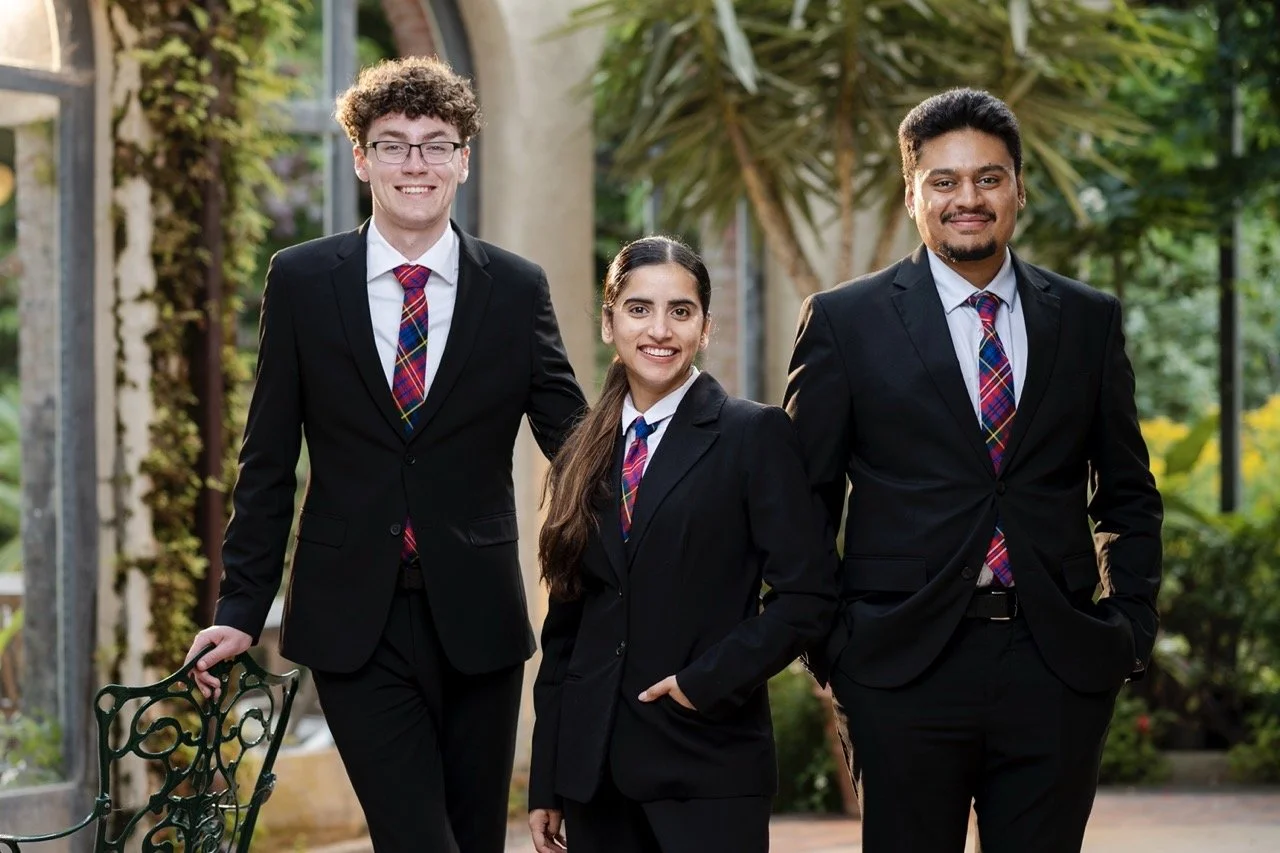
Tyler MacLean, Vaishali Sachdeva and Sheheryar Khan BSc’25 DipENG’25 competed for the Hult Prize in London

Summer 2025 has been a landmark season for Alaagi, a cleantech startup founded by recent Saint Mary’s University graduate Sheheryar Khan BSc’25 DipENG’25.

After spending August in London, UK at the Hult Prize Global Accelerator, Khan and teammates Tyler MacLean and Vaishali Sachdeva returned home to even bigger news: Alaagi has been named one of the Top 100 Global Start-ups by the Nestlé and UNESCO Youth Impact: Because You Matter program.

The recognition includes a grant and six months of mentorship designed to help young innovators strengthen sustainable food systems through regenerative agriculture, climate change solutions, and packaging innovations.

“The Hult Prize accelerator was completely transformative,” said Sheheryar Khan. “To spend a month with global leaders, investors, and other start-ups gave us insights and connections that would have taken years to build. Now, being recognized by Nestlé and UNESCO confirms our mission is resonating.”

Alaagi is developing compostable, seaweed-based bioplastic films for seafood and meat packaging. In the past year:

  • Alaagi has secured over $11 million in commercial LOIs, including pilots with Sobeys and High Liner Foods.

  • The company has received four purchase orders and won $165K in non-dilutive funding.

  • Alaagi is being presented at Enactus World Cup, through Enactus Saint Mary’s, in Bangkok, Thailand.

  • Alaagi will soon head to Paris for the Nestlé/UNESCO showcase event.

Learn more about entrepreneurship opportunities for students through SMU’s Arthur L. Irving Entrepreneurship Centre.

Star Finder program prepares NS teachers with astronomy lesson plans

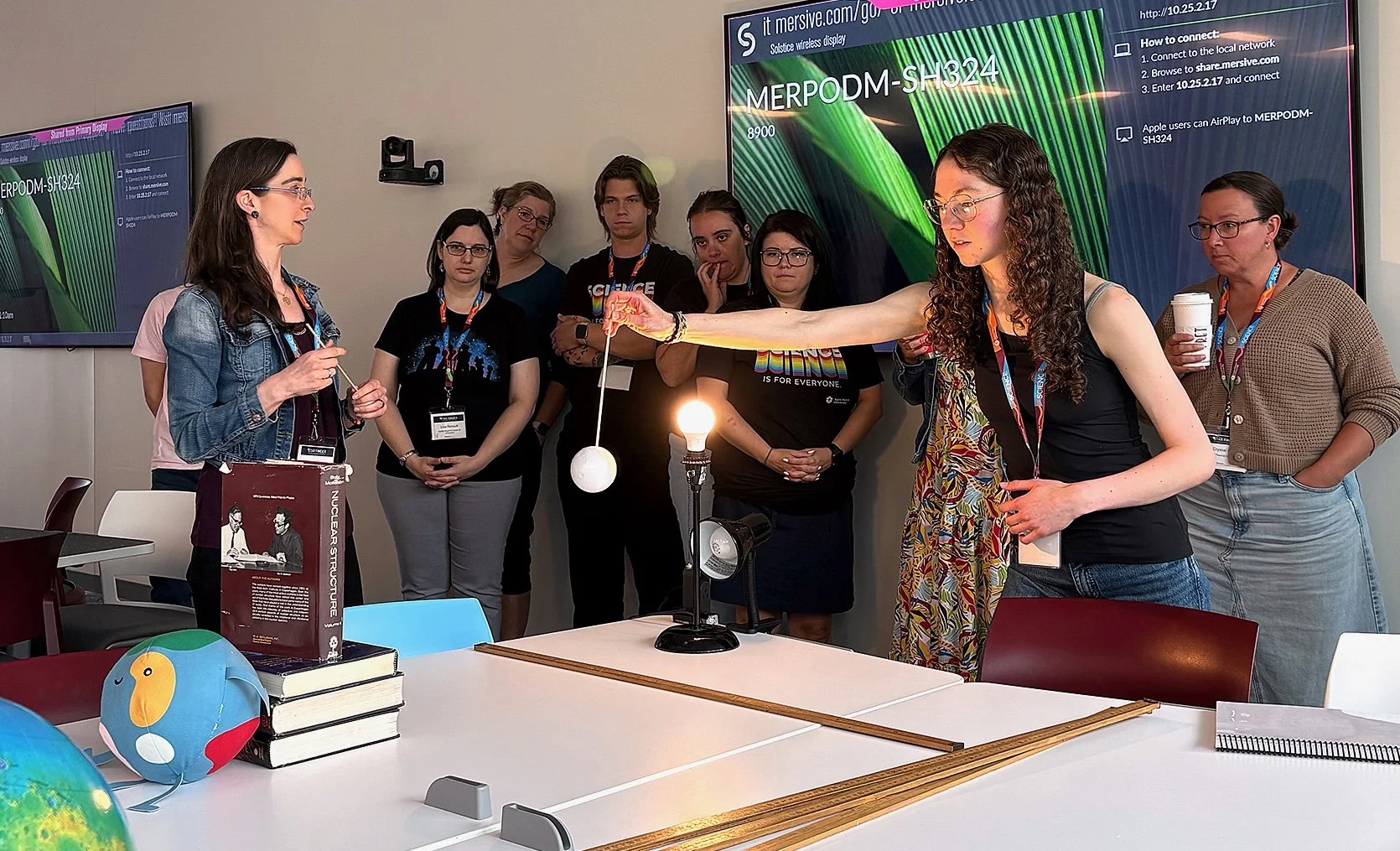
Teachers participate in an experiment during the workshop

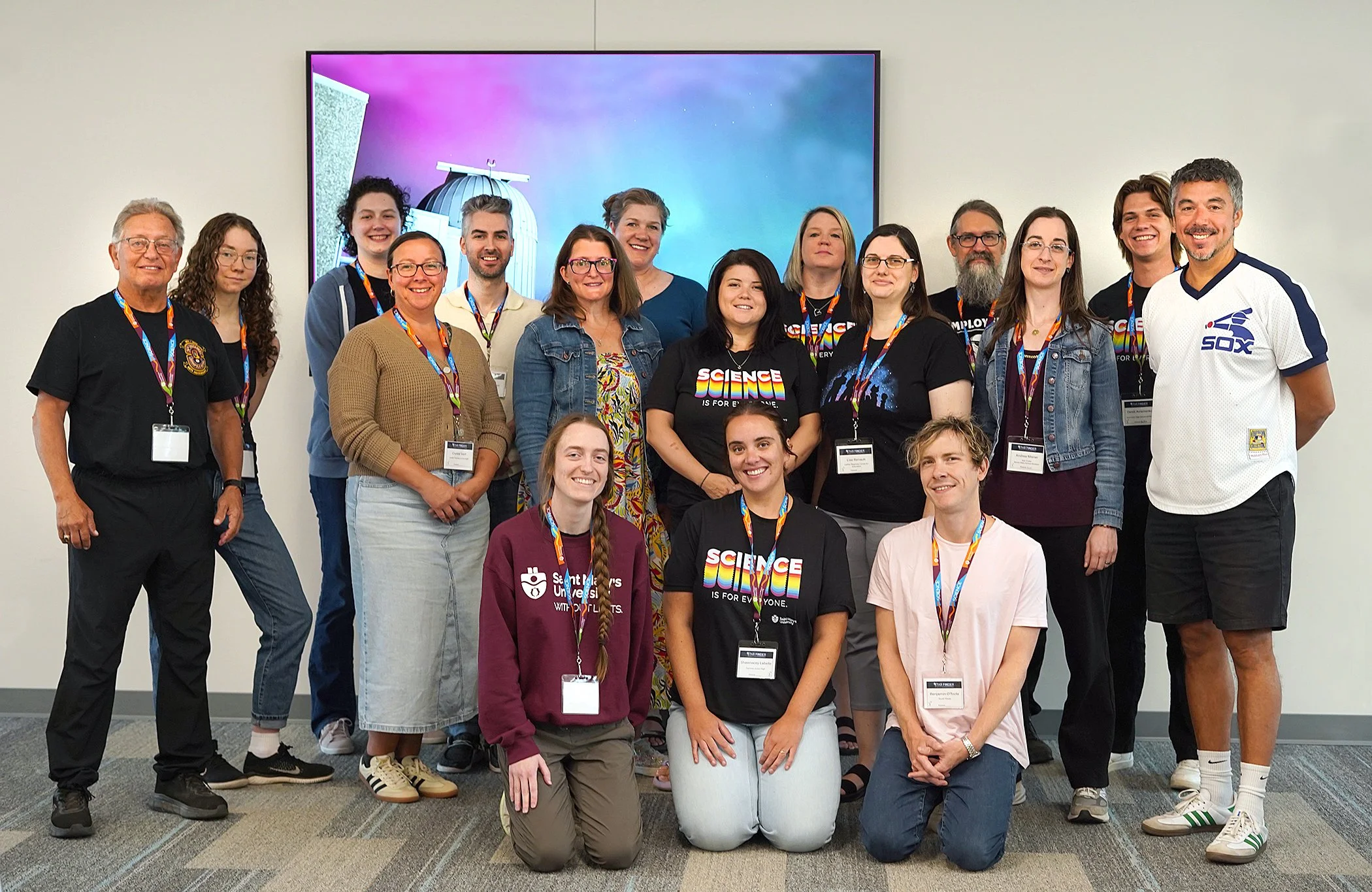
The inaugural Star Finders Teachers’ Workshop was held at Saint Mary’s University for elementary and junior high teachers

An enthusiastic group of elementary and junior high educators attended the first Star Finder Teachers’ Workshop in August, and they are now ready to share an appreciation of astronomical understanding and discovery with their students across Nova Scotia.

During the two-day course the teachers were introduced to the lesson plans, performed hands-on experiments and demonstrations, attended talks by astronomers from the Department of Astronomy and Physics, learned to use the Burke-Gaffney Observatory (BGO) and took part in stargazing activities.

All teachers and their classes in Nova Scotia now have access to use the BGO remotely from their classrooms, plus an extensive archive of the observatory’s data and images.

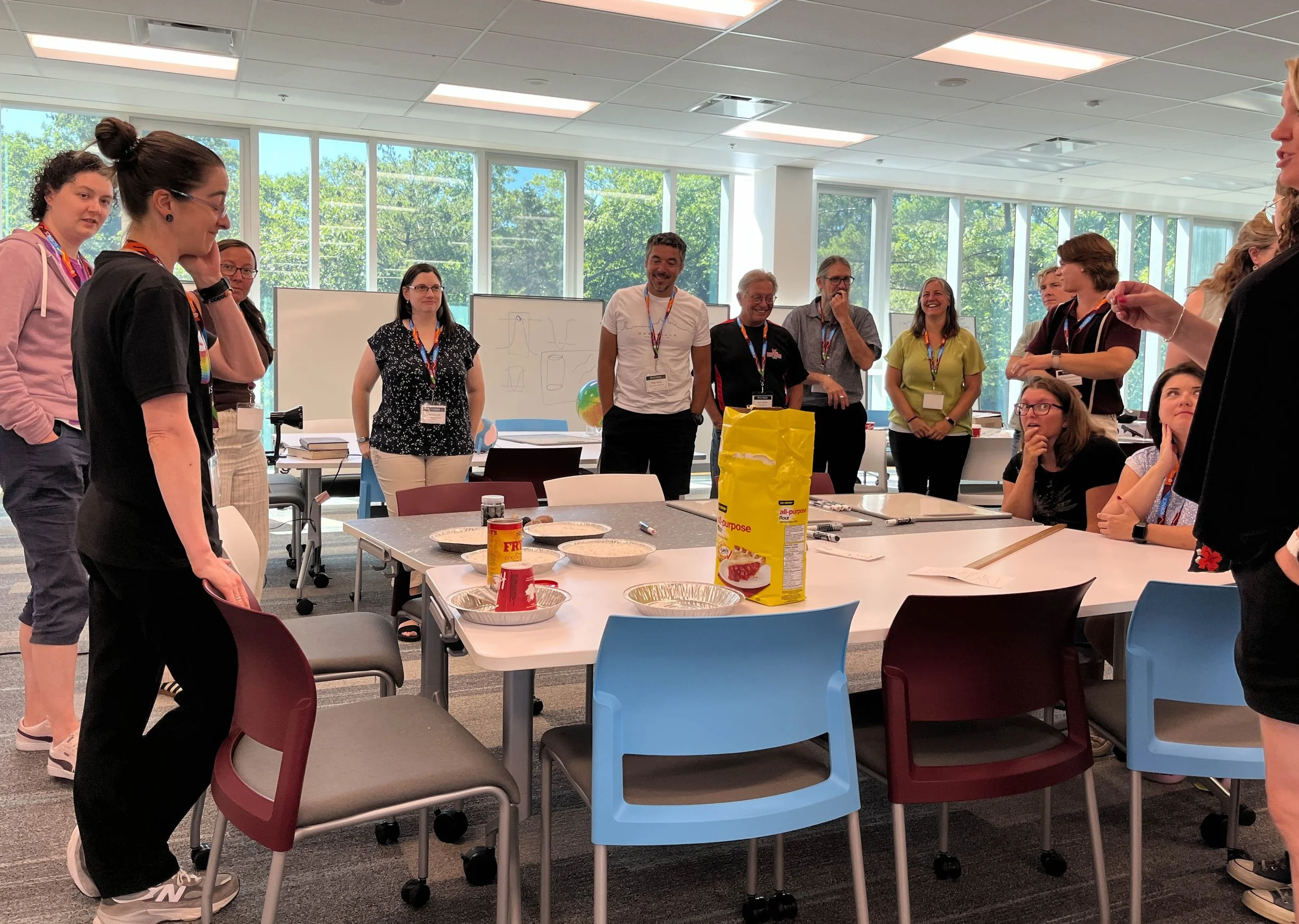
Hands-on experiments were part of the two-day workshop

Star Finders Teachers’ Workshop participants

The Star Finder lessons were developed by Saint Mary’s University alum Andrea Misner BSc’06,  along with Astronomy & Physics undergraduate student Mackenzie Hayduk, Astronomy Technician Tiffany Fields and Director of the Burke-Gaffney Observatory Dr. Vincent Hénault-Brunet. Focusing on space exploration and astronomy, the goal of the lesson plans is to foster enthusiasm, engagement and understanding of astronomy among school children—especially in rural and underserved communities in the province. 

Ms. Misner studied astrophysics at Saint Mary’s and later earned a master’s in education from the University of Manitoba. She teaches high school general sciences, physics and astronomy in Winnipeg, and is a recipient of a 2024 Prime Minister’s Award for Teaching Excellence.    

Star Finder – The David Lane Astronomy Outreach Program is funded by a $250,000 philanthropic gift from the late David and Michelle Lane. During his 29-year career as the Astronomy Technician in the Department of Astronomy and Physics and the Director of the Burke-Gaffney Observatory at Saint Mary’s, Dave single-handedly automated the Observatory, making it available to users worldwide through social media accounts.

Dave Lane passed away in March 2024; he is survived by his wife, Michelle. The Star Finder project was created as a way for the couple to give back to the community and share Dave’s passion for astronomy with the next generations.

“We were thrilled to connect with such passionate and dedicated educators during the two-day workshop,” says Dr. Vincent Hénault-Brunet, Director of the Burke-Gaffney Observatory. “We hope this workshop is just the beginning of building a vibrant community of teachers eager to bring astronomy-related activities to their students and use the observatory remotely.”


For teachers wanting to learn more about this program and to download the lesson plans, click here and visit the Star Finder web page for updates. These lesson plans are focused on the Grade 9 Space Exploration unit of the Nova Scotia curriculum, but they are also tied to the Grade 9 Math curriculum and can easily be adapted for other levels.

Do not hesitate to email the Star Finder team at starfinder@smu.ca with ideas and questions about accessing the Burke-Gaffney Observatory remotely, or to share your experiences after trying out some of our lesson plans and projects with your classes.

You can also sign up for the Star Finder newsletter to receive all the latest news about the program.

Related: