Unique Education

Halifax Memory Maps research offers a new look at city’s heritage

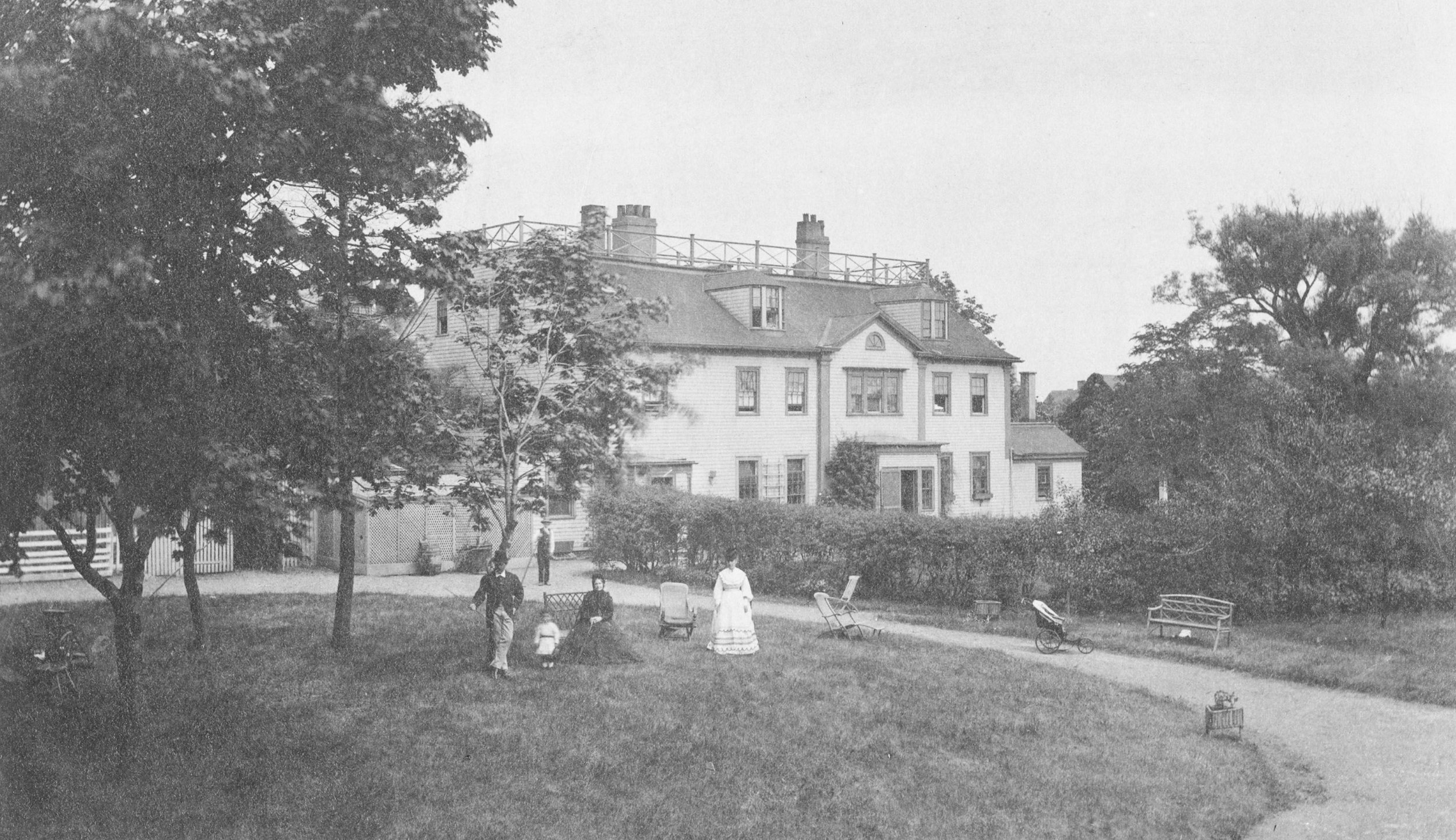
A new study by researchers in the Department of Anthropology at Saint Mary’s University has found that 87 per cent of Halifax buildings that were standing in 1878 have since been demolished. The first phase of the Halifax Memory Maps project used archival maps and geographic information system (GIS) software to measure the loss of heritage buildings in the urban environment.

The study’s results were published online November 12 in the form of an ArcGIS StoryMap called Halifax Heritage: 1878, which can be accessed at mapsofmemory.com

“We hope these findings will encourage Haligonians to reconsider the extent and value of Halifax’s rich architectural inheritance before it vanishes forever,” Dr. Jonathan Fowler says on behalf of the research team.

Student and professor look over a historic map in a classroom

Emily Davis BA’24 works with Dr. Fowler in the Archaeology Lab

Recent graduates Emily Davis BA’24 and Gillian Bonner BA’24 were key players in the project as student researchers while finishing their Bachelor of Arts degrees.

“I think the Memory Maps project is valuable to the public in general because it allows people to engage and connect more with the city that they live in,” says Davis, who grew up in Sydney Mines, Cape Breton. “The digital maps make the heritage and history of the city more accessible…that’s sort of the point of archaeology, to share it with the community and the public.”

Project background

Halifax is one of Canada's fastest-growing cities and will soon have over half a million residents. The bustle and new builds are evident to all, with construction cranes and traffic detours across the city.

“In times of rapid and transformational change, it is important to carefully consider what we choose to keep and what we choose to discard,” says Dr. Fowler. “Recognizing that change is necessary for growth and that heritage architecture is an important part of Halifax's distinctive vibe and character, we need to find a balance. How much of Halifax's rich and unique architectural heritage should be carried into the future, and what can be let go?”

Prior to the Halifax Memory Maps project, there has been no systematic survey of Halifax's architectural heritage. The research team felt that an inventory of built heritage assets is an essential part of any meaningful discussion of this subject: “We cannot properly manage and steward what we have not first measured and mapped,” says Dr. Fowler.

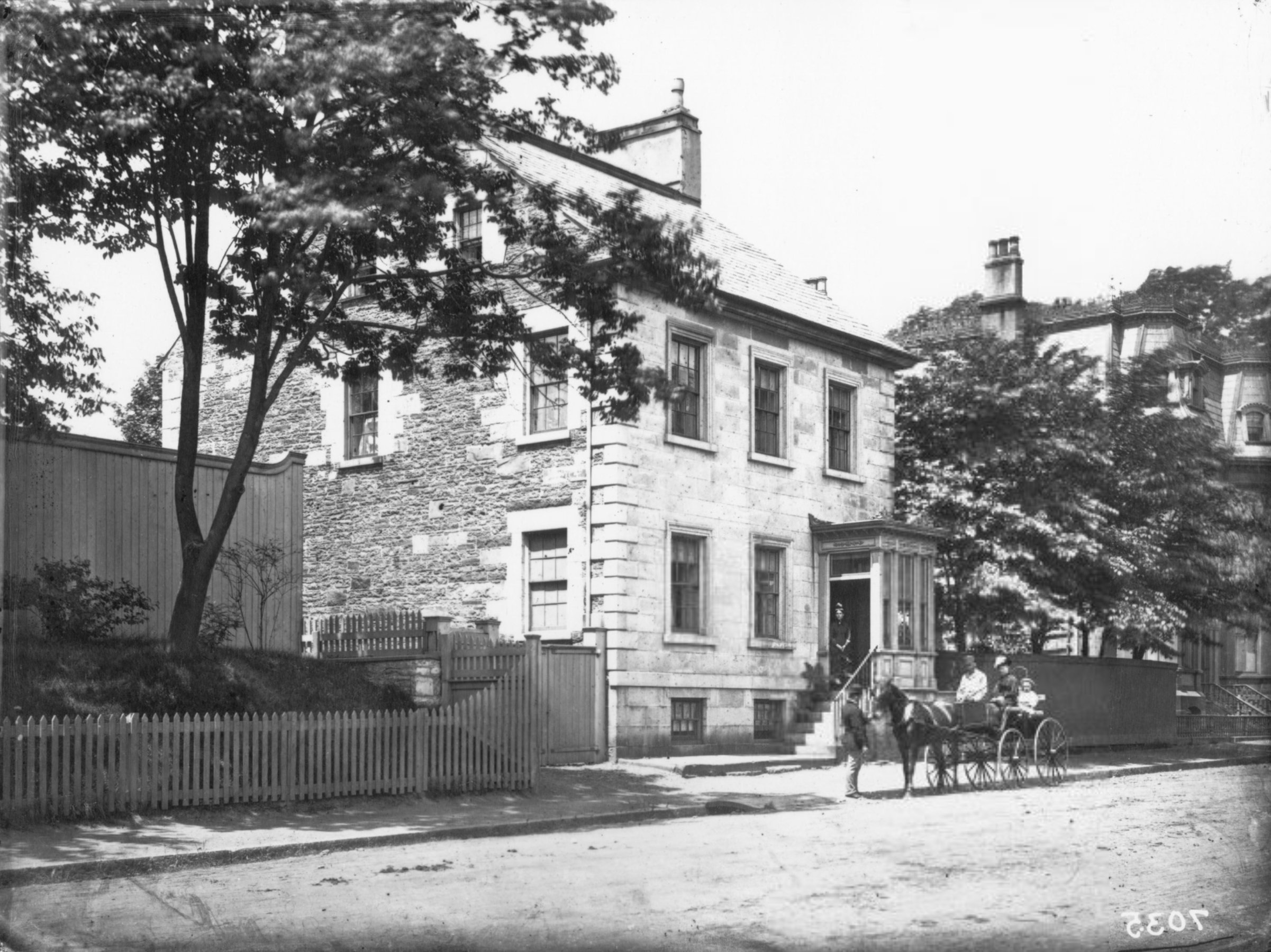
Starting with the first large-scale map of the city, the 1878 Hopkins’ City Atlas of Halifax, the team examined the Halifax peninsula, street by street and building by building, to see what survived and what has been lost. The results of this first phase of the project revealed that whole neighbourhoods have vanished from some areas of the city, while in others, large parts of old Halifax remain intact. Some well-seasoned buildings have acquired municipal or provincial heritage status and thus a measure of official protection. In most cases, however, they have not and could face the risk of being demolished.

A section of downtown Halifax shown in historical context

This image from the Halifax Heritage 1878 map shows “a vanished neighbourhood, a Victorian gasworks, and the Tobin estate beneath what is now the Barrington St. Superstore and Peace and Friendship Park.”

The challenge moving forward

A recent HRM staff report reveals that from 2009 to 2019, 33 of 104 buildings with potential for municipal heritage designation were demolished, an attrition rate of 32 per cent in just 10 years.[1] This report relates to just a small area of downtown Halifax.

Until now, planners—and the public—have not had a comprehensive map of peninsular Halifax’s oldest buildings. Along with raising awareness of our built heritage, the researchers hope the Halifax Memory Maps project offers a helpful tool for managing current and future growth.

“As our newly elected mayor and Council are seated, and as the pace of change continues to drive the city to grow bigger and busier than ever before, Haligonians need to decide what kind of Halifax they want to bequeath to future generations,” says Dr. Fowler. “For that is the essential nature of heritage: it is what we inherit from our ancestors. And it is what we value enough to preserve and pass on to others.”
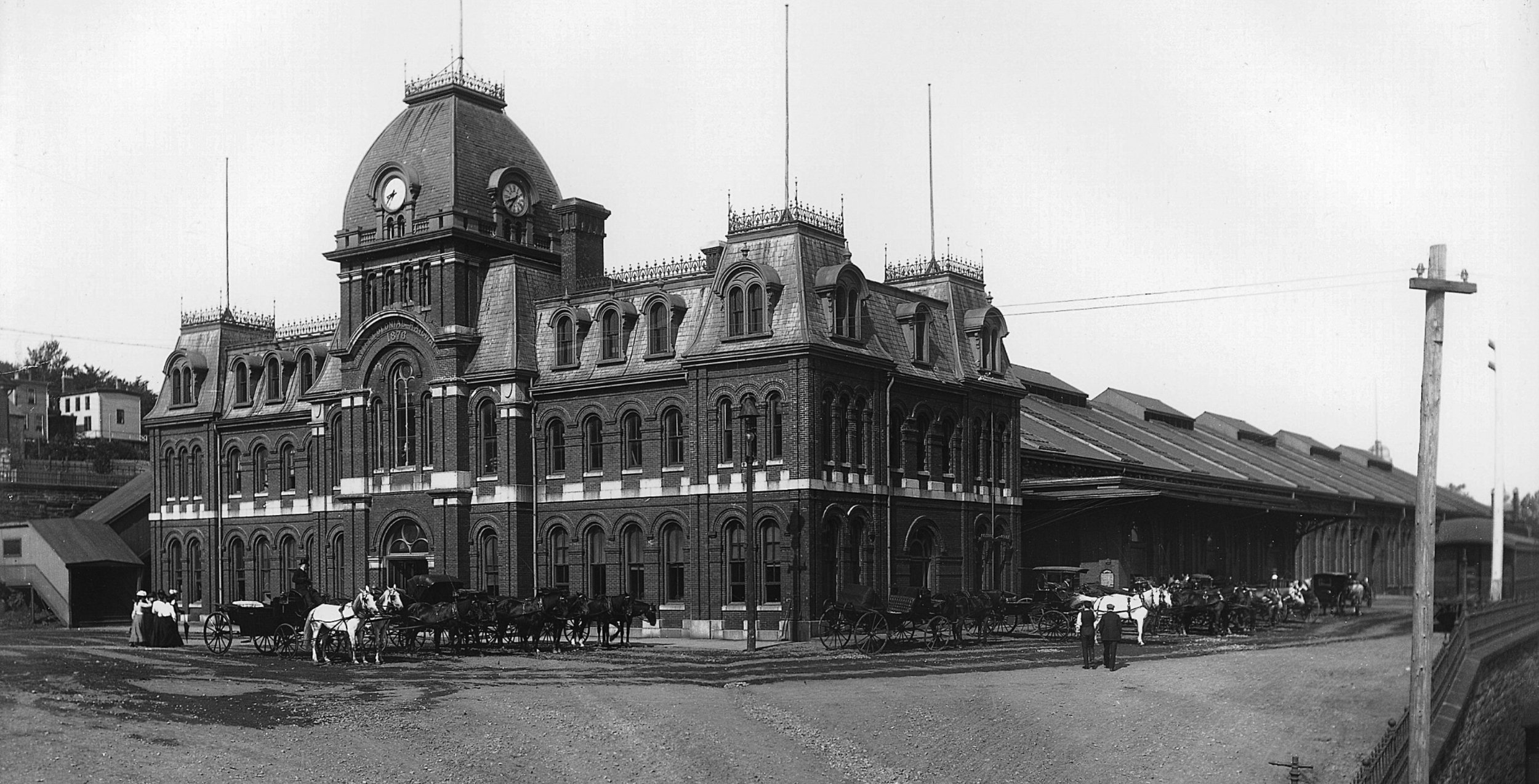
The research team was recently invited to present findings at a special meeting of the HRM Planning and Development Office and will continue to share results with municipal staff and the public in the months ahead. In development now are a map of Late Victorian Halifax and a map of grave markers in The Old Burying Ground, one of Canada's oldest marked cemeteries.

The team will release its next map – Halifax 1899 – in Spring 2025. Team members include:

  • Gillian Bonner BA’24, an Anthropology graduate who now works in cultural resource management;

  • Emily Davis BA’24, a graduate of the Anthropology honours program; she has an interest in industrial, landscape and historical archaeology;

  • Dr. Jonathan Fowler, an archaeologist who ‘loves old maps’ and teaches in the Department of Anthropology;

  • Sheheryar Khan, a Bachelor of Science and Diploma of Engineering student at Saint Mary's; he is interested in civil engineering and environmental issues; and

  • Wesley Weatherbee, the Anthropology Laboratory Technician at Saint Mary’s, where his research focuses on coastal archaeology and climate change.

Davis hopes the research project will help to guide her toward a career in the archaeology field. “I would like to keep working in this area of study,” she says. “I find it to be very rewarding and I’m also quite passionate about it. I think it’s important work, so I would like to go further with my education and do a master’s, and then kind of see where life takes me from there.”

Emily sits with a TV reporter inside the archelogy lab

Emily Davis talks with Global TV about the Memory Maps project

[1] Heritage Advisory Committee and Community Planning and Economic Development Standing Committee, 31 January 2019. Case H00437: Strategy for the Protection of Potential Heritage Resources Downtown
Halifax, Item No 9.3.


Health Data Analytics Symposium showcases student innovation

How can data transform healthcare? Can data help us make better decisions around patient care and even help manage the overall healthcare system in Nova Scotia?

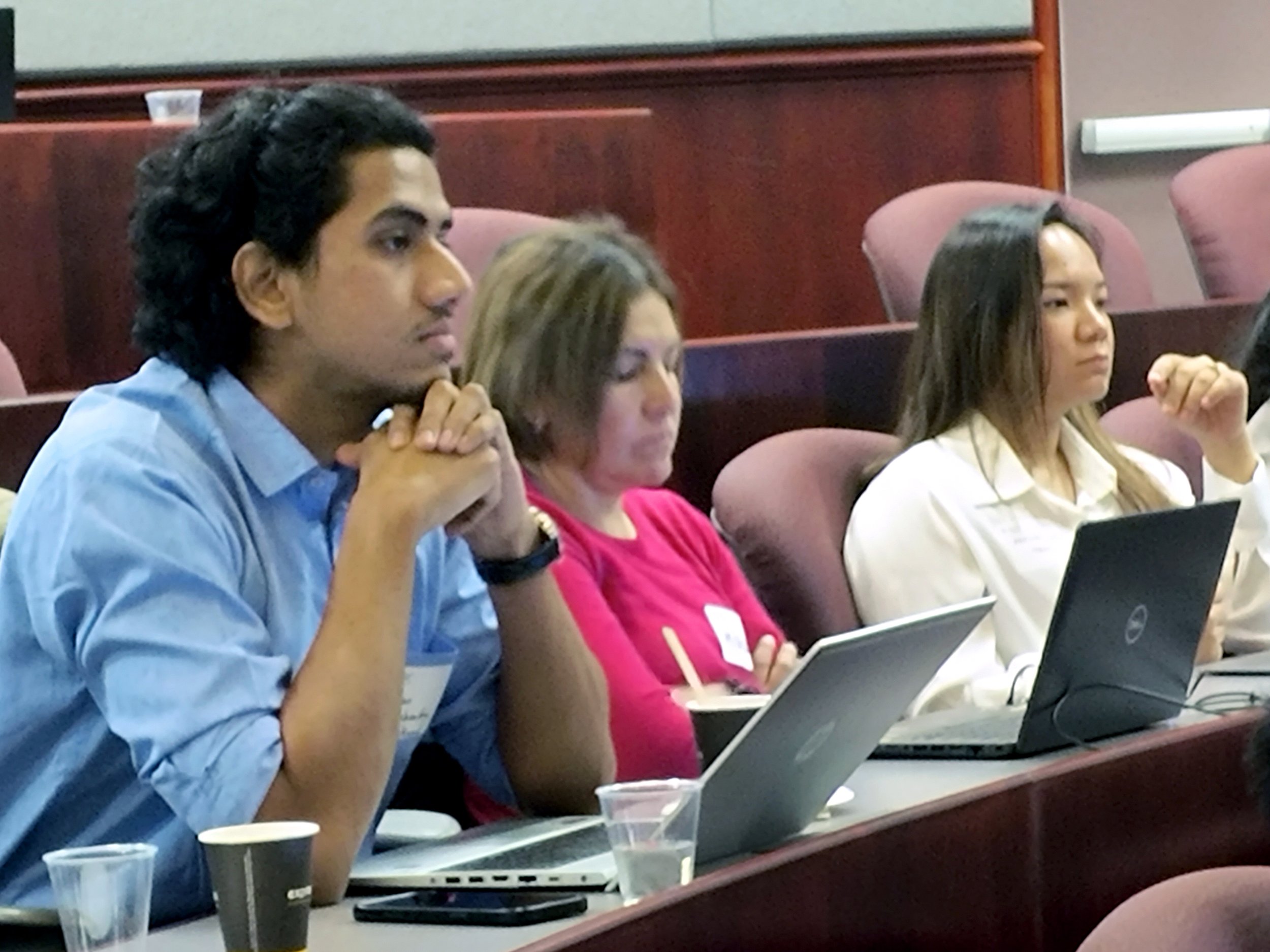
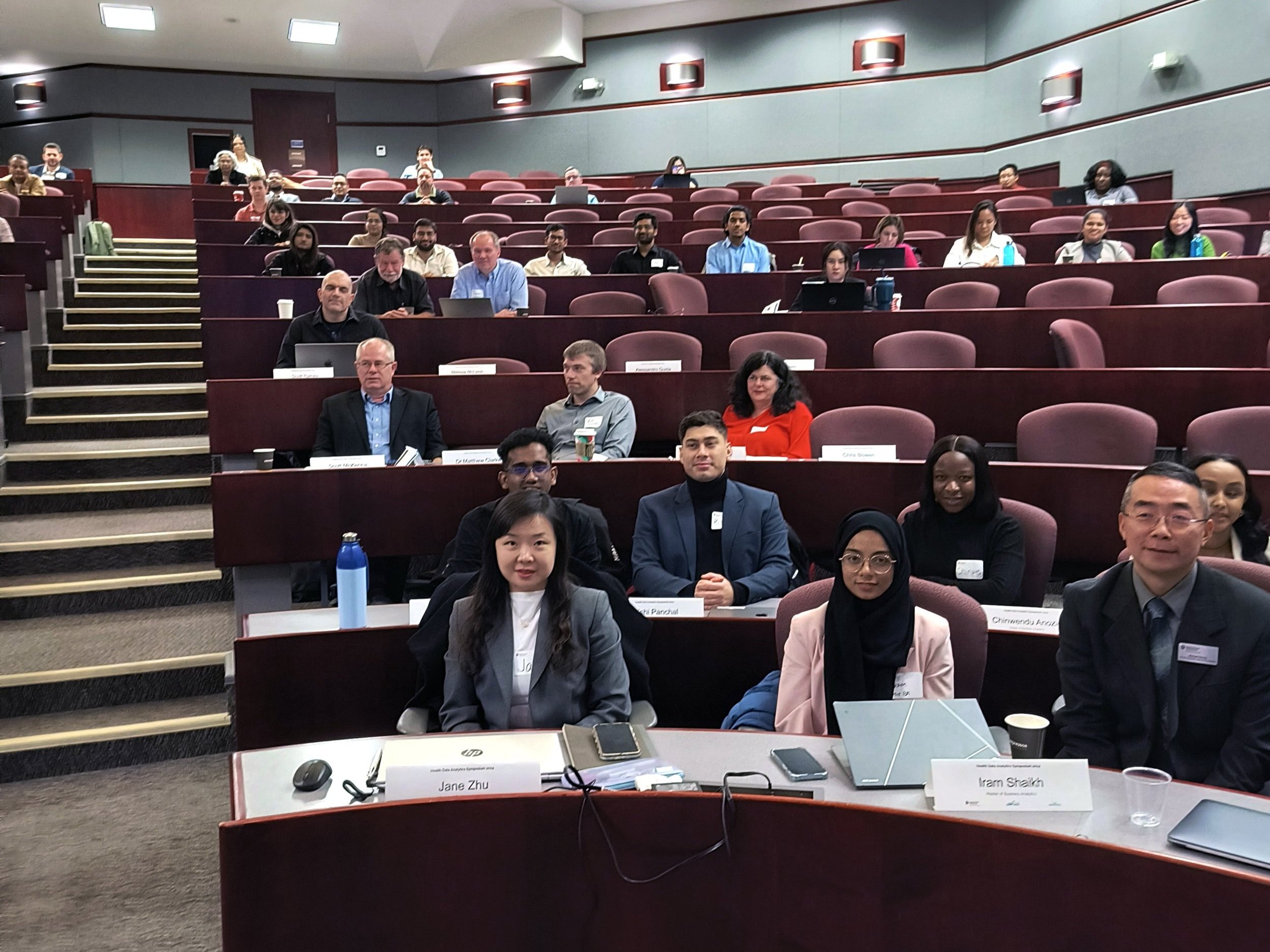
Those were the central questions at the Health Data Analytics Symposium, which was recently held at Saint Mary’s University. The symposium brought together a diverse group of experts from government, healthcare, and business.

This annual event provides a platform for SMU graduate students in the Master in Business Analytics (MBAN) program to present their groundbreaking research. It is a place for them to share the results of their internships and co-ops with some of Nova Scotia’s largest healthcare providers, including Nova Scotia Health, the IWK and the Nova Scotia Department of Health and Wellness. This symposium is aimed at fostering partnerships between academia and healthcare, driving innovations that directly benefit Nova Scotians.

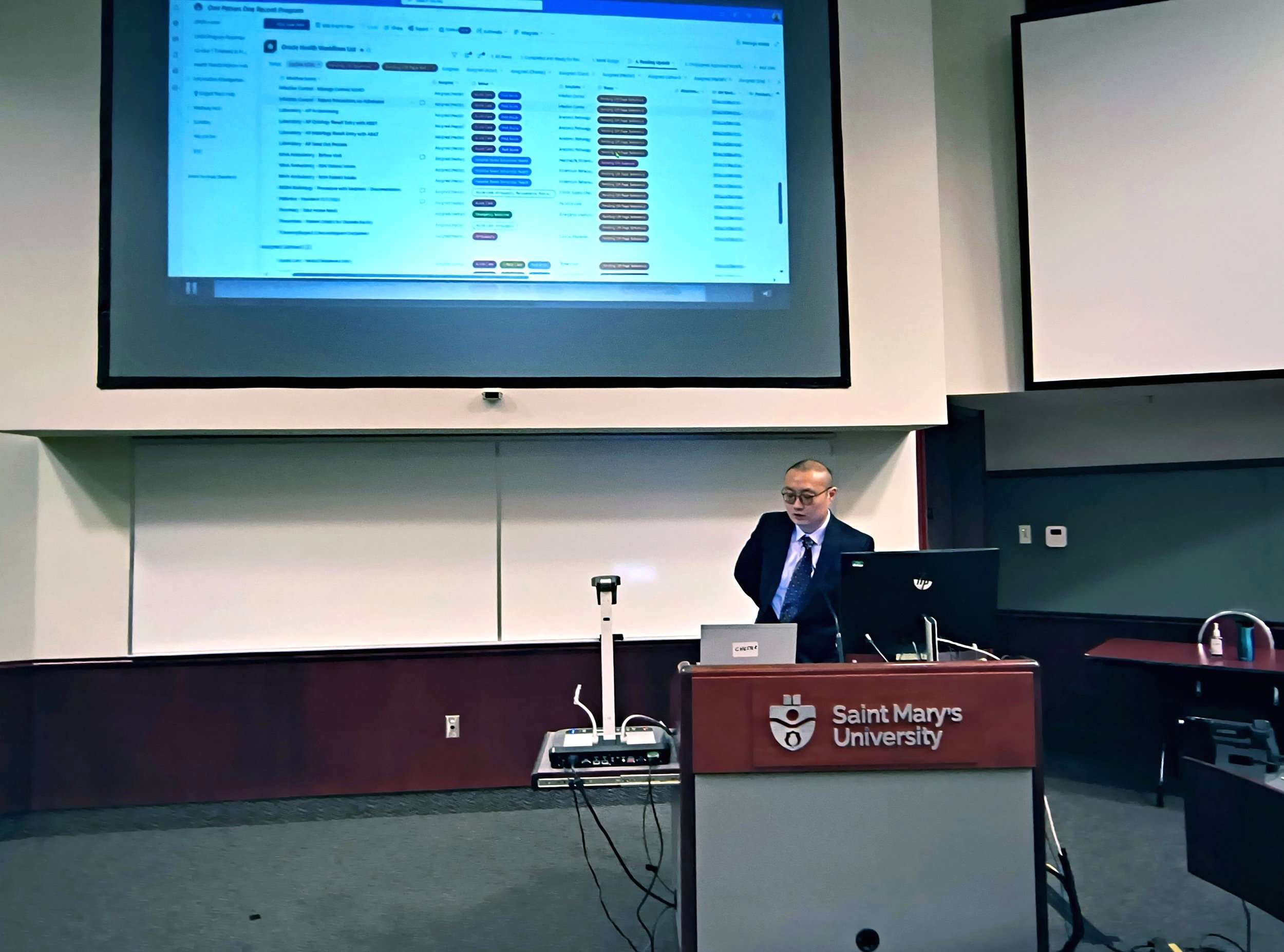
MBAN student Farhat Roopkatha

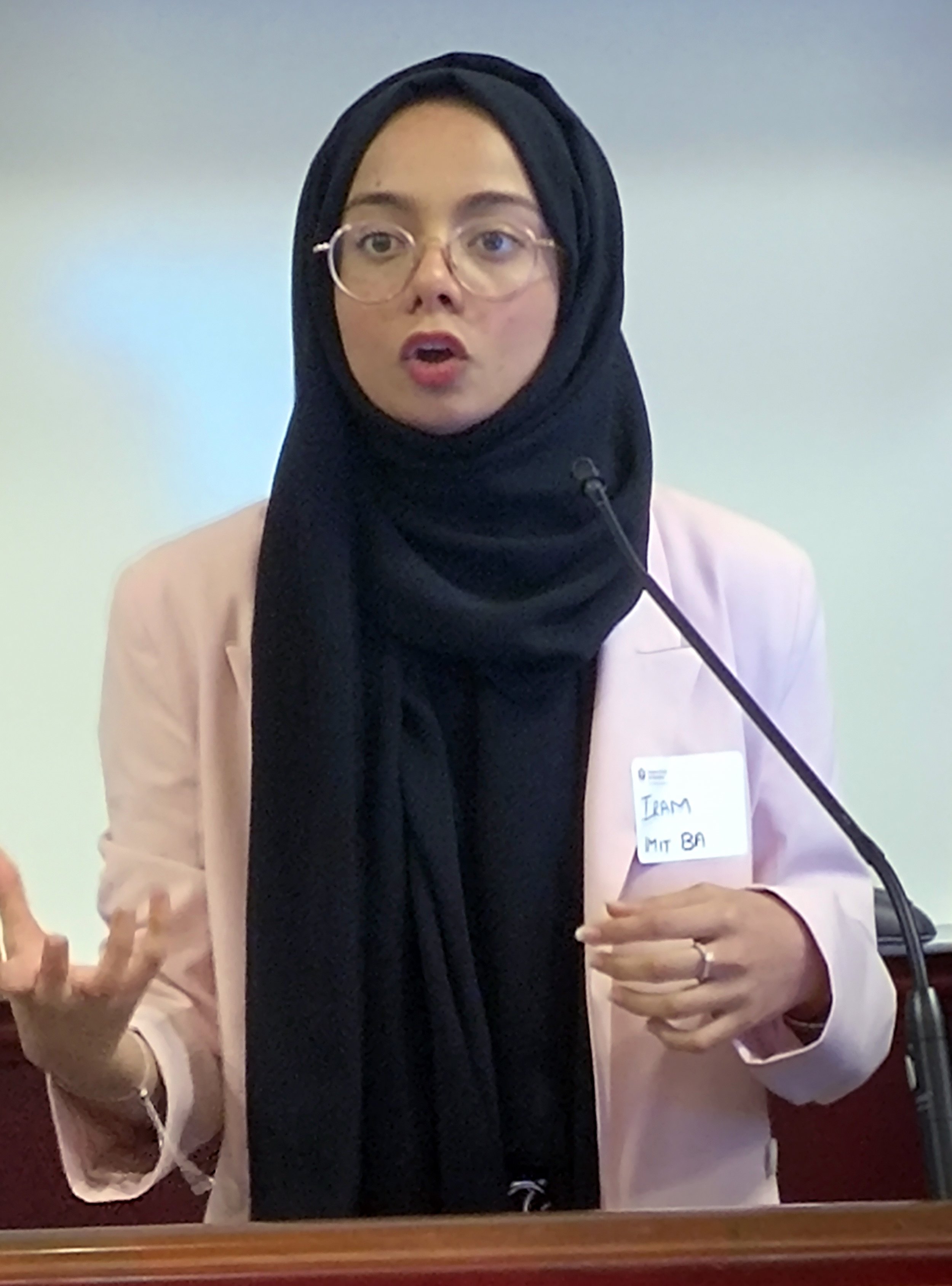
“My work with the IM/IT Business Intelligence Team at Nova Scotia Health […] has been a transformative experience, setting new standards for capacity planning and organizational transparency in healthcare,” says MBAN student Farhat Roopkotha.

“From customizing workflows to fostering collaboration across diverse teams, this project has demonstrated how tailored tools can drive impactful change. By integrating Agile methodologies, we’ve empowered teams to optimize resources and align goals for better outcomes across Nova Scotia Health.”

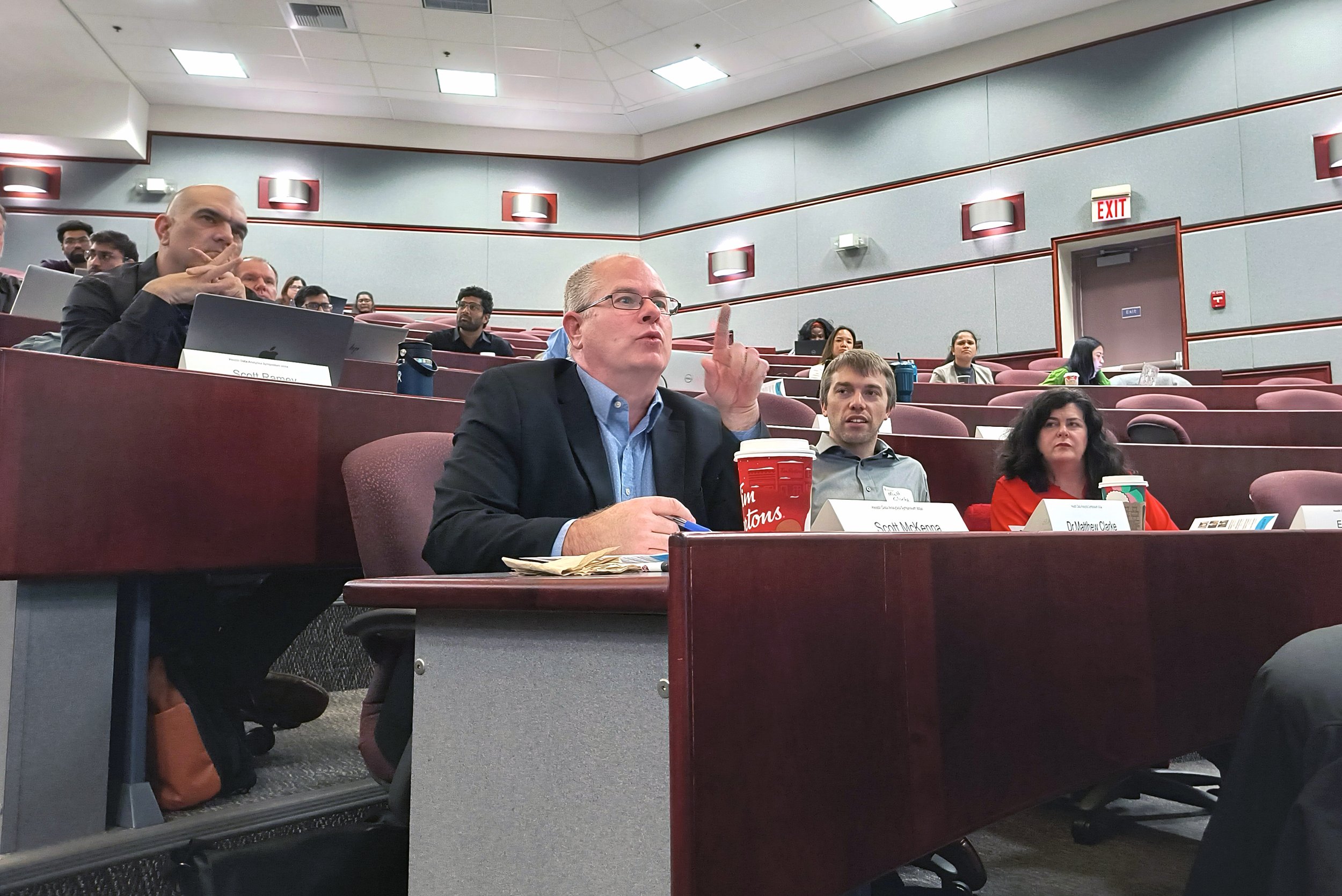
Healthcare experts questioned the students about the practical applications of data insights into various aspects of healthcare, from daily medical routines to long-term planning. These discussions highlighted examples of how data is being used to enhance patient care and streamline healthcare operations in local emergency rooms, long-term care facilities, and prescription management.

“The feedback from the Nova Scotia Health community was truly inspiring, reaffirming the importance of this project in improving data collection and patient outcomes,” says MBAN student Fana Abaynew Mandefro, who presented her work with the Wound Care Registry Project with the Nova Scotia Health Innovation Hub.

A notable session delved into the role of data in understanding the social determinants of health. Scott McKenna, Chief Information Officer, Nova Scotia Health and IWK, stressed the importance of analyzing social factors such as income and education. “Data and analytics have the power to bring tremendous insight to the health system.  Layering in important socio-economic information can give us a whole different perspective and influence how we design solutions for citizens and tailor them to respond to unique needs.”

Jordan Warford, Executive Director of Planning and Performance, Department of Health and Wellness

Jordan Warford, Executive Director of Planning and Performance, Department of Health and Wellness, posed the question, “How can we harness the power of data to plan for the longer term?”

Warford emphasized the importance of data analytics in uncovering hidden patterns and trends, which can lead to more informed decisions. “Data is the compass guiding us through healthcare’s complexities, revealing insights that turn information into better care and healthier communities. These students are proving that the smart decisions we make today can shape a stronger, more sustainable system for tomorrow.”

As the symposium progressed, attendees gained valuable insights into the critical role of data in shaping the future of healthcare. The event underscored SMU’s commitment to fostering innovation and preparing the next generation of healthcare leaders.

Matthew Murphy, Chief Data Officer, Nova Scotia Health Authority, expressed his deep appreciation for the partnership and commitment to further advancing internship programs with SMU. Saint Mary’s University continues to lead the way in equipping students with the tools to revolutionize healthcare through data. "Partnerships like the one between Nova Scotia Health and Saint Mary’s University are pivotal in shaping the future of healthcare. By leveraging the power of data, we are not only equipping students with practical skills but also creating real-world solutions that enhance care and improve outcomes for Nova Scotians.”

The work underway in SMU's health analytics space reflects the ecosystem's commitment to building a healthcare system that meets today’s demands and is prepared to adapt to future challenges with data at its core.

Master of Business Analytics at SMU

Engineering students embrace entrepreneurial thinking at Experience Ventures Hackathon

A team of students present their ideas on a screen

Engineering students pitch their ideas at the Hackathon

Entrepreneurial thinking is not just for business students—it’s a valuable mindset that transforms every field, as demonstrated by the Experience Ventures Hackathon. Hosted by the Arthur L. Irving Entrepreneurship Centre in partnership with The Hunter Hub for Entrepreneurial Thinking at the University of Calgary and the Government of Canada, the recent hackathon brought together 30 engineering students from Saint Mary’s and Dalhousie University to solve a real-world challenge from Payzant Home Hardware. 

What was the challenge? Students were tasked with designing innovative solutions to enhance quality control at Payzant Home Hardware’s roof truss manufacturing facility. Using cutting-edge technologies like AI, robotics, and 3D prototyping, the students worked in teams for a week starting on November 23 and culminating in a compelling presentation on November 30.

A team of students presents their ideas

“This Hackathon taught me that engineering is not just about solving technical problems—it is about finding creative solutions that make a real impact,” said one student participant. 

Greg Smith, a Payzant Home Hardware representative, praised the students’ ingenuity, calling their ideas transformative for the manufacturing industry. The event highlighted how entrepreneurial thinking can inspire innovation across disciplines, proving that the principles of entrepreneurship are universal tools for progress. 

Experience Ventures, powered by the Hunter Hub for Entrepreneurial Thinking at the University of Calgary, enables post-secondary students to make an impact alongside real-world innovators through entrepreneurial thinking placements. Experience Ventures is funded by the Government of Canada and is delivered nationwide in partnership with post-secondary institutions. Saint Mary’s University’s Arthur L. Irving Entrepreneurship Centre is the Regional Lead Atlantic Canada partner in Experience Ventures. Find out about student opportunities with honorariums available through Experience Ventures.

Sign up now to receive emails about upcoming programs.

Entrepreneurship stories

Saint Mary's student team wins $10,000 in second annual Innovation Cup

Jason Phonchareon, Olivian Sanderson, Stuti Sandhu — Innovation Cup 2024 winner, Sociable team

Sociable, a modern and innovative student engagement platform developed by three Saint Mary’s students, was the grand prize winner in the Arthur L. Irving Entrepreneurship Centre’s second annual Innovation Cup Final Competition held Friday, November 29. 

Olivian Sanderson (BComm, Accounting and Management) Jason Phonchareon (BSc, Psychology) and Stuti Sandhu (BA, Psychology) developed the start-up to address student loneliness within universities. Sociable helps students connect with each other, get peer support and gain access to campus events. A standout feature is “Pre-Connect,” which allows students to join group chats before an event. What sets Sociable apart is limiting the range of connections to students within the same school, promoting meaningful interactions and relationships within a campus community.

“When I came to university, I found it hard to make friends, and I did not have many like-minded people around me,” says Olivian Sanderson, one of the three members of the Sociable team. “Luckily, I found a group of people who aligned with me, including my co-founder, Jason Phonchareon, and we started talking about this issue.”

“The vision of Sociable is to be the platform that ends student loneliness. We want to be in every school, giving as many students as possible the opportunity to meet people that they mesh with. In a digital world, it is so important to ensure we are still fostering those in-person relationships, which is why this platform is a necessity.”

Innovation Cup finalists and judges

Ten Weeks, Ten Teams, Ten-Thousand-Dollar Prize

This is the second year for the Arthur L. Irving Entrepreneurship Centre’s Innovation Cup—a 10-week experiential learning program for Saint Mary’s students, where ten teams compete for the grand prize of $10,000. Each team is made up of three students from across the three faculties of Arts, Commerce and Science.

“During the ten weeks of the program, students have weekly training sessions and workshops, connect with industry experts to increase their business understanding, skills and network,” says Michael Sanderson, Director, Arthur L. Irving Entrepreneurship Centre. “All while turning their start-up idea into tangible ventures.”

Judges listen to the Alaagi pitch

After three elimination rounds, three teams make it to the final round, where they give their best pitches to a panel of expert judges and a live audience. The judges for this year’s final competition were Katerina Msafari, Founder Success Lead at Tribe Network and COO of Adrigo Insights; Mike Rothenburg, Economic Development Officer at ACOA; and Bethany Deshpande, Founder of SomaDetect and business and leadership coach.

Rothenberg praised the high calibre of the pitches, saying, “The three pitches today were truly impressive, showcasing high-calibre and innovative business ideas. The presentations were polished and well-structured, highlighting each team's vision for growth and development.”

Deshpande seconds his comments and reflects, “The decision-making process was incredibly difficult, as each team demonstrated a deep understanding of their market and a compelling vision for the future. It was a pleasure to witness their hard work and dedication come to fruition."

The Sociable team will use the $10,000 towards completing their UX design, as well as legal fees, marketing and cloud storage. 


A Diverse Field of Innovators

Beyond Sociable, the competition featured a diverse range of innovative ideas. One of the finalists, Alaagi, a startup presented by Sheheryar Khan (BSc and Dip. Chemical Engineering), S M Sourav Rabbi (BComm, Finance and I.T.), and Rida Naqvi (BA, Psychology and Entrepreneurship), addresses environmental concerns by developing innovative, biodegradable bioplastics derived from seaweed.

Another finalist, Bean, an AI-powered food assistant, impressed the judges with its potential to revolutionize meal planning and reduce food waste. The Bean team, consisting of Vaishali Sachdeva (BA, Entrepreneurship), Varshitha Venkatesh (BSc, Computer Science), and Anushka Kalantri (BComm, Accounting and Finance), garnered significant audience support, earning them the “People’s Choice” award and a $1,000 prize.

Alaagi team: Sheheryar Khan, S M Sourav Rabbi, Rida Naqvi

Bean team: Varshitha Venkatesh, Anushka Kalantri, Vaishali Sachdeva

The Innovation Cup will be back next fall for young entrepreneurs to pitch their innovative business ideas! Visit the Arthur L. Irving Entrepreneurship Centre website for upcoming events, work and learning experiences in the Winter term.

Snowboarder competing for SMU and Canada at World University Games

Tristan on a ski hill in snowboard gear

Tristan Weigelin

While many of us are dreading the arrival of winter snow, Tristan Weigelin can’t wait for it. Next week, the Dartmouth athlete heads to the Yukon for pre-season training to prepare for an international snowboarding competition. In January, he will represent Saint Mary’s University and Canada in the snowboard cross competition at the 2025 FISU World University Games in Torino, Italy. 

With little time left to prepare for the trip to Europe, the first-year Arts student is focused on training and fundraising, along with his schoolwork, as the fall term wraps up. He invites the SMU community to join him on Saturday, November 16 for a Pub Night Fundraiser at the Gorsebrook Lounge on campus. Drop by from 7 to 10 p.m. to meet Tristan, win prizes and enjoy a night out with friends. Up for grabs are winnings from a 50/50 draw, a snowboard, and two full-day lift tickets and rentals at Ski Martock.  

Tristan’s earliest experience with downhill snow sports was at age four when he first started skiing. He recalls, “Apparently, after my first ski lesson, I went up to my mom and said, ‘That was fun. When can I snowboard?’”  

He got his first snowboard at age eight and has been “shredding up mountains ever since.” His whole family has enjoyed snowboarding for years, and his younger brother Owen also races competitively.  

Tristan wears a SMU tshirt and poses with his snowboard inside the Gorsebrook pub

Tristan will host a fundraiser at the Gorsebrook Pub on November 16 to support his trip to the FISU World University Games in Italy

A member of the Nova Scotia Snowboarding Team until going solo recently, Tristan has won more than 40 medals and was the provincial series champion in 2018, 2019 and 2022. In 2023, he represented Nova Scotia at the Canada Winter Games, and he has seen success in races across the country. He appreciates the adrenaline rush of racing and the discipline and focus required to navigate the various banks, turns, rollers, jumps and other challenges of a Snowboard Cross track.   

Tristan is among six athletes representing Canada in snowboard cross at Torino, including four men and two women. They’ll have just a few days to practise on the track in Italy before the competition begins on January 13. A few weeks ahead of time, all participants will receive a CGI version of the track to study, a 3D digital model of what to expect. In the meantime, Tristan is busy with fitness conditioning, weight training and specific workouts for core strength, balance and agility.  

“Snowboarding has shaped who I am, both on and off the slopes,” he says on his Snow Athletes Canada webpage. Competing in the sport has helped to develop qualities that make a difference in school and everyday life as well, from patience and flexibility to handling pressure.   

Tristan chose Saint Mary’s for his studies because the university offered programs in both criminology and Japanese studies, and he’s also dabbling in literature and ancient studies courses during his first year.   

“I’m taking a collage of things I’m interested in,” he says, adding that he hopes to study abroad in Japan for a year while completing his degree.  

Right now, he’s balancing schoolwork with fundraising efforts to help toward $10,000 in upcoming travel costs, accommodations in Italy, coaching and race fees and equipment, plus pre-season training in the Yukon from Nov. 22 to December 2.    

Along with Saturday’s pub night on campus, two more fundraisers are coming up:  

  • Oxygen Hot Yoga and Fitness hosts a yoga fundraiser on Sunday, November 17, 1-2 p.m.; 960 Cole Harbour Rd., Dartmouth.  

  • Colleen’s Pub in Dartmouth hosts a fundraiser on Friday, December 6, 7-10 p.m., with live music by Jeff Bonang; 200 Waverley Rd., Dartmouth   


Saint Mary's team has impressive finish at Enactus World Cup in Astana, Kazakhstan

The Saint Mary’s University Enactus team has returned home, buoyed by the thrill of placing in the top 16 in the world, with an exceptional performance at the prestigious Enactus World Cup, held October 2-4 in Astana, Kazakhstan.  

The team's journey to the World Cup began in May 2024, when the Enactus Saint Mary’s team secured the Enactus National Championship title against 49 Canadian post-secondary institutions. This victory propelled them, for the first time in SMU history, to the world's premier stage for student-led business innovation and social impact.  

Facing fierce competition with pioneering solutions 

This year, the Cup brought together teams from 29 countries. The competition was fierce, with talented teams from Germany, Morocco, Republic of Korea and Tunisia, vying for the top prize. While Tunisia ultimately secured the top spot, Enactus Saint Mary's distinguished themselves with their innovative projects, Plastarch and Square Roots, and dedication to social good. Square Roots tackles the twin issues of food waste and food insecurity by rescuing "imperfect" produce that would otherwise be discarded and offering it at affordable prices, and Plastarch is a pioneering enterprise to develop a sustainable bioplastic alternative for food packaging and utensils crafted from an unlikely source—discarded potatoes.  

Co-Presidents of Enactus Saint Mary's, Courtney Dingle and Gabe Martin say," To highlight a specific moment from the 2024 Enactus World Cup that was impactful to our team we would point to the cultural fair that happened before the opening ceremonies. Getting to share local snacks, play field hockey sticks with the other teams, and share our Canadian pride was an amazing experience. Being at an Enactus competition is always such a collaborative experience and that was equally true at the 2024 Enactus World Cup. Meeting teams from across the world and feeling supported by them meant so much to everyone on our team, and it was magical to be able to support students from other countries as well. The 2024 Enactus World Cup was an amazing experience for our team, to get to showcase our work on the global stage and get feedback from such diverse perspectives is something we really value. We are so grateful for all of the support we have had to get to this point and are so proud of every member of our team for their dedication and for the work they have put in to reach this level." 

Courtney Dingle

Gabe Martin

In addition to placing in the top 16 in the World Cup, a team of two Enactus Saint Mary’s team members, Aneesa Hussain and Ashish Ganapathy, and Hannah Meagher from Dalhousie placed second in the Bentley—iTwin4Good Challenge held at the Enactus World Cup with a $2,000 USD prize. Their innovative project, Accesstructure, showcased their commitment to accessibility and inclusivity. Accesstructure is platform that automates accessibility audits of campus facilities, identifying non-compliance issues across various legislation and standards. The groundbreaking tool ensures that campus environments are inclusive and welcoming for all students, staff and visitors.  

The Accesstructure team reflects the experience saying, “Our biggest takeaway from the competition was the cultural exchange that took place not only during the cultural exhibition but throughout the remainder of the competition and afterward too. Meeting people from different continents, and sharing food, games, and music amongst ourselves helped us broaden our horizons and gain a richer perspective. Another highlight was participating in the iTwin4Good challenge at the Enactus World Cup, where we had the opportunity to present innovative solutions that address social and environmental issues through technology. This challenge reinforced the importance of creating lasting impact and reminded us that, regardless of the differences in our cultures or backgrounds, we all share a common goal: to build a better, more inclusive future. The connections we made and the ideas exchanged throughout the competition will continue to inspire us as we work towards making a meaningful difference in our communities.” 

“We are so proud of the hard work and everything that the teams have accomplished this year. Square Roots, Plastarch and Accesstructure are leading examples of Enactus project success, the impact students can have on the UN SDG goals, and how a social enterprise can continue to grow, evolve and support sustainability in the community and beyond,” said Catherine Fowler, President and CEO of Enactus Canada. 

From Halifax to Astana: a once-in-a-lifetime journey  

The journey to the Enactus World Cup was an adventure in itself. Astana, with its futuristic architecture and vibrant culture, provided a stunning backdrop for the competition. 

The team ventured beyond the competition, immersing themselves in Kazakh culture. They engaged with local people, visited iconic architectures, savoured traditional cuisine such as beshbarmak and shashlyk. This cultural exchange fostered understanding and appreciation. 

A visit to the Canadian Embassy in Astana further strengthened their connection with the global Canadian community. They met with embassy officials, discussing the importance of their work and the opportunities and challenges faced by Canadians abroad. 

Almost recovered from intense preparation and competition, a long transcontinental journey and significant time change, the Enactus Saint Mary’s team is already talking about the path to the next National and International championships. 

Join the Enactus Saint Mary's Team! 

Are you a passionate student looking to make a difference? The Enactus Saint Mary's team is comprised of 80 dedicated students from diverse backgrounds, all united by a passion for creating positive change, and is always looking for new members to join its ranks.  If you are interested in joining a dynamic team that tackles real-world challenges, visit their website to learn more about getting involved. 

About Enactus 

Enactus is a global nonprofit organization that empowers students to use entrepreneurial action to address social and environmental challenges. Enactus chapters around the world work together to develop and implement innovative projects that create positive change. Through Enactus, students gain valuable skills in leadership, teamwork and entrepreneurship, while also making a meaningful impact on their communities. 

Enactus can be followed @enactus. To learn more, visit enactus.org.


Saint Mary's ranked one of Canada’s top 3 undergraduate universities

Saint Mary’s has once again earned a spot as one of Canada’s top 3 undergraduate universities.

Saint Mary's University is the third Best Primarily Undergraduate University in the country, according to the 2025 Maclean’s University Rankings. This marks the third year in a row that SMU has achieved this enviable position.

The annual rankings also confirm Saint Mary’s status as the top-ranked primarily undergraduate university in Nova Scotia, and its Sobey School of Business as one of the top 20 business programs in the country.

“I am extremely proud of our consistent placement in the Maclean’s rankings”, says Saint Mary’s University President Dr. Robert Summerby-Murray. “One reason for our high standing is that faculty and students alike participate on the front line of real-world research and knowledge creation. We take pride in offering these amazing opportunities to both undergraduate and graduate students in a supportive community where they thrive.”

Located in the heart of Halifax, Saint Mary’s has been a renowned place of learning and scholarship since 1802, encouraging discovery and innovation across a wide range of disciplines in the humanities, social sciences, sciences and business.

The university is known for its long history of investing in student support; a point made clear in the rankings, with Saint Mary’s taking second place for scholarships and bursaries and tying for second place in student awards.

Saint Mary’s continues to advance student life on campus. The Sobeys Inspiration Hub, a four-storey, 43,000-square-foot building designed to foster student entrepreneurship and innovation opened in Fall 2023, and the new space for SMU Engineering, a 28,000-square-foot building with specially designed labs and project rooms, opened in Fall, 2024.

The university’s research activity and calibre are also gaining recognition, with Saint Mary’s ranking fourth in medical/science grants and fifth in total research dollars. Saint Mary’s is now Nova Scotia's second-largest research university by research income.

Saint Mary’s is also listed as one of Canada’s Top 50 Research Universities; in the undergraduate institution category, we ranked 1st in Atlantic Canada and 16th in the country. 


Saint Mary’s student recognized for academic achievements & deaf community contributions

Emi Morse, a first-year student, received the Honourable David C. Onley Scholarship Award from Canadian Hearing Services

Emi Morse may only be a few weeks into her academic career at Saint Mary’s, but she’s already making a name for herself. Entering the first year of her undergraduate program, Emi arrived at Saint Mary’s with big ambitions that begin with the Bachelor of Science program, focusing in Psychology, and will conclude with her eventually gaining a Masters in Audiology and becoming a Cochlear Implant Audiologist.

It's a very specific career path that stems from Emi’s own experience as a deaf individual with bilateral cochlear implants. Born without hair cells in her cochlea due to a genetic condition called Pendred Syndrome, Emi experienced total deafness from birth. Hair cells are essential for hearing, as they respond to sound frequencies and send electrical signals through the auditory nerve to the brain, where they are interpreted as sound. Without these hair cells, Emi was unable to hear naturally. As a toddler, it was challenging for Emi to get a proper diagnosis as doctors chalked her symptoms up to slow development.

With her mom advocating for her, Emi was finally able to get a proper diagnosis and had implants surgically inserted into both cochlea. These implants stimulate the auditory nerve, mimicking cochlear hair cells with electrodes. This allows some auditory receptions to transmit to her brain through her external processor, which captures sound through a microphone and transmits it to the electrodes implanted on the cochlea.

Emi and her family learned American Sign Language (ASL) and Emi was connected with the Atlantic Provinces Special Education Association (APSEA), which provided significant support and guidance during her school years. Through APSEA, Emi was able to learn about assistive technology devices that supported her cochlear implants, was connected with ASL interpreters to help translate verbal class materials and was guided on how to navigate school as a deaf individual.

It was her experience with APSEA that compelled Emi to give back to her community, driving her to become a mentor for families and young children going through similar experiences. "Growing up, I experienced a lot of discrimination from hearing individuals, teachers and medical professionals,” recalls Emi. “I didn’t feel supported the way I needed to be and felt like it was just assumed that I wouldn’t be able to achieve certain ideas of success. I wanted to prove that deaf people can be successful and they deserve recognition and respect.” Emi elaborates that her experience with APSEA motivated her to give back to those in similar situations and to raise awareness about deaf culture and the resilience and tenacity of deaf individuals.

Emi was shocked to learn that her passion for giving back had resulted in her being named the 2024 recipient of the prestigious Honourable David C. Onley Scholarship Award from Canadian Hearing Services. “Being a deaf person in a hearing world and being the only deaf person in my small town felt so tough and isolating,” describes Emi. “I had to work harder than everyone else just to get to the same level my peers were at. I’m living in a world that is not accessible, where I was expected not to succeed, but I worked so hard and I am so proud of what I have achieved.” The national scholarship is awarded annually to an individual who demonstrates outstanding academic achievements, resilience and dedication as a leader in accessibility and in the deaf community.

Leaving her small town to move into residence and start her post-secondary education at Saint Mary’s was a world of welcome change for Emi. “It’s been really fun,” signs Emi. “I’ve met so many people here in the dorm and during the Welcome Weeks events like the paint night and BINGO. Everyone is really nice and they’ve been really open to learning how to include me in verbal conversations.”

After facing discrimination throughout her educational journey, Emi was unsure what to expect from a post-secondary institution. “I chose Saint Mary’s because of its appealing support options and interpreting services,” notes Emi. “The Fred Smithers Centre had a lot of great accommodations that I needed, like the Digital Modulation (DM) systems that transmit primary audio directly to my cochlear implants and the GLEAN captioning software to help with notetaking.”

It may only be a few weeks into the Fall Term, but Emi has already settled into the groove at Saint Mary’s. Her excitement builds as she describes how she’ll be learning about the brain, how hearing people perceive the brain, and how things like neurons and receptors are fired. “I love the smaller classroom sizes at SMU,” describes Emi. “The professors have mostly been really nice and accepting of my accommodation requirements, ensuring my interpreters and I have everything needed for class lectures.”

When asked about her advice to future generations of deaf individuals, her ASL interpreters relay her message, while her fiery passion speaks volumes regardless of the language barrier. “Deaf people can do anything,” affirms Emi. “Don’t allow other people to make decisions about you. In those moments when it feels impossible, remember that if you do the work, you can do anything.”

Student News

Saint Mary's launches bold new recruitment campaign: Every one is unique

A colourful banner with an embedded video and campaign tagline

Click the image above to watch the new recruitment campaign video

The new Saint Mary's undergraduate student recruitment ad campaign went live this week with a bold new look that aims to grab the attention of Gen Z students.

As part of the university's updated recruitment strategy, the External Affairs and Recruitment teams partnered with creative agency STC to develop an ambitious campaign to attract prospective students in Nova Scotia and key Canadian markets.

The promotion is mainly digital and highly focused on reaching high school students and their parents or other influencers. The ads drive traffic to the newly updated Future Students webpage for more information.

"This campaign is decidedly different, with a fresh look to cut through the noise and clutter of the digital space where our target audience spends so much time," says Lauren Cullen, Acting Director, Domestic and International Recruitment and Marketing. "It presents Saint Mary’s as a supportive environment that recognizes the potential in each of our students and celebrates their uniqueness, and also highlights our distinctive campus experience, our place in the city and our programs." 

The ads' visual treatment puts a fun, distinctive twist on Saint Mary's brand framework to help it stand out in a competitive landscape and appeal to 16 to 18-year-olds. The treatment is temporary and campaign-specific and doesn't replace Saint Mary's institutional brand.

Faculty and staff may have seen a production crew shooting scenes on campus in late June. They were capturing footage of actual Saint Mary's students, each with their own unique pathways that are highlighted in the ads.

"We were thrilled to showcase some of our star students, Cameron Brown (Science), Jayrell Diggs (BComm), Theressa Jabbour (Arts), Kara Maclean (Arts), Lucy Pothier-Bogoslowski (Science) and Adrianna Timmons (BComm)," says Nadine LaRoche, Director, Integrated Communications. "We owe a huge thanks to them and to the many kind faculty and staff who helped in a multitude of ways to help with this important recruitment effort.”

The advertising campaign will continue throughout the Fall term. Look for bus shelter ads in the Halifax area this September and camera crews on campus to capture our students in action again!

A girl in a business outfit speaks with a hockey player. Campaign text overlays image.
A young man works on a small robotics project. Campaign text overlays image.
A female student carefully reads documents. Campaign text overlays image.
SMU Future Students website

Sobey School of Business recognized for social impact and sustainability achievements

Sobey School of Business entrance

The Sobey School of Business has been acknowledged for its outstanding social impact and sustainability achievements in the recently launched Positive Impact Rating (PIR) results. Among 77 business schools from 30 countries worldwide participating in this year’s rating, the Sobey School achieved Level 4, positioning it as a Transforming institution within the PIR framework.

A student-driven assessment

The PIR is a unique rating conducted by students and for students. For the third consecutive time, students worldwide evaluated their business schools based on their perceived positive impact on the world. Beyond contributing to business and the economy, business schools are crucial in addressing societal needs.

Students assessed how the Sobey School of Business tackles societal and sustainable challenges, equipping its students to become responsible business leaders. The data collection process was led by the Business Sustainability Society, which distributed the PIR survey across campus. This year, 150 Sobey School students actively participated in the assessment.

Participation in the PIR underscores the Sobey School’s commitment to student feedback and engagement. Associate Dean Margaret McKee emphasized, “The PIR is an important opportunity to capture the students' perspective on our social impact and sustainability, and we are inspired by their commitment to working together with us to transform business education.”

The PIR survey comprises 20 questions across seven relevant impact dimensions, categorized into three areas: Energizing, Educating, and Engaging. The overall PIR score positions business schools within five levels, reflecting their developmental stage and achievement. The Sobey School has a defined social impact metric to guide its ongoing efforts.

Prof. Thomas Dyllick, PIR Founder & Member of the Supervisory Board, highlighted the significance of student input: “As future students seek alternatives to select their business school, the PIR serves as a reliable resource. Schools, including the Sobey School, use the PIR to measure and communicate their transformational progress.”

The PIR was developed by business school experts in collaboration with global NGOs—WWF, Oxfam, and UN Global Compact. International student associations oikos, AIESEC, and Net Impact are proud partners of the PIR initiative, supported by VIVA Idea (Costa Rica), The Institute for Business Sustainability Foundation, and Fehr Advice (both from Switzerland).

Sobey School of Business News

Acclaimed multi-sport athlete turned CBC sports broadcaster

Signa Butler BA’96 Hons’98

As a kid, Signa Butler BA’96 Hons’98 was an early and committed sports fan. She read the sports section of the newspaper from front to back and routinely begged her parents to let her stay up and watch Hockey Night in Canada. She was also the only girl talking sports in the schoolyard with all the guys.

“My ultimate choice of career was not a surprise to anyone who knew me back then,” laughs the CBC Sports play-by-play commentator, host, and writer. Her career spans 20 years, 12 Olympic Games, and a long stint as the national morning sports host. Today, Signa is one of the only women on the network who does play-by-play for a growing list of sports, including freestyle skiing, speed skating, diving, volleyball and soccer.

Growing up in Halifax in the 1980s and 1990s, Signa was always a multi-sport athlete. She played soccer and basketball and was a competitive gymnast, all before high school. When she started at St. Patrick’s High, she added indoor field hockey to the mix. For the next three years, she played soccer, basketball and field hockey at the varsity and provincial levels.

Upon graduation, Signa was recruited by several universities but chose Saint Mary’s because it was a school she was already super familiar with. Her parents, Richard and Christine, are both alumni. She’d grown up going to Saint Mary’s sports camps, and their whole family had attended countless Huskies games over the years.

While her goal was to play both soccer and basketball at University, she soon realized that her greater strength and her best potential lay in soccer. And she was lucky enough to have not one but three phenomenal coaches during her five years at Saint Mary’s.

Two of them—Linda Whitehead and Joanne Evans—were head coaches at a time when not many women were in that role. “They fought really hard for resources and equality in those early days,” says Signa, adding that their passion and dedication inspired a group of young women who were student-athletes.

Joanne Evans BSc’89 BEd ’90, head coach from 1995-1997, was similarly impressed with Signa. “She was not only an accomplished soccer player but an excellent team captain, leading with integrity and determination,” says Joanne, who had been a star Huskies soccer player herself. Calling her a “firecracker,” Joanne says Signa was a natural leader, full of the kind of spunk and personality that has made her a success at CBC Sports. “As a Saint Mary’s alumna, I’m so proud to watch Signa advocate for women’s sports across Canada and around the world.”

A firecracker, indeed. During her time on the Huskies women’s soccer team, Signa received numerous awards and accolades. She was a four-time Atlantic University All-Star, AUS MVP, and a first-team All-Canadian in her fifth and final year.

In addition to making life-long friendships, she fondly remembers the team’s early morning runs at Point Pleasant, the sound of sneakers on the gravel paths as they sprinted up the hills of Halifax’s urban seaside park.  And then there was the Nova Scotia weather during hurricane season when one side of the turf was a lake and the other was a wind tunnel that the ball got stuck in!

Signa credits Saint Mary’s and some of the legendary professors she had in both the English and Political Science departments with creating a foundation for future learning and growth. In fact, it was at Saint Mary’s where some of the building blocks toward her dream of being a sports broadcaster came together. She worked as a writer for the university’s student newspaper, the Journal, covering sports of all kinds, and in her fifth year, took on the role of Editor. She then applied to Toronto Metropolitan University (formerly Ryerson), earning herself a Masters in Journalism.

Signa and her father Rick at the 2018 Homecoming Soccer Alumni Reunion

Signa marvels at how far female university sports, and women’s sports in general, have come in the 25 years since she graduated. “Being a female university athlete in the 1990s, you were largely invisible. You weren’t in newspapers, you didn’t have access to a lot of resources or the best field times, and you probably had to fundraise or pay for your uniform out of your own pocket,” she says. “We were thought of as lesser than everyone else. And I think I’ve taken that lesson and flipped it.”

In her current job, she uses her position to leverage the stories of women athletes, coaches and women’s teams. In her writing, she makes a point of highlighting the women’s side of sport, often choosing an athlete or a sport that is a little lesser known and sending a little airtime their way. “These women deserve to be in the headlines as much as anyone else.”

She’s especially excited these days about the Canadian Women’s Volleyball team who have a female head coach—the only female head coach in the top 30 nations in the world—and who seem poised to qualify for the Paris Olympic Games this summer.

To say that Signa loves her job is a massive understatement. She feels grateful to have made her dream of becoming a sports commentator come true and has a piece of advice for other young women coming up in sports. It’s something she wishes she’d been able to tell herself during her own university sports career:

“You belong here. You deserve to be here.”

Join Saint Mary’s Alumni in celebrating the 50th anniversary of women in varsity sport at Homecoming this October.

Alumni news


Research Award winners enjoy paid summer internships across campus

Undergraduate students are conducting research with faculty members again this summer, thanks to funding from federal grants, generous donors and Saint Mary’s.

The halls and classrooms at Saint Mary’s are a little quieter after the end of the winter term and the excitement of convocation, but students keen to engage in research activities are creating a buzz on campus.

Every summer, a group of students are chosen to receive undergraduate student research awards. These awards allow students to conduct research and scholarly projects with professors in their fields. These paid internships allow students to learn valuable skills that will serve them well in upper-level courses and eventually in their own honours or graduate-level research.

Many of these award positions are funded by federal government agencies, including the National Science and Engineering Research Council of Canada’s (NSERC) Undergraduate Student Research Awards program and the Social Sciences and Humanities Research Council (SSHRC). Others are offered thanks to generous donors, grants, and funding from Saint Mary’s. In most cases, awards are made possible through contributions from professors’ research grants. Those who receive awards are provided funding to undertake 12 to 16 weeks of full-time work between May and August.

A new category of award was introduced for full-time students in the Faculty of Science for summer 2024 to include a wider array of students. Designed for student-professor teams who propose a research project together, the Dean of Science Access to Research Awards focus on the proposed research project; the student's GPA is not a selection criteria as long as the student is in good academic standing. These awards are jointly funded by the Dean of Science Office and various faculty grants.

These summer research award programs are a great opportunity for our students. However, there are many other opportunities for students to work alongside professors. With research taking place year-round in labs and in the field, students are encouraged to connect with professors to discuss additional opportunities!

Benefits

“Summer research placements give students a chance to experience research work that complements their academic studies,” says Dr. Adam Sarty, Associate Vice-President, Research. “This program of Research Awards provides our most engaged and talented students with experiences that not only raise their connection to their studies but also greatly enhance their road to success post-graduation in either the job market or in pursuit of graduate studies. A good number of professors start their academic journey through these kinds of undergraduate research experiences.”

Selecting student researchers

For most positions, students earn their positions based on their academic record, breadth of experience and background, and their application letter—they can apply after their first year of full-time study. If chosen, they are matched with a professor whose work is a fit for their desired research. The Dean of Science Access to Research Award winners are selected based on the prospective value of the experience to both the student and supervisor.

Previous wins aren’t considered in the selection process; however, students with top academic records can earn positions in multiple years. Many Saint Mary’s students have gone on to pursue graduate studies, thanks in part to the experience gained during their summer work on campus.

Learn about this year’s student researchers

Learn about student research opportunities at Saint Mary’s.

Taylor Adams

  • Fourth year, Honours Biology

  • Supervisor: Dr. Laura Weir

  • Research: Conducting research on Japanese medaka (Oryzias latipes) evolution by sexual selection. I will be constructing a pedigree to link reproductive success of lineages with different morphological and behavioural characteristics.

Molly Carruthers 

  • Fourth year, Psychology

  • Supervisor: Meg Ternes

  • Research: I will be working with Meg on research relating to deception detection

Sarah Chiasson

  • Third year, Environmental Science

  • Supervisor: Dr. Colleen Barber

  • Research: This summer I’ll be studying European Starlings with Dr. Colleen Barber’s lab, studying the birds’ behaviour, including mate choices and parental investment. To do so, we survey the European Starling population on campus, tracking the individuals through their life cycle.

Claire Cullinan

  • Third year, Biology with a certificate in forensic science

  • Supervisor: Dr. Christa Brosseau

  • Research: I will be doing biochemistry research on the development of diagnostic sensors for healthcare applications. I will be using plasmonic metal nanoparticles to develop nanoparticle-based sensors.

Noha Jereen Hoque

  • Fourth year, Honours Physics

  • Supervisor: Vincent Hénault-Brunet

  • Research: Our research group aims to explore the content, formation, and evolution of black holes in globular star clusters, which are spherical, tightly bound clusters of tens of thousands to millions of old stars around the Milky Way. We need to understand how black holes form, stay and change within these clusters to explore our universe at very large distances.

Abby Jolly

  • Third year, Social Justice and Community Studies

  • Supervisor: Dr. Val Marie Johnson 

  • Research: This summer I will be partnering with the Centre for Migrant Worker Rights Nova Scotia, doing research on access to healthcare for seasonal agricultural workers in Nova Scotia. 

Alicia MacDonald 

  • Third year, Psychology 

  • Supervisor: Dr. Nicole Conrad

  • Research: We will be doing a pilot study on a measure of reading comprehension in grades three and four children. We will also be writing a paper on orthographic knowledge and spelling outcomes.

Mimi MacNeily BSc’24

  • Major: Psychology 

  • Supervisor’s name: Dr. Tiffany Vu

  • Research: Assisting in the development and testing of theories grounded in marketing, psychology, and behavioural economics pertaining to charitable giving, sustainability, and consumer well-being. 

Jillian Marks

  • Second year, Engineering

  • Supervisor: Dr. Jane Ferguson

  • Research: Using innovative methods to measure key properties of molten salt mixtures for the development of clean energy sources.

Tehya Mohammed

  • Second year, Chemistry and Physics

  • Supervisor: Dr. Robert Singer

  • Research: We are optimizing the N‑Demethylation process of alkaloids to make it greener. This is an important step in the synthesis of compounds like naltrexone and naloxone. 

Katherine Myers BSc’24

  • Major: Honours Astrophysics

  • Supervisor: Dr. Marcin Sawicki

  • Research: Studying star formation and substructure trends in distance galaxy mergers using data from the James Webb Space Telescope. 

Keegan Riggs

  • Astrophysics

  • Supervisor: Dr. Luigi Gallo

  • Research: Using data from an x-ray space telescope to analyze blackholes

Madhur Sharma

  • First Year, Computing Science and Business Administration

  • Supervisor: Dr. Ethan Pancer

  • Research: Marketing and AI. We will be analysing the speed of spread and work closely with how virality works to understand the algorithm of different socials.

Daniel Wilson

  • Third year, Biology and Geography

  • Supervisor: Dr. Erin Cameron

  • Research: I'm working on mapping in ArcGIS related to Indigenous knowledge of berry crops in the Northwest Territories and the spread of invasive earthworms in Alberta, Saskatchewan, and the Yukon. In addition, there's also fieldwork sampling invasive earthworms in North Alberta with the goal of identifying species and determining their rate of spread.

Clara Wrightman-Dillon

  • Second year, Astrophysics

  • Supervisor: Marcin Sawicki

  • Research: I will be analyzing photos from the JWST of the Sparkler Galaxy.

Katherine (Katie) Zinck

  • Third year, Chemistry

  • Supervisor: Dr. Danielle Tokarz

  • Research: I will be using polarization-resolved second harmonic generation microscopy and birefringence to investigate the degradation of otoconia (inner ear crystals that maintain balance) and the structure of teeth.

Megan Barkhouse

  • Second year, Biology

  • Supervisor: Dr. Anne Dalziel

  • Research: I will be involved in the collection, care, and research of stickleback and killifish.

Sydney Blackmore

  • Third year, Astrophysics 

  • Supervisor: Dr. Greg Christian 

  • Research: As per the description found on the SMU research opportunities webpage: the “… project will consist of analysis of recoil singles data from an experiment measuring the 22Ne(alpha, n)25Mg reaction. This reaction is important as a neutron source for the slow neutron capture process, which creates around half of the elements heavier than hydrogen." 

Rachel Crawford

  • Fifth year, Biology & Psychology double major, with a certificate in Health, Wellness, and Sport in Society.

  • Supervisor: Dr. Nicole Conrad.

  • Research: I'll be working with Dr. Conrad to study the effects of orthographic knowledge on reading comprehension in children and to pilot reading comprehension testing materials with elementary school-age students.

Maria Dereje

  • Second year, Criminology

  • Supervisor: Dr. Veronica Stinson

  • Research: A variety of projects and developing research skills

Rebecca ElChater

  • Fourth year, Double major in Biology and Psychology, with an Honours in Chemical Biology

  • Supervisor: Dr. Clarissa Sit

  • Research: I will be studying Fictibacillus enclensis, which is a bacteria that can promote plant growth and act as a natural fertilizer. I will perform extractions and sample analyses to determine its mechanism of action on plants.

Yacklin Huang

  • First year, undetermined major.

  • Supervisor: Dr. Mengjun Hu

  • Research: Discuss Data Analytics topics with supervisor weekly; read classic textbooks of relevant directions to gain important insights.

Zéa Jones

  • Fourth year, Anthropology and Religious Studies

  • Supervisor: Dr. Sveva Savelli

  • Research: Reviewing field notes and aiding in excavations at Incoronata greca, in Italy. 

Zoe MacDonald

  • Third year, Psychology 

  • SupervisorDr. Jim Cameron 

  • Research: Very broadly- exploring the psychology of astronomy, as in feelings of awe (often induced via astronomical events) and how it can increase social cohesion/global citizenship identification and prosocial behaviour, as well as more general attitudes and beliefs surrounding astronomy, life in the universe, etc. 

  • Baxter Madore

  • Fourth year, Honours Computer Science

  • Supervisor: Dr. Stavros Konstantinidis

  • Research: I am currently modernizing and adding features to the I-LaSer formal language web server at SMU.

 Lindsey McNamara

  • Fourth year, Honours Mathematics

  • Supervisor: Dr. Mitja Mastnak

  • Research: I will be studying the simultaneous triangularization of collections of matrices and further topics in linear algebra/abstract algebra.

Janine Mombourquette

  • Fourth year, Honours Biology

  • Supervisor: Dr. Laura Weir

  • Research: Conducting research with Japanese medaka (Oryzias latipes).

Lucy Pothier-Bogoslowski

  • Fourth year, Honours Astrophysics

  • Supervisor: Dr. Luigi Gallo

  • Research: I am working on observational high energy astrophysics with X-ray data taken of active galactic nuclei. This work probes the extreme regions around supermassive black holes.

Sarina Scoville

  • Fourth year, Biology

  • Supervisor: Dr. David Chiasson

  • Research: My research project will encompass molecular and synthetic biology, as well as microbiology. Under the supervision and support of Dr. Chiasson, my research will focus on the identification of genes related to nitrogen-fixation and the symbiotic relationship between nitrogen-fixing bacteria and legumes. 

Connor Smith

  • Third year, Chemistry

  • Supervisor: Jane Ferguson

  • Research: My research this summer is to help design and start construction of an Archimedean density apparatus to measure the density of molten salt systems.

Kaveh Wornell

  • Third year,  Biology

  • Supervisor: Dr. Laura Weir

  • Research: This project will explore the metabolic costs of courtship behaviour in Japanese medaka. In this species, males perform a characteristic courtship 'dance' to attract females and advertise their fertility. Furthermore, the degree to which fin size may increase or decrease the metabolic demands of the behaviour is not known. This work will entail a physiological study to assess the difference between the metabolic rate of males at rest and while they are performing the courtship behaviour.