Unique Education

Global co-operative partnership at the Sobey School of Business

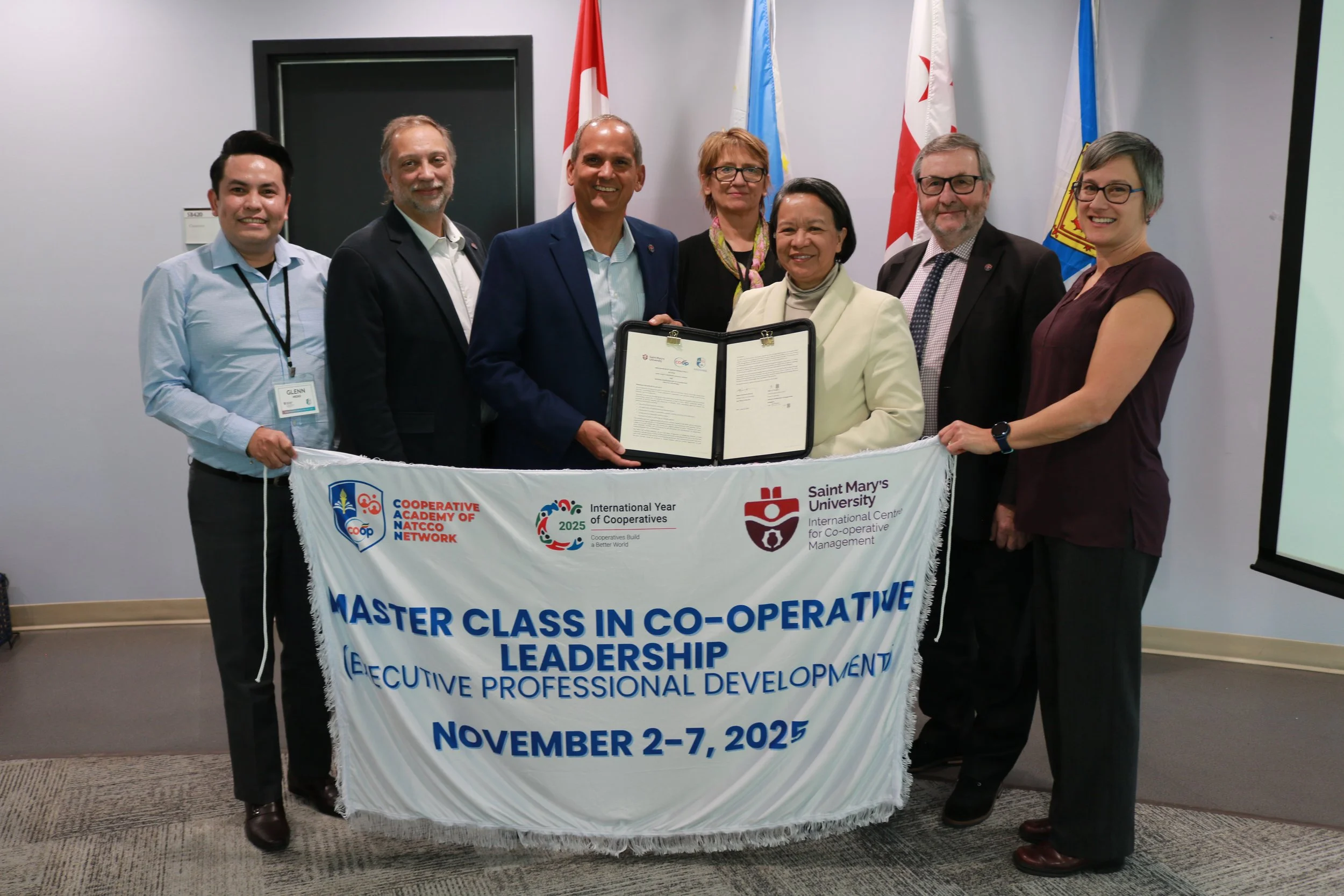
Representatives from Saint Mary’s University and the National Confederation of Cooperatives of the Philippines

NATCCO Philippine delegation arrives in Halifax for a week of collaboration, learning and a newly signed partnership with Saint Mary’s

Saint Mary’s University deepened its global ties this November, celebrating a new international partnership that connects co‑operative leaders from Canada and the Philippines.

On November 3, Saint Mary’s President Dr. Michael Khan, Sobey School of Business Dean Dr. Michel Delorme, and Faculty of Graduate Studies and Research Dean Dr. Adam Sarty joined the International Centre for Co‑operative Management (ICCM) for a special event marking the signing of a Memorandum of Understanding (MOU) with the National Confederation of Cooperatives (NATCCO) of the Philippines.

With 2025 designated as the United Nations’ International Year of Cooperatives, the timing underscores a shared commitment to strengthening the co-operative movement worldwide.

According to the International Cooperative Alliance, cooperatives are people-centered enterprises owned, controlled and run by and for their members to realize their common economic, social and cultural needs and aspirations.

This ethos aligns closely with the UN theme for the year: Co‑operatives Build a Better World.

NATCCO, the Philippines’ national organization representing co‑operatives and credit unions, sent a delegation of 28 senior business leaders to Saint Mary’s for the first week of November. Hosted by the ICCM, the group explored the Canadian credit union system, engaged with the Centre’s specialized research on governance, strategy, and market differentiation, and visited co‑operative partners across Nova Scotia.

“We are delighted to bring our member-cooperatives here to learn, connect, and broaden their perspectives,” said CEO Sylvia O. Paraguya. “This week has been rich with insights, and we are grateful for the meaningful exchanges we have shared. As this is our pilot batch, we look forward to bringing another group next year.”

Regarding the partnership with ICCM, Paraguya states, “NATCCO remains committed to building stronger cooperatives within an integrated network, and education and training continue to be at the heart of our services. We deeply value our relationship with the International Centre for Co-operative Management. This partnership is yet another expression of cooperation among cooperatives — a truly fitting initiative as we celebrate the second International Year of Cooperatives (United Nations).”

For the ICCM, the partnership reinforces a long-standing commitment to global co‑operative education and collaboration.

“It is always a pleasure to connect with our international network,” said Karen Miner, Managing Director of the International Centre for Co‑operative Management. “We have been offering education to co-operatives across the globe since 2003, and each new partnership is strengthening our collective knowledge and network. The NATCCO group was a very engaged group and we look forward to more collaborations.”
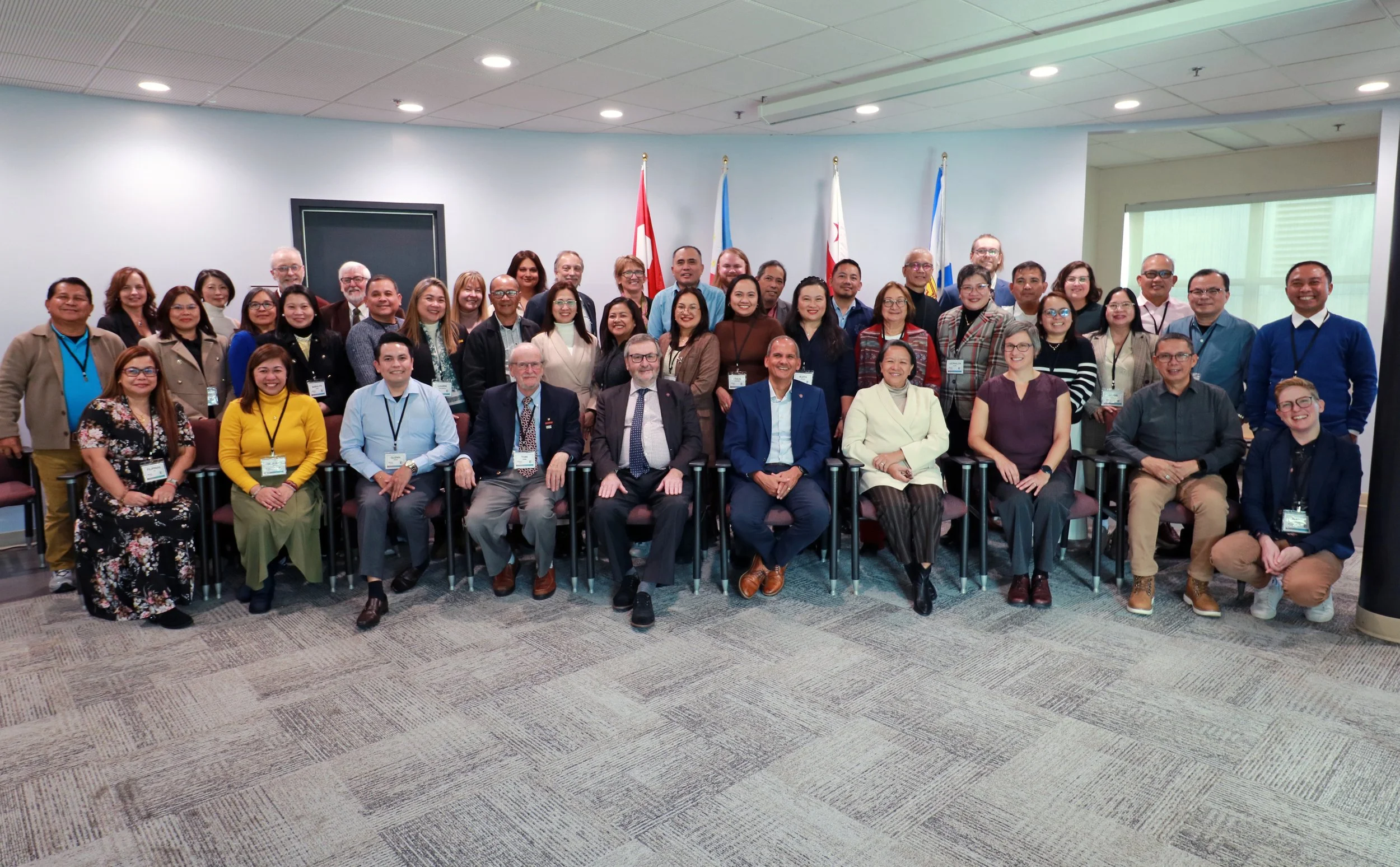
Saint Mary’s International Centre for Co‑operative Management (ICCM) and the National Confederation of Cooperatives (NATCCO) of the Philippines celebrated a new MOU in November 2025

The newly signed MOU promises to open doors to continued learning, shared research and joint initiatives that will support the advancement of cooperative systems in both countries. As the world approaches the International Year of Cooperatives, the partnership between Saint Mary’s University and NATCCO stands as an example of how global collaboration can help co‑operatives thrive.

More information about the International Centre for Co‑operative Management is available at www.smu.ca/iccm.

Data with heart: A new pathway for healthcare innovators

When healthcare and data meet, the possibilities extend far beyond numbers—they shape the future of how we care for one another. That belief sits at the core of the Graduate Diploma in Health Data Analytics (GDHDA), Saint Mary’s newest graduate offering through the Sobey School of Business, designed for professionals ready to use data as a force for better health outcomes. 

Launching this winter, the GDHDA is a 12-month, weekend-format graduate diploma created for working professionals who want to remain in their roles while developing advanced analytical and leadership skills. The program responds to a growing need in healthcare: leaders who understand both people and data. 

“Healthcare is undergoing a profound transformation,” says Dr. Michael Khan, President and Vice-Chancellor of Saint Mary’s University. “This program reflects our commitment to collaboration and innovation, connecting academia, the healthcare sector and our broader community to address real-world challenges that matter to Canadians.” 

Developed in partnership with Nova Scotia Health, the GDHDA bridges the expertise of data scientists, healthcare administrators and policy leaders. Students learn to connect analytics to real-world decision-making through courses in data governance, predictive modeling and visualization, all grounded in the ethics of responsible innovation. 

Dr. Shannon Dea, Provost and Vice-President Academic and Research, highlights how the diploma aligns with Saint Mary’s University’s broader academic strategy. “Programs like the GDHDA showcase how interdisciplinary education can have direct social and economic impact,” she says. “It gives professionals the tools to translate complex data into knowledge that improves patient care and system performance.” 

For Dr. Michel Delorme, Dean of the Sobey School of Business, the diploma captures Sobey’s mission in action. “The GDHDA represents what the Sobey School stands for: education that connects business, technology and community impact,” he notes. “It builds capacity in a sector that touches every Canadian and shows how data-driven leadership can improve lives.” 

One of the program’s most distinctive features is its pathway to the Master of Business Analytics (MBAN). Students earn graduate credits transferable toward the MBAN, allowing them to continue their studies and deepen their technical and strategic expertise. 

For Sobey MBAN alumnus Ryan Campbell, that pathway represents real opportunity. “The MBAN completely changed how I think about data, not just as numbers, but as a language for solving problems,” he says. “For healthcare professionals, the GDHDA offers that same transformation, but through the lens of health and human impact.” 

As the first cohort prepares to begin in September 2026, the GDHDA underscores Saint Mary’s ongoing commitment to driving innovation that serves people and communities. “It’s an investment in leadership that advances both healthcare and society,” says Dr. Khan. 

Saint Mary’s invites its alumni, partners and community to help amplify this milestone by sharing the opportunity and championing the program within their networks. 

Learn more or apply at smu.ca/gdhda 

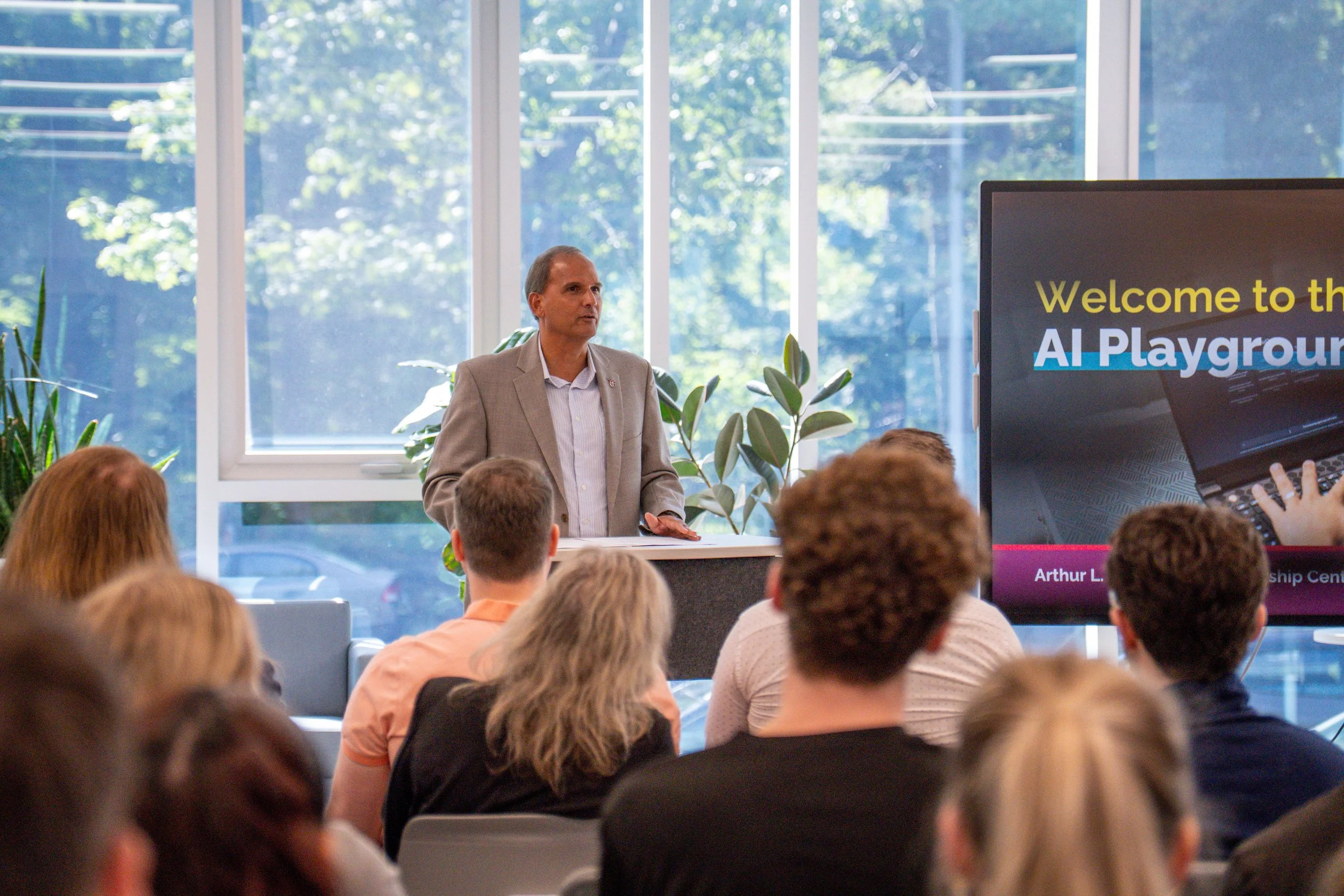
Meet your Valedictorian: Kjeld Mizpah Conyers-Steede, MTEI

Kjeld Mizpah Conyers-Steede

Kjeld Mizpah (KJ) Conyers-Steede is a graduate of the Master of Technology Entrepreneurship and Innovation (MTEI) program at Saint Mary’s University. His research explores how social finance and catalytic capital can empower rural and isolated communities to achieve sustainable economic transformation. Under the supervision of Dr. Chantal Hervieux, KJ’s thesis examined how seed funding shapes capital flows and governance in rural regions, providing new insights into how social innovation can reimagine development beyond traditional finance models.

As the founder and CEO of Future Civics, a nonprofit organization based in Nova Scotia, KJ continues to test ways to support rural innovation by merging business startup ideology with community-based approaches.

Learn more about KJ in the Fall Convocation Program.

Q & A

Where is your hometown?
I’m originally from Bermuda, but I’ve made my home in Hantsport, Nova Scotia. Both places are islands in their own way and have shaped how I see community, resilience, and innovation.
Why did you choose Saint Mary’s?
My father went to Saint Mary’s, and for him, it was the launching pad for his career. In many ways, it’s been the same for me. I chose SMU because of its reputation for connecting business with community impact, a balance that reflects both my roots and my goals.

Did you live on campus?
I lived off campus on my property, which I am turning into a small-scale farm while juggling work, research, and community projects. 

What’s your favourite space on campus?

The Inspiration Hub. It’s the heartbeat of the university — open, bright, and filled with the kind of energy that comes from people who believe they can make things happen.

What was your favourite course?
My thesis. It gave me a framework for understanding how ideas move from concept to impact, a lesson that’s shaped both my thesis and my career.

Which instructor had the biggest impact on you?
Dr. Chantal Hervieux. Her guidance pushed me to connect research with purpose, and to always ensure that my work, whether academic or practical creates space for others to lead and innovate.

What is your favourite SMU memory?
Defending my thesis. It was the culmination of years of research, travel, and collaboration. That moment wasn’t just academic; it was deeply personal. It represented resilience, purpose, and growth.

What will you miss most about Saint Mary’s?
The community. SMU has a unique way of bringing together people from every walk of life, each with a story that adds to the bigger picture. I’ll miss that daily exchange of ideas, cultures, and perspectives.

What are your goals for the future?
I want to continue bridging research and practice, especially in social financing and rural innovation. Whether in Bermuda or Atlantic Canada, my goal is to design systems that make it easier for communities to access capital and build sustainable futures.

How has Saint Mary’s helped to set you on this path?
Saint Mary’s gave me the language and confidence to turn ideas into action. The university’s focus on entrepreneurship and social impact helped me see that business can be a vehicle for systems change, not just profit.

What advice do you have for new students?
Be curious about everything — not just your program. The real magic of SMU is in the connections you make and the ideas you explore beyond the classroom. Don’t just chase a degree; chase understanding.


Fall Convocation takes place November 13 & 14. See the schedule, live stream links and more information here: smu.ca/graduation

From Pugwash to the World Cup stage: BComm student champions community, entrepreneurship and global impact

Olivian is a white woman with long dark hair. She speaks into a microphone on a stage

BComm student Olivian Sanderson presents at the Enactus World Cup stage in Bangkok, Thailand

Olivian Sanderson grew up in Pugwash, Nova Scotia—a rural, picturesque fishing village with approximately 800 full-time residents. In just a few short years since coming to Saint Mary’s, she’s had the chance to travel the world and make a meaningful impact in the community through her involvement with Enactus Saint Mary’s and the Arthur L. Irving Entrepreneurship Centre.

Growing up, Olivian learned from her parents the importance of hard work, community and seizing opportunities. She made an impression during her high school years as Chair of the Cumberland County Youth Council, Student Council President, Ambassador for the Nova Scotia International Student Program and recipient of the Lieutenant Governor of Nova Scotia Award (2022) and Governor General’s Academic Medal of Canada (2023).

Olivian poses in front of a building in Thailand

When considering universities, Olivian knew she wanted to experience city life and find a program that would allow her to pursue her passion for business and community building. Knowing its reputation as one of Canada’s best business schools, she applied to the Sobey School of Business at Saint Mary’s.

Apply to the BComm program

She was the successful recipient of a Sobey National Innovator Scholarship, including on her application: “Looking to the future, I have big dreams and aspirations. I am passionate about understanding how the economy works and plan to use my skills to be involved in projects that support the community, as it has provided so much for me. I want to make the best world for myself and the people around me.”

Now a third-year accounting and management student, she’s made great strides toward her goals as the Co-Founder of the Sociable start-up and presenter for the global award-winning Enactus team.

Launching Sociable

Despite being very involved in high school, Olivian found the first few weeks of university difficult and lonely. Determined to find her place at Saint Mary’s, she dove headfirst into everything – trying out multiple societies and volunteering. Ultimately, it was Enactus and the Arthur L. Irving Entrepreneurship Centre where she found her place among people who shared her passion for big dreams and doing business for good.

Olivian and a group of students in Enactus tshirts

Olivian found community and leadership opportunities through the Arthur L. Irving Entrepreneurship Centre

During a session with Enactus Saint Mary’s, the idea for the Sociable start-up was formed. Sociable is an online community platform that helps students connect, get peer support and gain access to campus events. It builds student engagement, boosting student retention, wellness and success. Olivian and co-founder of Sociable, Jason Phonchareon BSc’25, developed the start-up to address student loneliness and mental health concerns, something they both experienced.

In 2024, Sociable won the Dream Chaser Change Maker (DCCM) Foundation Social Impact Award, which included a $10,000 prize to support business development – bringing Olivian one step closer to making a positive impact on students’ lives.  

Seeing the world with Enactus

In 2024, Enactus Saint Mary’s won the National Enactus Championship for the first time. As a member of the presentation team, Olivian had the opportunity to travel to Astana, Kazakhstan, to represent Canada in the World Cup competition. While they didn’t win in Kazakhstan, it was an incredible learning experience for Olivian and her teammates.

In 2025, during Olivian’s second year as presentation team captain, the Saint Mary’s team earned their second National Championship win. This time, they travelled to Bangkok, Thailand, to compete against 28 of the best teams from around the world in the Enactus World Championship.

The team worked around the clock on their presentation about two student-run social enterprises—Alaagi and Square Roots—practicing, editing and preparing to answer questions. Olivian applied her work ethic and passion to the Enactus presentation, sharing the inspiring work being done by students at Saint Mary’s. Facing finalists from Zimbabwe, Tunisia and Germany, their presentation wowed the judges, and the team was crowned Enactus World Champion – the first world title for Saint Mary’s University.

Olivian with two presenters on stage

Olivian on stage at the Enactus World Cup in Thailand

Enactus team holds a trophy and Canadian flag

Enactus Saint Mary’s celebrates winning the World Cup

Reflecting on her first two years at Saint Mary’s, Olivian sometimes shakes her head at how much she has experienced. Her advice to new students: get as involved as you can.

“Classes are great, but you will have life-changing experiences in extra-curricular activities. The mentorship, the soft skills, and the network – so very valuable. It’s thanks to those experiences that I’ve been able to see the world.”


Opportunities at the Arthur L. Irving Entrepreneurship Centre are open to all Saint Mary’s students – check out their programs and events here.

Student researcher digs into berry research in northern Canada

A group of researchers outdoors with berries and buckets

Claire Singer (far right, back) and Dr. Erin Cameron (far left, front) from Saint Mary’s University with members of the research project in September 2025 (“The Berry Happy Pickers”).

From back left: Elaine Lamalice (Hay River), Celine Proctor (Fort Good Hope), Lila Fraser Erasmus (Yellowknife), Beatrice Lepine (Hay River), Margaret Leishman (Ka'a'gee), Anne Thrasher (Paulatuk), Claire Singer. From front left: Dr. Erin Cameron, Megan Francisco (University of Victoria), Annie Buckle (Aklavik). Other project members missing from photo.

Curiosity about bears’ food sources led to years of research and collaboration with many people across the Northwest Territories in northern Canada

Claire Singer had been working at the Northwest Territories Species at Risk Secretariat for years when grizzly bears were assessed under the Species at Risk (NWT) Act in 2017.  

This review indicated a decline in berry crops—a key food source for the bears—but at the time, there was no definitive knowledge on the extent of the issue in the Northwest Territories. The Northwest Territories Species at Risk Committee recommended that this research be completed, focusing on the extensive knowledge held by Indigenous peoples in the region. 

“Berries are important ecologically, economically and culturally in the northern territories,” explained Claire. “There seemed to be a decline in this food source, and it was clear that more research was needed to gather information about the changes to the land and the habitat.”     

Around the same time, intrigued by a Facebook post to a page focused on the identification of Northwest Territories species by biology professor Dr. Erin Cameron, who was looking for graduate student researchers in her lab, Claire left her job with the government of the Northwest Territories after 13 years to start a PhD in 2020 at Saint Mary’s University. Her PhD examines changes in plant communities in the territory, with a focus on the status of berries. She lived in Halifax for her initial coursework during the COVID-19 pandemic, returning home to the Northwest Territories in 2022 to continue her research and PhD thesis, which she hopes to defend in the near future.

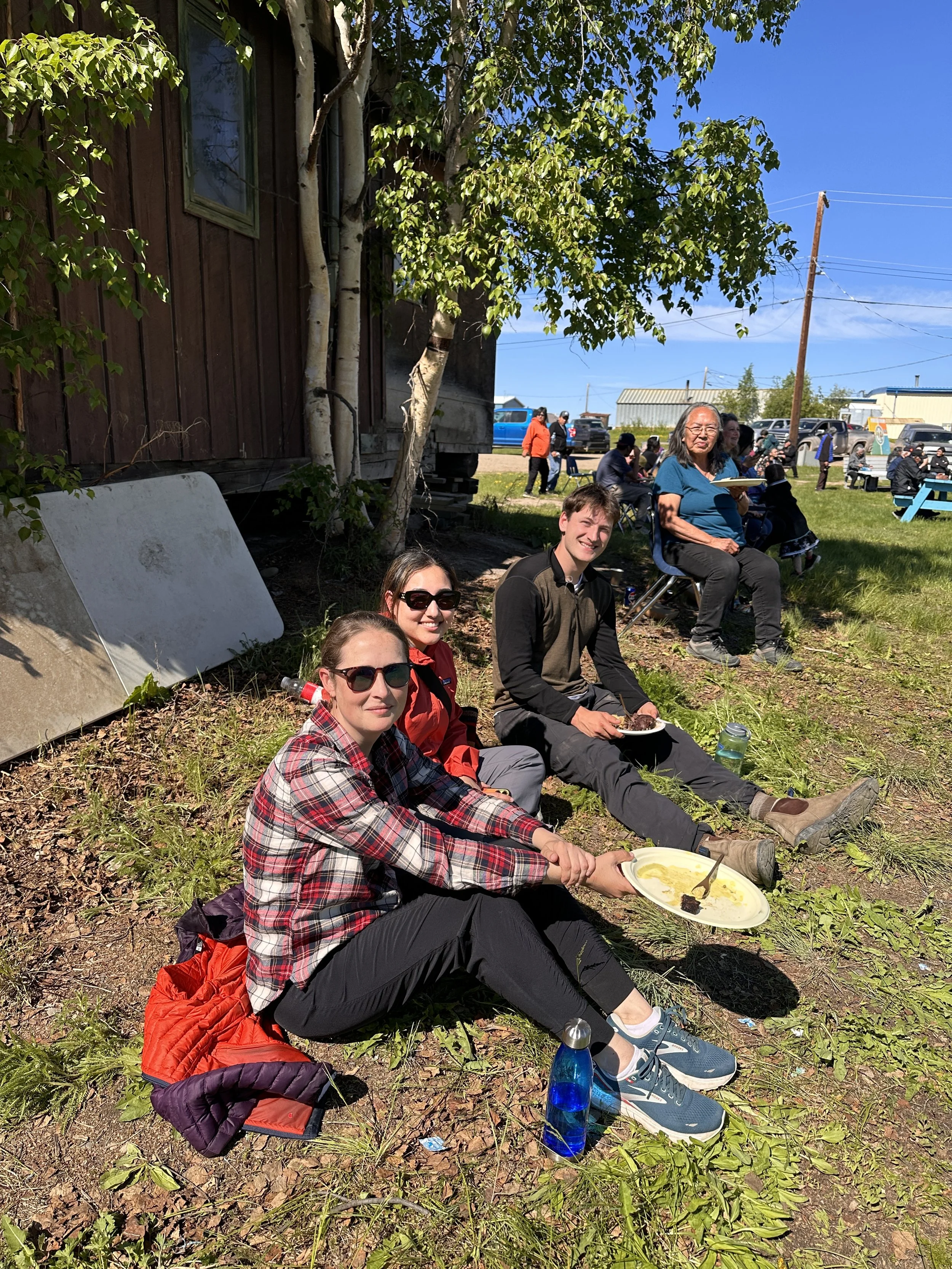
A small group sits on the ground outside

A few members of the team in Fort McPherson for the validation sessions: Claire Singer, Giannina Karki, Karl Hare, and Alestine Andre.

Conducting research in the Northwest Territories involved travelling and facilitating 118 interviews with elders across the region, as well as coordinating with various agencies, government groups and other stakeholders.  

Thanks in part to her work, cranberries will be assessed under the Species at Risk (NWT) Act in 2028. In her research, she learned about regional variations in berries across the territory. Changes in the landscape, from drought in the south to less predictable growing seasons in the north, and fires that saw two-thirds of the territory evacuated in 2023, all indicate that changes are occurring in this vital crop.  

Working with supervisor Dr. Cameron, master’s students and numerous collaborators helped make the sheer scale of the work possible. Project management, finding people to interview, arranging travel and translators, map making and transcribing and coding interviews to analyze data were all possible thanks to the team.  

“Summer students were a big part of the project; it never would have happened without their work,” explains Dr. Erin Cameron. “One student made maps to pinpoint areas where the berries were located. They also transcribed and coded interviews to analyze.” In particular, Giannina Karki, who graduated in 2024 with a BSc in Environmental Science from Saint Mary’s, worked with the team for one of her undergraduate summer co-op terms and continued to work with the project until this fall as a project manager, providing key logistical support. 

A report cover with illustrations of berries and leaves

A published book that arose from the project, called Guide to the Berries of the Northwest Territories”, has 14 author credits on the cover, including nine authors who act as the Indigenous knowledge advisory board for the project. One credit indicates a family connection for Claire—her mother, Lesley, created most of the beautiful illustrations throughout the book.   

The book documents Indigenous knowledge of berries throughout the NWT, outlines respectful harvesting principles, and identifies all known Northwest Territories berries and their habitat and uses. Other publications currently under development will summarize broader results from the interviews, including abundance, trends, interactions with animals, and threats, providing a picture of the status of berries across the territory. 

“It is a very collaborative process, and working with Elders who understand the scope of the history of the land is fascinating,” says Claire. “Elders see the changes to the land, and the effects of climate change vary from region to region, but they are generally more pronounced in northern latitudes.”  

A yellow labrador

As Claire continues her work on her PhD in a part-time capacity, she also operates an ecological consulting firm, Rubus Consulting, in Yellowknife, Northwest Territories. Her dog Rubus, after the Latin genus name for raspberries and cloudberries, is the namesake for the business. He loves eating berries.  

Changing the game: how one sports business student is championing inclusion in sport

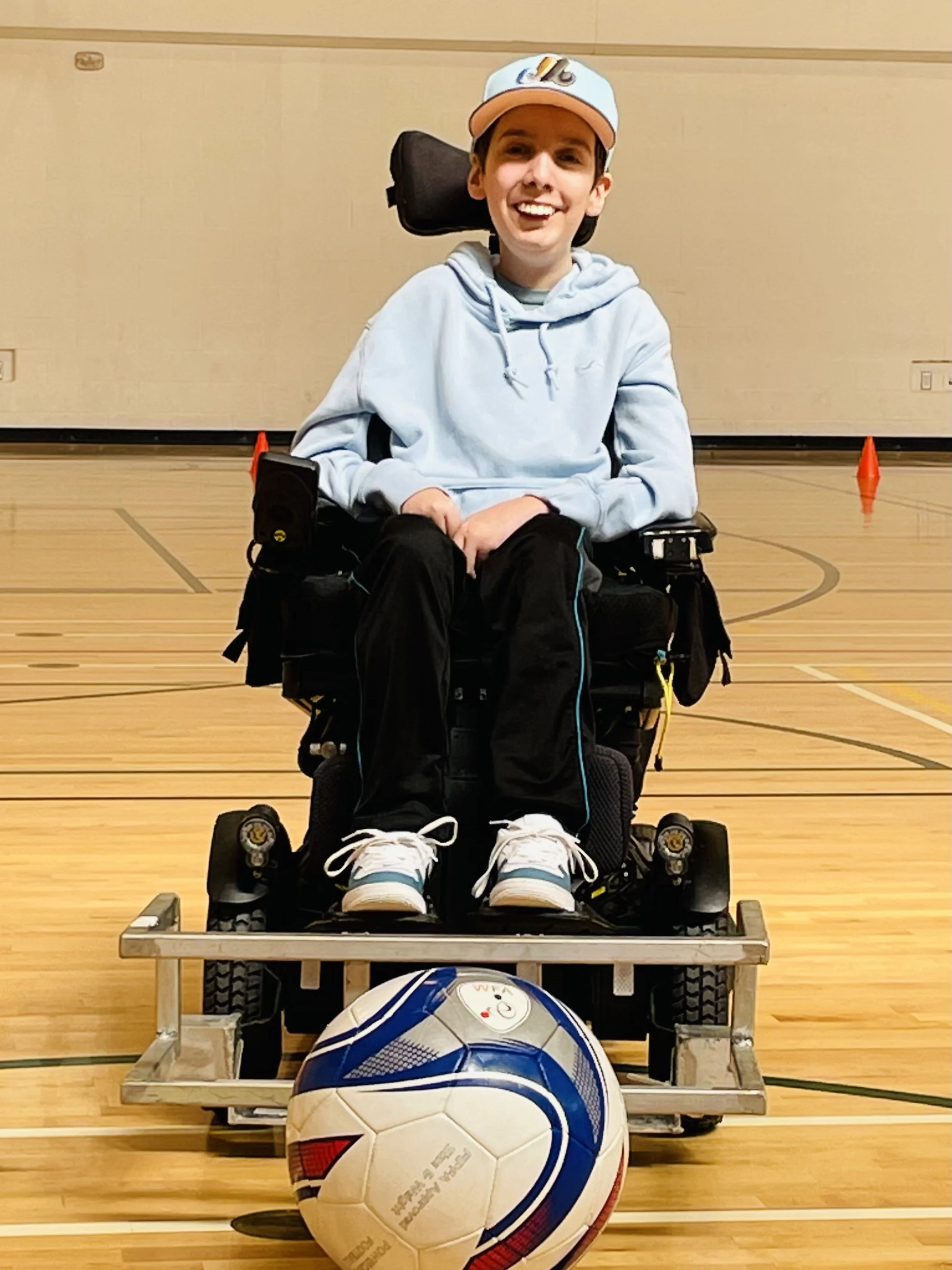
Van sits in a power wheelchair with the Huskies field behind him

Van Bernard began his Bachelor of Commerce at Saint Mary’s in Fall 2025

Van Bernard has known what he wants to do since he was eight years old.

Diagnosed with Spinal Muscular Atrophy (SMA) type 2 as an infant, Van uses a power wheelchair to navigate daily life and support his vast athletic endeavours—participating in para-sports like power wheelchair soccer, sledge hockey and para sailing. He also coaches baseball.

Van’s love of sports began as a young child, when his father and his uncle—both lifelong hockey fans—competed over which of their respective teams would become Van’s favourite. Van’s uncle won, and he’s been a diehard Ottawa Senators fan since. As time went on, and as Van and his family began travelling for specialized medical treatment in Toronto, his love affair with sports evolved from a passion into a calling.

“I remember going to a Blue Jays game in Toronto, and I realized that sport instills a feeling of excitement like nothing else,” Van says. “I knew being a professional athlete wasn't how I envisioned my career as a person living with a disability and using a wheelchair. I knew I wasn’t going to be a professional NHL player, but it wasn't over for me. I knew I could still be in the sports world and combine my passion for relationship building with my love for athletics.”

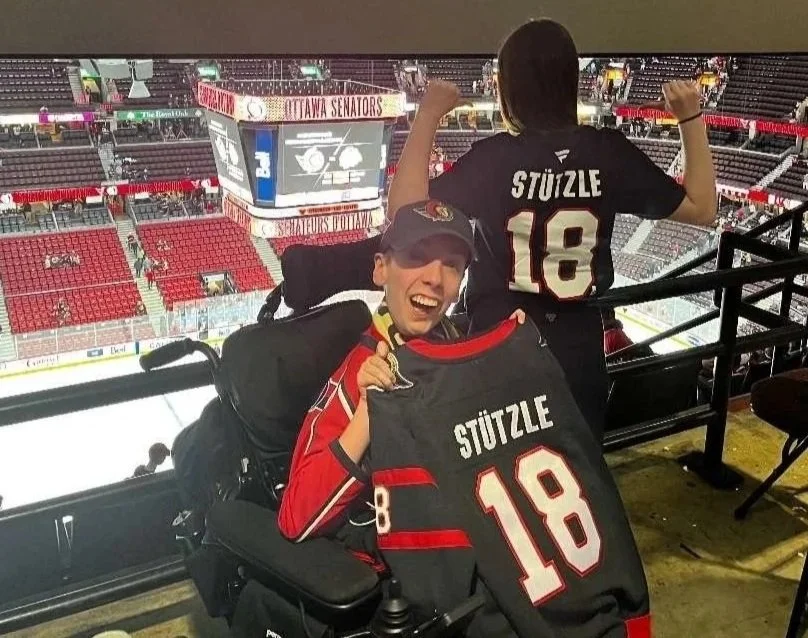
Van holds up a Stutzle jersey at the Senators arena
...sport instills a feeling of excitement like nothing else. I knew I could still be in the sports world and combine my passion for relationship building with my love for athletics.
— Van Bernard

Van has already begun to carve a path that blends these passions. His dedication to disability advocacy in sport was recognized earlier this year when he received the Terry Fox Humanitarian Award. Looking ahead to his career, Van has identified an area of the sports industry that he is uniquely suited to address—para-athlete sponsorship—and he’s come to Saint Mary’s to gain the education he needs to start making waves in the industry.

Van in a gym with a volleyball in front of him

Van plans to use his Sports Business degree to work with para-athletes

“I've always wanted to manage the sponsorships of para-athletes,” he says. “I love them. They're people like me, and giving them an opportunity to be a pro, to be recognized, and to get more recognition from able-bodied people is something I’m passionate about—because these athletes are extremely talented, and often, nobody hears about them.”

The Sports Business major is a new specialization within the Bachelor of Commerce program at Saint Mary’s. It’s designed to give students like Van hands-on experience that prepares them to work in the world of athletics. The program is also unique in Atlantic Canada, helping to nurture Maritime talent right here at home. The timing of the new major was perfect for Van.

“One of the main reasons I came to Saint Mary’s was the sports business program. I was looking at universities outside of Atlantic Canada because I knew this was what I wanted to do, and I was prepared to move to pursue the education I needed. The minute SMU announced that they were introducing a new major in sports business, I immediately applied. And when I got in, I was thrilled.”

The minute SMU announced that they were introducing a new major in sports business, I immediately applied. And when I got in, I was thrilled.

Offering courses in sports marketing, sports and sustainability, and sports law, the major combines classroom learning with experience-based projects to equip students to thrive in a fast-paced and in-demand industry. For Van, that education is an invaluable foundation to build the career of his dreams.

“I’ve done lots of advocacy work for disability rights,” Van says. “That’s my path, that’s what I want to do, and I’m continuing to do that work right here at Saint Mary’s.”

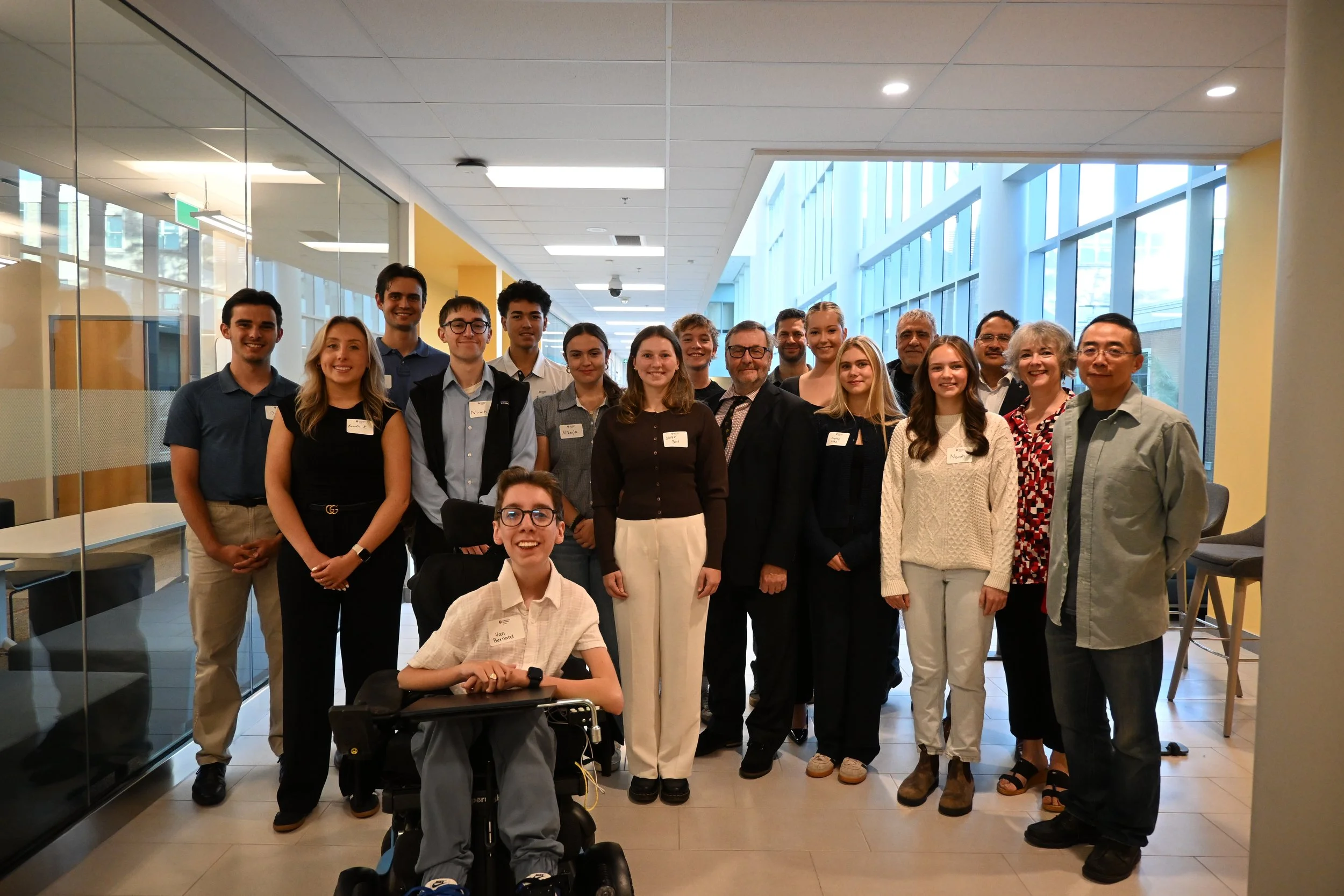
Van with a group of students and faculty

As one of the 2025 recipients of the prestigious Sobey National Innovator Scholarship, Van is part of the Sobey Scholars Network with fellow students, alumni and faculty (shown here).

Learn more about the Sports Business Program

SMU Monster Fest explores diversity of monstrous topics

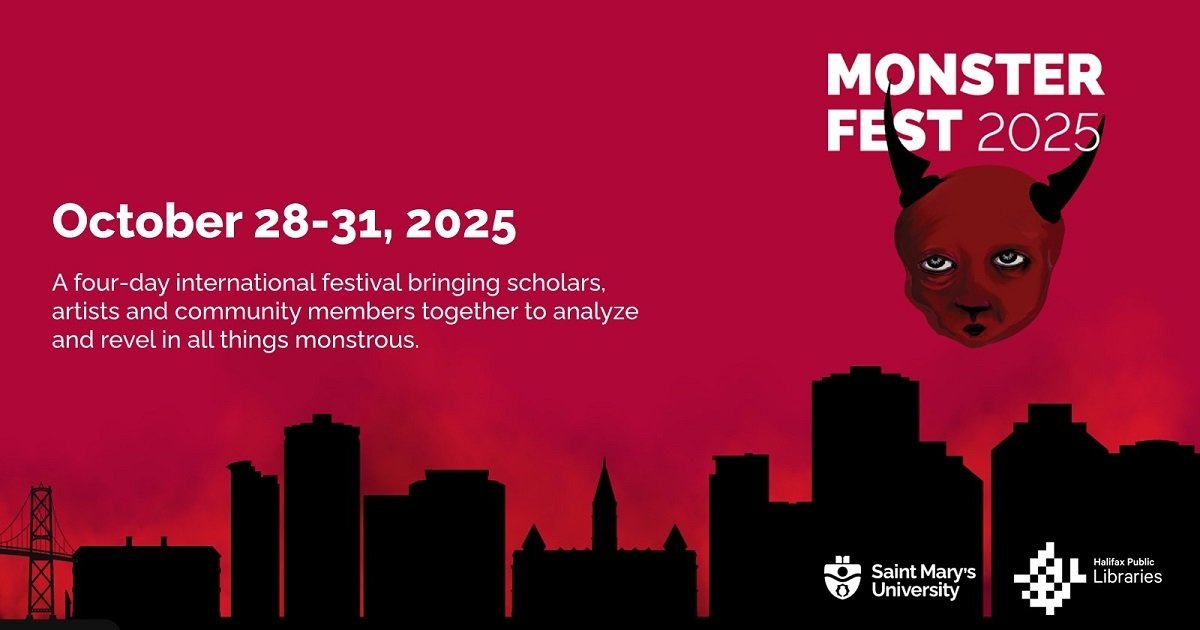
Event info with monster character

Things are looking strangely monstrous around campus this week, as Saint Mary’s University hosts Nova Scotia’s first Monster Fest.

Since the dawn of humanity, people have been preoccupied with monsters and monstrosity. How many different monsters are out there in our imaginations and in reality? Why are we so fascinated by them? What do monsters reveal about us?

These are just a few of the questions Monster Fest 2025 is exploring this week in events across campus and at Halifax Central Library. Celebrating the rapidly expanding field of monster studies, the four-day international conference features academic panels with 50+ speakers, free horror film screenings, a Bazaar of the Bizarre and more. It culminates in a Monster Ball costume party on Hallowe’en night.

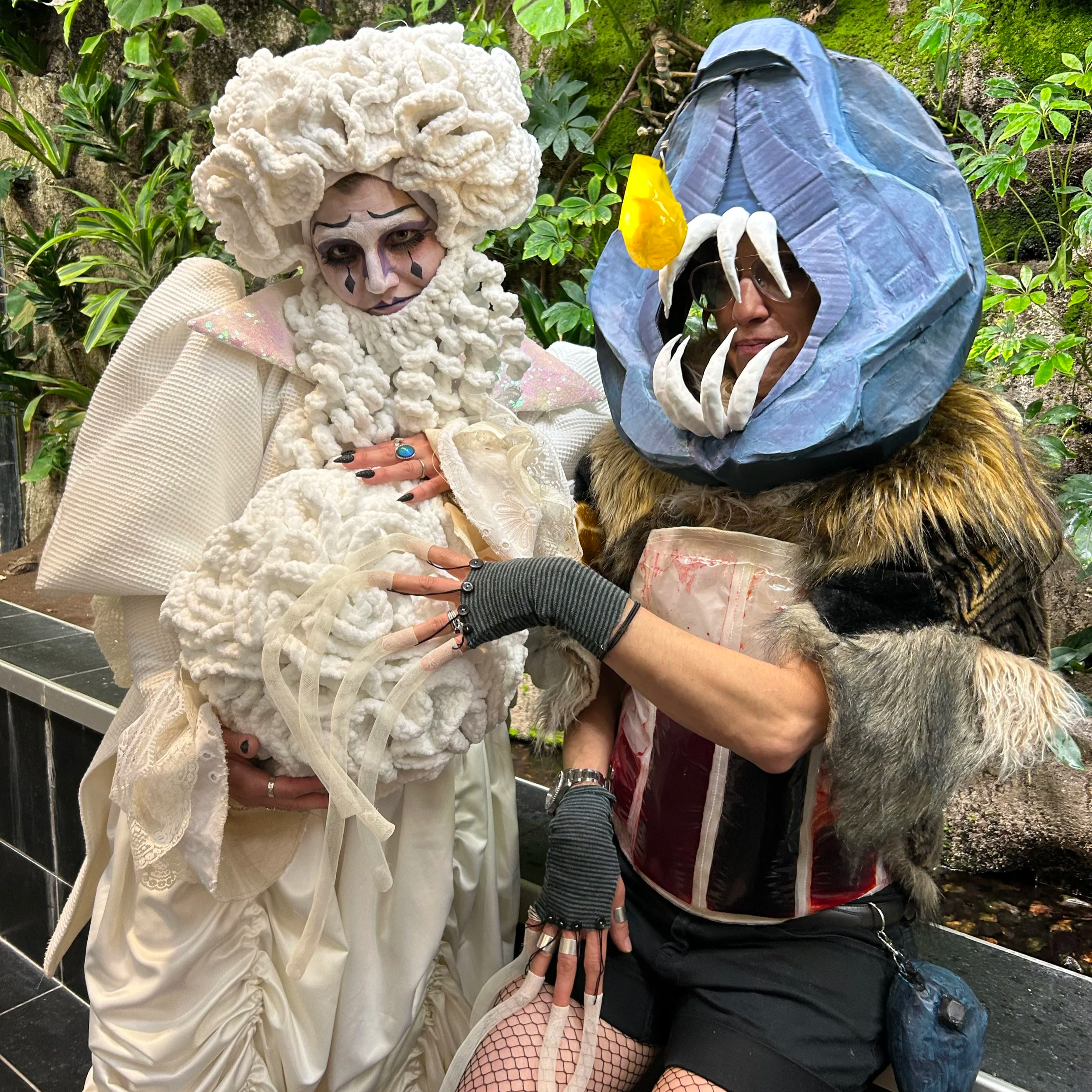
Two people in ornate costumes

Dr. Michele Byers and Dr. Lindsay Macumber in costumes created by NSCAD students at Monster Fest

The conference was developed by two professors in the Faculty of Arts who were inspired by the Festival of Monsters at the University of California, Santa Cruz. Dr. Lindsay Macumber teaches the popular “Monsters” course at Saint Mary’s, open to the public through our Arts for Everyone program. She had been preparing a panel of four speakers for this fall’s Santa Cruz event, including herself, a colleague and two SMU students.

“We were in the process of getting ready for that, and it just became apparent that it was no longer safe to travel to the United States,” the Study of Religion professor explained in a radio interview this week with CBC Information Morning. “The political situation in the United States is just untenable at the moment, particularly for any of our queer and racialized students. When we are responsible for their safety, it's not something we were equipped to do.”

Her colleague Dr. Michele Byers, coordinator of the Women and Gender Studies program, suggested that Saint Mary’s could host a sister festival for scholars across Canada and beyond. The idea was born, quickly receiving endorsement from the Santa Cruz festival.

“I think there's something really for everyone,” Byers said in the CBC interview. “We have a really broad range of topics, and I think it speaks to the fact that monsters and the monstrous kind of touch every part of life. They make their way to everything.”

Monster Fest lineup

The academic panels examine monstrosity’s significance across diverse lenses such as gender, race, sexuality, ability, religion and Indigeneity. Student and faculty panellists and delegates are here from universities across the Atlantic region and as far as Alberta and even the U.K., with most panels taking place in the Arthur L. Irving Entrepreneurship Centre.

Halifax Central Library hosts two free public lectures and film screenings. Thursday’s keynote speaker is Dr. Novotny Lawrence, Director of the Black Film Centre and Archive at Indiana University, Bloomington. He’ll discuss Black horror with a focus on Nia DaCosta’s film Candyman (2021). Dr. Krista Collier-Jarvis of MSVU offered a “Too Ghoul for School” keynote, focusing on Indigenous horror via Mi’kmaq director Jeff Barnaby’s Rhymes for Young Ghouls.

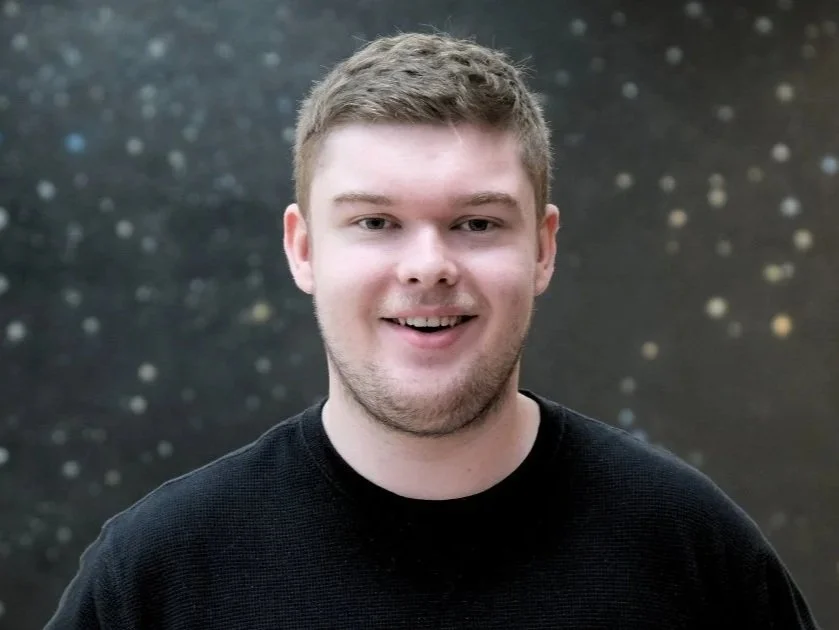
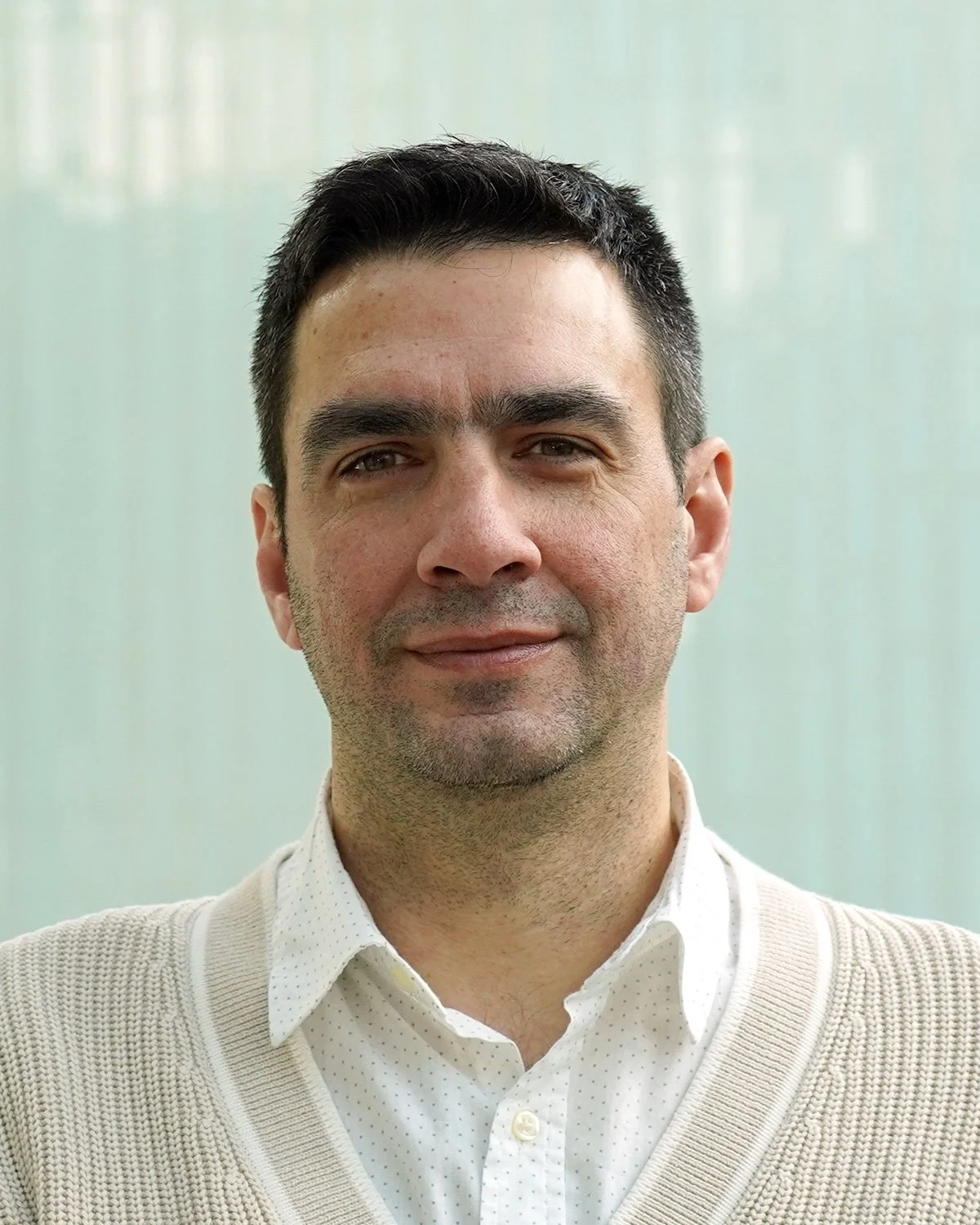
Novotny Lawrence is a black man with a short beard

Dr. Novotny Lawrence

Krista Jarvis is an Indigenous woman with red hair. She wears a Blood Quantum necklace.

Dr. Krista Collier-Jarvis

The free films are Barnaby’s Blood Quantum, with Collier-Jarvis leading a panel discussion (Oct. 29 at 6 p.m.); and a 50th anniversary screening of The Rocky Horror Picture Show, with an introduction by Dr. Allyn Walker of SMU Criminology, a shadowcast performance by the SMU Drama Society and a Q&A organized by the SMU Pride Society (Oct. 30 at 6 p.m.).

Anita is an Indigenous woman. She wears a red dress and gloves.

DJ Anita LandBack

Friday’s highlights include a Coven/Community breakfast, a Dark Romance workshop led by SMU students Jodie Hamilton and Jade Newell, and an artist tour of TWO PANSIES: Autumn Star & Shay Donovan at the SMU Art Gallery. The Monster Ball, hosted by DJ Anita LandBack, follows a “Carrie’s prom” theme, with the SMU Drama Society performing pivotal numbers from their hit Carrie: The Musical. Another highlight at the Ball will be wearable art monster costumes created by students at NSCAD University.  

Monster Fest 2025 is supported by many partners and sponsors. Find the full event lineup, bios, lecture abstracts and more at smu.ca/monsterfest.

Related

Nova Scotia students team up for first Provincial Innovation Sprint

Group photo of students

Saint Mary’s and NSCC students participated together in an Innovation Sprint for The Dordéan Suites of Chester

Students from Saint Mary’s University and Nova Scotia Community College (NSCC) came together for the first-ever Provincial Innovation Sprint on September 26 at NSCC’s Lunenburg Campus in Bridgewater, NS. 

The day marked the start of a new two-year partnership between the Arthur L. Irving Entrepreneurship Centre and NSCC, designed to connect students and local businesses across Nova Scotia through hands-on innovation challenges. 

Ten students, five from each institution, were paired up to help The Dordéan Suites of Chester, a social enterprise that provides meaningful employment opportunities for adults with disabilities. Their task was to develop new ideas to promote the cabin’s unique features and reach a younger audience looking for memorable, local getaways. 

Over four hours, the teams brainstormed, sketched and refined their ideas with guidance from faculty mentors and NSCC representative Nicole Osmond. Students proposed themed getaway packages, wellness experiences and ways to highlight the cabins’ story through community partnerships and social media. 

For business owners Renena and Shawn Joy, the experience was both exciting and inspiring. 

“We had a great experience participating in the Innovation Sprint,” they shared. “It was inspiring to see students bring creativity, fresh ideas and energy to the challenges at The Dordéan Suites of Chester. Their innovative solutions and thoughtful presentations were an excellent example of the value of collaboration and new perspectives.” 

By the end of the afternoon, three teams stood out. Taking first place were Caroline MacPhee and Abbigail Leslie-Bigelow, both NSCC students, whose concept drew on their Irish heritage. They envisioned transforming a common space into an area for meditation and healing activities, working with local wellness and cultural groups to bring the idea to life. Impressed by their thoughtful approach, Renena and Shawn offered them a complimentary stay at the cabin as a thank you. 

Second place went to Dwiesha Swann and Mannat Gogia from Saint Mary’s and Amber Davis from NSCC, while third place went to Hazzaa Sujeer and Kathleen Steele, both from Saint Mary’s. 

The event was a chance for students to apply what they’ve learned, collaborate with peers from another institution and see how their ideas can make a tangible difference for a local business. 

More events like this are planned across the province, giving students the opportunity to turn creativity into impact one challenge at a time. 

Learn more about Innovation Sprints and how you can get involved here

Saint Mary’s students help unlock black hole secrets

An Adobe image of a black hole

The most violent places in the universe are being studied right here at Saint Mary’s – by both graduate and undergraduate students

New funding from the Canadian Space Agency is helping push that research even further. $100,000 in support for Canada’s role in the XRISM mission is now backing the work of Dr. Luigi Gallo and his student team, Saint Mary’s AstrophysicS High-Energy ResearcherS or the SMASHERS.

Keegan Riggs

“Working with SMASHERS has been incredible,” says Keegan Riggs, a third-year undergraduate physics and astrophysics student at Saint Mary’s University. “The group is a mix of students and post-doc fellows. It’s been really cool getting their experience and applying it to my courses now.”

“Everyone has their own research they are working on,” says Keegan. “Every week we meet up, share our progress and bounce things off each other – we ‘smash’ our ideas together. It really helps expand our understanding.”

Dr. Gallo’s team includes graduate students, postdocs, and undergraduates who take part in every part of the research process, from crafting telescope proposals and analyzing data, writing papers and presenting at international conferences.

“Students are involved right from the beginning,” says Dr. Gallo, Professor of Astronomy and Physics at Saint Mary’s University. “They write proposals, analyze the data, and carry out full projects. And now, with this new funding, they can go even deeper – including travel, publishing and presenting internationally.”

XRISM logo

XRISM is a next-generation X-ray observatory

XRISM is an international space mission that studies black holes, exploding stars, and the chaotic cosmic environments that shape galaxies.

Led by Japan’s space agency (JAXA) with support from NASA and the European Space Agency (ESA), XRISM is a next-generation X-ray observatory that is now collecting data that scientists have been waiting decades to see.

Dr. Luigi Gallo

“These are the major instruments of our time,” says Dr. Gallo. “Everyone’s heard of Hubble –  but XRISM, Euclid, and James Webb Space Telescope, or JWST, are the missions defining astrophysics right now. Students at Saint Mary’s are not just participating, they are leading the work.”

Black holes themselves do not emit light, but their surroundings do. XRISM captures and decodes high-energy X-rays coming from these regions, where matter is pulled in, torn apart and sometimes ejected at unimaginable speed.

“Most of my friends I see every day are also in the astronomy program and we talk about our courses and hang out. We’ve built a connection through school,” says Keegan. “I’ve always been interested in black holes, specifically supermassive black holes, AGNs, that are actively accreting materials powering the environment”.

Research with impact: why it matters

  • Black holes shape the universe. Their gravitational pull and energetic outflows help form galaxies and forge the elements we rely on, like the iron in our blood and the calcium in our bones.

  • XRISM is like an MRI for the cosmos. It uses X-rays to reveal the invisible, giving scientists a high-resolution view of extreme events happening thousands or even millions of light-years away.

  • SMU students are at the table. This is not a simulation or classroom exercise. Students are analyzing real data from one of today's most advanced space missions.

“We think of black holes as things that suck everything in, but the reality is, they also throw material out,” says Dr. Gallo. “That material can crash into the galaxy around it, affecting how stars form and the galaxy evolves.”

Supporting student success through research excellence

Some of the most recent SMASHERS include postdoctoral fellows Yerong Xu and Adam Gonzalez, graduate students Jordan Adamski, Thomas Hodd, Margaret Buhariwalla and Cameron Semenchuck, and undergraduate students Jade Cameron, Lucienne Pothier-Bogoslowski and Keegan Riggs.

Lucy looks through the telescope in the observatory

Lucy Pothier-Bogoslowski BSc’25, SMASHERS member and 2025 Governor General’s Silver Medal recipient

“These projects are hundreds of millions, even billions of dollars to build and launch,” says Dr. Gallo. “Now our students are working on the science that comes out of them.”

The XRISM funding is part of a larger $2.8 million announcement from the Canadian Space Agency, supporting space science at 14 Canadian universities.

For Saint Mary’s and the SMASHERS team, this is another example of how world-class research and hands-on student opportunity go hand in hand – blending community impact and academic excellence into a single, realized goal.

“Dr. Gallo is really kind, and he cares not only about your research but also about you as a person,” says Keegan. “He’s helped me with my research, of course, but also with everyday stuff.”

Visit smu.ca/astronomy-physics to explore research opportunities, student stories and more.


Alaagi joins Nestlé & UNESCO Top 100 Global Start-Ups

Tyler MacLean, Vaishali Sachdeva and Sheheryar Khan BSc’25 DipENG’25 competed for the Hult Prize in London

Summer 2025 has been a landmark season for Alaagi, a cleantech startup founded by recent Saint Mary’s University graduate Sheheryar Khan BSc’25 DipENG’25.

After spending August in London, UK at the Hult Prize Global Accelerator, Khan and teammates Tyler MacLean and Vaishali Sachdeva returned home to even bigger news: Alaagi has been named one of the Top 100 Global Start-ups by the Nestlé and UNESCO Youth Impact: Because You Matter program.

The recognition includes a grant and six months of mentorship designed to help young innovators strengthen sustainable food systems through regenerative agriculture, climate change solutions, and packaging innovations.

“The Hult Prize accelerator was completely transformative,” said Sheheryar Khan. “To spend a month with global leaders, investors, and other start-ups gave us insights and connections that would have taken years to build. Now, being recognized by Nestlé and UNESCO confirms our mission is resonating.”

Alaagi is developing compostable, seaweed-based bioplastic films for seafood and meat packaging. In the past year:

  • Alaagi has secured over $11 million in commercial LOIs, including pilots with Sobeys and High Liner Foods.

  • The company has received four purchase orders and won $165K in non-dilutive funding.

  • Alaagi is being presented at Enactus World Cup, through Enactus Saint Mary’s, in Bangkok, Thailand.

  • Alaagi will soon head to Paris for the Nestlé/UNESCO showcase event.

Learn more about entrepreneurship opportunities for students through SMU’s Arthur L. Irving Entrepreneurship Centre.

Undergraduate students lead groundbreaking research on refugee youth resilience

Jacqueline and Melissa stand outside near a garden

Jacqueline Moore and Melissa Álvarez Del Angel travelled to Manitoba this summer as part of their summer research project

This summer, Honours Psychology students Melissa Álvarez Del Angel and Jacqueline Moore participated in hands-on research in the Finding Your Resilience (FYRe) Lab, led by Dr. Margherita Cameranesi, Assistant Professor in the Department of Psychology.

Melissa, a Bachelor of Science student, was awarded the Dean of Science Access to Research Award. Jacqueline, a Bachelor of Arts student, was awarded the SSHRC Explore Undergraduate Summer Research Award. These competitive awards supported their involvement in the research project.

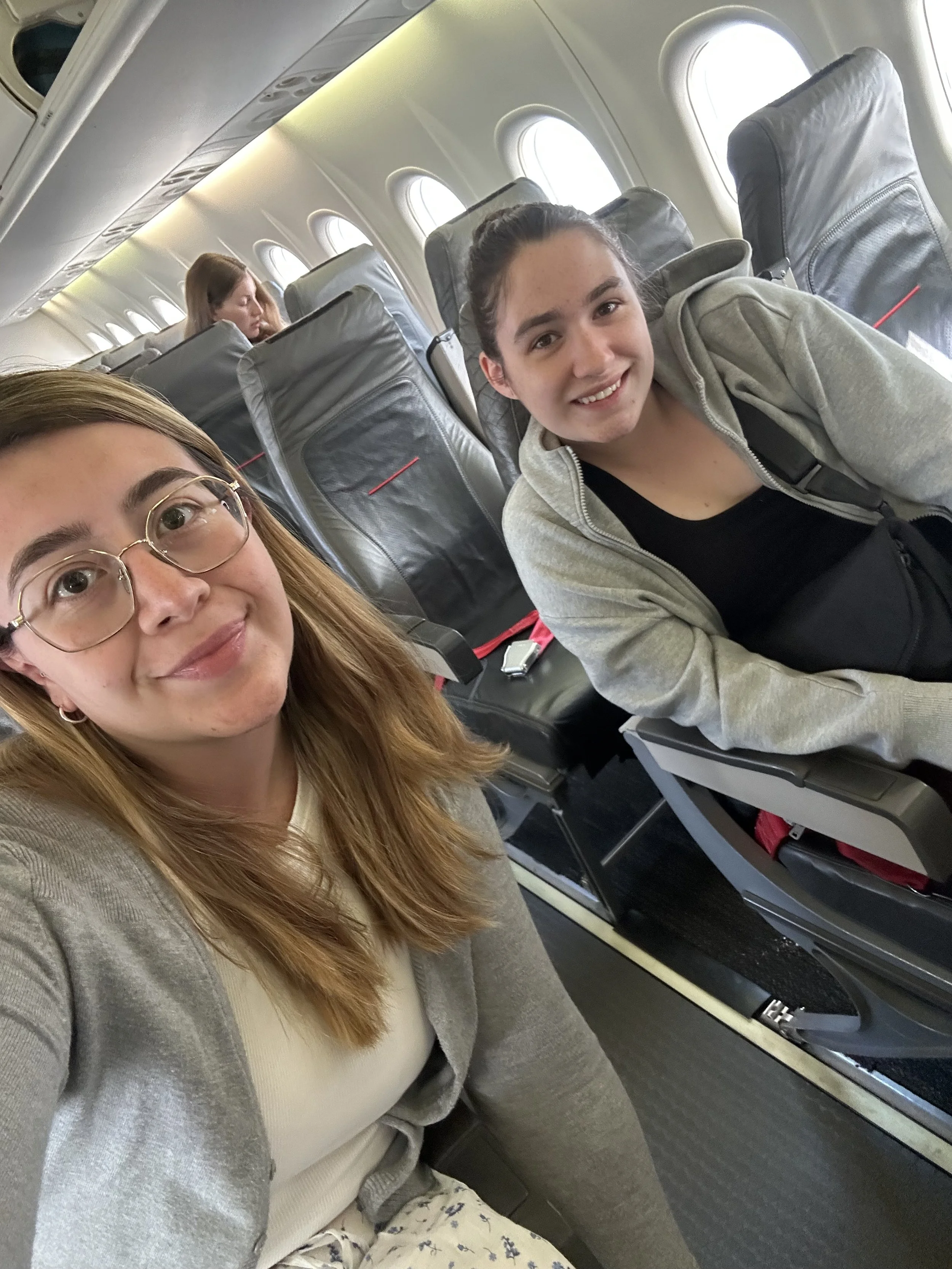
Melissa and Jacqueline inside a plane

Melissa and Jacqueline flying to Manitoba

Margherita has shoulder length black wavy hair and glasses

Dr. Margherita Cameranesi, Department of Psychology

Through these opportunities, Melissa and Jacqueline played key roles in an SSHRC-funded, youth-led and community-directed research project involving racialized refugee youth aged 16-21 who resettled in the city of Winnipeg, Manitoba. The research project explores mental health priorities and stories of resilience of 30 youth participants who have been recruited in partnership with the Immigrant and Refugee Community Organization of Manitoba (IRCOM) to share their experiences post-resettlement.

Melissa and Jacqueline co-facilitated 20 walking interviews – an innovative and participatory method that allows young people to guide researchers through their neighbourhoods while sharing stories of resilience. These walking routes, chosen by the youth themselves, generated rich data through conversation, observation and photos. By allowing participants to set the pace and direction of the interviews, the method helps rebalance power dynamics and honours the voices of young refugees.

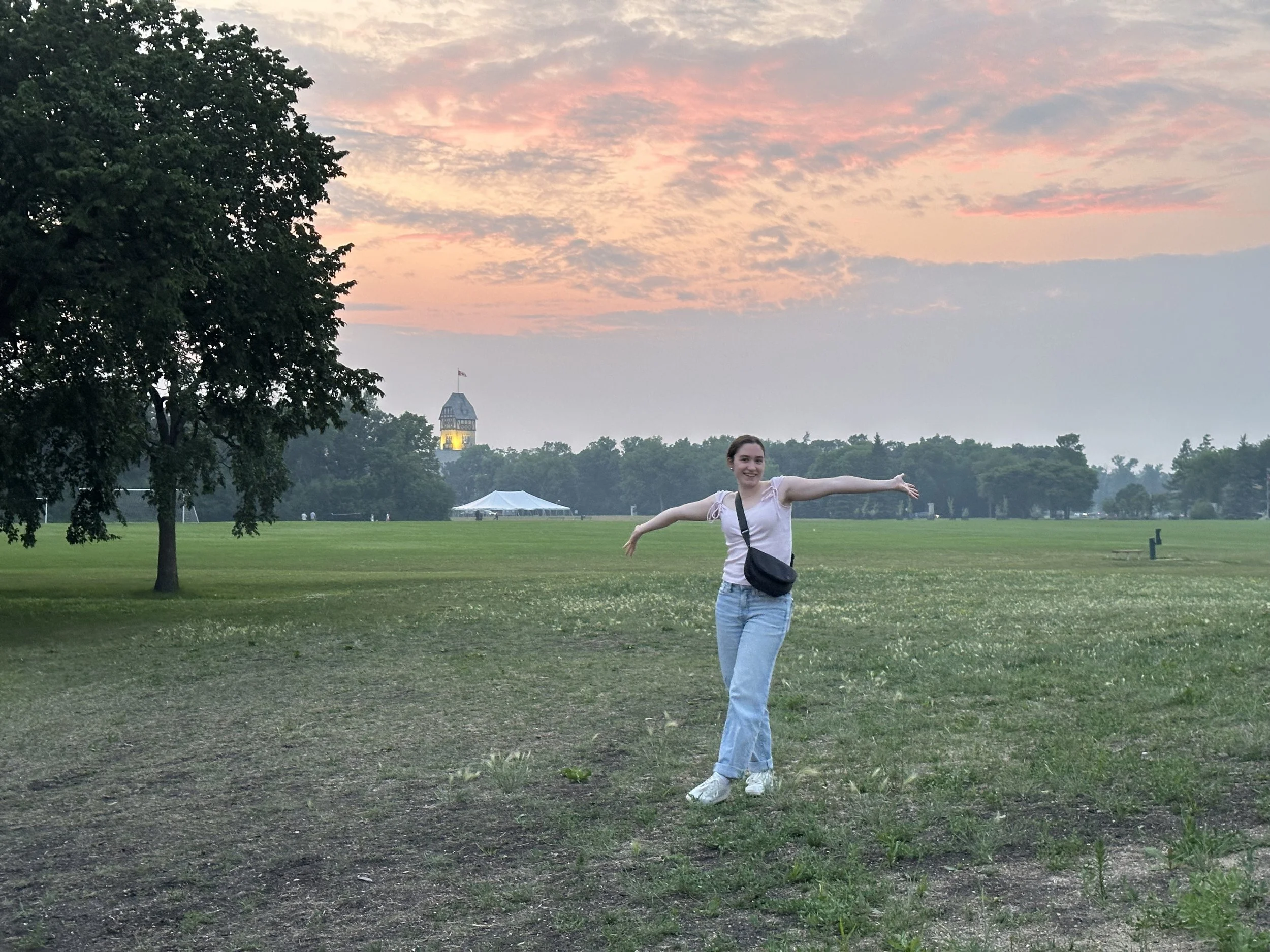
Jacqueline in a wide field
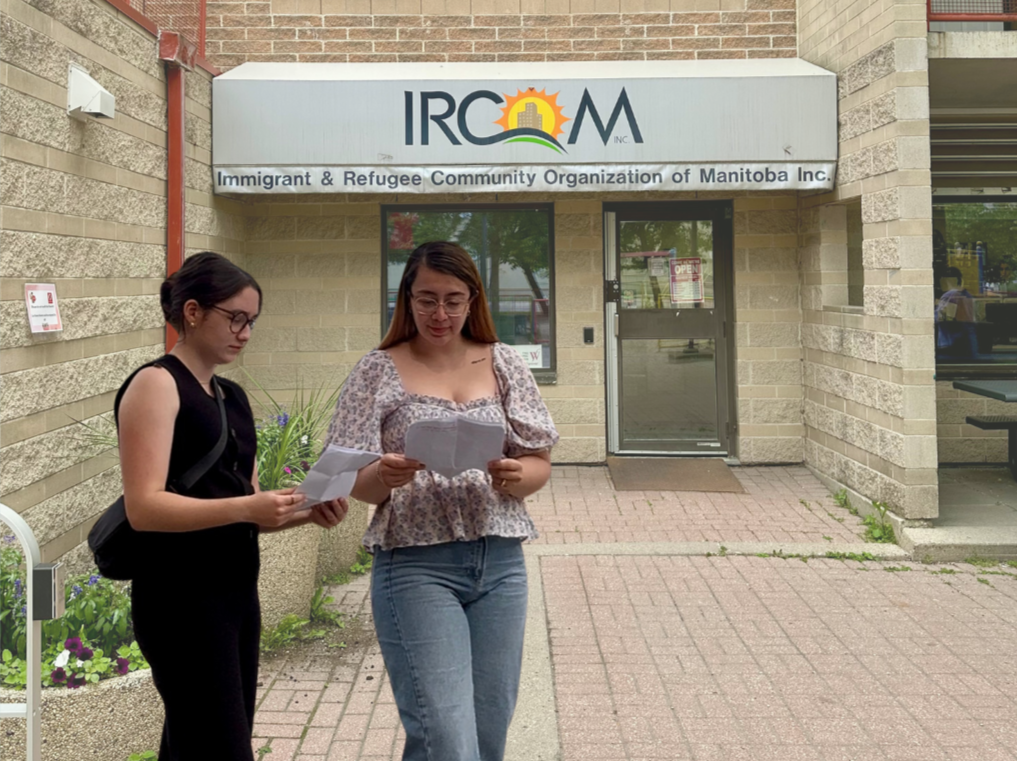
Researchers outside the IRCOM office

During their summer research internships, Melissa and Jacqueline collaborated with IRCOM staff, helped organize research activities and received hands-on mentorship from Dr. Cameranesi on conducting culturally responsive and trauma-informed research. They have gained invaluable skills in community-based participatory action research and in working respectfully with newcomer youth.

The next phase of the project will involve training Melissa and Jacqueline in qualitative thematic analysis, where they will interpret narrative and visual data to help identify the community supports, spaces and relationships that help refugee youth thrive.

This research exemplifies the power of student-facilitated inquiry, community partnership, and inclusive methodologies to advance mental health equity and amplify the voices of underserved youth.


At Saint Mary’s, small class sizes and access to professors provide many opportunities for undergraduate research. Undergraduate students can experience working as a paid research assistant, taking part in field work, presenting at conferences or even pursuing their original research. Learn more about undergraduate summer research opportunities and follow @smuhalifax to hear from more of our summer research students.

Research News

Sobey MBA students gain global perspective through immersive learning in Mexico

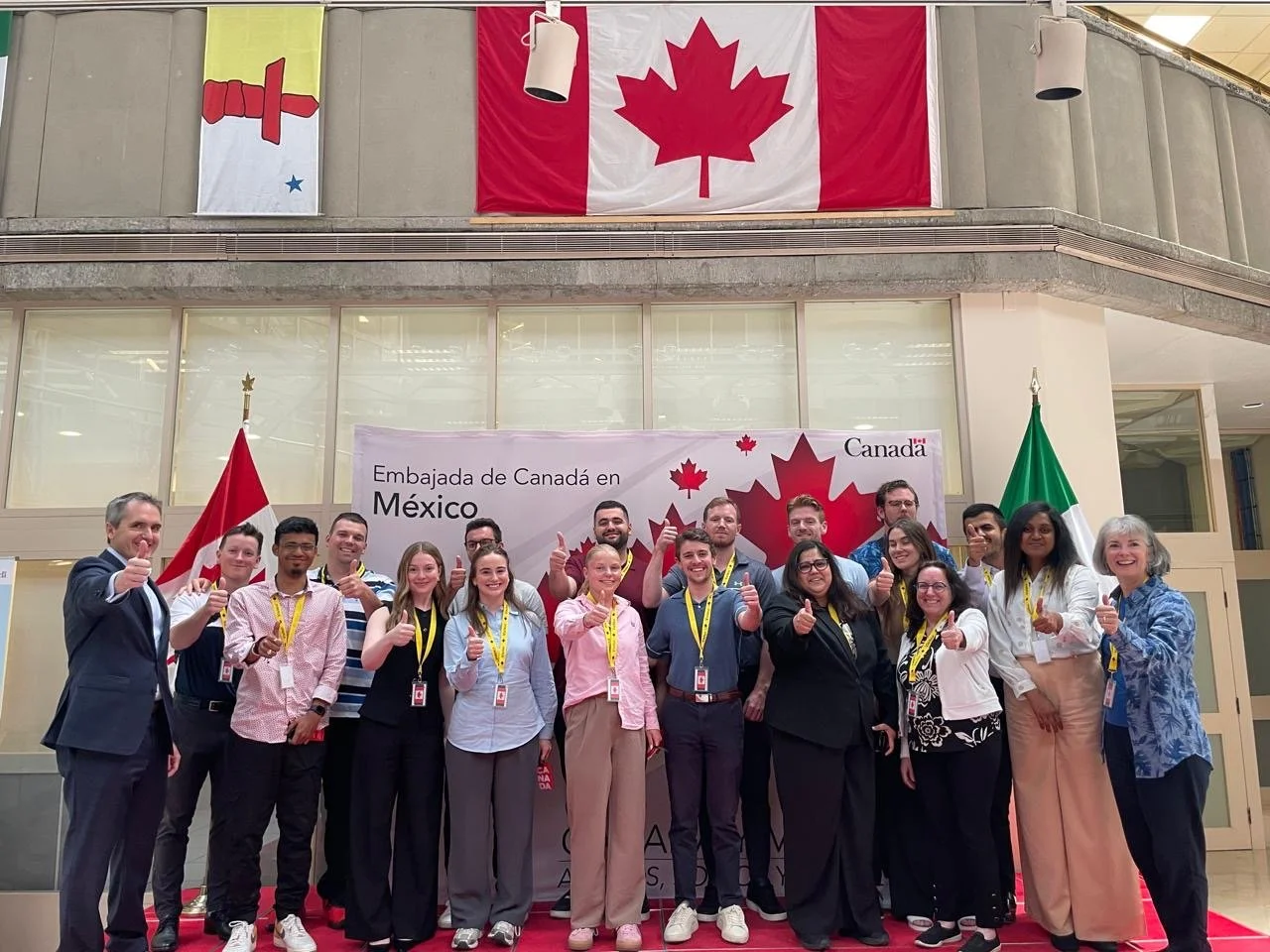
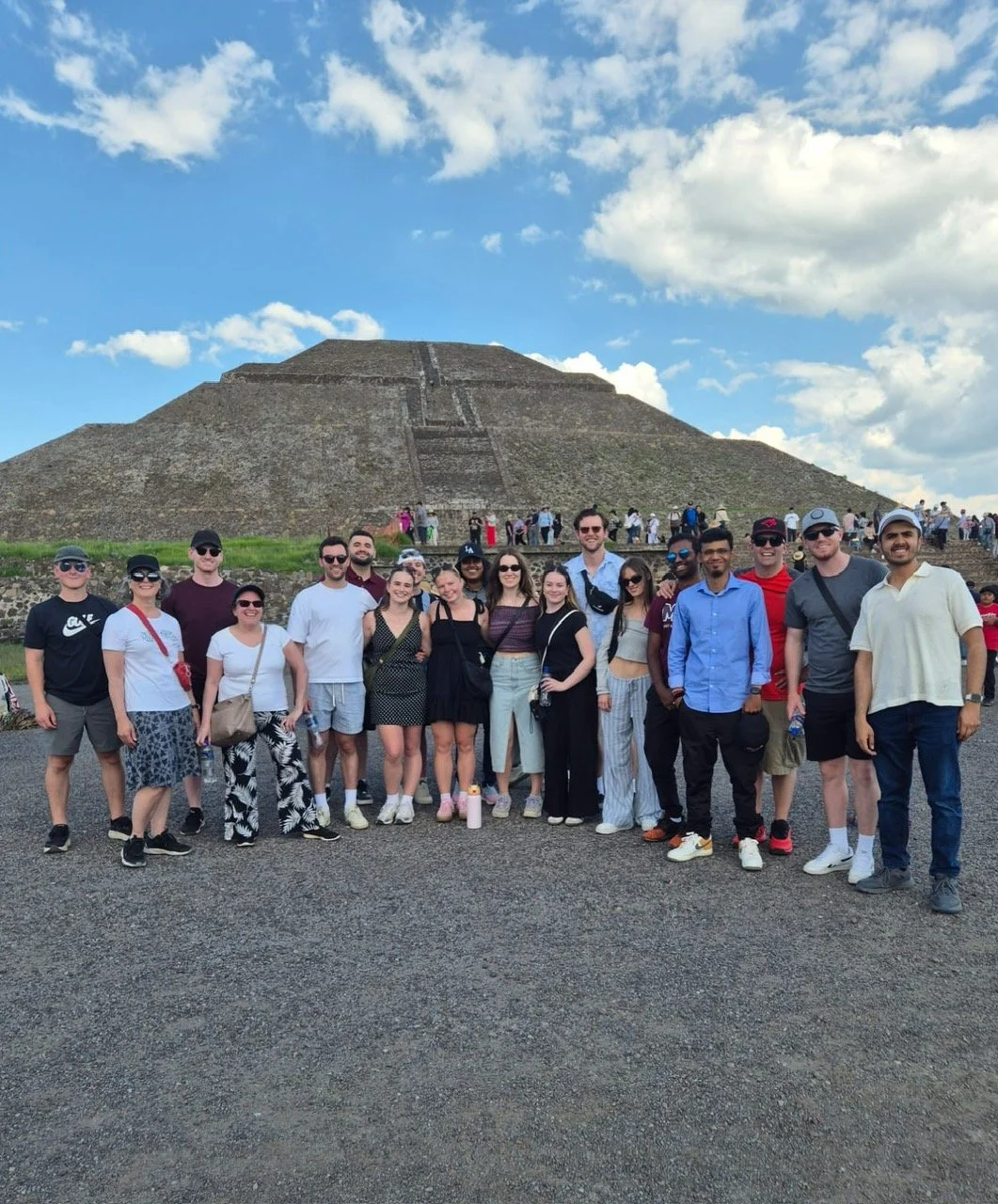
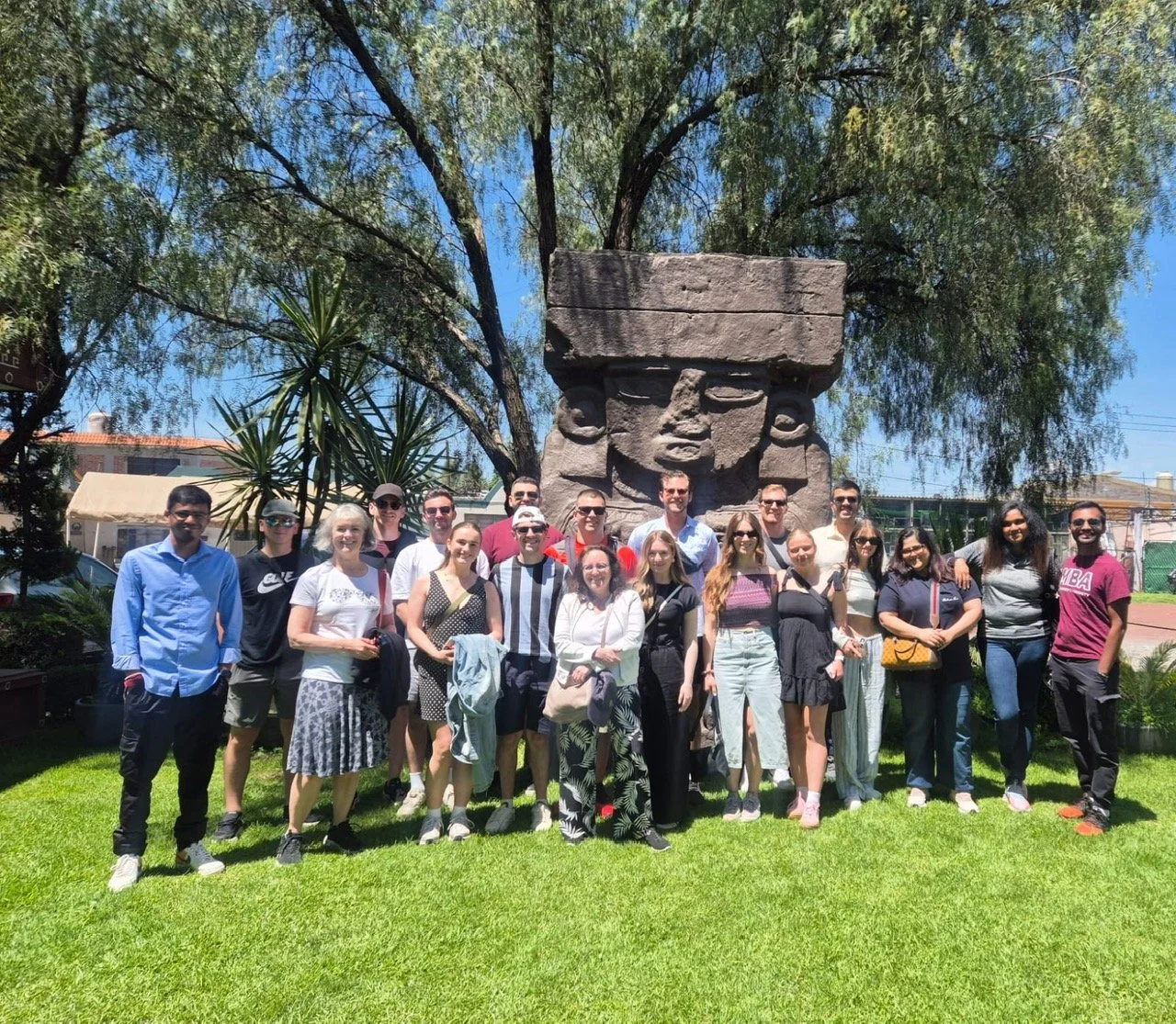
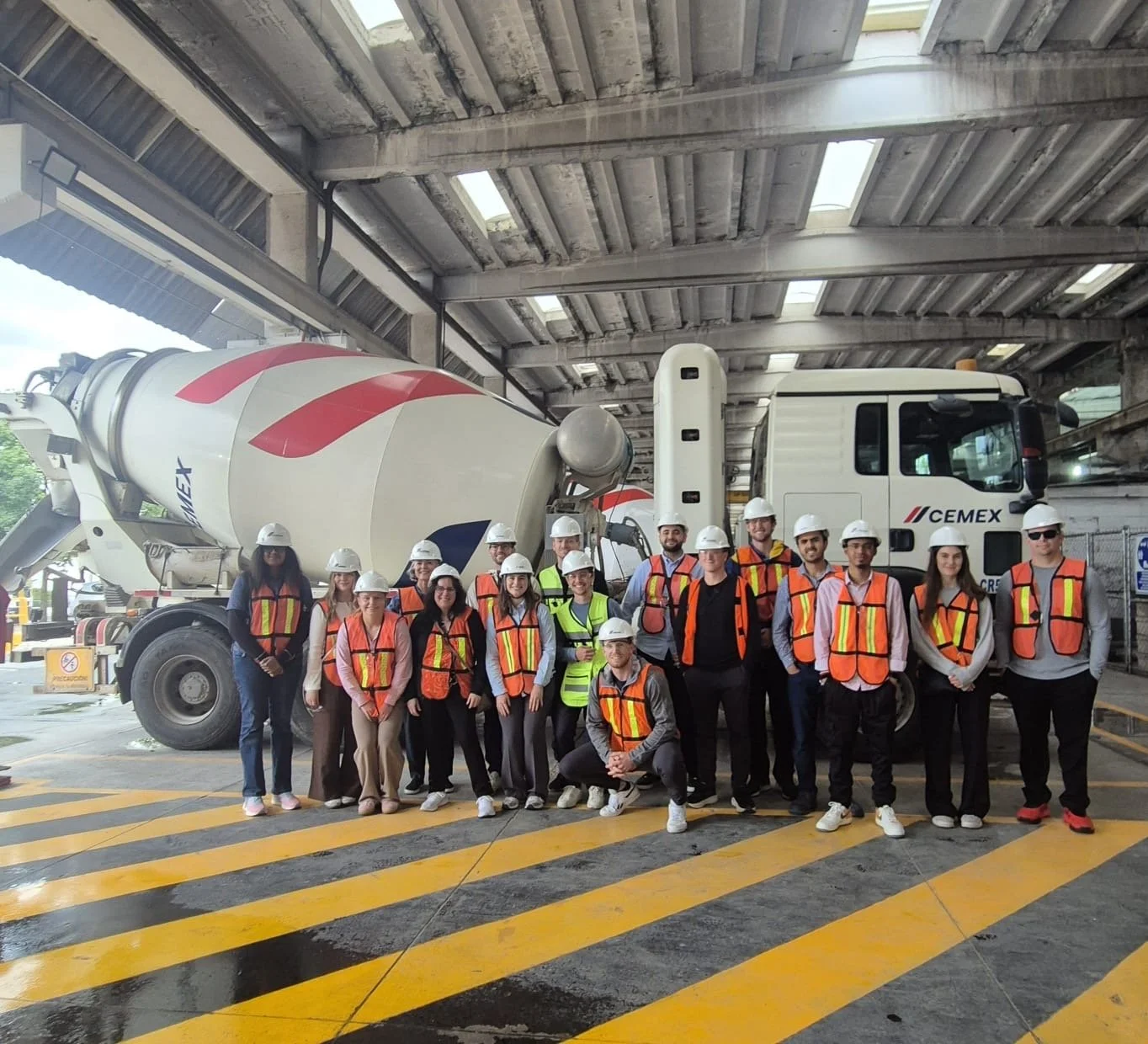
Business looks different when you step outside your own borders. That’s precisely what Sobey MBA students discovered in Mexico this summer, where they partnered with local companies to tackle real business challenges while gaining firsthand insight into global consulting practices. In July, Sobey School of Business MBA students travelled to Mexico for their International Immersion Experience (SMBA 6500)—a mandatory, three-credit course that is a signature element of the program. Each year, a new location is chosen for this course, with Mexico selected as the 2025 destination.

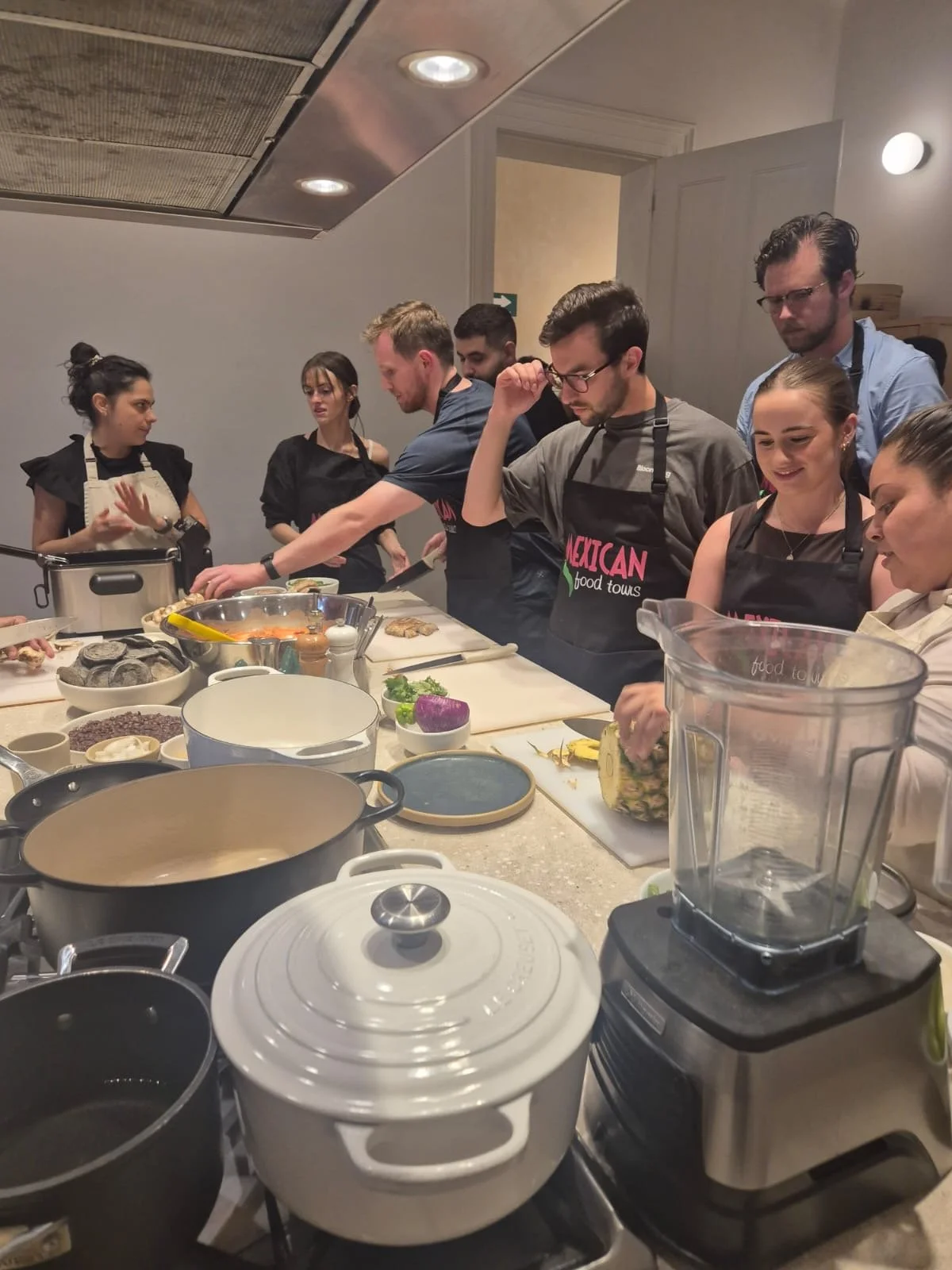
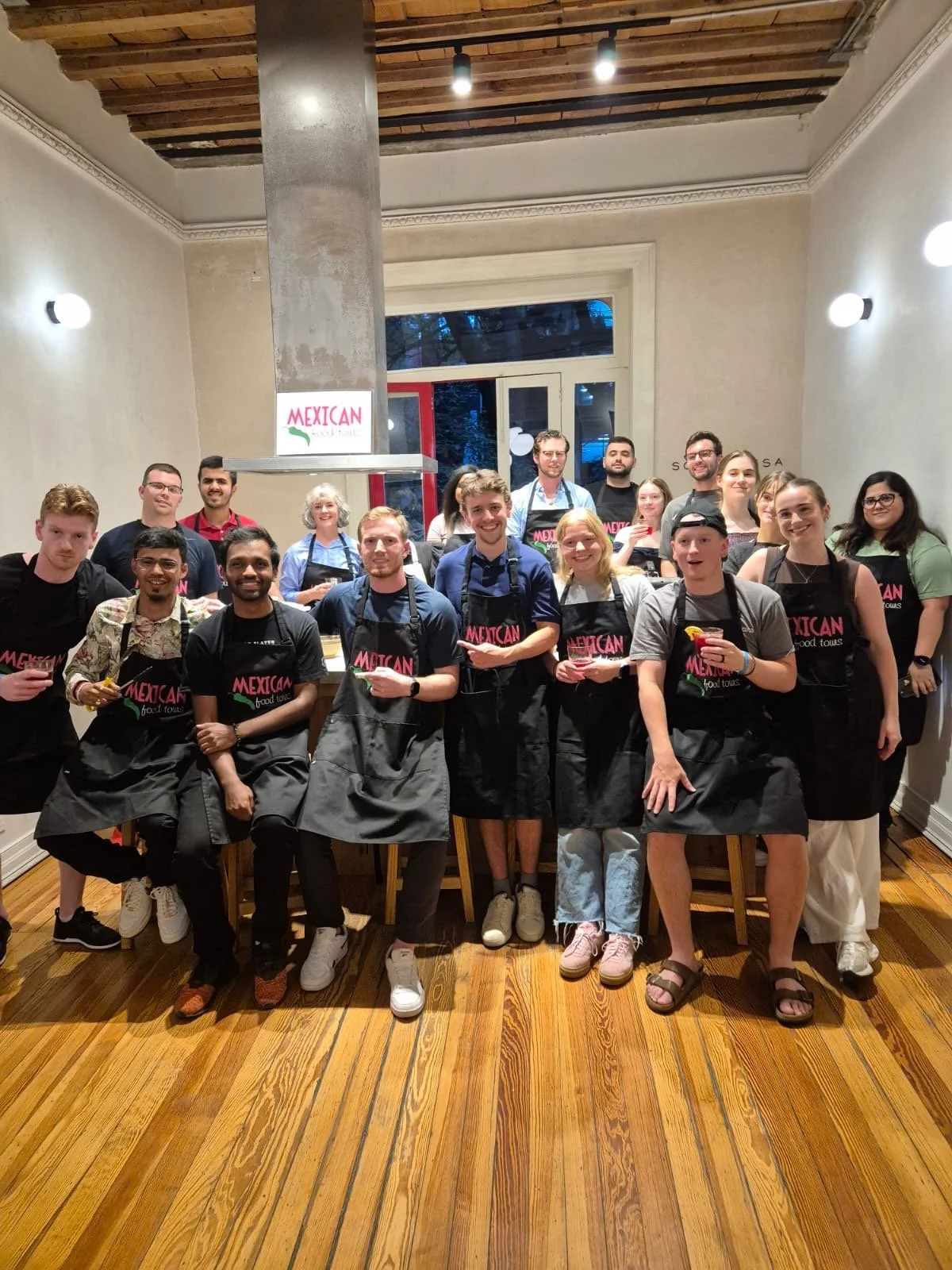
Over a week, students stepped beyond the Canadian classroom to work directly with Mexican businesses to complete consulting projects. They applied the skills and frameworks developed during their first year of the program, adapting to shifting client needs and delivering professional recommendations—all while navigating cultural differences that challenged them to think in new ways. Their experience extended beyond the boardrooms, with visits to local companies, cooking sessions, guided tours and historic sites that deepened their understanding of how culture and business intersect.

The program's businesses are carefully chosen to reflect the Sobey School of Business values of entrepreneurship, cultural awareness, innovation, sustainability and social responsibility. This ensures that when students step into international settings, they encounter work that is both relevant and meaningful, broadening their perspectives while reinforcing their skills.

The International Immersion Experience is designed to replicate the realities of international consulting. Students are challenged to apply classroom learning to real-world problems while navigating cross-cultural communication, diverse business practices, and the need to pivot quickly when expectations change.

“Every time we return, students tell us this was the moment they realized how much they had grown,” said Chantal Hervieux, Associate Professor and MBA Director. “They see their skills in action, pivot with confidence and come back with a new lens on both business and the world. It’s transformational.”

Beyond consulting practice, students return with broadened perspectives, deeper cultural awareness and a more comprehensive understanding of global business. The program also works to challenge common assumptions, encouraging students to recognize the sophistication and scale of businesses outside of North America and Europe.

Unlike many business schools, where international travel is offered as an elective, the International Immersion Experience course is a required component for the Sobey MBA. This commitment ensures that every graduate leaves with hands-on international consulting experience, cultural literacy and the ability to work across borders—skills that set Sobey MBA graduates apart.

By combining rigorous academics with experiential learning, the 16-month Sobey MBA prepares students to lead with purpose and impact in today’s interconnected world.

Learn more about the Sobey MBA