Sobey School of Business

Undergraduate students gain summer research experience across campus

This summer, many Saint Mary’s Students were awarded paid positions to conduct research alongside their professors

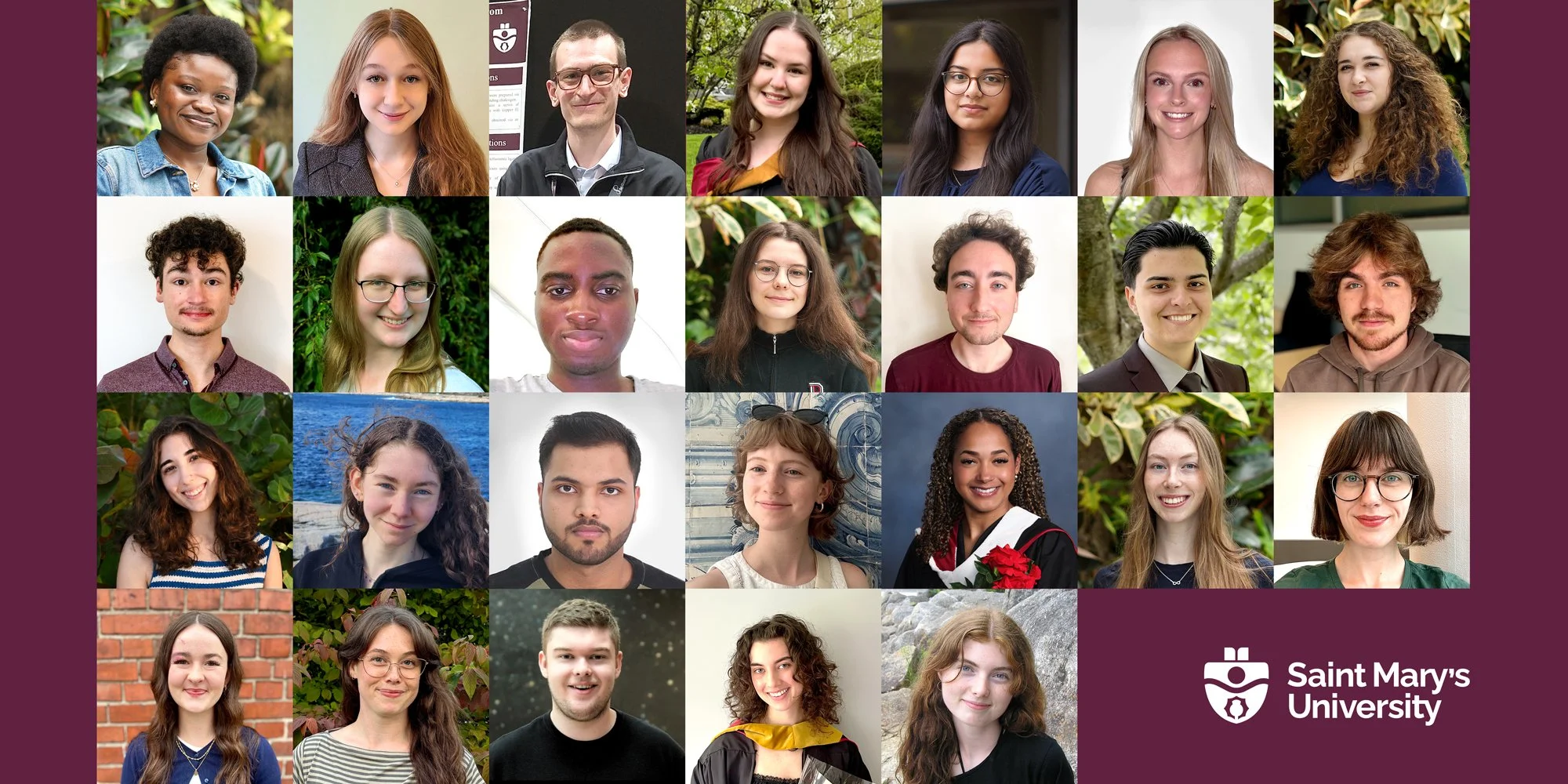
With the fall term underway, we’re celebrating another successful summer of students working on research in their fields alongside their professors across campus.

These paid positions in labs and in the field are an excellent way for students to expand on the lessons learned in their undergraduate classes and apply their skills to real-world applications.  

Students in the Faculty of Science are often found outside all summer—biology students wear hip waders to study fish, while others track birds as they grow and leave the nest. Chemistry students work on precision equipment in their labs, and psychology and environmental science students do key work that advances their fields of study. A team of astronomy and physics students focused on stars and black holes. Most plan to continue their research in subsequent summers and in graduate school.  

“Students are often part of long-term projects run by professors. The hands-on nature of this work advances their understanding of their chosen subjects beyond what they learn in the classroom,” says Dr. Laura Weir, interim Dean of Science.  

“On top of conducting meaningful research with their team, this work gives our students the tools to think creatively and to test, analyze, and follow projects through to completion — skills they will use in their undergraduate classes, future research and in their careers.”  

These paid research positions are funded by federal government agencies including the National Sciences and Engineering Research Council of Canada’s (NSERC) Undergraduate Student Research Awards program and the Social Sciences and Humanities Research Council (SSHRC). Others are offered thanks to generous donors, grants and funding from Saint Mary’s. In most cases, awards are made possible through contributions from professors’ research grants. Award recipients receive funding to undertake 12 to 16 weeks of full-time work between May and August. 

To provide research opportunities to even more Saint Mary’s students, the Faculty of Science introduced a new award category for full-time students two years ago. Designed for student-professor teams who propose a research project together, the Dean of Science Access to Research Awards focus on the proposed research project; as long as the student is in good academic standing, their GPA is not a selection criterion. These awards are jointly funded by the Dean of Science Office and various faculty grants.  

“Every year we are impressed with the background our most dedicated and capable students bring to these research positions,” says Dr. Adam Sarty, Associate Vice-President, Research and Dean, Faculty of Graduate Studies. “They add skills and a depth of knowledge that they can use immediately in their classes, but the true value is the way they strengthen students’ prospects for post-graduate studies and their careers. These invaluable experiences will serve them as they move through the workforce.”  

“Many students further their academic careers through undergraduate research opportunities like these,” says Dr. Sarty. “The competitive salary is a boost to students who need to work to support their studies, easing their financial burden.”  

How are students chosen?  

Most positions are earned based on academic record, breadth of experience and background, and the student’s application letter. Students can apply after their first year of full-time study.

Interested in applying for a summer research award for next year? Visit this website for updates later in the term, and follow your faculty’s social media for news and deadlines.


Iyinoluwa David Amore

Summer research award: First-Year Undergraduate Summer Research Award 

Faculty supervisor: Dr. Robert Singer (Chemistry) 

Project: I made lobster- and crab-shaped ligands that contain a pyridine group using a CEM microwave. 

Favourite thing about SMU: The Tim Hortons in the Loyola Building. 


Laura Bartlett 

Summer research award: Social Sciences and Humanities Research Council (SSHRC) Explorer Undergraduate Summer Research Award 

Faculty supervisor: Dr. Vasiliki Athanasakou (Accounting)  

Project: The project examines strategic partnerships between corporations and nonprofit organizations, with a particular focus on understanding why firms form cross-sector partnerships and how these collaborations contribute to corporate governance and sustainability. My responsibilities include conducting qualitative analyses of corporate partnership announcements, developing databases of nonprofit organizations, and reviewing the academic literature. 

Future plans: I hope to complete a Masters of Economics and study abroad. 

Favourite thing about SMU: The Fred Smithers Centre and the staff there. 


Sarah Chiasson 

Summer research award: Natural Sciences and Engineering Research Council of Canada (NSERC) Undergraduate Student Research Award 

Faculty supervisor: Dr. Colleen Barber (Biology) 

Project: This summer, I studied the European starlings nesting on the campus of Saint Mary’s University. This work involved recording bird songs, documenting materials used for nest building, and analyzing DNA samples collected in the field. I am also continuing my honours thesis project, which examines a specific reproductive strategy used by European starlings whereby females lay eggs in the nest of other females. 

Future plans: I am hoping to continue ornithological research as a graduate student. 

Favourite thing about SMU: The lovely people I have met and the community I have built. 


Claire Cullinan 

Summer research award: Natural Sciences and Engineering Research Council of Canada (NSERC) Undergraduate Student Research Award 

Faculty supervisor: Dr. Christa Brosseau (Chemistry) 

Project: I am working on wrapping up my honours project, which focused on developing a sensitive, low-cost, surface-enhanced Raman spectroscopy-based diagnostic assay using nanobody-functionalized gold nanoparticles for the detection of HER2 (a breast cancer biomarker), to enable more accessible breast cancer diagnostics. 

Future plans: I will be attending McGill University for a master's in the Integrated Program in Neuroscience. I will be working at the Douglas Research Centre examining whether alterations in cerebral blood flow network organization link modifiable lifestyle behaviours (e.g., physical inactivity, sleep disturbance, smoking) to persistent negative symptoms and cognitive deficits in severe mental illness. 

Favourite thing about SMU: My favourite thing about SMU is the Dr. Brosseau student office (which has a kettle for tea!). 


Chloe Delano 

Summer research award: Natural Sciences and Engineering Research Council of Canada (NSERC) Undergraduate Student Research Award 

Faculty supervisor: Dr. Jason Ivanoff (Psychology) 

Project: My summer project is to support ongoing cognitive neuroscience research in the lab. Over the summer, I will create training materials for EEG equipment and data analysis, assist with participant recruitment and data collection, help program research experiments, and conduct literature reviews and meta-analyses to support current studies. 

Future plans: I plan to continue my education by pursuing a master's degree in Sport Psychology, with the goal of expanding my knowledge and developing a career in this field. 

Favourite thing about SMU: My favourite thing about SMU was the opportunities it provided to grow both personally and professionally. I was able to explore potential career paths, gain valuable experiences, and build lasting friendships and connections that made my time at SMU memorable. 


Mackenzie Hayduk 

Summer research award: Natural Sciences and Engineering Research Council of Canada (NSERC) Undergraduate Student Research Award 

Faculty supervisor: Dr. Vincent Hénault-Brunet (Astronomy and Physics) 

Project: Intermediate-mass black holes could explain how supermassive black holes grow, but few convincing detections exist. This project finds the mass of an intermediate-mass black hole in the globular cluster Omega Centauri by modelling the orbits of five fast-moving stars. 

Future plans: My undergraduate research and conference experiences have only made me more excited to take the next step toward my Ph.D. in astrophysics (hopefully in Germany/Korea) after I graduate. My extracurricular experiences through SMU as a Varsity athlete, BGO tour guide, and outreach officer have also added to my long-term career goals of continuing community engagement and athletics throughout my career in research.  

Favourite thing about SMU: My favourite things are the communities I have been welcomed into as an astrophysics student, athlete, and outreach enthusiast. Whether discussing research-related problems with fellow undergrads, racing against my teammates, or meeting passionate high school students and teachers, I appreciate the opportunities SMU facilitates for building connections.


Alexa Ikejiani 

Summer research award: Social Sciences and Humanities Research Council (SSHRC) Explorer Undergraduate Summer Research Award 

Faculty supervisor: Dr. Nicole Conrad (Psychology) 

Project: This summer, we are investigating different exogenous factors that promote good mental health outcomes in children with reading difficulties. This review uses a dynamic systems framework that understands mental health as an emerging interaction between the individual and their environment. This framework helps highlight the role of environmental supports and the potential barriers that individuals may face in accessing them. 

Future plans: I plan to pursue a PhD in Clinical Psychology, with research focused on literacy development, early psychoeducational assessment, and improving the long-term outcomes for children with reading difficulties. 

Favourite thing about SMU: My favourite thing about SMU is the welcoming and supportive community. This community has been a major driving force behind my success as both a student and an emerging researcher. Here at SMU, I feel very connected to my peers, professors, and supervisors, making me excited to come to campus every day, even during the slower summer months! 


Sydney Lewis 

Summer research award: Dean of Science Undergraduate Summer Research Award 

Faculty supervisor: Dr. Danielle Tokarz (Chemistry) 

Project: Used ultrafast laser microscopy to investigate the structure of biological samples, such as collagen fibrils and banana starch, under various conditions. 

Future plans: Completing an Honours degree in Chemistry. 

Favourite thing about SMU: The small class sizes. 


Claire MacLean 

Summer research award: Natural Sciences and Engineering Research Council of Canada (NSERC) Undergraduate Student Research Award 

Faculty supervisor: Dr. Christa Brosseau (Chemistry)  

Project: Examining redox processes of natural methylxanthines using a technique called electrochemical surface-enhanced Raman spectroscopy. 

Future plans: Gap year before continuing on with grad school 

Favourite thing about SMU: The small class sizes and access to research opportunities 


Benjamin McIsaac

Summer research award: Dean of Science Undergraduate Summer Research Award 

Faculty supervisor: Dr. Rob Thacker (Astronomy and Physics) 

Project: I am using computer simulations and statistical tools to study galaxy cluster mergers and how the gas within them mixes. More specifically, I am attempting to determine which regions are mixed primarily by diffusion and which regions are mixed primarily by folding. 

Future plans: I am currently exploring my options after completing my degree, including the possibility of pursuing graduate studies in astrophysics or a related field. 

Favourite thing about SMU: The smaller class sizes and the accessibility of professors 


Keegan Riggs 

Summer research award: Natural Sciences and Engineering Research Council of Canada (NSERC) Undergraduate Student Research Award 

Faculty supervisor: Dr. Luigi Gallo (Astronomy and Physics) 

Project: Using normalized excess variance to detect ultra-fast outflows in active galactic nuclei. 

Future plans: I’m planning on getting my master’s degree, then PhD, and becoming a professor 

Favourite thing about SMU: I like its location in the city. 


Daryan Schaefer 

Summer research award: First-Year Undergraduate Summer Research Award 

Faculty supervisor: Dr. Danielle Tokarz (Chemistry)  

Project: This summer, I’m working on improving our laser imaging system so that it can use backward Second Harmonic Generation (SHG), a technique that allows us to study thicker samples such as teeth. Using backward SHG imaging, I hope to gain a better understanding of how regenerative endodontic treatments promote healing and tissue regeneration, and how the regenerated tissue compares to original tissue. 

Future plans: Get my DDS at Dalhousie Dentistry and then complete an MD-integrated Oral and Maxillofacial Surgery residency. 

Favourite thing about SMU: The piano in the Student Centre. 


Chloe Staple 

Summer research award: First-Year Undergraduate Summer Research Award 

Faculty supervisor: Dr. Hany Fahmy (Economics)  

Project: I'm helping my economics professor complete textual analysis. This means I'm assisting machine learning in constructing a news-based climate policy sentiment index. After labelling a few thousand sentences, we will be training the AI, which will later be used by him. 

Future plans: As a first-year student, I'm still not completely sure of my future; however, I plan on doing a double major in Accounting and Finance, and after graduation, I will hopefully complete my CPA and CFA. 

Favourite thing about SMU: My favourite thing about SMU is the Enactus team. Everyone is so kind there, and being surrounded by like-minded students makes me want to work even harder towards my goals. Participating in the Enactus Regionals and Nationals in Montreal this year was an amazing experience! 

Megan Barkhouse 

Summer research award: Natural Sciences and Engineering Research Council of Canada (NSERC) Undergraduate Student Research Award 

Faculty supervisor: Dr. Anne Dalziel (Biology) 

Project: This summer, I worked on my Honours project researching the persistent effects of low salinity exposure on the gene expression of Eastern oysters, and how this affects their performance when re-exposed to low salinity. I am learning and using a lot of new procedures and skills in the lab. I also feed and care for the fish in the SMU fish lab. 

Future plans: I am very interested in medicine, and so I plan to continue my education and pursue a career in the medical field as either a researcher or a physician. 

Favourite thing about SMU: The campus is very beautiful in the spring when all the flowers are blooming! 


Kiera Blackadar 

Summer research award: Social Sciences and Humanities Research Council (SSHRC) Explorer Undergraduate Summer Research Award 

Faculty supervisor: Dr. Margherita Cameranesi (Psychology) 

Project: This summer, I have been assisting with the FYRe-NS Finding Your Resilience study, researching gender-based violence experiences of young newcomers to Nova Scotia. Participants are surveyed about their experiences of resilience, community, mental health and service needs upon their arrival in Nova Scotia. This project aims to identify service gaps in education, healthcare and social services to detail areas for improvement. 

Future plans: I plan to pursue a career in clinical psychology and am interested in both forensic and trauma therapy specializations. I hope to apply my educational experiences to advocate for policy and systemic changes, pushing for improved mental healthcare access and supports for justice-involved individuals. 

Favourite thing about SMU: My favourite thing about SMU is the shared dedication of both faculty and students in creating learning opportunities outside of the classroom and in building community. Regardless of year of study or your desired level of campus involvement, there are so many ways to get engaged in campus life. Be it volunteering, guest lectures, research participation, or societies and clubs, there are numerous accessible ways to broaden your horizons and build your circle at Saint Mary's. 


Kristen Cowan 

Summer research award: Dean of Science Undergraduate Summer Research Award 

Faculty supervisor: Dr. Vincent Hénault-Brunet (Astronomy and Physics)  

Project: This research project investigated the effect of forming fewer low-mass stars early on in Milky Way-like globular clusters. This distribution of stellar masses, known as a bottom-light initial mass function (IMF), is thought to fit observational data well and may be more suitable for studying globular clusters than the universally adopted Kroupa IMF (2001). 24 N-body simulations were run using the Cluster Monte Carlo Code (CMC) comparing the two IMFs to quantify their effect on long-term evolutionary properties of the cluster, and the Black Hole populations that form within. 

Future plans: I hope to further the scope of this study in future research and obtain a Master of Science in Astronomy. I hope to build a career in research on black hole formation channels and star cluster dynamics, as well as science communication and education. 

Favourite thing about SMU: The plant wall in the Atrium 


Ariel Day 

Summer research award: Social Sciences and Humanities Research Council (SSHRC) Explorer Undergraduate Summer Research Award 

Faculty supervisor: Dr. Veronica Stinson (Psychology) 

Project: I am working on several ongoing projects focusing primarily on victim impact statements (VIS) and offender character evidence (OCE) in court sentencing decisions. We are looking at how the submission of VIS and OCE impact the sentencing decision (length, 'severity', considerations) across Canada, as well as investigating the demographics of individuals who submit victim impact statements, to identify the barriers that victims face in the court process. We are also working on a project that explores the use of virtual or hybrid components in court proceedings in Nova Scotia. 

Future plans: I want to get my Master’s degree and PhD in forensic psychology. 

Favourite thing about SMU: The community 


Grace Hallewell 

Summer research award: First-Year Undergraduate Summer Research Award 

Faculty supervisor: Dr. Nicole Conrad (Psychology) 

Project: This summer I have been a research assistant as part of Dr. Conrad’s Literacy Lab in the Department of Psychology. Our main research this summer has focused on children who experience difficulties with reading. The aim of this research is to review previous studies and identify which aspects of these children’s environments have been shown to improve or maintain good mental health. 

Future plans: I plan to graduate from SMU in 2028 with Honours in Psychology and a minor in English. Afterwards, I will continue my education in the field of psychology by completing a master’s degree and a PhD. I am interested in pursuing a career that involves both research and working with clients. 

Favourite thing about SMU: I like SMU's size because it lets you get to know other students and faculty members better. 


Rohen Hayne 

Summer research award: Natural Sciences and Engineering Research Council of Canada (NSERC) Undergraduate Student Research Award 

Faculty supervisor: Dr. David Chiasson (Biology) 

Project: I am working on a project aimed at identifying key factors that support nitrogen-fixing symbiosis in legume plants. We use molecular biology, genetics, and microbiology techniques to study this relationship. 

Future plans: Explore future opportunities in science and healthcare. 

Favourite thing about SMU: The Atrium 


Enrique Jaldo 

Summer research award: Dean of Science Undergraduate Summer Research Award 

Faculty supervisor: Dr. Greg Christian (Astronomy and Physics) 

Project: Working together with my professor to understand the 26Al(P,y)27Si reaction that occurs in stars, by simulating them in particle accelerators and trying to determine the most optimal angle for neutron detectors 

Future plans: Astrophysicist 

Favourite thing about SMU: Working with a close-knit community that is always open to helping each other out 


Maddie Lloyd 

Summer research award: Natural Sciences and Engineering Research Council of Canada (NSERC) Undergraduate Student Research Award 

Faculty supervisor: Dr. David Chiasson (Biology) 

Project: Contributing to research on how plant signals influence bacterial gene regulation through protein expression, purification, and the study of protein–DNA interactions. 

Future plans: Become a dentist. 

Favourite thing about SMU: The campus. 


Dylan Main 

Summer research award: Social Sciences and Humanities Research Council (SSHRC) Explorer Undergraduate Summer Research Award 

Faculty supervisor: Dr. Jamie Livingston (Criminology) 

Project: Along with Dr. Livingston, I am conducting a scoping review to examine how civilian (non-police) mental health crisis response programs define and operationalize the concept of a crisis. As these programs continue to expand as alternatives to police-led responses, there is considerable variation in how crisis situations are understood, assessed, and managed. I am looking for evidence on definitions of crisis, eligibility and exclusion criteria, risk and safety assessments, and the circumstances under which police involvement is required.  

Future plans: Psychologist / Counsellor 

Favourite thing about SMU: The cool study spots around campus and great experiences with professors (shoutout Dr. Cameron and Dr. Bourgeois) 


Muhammad Arham Mussawar 

Summer research award: Dean of Science Undergraduate Summer Research Award 

Faculty supervisor: Dr. Stavros Konstantinidis (Mathematics and Computing Science) 

Project: This summer project will explore new ways to find patterns in two related pieces of information at the same time. 

Most existing research looks at how to match a pattern within a single word or sequence. In this project, we will study how to match two-dimensional patterns to pairs of words. These pairs could represent related data, such as two genes, two programming expressions, or two connected strings of information. 

The goal is to develop and analyze algorithms, using ideas from pattern expressions and finite-state machines, that can recognize these kinds of paired patterns efficiently. This work could help identify relationships between paired data in areas such as biology, programming languages, and data analysis. 

Future plans: I am entering my fourth and final year of an Honours Computer Science degree. My main academic interests are algorithms, theoretical computer science, and artificial intelligence. This summer research project connects closely to my future plans because I hope to continue studying this area through my honours thesis, especially topics related to pattern matching, finite-state machines, and formal languages. 

After completing my undergraduate degree, I am considering pursuing a master’s degree to further develop my research skills and deepen my knowledge in theoretical computer science and AI. In the future, I could see myself working either as a software engineer or continuing in academia with the goal of becoming a professor. Through this project, I hope to strengthen my skills in algorithm design, coding, research writing, and presenting research. 

Favourite thing about SMU: My favourite thing about SMU is the supportive academic community. As a Computer Science student, I appreciate the opportunity to learn from amazing professors who are approachable and passionate about their fields. The welcoming environment at SMU has made it a great place to learn, ask questions, and grow as a student. 


Evan Spencer 

Summer research award: Dean of Science Undergraduate Summer Research Award 

Faculty supervisor: Dr. Robert Singer (Chemistry)  

Project: The project is focused on the synthesis of N-heterocyclic carbene derived ligands with main group donors and studying their coordination to various transition metals and main group atoms. The main goal of the research is to study the bonding and geometry of these coordination complexes and discover structures that have never been synthesized before. This is made possible by characterization by single crystal X-Ray diffraction which provides data regarding the exact location of the atoms in a given crystalline material which can be used to determine the structure of the compound. 

Future plans: After finishing my Honours in Chemistry at SMU next year, I plan to attend graduate school to obtain my PhD in chemistry focusing on inorganic chemistry and X-Ray crystallography. I hope to stay in academia for my career as well, with the goal of becoming a professor of chemistry. I am passionate about teaching and research and hope to apply that to my own research group in the future, which would be directed towards providing undergraduate students with opportunities to perform meaningful research. 

Favourite thing about SMU: My favourite thing about SMU is access to research for undergrads. This is an opportunity that most students across Canada do not have, but due to the size of our institution, students are able to contribute to meaningful research and run their own research projects, which is not the case at larger institutions. My other favourite part about SMU is the size of my department. The chemistry department is small enough that I know all the professors and they know me, and most of the students as well. This allows for easier access to support and guidance while also having the ability to form connections much more easily. 


Benita Tabuku 

Summer research award: Dean of Science Undergraduate Summer Research Award (BSc student in Computing Science) 

Faculty supervisor: Dr. Hai Wang (Finance)  

Project: I am working on a research project that analyzes risk-related information in public firms' 10-K reports. Using Python, we extract and analyze relevant disclosures to assess the firms' Enterprise Risk Management (ERM) maturity. 

Future plans: I am currently considering career paths in either data analytics or computer networks and cybersecurity. This summer research position is a great opportunity for me to learn more about data analytics and gain hands-on experience, which will help me better understand the field and decide which career path is the best fit for me. 

Favourite thing about SMU: My favourite thing about SMU is living in residence. I like being close to my classes, there is no need to commute, and I can even wear heels during the winter semester! I am also close to my friends and campus activities. Some of my favourite moments have been the simple ones, like playing Uno with my friends in the floor lounge. Living in residence has been one of the best parts of my university experience :) 


Sobey School research secures $219,000 SSHRC Grant to tackle Canada’s productivity challenge

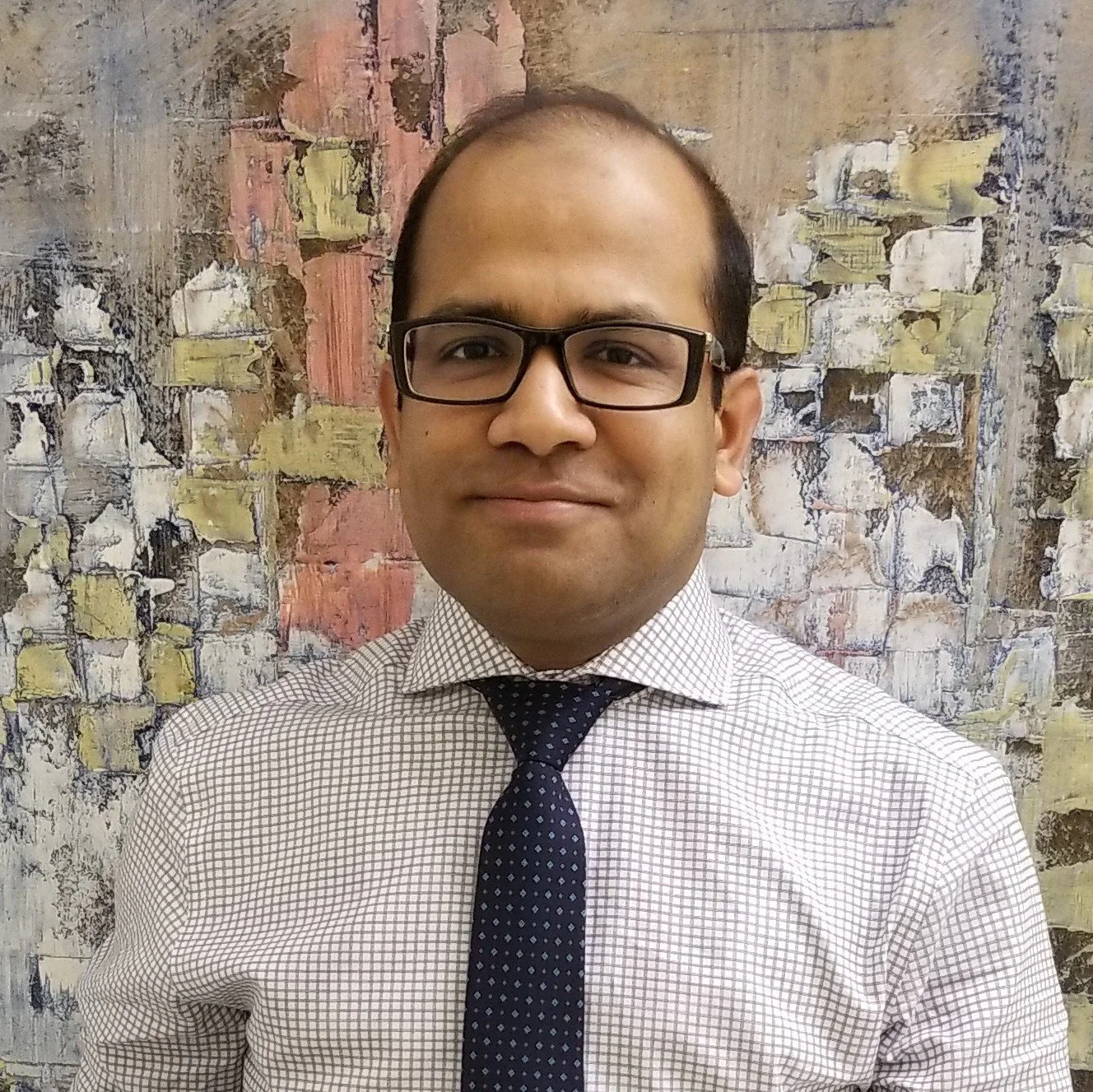
Dr. Rahaman has brown skin, short dark hair and glasses. He stands against a textured background.

Dr. Mohammad Rahaman

Saint Mary's University’s Sobey School of Business continues to advance high-impact, policy-relevant research with a major national funding success.

Dr. Mohammad Rahaman, Canada Research Chair in International Finance and Competitiveness, has been awarded a prestigious Social Sciences and Humanities Research Council (SSHRC) of Canada Insight Grant valued at $219,000 over three years (2026–2029).

The funded project, “Banking on Intelligence: The Role of Private Credit Markets in Advancing AI Investment, Innovation, and Productivity,” addresses one of Canada’s most pressing economic challenges: lagging business-sector productivity relative to other advanced economies.

Although Canada is a global leader in artificial intelligence research, firms have struggled to translate innovation into widespread productivity gains. AI adoption remains uneven and resource-intensive, requiring sustained investment in data infrastructure, R&D and talent.

This research introduces a new perspective by focusing on private credit markets, banks and non-bank lenders, the primary source of financing for most firms. The project will examine how access to credit shapes AI adoption, the economic channels linking financing to innovation, and how lenders act as governance mechanisms by disciplining misleading AI-related disclosures.

“This project is about understanding how we finance the future of the Canadian economy,” said Dr. Rahaman. “AI has enormous potential to drive productivity, but without the right financial infrastructure, that potential will remain unrealized. Our goal is to identify how credit markets can unlock that transformation.”

The research is conducted in collaboration with Dr. Najah Attig of Dalhousie University, highlighting strong regional partnerships within Atlantic Canada.

By combining large-scale financial datasets with advanced econometric and natural language processing techniques, the project aims to generate actionable insights for policymakers, financial institutions, and business leaders.

This award underscores Sobey School's commitment to rigorous, business-focused research that addresses real-world challenges, reinforcing its role as a leader in advancing Canada’s innovation and competitiveness agenda.

Making Waves: SMU alumni building careers with Halifax Tides FC

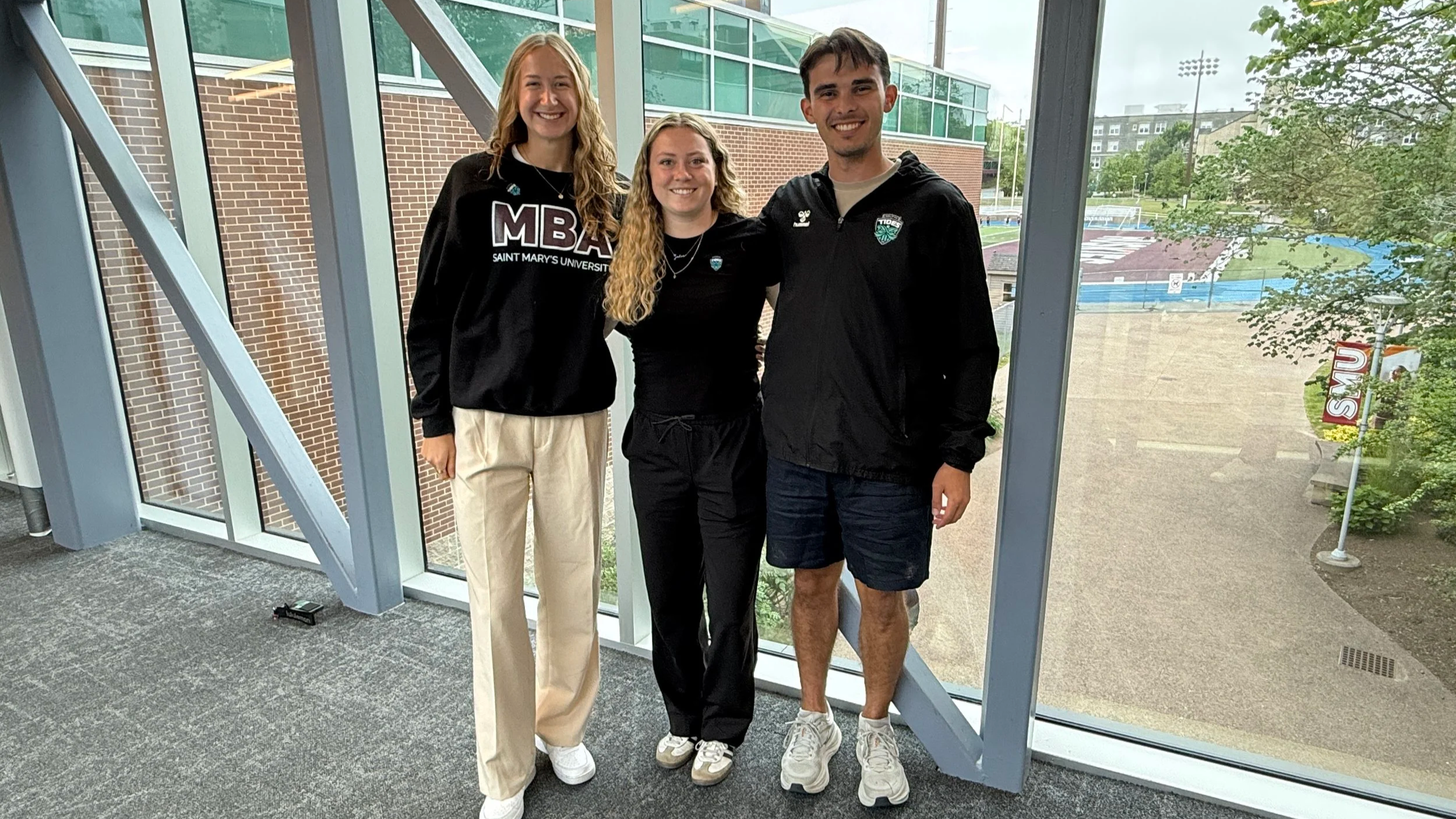
Katelyn, Julia and Ben stand together in the pedway overlooking Huskies field

Katelyn Power BComm’23 MBA’25, Julie Naugler BA’20 MBA’23 and MBA student Ben Broadbent are working with the Halifax Tides FC, Halifax’s professional women’s soccer team

Walking through the office of the Halifax Tides FC on any given day, you might be surprised at just how many familiar faces you see. Saint Mary’s graduates are everywhere, from the field to the office, helping to drive the growth of professional women's soccer and the sport business ecosystem in Atlantic Canada. What seems like a coincidence at first glance is much more than that: it’s a testament to the sport and business education programs connecting SMU grads to the growing world of professional sports.     

Since launching in 2024 as a founding club of the Northern Super League, Halifax Tides FC has created new opportunities for athletes, business professionals and students looking to build careers in sport.

Julie Naugler BA’20 MBA’23, Katelyn Power BComm’23 MBA’25, and current MBA student Ben Broadbent tell us all about their journey from SMU to the Tides—and how their time on campus prepared them for the working world of sport.

Julie Naugler

Senior Sales Lead

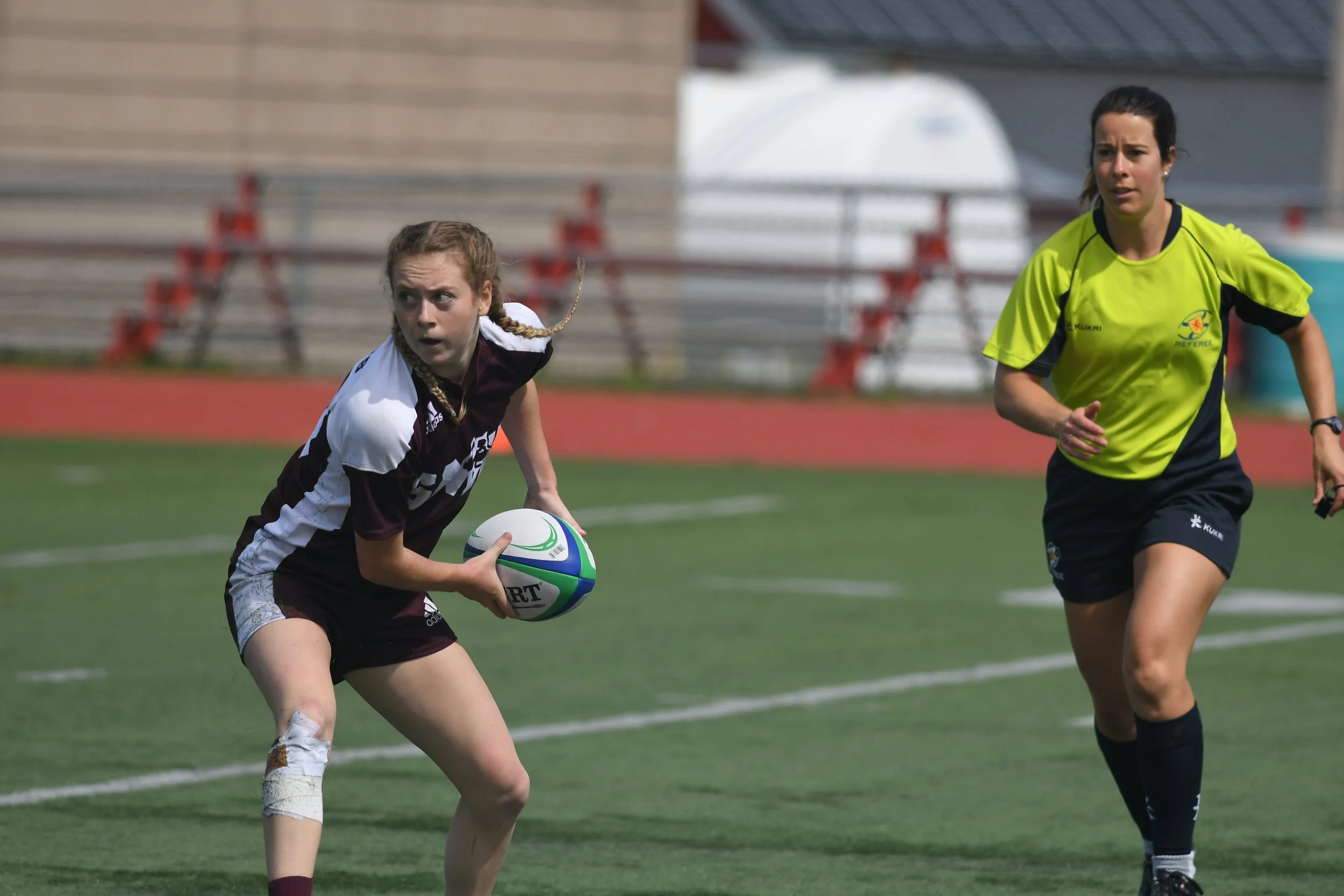
When Julie Naugler decided to add a Certificate in Health, Wellness and Sport in Society (HWSS) onto her BA in Anthropology, she didn’t anticipate how useful it would be in her day-to-day life post-graduation. As a varsity athlete and flyhalf with the SMU Women’s Rugby team, Julie was drawn to the HWSS certificate because it piqued her interest, and as a student-athlete, that passion for sports was just as prevalent in the classroom as it was on the field.

Julie holds the ball on the rugby pitch as an opponent runs toward her

“I think sport is a really unique industry. You can do marketing, but marketing in sport is different. The same goes for sales and partnership management. There are all kinds of sales roles, but applying those skills in the sport industry is unique. There aren't many courses that directly prepare you for that environment, so having the opportunity to study it while in school is a huge asset.” - Julie Naugler

“I got more directly involved in sport coursework in my undergrad days. The relevance to my future career wasn’t clear at the time, but I took a course on the football family of sports—so soccer, rugby, American football, all those sports, because it interested me and it was relevant to the HWSS program. Now, I use elements of that course more in my day-to-day than I ever would have thought.”

Getting even more involved with sports academic opportunities at SMU, Julie took a position as a Marketing and Promotions specialist with the Scott McCain & Leslie McLean Centre for Sport Business and Health in 2023—while completing her MBA at the Sobey School of Business—and started working in the professional sports industry right after graduation.

“When the sales opportunity at the Tides opened up, I immediately gave it a shot and was so glad I did. The opportunity to work within a women-led organization helping launch professional women's soccer in Atlantic Canada was incredibly exciting. I joined the club during the lead-up to our inaugural season in 2025, which gave me the opportunity to help build something completely new from the ground up.”

With her HWSS certificate and MBA, Julie’s creativity, sales and sport-specific knowledge has prepped her well for her role with the Tides—and the sports industry’s eagerness for this combination of skills helped spark SMU’s creation of the Bachelor of Commerce in Sports Business last year.

Katelyn Power

Stadium Operations Lead

Like Julie, Katelyn Power is “SMU through-and-through,” beginning her journey with a BComm in Management and a minor in Sociology while playing basketball with the SMU Huskies. “I’m jealous that the BComm in Sports Business started after I graduated,” she says, noting the opportunities available in the new program. A Sobey MBA Scholarship recipient, Katelyn’s interest in sport extended beyond her time on the court, and she made her athletics experience a key focus in her graduate work at the Sobey School of Business.

Katelyn shoots a basketball during a game

“I think that if you’re an athlete, using the skills you’ve learned during your time in athletics is so important. The leadership, teamwork, resilience, and ability to remain calm under pressure that you develop as an athlete are all highly transferable skills in the sports business world.” - Katelyn Power

“I did a presentation during my MBA on the parallels between business and sports. It’s striking how many there are. The skills that you use on the court are the same skills you use in communicating in the office. The time management, the dedication, the working towards a common goal – my experience as an athlete translated to the office almost exactly.”

During her six years with the Huskies basketball program, Katelyn was part of the three-time AUS championship-winning team, an experience she credits with preparing her for the fast-paced world of professional sport operations.

At the Tides, she “oversees match-day staffing, including ushers, ticket scanners, and event operations crews”, coordinating match-day operations, venue branding, sponsor activations and stadium readiness in the weeks leading up to a game. It’s not exactly slow between games, though, with time between matches dedicated to planning, evaluating, and continuously improving future experiences, a pattern she established with her team during her athletic career with SMU.

Ben Broadbent

Business Development Coordinator    

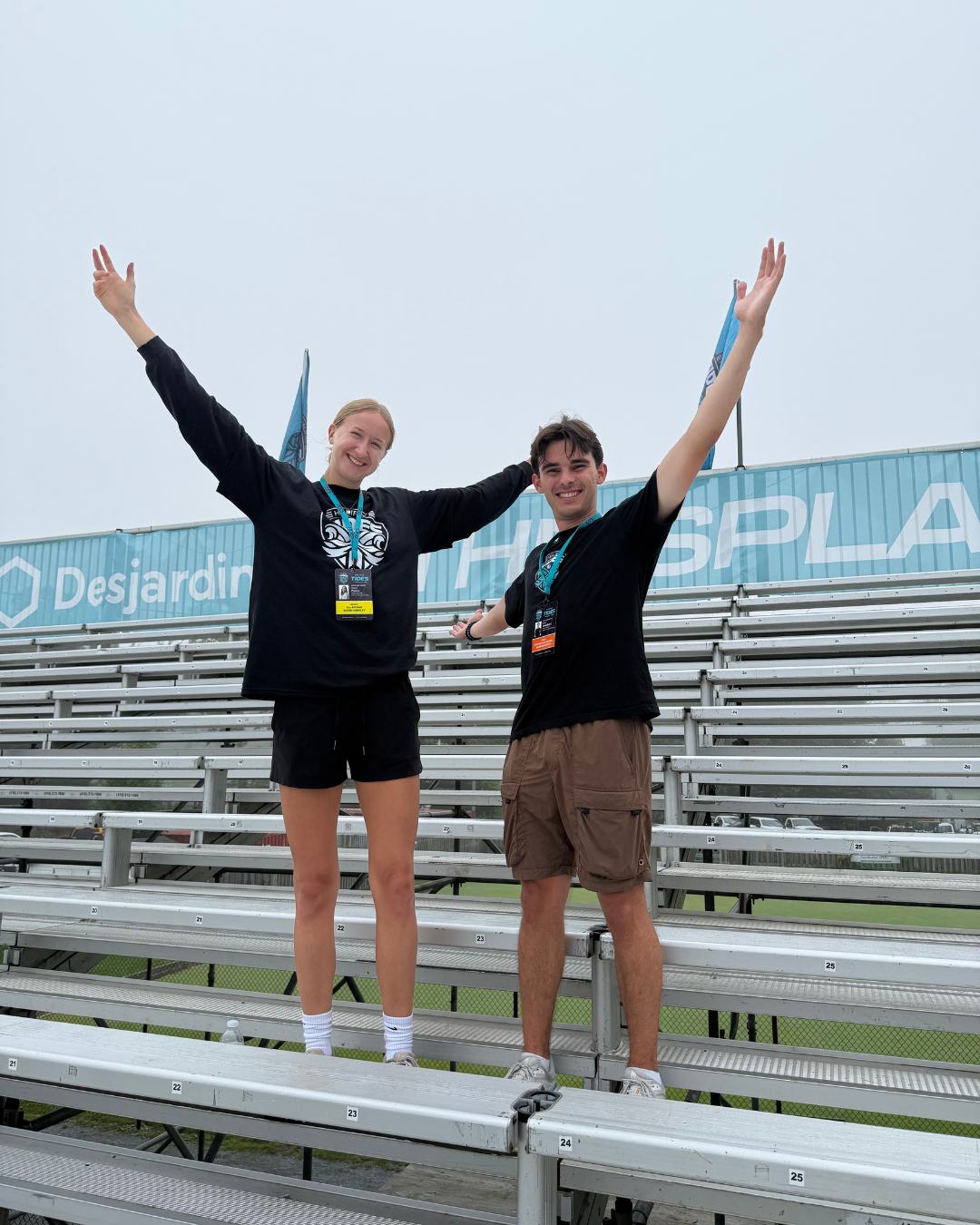
Katelyn and Ben pose on the bleachers at the Tides soccer stadium

“There aren't many undergraduate sport business programs in Canada. Having more sport-specific education options, especially on the East Coast, is a great opportunity for students to get their foot in the door, especially students from New Brunswick, PEI, Newfoundland and Nova Scotia.”

Ben Broadbent was a varsity athlete at his undergraduate institution, and after graduating with a BA Honours in French Studies and a minor in History, he knew he wanted to pursue a career in sport. He chose the MBA program at SMU to get him there.

The flexibility of the MBA builds on classroom learning to give students a real feel for the workforce, and for a sports business career, there’s nothing that compares to learning on the job. His business education, along with his arts background, gives him a practical toolkit for the sports business world, providing a curriculum that “has been a huge asset” for Ben as the mix of coursework and experiential learning has set him up for success with the Tides.

“This career path is incredibly dynamic. In the lead-up to a match, it's logistics, planning and negotiation. On game day, it's problem-solving, agile management and sometimes crisis management. You're as proactive as you can be and then the reaction starts.”

Having student work experience with a professional sports organization like Halifax Tides FC gives students like Ben a competitive edge once they hit the workforce full time, helping them stand out in the race for the next generation of sports professionals.

Sports Programs at SMU

For incoming students who are looking to launch a sports career right here from the Maritimes, Halifax is proving to be a hub for up-and-coming sports professionals of all sorts. With organizations like Halifax Tides FC helping establish and grow professional women's soccer in Atlantic Canada, and demand for a workforce capable of evolving that presence, the era of sport business success in the city is just beginning.

Behind every match day experience are dedicated professionals helping grow the game both on and off the pitch—and many of them got their start right here at Saint Mary's.    

BComm student selected one of 10 Outstanding Leaders in Canada

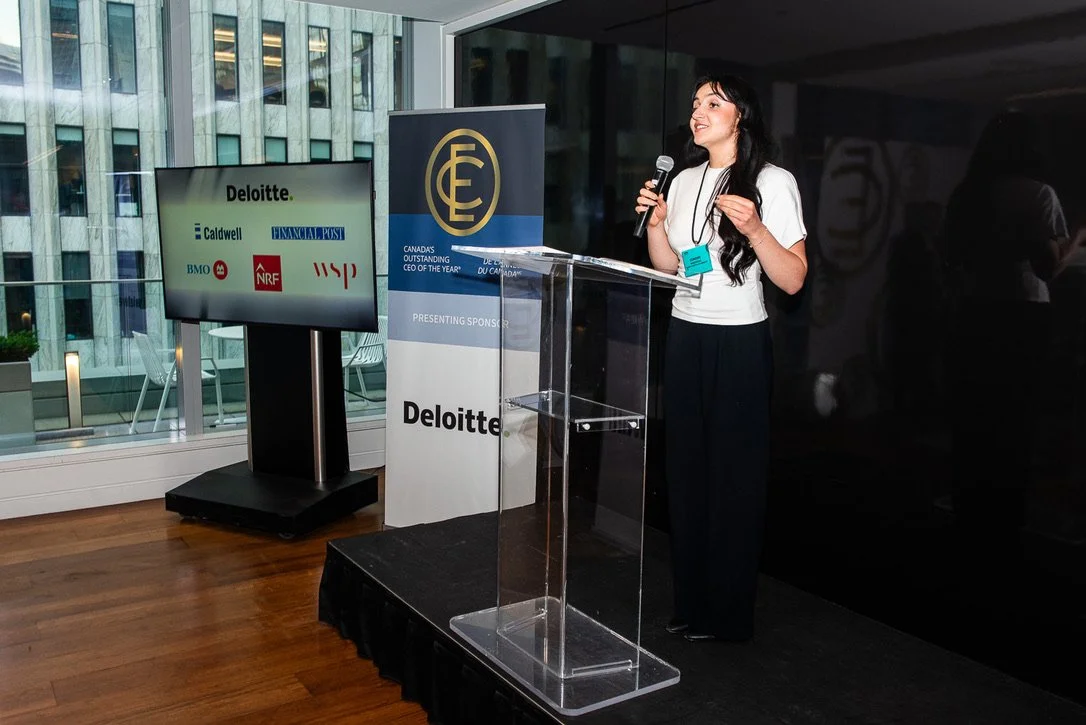
Simone is a white woman with long black hair. She speaks behind a clear podium.

Simone Boudreau’s accomplishments include founding CycleStrong

Sobey School of Business students are known for their high-performance in awards and competitions across the globe, so when it came time to nominate a student for the Futures Fund Scholarship for Outstanding Leadership, there was plenty of competition. In the end, Simone Boudreau stood out for her academic strength and commitment to community.

“Simone brought so many achievements to the table. Her exceptional experience in leadership and her academic performance made her an excellent candidate,” said Dr. Michel Delorme, Dean of the Sobey School. “The Sobey School of Business’ reputation led to our school being selected to nominate a student; the quality of our students, in turn, builds our reputation even more.”

In May, while her classmates were walking across the convocation stage, Simone was in Toronto as one of just ten students across Canada to receive this prestigious scholarship.

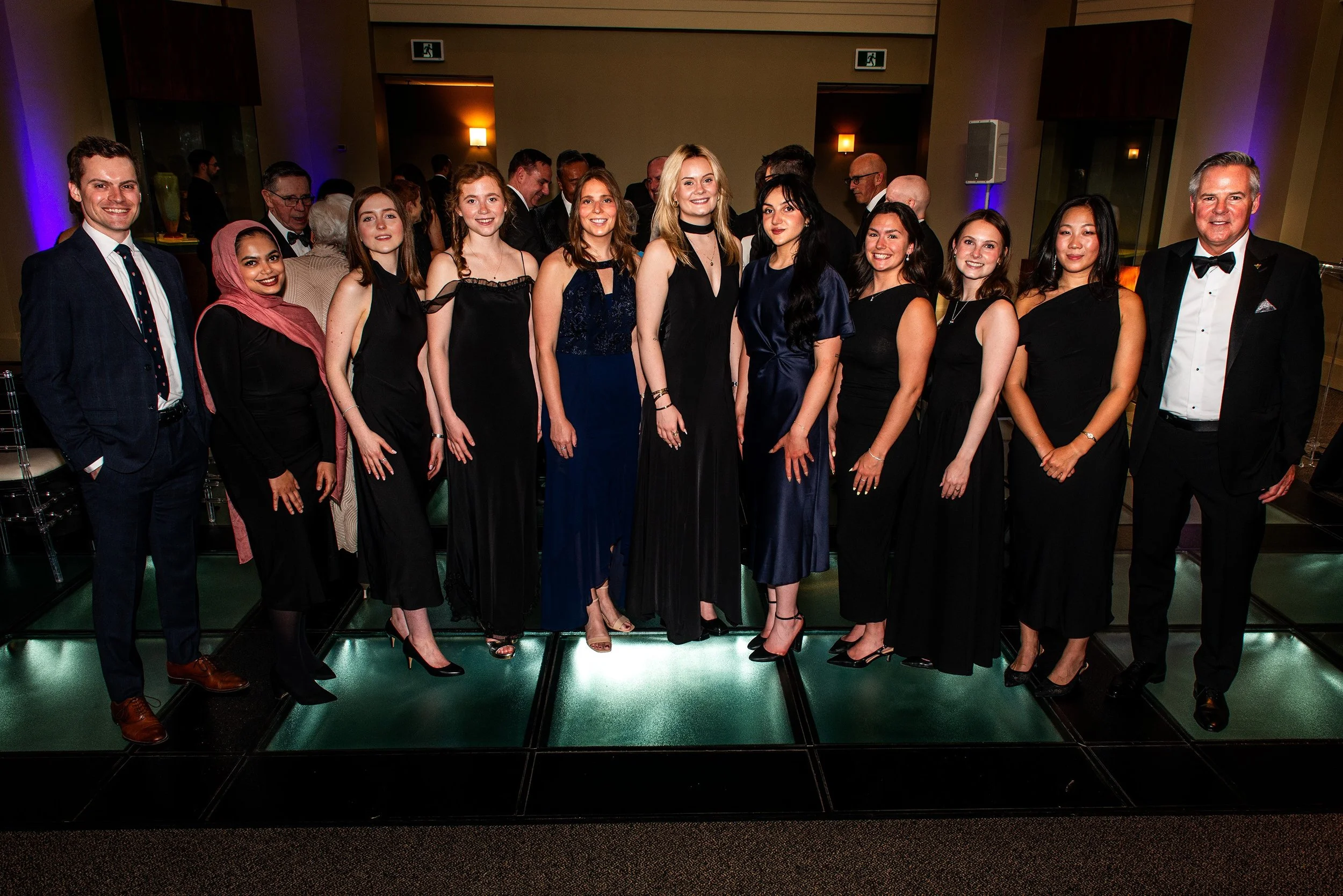
Simone, fifth from right, at the Futures Fund Scholarship Awards Gala in Toronto

“The Futures Fund was an unreal experience, and I am incredibly grateful for the opportunity and the memories I created,” said Simone.

Established by Canada's Outstanding CEO of the Year®, the Futures Fund Scholarship for Outstanding Leadership recognizes business students who have demonstrated exemplary leadership through their academic achievements and extracurricular involvement.

Each year, ten Canadian business schools are selected to participate, with each school nominating a student whose leadership, initiative, and impact distinguish them among their peers.

With a cumulative GPA of over 4.0, Simone will graduate in September with a Bachelor of Commerce majoring in Marketing and Economics with a Certificate in Sports Business. She was active in the Commerce Society, Enactus and the Women in Business society, and she served on the Board of Directors for Sail Able Nova Scotia, a learn-to-sail organization for people with disabilities. Most recently, she founded CycleStrong, an initiative focused on helping female athletes better understand injury risk and training through menstrual cycle tracking, with goals to help close the gap in women’s sport science research.

The trip to the Futures Fund event was about more than networking. The candidates engaged with experiential learning and enjoyed access to leaders from companies such as Deloitte, Caldwell, Canadian Tire, Air Canada and more.

Simone poses at the event
I was able to connect with some of the most inspiring leaders in Canadian business and learn from their experiences through workshops and discussions, and I shared this experience with nine other remarkable students from universities across Canada. We were able to learn from each other throughout the program.

It was an incredible opportunity to expand my perspective, build meaningful connections, and bring new ideas and inspiration back to my career and academics.
— Simone Boudreau

Simone is currently working as an event coordinator with the Halifax Regional Municipality and plans to continue working in tourism and events. She will graduate this fall and plans to further her education with a master's degree in public policy or applied economics.

Mapping the system: Beyond the waitlist

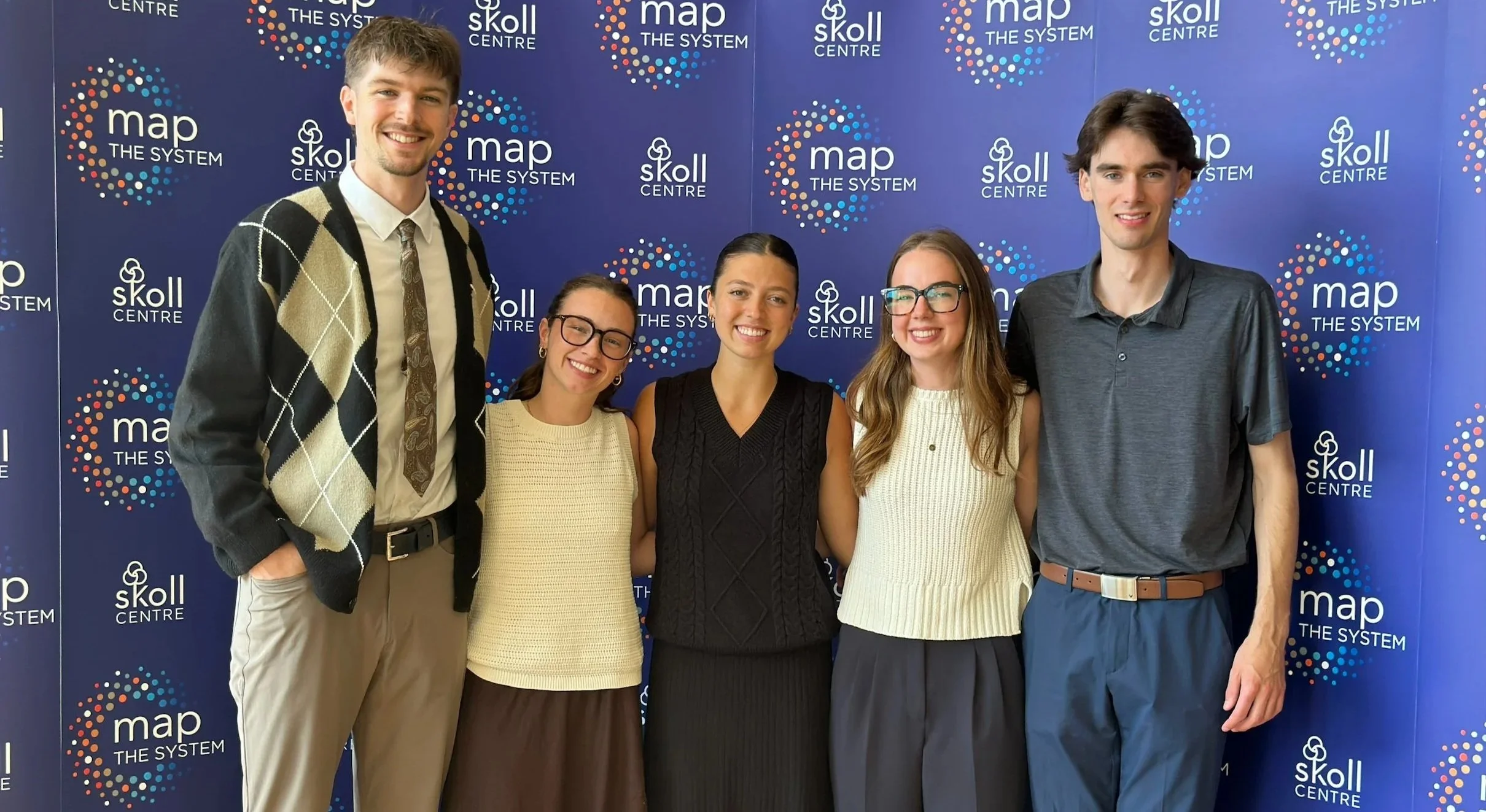
Jonah Crowther, Katie Brooks, Julia Faloon, Anna Streeter and Luke Pound represented the Sobey School of Business at Map the System in the UK

Sobey MBA Team recognized for mapping Nova Scotia’s family physician shortage

Last week, a team of Sobey MBA students received a Systems Mapping Excellence Award in a competition called Map the System (MTS), held at Oxford University, UK. It was the first time a Saint Mary’s University team had entered the competition. Julia Faloon, Anna Streeter, Luke Pound, Jonah Crowther and Katie Brooks analysed and presented on the systems around Nova Scotia’s family physician shortage.

Founded in 2016, the Map the System competition, held at the Skoll Centre for Social Entrepreneurship, builds a community of practitioners, educators and students around systems thinking, an approach to entrenched and intractable social and environmental problems that examines both mitigating and exacerbating factors. The competition stands apart from most others in that participating teams are not tasked with building solutions and recommendations. Instead, they are evaluated on how well they have mapped and analysed the contributing factors to a problem, their ability to translate data into a compelling story, and their understanding of root causes and potential leverage points for change.

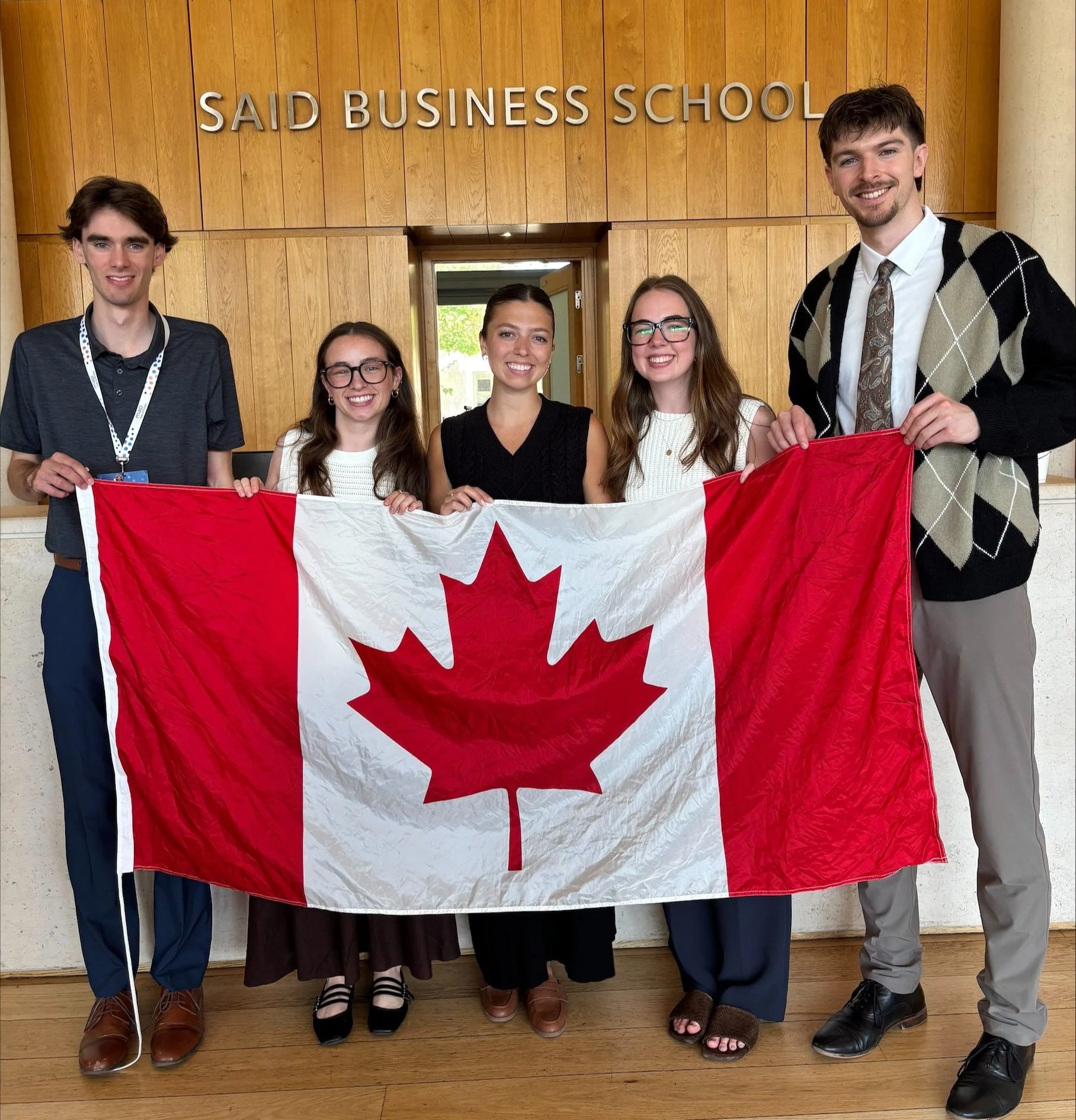
The team holds a large Canadian flag under a sign reading Said Business School

The team received a Systems Mapping Excellence Award for their analysis of the Nova Scotia family physician shortage

In the SMU team’s analysis, some of the factors were immigration trends, rural versus urban realities, career perceptions of family medicine, public expectations, burnout and isolation. During the analysis, retention of doctors and perceptions about the attractiveness of family medicine as a career option appeared as weaker areas in the system.

In addition to traditional research, Anna said, “We got to listen to a lot of different perspectives throughout our entire project, whether they were from different organizations or different levels within the organization, but they all helped reveal something different about the system we were looking into, which we may have overlooked if we didn't reach out to them.”

Systems thinking in MBA

Annika Voltan teaches an MBA course called Sustainable Change Leadership, where she introduces systems thinking as an essential skill for future leaders. This past winter, students in her class participated in the campus-level Map the System competition.

In reflecting on why she feels that systems thinking and systems mapping are so important, she noted: "In today's busy world, we're often evaluated based on efficiency and productivity measures, which leads us to jump into solutions when faced with problems. But the complex challenges we're facing require deeper understanding of contributing factors, power dynamics and interconnections if we're going to be able to shift toward better outcomes. Systems thinking is increasingly being recognized as an essential skill set for navigating the wicked problems of our time."

Camaraderie and support

The team were impressed by the collegial and supportive atmosphere associated with the competition, all the way through. They received advice and encouragement from several Sobey professors, as well as from staff at the Arthur L. Irving Entrepreneurship Centre and Executive and Professional Development. MTS assigned the team three judges. Here in Halifax, they connected with a health researcher named Sam Petrie who competed at MTS in 2020. The others were Ishaw Sharma (Toronto) and Mariana Cardenas Marquez (Montreal). Even the judges were supportive, said Katie: “They were rooting for you to succeed in the questioning. They wanted to give you the opportunity to share more, if you missed anything and really show your understanding.”

Jonah added that after complimenting another team on their presentation, that team commented about the SMU team being all MBA students. Jonah said, “I kind of took a step back and thought, wow, they view almost us as the experts.” While the team may not be experts in healthcare, they were the people in the room who knew the most about the Nova Scotia healthcare system, thanks to their research and analysis.

Coming into the competition, Julia noted they had expected it to be intense and perhaps more rigid. “The camaraderie that we all felt, the gratitude that was in the room for everyone being there was super cool to experience.”

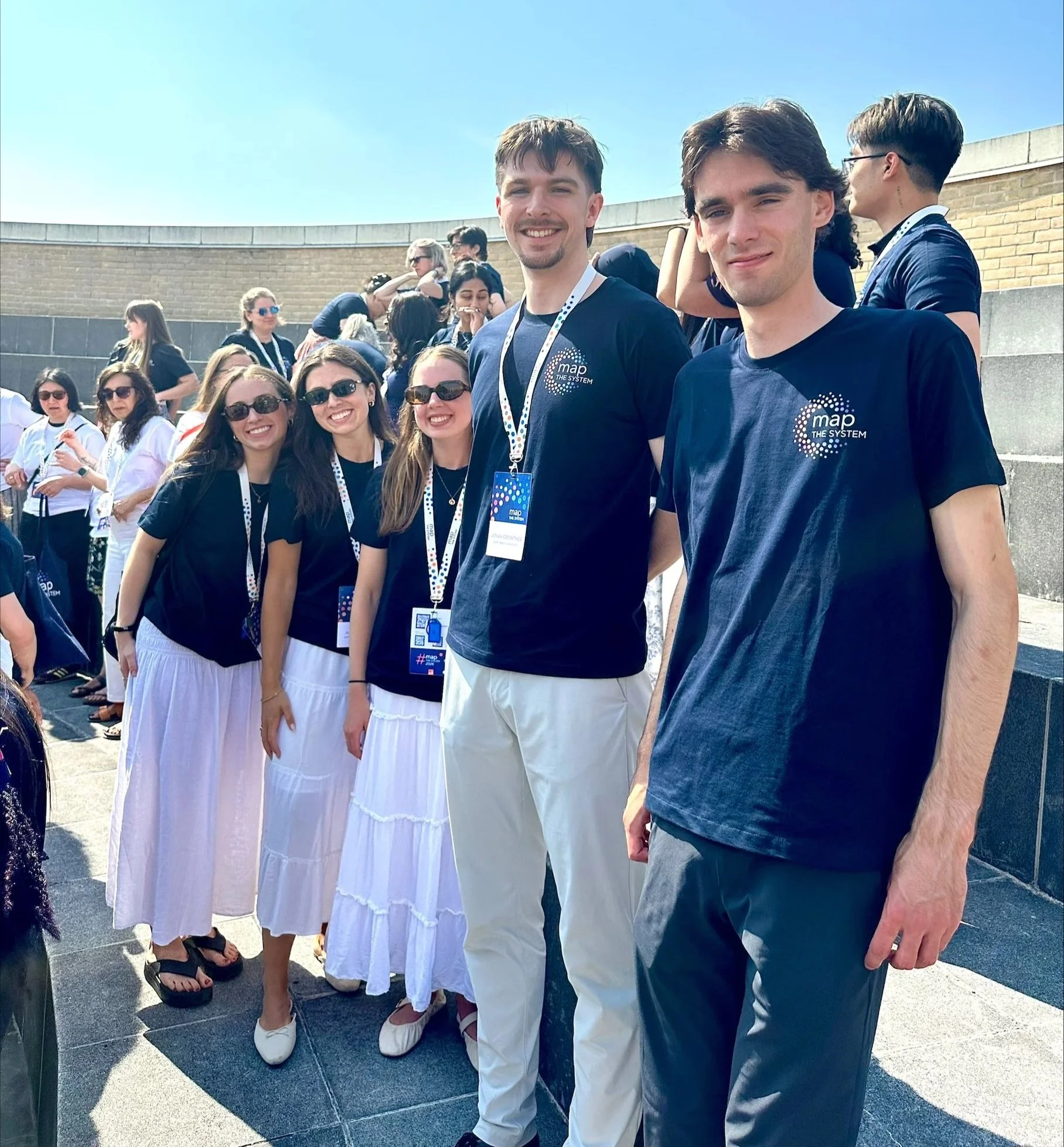
The students pose outdoors wearing Map the System tshirts

The team is excited to share their report findings at Lead With Purpose Day in November

Looking forward

Looking ahead, the team is excited for another SMU team to participate next year so they can share some of what they learned.

“How do you even articulate to the class that comes in next year? Like, how do you get people to feel like we feel right now about it, because we're so in it,” said Katie.  Anna noted they hadn’t expected the breadth or complexity of some of the issues being mapped.

The passion and storytelling of the finalist teams made a strong impression on Jonah. “I think what I really appreciated was not just learning about the issues happening in those countries, but also just seeing the passion they brought when they were presenting on those topics.”

What happens now with the report? They will be bringing it to the PRME research expo at the Sobey School of Business’ Lead With Purpose Day on November 20. Katie says, “You can do a lot with this. So many people in the community now want to read our report and our findings.”

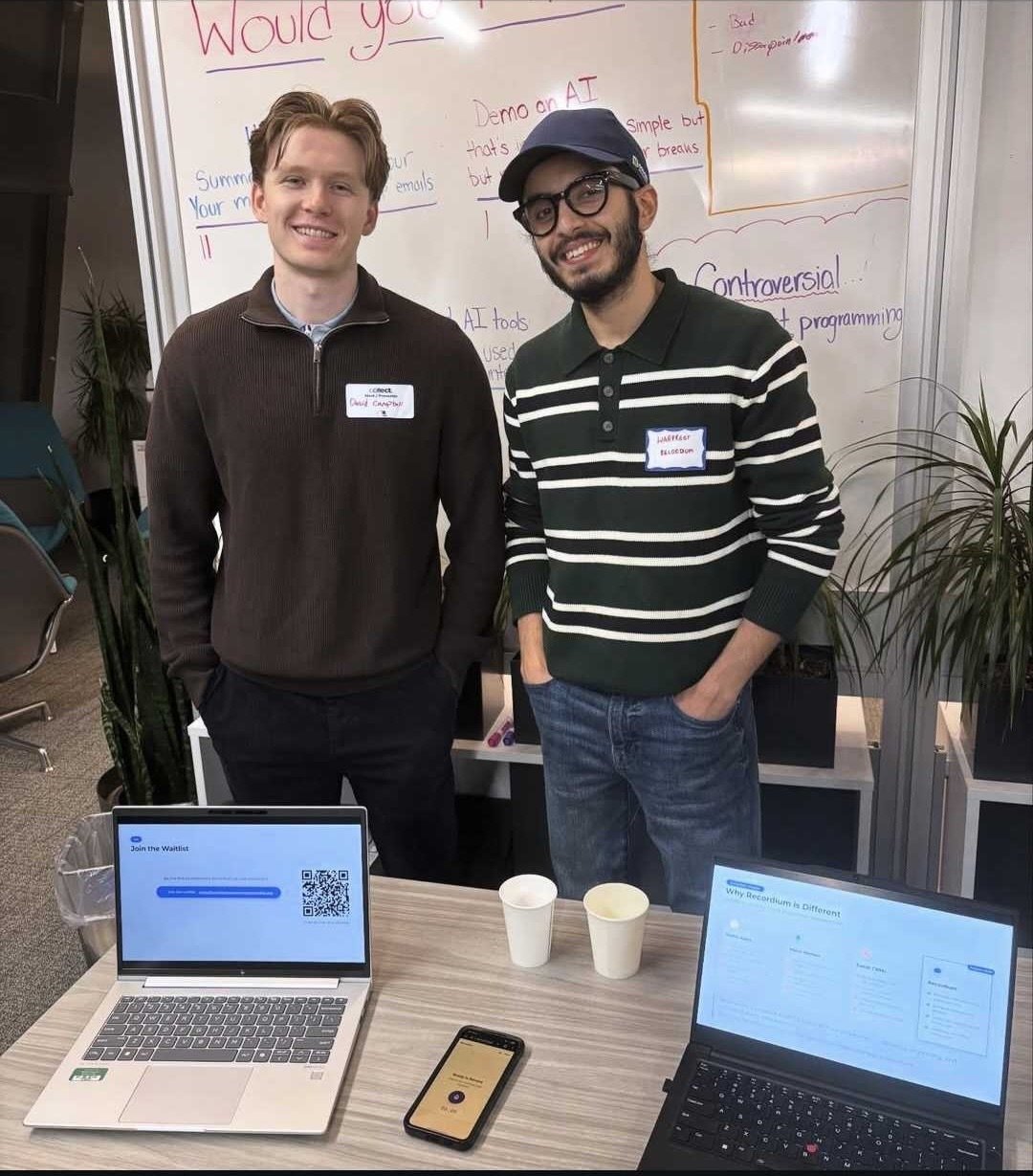
From supporting founders to becoming one: David Campbell BComm’24

David Campbell BComm’24

For David, entrepreneurship wasn't always part of the plan. In fact, he says he never considered himself a naturally entrepreneurial person. But after spending years surrounded by founders and innovative ideas at Saint Mary's University, his mindset began to change.

Today, David works at the Arthur L. Irving Entrepreneurship Centre, where he supports student founders and helps create entrepreneurship programming. Outside of work, he's building his own startup, Recordium, alongside co-founders Harpreet Jaggi, an experienced B2B sales professional, and Max Mascini, a Dalhousie University master's student specializing in AI ethics, neuroscience and machine learning.

The team recently received a major boost after being accepted into the AI2Market Launch incubator, earning $10,000 in funding to help bring their business to life.

Recordium was born from a real-world problem. After hearing about the challenges Harpreet faced while attending sales conferences, the team realized that many professionals invest significant time and money into events without having the tools to prepare effectively or capture valuable conversations afterward.

David and Harpreet, Co-Founders of Recordium

"There's no real system for remembering who you spoke to, following up or learning from those interactions," David explains.

That's why the team is developing a comprehensive conference assistant that helps users prepare before events, identify the right people to meet and use AI-powered note-taking and CRM updates throughout the day.

For David, building Recordium has reinforced many of the lessons he shares with aspiring entrepreneurs every day.

Working at the Entrepreneurship Centre taught him the importance of validating a problem before investing time into building a solution. Now, experiencing customer discovery, product pivots and pitching firsthand has also made him a stronger mentor for students.

“I’m now able to help students by using my lived experience,” he says.

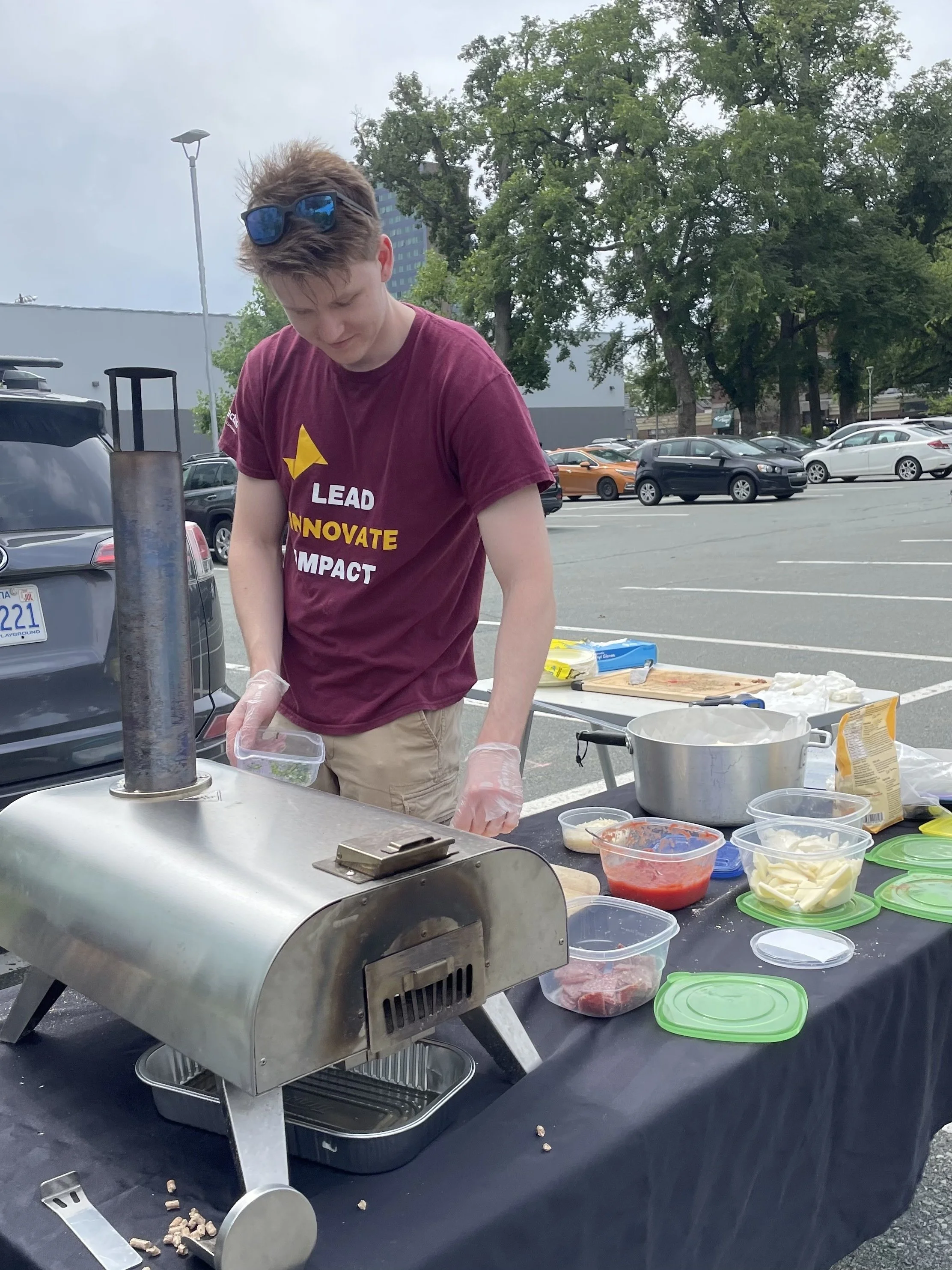
David’s previous ventures included a drive-thru wood-fired pizza business

His own entrepreneurial journey has included previous ventures, from a drive-thru wood-fired pizza concept to a woodworking business. While neither succeeded in the long term, each experience taught valuable lessons and helped build confidence to pursue his latest venture.

Looking ahead, the Recordium team is focused on getting the platform into the hands of sales professionals who regularly attend conferences and networking events. With support from AI2Market Launch and fresh funding behind them, they're eager to discover where the product can create the greatest impact.

David's advice for aspiring entrepreneurs is simple: talk to people before you build anything.

"The actual problem people are facing starts to emerge quickly when you're having real conversations," he says. "And just start, even if you think the idea is bad or you don't fully believe in yourself yet. What you learn along the way will be well worth it."

Discover how the Arthur L. Irving Entrepreneurship Centre supports entrepreneurs like Recordium. 

Sobey School of Business earns Level 4 “Transforming” designation in Positive Impact Rating

The Sobey School of Business

The Sobey School of Business at Saint Mary's University has been recognized again in 2026 as a Level 4 "Transforming School" in the Positive Impact Rating (PIR).

The PIR is a global tool that evaluates how effectively schools prepare graduates to contribute positively to society and address complex global challenges. The evaluation is conducted by students, for students.

Achieving Level 4 places the Sobey School among a select group of business schools worldwide recognized for embedding positive impact throughout their institutional culture, governance systems and educational activities.

Students cited the school’s energizing culture as a strength, one that the Sobey School is particularly proud of. In their evaluation, students encouraged Sobey to find new and additional opportunities to further embed sustainability across all learning methods.

Rory MacDonald, Sobey Sustainability Society President

Sobey Sustainability Society President Rory MacDonald said, “Our Society respects that the Sobey School measures its sustainability impact based on student feedback and takes action on that feedback. Students are the heart of SMU, and I am proud to attend a school that values each and every person, bringing us together through our differences.” 

The Sobey School is proud to be ranked alongside peer institutions like Esade, Bologna Business School, Maastricht University School of Business and Economics, Bern University of Applied Sciences Business School, IÉSEG School of Management, Monash Business School, Australia, and Manchester Metropolitan University Business School, demonstrating the global reach of PIR recognition.

The Sobey School of Business has been an early North American leader in following the Principles for Responsible Management Education (PRME), a signatory since 2014 and a PRME Champion since 2021, and accredited by both AACSB and EQUIS. This places Sobey in the 1% of business schools in the world with both accreditations. These, along with the PRME commitment and the PIR, provide regular opportunities to assess and measure the impact and quality of the education and experiences offered to students and alumni.

ICD focuses on Indigenous Governance

Chief Terry Paul addresses Maritime ICD Chapter at day-long event at the Sobey School of Business

Kylar Johnson, the Saint Mary’s University Indigenous Student Advisor, and Cedar Pictou, a drummer and current Arts student, helped open the event.

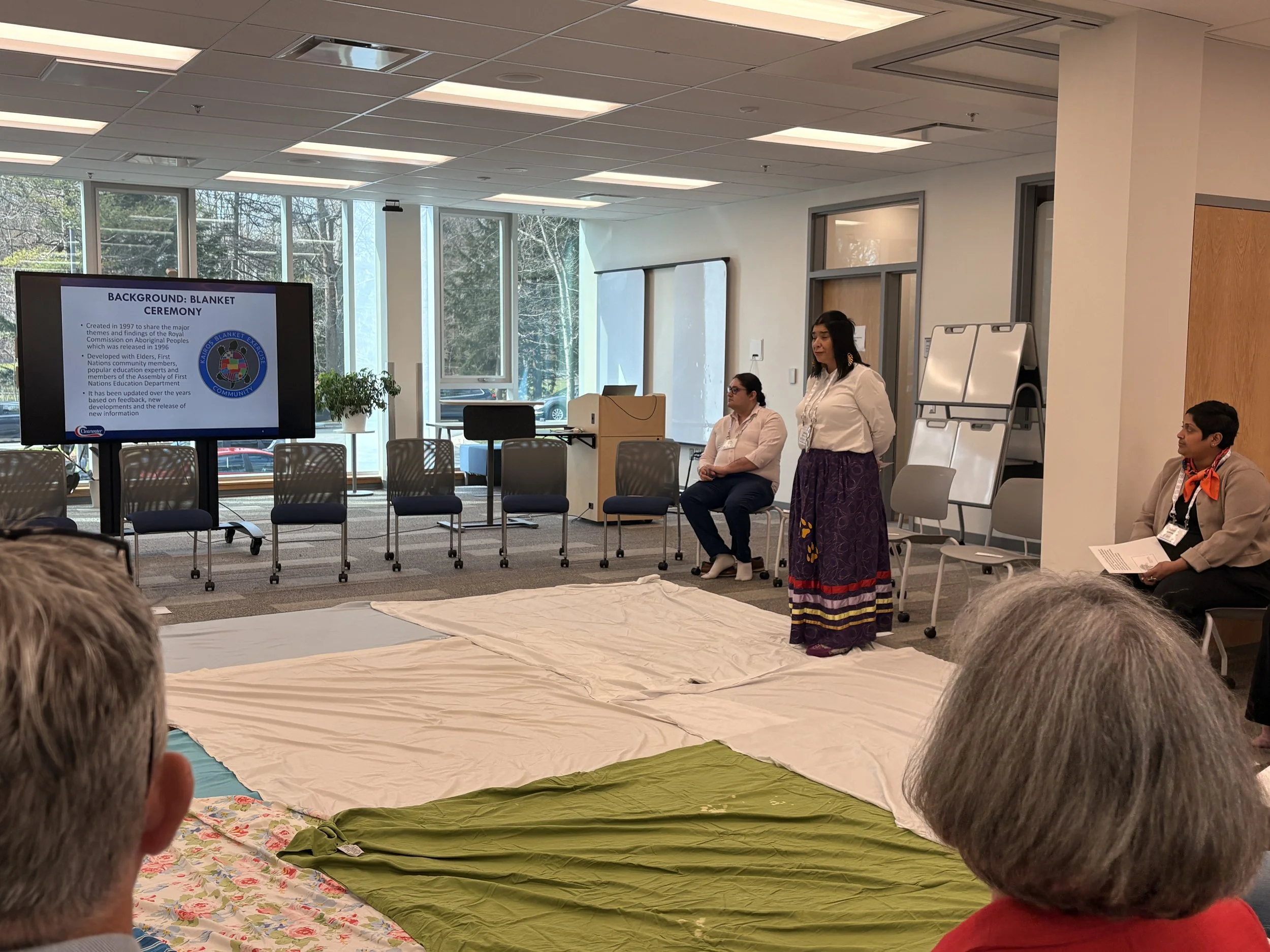
Many Nova Scotians are aware that in 2021, Clearwater, a major exporter of seafood and one of Nova Scotia’s premier corporations, was acquired by a partnership between Premium Brands and the Mi’kmaq Coalition, comprised of seven Mi’kmaq communities in Nova Scotia and Newfoundland. But how many have considered what a shift to Indigenous leadership means, both for the business and for reconciliation?

On May 8, 2026, the Sobey School of Business hosted the Institute of Corporate Directors (ICD) Maritime Chapter for a special day-long event on Indigenous governance and the Clearwater purchase, and the dimensions of reconciliation that board directors can influence. Academic Director of the ICD-Rotman Directors Education Program, Margaret McKee, has been working with her counterparts at Rotman to draft a case study on the purchase.

The day opened with a blanket exercise led by one of Atlantic Canada’s Most Powerful Women in Business for 2026, Cheryl Copage Gehue. Cheryl is a Mi’kmaw leader and an experienced Indigenous Blanket Instructor with more than 10 years of facilitating learning and dialogue on Indigenous history, perspectives, and reconciliation. Cheryl serves as Director of Indigenous Relations at Clearwater Seafoods, where she helps position economic reconciliation as a measurable driver of business growth, industry change, and community prosperity. She leads the advancement of Clearwater’s Indigenous Strategy, embedding reconciliation into how the company builds relationships, grows its workforce, and creates shared value with Indigenous communities.

Ian Smith, who was the Valedictorian of the most recent cohort of Sobey School ICD-Rotman DEP graduates, co-led the exercise. Ian is the Chief Executive Officer of Clearwater Seafoods. He joined Clearwater in May of 2010, with over 36 years of international experience in the food and consumer products industry. He has been active in maintaining company momentum through the change in ownership.

Participants heard from keynote speaker Chief Terry Paul, who described, with candour and humour, his successes and failures on the path to building the economic success of his home community, Membertou. Taking on the leadership role in the 1970s, Chief Paul quickly realized that his community had a long list of needs that could be achieved through economic development. He implemented transparent financial practices and a corporate business-building approach, pairing them with an Indigenous respect for relationships and nature. From the construction of the Membertou Convention Centre to the Clearwater purchase, the purpose of helping to lift up the community has been central to Chief Paul’s business decisions.

Fiona Kirkpatrick led the final session, discussing board implications of reconciliation. Fiona is a consultant with 40 years of experience and a member of Lac La Ronge First Nation, Treaty 6 Territory, equally proud of her Woodland Cree and Scottish heritage. Her session was informed by her governance experience as the first woman to chair the North American Indigenous Games, NAIG 2023, in Kjipuktuk/Halifax. She also serves on the board of the Canadian Council for Indigenous Business and recently concluded service on the Board of the 2025 Canada Games.

Automating for the future

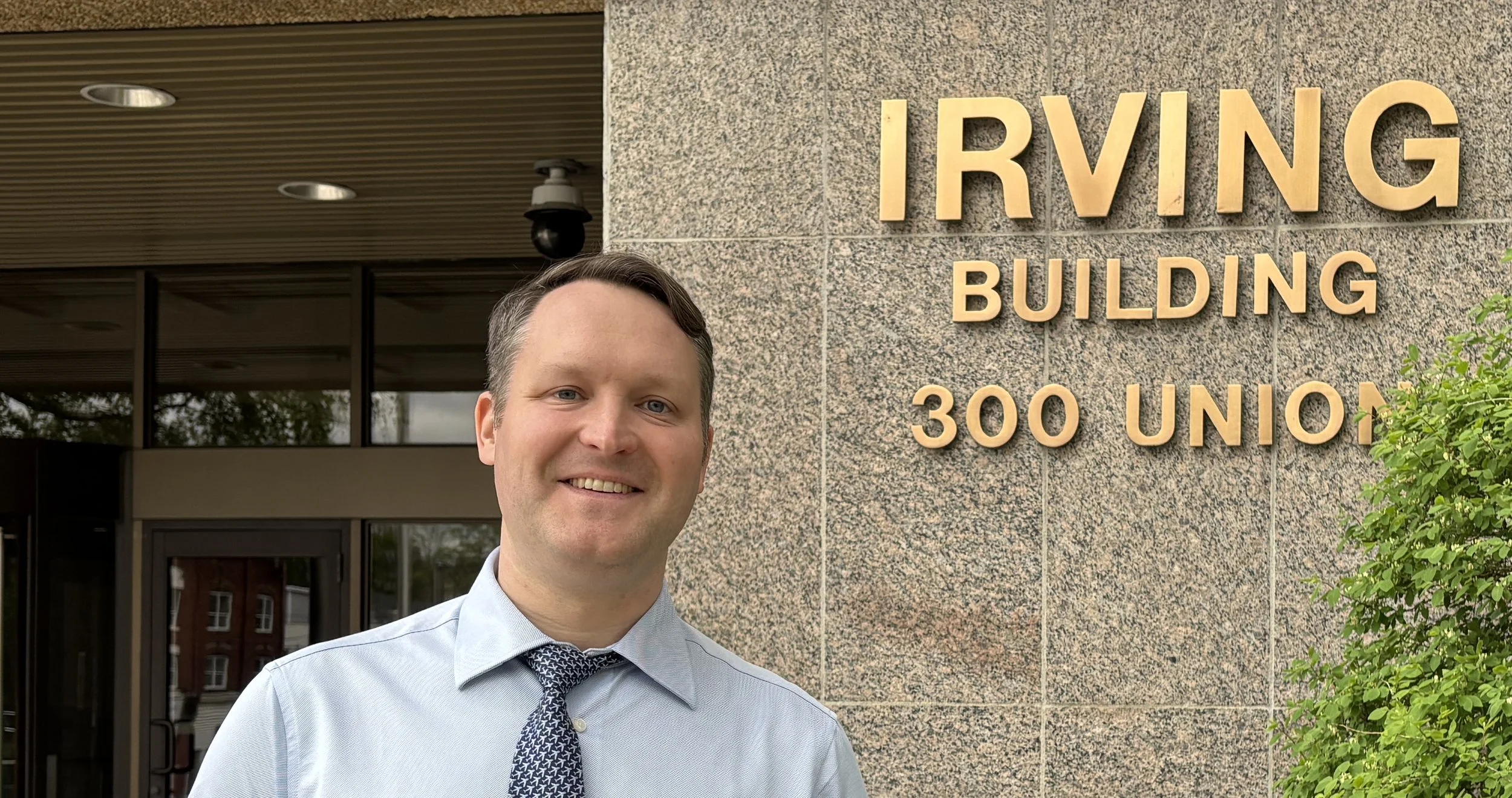
Michael pictured in from of the Irving building

Michael Toner has a restless drive to streamline and improve data analysis through AI automation

When Michael Toner completed his Screen Arts and Cultures degree at the University of Michigan, he didn’t anticipate that every job he would get would end up being about data.

The Los Angeles native says, “Whether it was ingesting footage for reality TV, mapping demographics for the city, or managing financial accounts at LA Metro, I kept finding myself automating the work and eventually realized that was the part I actually loved.”

He set out to identify a Master’s program that would let him focus on the intersection of business and data. A factor he had to consider was that he did not have a traditional STEM background, something many programs were looking for.

The Sobey Master of Business Analytics (MBAN) program was the right fit for Michael.

“Saint Mary's stood out in a narrow field. Only a handful of universities offer an MBAN program — most institutions go the MBA or Master of Data Science route,” says Michael. He plans to pursue a career in financial automation. He notes, “Financial data is unusually clean and structured compared to most domains, which means someone with the right skills can move fast and have real impact. And the demand is everywhere. Every company has a finance function.”

Testing his mettle

During the program, Michael has enjoyed competition opportunities to explore his enhanced skillset with coding and AI, developing promising innovative solutions for long-term intractable problems like food insecurity and emergency department wait times.

“At RBC Hubhacks, my team built an AI-powered financial engineering solution for food insecurity in Nova Scotia. We did well enough that we were invited to present to Halifax Partnership and then to Feed Nova Scotia directly. At CGI Datajam, we placed third out of 30 teams with an AI screening tool that cut emergency department wait times by roughly two hours per patient.”

Bringing automation to research insights

In January 2026, professor Chantal Hervieux hired Toner to work with the Centre for Leadership Excellence as a research assistant. CLE had built a relationship with a company called TrendAI, which was looking for background and industry research. TrendAI is an AI-powered demand planning and supply chain tool aimed at small to medium fashion retailers in Canada. It was founded by longtime friends, one with a background in textile manufacturing, the other in software-as-a-service.

Michael describes his research assistant role this way: “I ran background research on the Canadian fashion industry to identify TrendAI's best point of entry, surveyed small and medium enterprises, and from that built the product specifications, business model, development roadmap, and pathway to profitability.”

The survey was challenging. Response rates were so low, Michael needed thousands of contacts to reach statistical significance. When databases available through the library were insufficient, he created a solution: “I wrote Python to pull contacts from the Google Maps API and ended up with about 6,500 emails. The takeaway I'll carry forward is to think about response rates and outreach scale upfront, and to reach for technical solutions earlier rather than grinding manually.  Automating outreach was the only way the research worked at all.”

A glimpse of the future

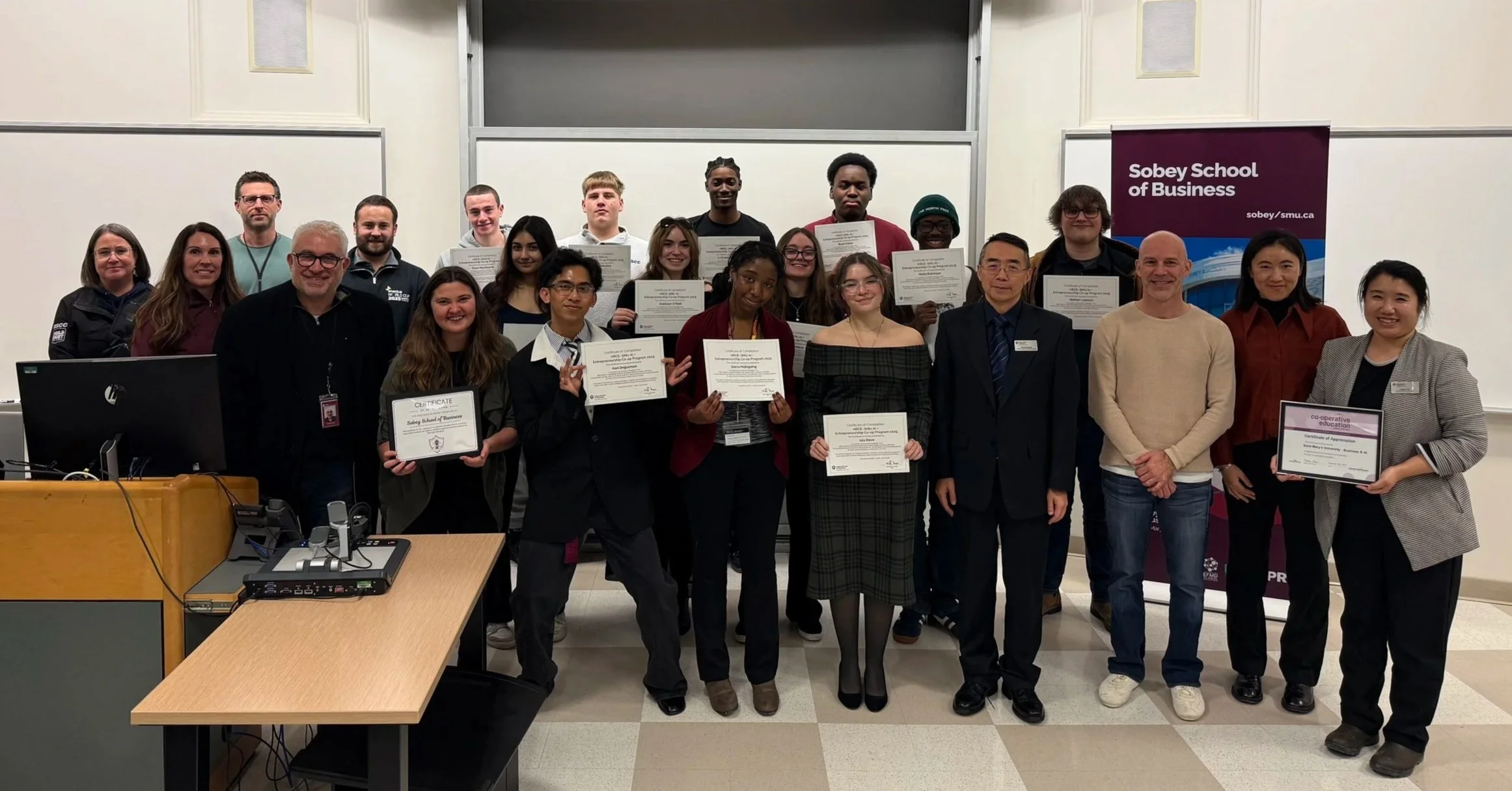
High school students participated in SMU’s AI co-op

Michael shares that there was a surprise for him in the research. “I interviewed three Canadian business owners running operations out of their garages with fewer than five employees. Twenty years ago, that same output would have required a hundred people. The headline finding from the surveys was that AI is acting as an equalizing force for small businesses, not a threat — and these three were proof. That's the future I want to help build.”

He is already working on building the future – last winter, he was one of the MBAN students who taught a cohort of high school co-op students about AI. Michael is currently doing an internship with JD Irving in Saint John while completing his degree. He will graduate next winter.

Meet your Sobey School of Business Valedictorians for Spring Convocation

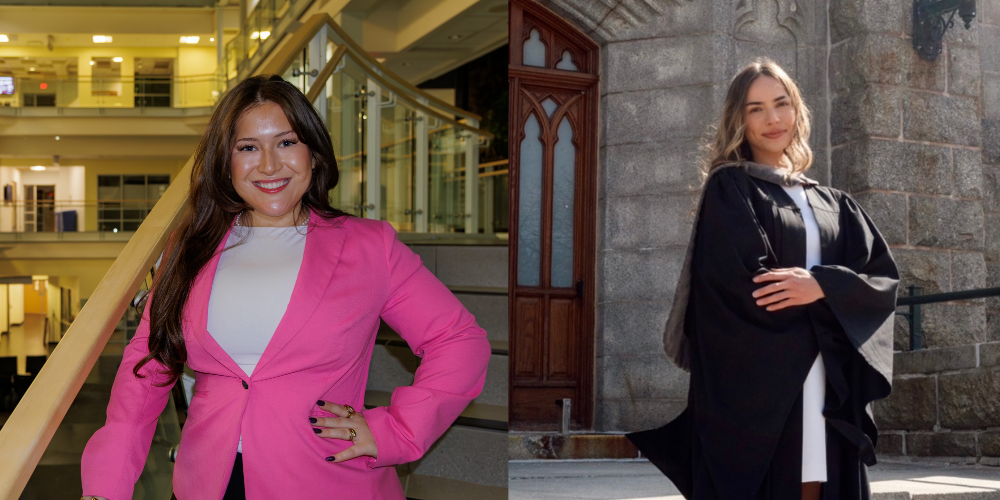
Lydia Ramsay and Chloe Pobjoy-Ridolfo

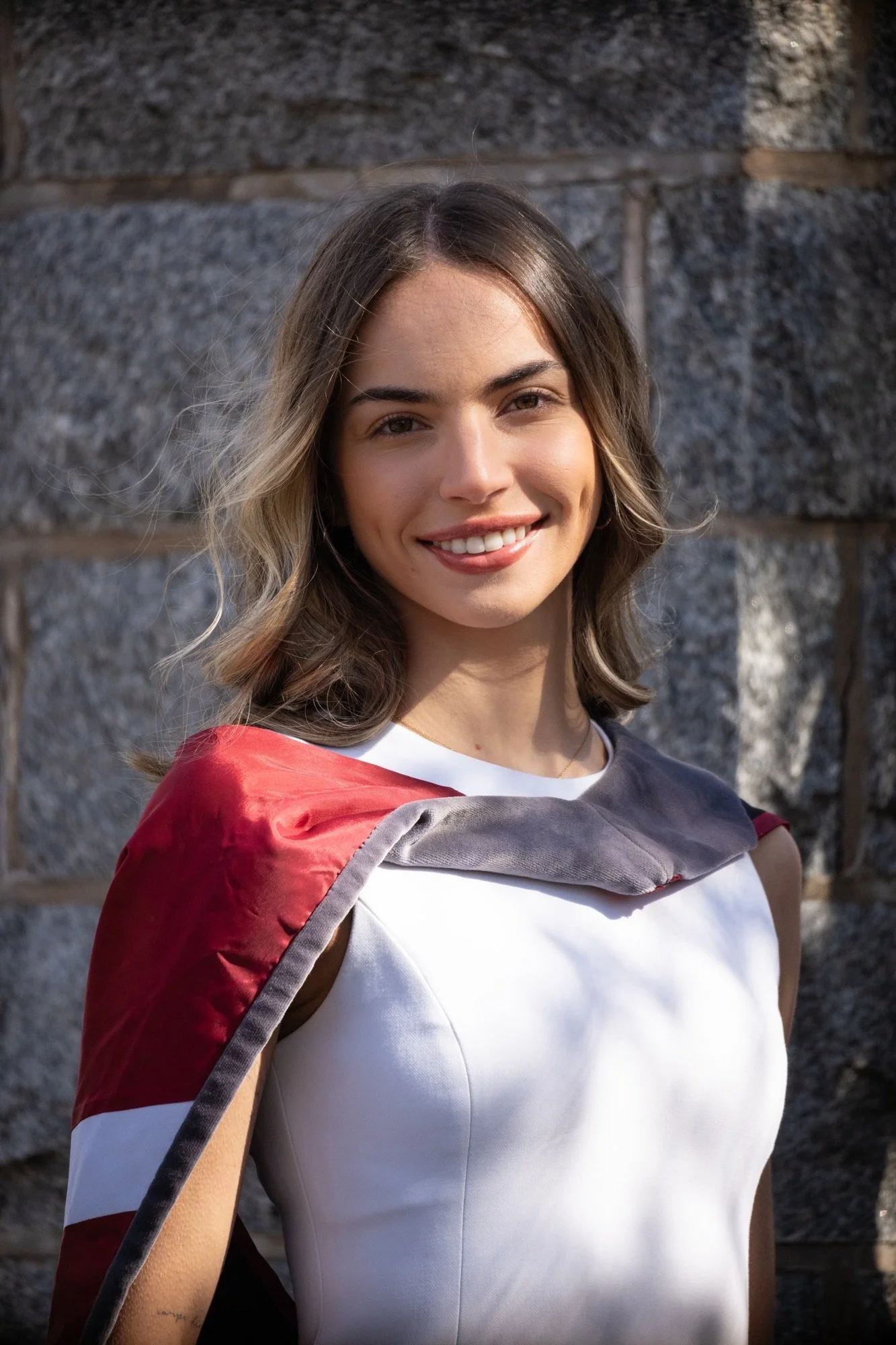
Valedictorians Lydia Ramsay and Chloe Pobjoy-Ridolfo will represent the Sobey School of Business at their ceremonies on Wednesday, May 27. Watch the graduation livestream and find the convocation program on our website.

Lydia Anne Ramsay 

Accounting, Finance

Lydia Ramsay, from Halifax, Nova Scotia, entered Saint Mary’s University as a recipient of a Sobey Innovator Scholarship, a significant investment in her leadership and community engagement potential. With her presence on both the Impact Fund and Venture Grade teams, it is fitting that Lydia’s university career is an excellent return on that investment, demonstrating academic excellence, leadership, high achievement, and community engagement.  

This May, Lydia graduates summa cum laude from the Sobey School of Business with a Bachelor of Commerce with a double major in Finance and Accounting.  She co-founded the Women in Business Society and Husky Capital, a mock investment fund structured similarly to the Impact Fund.

She delivered outstanding performances in nearly a dozen competitions over her years at Saint Mary’s, many through her involvement with Venture Grade and the Impact Fund, SMU’s student-led portfolio of $1M assets under management. She immersed herself in campus life, serving as a Residence Assistant, Teaching Assistant, and BComm Student Ambassador.  

Q&A with Lydia

What are some highlights of your involvement in the SMU Community?  

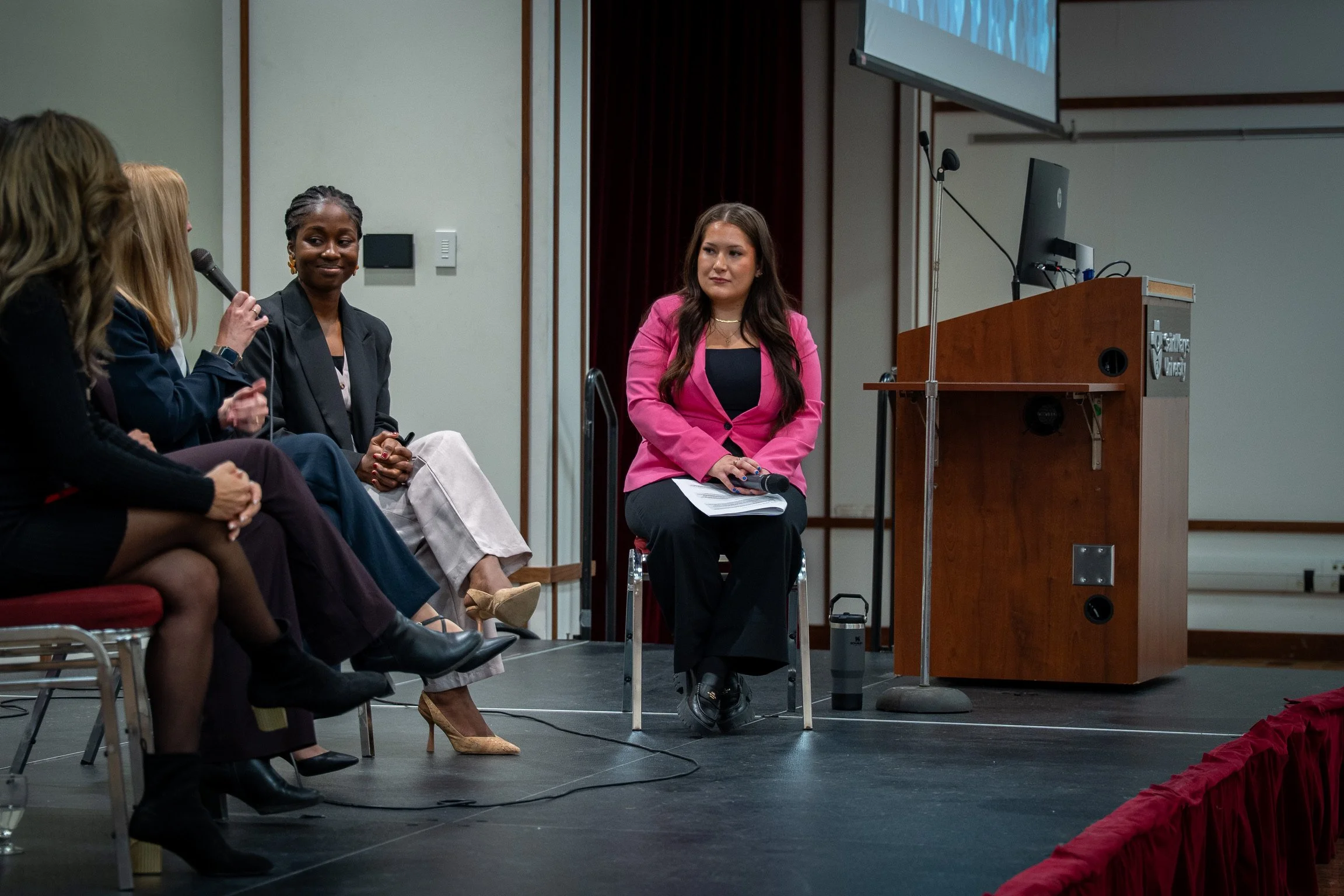
Lydia moderating at the Women in Business conference

I co-founded the SMU Women in Business Society and grew a small group of women into a team of 21 executives and over 300 members. 

I was a co-founder of Husky Capital, where I serve as the CIO (Chief Investment Officer). Husky Capital is designed to teach new and younger students to learn to invest and make investment pitches and financial valuations. Through this, I’ve mentored a cohort of 16 Research Associates. 

As a two-time Residence Assistant (RA) in Loyola Residence, I was recognized with awards for Outstanding Floor Community Development and Exceptional Demonstration of Enthusiasm & Spirit. 

Tell us about some of the competitions you took part in. 

  • McGill International Portfolio Challenge (MIPC): My team and I made it to the top 25 finals in Montreal, presenting an asset allocation strategy for a Sovereign Wealth Fund with a focus on biodiversity. We took home a $2,500 prize for the “Best Storytelling Award.” 

  • Women’s Stock Pitch Competition: The competition is meant to highlight women in the investment profession. My team and I were the first group from the IMPACT Fund to qualify for the competition in Virginia, USA. 

  • CFA research challenge: My team and I from the IMPACT Fund placed second.

  • Venture Capital Investment Competition (VCIC): In 2026, our team earned first place at the VCIC New England in Boston, USA, and in 2025, we earned third place and the Entrepreneur’s Choice Award. After placing first in Boston, we headed to Globals at UNC Kenan-Flagler Business School, Chapel Hill, NC, USA, for the very first time in April 2026.

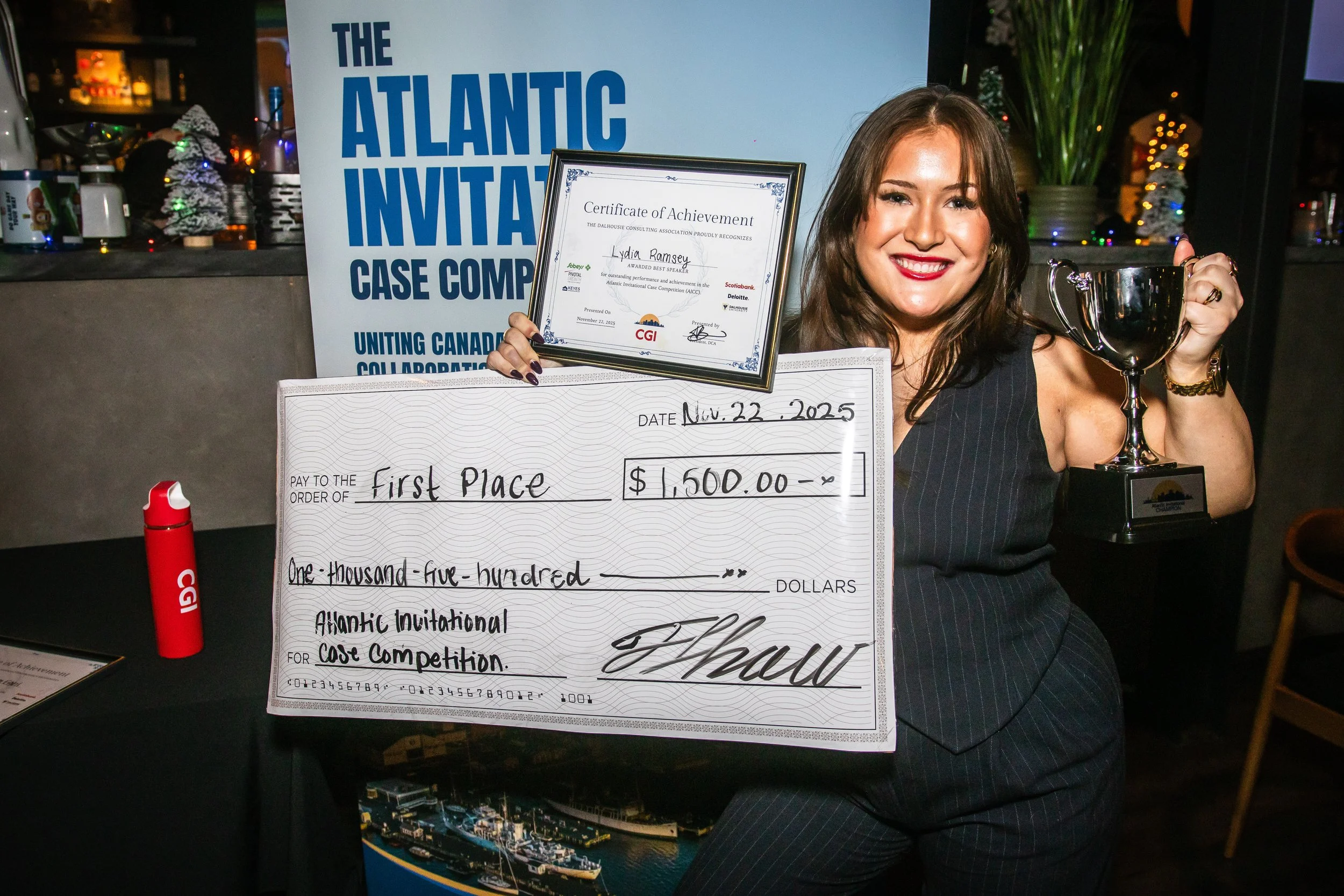
  • Atlantic Invitational Case Competition (AICC): I earned the first-place win and Best Speaker award for the Competition held by the Dalhousie Consulting Association.

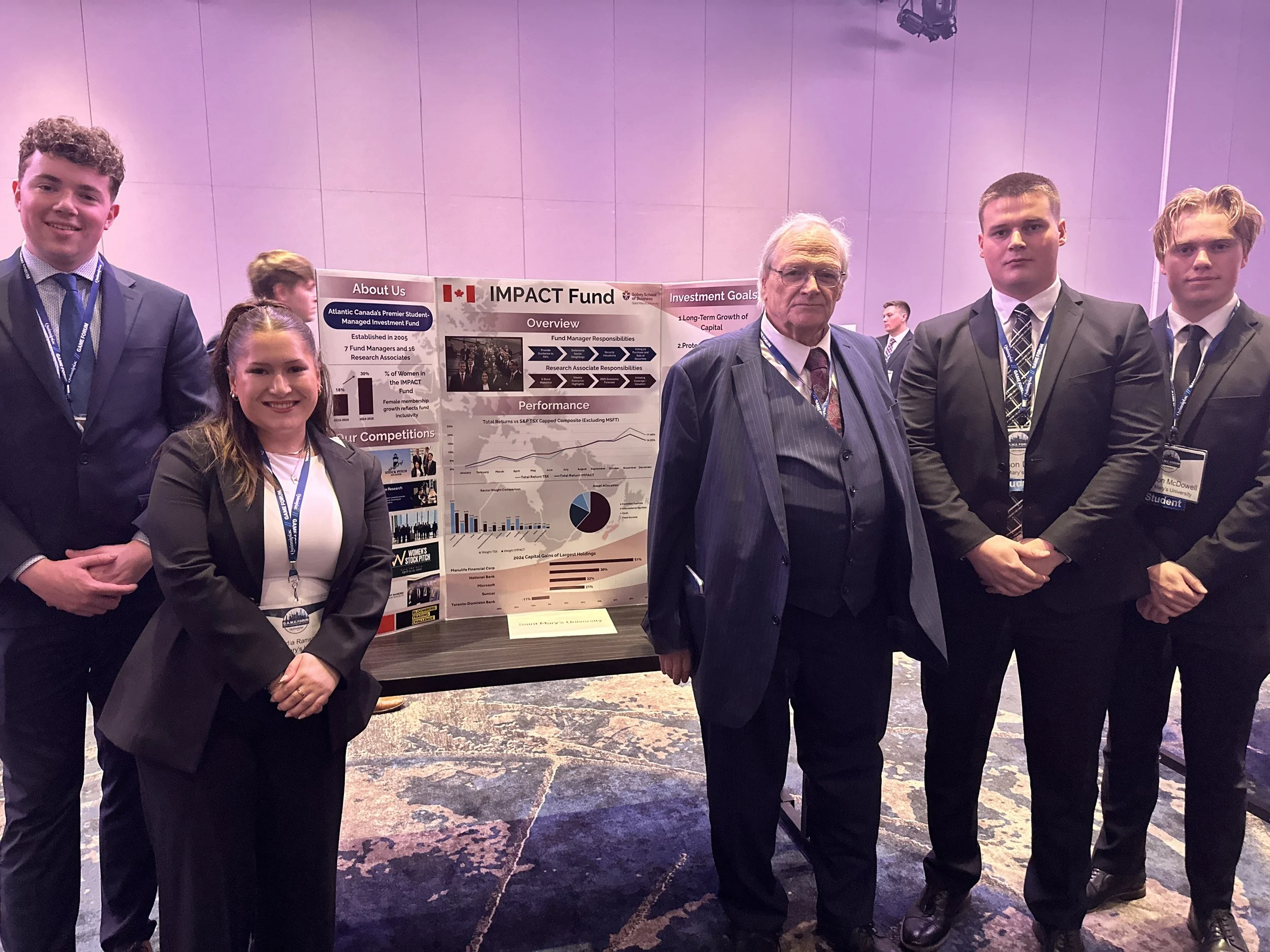
The IMPACT Fund team at the NYC Game Forum

Lydia’s first place win at the AICC

Which instructor had the biggest impact on you?  

Ross Hallett and Florian Muenkel, the IMPACT Program professors, have made a significant impact in my life. Their mentorship went far beyond the classroom; they challenged me to think critically. Above all, they believed in me when I didn’t believe in myself.  

They wouldn’t know this, but when I got chosen for the IMPACT Fund, I couldn’t believe it. I felt I didn’t know nearly as much about the markets as my peers. They saw potential in me, and because of that, I was able to learn to understand the markets and make high-quality pitches. Soon enough, I found my voice and became one of the loudest in the classroom and was never afraid to express my opinions. 

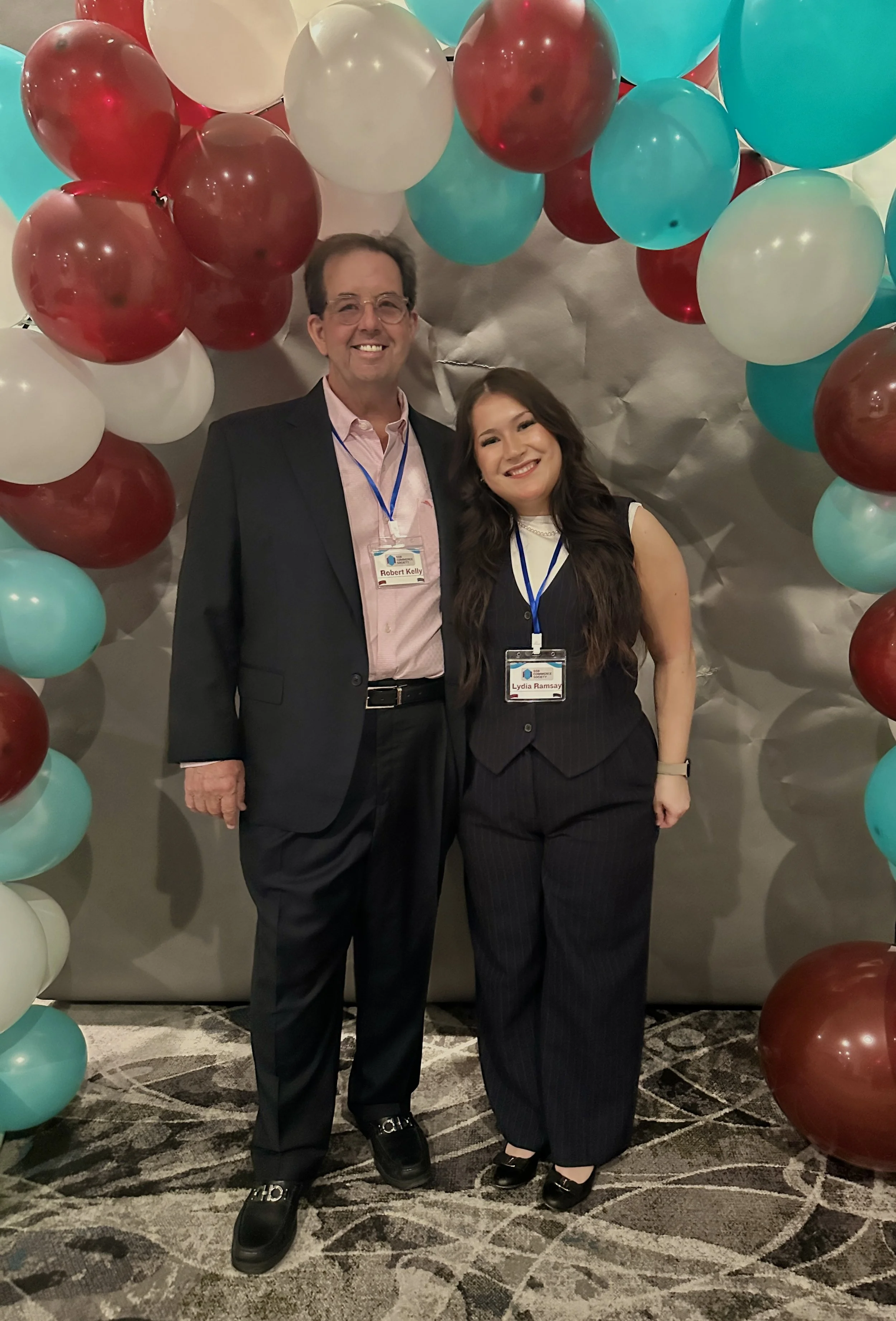
Lydia with Chancellor Emeritus Bob Kelly BComm’75 DComm’97 at the Annual Commerce Dinner

What will you miss about Saint Mary’s? 

I’ll miss the sense of community the most. SMU has a way of feeling both close-knit and full of opportunity at the same time. I’ll especially miss being surrounded by such motivated and supportive people, friends, professors and mentors who constantly pushed me to grow. 
What are your goals for the future? 

I’ve developed a strong interest in working closely with businesses, evaluating opportunities, and contributing to long-term value creation. I’m particularly drawn to the collaborative and dynamic nature of private capital, where you’re not only analyzing investments but also engaging directly with founders and management teams. 
Longer term, I hope to grow into a leadership role where I can mentor others and contribute to building strong, high-performing teams, similar to the environments that had such a meaningful impact on my own development. 

What advice would you give to current students? 

Be a ‘yes’ person. Say yes to opportunities that come your way, even if it puts you outside your comfort zone. Some of the best opportunities come from not knowing exactly what you’re getting into. 


Chloe May Pobjoy-Ridolfo 

Accounting, Finance

In reflecting on her Saint Mary’s University journey, Chloe Pobjoy-Ridolfo says, “Success is most meaningful when it is shared and used to uplift others.” Whether it has been supporting women’s initiatives with the accounting society or exploring how financial and structural reforms can support and empower communities, Chloe has demonstrated a solid commitment to this ethos. 

Originally from Thorold, Ontario, Chloe Pobjoy-Ridolfo is graduating with a Bachelor of Commerce, summa cum laude, with double majors in Finance and Accounting

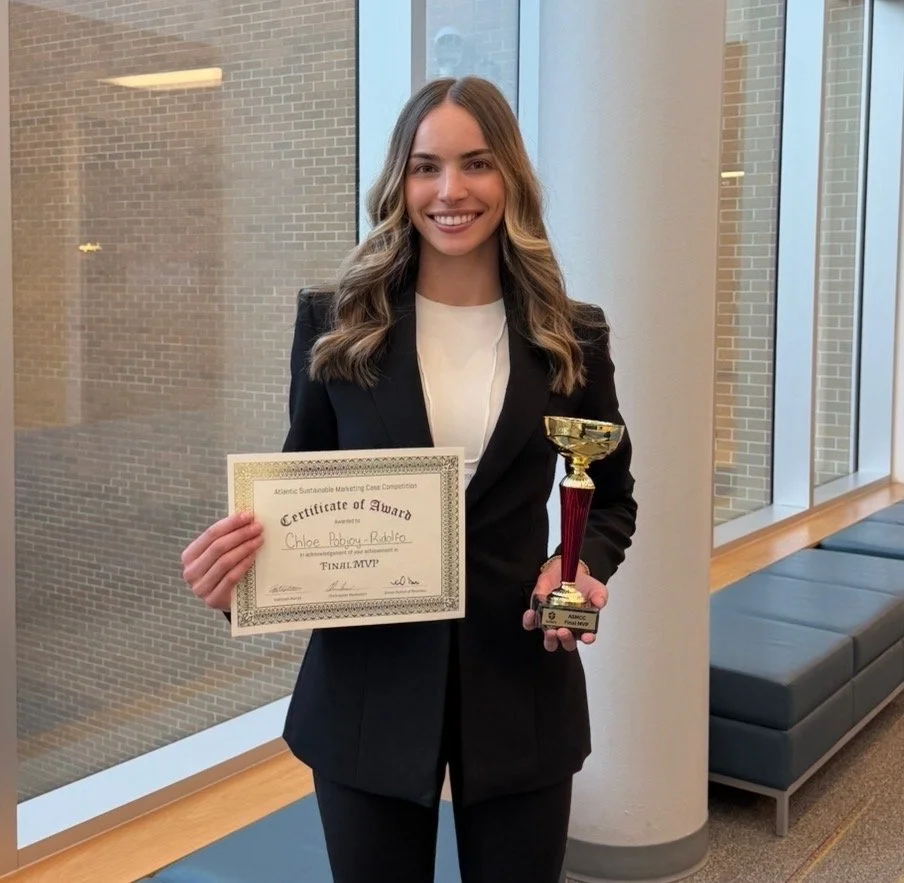
Throughout her time at the Sobey School of Business, Chloe leaned into the opportunities presented, taking part in many case competitions. She was recognized individually as an MVP at the Atlantic Sustainable Marketing Case Competition hosted by the Sobey School in 2026, and her team placed first.  

Chloe played a key leadership role as Co-Director of Women’s Initiatives for the Accounting Society, where she was instrumental in organizing the first Sobey Strategy Case Competition. And she worked as a teaching assistant and a peer tutor, reflecting her passion for sharing knowledge and helping others succeed.  

Chloe was MVP at the 2026 Atlantic Sustainable Marketing Case Competition

During her studies, Chloe also gained valuable experience through a placement with a non-profit housing organization. This work deepened her interest in addressing systemic challenges in low-income housing and inspired her to explore how financial and structural reforms can better support and empower communities.  

Following graduation, she plans to pursue her CPA and CFA designations, with the goal of building a career at the intersection of finance, accountability and social impact.  

Chloe credits her success to the unwavering support of her family, especially her parents and grandparents, as well as her professors, whose guidance has been pivotal throughout her academic journey.  

Q&A with Chloe

Why did you choose Saint Mary’s University? 

I chose Saint Mary's University because of its strong reputation in business and its smaller, close-knit environment. I was drawn to the Sobey School of Business and the opportunities it offers, but what stood out most was the ability to build meaningful connections with classmates and professors. That sense of community and accessibility created a more personalized and supportive learning experience, which played a significant role in my growth.  

What was your favourite class? 

Financial Management stands out as my favourite class. While it was challenging, it pushed me to develop practical, real-world skills that I will carry forward into my career.  

Which instructor had the biggest impact on you? 

Dr. Mahmoud Moh'd had the biggest impact on me. He consistently challenged me to push beyond my comfort zone and believed in my potential, which played a key role in my confidence and development.  

Did you receive any awards during your time as a student?

I received the Accounting Achievement Award and made the Dean’s List every year,

Did you benefit from any scholarships or bursaries?  

Yes, I had a Renewable Entrance Scholarship for all years and received other awards, including the Veronica Aloyse Corbett Memorial Scholarship, McCurdy Printing Bursary, Harold Beazley Memorial Scholarship, Samuel and Anneliese Jopling Scholarship and a CFA Scholarship.  

What are your goals for the future?  

I plan to obtain my CPA and CFA designations and build a career in accounting and finance, with the goal of contributing to restructuring the low-income housing system and developing more sustainable, accessible communities.

What advice would you give to current students? 

Take advantage of every opportunity, even if it feels intimidating at first. University is a time when so many doors are open to you, and it truly is what you make of it. Put yourself out there, try things you are not sure you are ready for, and trust that you will grow into those opportunities. The more you get involved, the more you will realize that the possibilities are far greater than you initially thought. Build relationships, stay curious, and approach everything with the mindset that the world is yours to explore. 

Pitch perfect

Meet the three unique women who made up the top Stock Pitch team in Canada

Keira Hennigar, Katelyn Abriel, Laura McAleese and coach/faculty advisor Ross Hallett

A team of three Sobey School of Business women are the top stock pitching team in Canada after competing in Virginia, USA, in March.

Laura McAleese graduated from the Sobey School of Business in 2025 with her Bachelor of Commerce in Finance. She “landed at Saint Mary’s after hip-hopping around a bit,” knowing that the Sobey School was where her mother had gotten her accounting degree. She says she toured SMU when she was a little girl and “vividly remembers the Atrium with the plant wall.”  

From her BComm, she applied to the Sobey Master of Business Analytics “on a whim,” although she adds that the future-facing AI-focused curriculum appealed to her.

Laura is an active participant in the Impact Fund program, which deepened her passion for, as she calls it, “the technical aspect of finance.”  Last year, in her first year on the Impact Team, she competed at the Stock Pitch.

Keira Hennigar is a third-year BComm student majoring in finance. She is a member of Saint Mary’s Equestrian Club and the Investment Society. Katelyn Abriel is also a third-year student, majoring in finance and accounting and aiming to get her CPA designation and pursue a career in accounting. Both are current Research Associates with the Sobey School Impact Fund, Keira for real estate investment and Katelyn for consumer staples.

In March, Keira, Katelyn and Laura entered the women-only Bianca Caragliano Stock Pitch Competition.  

So what is a stock pitch competition?

Participants are tasked with choosing the stock that they hope will beat the market over the next year. “After choosing a stock, we basically do equity research on that stock,” says Laura. “We look at the company, we look at its competitors, industries, and then we try to come up with an implied share price for the stock and see whether or not it's mispriced in the actual market. Then, we give a buy or sell recommendation.”

This preparation paid off. The team competed at William & Mary in Williamsburg, against 21 teams from across Canada, the US and beyond. They landed at number four, topping teams from the Ivey Business School, Memorial University, UBC and University of Regina, making them the highest-scoring Canadian team.