Faculty of Science

Undergraduate students gain summer research experience across campus

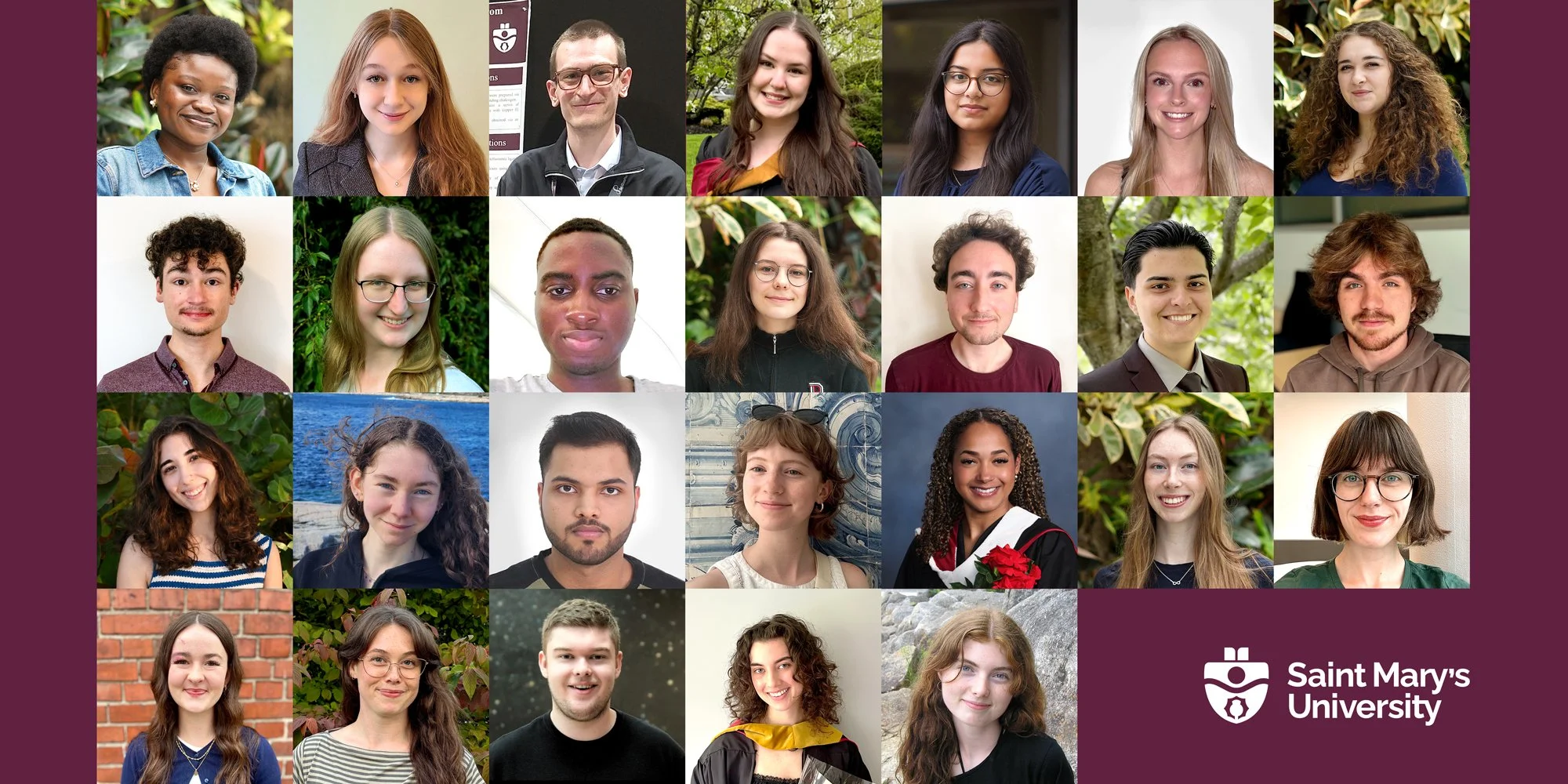
This summer, many Saint Mary’s Students were awarded paid positions to conduct research alongside their professors

With the fall term underway, we’re celebrating another successful summer of students working on research in their fields alongside their professors across campus.
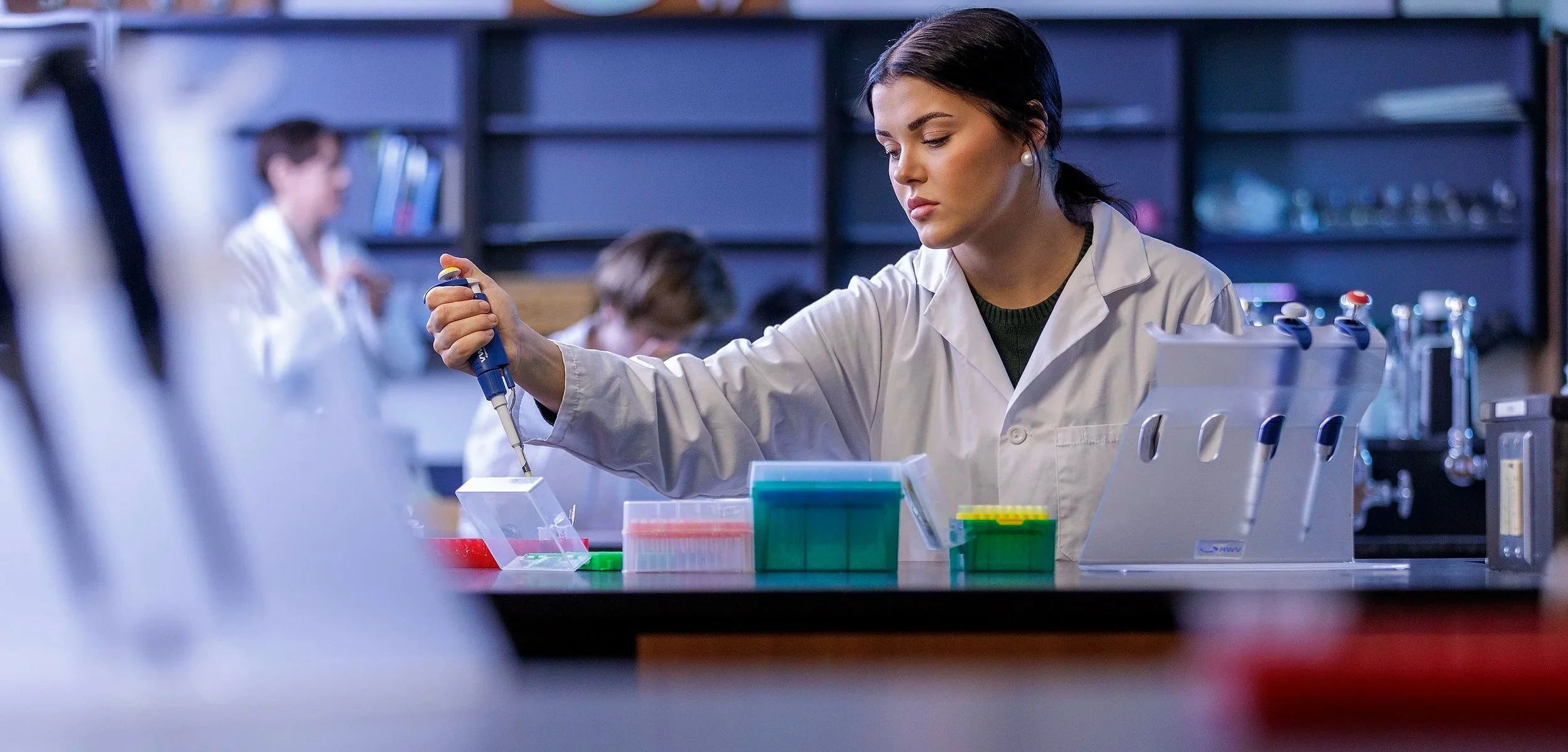
These paid positions in labs and in the field are an excellent way for students to expand on the lessons learned in their undergraduate classes and apply their skills to real-world applications.  

Students in the Faculty of Science are often found outside all summer—biology students wear hip waders to study fish, while others track birds as they grow and leave the nest. Chemistry students work on precision equipment in their labs, and psychology and environmental science students do key work that advances their fields of study. A team of astronomy and physics students focused on stars and black holes. Most plan to continue their research in subsequent summers and in graduate school.  

“Students are often part of long-term projects run by professors. The hands-on nature of this work advances their understanding of their chosen subjects beyond what they learn in the classroom,” says Dr. Laura Weir, interim Dean of Science.  

“On top of conducting meaningful research with their team, this work gives our students the tools to think creatively and to test, analyze, and follow projects through to completion — skills they will use in their undergraduate classes, future research and in their careers.”  

These paid research positions are funded by federal government agencies including the National Sciences and Engineering Research Council of Canada’s (NSERC) Undergraduate Student Research Awards program and the Social Sciences and Humanities Research Council (SSHRC). Others are offered thanks to generous donors, grants and funding from Saint Mary’s. In most cases, awards are made possible through contributions from professors’ research grants. Award recipients receive funding to undertake 12 to 16 weeks of full-time work between May and August. 

To provide research opportunities to even more Saint Mary’s students, the Faculty of Science introduced a new award category for full-time students two years ago. Designed for student-professor teams who propose a research project together, the Dean of Science Access to Research Awards focus on the proposed research project; as long as the student is in good academic standing, their GPA is not a selection criterion. These awards are jointly funded by the Dean of Science Office and various faculty grants.  

“Every year we are impressed with the background our most dedicated and capable students bring to these research positions,” says Dr. Adam Sarty, Associate Vice-President, Research and Dean, Faculty of Graduate Studies. “They add skills and a depth of knowledge that they can use immediately in their classes, but the true value is the way they strengthen students’ prospects for post-graduate studies and their careers. These invaluable experiences will serve them as they move through the workforce.”  

“Many students further their academic careers through undergraduate research opportunities like these,” says Dr. Sarty. “The competitive salary is a boost to students who need to work to support their studies, easing their financial burden.”  

How are students chosen?  

Most positions are earned based on academic record, breadth of experience and background, and the student’s application letter. Students can apply after their first year of full-time study.

Interested in applying for a summer research award for next year? Visit this website for updates later in the term, and follow your faculty’s social media for news and deadlines.


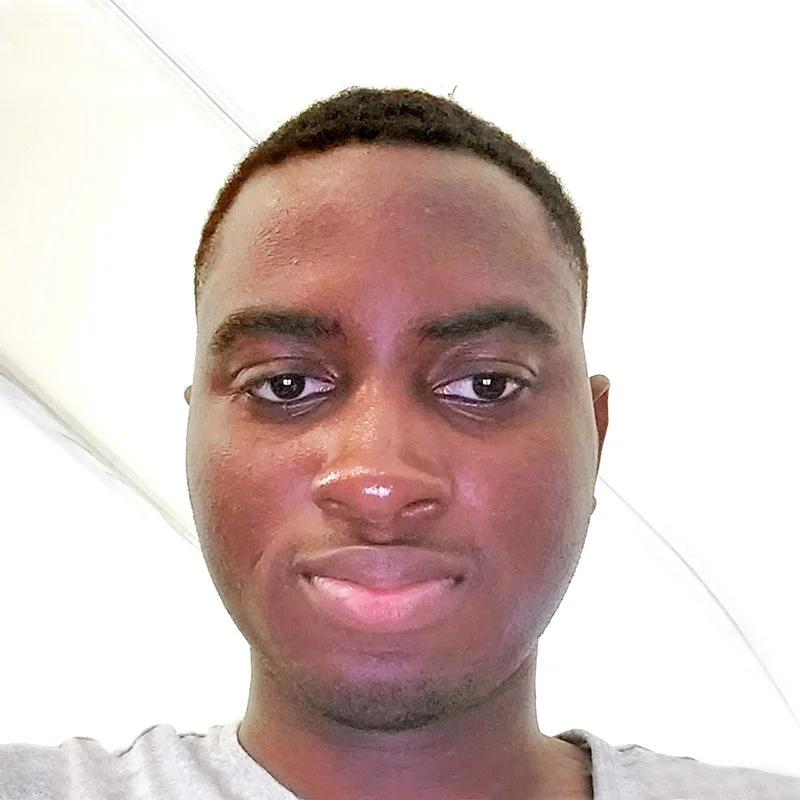
Iyinoluwa David Amore

Summer research award: First-Year Undergraduate Summer Research Award 

Faculty supervisor: Dr. Robert Singer (Chemistry) 

Project: I made lobster- and crab-shaped ligands that contain a pyridine group using a CEM microwave. 

Favourite thing about SMU: The Tim Hortons in the Loyola Building. 


Laura Bartlett 

Summer research award: Social Sciences and Humanities Research Council (SSHRC) Explorer Undergraduate Summer Research Award 

Faculty supervisor: Dr. Vasiliki Athanasakou (Accounting)  

Project: The project examines strategic partnerships between corporations and nonprofit organizations, with a particular focus on understanding why firms form cross-sector partnerships and how these collaborations contribute to corporate governance and sustainability. My responsibilities include conducting qualitative analyses of corporate partnership announcements, developing databases of nonprofit organizations, and reviewing the academic literature. 

Future plans: I hope to complete a Masters of Economics and study abroad. 

Favourite thing about SMU: The Fred Smithers Centre and the staff there. 


Sarah Chiasson 

Summer research award: Natural Sciences and Engineering Research Council of Canada (NSERC) Undergraduate Student Research Award 

Faculty supervisor: Dr. Colleen Barber (Biology) 

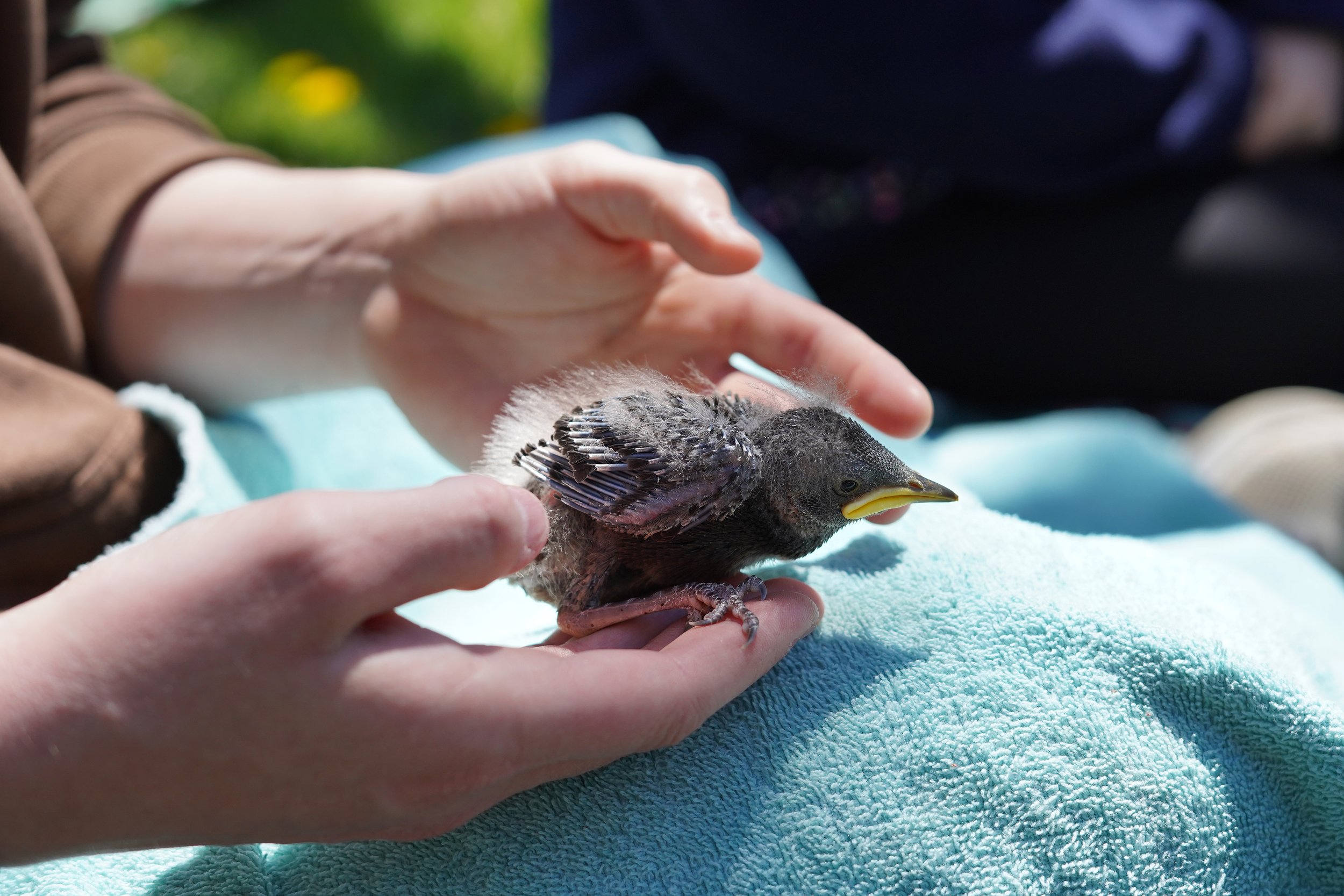
Project: This summer, I studied the European starlings nesting on the campus of Saint Mary’s University. This work involved recording bird songs, documenting materials used for nest building, and analyzing DNA samples collected in the field. I am also continuing my honours thesis project, which examines a specific reproductive strategy used by European starlings whereby females lay eggs in the nest of other females. 

Future plans: I am hoping to continue ornithological research as a graduate student. 

Favourite thing about SMU: The lovely people I have met and the community I have built. 


Claire Cullinan 

Summer research award: Natural Sciences and Engineering Research Council of Canada (NSERC) Undergraduate Student Research Award 

Faculty supervisor: Dr. Christa Brosseau (Chemistry) 

Project: I am working on wrapping up my honours project, which focused on developing a sensitive, low-cost, surface-enhanced Raman spectroscopy-based diagnostic assay using nanobody-functionalized gold nanoparticles for the detection of HER2 (a breast cancer biomarker), to enable more accessible breast cancer diagnostics. 

Future plans: I will be attending McGill University for a master's in the Integrated Program in Neuroscience. I will be working at the Douglas Research Centre examining whether alterations in cerebral blood flow network organization link modifiable lifestyle behaviours (e.g., physical inactivity, sleep disturbance, smoking) to persistent negative symptoms and cognitive deficits in severe mental illness. 

Favourite thing about SMU: My favourite thing about SMU is the Dr. Brosseau student office (which has a kettle for tea!). 


Chloe Delano 

Summer research award: Natural Sciences and Engineering Research Council of Canada (NSERC) Undergraduate Student Research Award 

Faculty supervisor: Dr. Jason Ivanoff (Psychology) 

Project: My summer project is to support ongoing cognitive neuroscience research in the lab. Over the summer, I will create training materials for EEG equipment and data analysis, assist with participant recruitment and data collection, help program research experiments, and conduct literature reviews and meta-analyses to support current studies. 

Future plans: I plan to continue my education by pursuing a master's degree in Sport Psychology, with the goal of expanding my knowledge and developing a career in this field. 

Favourite thing about SMU: My favourite thing about SMU was the opportunities it provided to grow both personally and professionally. I was able to explore potential career paths, gain valuable experiences, and build lasting friendships and connections that made my time at SMU memorable. 


Mackenzie Hayduk 

Summer research award: Natural Sciences and Engineering Research Council of Canada (NSERC) Undergraduate Student Research Award 

Faculty supervisor: Dr. Vincent Hénault-Brunet (Astronomy and Physics) 

Project: Intermediate-mass black holes could explain how supermassive black holes grow, but few convincing detections exist. This project finds the mass of an intermediate-mass black hole in the globular cluster Omega Centauri by modelling the orbits of five fast-moving stars. 

Future plans: My undergraduate research and conference experiences have only made me more excited to take the next step toward my Ph.D. in astrophysics (hopefully in Germany/Korea) after I graduate. My extracurricular experiences through SMU as a Varsity athlete, BGO tour guide, and outreach officer have also added to my long-term career goals of continuing community engagement and athletics throughout my career in research.  

Favourite thing about SMU: My favourite things are the communities I have been welcomed into as an astrophysics student, athlete, and outreach enthusiast. Whether discussing research-related problems with fellow undergrads, racing against my teammates, or meeting passionate high school students and teachers, I appreciate the opportunities SMU facilitates for building connections.


Alexa Ikejiani 

Summer research award: Social Sciences and Humanities Research Council (SSHRC) Explorer Undergraduate Summer Research Award 

Faculty supervisor: Dr. Nicole Conrad (Psychology) 

Project: This summer, we are investigating different exogenous factors that promote good mental health outcomes in children with reading difficulties. This review uses a dynamic systems framework that understands mental health as an emerging interaction between the individual and their environment. This framework helps highlight the role of environmental supports and the potential barriers that individuals may face in accessing them. 

Future plans: I plan to pursue a PhD in Clinical Psychology, with research focused on literacy development, early psychoeducational assessment, and improving the long-term outcomes for children with reading difficulties. 

Favourite thing about SMU: My favourite thing about SMU is the welcoming and supportive community. This community has been a major driving force behind my success as both a student and an emerging researcher. Here at SMU, I feel very connected to my peers, professors, and supervisors, making me excited to come to campus every day, even during the slower summer months! 


Sydney Lewis 

Summer research award: Dean of Science Undergraduate Summer Research Award 

Faculty supervisor: Dr. Danielle Tokarz (Chemistry) 

Project: Used ultrafast laser microscopy to investigate the structure of biological samples, such as collagen fibrils and banana starch, under various conditions. 

Future plans: Completing an Honours degree in Chemistry. 

Favourite thing about SMU: The small class sizes. 


Claire MacLean 

Summer research award: Natural Sciences and Engineering Research Council of Canada (NSERC) Undergraduate Student Research Award 

Faculty supervisor: Dr. Christa Brosseau (Chemistry)  

Project: Examining redox processes of natural methylxanthines using a technique called electrochemical surface-enhanced Raman spectroscopy. 

Future plans: Gap year before continuing on with grad school 

Favourite thing about SMU: The small class sizes and access to research opportunities 


Benjamin McIsaac

Summer research award: Dean of Science Undergraduate Summer Research Award 

Faculty supervisor: Dr. Rob Thacker (Astronomy and Physics) 

Project: I am using computer simulations and statistical tools to study galaxy cluster mergers and how the gas within them mixes. More specifically, I am attempting to determine which regions are mixed primarily by diffusion and which regions are mixed primarily by folding. 

Future plans: I am currently exploring my options after completing my degree, including the possibility of pursuing graduate studies in astrophysics or a related field. 

Favourite thing about SMU: The smaller class sizes and the accessibility of professors 


Keegan Riggs 

Summer research award: Natural Sciences and Engineering Research Council of Canada (NSERC) Undergraduate Student Research Award 

Faculty supervisor: Dr. Luigi Gallo (Astronomy and Physics) 

Project: Using normalized excess variance to detect ultra-fast outflows in active galactic nuclei. 

Future plans: I’m planning on getting my master’s degree, then PhD, and becoming a professor 

Favourite thing about SMU: I like its location in the city. 


Daryan Schaefer 

Summer research award: First-Year Undergraduate Summer Research Award 

Faculty supervisor: Dr. Danielle Tokarz (Chemistry)  

Project: This summer, I’m working on improving our laser imaging system so that it can use backward Second Harmonic Generation (SHG), a technique that allows us to study thicker samples such as teeth. Using backward SHG imaging, I hope to gain a better understanding of how regenerative endodontic treatments promote healing and tissue regeneration, and how the regenerated tissue compares to original tissue. 

Future plans: Get my DDS at Dalhousie Dentistry and then complete an MD-integrated Oral and Maxillofacial Surgery residency. 

Favourite thing about SMU: The piano in the Student Centre. 


Chloe Staple 

Summer research award: First-Year Undergraduate Summer Research Award 

Faculty supervisor: Dr. Hany Fahmy (Economics)  

Project: I'm helping my economics professor complete textual analysis. This means I'm assisting machine learning in constructing a news-based climate policy sentiment index. After labelling a few thousand sentences, we will be training the AI, which will later be used by him. 

Future plans: As a first-year student, I'm still not completely sure of my future; however, I plan on doing a double major in Accounting and Finance, and after graduation, I will hopefully complete my CPA and CFA. 

Favourite thing about SMU: My favourite thing about SMU is the Enactus team. Everyone is so kind there, and being surrounded by like-minded students makes me want to work even harder towards my goals. Participating in the Enactus Regionals and Nationals in Montreal this year was an amazing experience! 

Megan Barkhouse 

Summer research award: Natural Sciences and Engineering Research Council of Canada (NSERC) Undergraduate Student Research Award 

Faculty supervisor: Dr. Anne Dalziel (Biology) 

Project: This summer, I worked on my Honours project researching the persistent effects of low salinity exposure on the gene expression of Eastern oysters, and how this affects their performance when re-exposed to low salinity. I am learning and using a lot of new procedures and skills in the lab. I also feed and care for the fish in the SMU fish lab. 

Future plans: I am very interested in medicine, and so I plan to continue my education and pursue a career in the medical field as either a researcher or a physician. 

Favourite thing about SMU: The campus is very beautiful in the spring when all the flowers are blooming! 


Kiera Blackadar 

Summer research award: Social Sciences and Humanities Research Council (SSHRC) Explorer Undergraduate Summer Research Award 

Faculty supervisor: Dr. Margherita Cameranesi (Psychology) 

Project: This summer, I have been assisting with the FYRe-NS Finding Your Resilience study, researching gender-based violence experiences of young newcomers to Nova Scotia. Participants are surveyed about their experiences of resilience, community, mental health and service needs upon their arrival in Nova Scotia. This project aims to identify service gaps in education, healthcare and social services to detail areas for improvement. 

Future plans: I plan to pursue a career in clinical psychology and am interested in both forensic and trauma therapy specializations. I hope to apply my educational experiences to advocate for policy and systemic changes, pushing for improved mental healthcare access and supports for justice-involved individuals. 

Favourite thing about SMU: My favourite thing about SMU is the shared dedication of both faculty and students in creating learning opportunities outside of the classroom and in building community. Regardless of year of study or your desired level of campus involvement, there are so many ways to get engaged in campus life. Be it volunteering, guest lectures, research participation, or societies and clubs, there are numerous accessible ways to broaden your horizons and build your circle at Saint Mary's. 


Kristen Cowan 

Summer research award: Dean of Science Undergraduate Summer Research Award 

Faculty supervisor: Dr. Vincent Hénault-Brunet (Astronomy and Physics)  

Project: This research project investigated the effect of forming fewer low-mass stars early on in Milky Way-like globular clusters. This distribution of stellar masses, known as a bottom-light initial mass function (IMF), is thought to fit observational data well and may be more suitable for studying globular clusters than the universally adopted Kroupa IMF (2001). 24 N-body simulations were run using the Cluster Monte Carlo Code (CMC) comparing the two IMFs to quantify their effect on long-term evolutionary properties of the cluster, and the Black Hole populations that form within. 

Future plans: I hope to further the scope of this study in future research and obtain a Master of Science in Astronomy. I hope to build a career in research on black hole formation channels and star cluster dynamics, as well as science communication and education. 

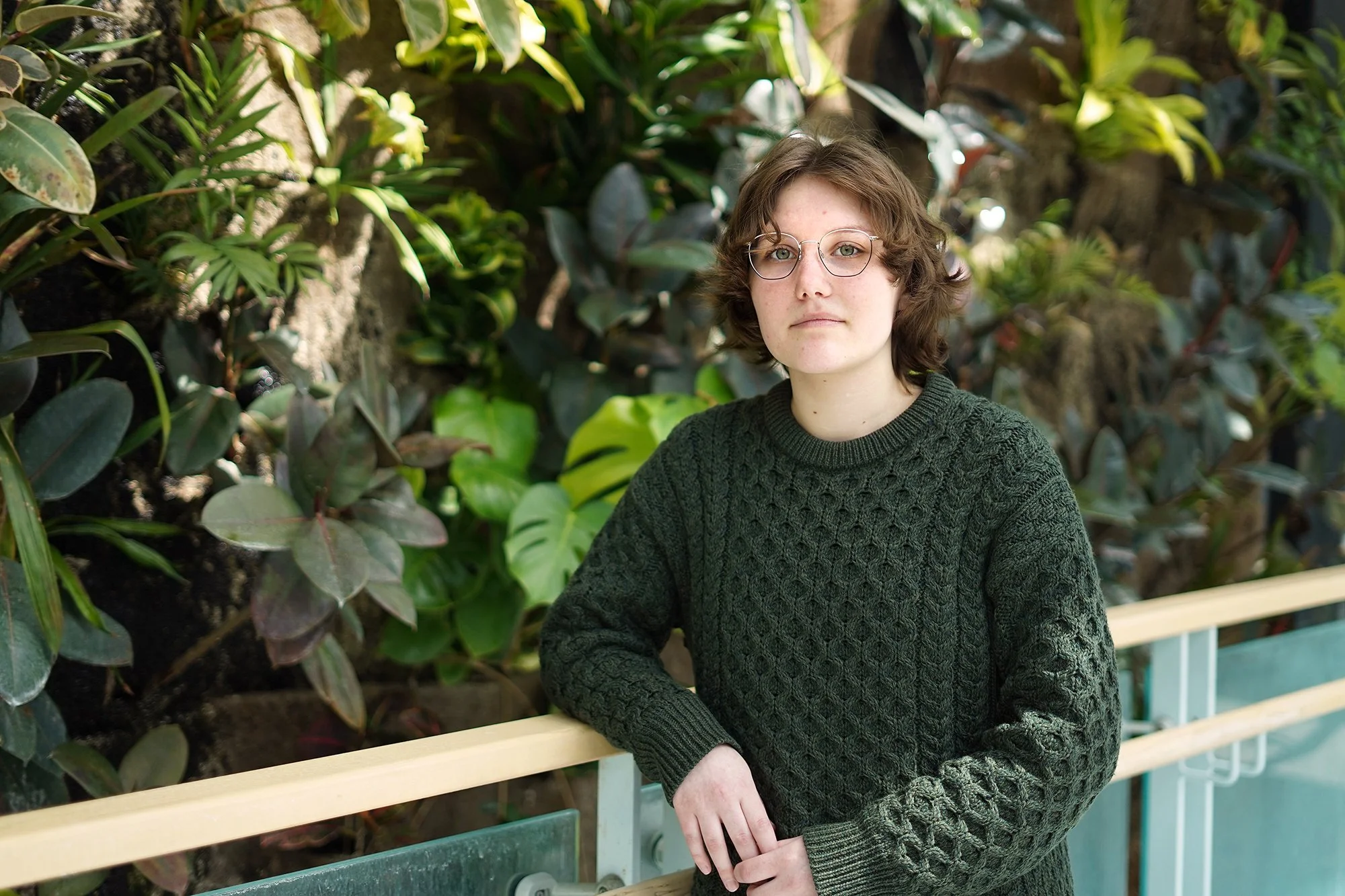
Favourite thing about SMU: The plant wall in the Atrium 


Ariel Day 

Summer research award: Social Sciences and Humanities Research Council (SSHRC) Explorer Undergraduate Summer Research Award 

Faculty supervisor: Dr. Veronica Stinson (Psychology) 

Project: I am working on several ongoing projects focusing primarily on victim impact statements (VIS) and offender character evidence (OCE) in court sentencing decisions. We are looking at how the submission of VIS and OCE impact the sentencing decision (length, 'severity', considerations) across Canada, as well as investigating the demographics of individuals who submit victim impact statements, to identify the barriers that victims face in the court process. We are also working on a project that explores the use of virtual or hybrid components in court proceedings in Nova Scotia. 

Future plans: I want to get my Master’s degree and PhD in forensic psychology. 

Favourite thing about SMU: The community 


Grace Hallewell 

Summer research award: First-Year Undergraduate Summer Research Award 

Faculty supervisor: Dr. Nicole Conrad (Psychology) 

Project: This summer I have been a research assistant as part of Dr. Conrad’s Literacy Lab in the Department of Psychology. Our main research this summer has focused on children who experience difficulties with reading. The aim of this research is to review previous studies and identify which aspects of these children’s environments have been shown to improve or maintain good mental health. 

Future plans: I plan to graduate from SMU in 2028 with Honours in Psychology and a minor in English. Afterwards, I will continue my education in the field of psychology by completing a master’s degree and a PhD. I am interested in pursuing a career that involves both research and working with clients. 

Favourite thing about SMU: I like SMU's size because it lets you get to know other students and faculty members better. 


Rohen Hayne 

Summer research award: Natural Sciences and Engineering Research Council of Canada (NSERC) Undergraduate Student Research Award 

Faculty supervisor: Dr. David Chiasson (Biology) 

Project: I am working on a project aimed at identifying key factors that support nitrogen-fixing symbiosis in legume plants. We use molecular biology, genetics, and microbiology techniques to study this relationship. 

Future plans: Explore future opportunities in science and healthcare. 

Favourite thing about SMU: The Atrium 


Enrique Jaldo 

Summer research award: Dean of Science Undergraduate Summer Research Award 

Faculty supervisor: Dr. Greg Christian (Astronomy and Physics) 

Project: Working together with my professor to understand the 26Al(P,y)27Si reaction that occurs in stars, by simulating them in particle accelerators and trying to determine the most optimal angle for neutron detectors 

Future plans: Astrophysicist 

Favourite thing about SMU: Working with a close-knit community that is always open to helping each other out 


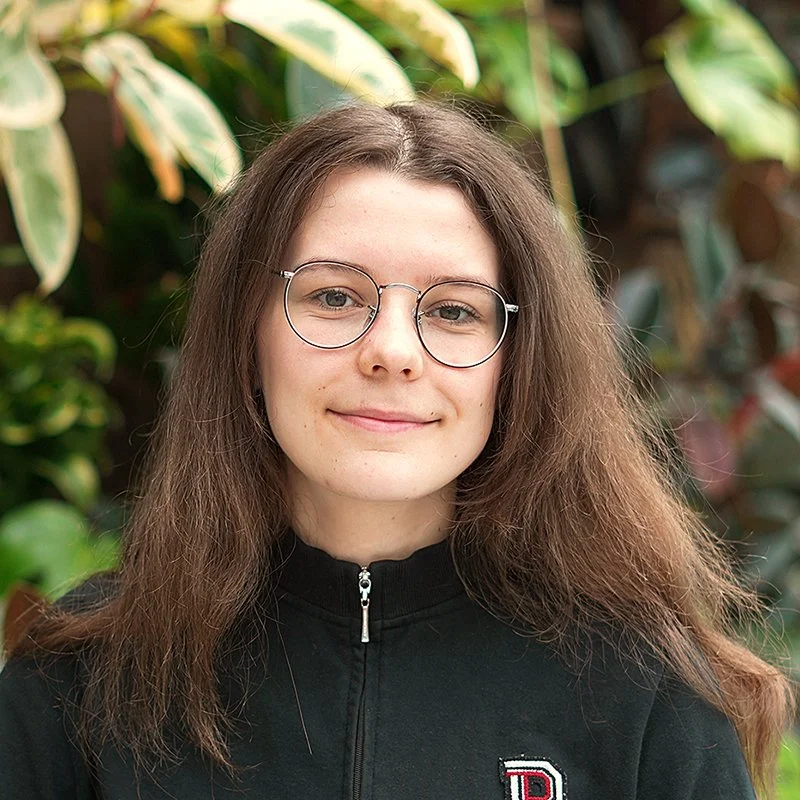
Maddie Lloyd 

Summer research award: Natural Sciences and Engineering Research Council of Canada (NSERC) Undergraduate Student Research Award 

Faculty supervisor: Dr. David Chiasson (Biology) 

Project: Contributing to research on how plant signals influence bacterial gene regulation through protein expression, purification, and the study of protein–DNA interactions. 

Future plans: Become a dentist. 

Favourite thing about SMU: The campus. 


Dylan Main 

Summer research award: Social Sciences and Humanities Research Council (SSHRC) Explorer Undergraduate Summer Research Award 

Faculty supervisor: Dr. Jamie Livingston (Criminology) 

Project: Along with Dr. Livingston, I am conducting a scoping review to examine how civilian (non-police) mental health crisis response programs define and operationalize the concept of a crisis. As these programs continue to expand as alternatives to police-led responses, there is considerable variation in how crisis situations are understood, assessed, and managed. I am looking for evidence on definitions of crisis, eligibility and exclusion criteria, risk and safety assessments, and the circumstances under which police involvement is required.  

Future plans: Psychologist / Counsellor 

Favourite thing about SMU: The cool study spots around campus and great experiences with professors (shoutout Dr. Cameron and Dr. Bourgeois) 


Muhammad Arham Mussawar 

Summer research award: Dean of Science Undergraduate Summer Research Award 

Faculty supervisor: Dr. Stavros Konstantinidis (Mathematics and Computing Science) 

Project: This summer project will explore new ways to find patterns in two related pieces of information at the same time. 

Most existing research looks at how to match a pattern within a single word or sequence. In this project, we will study how to match two-dimensional patterns to pairs of words. These pairs could represent related data, such as two genes, two programming expressions, or two connected strings of information. 

The goal is to develop and analyze algorithms, using ideas from pattern expressions and finite-state machines, that can recognize these kinds of paired patterns efficiently. This work could help identify relationships between paired data in areas such as biology, programming languages, and data analysis. 

Future plans: I am entering my fourth and final year of an Honours Computer Science degree. My main academic interests are algorithms, theoretical computer science, and artificial intelligence. This summer research project connects closely to my future plans because I hope to continue studying this area through my honours thesis, especially topics related to pattern matching, finite-state machines, and formal languages. 

After completing my undergraduate degree, I am considering pursuing a master’s degree to further develop my research skills and deepen my knowledge in theoretical computer science and AI. In the future, I could see myself working either as a software engineer or continuing in academia with the goal of becoming a professor. Through this project, I hope to strengthen my skills in algorithm design, coding, research writing, and presenting research. 

Favourite thing about SMU: My favourite thing about SMU is the supportive academic community. As a Computer Science student, I appreciate the opportunity to learn from amazing professors who are approachable and passionate about their fields. The welcoming environment at SMU has made it a great place to learn, ask questions, and grow as a student. 


Evan Spencer 

Summer research award: Dean of Science Undergraduate Summer Research Award 

Faculty supervisor: Dr. Robert Singer (Chemistry)  

Project: The project is focused on the synthesis of N-heterocyclic carbene derived ligands with main group donors and studying their coordination to various transition metals and main group atoms. The main goal of the research is to study the bonding and geometry of these coordination complexes and discover structures that have never been synthesized before. This is made possible by characterization by single crystal X-Ray diffraction which provides data regarding the exact location of the atoms in a given crystalline material which can be used to determine the structure of the compound. 

Future plans: After finishing my Honours in Chemistry at SMU next year, I plan to attend graduate school to obtain my PhD in chemistry focusing on inorganic chemistry and X-Ray crystallography. I hope to stay in academia for my career as well, with the goal of becoming a professor of chemistry. I am passionate about teaching and research and hope to apply that to my own research group in the future, which would be directed towards providing undergraduate students with opportunities to perform meaningful research. 

Favourite thing about SMU: My favourite thing about SMU is access to research for undergrads. This is an opportunity that most students across Canada do not have, but due to the size of our institution, students are able to contribute to meaningful research and run their own research projects, which is not the case at larger institutions. My other favourite part about SMU is the size of my department. The chemistry department is small enough that I know all the professors and they know me, and most of the students as well. This allows for easier access to support and guidance while also having the ability to form connections much more easily. 


Benita Tabuku 

Summer research award: Dean of Science Undergraduate Summer Research Award (BSc student in Computing Science) 

Faculty supervisor: Dr. Hai Wang (Finance)  

Project: I am working on a research project that analyzes risk-related information in public firms' 10-K reports. Using Python, we extract and analyze relevant disclosures to assess the firms' Enterprise Risk Management (ERM) maturity. 

Future plans: I am currently considering career paths in either data analytics or computer networks and cybersecurity. This summer research position is a great opportunity for me to learn more about data analytics and gain hands-on experience, which will help me better understand the field and decide which career path is the best fit for me. 

Favourite thing about SMU: My favourite thing about SMU is living in residence. I like being close to my classes, there is no need to commute, and I can even wear heels during the winter semester! I am also close to my friends and campus activities. Some of my favourite moments have been the simple ones, like playing Uno with my friends in the floor lounge. Living in residence has been one of the best parts of my university experience :) 


Welcoming our newest professors in the Faculty of Science

With the excitement of a new academic year, Saint Mary’s is pleased to welcome new professors to the Faculty of Science who bring research expertise in psychology, biology, earth science, environmental science, mathematics, and computing science. Read below to meet our new faculty members!


A white man with short grey hair, wearing a blue shirt and tie

Dr. Mark Bowler

Department: Psychology

Specialty: Industrial/Organizational Psychology

Classes: Graduate Statistics

Hometown: Detroit, Michigan, USA

PhD: University of Tennessee

Research focus: My primary area of investigation is in Employee Net Promoter Score (eNPS) as an indicator of employees’ willingness to advocate for their organization by examining its relationships with employee attitudes, individual differences, job demands and resources, well-being, leadership, and workplace behaviors. My secondary area of research examines how health-oriented and health-promoting leadership shape employee health, well-being, recovery behaviors, and work engagement, with particular attention to the individual and contextual factors that determine when these leadership approaches are most effective.

Awards/funding: My notable awards and funding include the ECU Distinguished Doctoral Faculty Mentor Award (2021), ECU Honored Instructor Awards (2022, 2023), and the BB&T Faculty Leadership Scholar Fellowship, co-PI on a $1.999 million NSF-funded project, along with publishing 26 peer-reviewed articles including work in the Journal of Applied Psychology and Organizational Research Methods, and chairing 11 doctoral dissertations and 35 master’s theses.


A brown woman with dark hair pulled back, wearing a white blouse

Dr. Thamali Kariyawasam

Department: Biology

Specialty: Synthetic biology, microalgal biotechnology, living biomaterials, regenerative medicine, and sustainable biomedical applications.

Classes I’m teaching/planning to teach: Biology 2321 (Cell Biology)

Hometown: Kelaniya, Sri Lanka

PhD: University of British Columbia

Research focus: My research focuses on engineering photosynthetic microalgae as programmable cell factories for the production and delivery of therapeutic biomolecules. I develop living biomaterial systems that combine genetically engineered microalgae with advanced biomaterials to provide localized oxygen and sustained delivery of bioactive molecules for tissue regeneration and wound healing, while advancing sustainable healthcare solutions.

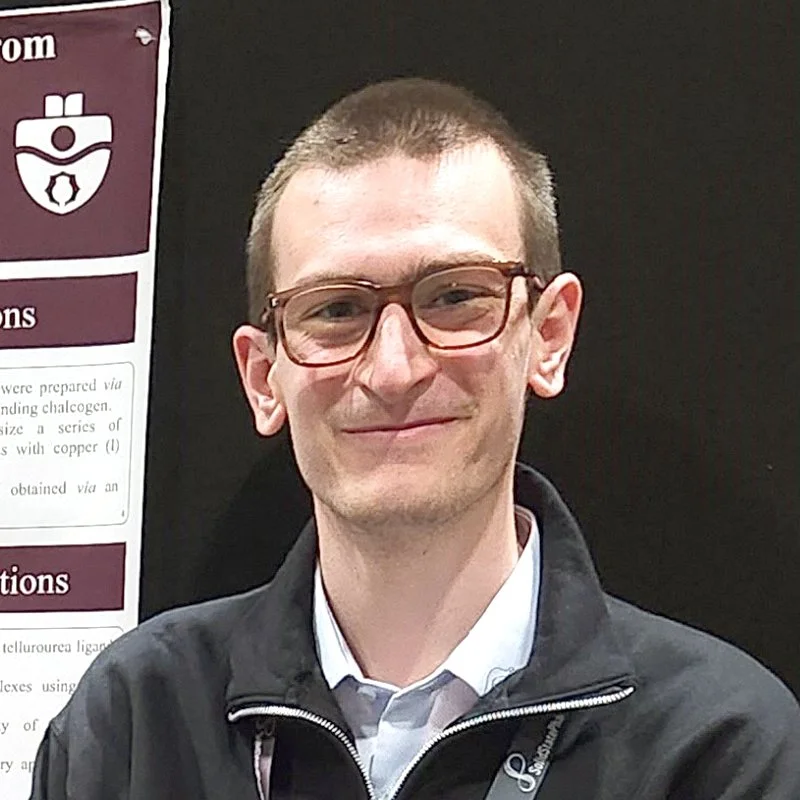
A white man with curly back hair, wearing glasses and a plaid shirt

Dr. James Steenberg

Department: Environmental Science / Geography and Environmental Studies

Specialty: Trees and forest ecosystems

Classes: GEOG 3386, ENVS 3410

Hometown: Halifax

PhD: Toronto Metropolitan University

Research website: https://sites.google.com/site/jamessteenberg

Research focus: My research is focused on the ecology and sustainable management of both urban and commercially managed forests. This research leverages geomatics, statistics and spatial statistics, ecosystem modelling, and empirical field research to characterize, analyze, and monitor forests to inform sustainable management.

Awards/funding: NSERC Alliance (current), Killam Postdoctoral Fellowship, Fulbright Award


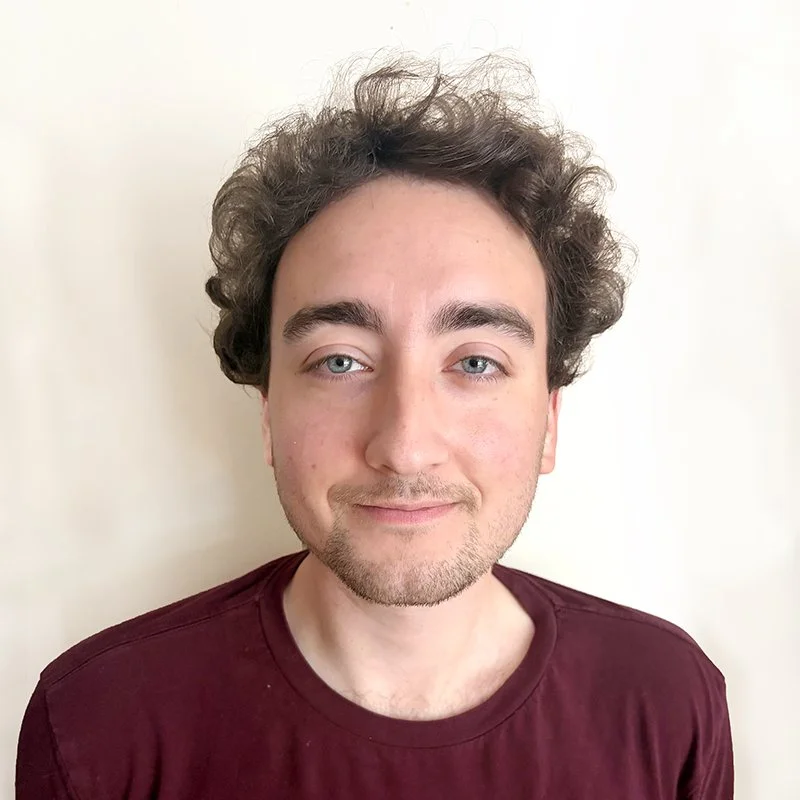
A white man with curly brown hair, wearing a navy blue shirt

Dr. Carson Kinney

Department: Earth Science

Specialty: Metamorphic Petrology and Geologic Mapping

Classes I’m teaching/plan to teach: ERTH 1204, ERTH 2400, ERTH 3305, ERTH 4301; Generally how to make geologic maps

Hometown: Petawawa, ON

PhD: University of Waterloo

Research focus: I love to study how the Earth’s crust is formed, the rocks which comprise it, and how it records the cooling of our planet using numerical models to pair with field observations.

Notable awards: Dr. Kinney has recently received the Jack Henderson Best PhD Award from the Canadian Tectonics Group as well as the W.B Pearson Medal for the most creative earth science PhD thesis from the University of Waterloo. He is excited to share his love of making maps and recording which rocks make constitute the continental crust on which we live.

A white woman with long curly brown hair, wearing glasses and a colourful shirt

Dr. Jillian Kendrick

Department: Earth Science

Specialty: Metamorphic and Igneous Petrology

Classes: Understanding the Earth (ERTH1200), Mineralogy (ERTH2301), Igneous Petrology (ERTH3312), Metamorphic Petrology (ERTH3313)

Hometown: Shag Harbour, Nova Scotia

PhD: University of Waterloo ‘22

Research website: www.jilliankendrick.ca/

“I have a particular interest in early Earth, and have been working to understand how continental crust was formed and how it has evolved through geologic time.”

Notable awards: Dr. Kendrick has recently received an NSERC Postdoctoral Fellowship and a W.B. Pearson Medal, and was a Vanier Canada Graduate Scholarship winner as a graduate student. She is an enthusiastic contributor to science outreach initiatives including science fairs and workshops.


A man with short brown hair, wearing a blue shirt

Dr. Jake Chinis

Department: Mathematics and Computing Science

Specialty: Analytic Number Theory

Classes: Introduction to Analytic Number Theory

Hometown: Montreal, QC

PhD: From McGill University

Research website: https://sites.google.com/view/jakechinis/home

Research focus: Means values and correlations of multiplicative functions.

Notable awards: Cat Dad of the Year (*in perpetuity, self-nominated)

A white man with short blond hair, wearing a grey shirt

Dr. Nikita Neveditsin 

Department: Mathematics and Computing Science 

Specialty: Natural language processing, health informatics, artificial intelligence 

Classes: Advanced Computer Programming and Problem Solving, Exploring Generative AI, Natural Language Processing and Large Language Models, Artificial Intelligence 

PhD: Saint Mary’s University

Research focus: Small language models, neuro-symbolic AI, low-resource AI, text representations.

Awards: AARMS junior researcher travel award, NAACL SRW grant. 


About the Faculty of Science at Saint Mary’s:

Home to nine academic units that offer a range of undergraduate and graduate programs, the Faculty of Science at Saint Mary's University prepares students for a future in science. Our students have found success in careers across Canada and around the world in professional fields such as health care, engineering, teaching, research and more.

Saint Mary's science and engineering students have access to a range of academic student supports to help them succeed, including the SNAP Centre which offers free academic tutoring by Dean’s List students, and Science Advisors who guide students on their academic journey.

Thanks to our small, community atmosphere, many of our undergraduates participate in their professors’ research projects—a valuable experience that can be hard to come by at larger institutions.

Eclipse-viewers gather for Saint Mary’s event

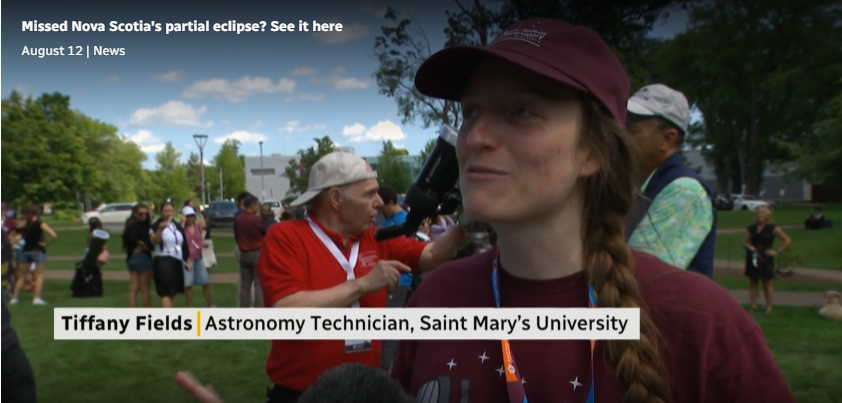
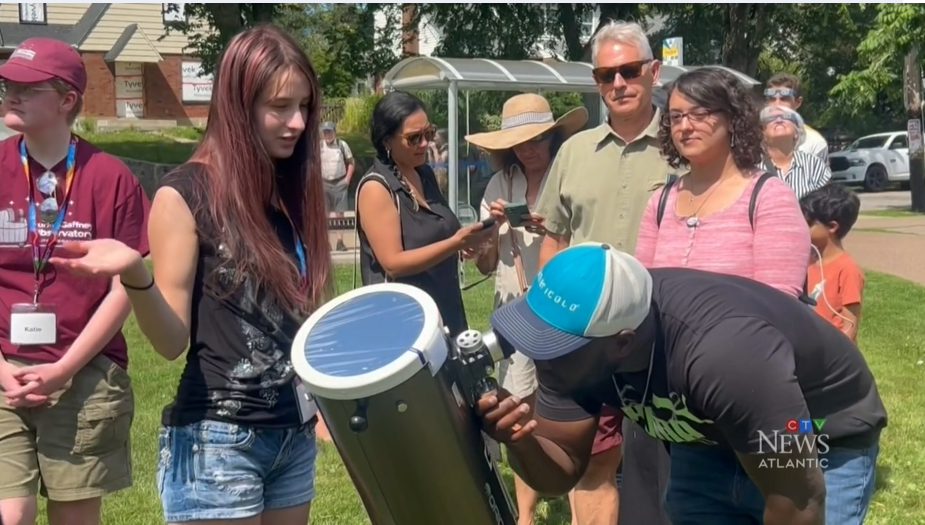
On August 12, astronomers and curious community members gathered in front of the Burke Building at Saint Mary’s to view the partial solar eclipse. Researchers and staff from SMU’s Burke-Gaffney Observatory (BGO) set up solar telescopes and provided eclipse glasses to anyone who wanted a safe glimpse of the event.

Halifax observed a partial eclipse with about 30% coverage, according to Tiffany Fields, Astronomy Technician for the BGO. In an interview with CBC News about the viewing event, Tiffany said, “Sharing this excitement, enthusiasm and wonder with the public is so vital and so important and also so fun. […] there’s sort of always that wonder of what’s going on in space. And so I really enjoy being able to share that with people.”

The Burke-Gaffney Observatory at Saint Mary’s is open to the public and focuses on education in the Department of Astronomy and Physics along with public outreach, including open houses and tours. Check the Burke-Gaffney Observatory website to learn more about upcoming solar and lunar events.

See videos below for news coverage of the event.

CBC News

CTV News

Dr. Laura Weir named Interim Dean of Science

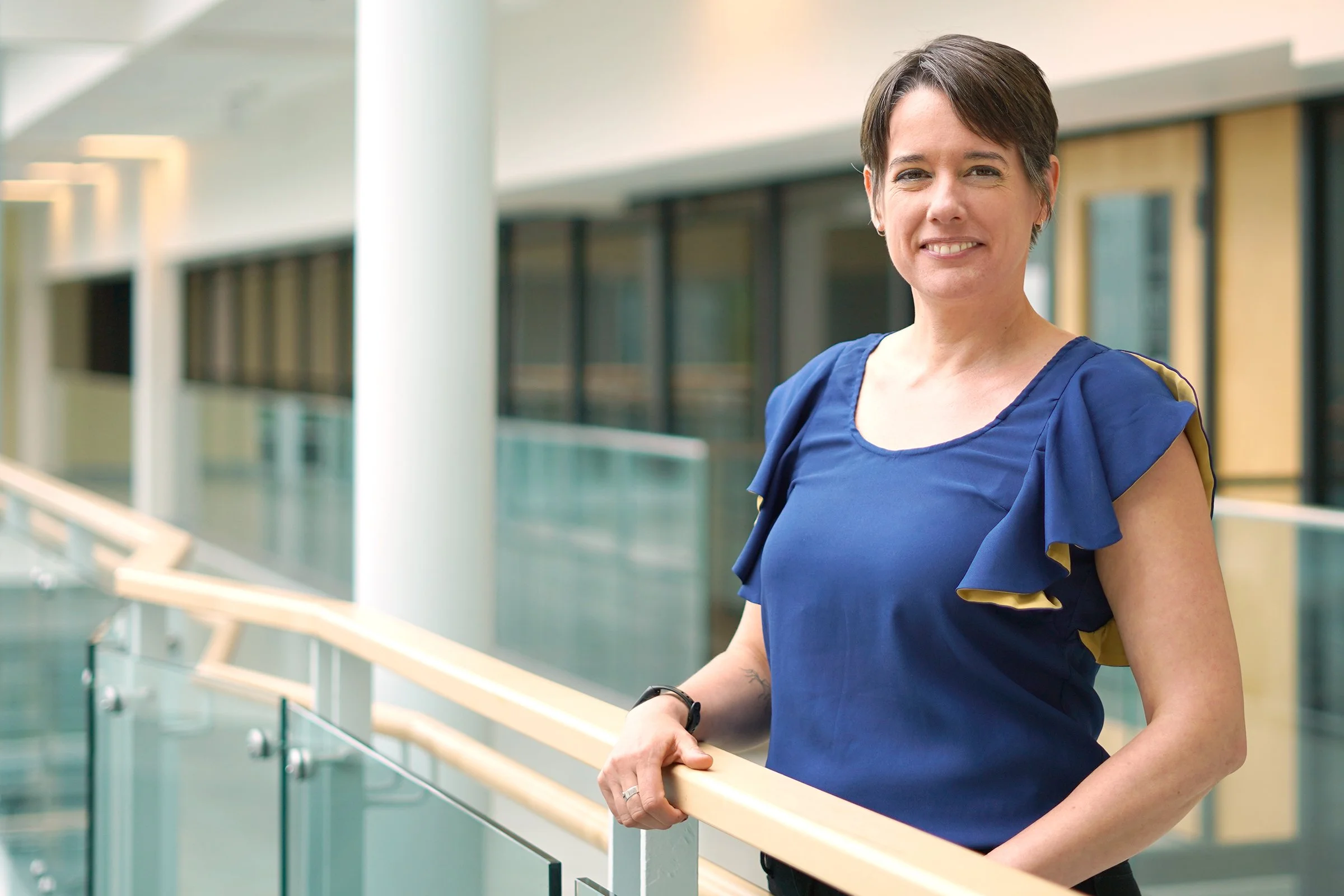
Laura is a white woman with short brown hair. She stands in the Atrium and wears a blue shirt.

Dr. Laura Weir

Saint Mary’s is pleased to announce that Dr. Laura Weir will serve as interim Dean of Science for the next year.

An accomplished scientist and Associate Professor in the Department of Biology since 2016, Dr. Weir researches fish behaviour and evolution, and collaborates with government scientists to identify the effects of climate change on fish population size and structure. She has received research funding from international, federal and provincial agencies to support her work. During her time at SMU, she has mentored over 40 students through undergraduate, graduate and postdoc research.

In the classroom and lab, Dr. Weir is an enthusiastic and thoughtful professor who has taught Biology courses at all undergraduate levels at SMU. She is particularly passionate about creating a positive experience for new students in first-year courses; her teaching focus this year is guiding students through their first-year biology laboratory activities.  

“Dr. Weir is a highly respected professor and administrator,” says Dr. Sam Veres, Interim Provost and Vice-President Academic and Research. “Laura is passionate about ensuring that Saint Mary’s students receive an exceptional educational experience, and as a colleague, Chairperson, and Associate Dean, I have seen her dedication to supporting faculty to help achieve this. The Faculty of Science is in excellent hands with her appointment as Interim Dean for the next year.” 

Most recently, Dr. Weir was Acting Associate Dean, Student Affairs and Supports, and previously served as the Chair of the Department of Biology.

Dr. Linda Campbell wins James McGregor Stewart Award

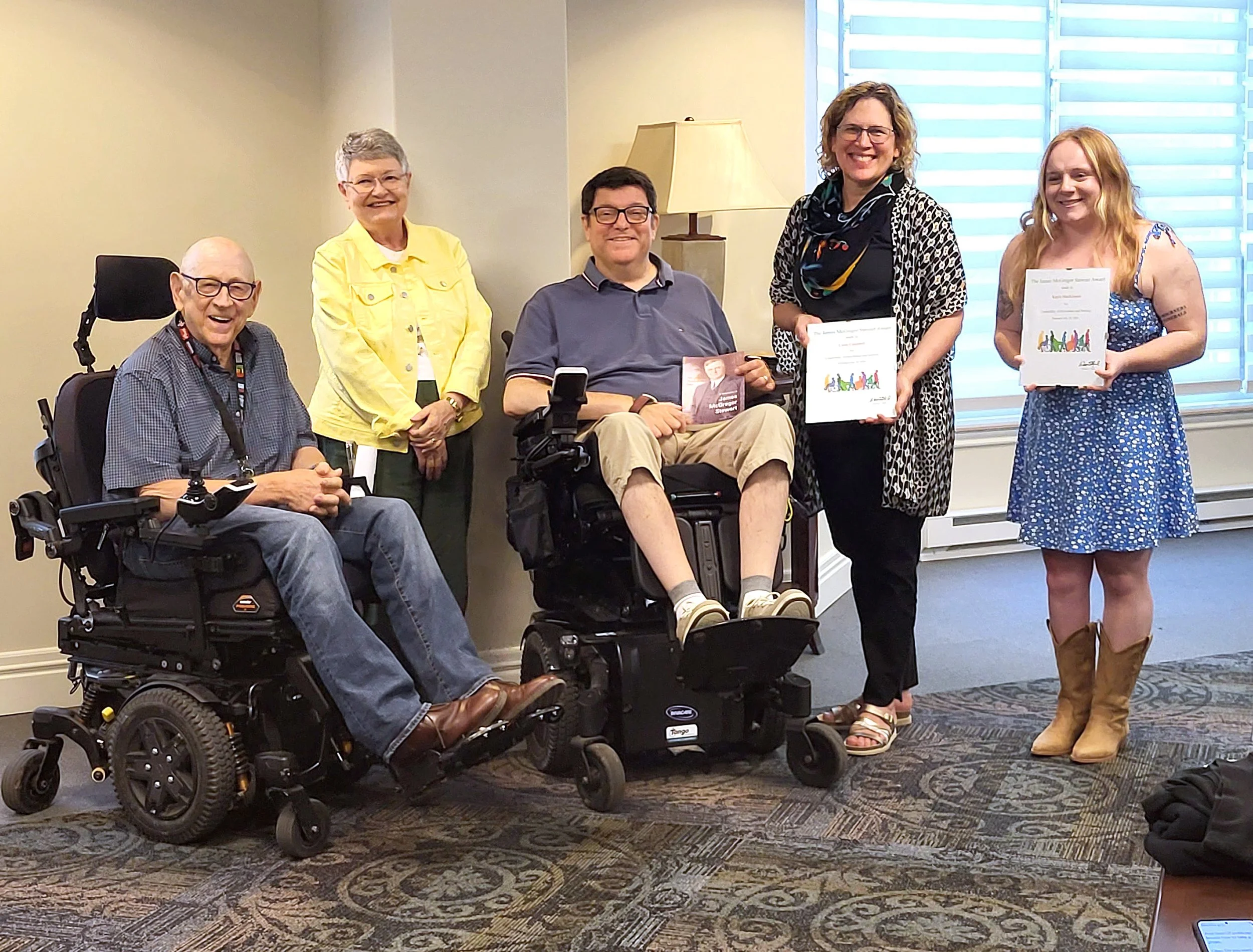
The group of five post together, Linda and Kayla hold their awards

L-R: Gus Reed, Lois Miller and Kevin Murphy, Board Members of the James McGregor Stewart Society with Dr. Linda Campbell and Kayla MacKinnon.

Congratulations to Dr. Linda Campbell, co-winner of the 2026 James McGregor Stewart Award. This award recognizes the outstanding contributions of individuals living with a disability. 

Dr. Campbell is a Professor and Senior Research Fellow at Saint Mary’s University and Chair of the Department of Environmental Science. A staunch advocate for persons with disabilities, she was influential in having the Accessibility Act passed in Nova Scotia in 2017, and she received a Human Rights Award for her efforts. In 2026, she was also ranked the No. 1 deaf researcher in the world

She shares the award with wheelchair basketball athlete and coach Kayla MacKinnon, who won a gold medal for Canada at the Youth Parapan American Games last year.

“The James McGregor Stewart Award recognizes decades of work to prevent and remove barriers for people who live with disabilities,” says Dr. Linda Campbell. “This type of recognition lifts voices that aren’t always heard and I’m proud to share the award with Kayla MacKinnon, who is an impressive and inspiring member of the next generation of advocates.” 

The James McGregor Stewart Award was established in 2015 through the Community Foundation of Nova Scotia. It honours the accomplishments of James McGregor Stewart, a lawyer in this province who overcame many barriers.

For the birds: Star student researchers study European starlings

For 20 years, Dr. Colleen Barber has been using a long-term study on European starlings to teach her students research skills

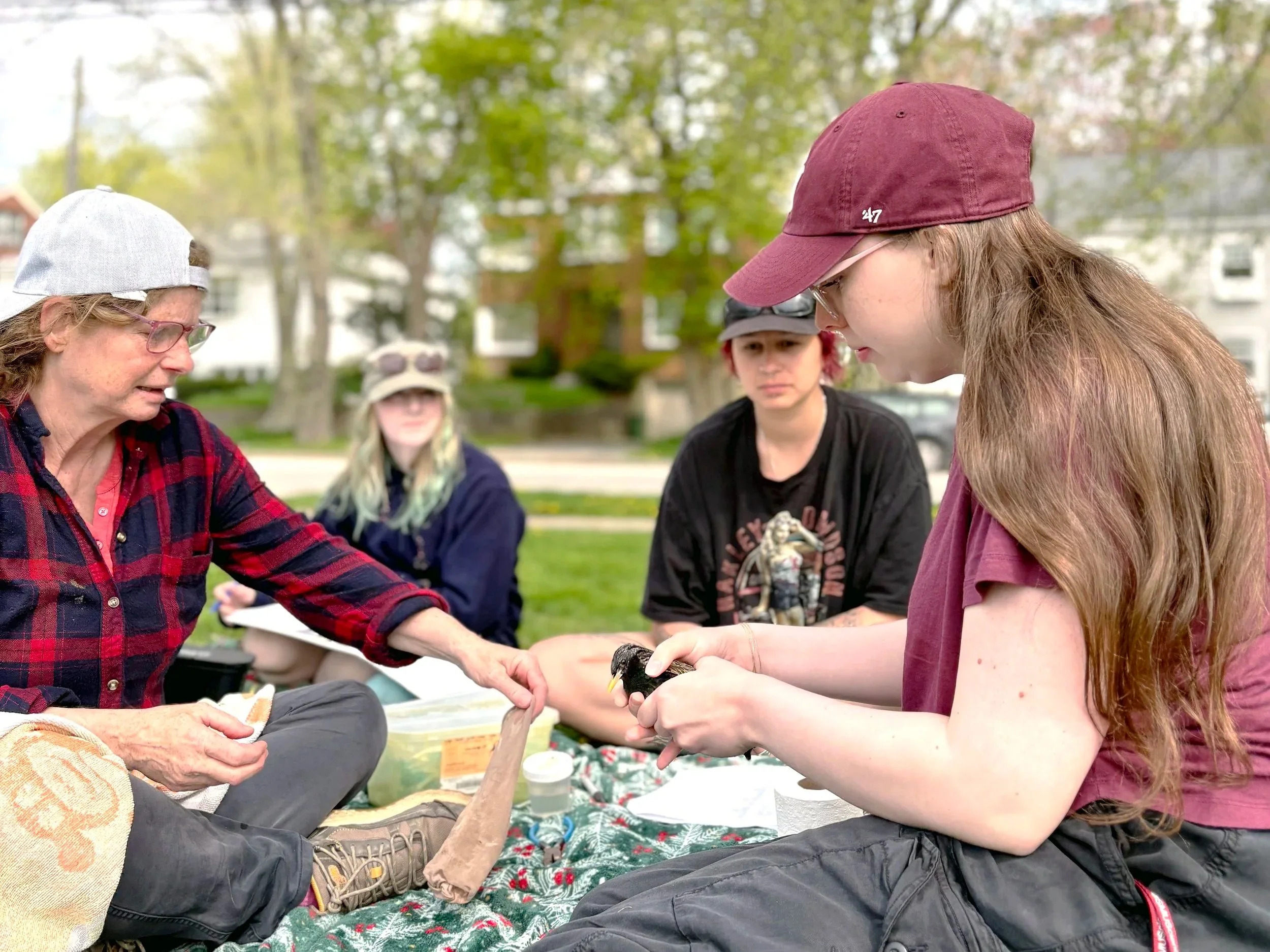
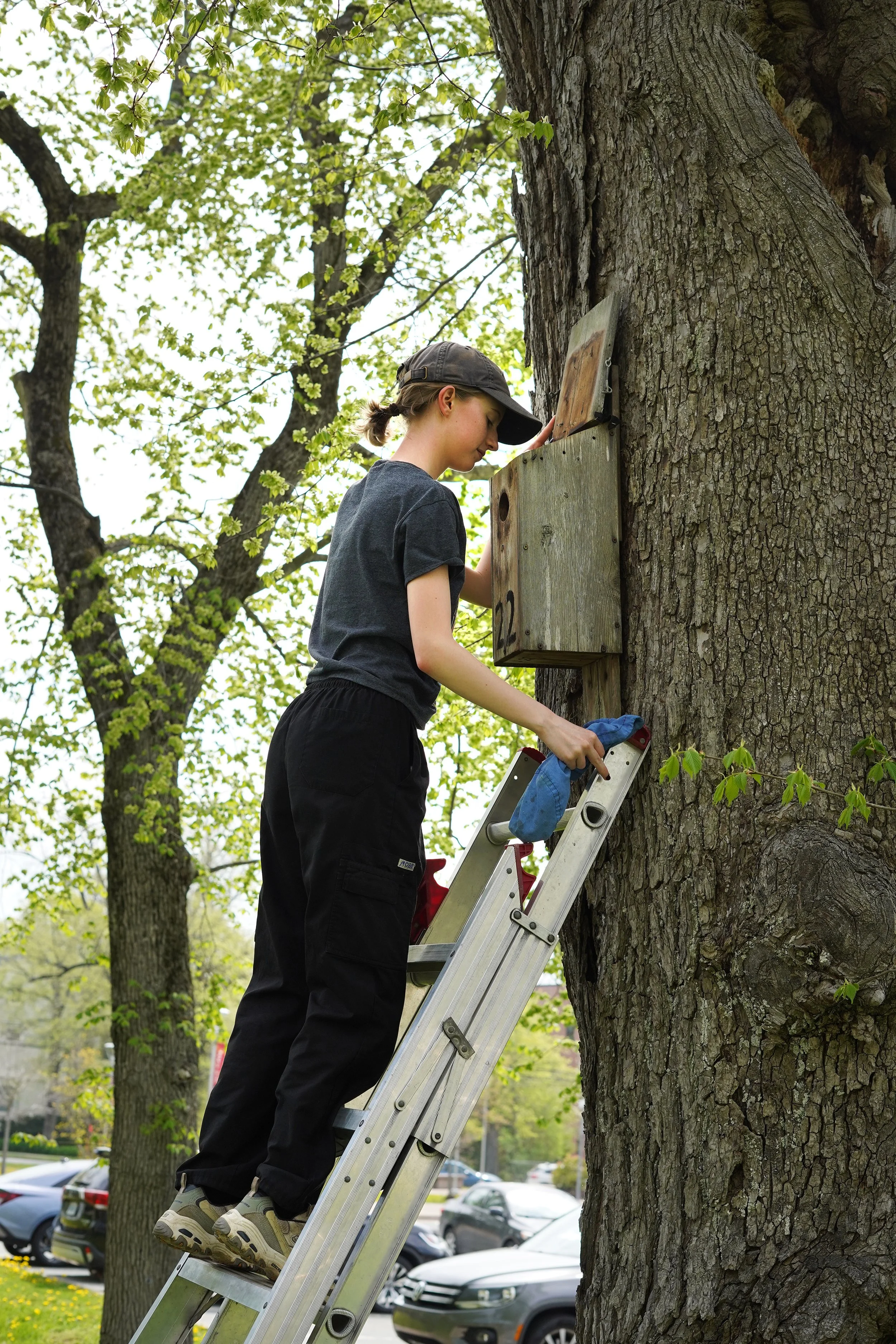
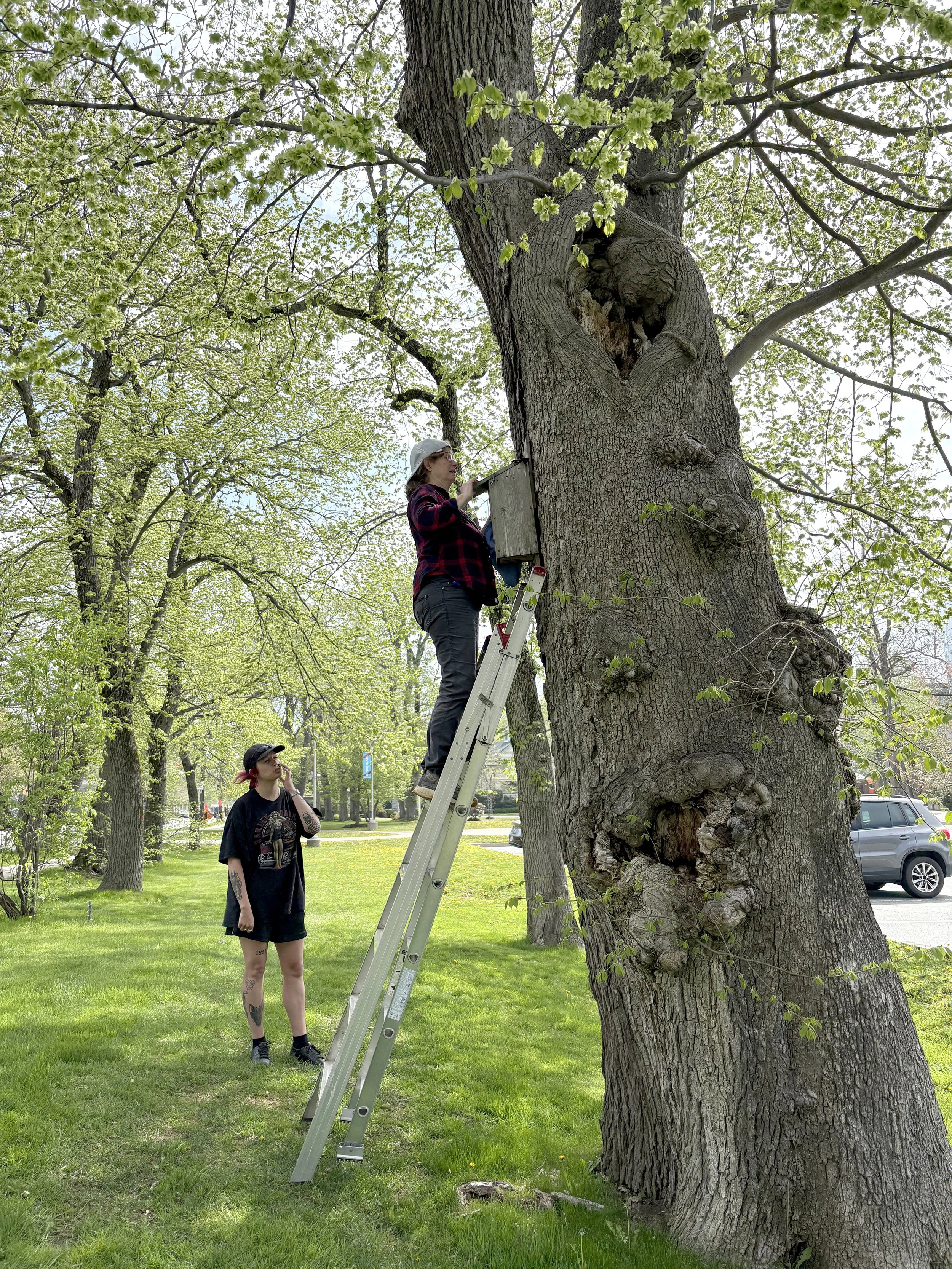
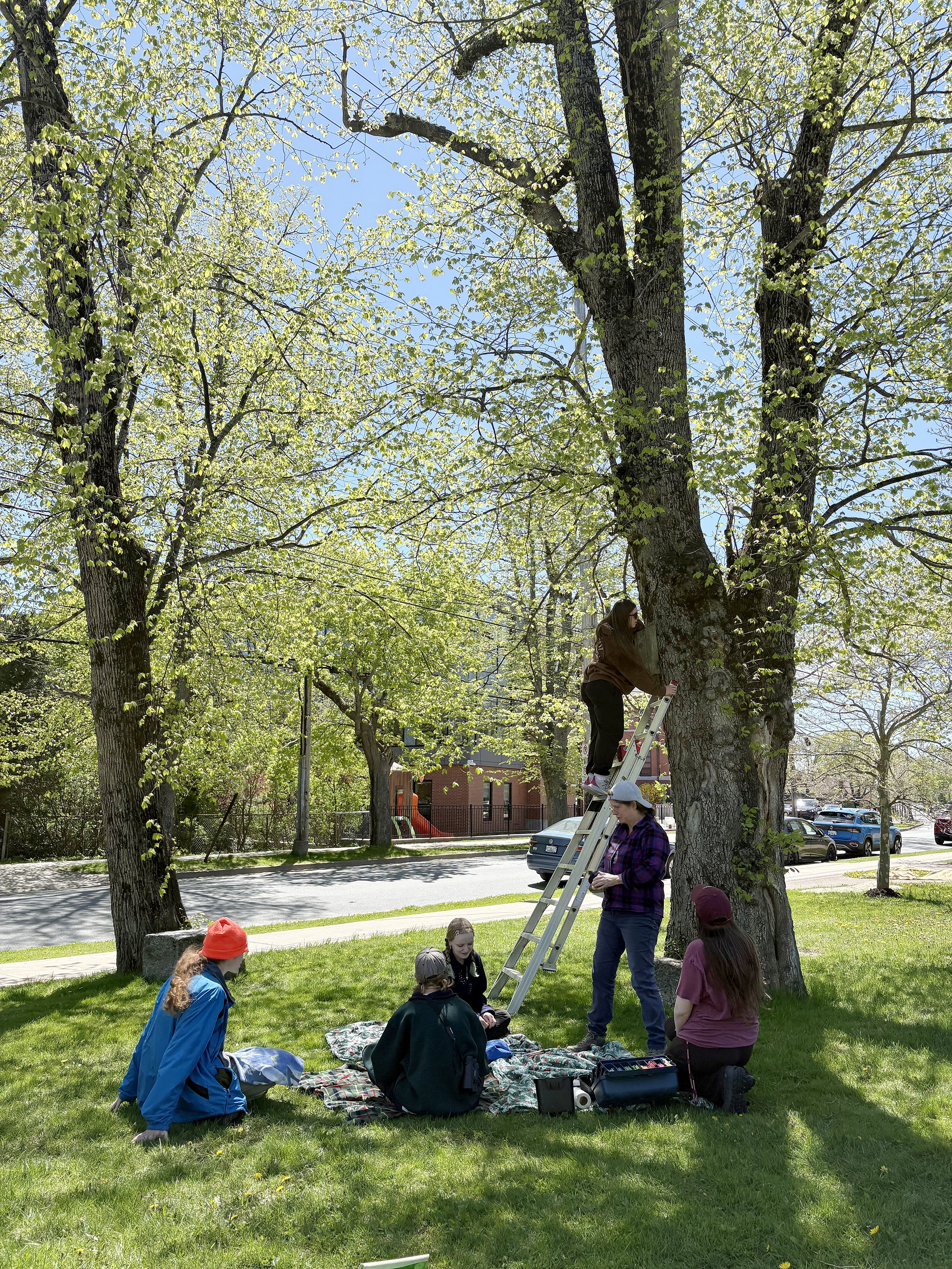
The Saint Mary’s University campus in Halifax’s south end is the perfect location for an interesting long-term research project on birds—specifically European starlings (Sturnus vulgaris), which thrive in urban settings. There are more than 40 nest boxes scattered across the campus.

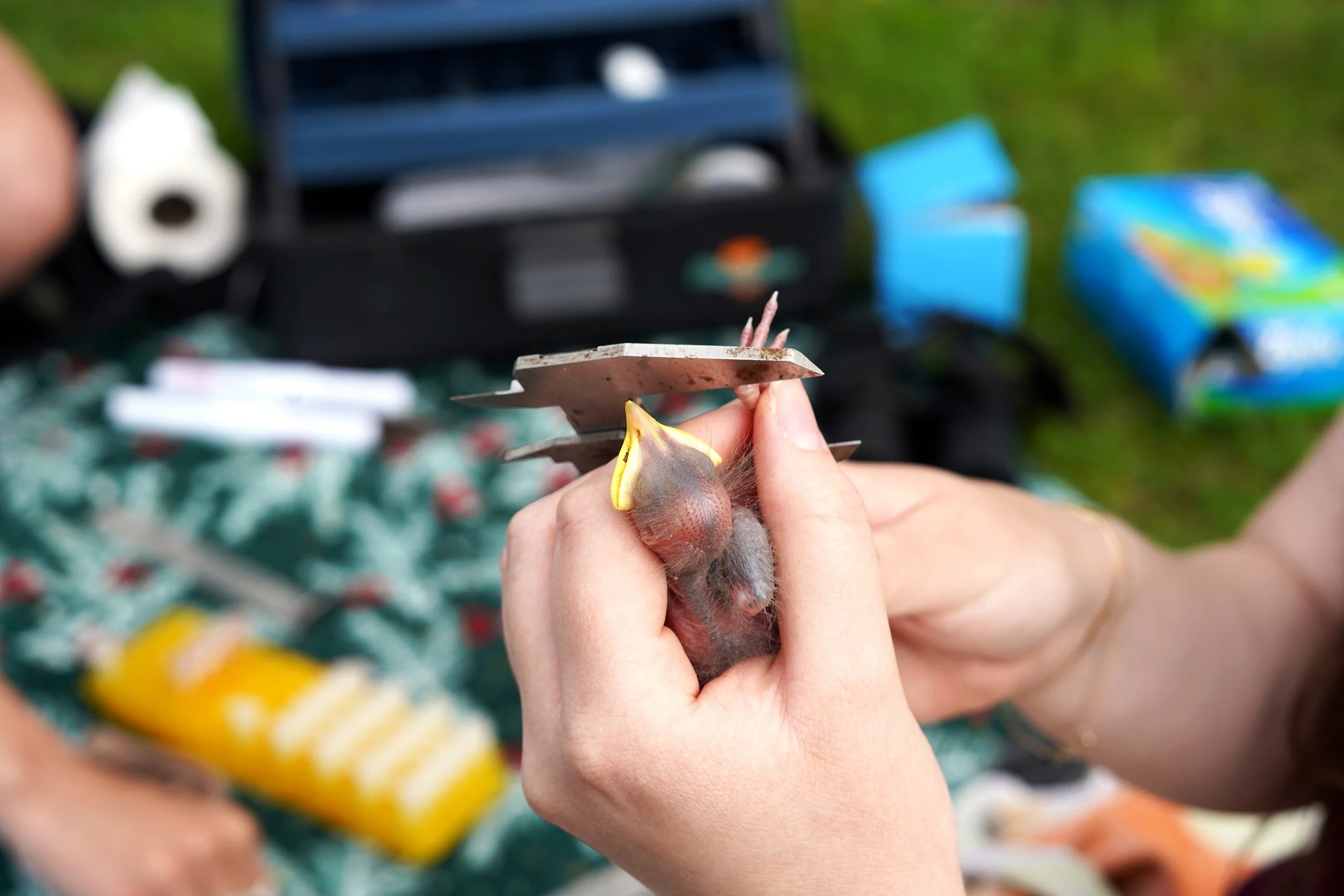
Dr. Colleen Barber has been guiding her biology students in conducting research on these resilient birds for more than 20 years. They have produced theses and published papers on the effects of climate change on this species, its songs, mate choice, parental investment, and the types and abundance of garbage found in its nests.

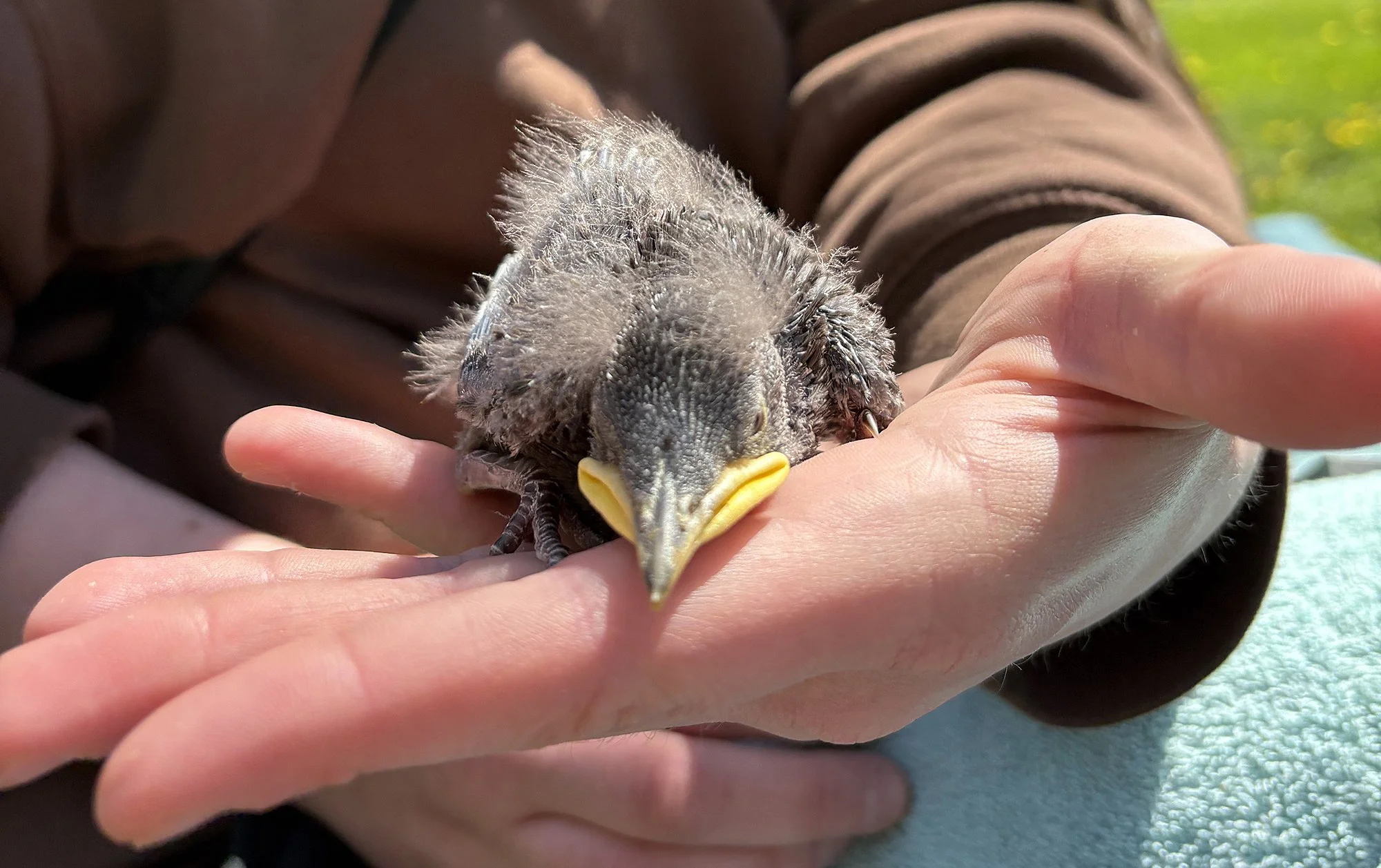
European starlings are not native to Nova Scotia but have been here for more than 100 years. They have adapted well to urban living, creating nests from natural and anthropogenic materials, including plastics and other litter.

“We have discovered that European starlings have many reproductive strategies—they have a very dynamic mating system,” says Dr. Barber. 

“Some nestlings belong to both parents who are feeding them (within-pair young), while other nestlings genetically belong only to the mom or dad (extra-pair maternity or paternity), and some nestlings don’t genetically belong to either parent (intraspecific brood parasitism).”

Dr. Barber’s students have used campus nest boxes to research why the starlings use garbage and feathers in their nests. Others have studied why male starlings mimic the calls of blue jays, chickadees, crows and sirens. Student teams have also examined the effects of ectoparasites that live on the birds’ skin and feathers.

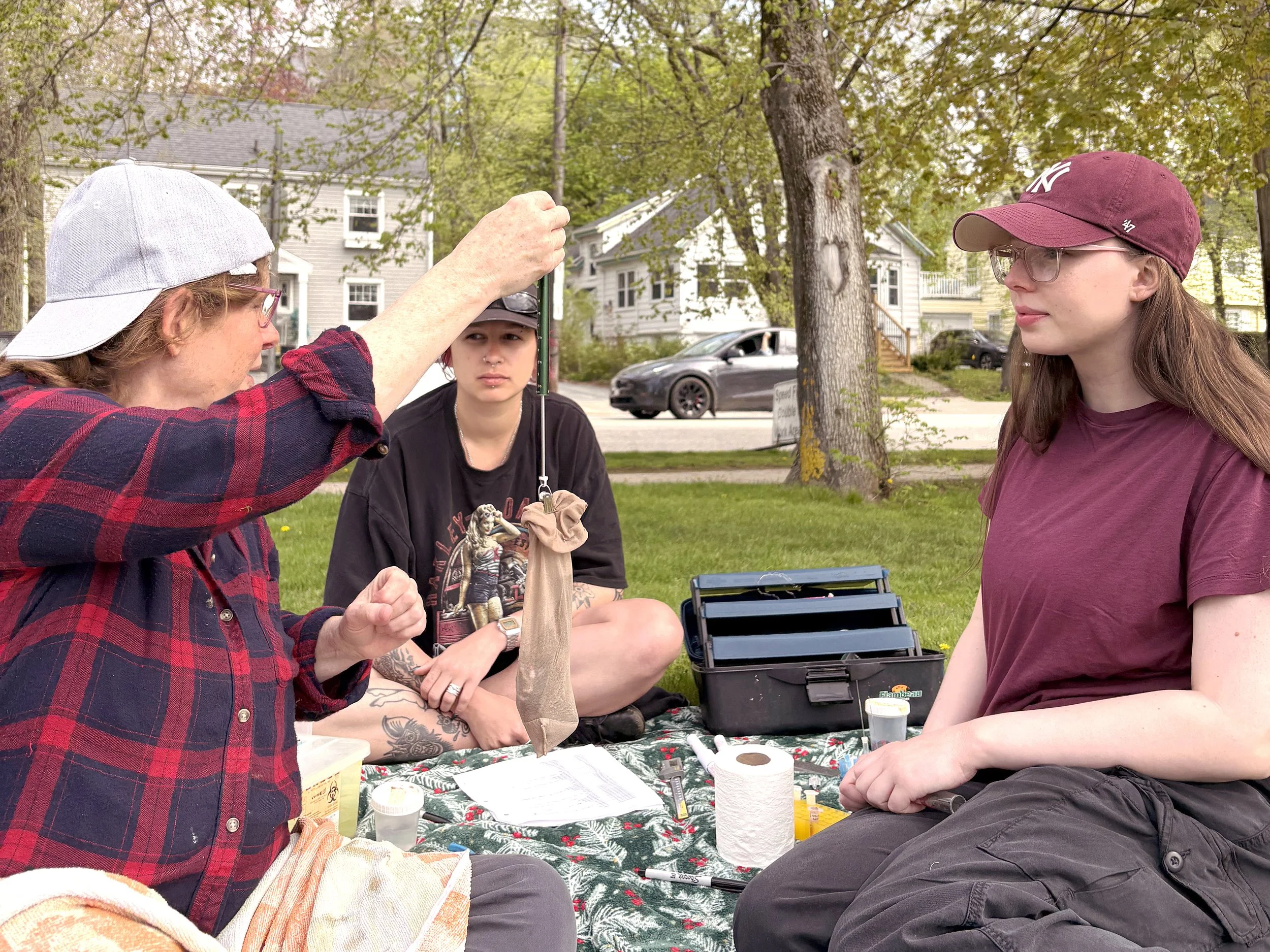
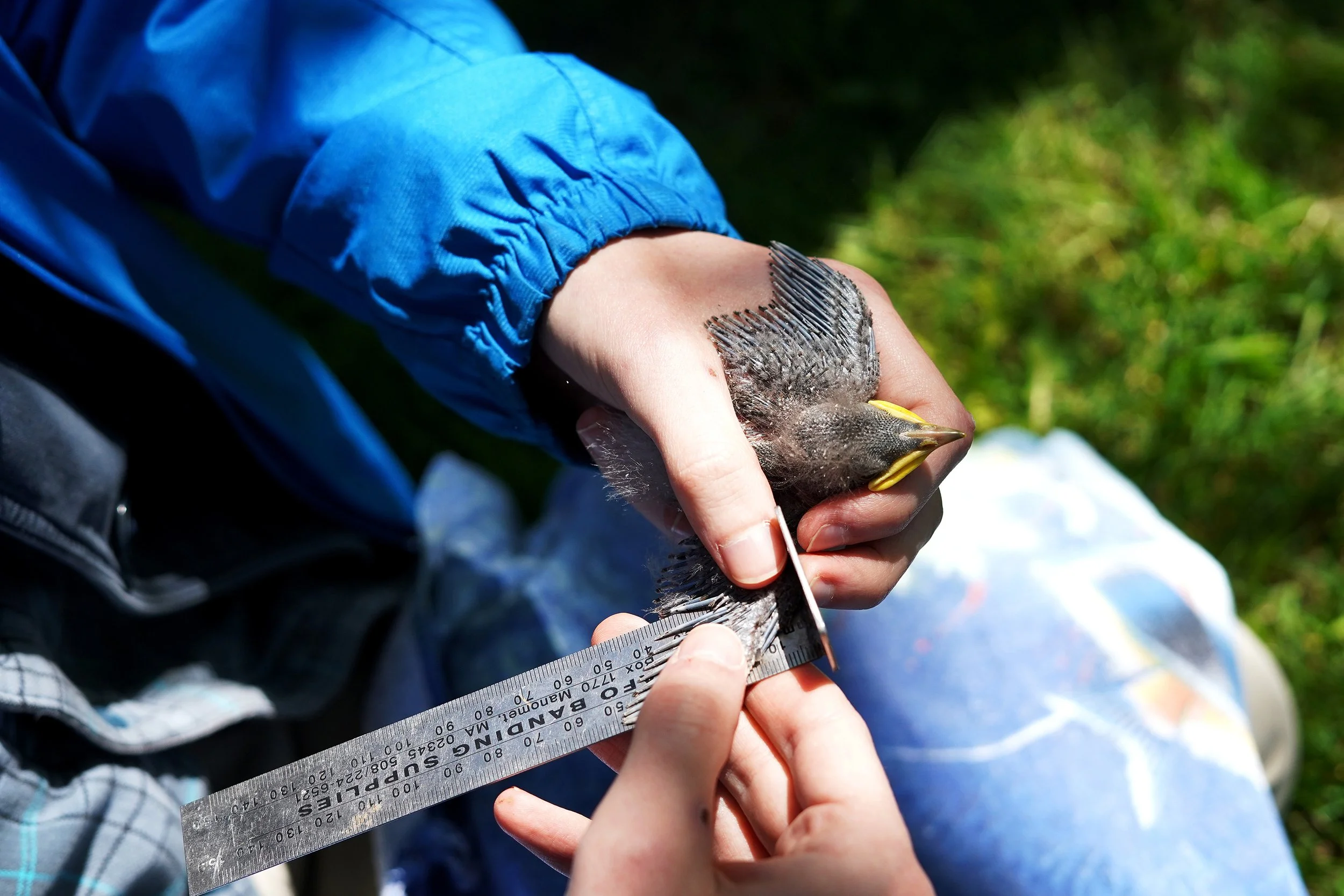
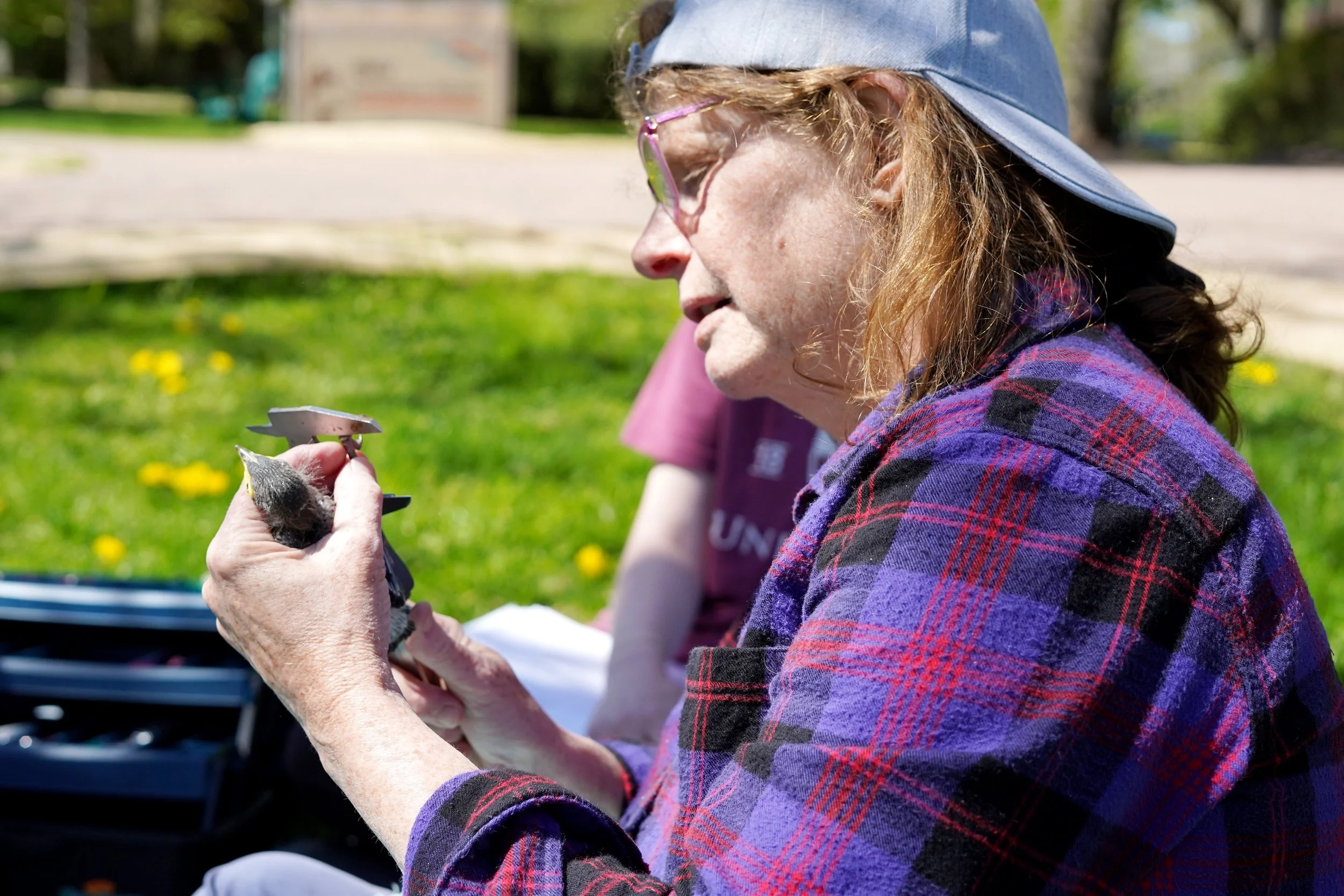
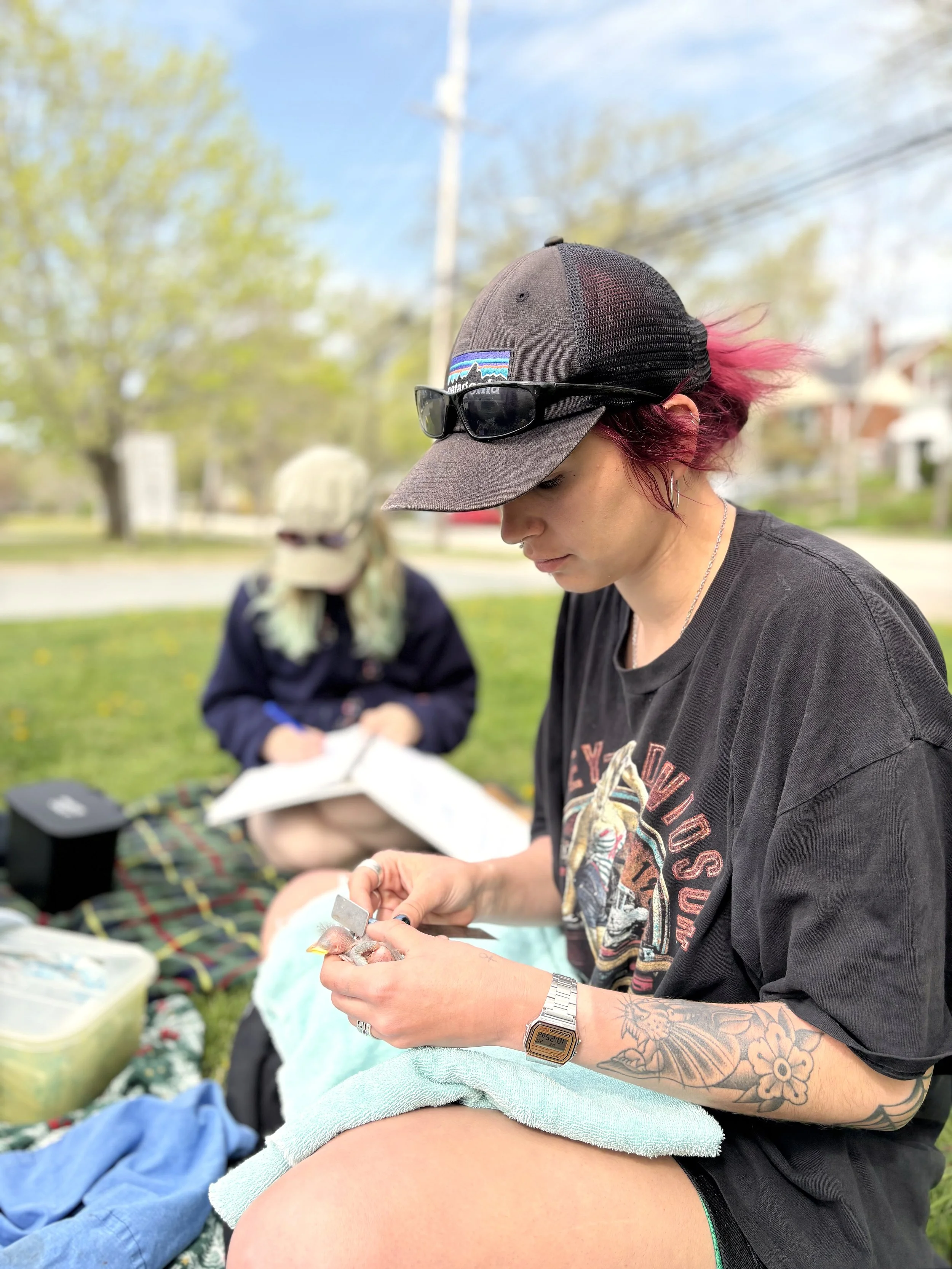
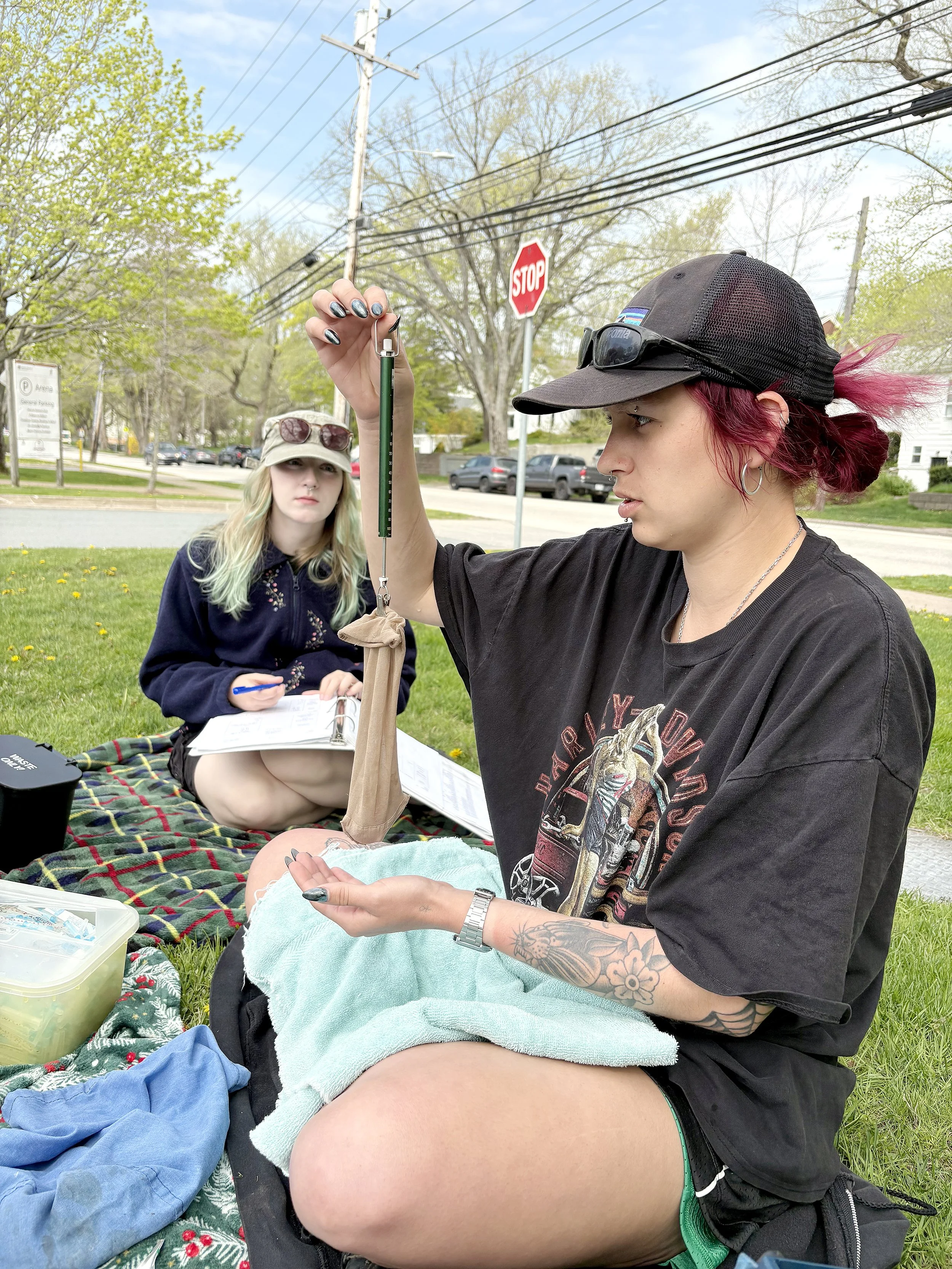
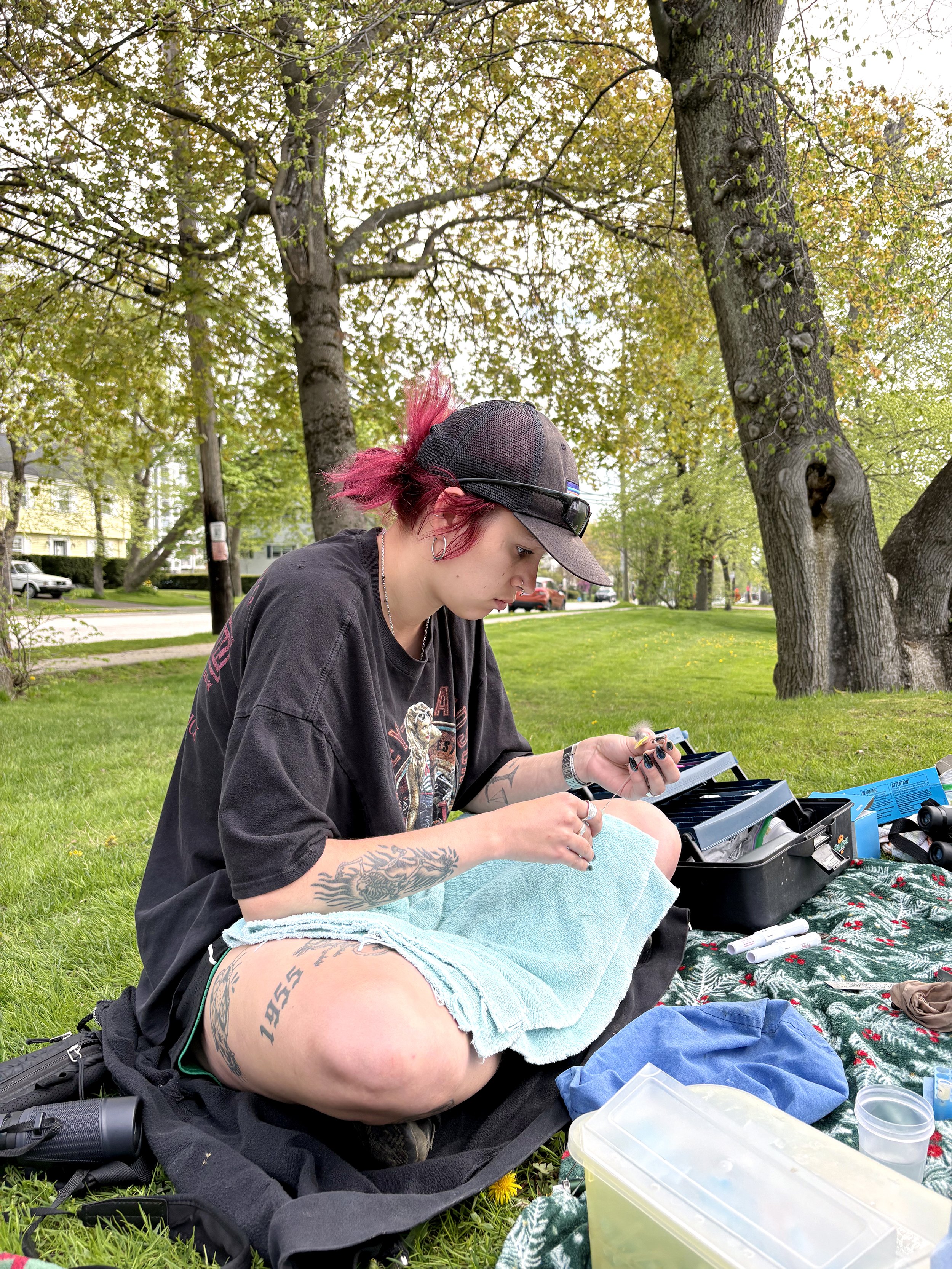
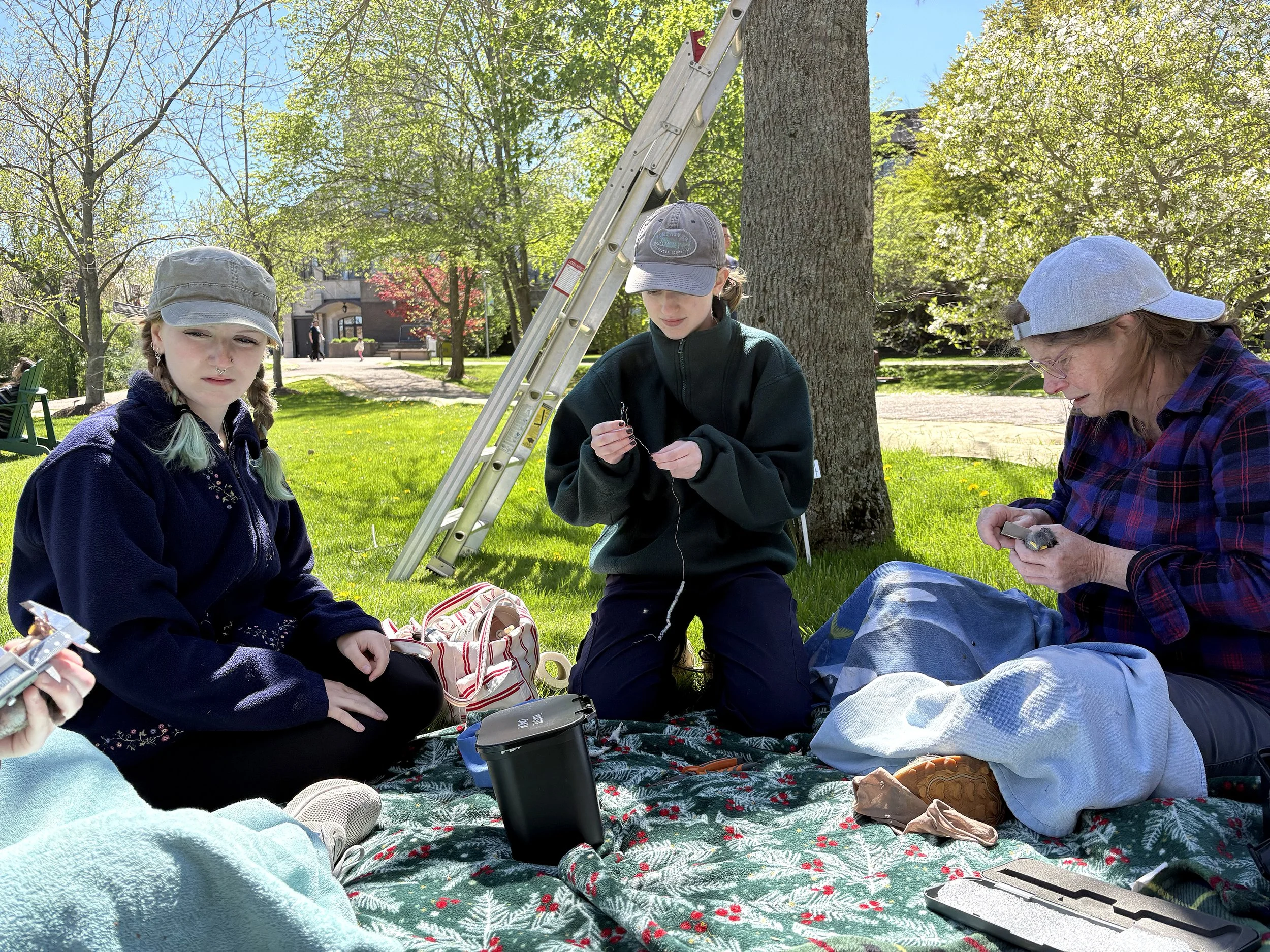
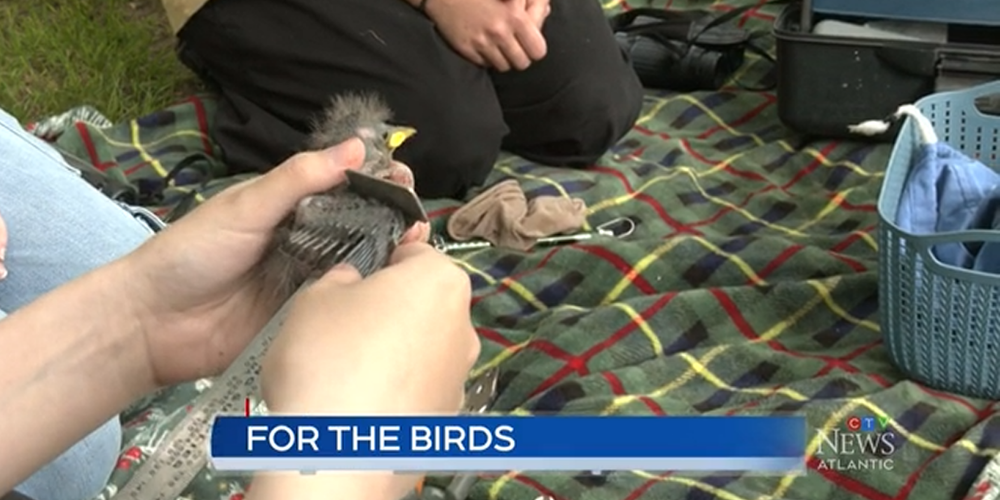
Students take their first set of measurements when the nestlings are five days old. They measure the birds’ size and weight and take small blood samples to determine parentage through DNA microsatellite analysis. They return to the nest boxes when the nestlings are 11 days old, taking the same measurements to record growth rate. They also capture the parents to band and measure them and to take a small blood sample.

The research is interesting—this species is the proverbial “canary in the coal mine,” displaying the effects of climate change in its nesting, reproductive strategies and breeding success.

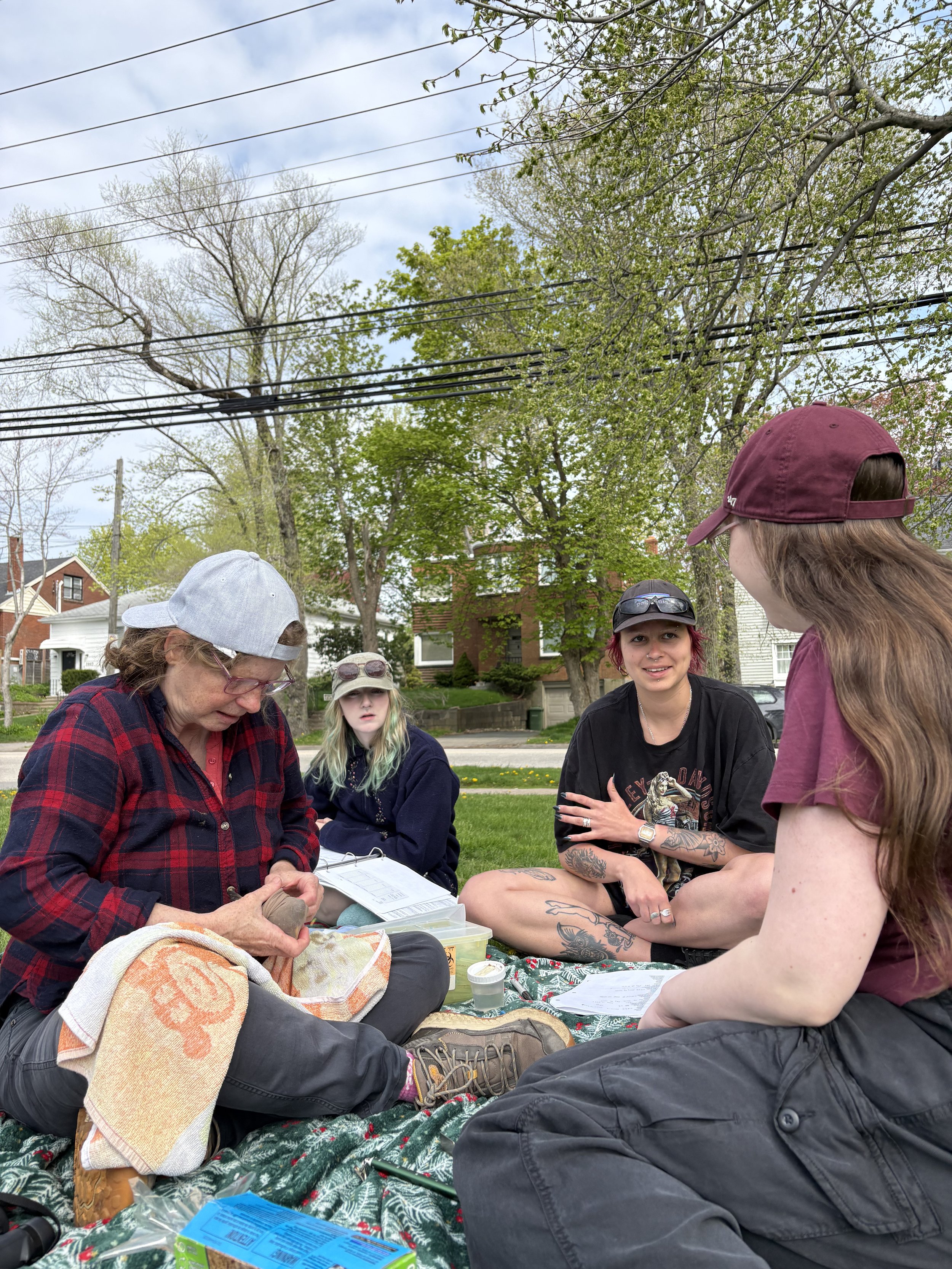
Dr. Barber is a calm, reassuring presence as she instructs students in taking careful measurements, banding the birds’ legs, and recording data. For her, teaching students how to do research is the overarching goal of the project.

“Seeing my students become sure of themselves as researchers—learning to do the research and interpret their results accurately is gratifying as a teacher and a mentor,” says Dr. Barber.

SMU in the news:

Meet your Science Valedictorians for Spring Convocation

Melissa Alvarez Del Angel and Tashauna Reid

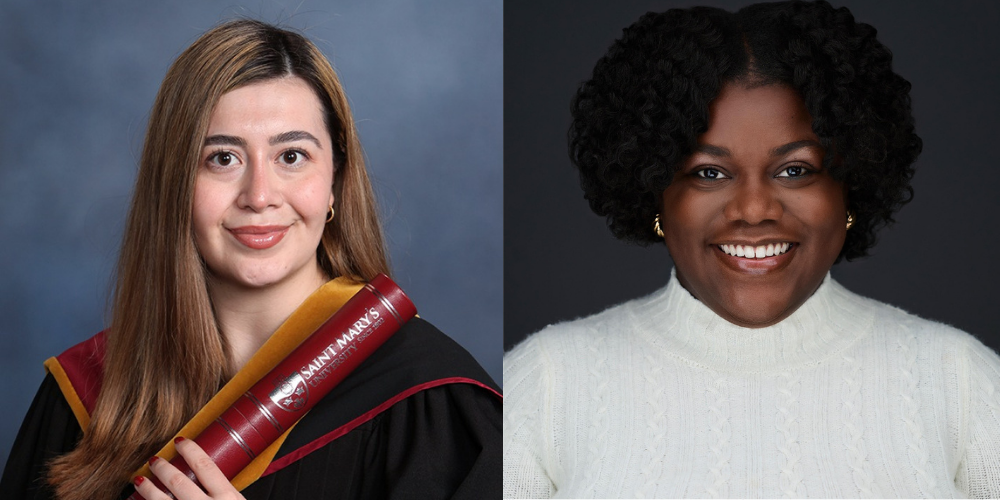
Valedictorians Melissa Alvarez Del Angel and Tashauna Reid will represent the Faculty of Science at their ceremonies on Thursday, May 28. Watch the graduation livestream and find the convocation program on our website.

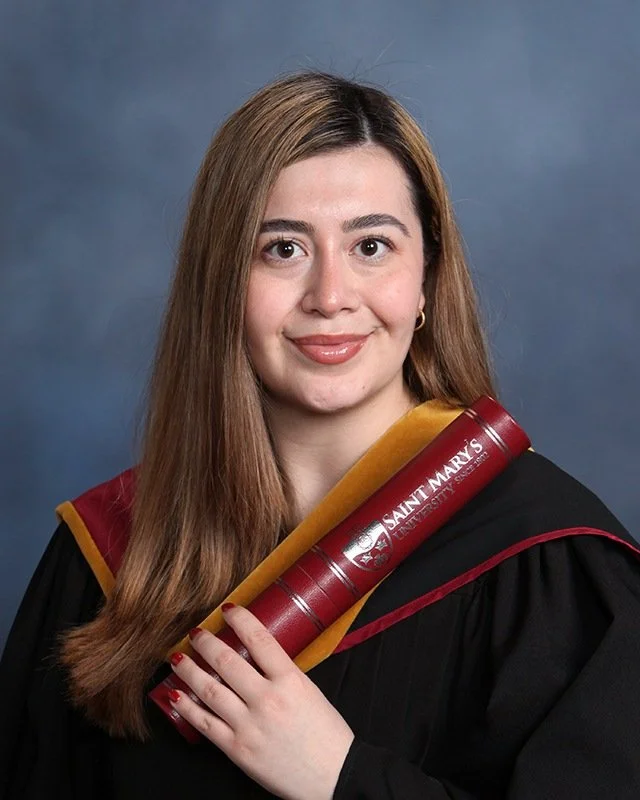
Melissa in a graduation gown holding a parchment

Melissa Maria Alvarez Del Angel 

Psychology (Hons)

Born and raised in Tampico, Mexico, a chance mix-up between two universities with the same name—one in Texas, one in Halifax—led Melissa Alvarez Del Angel to an inspiring educational experience, the chance to meet her best friend, and to find a supportive community far from home.  

“Looking back now, I couldn’t be happier that life brought me here,” says Melissa. 

Melissa is graduating with a Bachelor of Science, summa cum laude, with Honours in Psychology. 

Through a wide range of experiences on campus, Melissa understands how supporting others can make a difference in their lives. She lived in residence for four years, and this experience has shaped her educational journey.   

“Every time you lend a hand, decorate your floor, or give someone directions to the laundry room, you’re shaping someone’s university experience.”  

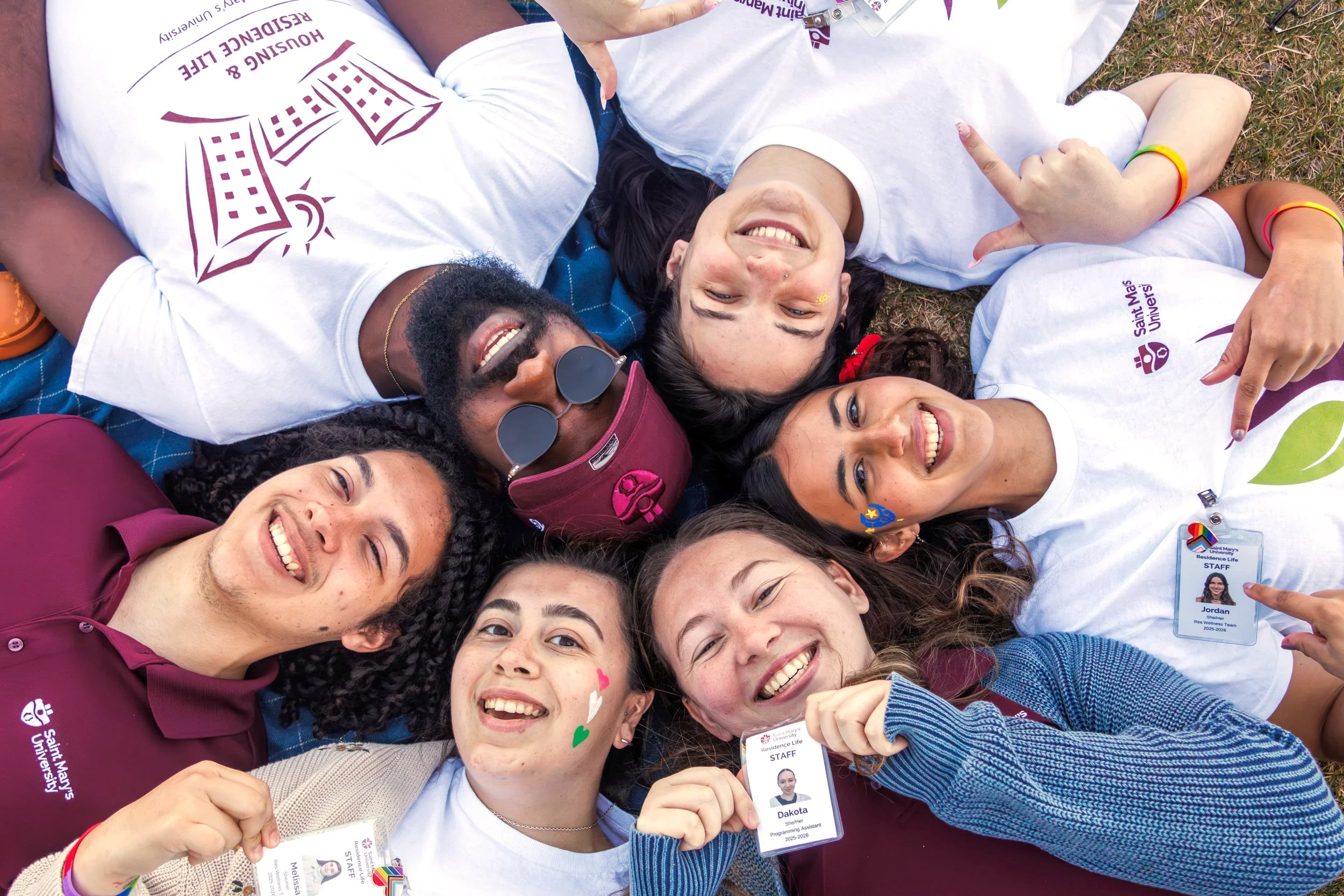
A group of people lay in a circle and smile up at the camera

Melissa and the Res Life team

Her passion for student support led her to the Residence Wellness Team, where she eventually earned the position of Chair, while also working as a Resident Assistant for three years. Melissa was also Executive Editor of the SMU Journal.

Beyond campus, Melissa volunteered at Peter’s Place, assisting individuals recovering from brain injuries. She was also involved in the French Woodland Conservation Project, helping educate children about the preservation of yellow birch trees, and supported initiatives through the IWK Foundation.  

She hopes to pursue a master’s degree in clinical psychology and become qualified to conduct assessments while collaborating with healthcare professionals to reduce barriers that prevent individuals from reaching their potential. Above all, she hopes to make a meaningful difference in the lives of others.  

Her favourite quote by Dr. Seuss is, “To the world you may be one person, but to one person you may be the world.” That phrase stays with her every day. If she can help even one person feel seen, supported, or hopeful, she will consider her work meaningful. 

Q & A with Melissa

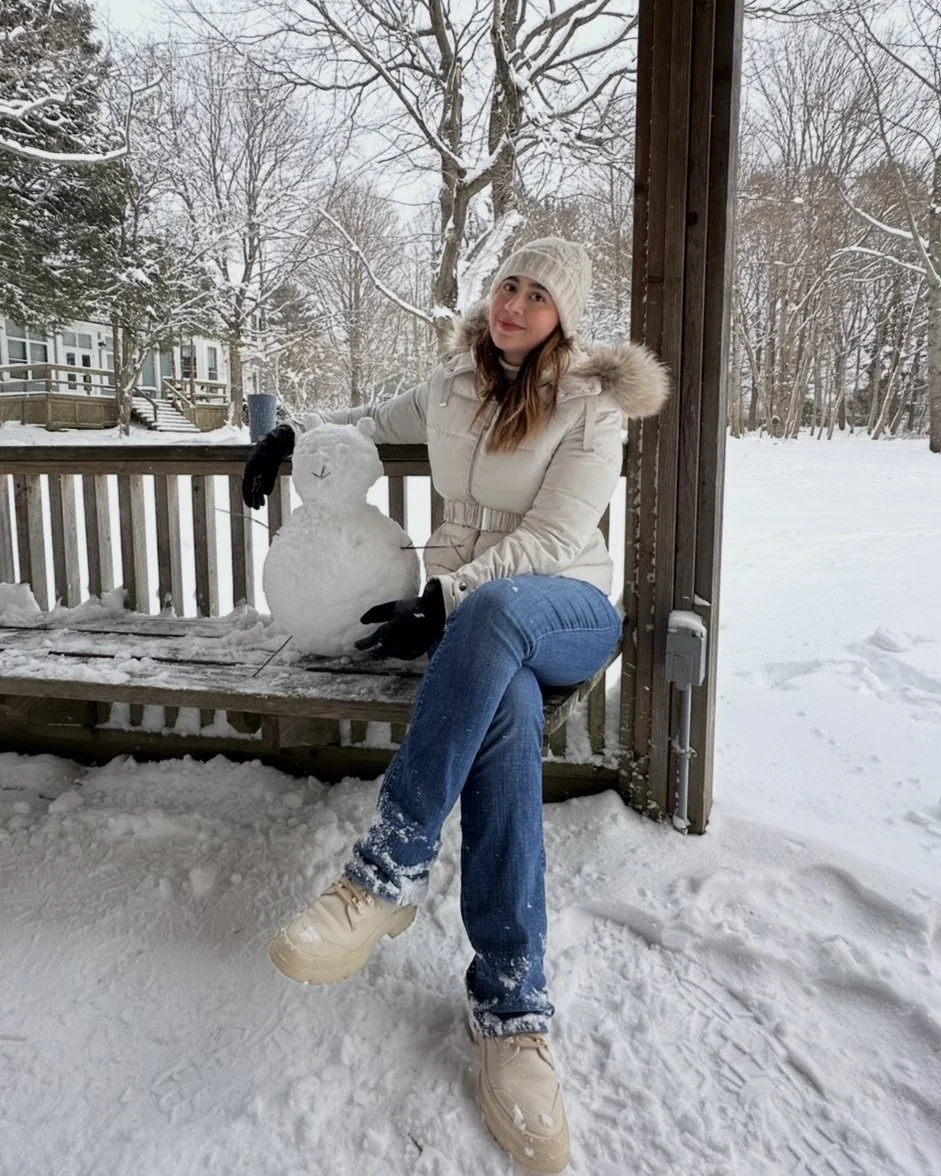
Melissa with a small snowman on campus

Why did you choose Saint Mary’s University?

My family wanted me to study in Texas since it’s close to Mexico and we have family there. I was looking at Saint Mary’s University in Texas when I accidentally clicked on Saint Mary’s University in Halifax. A few minutes later, I realized it was a completely different school, but something about SMU in Halifax felt right. SMU ended up being the last of 14 universities I applied to, and it became the easiest decision. Looking back now, I couldn’t be happier that life brought me here. 

Did you live and/or work on campus?

I lived in residence for all four years. In my first year, I saw a “Welcome to Res” poster and decided to attend. That’s how I discovered the Residence Wellness Team. I started as an assistant and was later promoted to Chair of the team. I also worked for three years as a Residence Assistant (RA).  

Residence Life taught me that a small act, a “Hi, how are you?” can mean the world to someone else. You won’t always know the full story of what someone’s going through, but you can be the person who helps them feel seen. Safe. Included. Being an RA means helping make residence feel like home. 

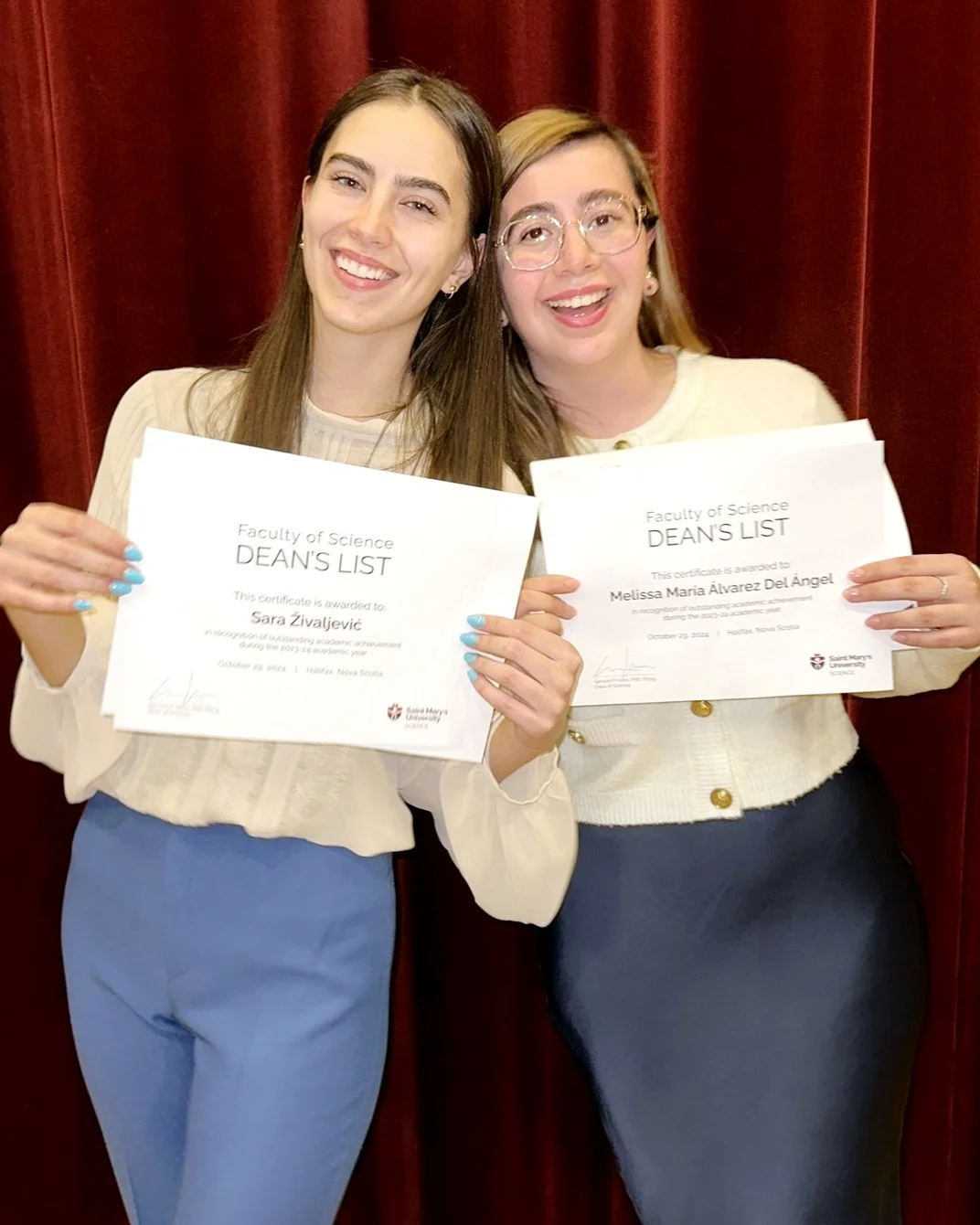
Sara and Melissa hold her Dean's List certificates

Melissa and Sara at the Dean’s List event

What was your favourite class?

Intro to Calculus at 8 a.m. Not because math was my strongest subject, but because it was the first class I attended at SMU and where I met my best friend, Sara Živaljević. That class introduced me to my soul sister. 

Which instructor had the biggest impact on you? 

I have been incredibly fortunate to learn from inspiring professors and mentors such as Dr. Margherita Cameranesi, Dr. John Calder, Dr. Jim Cameron, Dr. David Bourgeois and Dr. Nicole Conrad, among many others. They gave me opportunities to grow, challenged me to think critically, and showed me what it means to lead with both excellence and kindness. 

What was your thesis title and description? Why did this research appeal to you? 

My thesis was titled “Finding Growth Through Faith: Religious Commitment and Post-Traumatic Growth in Young Newcomer Survivors of Gender-Based Violence”. My thesis explored the association between religious commitment and post-traumatic growth in young newcomers in Nova Scotia.  

Before beginning my thesis, I had the opportunity to conduct community-based research in Manitoba under the supervision of Dr. Margherita Cameranesi, where I co-facilitated 20 walking interviews with newcomer youth and community supports and safe spaces connected to resilience. Religion and spirituality emerged repeatedly as important mechanisms. That summer, I became passionate about understanding how these factors can promote resilience in this equity-deserving population. 

This summer, I will continue working on that project, among others, as a full-time research assistant in her lab, and I will also be attending the Canadian Psychological Association Conference in Montréal to present findings from our previous research on refugee youth. 

How were you involved in the SMU Community?

Along with my Residence experience, I was part of the SMU Psychology Society and served as an Assistant Editor on the SMU Journal before being promoted to Executive Editor. 

I also participated in the undergraduate summer research program, beginning in my first year under the supervision of Dr. Jim Cameron and, in 2025, under the supervision of Dr. Margherita Cameranesi.

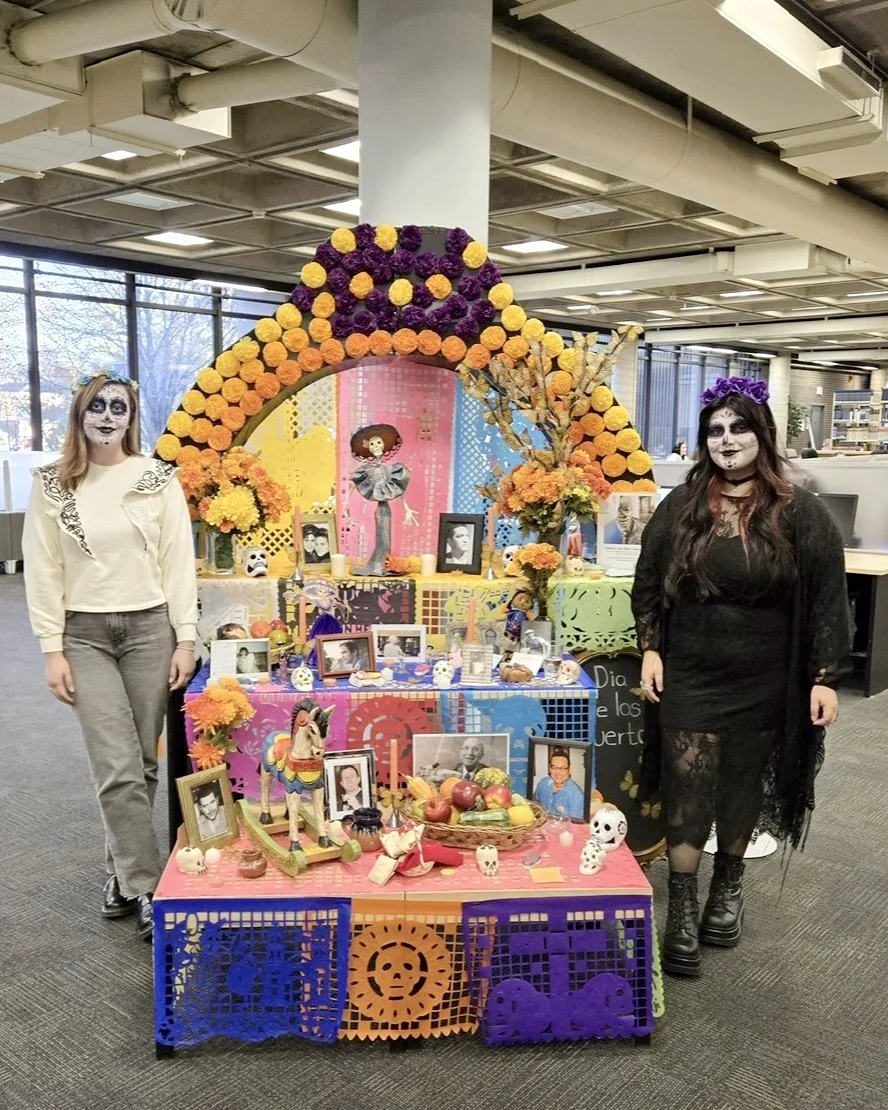
Melissa in traditional facepaint stands next to an altar in the library

Melissa at the Día de los Muertos event at the Patrick Power Library

How did you connect with supports and services on campus? 

As an international student, the International Student Centre became one of my go-to resources. They helped me understand immigration pathways and supported me during my first year while I was adapting to a new culture and life in Canada. 

The Writing Centre was another resource that made a huge difference for me, especially in my second year when I was learning how to write more formal academic papers and research assignments. I was also a note-taker through the Fred Smithers Centre for several years—an experience I cherish.  

The Career & Experiential Learning office also played a major role in my experience at SMU. Updating my Co-Curricular Record and tracking my involvement helped me recognize how much I had grown throughout university. I’m grateful to Christy Starkey for all her support! 

Finally, being both a resident and later an RA allowed me to become very familiar with the many supports and resources available at SMU. That is why I decided to write an RA Manual to leave as my legacy and to help new RAs become familiar with resources they can share with their floor members.  

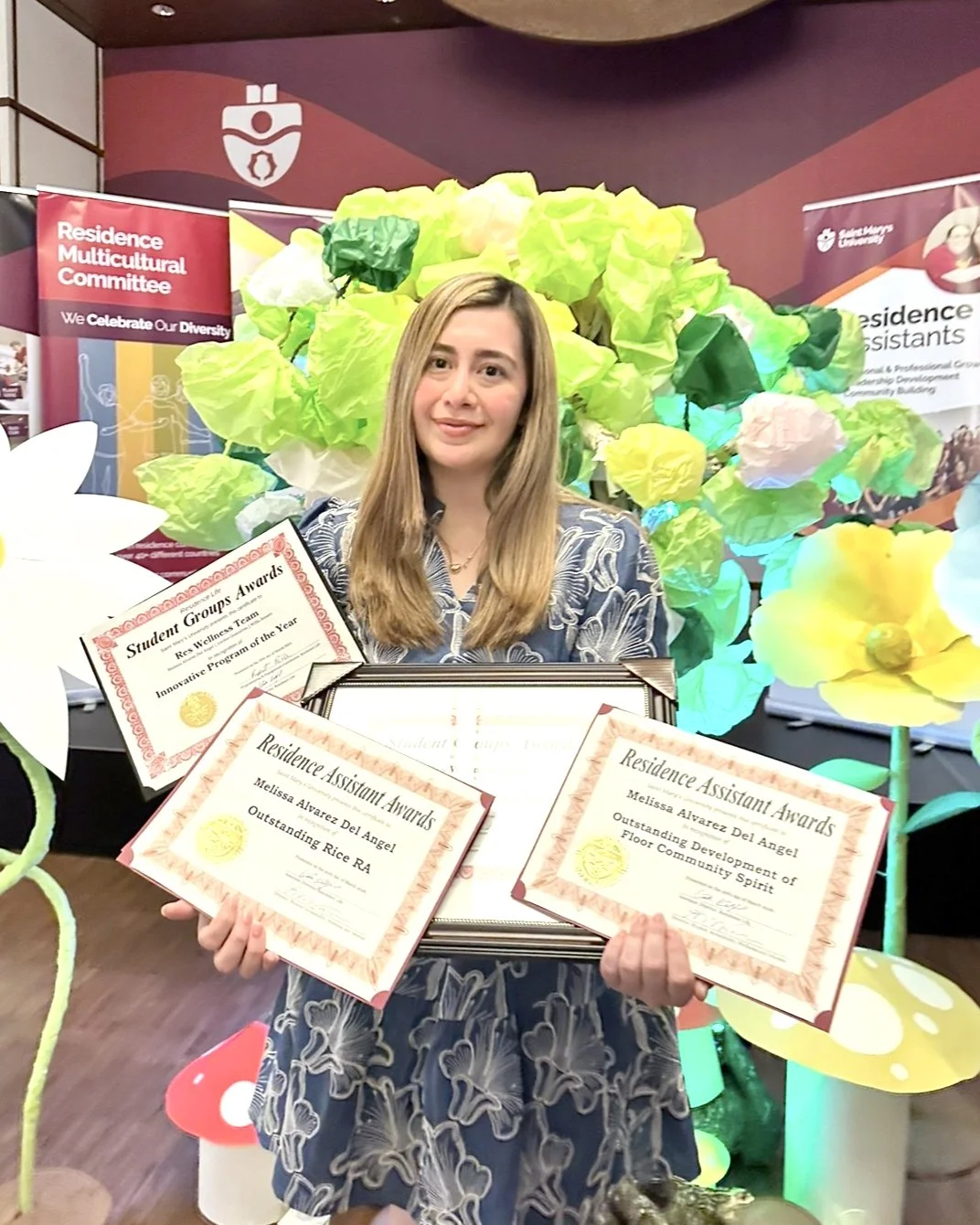
Melissa holds several award parchments

Melissa earned many leadership awards along with scholarships during her time at SMU

Did you receive any scholarships or awards at SMU?  

I received a Renewable Entrance Scholarship, along with a Leonard T. Rambeau Scholarship, Equity, Diversity, Inclusion, Accessibility (EDIA) Champion Badge 2025, Dean of Science Access to Research Award 2025, Student Leadership Recognition Award 2025, Turning Points in Leadership Award 2025, Wicked Problems Award 2023, and First-Year Undergraduate Summer Research Award 2023.

What are your plans for the future?

Aside from working as a full-time research assistant in Dr. Cameranesi’s lab, I also recently began working at Erica Baker Psychological Services as an Office Manager. Through this role, I have learned more about the care, professionalism, and dedication involved in psychological services and assessment. I am now strongly considering a future in psychological assessment because I have been inspired by the phenomenal professionals I have met along the way. What I hope to achieve in the future is simple: to make a meaningful difference in the lives of others.  

Any other successes you’d like to share?

More than anything, I’m proud of the fact that I came to a completely new country by myself and slowly built my life here. I dedicate this achievement to my mom, who passed away almost two years ago. I know that if she had not raised me with the strength and determination she did, I would not be where I am today. Everything I have accomplished carries a piece of her with me.


Tashauna Ramona Reid 

Psychology (Hons) 

For Tashauna Reid, her time at Saint Mary’s was a journey of growth, courage and discipline.  

Originally from Jamaica, she questioned her place in higher education after graduating with a low GPA in high school. Acceptance to Saint Mary’s offered a turning point, and her transformation into a top student and campus leader was remarkable.  

Tashauna is graduating with a Bachelor of Science, magna cum laude, with Honours in Psychology and a minor in Biology. 

As a science tutor—a role offered to students with high GPAs—she supported others in their academic pursuits. She earned a spot on the Dean’s List, a Student Leadership Award, and a My East Coast Experience bursary in recognition of her hard work. As a Welcome Week Pack Leader, Tashauna supported new students, and her leadership of the Caribbean Society offered community away from home.  

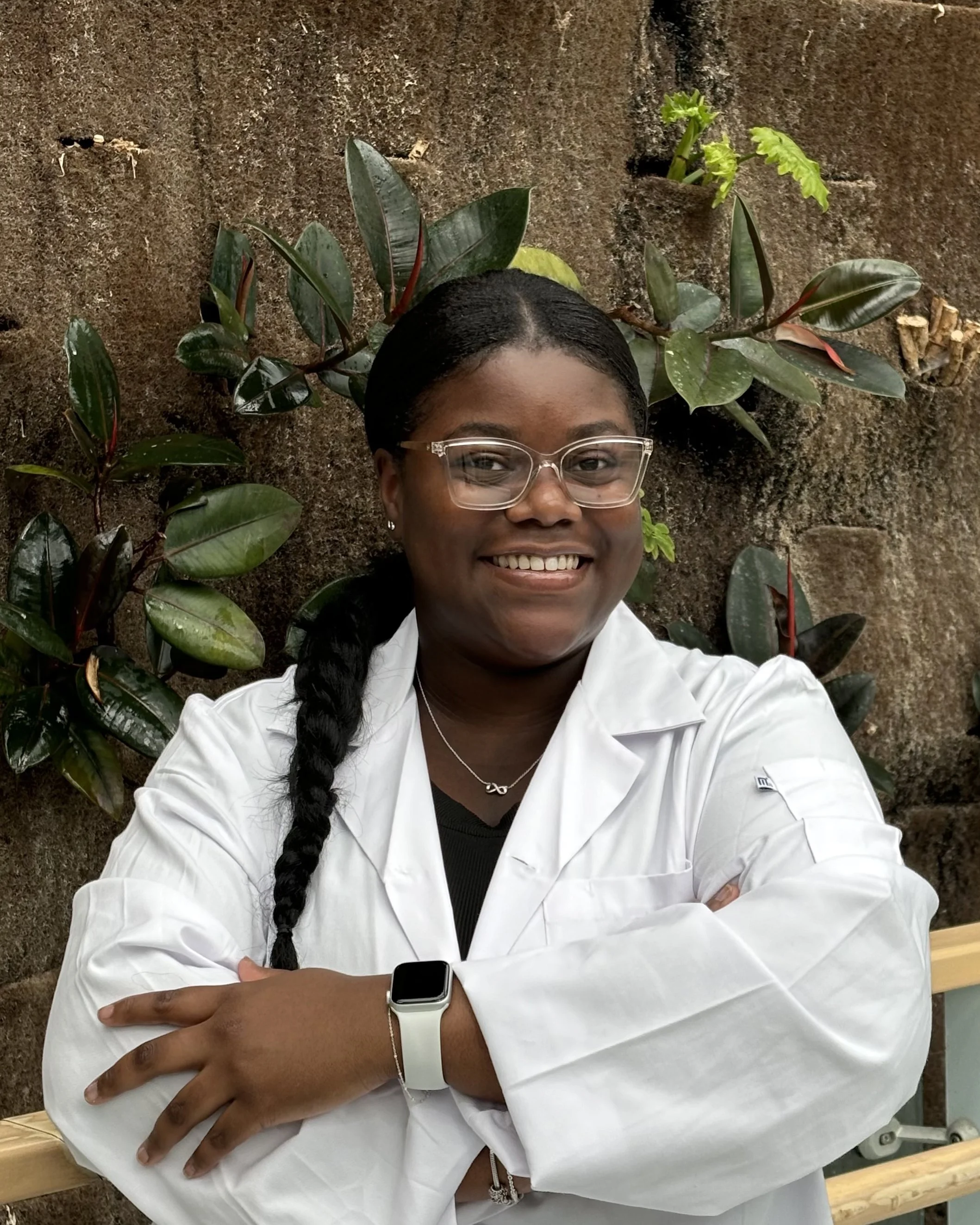
Tashauna wears a white lab coat

Tashauna plans to pursue a career in the field of medical neuroscience

Along with being named valedictorian, Tashauna has been recognized for her work as a Black Founder and has shared her voice as a panellist at many leadership and empowerment conferences.  

As the founder of College Life Academy, a digital platform with more than 280,000 followers, Tashauna supports students worldwide with study techniques and academic guidance. Her work has led to partnerships with Best Buy and recognition through media features.   

Building on her success as a Bachelor of Science graduate, Tashauna plans to pursue a career in the field of medical neuroscience. 

Q&A with Tashauna

Why did you choose Saint Mary’s?  

I chose SMU because it was the perfect balance between opportunity and community. I loved that it had the reputation and resources of a strong university, but still felt close-knit enough that professors knew you by name. The campus being so close to the ocean and nature parks also made it feel like a place where I could grow both academically and personally. And as an island girl, being close to the ocean was VERY important to me. 

What was your favourite class?

My favourite classes were Advanced Cognitive Neuroscience (PSYC 4120) and Neuroscience Research Methods (PSYC 4190). I have always been fascinated by the brain, so those classes were easily the most exciting.  

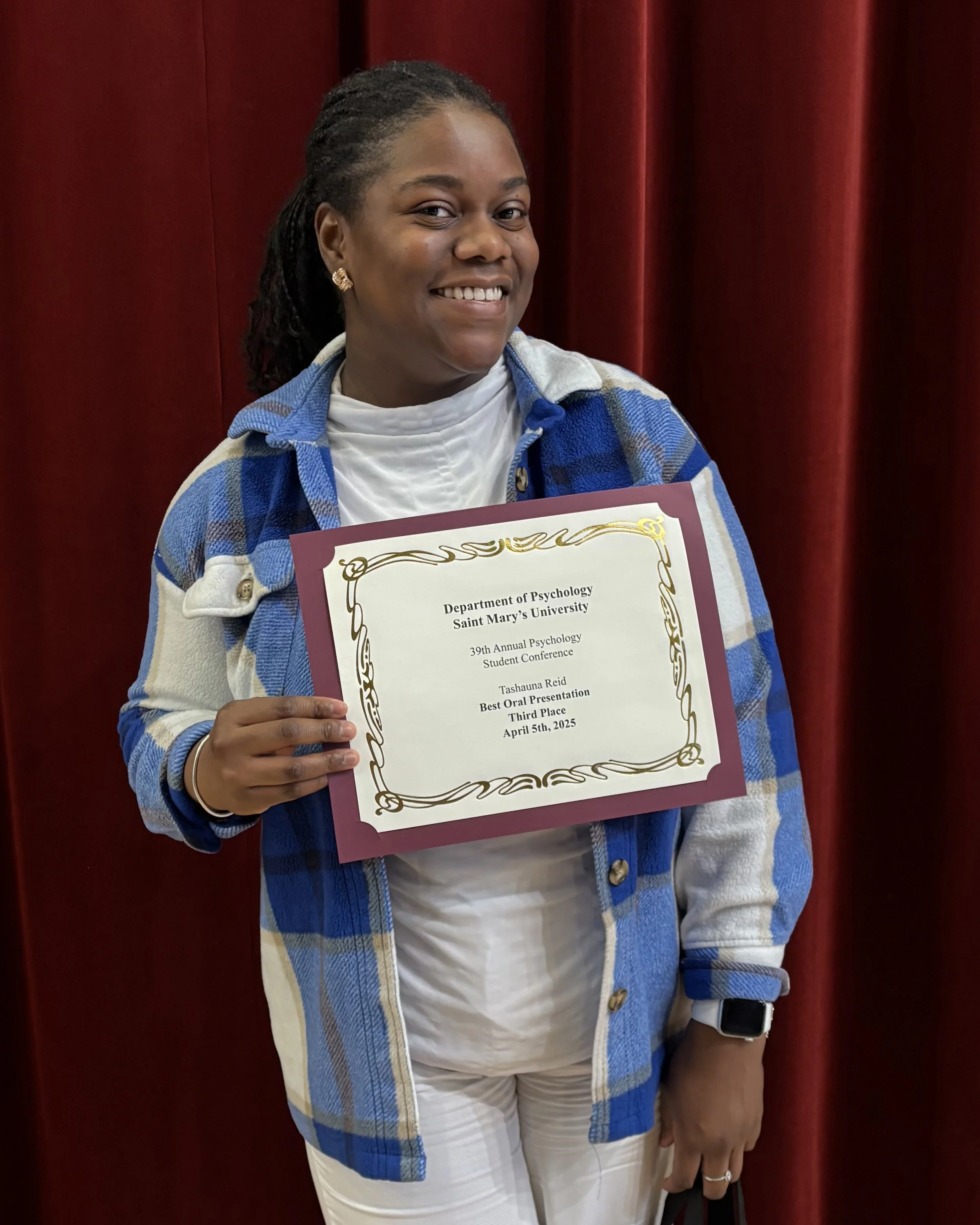
Tashauna holding her award certificate

Tashauna earned third place with her oral presentation at the 2025 Psychology Student Conference

What instructor had the biggest impact on you?  

That would be my Honours thesis supervisor, Dr. Jason Ivanoff. He always encouraged my curiosity in neuroscience in a way that made learning exciting. His classes were always engaging and he was very patient and supportive throughout my thesis journey. With his guidance, I was able to place third for my oral presentation at the 2025 Psychology Student Conference.  

What was your thesis title and description? Why did this research appeal to you?  

My thesis was titled “Blink and You’ll Miss It: The Impact of Short-Form Content on Sustained Attention.”  

My research looked at how short-form content, like TikTok videos, may influence attention. This research appealed to me because social media is such a huge part of everyday life, especially for students and younger generations, yet we still know so little about how constant exposure to fast-paced content affects the brain and attention. I was really interested in exploring whether short-form content only harms attention, as people often claim, or whether it could improve certain attentional abilities, like rapidly switching focus.   

How were you involved in the SMU Community?

I was highly involved in campus life and leadership. To name a few, I served as President of the Caribbean Society for three years, and before that, I served as the VP of events for one year. I was also the founder and President of the Science Society during the 2024-2025 academic year. This year, I presented at the Student Leadership Conference in March.

Outside of student leadership, I worked as a Chemistry Teaching Assistant and was also involved as a student entrepreneur through the Arthur L. Irving Entrepreneurship Centre

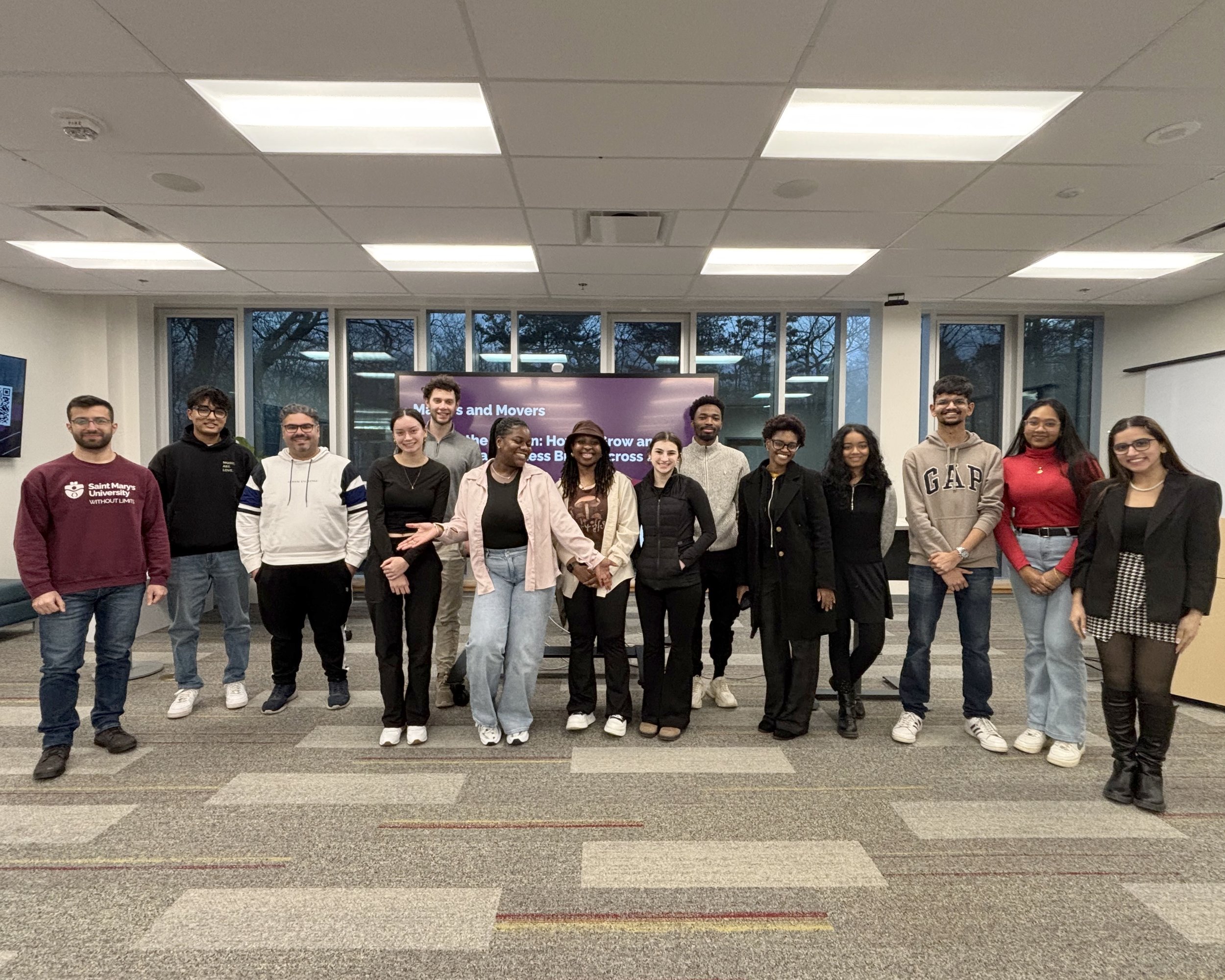
Tashauna with a group of students

Tashauna was a presenter in the Entrepreneurship Centre’s Makers and Movers series

What was your favourite SMU memory? My favourite SMU memory is honestly the moments that came from being involved on campus, whether it was working on my thesis, presenting at conferences, or being around friends and classmates who were just as passionate about what they were studying. One standout moment for me was when SMU created new spaces on campus where students could socialize and study together. 

What will you miss about Saint Mary’s?

I will miss the familiar study spots on the 5th floor of the Science Building and the 4th floor of the Sobey Inspiration Hub (they were like my second home because I spent so much time there), the professors who genuinely knew and supported me, and the feeling that there was always a space on campus where I belonged. 

How did you connect with supports and services on campus? 

The Black Student Advising Office provided a strong sense of community. I used the International Student Centre for immigration support, which was extremely helpful. I visited the health clinic as needed and used Career Services for resume support and preparation for future opportunities. 

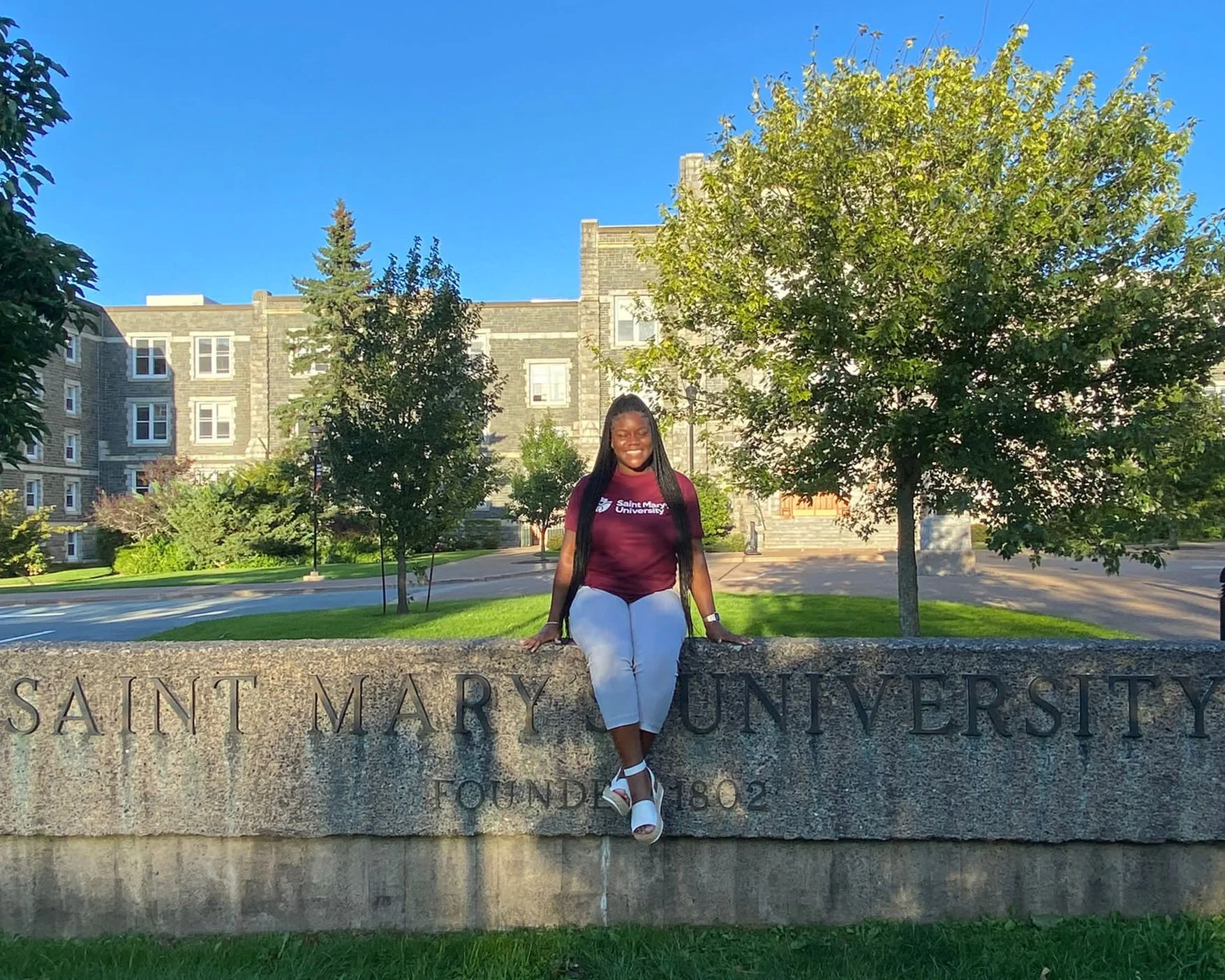
Tashauna sits on the concrete SMU sign in front of McNally

What advice would you give your younger self who was just starting university? 

I would tell my younger self to trust the process more and not be afraid to take up space. At the beginning, I would remind myself that it’s okay not to have everything figured out right away, because university is about learning, growing and exploring. I would also find a way to get involved early and take advantage of opportunities, even if they feel intimidating at first. Most importantly, I’d remind myself that building relationships with professors, peers, and mentors can open doors you didn’t even know existed. 

TRIUMF triumph: Two Saint Mary’s science students awarded prestigious fellowships

Two Saint Mary’s University science students, Tehya Mohammed and Clara Wrightman-Dillon, will be travelling to Vancouver this summer for the Richard E. Azuma Summer Fellowships at TRIUMF, Canada’s particle accelerator centre.

Only two of these prestigious fellowships are awarded each year to students from TRIUMF’s 21 member universities across Canada, making it extra special that both students will be representing SMU.

The fellowships support promising Canadian undergraduate students in pursuing careers in TRIUMF’s research fields, including accelerator science and technology, detectors and instrumentation, life sciences, molecular and materials science, particle, nuclear, and theoretical physics, and scientific computing.

“Watching students succeed is the greatest reward for an educator. Having two SMU stu-dents win the only two fellowships at TRIUMF, and knowing that they competed against students from much larger institutions makes this a very proud moment.” says Dr. Sam Veres, Dean of Science. “These wins are a testament to Tehya and Clara’s dedication to their studies, and the exceptional education that our faculty and staff in the Department of As-tronomy and Physics provide.” 

Tehya Mohammed

Tehya Mohammed, from East Preston, N.S., just completed her third year of a BSc in Physics with an honours in Chemistry. She is excited to start working on a research project titled “Antimatter Physics with the ALPHA Collaboration” with Dr. Makoto Fujiwara at TRIUMF and at the CERN scientific research laboratory in Switzerland.

When she graduates in spring 2027, Tehya plans to attend graduate school; longer-term goals may see her staying in academia, teaching and doing research, and she credits her experience at Saint Mary’s with helping her land the fellowship this summer.

“I’m grateful for the experiences I’ve had at Saint Mary’s,” says Tehya. “I was able to do research with my professors each summer starting after my first year. There are more opportunities available to undergraduate students at smaller schools like SMU.”

Chemistry professor Dr. Christa Brosseau is Tehya’s honours supervisor; she also worked with Dr. Rob Singer in chemistry, publishing a paper with him. She credits these experiences with helping to round out her resume for the fellowship.

Clara Wrightman-Dillon

Clara Wrightman-Dillon, a physics major from St. Andrews, N.B., will be working with Dr. Adam Garnsworthy and researchers at the University of York. Their project, titled “Decoherence of Quantum Entangled Photons,” will involve the collection, sorting and analysis of data for research that could affect PET medical imaging.

This won’t be Clara’s first visit to TRIUMF; she was there last year thanks to her work alongside Dr. Greg Christian, a professor in the Department of Astronomy and Physics at Saint Mary’s.

After graduating from Saint Mary’s, Clara intends to pursue a Master of Science in physics.

Tehya and Clara have both spent the previous two summers at Saint Mary’s conducting research with their professors in positions funded by the Natural Science and Engineering Research Council (NSERC)’s Undergraduate Student Research Awards program and the Faculty of Science at Saint Mary’s.

The paid, four-month fellowship includes travel and a week's stay at TRIUMF House, a “home away from home for TRIUMF’s national and international visitors”. When fellowship winners complete their undergraduate degrees, a $5,000 scholarship is available to any of the 21 TRIUMF schools in Canada.


Meson Hall at TRIUMF. Credit: triumf.ca

About TRIUMF

Established in 1968 in Vancouver, TRIUMF is Canada’s particle accelerator centre. The lab is a hub for discovery and innovation inspired by a half-century of ingenuity in answering nature’s most challenging questions.

From the hunt for the smallest particles in our universe to research that advances the next generation of batteries or develops isotopes to diagnose and treat disease, TRIUMF drives more than scientific discovery. Powered by its complement of top talent and advanced accelerator infrastructure, TRIUMF is pushing the frontiers in isotope science and innovation, as well as technologies to address fundamental and applied problems in particle and nuclear physics, and the materials and life sciences. 

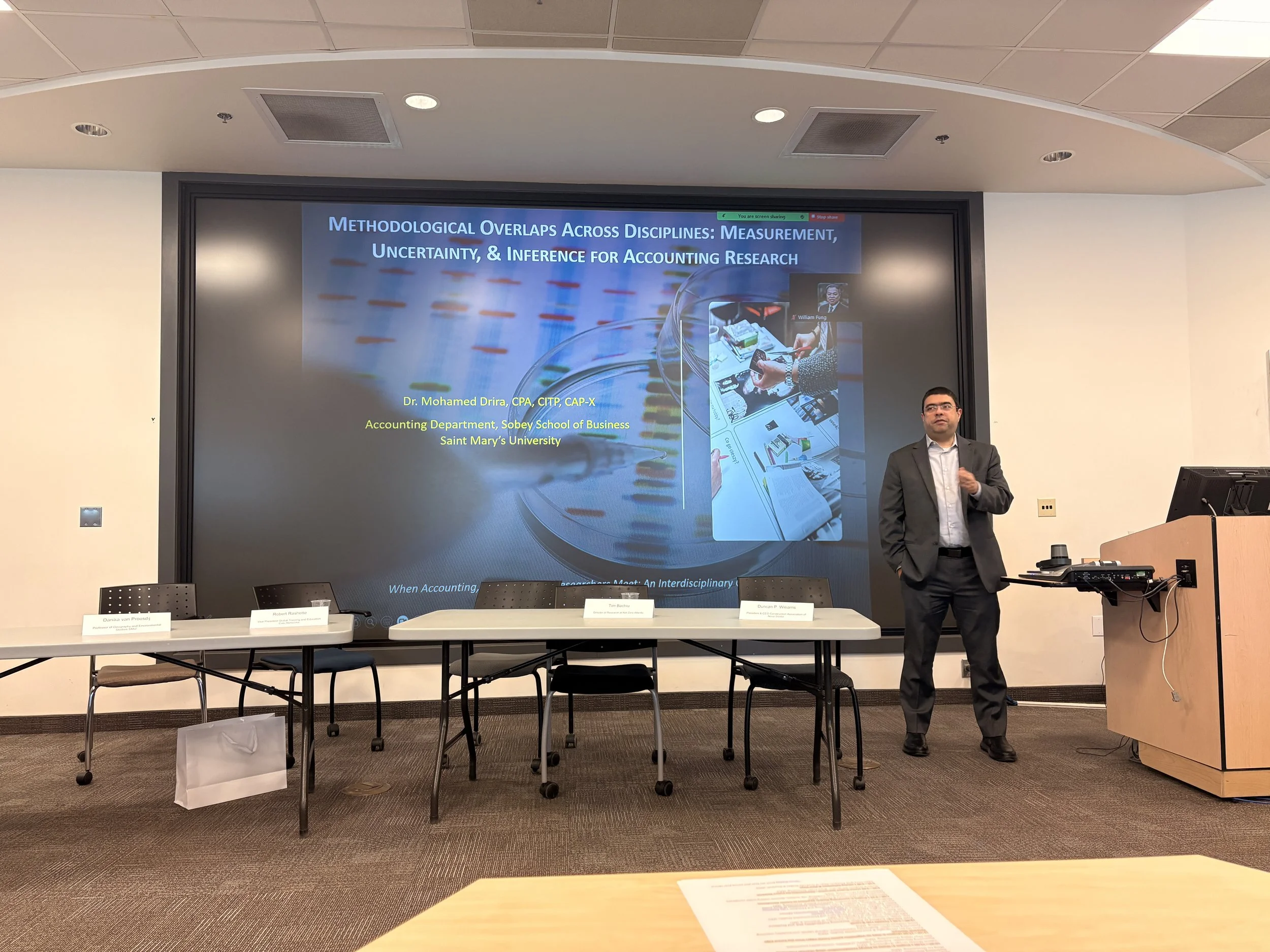
Worlds colliding: Accounting, Science & Arts Interdisciplinary Colloquium

If you are an applied science researcher looking for solutions to combat environmental problems like, say, innovative ways to remediate legacy gold mining waste materials, the accounting standard for contaminated sites might not be on your go-to list of tools and methods.

But it could be.

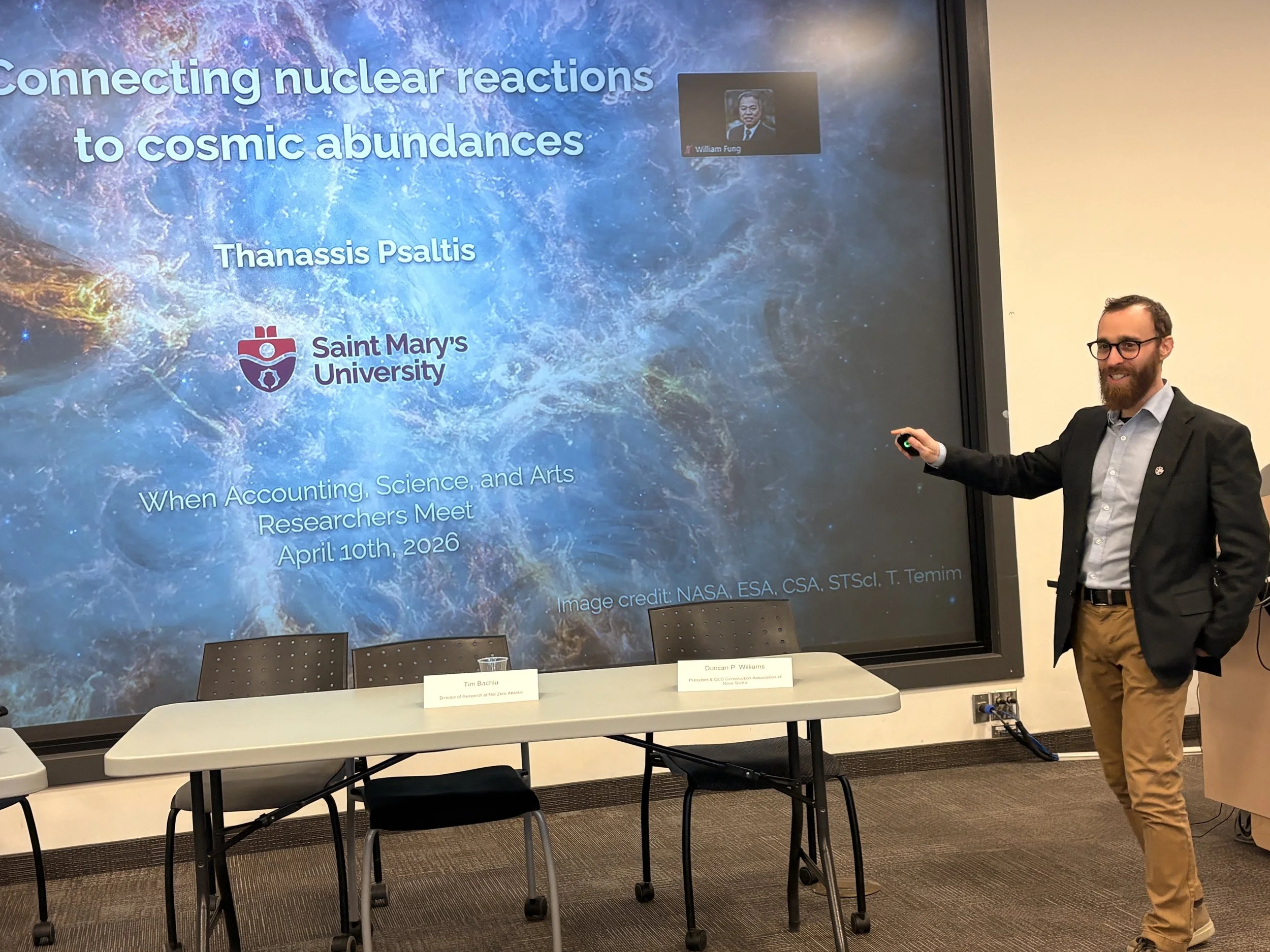
This was the bold premise behind an innovative interdisciplinary event held at Saint Mary’s on April 10, 2026.  Researchers from Saint Mary’s Arts and Science Faculties were invited to share a piece of research they are working on. Professors of Geography, Environmental Science, Engineering and Astronomy and Physics took part: Linda Campbell, Valeria Montes Urrego, Karen Harper, and Athanasios Psaltis.

A team from the Accounting department of the Sobey School of Business then reflected on what methods, approaches and tools academic accounting might offer on the same project. These professors included organizers Vasiliki Athanasakou, Matthew Boland, Amna Chalwati Mohamed Drira, and Ming Liu, as well as Khin Phyo Hlaing.

Innovative insights presented

In the popular imagination, “accountant” is often positioned as an opposite to “creative”, but the presentations required enormous creativity. The event gleaned rich insights, as organizer Dr. Vasiliki Athanasakou pointed out:

“In particular, the vital role of accounting and disclosure in supporting remediation and more complete recognition of environmental liabilities; the importance of accounting and taxation in enabling the economic viability of innovative environmental solutions; the remarkable wealth of natural capital data that remains underexplored in reassessing ecosystem value; and the need to embrace a mix of methods to strengthen the external validity of complex, interdisciplinary phenomena.”

There is a certain kind of power in hearing an accountant speak about the real market values of biodiversity and its effects on GDP worldwide in conjunction with the scientist pointing out the value to the ecosystem.

Panelists call for stable funding and dialogue

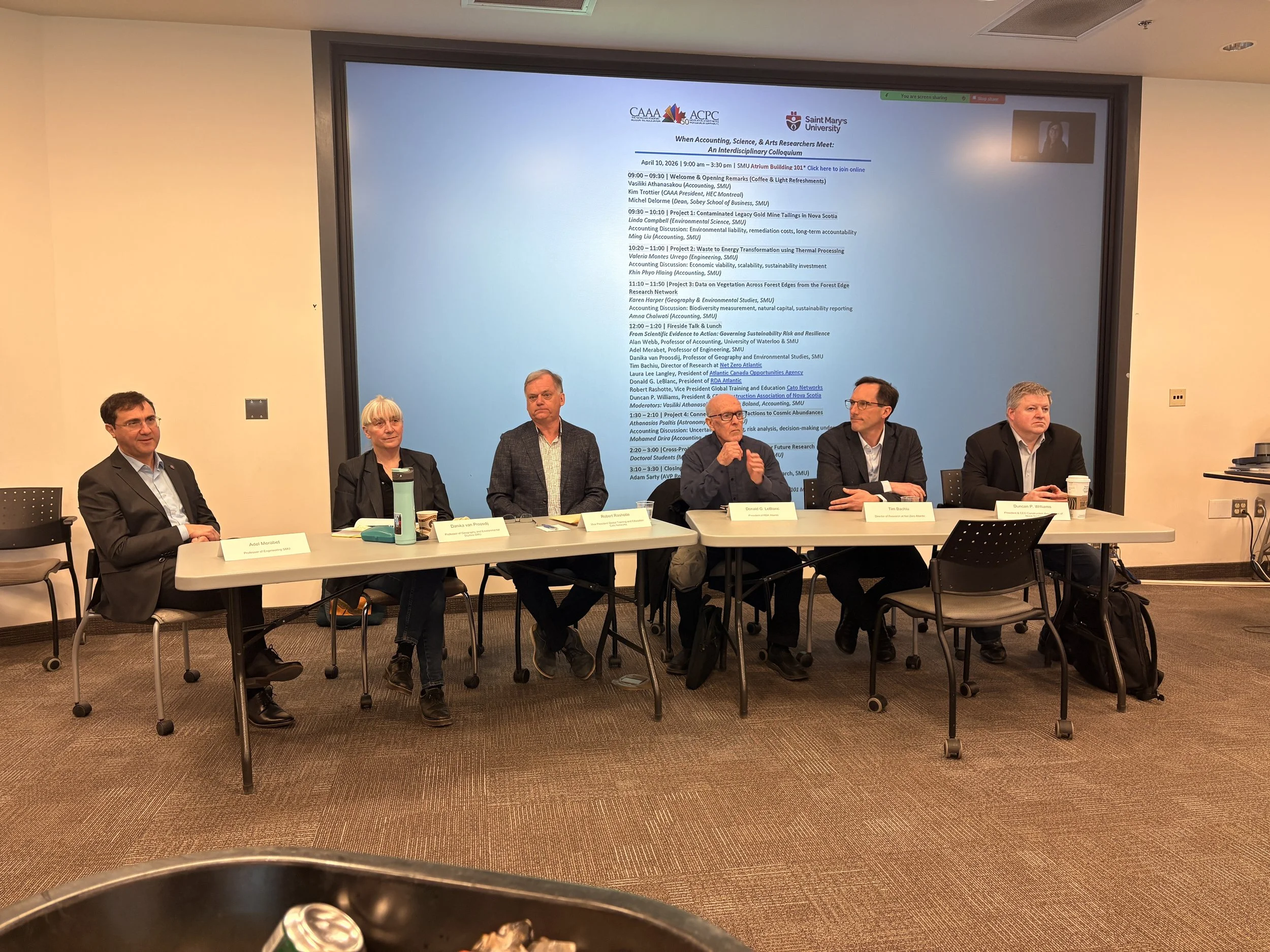
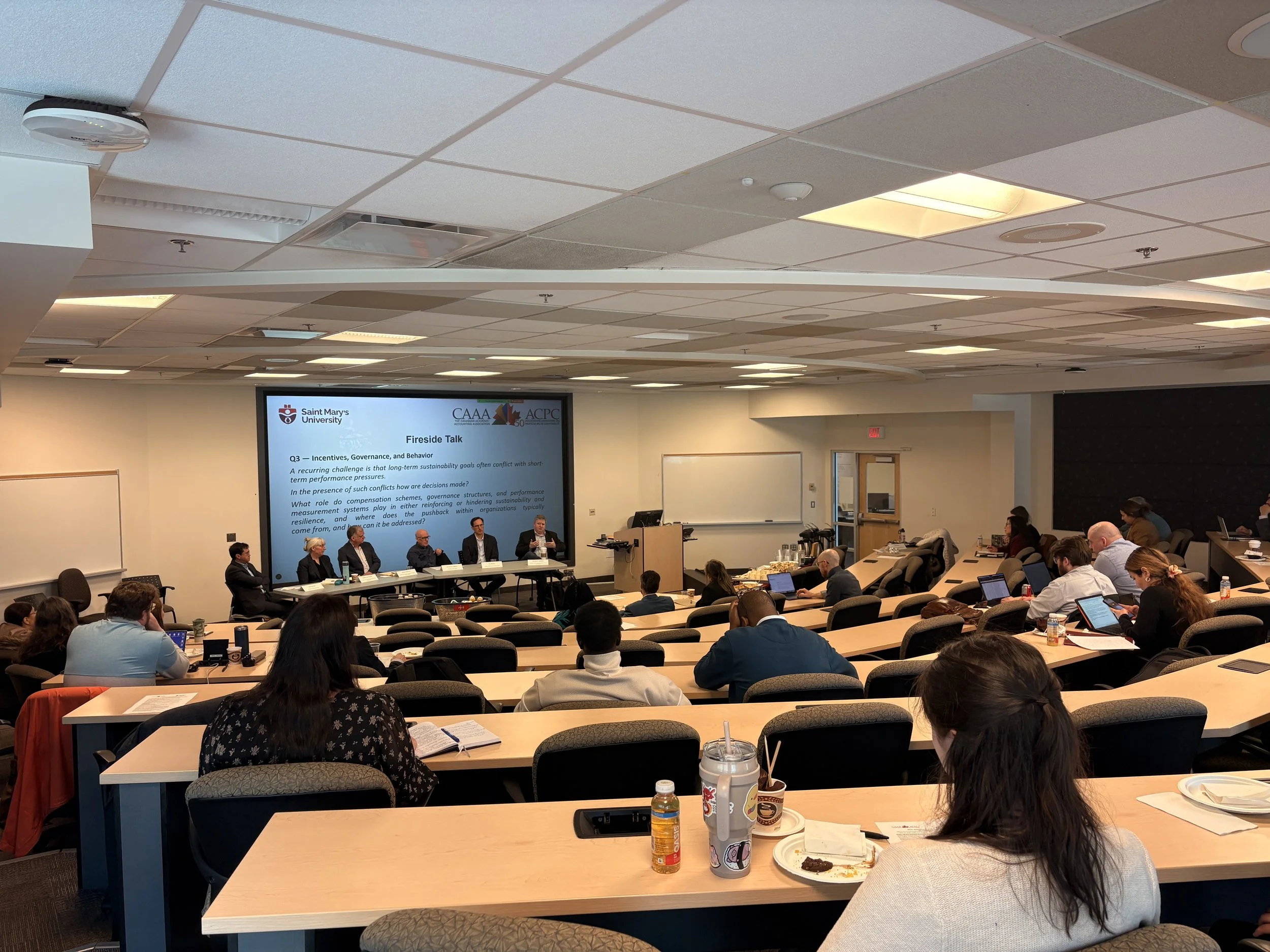
The lunchtime fireside discussion engaged practitioners and academics who drilled into the real barriers of tackling long-term problems with evidence-based and practitioner-informed solutions. Panelists expressed frustrations with isolated policy development and implementation while ignoring the experience of practitioners. The gap can lead to unintended consequences or simply policy failure. For their part, researchers recognized the value of the findings brought by application. All agreed that unstable funding did not support long term outcomes.

Dr. Athanasakou noted, “The fireside discussion further emphasized the importance of clarity and certainty in investment projections as a key condition for translating evidence into action; the growing need to bring together scientists, companies, investor representatives and policymakers into shared dialogues; the central role of trust and governance in making those dialogues meaningful; and the importance of policy and governance consistency in supporting sustainable, long-term decision-making.”

Panelists were:

  • Adel Merabet, Professor of Engineering, SMU

  • Danika van Proosdij, Geomorphologist and Professor of Geography and Environmental Studies, SMU

  • Timothy Bachiu, Director of Research at Net Zero Atlantic

  • Donald G. LeBlanc, President of RDA Atlantic

  • Rob Rashotte, President, Global Training and Education, Cato Networks and student in the Sobey Executive Doctorate of Business Administration program.

  • Duncan P. Williams, President & CEO at Construction Association of Nova Scotia

Sparking new creative collisions

Interdisciplinary approaches really shine in an intimate community like Saint Mary's University. The day concluded with a cross-project discussion on opportunities for future research with doctoral students, which was also attended by a dual-credit co-op class of high school students. Interdisciplinary, intergenerational and reflecting a commitment to innovative ways to solve real-world problems.

The Accounting, Science and Arts Interdisciplinary Colloquium was, in many ways, a perfect distillation of the Saint Mary’s University promise of a world without limits.

Discovering new worlds of possibilities: Jillian Taylor BSc'22

By Krista Keough

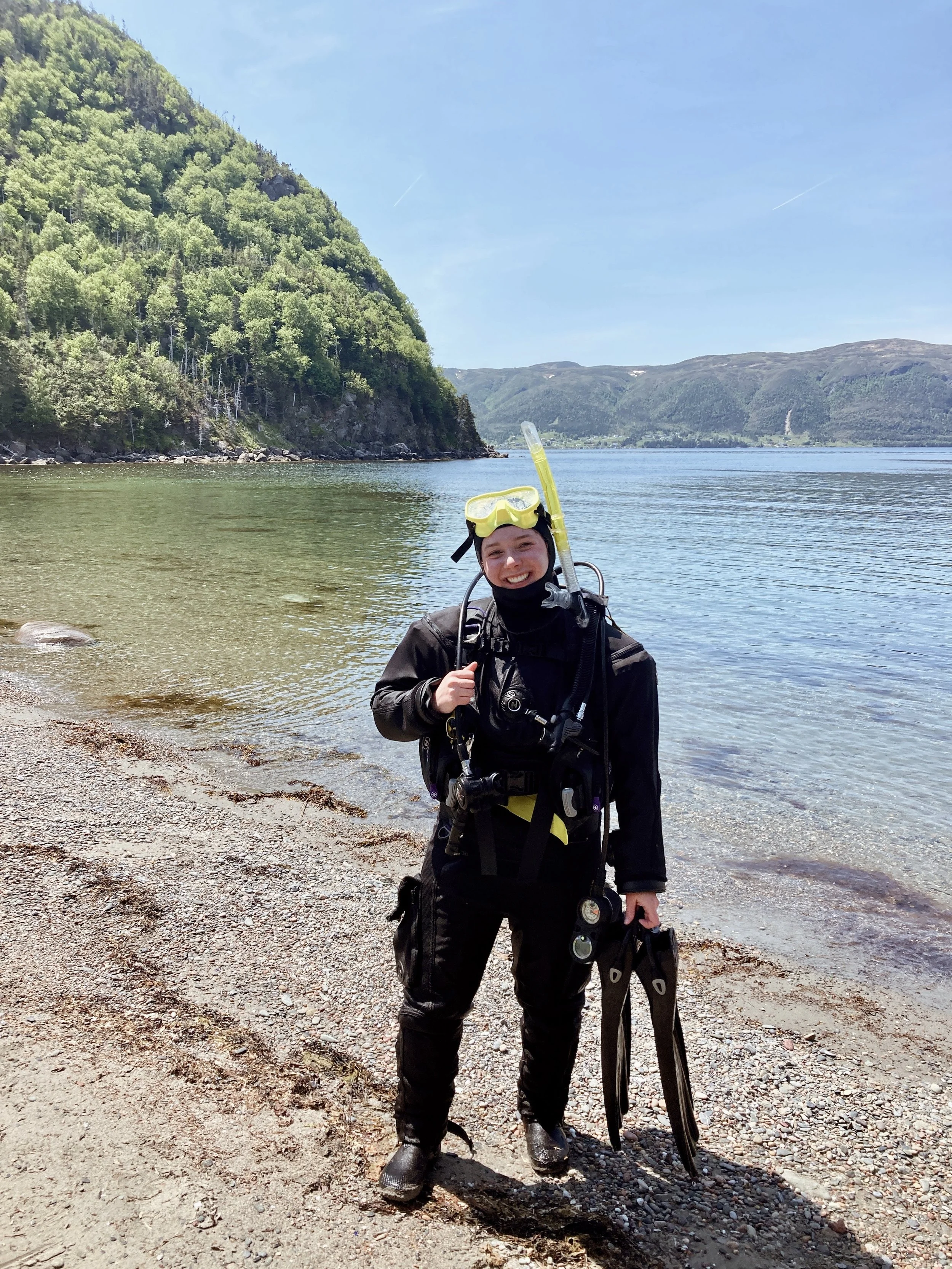
Jill poses in full diving gear on a shoreline

Jill Taylor BSc’22

The first time Jillian Taylor BSc’22 went to Saint Mary’s, it was to watch a football game with her family. “I must have been seven or eight,” she said. “There’s a photo of me holding boomsticks that you clap together…my mom’s kept it.”

Little did they know that Taylor would return to Saint Mary’s as a student, and this time, she would be the one on the field.

Born and raised in Halifax, Nova Scotia, Taylor excelled in science and played rugby throughout high school. Her former coach, Amber Davidson, was also coaching Saint Mary’s Huskies Women’s Rugby and encouraged her to apply to the university and join the team. Taylor is quick to note that the built-in friend group of players made the move to campus easier.

“What a great community of girls. To come in and have fourth-years who – this isn’t their first rodeo – they know the ropes and are able to show you around. That was really nice to have.”

Taking a step back from athletics in the years to follow to focus on her studies took Taylor in many directions.

“I switched my programs a lot. Trying to figure out my major was not linear at all. I ended up taking a lot of courses in different departments, which meant I took a little longer to finish my degree, but I got a good, well-rounded education.”

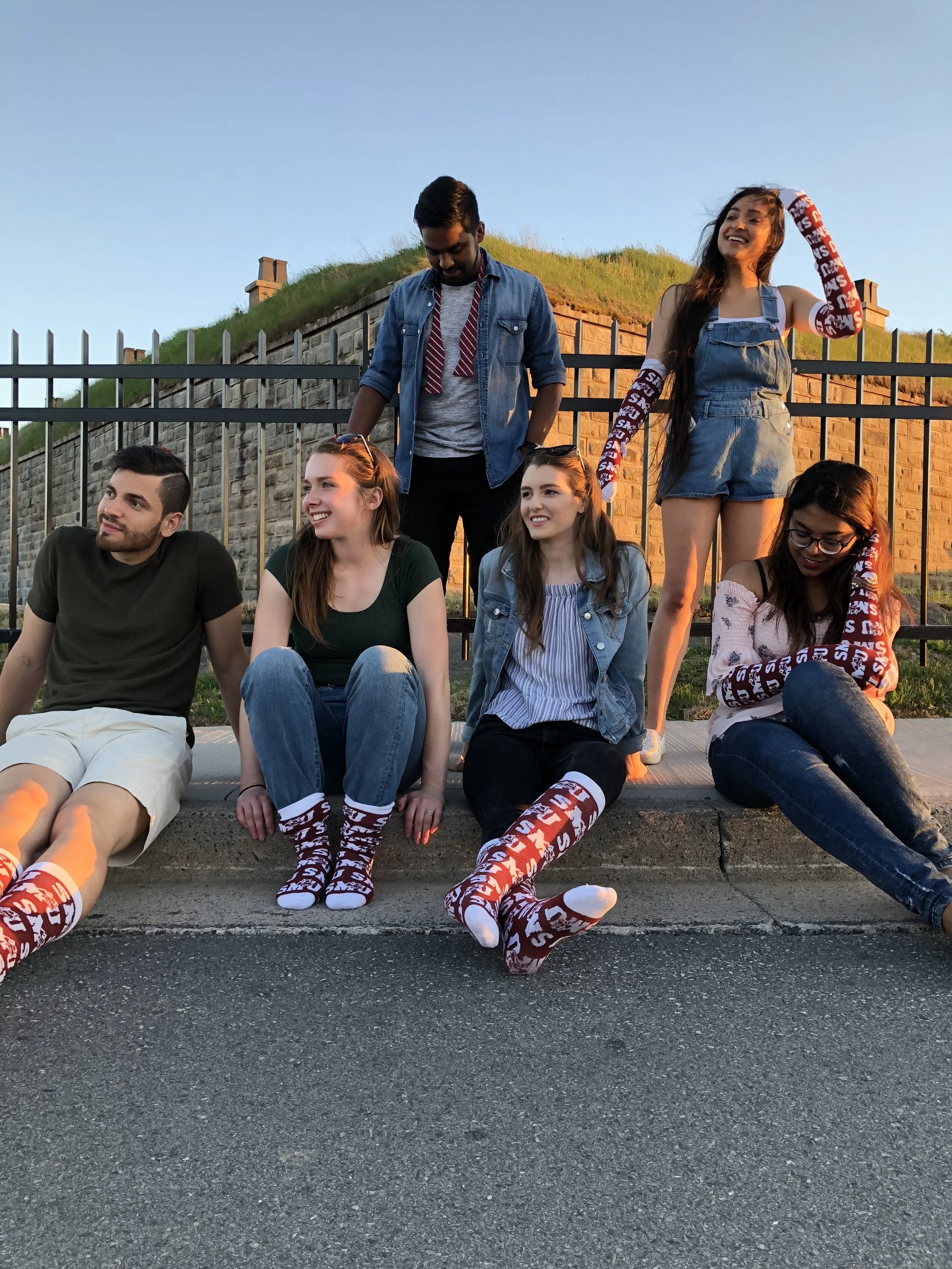
Jill with other students wearing SMU socks at Citadel Hill

Jill participated in a SMU photoshoot

Taylor made time for extracurricular activities, such as scuba diving and participated in Model United Nations, an international conference where students learn about the UN system. “We actually went to the UN headquarters in New York City,” she said, where she made long-lasting friendships.

Ultimately, her credentials reflect her varied interests: Taylor graduated with a Bachelor of Science, double major in Biology and Psychology, Co-operative Education (Honours) and minor in Political Science.

“I feel like the whole point of an undergrad is to learn how to learn, and to try to learn what you don’t know.”

Taylor’s passion for exploration led her to achieve her scuba diving certification, unlocking a new world of possibilities. “I was doing biology courses, and I thought, 'This is so cool! The ocean’s in my backyard, I want to see what it’s like’.”

Scuba diving ignited her passion for underwater videography and photography. Despite the harsh conditions, she documented our “colourful, very biodiverse waters” in the Atlantic Ocean during her time at Saint Mary’s and in St. John’s, where she later moved to pursue her Master of Science at Memorial University.

Promotional poster for Dive with Jill Taylor

Dive with Jill Taylor aired on Bell. Image: tv.bell.ca

While living in Newfoundland, she attended a networking event and met a director and a producer. They had watched some of her underwater scuba diving videos and pitched the idea of making a TV show together.

“That was something I’d never even thought about or conceptualized. It just honestly fell into my lap, and I’m really glad it did because it was so much fun.”

Taylor worked with the crew at Right There Productions and her partner and fellow diver, Tanner Stein, to host, produce and shoot footage for the six-episode series called Dive Newfoundland with Jill Taylor, which aired in April and May 2025 on Bell Media.

In each episode, they feature a different community and Taylor interviews local people before going underwater to film marine life.

“I think a common misconception of the North Atlantic is that there’s nothing to see here, that you have to hop on a plane and go somewhere tropical to see really cool fish species. And that’s just not the case.”

The co-operative education component of her degree at Saint Mary’s helped Taylor transition from the classroom to begin her career. “Having work terms interspersed with my school terms was the best decision I made.”

One work term, in particular, she credits with helping her land her current position as a science communicator for Coastal Action, a non-profit environmental organization based in Mahone Bay. “I worked for them as a field technician and now I’m back as permanent staff.”

These days, the 27-year-old is prioritizing her full-time job and completing her master’s degree, while honing her craft as a videographer and sharing her adventures via Instagram. Last summer, she assisted with the underwater diving portion of a major documentary and thinks it would be fun to do a second diving TV show series set in Nova Scotia.

“If the opportunity arose, I’d definitely jump at it,” she said, ready and eager to dive right in.


This story was featured in the Fall edition of the Maroon + White alumni magazine. Visit the online magazine to read more alumni stories!

Dr. Linda Campbell ranked the No. 1 Deaf researcher in the world

Dr. Linda Campbell, a professor and researcher at Saint Mary's University, has recently been ranked as the top Deaf researcher in the world by research impact.

Dr. Linda Campbell

It’s an outstanding achievement to be recognized among such a strong group of colleagues in the Deaf research community.

The ranking is published by the website Unusualverse Stats, a site focused on key statistics about the global Deaf community and sign languages. The site measures scholarly impact and provides a view of academic activity. The website notes that the rankings may not provide the full story; the focus is to “highlight the important research contributions of Deaf scholars, many of whom face unique challenges and remain under-recognized globally.”

Dr. Campbell’s dedication to both Environmental Science and advocacy is inspiring and important for students and our community. As a key member of the Bill 59 Community Alliance, Dr. Campbell's advocacy led to the Accessibility Act being passed in Nova Scotia in 2017. Nova Scotia was the third province to enact a comprehensive accessibility law. She received a Human Rights Award for her contributions. In recognition of her work as an environmental scientist, Dr. Campbell was awarded a Professional of Distinction award at the annual Discovery Awards ceremony in Halifax in 2020.

Her lab at Saint Mary’s University, the Dynamic Environmental & Ecosystem Health Research (DEEHR) Group, studies aquatic and contaminated ecosystems in Canada and worldwide. In recent years, Dr. Campbell and her students have conducted research on the remediation of historical gold mine tailings, invasive species in lakes and ponds. She has supported many students as an advisor through their undergraduate, graduate, and PhD-level studies.

Congratulations, Dr. Linda Campbell!